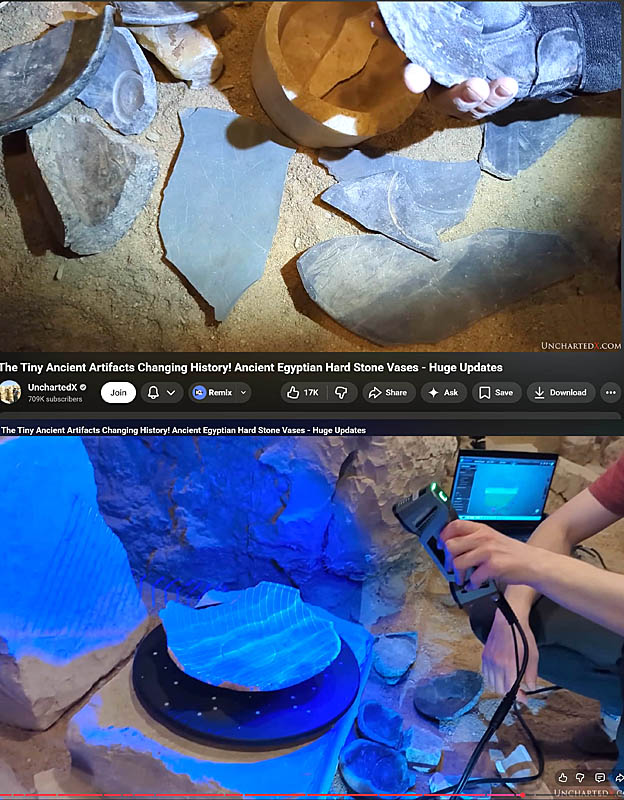
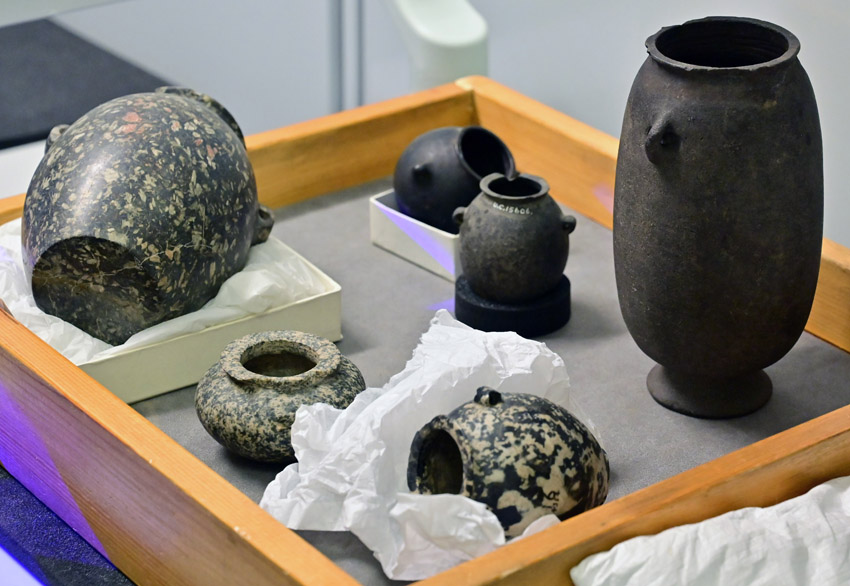
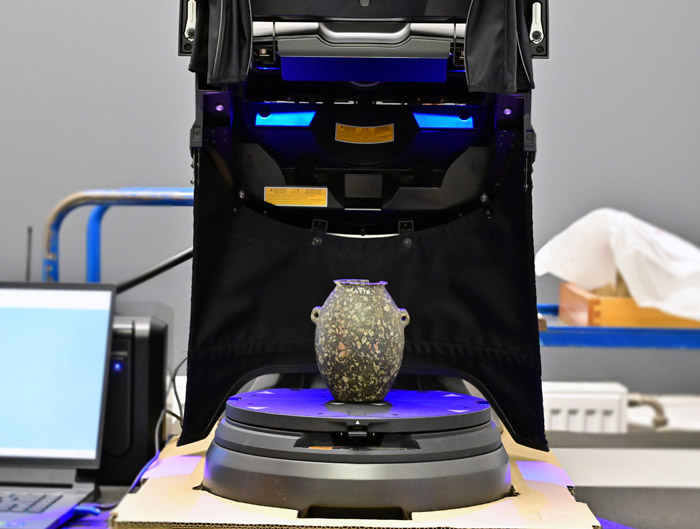
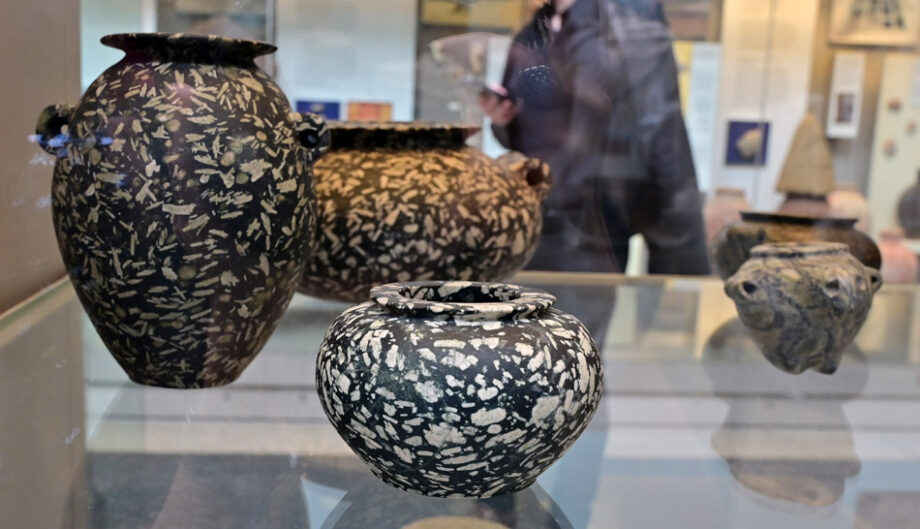
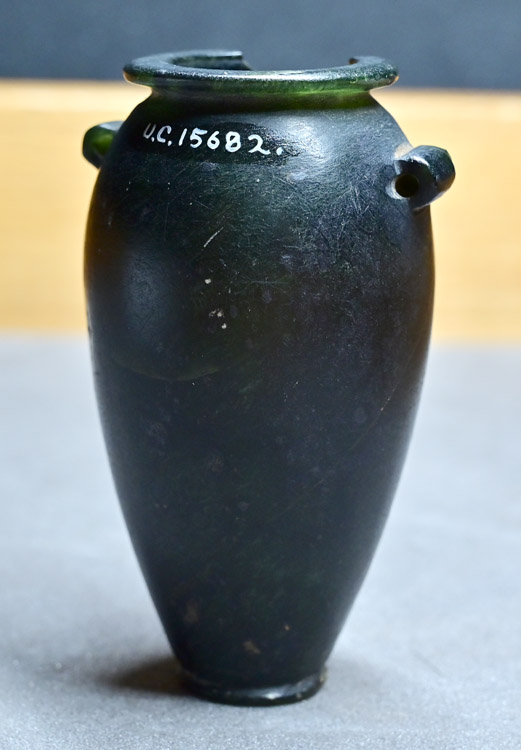
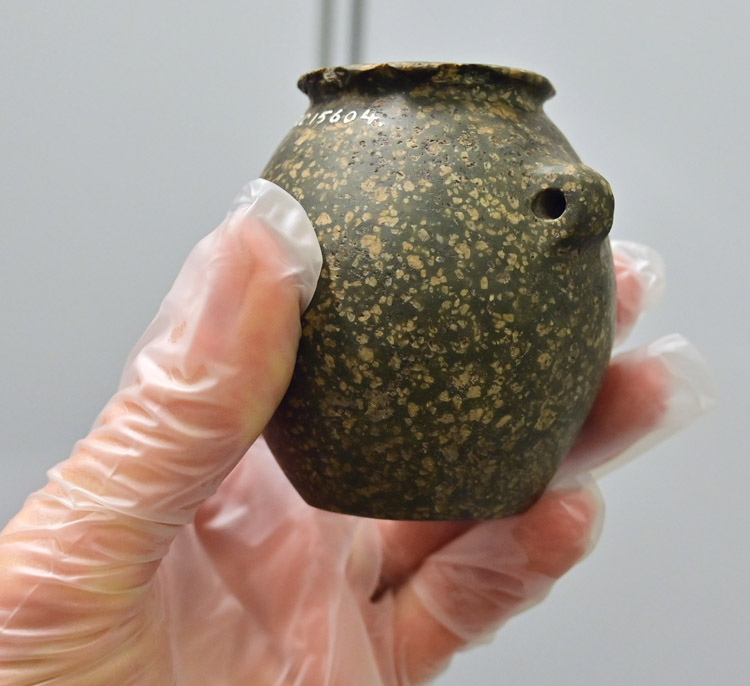
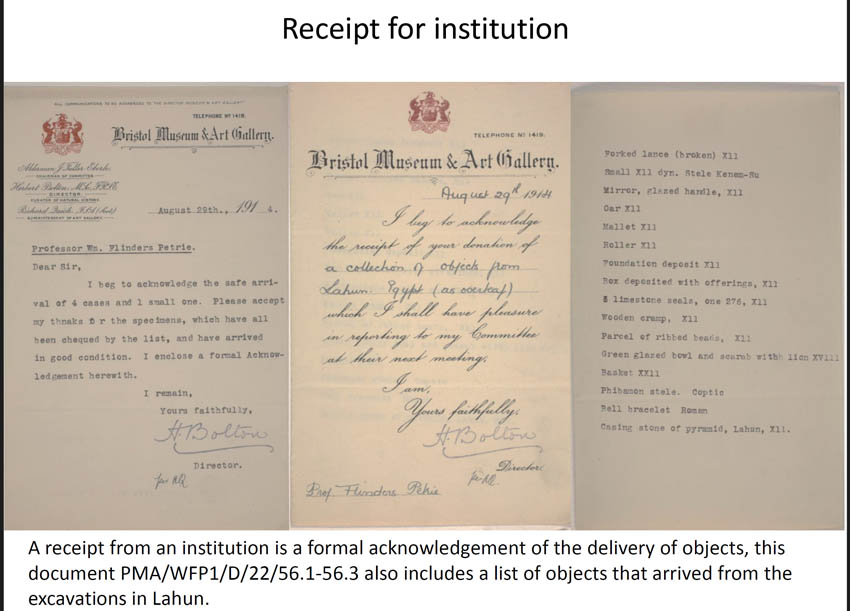
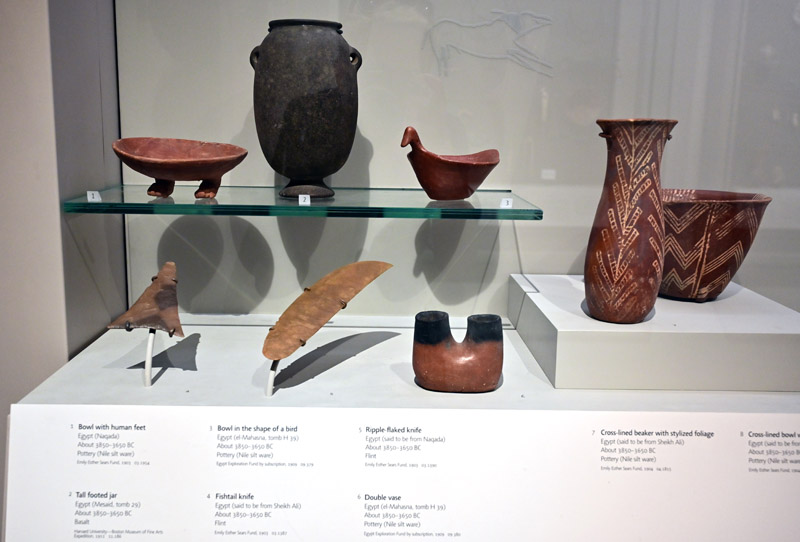
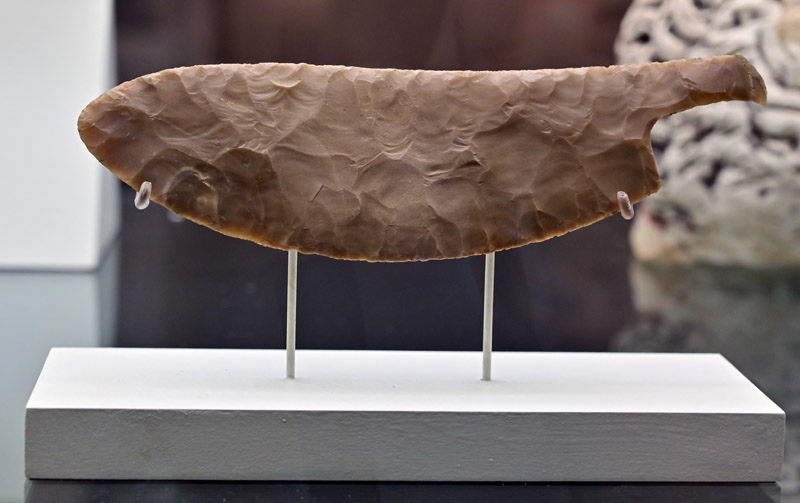
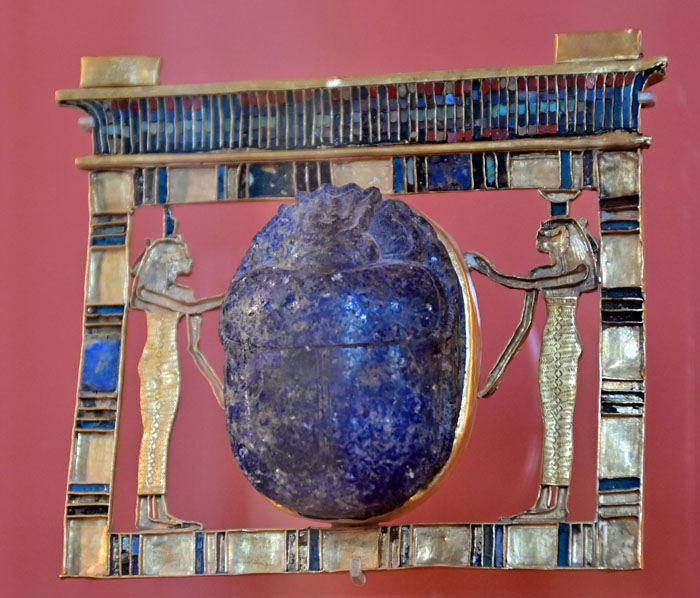
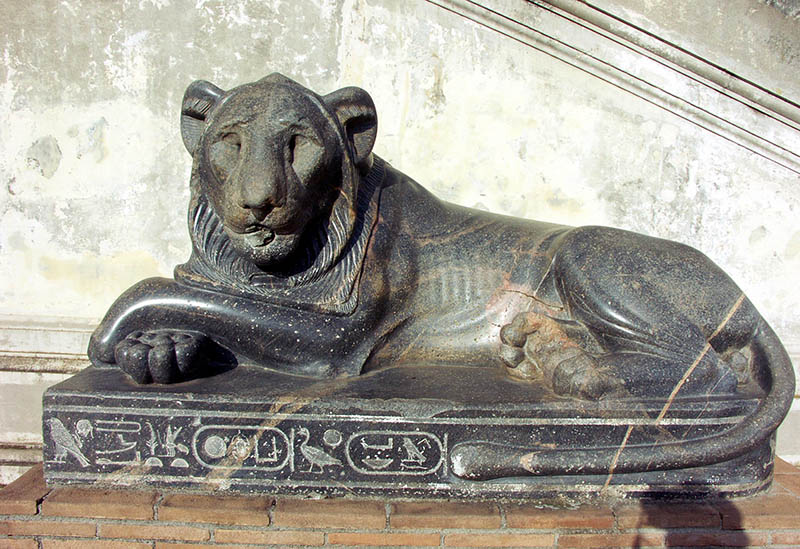
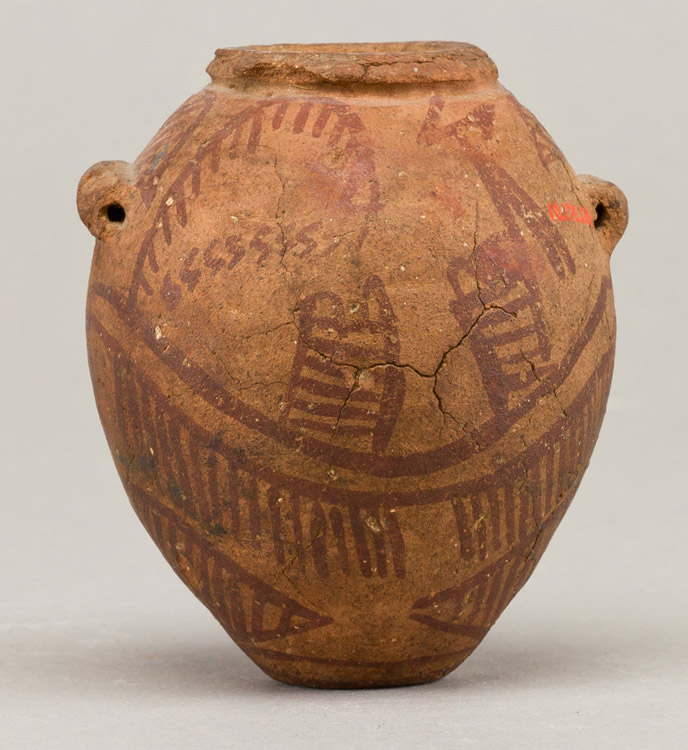
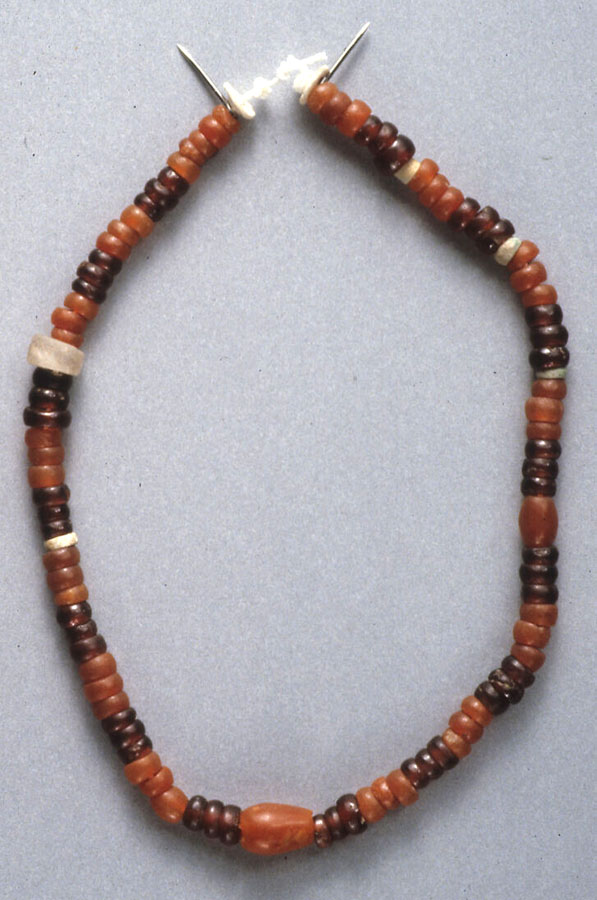
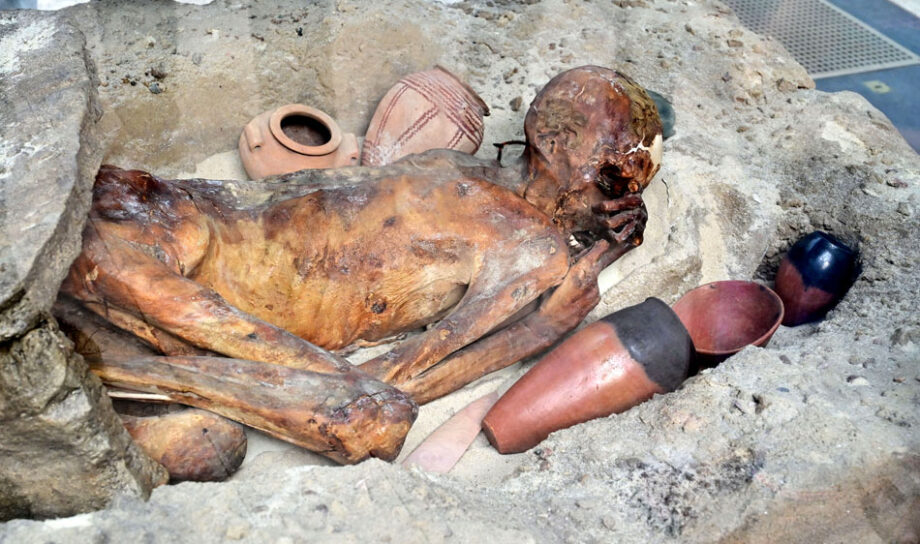
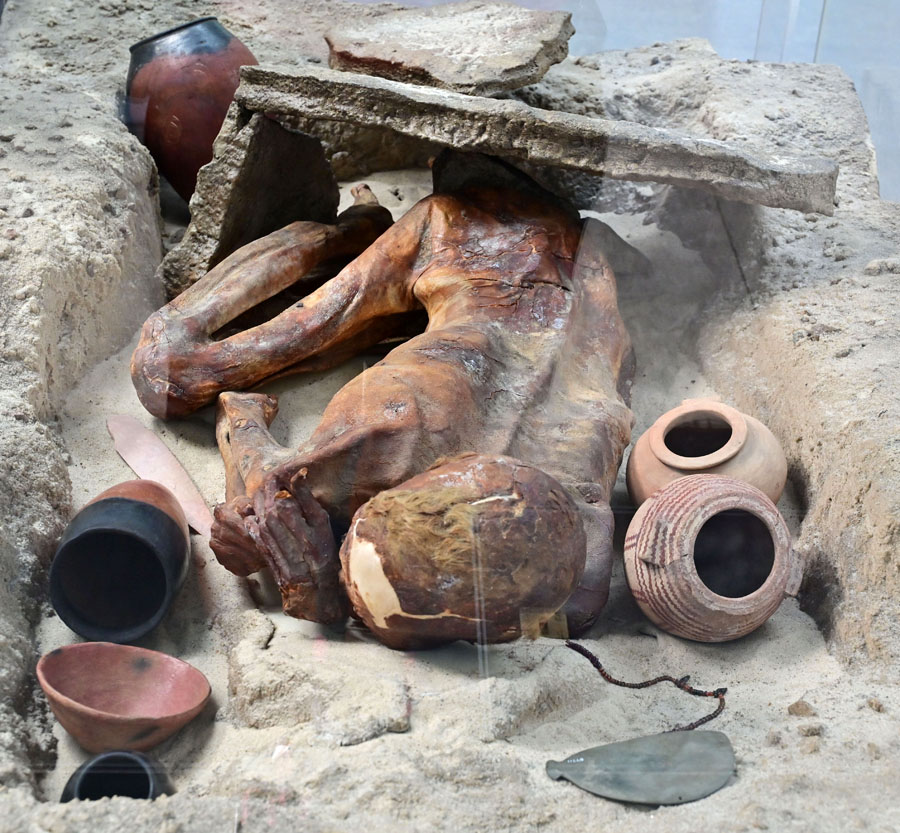
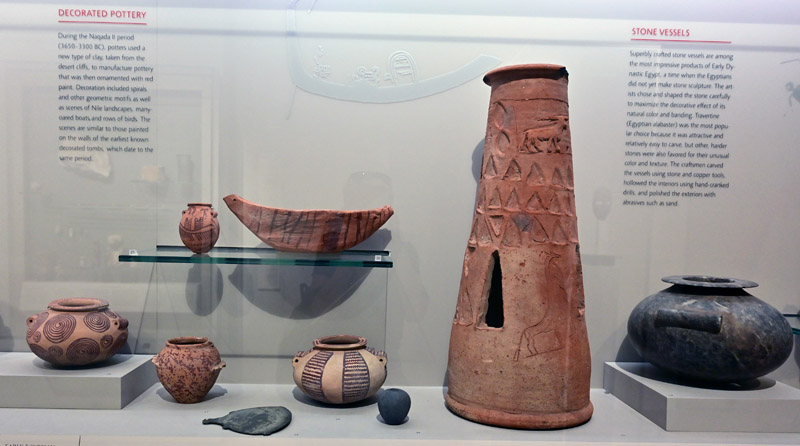
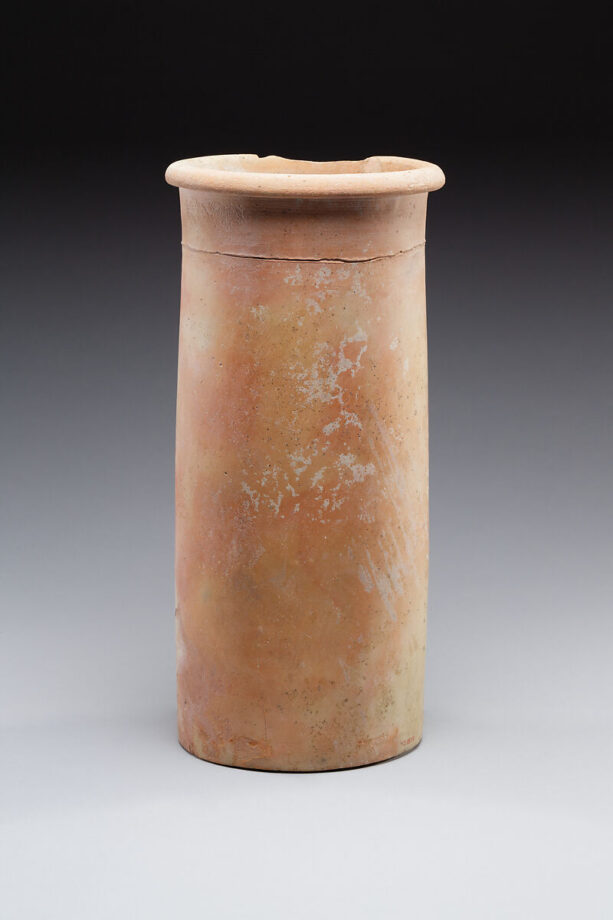
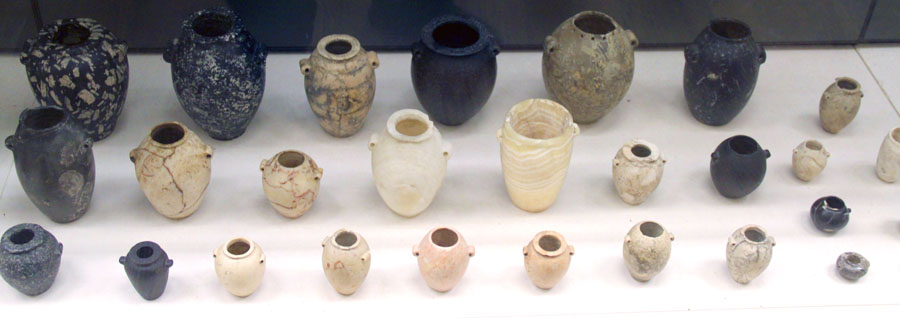
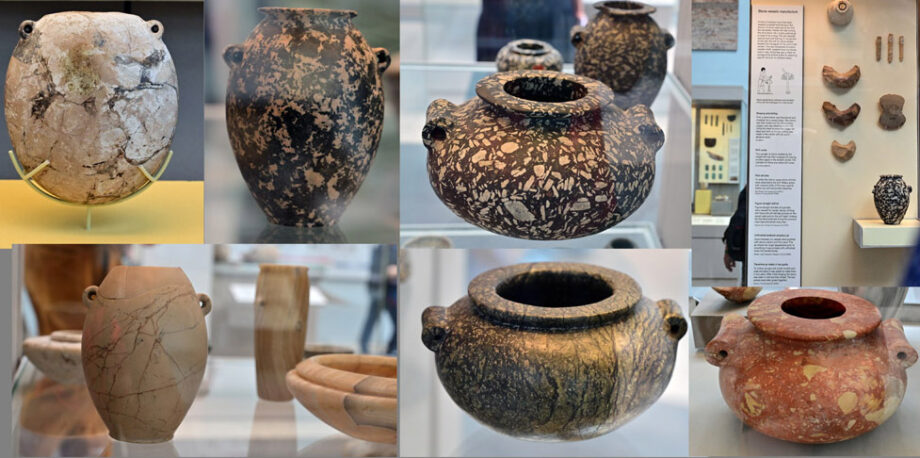
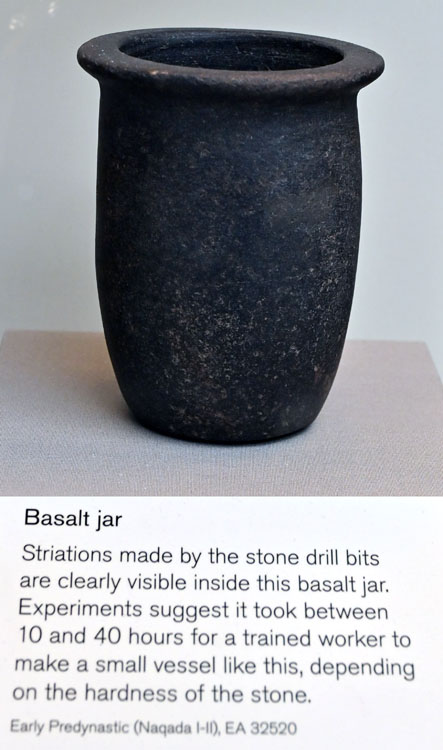
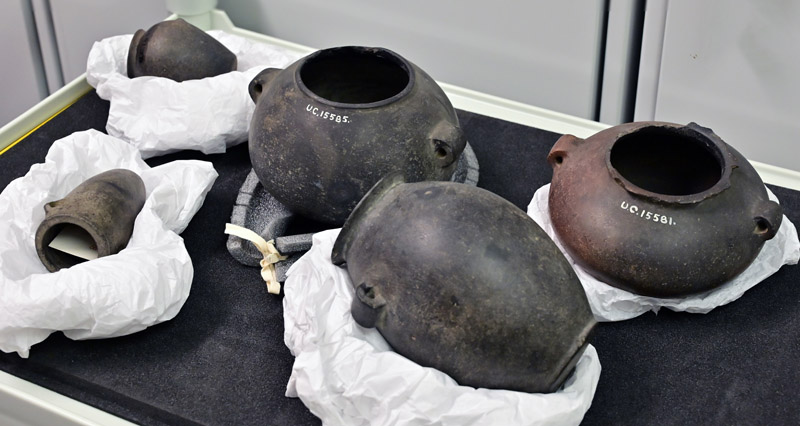
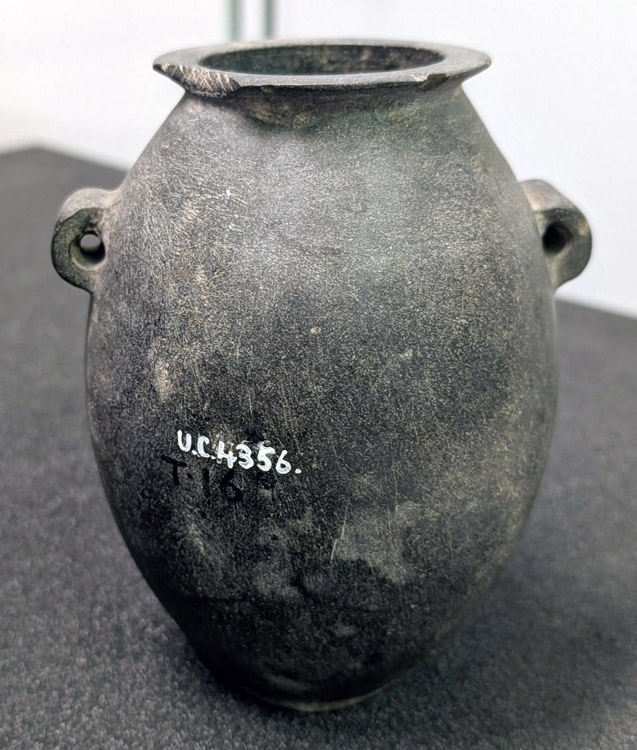
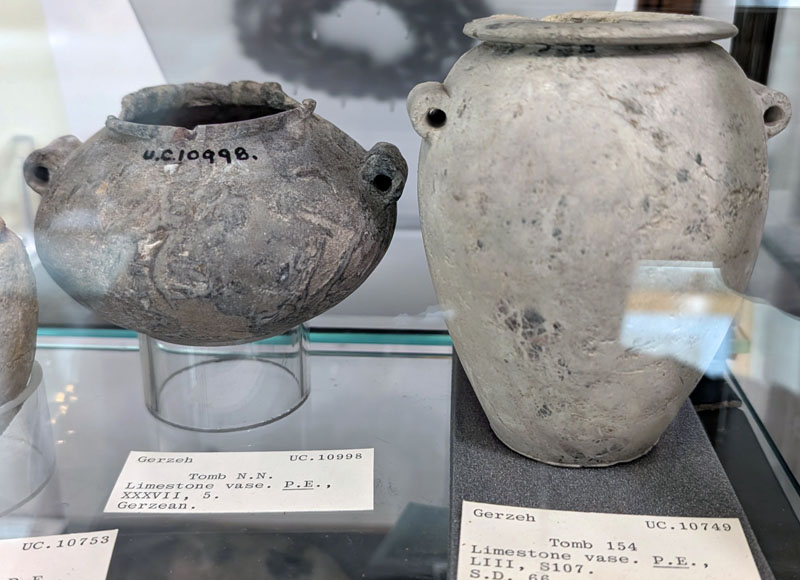
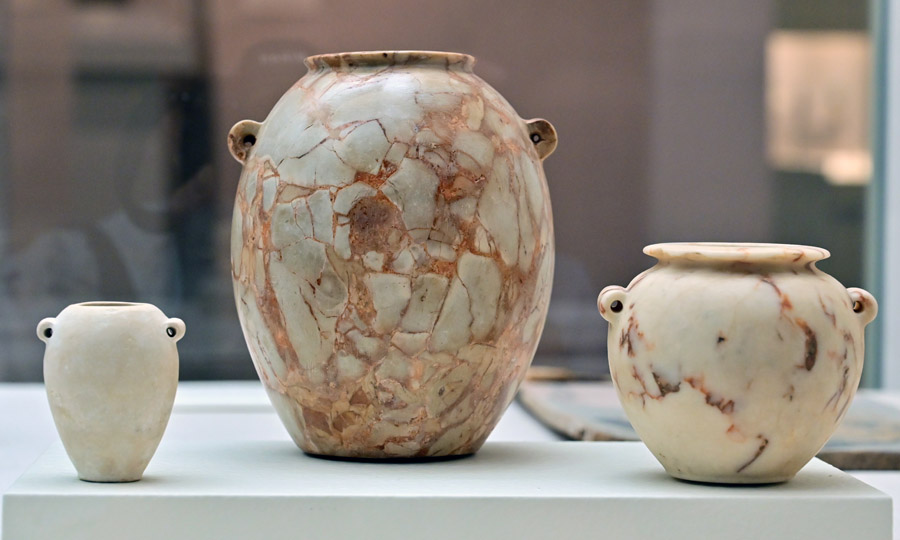
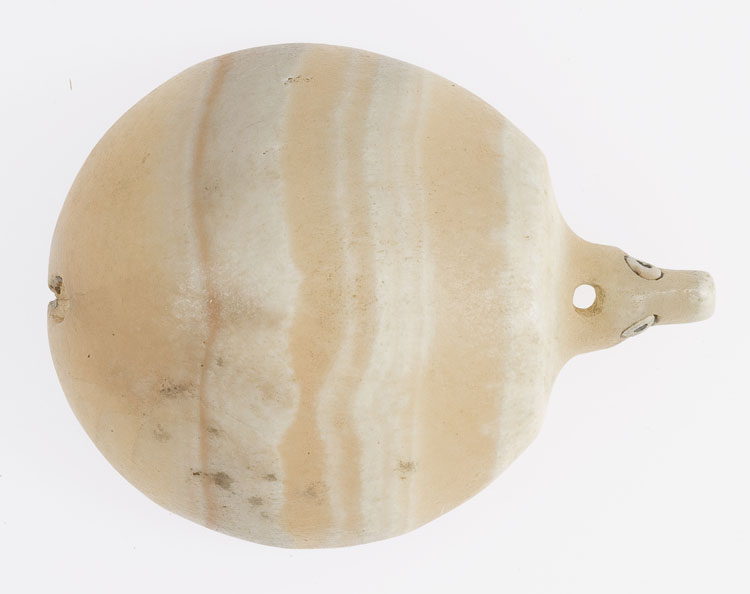
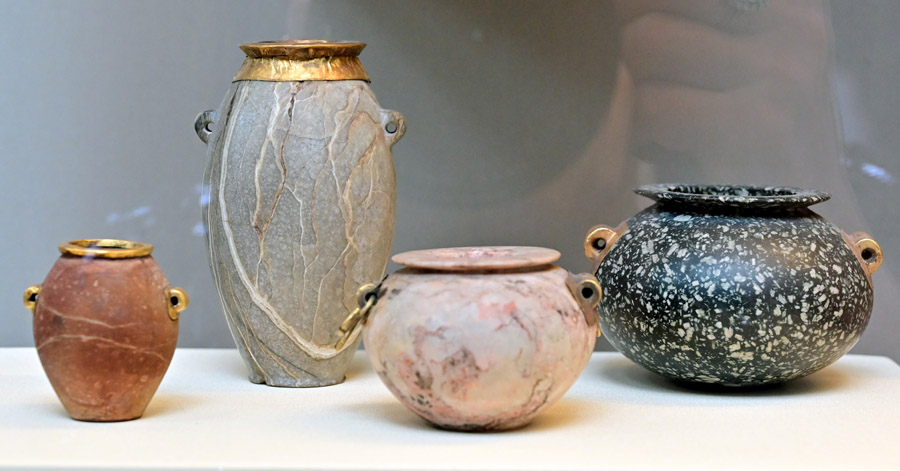
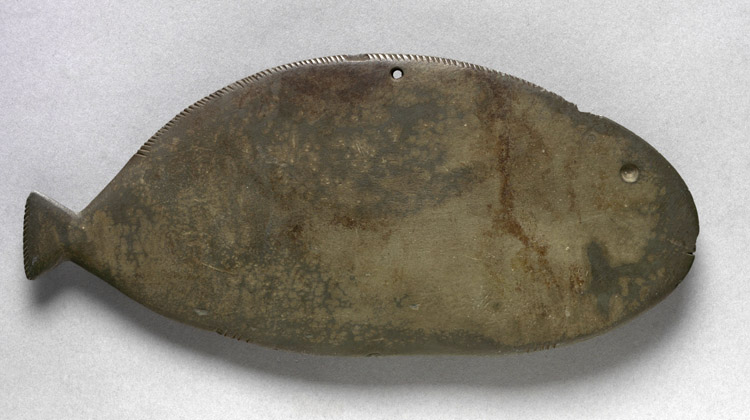
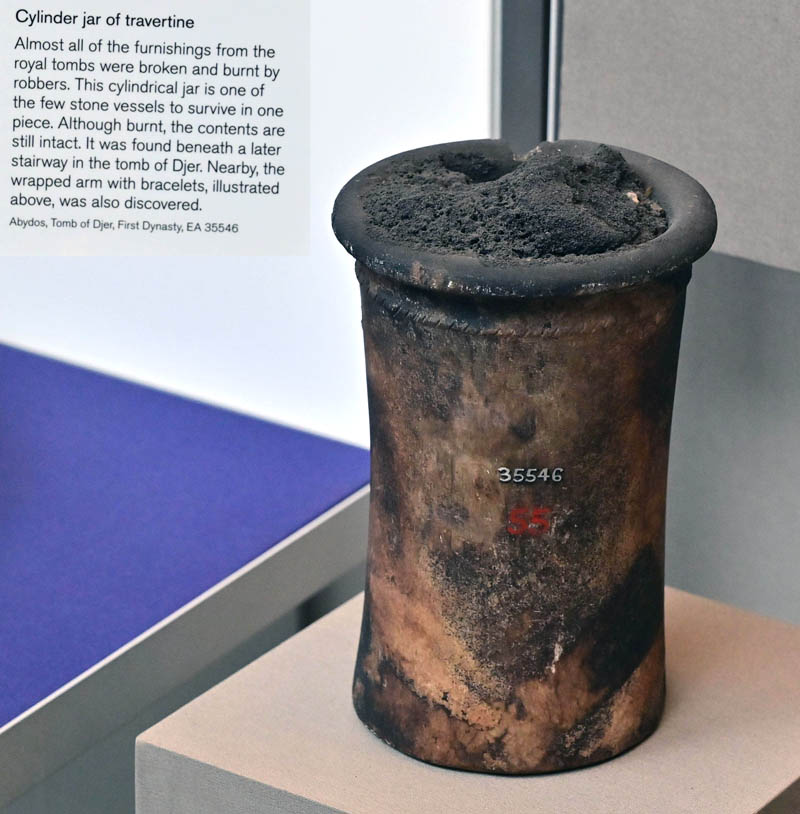
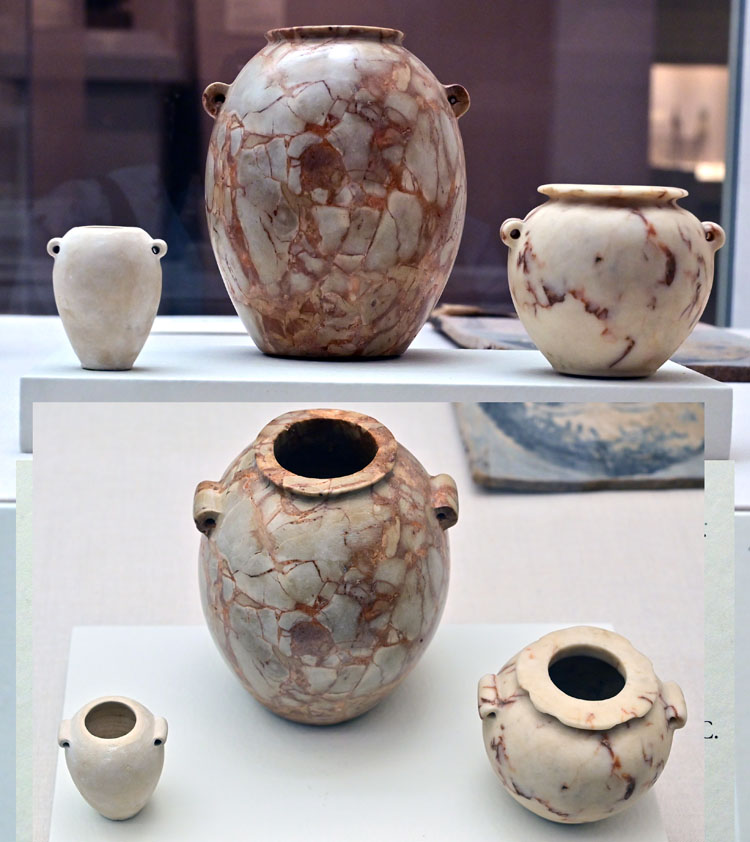
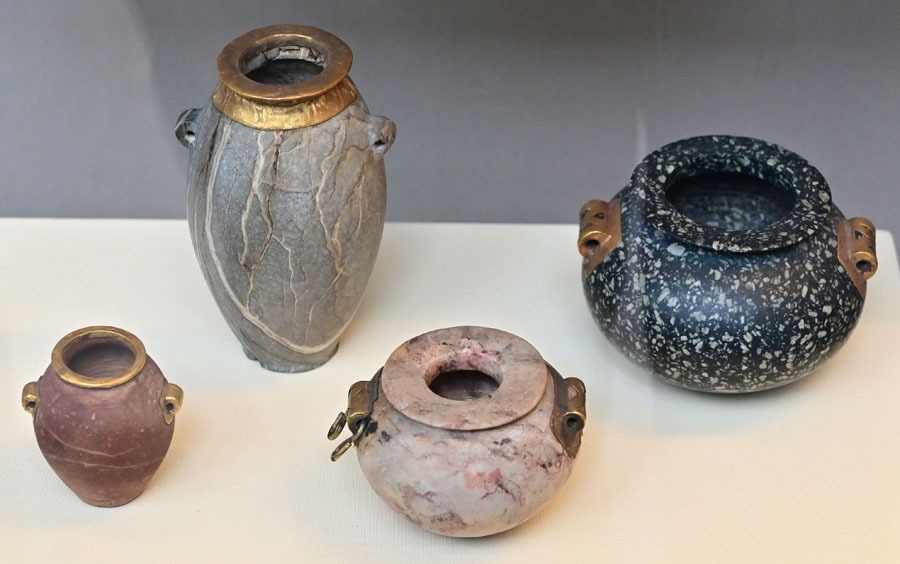
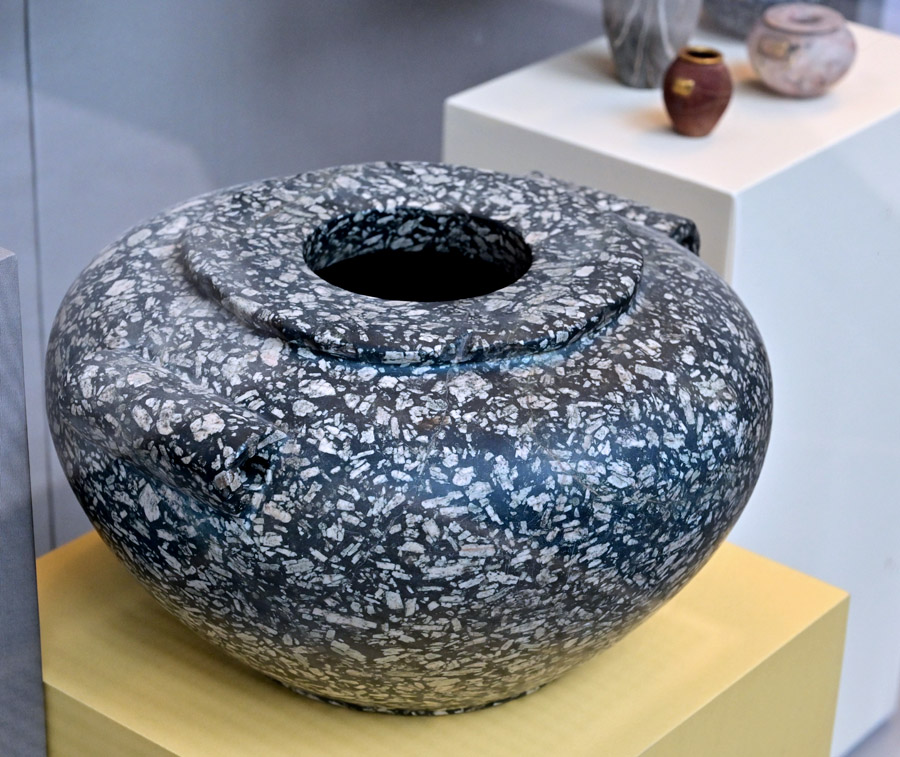
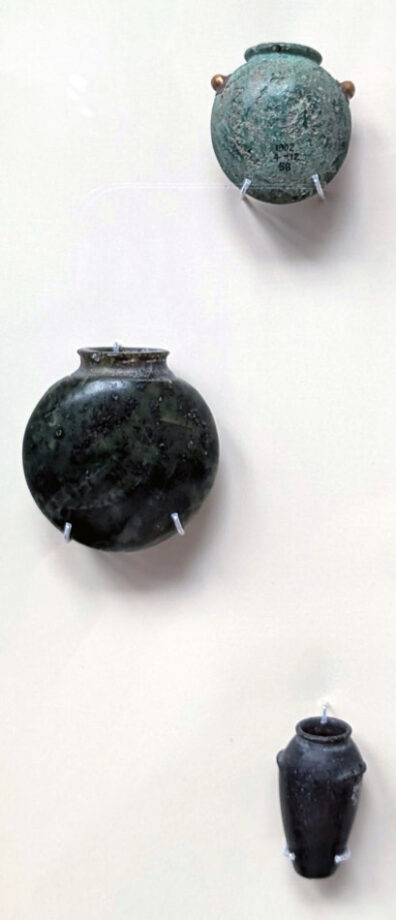
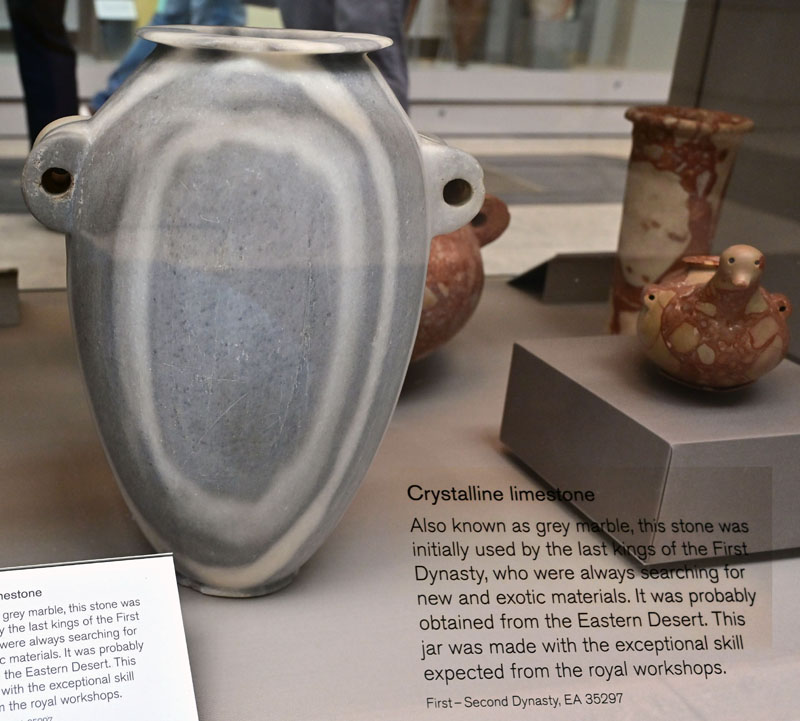
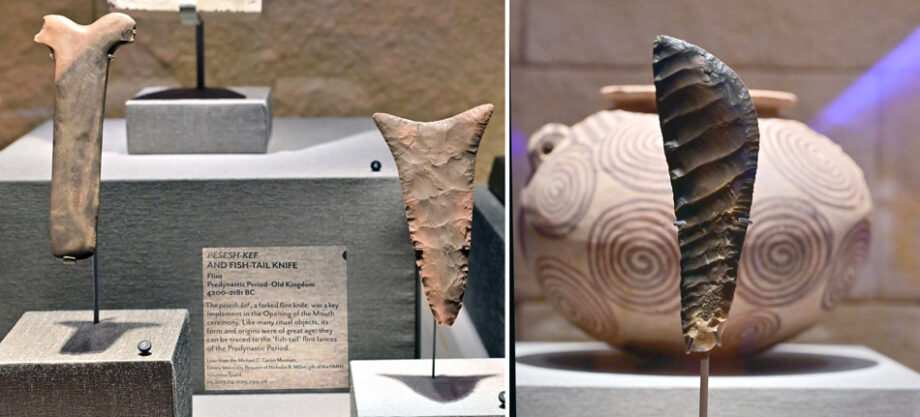
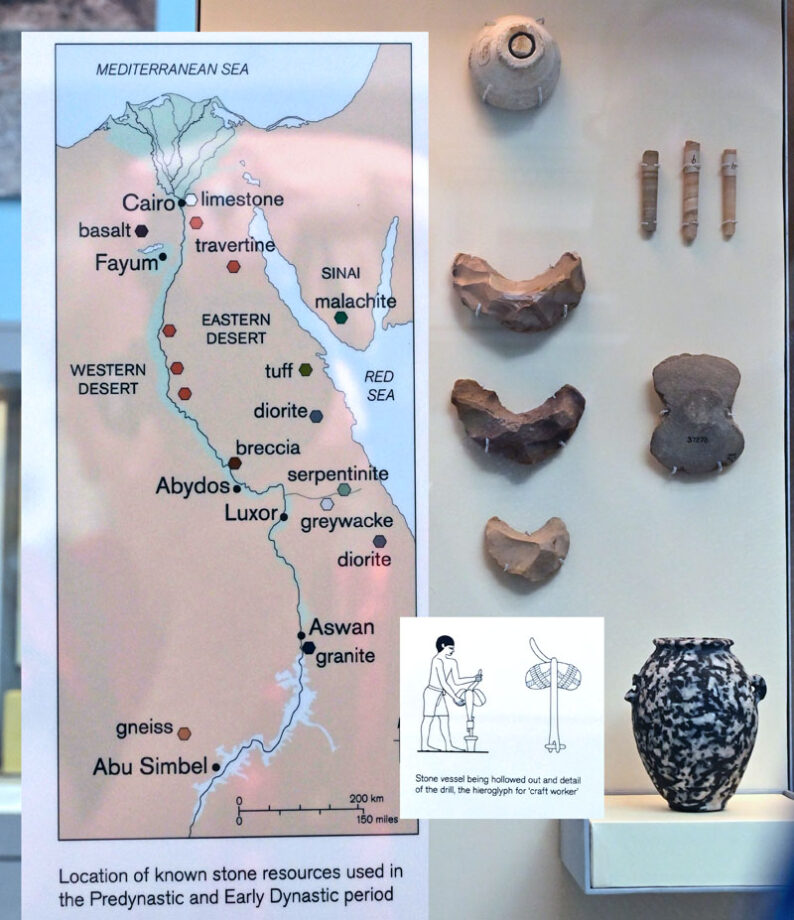
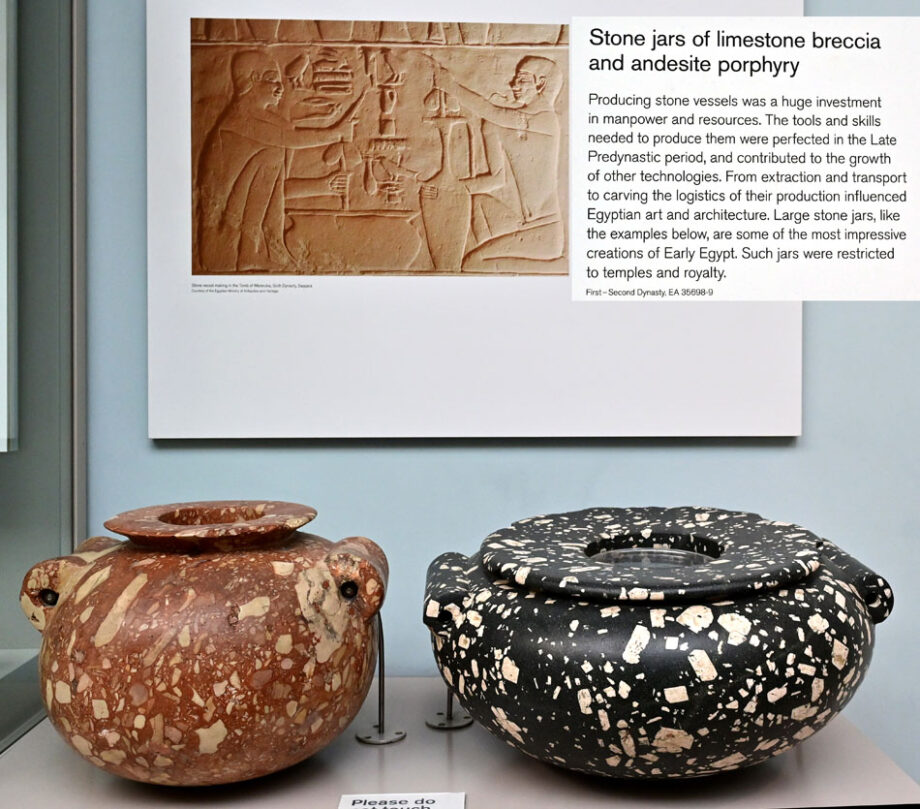
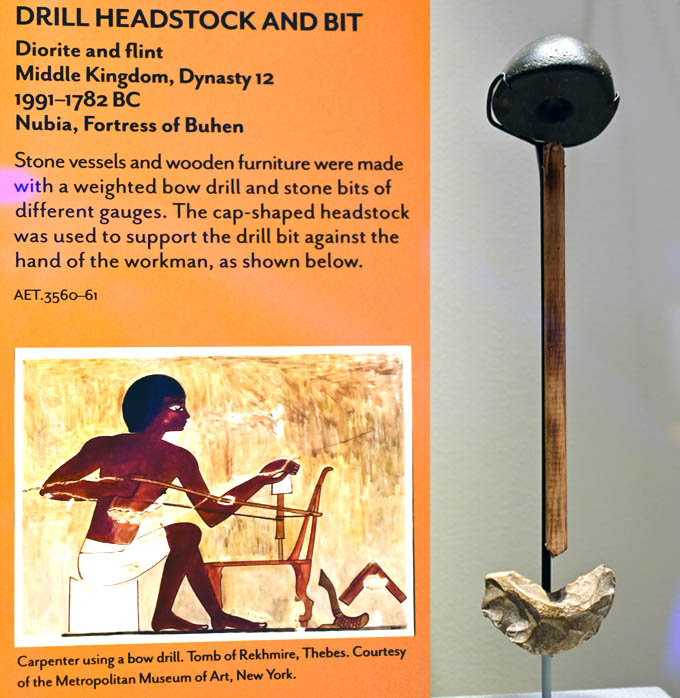
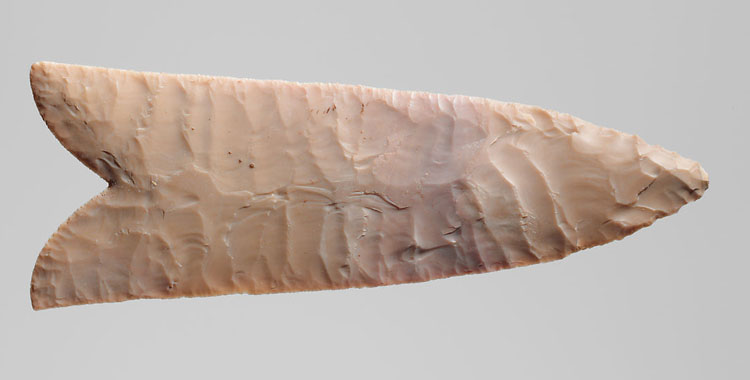
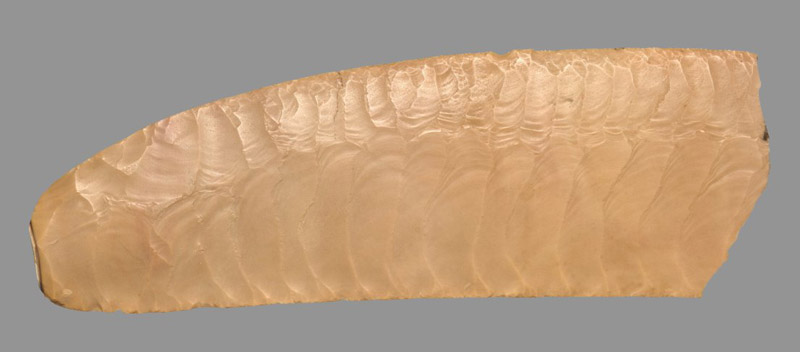
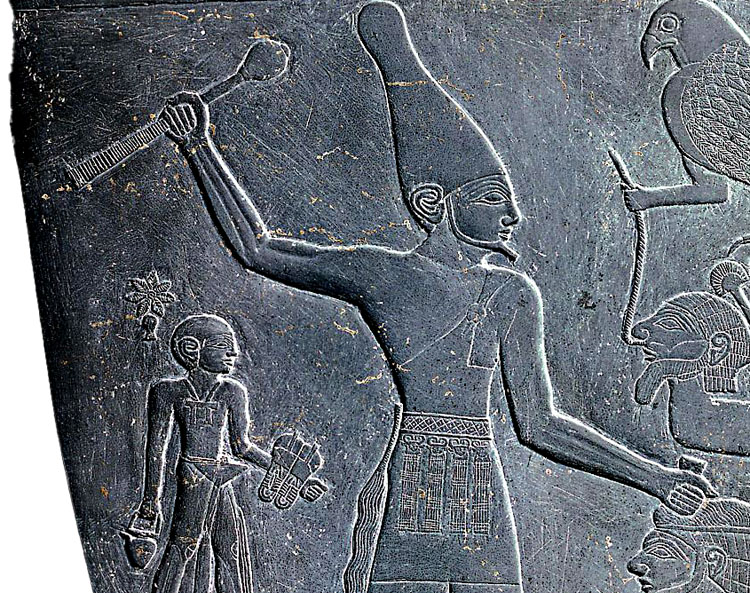
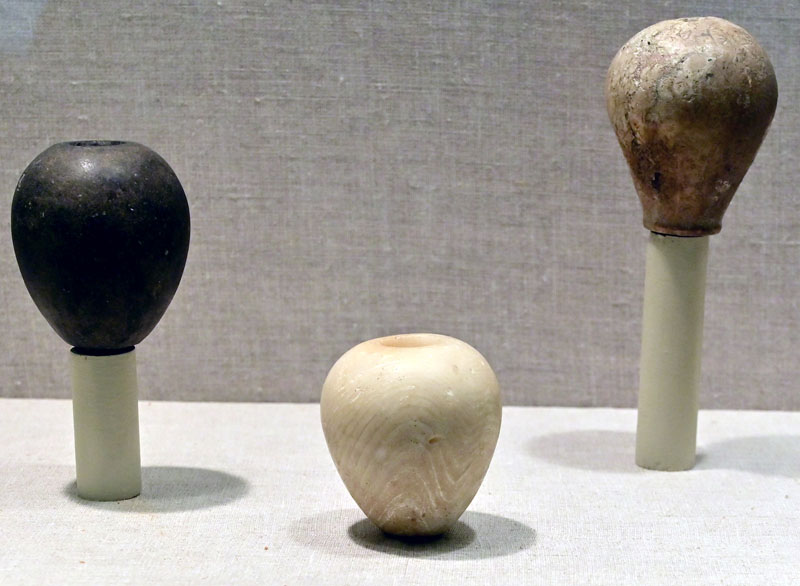
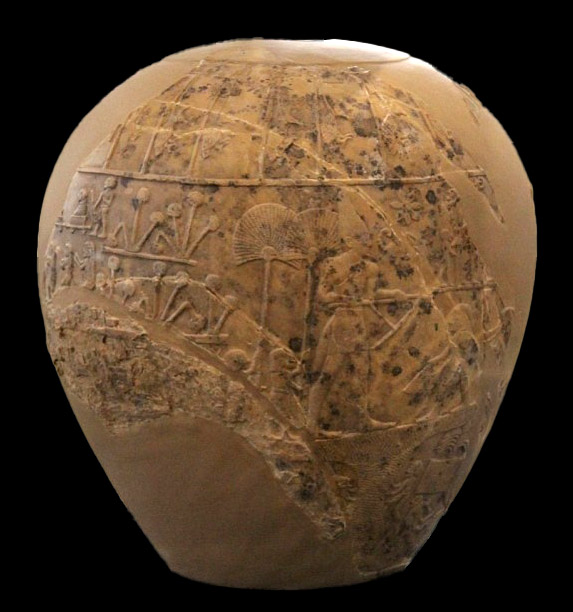
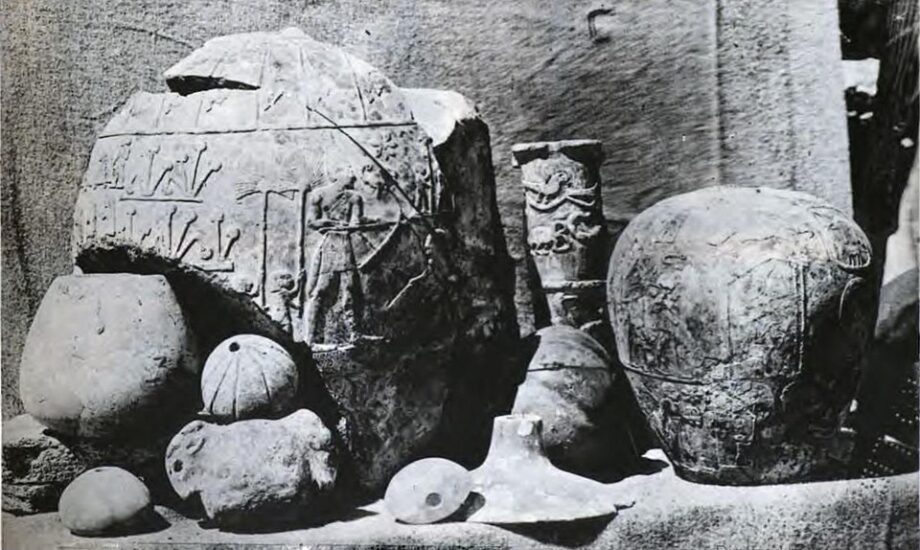
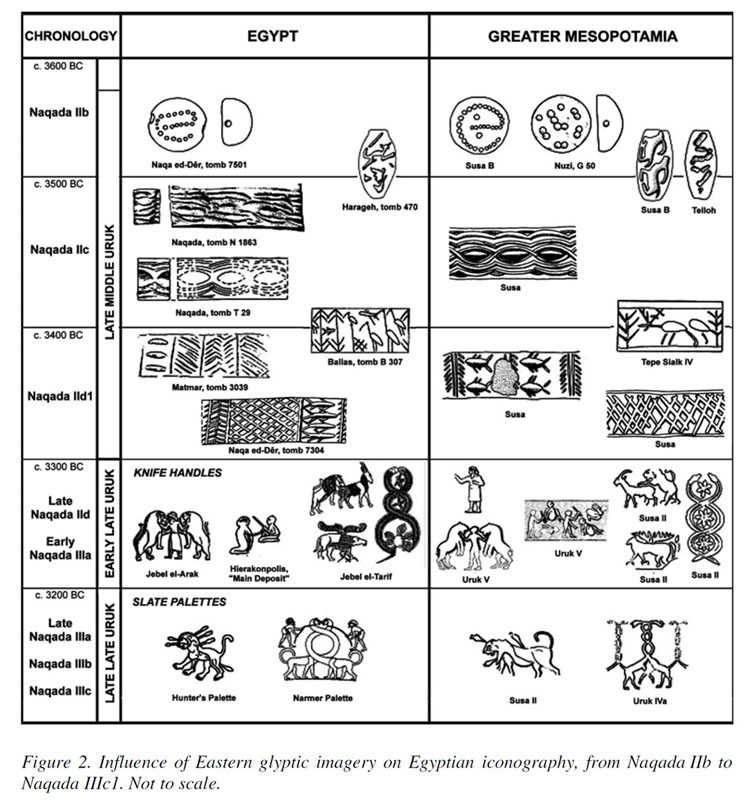
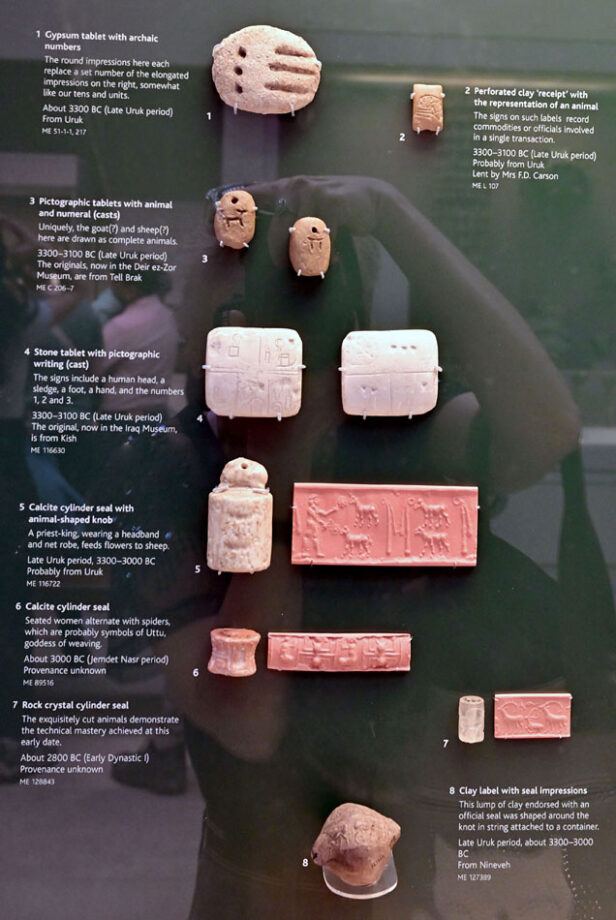
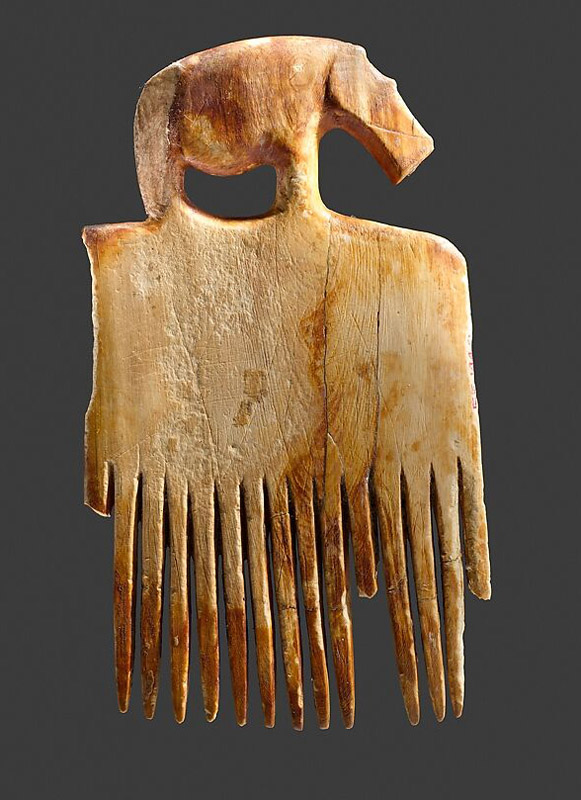
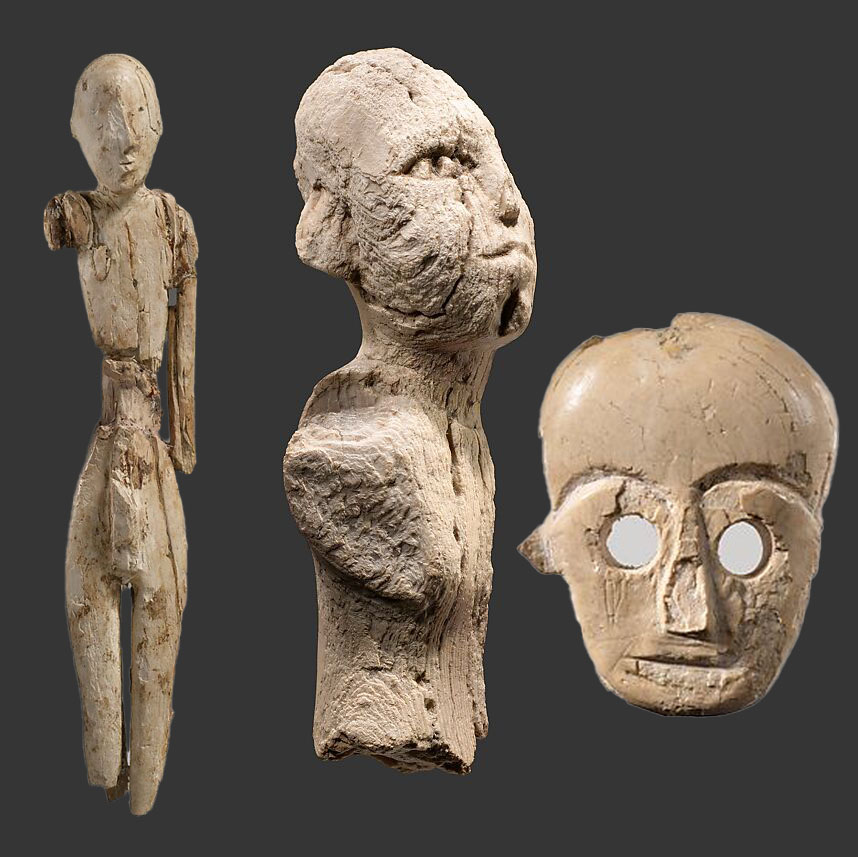
Were ultra-thin, high-precision stone vases really found under Djoser’s Step Pyramid? We dive into actual archaeological data to separate fact from myth.
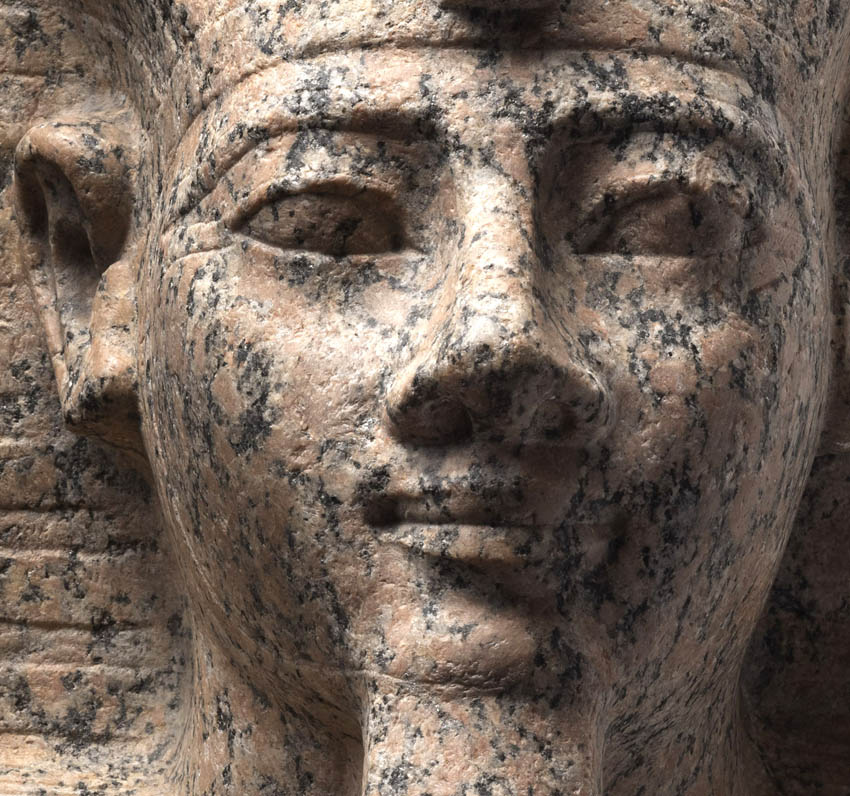
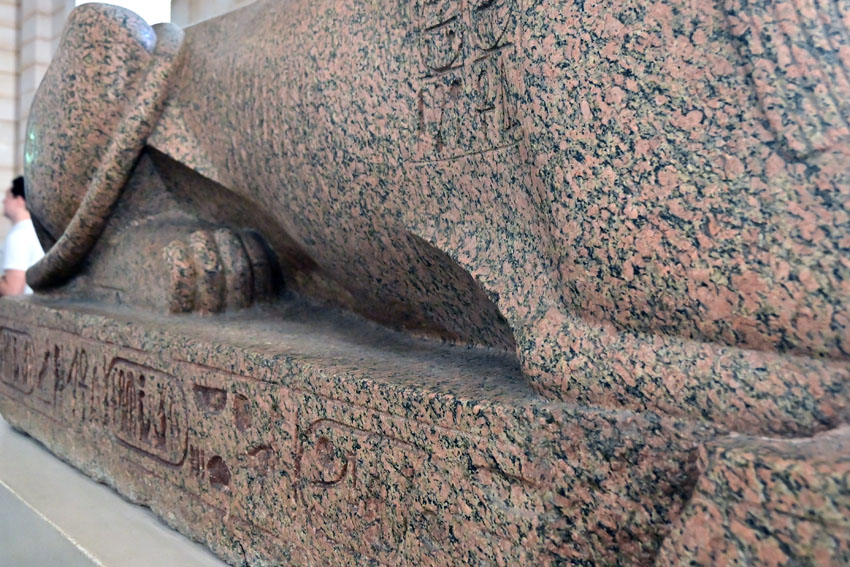
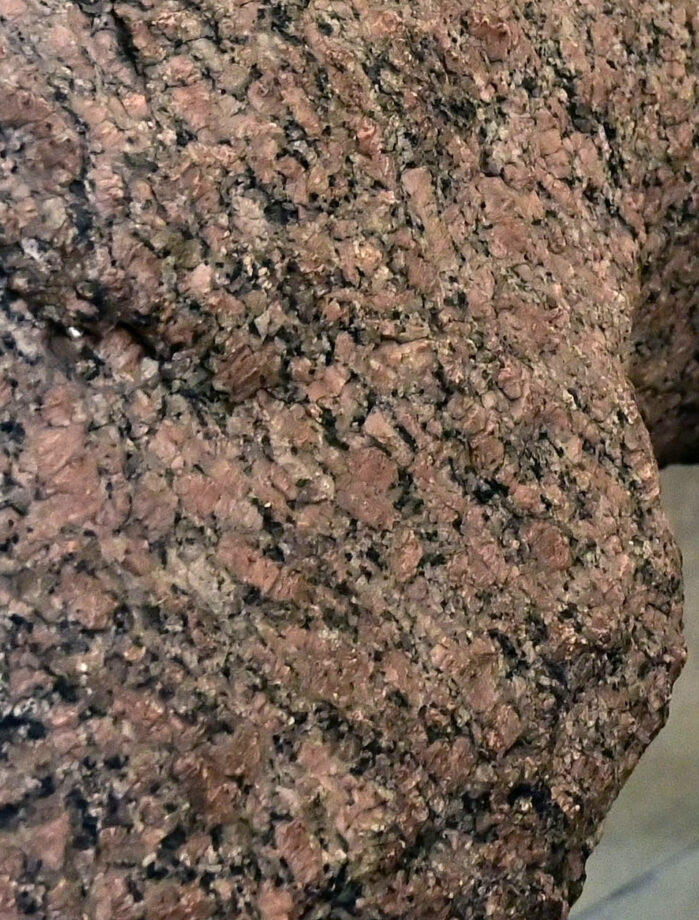
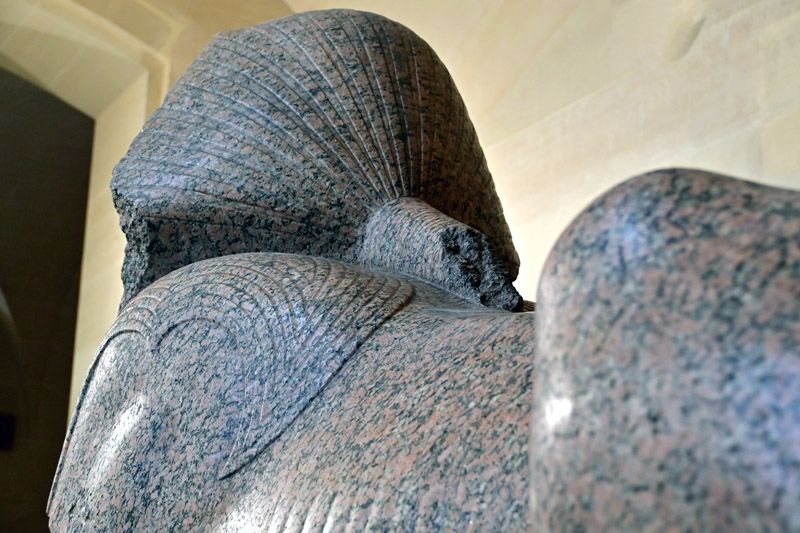
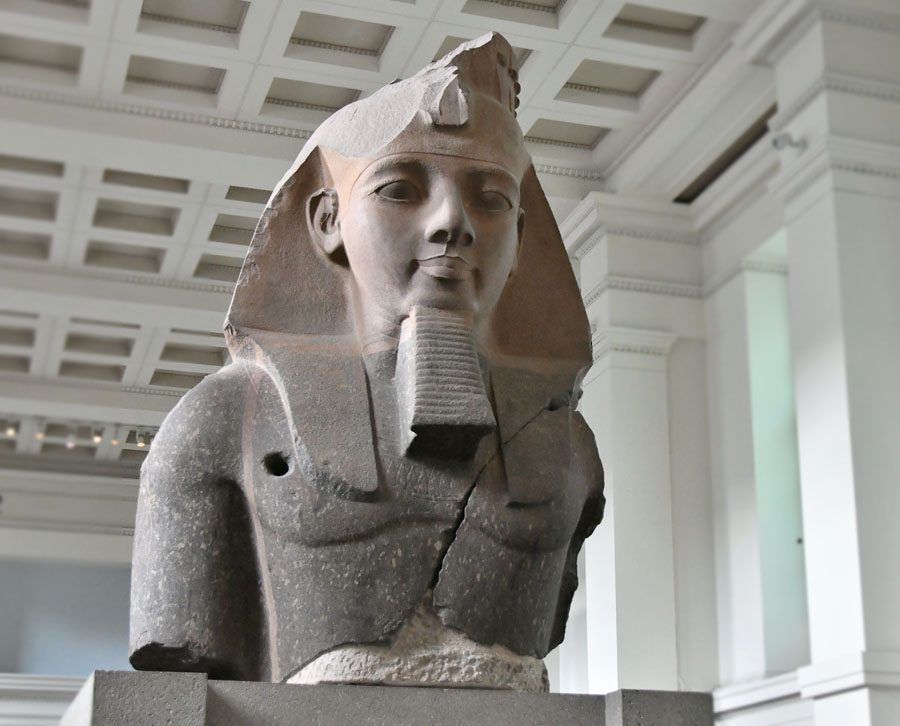
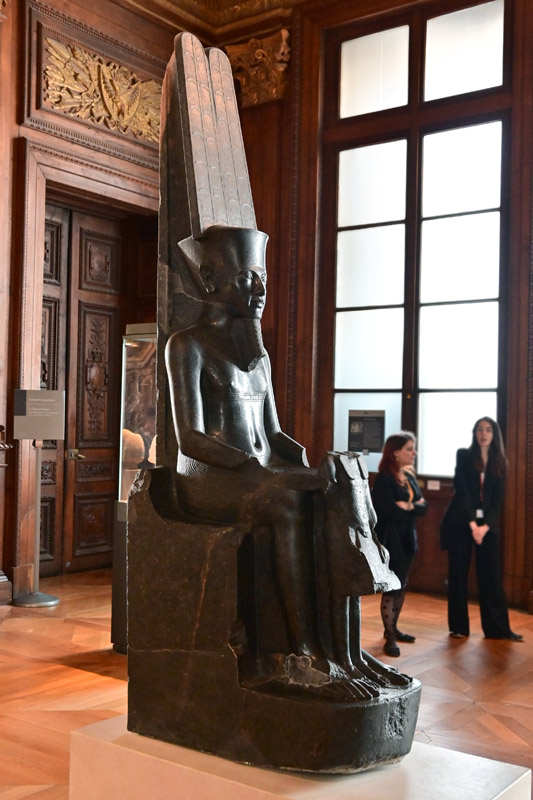
Amenhotep II, a statue closeup showing granite texture, Turin, Italy
This article describes hypothetical fraud risks in the nonprofit, art, and antiquities sectors. It does not accuse any specific organization or individual of committing fraud. Any real-world concerns should be evaluated through public records, provenance documents, appraisals, IRS filings, and regulator review.
Art, Non-Profits, & Tax Fraud
When a 501(c)(3) non-profit research organization is established, it unlocks standard tax-exempt benefits. While many non-profits operate strictly within legal bounds, the specific structure of an independent research foundation dealing with historical artifacts, private collections, and media production can theoretically be vulnerable to tax abuse if individuals choose to manipulate the system.
Historically, there are several common ways bad actors abuse 501(c)(3) research foundations for tax avoidance or evasion:
1. The Antiquities Appraisal Scam (Overvaluation)
This is one of the most prevalent forms of tax fraud involving physical artifacts and private collections.
How it works: A wealthy collector buys a physical item (like an unprovenanced artifact, art, jewelry, or ancient tool) on the private market for a relatively low price. They then have a friendly or corrupt “expert” write an appraisal assigning the object an artificially inflated, exorbitant value (e.g., buying it for $5,000 but appraising it at $500,000).
The Tax Write-Off: The collector “donates” the artifact to the tax-exempt foundation. They then claim a massive charitable deduction on their personal income taxes based on the fake, inflated appraisal value, effectively wiping out what they owe to the IRS.
2. Private Inurement and Benefit
By law, a 501(c)(3) cannot exist to financially benefit its founders or specific private individuals; it must serve a public good. Tax cheating occurs when the lines between personal finance and the foundation become blurred.
Funneling Personal Expenses: Founders might use the foundation’s tax-exempt funds to pay for luxury global travel, expensive camera equipment, vehicles, or high-end tech, jewelry, scanners, analytical equipment, under the guise of “field research” or “media production,” when the items are actually being used for personal enjoyment or private business.
Overpaying Insiders: The foundation might pay inflated “consulting fees,” salary, or honorariums to the founders or their immediate family members, looping untaxed donation money back into their own pockets.
3. Masking For-Profit Ventures as “Non-Profit”
Many independent research entities operate alongside for-profit media channels, podcasts, merchandise stores, or paid travel tour companies.
The Scam: If a group organizes highly lucrative international travel tours or sells expensive media access, they are supposed to pay standard corporate taxes on that revenue.
The Abuse: If they funnel those profitable business revenues directly into the 501(c)(3) foundation and characterize them as tax-exempt “charitable donations” or “educational program fees,” they are actively dodging the taxes an ordinary tourism or media company would legally have to pay.
4. Directing Donations for Personal Gain
A legitimate charity cannot accept donations that are explicitly earmarked to benefit a specific person. If a donor gives money to a foundation with a backroom agreement that the foundation will use that money to fund a specific founder’s private project, buy their personal art, artifacts, or pay for their family member’s vacation, it violates IRS laws.
Note: Just because an organization is a 501(c)(3) that handles private artifacts, artworks, or digital media doesn’t mean they are engaging in these practices. However, because independent foundations don’t face the same strict, institutional oversight as major universities or state museums, the IRS monitors them closely to ensure physical assets, travel expenses, and media revenues aren’t being used as a front for tax evasion.
Fraud Schemes that could happen:
If a non-profit organization were to actively exploit ancient artifacts or art for financial gain or tax avoidance, the scheme would likely leverage specific vulnerabilities in the antiquities market, appraisal system, and tax-exempt law.
To bypass the IRS:
1. The High-Precision Artifact Appreciating Scheme
Because many looted artifacts and some art lacks archaeological context or ownership, and are sourced from private collections or art and antiquities dealers rather than official digs, their true “market value” is completely subjective.
The Setup: A private individual or a founder purchases an unprovenanced, visually flawless artifact/object/artwork for a relatively low sum (e.g., $5,000) because it lacks historical pedigree and mainstream verification.
The Fabricated Appraisals: Armed with this “scientific proof” that the object possesses “impossible ancient beauty, precision, uniqueness” a friendly or internal appraiser assigns the artifact an artificially inflated astronomical valuation (e.g., $500,000), claiming it is a priceless relic of a famous artist or lost civilization.
The Tax Shield: The private collector formally “donates” the artifact or artwork to the 501(c)(3) foundation. Using IRS Form 8283, they claim a massive charitable deduction based on that inflated $500,000 valuation, wiping out their personal tax liabilities for the year while the art or artifact never leaves their immediate network.
2. Offsetting Production Costs for For-Profit Media
If creators run commercial media platforms (like paid YouTube channels, podcasts, travel agencies, research organizations, or premium video streaming services) alongside a non-profit foundation, the physical artifacts can serve as a conduit to hide taxable commercial revenue.
Flipping Commercial Expenses: Buying equipment, paying for international travel to Mexico, Italy, or Peru, and purchasing art, artifacts or other antique objects are heavy expenses. If a for-profit media company pays for them, those costs aren’t fully tax-deductible against normal income.
The Loophole: Instead, the creators can use tax-deductible public donations given to the foundation to fund the international travel, purchase the artifacts, and buy the gear under the guise of “scientific research.” They then use those exact same foundation-funded artifacts and equipment to generate high-traffic, revenue-producing content for their private YouTube channels or podcasts—essentially letting public donations pick up the tab for their commercial production costs.
3. Masking Commercial Tourism as Educational Travel
Many alternative history circles generate massive capital by hosting physical international expeditions to see these precision artifacts or art firsthand.
If a standard travel agency or tourism business sets up a luxury tour to a foreign country charging individuals exuberant fees, that revenue is fully taxable.
To cheat the system, an organization can structure these trips entirely through the non-profit foundation, labeling the ticket prices as “tax-deductible educational donations” or “field research fees.” This allows them to run a highly lucrative, commercial international travel business while paying zero corporate taxes on the incoming cash flow.
Why This Specific Scheme Fails Under Close Audit
While this looks clean on paper, the IRS maintains a specific Art Advisory Panel comprised of independent museum curators, geologists, and antiquities dealers specifically tasked with catching this exact type of fraud.
If an organization claims a massive tax benefit based on an unprovenanced art or artifact, forensic auditors will demand an ironclad chain of custody and an independent material analysis. The moment geologists point out that the stone composition looks modern or that the tool markings match modern paints or equipment rather than historical tools, the appraisal is rejected as a sham, the tax write-offs are invalidated, and the participants face heavy civil and criminal tax fraud penalties.
Possible selling of fake artifacts or art?
An organization operating under the banner of an independent research foundation could theoretically be used to market or sell modern reproductions as authentic ancient artifacts and art. Because entities in the alternative history space operate outside the strict oversight of traditional academic institutions and state-run antiquities ministries, the barrier to introducing unprovenanced or questionable items into the market is much lower.
If an independent foundation or its associated creators were to engage in selling or profiting from questionable artifacts, the operation would likely take one of several forms:
1. Private Antiquities Brokering
Because foundations studying these artifacts, art, objects build deep networks with private collectors, dealers and gallerists who buy and sell unprovenanced items on the open market, they can act as a bridge for private sales.
The Appraisal Boost: A foundation can use its media platform to highlight a specific item from a private collection, publishing reports that claim it displays fantastic qualities.
The Sale: By using their platform to publicly validate the object’s “anomalous nature,” they drastically increase its perceived value to wealthy collectors and enthusiasts. The object can then be sold privately or via high-end estate auctions for a massive premium, with the foundation taking a finder’s fee or a direct cut of the transaction.
2. Crowdfunded “Acquisitions”
Instead of a direct retail sale, an organization can use the physical artifact as a tool to raise capital via public donations.
The Strategy: The foundation claims it has located a “priceless, unrecognized ancient artifact” or ‘lost artwork’ in danger of being lost to a private collection or destroyed.
The Abuse: They launch a massive crowdfunding campaign to “rescue” the object for scientific study. Once the public funds the purchase, the object sits in the foundation’s private custody—often inside a founder’s home or private studio—serving as premium content for their paid channels while financed entirely by untaxed public charity.
The Legal Consequences
Selling a modern forgery as an authentic antiquity crosses the line from a historical debate into criminal wire fraud and grand larceny.
If an organization sells an item across state lines or internationally claiming it is a 6,000-year-old artifact when it was actually turned on a modern lathe, they face severe legal exposure. In the United States, both the FBI’s Art Crime Team and the IRS actively investigate organizations that use falsified historical claims to generate commercial revenue or secure fraudulent tax write-offs.
How to check the non-profit organization:
In general, if you donate money to your favorite non-profit organization, you do it to help their cause. It’s admirable and worth doing.
Because non-profits are legally required to be transparent, checking them for financial misconduct involves examining public records, applying IRS regulations, and reviewing asset provenance.
1. Auditing the Public IRS Form 990
Many tax-exempt nonprofits file Form 990 or 990-EZ, while very small organizations may file Form 990-N, which provides far less financial detail.
This document is entirely public and can be accessed by anyone via databases like ProPublica NonProfit Explorer or GuideStar. To spot potential tax evasion, auditors look for specific red flags on this form:
Schedule L (Transactions with Interested Persons): This section explicitly tracks whether the foundation is paying its founders, board members, or their family members. If a founder is receiving a massive “consulting fee,” or if the non-profit is renting property from a board member at inflated rates, it flags illegal private inurement (funneling charity money to private individuals).
Functional Expenses Breakdown: The Form 990 forces the organization to categorize its spending into Program, Management, and Fundraising. If “Program Expenses” consist almost entirely of international luxury travel or similar big expenses, while actual public educational output is minimal, the IRS treats it as a personal hobby masquerading as a charity.
Independent Contractors: The form lists the top five highest-paid independent contractors. If tax-exempt foundation funds are being paid directly to a founder’s private, for-profit business (like a video production company or a private contracting venture), it signals a conflict of interest meant to bypass corporate taxes.
2. Cross-Referencing Commercial and Charity Operations
When public figures operate a non-profit alongside highly profitable private entities (such as YouTube channels, podcasts, or paid global tour companies), the IRS analyzes how money moves between them:
Unrelated Business Income Tax (UBIT): If the foundation is used to run international travel tours that generate hundreds of thousands of dollars, that money might not be tax-exempt. The IRS checks if the tour revenue is being properly declared as commercial income or if it is being hidden as “charitable donations.”
Co-Mingling Assets: Investigators look at who actually owns the equipment. If high-end equipment is purchased using tax-deductible donations made to the foundation, but is actively used to generate profit for a private business or YouTube channel, it constitutes an illegal transfer of non-profit assets for private gain.
3. Investigating “Overvaluation” and Provenance Fraud
For organizations dealing with historical artifacts or private collections, checking for tax fraud requires looking at the physical objects themselves:
Submitting IRS Form 8283: When a private collector donates an artifact to a foundation for a tax write-off, they must file this form if the item is worth more than $5,000. It requires a certified appraisal.
Forensic Appraisals: To catch a fraud, the IRS can assign independent, institutional appraisers to audit the object or art. If an unprovenanced, potentially modern artifact was purchased for a few thousand dollars but appraised at hundreds of thousands to give a donor a massive tax shield, the appraisal is rejected, and both the donor and the appraiser face severe penalties.
4. Triggering a Formal IRS Investigation
If a citizen or an insider suspects an organization is actively cheating on its taxes, there are formal channels to initiate a regulatory check:
IRS Form 13909 (Tax-Exempt Organization Complaint): This is the official whistleblower document submitted to the IRS Dallas office (which handles exempt organizations). Anyone can file this with supporting evidence (such as public videos showing personal use of foundation assets, discrepancies in tour bookings, or questionable artifact transactions).
The IRS Whistleblower Office: If an insider provides concrete, non-public financial documents that lead to the recovery of stolen tax revenue, the IRS legally rewards the whistleblower with 15% to 30% of the collected taxes and penalties.
Ultimately, because these foundations rely entirely on maintaining a flawless legal status to keep their tax-exempt perks, even a preliminary IRS audit forces them to open up their bank routing records, travel receipts, and asset logs to prove where every dollar originated.
As you can see our world is a mess and honesty is not a virtue, and some non-profits can be shams while others do help the communities. We can only lead by example, and try to do our best in accordance with our personal values, aesthetic, and goals. This article explains a hypothetical risk structure. I am not alleging that any specific foundation has committed fraud. The proper questions are whether artifact donations, appraisals, Form 8283 acknowledgments, related-party benefits, or private-collection valuation loops exist.
Check out other articles below.
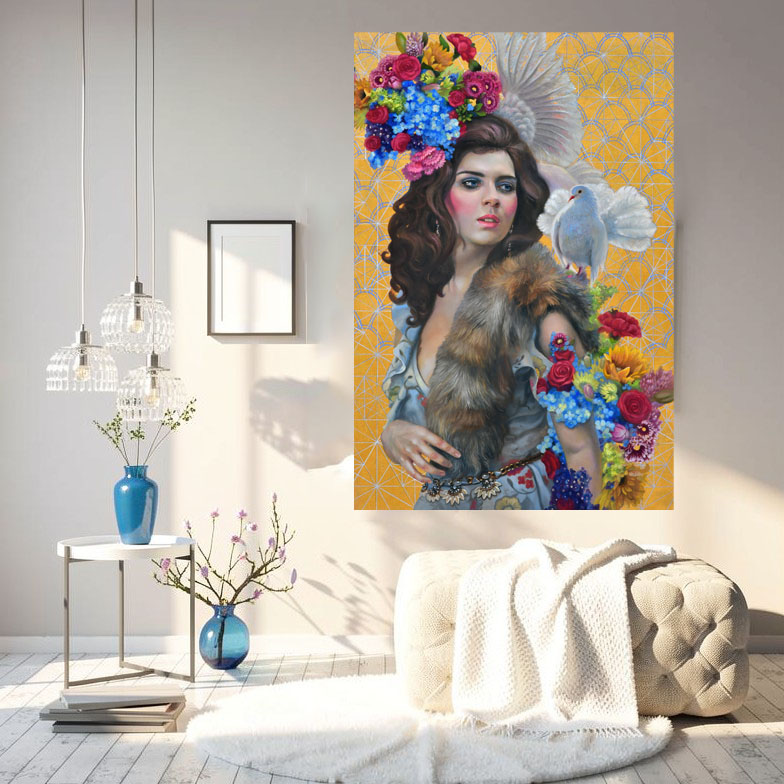
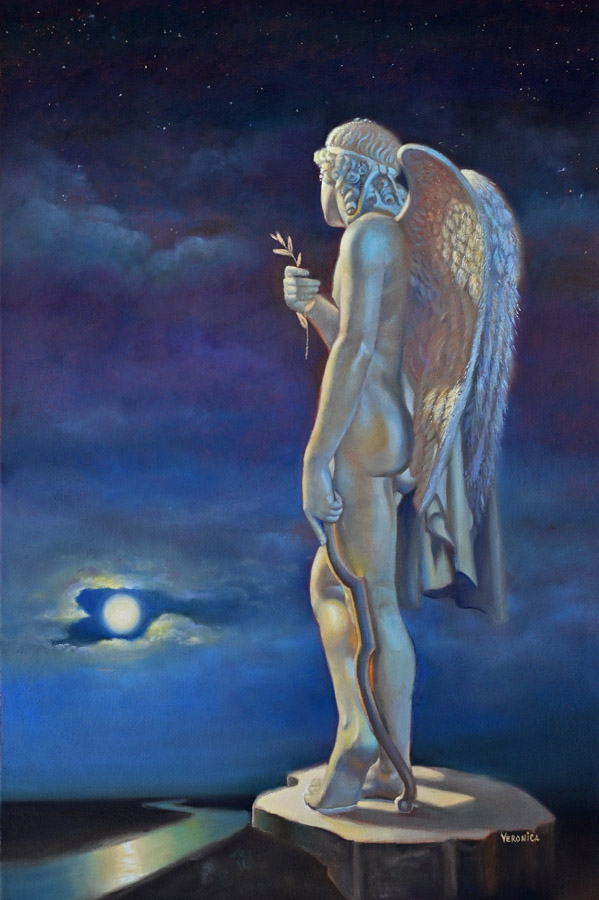
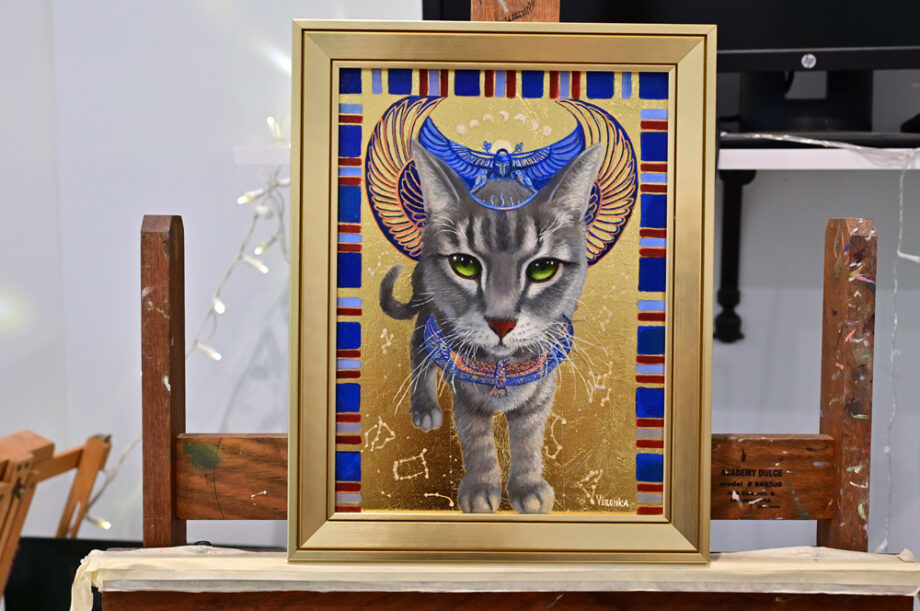
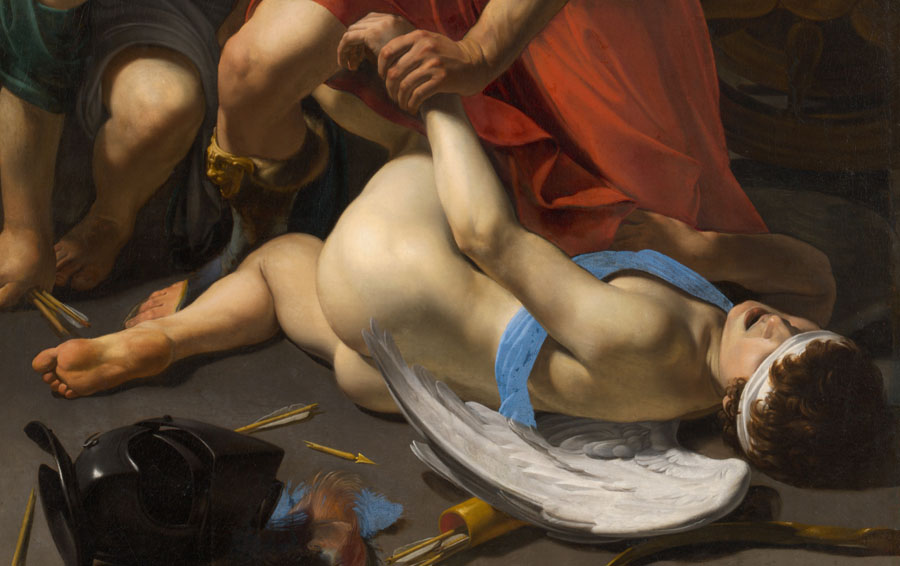
The Moon Realm: Cupid, 24x36in, oil on canvas, Veronica Winters
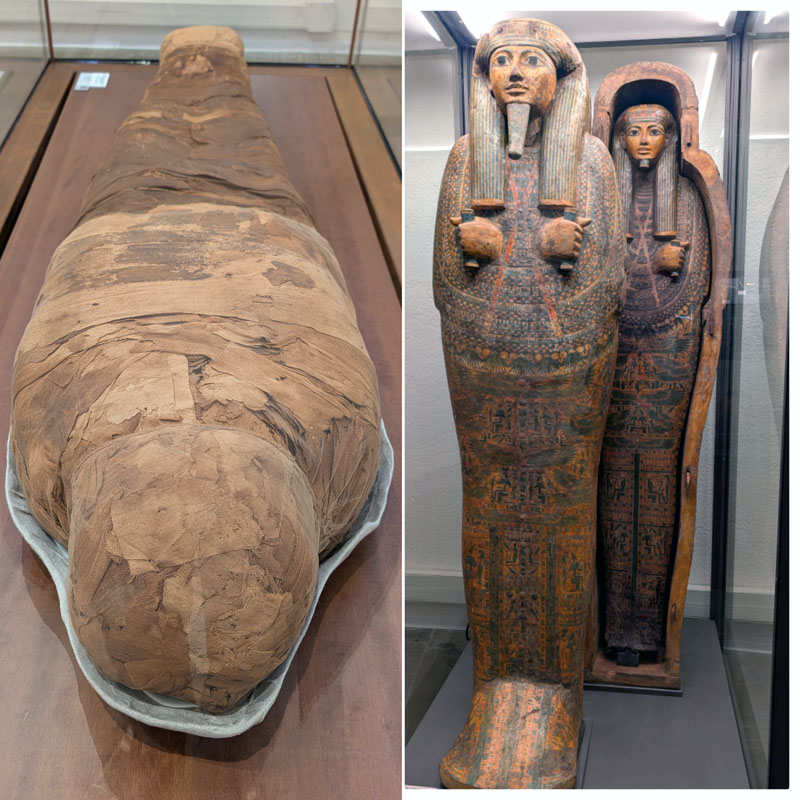
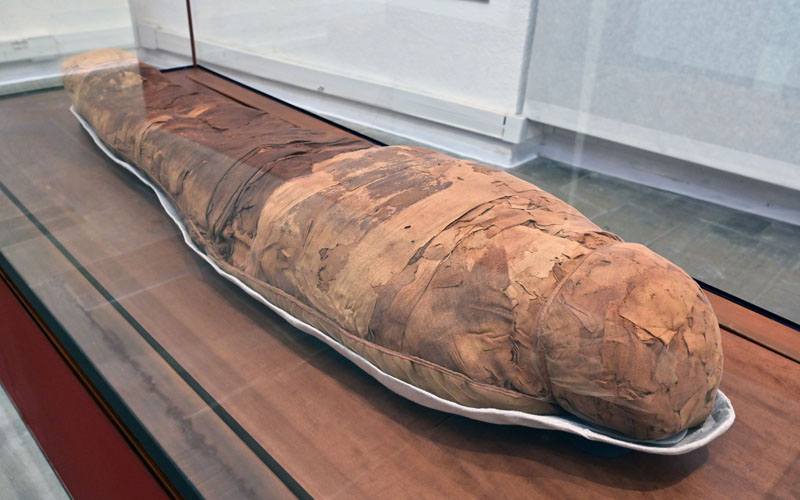
The Ankhekhonsu Mummy (left) and Sarcophagus (right), Bergamo, Italy
Visiting Bergamo’s Archaeological Museum: The Ankhekhonsu Mummy and Sarcophagus
Located in the charming Città Alta (Upper Town) of Bergamo, Italy, the Archaeological Museum is a compact regional institution well worth a short visit, especially for those interested in ancient Egypt. If you plan to go, note that many Italian museums close for a lunch break, and the entire exhibition here can be explored in under 10 minutes.
Address: Piazza della Cittadella 9, 24129 Bergamo.
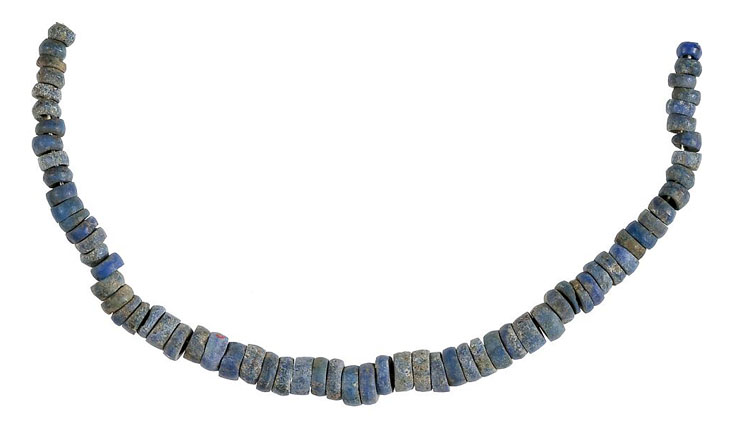
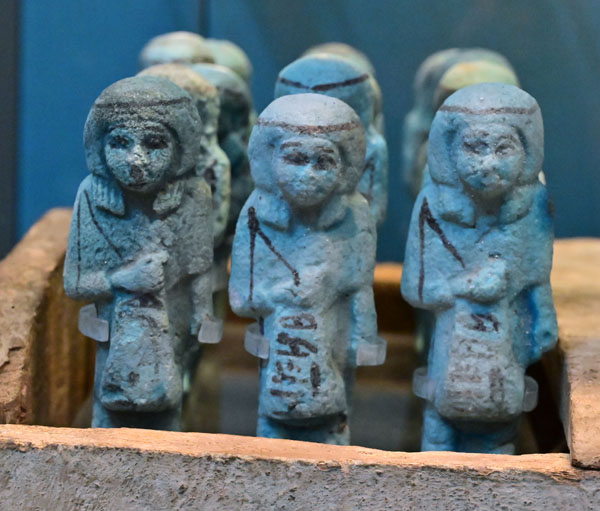
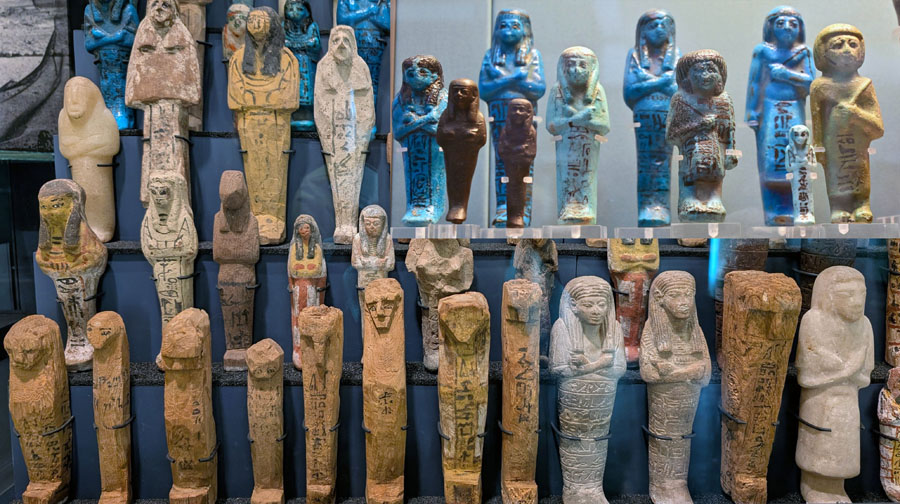
The museum is very modest in size. The centerpiece is the mummy and sarcophagus of Ankhekhonsu, a priest of Amun. Other displayed artifacts include shabtis (funerary figurines), bronze statuettes, amulets, and a faience necklace. Egyptian items are thoughtfully mixed with local Roman-era finds and other regional archaeological material.
For visitors seeking more extensive Egyptian collections in Italy, consider these excellent alternatives:
Sforza Castle in Milan
Archaeological Museum in Florence
Archeological museum in Turin
All three offer high-quality, varied, and well-preserved Egyptian artifacts on a much larger scale.
Beyond the museum, Bergamo — though relatively small — boasts an astonishing number of beautifully decorated churches. Their rich art and architecture often surpass those found in Venice or Milan, making them a must-see if you are traveling to Milan or Lake Como.
History and Provenance of the Egyptian Collection
The Archaeological Museum of Bergamo’s Egyptian holdings reflect the 19th-century European fascination with ancient Egypt, a period often called the “Epoch of the Consuls.” During this time, European consuls in Egypt played a major role in acquiring and exporting antiquities to museums across the continent.
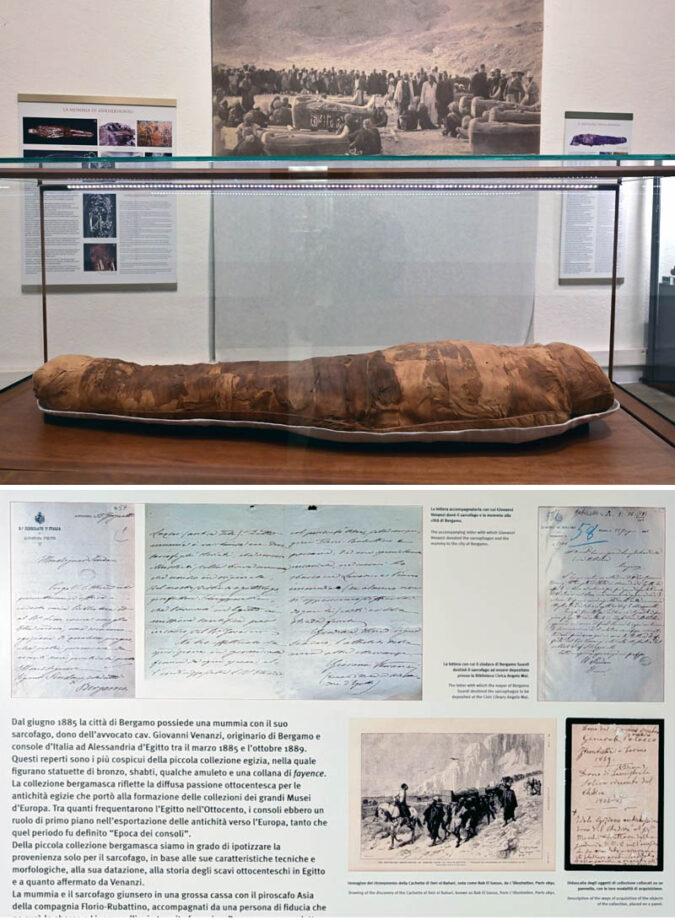
In June 1885, the city received its most significant Egyptian donation: a mummy and its sarcophagus, gifted by Giovanni Venanzi, a Bergamo-born lawyer who served as Italian Consul in Alexandria from March 1885 to October 1889. These two objects form the core of this tiny collection, which also includes three bronze statuettes, several shabtis, amulets, and a faience necklace.
The sarcophagus can be reliably traced thanks to technical details, historical context, and Venanzi’s own records. It arrived in a large crate aboard the steamer Asia of the Florio-Rubattino company, accompanied by documentation and an expertise from the renowned Egyptologist Ernesto Schiaparelli. Venanzi’s letter to the mayor of Bergamo confirms the sarcophagus originated from Luxor (ancient Thebes).
Ankhekhonsu’s sarcophagus belongs to the class of “yellow sarcophagi.” It was likely acquired shortly before 1891, when the official discovery of the tombs of Amun’s priests at Deir el-Bahari (Bab el-Gasus cache) took place. Many such sarcophagi had already been removed by clandestine excavators. The inscriptions identify Ankhekhonsu as a wab (pure) priest and scribe of the temple of Amun.
The origins of most smaller objects remain unknown. A few items carry partial provenance labels, such as gifts from Polish General Jlembiski (Turin, 1859), Temistocle Solera (received from the Khedive, 1864–65), and others linked to railway director Mr. Mocchi. In 2002, three additional Egyptian finds were transferred from Bergamo’s Natural Science Museum, including an “Egyptian gallinaceous mummy” (1902) and a mummy hand with a terracotta oil lamp (1933).
The Ankhekhonsu Mummy and Sarcophagus in Bergamo & letters of aquisiton showing the provenance of this mummy.
Restoration of the Mummy
The mummy of Ankhekhonsu arrived in poor condition after centuries of degradation and earlier looting. A clean cut through the bandages on the chest and head suggests past attempts to retrieve jewelry or amulets. The skull had become detached and was repositioned on a modern support made of cotton wadding, straw, wood shavings, and original bandage fragments.
Previous iron hooks used to secure it to a wooden board had caused further damage. Like many mummies, it suffered from environmental factors: humidity fluctuations, light exposure, mechanical stress, and possible issues from the original embalming process.
Recent restoration followed the principle of minimum intervention. Conservators stabilized the organic material by removing dust, pollutants, and mechanical stress without using glues or adhesives that could cause long-term contamination. The original shape was restored, and the wrappings were reinforced with a protective nylon tulle sewn with polyester thread over a linen ribbon.
Analysis confirmed the bandages are made of linen in a simple canvas weave with an S-twist. The wrapping spirals around the body, varying in width — narrower at the skull and pelvis, wider over the chest. A second, finer fabric layer was identified at the shoulders.
The ANKHEKHONSU’S MUMMY From the museum’s description: The mummy belongs to a man of Caucasian descent, who died at about the age of 40-45. He was between 168.65 and 177.7 cm tall, that is taller than the average for his times. His name, written on the sarcophagus, was Ankhekhonsu. He was a wab priest and a scribe in the temple of Amon Ra, in Thebes.
Its radiocarbon dating, obtained from a bone fragment, is 1107-912 BC. This data was obtained from the studies on Ankhekhonsu’s mummy with non-invasive investigation techniques. The skeletonized skull, which was exposed and placed on a ‘pillow’ made with bandages and textile material, is the only part of the body studied in an autoptic way.
Before the restoration, the mummy was placed on a wooden board and fastened with iron hooks on the abdomen and on the ankles. This arrangement allowed to display it vertically, upon its arrival in Bergamo. It was evident that the conditions inside the thick wrapping were not good, as documented by old radiographies. In the empty space left in the neck area there were vertebrae, phalanges and some teeth.
The mummy was subjected to computed tomography (CT) to carry out a thorough study without opening the bandages; the body was completely skeletonized and devoid of almost all anatomical connections. An endoscopy allowed us to explore inside the mummy and confirmed the state of alteration of the skeleton; it also allowed us to take samples without compromising its state of preservation. On the basis of the skull morphology it was possible to establish that the mummy belongs to a male adult, approximately between 40 and 45 years old, of probable Caucasian descent; in ancient Egypt genetic exchange was favored by the movement of different peoples. The ethmoid bone, at the base of the skull, is intact and this, together with the presence of decomposed brain tissue inside the cranial cavity, allows us to believe that the perforation to extract the brain during the embalming process did not take place.
The chest and abdomen section is filled with disarticulated bones belonging to the collapsed thoracic area and to the hands. Above them a wrap, probably made of fabric, could be the visceral package, used to fill the mummy after the organs had been removed. The arms had been bandaged separately. The forearm joint is intact, while the shoulders are dislocated. They were probably stretched along the sides and not crossed on the chest. The femurs and pelvis are located at the abdominal level, without connection, and the feet bones are scattered, too. Only the tibiae and fibulae are still properly connected, perhaps due to the fact that they were wrapped separately.
Ankhekhonsu’s Sarcophagus: A Masterpiece of the Third Intermediate Period
Ankhekhonsu (“The god Khonsu lives”) lived between the late 21st and early 22nd Dynasty (approximately 969–900 BC) during the Third Intermediate Period. His anthropoid sarcophagus, made of cedar wood, consists of a trough, outer lid, and an inner lid placed directly over the mummy. The shallow trough suggests it was originally housed in a larger outer sarcophagus that is now lost.
The wood shows 42 holes in the base, likely for drainage of mummy ointments and fluids. Three layers of stucco prepare the surface: coarser straw-and-mud mixtures underneath, finished with fine white gypsum plaster for the vibrant yellow background and multicolored paintings.
Key decorative features include:
Relief face with large eyes, defined ears, tripartite wig, and ritual beard.
Red stole over the shoulders and a broad collar with lotus petals.
Hieroglyphic inscriptions and a frieze of uraei and Maat feathers.
Ankhekhonsu and his wife, Henut-neferet (“Lady of the house and singer of Amun-Ra”), appear multiple times in offering scenes. This sarcophagus exemplifies the high-quality “yellow sarcophagi” of the 21st Dynasty, with shiny orpiment yellow pigment, Egyptian blue, iron oxide reds, and other colors.
Non-invasive analysis confirmed the pigments: orpiment (yellow), Egyptian blue (blue), iron oxides (red), and calcium carbonate (white). Some green and ocher tones likely come from later restorations.
This small but fascinating collection offers a personal glimpse into ancient Egyptian funerary practices and the adventurous 19th-century world of antiquities collecting. A quick stop in Bergamo’s Città Alta pairs perfectly with a deeper exploration of Italy’s richer Egyptian holdings in Milan and Florence.
Ernesto Schiaparelli (1856–1928) was a prominent Italian Egyptologist, director of the Museo Egizio in Turin (from 1894), and founder of the Italian Archaeological Mission (Missione Archeologica Italiana, or MAI) in Egypt. His work significantly expanded the Turin museum’s collection, making it one of the world’s leading repositories of Egyptian artifacts (with roughly 30,000 objects from his expeditions). Before leading major excavations, he reorganized the Egyptian collection at the museum in Florence (1881–1894). As director in Turin, he focused on building a world-class collection through systematic fieldwork rather than just purchases.
Major Excavations and Discoveries:
In 1902–1903, with support from King Vittorio Emanuele III (and later the Italian Ministry), Schiaparelli established the MAI. Between 1903 and 1920, he led about 12–13 excavation seasons across 11 sites, primarily in northern and southern Egypt. The mission operated under official concessions from the Egyptian Antiquities Service and used the partage system (dividing finds between the excavators and Egypt).
Schiaparelli’s campaigns covered a wide range of periods and sites:
Valley of the Queens (1903–1906): Pioneering systematic work here (with collaborator Francesco Ballerini). He explored over 80 tombs. The standout discovery was the tomb of Queen Nefertari (QV66), great royal wife of Ramesses II, in 1904. Though looted in antiquity (mummy and treasures gone), it is renowned for its exceptionally preserved, vibrant wall paintings. He also found tombs of princes (sons of Ramesses III) and other royals.
Deir el-Medina (1905 onward): The workmen’s village for those who built the royal tombs in the Valley of the Kings. In 1906, he discovered the intact tomb of Kha and Merit (TT8), an architect and his wife from the reign of Amenhotep III (c. 1400 BC). This tomb, with its complete funerary equipment, is one of the most important non-royal discoveries and is displayed in Turin.
Giza (Western Cemetery, from 1902): Italian concession in the southern section (shared with German and American teams). Focused on Old Kingdom tombs.
Heliopolis (1903–1906): Excavations in the temple area (“Tempio del Sole”), uncovering structures, artifacts, and evidence from various periods, including a prehistoric village.
Other sites: Asyut/Assiut (rock-cut tombs, Middle Kingdom material), Hermopolis Magna (initially for papyri), Gebelein (Predynastic burials), Qaw el-Kebir, and Aswan (including the tomb of Harkhuf).
His work spanned Predynastic to New Kingdom periods, yielding artifacts that illuminated daily life, religious practices, royal burials, and more.
Legacy and Publications of the egyptologyst:
Schiaparelli’s excavations enriched the Museo Egizio immensely and professionalized Italian Egyptology. Many finds remain key exhibits today, including material from Nefertari’s tomb and the Kha/Merit assemblage. He published scholarly works such as studies on the Egyptian Book of the Dead, religious feelings of the Egyptians, and reports on specific tombs (e.g., La Tomba Intatta Dell’architetto Kha, 1927). He died on February 14, 1928. Modern projects continue to study and publish his unpublished excavation records.
In regards to the Bergamo’s mummy, Schiaparelli provided an expertise (authentication/report) for the Ankhekhonsu sarcophagus and mummy when they arrived in Italy in 1885 — consistent with his expertise as a leading Egyptologist and museum director by that time.
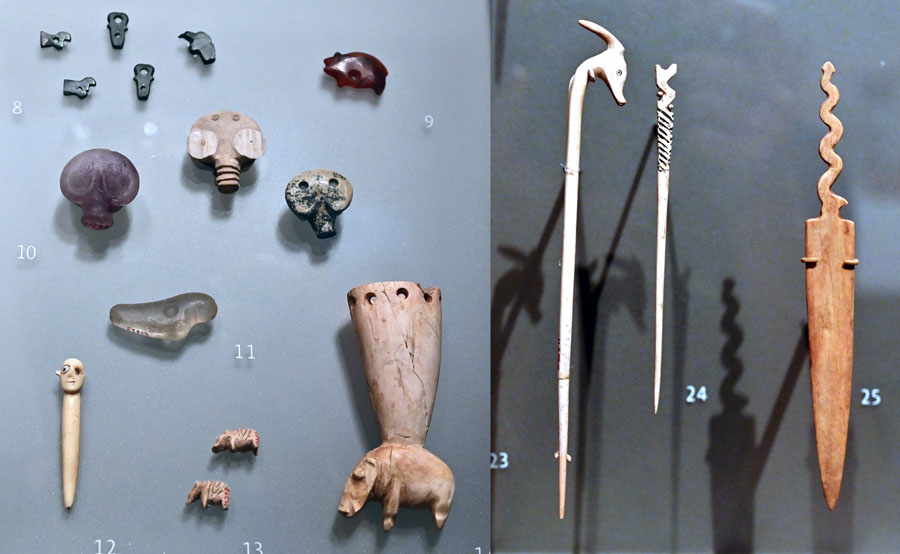
Naqada period amulets and hairpins at the MFA Boston, USA. These are examples of ancient Egyptian amulets (left).
Amulets in Ancient Egyptian Culture
Ancient Egyptians placed great faith in amulets, believing they possessed powerful magical properties that could protect, heal, and aid the deceased in the afterlife. The Egyptian language had four main terms for these objects: meket, nehet, sa, and udjat (or udja). The first three conveyed ideas of vigilance and protection, while udjat carried the same sound as the word for “well-being” and referred to the protective Eye of Horus.
The Power of Amulets
An amulet’s effectiveness depended on several factors:
Its shape and symbolic form
Magic formulas or spells engraved upon it
The material it was made from
Its color
Different materials and colors carried specific meanings:
Lapis lazuli symbolized youth and vigor.
Turquoise represented fertility and rebirth.
Green stones such as feldspar and serpentine evoked fertility, life, and resurrection.
Red jasper embodied fire, blood, and vital life force.
When precious stones were too costly, Egyptians frequently used faience — a glazed ceramic that could be colored to imitate more expensive materials like turquoise or lapis lazuli.
How Amulets Were Used
Amulets were worn or placed in various ways:
Hung individually around the neck or strung into necklaces
Sewn onto clothing
Wrapped within mummy bandages
Set into finger rings as bezels
Common Types and Their Meanings
Divine Figures and Symbols Many amulets depicted gods and goddesses, placing the wearer under their divine protection. Popular symbols included the Isis knot (tyet) and the udjat eye (Eye of Horus).
Animal Forms Animals were common because many gods manifested in animal form and because of the creatures’ perceived special qualities.
The frog amulet promised fertility to the living and regenerative powers to the dead.
The scarab beetle, often placed on the mummy’s chest, symbolized renewal and resurrection. The so-called “heart scarab” bore a magical spell on its underside instructing the heart not to testify against the deceased during the Weighing of the Heart ceremony (psychostasis) in the afterlife judgment.
Human Body Parts Amulets shaped like parts of the human body were believed to heal, strengthen, or protect specific areas from illness and injury.
These small but meaningful objects formed an important part of the Egyptian collection in Bergamo’s Archaeological Museum. Their presence alongside the mummy of Ankhekhonsu helps illustrate the rich funerary beliefs and protective magic that accompanied ancient Egyptians into the afterlife.
From Standing Against Mainstream Pressure to Hosting Unchallenged Speculation?
During the COVID pandemic, Joe Rogan faced heavy criticism from outlets like CNN and NPR. They mocked him by turning his photo yellow and calling ivermectin a “horse de-wormer.” This seemed designed to discredit anyone who stepped outside the mainstream view. As a longtime NPR listener, I found their coverage so misleading that I stopped tuning in. That familiar feeling of dissonance — when people say one thing while reality suggests another — stayed with me.
“Trust the science” became a slogan that many felt was used in questionable ways. Lockdowns, forced testing, masking, vaccine mandates, online bulling, and canceled surgeries created real hardship for millions. Yet after the pandemic, few of the experts, politicians, or tech leaders who shaped those policies faced serious investigation or consequences. This lack of accountability left many people uneasy.
Joe Rogan stood out at the time for defending personal choice, freedom, and independent thinking. As a regular listener, I appreciated his variety of guests and his apparent desire to explore various ideas openly. But over time, something seems to have changed.
These days, Rogan’s show often features “alternative” archaeologists, researchers, and people who present themselves as victims of the scientific community. They speak with great confidence about ideas that challenge mainstream views. Guests like Terrence Howard, Billy Carson, Jimmy Corsetti, Ben van Kerkwyk, Dan Richards, David Grusch, Christopher Dunn, Filippo Biondi, and so many others bring dramatic stories — some about ancient civilizations, lost technologies, or extraterrestrial precision. To me, many of these episodes feel more like engaging science fiction than careful inquiry.
A common pattern appears: Rogan and his guest begin by criticizing mainstream scientists for alleged problems like gatekeeping, arrogance, or hiding evidence.
Scientists are trashed for (and sometimes rightfully so):
misinformation
inflated egos
gatekeeping
arrogance
close-mindedness
pursuit of status
Then Rogan and his guest spend hours exploring insane new interpretations that they suggest experts have ‘missed’ or ignored. What concerns me is that these claims often seem presented as facts rather than as speculation/opinion. One storyteller after the next tells 10 million followers of Rogan about the super-precision in Egyptian stone vases, underground plant under the pyramids, aliens descending from the darkness. The result is horrific. The show rarely presses hard on the evidence behind them or thoroughly examines the guests’ credentials. Rogan appears to believe and accept many of their stories more readily than he once challenged official narratives. Buddies get free pass intentionally misleading a vast audience.
Humans are imperfect everywhere — in mainstream science, alternative circles, and podcasting alike. Inflated egos, desire for attention, and financial motives can appear on any side. Rogan himself often says he’s “just a comedian” and not to take him too seriously. Yet with leadership and millions of listeners comes responsibility. Rising to the occasion is a doable challenge for an extraordinary person like Joe.
I’m not asking for perfect balance, but for more consistent skepticism. It seems reasonable to check credentials, published work, and supporting evidence with the same rigor applied to mainstream guests. When claims involve super-precise ancient artifacts, hidden structures, or extraordinary reinterpretations of history, shouldn’t those story-tellers face tougher questions?
Many of these guests are articulate and confident. They tell compelling stories, build audiences, sell books, tours, and attract attention. Some appear to promote specific narratives while dismissing well-researched evidence. This approach can leave listeners with dramatic but poorly supported ideas. Multiplied across millions of listeners, it might contribute to widespread confusion rather than clearer understanding.
Some guests with no degrees or credentials of published research whatsoever show off as experts and perpetuate unsubstantiated claims because of their charm and confidence. What those guests actually do talking on podcasts:
They (often intentionally) conflate different topics, misguiding people. In other words, the absence of evidence is replaced by conflation or (unsupported by facts) opinion.
They show deliberate ignorance of existing literature/data/evidence/research in favor of fabricated/imagined/speculated data.
They repeat the same lie over and over again to drain you out of your own judgment, so you begin to repeat their nonsense!
They look like geniuses or experts while nothing valid is published in the scientific community under their names. (And to publish anything of value requires a lot of work and research). In other words, they pose as professionals without documentation.
They show no shame presenting speculative stories as the truth or fact.
They often express a victim syndrome ‘being an outsider.” They often divert a conversation about a specific argument by becoming a victim: instead of replying with valid arguments they say the scientific community hates them.
Some belong to a cohort of friends pedaling specific narratives and unsupported claims.
They search for credibility by association with other scientists, doing name-dropping at the right time to prove their point. However, not every scientist is honest just like not every ‘outsider’ is.
They talk with confidence about sciences and archeology without any substance, knowledge or scientific background.
They are well-spoken, talented actors with fancy accents or rhetoric.
They argue that by being there they know things. However, just by visiting the archeological site as a tourist doesn’t make you a researcher, archeologist, or a person who speaks the truth.
Some try to smear or troll scientists who speak against their stories that should be classified as science fiction, not facts.
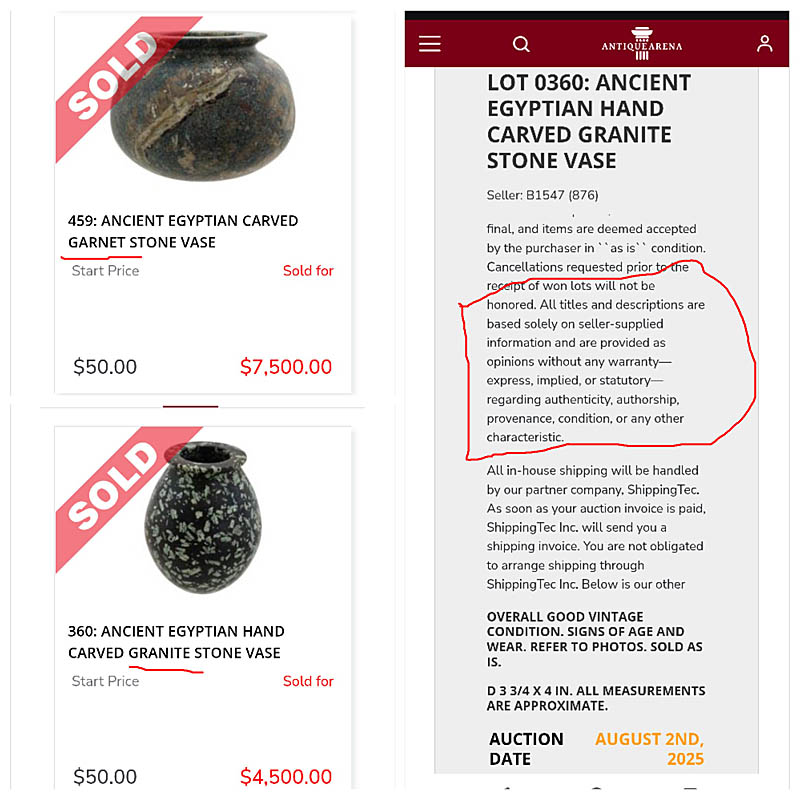
A few pump the art/antiquities market prices with their stories.
They also promote their books, personalities, speaking gigs, tours and videos via nonsense content.
But most importantly, they magnify ignorance and confusion. Their inability to read available literature translates into massive, perpetuated ignorance online. Multiplied across millions of listeners, it contributes to widespread nonsense that’s often painful to listen to because of this hubris and dishonesty.
Are people acting in bad faith? We want to trust the selected guests as we hope to learn something new. Guests can be mistaken, enthusiastic, or genuinely convinced of their ideas. Although, some have no shame or moral compass to tell the truth. Therefore, distinguishing solid evidence from speculation requires careful work — work that feels completely missing on the show.
To start, let’s check each guest’s credentials, publications, and relevance to the discussion equally (on both sides of the isle). If you’re an aerospace engineer, show credentials. If you’re an alternative archeologist and researcher, show your published research. If you’re a neuroscientist, show your published record, please and so on. Otherwise, your genius is self-proclaimed. All camps have bad apples–alternative or not– they are plugged by the same human factor. It’s easy to lie, pretend, and even scam. It’s much harder to do the work.
So why do archeologists and scientists are not believed by the general public and Rogan himself? It seems to me that while ‘independent researchers’ are not questioned on Rogan’s podcast at all, scientists are not fun to invite because they are ‘closed-minded’ egomaniacs. Some are, but some are not. It comes down to an individual. Because Rogan was criticized by the government during the COVID lockdown, he’s dismissive of the scientific community now, encouraging ‘alternative experts’ who display ignorance, victimhood, and hubris.
When Dibble debated Hancock on Joe Rogan podcast, facts didn’t work. What worked? The intentional smearing of Dibble by Dan Richards afterwards (the DeDunking channel). At first sight it’s unclear why Mr. Rogan chose to believe that guy, who is a content creator, not a legit archeologist, scientist, author, or researcher! (We don’t see such figures on Lex Friedman’s podcast who seems to do better at checking the legitimacy of his guests).
Taking a second look, it makes sense why Dibble was brushed aside. Joe Rogan had strong attachment to Hancock because it’s he and his incredible stories put the podcast on the map many years ago. They have known each other for over a decade. Rogan is loyal (and admirably so) to his friends. Plus, Dibble said about the Hancock’s sited sources that were misinterpreted as racism towards the man. (Hancock implied that the indigenous people couldn’t build large structures, thus those were aliens or people of the supreme and advanced civilization, and Dibble called that part racism towards the indigenous nations, as far as I understand it). The result is insane! In the following shows Rogan gave free pass to himself and his pod buddies (Richards, Corsetti, etc.) to bully Dibble. As a result, what was done to Rogan during the COVID pandemic by the scientific community/government was turned over and acted out on this archeologist. What about the open-mindedness or the ability to change your opinion in light of new facts?
Real scientists and archaeologists often focus on their research rather than content creation. They may not produce flashy videos or dramatic claims, which makes them less visible online. Meanwhile, charismatic storytellers fill the gap generating clicks on YouTube. Deliberate ignorance and conflation of facts antagonizes people against scientific community and diverts resources and attention from real work.
Most importantly, we shouldn’t judge people based on categories, rather look at every individual as such, an individual! Every human is unique with his own set of morals, values, greed, and kindness. It does take a while to separate potatoes from tomatoes but at the end of the day, it’s totally possible. We all make mistakes, lacking knowledge. Science and knowledge is a process. However, each person from either camp has freewill to choose which road to go: to lie or to pursue the truth. Pursuing the later is much harder in our reality.
Joe Rogan has real talent and built something unique. Many listeners, including me in the past, valued his openness. That’s why it feels disappointing to see what looks like a drift into nonsense territory and grifting. As of now, Joe is surrounded by incompetent guests in a thick bubble of his own creation. If the goal is truly seeking the truth, applying the same skepticism to all sides — mainstream and alternative guests— seems essential.
As a listener, I’m left wondering: Has the show evolved into something different? And if so, is it still the place for honest exploration, integrity, creativity, and excitement I once thought it was?
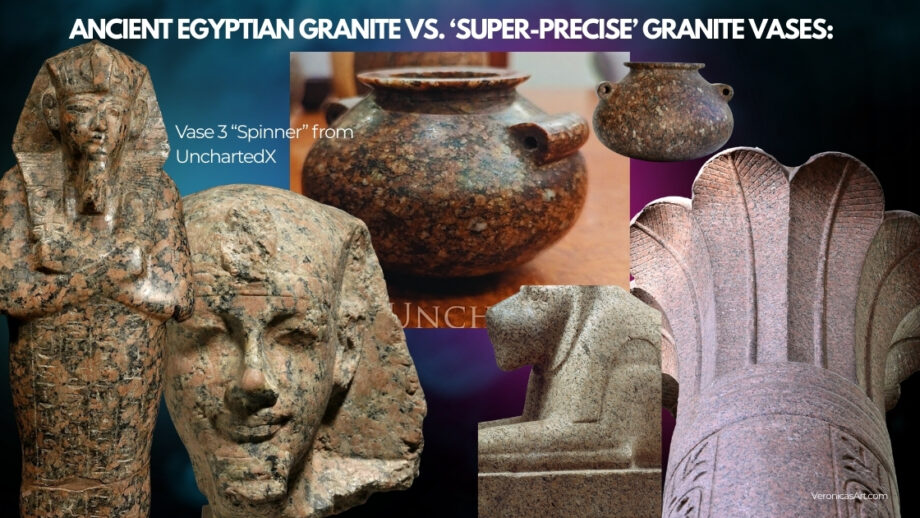
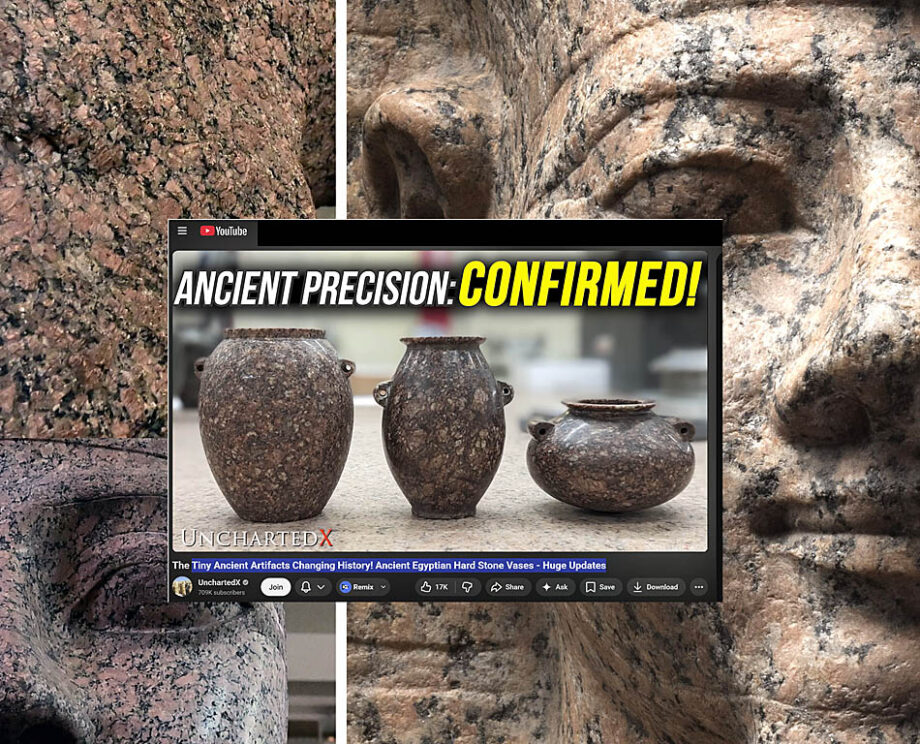
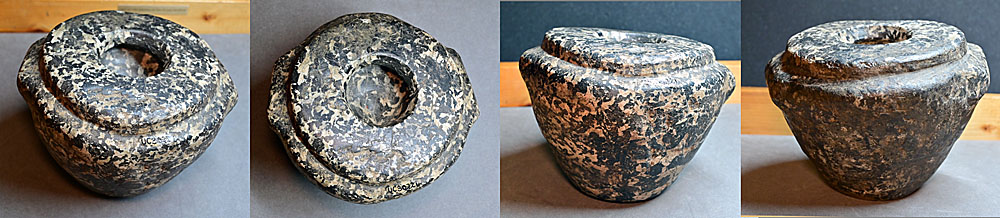
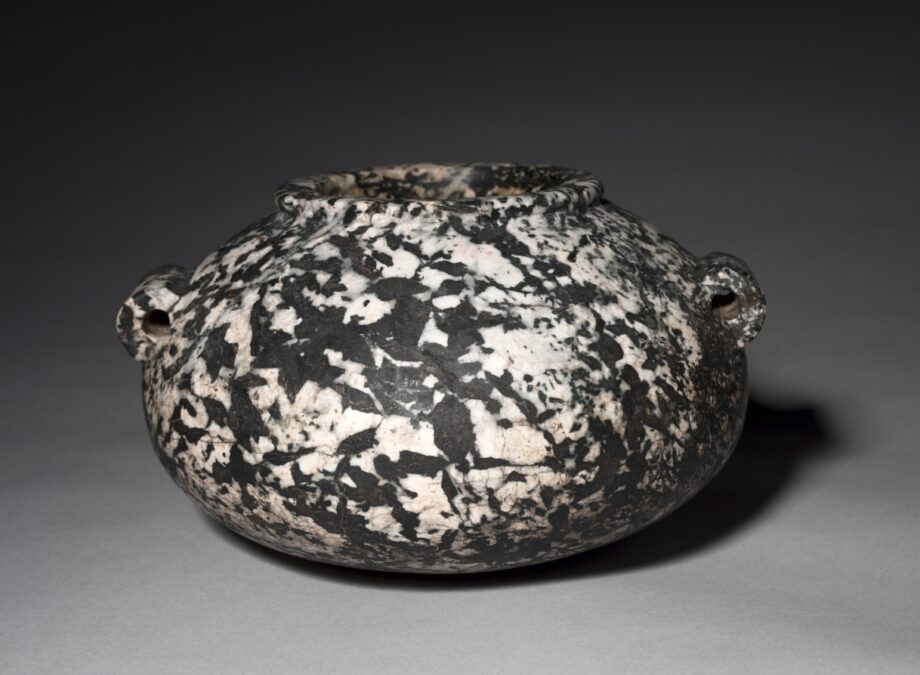
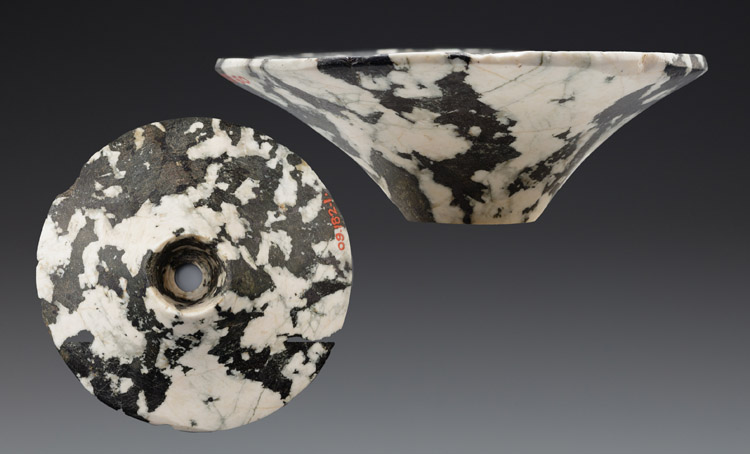
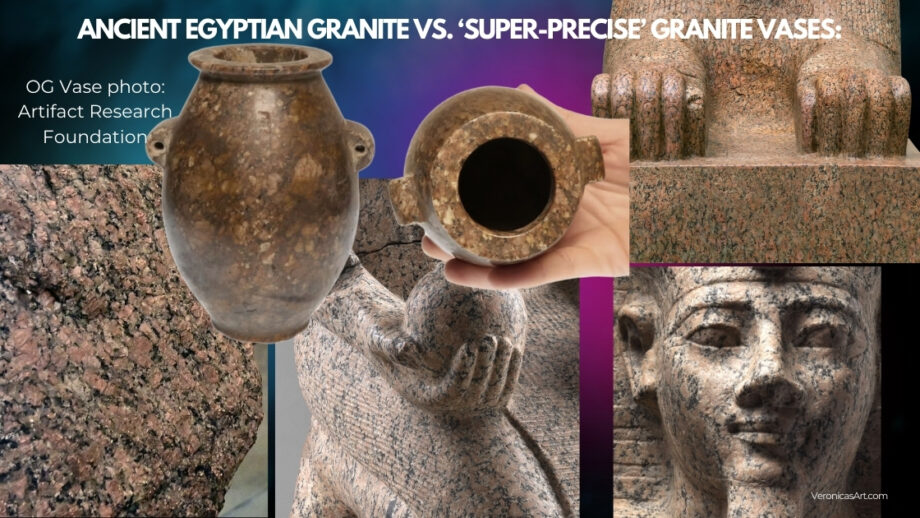
Granite pattern: the granite Vase 3 “Spinner” vase from UnchartedX website vs. Ancient Egyptian granite statues and columns
Ancient Egyptian stone vessels: high precision or complete delusion?
After studying the Predynastic Egyptian vessels for a year and a half by going to various museums, reading numerous archeological papers, dissertations, and books (main reading list you’ll find at the end of my article about the Naqada culture), I changed my initial view about these ‘super-precise’ granite vases. Let me explain why. I’m going to debunk Ben & Friends’ major arguments that are often mentioned in their videos. As an example, I’ll take one of his videos posted above and let you dwell on some of Ben’s arguments vs. facts. Let’s begin.
At first, I was fascinated by Ben’s story about the vases and asked my husband, Max, to study them under the microscope. This is when Ben & Friends appeared on our doorstep. I must say that Ben has a natural talent for storytelling, charm, confidence, and charisma necessary to make an impression. Although that initial impression faded quickly for me personally after looking into the substance.
My family and I went to the Petrie Museum in May 2025, and we spent 2 full days scanning the vases from the collection. For that, we had to buy the high-end Keyence scanner, transport it in separate boxes from the US to London and back, use Uber to drive it around town, and rent some storage space in a hotel for a week (because the museum’s appointments had a week of wait in between them). During the first appointment at the museum, Max scanned the metrological standard to check the precision and accuracy of his scans. Back in the hotel, he began to check the numbers of scanned stone vases in greater detail, looking for advertised ‘aerospace precision’ in those vessels. There was none…
I felt disappointed, I deleted most of my videos from the first visit to the museum, and decided not to come back to this topic ever again. This project seemed like a huge waste of our time, emotion, and resources, resources we could have spent on other useful things. On several occasions, Max offered Ben & Friends the opportunity to work together, but no real interest was expressed in doing such research. We were useful idiots until the day we were not. Meanwhile, I learned about Stine and her previous work for Ben & Friends. You can read about the outcome of it here. It’s easy to call someone ‘close-minded’ or ‘toxic,’ but if such things happened to you as they happened to Stine, would you be upset? To continue, I also saw how one of the collectors (not Matt Beall) of ancient Egyptian vases felt so conflicted, disappointed, and upset, he couldn’t reconcile the fact that a few of his vases were machine-made while the rest of his collection was genuine predynastic Egyptian!
I could understand his feelings well because it was more than just wasted money; it felt like a betrayal of a dream. I saw Max putting in weeks to finalize the paper, and after its publication, we saw quite a storm of online hate. After all, a lot of people got sold on this ‘high-precision’ vase idea, and few were ready to part with a dream of ancient tech. So, I wanted to forget about all of this until the day I saw Ben online again. He appeared with his vase videos once more, doubling down on his claims of precision, archeologists’ ignorance, and private collectors’ greatness. I didn’t want to continue with this project, as it was clear to me what it was. But Max scheduled his appointments in museums half a year in advance, and so we went to England again.
We flew to London in December 2025 for another visit to the Petrie Museum and the Manchester Museum. Both museums were very nice and accommodating to our research. The curator of the Egyptian collection in Manchester was so unbelievably accommodating and sweet that I was ready to stay there longer, being interested in those vases again.
On our trips, I did the photography, documentation, and video recordings. So after a while, I began to recognize the predynastic stonework, and Naqada’s wide variety of pottery became much less overwhelming. I looked inside all the vessels, turned them upside down, and took pictures of objects from various points of view.
We visited many other art & archeological museums as regular visitors:
MFA Boston
San Antonio Museum of Art,
British Museum,
Houston Museum of Natural Science,
the Louvre in Paris,
Harvard Museum,
the Met,
Archeological Museum in Florence,
archeological museum in Sforza castle in Milan,
archeological museum in Bergamo,
Manchester museum,
etc
I took pictures of displays with Naqada culture and other Egyptian art. In addition, I spent countless hours browsing online collections of many museums, including the Met, the Cleveland Museum of Art, Penn Museum, to mention a few. When you see the ‘same’ thing over and over again, ‘other’ things jump out as odd artifacts.
Max transporting the Keyence scanner in London, UK
What jumps out in the ‘super-precise’ vases is a complete absence of weathering on the surface, the strange color of a ‘super-precise’ vase stone, slightly different shape of either the object, rim, or lug handles (famous ‘spinner’ vase). I’m not saying I know everything or I’ve seen everything there is to see in the collections, but it’s important to question the oddities. I’ve seen several samples from different museums with similar results of Naqada culture presentation…
Unanswered questions about these super-precise vases:
How come all super-precise vases shown by Ben & friends are shared between the two people – Adam Young & Matt Beall?
What about the provenance of THESE vases, not some other ones held in private collections?
Why is the granite of ‘super-precise’ vases different from the ancient Egyptian one?
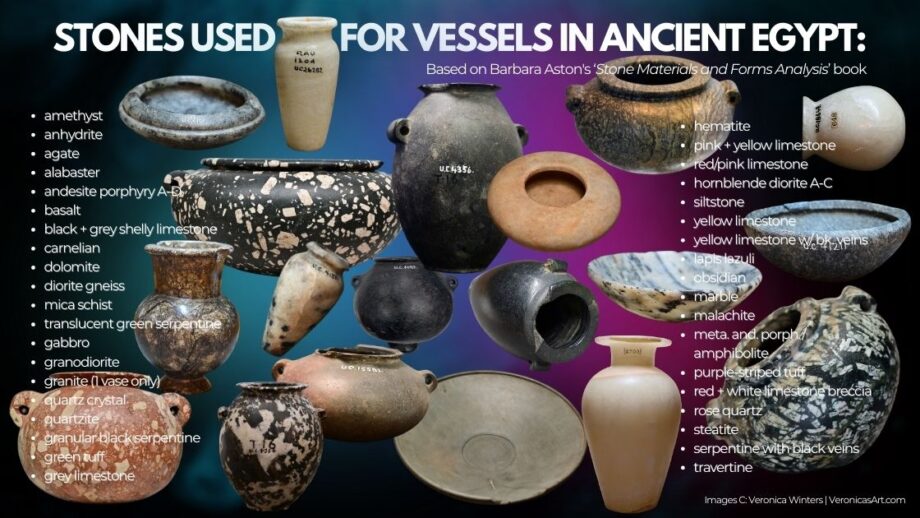
Why did ancient Egyptians rarely used granite for vases but used it for statues & architecture?
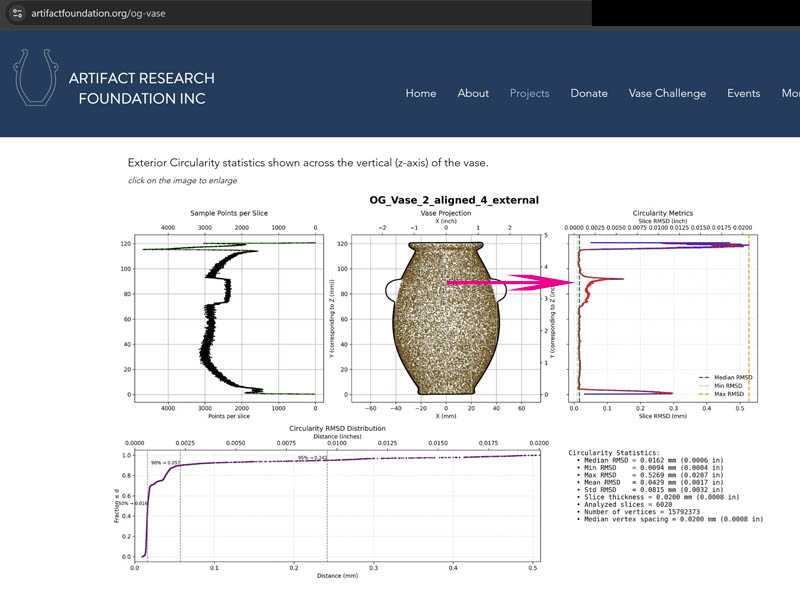
Why does the mathematical algorithm consistently shows modern-machining on the ‘super-precise’ vases?
What happened to all those advertised scans of Egyptian objects in museums and Egypt that were done by the Artifact Research Foundation with Karoly Poka?
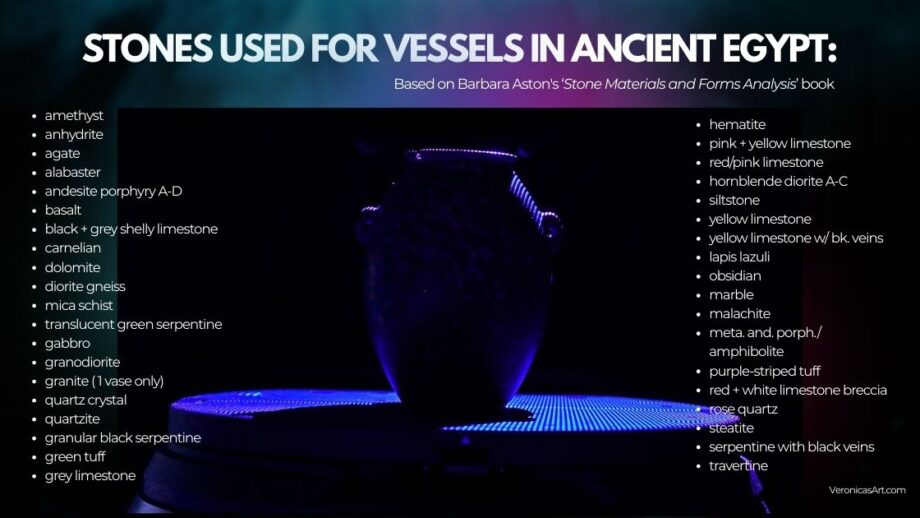
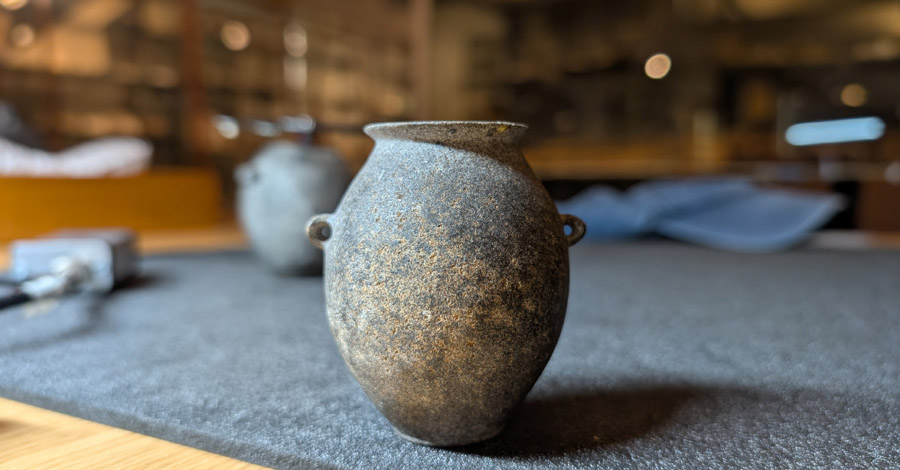
Why can’t we find any other super-precise, granite vases from a specific tomb in Egypt or a museum with provenance? I listed 3 granite vases found-one from Aston’s book, one from Christie’s website, and one from the Pyramid complex of Djoser, Imhotep museum. Some of you refer me to the Arnold Meijer archives of Egyptian art, but many stone pieces are mislabeled there! You can find several bowls and vases there labeled as granite and black breccia but the actual stones are different.
When you write an argument about seeing a “super-precise” vase, please link to a specific page, photo, literature page, provenance publication, article, etc. Otherwise, it’s impossible to know what vase you’re talking about!
Well-made scanned predynastic Egyptian vases look precise at first sight, which suggests that a potential collector wouldn’t be able to make a difference between the artifacts in the past (without a scan). How come the precise ones come from private collections only, according to Ben?
It’s easy to dismiss scientific work and scientists and archeologists in general who actually do all the heavy-lifting researching the topics, writing about it, and publishing data. But what are the FACTS going for these 3 super-precise, granite vases then? There are NO predynastic Egyptian artifacts found with super-precision just yet, only the ones Ben keeps showing us!
In his discussions about ancient Egyptian stone vases, Ben van Kerkwyk (from the channel UnchartedX) explains that the most precise and high-quality artifacts are often found in private collections rather than museums. He notes that collectors typically sought out the most “precise” and “beautiful” examples, while museums often hold thousands of broken or less remarkable specimens. Ben appeared on numerous podcasts talking about this.
Ben says:
Collectors historically sought out the “most beautiful” and “most precise” vases, often leaving the more mundane or broken items for museums.
Because these “perfect” vases are often in private hands, Ben has worked with private owners to use structured light scanners and metrology to prove they have aerospace-level precision (within thousandths of an inch).
He argues that these vases were “heirlooms” or inherited by the early Dynastic Egyptians, rather than being made by them, because the technology to create them (high-speed lathes) disappeared later in Egyptian history.
Summary of Ben’s arguments from this video alone:
The ancient Egyptian hard stone vases are considered highly significant due to their incredible precision, meticulous design, and immaculate execution in extremely hard types of igneous rock (0:50-5:22).
These artifacts, many of which date back to pre-dynastic times (7:27-7:55) (some as far back as 15,000 years ago), present a major challenge to the orthodox view of human civilization history (7:19-7:27, 10:47-11:05). Their advanced manufacturing level, including features like incredible symmetry, delicate wall thickness, and mathematical encoding (5:15-5:22, 45:07-45:21), suggests a level of technological sophistication that was, according to mainstream history, undiscovered by humans during those periods (45:14-45:21). The fact that these precise hard stone vases essentially disappear from the dynastic Egyptian civilization after the Old Kingdom, being replaced by cruder, handmade alabaster vessels (18:54-19:01, 20:23-21:21), further supports the idea that they were inherited or found artifacts rather than products of dynastic Egyptian craftsmanship (17:59-18:03, 21:27-21:37).
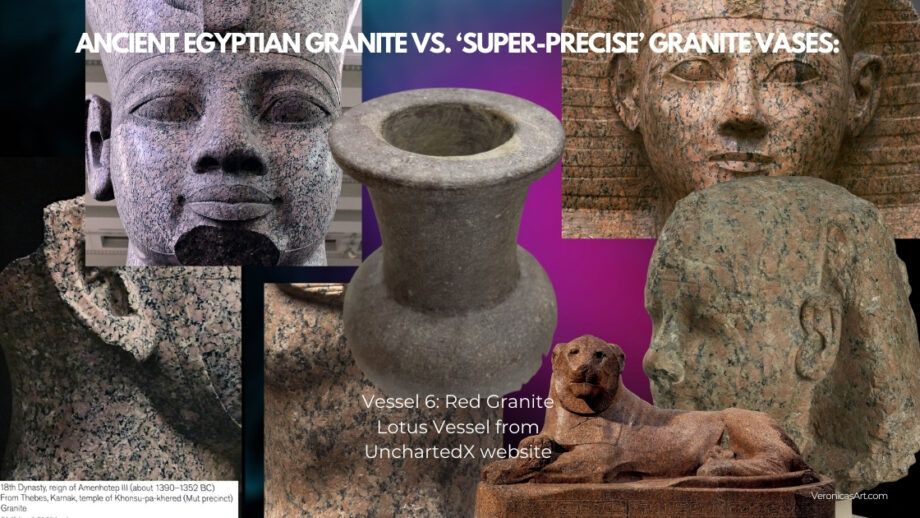
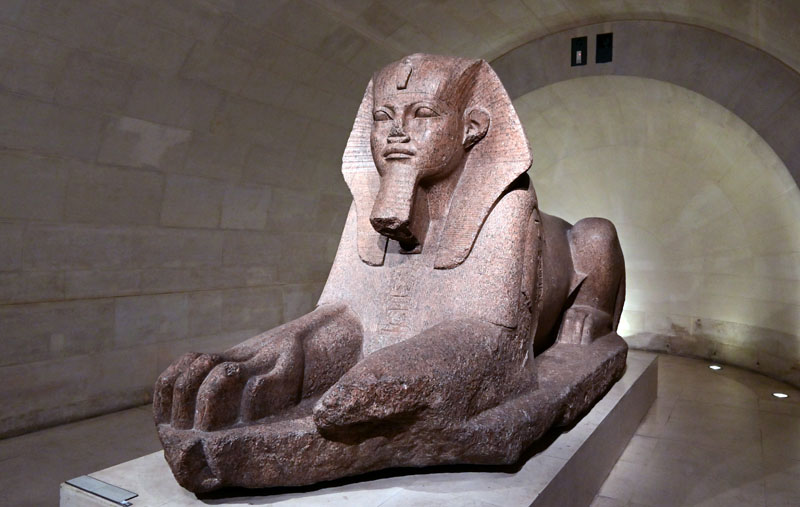
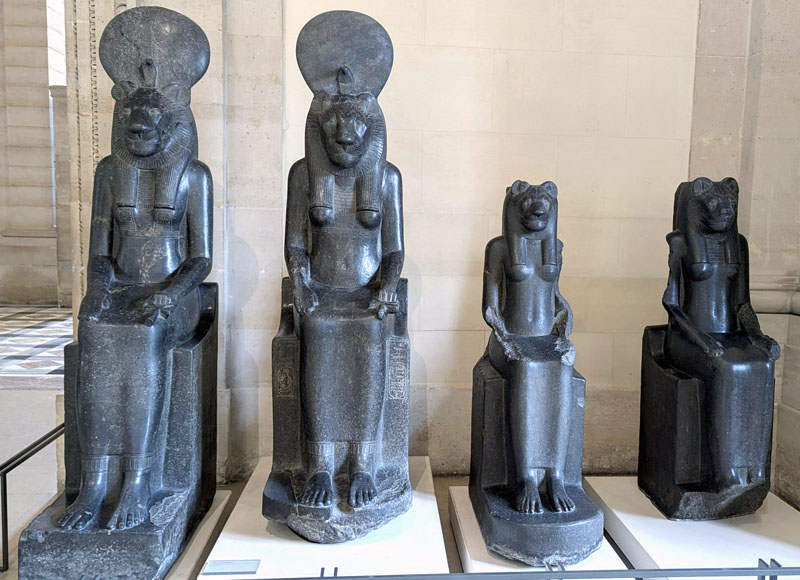
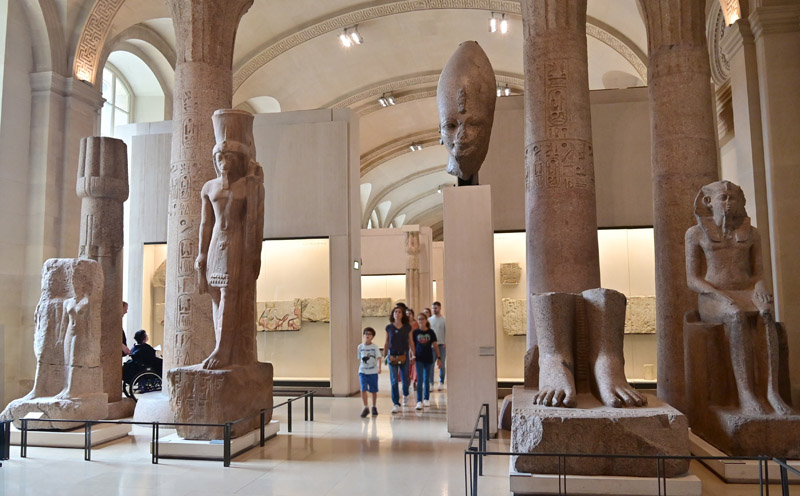
Ben talks about some of the best vases in private collections, specifically those owned by Matt Beall, around these timestamps: -Discussion of a perfectly round serpentine vase from Matt Bell’s collection (1:25:21-1:25:54) -Matt Bell’s acquisition of vases (54:44-55:04) -Description of a translucent vase (32:14-32:20)How does ancient Egyptian granite look like? Ancient Egyptian Granite vs. Vessel 6: red granite Lotus vessel from the UnchartedX website. As you can see, the mottled pattern of rose granite is very different from the material of this vase.Detail of one of the Sphynxes in the Louvre. This is how Aswan granite looked like in ancient Egypt.
Facts vs. Ben’s claims about super-precise granite vases from a single video (and repeated in many others):
#1. Kush & Toshka sites: ancient stone vases
Ben: (10:50-11:08) “As far back as to the Neolithic Stone Age peoples of Kush which is the area made up today by Northern Sudan and Southern Egypt these cultures date as far back as some 15,000 years ago and yes hardstone artifacts were 100% found in burials like toshka that have been carbon 14 dated to those times you can quite clearly see these Stone vessels in the photographs that were taken of these excavations around… “
Questions I have:
First of all, what do you really see here? Stone vessels or pottery?
What the Toshka site actually represents:
The Toshka burial sites comprise several archaeological locations in Lower Nubia, primarily excavated in the early 1960s before the area was flooded by Lake Nasser.
These sites span from the Middle Kingdom (c. 2000 BCE) to the X-Group period (c. 4th–6th centuries CE).
Archaeologists have found stone artifacts and materials related to stone vessel production at the Toshka sites, though the burials themselves are more famous for their pottery and luxury jewelry. Most of the original riverbank sites were submerged by the Aswan High Dam project. However, salvaged materials and unpublished data are currently being re-examined by the Yale Peabody Museum.
Toshka West Cemeteries: Excavations in C-Group and Meroitic cemeteries (such as Cemeteries B, C, and D) primarily yielded pottery vessels, copper mirrors, and jewelry made of ivory, carnelian, and ostrich eggshells. While stone beads were common, complete stone vessels were not the primary grave goods reported here.
Relationship to Stone Working: Toshka’s major link to stone vessels is its role as the river terminus for the desert route to Chephren’s Quarry (located about 50 miles west). This quarry was the ancient world’s oldest large-scale source for diorite used specifically for royal statues and fine stone vessels during the Old Kingdom.
Associated Desert Sites: Surveys by the Yale Toshka Desert Survey identified stone tools like mortars, rubbing stones, and grinding stones at nearby desert outposts (e.g., Nuq‘ Maneih), as well as ink inscriptions on stone pebbles.
In Conclusion:
Correction of Common Misconception: There have been recent viral claims on YouTube suggesting “12,000-year-old precision granite vases” were found at Toshka. However, archaeological consensus and peer-reviewed data from the Penn Museum and Yale confirm that the Toshka burials date to the much later Middle and New Kingdoms, and such fine, stone vessels are typically found in Early Dynastic sites like Saqqara, not the Toshka burial pits.
These articles debunk viral claims about stone vessels at Toshka and clarify their connection to ancient quarrying sites. * Summarized by Gemini
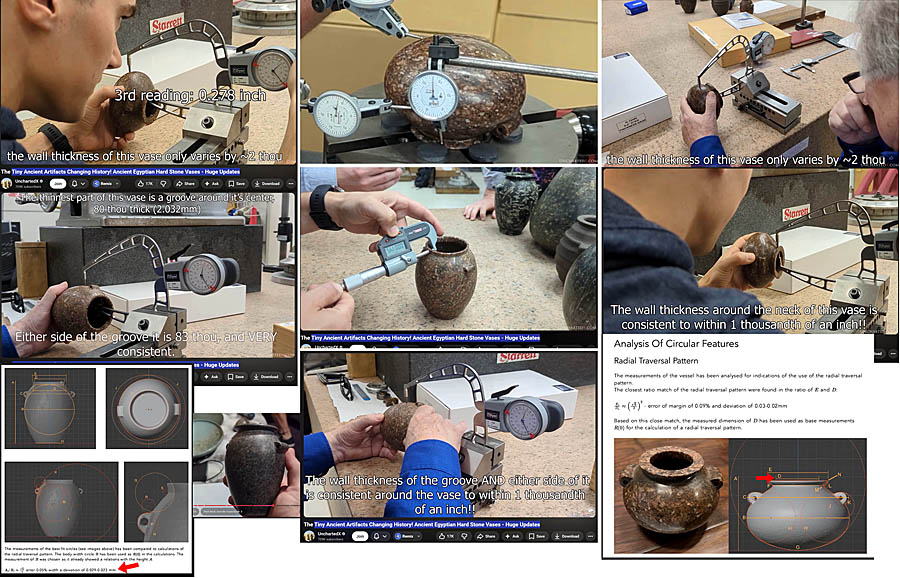
#2. Cryptographer Mark Qvist findings about the radial traversal pattern on the OG vase:
Cryptographer Mark Qvist findings about the radial traversal pattern on the OG vase.
Ben: 43:06-46: “That vase was designed. It was not the result of some primitive artisan eyeballing a piece of stone and then rubbing on it for years with rock and sand…it was designed mathematically, elegantly…”
Mark Qvist (a software developer, cryptographer, and metrology enthusiast behind unsigned.io) first gained attention in the ancient-precision community for his March 2023 analysis of 3D scan data from one of the so-called “OG” granite vases (PV001 / Adam Young’s private collection piece). In his article “Abstractions Set in Granite,” he concluded that the vase showed a mathematically coherent radial traversal pattern (involving phi ratios, precise concentricity, and geometric relationships far tighter than expected), and that it was produced via sophisticated subtractive manufacturing requiring high-precision mechanical technology—beyond what conventional hand tools or even modern CNC could easily replicate.
His most recent public view (updated after higher-resolution 2025 CT scans and the broader Vase Scan Project dataset) is a clear reversal of the ultra-precise private-collection examples he originally examined. He now states that the object (or at least its current form) “is definitely not 5,000 years old—it is either a modern replica, a contemporary piece, or an ancient artifact that was later reworked.”
This shift came after the 2025 scans provided over 5× more vertices and finer resolution, revealing details that undermined the earlier “impossible ancient tech” interpretation. The ultra-precise vases (only ~4 out of ~56 scanned, all from private collections like Adam Young’s PV001 and Matt Beall’s V18) lack verifiable provenance; claimed histories contain errors (e.g., references to a pre-1918 Czechoslovakian ambassador). Museum-held Predynastic pieces show far lower precision consistent with hand craftsmanship.
On Stine Gerdes’ work: Gerdes (of Arc Scientific/arc sci.org) was directly inspired by Qvist’s 2023 article; she has said it sparked her 30-month deep dive into 3D metrology of ancient stone vessels. She collaborated on the Vase Scan Project (providing precision reports and statistical analysis for Adam Young’s collection for nearly two years) before publishing her own 2025 comparative study of 32 Petrie Museum artifacts.
Her key findings:
Museum Predynastic vases are statistically indistinguishable from modern handmade replicas (using copper tools/abrasives).
They show multi-stage hand-guided repositioning marks, axial misalignments, and tolerances (often 70–100+ μm RMSD) fully consistent with pre-industrial craftsmanship—no evidence of lathes, electricity, or lost high-tech.
Private ultra-precise pieces (like PV001) are statistical outliers that exceed even industrial CNC benchmarks in some metrics, but their provenance is unverified, and their interior/exterior heat-map patterns more closely resemble modern machining.
Gerdes has also publicly criticized data-handling issues in the private-collection scans (e.g., Adam Young allegedly substituting incorrect scan data from one vase for another to exaggerate precision differences, plus flawed geometric-mean methodology). Qvist’s opinion change explicitly followed the “2025 report with new data” that incorporated exactly this kind of museum-comparative metrology Gerdes produced.
In conclusion:
In short, Qvist’s updated stance and the broader analyst consensus (including Gerdes and Dr. Max Fomitchev-Zamilov) now treat the ultra-precise “OG” vases as anomalous outliers whose claimed ancient origin and technological implications do not hold up under rigorous, provenance-aware scrutiny. The museum pieces remain impressive examples of Predynastic skill—but achievable with hand tools. Gerdes’ systematic, open-source metrology work is the foundation that enabled this re-evaluation, and Qvist’s own reversal is presented in direct connection with it. No newer public statements from Qvist (as of early 2026) contradict this updated position. *This is summarized by Grok
#3. Rose granite used in super-precise vases?
Questions I have:
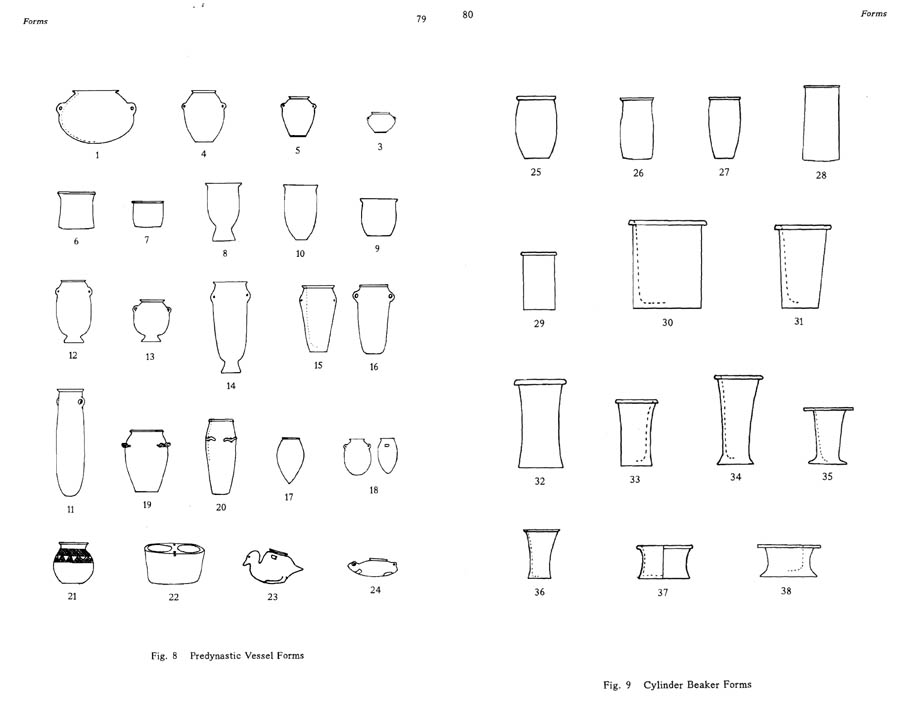
There are no predynastic rose granite vases found in tombs in Egypt besides very few (the awkward granite vase is pictured in Barbara Aston’s book is the only one she found at the time of her book writing. More on this later)
Ben: (1:08:23) “..Radial traversal pattern the < TK of 6/2 to the power of n very much seems to be a design element of two other vases that have been analyzed, the thin wall vase that we’ve looked at as well as the spinner vase, both made from rose granite and classified as pre-dynastic.”
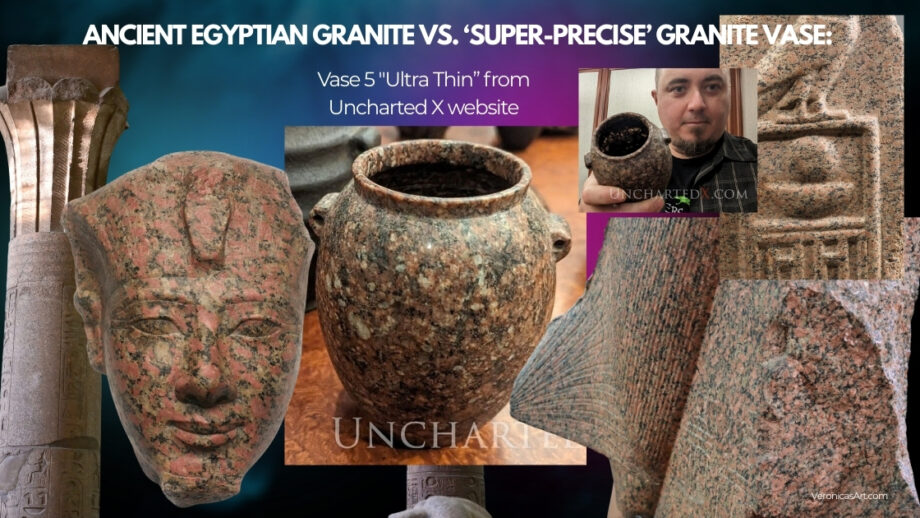
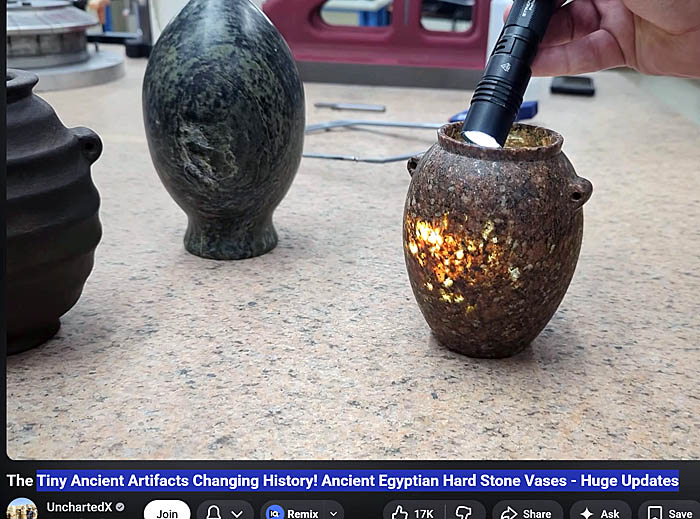
In the center of this image, you see a screenshot from a video produced by Ben van Kerkwyk (UnchartedX) that shows three super-precise vases made of ‘rose granite,’ according to Ben.
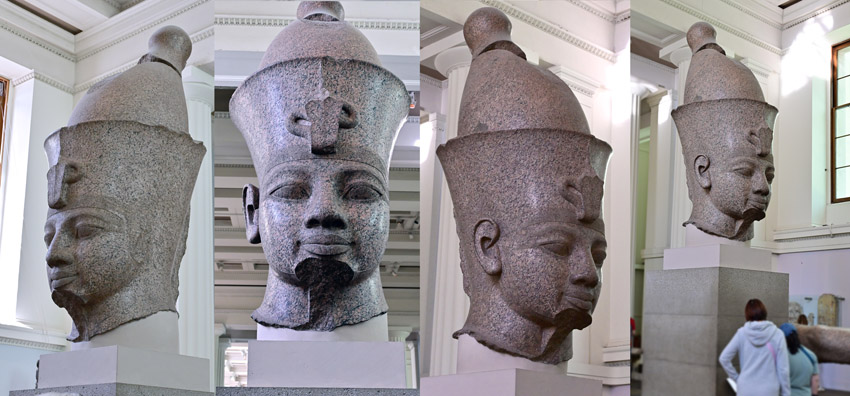
I collected several photos of ancient Egyptian granite used in statues and put them around this screenshot. The mottled rock pattern on statues is very different from the granite of these ‘super precise’ vases.Amenhotep III, 18th dynasty, multiple views, granite, British Museum. I took these pictures of the statue from different points of view under varied lighting conditions. As you can see, Egyptian granite looks very different from the 3 granite vases Ben shows us all the time.Recumbent Lion, granite, the Met, close-up viewAmenhotep III head, granite EA 15, British MuseumThis is a granite sculpture in the museum set against Ben’s ‘super-precise’ granite vases. You can see that the mottled rock pattern is different, although the color is similar, but not the same. These precise vases look dark brown to me while every Egyptian granite piece I’ve seen looks fairly light under strong museum’s light. It usually has a light reddish color with black infusions. White quartz infusions also look different from the ones seen on these vases.If you are in Milan, Italy, visit the brand new Egyptian Collection at Sforza Castle (Castello Sforzesco). It’s a small Civic Archaeological Museum, featuring over 300 artifacts—including sarcophagi, mummies, stelae, and papyri—highlighting daily life and funerary cults in ancient Egypt. It has a well-organized and presented collection starting from the Naqada culture and beyond. It’s located in the underground level of the Corte Ducale in the castle.
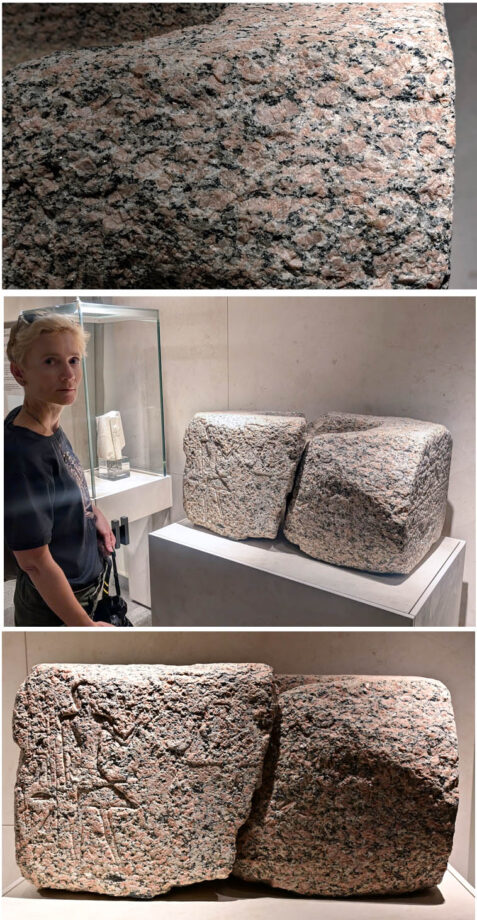
What you’ll see there is an ancient Egyptian granite block. Pay attention to its color and pattern to understand how that granite looked like in ancient Egypt. Its color and texture don’t look anything like the proposed ‘super-precise’ stone vases.
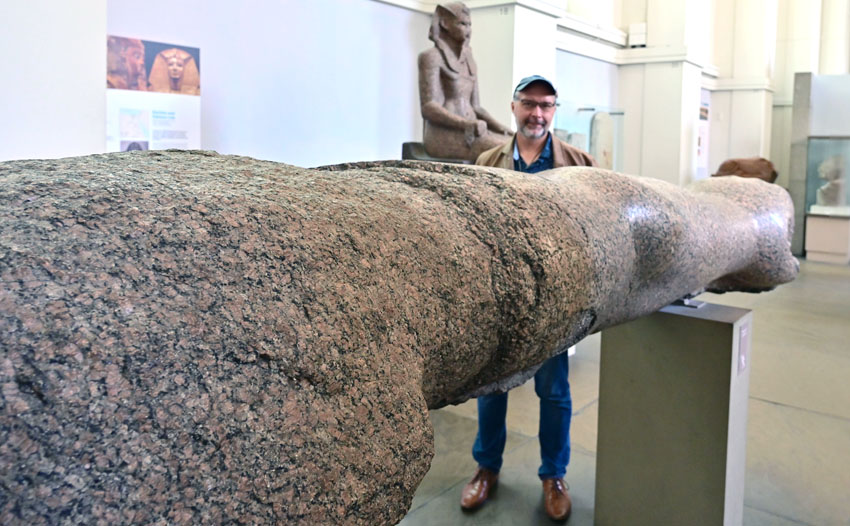
Block inscribed with Khaemweset name: Granite, 19th Dynasty, reign of Ramesses II, c. 1279-1213 BCE, From Medinet Madi. Museum’s description: The block may have served as a support for a stele commemorating work done in the temple of Medinet Madi. Completed for the prince Khaemweset, he is depicted worshiping a deity (broken off) on the front of the stone. The prince’s name and titles are inscribed with the hieroglyphs on the back of his figure. Other inscriptions on the block are of his mother (the second wife of Ramesses Il, Isetneferet). You can read about the collection and popular Egyptian artifacts here: https://www.comune.milano.it/en/w/cultura.-al-castello-sforzesco-apre-la-nuova-galleria-antico-egittoAmenhotep III GRANITE arm in British Museum, this closeup shows texture, pattern and color of the Egyptian graniteAmenhotep III: 18th Dynasty, reign of Amenhotep III (about 1390-1352 BC), from Thebes, Karnak, temple of Khonsu-pa-khered (Mut precinct), 1000 BC, Granite, EA 15 (head), EA 55 (arm)
The king stood with both arms straight down, holding containers for papyrus documents. This statue and a slightly smaller companion flanked a doorway in the temple precinct of Mut, consort of Amun-Ra, in Karnak. The head of the second statue is also in the British Museum; both bodies are still in Karnak. Amenhotep’s peaceful reign was a time of opulence and outstanding artistic refinement, often displayed on a grand and ambitious scale. Most of the biggest statues in this room were made on his orders. The statues originally represented Amenhotep III but a century later the facial features were partly reworked for Ramesses II to resemble his own official ‘portrait’. Ramesses appropriated countless holding containers for papyrus documents. Statues remained common for several centuries, but only Ramesses would have their features modified.
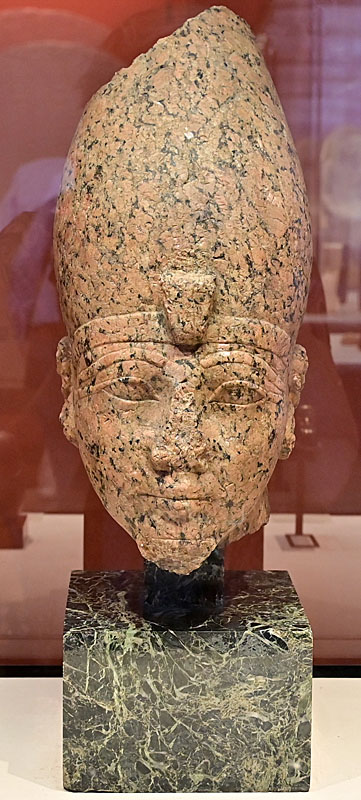
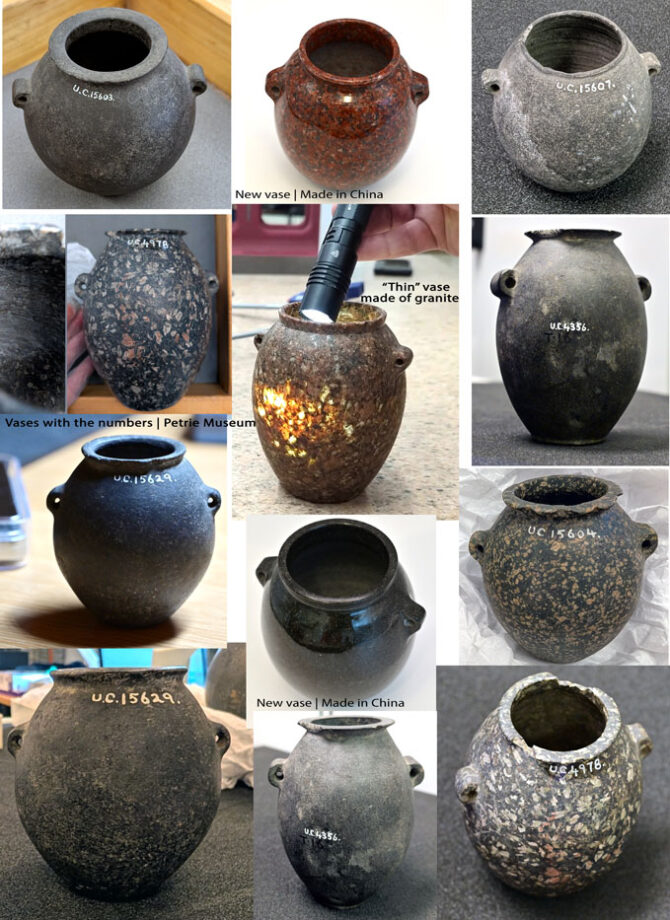
Egyptian sphinx of Tannis side view, granite, the LouvreEgyptian king wearing the white crown, granite, the LouvreWe are looking at a heavily promoted “thin” granite vase in the center of this collage. It belongs to Matt Beall. the image of it is taken from Ben’s video. I put two, Chinese-made vases next to it (top and bottom). The rest are Petrie museum’s stone vases.
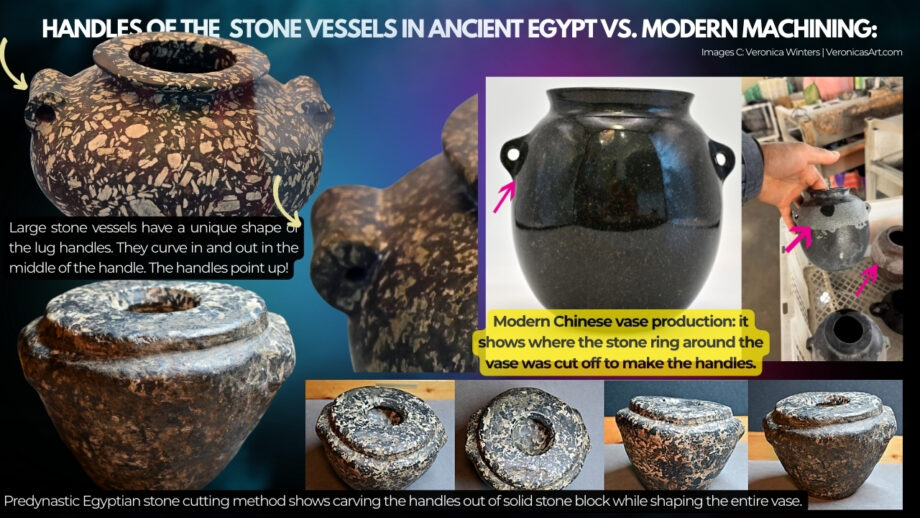
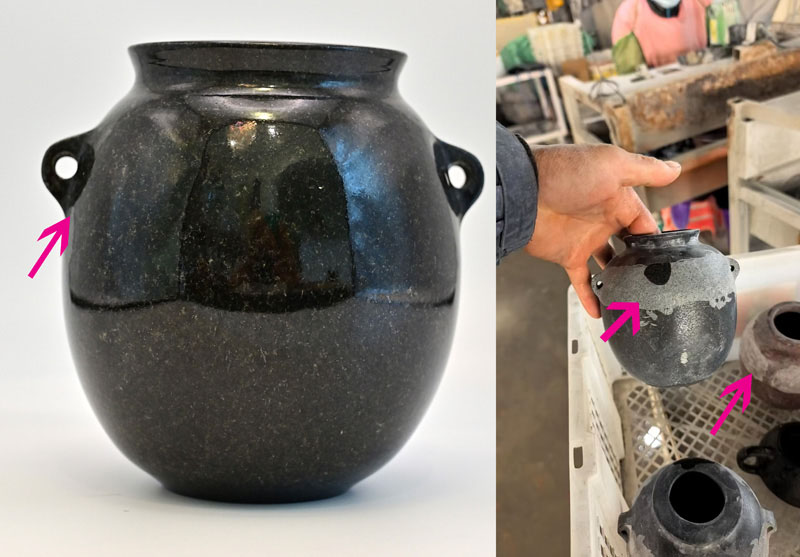
At first sight, the rim of a ‘super-thin’ vase looks the same as in other Predynastic Egyptian vases. The difference is subtle. The opening of a rim in a thin, see-through vase is considerably wider than in the ancient vases I’ve seen thus far. The rim shape of this thin vase is also not quite the same as in predynastic vessels. Moreover, I was stunned to see the first version of a vase we ordered in China. They made exactly the same rim and opening in their vase as in the super-thin vessel!
Granite vases found:
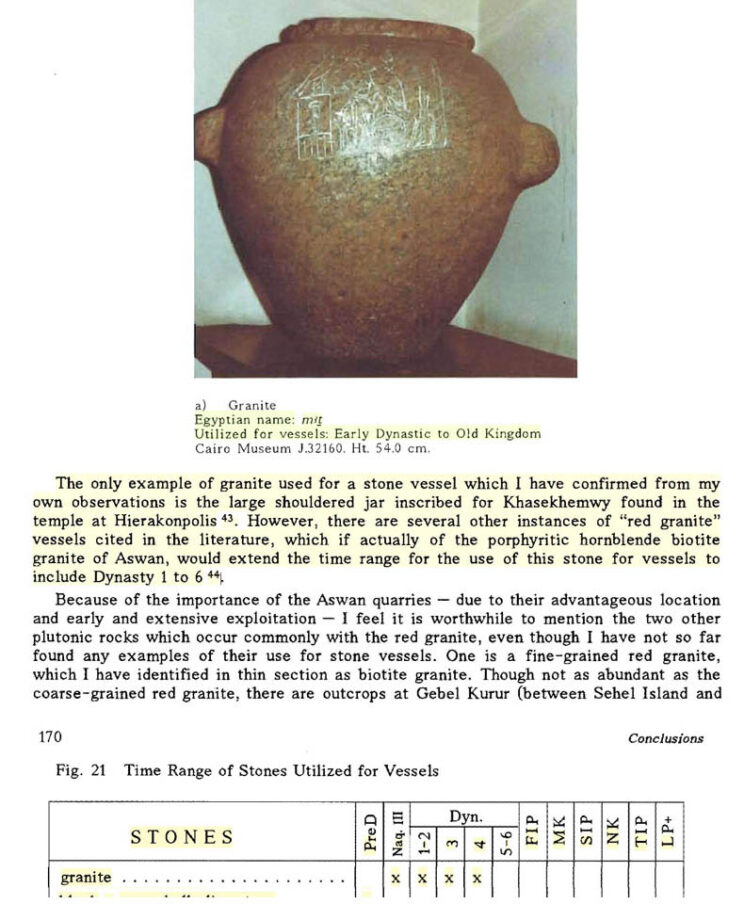
Also, I haven’t seen a single predynastic Egyptian granite vase in any of the museums I visited.. However, I found one in the book. The other two were found by Alexandr Sokolov who sent two images of granite vases he found. See below!
#1
Barbara Aston: ONE found granite stone vase, description from p.16 & p.170
#2
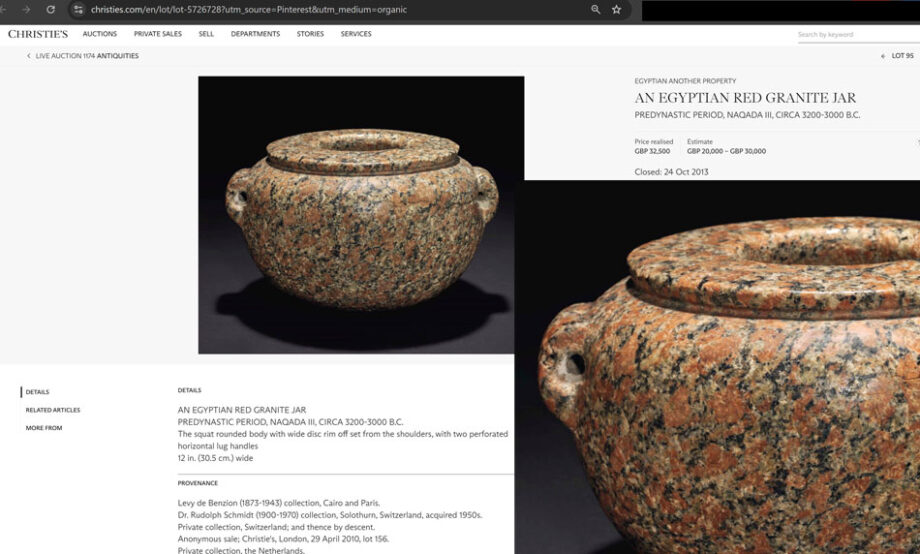
Assuming the provenance of this granite vase checks out in actual paperwork, this looks like an Aswan granite to me because the stone pattern is very similar to the pattern I’ve seen in granite statues. Also, the vase looks well-made at first sight, and if you go to the Christie’s site you’ll see a high-resolution image showing some surface wear and slight unevenness of a well-made handmade work. It will be fascinating to scan and analyze such a vase through the algorithm to see if it has the same unique predynastic Egyptian vase pattern or not.
Egyptian red granite jar, Naqada III, 3200-3000 B.C. The squat rounded body with wide disc rim off set from the shoulders, with two perforated horizontal lug handles, 12 in. (30.5 cm.) wide. Provenance: Levy de Benzion (1873-1943) collection, Cairo and Paris. Dr. Rudolph Schmidt (1900-1970) collection, Solothurn, Switzerland, acquired 1950s. Private collection, Switzerland; and thence by descent. Anonymous sale; Christie’s, London, 29 April 2010, lot 156. Private collection, the Netherlands. Sold for GBP 32,500 in 2013.
#3
The second granite vase Mr. Sokolov shared is this one: Both the color and pattern of the stone is similar to the Aswan granite in Egyptian statues. Does it look super-precise to you? Only the scan and the algorithm can sort it out.
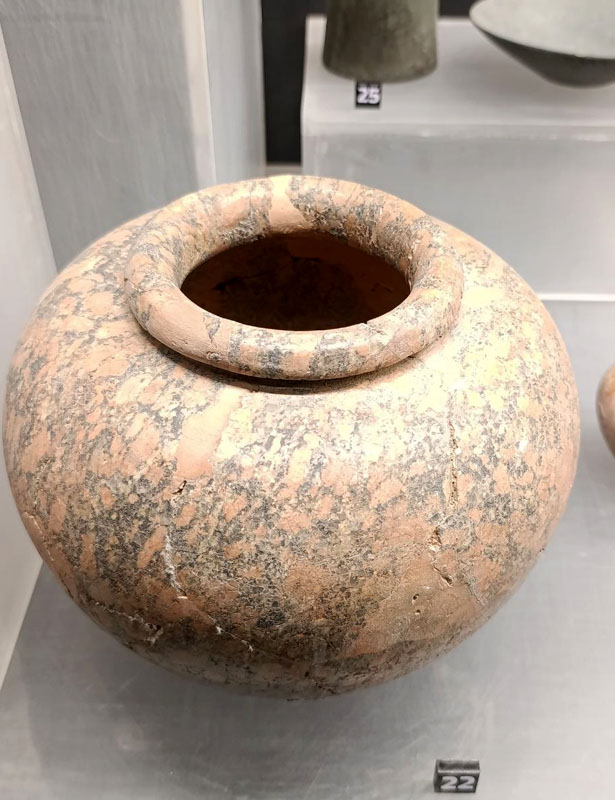
Red granite storage jar, Pyramid complex of Djoser, Imhotep museum
So, while these two granite vases look Egyptian in terms of stone, the three vases Ben promotes, don’t.
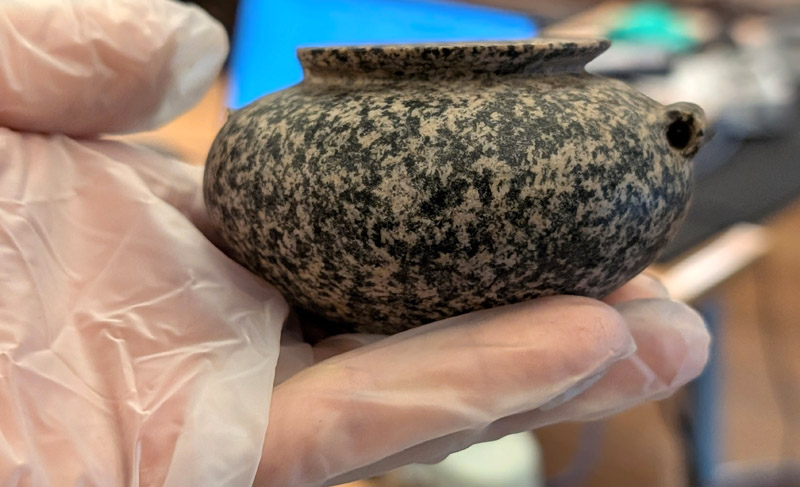
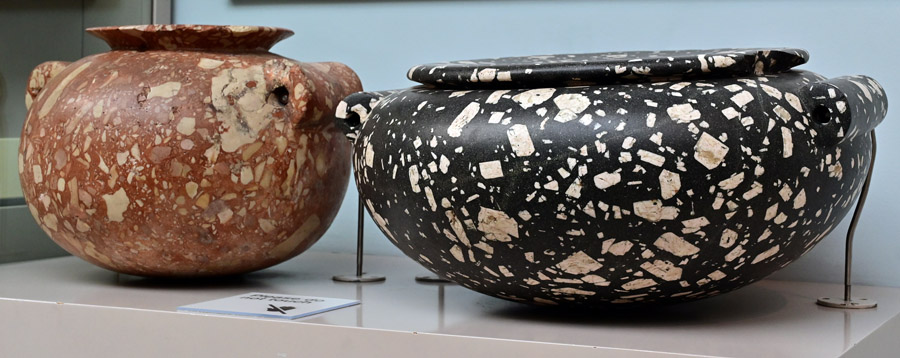
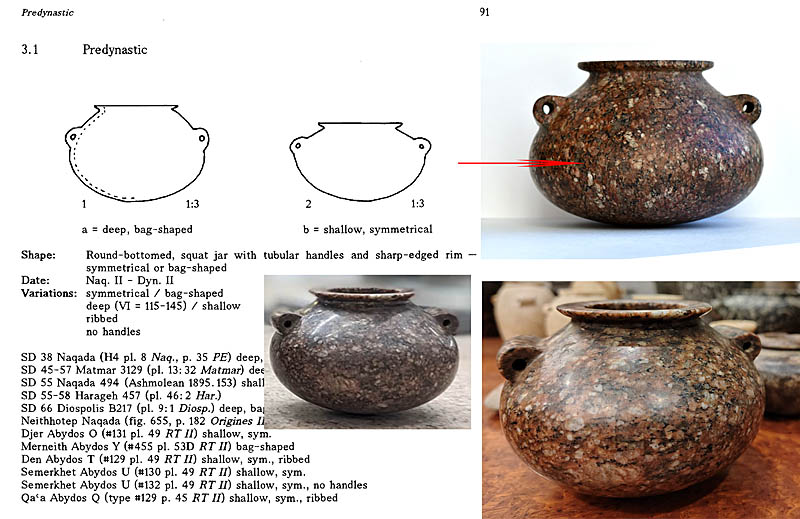
The left side of the image shows a page from Barbara Aston’s book. She describes the shape and lists all the found stone vases under these shapes. The picture of a granite ‘spinner’ on the right shows a very similar shape, but ancient Egyptians were unlikely to use granite for vases; the surface is new, and the shape itself is too heavy at the bottom of the vase. I don’t know what the surface is like inside this vase.Here, I put Chinese-made stone vases on the left side of the image. Heavily promoted ‘super-precise’ vases are on the right side. As you can see, it’s possible to make similar granite vases today debunking the claim that it’s impossible to make vases from granite today.
#4. Hard data & provenance claims:
Ben: (1:15:23):
“…And have gone on personal crusades to debunk the findings any way they can well I say any way they can but given all of the open-source scans and the hard data the only way that’s emerged is to yell fake on the internet like a flat earther who’s looking at Globe photos from a Japanese satellite no one can argue with the actual data so it generally boils down to noisily trying to discredit the (1:15:52) origins of the artifacts and distract the audience away from the significance of the findings that’s more or less what the whole Providence argument is. It’s a fancy word used to suggest that most of these phases are nothing more than modern fakes there’s been a couple of reaction videos that have taken this approach implying that because we don’t know the exact circumstances of when where how and by whom all of these ancient artifacts were extracted from Egypt then they must just be modern fakes and we could ignore all this pesky data and hard facts about (1:16:30) precision right there’s so much stupid in this statement that it’s tough to know where to start but let’s give it a go as previously mentioned it’s easy to just throw out an unqualified assertion like that yelling fake on the Internet only takes a sentence or two but adequately responding to it requires paragraphs as the actual discussion and Providence topic is full of context and Nuance seeing as we’re here let’s point out a few of the many ways this modern forgery argument just doesn’t hold up… (1:17:03)
Ben: “First of all I don’t think that the people making this accusation fully understand how Providence or the Antiquities market for that matter actually work or they’re deliberately misrepresenting it they seem to act like any artifact not in a museum say for example one in a private collection must be either stolen or fake and on that basis try and discredit everything about it even Flint Dibble shamefully took this approach when in a discussion about analysis with Matt Bell on Twitter petulantly responded to him by throwing shade on the origins of the artifact suggesting Matt stops buying looted vases and then rage quitting the conversation and blocking Matt you see how it works do whatever you can to distract away from the actual evidence and the important parts of the discussion which is of course the utterly astonishing precision and just loudly make unfounded accusations for what it’s worth and while we’re talking about everyone’s favorite budget Indiana Jones let me address the many people who have suggested that I should debate or discuss these topics with Flint I generally disagree with this idea I think it would be both frustrating and to be honest an utter waste of time because he’s got quite literally nothing to offer on the topic he’s not an engineer he doesn’t understand precision and look none of this is his fault nor is that a negative statement it’s just not what archaeologists do that said I also find it incredibly unlikely that he would ever even accept or acknowledge the data and findings of this project I suspect any discussion between him and I would just be us talking past each other..”
Questions I have:
So, Ben argues that he has the evidence of precision and hard data, “unlike people who distract us all from it by asking for detailed provenance of these super-precise vases.” While I don’t think that every collector has a machine-made vase or stole the artifact for his collection, provenance is the cornerstone of this argument that won’t go away! Despite a mix-up of Ben’s arguments, like only the engineers are capable of understanding this super-precision, or viewers’ ignorance of hard data, come up with relevant provenance, please, because these vessels look like new and don’t appear to be made of ancient Egyptian rose granite coming from Aswan!
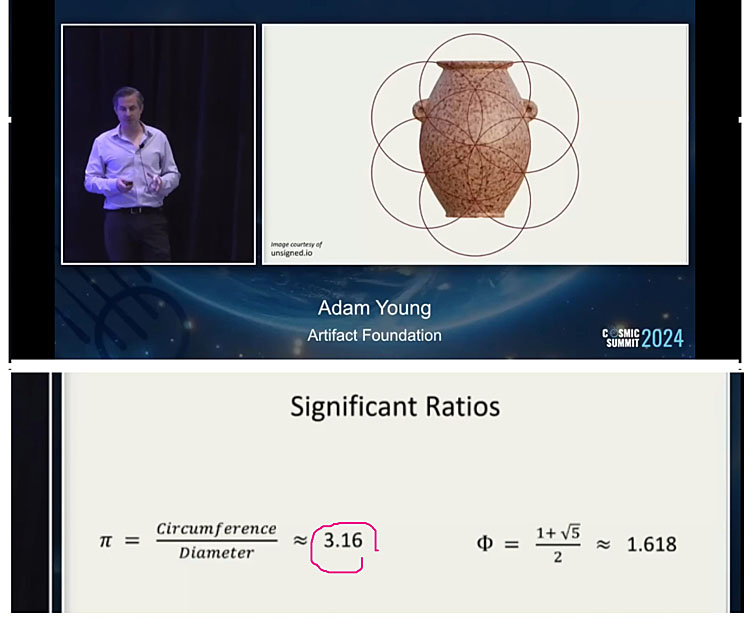
Btw, not everyone from the finance industry knows the numbers…
Just in case, the PI number is 3.14159265359
Ben: (1:24:07)
“…Just magically has impeccable Provence purely because it’s in a museum, lots and lots of artifacts in museums are classified and dated according to form style. Stone type those types of things 1:24:20yet the little plark next to it might say pre-dynastic or 26 Dynasty but in reality we really have no idea exactly where it came from or of its history before it landed in a display case in the museum it’s generally all the same stuff of course many artifacts do happen to have impeccable Providence and in a shocking turn of events the people on the internet yelling fake never seem to…”
Questions I have:
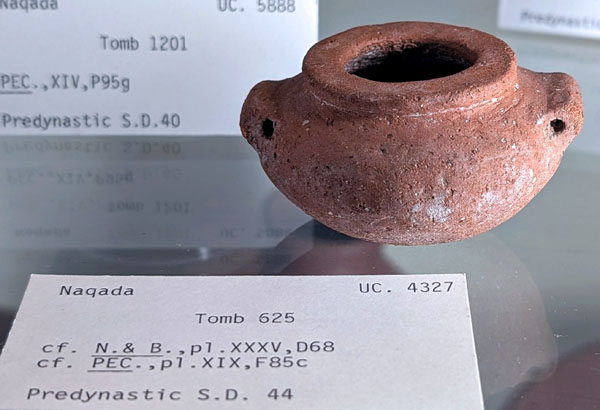
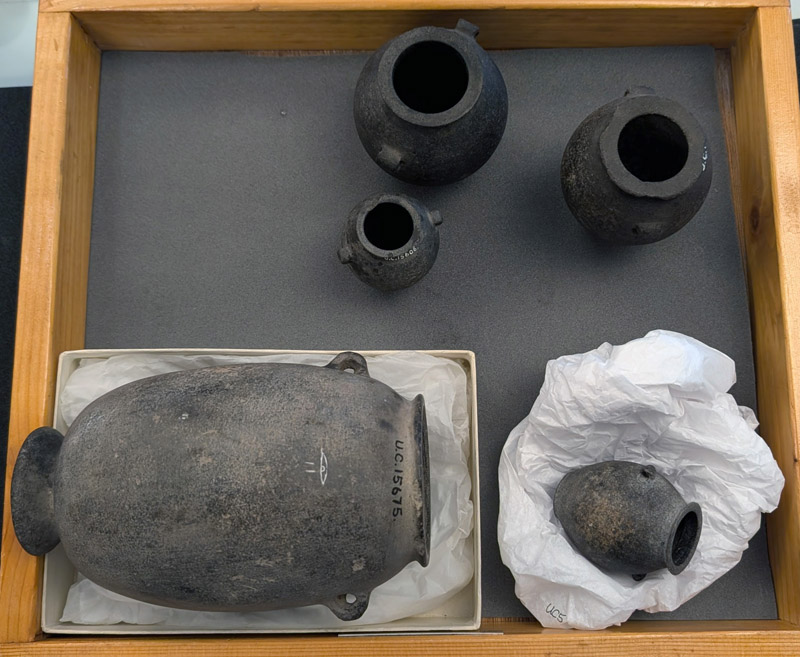
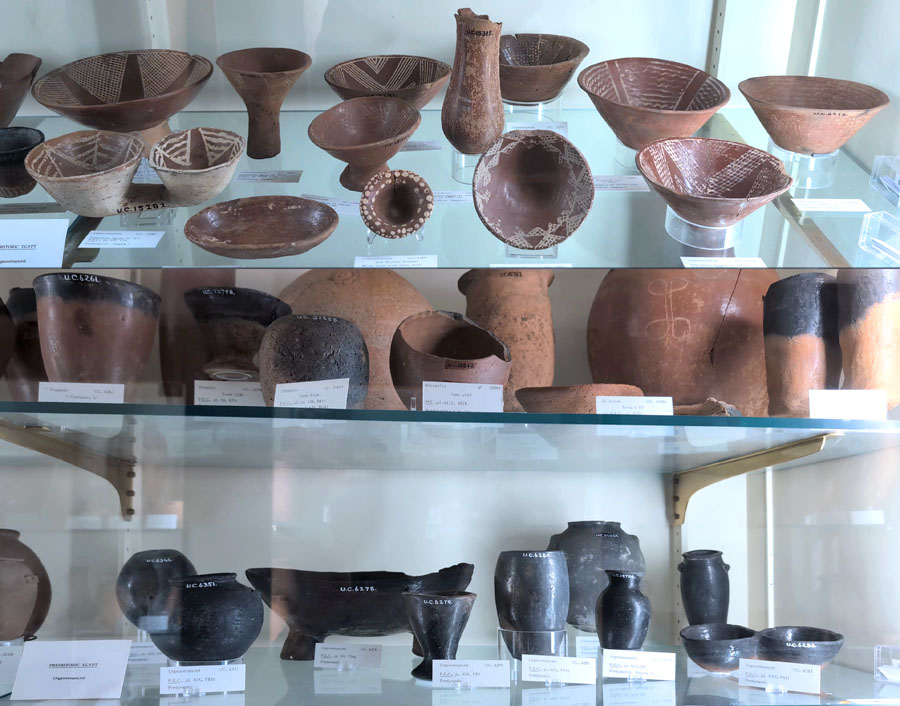
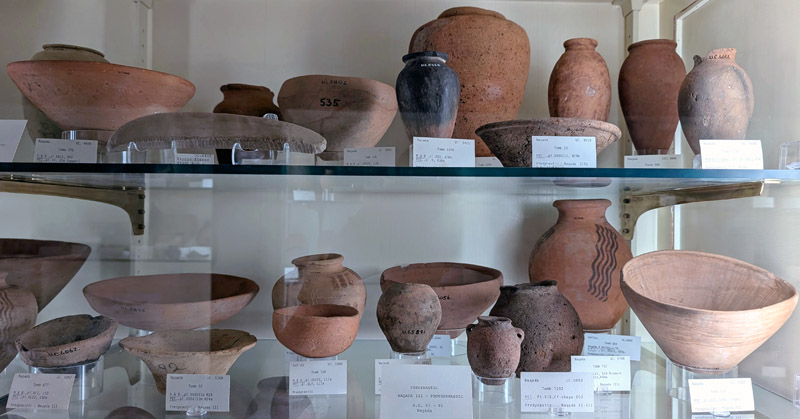
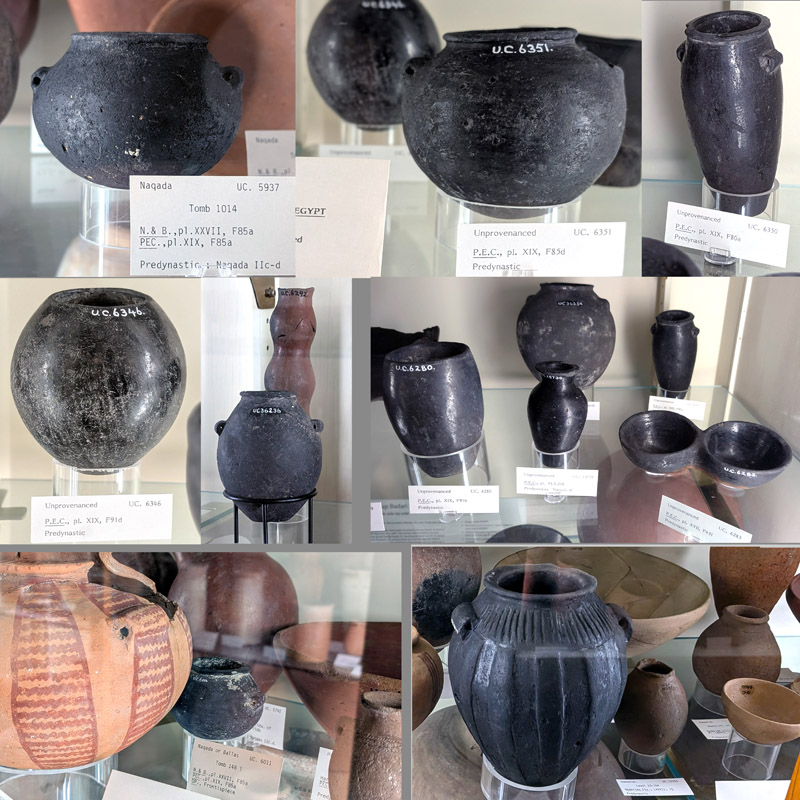
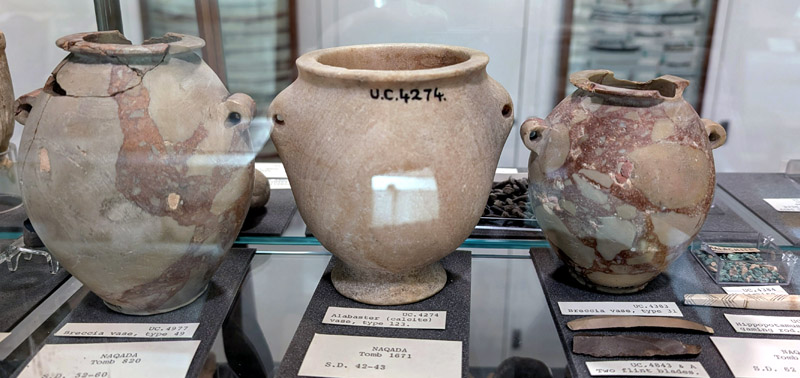
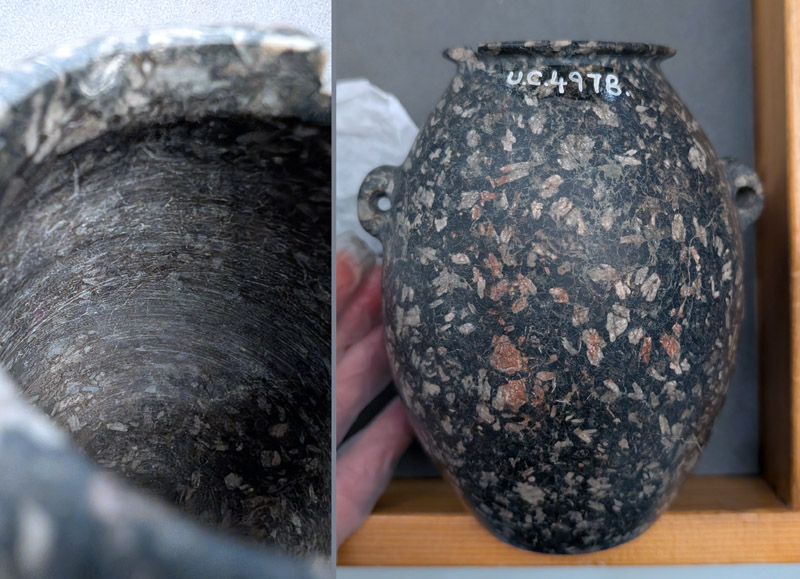
This pottery piece shows the same shape used in the stonework of the Naqada culture. The label also shows provenance: date, tomb, culture, and number (UC 4327), Petrie Museum.
Museums pay attention to their labels and put a summary of provenance on them, including the names of private collectors if applicable.
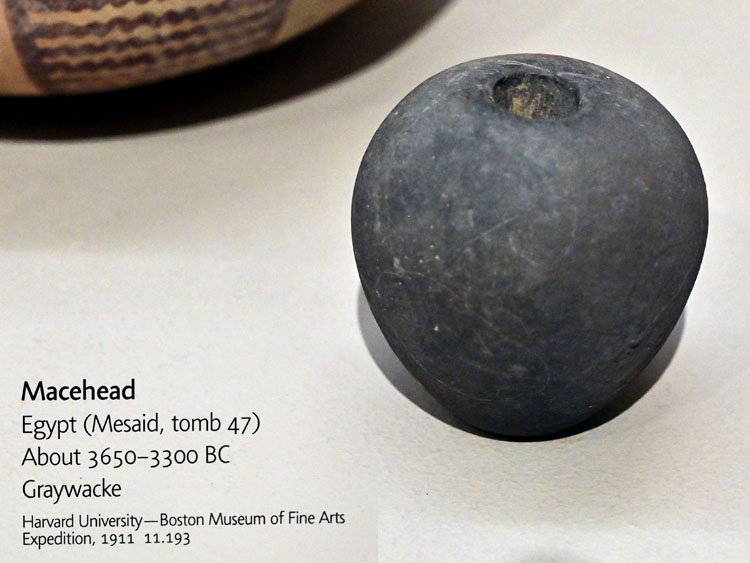
Naqada period mace head, graywacke, 3650, MFA Boston, Veronica Winters art blog. Here, the provenance is listed as the year (1911) and number.
#5 Adam’s vase from the Czech Ambassador
Ben: (1:24:44)
“Acknowledge that artifacts with impeccable Provence also exist in private collections in fact several such vessels have been analyzed by the vascan project Adam Young has a large vase dated well into pre-dynastic times by carbon 14 analysis of the burial that it was found in and that was legitimately given to a Czech Ambassador in the 1930s as a gift people then die estate sales happen 1:25:09ultimately ends up in an auction house and onto the market and in this case it was eventually acquired by Adam.”
Questions I have:
While I haven’t seen the document stating that the vase was dated to the pre-dynastic times, I know that there were 4 Czechoslovak Diplomats (not Ambassadors) in the 1930s. If the diplomat has a name, he should have a document showing provenance.
#6 Petrie Museum Collection: good and bad in the same argument?
Ben: (1:26:34)
“..Stupid that I have to keep saying it but it’s always been a stated goal of the vase scan project from day one to get into museums to analyze as many artifacts as possible and to analyze those with the best possible Providence that work is ongoing and it’s gaining Traction in 2024 at Adam Young and other members of the vase scan team spent 2 Days in the Petrie museum in London using structured light scanners and doing photogrammetry on a number of artifacts according to the curators of that museum the many thousands strong collection in the Petrie Museum which is a teaching Museum on the grounds of the University College of London only represents the bottom five maybe 10% of Flinders Petrie artifacts his teaching stock if you will the good stuff he gave to his benefactors his friends all kept for himself much of which ID wager is still in private collections I guess they must be fake then the analysis work from this field trip is still ongoing but here are the cliff notes from Adam (1:27:38) Young directly at least half the vases they analyzed are precise meaning they’re in the same ballpark low singled digit thousands of an inch as the other vases previously detailed on this channel I wonder what the Skeptics will have to say say about that finally let’s look at this fake claim from a logical perspective logically claiming these vases of modern forgeries makes zero sense when you consider what we know about them the people making these claims never seem to want to deal with…”
Questions I have:
So, where is the published data from those trips to the Petrie Museum? There are a few files posted on UnchartedX website showing the same three or four super-precise vases from Adam and Matt’s collections only.
Petrie didn’t give away his finds left and right and adhered to a work ethic that some may not understand. See more on this below.
Top museums and super-wealthy collectors/donors/ subscribers to Funds kept the best artifacts from the first excavations, according to the book, Scattered Finds. Those artifacts were stelas, mummies, statues…
So, at first Ben mentioned that Petrie Museum had the bottom 10% artifacts, yet Adam Young stated that at least half of the analyzed vases were precise… We spent 3 days in total with over 20 objects scanned there, and only one vase showed the precision with handmade quality, not modern machining. No published data from reputable museums, no proof, guys.
Three crucial figures were leading the first excavations and dispatch of ancient Egyptian artifacts from Egypt- famous archeologist Flinders Petrie (ERA fund+), Victorian writer Amelia Edwards (who presided over the Egypt Exploration Fund (EEF), founded in 1882), and Oxford University mathematics graduate John Garstang.
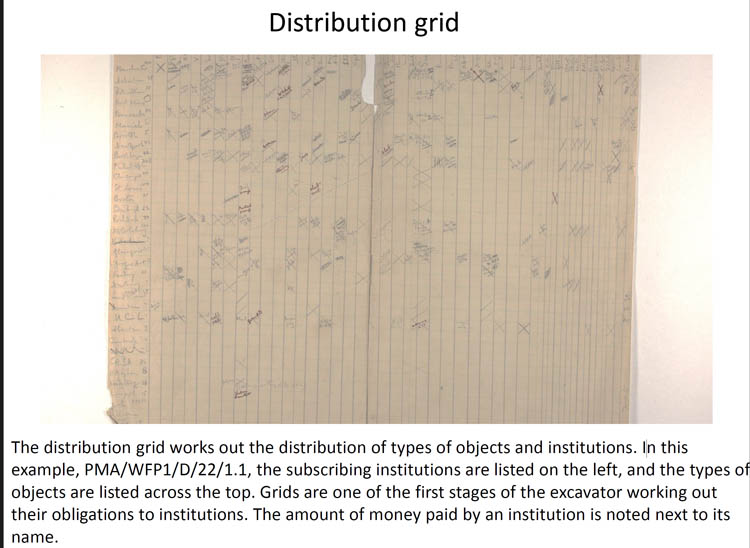
The notes or letters of these three organizations lead to a specific tomb or the names of wealthy individuals who sponsored the excavations in Egypt. Notes, letters, lists, papers, and photos also listed the names of the subscribers receiving the artifacts, even when they were gifts. There were also distribution grids with a catalog classification system like the one from 1901, organizing the dispatch of artefacts from royal Second Dynasty tombs at Abydos to museums around the UK. (p.47).
In the book Scattered Finds, you’ll find out that Petrie had a documented work ethic showing his genuine interest in excavated objects, not sales. Moreover, donors and the wealthy who sponsored the digs were also mentioned in papers.
“Dignitaries who visited active digs, such as Princess Henry of Battenberg, who witnessed some of the excavations at Deir el-Bahri in 1904, might be presented with personal gifts. The EEF later sent a small crate to Buckingham Palace, containing beads, scarabs, a bronze cat’s head, amulets, and a stone statue of a couple.” (p.14)
Several women working at the excavation sites in Egypt held several responsibilities alongside male participants, such as marking objects with context numbers, drawing and photographing finds, packing crates of artefacts, surveying sites, and occasionally directing fieldwork itself. Excavations in Egypt produced masses of finds, and it was often the women who were responsible for the heavy burden of ensuring ‘the general orderliness of the ever-growing collections’. This is clear from Petrie’s introductions to his archaeological memoirs, like that for Abydos, published in 1901” (p.60).
Chinese-manufactured vases are on the left, and Ben& friends’ super-precise vases are on the right.
Ben: (1:28:24)
“So precisely what about the radial traversal pattern why design them with such subtle mathematical Elegance if we were to make these today as they would cost an absolute bomb and it would take our best five axis machines burning up expensive tool tips to grind into granite you simply wouldn’t go to these links if they are purely for profit if you’re just making fakes to sell on the Antiquities market then why not just pump them out from a Chinese lathe shop they’d never be super precise but who cares no one was doing precision..”
Questions I have:
Making granite vases doesn’t cost a fortune. However, it does require a considerable cost to sponsor management of the entire process oversees that usually has several steps before the vases look close to being done. It also involves multiple DHL shipping charges to get every new batch of the vases to the US.
Ben: (1:29:23)
“..Have made them with the precision that they show back then maybe but it would take an incredibly talented craftsman as these vases with their lug handles have very complex geometry you can’t just make them on a lathe and in fact evidence suggests that they had to have been made on a machine with five axes of Freedom again check out this video or..”
Questions I have:
And here I agree with Ben, whoever made these ‘super-precise’ vases was more than a craftsman. This type of refinement comes from an artist who is highly likely to have used the machine-made tools to create these artful vessels.
#8 Scanning hardstone vases’ chips below the ground:
Ben: (1:32:34)
“…Going to hold up when here we are literally 150 ft below the step pyramid scanning large fragments of hardstone vessels that are still there and these are fragments that have been there for thousands of years what happens when some of these turn out to be precise as I expect them to be just as some of the vases in the Petrie museum were….”
In the video titled “The Tiny Ancient Artifacts Changing History! Ancient Egyptian Hard Stone Vases – Huge Updates” by UnchartedX we see how Ben & friends scan hardstone vases/ chips below the ground (1:32:42), so they say.
Questions I have:
These broken pieces look like plates or bowls to me, not stone vases, because of the shape and color of the stones. I’d like to see proof that these are stone vases. What do you see here?
Ben’s arguments continued on the recent Joe Rogan Experience:
#1 Precise vases are all in private collections, not museums:
In this clip from the Joe Rogan Experience, Ben explains that the most precise vase he has ever had scanned came from a private collection.
He mentions that many archaeologists and museum curators are not engineers and are often uninterested in the manufacturing precision, which is why some of the most “perfect” specimens were acquired by private collectors who appreciated their unique geometry.
I’m pretty sure archaeologists would be very interested to study the precise, granite vases if they were found in tombs in Egypt!The best artifacts are in the museums or collections of a super-wealthy.
#2 Museum Collectionsare hard to study as opposed to private collections:
Ben discusses how entrepreneur Matt Beall began acquiring hard stone vessels specifically to subject them to CT X-ray scanning because these high-precision examples were in private hands and available for study, whereas museum pieces are often harder for independent researchers to access for technological analysis.
I agree with Ben here that it might be easier to study private collections rather than making appointments, doing paperwork, waiting for a reply from museums, and traveling abroad, although we did all of that. Max studied both museum and private collections. The mathematical algorithm doesn’t look at the names of collectors or museums; it looks at concentricity and circularity of vases to determine what objects are predynastic Egyptian and what artifacts are machine-made.
#3 Collectors and Precision:
Ben explicitly states that the vase that “puts the whole concept of ‘can these even remotely be made by hand’ to bed” was found in a private collection. He elaborates that collectors would often hunt for these “precise” vases because of their aesthetic and mathematical perfection, which distinguishes them from the mass-produced pottery typically studied in mainstream archaeology. According to Ben, ‘Collectors historically sought out the “most beautiful” and “most precise” vases, often leaving the more mundane or broken items for museums.’
First, museums sold off ‘duplicates’ during deaccessioning years, leaving the most precious objects in their collections.
Second, Ben mixes up Naqada pottery with their stonework. Pottery looks primitive in comparison to the stonework of the Naqada culture because they used different methods to make the vessels. Stone vases were made by skillful artists for royal tombs and the elite. Pottery consisted of vessels for everyday use and burials of regular Egyptians. Both types of vessels are studied by the archaeologists. In fact, a lot of artifacts are studied when found in tombs and graves. It’s hard to study something that wasn’t found there. Hence, research provenance. While the collectors can hunt for precise objects at inflated prices now, thanks to Ben’s talent for promotion, it wasn’t the case before. In the book Scattered Finds, the author explains how museum and private collections formed and what artifacts were in demand. Objects in demand were large stelas, architectural pieces, columns, mummies, statues, etc. “Broken items,” as Ben calls them, were sold off from the museums after the war during the deaccessioning period. These were shabtis, beads, ‘duplicates,’ pottery, etc. Of course, some good things do end up in private hands,but those good things would have a solid provenance record leading to the original excavations, tomb, donor name, or funds.
As a result, it’s still unclear where Ben’s three granite vases came from, isn’t it?Well-made scanned predynastic Egyptian vases look precise at first sight, which suggests that a potential collector wouldn’t be able to make a difference between the artifacts in the past (without a scan).
#4 Engineering Evidence:
Because these “perfect” vases are often in private hands, Ben has worked with private owners to use structured light scanners and metrology to prove they have aerospace-level precision (within thousandths of an inch).
Questions I have:
That’s great to use the light scanners and metrology, although it’s super important to use them on the predynastic Egyptian artifacts with provenance and scan a metrological standard before scanning the objects. Otherwise, we’re possibly looking at an ‘aerospace-level-precision’ of the machine-made artistic pieces, are we not?
#5 Inherited Technology:
He argues that these vases were “heirlooms” or inherited by the early Dynastic Egyptians, rather than being made by them, because the technology to create them (high-speed lathes) disappeared later in Egyptian history.
Questions I have:
I’d like to see proof/facts of this statement because this is really interesting! As of now, it sounds like an ad hoc argument. *An ad hoc argument definition: (Latin for “to this” or “for this purpose”) is a logical fallacy where a person creates a specific, “tacked-on” explanation to save their theory from being disproven.
Ancient Stone Vase Metrology: (6:46-38:29)
The conversation covers the recent Vase Scan Project, where precise measurements were taken on ancient Egyptian hardstone vases at Danville Metal Stamping. Dunn emphasizes the extraordinary precision found in these artifacts, achieving tolerances of roughly 1 to 3 thousandths of an inch, which matches modern machinist tolerances (18:15).
Super-precise vases: key arguments from in this video
#1. Ben and Christopher talk about the inability of others to understand their work.
The problem is not that. There are plenty of engineers around more than capable of understanding it. The real problem is showing measurements and numbers of three precise granite vases that have no clear record of where they came from. While Ben often mentions the ‘impeccable provenance,” it’s unclear about what provenanced vases he’s talking about…There is no clear evidence of the provenance of these 3 granite vases. The super-precise vases look new, made of granite and somewhat different in shape from the predynastic Egyptian vases. So what’s the point of measuring the granite vessels and not the provenanced ones from Matt Beall’s collection?
#2 Mr. Dunn says it’s impossible to make them on a potter’s wheel.
It’s not surprising, because the known potter’s wheel was used for pottery, not stonework! Egyptians seemed to use a different grinding method with sand and water, and some rotational device for stone vessels. The predynastic Egyptian vases were handmade and clearly show in Max’s analysis, contradicting Ben’s statements.
#3. (23:37) Ben talks about the rose granite and that the three most precise vases were made of it, that they are at least 5,000 years old, and damaged in spots. He’s amazed by the consistent precision seen in those vases.
The problem here is that the predynastic Egypt didn’t use granite to make stone vases in general. There are few found so far that I list above in this article. Only one was found years back in Aston’s book.
#4. Drill Cores and Petri’s Core #7: (38:29-1:18:56)
They discuss the debate regarding Petri’s Core #7. Petrie’s Core #7 is the most famous piece of evidence used by Christopher Dunn to argue for high-tech machining in Ancient Egypt. Dunn explains the spiral groove found on the core as evidence of advanced machining, noting that it advances at a rate of 100,000ths of an inch per revolution (40:43), which is impossible with primitive tools. No human could push a hand drill hard enough to sink 0.1 inches into granite in one turn; therefore, it must be a machine.
The core is a piece of granite debris from a tubular drill (hollow drill bit), discovered by Sir William Flinders Petrie in 1881 near the Great Pyramid. It is currently housed in the Petrie Museum of Egyptian Archaeology in London.
Petrie core #7, screenshots from a video
The main problem with Dunn’s argument lies in neither seeing nor unseeing the continuous groves. The problem is that the copper drill gives the specific, cone-like shape to the core because of uneven drilling down the granite. If it were drilled with a CNC machine, it would go into the granite like butter, leaving the edges straight in this core. Therefore, arguments about the spiral, continuous groove are pointless!
But if you’re unconvinced, let’s sponsor the research to scan the Petrie core #7 with a good scanner to see if the grooves are really continuous or they are simply a series of stochastic (random) scratches caused by individual grains of abrasive (quartz sand or emery) being dragged around by a copper tube to close this argument for good!
#5. (1:03) In their arguments for super-precision, Ben & Dunn try to discredit Denys A. Stocks, who is one of the world’s leading experimental archaeologists, specializing in replicating ancient Egyptian manufacturing techniques.
Stocks is a trained mechanical engineer. He has worked as a researcher at the University of Manchester and has extensive experience teaching high school design and technology. He is widely respected in academia for bridging the gap between historical theory and practical engineering, having conducted over 20 years of hands-on experimental research. I read Stocks’ book and found it enlightening because he demonstrated how ancient Egyptians used primitive tools to make their stonework.
His book, Experiments in Egyptian Archaeology: Stoneworking Technology in Ancient Egypt (first published in 2003, with an expanded 2nd edition in 2022), serves as a technical manual for how the Egyptians could have achieved their feats using only the tools found in the archaeological record.
Stocks documents the creation and testing of over 250 replica tools, including copper saws, tubular drills, and bow-driven lathes. His central thesis is that the “work” was not done by the soft copper tools themselves, but by quartz sand abrasives. The copper acted merely as a carrier to rub the sand against the stone. He provides a step-by-step breakdown of how hard-stone vases (like those made of diorite or granite) were carved and hollowed using twist-reverse-twist drills and flint scrapers.
Stocks doesn’t just show how it was done; he calculates the man-hours and resources required, arguing that the massive scale of Egyptian production was a result of organized, high-volume labor rather than high-speed machinery. He explores how the Egyptians evolved their tools—such as developing multiple-bead drilling systems—to increase efficiency during the New Kingdom.
Dunn often suggests that academic archaeologists lack the industrial background to recognize machine marks. He states that someone like Stocks is looking for a “primitive” solution, which leads him to ignore features that an engineer would immediately recognize as the result of a high-speed tool [12:18].
While Christopher Dunn looks at a granite core and sees machine feed rates, Denys Stocks looks at the same core and sees the natural behavior of sand grains under a manual copper tube. Stocks’ book is essentially the “technical Bible” for the mainstream view that “primitive” tools, when combined with engineering ingenuity and infinite patience, were sufficient to build the wonders of Egypt.
While I also have my doubts about the manpower working stone in ancient Egypt, what has Christopher Dunn done to prove his point about advanced stone machining, besides visiting the museum and rolling the thread around its core? Dunn is often presented as an airspace engineer but who is he really?
Ben & Dunn argue that while Stocks has shown it is possible to make a crude approximation, he has failed to replicate the specific geometric precision and feed rates seen in the actual artifacts. However, Stocks didn’t have to do it as there are NO predynastic Egyptian artifacts found with super-precision, only the ones Ben keeps showing us!
Some of stone vessels we scanned at the Petrie Museum. 2025
Petrie Core #7: Dunn vs. Scientists Against Myths
The Scientists Against Myths team—led by experimentalist Nikolay Vasyutin—presents several evidence-based arguments to show that the core’s features are consistent with primitive copper drilling.
Vasyutin’s experiments demonstrate that high RPM (speed) is not necessary if you have sufficient abrasive. By using a simple bow-drill or a weighted hand-cranked drill, they successfully cut through granite. The depth of the “groove” is determined by the hardness of the abrasive grain (quartz/corundum) rather than the pressure of the drill.
Feature
Christopher Dunn’s Argument
Scientists Against Myths Argument
Groove Shape
Continuous mechanical spiral.
Discontinuous random scratches.
Feed Rate
0.1″/rev (Impossible for humans).
Not a feed rate; just spacing of grains.
Tool Material
Unknown high-tech material.
Copper tube + Quartz sand (Abrasive).
Core Taper
Intentional or machine byproduct.
Natural result of copper tube thinning.
Here, you can watch an explanation of the Petrie Core #7.
Main Questions Remain Unanswered:
What I see in Ben’s videos:
He’s walking around the scientific community trying to find an ‘open-minded’ person to support Ben’s high-precision idea for authority reasons. As it turns out, it’s not that difficult to be open-minded, searching for ancient tech, as Stine Gerdes, Max Fomitchev, Mark Qvist, and Christopher Dunn, signed up for this journey easily. However, when three people out of four were confronted with data/facts after extensive and deliberate research in their respective fields, they changed their opinion about what Ben said of super-precision in stone vases.
How the algorithm determines whether the vase is Predynastic Egyptian or machine-made:
Bases on high-quality scan, the algorithm looks at the concentricity and circularity of any vessel to sort it as machined, handmade, or predynastic Egyptian. It doesn’t look at names, donors, or collections’ value.
This vase is sorted out as machine-made. Visually, it looks Egyptian but the color of this stone is highly unusual. The handles are of slightly different shape (although the shape of the handles does very in the predynastic Egyptian vases).
Willing to call me ‘close-minded’, ‘toxic’, or ‘delusional’? These questions remain:
How come all super-precise vases shown by Ben & friends are shared between the two people – Adam Young & Matt Beall?
What about the provenance of THESE vases, not some other ones held in private collections?
Why is the granite of ‘super-precise’ vases different from the ancient Egyptian one? Why does it have a similar pattern that looks more like it’s possibly coming from India?
Why did ancient Egyptians rarely used granite for vases but used it for statues & architecture?
Why does the mathematical algorithm consistently shows modern-machining on the ‘super-precise’ vases? (see chart above)
What happened to all those advertised scans of Egyptian objects in museums and Egypt that were done by the Artifact Research Foundation with Karoly Poka?
Why can’t we find any other super-precise, granite vases from a specific tomb in Egypt or a museum with provenance? I listed 3 granite vases found-one from Aston’s book, one from Christie’s website, and one from the Pyramid complex of Djoser, Imhotep museum. Some of you refer me to the Arnold Meijer archives of Egyptian art, but many stone pieces are mislabeled there! You can find several bowls and vases there labeled as granite and black breccia but the actual stones are different.
When you write an argument about seeing a “super-precise” vase, please link to a specific page, photo, literature page, provenance publication, article, etc. Otherwise, it’s impossible to know what vase you’re talking about!
Well-made scanned predynastic Egyptian vases look precise at first sight, which suggests that a potential collector wouldn’t be able to make a difference between the artifacts in the past (without a scan). How come the precise ones come from private collections only, according to Ben?
It’s easy to dismiss scientific work and scientists and archeologists in general who actually do all the heavy-lifting researching the topics, writing about it, and publishing data. But what are the FACTS going for these 3 super-precise, granite vases then? There are NO predynastic Egyptian artifacts found with super-precision just yet, only the ones Ben keeps showing us!
Until these questions are answered clearly with peer-reviewed, published papers or some other honest method that can be verified independently, I’m highly skeptical that the ‘super-precise’ vases are genuine predynastic Egyptian artifacts of a lost technology. And I’m done with this project.
Scanning of a small stone vessel with the Keyence scanner in the Petrie Museum, 2025
Barbara Aston’s Egyptian Stone Vessels: Materials, Forms, and Granite Findings
Review of Ancient Egyptian Stone Vessels: Materials and Forms by Barbara G. Aston
Ancient Egyptian Stone Vessels: Materials and Forms, published by Heidelberg Orientverlag as part of the series Studien zur Archäologie und Geschichte Altägyptens, is a comprehensive and meticulously researched volume originating from Barbara G. Aston’s 1989 PhD dissertation at the University of California, Berkeley. Aston, an archaeologist with a strong geological background, bridges the disciplines of Egyptology and geology to provide an authoritative analysis of the materials used in ancient Egyptian stone vessels and their evolving forms across millennia. The author mentions ancient Egyptian words used labeling specific stones, although not all words or terminology is known to us today. The book spans 221 pages, including detailed appendices, a bibliography, and plates featuring color photographs of vessels and rock samples. One minor criticism is the occasional, necessary density of technical detail, which might overwhelm casual readers, but this is mitigated by the glossary. It stands as a seminal reference for scholars interested in ancient Egyptian material culture, quarrying practices, and chronological typologies.
How did she study the stones?
First, Aston collected 197 stones from quarry sites around Egypt (she includes the maps of quarry sites) and then compared them to the stone used for ancient Egyptian vessels. To determine the exact name and composition of each stone, which is often impossible to identify with a naked eye, the author cut 42 samples from her collected rocks to study them in thin sections under the petrographic microscope.
She studied 42 fragments of Egyptian stone vessels from the Lowie Museum, Berkeley, the Boston Museum of Fine Arts, the British Museum, and the Fitzwilliam Museum, Cambridge as well as prepared earlier 14 thin sections of stone vessel fragments from the British Museum. Each 1 x 2 inch rock sample was ground down to a thickness of .03 mm on a glass slide.
In addition, Aston identified the rock types with other techniques -using scanning electron microscopy, x-ray diffraction, x-ray fluorescence, and neutron activation analysis. The most common chemical test used to identify the stone type of unbroken vases was the hardness test of a mineral called the Mohs’ hardness scale. In the introduction, you can see a ‘Classification of Plutonic rocks’ with quartz being the hardest rock at the top of the chart. Barbara mentions ancient Egyptian labels for most stones, which she derived from writings and quarry sites’ inscriptions.
Chapter 1: Introduction
In the introduction, the author talks about common mislabeling of the rocks in literature and museums across the world. For example, the ‘andesite porphyry’ received many names like “porphyry” 2, “porphyritic diorite” 3, and “black and white breccia.” The name ‘porphyry’ was applied to a variety of rocks including a hornblende diorite. The name ‘alabaster’ often got mixed up in museums’ descriptions too, and today it refers to gypsum alabaster and travertine.
Chapter 2: Materials
Chapter 2, the core of the book, categorizes stones into igneous (molten rock material from magma cooling), sedimentary (joined rocks via chemical precipitation or cementation), metamorphic rocks (preexisting rocks that recrystallize under high temperature, pressure, or chemical reactions), and minerals, providing detailed descriptions, thin-section analyses, and discussions of ancient Egyptian terminology. This chapter is particularly valuable for its correction of errors in Egyptological literature in the misuse of terms for different stone types.
All rocks consist of one or many minerals. Igneous rocks are subdivided into two categories: plutonic ( formed underground with course crystals like granites ) and volcanic (fine-grained crystals forming above the ground). Besides the andesite and basalt, felsic volcanic rocks were not used for stone vessel production in predynastic Egypt. Finally, the rare stones- tuff, green serpentine, mica schist, amethyst, and malachite were all used in stone vessels through Dynasty 2.
Diorites have black and white speckles with 40 percent less dark minerals than the gabbro rocks, which are black because of high black mineral content. Gabbro stones were used in stone vessel production in the 4th Dynasty only.
Hornblende granodiorite looks grey consisting of small, fine black and white grains. This rock isn’t just diorite because of high amount of quartz, thus it’s close to the granites in hardness. Ancient Egyptians made stone vases from this rock from the predynastic to Dynasty 3 times, according to the author.
Type A Hornblende diorite was the most common rock used in predynastic & early dynastic Egypt for vessels. Hornblende diorites exist in 3 types (A-C)! Type B & C were used until Dynasty 4 for the most part.
Almost black porphyritic quartz monzo-diorite consists of biotite and hornblende minerals that give this rock black appearance. Used heavily in New Kingdom, examples include Sakhmet statues of Amenhotep Ill.
Lionesses, Statues of the goddess Sekhmet (Le Temple) Room 324, Sully wing, Level 0, the Louvre. diorite. https://collections.louvre.fr/en/ark:/53355/cl010009032
Basalt is a black, volcanic rock that was often called ‘dolerite’ or ‘diabase’ by the British. Predynastic Egyptians used basalt for stone vessels’ production heavily, although its use declined rapidly by Dynasty 4. Manufacturing of small vessels continued in Dynasties 5-6 and almost disappeared after the Old Kingdom. p.21
Basalt stone Vessels in Petrie Museum
Andesite Porphyry: This is a fine-grained, volcanic stone that looks very similar to diorite. The author identified 4 different types of this stone! Andesite consists of large, white crystals in black stone but andesite porphyry comes in several colors. Type A of hexagonal white crystals in black rock is the most common in Egyptian stone vases. Type D is purple ‘imperial porphyry’ of the Romans, which was first mentioned by Pliny. The stone was quarried in Egypt and moved to Rome. On p. 23, Barbara sites the exact time frames for each stone type used in ancient Egypt.
Obsidian: semitransparent obsidian is a black or reddish volcanic glass that differs in translucency. Imported to the country, obsidian was used in knives, amulets, and vases (Obsidian vases appeared in the 1st dynasty, not earlier). “Almost all of the obsidian objects found in Egypt, including all of the stone vessels, are of a jet black variety, which is opaque in the mass and translucent at the edges.” p.25
Tuff: Made of ash, tuff is a tough rock to determine as such based on visual perception only and requires a review under the microscope. It was a rare stone in Egypt for vase production, and the author determined its use between predynastic Egypt and Dynasty 2 only. Some tuff is greenish. Some Tuff stone vessels have yellowish appearance because of exposure to water or moisture, “due to the weathering of the calcite”. p.26. Others, used in stone vase manufacturing, are yellow-brown with purple, wide hematite stripes.
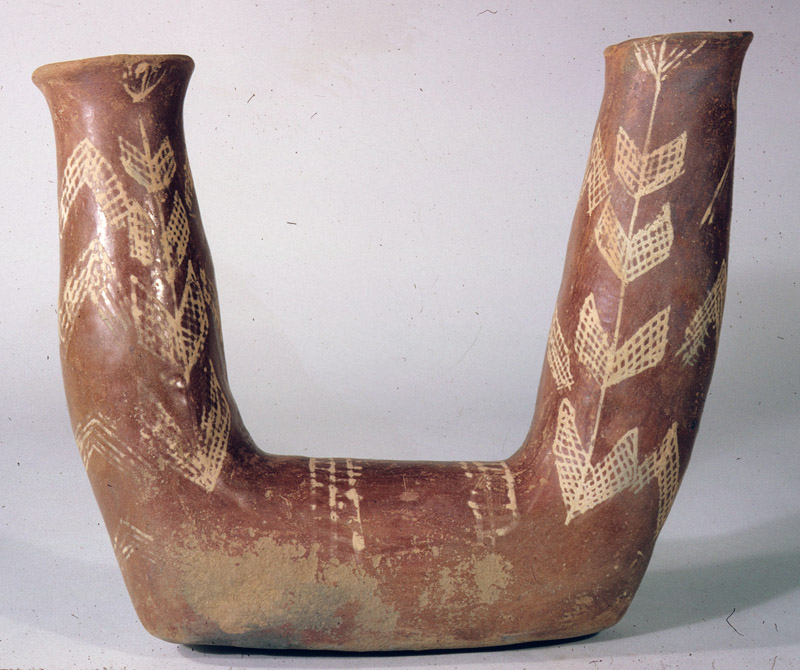
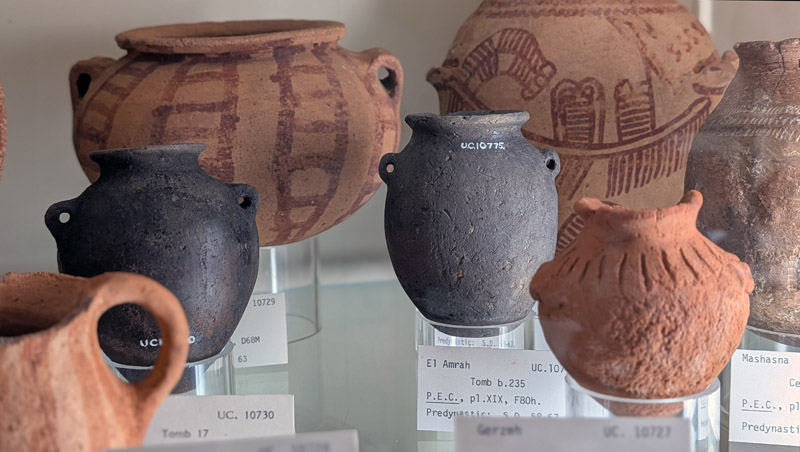
Tuff is one of several mislabeled stones called “red-veined marble”, “brown-veined quartzite”, and “purple-striped limestone” in the past. And Petrie’s labeling of this stone could cause confusion too.
Sedimentary rocks:
Greywacke is a sandstone with some clay in it.
metagraywacke stone: The General Tjahapimu, dyn30: https://www.metmuseum.org/art/collection/search/551806
Siltstone: This a very fine, grey-green rock made of sand and green minerals. It was often mislabeled as ‘slate’ or ‘schist’. The Wadi Hammamat was the major quarry source of the siltstone with over 250 inscriptions left there dating from the Early Dynastic Period to Dynasty 30. Ancient Egyptians began using this stone for stone vessels in Naqada II and stopped its use in early dynastic period.
Apparently, siltstone vases were very popular in this time period. Archeologists found 20% of the stone vessels in the royal tombs at Abydos, and over 30% of the vessels from the tomb of Hemaka (temp. Den) at Saqqara. 40% of siltstone vessels in the graves of Dynasty 1 were found in the cemetery of Naga ed-Der. Both the 1st Dynasty Giza mastaba and the Dynasty 1 “M Cemetery” at Abydos had 20% siltstone vessels.
Siltstone became a unique rock to create artistic sculptures in the early dynastic period like flowers, leaves, basketry trays, and hieroglyphs, and imitations of metal vessels. Siltstone was a popular material in statues production throughout Egyptian history. p.32
An example of siltstone monument: Shaft of a black siltstone obelisk dedicated by Nakhthorheb to Thoth and placed before the entrance (with 523) to a shrine in a temple of the god, 350BC (Nectanebo II) https://www.britishmuseum.org/collection/object/Y_EA524
Green Conglomerate: this is a fun, volcanic rock that consists of multi-colored (white, brown, yellow, green, etc) chips (chert, quartz, and quartzite) mixed in green mass. Romans called it ‘Breccia verde antica’ and exported it from Egypt. There are no stone vases of this kind as ancient Egyptians made sarcophagi from it.
Sedimentary quartzite was one of the hardest stones used in ancient Egypt. The author identified quartzite of white, pale yellow, dark yellow, brown, red, pink and purple color in Egypt for study. Egyptians made many sarcophagi and statues from it but very few vessels on record.
Limestone: Limestones consist of fossils and calcite with minor editions of other elements giving it a specific color like yellow, red, or grey. Egyptians made numerous stone vessels from this soft rock in predynastic periods that was available in 17 quarries around the country. Limestone, travertine, alabaster and chert are sedimentary rocks formed by chemical and biochemical precipitation. The author made 6 separate categories for this stone used in vessel production that differ in color and texture. They were used in different time periods with the most popular, type A in white and yellow, used through several periods in Egypt.
The Egyptians consistently quarried limestone from carefully selected fine-grained layers; layers particularly resistant to weathering. p.38
Recrystallized Limestone is a semi-translucent rock of yellow or white color with wide grey, parallel streaks, according to Aston that was used in stone vases in early dynasties.
Dolomite has opaque white color with thin dark dolomite veins in fine-grained mineral. In stone vessel production, it was very popular and used in the Dynasties1-3 only! only travertine and siltstone were more popular than dolomite.
Calcite is a soft rock that’s either colorless or white with unique rhombohedral cleavage. Because of its easy breakage it was used in beads production, not the vessel manufacturing.
Travertine is also a soft but compact rock of varied colors- white, yellow, brown, yellow-white. It was widely used in the predynastic Egypt and remained the most popular rock used for stone vases in the entire Egyptian history! In Egyptian sources, travertine was named alabaster and these words are interchangeable. Alabaster was the cheapest stone used for vessels in Egypt. Greek traveler, Pliny recorded ‘alabaster’ or ‘Alabastron’ as the town’s name where the stone was sourced. Used in the Old Kingdom, Travertine is different from alabaster in chemical composition and origin.
Real Alabaster is basically gypsum and refers to a rock composed of calcium sulphate. It’s a very soft stone that’s water-soluble and highly scratchable. Therefore, it was used in tombs of the poor and had funerary use only from the Predynastic to the early Old Kingdom use, according to the author.
Inscriptions from the walls of the quarry, either incised or simply painted in ink, of which 17 can be dated to the Old Kingdom. p.45
According to statistics compiled by Lucas, travertine was the third most commonly used stone for vessels in the Predynastic Period, surpassed in quantity only by limestone and basalt. In all subsequent periods of Egyptian history, travertine was by far the most common material for stone vessels.p.47
Anhydrite is gypsum of white, grey, or bluish color thus named ‘blue marble’ in early literature. It’s white variety was called ‘crystalline limestone or even ‘alabaster’. It’s a soft but beautiful stone (hardness 3) that was used for vessel production in ancient Egypt between the Dynasty 12 to the Second Intermediate Period only, according to the author.
Red and white limestone breccia cosmetic stone vessel, the British Museum
Red and white limestone breccia vessels are often on display in the museums as Egyptians used this stone heavily from Naqada I to the 4th Dynasty. This stone has a unique pattern of white limestone pieces set in a red rock of hematite and carbonate cement. White pieces vary in size and color.
Metamorphic rocks:
These metamorphic rocks, like slate, phlyllite, schist and gneiss, very in composition and form in the mountains from already existing stones under high pressure or heat.
Marble is a metamorphic rock that completely recrystallized from fossils. It was rarely used for vessels in ancient Egypt because it’s quite soft.
Brucite is very soft, white, blue, or yellow mineral, magnesium hydroxide of the composition Mg( OH)2. I have never seen stone vessels in the museums with this name. The author found only a fragment of this stone in EEF excavations. So it’s unclear during what time period it was used in ancient Egypt.
Serpentine is a group of green, metamorphic minerals and rocks (including chrysotile and antigorite) formed deep in the earth. Serpentine comes in a wide variety of colors and shapes but often has snake-like, mottled appearance with a Mohs hardness of 2.5–4, which makes them easy to carve. According to the author, ancient Egyptians used 3 types of serpentine for stone vessel manufacturing in different time periods.
A-opaque green/grey serpentine with black veins
B-translucent green serpentine with black patches (used in predynastic to dyn.1), and
C-iron-rich, granular black serpentine with intermixed grey or brown granules. p.57
Serpentine in vessels was found at the very end of the Naqada I period but did not become common until Naqada II.
Steatite is a super soft, mineral talc of greenish grey, brown or grey colors rarely used in stone vessels. It is extremely soft and was labeled as soapstone. Steatite used to be mixed up with limestones, serpentine and siltstone in museums’ labeling of stones.
Meta-andesite Porphyry and Amphibolite: these rocks look similar, moreover, they look like andesite porphyry of Type B. They were mislabeled as ‘black and white breccia’ and ‘porphyritic diorite.’ Meta-andesite Porphyry is a metamorphic igneous rock with a porphyritic texture of large crystals set in a fine-grained, altered, purple-gray or dark matrix.
Mica schist is made of mica in layers that has glossy grey hue. It was rarely used in stone vessel manufacturing due to its easy breakage into layers. Mica schist is often mixedup with the green siltstone from the Wadi Hammamat.
Diorite gneiss consists of of translucent white plagioclase and dark hornblende with a little biotite. it has a mixed appearance of black and white in a variety. It was used in early dynastic period.
Minerals:
Quartz is the hardest stone ancient Egyptian craftsmen used for stone vessel production. Quarz is colorless, semi-transparent mineral seen as large crystals in veins and cavities, like in granite. It’s present in chert and chalcedony. Quartz may appear colored due to some other mineral inclusions, and thus can be mislabeled too.
Rose quartz has a pink coloration. Amethyst is translucent quartz crystal with purple hue (iron inclusions give the color). It was used in the Middle Kingdom for beads, amulets, and scarabs as well as Roman times. I haven’t seen a stone vessel made of amethyst in museums. There are a few documented amethyst vessels manufactured during Naqada III through Dynasty 2.
Quartz crystal is transparent to translucent, white (or colorless) quartz. Found in royal tombs, quartz vessels were made in the late Naqada III-the early Dynastic periods.
Chalcedony and chert are made of microcrystalline quartz. Chert is opaque with granular texture. Red, yellow, and green varieties of chert are called jasper, which were special, semi-precious stones for Egyptians. Chert vessels were mostly made in the early dynastic period.
Chalcedony is translucent with concentric bands. Named Carnelian, red chalcedony has inclusions of iron oxide in quartz . Agate is a color-banded chalcedony. the author thinks that all vessels made of chalcedony were imported into Egypt.
Malachite is a soft stone that has a bright green color. Ancient Egyptians used malachite for eye paint, beads, amulets and even stone vessels, although the author identified only 2 malachite vessels dating from late Predynastic to Early Dynastic periods, and I haven’t seen the malachite vase from Naqada culture in museums.
Lapis Lazuli was a rare and expensive stone imported from Afghanistan. It was carved for inlays and miniature vessels in Naqada II-early dynastic period.
Hematite is an iron oxide of either dark red or black hue with a luster sheen. Egyptians made kohl sticks from it. It comes in many shapes but Egyptians used metallic black rock for vessel production.
Chapter 3: Forms
Ancient Egyptian Stone Vessels Materials and Forms by BARBARA G. ASTON, image is copyrighted by author/publisher
Chapter 3 (Forms) shifts focus to typology, documenting vessel shapes from the Predynastic Period through the Roman era. Aston does a remarkable job of compiling known vessels with provenance into a catalog of forms. She defines date ranges for common forms based on provenanced and well-recorded examples, extending and refining earlier typologies by scholars like W.M.F. Petrie and G.A. Reisner.
For each form, the earliest and latest examples known to me are recorded, along with a selection of intermediate examples to illustrate the date range covered. The examples listed are not exhaustive, and include, for the most part, only well provenanced and/or well dated examples.p.78
Drawings of forms give straightforward overview of stone production in ancient Egypt, helping establish the dates of the common vessels. This is an excellent reference material to have a detailed look at the ancient Egyptian stone vases to compare them to modern and/or machine-made vases ( if you haven’t seen many examples of Egyptian stone vases in the museums).
Also, she lists provenance of each stone vessel under each form!
Chapter 4
Chapter 4 (Conclusions) synthesizes the findings, discussing identifications, quarry sources in ancient Egypt, and chronological patterns of stones. The author summarizes her findings showing mislabeling of the stones in early literature including Petrie’s. For example, she makes the distinction between true alabaster and travertine, and differentiates red granite, basalt, purple andesite porphyry, tuff, red breccia, diorite gneiss, and steatite.
Under the microscope she identified Egyptian basalt as porphyritic olivine basalt with an intergranular texture. Roman purplish “imperial porphyry” is a hematite-rich andesite porphyry. The bibliography is extensive, covering Egyptological and geological sources up to the late 1980s. On a page 170, you’ll find a table with a list of all stones used and in what Periods in Ancient Egypt.
Geology & Altered States Key Findings: the ‘altered’ state of plutonic rocks
Aston’s work excels in its precision and corrective lens on previous scholarship. Many plutonic rocks used for vessels are in an “altered” state—a process where rocks undergo mineralogical changes due to interaction with hot water solutions (hydrothermal alteration). This alteration often results in saucerization (clouding of feldspars) or replacement of minerals like hornblende with actinolite or chlorite. Aston thinks that the ancient Egyptians may have preferentially selected altered rocks because the secondary crystal intergrowth makes them tougher, more cohesive, and less prone to fracturing under stress during carving or use.
“Rocks may be “altered”, i.e. undergo a change in mineralogy, commonly by interaction with hot water solutions. A high proportion of the plutonic rocks which the Egyptians used for stone vessels, when examined in thin section, tum out to be altered rather than fresh rock. It is possible that the Egyptians selectively chose the more altered rocks, as the secondary intergrowth of crystals during alteration makes them tougher, more cohesive, and less likely to split and fracture under stress than unaltered rocks.” p.12
Hornblende granodiorite: “The heavily saussuritized feldspars indicate that the rock has been altered.” p.15
As revealed in thin section, this rock is an altered andesite porphyry. The original rock was very iron-rich; samples of unaltered andesite porphyry collected from near the quarry at Gebel Dukhan have a high magnetite content -both the hornblende phenocrysts and the groundmass veing peppered with magnetite. As a result of alteration, the black magnetite has been oxidized to red hematite and the plagioclase altered to epidote and granular quartz. A small amount of the epidote consists of the pink manganese epidote, piedmontite, which gives the phenocrysts a pink cast and contributes to the overall purple color of the rock. It is possible that the andesite porphyries of Types A-C are also altered or metamorphosed. Two stone vessel samples 83, also black with white phenocrysts, proved on examination in thin section, to be of metamorphic rock (see under meta-andesite porphyry and amphibolite below). p.22
Egyptian collection with columns, the Louvre
What about the use of granite for the predynastic Egyptian stone vases?
Egyptian sphinx of Tannis side view, the Louvre
According to the book, the granites are usually light-colored stones or speckled with dark minerals consisting of 20 percent quartz and of potassium feldspar giving them pink coloration. If the rock is dark, it’s not granite, it’s diorite or gabbro instead.
The ancient Egyptian name for granite was m3t. Originally the term encompassed dark-colored diorites and gabbros as well, but in the New Kingdom the word m3t became specialized to refer only to the red granite of Aswan.p.16
Aston identified the red granite of Aswan as a porphyritic hornblende biotite granite that has more than 20% of quartz. Aswan’s red granite consists of a unique blend of half pink potassium feldspar and other elements – 15% opaque white plagioclase, 25% translucent grey quartz, 6% black biotite and 3% black hornblende, 1% yellow granular sphene (yellow), and magnetite, apatite, zircon, and epidote. As a result, the Aswan’s granite has a distinctive appearance of 2 main colors and quartz.
In earlier literature, other names for red granite used in Roman times was the red granite of the Wadi el-Fawakhir, which is really a porphyritic biotite granite. The other black and white “granite” from Mons Claudianus is really a hornblende biotite quartz diorite. Both of these rocks were not used in stone vessel production. p.18
Barbara Aston’s book shows a SINGLE Granite stone vase, description from p.16 & figure 21 from p. 170 illustrates the summary of all stones used in Egypt, where the use of granite wasn’t present in the Predynastic Egypt, rather Naqada III & Dynasties 1-4 only. (Image and writing is copyrighted by respective publisher and author)
Barbara G. Aston’s book does not document granite vases specifically from the Predynastic Period. Aston’s analysis (based on over 1,000 vessels examined up to 1989) indicates granite (primarily the red porphyritic hornblende biotite variety from Aswan)was first used for vessels in the Early Dynastic Period (Dynasties 1–3, ca. 3100–2686 BC), continuing through the Old Kingdom. Her time range chart (Fig. 21) and material discussions show no predynastic entries for granite, maybe due to her focus on confirmed provenances or distinctions between granite and similar rocks like granodiorite. Recent scholarship may have expanded the record, attributing some granite pieces to predynastic contexts, but I’m unaware of such official, documented archeological research for now.
I have visited many museums in the US and Europe, documented numerous vessels, and I HAVE NOT SEEN A SINGLE, EGYPTIAN GRANITE VASE on display! However, I do update my article about granite vases here as I’ve collected very few pictures of granite vases that do look like Aswan granite. Only the scan and/or confirmed provenance paperwork can determine if they’re predynastic Egyptian or not.
“The ancient Egyptian term lnr km, referring to dark-colored, coarsely crystalline rocks as opposed to red granite, is not attested before the New Kingdom.” p. 13
Granite for vessels was exploited from the Early Dynastic Period (Dynasties 1-3) through the Old Kingdom (Dynasties 4). Granite’s use declined after Dynasty 6, likely due to shifting preferences toward softer stones like travertine. She debunks terms like “syenite” (low-quartz plutonic rock) for Aswan granite, confirming it as true granite (>20% quartz), and rejects “grey granite” or “black granite” for darker diorites or gabbros.
Overall, hard igneous rocks dominate early periods (Predynastic to Old Kingdom), while softer sedimentary stones prevail later, reflecting technological and economic shifts.
This means that the “super-precise” stone vases made of granite are modern machine-made examples with high probability. They don’t come from the predynastic Egypt, and perhaps these vases were created as artful objects in other time periods (the late 19th-early 20th century?) The pattern of real Egyptian Aswan red granite is visually different from all precise granite vases shown in a file titled “2023 Danville Metal Stamping Vase Metrology Report” (under Vase Scan Resources Tab) on Uncharted X website.
Examples of the Granite stone and its use in Ancient Egypt:
Amenhotep III, 18 dynasty, multiple views, granite, British Museum
As you can see the Egyptian red granite has a specific, mottled pattern that consists of black, red-rose hue and a touch of off-white quartz. Another Egyptian granite (light rock) is of sand/beige color. All these statues exhibit the same pattern style of black hue, although overall coloration may differ some. Ancient Egyptians used granite for statues and sarcophagi with VERY limited stone vessel production.
Look at these beautiful, perfect cuts shaping the figure. It’s one of the Egyptian sphinxes exhibited at the Louvre
https://www.metmuseum.org/art/collection/search/543936Granite Palm Column of Sahure Old Kingdom, ca. 2458–2446 B.C. 5th dynasty. The stone was quarried at Aswan and ferried downstream five hundred miles to the pyramid site at Abusir.
Kneeling statue of Amenhotep II offering two vases, ca. 1425-1401 BC. Granite, dimensions: 152 x 57 x 79 cm. From Luxor / Thebes, Karnak, Temple of Amun. Drovetti collection (1824). Now in the Egyptian Museum of Turin. Cat. 1375 https://collezioni.museoegizio.it/en-GB/material/Cat_1375
Red granite in the Louvre: E 11104, mummiform funerary servant, 1390-1352 (Amenhotep III) Discovery site: KV 22, tomb of Amenhotep III , Brought back by Édouard de Villiers du Terrage following the Egyptian Expedition; given by his son to the Louvre in 1906. https://collections.louvre.fr/en/ark:/53355/cl010033470
Amenhotep II, closeup showing the granite texture, Turin
Petrie’s Misidentifications of Stones in Ancient Egyptian Vessels
Based on Barbara G. Aston’s Ancient Egyptian Stone Vessels: Materials and Forms, W.M.F. Petrie, a pioneering Egyptologist, frequently misidentified stone materials in his publications due to a lack of rigorous geological analysis and/or knowledge. Aston, drawing on petrographic thin sections and fieldwork, systematically corrects these errors throughout her book, particularly in Chapter 2 (Materials) and the Conclusions (Chapter 4). Petrie’s misidentifications often stemmed from reliance on visual appearance (e.g., color, texture, or veining) rather than mineral composition, leading to arbitrary or inconsistent terminology that caused confusion in later scholarship. Below, I outline the major examples highlighted by Aston with references to Petrie’s errors and Aston’s corrections.
While syenite and porphyry are two types of diorite, Petrie puts “syenite” in his “granite” category, and “porphyry” into “porphyritic rocks”. Petrie and others used the terms “porphyritic rock” and “porphyry” to describe other rocks, like a granite or a basalt.
Type A hornblende diorite was called “porphyry” or “porphyritic rock” by Petrie and this name was adopted by GARSTANG, QUIBELL, and REISNER in the publication of their Early Dynastic and Old Kingdom excavations. p.13 As Petrie applied these terms arbitrarily, and with no relation to their true geologic meaning, much confusion has resulted. p.14
Petrie mislabeled siltstone calling it “slate”. p.29 He also came up with a term ‘durite’ to describe a range of green rocks, used in scarabs and amulets. He labeled diorite gneiss as “diorite”. “Chephren diorite” used to describe a diorite gneiss.
Petrie called highly-colored limestones “marble”.p.36
Petrie called the recrystallized limestone “grey marble” and ‘saccharine marble with grey bands’, or a “grey and white saccharine marble”.p.40
Petrie called dolomite “geobertide’ and ‘dolomite marble’.
He called anhydrite “blue marble.” Red and white limestone breccia was named “breccia” or “red and white breccia” by Petrie. Other archeologists called it “red breccia.”
Petrie places a category of “metamorphic” rocks within his “volcanic” vessels, confusing two fundamentally different classes of rocks.p.54
Petrie used the term “steaschist” to describe “steatite” for talc rocks.p.60
Therefore, literary descriptions of stone vessels from early literature are pointless without a picture confirming the description. These findings challenge and refine earlier works by Petrie, Lucas, and Reisner, emphasizing scientific rigor over visual assessment of archeologists without the geological insight.
UC 15682, Petrie Museum Collection
Broader Implications from Aston’s Analysis
Aston attributes Petrie’s errors to the era’s limited tools—no thin sections or chemical tests—and his focus on archaeology over geology. This led to overreliance on macroscopic traits, inconsistent catalogs (e.g., contradictions in Stone and Metal Vases), and invented terms like “durite” or “steaschist.” These misidentifications propagated in works by Lucas and Reisner, skewing understandings of quarry sources, chronology, and ancient terms. Aston’s major finding: Many “hard” stones Petrie identified were softer or altered versions, preferred for durability in carving.
While exemplary, the book has limitations inherent to its dissertation origins. The focus on pre-1989 data means some later discoveries (e.g., advanced geochemical analyses) are absent, though Aston’s methods remain foundational. The forms chapter, while useful, could integrate more statistical analysis of shape evolution.
In Conclusion
This is an indispensable resource for Egyptologists, geologists, and archaeologists studying ancient Egyptian stone vessels production. Aston’s integration of fieldwork, lab analysis, and typological study provides a model for interdisciplinary research. The book’s emphasis on accurate identification of stones fosters great understanding of trade, technology, vase dating, and cultural preferences in ancient Egypt. it The correctly identified stone in a vessel can reveal the dating of the vessel regardless its shape. It’s also possible to track the vessel to its original source. Aston does a remarkable job compiling known vessels with provenance into a catalog of forms. So by identifying the correct stone type used in ancient Egypt and ancient quarry sources, the author gives us a spectrum of dates when the specific stone vessels were created. Some rocks appeared similar to the eye but differ significantly in thin section under the microscope. She lists provenance of each stone vessel under each form!
Her research also closes the argument about the granite use in stone vase production in ancient Egypt. Ancient Egyptians didn’t really use granite to manufacture stone vessels but used it a lot to manufacture statues, sarcophagi, columns, etc. Only one, unfinished granite vase was listed in the book with a few other ones mentioned in earlier literature (that was probably a mislabeled stone). I’ve listed 3 found Aswan granite vases here. Therefore, all ‘super-precise’ granite vases are not coming from the Predynastic Egypt.
Where to buy this book:
Here is a list of online sites where Ancient Egyptian Stone Vessels: Materials and Forms by Barbara G. Aston (published in 1994 by Heidelberger Orientverlag) is available for purchase. This is a specialized academic book, so it’s often sold as used or rare copies through booksellers rather than new from the publisher. Availability and prices can vary, so check the sites for current stock.
Amazon: Available in various editions and regions (e.g., US, Belgium, Spain). Search for the ISBN 3927552127.
AbeBooks: Multiple used copies from independent sellers, with international shipping options.
eBay: Listings for used copies, including from sellers specializing in Egyptology books.
Meretseger Books: A specialist in Egyptology and ancient history books; offers first editions and rare copies.
Biblio: Aggregates from booksellers; includes detailed listings for used copies.
BooksRun: Focuses on textbooks and academic books; available for purchase or rental in some cases.
The largest statue in British Museum is of Ramses II, 19th dynasty, 1250BC, EA19, British Museum, Found/Acquired: Ramesseum (Thebes), Doorway, labeled: granodiorite and red granite. 20 ton-sculpture was made of Aswan’s rock. Like other statues, it was originally painted and traces of the paint can still be seen today.
If you see a mistake, contact: nika@veronicasart.com
In archaeology, provenance refers to the documented history of an object’s ownership, custody, location, and chain of transfer from the time of its creation (or ancient deposition) through to the present day. This includes records of how the artifact moved from its place of origin or discovery, through excavations, collections, sales, donations, or other hands, often traced via archival documents, museum and organisation records, dealer invoices, notes at excavation sites, or other evidence. A complete provenance provides critical context for understanding an object’s authenticity, cultural significance, legal status, and ethical acquisition—helping to verify it is not looted, forged, or illegally exported.
Archaeologists frequently distinguish provenance from the closely related term provenience. Proveniencespecifically denotes the precise archaeological findspot or location where an object was excavated or discovered in situ, recorded in three-dimensional coordinates relative to the site’s grid, stratigraphy, and associated features. This pinpoint location is essential for interpreting the object’s original context, function, date, and relationship to other artifacts. While provenience is the “birthplace” of an artifact within the archaeological record, provenance is its full “resume” or post-discovery biography.
The provenience problem: why Egypt’s artifacts are under scrutiny
Pear-shaped macehead and wavy-handled jar naqada II-III, veronica winters art blog
The importance of provenience in collecting antiquities cannot be overstated. The antiquities market is flooded with forgeries, fakes, and outright scams, driven by individuals eager to profit. As an art collector or antiquities enthusiast, you protect your investments—and the integrity of your collection—by securing artifacts with impeccable provenance: a clear, documented chain of ownership and history tracing back to their origin (excavation site and/fund or a person who led or sponsored the team).
For ancient Egyptian artifacts, ideal provenance should extend to the original excavations in Egypt during the late 19th and early 20th centuries. Alice Stevenson’s book, Scattered Finds: Archaeology, Egyptology and Museums, provides an excellent overview of the key individuals, institutions, and organisations involved in those early digs and the subsequent distribution of finds to newly forming museums and collections worldwide. (Scroll down to see a detailed review of each chapter of this book to understand how provenance got created).
Distribution destinations: According to https://egyptartefacts.griffith.ox.ac.uk/destinations Artefacts from British-led excavations in Egypt were distributed to more than 325 institutions across 24 different countries, in 5 continents.
Artefacts of Excavation, distribution list guide, museum receipt example.
The “Artefacts of Excavation” project (1880–1980) is an online resource from the Ashmolean Museum and Griffith Institute that traces the distribution of tens of thousands of British-excavated Egyptian objects to over 300 global institutions. It decodes historical, hand-written, distribution lists and documents to re-contextualize dispersed collections, enabling researchers to track objects from field sites to museum collections. You can see various examples is this pdf file: https://share.google/jEuoVwK3Kv9LZP8H0Artefacts of Excavation-distribution grid to museums example. The distribution grid works out the distribution of types of objects and institutions. In this example, PMA/WFP1/D/22/1.1, the subscribing institutions are listed on the left, and the types of objects are listed across the top. Grids are one of the first stages of the excavator working out their obligations to institutions. The amount of money paid by an institution is noted next to its name.
Many fakes or forgeries of ancient Egyptian artifacts flooded the market in the 1920s and 1930s, particularly in Egypt itself. Softer stones like alabaster are easy to carve into convincing replicas, such as vases. Harder stones—used in some of the most popular ancient Egyptian vessels—are more challenging to work convincingly by hand, but high-quality reproductions are still very possible. Today, countries like China and India are known for producing excellent modern stonework, including custom-ordered urns and vases in specific shapes and materials.
In the realm of modern painting, numerous forgeries were created in the United States between the 1950s and 1990s. Abstract and modern styles were relatively easy to replicate by forger artists, and at the time, few reliable scientific tests existed for paints, canvases, or other materials. Today, advanced forensic techniques make it far easier to detect art forgeries.
Until recently, authenticating ancient Egyptian hard-stone vases was difficult without strong provenance or neutron activation analysis, microscope, and some analytical techniques, like scanning electron microscopy, x-ray diffraction, x-ray fluorescence, which yield high magnification, and record the accessory minerals or trace elements present in a rock (consult Barbara Aston‘s book “Ancient Egyptian Stone Vessels: Materials and Forms” for extensive information on this topic). Dr. Max Fomitchev-Zamilov has developed a metrological method—published in a peer-reviewed paper in Heritage Science—that uses 3D scans to assess manufacturing quality through metrics like concentricity and circularity. This algorithm helps distinguish genuine ancient handmade vessels from modern machine-made replicas by classifying objects based on observed precision patterns.
(Here is a picture of an unfinished big vase we found in the Petrie museum. UC30221. It clearly shows the beginnings of work on it, including the handles. The project was abandoned for some reason.)
With training, one can often spot potential authenticity issues visually by recognising characteristic ancient Egyptian vase forms, preferred stone types, lug handle shapes, and surface qualities (both interior and exterior). However, when visual inspection leaves doubts, this quantitative approach provides valuable additional evidence.
Object Marks: many excavated objects were marked by team members with letters or numbers recording which tomb, deposit or other context an object was found in. Such marks are seen on artefacts located in the Petrie Museum, London.
UC 15682, Petrie Museum Collection
Online discussions often promote exaggerated claims of “super-precision” in ancient Egyptian stone vases, suggesting impossible handmade accuracy. This doesn’t add up to me because the most extraordinarily precise examples (with tolerances rivalling modern machining) are highly likely modern machine-made pieces, while genuine ancient Egyptian vessels were handmade from specific stones and exhibit the expected variations of hand craftsmanship. Read more about the Vase Mystification
Artifact tracking & Egyptian Protection laws:
Stevenson devotes Appendix A of the book, titled Scattered Finds, to all Egyptian laws protecting its antiquities. Egypt passed several laws, first limiting the excavations and shipments of Egyptian artefacts overseas. In 1835, the Egyptian government established an Egyptian Antiquities Service that prohibited the export of antiquities from Egypt without a permit. In 1874, all antiquities yet to be excavated belonged to the government. In 1897, people were punished for excavations without an official permit. In 1951, the law protected antiquities as ‘no antiquity could leave Egypt unless Egypt owned one or more objects similar to that being exported’. And in amendment to Law 113, the government forbid to export of anything from the country. In 2010, it cancelled the 10 per cent of ownership granted to foreign excavation missions that discovered them. (You can look up the entire list of laws in Appendix A.)
Due to the success of partage, the most intense excavations and distribution happened between 1884 and 1914. The ‘partage’ arrangements permitted Flinders Petrie to export from Egypt vast amounts of artifacts during that period.
This means that antiquities that circulate in an open art market of auctions today come from early excavations, deaccessioning, post-war turmoil, and private collections. The museums can’t get new material under these laws, and can only loan and purchase the artefacts from other museums or collectors at auctions today.
Many auction sites are distributing ancient Egyptian material. In this example at Christie’s, you can see some effort listing the provenance: https://www.christies.com/lot/lot-5882111 . It’s up to a new owner to decide to investigate or ignore the chain of ownership that should be traced to the original excavation site, fund, or donor’s name. However, I’ve seen auctions (like in the image below) where provenance is not only unlisted but also muted by misleading descriptions of the stone material.
Book Review: Scattered Finds: Archaeology, Egyptology and Museums by Alice Stevenson (UCL Press, 2019)
Scattered Finds is a fascinating historical study of how ancient Egyptian artefacts excavated by British-led teams and single figures between roughly 1880 and the mid-20th century were distributed worldwide, primarily through “finds distribution” practices. Professor Alice Stevenson, curator of UCL’s Petrie Museum of Egyptian Archaeology, draws on extensive archival research, including the “Artefacts of Excavation” project she led, to trace the dispersal of objects from sites in Egypt to museums, universities, private collections, and institutions across the globe. This 320-page book is concise, well-written, and includes up to 180 references for each chapter written! Available for free download here: https://uclpress.co.uk/book/scattered-finds/
Scattered Finds examines the origins of organisations that led the excavations, historical records, politics, personalities, ethics, social histories, archeologists, and imperial/colonial dynamics that shaped the distribution of ancient Egyptian artifacts. These organised excavations led to emergance of museums worldwide: top US and UK museums and other institutions in 26 countries were the beneficiaries of finds from the EEF’s excavations.
Chapter 1: Trinkets, Trifles and Oddments: The Material Facts of History (1880–1914)
The first chapter explains the first phase of British excavations, museum organisation, and the systematic distribution of antiquities to the organisation’s subscribers worldwide. Stevenson details how hundreds of thousands of Egyptian objects were sorted, divided, recorded, and dispatched to brand new museums across the globe.
Who did the excavations?
3 crucial figures were leading the first excavations and dispatch of ancient Egyptian artifacts from Egypt- famous archeologist Flinders Petrie (ERA fund+), Victorian writer Amelia Edwards (who presided over the Egypt Exploration Fund (EEF), founded in 1882), and Oxford University mathematics graduate John Garstang (1876–1956).
#1. Flinders Petrie & the Funds
Flinders Petrie relied on the private patronage of wealthy industrialists, like Jesse Haworth and Henry Martyn Kennard, leading to a three-way split of all objects permitted to leave Egypt in the late 1880s and 1890s. Petrie established the organisation – Egypt Research Account (ERA) to train archaeologists, which, like the EEF financed its archaeological digs. (p.11) Petrie’s wife, Hilda, did extensive recordings of all objects at the excavation sites.
While the digs were done with the help of locals – Egyptian Quftis, Petrie adopted an effective method of retaining finds in his possession rather than taken to a dealer, by paying tips to his workmen. Rodolfo Vittorio Lanzone worked in the Turin museum when he met Petrie in 1883, and Petrie received guidance on workers’ management. “Lanzone advised Petrie on differential pay for Egyptian workmen on site according to ability, and in such a way as to encourage finders to bring material directly to him, rather than to a local dealer. It was a strategy that Petrie adopted, systematized and advocated for the rest of his career.” (p.112)
“The digs Petrie directed were fundamentally concerned with the retrieval of objects.” (p.32) “It was ‘the fine art of collecting’ that he placed first and foremost, which entailed securing all the requisite information, of realising the importance of everything found… of securing everything of interest not only to myself but to others.“
It’s the religious connection to the Old Testament that promoted interest in the initial excavations. “Biblical Egyptology directly supported a revival of traditional Old Testament Christianity in the late nineteenth century..This was a rationale that initially drove both Naville and Petrie’s explorations of ‘sacred geography’, and which brought numerous men of the cloth to not only contribute financially to the EEF, but also to make pilgrimages to the sites it excavated.” (p.52)
Petrie’s excavations were promoted by the British women who generated national interest in ancient Egypt. Hilda, Petrie’s wife, was a diligent recorder of information from the excavation sites and general booking of records even after Flinders death. Other women, such as Beatrice Orme, Henrietta Lawes, Lina Eckenstein, Margaret Murray, and the artist Winifred Freda Hansard, were at the excavations in Egyp,t taking meticulous records of the finds.
#2 The EEF fund & Amelia Edwards
The EEF fund (Amelia Edwards) consisted of wealthy British families, industrialists, businessmen, collectors, poets, and writers who, each being a subscriber, sponsored the excavations in exchange for artifacts they later donated to emerging museums and public institutions. The fund organised excavations in Egypt, published explorations, and meticulously recorded the finds. A vast majority of unearthed artifacts were recorded in letters, files, drawings, and paper scraps, and given to single figures and newly established museums. However, some wealthy individuals and royalty were given gifts in exchange for sponsorship. For instance, while individuals were not originally thought to become collectors, EEF raised its popularity by giving away numerous blue-glazed shabtis to every new subscriber.
Amelia Edwards did an incredible job reaching out to the nation, promoting archeology in Egypt via her publications in magazines such as the New York Times, Harper’s Bazaar, and the London Times. She also published over 100 articles for the Academy alone. She created real interest and even fashion for archeological discoveries in Egypt. In fact, Egyptian artifacts became so popular that many developed a belief in communication with the dead via spiritualists who visited the British Museum’s artifacts, waiting for revelations. With Amelia’s tireless effort and work, this woman popularised ancient Egypt and raised the amount of subscriptions and donations in exchange for a gift of unearthed ‘trinkets’ that normally didn’t have value or place in museums’ collections.
#3 John Garstang
John Garstang was an Oxford University mathematics graduate who first joined Petrie’s team at Abydos in 1899. Soon, he became the Honorary Reader in Egyptian Archaeology at the University of Liverpool. Trained by Petrie, Garstang differed from the other two organizations being more ‘commercial’ in the distribution of artifacts. By 1907, he became a Professor of the Methods and Practice of Archaeology. John Garstang worked for his donors and patrons during the excavations, selling thought after mummies and other material directly to museums (ex: Albany Museum), curators, and patrons. He differed in ethics from the other two organisations.
“The BSAE regulations, first written in 1905, explicitly stated that antiquities not claimed by the Egyptian Government should be divided entirely among public museums. Hilda Petrie was still obliged to stress this point to the Australian Institute of Archaeology in 1949; the objects that she was sending from the BSAE were the result of ‘a grant + not a sale or purchase’. If the material was to be passed on, then ‘it should be to a public museum + not a private or personal collection’. These sentiments were unfortunately neither absolute nor equally applied. John Garstang’s approach to dispersal was unabashedly business-oriented, and he courted wealthy patrons with the promise of substantial recompense. For Flinders Petrie, ‘duplicate’ objects were considered feasible tokens for private gifts or incentives to garner further financial support. Excavation participants, from Reverend Garrow Duncan in the early 1890s to Margaret Drower in the 1960s, were permitted to take souvenirs home with them, and subscribers to the EEF occasionally received small finds, such as the shabtis sent out in 1901. Buckinghamshire Museum holds evidence that small antiquities were for sale at Petrie’s annual exhibition with a formal BSAE printed card” (p. 223)
Provenance:
In general, when it comes down to provenance of Egyptian artifacts, the notes or letters of these three organizations lead to a specific tomb or names of wealthy individuals who sponsored the excavations in Egypt. (For example, many peripheral figures were helping in excavations or doing the art collecting that you’ll find on the pages of this book, like Lt-General A. H. Lane Fox Pitt-Rivers and Sir John Evans, or James and Kate Quibell, Bernard P. Grenfell, Garrow Duncan, Hugh Price, Édouard Naville, a Swiss Egyptologist, who led the EEF’ excavation to Tell el-Maskhuta in 1883, and many more).
Amelia Edwards was a prolific writer and administrator of EEF. “Reams of her handwritten lists survive in the University of Oxford’s Somerville College archives, giving one small insight into the enormous amounts of labour that archaeological finds demanded long after they had left the field, but before they made it to the museum. These lists also offer a glimpse of the volume of material flowing into England from the EEF’s first excavations. One set of manuscripts neatly details every one of the 613 objects sent to the British Museum from Petrie’s 1884 Tanis excavations, with a note of their features and dimensions. The other catalogues 312 artefacts sent to Bristol Museum and Art Gallery that same year. Edwards’s surviving inventories particularise what is otherwise nonchalantly recorded in the EEF’s own distribution records as ‘a selection of minor antiquities’. Between 1884 and 1901, the EES distribution lists mention 49 other British institutions that received finds, including ones in Sheffield, Dundee, Macclesfield, York, Liverpool and Bolton, highlighting the coincidence of the influx of material from Egypt into Britain and the steady growth in the number of local museums across the country.” (p.38)
Notes, letters, lists, papers, and photos also listed the names of the subscribers receiving the artifacts, even when they were gifts. There were also distribution grids with catalog classification system like the one from 1901, organising the dispatch of artefacts from royal Second Dynasty tombs at Abydos to museums around the UK. (p.47).
“Dignitaries who visited active digs, such as Princess Henry of Battenberg, who witnessed some of the excavations at Deir el-Bahri in 1904, might be presented with personal gifts. The EEF later sent a small crate to Buckingham Palace, containing beads, scarabs, a bronze cat’s head, amulets and a stone statue of a couple.” (p.14)
Several women working at the excavation sites in Egypt held several responsibilities alongside male participants, such as marking objects with context numbers, drawing and photographing finds, packing crates of artefacts, surveying sites, and occasionally directing fieldwork itself. Excavations in Egypt produced masses of finds, and it was often the women who were responsible for the heavy burden of ensuring ‘the general orderliness of the ever-growing collections’. This is clear from Petrie’s introductions to his archaeological memoirs, like that for Abydos, published in 1901” (p.60).
In the post-war period, archeology evolved in its evaluation of material. “In archaeology, earlier descriptive studies of objects, like those of Petrie and his colleagues, began to be replaced by a new emphasis upon site features and depositional sequences. This change is typified by the practice of the widely influential Mortimer Wheeler (1890–1976), whose work in several countries from the 1920s employed box grids, encouraging far greater attention to site formation histories.” (p.201)
Formation of the British Museums:
In the beginning, the EEF had become an association of donors that ‘unearthed treasures to give them away’(p.38). The wealthiest collectors, industrialists, private foundations (and then the largest national museums to which the wealthiest donated their collections) were interested in receiving grand artifacts from Egypt, like giant columns, Roman-era mummy portrait panels, and mummies. In the early 19th-century, the British Museum didn’t even accept minor finds that were not Greek or Roman art, according to the author, which were given to smaller donors and institutions.
Therefore, numerous small objects, called ‘trinkets’ found their home in the new municipal museums around Britain-Bristol, Liverpool, Manchester, Cambridge, Oxford, Edinburgh, Brighton, Warrington, etc. Close to 100 provincial museums formed in the United Kingdom between 1870 and 1910 alone, and by the First World War, 115 more museums appeared in the country. Some “of these new museums developed out of earlier nineteenth-century local societies, absorbing their collections.” (p.39). In British state schools, object lessons became compulsory, with students having their own private museums furnished with genuine ancient finds procured through the EEF. (p.54).
The administration of distributions became more logistically complex, with the result that mistakes in the allocation of material were frequently made and insufficient care was taken to ensure the safe transport of delicate antiquities. Edwards’s distribution lists were neatly scripted ledgers, deliberate and conscious records written with a sense of archival purpose. Petrie and his colleagues’ later, hastily scribbled inventories on the backs of invitations, scrapped correspondence and lecture programmes betray the impatient and now taken-for-granted task of dispersing things. (p.38)
Who were the wealthy donors?
They were industrialists, businessmen and royalty, like Canon Hardwicke Rawnsley, founder of the National Trust; Henry Willet, manager of West Street Brewery in Brighton. He became the founding member of Brighton Museum and the VP of the Fund. Lieutenant-General Pitt-Rivers had a big collection of numerous finds, first displayed at the South Kensington Museum in 1874. Another example is Marianne Brocklehurst, who worked with Amelia and supported the EEF. Her private collection is in the McManus Museum. The Egyptological collection in Manchester came from the local cotton merchant, Jesse Haworth, who supported EEF. (The science professors didn’t want to accept his donation at first, but when this man built a special building for his collection in 1912, they couldn’t refuse it anymore). Another businessman, Charles Heape from Rochdale, helped with the museum’s construction to place his pottery collection, coming directly from Petrie’s excavations at Dendereh. Annie Barlow, the EEF secretary for Bolton, donated her collection to Bolton Museum. Amelia Edwards left her collection to University College London in 1892. Liverpool Museum received about 470 Egyptian objects from Hilda’s sister Amy Urlin. Janet May Buchanan established the Glasgow Museum’s collection with 1000 Egyptian artefacts.
There were also famous artists among EEF’s donors who incorporated the antiquities into their paintings, like Alma-Tadema, Edward Poynter and Henry Wallis.
Egyptian Collection in the British Museum
Chapter 2: Collecting in America’s Progressive and Gilded Eras (1880–1919)
“An estimated 60 institutions across 23 US states received Egyptian antiquities through British organisations” during the Gilded Age in America (p.69).
This chapter examines how American institutions, mainly Penn Museum, Boston MFA, the Met, and the Oriental Institute in Chicago, participated in distribution schemes during eras of museum-building and world fairs. Stevenson analyses displays at expositions and the role of patronage, showing how Egyptian objects fueled narratives of progress, civilisation, and American cultural ambition. It effectively contrasts U.S. private philanthropy and collecting with British imperial patterns (the UK’s museums were established with some government involvement and wealthy patrons).
By the early 20th century, the USA became the leader in massive excavations in Egypt, quickly bypassing the British. The British EEF had the American branch, with 57 % of all subscribers coming from the US. Wealthy, private collectors wanted to own the best artefacts in their collections, and American art museums also competed among themselves, forming top-tier collections of Egyptian art during the Gilded Age. It was the American elite, not the government, that formed the art collecting tastes of art museums in Boston, New York, Philadelphia, and Chicago.
“The Art Institute (est. 1879) and the Haskell Oriental Museum (est. 1896) in Chicago, the University of Pennsylvania Museum (est. 1887), the Detroit Museum of Art (est.1885), New York City’s Metropolitan Museum of Art (‘the Met’, est.1870), and Pittsburgh’s Carnegie Museum (est. 1895) all competed for the EEF’s best finds.”(p.76)
Due to liberal partage agreements in Egypt, the EEF transported huge, multi-ton monuments to the US, while the municipal British museums received beads and amulets. (p.77). Various pieces of architecture, like granite columns, statues and temple reliefs, were transported to Boston. The University of Pennsylvania Museum of Archaeology and Anthropology paid for the transportation of a 12-tonne sphinx of Ramesses II located 6000 miles away in Memphis( the 1913 BSAE excavations). (p.78)
The oldest collection of Egyptian artefacts appeared in the Peabody Essex Museum in Salem, Massachusetts, around the 1800s. Henry Abbott shipped his private collection to the US in the 1850s after the British Museum refused to buy it. (p.72) The Museum of Fine Art, Boston received a thousand artefacts directly from a Scottish artist, Robert Hay. Large displays of Egyptian art in American museums came from the EEF (p.72).
There is a very good presentation of the Naqada period at MFA Boston. This display shows various pottery, flint knife, stone vessel,etc
American institutions and world fairs experimented with presentations of Egyptian artefacts, resulting in various displays. While the University of Pennsylvania made a ‘boring’ display of 160 objects from the Flinders Petrie Excavations and the Egypt Exploration Fund, Chicago’s Columbian World Exposition featured gigantic replicas of temples and obelisks.
As an example of provenance records we can look at the Edward’s letters to the EEF’s American brunch and few other organizations – Boston’s Museum of Fine Arts (that received about 3000 finds from the Fund), Rochester Theological Seminary, and New York’s Chautauqua Assembly (received about 456 items in 1887 consisting of lamps, bronze figurines of gods and goddesses, coins, scarabs, statuettes, mosaics and bronze latticework).
Once again, Amelia Edwards, Biblical underpinnings and the American elite made the story of Egyptian archeology popular in the US. Stevenson points out that Edwards spoke to 100,000 people in 120 lectures, proselytizing British fieldwork in Egypt on her American tour. (p.79) She spoke in women’s colleges and raised the subscription rates to 171, half of which were women. Colleges also contributed to the EFF in exchange for distributions from Egypt.
On the pages of this chapter, the author mentions many names of women contributing to the research and funding of excavations. For instance, when Caroline L. Ransom became the assistant curator in the Department of Egyptian Art at the Metropolitan Museum of Art, she managed the annual arrival of artefacts and catalogued the collection. Another example is Sara Yorke Stevenson, Petrie’s close friend. She was among Philadelphia’s elite of scholars, writers, scientists who shaped the collections. Several museums in Philadelphia received Egyptian finds through the EEF. “Smaller sets of material from the EEF and BSAE from 1905 onwards continued to trickle into institutions in Boston, Chicago and Philadelphia” (p.93)
Super-rich philanthropists gave the capital for independent American expeditions to Egypt when the relationship with the EEF fell apart. These wealthy donors worked with top American colleges and museums, bringing artefacts to the US. Such personalities were Phoebe Hearst, George Reisner, J. P. Morgan, Theodore Davis, Lord Carnarvon, Eckley B. Coxe, Jr., Theodore Davis, and many more.
Chapter 3: International, Colonial and Transnational Connections (1880–1950)
A wide-ranging exploration of distributions beyond Britain and the U.S., including over 19 countries like France, Germany, Italy, Denmark, Canada, Australia, India, Ghana and even Japan. Stevenson uncovers surprising global flows, linguistic barriers in archives, and how colonial/imperial structures enabled (or constrained) acquisitions. For example, the status and value of Egyptian artefacts corresponded to the local interests and culture of each particular country.
Just like in previous chapters, the author lists many individuals who participated in the organisation of museums with Egyptian collections in Europe and beyond. Big Italian collections formed like the Museo Civico Archeologico di Bologna, Museo Egizio in Turin, Museo Gregoriano Egiziano in the Vatican, and Museo Archeologico Nazionale di Napoli. Besides working with the EEF, Italians also did excavations of Egyptian artefacts on their own territory left underground by the Romans.
France was the only country with a physical institutional presence in Egypt in the late nineteenth century. The Louvre received temple columns and reliefs through the EEF.
“Spiegelberg contributed directly to Petrie’s scholarship by providing philological expertise during the 1894–5 season in Thebes. Petrie subsequently arranged for seven crates of finds from the Naqada excavations – mostly pottery vessels, flints and greywacke palettes of the ‘New Race’ – to be shipped to the University of Strasbourg. In return, Petrie was awarded an honorary doctorate in July 1897.” p.107
Germany established its presence in 1908 (p.107) with leading figures, like Richard Lepsius and Heinrich Brugsh, and German universities received substantial finds from Egypt, supporting their national interests in anthropology. The royal museums in Berlin received Egyptian artefacts directly from the EEF’s work in Naukratis and Nebesheh in 1885.
The author also highlights how Egyptian finds travelled to Norway, Denmark, and Sweden. For example, Petrie gave pottery vessels, beads and flint tools and knives to the National Museum in Copenhagen in the 1890s. Prominent, super wealthy figures also collected multi-ton statues and mummies, and then gave away their Egyptian collections to the national museums, like Carl Jacobsen (Denmark’s celebrity).
The Fund made annual reports with the distribution lists of archaeological materials to many other colonial museums around the world, including Africa. Canada received material via both organisations, the EES and BSAE. Australian and New Zealand collectionswere formed mostly thanks to the wealthy patrons. India also received finds from BSAE. The most famous curator, John Lockwood Kipling brought an Egyptian collection to Lahore Museum. In another museum, the Indian curator, Babu Ganga Dhar Ganguli worked with John Garstang’ team to receive some Egyptian pottery. The Japanese also received the finds placed in their archeological departments in universities. For example, Kyoto Imperial University subscribed to the EEF to receive the artefacts from the excavation sites in Egypt. Petrie shipped many crates of material to Japan. And “by 1880, numerous publicly accessible collections had been set up in other centres like Kyoto, Osaka and Nagoya.“(p.137). Museums in Austria, Barbados, Belgium, Greece, Ireland, Jamaica, the Netherlands, Sweden and Switzerland also appear listed in the EES, Garstang Museum and Petrie Museum archives. (p.137).
Egyptian Naqada flake knife, St. Antonio museum, Veronica Winters blog
Chapter 4: A Golden Age? (1922–1939): Collecting in the Shadow of Tutankhamun
Stevenson interrogates the interwar period, often romanticised due to Tutankhamun’s tomb discovery. She argues that while the discovery boosted public interest and the EES funding (100+ new, individual subscribers joined it), distribution practices changed greatly amid growing Egyptian restrictions. Commercial influences and shifting politics under the 1920s–1930s antiquities laws in Egypt drastically changed the distribution patterns.
Egypt declared its independence and retained title to all of the tomb’s contents, and nothing left Egypt, at least not legally.(p.146). Petrie didn’t want to fight these new laws in Egypt and moved to Palestine after 1925 to continue his excavations there.
In terms of provenance, the EES (renamed Egypt Exploration Society) kept administrative paperwork and archives from expeditions, including – expense receipts, packing labels, telegrams and customs documents. (p. 146). Codes were applied to indicate any known museum destinations, and cross-referenced with other archival records (p.163). In the 1930s, Chubb registered the objects discovered and wrote reports.
How did plaster casts and restorations emerge?
The author also explores the restoration interests, methods, and plaster casts emerging during that time. Petrie and some wealthy donors were interested in curating small objects and shards for historical context and future study. During this time, plaster reproductions emerged and became popular among the British museums. These painted reproductions were copies of some special, unearthed artefacts like the bust of Nefertiti and Akhenaten’s daughter.
Collecting and excavations continued during the Gilded Age, although the quality of shipped material wasn’t exciting to the wealthy and museums anymore, as the Egyptian Department of Antiquities held the best finds in Egypt. In the 1920s, modern art sculptor Henry Moore was fascinated by Egypt, studying statues in the British Museum. American philanthropist Ellen Browning Scripps was one of the big donors to the EEF in the 1910s in exchange for 450 artefacts to San Diego’s Museum, among other donations. Another wealthy donor, John Jacob Astor, owner of The Times newspaper, became a prominent collector of artefacts through the EES.
The EEF undertook fifteen seasons of excavations at Amarna from 1921 until 1937, distributing at least 7500 artefacts to around 74 institutions. (p.148).
Because of restrictions in funds distribution, Australia stopped its subscription service, after receiving low-quality finds. Top American museums like the Met stopped taking ‘small trinkets’. Moreover, the new academic journal of the Fund destroyed popular interest in Egyptian artefacts, severely reducing subscriptions. Although British regional museums continued accepting the finds, the popular interest in Egyptology almost disappeared by the 1930s.
Lionesses, Statues of the goddess Sekhmet (Le Temple) Room 324, Sully wing, Level 0, the Louvre
Chapter 5: Ghosts, Orphans and the Dispossessed: Post-war Object Habits (1945–1969)
Post-WWII, distributions declined amid decolonisation, new Egyptian laws, and changing museum priorities. Stevenson uses evocative terms like “ghosts” (forgotten provenances), “orphans” (uncontextualized objects), and “dispossessed” (lost cultural connections) to analyse how Cold War-era collections became static or deaccessioned. This chapter addresses the long-term consequences of earlier scattering, including provenance gaps and ethical questions, as this was the time when many collections were dispersed without a trace, abandoned, or sold off. Some regional British museums’ collections were engulfed in fire, while others were dumped into the trash. German museums experienced a similar fate, with objects lost to the war or removed during the conflict.
After Petrie’s death, Hilda (his wife) continued fundraising for the BSAE (British School of Archaeology in Egypt). However, the British public interest with reginal curators alike faded. Many peripheral British museums and institutions didn’t reopen after the war, and some collections disappeared with them without a trace.
Existing museums were interested in the aesthetics and educational purpose of their displays, rather than being mere depositories of Egyptian artefacts and trinkets. Regional British museums reshuffled their Egyptian collections among themselves, too. For example, Liverpool Museum received collections from Norwich Castle Museum in 1956. Bankfield Museum shipped its collection to Manchester, and Shropshire Museum Services transferred most of its material to Birmingham Museum between 1958 and the 1970s. In Edinburgh, Egyptian material was decluttered as well. Between 1957 and 1971 Bristol Museum destroyed 56 excavated objects donated by the EEF and BSAE, because they were either in too poor condition or ‘of no interest’. (p.186). Other British museums, like Reading Museum and the Ashmolea,n sold their ‘duplicates’ to other foreign institutions.
Deaccessioning
The Great Depression basically killed most subscriptions to EEF & BSAE in the US. In the 1950s-1970s, American museums also wanted to get rid of duplicate material in their possession. Deaccessioning became a common practice for the top US museums to declutter and sell off their ‘not-important’ Egyptian material legally in national and international auctions to make room for thoughtful, educational and aesthetically-pleasing displays of art objects.
“The Met considered to be a poor batch of material from the Fund’s most recent excavations. There was ‘no object of any artistic significance, no inscription, no ornamentation, most of the objects were rude pottery bowls, repetitions of each other’.(p.188).
While some large architectural objects were sold to other institutions and museums, small finds- scarabs, shawabtis and beads were selling at standard prices at auctions and museums’ gift shops, and final owners were often unknown. Art museums in Minnesota, Denver, and Pasadena sold their Egyptian and Roman art collections this way. By 1970, Egyptian materials fell out of fashion completely, and modern art replaced the antiquities, like in the case of Minneapolis Institute of Fine Arts that dismissed antiquities from its collections. (p.196)
“The New York Times reported that around 2500 sales slips had been taken, testifying to a ‘thriving trade in paleolithic and neolithic flints, scarabs, jars found in tombs, fragments of stone and pottery with paintings or inscriptions, bronzes and wood sculptures’.”(p.189)
“In 1952, it was reported that the number of objects in the possession of the museum but not on display before 1939 was around 5 per cent. Just over a decade later, that estimate was 50 per cent.” (p.205)
While museums did keep provenance records of sold material in auctions, other collections were not so lucky. For example, New York’s Chautauqua Assembly owned an Egyptian collection excavated and shipped from the EEF in the 1880s; however, when this organisation’s building was demolished, the collection of 456 objects disappeared with it. “Brown University’s Jenks Museum hauled 92 truckloads of specimens to the University’s landfill site on Seekonk River in 1945.”(p.191). Colorado College disposed of thousands of objects from its collections.
Stevenson calls ‘orphaned’ collections with no provenance or formal record. For instance, the Garstang Museum’s archives are confessions with no record of Egyptian artefacts. The original documentation often doesn’t exist from John Garstang’s excavations.
At the end of this chapter, you’ll also find information about the original Egyptian collections, archeological department, and other events happening in Ghana during that period.
Chapter 6: Legacies and Futures (1970–)
The final chapter reflects on contemporary issues: provenance research, digital reunification, repatriation debates, and museum decolonisation efforts. Stevenson advocates for critical awareness of historical distributions while exploring potential futures, such as collaborative projects and ethical stewardship.
The Vatican, Ancient Egyptian statue of a lion, Veronica Winters blog
Conclusion
Overall, Alice Stevenson’s Scattered Finds is a meticulously researched book that will answer many questions you might have about records, collections, archeology, and the history of Egyptian material from original excavation sites. From the book, we can see that the best excavated artefacts went to the top art museums’ collections and wealthy donors in the UK, the USA and a few European countries. Despite a loss of collections or finds during the war, the best Egyptian material should have some provenance notes.
I’ll be updating this page with new information about provenance as I read other documents, papers, and books about ancient Egyptian artifacts.
I have visited many museums in the US and Europe, documented numerous vessels, and I HAVE NOT SEEN A SINGLE, EGYPTIAN GRANITE VASE on display! However, I do update my article about granite vases here as I’ve collected very few pictures of granite vases that do look like Aswan granite. Only the scan and/or confirmed provenance paperwork can determine if they’re predynastic Egyptian or not.
Nestled in the heart of Boston’s cultural scene, the Museum of Fine Arts (MFA) delivers an unforgettable journey through millennia of artistic mastery, as vividly captured in this captivating video tour. This is one of the best art museums in the US! Imagine stepping into a portal of the past, where exquisite, must-see ancient Greek vases whisper tales of mythology, lifelike sculptures capture the human form in eternal grace, and delicate jewelry pieces sparkle with the opulence of forgotten civilizations. This immersive art experience at MFA Boston feels like true time travel, blending educational depth with sheer aesthetic wonder—perfect for families, history buffs, or anyone hunting for the top things to see at Museum of Fine Arts Boston on a weekend getaway.
With its vast collections spanning global cultures, the MFA stands out as a must-visit destination for discovering hidden gems like these classical treasures, leaving you inspired and eager for more. If you’re planning a Boston museum itinerary, this video glimpse proves why the MFA’s ancient art wing deserves prime spot on your list.
I created this video to show you the highlights at Museum of Fine Arts Boston. This art museum has top Greek art, especially ancient Greek vases, Japanese and Egyptian cultures, and much more!
Amphora with Oedipus and the Sphinx of Thebes 450BCE -MFA BostonPolyphemos, Greek or Roman, Hellenistic or Imperial period, about 150 BC.
Marble from the Greek island of Thasos. Though Homer describes a monstrous, flesh-eating Polyphemos, this marble likeness portrays him as malformed rather than hideous. With voluminous, shaggy hair, parted lips, a deeply furrowed brow, and a single, almond-shaped eye between two clenched sockets, this may be the Cyclops shortly before his blinding, awaiting a cup of strong, unmixed wine from Odysseus. More likely, though, we are seeing Polyphemos gazing love-struck at the sea nymph Galatea-the subject of his unrequited love, according to Hellenistic poetry. This type of depiction originated in the 2nd century BC, yet the sculpture’s lively and direct style makes it difficult to judge whether it is a contemporary variant or a Roman copyThere is a very good presentation of the Naqada period at MFA Boston. This display shows various pottery, flint knife, stone vessel, etc
Practical Visitor Tips for Your MFA Boston Adventure in 2026
Unlock epic vibes at the Museum of Fine Arts Boston with these snappy, savvy hacks—tailored for seamless exploring of ancient Greek artifacts and beyond. Your practical tips for visiting MFA Boston, decoded!
Dodge Crowds Like a Ninja: Best time to visit Museum of Fine Arts Boston? Early (10 AM weekends) or late (Thu/Fri till 10 PM) for serene gallery glow-ups. Open Sun/Mon/Wed/Sat 10–5 PM; skip Tuesdays (closed). Last entry: 30 mins pre-shut; holidays? Nah.
Ticket Tango Made Easy: Adults $30, youths 7–17 $14 (under 7 free). Snag timed-entry online for gems like Winslow Homer’s watercolors—queue-skipper alert! Mobile or print; non-refundable but worth it.
Roll Up Effortlessly: Green Line E to MFA station—public transport win for hassle-free arrivals. Driving? Claim spots at Huntington or Fenway Lots on Museum Road; early bird gets the park.
Inclusive Magic for All: Wheelchair-ready with free loans and stools (first-come).
Kiddo Quest Perks: Under-7s gratis! Nursing bags? Tag ’em at entry. Bags under 11×15″ OK; front-wear backpacks for family-friendly flow—no drama, all discovery.
Pro Moves for Peak Vibes: Download MFA Mobile app for audio tour thrills. Comfy shoes + layers = win; café coffee fuels artifact hunts. Peek site for gallery alerts—stay sharp!
To continue reading:
Courtyard with Roman Sculptures and changing floral displays at Isabella Stewart Gardner Museum
In this comprehensive article, titled Predynastic Egyptian Vessels, Tools, Materials, and Technology I want to create a visual landscape of the first peoples inhabiting ancient Egypt and share what tools, objects, art, trade, politics, and technologies they used that predated the building of the Great Pyramids in Giza. The online world is abuzz with discoveries and suggestions about alien technology used in ancient cultures, so my curiosity led me to start researching pre-dynastic Egypt to see if mainstream archaeologists may have overlooked or perhaps exaggerated in their search for the truth. My research draws on findings from major museums such as the British Museum, the Louvre, the Met, the Cairo Archaeological Museum, several books about history and archeology of ancient Egypt, and some scholarly papers published in the past decade available at ResearchGate, Academia.edu, Google scholar, etc., providing a comprehensive overview of the Naqada culture and its people. In this article, I aim to discover the evidence of a high-tech civilization that predates the unification of Egypt or prove the absence thereof. Let’s begin.
Naqada period pre-dynastic Egypt, Art Museum of St. Antonio, Veronica Winters Art blog.
What you see here are various types of pottery, a knife, cosmetic palette, mace head, an amulet and a figurine- all objects that went to graves with the dead. The stone vessels were found in the royal graves/or the elite only.
The Naqada culture: Exploring Major Periods in Pre-dynastic Egypt
Neolithic, northern Egypt began around 5200 BC. The Predynastic period or Naqada I-III ( 4200-3050 BCE) is considered a Chalcolithic Predynastic culture, named after a large site near Naqada in Upper Egypt where archaeological evidence was first uncovered.
Flinders Petrie was the first archaeologist and researcher of ancient Egypt who did extensive excavations in the 19th century, and systematized a chronology for the Egyptian artifacts, including the Naqada Period. He directed excavations at the site of Nubt, mainly in a large cemetery at Naqada in 1894-95. By unearthing nine different vessel types, he developed the sequence dates for ancient Egypt’s chronology.
At first, Petrie divided the cultures into five major periods: Tasian, Badarian, Amratian (the El-Amrah cemetery), Gerzean (the Gerzeh cemetery), and Semainian (the Es-Semaina cemetery). In 1957, Kaiser made a slightly different classification to divide the Naqada period into three phases (steps): Naqada I (about 4200 – 3700 BC), Naqada II (3700 – 3500 BC), and Naqada III (3500 – 3100 BC). Other contemporary literature suggests slightly different dates, like Naqada I (4000-3600BC), Naqada II (ca. 3600–3200 BC), and Naqada III/Dynasty 0 (ca. 3200 – 3050 BC). This inconsistency in dates suggests the difficulty or limitations in dating cultures and objects in ancient Egypt.
The earliest evidence suggests that ancient Egyptians consisted of various, separate tribes, raising cattle, doing fishing, growing crops, and working in general farming on the land. The earliest settlements of farmers appear in Mesopotamia and possibly Egypt around 8000 BC. Semi-nomadic cattle herders lived in the eastern Saqqara. While Memphis became the royal residence of the Old Kingdom, Thebes was inhabited from around 3200BC with rural tribes living and herding cattle in the villages (Sherif Abd el-Monaem, Hanan Mahmoud, The Naqada period in Thebes, p.565,569). Those tribes were also hunting ostriches, giraffes, and gazelles, suggesting good irrigation of the land.
Ivory figurines, Naqada II period, 3600-3300BC, Met, NY
The climate change and shift in weather patterns around 5000 BC moved various cattle farmers closer to the valley tribes, the Badarians. The valley people were farmers who were organized in small communities, growing crops year-round in the Nile Valley. The river had a unique property: an annual flood that brought the fertile ‘dirt’ to the fields, supporting farming. This unique feature and the river’s shape let people flourish on the Nile. In Egyptian creation myths, people believed in the primordial water god Nun (also spelled Nu) from which the universe was created. He represented a powerful, chaotic, and scary force of water that existed before creation and contained the potential for all life.
The desert dried out around 3600 BC, quickly migrating desert tribes to the valley people. As the population grew, the elite emerged, creating demand for rare materials, goods, and craftsmen. Small rulers began to compete for power in lower, middle, and upper Egypt around 3300 BC, and Hierakonopolis emerged as the central citadel with about 90 local kings scattered in Egypt who ruled over a mix of many tribes of people until the unification of Egypt.
Hierakonpolis, Abydos, and Nubt (South Town) were large settlements of Naqada culture. Nubt is the largest settlement in Upper Egypt that represents the Naqada of all three periods. First discovered by W.M.F. Petrie and then further excavated by W. Kaiser, the site with 3,000 graves became abandoned and looted soon afterwards until 1968. The majority of the collected material in the 1960s was exported to Washington State University in 1982. Then the Naqada study collection was transferred from the USA to London and finally to Egypt’s Dakhla Oasis Magazine (Geoffrey Tassie and Joris van Wetering, The History and Research of the Naqada Region Collection).
King Narmer (he is also mentioned as Menes) becomes the last king of the Predynastic Period by unifying the country after hundreds of years of fighting among many tribes. The Egyptian state began with King Horus Aha (also mentioned as Menes in Cairo’s Museum) between 3111 BC and 3045 BC. Aha established the capital of the unified Egypt at Memphis. This unification of the land and strong central control in Memphis marked the beginnings of a long, despotic Egyptian rule, with kings aligning themselves with gods and divine power, committing to surveillance, propaganda, and festivals to keep their place on a throne and people in check.
I recommend an excellent book about the entire history of Egypt, written by Toby Wilkinson, The Rise and Fall of Ancient Egypt, Paperback, 2013. The audiobook is available on Spotify and is a fascinating listening experience!
In the introduction to the book, Ceremonial Slate Palettes in Relief and Corpus of Proto-Dynastic Pottery, 1953, Hilda F. Petrie outlined 5 culture periods of the Predynastic Egypt. I put them here, along with two cultures not mentioned in the book. Also, the detailed descriptions of their art, tools, and life would follow further down the article.
#1 The Tasian Culture (4500–4000 BC)
Named after the site Deir Tasa, near Badari, in Middle Egypt, this is one of the oldest known Predynastic cultures in Upper Egypt, dating back to approximately 4500 BC or even earlier. It preceded and partially overlapped with the Badarian culture (ca. 4400–4000 BC) and is considered a precursor to the Naqada cultures. There was no written language or standard of weight left from this culture. These people made flaked flints, igneous stone axes, white limestone axes, and simple, square stone palettes for eye-paint. They produced various shapes of pottery, including black-topped pottery, and in general, did farming of wheat and barley. Discovered by Brunton, people from the Tasian culture had larger skulls.
#2 The Badarian Culture (Neolithic Predynastic, 4800-4200BC; 4500-3800BC)
Named for the site of El-Badari, this culture of farmers dates from roughly 4400 to 4000 BC. The Petrie Museum dates this culture to 4800-4200BC. Dressed in leather and linen, the Badarians of Middle Egypt were Asian-looking farmers and herders with long and narrow skulls, resembling the primitive Indian ones, according to the book. These people began to worship the corn god Osiris with their use of emmer wheat. They changed the calendar year from 360 days to 365 days to celebrate the Osiris family. There was no written language found for them either, but the Badarians left a number of objects in their graves, such as various amulets, small oblong slate cosmetic palettes for malachite eye-paint, flint arrow-heads, quartz crystal, and some stone tools. They also made spoons, combs, statuettes, and bracelets of ivory.
Badarian Black Pottery, UC9495, Tomb1513, Petrie Museum display
The Badarians are known for their glazing technique, as one of the excavations revealed a belt made of thousands of stone beads in green copper glaze. According to the Petrie Museum, Naqada I culture is similar to the Badarian culture (if not the same). Their dead were buried in modest oval pits with pottery and necklaces placed in front of the face (Some examples: Badari tomb 3731, Naqada tomb 1464, tomb 1613). A few larger tombs contained both painted and black-topped pottery.
Pot Burial, Badari, Petrie Museum, London. This is a pot burial UC14856-8 from Hemamieh, near the village of Badari. Ali Suefi excavated the Badarian civilization’ sites in 1923. Brunton and Caton-Thompson described this finding as ‘a large double pot burial, in excellent condition, of an adult female’. The skeleton is displayed in the position that it was found at North Spur Burial (59). In 1995, gynecologist Mark Broadbent identified the skeleton as a 2-meter-tall male, not a female.
The Merimde culture (also Merimde Beni-Salame or Benisalam) (5200-4300 BC)
Although not listed in Petrie’s book, this Neolithic culture was found during the 1928 excavations in the West Nile Delta in Lower Egypt, which corresponds to the Faiyum A culture and the Badari culture in Predynastic Egypt. It got its name from the excavated settlement site that was researched in the 1970s. These people were also early settlements of tribes living as farmers in small, mud slab huts with no elaborate burials of goods. The tribes started as multiple small communities with a mixed farming economy. They grew wheat and barley, and raised cattle, sheep, goats, pigs, etc. The Merimde people also did fishing, and some were mobile hunter-gatherers. People looked similar to the Tasian culture visually.
Bifacial Sickle Insert, 6900-3100BC, Met, NY
They made primitive stone tools, like bifacial sickle inserts, hand axes, and pounders that usually date to 4500-4000 BC. Radiocarbon dates place the earliest Merimde occupation between c. 5200–4250 BC. However, the radiocarbon measurements range from 4900 to 4000 BC (p.171/11, Joanne M. Rowland, “New Perspectives and Methods Applied to the ‘Known’ Settlement of Merimde Beni Salama,” in The Neolithisation of the Mediterranean Basin: The Transition to Food Producing Economies in North Africa, Southern Europe and the Levant, Berlin Studies of the Ancient World 68, edited by Joanne M. Rowland, Giulio Lucarini, and Geoffrey J. Tassie).
Not mentioned in the book, the Ma’adi culture is dated to approximately 4000–3300 BC, with some sources extending its influence to around 3200 BC. It emerged from earlier Neolithic cultures in northern Egypt, such as the Faiyum Neolithic, Merimde Beni-Salame, and El-Omari cultures, and is characterized by a gradual development of sedentary life and trade networks. The culture coexisted with the Naqada I and II phases in Upper Egypt but was distinct in its culture and economic practices. By around 3400–3300 BC, the Ma’adi culture was gradually replaced or assimilated by the expanding Naqada culture, which eventually led to the unification of Egypt under the First Dynasty around 3100 BC.
They lived in houses made of wood and matting, with pits, postholes, and hearths indicating lightweight, semi-permanent structures. Some structures were subterranean, dug into the ground, and resembled houses of the contemporaneous Beersheba culture in southern Palestine. Large storage jars were sunken into the ground, indicating communal storage of goods like cereals. Domesticated animals included cattle, sheep, goats, pigs, and the earliest evidence of domesticated donkeys, which facilitated overland trade with Palestine.
#3 The Amratian Culture (Naqada I, 4200-3700BC)
Dating to about 4200 to 3700 BC by Petrie, this culture saw the continuation of pottery production, with eighty plain varieties. They produced painted pottery with natural motifs. White-lined red pots were decorated with animal figures and geometrical patterns. The Amratian people had Libyan influence and didn’t come from the Badarian culture. While not much is known about their religious practice, they did believe in the afterlife. In some burials, their bodies were either covered with skins or wrapped in patterned, colorful leather. Unlike the previous cultures, these people used a system of linear or geometric signs that later became a derivative of all the Western alphabets. They also used a system of weights.
There are findings of alabaster, limestone, disk maces, and basalt stone vases during this period. These people wore amulets and carved ripple-flaked knives, and small, slate animal-shaped palettes. They also used quartz crystal, porphyry for weapons, garnet, imported obsidian, lazuli, and agate. They made small copper chisels and drills, and carved ivory into combs and cloaked figures.
Fishtail knife, Naqada I-II, 4500–4000 BCE, dark brown to a dark green colored flint, 6 cm (2 3/8 in.), Cleveland museum
#4 Gerzean Culture (Naqada II, 3500-3200 BC)
Dating to about 3500 to 3200 BC (or 3650-3300BC), the Gerzean culture is seen as laying the groundwork for Dynastic Egypt. This period saw the growth of cities, mass-produced mud bricks, increased use of copper, and the construction of the first Egyptian-style tombs. Named from El Gerzeh excavations, near Meydum, this culture represents generations of people from the deserts or the Red Sea mountains.
Just to compare their living conditions and population size to existing Mesopotamian culture across the border, Gerzean Egyptians lived in large to medium villages, while tens of thousands of people condensed in Mesopotamian metropolises that covered up to 100 hectares.
The Gerzian tribes had a writing system with word-signs and pictorial signs (hieroglyphs). They borrowed the Babylonian standard system of weight. They liked religious rituals, amulets, and trading across the sea. They made coarse basalt goblets, pear-shaped, white stone mace-heads, fine flints, flint armlets and vases in a variety of stones (syenite, breccia, serpentine, etc). Gerzean people knew turquoise, obsidian, garnet, lazuli, and dark blue glass, and made silver and gold beads. They carved ivory and did lots of leather work. Their pottery features distinctive red line decoration and marbling of vases with hunting and shipping scenes, as well as the wavy ledge-handled pots, black Incised, black-topped and red polished pottery.
Naqada II culture was excavated across the entire Egypt with many large graves and a different type of pottery discovered there that included Marl pottery, stone vessels, jewelry beads, iron beads, siltstone cosmetic palettes, flint knives, and copper harpoons.
Decorated ware jar with two boats, Naqada II, 3650-3500BC, Class D, Decorated
#5 The Semainean Culture (Naqada III, 3300-3050BC, Protodynastic or Dynasty 0)
The Semainean civilization, named after the excavation site near Semaineh, close to Qena, emerged from groups originating in Elam and the Red Sea mountains. This culture was a blend of people with minimal social distinctions. Spanning approximately 3300–3100 BCE (or possibly 3300–3000 BCE), this period saw the rise of powerful individual rulers and the widespread influence of the late Naqada culture across Egypt.
During this time, approximately 90 local kings governed various regions of Egypt, leading to frequent tribal conflicts. These conflicts culminated in the unification of Upper and Lower Egypt under Narmer, marking the dawn of a centralized state. The era corresponds to the Dynasty 0 period, evidenced by burials at Hierakonpolis (Horizons I and II), with 17 royal names associated with this proto-dynastic phase.
The Naqada III period (ca. 3200–3000 BCE), overlapping with the Protodynastic Period, is characterized by large, elaborate burials of the elite in Upper Egypt. These graves contained distinctive artifacts such as cylinder jars (Tarkhan pottery), plates, and the earliest examples of writing. https://www.ucl.ac.uk/museums-static/digitalegypt/naqadan/chronology.html .
A necklace of beads, Naqada III, Met, NY
The Semaineans developed phonetic signs inscribed on cylinders, laying the foundation for Egypt’s hieroglyphic writing system. They established a standard of weight that persisted into the Roman period. While pottery and fine art were not priorities, the Semaineans innovated in crafting new forms of stone vessels, a variety of slate cosmetic palettes, ivory rings, spoons, and hairpins. Metal use became widespread, with heavy copper tools, iron beads, daggers, and other implements marking advancements in manufacturing.
The findings published in the journal Proceedings of the Royal Society A, a 2013 Oxford University radiocarbon dating study, further refined the chronology of the Naqada period in Predynastic Egypt, suggesting its beginning between 3800 and 3700 BCE. The study included samples from various burial sites of Naqada, Badarin, and the First Dynasty periods and focused on short-lived organic materials like seeds, reeds, and linen, which offer more accurate dating results, using the Oxford Radiocarbon Accelerator Unit (ORAU) at the Research Laboratory for Archaeology, Oxford. Its mathematical model also provided a more precise timeline for the early dynastic rulers of Egypt. https://www.ox.ac.uk/news/2013-09-04-pinpointing-when-first-dynasty-kings-ruled-egypt
Quick facts & timeline:
The Predynastic Egypt consisted of powerful city-states, like Hierakonpolis (the largest Predynastic settlement in the south), Naqada, and Abydos (the first royal tombs and hieroglyphs).
King Narmer, the first pharaoh, is credited with the unification of Upper and Lower Egypt in 3100 BC (Naqada III) and was the last king of the predynastic Egypt.
The Unification of Egypt is symbolized visually in art by joining two crowns of different shape and color into one, as well as by binding the lotus and papyrus together.
Aha or Mena, or Menes, becomes the king of the first dynasty.
Hieroglyphs were invented about 3200 BC.
Mummification began around 2500 BC.
Contemporary archaeology places the building of the Great Pyramids of Giza around 2600 BC.
What was the social status structure of the Naqada tribes?
Gebelein man, the predynastic Egyptian burial, British Museum
Most insights into this ancient culture stem from burial excavations, where grave size and contents reveal details about predynastic Egyptian society. To my surprise, even in pre-dynastic Egypt, social stratification was evident, with a two-tiered system of a few elite families and the broader population emerging by the Naqada II period.
The grave was a final resting place for eternity. Predynastic people who lived in Upper Egypt between 3900 and 3100BC buried their dead in shallow graves near the desert. They put reed mats on the ground and placed the dead in a fetal position facing the West to be reborn. Then, they covered the body with clothing, mats and placed a few objects next to the dead. These graves increased in size and contents in later periods. We can see such an example in the Gebelein man buried with some pottery and a modest cosmetic palette.
Egyptians often placed sandals and boats in the tomb with the dead for the dangerous journeys through the underworld. Archeologists find small wooden or clay model ships in the graves. The sandals corresponded to the foot size of the deceased to travel across the underworld.
Gebelein Man, 3500BC, the British Museum.
The Gebelein Man is one of the best preserved natural mummies from Predynastic Egypt. Living in Gebelein, he was a young man between 18-21 years old when he died from a stabbing into his shoulder. He probably died during the territorial violence before 3100 BC.
Excavated graves differed in size, quantity, materials, and quality of grave goods, suggesting this social stratification. Early graves were simple, containing small cosmetic palettes, flints, spoons, harpoons, and ivory hairpins (viewable at Penn Museum, USA). In contrast, the largest royal graves were multi-room structures with numerous grave goods. Tomb 100, known as “The Decorated Tomb” at Hierakonpolis, is unique for its mural and a single non-functional fishtail knife of the refined Naqada II type. The mural, depicting a king enlarged compared to other figures, smiting prisoners and animals with a mace, highlights social stratification and early kingship ideology (Andrea Gover, p. 14).
Elite burials, often of adult males but occasionally women and children, contained high-quality or imported items like Mesopotamian seals, obsidian, incense, or kohl. Non-elite graves, such as HK43 burial 333, sometimes included imported goods or finely crafted fishtail tools (Andrea Gover, p. 12), suggesting some individuals held significance despite not being elite. For instance, the elite cemetery HK6 (c. 3600 BCE) in Hierakonpolis, spatially distinct from the non-elite HK43, featured graves with imported obsidian, kohl, and non-functional fishtail knives, indicating trade with Nubia and the Red Sea. Non-elite graves occasionally contained high-quality flint, hinting at limited access to prestige items. Naqada IIb tombs at Umm El-Kaab in Abydos evolved from a single to multi-room structures. Burials contained the ripple-flaked knives, red-polished pottery, and trade goods like slate palettes. Naqada cemeteries had some elite burials with Syrio-Palestinian jars, but settlements like South Town revealed burials with functional tools (like flint axes, sickle blades).
Trade Networks:
The Naqada culture engaged in trade, with evidence from excavated graves. Egyptians also imitated items by making them locally, and used hieroglyphic inscriptions. Recent research suggests trade with the Near East during Naqada II, with imports like cylinder seals from Mesopotamia. The evidence leans toward trade with Nubia for pottery and stone vessels, the Levant for imported items, Ethiopia for obsidian, and so on. Petrie Museum lists main foreign contacts: https://www.ucl.ac.uk/museums-static/digitalegypt/themes/contact.html
Nubia: Traded pottery, clothing, palettes, and stone vessels, with material evidence from grave sites. Imported materials like obsidian and chert found in elite graves confirm long-distance trade with Nubia, the Levant, and the Red Sea. Ripple-flaked knives’ caramel chert, possibly sourced from a single mine, suggests a centralized workshop (Holmes 1989).
Eastern Mediterranean (Levant): Imported pottery, with a piece from Tel-El Farkha made from non-local clay, and cedar wood from Lebanon found in Nekhen tombs.
Ethiopia: Sourced obsidian for blades. Obsidian, chert knives, knapped figurines with pressure flaking, and ivory and ground stone were found in tomb 47 HK6. Obsidian could only be procured in the Red Sea region, indicating long-distance trade (The Lithic tool economy in Upper Egypt in the Late Predynastic: The Naqada II proliferation of fine flint tools and its implications for socioeconomic complexity, Andrea Gover, p.11).
Mesopotamia: Trade with this region was one of the most prolific ones. Egyptians imported the first seals, ideas for pottery designs (griffins and serpent-headed panthers), a simplified potter’s wheel, and pottery.
Predynastic Egyptian Vessels, Tools, and Technology of the Naqada People
In this section, I’ll explore tools and objects made during all three Naqada periods in greater detail. As different tribes of people grew and evolved, so did the range of tools and capabilities of craftsmen in ancient Egypt.
Pottery & Small Stone Vessels:
Pottery was central to Naqada culture, with several distinct styles defining each period. Bowls, small jars, bottles, medium-sized neck jars, beakers, wine and beer jars, and wavy-handled jars, with decorations ranging from black-rim pink clay to white-colored geometric waves to animal and bird motifs in red. Some pots were manufactured in Egypt, while others were imported from countries like Crete, Syria, the Levant, and Mesopotamia.
Case PC3 in the Petrie Museum displays the earliest excavated Egyptian objects, which are 7,000 years old. What’s surprising to see is the sheer variety of displayed clay pots that can make your head spin. Petrie distinguished nine types of pottery, each with its specific forms, colors, and firing techniques.
Pottery, 4200-3250BC, Naqada I-II, Petrie Museum DisplayNaqada pots and ripple flaked flint knife in Petrie museum
Petrie obsessively sketched the unearthed pots and eventually collected his findings in a book, Ceremonial Slate Palettes Corpus and Proto-Dynastic Pottery by Flinders Petrie. His determination with pot classification gave him the nickname “the Father of Pots.” The archaeologist used his observational skills to create sequences of prehistoric pottery based on the vessels’ material, color, and shapes. You can study his systematized pottery drawings on the pages of the 1953 book.
Sample pages from the book, Ceremonial Slate Palettes Corpus and Proto-Dynastic Pottery by Flinders Petrie.Image: Petrie’s prehistoric pots classification displayed at the Petrie Museum. This image shows nine different types of vessels that Petrie first recorded in 1894-95 during his excavations of a large cemetery at Naqada.
Class B Black-Toped Pottery, Class P Polished Red, Class F Fancy Forms, Class C Cross-Lined, Class N Incised Black, Class W Wavy-Handled, Class D Decorated, Class R Rough-Faced, Class L Late.
Based on this diagram, Naqada II-III black pottery and stone vessels made of basalt, porphyry, and diorite were classified under Class F, Fancy Forms.
Petrie’s Sequence Dating Slips (SD):
Petrie sequence dating strips, the Petrie Museum, London If you visit the Petrie Museum in London, you’ll find a framed sequence dating set made of cardboard strips by Flinders Petrie. It’s one of twelve sets of cardboard strips he invented to organize the excavated pottery from thousands of Egyptian burials after 1898. How would you date the found material in predynastic graves without a provided inventory list? Petrie made about 900 cardboard strips. He grouped them into a sequence to date the graves with similar pottery types based on his visual observations. Some of his principles are recorded in the museum’s description: ‘Petrie theorized that over time, Class W changed from globular shapes with pronounced handles to cylindrical forms with only a representation of a handle around the top. Petrie observed that the two types of pottery with painted decoration, Class C and Class D, were never found together in the same tomb. The slips with these pottery types could be separated.’ Each slip records the pottery findings from one grave, sorted into nine columns according to the ceramic type he proposed. When Petrie established the probable age of each grave, he divided the slips into 51 sections. The sections were numbered 30 to 80 and called Sequence Dates (S.D.). Petrie saved the numbers before S.D. 30 for possible new discoveries. So that S.D. 79 is the beginning of the First Dynasty.
Purpose of Pottery: Many pots had utilitarian and transportation purposes, like molds for bread-making, incense burners, lamps, perfume bottles, storage jars, wine and beer vessels. However, a lot of pottery was specifically manufactured for burials only. The buried pots were placed next to the dead, but sometimes some people were placed inside the big pots.
Used Materials: Most pots were made of two types of clay. Egyptians gathered the Nile silt clay from the river’s banks, which was the major source for raw material. A finer, Marl clay got gathered in the desert’s edges (Ballas and Qena) to make a more refined pottery like Decorated, D-ware. The marl clay pottery had thinner walls and could crack during the higher temperature firing (Bourriau et al.: 124-125, 2000; Doherty: 62, 2015).
Pottery tools & techniques: Did ancient Egyptians invent & use a potter’s wheel?
It’s considered that the Naqada period (c. 4200 – 3050 BC) in ancient Egypt predates the widespread use of the potter’s wheel. Pottery in predynastic Egypt was handmade, using a combination of techniques for different pottery types, like pinching out and hollowing (non-radial method), coiling (Naqada I and II), slab building (free-radial method), and shaping with hand and tools, rather than relying on a wheel. While a turntable-like device for shaping rims may have been used in Naqada, the true potter’s wheel, as it’s known today, didn’t become common until the Old Kingdom (after 3000BC).
First Potter’s wheel in Egypt:
Egyptians had several types of potter’s wheel in later periods: pot stand, stick-spun potter’s wheel, hand-spun, and stone socket ‘mushroom pivot’ wheel, etc. In the PhD Thesis from 2013, The origins and the use of the potters wheel in Ancient Egypt, Sarah Doherty concludes that the original potter’s wheel was introduced to Egypt from the Levant during the reign of Pharaoh Sneferu in the 4th dynasty (c.2600 BC). Under Sneferu’s rule, Egyptian potters began using the elite-stone basalt potter’s wheel. The manuscripts and wall art in tombs from the 4th-6th dynasties give us visual evidence of the first potter’s wheel in Egypt (Doherty, p.255).
Invention:
The first rotational device came from Mesopotamia. The invention dates to 4000-4500BC as the potter’s wheel basalt disks-bearings were found in the Near East dating to 4000 BC. Egyptians eventually modernized the tool to increase rotation speed in the potter’s wheel (S. Doherty, p.257) to manufacture their pottery for the elites. There’s evidence of the first rotational device use in Egypt between 3500-3300BC, seen in Canaanite-style pottery. The potter’s wheel allowed male craftsmen to create a much greater variety of pottery with thinner, even, and symmetrical walls in any pot. Potter’s wheels were made of several materials, like baked clay, limestone, and basalt (S. Doherty, p.253). Found 5th Dynasty Egyptian potter’s wheel consisted of round, pierced bearings made of basalt or diorite. The basalt wheel bearing manufacture required hazardous desert mining of the stone and skillful manufacture in royal workshops, which was streamlined in Naqada II.
Methods of pot-making:
There were several steps in pottery creation: clay gathering and preparation, shaping, coiling, and slab construction, probably pressing the clay over a mold in some ancient pottery like plates, turning the upper part of a pot on a movable base or turntable, surface coloring, and firing. To join clay sections, refining shapes, and blending of the edges involved scraping, brushing, and paddling (Friedman, 1994: 236), and simply using a finger to smudge the clay together for blending.
Recent Findings about Potter’s Wheel Use in Egypt:
Some most recent evidence suggests the use of turntables, or simple wheels, to shape rims beginning Naqada I and especially in Naqada IIc-d periods, but these were not the fully developed potter’s wheel. For instance, vessels with wavy handles show the application of a partial rotation device on the rims, but they were not made with a potter’s wheel, rather manufactured by placing the pot on an unmovable base, and then a craftsman would hand-rotate the pot to make the rim (S. Donerty, p.261).
Wavy-handled ware jar, Class W, Naqada II, 3500BC, the Met, NY
To better understand this theory, researchers Keita Takenouchi and Kyoko Yamahana analyzed the black-topped and decorated wares from Naqada I and II with the CT scans in 2021. They concluded that pottery had variations in the pressure applied, usually associated with the use of a turning device that consisted of a pot-stand or small bowl, in which the pot was placed in the center and rotated (Arnold and Bourriau, 1993; Doherty, 2015). This was a method used in Upper Egypt only.
Squat Jar with Lug Handles, Naqada II, the Cleveland Museum, Example of Class D, Decorated jar
Their image analysis supports the reconstruction of a turning device being used for the entire body in the analyzed D-ware pots. The black-topped pottery of Naqada IC-IIA-B differs from the D-ware of Naqada IIC-D in the use of a turning device. The stage/timing at which a turning device was used and its speed differ between the two types of ware.
Black-topped red ware jar, Naqada II, 3650-3300BC, Met, Example of Class B, black-topped pottery
B-ware beakers’ rim was shaped by a turning device in the finishing stage. However, the entire body of the D-ware jars may have been thinned and shaped by a turning device with more RKE. The turning speed was needed to get rid of air inside the clay to prevent cracking during firing. (p.15, Fine pottery shaping techniques in Predynastic Egypt: A pilot study on non-destructive analysis using an X-Ray CT scanning system, 2021)
The origins of miniature jars, black polished pottery & small basalt vessels:
The initial use of the early potter’s wheel or rotation device applied to ritual, lopsided, uneven, small pottery found in thousands at the pyramids’ temples. Those vessels date to the 4th dynasty and thus don’t relate to the Naqada culture directly. Rather, we can compare them in precision and style. Little, reddish or off-white pots were designed to be used for daily votive offerings once, thus archeologists found a very high number of vessels in burials that were discarded after just one use. (S. Doherty, p.196). (I don’t have the images of such vases). Sneferu realized the potential of population control with religious rituals, aligned himself with the god Ra, and built his legacy around worship of his divine powers. Stone vessels required both craftsmanship skill and expensive material to create vases for the elite burial.
Black Polished Pottery displays in Petrie Museum, Naqada II, Class F-Fancy FormsBlack serpentine vessel and calcite stone vessels, Petrie Museum display
Another type of miniature pots was black polished pottery. In his book, Petrie was the first one to note the existence of small, black pots that emulated small basalt vessels he dated to the early Naqada II period. Such miniature vessels with lug handles and a raised base, on occasion, were all fired to a black hue during this period. The existence of these strange, non-functional handles makes them different from other manufactured pottery. Being softer and more prone to breakage, this black polished pottery could have been used for storage or cosmetics in burials. It could have been an affordable replacement for expensive, real basalt vases, but some were found placed on top of larger vessels as lids too. Meidum bowls were also ‘copies’ of some stone vessels. Sarah Doherty suggests that perhaps the first stone vessels came to Egypt via trade routes from Mesopotamia and Palestine (p.233), and the Egyptians copied their appearance in their pottery. This sounds plausible and explains the black pottery use as ‘copies’ of expensive basalt vessels reserved for the elites.
Basalt stone vessels of various shape and size in Petrie Museum
Real basalt vessels were found exclusively in the elite burials/tombs and didn’t have a utilitarian use. Archaeologists explain the use of such basalt vases as exclusive offerings to the god.
(Doherty, Sarah 2013. The origins and the use of the potters wheel in Ancient Egypt. PhD Thesis, Cardiff University)
Scanning of a small stone vessel in Petrie Museum, 2025.
Dr.Max Fomitchev-Zamilov studies the precision of the predynastic Egyptian stone vessels that reveal surprising facts about their manufacturing process. You can follow his ongoing research by subscribing to his blog or sponsoring his research projects if you’d like.
Key Pottery Types of Naqada between 3750–3100 BCE
The Naqada culture’s pottery of this period (ca. 3750–3100 BCE) in Upper Egypt, particularly the white cross-lined ware (C-ware), black incised ware (N-ware), and decorated ware (D-ware), showcases the introduction of painting and inlay decoration techniques, influenced by Nubian and southern Levantine traditions. These wares provide evidence of social stratification, trade networks, and cultural emulation. (Emulation in painted pottery styles in Egypt in the prehistoric period, Sakura Sanada, Studies in Ancient Art and Civilization, Vol 27, 2023, pp. 47-75.)
Double jar of white cross-lined ware, Class C, cross-lined, Naqada I-II, Met museum, NY
C-Ware (White Cross-Lined Ware, Naqada I–IIA): Made from Nile clay, coated with ochre wash, burnished, and decorated with white gypsum paint applied before or after firing. Features geometric patterns mimicking basketry, as well as human, animal, and plant motifs. C-ware was found in Upper Egypt (e.g., Abydos, Naqada), with some vessels resembling caliciform beakers. The use of white pigment likely derives from Nubian pottery traditions, suggesting local innovation through hybridization with Nubian inlay techniques.
N-Ware (Black Incised Ware, Naqada IIA–IID1): Features incised or impressed designs, often filled with white pigment, on black to brown surfaces. Includes caliciform beaker forms with geometric patterns like dots and dashes. This pottery has strong Nubian influence, particularly from Saharo-Sudanese traditions. Found in Upper Egypt (e.g., Mahgara 2, Armant), but not in Lower Egypt. The white-on-black contrast maximized visual impact but required significant effort, limiting its prevalence.
D-Ware (Decorated Ware, Naqada IIA–IID2): Made from marl clay, painted with dull red-brown ochre on beige to light brown surfaces. Motifs include geometric patterns (wavy lines, zigzags, spirals) and figurative designs (boats, plants, animals). Longest-lasting of the three wares, possibly due to more efficient production techniques. Red-on-buff decoration offered strong pigment binding and scalability, though it provided less color contrast than C-ware or N-ware.
Some Naqada period pottery types: black polished pots and Class D, D-ware or decorated forms of pottery, Petrie Museum
Influences and Emulation:
Nubian Influence: Caliciform beakers, prevalent in the Tasian and Badarian cultures (ca. 5000–4000 BCE), introduced the use of white pigment inlay and geometric patterns to Upper Egypt. These beakers, found from Upper Nubia to Egypt’s deserts, influenced the form and decoration of C-ware and N-ware.
Southern Levantine Influence: Painting techniques, particularly with red pigment, likely originated from the southern Levant, where such decorations were common before their adoption in Egypt.
Emulation: Unlike Upper Mesopotamia’s “painted-pottery revolution” (ca. 6200–5900 BCE), where painted pottery became dominant (80% of assemblages) through increasing design complexity and color contrast, Upper Egyptian pottery showed complex designs from the outset. The shift from white (C-ware, N-ware) to red (D-ware) pigments prioritized efficiency over maximum contrast, reflecting local adaptation rather than competitive emulation.
Social Context:
Social Stratification: Pottery variations, particularly the presence of prestige items like C-ware and N-ware in elite burials, indicate a two-tiered society with elite families distinguished by high-quality or imported goods (e.g., obsidian, kohl, Syrio-Palestinian jars). Non-elite graves occasionally included prestige items, suggesting limited access to status symbols.
Trade Networks: The presence of imported materials in elite graves points to trade with Nubia, the Red Sea, and the southern Levant, highlighting a dual economy where settlements used functional tools (e.g., flint axes) and cemeteries featured prestige pottery.
Cultural Hybridization: The integration of Nubian inlay techniques and Levantine painting methods into local pottery production suggests a robust cultural exchange, with Upper Egypt adapting foreign techniques to create distinct wares like C-ware.
Context: Mesopotamian pottery was primarily domestic, while Upper Egyptian pottery data largely come from cemeteries, reflecting ceremonial or status-driven use.
Design Complexity: In Upper Mesopotamia, painted pottery evolved gradually with increasing design complexity and color contrast to enhance visibility during commensal events. In Upper Egypt, designs were complex from the start, with no clear gradual increase.
Color Contrast: Mesopotamian pottery maximized dark-on-light contrast (e.g., black-on-buff), while Upper Egyptian pottery shifted to red-on-buff (D-ware) for efficiency, despite white-on-red or white-on-black offering greater contrast.
White cross-lined ware vase with plant designs, Class C, Cross-lined, Naqada I, 3900-3700 BC, the Met
The study reflects that “the painting decoration made with white pigment seen on white cross-lined ware in Upper Egypt was the first kind of decoration made by the genuine painting technique in Upper Egypt and a kind of technique that might have been invented locally in Upper Egypt in the process of introducing both the inlay decoration technique using white pigment from the Nubian pottery traits and the painting decoration technique from the southern Levant.” (p.16)
Naqada pottery reflects an interplay of local innovation and foreign influence, with C-ware, N-ware, and D-ware showcasing the adoption and adaptation of Nubian and Levantine decorative techniques. The shift from labor-intensive white-pigmented wares to more efficient red-pigmented D-ware highlights a practical approach to pottery production, prioritizing scalability over visual contrast. While emulation drove innovation in Upper Mesopotamia, in Upper Egypt, it manifested as the localized adaptation of foreign techniques.
Pottery Examples:
Here I include some examples of pottery dating to the three Naqada periods. I aim to separate the pottery by periods to illustrate the gradual advancement in pottery techniques and styles.
Naqada I
Naqada I featured black-topped red ware and white cross-line ware. Black-topped ware is hand-crafted from red clay and polished to a glossy finish using a smooth stone or pebble. To create this unusual black rim, craftsmen placed the vessel upside-down in ashes during kiln firing, a technique that creates a striking contrast with the red body. Red polished vessels with black rims (known as black-topped red ware or B-ware) were made for burials of the elite, not food consumption during the early Predynastic Period.
Clay Pottery and vessels from the Ashmolean museum at the University of Oxford include the Black rim pots from Naqada I, and Open bowl Naqada I C, c. 3800 – 3450 BC, Abydos, grave B5, fired clay.https://images.ashmolean.org/search/?searchQuery=naqada
Black-Topped Beaker, c. 4000–3500 BCE, 5000–2950 BCE, Naqada I–IIb 3900–3300 BCE, Nile silt pottery, Cleveland Museum of ArtNaqada period black-topped pottery, MFA Boston. BLACK-TOPPED POTTERY:
During the Naqada I period, improvements in ceramic technology allowed artisans to make pots with a black rim and red body. The design must have occurred first by accident in the uncontrolled firing atmosphere of early kilns. Egyptians soon learned that by burying the mouth of the pot in the ashes of the kiln, the iron in the exposed part would fire red while the covered area turned black. This technique is the hallmark of Predynastic pottery, and it survived in Nubia long after it disappeared in Egypt. (Description from the art museum in Boston)White Cross-Lined Bowl with Turtle and Sun, c. 4000–3400 BCE, Predynastic (5000–2950 BCE), Naqada I–II (3900–3300 BCE), Nile silt pottery, the Cleveland Museum of Art, Red polished vessels with white painted decoration, known as white cross-lined ware or C-ware, represent Egypt’s oldest known tradition in painted pottery. The decoration on this bowl, painted after firing, features the sun on the side and a turtle on the bottom of the vessel. The turtle was considered the enemy of the Egyptian sun god Ra because it preferred the murky river bottom to the sunlight. https://www.clevelandart.org/art/1920.2008
CROSS-LINED POTTERY:
Painted pottery first appeared during the Naqada I period (3850-3650 BC). The designs were applied in ocher on the surface of red polished pottery, usually before the pots were fired in the kiln. The characteristic decoration of crisscrossing lines may initially have imitated basketry, but the finest painters also included naturalistic decoration and scenes of hunting and daily life. Scholars have noted several different types of decoration. These alternate designs seem to be associated with the major cult centers of the period. (Description from the art museum in Boston)
Naqada II introduced uncolored clay wavy-handled jars. These hand-turned clay necked jars have no drawing on them. There are many other objects, like pink clay jars, boats, and bowls, found from this period. Marl pottery appears at the end of Naqada II. You can look at Marl classification: https://www.ucl.ac.uk/museums-static/digitalegypt/pottery/marl.html
Decorated Jar with Boat Scenes, c. 3300–3100 BCE, Class D, Decorated. Egypt, Predynastic (5000–2950 BCE), Naqada IIc–d (3650–3300 BCE), marl clay pottery, the Cleveland Museum of Art.
Pottery and vessels from the Ashmolean museum at the University of Oxford include: Simple clay jar, Naqada II, Pink clay jars, Naqada II, Travertine bowl, Naqada II
Boat model, Naqada II, 3650–3300 B.C., Marl clay, MFA Boston. Missing a prow and a stern, the clay boat is decorated with vertical stripes in the same style as the pottery of this period. They probably had a symbolic function of transporting the dead to the afterlife. The wooden boats replaced these later on.
Squat Jar with Lug Handles, c. 3400–3300 BCE, Naqada IIb, (3650–3300 BCE), marl clay pottery, Cleveland Museum of Art. Buff-colored pottery decorated in red paint is characteristic of the later Predynastic period. The spirals and wavy lines on this jar imitate the appearance of more costly vessels made of hard stones. https://www.clevelandart.org/art/1920.1987
Decorated ware, jar with lug handles, D class, Naqada II, pottery that shows the same shapes used in stonework of Naqada culture, Met. If we visually compare the stone vessels with ancient figurines, pottery, and amulets of the same period, the stone vessels look vastly different in quality. Primitive, ivory figurines look primitive. The cosmetic palettes lack symmetry and refinement. Moreover, the figurines, palettes, pottery, and beads didn’t require that much time, effort, or skill to create functional objects, unlike drilling a hard basalt stone to make a vase. It means that the creation of stone vases was important and highly skillful task reserved for the elite.
Cylindrical jar of fired clay, Naqada III, Ashmolean Museum
The Ashmolean Museum at the University of Oxford has some artifacts from the Naqada I-III and 1st dynasty periods in its collection: https://images.ashmolean.org/search/?searchQuery=naqada. They include knife handles, pottery chips, flakes, copper knife-blade (Naqada III), animal clay and fired clay primitive figurines from Naqada I-II, 3800 – 3450 BC, Bone figurines(Naqada I), and a Rhombic palette, Naqada I (c. 3800 – 3450 BC). Pink limestone animal figurines from Naqada II, wood cylinder seal, 1st Dynasty, Naqada IIIC-IIID (Egypt) (c. 3085 – 2867 BC); Blue lapis lazuli figure of woman, Dynasty 0, Naqada IIIA-IIIB (Egypt) (c. 3325 – 3125 BC), found in Hierakonpolis; Macehead of Narmer, Dynasty 0, Naqada IIIA-IIIB (Egypt) (c. 3325 – 3125 BC), Hierakonpolis; Siltstone The Two Dog Palette, Naqada III, Ivory cylinder seal with Narmer name, Naqada III.
Naqada stone vessels, materials & tools:
Naqada stone vessels, the Louvre
Only the elite could afford ownership of the stone vessels and mines in Predynastic Egypt. Unusual and multicolored stones were even rarer and belonged to the elite classes as well. During the first dynasties, softer stones became popular to meet the growing demand for rituals. According to Danys A. Stocks, a mechanical engineer and book author of Experiments in Egyptian Archeology, general large-scale manufacture of stone vessels dates to the Naqada II (ca. 3600–3200 BC) and the Naqada III/Dynasty 0 ( 3200–3050 BC) periods, although some rare examples of basalt vases date to the Badarians (4500–3800BC). Badarian ground stone vessels appeared around 4000 BC (p.12, Experiments in Egyptian Archeology).
There’s an exhibit of the predynastic stone vessels in the British Museum, London, displaying different stones used in Egypt to make various pots. (The glass case makes it hard to photograph the display, and I include examples of stone vessels from various museums here.)
Various Pre-dynastic Egyptian stone vessels displayed in the British Museum
Basalt
Basalt was one of the most ancient and durable materials the Egyptians used in their stonework. Mohs hardness is 7. Mined in hazardous desert conditions near Cairo and Fayum, basalt was a rare material used and owned by the royalty in the Early Predynastic Period (Naqada I-IIA), EA 26655, 29923, and Naqada III Period (EA32634, British Museum).
Basalt jar, Naqada I-II, EA 32520, the British Museum (my photo). Many Egyptian basalt and stone jars have clear tool striations inside. The museum suggests that they were made by a trained craftsman with the stone drill bits, spending 10- 40 hours to make a small vessel.
Composed of calcite, Limestone was an abundant material in ancient Egypt, but color varieties were rather rare. It’s a soft, easy-to-carve stone with a Mohs hardness of just 5-2.5. As a result, artists carved various objects out of limestone in the Predynastic period. This material was replaced with Travertine in dynastic Egypt.
Examples in the British Museum: the elephant jar, Nagada II, EA 53888, Naqada I-IIB, EA 53887, Nagada IIC-D, EA 32156, Naqada lIC-III, EA 26650, 21988
Egyptian Naqada period limestone and breccia jars, St. Antonio Museum of Art
Breccia
Breccia (right) and alabaster vases, Naqada, Petrie Museum
In Predynastic Egypt, breccia stone, especially limestone breccia, was used to craft vessels, particularly during the Naqada II period. Its hardness varies between 3.5-6 on the Mohs scale. Breccia, a multicolored rock composed of fragments of different minerals or rocks cemented together, was used for various objects, including cosmetic containers and offering vessels. These stone vessels were found in Gebel Matma, Gebel Mudilla, Wadi Rokham, Tahta, Issawia, Abydos, Gebel Abu Had, Gebel el-Serei, Gebel Aras, Wadi Ain. Examples of breccia vases include the white-red limestone vases in the British Museum and the Petrie Museum.
Milky quartz
Milky quartz is a hard stone that was highly valued among the royalty. It’s a hard stone (Mohs hardness is 7). Mined near Aswan, it was carved in the Early Dynastic period. Also, milky quartz was mainly used in small ritual vessels and inlaid eyes for statues, Early Dynastic, EA 64357
Andesite porphyry
Andesite porphyry stone jar (dark), breccia (red, left)
Andesite porphyry is a dark, volcanic stone with a beautiful texture of large white crystals and a Mohs hardness of 7. Mined from the Red Sea Hills, it was used to make jars during the Predynastic and Early Dynastic periods.
Examples: Naqada IIC-First Dynasty, EA 35298, 35304, and Early Dynastic, EA 29572, the British Museum
Jar, E1326, Egyptian First Dynasty, 3000-2625 BCE, Andesite Porphyry, from Naqada Cem. A or Ballas Cem. C – GR608, Penn Museum, https://www.penn.museum/collections/object/251207
Serpentine
Serpentinite is a green stone with dark veins that was mined in the Eastern Desert to create vessels in several periods. It varies in hardness between 3 and 6 on the Mohs scale.
Example: animal, Naqada II, EA 36355, and Naqada IIC-III, EA 35075
Pegmatitic diorite
Pegmatitic diorite is a hard stone that was quarried in the desert along the route to the Red Sea until the rise of the Old Kingdom. Pegmatitic diorite has many varieties of molten stone with 6-7 Mohs hardness. Egyptians abandoned the use of this material because of transportation difficulties, but this beautiful stone was rediscovered by the Romans for sculpture.
Examples: Badarian-Naqada I, EA 29306, Naqada II-III, EA 32636, 4732 The British Museum
Squat Jar with Lug Handles, Early Dynastic (2950–2647 BCE), Dynasties 1–3, Cleveland Museum of Art. The stone used for this vessel, a pegmatitic hornblende diorite whose white crystals contain a faint tint of pink, indicates it must have been considered a luxury item.
Tuff
Tuff is a green, volcanic ash composite mined at Gebel Manzal el Seyl in the Eastern Desert. Mohs hardness is 4-6. Egyptians pre-cut the vessels next to the mines and shipped them to the Nile Valley for final carving. It was used only during the First and Second Dynasties. Example: EA 29932
Dolomite
Dolomite is a fine-grained, soft white stone with thin dark veins. Mohs hardness is 3.5-4. Mined in the Eastern desert, the stone was a popular material during the first two dynasties.
Example: a tall jar with a rim added separately, a common practice at that time. Second Dynasty, EA 59061, 3635, British Museum
Alabaster
Alabaster is the softest stone. Fine-grained, translucent form of gypsum or calcite, its Mohs hardness is 1.5-2. Soft to carve, alabaster could be gypsum alabaster and calcite alabaster (looking similar to marble visually).
Vessel lid in the form of a turtle, Naqada II, Travertine or Egyptian alabaster, Met
Vase, E4878, tall ovoid footed jar with lug handles, Type 12, Naqada I-II,from Hierakonpolis, Penn museum, https://www.penn.museum/collections/object/116206 .
Rose Granite. Mohs hardness is 7.
Foil & Leaf Gilding of Stone Vessels in Predynastic Egypt
Egyptian stone vessels with gold lids, 1st dynasty
Some predynastic stone vessels were gilded with gold (handles and necks). To learn about this practice, I came across a 2011 study. Below is a summary of the paper available for download on the ResearchGate website “Foil and Leaf Gilding on Cultural Artifacts: Forming and Adhesion” by E. Darque-Ceretti, E. Felder, and M. Aucouturier, published in Revista Matéria (2011, Vol. 16, No. 1, pp. 540–559).
The paper explores the historical development of gold foil and leaf gilding techniques across several cultures and periods, emphasizing the mechanical forming of gold and the adhesion methods used to apply it to substrates, like metal, stone, ceramic, wood, and cartonnage. It discusses the evolution of gold thinning, from thick foils to ultra-thin leaves, and examines adhesion mechanisms through laboratory studies of museum artifacts. Non-destructive and destructive analytical methods (e.g., SEM-EDS, XRF, Rutherford backscattering spectrometry) are used to characterize gilding composition, thickness, and adhesion. The paper mentions a need for improving the understanding of adhesion mechanisms to enhance conservation efforts.
Image example: Stone vase with foil-gilded handles, Naqada, South Egypt, 4000-3100 BC, Louvre museum, and art from an ancient Egyptian tomb at Saqqara (2500B.C.) showing the melting and beating of gold.
Gold Thinning Technique:
Gilding began with thick gold foils (several micrometers thick) mechanically fastened to substrates in early civilizations, including ancient Egypt (ca. 4000 BCE onward). By the second millennium BCE, goldsmiths developed techniques to produce thinner foils and leaves (down to 0.1–1 µm) through hammering and beating, leveraging gold’s exceptional ductility.
By the 18th Dynasty (ca. 1550–1300 BCE), Egyptian goldbeaters achieved leaf thicknesses as thin as 0.2 µm, a feat not significantly surpassed until modern times.
Mechanical modeling in the paper explains how gold’s malleability allows such thin leaves, with ancient Egyptian techniques refined through generations of artisanal expertise.
Adhesion Techniques:
Pliny the Elder (ancient Greek writer and traveler) wrote down a gold foil gilding technique on metal with mercury in his 1st century AD Encyclopedia, known today as cold mercury gilding. The amalgam gilding is a different and most popular technique between 1st-19th centuries, where gold powder or gold pieces are mixed into liquid mercury to make a compound that gets applied on the metal surface and heated to 400° C to evaporate the mercury. (p.542)
Early gilding relied on mechanical fastening (e.g., burnishing foil edges into grooves or wrapping around objects). Later, adhesives like animal or vegetable glues were used, particularly for leaf gilding on non-metallic substrates.
Surface preparation varied by substrate: “white preparation” (a chalk or gypsum-based ground) was common in ancient Egypt for wood and cartonnage, while “oil gilding” (using resinous adhesives) appeared in later periods. High-temperature firing was used for glass gilding in medieval Syria but not in early Egypt. Adhesion strength depended on substrate type and preparation.
Gilding in Naqada Periods (ca. 4000–3100 BCE)
The paper references a stone vase with foil-gilded handles from South Egypt, dated to the Naqada period (ca. 4000–3100 BCE), exhibited at the Louvre Museum. This artifact demonstrates early use of gold foil gilding in Egypt, applied to stone substrates. Gilding during this period involved thick foils (likely >10 µm), mechanically fastened without chemical bonding, as thinner leaves required advanced purification techniques not yet developed. The foil was probably burnished or hammered into place, with possible use of a “white preparation” (chalk or gypsum layer) to enhance adhesion on stone. No evidence of adhesives like animal glue is confirmed for Naqada gilding, suggesting mechanical attachment (e.g., wrapping or pressing foil into grooves) was predominant. Gilding in the Naqada period was likely reserved for elite artifacts, such as vases used in burials or rituals, symbolizing wealth and status.
The art of the tomb at Saqqara (ca. 2500 BCE) depicts gold melting and a worker beating gold with a round stone, possibly a dolerite pounder, to form foils. This suggests that by the Early Dynastic period, goldbeating was an established craft, likely rooted in Dynasty 1 practices. Mechanical fastening remained the primary adhesion method, with no evidence of advanced adhesives or mercury-based gilding (introduced later, ca. 4th century BCE in China). By the New Kingdom, gold leaf became much thinner in applications with either adhesives or burnishing. Researchers noted that it’s difficult to detect organic adhesives (animal glue) in early artifacts.
There is a very good visual presentation of objects from the Naqada culture at MFA Boston. This display shows various pottery, flint knives, stone vessel, and some pottery.
First Dynasty stones & vessels:
Although this period is out of the scope of this article, I still want to include this information as a quick reference guide to compare the vessels and materials. Some materials overlap the periods, thus making it impossible to create completely separate categories. Precious materials were reserved for the elite and royalty, while softer stones had much higher demand among the less fortunate.
The stones and materials used during the first dynasties:
1. Greywacke: Mined in the Wadi Hammamat of the Eastern Desert, this grey stone became a popular material to make cosmetic palettes in Egypt that started in the Badarian (Naqada I) period. Mohs hardness of greywacke is 6-7. The stone may have symbolized fertility and was fairly easy to carve into a basic animal or fish shape.
Examples in the British Museum: Saqqara 3506, First Dynasty, EA 68229; First-Second Dynasty, EA 32237, 22734, 32180.
Palette in the Form of a Fish, c. 3500–2950 BCE, Egypt, Predynastic (5000–2950 BCE), Naqada II–III (3650–3000 BCE), Graywacke, Cleveland Museum of Art https://www.clevelandart.org/art/1989.32
2. Travertine: Travertine or Egyptian alabaster is a soft stone widely used from the Early Dynastic period into the Roman period. Mohs hardness is 4-5.
Examples: Saggara 3507, First Dynasty, EA 67151; Second-Third Dynasty, EA 4569; Late Predynastic-First Dynasty, EA 32160
Cylinder jar of travertine, Abydos, Tomb of Djer, First Dynasty, EA 35546, the British Museum
Because the royal tombs were often raided, broken into, and burned by robbers, most artifacts are gone. However, this cylindrical jar survived its fate, standing behind the glass in the museum. Found beneath a stairway in the tomb of Djer, the wrapped arm with bracelets also survived the burn.Predynastic Egyptian Jars, ca. 3500-2890 B.C., Limestone, red and white limestone breccia, Art Museum of St. Antonio, TX.
3. Anorthosite gneiss: This translucent but hard stone came from the Nubian Desert to Egypt and required transportation across the desert. Mohs hardness is 6-7. This stone is reminiscent of granite in texture with bright blue intrusions. At first, Egyptians carved small vessels from it, but later used the speckled stone for large royal statuary during the Old and Middle Kingdoms.
Example: Third Dynasty, EA 59029
4. Stone jars with gold leaf: Egyptians applied gold to the rim and handles of stone vessels from Predynastic Egypt into the Second Dynasty. Most belonged to the royal tombs, like those in Abydos.5. Andesite porphyry stone jar, (right) Possibly Abydos, First Dynasty, EA 22556, the British Museum. This huge stone jar made of andesite porphyry (right), lightly incised with the name of King Qa’a comes from the royal tomb. It’s a dark volcanic rock with light spots. According to the British Museum, numerous stone vessels filled the tombs of the First Dynasty kings, carved from the greatest variety of stone types ever used in the royal workshop in Egypt. The museum suggests that skilled craftsmen spent thousands of hours to make these stone vessels.Andesite porphyry stone jar, Possibly Abydos, First Dynasty, EA 22556, the British Museum6. Malachite jar with gold handles, probably Abydos, First Dynasty, EA 36356, the British Museum. This is a small but rare vessel coming from a royal tomb. Malachite and gold were elite materials.
7. Amazonite jar, First Dynasty, EA 4711, the British Museum, green amazonite was among the most expensive stones, next to turquoise and lapis lazuli. Originally gold-leafed rim. 8. Miniature basalt jar, First Dynasty, EA 36336, the British Museum. This tiny jar was decorated with gold leaf.9. Crystalline limestone or grey marble was a soft stone coming from the Eastern Desert. Mohs hardness is 3-4. This exotic stone was initially used by the last kings of the First Dynasty and was made in the royal workshop. First-Second Dynasty, EA 35297
Basic Stone Tools & Maceheads in Predynastic Egypt
The pesesh-kef, a forked flint knife, was a key implement in the Opening of the Mouth ceremony. Like many ritual objects, its form and origins were of great age: they can be traced to the ‘fish-tail’ flint lances of the Predynastic Period.
Flint Axes, sickle blades, and fishtail knives:
There were several types of common stone tools found in Naqada cultures used in farming, fishing, hunting, and ceremonial rituals. They were flint axes, sickle blades, fishtail knives, polishing stones, scrapers, blade knives, bifacial curved-back knives, and highly valued ceremonial ripple-flaked knives that had either ivory or gold handles on them. Hand-crafted to a high degree of polish, the hand axes were often made of basalt, granite, quartzite, schist, limestone, or chalcedony.
Bifacial Sickle Insert, 6900-3100BC, Met, NY
The Badarian craftsmen ( about 4500–3800 BC) made non-bifacial stone end-scrapers and perforators, like concave-base projectile points, denticulated sickles, triangles, and ovate axes. Black or dark grey, flint and chert were the sharpest, primary materials for tools during the Naqada periods. With a Mohs 7 hardness, they were often refined to a flint tool with denticulations to increase sharpness. Flint was mined in several locations in ancient Egypt, including the Thebes West, Wadi el-Sheikh, and Wadi Sojoor.
Hand Axe, 5000–3000 BC, flinttoolEgyptian Naqada flake knife, St. Antonio museum, Veronica Winters blog
Copper tools:
The Amratian culture used the grinding stones with sand, or flint tools to perforate the basalt stone vase lugs around 4000-3600 BC. The Gerzean culture (3600-3200 BC, Naqada II) began to use copper chisels, axes, and so on. So, stone working with copper tubular drills became common by the Naqada III period and could be used in drilling holes in vase lugs or maceheads. However, for practical reasons, a soft stone, Calcite, replaced hard stones like basalt and diorite for the manufacture of stone vessels in the late Old Kingdom and beyond.
Copper: Metal tools, mainly copper beads and small objects, began appearing in Egypt during the second half of the fourth millennium BCE. Badarian craftsmen had already made copper beads before Naqada I and continued using copper for pins, drills, and punches into this period. So, copper tools expanded to include tools for craftsmen and jewelry within a few centuries. However, Egyptians began to cast bronze (an alloy of copper and tin) in the Middle Kingdom. Copper and arsenic were the primary metals used for tools and weapons for a significant period. Iron was introduced by the Hittites in the 13th century BC.
Stone vessels manufacture& tools: This image and description come from the British Museum:
Armies of workers must have been needed to extract and transport the amount of stone used during the first two dynasties. Harder still was turning the stone block into a highly polished jar or bowl fit for a king. This job required special tools and training. In recognition of this skill, the drill for stone vessels became the hieroglyph for the word ‘craft worker’. This was composed of a stout wooden shaft, weighed down by stones held in nets. At the top was a crank for turning, at the bottom a fork for attaching specific drill bits for different tasks. The drawing shows a worker with a tone vessel being hollowed out.
Shaping and drilling: First, a stone block was hammered and chiseled into a vessel shape. The interior was then bored out. For this a hollow copper tube was attached to the drill. Using the crank to move the copper bit back and forth, a circular cutting was made in the center with the aid of abrasive sand. EA 68940 Drill cores: The cylinder of stone created by the copper drill was then snapped off, leaving a hollow space in the vessel’s center. The cylinders of stone are called drill cores. EA 37258, 68943-4 Flint drill bits: To widen the interior space stone drill bits were attached to the drill. Rotary action with crescent drills of flint was used to hollow out soft stones like travertine. Beit Khallaf, Third Dynasty, EA 67626-7 Abydos, First Dynasty, EA 37266 Figure-of-eight drill bit: Figure-of-eight drill bits of quartzite were used for harder stones. Drilling with these bits left tell-tale grooves on the vessel walls and on the drill itself. Inhaling the fine dust produced during this process was hazardous. Abydos, Osiris Temple, First Dynasty, EA 37278 Unfinished andesite porphyry jar: Once hollowed out, vessels were polished with stone rubbers and fine sand. This jar shows the rough appearance prior to smoothing. It was probably left unfinished when the handle broke. Middle-Late Predynastic (Naqada II-III), EA 26964 Travertine jar made in two parts: To hollow out jars with small mouths and wide shoulders it was easier to make them in two parts. After initial shaping the stone was sawn in half and then drilled. The two pieces were later glued together. Second-Third Dynasty, EA 36353
Stone borers & sand:
Mainstream archaeology, as detailed by Denys A. Stocks (Experiments in Egyptian Archaeology, p. 143), states that during the Badarian and Naqada I periods (ca. 4400–3500 BCE), artisans hollowed hard-stone vessels, such as those made from basalt, using hand-held stone borers with sand abrasive. Archaeological evidence supports this notion because dark, basalt vessels were found in Badarian and Naqada I burials. Examples of such stone vessels include a syenite vessel with drilled lugs from Hierakonpolis (displayed at the Manchester Museum), and some basalt vessels (displayed in the Petrie Museum), which appear in Naqada II–III burials (ca. 3500–3100 BCE).
Too hard to make?
My view on this, Naqada I–III Egyptians may have manufactured these hard-stone vessels as imitations of a much older culture. But the stone vases are handmade. The use of abrasive, such as wet sand, is a very effective tool to rub and carve out the stones. Egyptians used hand-held stone borers primarily for working softer stones, such as calcite (Egyptian alabaster), and probably made imitations of these uniquely-shaped, hard-stone vessels from earlier culture. The softer-stone replicas, possibly inspired by earlier or externally sourced hard-stone originals, have been produced in greater quantities during later dynasties, reflecting a shift toward more accessible materials while maintaining the aesthetic and functional forms of the originals. Egyptians already made such imitations via cylinder seals, miniature vases, and black fired pottery seen in the Petrie Museum, among others.
In my opinion, the shapes of basalt and granite vessels don’t look functional visually to carry food, drink, or ointments compared to mass-produced pottery. Basalt jars often feature awkward, lug handles or a somewhat crooked foot that don’t seem to have a visual, devotional, or utilitarian purpose. In fact, the foot of some stone vessels is so crooked at times that the stone jar can’t stand on it. The foot looks like a byproduct- it must have been a holder for the vessel during manufacture to be cut off later, just like in pottery. Yet, some stone vessels kept their foot. Perhaps, they were abandoned at a final stage of production. Stone vessels were found in tombs of royalty, signaling their importance.
A small stone vessel with lug handles and uneven foot, UC6192, Petrie Museum
The basalt vessels are heavy. They are super hard to carve into a particular shape with ancient tools. Some basalt jars have no handles and feature flat rims that differ from other pottery pieces produced in Naqada culture. It’s difficult to say if these particular shapes of pots were used in stonework first and pottery later, or if it was done in reverse. Also, the stone vessels have varied wall thickness and weight, which suggests unfinished work, handmade quality, and limited production standards. The time to manufacture one stone vessel would be enormous in comparison to pottery-making. So, perhaps the ancient Egyptians used an unknown today but a more efficient method to cut the stone that probably involves water.
“Extensive tests of diorite, dolerite, silicified, or crystalline, limestone tools, and of flint and chert chisels and punches show that only flint tools can truly cut into all igneous stones, particularly the coarse-grained variety, such as rose granite.” (p.86, Denys A. Stocks’ Experiments in Egyptian Archaeology: Stoneworking Technology in Ancient Egypt, 2022, Routledge). The author suggests that the granite was cut at 15 cm3/hour rate.
Tools or rituals?
While elite-sponsored, full-time specialization emerged later in the Predynastic period, earlier production included part-time specialists creating tools for both ritual and utilitarian purposes across social classes in Naqada, Egypt. Early fishtail knives, axes, large-blade knives, and microend scrapers were mass-produced as tools. For example, people ate bread and drank beer daily, so many knife types were used in agriculture, like the sickle blades to reap grain. The fishtail knives were used in childbirth delivery and ceremonies, and flint axes were the most abundant tools by far found in predynastic Egypt. They were found in early temples, tombs, regular houses, storage areas, and trash middens.
Fishtail knife, Naqada II, Cleveland Museum
Rotationally symmetric objects of Naqada culture were Mace heads, cylinder seals, beads, and spindle whorls. Mace heads, cylinder seals, and beads seemed to have dual function: ritual and utilitarian, but the spindle whorls were tools used in textile production during the Naqada I and II periods (3800-3300 BCE). These are artifacts used in the process of spinning fibers into yarn. They are typically made from limestone or pottery, and their primary function was to help twist fibers into thread.
Another example is Spindle Whorl, ca. 3800–3300 B.C.E.. Limestone, 1 3/16 x Diam. 1 3/4 in. (3 x 4.4 cm). Brooklyn Museum, Charles Edwin Wilbour Fund, 09.889.201.https://www.brooklynmuseum.org/objects/20630
Flint tools: Hand Axe, before c. 10,000 BCE
The excavations in the Thebes area preserved little evidence of the Naqada culture, with some finds, like ceramics, pottery, stone vessels, and flints. However, the Thebes region revealed the concentration of eight flint workshops and five Neolithic ones located next to the flint mines in the Theban mountain area at Deir el-Bahari and in the Valley of the Kings. The excavated Wadi G area contained huts with pottery of Type D, B, W. (Sherif Abd el-Monaem, Hanan Mahmoud, The Naqada period in Thebes, p.566).
In her dissertation, Elizabeth Hart Skarzynski Lansing lists all the tool classes and tool types of the Naqada culture, mainly burins (A burin with several divisions is a tool with a scar from a flake removed parallel to a flake margin, rather than off of the face of the tool. The scar meets with the dorsal and ventral surfaces of a flake at ~ 90 degree angles, leaving a very sturdy working edge. Burins are a very common type of Predynastic tools), notches & denticulates, scrapers, truncations, perforators, knives, planes, worked nodules, bifacial tools (drills ,varia, daggers, fishtails, Bifacial sickle, bifacial knives, and axes). (p.401-434, “Beyond Prestige: A ritual production model for stone tool specialization in Naqada period Egypt,” Elizabeth Hart Skarzynski Lansing, MIM.A. University of Virginia, 2010B.A. University of Michigan, 2004)
An experimental research about ancient Egyptian Stone-Drilling was first completed and published at Penn Museum in 1983. Many predynastic stone vessels have concentric circles inside. Petrie made a hypothesis that ancient Egyptians did granite cutting by using a tubular drill that produced these circles. The researchers, Leonard Gorelick and A. John Gwinnett experimented with several materials, doing stone drilling, and concluded that:
1. Loose, dry abrasives (except diamond) did not produce concentric lines.
2. Fixed abrasives or those in a watery slurry or a lubricant such as olive oil produced concentric cutting lines
3. Corundum and diamond cannot be ruled out as not having been used to drill granite.
4. Each type of stone will have to be dealt with separately in future research.
Although this research points to the use of tools and abrasives, it doesn’t comment on the precision or quality of manufactured stone vessels using these tools and methods. Therefore, the book referenced below demystifies some of the tools and techniques used in ancient Egypt.
Tools and Techniques for Stone Vessel Production in the Naqada period based on Denys A. Stocks’ Experiments
This summary focuses on how artisans in the Naqada period used their tools to create stone vessels and the results they achieved, as detailed in Denys A. Stocks’ Experiments in Egyptian Archaeology: Stoneworking Technology in Ancient Egypt (2022, Routledge).
In his book, Danys A. Stocks shows both replicas and images of copper and wood tools used in ancient Egypt. They include a bow and wood drill, adze blade, copper adze, copper chisels, and a mallet used in the predynastic Egypt, but if you’re curious about his experiments with many other tools ancient Egyptians employed to create stonework, like copper saws, hard-stone mauls (quartzite maul or sledge-hammer or stone/dolerite pounder), or flat-edged saws, steel scrapers and many more from old to new kingdom dynasties, he put them to the test in his book.
Wall art shows the TRTD tool widely used in dynastic Egypt to carve out stones, mainly the soft ones like travertine and alabaster. Figure-of-eight-shaped stone borers, made from materials like chert or flint, were employed to widen the interiors of vessels after initial drilling.
Copper Tubular Drills:
Use: During the Naqada II period (ca. 3500–3200 BCE), the main tech tool was the copper tubular drills, which replaced earlier reed tubes used in the Neolithic period. These drills were force-fitted onto wooden shafts and used with dry quartz sand as an abrasive to hollow out stone vessels. The copper tubes, typically 1–5 mm thick, were cast in sand molds and ranged in diameter to suit various vessel sizes.
Operation: The drills were driven by a twist/reverse twist drilling device (TRTD), which involved a central shaft with a forked wooden component and stone weights (3 kg each) to apply pressure. The TRTD allowed for both clockwise and anticlockwise twisting to create tubular holes, enabling efficient removal of stone cores.
Materials Worked: These drills were used on soft stones like calcite (Egyptian alabaster, Mohs 3) and harder stones such as syenite, granite, and diorite (Mohs 6–7). The use of dry sand abrasive was critical, as wet sand was found to be less effective, reducing cutting efficiency.
Stone Borers:
Design and Use: Figure-of-eight-shaped stone borers, made from materials like chert or flint, were employed to widen the interiors of vessels after initial drilling. These borers were engaged in grooves scraped under the vessel’s shoulder, often using hook-shaped flint tools. The borers were mounted on forked wooden shafts and operated horizontally or vertically to expand the vessel’s interior.
Application: This technique was particularly effective for oblate spheroidal vessels, such as the Naqada II syenite vessel from Hierakonpolis, which featured drilled lugs. The borers allowed artisans to shape complex interior profiles, accommodating vessels with narrow necks or wide mouths.
Flint and Chert Tools:
Exterior Shaping: Flint and chert tools, including chisels, punches, and scrapers, were used to shape the exterior of stone vessels. These tools were knapped to create sharp edges and points, capable of working both soft and hard stones. For example, crescent-shaped flint borers were used to carve initial forms, as seen in artifacts from Hierakonpolis.
Finishing: Sandstone rubbers (coarse and fine grades) were employed to smooth exterior surfaces, followed by polishing with leather laps and mud or fine sand/stone/copper powder mixtures to achieve a glossy finish.
Other Tools & Techniques:
Bow-Driven Drills: The bow was used to rotate drills, enhancing efficiency. It was effective for smaller tubular drills used in bead-making and initial vessel drilling.
Sand Abrasive: Dry quartz sand was the primary abrasive, embedding into the copper drill’s end-face to abrade stone. The resulting waste powder (sand/stone/copper) was later repurposed for faience core and glaze production, which was probably nearby to make blue beads and other faience.
Drill Headstock & Bit, Diorite and flint, Middle Kingdom, Dynasty 12, 1991-1782 BC Nubia, Fortress of Buhen (left). Stone vessels and wooden furniture were made with a weighted bow drill and stone bits of different gauges. The cap-shaped headstock was used to support the drill bit against the hand of the workman. Image (left): Carpenter using a bow drill. Tomb of Rekhmire, Thebes. Courtesy of the Metropolitan Museum of Art, New York.
Image (right): stone drill of the Naqada period on display in Houston, TX.
Results of Tool Use:
“The tests proved that no copper, bronze, or leaded bronze tool, except for the tubes and the flat-edged saws with sand abrasive, could effectively cut stone other than red sandstone, soft limestone, gypsum, and steatite, and that all of the tools used for cutting woods of all hardness’s were practical for this purpose. Only stones of hardness Mohs 3 and below can effectively be cut with any copper, bronze,or leaded bronze edged tool. The tests with the modern steel chisel and punch indicate that Late Period craftworkers did not employ their softer iron chisels for cutting hieroglyphs and reliefs into granite, diorite, porphyry and other stones of similar hardness (Stocks, p.73-74)….Even calcite, a relatively ‘soft’ stone of hardness Mohs 3–4, cannot efficiently be cut with copper alloy tools (Stocks, p.78).
Productionscale: The introduction of copper tubular drills in Naqada II enabled the production of stone vessels. The TRTD’s efficiency in drilling and boring allowed for faster hollowing, reducing labor time compared to earlier flint-based (chert or flint tool) methods.
Precision: The use of copper tubular drills produced parallel-sided cores and consistent tubular holes, as evidenced by experimental results where drilling rates for soft limestone were approximately 2.4–2.7 cm³/hour and for harder stones like syenite and granite, around 2.7 cm³/hour. This precision facilitated the creation of vessels with uniform interiors, such as the Hierakonpolis syenite vessel.
Materials variety: Artisans successfully worked a range of stones, from soft calcite to hard igneous rocks, including oblate spheroidal shapes and those with drilled lugs.
By-products: The drilling process generated significant quantities of sand/stone/copper powder, which was later used in faience production. This by-product, containing copper compounds, contributed to the development of blue and green glazes, an example of which you can see below under the “Amulets & Jewelry” section.
The use of dry sand abrasive produced fine dust particles (0.5–5 microns), which posed health risks to artisans. Inhalation of these particles, combined with copper dust, likely contributed to respiratory issues, a consequence of the intensive drilling processes.
Social Stratification: The scale of stone vessel production was supported by the emergence of elite-controlled workshops.
As you can see, in the Naqada period, particularly Naqada II, the adoption of copper tubular drills and stone borers, combined with flint tools and dry sand abrasives, modernized stone vessel production to an impressive degree.
The Dolerite Pounders
According to mainstream archeology, dolerite pounders were hand-held stone tools used by ancient Egyptians, primarily for quarrying and shaping hard rocks like granite. These tools, found in large numbers at ancient quarries, were likely used to break, crush, and dress stone through blunt force impact. While some pounders were hafted with handles, many were used unhafted, held in the hand during use.
The article, Dolerite Pounders: Petrology, Sources and Use by Adel Kelany and James A. Harell et al. (2010) provides insights into the use of dolerite pounders in ancient Egyptian quarrying and stone dressing, with some relevance to the Naqada period (ca. 4000–3100 BCE). While the article primarily focuses on dolerite pounders used from the third to late first millennium BCE, it briefly references their use in Predynastic Egypt. The quarrying of hard stones was linked to elite-controlled workshops and regional exchange networks.
The dolerite pounders were used for quarrying and dressing hard rocks such as granite. These tools shaped stone used in elite objects like ceremonial palettes, vessels, and greywacke objects, as seen in production sites like Wadi Hammamat. The article notes that dolerite pounders were initially angular, compact, and irregular to sub-rectangular in form, not the spherical shapes often found in later quarry sites. This angular form was likely used during the Naqada period, becoming rounded through use and eventually discarded. The study refutes the idea that pounders were held during impact, suggesting instead that workmen released them just before striking the rock and caught them on the rebound. This technique, likely used in the Naqada period, minimized hand and wrist injuries while quarrying or dressing stone.
It seems to me a grueling work pounding these small stones against the hard surface of granite and alike to produce a reasonable result.
How flint tools became both utilitarian and non-functional in Upper Egypt
The document The Lithic tool economy in Upper Egypt in the Late Predynastic: The Naqada II proliferation of fine flint tools and its implications for socioeconomic complexity by Andrea Gover, published in 2016, examines the lithic tool industry in Upper Egypt during the Late Predynastic period, specifically Naqada II (c. 3600–3350 BCE), to explore how technological changes in flint tool production reflect increased socioeconomic complexity. It analyzes functional and non-functional flint tools at key sites—Naqada, Hierakonpolis, and Abydos—to understand their role in the gradual consolidation of the Egyptian state. The paper situates itself within debates on Egyptian state formation, emphasizing a multilinear, gradual process rather than a singular event. It draws on archaeological evidence from settlements, cemeteries, and temples to study flint tool typologies, following Kohler’s (2010) theory of state consolidation and Kemp’s (1989) identification of Abydos, Hierakonpolis, and Naqada as proto-states. The author distinguishes between functional tools (e.g., sickle blades, flint axes, blade knives) associated with agriculture and daily use, and non-functional tools (e.g., fishtail knives, ripple-flaked knives) linked to ritual, prestige, or elite contexts. The analysis relies on tool typology comparisons due to incomplete assemblages caused by early Egyptologists’ selective collection practices, which neglected debitage and common tools.
This paper touches on some key discoveries. Over the centuries, people refined their tools used in agriculture, like sickle blades and flint axes. Flint axes, identified as the most abundant tool at Naqada’s South Town, date to Naqada II (c. 3800 BCE), supporting agricultural reliance (Holmes 1990). A Naqada II innovation, Blade Knives, were refined versions of Naqada I bifacial curved-back knives, found in settlements and graves, suggesting both practical and prestige uses (Baumgartel 1960).
Fishtail Knife, Naqada II, Met
The evolution of pšš-kf Fishtail Knives from Naqada I to Naqada II shifted from functional use to ritual one. Their refined Naqada II form, with a deeper V-shape, may symbolize fertility and childbirth rituals (Roth 1992). Examples include a fishtail knife in Hierakonpolis’ Tomb 100 and HK43 burial 412, and another Fishtail Knife at the Met from Naqada II, 3650–3300 B.C. The V-shaped notch of the knife is the cutting edge used to cut the umbilical cord. It was also placed in the grave to assist the dead in their afterlife rebirth. A similar tool was used in ancient Egypt in the funerary ceremony titled the “Opening of the Mouth”https://www.metmuseum.org/art/collection/search/548235.
The Ripple Flaked Knife, Naqada, Cleveland museum
A Naqada II–III innovation, the ripple-flaked knives were high-quality, pressure-flaked knives made from caramel-colored chert are found exclusively in mortuary contexts, often with elite grave goods like ivory or gold handles (e.g., Gebel el-Arak knife). Their craftsmanship and exotic material suggest a specialized craft economy tied to elites (Holmes 1989). As a result, functional tools’ refinement prompted population growth, and non-functional tools’ manufacture indicates production control and regional trade of emerging elites in the country.
Stone tools as ritual objects?
The document Beyond Prestige: A Ritual Production Model for Stone Tool Specialization in Naqada Period Egypt by Elizabeth Hart, published in 2017, is a dissertation that examines the organization and development of specialized stone tool production in 4th-millennium BCE Egypt, specifically during the Naqada period (ca. 4000–3000 BCE). During this period, the tribes transitioned from small-scale pastoral and early agricultural societies to a centralized state with complex social, political, and economic structures. The study challenges the prevailing prestige-goods model, which states that specialized production primarily served elites by creating status-displaying goods, and proposes a ritual production model to explain the widespread use of certain symbolically significant stone tools among both elites and commoners. Hart argues that this model is insufficient because many specialized products, such as lithic blades and black-topped red ware ceramics, were widely distributed across social strata, not restricted to elites. This widespread use suggests that specialized production served purposes beyond elite status display. During the Naqada period, the ritual production model, inspired by Spielmann (2002), suggests that specialized production was driven by the need for ritual items used in community-wide ceremonies and life-cycle events, not exclusively for elite consumption. The study draws on archaeological data from settlement sites (el-Mahâsna, Abydos, and Nag el-Qarmila).
el-Mahâsna: Excavations revealed patterns of elite activities focused on ritual and ceremony, possibly linked to an early cult structure. The site’s lithic assemblages included tools like fishtail knives and microend scrapers for rituals.
Abydos: Known for its early temples and tombs, Abydos provided evidence of standardized lithic production, including fishtail knives and large-blade knives, found in both ritual and domestic contexts.
Nag el-Qarmila: This site, mainly a storage area with some burials, contributed to understanding regional variations in tool production.
The study identifies specific tool types—fishtail knives, axes, large-blade knives, and microendscrapers—that fit the ritual production model. These tools were often made from materials chosen for their symbolic properties, such as the color of chert or flint, which held cultural significance traceable from the Predynastic to Pharaonic periods. For example:
Fishtail Knives: Linked to rituals like the “Opening of the Mouth” ceremony, possibly used to cut umbilical cords, symbolizing birth and rebirth. Fishtail knife shapes varied over time (p.602). Their widespread distribution contradicts the prestige-goods model’s elite exclusivity.
Axes and Large-Blade Knives: Found in ritual contexts like offering deposits and tombs, but also in domestic settings, suggesting broad societal use.
Microendscrapers: Likely used in ritual or craft activities, with raw material choices reflecting symbolic rather than functional priorities.
Besides limestone, obsidian, quartzite, and sandstone, chert was the most numerous raw material type with many varieties (Elizabeth Hart, p.378).
Visual examples of tools:
I divide them into three main periods for easier access, although some of them have dates that could be placed in both periods.
Naqada I & earlier:
Hand Axe, before c. 10,000 BCE, Egypt, Haraga, Paleolithic period, dark-brown-colored flint, 8 x 5 cm (3 1/8 x 1 15/16 in.), Cleveland museum of Art https://www.clevelandart.org/art/1915.41Bifacial Sickle Insert, Neolithic–Predynastic Period, 6900-3100BC, The Met https://www.metmuseum.org/art/collection/search/573623
This small flint fragment played a vital role in ensuring a bountiful agricultural season in ancient Egypt. Grain, the cornerstone of the economy, was essential for producing daily staples like bread and beer, as well as serving as offerings for eternal sustenance in funerary practices. To harvest grain, ancient Egyptians crafted sickles by embedding flint inserts, like this one, into wooden handles. Multiple flint pieces were carefully shaped and secured with adhesive to form a sharp cutting edge for reaping grain stalks. Over time, use caused the flint to wear, developing a glossy sheen, but the inserts could be resharpened or replaced to maintain functionality.
Bifacial sickle inserts, such as this example, represent some of the earliest evidence of agriculture in Egypt, primarily produced during the 5th to 4th millennia BC. These robust, thick inserts were later succeeded by thinner blade-based sickle inserts with less extensive retouching. While these newer inserts were quicker to manufacture, they were less durable than the bifacial ones. This shift reflects broader changes in the production and distribution of flint tools, aligning with the emergence of the Egyptian state.
Flint remained the primary material for sickle production in Egypt until iron became prevalent in the 1st millennium BC, despite the availability of copper alloys. The preference for flint likely stemmed from its abundance, ease of shaping compared to metal casting, effectiveness in cutting grain, and the established social networks between flint toolmakers and farmers.Fishtail knife, Naqada I-II, 3900-3650BC, the Met
Rhomboidal Knife, 4500–3500 BCE, Egypt, Predynastic (5000–2950 BCE), Naqada Ia–b, (3900–3500 BCE) light brown flint, Overall: 4 cm (1 9/16 in.), the Cleveland Museum of Art, https://www.clevelandart.org/art/1914.672
Fishtail Knife, 4500–4000 BCE, Egypt, Predynastic (5000–2950 BCE), Naqada Ia–IIa, (3900–3300 BCE) dark brown to a dark green colored flint, The Cleveland Museum of Art, https://www.clevelandart.org/art/1914.674
Hand Axe, 5000–3000 BCE, Egypt, Haraga, excavated in 1914, Predynastic (5000–2950 BCE), tan-colored flint, Overall: 3 cm (1 3/16 in.), Cleveland Museum of Art, https://www.clevelandart.org/art/1915.39
Naqada II
Naqada II Flint Knives and Craftsmanship: One of the standout achievements of the Naqada II culture (c. 3500–3200 BCE) was the creation of exceptionally crafted flint knives, representing a significant leap from the roughly flaked tools of the earlier Badarian culture (fifth millennium BCE). These fine knives were likely not used for practical purposes but served as ceremonial or status symbols.
Ripple flaked knife, naqada, cleveland museum
Flint Knife Production: The knives were crafted by grinding high-quality flint into the desired shape. A flat edge was formed on the back of the blade to allow for precise pressure flaking. This technique involved detaching small, uniformly sized flakes from one face of the blade, creating a distinctive rippled pattern. The opposite face was left smooth, showcasing the ground surface. The blade’s edge was meticulously worked into fine serrations.
A prime example is the Pitt-Rivers Knife displayed in the British Museum, London. It has an ivory handle decorated with carvings in raised relief on both sides. These depict rows of animals, like cranes, elephants, lions, Barbary sheep, hyenas, donkeys, and cattle—species likely present in Egypt or known through trade at the time. These motifs also appear on other knife handles and slate palettes, but the knife handles are distinctive for their orderly rows, a precursor to the horizontal register divisions seen in later Dynastic art. According to Strudwick ( Masterpieces of Ancient Egypt, pp.32-33, 2006), the delicate and elaborate decoration of these knives suggests they were not utilitarian but rather created for an elite group, likely for ceremonial or ritual purposes. While ceremonial palettes, such as the “Battlefield” Palette (British Museum, EA 20791), are often associated with findings in temples, many knife handles, including two from late Predynastic cemeteries at Abydos excavated in the 1980s and 1990s, were found in tombs. This indicates they were likely elite status symbols, buried with their owners to signify wealth and power. Other examples include knives with boat scenes or figures in Near Eastern styles, reflecting trade. Their craftsmanship, including the use of imported materials like ivory and the depiction of exotic animals, underscores the Naqada II culture’s advanced artistry and trade connections, setting the stage for the artistic conventions of Dynastic Egypt.
Fishtail Knife, 4000–3000 BCE, Egypt, Predynastic (5000–2950 BCE), Naqada II, (3650–3300 BCE), tan-colored flint, Overall: 6.5 cm (2 9/16 in.), Cleveland Museum of Art, https://www.clevelandart.org/art/1914.717
Ripple-Flaked Knife, 4000–3000 BCE, Egypt, Haraga, cemetery G, tomb 413, excavated in 1914, Predynastic (5000–2950 BCE), Naqada IIc–IIId (3650–3000 BCE), flint, Overall: 5 x 14.3 cm (1 15/16 x 5 5/8 in.), The Cleveland Museum of Art, https://www.clevelandart.org/art/1915.30
Naqada III
The Gebel el Arak knife, an ivory and flint ripple-flake knife, Naqada III (3500—3200 BC), no provenance, the Louvre, art on the ivory handle displays one of the first examples of bas-relief carving with Mesopotamian influence. Non-functional and used for religious ceremonies, it depicts the Mesopotamian king as Master of Animals on one side of the handle. The Metropolitan Museum has decorated ivory knife handles with art that includes the rosette, the boat, the hero or pharaoh, and the prisoner. The rosette is a Mesopotamian motif that symbolizes royalty. The ivory knife handles, the Master of Animals, and rosette motifs seem to have been appropriated by the emerging elite as symbols of prestige (Andrea Gover, p.18). This type of ceremonial knife was rare and probably produced in a single workshop of highly skilled artisans over a few generations, according to Holmes (Holmes 1989: 338).
The art on this ivory handle shows strong Mesopotamian influence.
While elites later fostered full-time specialization, the early Naqada period featured a production system that included part-time specialists creating tools with symbolic significance for widespread societal use. The ritual production model highlights the role of community-encompassing rituals in driving economic intensification and specialization. This non-elite participation in specialized production changes our understanding of Egypt’s state formation.
Carved handle of a ceremonial knife, Naqada III, Met. Art depicts local natural world of the region.
Maceheads Types:
Pear-shaped macehead, bird and fish cosmetic pallets, tall cylindrical jar, and wavy-handled jar of the Naqada II-III period, Houston, TX, Veronica Winters art blog
Maceheads were club-like weapons with a heavy head mounted on a handle (3600-3200BCE). Both disc-shaped (a disk with a hole) (early Naqada I-II) and pear-shaped or piriform (Naqada II-III) maceheads were used as weapons and ceremonial items. Maceheads were usually made of diorite, limestone, and breccia. Merimde’s excavations revealed perforated maceheads made of slate, calcite, and hard limestone.
Sometimes, you can see Egyptian art depicting a king holding the macehead over his head, who is about to punish his enemies, like in the Narmer palette. Crafted from various stones, with limestone favored in the Late Predynastic, these maceheads were symbols of power and wealth. They were attached to wood or ivory handles that didn’t survive the time. They were probably drilled with a copper tubular drill as copper smelting appeared around 3600 BC.
Naqada I
Disc-shaped macehead, made of Hornblende diorite, Predynastic, Naqada l–Early Naqada II, ca. 3850–3500 B.C. https://www.metmuseum.org/art/collection/search/547108
Imitation tusk, Naqada I–II, Limestone, 3850–3300 B.C, MFA Boston. Petrie hypothesized that they were used as water skin stoppers.
Naqada II
Predynastic Maceheads, 3600-3100 B.C.E.), pink banded limestone and Hematite, Institute of Egyptian Art and Archaeology, the University of Memphis. The limestone macehead was excavated from a predynastic cemetery, Mesaeed, by the Harvard University and Museum of Fine Arts Boston joint expedition in 1910. https://www.memphis.edu/egypt/exhibit/macehead.php
ThePiriform macehead with male faces, pink limestone, Naqada II-III, 3650-3100BC, Met
The Piriform maceheads appeared in imagery of kings using them throughout Egyptian history, not just the Naqada period. Examples: Piriform macehead, made of Breccia, Predynastic, Naqada II–Naqada III, ca. 3500–3100 B.C. https://www.metmuseum.org/art/collection/search/547193Narmer palette, the king is holding a macehead above his head
The pear-shaped macehead served dual purposes as both a functional weapon and a ceremonial object. Ceremonial maceheads were often larger and sometimes elaborately decorated, distinguishing them from their practical counterparts. Archaeological evidence shows maceheads in both male and female graves. In later Dynastic art, the pear-shaped mace became a symbolic motif, depicted in scenes of pharaohs smiting enemies, even after its practical use waned. An example is the Narmer Palette, where King Narmer is shown wielding a pear-shaped mace.
Naqada period macehead, graywacke, 3650-3300 BC, tomb 47, MFA Boston, Veronica Winters art blogMaceheads in the art museum in St. Antonio, TX: Egyptian, Predynastic Period (Naqada II), ca. 3700-3300 B.C. , Travertine (Egyptian alabaster), basalt, and limestone. Bequest of Gilbert M. Denman, Jr., 2005.
Museum’s description: Stone maceheads were attached with a leather thong to a handle of wood, ivory, or horn to make a club-like weapon. Originally used for hunting or fighting, by the late Predynastic Period maces took on a more ceremonial purpose as a symbol of royal authority. The image of the king smiting his enemies with a mace became a frequently repeated motif in Egyptian art.
Naqada III
The Scorpion King macehead is the ceremonial object. Hierakonpolis’ earliest ruler is known as ” the Scorpion King,” and the evidence for this name is the great mace-head with the seven leaved rosette over a scorpion, placed before the king’s figure.
Ceremonial mace, head of King ScorpionImage: By Quibell, James Edward, 1867-1935; Green, F. W; Petrie, W. M. Flinders (William Matthew Flinders), Sir, 1853-1942 – Hierakonpolis. Published in 1900, Public Domain, https://commons.wikimedia.org/w/index.php?curid=78075640
The Narmer macehead is an ancient Egyptian decorative stone macehead, The longitudinally drilled limestone macehead is 19.8 centimeters high, has a maximum diameter of 18.7 centimeters, and weighs 8 kilograms, Oxford.
Seals:
First imported from Mesopotamia, the seals were exotic objects of the elite worn in necklaces and bracelets, later becoming functional tools in Egypt for the management of goods as well.
Just like the Mesopotamians and later Greeks, Egyptians used seals to mark their ownership on objects. Cylinder-shaped seals were used in administrative markings. The earliest found limestone seal was found during Petrie’s excavations in the Naqada tomb in 1863. It’s 1.75 x 1.5 cm in size and probably comes from Mesopotamia. Cylinder seals first appeared in Egypt around 3500-3300 BC.
There is a clear visual influence of the Mesopotamian glyptic imagery onto Egyptian artful iconography in early seals, knife handles, and slate palettes (image on p.35, Earliest Cylinder-Seal Glyptic in Egypt: From Greater Mesopotamia to Naqada by Emmanuelle Honoré, 2007).
The earliest cylinder-seals were created from beads. Unlike in Mesopotamia, the Egyptians integrated the seals into their necklaces and bracelets from the start, along with lapis lazuli beads during the Naqada II period. Over the centuries, they evolved into more sophisticated shapes like scarabs, button seals, and ring-name seals. Greeks (see Knossos) and later Romans adopted this method of marking ownership on goods with ring seals, among other shapes.
Early tombs attest that only the wealthiest people wore necklaces, had a cylinder-seal, lapis lazuli beads, and expensive small objects like stone vessels in their graves. Early Egyptian seals highlighted the elite status of the dead, unlike in Mesopotamian culture, which used them for the management of goods. For some reason, Egyptians didn’t import the Mesopotamian accounting system along with the seals.
While early limestone cylinder seals were imports for the elite (Naqada I-II), the seals became functional during the late Naqada II-Naqada III periods. Local artisans carved the Egyptian seals from different materials like steatite, ivory, and glazed ceramics. The art of the Egyptian seals soon transformed into central motifs and became independent from Mesopotamian influence. However, art on knives and palettes remained similar to the Mesopotamian culture.
The document, Earliest Cylinder-Seal Glyptic in Egypt: From Greater Mesopotamia to Naqadaby Emmanuelle Honoré, 2007, discusses the transmission and development of cylinder-seal glyptics from Greater Mesopotamia to Egypt during the Naqada IIcd1 period in greater detail, highlighting the emergence of an autonomous Egyptian glyptic tradition.
Cylinder-seals first appeared in Egypt around 3500-3300 BC, with significant finds at Harageh and Naqa ed-Dêr. In Mesopotamia, the cylinder-seals emerged in the first half of the IVth millennium BC during the Uruk period. The invention was driven by the need for efficient management processes in growing urban centers.
The earliest cylinder-seals were found in Naqada, with Naqada II examples discovered by Flinders Petrie in 1894-1895, imported as adornments from Mesopotamia. Cylinder-seals were found in elite graves, such as tomb N 1863 and tomb T 29, indicating their role as status symbols. Tomb N 1863 contained a Mesopotamian cylinder-seal alongside various luxury items, suggesting a high social standing. The cylinder seal was imported into Egypt shortly after its invention.
The transition from ornamental to functional use of seals occurred as they began to serve administrative purposes.
Early seals in Egypt closely resemble Middle Uruk seals, complicating the identification of their origins. The materials used for seals provide clues, as early seals were predominantly limestone, while later ones diversified in material.
Influence of Mesopotamian Glyptics on Egyptian Art: Mesopotamian motifs were integrated into Egyptian art, with some examples found in knife handles and palettes. The transmission of glyptic motifs continued even after the emergence of an independent Egyptian glyptic tradition. The Egyptian glyptic style developed its own unique art style in the late period. Motifs from Mesopotamian glyptics continued to influence prestige objects-knife handles and palettes, in Egypt.
This paper also traces trade routes and cultural exchange. The Northern route goes up the Tigris and Euphrates towards Syria and Lebanon to reach the Nile Delta. Exchanges occurred between various regions: South and North Mesopotamia, North Mesopotamia and the Levant, Palestine and the Nile Delta, and Lower and Upper Egypt. Cylinder seals were not known in Palestine during the Middle Uruk period. Lapis lazuli appeared in the Nile Delta, first in Naqada IId graves and later in the Fayum region during Naqada IIc. The Southern route is hypothetical without archaeological evidence such as shipwrecks or artefacts found on Egyptian coasts.
Ivory Comb decorated with a hippo, Naqada I-II, 3900-3500BC, Met
The earliest examples of Egyptian sculpture represent people in formal poses. primitive figurines and statuettes were made of various materials, like stone, ivory, bone, mud, ceramic, or unbaked clay, often found in graves. These primitive figures had carved details like hair and clothing that were either incised or painted on the clay surface.
Most of the Ivory carvings from Hierakonpolis were deposited in England’s Ashmolean Museum, Oxford, and the Petrie Museum.
Human figures, Naqada III, 3300-3100BC, Met
Some examples of ivory objects from other areas include:
Comb, E1167, ivory, from Ballas, Naqada, Penn Museum, https://www.penn.museum/collections/object/229953, and Cosmetic Spoon, E1179 ,ivory, Ballas, Naqada, 5000-3000BCE, Penn Museum https://www.penn.museum/collections/object/178098;
I think the cosmetic palettes are interesting objects that are also unique to ancient Egyptian culture along with the Mesopotamian one. First, slate cosmetic palettes for eye paint were simple in decoration and function. A small, greenish-grey cosmetic palette was about 4 inches tall and was often the only object placed in a woman’s grave in early predynastic Egypt. They were found in male graves as well. The earliest palettes are small, flat, and often rectangular, and during the Naqada I period took the shape of birds, fish, turtles, and other animals captured in profile. Using the flint pebble, people ground the green paint from malachite (copper ore). They believed that this paint mix protected their eyes from the sun glare and infections. Another paint mix consisted of ground black paint made from galena (lead ore).
The slate palettes evolved into larger ones with more elaborate designs, incised or low-relief decorations in Naqada III. Their function changed from functional to sacred as animal-shaped palettes became much larger, found in the temples along with carved mace-heads. Large, slate palettes shared the ceremonial role just like the flint knives. Made of dark mudstone, the middle of the palette has a flat area surrounded by a raised ring, used for grinding eye-paint on these palettes. These palettes often have symmetrical drawings of animals carved in low relief.
Naqada I
The Egyptians used stone palettes for grinding malachite and other pigments; a small pebble served as a grinder. Many Predynastic palettes, like these, take the form of animals, with a hole for suspension.
Bird-shaped palette, EgyptianPredynastic Period, Naqada I–IIa, 3850–3300 B.C., Museum of Fine Arts, Boston.Fish-shaped palette, Naqada II, 3650–3300 B.C., Findspot: Egypt, Naga el-Hai (Qena), tomb K 527.
KOHL AND COSMETICS: (*This information comes from the museum in Boston)
Beautiful eyeliner over dark, almond-shaped eyes is a symbolic representation of ancient Egyptians as we know them today. Kohl on the eyes was a status symbol and an eye-protection from the sun for ancient Egyptians. It’s believed that the minerals used for kohl-green malachite (copper ore) and dark grey galena (lead ore) may have had antibiotic properties.
Ancient Egyptians also made cosmetics for their skin using oil scented with spices. Some images show women with small cone-shaped objects on their heads that released the oil scent during the day perfuming their hair and skin. They stored skin and eye cosmetics in narrow-mouthed vessels, and had special trays and spoons to take it out and apply cosmetics to their skin. Cosmetic jars and kohl pots were often made of a very soft, yellow-white alabaster.
In ancient Greece, ‘alabaster’ or alabastron meant ‘perfume vessel’ deriving its name for these cosmetic vases.
Early palettes: The Gerzean palette and the Min palette. date? The Man-Ostrich palette, the Ibis palette, the Plover palette. They are small, without text, and with minimal low-relief figures.
The Gerzean palette has no text. Found at Gerzeh, it seems to represent a cow’s head and horns. Pierced for suspension, the palette’s reverse side showed traces of malachite rubbing. The image is similar to the figures of women with upraised arms, goddesses, painted on the Decorated pottery of the Gerzean period. The figure on the slate palette is a 5-star constellation, suggesting Orion.
Rhombic palette, Naqada I-II, 23 cm x 10.9 cm, findspot:Hu, slate, the Ashmolean Museum, Oxford
Naqada II
Many cosmetic palettes show animals in low relief, like dogs, gazelles, bulls, and birds.
Carved ceremonial palette, Naqada III, Greywacke, Met
The Hunters’ Palette, cosmetic palette, grey mudstone, Naqada III, the British Museum. One of two fragments at the British Museum with a cast of a third fragment in the Louvre, the Hunters palette shows bearded warriors in headdresses hunting the wild animals carved in low relief. Their weapons include the bow, spear, mace, throw stick, and lariat. Their flint-tipped arrows have a chisel edge. Artists depicted a wide variety of hunted animals, like the lion, gazelle, hartebeest, hare, jackal, ostrich, and deer.
The Narmer Palette, siltstone, Egyptian Museum, Cairo, 3100 BC, 1st Dynasty, found in 1897–1898, Hierakonpolis. EA 35715 is a cast of the original in British Museum. A large, shield-shaped slate cosmetic palette in greenish-black stone was commissioned by King Narmer to celebrate the unification of Upper and Lower Egypt under his leadership after Narmer won a battle in the western Delta. This is the recording of his victory and founding document of ancient Egypt and the pharaonic state. Narmer came to power around 2950 BC as the first king of the first dynasty. He’s wearing two crowns (white and red) as one of both Upper and Lower Egypt.
The palette depicts King Narmer smiting his enemy with a mace in low-relief carving on one side. Narmer’s patron god, Horus, presents him with a personification of the Delta lands. The flip side of the palette depicts Narmer in Lower Egypt’s Red Crown watching decapitated prisoners at Buto.
The palette also depicts a mythological creature, the leopard-snake, among other people and animals on the other side. These are strange creatures with long, intertwined necks forming a circle on the palette. Two top hieroglyphs spell the king’s name: ‘nar’=catfish and a ‘mer’=chisel. (T.Wilkinson, p.6). Two British archaeologists, James Quibell and Frederick Green, searched for a treasure in an eroded site of an old temple in Hierakonpolis to discover the most important document of the beginning of civilization. Narmer declared his control over all of Egypt by wearing the crowns of both Upper and Lower Egypt.
Jewelry & Amulets:
String of beads, Naqada II-III, 3650-3100BC, lapis lazuli and travertine, Met
Beads: Predynastic Egyptians made beads, pendants, and amulets from travertine, copper, silver, gold, steatite, quartz, and blue-glazed faience made over calcite, agate, diorite, garnet, limestone, and serpentine. Spherical or cylindrical stone beads were often made from imported materials like carnelian, found in graves, as seen in the British Museum’s collections. Beads had many shapes, like rings, spheroids, barrels, cylinders, and convex bicones. (Glass beads appeared in the 5th Dynasty and are out of the scope of this article.) To drill the holes, predynastic craftsmen used flint and copper tools to drill the holes from either one side or from both sides to meet in the center. Artists probably worked in specialized workshops, drilling multiple holes and making necklaces like those in later dynasties.
Example: A copper tubular bead, Naqada burial, Petrie Museum UC5066
Amulet: elephant, Naqada II, 3500-3300BC, Met
Amulets: Necklaces of amulets, especially in the shape of animals, were both decorations and religious objects. People wore them as protection tools against illness, animal attacks, injury, etc. The vultures became Egypt’s most popular protective symbols.
Gold button and gold jar lid, the British Museum: During the first dynasty, the king exercised monopoly on gold use. Hammered from sheets, gold was used to decorate objects like clothing and stone vessels.
The Naqada period amulets and hairpins, MFA Boston
Lapis Lazuli was a rare stone coming from Afghanistan, carried on foot across mountains, sand, and land. To replace it in crafted objects on a much larger scale and at a fraction of its cost, Egyptians created stonework with blue-green glaze imitating the color of the stone. Egyptians considered this color magical and applied it to beads, amulets, scarabs, jewelry inlays, statuettes, vessels, tiles, etc.
The coating of carved steatite beads and stones, with a green alkaline glaze, seems to appear in the Badarian culture around 4000BC. To manufacture this beautiful glaze, Egyptians used a ground mix of malachite, copper ore, and waste sand powder to fire them in kilns. (They used silica, quartz, alkaline salts, lime, and mineral-based colorants.) There were large quantities of waste powders derived from drilling stones containing copper particles. So, glazing was probably applied in a workshop closely related to the stone production facility.
Paul Kriwaczek, the author of Babylon: Mesopotamia and the Birth of Civilization, 2012, talks about the origin of the invention that actually comes from Mesopotamia, but for some reason got misnamed as Egyptian faience. Egyptians began to use this technique around 5000BC, according to the author. The heavenly color of blue faience glaze is created because of copper in the mix during the firing in a kiln at 1000 degrees. You can read about the Egyptian Faience technology here.
There were several techniques for working with faience. They shaped faience with clay molds but also the paste could also be worked into a slab by shaking and patting to create flat inlays or tiles. Another technique was to form the paste around an organic core that burns away during firing. A layer of paste was either modeled around the combustible core or it was dipped into a slurry of faience ingredients. Large objects were likely hand-modeled or molded in parts and jointed together later. There were two other glazing techniques: direct application and cementation. (Riccardelli, Carolyn. “Egyptian Faience: Technology and Production.” In Heilbrunn Timeline of Art History. New York: The Metropolitan Museum of Art, 2000–. http://www.metmuseum.org/toah/hd/egfc/hd_egfc.htm (December 2017).
Shabti servants of the dead are small figurines placed in tombs of faience blue, white, stone, or clay color. These figurines are on display at several museums, including the British Museum and the Petrie Museum. Faience—a non-clay ceramic—was the most common material for such figures, allowing mass production in molds. The faience paste, infused with copper, gave the fired shabtis a vibrant blue-green hue. The ancient Egyptians believed that manual labor continued in the afterlife. So Shabtis, small figurines placed in tombs, were designed to magically perform these tasks for the deceased. The term “shabti” translates to “answerer,” reflecting their role in responding to their master’s call to work in the afterlife. These figures the “shabti spell” inscription, a recitation to activate them for labor. Typically, shabtis are depicted holding tools or an over the shoulder basket. Petrie arranged these artifacts by type in his displays.
Examples:
The Naqada I bone figure with lapis lazuli inlays is at the British Museum.
The Ashmolean museum at the University of Oxford includes: Figurine of a falcon, Naqada I (c. 3800 – 3450 BC), excavated in Naqada, grave 1774, 3.3 cm, blue-green glazed sandstone or faience.
Vulture & Falcon amulet, Naqada II (Gerzean), 3650–3300 B.C., Findspot: Egypt, Naga el-Hai (Qena), tomb K 128, MFA Boston
Most famous, 19th-century archaeologists and their legacy:
The Petrie Museum of Egyptian Archaeology, named after William Matthew Flinders Petrie (1853–1942), showcases artifacts from his extensive excavations in Egypt. However, Petrie’s work was a collaborative effort, supported by a diverse team of assistants and workers from both Egypt and Europe. European researchers and students, including T.E. Lawrence, Ernest Gardiner, and Margaret Murray, contributed to his projects, bringing academic expertise and enthusiasm, according to the museum’s descriptions.
Equally vital were the contributions of Egyptian workers, whose local knowledge was indispensable. Among them, Ali Suefi stood out as Petrie’s key collaborator from 1891 until Petrie ceased fieldwork in Egypt in 1924. Based in Qift (Koptos), Ali Suefi managed Petrie’s workforce, playing a critical role in identifying, organizing, and excavating archaeological sites. Petrie regarded him as a trusted colleague, praising his dedication in a letter to his future wife, Hilda: “a faithful, quiet, unselfish right-hand to help. As far as character goes, he is really more to me than almost any of my own race. Few men, I believe, have worked harder for me or trusted me more.”
Another famous Egyptologist of the 19th century was John Gardner Wilkinson. He published the most comprehensive volumes of research about ancient Egyptian civilization in 1843. Artist, Howard Carter, also contributed to the archeological research in Egypt, discovering the burial of Tutankhamun among other treasures. Jean-François Champollion, a talented French scholar, also became famous for his research and reading of ancient Egyptian language.
Discoveries of the Egyptian Writing & the Rosetta Stone:
Egyptian hieroglyphs, used from approximately 3250 BCE to 300 AD, formed a unique writing system integral to ancient Egyptian culture. This script, employed in temples, art, monuments, and administrative records, was lost with the rise of Christianity in the 4th century AD, which suppressed and replaced pagan practices and temples across Egypt, Greece, and other regions. The knowledge of hieroglyphs faded to history as Christian institutions dismantled ancient cultural traditions.
In 1798, Napoleon’s expedition to Egypt sparked renewed interest in its ancient heritage. Following his defeat at the Battle of the Nile, Napoleon left Egypt, but his team of researchers and archaeologists remained, conducting excavations and recovering artifacts, including the Rosetta Stone, discovered at el-Rashid (Rosetta). Housed in the British Museum, the Rosetta Stone proved pivotal in deciphering hieroglyphs, which had been incomprehensible for centuries.
Jean-François Champollion, a brilliant French scholar fluent in Greek and Coptic (the liturgical language of Egyptian Christians), figured out the hieroglyphic script in the early 19th century. Interested in ancient Egypt since early childhood, the young scholar identified hieroglyphs as a complex system combining phonetic signs (representing sounds), logographs (representing whole words), and determinatives (silent signs clarifying meaning). A distinctive feature of hieroglyphs is their integration of phonetic and pictorial elements, with signs depicting animals, plants, or objects. Typically, a sequence of phonetic signs would record sounds, followed by a determinative sign indicating the word’s category, such as an animal, plant, or object, enhancing both clarity and aesthetic appeal.
A description shown at the British Museum
What about provenance?
This 2016 Master’s thesis, submitted by Dirk Philippus Conradie to the University of South Africa in Biblical Archaeology under supervisor Professor Willem S. Boshoff, examines the critical threats to archaeological provenance— the documented origin and context of artifacts—in the Ancient Near East (ANE). Titled Unknown Provenance: The Forgery, Illicit Trade and Looting of Ancient Near Eastern Artefacts and Antiquities, the work argues that provenance is the “sine qua non” (essential element) of archaeological study, enabling historical reconstruction, cultural understanding, and future research. Once lost through unscientific excavation, forgery, or illicit activities, artifacts become “mute” objects valued only aesthetically or monetarily, fragmenting the archaeological record and distorting history.
The thesis spans 219 pages, blending historical analysis, case studies, economic insights, and ethical debates. It draws on scholarly sources like Oscar White Muscarella and Neil Brodie to highlight how human exploitation—driven by collectors, looters, dealers, museums, and even some academics—exacerbates the problem. Key themes include the economic incentives of the global antiquities market, the role of war and ideology, and the tension between “cosmopolitan” (universal heritage) and “particularist” (national ownership) views. Conradie posits that without provenance, artifacts contribute to a “fictional history” rather than genuine knowledge.
The abstract emphasizes the ANE’s rich but non-renewable archaeological resources, noting how forgery, illicit trade, and looting destroy context, rendering objects useless for research except as art. Despite exceptions like the Rosetta Stone or Dead Sea Scrolls, the overall impact is devastating.
By looking at existing objects, excavations, and literature, I wanted to create a visual context of the prehistoric Egyptian world that existed about 5000-3100 BC. I focused on the craftsmanship of various predynastic vessels and tools to understand the culture deeply, and find overlooked clues and possibilities for the existence of another civilization or technology.
As you can see, predynastic Egyptians used a variety of tools and techniques to manufacture their tools, pottery, stone vessels, amulets, necklaces, and other funerary items during the Naqada period. Flint, chert, copper, and sand were the main materials for tools used in Predynastic Egypt. Craftsmen must have had a short life because of injuries and hazardous conditions working in the workshops. W.M.F. Petrie became the first man to recognize the ancient use of saws and tubular drills on stone in Egypt during the 1880s excavations. He noticed saw marks on the basalt pavement of Giza’s pyramid of Khufu, 4th dynasty, and the rose granite sarcophagi of Khufu and Khafre (p.110, Denys A. Stocks). Although these dynasties are out of the scope of this article, we can see a rapid progression of tools and objects created in predynastic Egypt that led to the sudden building of temples and pyramids in the Old Kingdom.
In my research of the first ancient Egyptian tribes, I found a surprising connection to Mesopotamia. The online world looks at Egypt in isolation. Yes, trade routes had already existed back then, but I think that ancient Egypt connects to Mesopotamia in a more profound way. Art is a clue.
There’s archaeological evidence of the first cylinder seals, ivory handles, knives, maces, pictographs, a rotation table/potter’s wheel, and stone vessels, all coming from ancient Mesopotamia. Due to trade and cultural exchange, this connection deepened and evolved over time (the example is the art style of the recessed paneled façade design in architecture seen in the Pyramid of Djoser’s wall, built 2667-2648 BC). Beer, scribes, circular stone borers, copper tools, and techniques- all came to Egypt from a more advanced civilization during the Naqada period. Naqada people lived in fairly small agricaltural settlements before unification, while the Mesopotamian city-states housed tens of thousands of people around 3500BC. Cities, like Uruk estimated to have had a population of 50,000 to 80,000 at its height, possibly making it the largest urban area globally at the time. Mesopotamian cities featured complex systems for managing property, trade, and exchange, alongside public art, monumental columns, and temples built from mud brick. In the predynastic Egypt, however, a population of roughly 1 million was estimated for the entire Nile Valley. Large Egyptian settlements in emerging cities were about 5,000 residents. This means that Mesopotamians might have had a much greater influence on predynastic Egypt than we think.
While we can think that it’s just the influence, it could later be discovered that people who built the pyramids came from Mesopotamia or (other place) as the first known, advanced civilization. After all, cuneiform text translates that Sumerian gods lived for thousands of years and taught people how to live. Perhaps, those people needed fast and easy access to water and stronger structures than sand to create a place along the Nile River. Or perhaps, the pyramids became the invention of a different people who lived in that region before Naqada or Mesopotamian societies emerged.
Stone/basalt vessels of the Naqada period didn’t have the straightforward utilitarian function; rather, they were found in tombs of the elites as devotional objects. Egyptians did both pottery imitations of black stone vessels and calcite stone vessels with strange lugs. Basalt was hazardous to mine in Egypt, difficult and slow to shape into a specific vase, requiring skills, time, and patience. Pottery seemed to be a much better option, logically. Mainstream archaeology suggests that during the Badarian and Naqada I periods (ca. 4400–3500 BCE), artisans hollowed hard-stone vessels, such as those made from basalt, using hand-held stone borers with sand abrasive. Recently, Dr. Max Fomitchev found a scientific proof that Naqada I–III Egyptians did manufacture these hard-stone vessels with the tools we know of today. There was a sharp decline in hard stone vessel production after the first or second dynasties in favor of soft-stone vase manufacture in ancient Egypt.
The earliest metal drill of Naqada IID culture:
Researchers from Newcastle University and the Academy of Fine Arts, Vienna, have just published a fascinating discovery in the journal ‘Egypt and the Levant.’ They identified the earliest rotary metal drill from ancient Egypt’s Predynastic period!
Abstract: This study presents a reassessment of the earliest known metal drill from Egypt, the copper alloy artefact 1924.948 A (Museum of Archaeology and Anthropology, The University of Cambridge) from Badari, datable to Naqada IID. Originally published by Guy Brunton but long neglected due to insufficient documentation, the object has been re-examined through microscopic and compositional analysis. The drill exhibits clear evidence of rotary motion and retains remnants of a leather thong, identifying it as part of a bow drill mechanism. Portable X-ray fluorescence analysis revealed a highly unusual CuAsNi material with the addition of silver and lead, suggesting either long-distance exchange networks or underexplored Eastern Desert ore sources. The article situates the Badari drill within the broader context of Egyptian craft technologies, tracing the development and depiction of bow drills from the Predynastic through the New Kingdom. The technological continuity observed across nearly two millennia stresses the enduring utility of the bow drill and accentuates its significance in both woodworking and bead production.
There are no visuals, wall art, or hieroglyphs until the Third Dynasty, depicting tools needed for stone vessel production of the Badarian-Naqada III periods. The art of drilling is well-documented in wall art since the 5th dynasty onward. By doing scanning and mathematical analysis of the stone vessels, Dr. Max Fomitchev concluded that ancient Egyptians did use the stone borers and other stone tools to drill the stone vessels by hand in Naqada I-II. Moreover, the stone vases turned out to be not as precise as suggested in numerous videos. The super precise vases are not of ancient Egyptian origin.
Nevertheless, unusual stone vessels stand out from all the tools and ritual objects produced by the Naqada people. The question remains: why were they made and what culture did they imitate? Dr.Max Fomitchev-Zamilov wrote the code to analyze the stone vases based on high-resolution scans of such stone vessels with lugs. His analysis determines that stone vessels from the Petrie museum were hand-made without ‘super precision’. Other analyzed vessels from private collections and contemporary vases we bought on eBay showed a more precise, machine-made execution. So what gives? Max’s algorithm can weed out machine-made pieces from the original, ancient Egyptian vessels. His research proves that ancient stone vessels were made with handheld tools and not on a lathe or other ‘high-precision’ instrument that we could call a modern tech today.
In the center is a screenshot from a video produced by Ben van Kerkwyk (UnchartedX). I collected several photos of ancient Egyptian granite used in statues and architecture. The mottled rock pattern on statues is very different from the granite seen on these ‘super precise’ vases.
“It’s easier to fool people than to convince them that they have been fooled,” Mark Twain.
Update December 12, 2025
I still believe in the possibility of advanced ancient technologies, but the truth about predynastic Egyptian stone vessels is that they are handmade—not the product of high-tech machining. I know this revelation is deeply disappointing to many people, just as it was for me at first. Like anyone, we all navigate stages of denial, disappointment, and eventual acceptance of the fact. I certainly went through these phases while looking at my husband’s research.
Here’s the thing:
We aren’t trying to sell anyone on a particular narrative. We began with the idea of finding that ‘high-tech civilisation and precision’. Instead, we found handmade tools and products.
We’re not inflating the antiquities art market, as we have no affiliation with this business.
We funded this extensive and costly study ourselves. Just buying a high-end scanner alone, transporting it every mile to, from, and around London from the US, cost us a fortune. Max spent countless weeks writing the algorithm and studying the scans. I spent weeks reading archeological dissertations and papers to learn about the predynastic Egypt and Naqada culture, in particular.
Personally, I’m equally disappointed in the results and the people I met and believed in telling stories about the vases.
I’m open to seeing a mistake in Max’s research that would change the current result of this lengthy, novel study. If these precise stone vases appear in the museums with definite provenance that could be cross-examined by several independent researchers, not close collaborators or friends.
Why were the predynastic Egyptian vases not made on a lathe?
Our sole goal was to understand how these predynastic Egyptian stone vessels were truly made. However, Dr. Max’s mathematical analysis revealed something striking: the so-called “super-precise” examples we examined in scans exhibit clear hallmarks of modern machining. In short, they are replicas, likely produced in modern times or as far back as the early 20th century. The predynastic Egyptian vases are not super precise, and they were not made on a lathe because they exhibit poor concentricity. Objects made on the lathe have perfect concentricity.
Many ask us to make a stone vase to prove that they’re not handmade. The Naqada people left us with these handmade vases. (Plus, Olga Vdovina made a stone vessel as part of the research project in Russia. Video is below. We actually made several granite vases in China. (You’ll find one of the images below).
Dr Max’s algorithm sorts out the handmade vases against machine-made ones! The machine-made, super-precise vases come from private collections thus far. We haven’t found a single precise one with definite provenance (not gift, unknown, or bequest) in archeological museums. The most precise little stone vase (UC-15682) we found on our second trip to the Petrie museum exhibits the highest handmade quality we found there. It looks very precise visually. Image is below.
UC 15682, Petrie Museum Collection
How precise are they really?
The next argument that follows is that ‘but they look so perfect and precise! I’ve seen plenty in the museums myself.” The thing is, they do look precise at first sight, but when you analyze the scan mathematically, they don’t. I think their surface fools the eye. It fooled me. Just like with optical illusions, the human eye sees differently from math algorithms, compensating or exaggerating, or re-interpreting information. Trompe l’oeil painting style is all about it (visual illusion in art, especially as used to trick the eye into perceiving a painted detail as a three-dimensional object).
Some predynastic Egyptian vases I took pictures of were super nice visually, but after running the scans through, they still exhibited the same handmade qualities of ancient Egyptian vessels. I think the human eye responds to shiny, polished, and sparkling things and surfaces different from matte objects. Polished, predynastic vases looked symmetrical and precise at first sight, but when I photographed and studied them further, they showed the details that lacked precision and perfection. The scans and numbers show a well-made handmade object…
Each stone vessel is unique. There are no “exact copies,” similar shapes only.
It’s about data collection and analysis, not storytelling
Who else published the data? Finally, Max has collected and published many of his scans for free on his site as well as in a paper. He spent months writing this research paper to publish it in one of the top journals. If you have the argument that the predynastic Egyptian stone vases are super precise, that’s totally fine if you can prove your point with PUBLISHED facts, research, and data found in a top publication online. This way, it could be cross-examined by a number of scientists, researchers, archeologists, etc.
I think it would be thrilling—and frankly, a lot of fun—to discover a truly super-precise vase in its original tomb context (provenance) and subject it to rigorous analysis. That said, the majority of the “precise-looking” examples we’ve examined in museums and from private collections turn out to be either not precise at all upon closer inspection, or machine-made, accompanied by vague provenances. Currently, top art museums invest in their staff to research provenances of exhibited art. To make it short, super precise vases come from private collections, not the top art and science museums with definite provenances.
What about the handles?
(Here is a picture of an unfinished big vase we found in the Petrie museum. UC30221. It clearly shows the beginnings of work on it, including the handles. The project was abandoned for some reason.)In my experience, the predynastic Egyptian vases have varied handles that look handmade. Moreover, vases in the shape of a ‘spinner’ as well as large stone vases have a very interesting shape of the handles. They are concave in the middle of each lug handle. Machine-made handles don’t have that. Also, many predynastic Egyptian lug handles point up slightly as opposed to machine-made ones.While there’s no ‘one’ or universal shape of a predynastic lug handle, they often look different from the machine-made examples.
What about them? In genuine predynastic Egyptian stone vessels, the handles are far from perfectly symmetrical, the stone walls are relatively thick, and the outer surfaces bear clear signs of age and wear (based on scans with one of the best scanners out there). When I studied and took pictures of stone vases in the Petrie Museum twice and in the archaeological museum in Manchester, some unfinished examples had different degrees of finish on the handles. They were carved out.
By contrast, the so-called “precise” Egyptian vases not only fail to hold up under mathematical scrutiny but also stand out visually: their surfaces appear exceptionally fresh—sometimes even glossy and unnaturally new. The argument could be that they were polished before the sale to an art collector. Even if the vases were polished, they still show the same concentricity and circularity on the inside that’s either predynastic Egyptian or machine-made…
The handles of the machine-made vases have a different shape and don’t look the same as in the predynastic Egyptian ones. They show the modern-machining approach to making them.
OG vase exterior circularity statistics, available to view at the Artifact Research Foundation.
I’m skeptical that this vase is a predynastic Egyptian one. I put a red arrow that points to the graph of circularity metrics posted on the Artifact Research Foundation website. This graph shows that the outer surface circularity chart indicates that the entire vase was turned on a lathe, with the protruding disk-shaped rim left for handles. Then the rim was ground flush with the surface of the vase, leaving only two smaller sections of the rim intact that formed the handles. This modern grinding method is reflected as a bump on the outer surface circularity chart.
This type of modern machining technique is shown in a Chinese stone vase (we ordered) below.Modern Chinese vase production: it shows where the stone ring around the vase was cut off to make the handles.
These are screenshots from a YouTube video presentation at Cosmic Summit 2024 by Adam Young. Just in case, the PI number is 3.14159265359
What about the super-thin walls in stone vases?
In the video titled “The Tiny Ancient Artifacts Changing History! Ancient Egyptian Hard Stone Vases – Huge Updates” by UnchartedX we see how Ben & friends scan hardstone vases/ chips below the ground (1:32:42), so they say. These broken pieces look like plates to me because of their shape and material, not the stone vases. What do you see?
It’s been over a year since the publication of this video, yet no journal-reviewed data of those scans has been published. Was there a metrological standard used before scanning anything in situ?
It’s a bit concerning to me that the super-thin walls in the stone vases we found were in machine-made examples. Besides plates and soft-stone alabaster/travertine vessels, none of the predynastic Egyptian stone vases I’ve seen in museums are close to that level of thinness. In other words, it seems likely that super-thin vase examples have a high probability of being machine-made in later periods or by a different culture. If you see thin, broken pieces of stone, high chance they were plates, not ancient stone vases, unless proven otherwise.
It’s about studying the predynastic Egyptian stone vase shapes & stones!
At first sight, the rim of a ‘super-thin’ vase looks the same as in other Predynastic Egyptian vases. The difference is subtle. The opening of a rim in a thin, see-through vase is considerably wider than in the ancient vases I’ve seen thus far. The rim of the thin vase is also not quite the same.Moreover, I was stunned to see the first version of a vase we ordered in China. They made exactly the same rim and opening of the vase as in the super-thin vessel without seeing this picture!
There are several extensive books that have been published featuring all known shapes of stone vases, including Petrie and Aston. Modern vases or Egyptian replicas have shapes similar to those of the Naqada culture, but they’re not the same ones. That’s how forgeries are made in art, painting to be specific. The forger usually doesn’t try to copy the exact, famous painting created in the past and lost to time; rather, the forger studies the artist’s work and finds the gap in it to place his fake painting on a timeline of the artist’s career. If you’re a collector, please pay attention to the original shapes of the predynastic Egyptian stone vases. They are all listed in the literature. (Examples: Aston, Barbara G. Ancient Egyptian Stone Vessels : Materials and Forms / by Barbara G. Aston. Heidelberg: Heidelberger Orientverlag, 1994. Print.)
The left side of the image shows a page from Barbara Aston’s book. She describes the shapes and lists all stone vases found under these shapes. The pictures of a granite ‘spinner’ on the right show a very similar shape, but ancient Egyptians were unlikely to use granite for vases; the surface is new, and the shape itself is too heavy at the bottom of the vase. I don’t know what the inside of this vase looks like.Ancient Egyptian Stone Vessels, Materials and Forms by BARBARA G. ASTON, p.79-80. These are sample pages from her book, copyrighted by the publisher and author. Ancient Egyptian Stone Vessels: Materials and Forms (1994) by Barbara G. Aston is a seminal, comprehensive study of stone vessel production in ancient Egypt, originally submitted as a PhD dissertation at the University of California, Berkeley, in 1989. Spanning 221 pages, the book combines geological fieldwork (quarry surveys in the Eastern Desert and Aswan), petrographic analysis (thin sections of over 200 samples), and examination of museum collections (e.g., British Museum, Cairo Museum, Ashmolean, Metropolitan Museum of Art) to catalog and analyze approximately 50 stone types and hundreds of vessel forms from the Predynastic period (c. 4000 BCE) to Roman times (c. 30 BCE–395 CE). Aston’s interdisciplinary approach bridges Egyptology, geology, and archaeology, emphasizing how material choice reflected technological capabilities, aesthetic preferences, trade networks, social status, and ritual functions. Vessels—used for oils, cosmetics, offerings, and elite display—served as key indicators of cultural evolution, with hard stones symbolizing power in early periods and softer varieties dominating later for practicality. The work is illustrated with 22 figures (e.g., geological maps, shape typologies), 16 plates of examples, and appendices including a geologic glossary, Egypt’s geologic history, shape terminology, thin-section lists, and multilingual stone names. It draws on over 300 sources, from Petrie’s excavations to modern petrography. Aston’s methodology involved sourcing raw materials from quarries, testing workability (via Mohs’ hardness scale), and correlating vessel forms with chronological contexts to trace production trends. The book highlights stone vessels as non-perishable artifacts offering insights into economy, craftsmanship, and ideology, contrasting with perishable pottery. Chapter 2: Materials (pp. 11–74) The core analytical chapter, divided by rock type, details 40+ materials’ geology, sources, properties, and suitability for vessel carving. Aston uses IUGS classifications, petrographic descriptions, and quarry visits to authenticate types, noting hardness, color, and fracture influenced form choices (e.g., hard stones for prestige items). Igneous Rocks (2.1, pp. 11–26): 8 types from Aswan/Nubia. Gabbro/hornblende diorite (hard, gray; elite Early Dynastic bowls). Granodiorite/granite (pink/gray; durable jars). Basalt/andesite porphyry (black/red; Predynastic prestige). Obsidian/tuff (rare, volcanic; small vessels). Sedimentary Rocks (2.2, pp. 27–53): 11 types, most common. Siltstone/conglomerate/quartzite (local Nile Valley; everyday forms). Limestone variants (yellow/red/pink/gray; ubiquitous, soft for mass production). Travertine/alabaster/anhydrite (white/translucent; New Kingdom cosmetics jars). Breccia (polychrome; decorative). Metamorphic Rocks (2.3, pp. 54–63): 7 types. Marble/serpentine/steatite (green/white; imported, luxury). Meta-andesite/amphibolite/mica schist/diorite gneiss (hard; Early Dynastic elite). Minerals (2.4, pp. 64–74): Quartz variants (crystal/rose/amethyst/chalcedony/carnelian/agate/chert; colorful, semi-precious). Malachite/lapis lazuli/hematite (green/blue/black; rare imports for high-status items). Aston quantifies usage: ~80% sedimentary (easy to work), hard igneous/metamorphic for status (10–15%), minerals for exotica (5%). Thin sections reveal fakes or misidentifications in collections. Chapter 3: Forms (pp. 75–166) Chronological typology of ~200 forms, with line drawings and plates. Aston traces evolution from simple Predynastic bowls to complex New Kingdom amphorae, linking shapes to function (e.g., tall jars for oils, low bowls for offerings). Chapter 4: Conclusions (pp. 167–172) Aston synthesizes trends: Material use shifted from hard, imported igneous/metamorphic stones (Predynastic–Early Dynastic; symbolizing elite power and foreign trade) to soft, local sedimentary like alabaster (Middle Kingdom onward; for efficiency and aesthetics). Peak production: Early Dynastic (thousands of vessels in tombs like Abydos). Decline post-New Kingdom due to economic shifts, glass/metal alternatives. Forms evolved from functional basics to stylized ritual items, with imports (e.g., Mycenaean stirrup jars) indicating networks. Petrography confirms ~90% authentic sourcing; Culturally, vessels embodied ka (life force) in rituals, with translucent stones evoking purity.This is a collage of screenshots from UnchartedX video “The Tiny Ancient Artifacts Changing History! Ancient Egyptian Hard Stone Vases – Huge Updates”.
Assuming these measurements were done correctly, they don’t answer 5 crucial questions:
1.Why this rose granite doesn’t seem to look like the one from the ancient Egyptian statues. 2. What’s the exact provenance of THESE vessels? 3. Why do these stone vessels look like new? 4. No one outside this group of friends confirmed the authenticity and numbers of this analysis by publishing a peer-reviewed paper. 5. Computer algorithm sorts out the predynastic Egyptian vases from the machine-made ones based on concentricity and circularity of artifacts, not the names of donors, collectors, or museums.
What about the use of granite for stone vases in ancient Egypt?
According to Barbara Aston, there’s only one granite vase found. Egyptians didn’t use granite for stone vessel production for the most part!
Granite, especially the Aswan granite, has a specific pattern of two colors+ quartz that’s different from all super-precise vases paraded by Ben and friends on YouTube.
Matt Beall Limitless Pod #7: talk about the precise vases being all made of granite.As you can see the ancient Egyptian granite looks very different from the OG Vase’s granite promoted by Adam Young & Ben van Kerkwyck (UnchartedX)
What about the transparency of granite in ‘super-precise’ vase?
Based on a scan, this vase exhibits the same machine-made qualities as other studied, modern vases. The reason why you see the light getting through this vase is pieces of quartz. Quartz is naturally present in granite.
We made a granite vase in China that also shows through some.Btw, our Chinese-made vase has the same type of granite, and they said it was Indian.The granite, super-precise ‘spinner’ vase has a different pattern of the stone compared to ancient Egyptian granite.
Consider the auction house, seller, or source of your stone vessels
Provenance of highly valuable artifacts should lead to a specific name/wealthy donor, fund, museum, organization or excavation site dated to the late 19th-early 20th century.
Personally, I looked at several auctions online to see how they do business selling these predynastic Egyptian stone vases. Their listings are often incorrect, mislabeling the stone type and time period. Also, there’s no clear provenance listed, or worse, they hide it by saying that they don’t release information about their collectors/sellers. I would be concerned about the origins of such objects, to say the least.
This is pottery piece illustrates the same shape used in stonework of the Naqada culture. The label also shows provenance: date, tomb, culture and number (uc 4327), Petrie museum
To sum up:
If you’re a collector of these stone vases or wish to buy them, please consider these points to increase your chances of purchasing real, Predynastic Egyptian stone vessels:
1. Who is the dealer?
2. What is the material? There’s only ONE granite vase found (see Aston’s book). Egyptians didn’t really use granite for stone vessel production, but for statues and architecture.
3. What’s the shape? Is it Predynastic?
4. What’s the provenance?
5. What’s the surface wear outside?
6. What’s the surface like inside? (Concentric circles)
7. Handles? (They are not perfectly symmetrical) and have a varied shape
8. Weight
9. How thin/thick are the vase’s walls?
10. What’s the shape of the rim?
Ultimately, this debate—both in our study and in online arguments—boils down to personal ethics. If I were a collector, art dealer, reseller, or storyteller, I’d be tempted to hype the notion of “precision” in these predynastic vessels, as it would skyrocket the value of my hypothetical collection. But Max and I have no interest in exaggerating claims about their manufacturing quality, which is predominantly handmade (not highly precise or turned on a modern lathe).
When I first meet people, I tend to trust their words. If you’re like me, we start by believing in the inspirational stories and figures who promote compelling ideas, and that’s not a bad thing. Exploring unconventional theories and sparking human creativity is vital—we need it in every corner of our lives! Inspiration and creativity must exist in every person and profession. The distinction, though, lies in ethics. Is that person championing ideas he genuinely believes in, or is he not?
What I’ve learned about the internet and online personas is that they’re often skewed, unrealistic, and the polar opposite of the characters we project on screens. We all craft our social media narratives, intentionally or not, but motivations eventually surface.
I’m disappointed that it’s the end I didn’t expect to reach with this project. I know it’s disheartening to purchase a stone vase that’s not the ancient Egyptian one, and I’d be disappointed in a big way. I hope that by reading my solid overview of the Naqada culture in the article above, you’d be well-prepared in picking the real, Predynastic Egyptian stone vase. Personally, I’m very disappointed in some people who hyped this idea of ‘lost ancient tech’ in vases. It was difficult for me to reconcile that we spent so much time, effort, and capital on this project. But most importantly, I had to come to terms with my metric of belief and trust I place in others.
It may take time for collectors to process this information as they work through denial, reasoning, and—hopefully—acceptance. And if acceptance never comes? That’s ok with me. We all have our own opinions, and I gain nothing from anyone’s stance on this, whether positive, negative, or somewhere in between. I’m not selling Egyptian stuff, taking you on tours, or curating exhibitions. I simply wanted to know how they were made…
If we find new evidence and data on super-precision in predynastic Egyptian stone vases with conclusive provenance, we’ll surely update you on our sites and YouTube!
This is a visual example of stone vase making with primitive tools.
More explanations about the stone vases and research.If you collect ancient Egyptian artifacts, especially these stone vessels, and wish to know if they are machine-made or not, start paying attention to their surface and material.
The real, predynastic Egyptian vases have a considerable and specific weathering pattern on their surface. There are only a few stone types Naqada people used (see the article above or read here).
The predynastic Egyptian stone vases are quite heavy depending on size. The stone walls are fairly thick with noticeable circular, concentric lines inside. This is a vase from Petrie Museum I took a picture of inside & outside the stone vessel.
When I began working on this project, I thought it was impossible to drill a hard stone with primitive tools. However, when I learned about the effective use of wet sand, drill tools, water use, and possible rotational device, it’s obvious that the stone vases were handmade. The algorithm proves it. There is no mystery left!
There’s a growing feud between the archaeologists and the ‘amateur’ world about the construction of the pyramids and other megalithic structures. It’s obvious that the pyramids were not built with chisels and flint knives, but I can also understand the archaeologists’ point of view, stating that there is no evidence left in sand and stone from that mystical civilization. What’s clear is that archaeologists can’t dig deeper than 12 meters down into the ground and shift tons of sand in search of that new tech evidence. I think we also should stop conflating different subjects into one. For example, the pre-dynastic Egyptian stone vessels were produced by the Naqada culture, but the megalithic stonework is probably not of the same people or period. This is something to find out for me by reading available literature/archeological papers on this subject… Numerous YouTube videos and book authors talk about ancient tech without scientific facts or mathematical proof. These creative ideas must exist, but at the same time, they’re not worth much without solid scientific reports, published numbers and concepts in relevant journals.
Besides the clash of egos on both sides promoting narratives one way or another, we could probably see the truth in the golden middle. As of today, there’s no obvious evidence of advanced technology lying on the surface, not in these Predynastic Egyptian stone vases at least, but if we dig deeper both into the ground and into existing evidence with emerging new technologies, perhaps we might find the truth about the megalithic structures in the near future. Ancient Egyptians repurposed art, materials, and structures of earlier civilizations. So, perhaps we need to pay more attention to the ancient imagery that formed Predynastic Egypt.
*I’m not an archaeologist and might have made mistakes in my article. Reach out to correct if you see it. nika@veronicasart.com
Have you been to Mycenae in Greece? There is not much left in that area but some megalithic stonework is still standing. The Gate shows the Cyclopean masonry with multi-ton stones. The Lions gate is airily similar to the megalithic gates in Peru.
Museum and Scholarly Contributions:
Major museums hold significant Naqada Period collections, including the British Museum, the Ashmolean Museum, the Cairo Archaeological Museum, the Penn Museum, the Metropolitan Museum of Art, the Cleveland Museum of Art, MFA Boston, Philadelphia museum, etc. For more details, explore these museums or scholarly articles listed on ResearchGate, Academia, Science Direct, etc.
“A Guide to the Egyptian Collections.” Museum Bulletin XV, no. 2-3 (November, 1950): 21-109. Accessed July 29, 2025. https://www.penn.museum/sites/bulletin/3289/
“The History and Research of the Naqada Region Collection”, G. J. Tassie (University of Winchester) and Joris van Wetering (ECHO), 2013
“The Lithic tool economy in Upper Egypt in the Late Predynastic: The Naqada II proliferation of fine flint tools and its implications for socioeconomic complexity,” Andrea Gover, Prepared for: Topical Seminar in Early and Historic States, Dr. Rita P. Wright, Fall 2016
“Beyond Prestige: A ritual production model for stone tool specialization in Naqada period Egypt,” Elizabeth Hart Skarzynski Lansing, MIM.A. University of Virginia, 2010B.A. University of Michigan, 2004 A Dissertation presented to the Graduate Faculty of the University of Virginia in Candidacy for the Degree of Doctor of Philosophy, Department of Anthropology, University of Virginia, May 2017
“Earliest Cylinder-Seal Glyptic in Egypt: From Greater Mesopotamia to Naqada,” Emmanuelle Honoré
“The Naqada Period in Thebes, New Evidence,” Sherif Abd el-Monaem, Hanan Mahmoud, 2023
The origins and the use of the potters wheel in Ancient Egypt. Doherty, Sarah, 2013, PhD Thesis, Cardiff University
Emulation in painted pottery styles in Egypt in the prehistoric period, Sakura Sanada, Studies in Ancient Art and Civilization, Vol 27, 2023, pp. 47-75, https://doi.org/10.12797/SAAC.27.2023.27.03
Dolerite Pounders: Petrology, Sources and Use, September 2010, Lithic Technology 35(2):127-148 DOI:10.1080/01977261.2010.11721087, Authors: Adel Kelany, Ministry of Antiquities, Egypt, Cairo, James A. Harrell, University of Toledo and V. Max Brown
Provenance reinterpretation of some early Egyptian copper alloy artefacts, Frederik W. Rademakers,, Georges Verly, Luc Delvaux, Patrick Degryse; Journal of Archaeological Science: Reports, Volume 38, August 2021, 103095
Foil and leaf gilding on cultural artifacts; forming and adhesion, January 2011Matéria (Rio de Janeiro) 16(1):540-559 DOI:10.1590/S1517-70762011000100002, Authors: Evelyne Darque-Ceretti Mines Paris, PSL University, Eric Felder, California State University, Fullerton Marc Aucouturier, French National Center for Scientific Research, article is available on Research Gate.
Joanne M. Rowland (2021), New Perspectives and Methods Applied to the ‘Known’ Settlement of Merimde Beni Salama, Western Nile Delta. in Joanne M. Rowland, Giulio Lucarini (eds.), Geoffrey J. Tassie | Revolutions. The Neolithisation of the Mediterranean Basin: the Transition to Food Producing Economies in North Africa, Southern Europe and the Levant | Berlin Studies of the Ancient World
Arnold, D., Bourriau, J., 1993. An Introduction to Ancient Egyptian Pottery Fascicle 1: Techniques and Traditions of Manufacture in the Pottery of Ancient Egypt. Verlag Philipp von Zabern and Mainz am Rhein. Bourriau, D.J., 1981. Umm el Ga’ab. Pottery from the Nile Valley before the Arab Conquest, Cambridge. Bourriau, J., Bellido, A., Bryan, N., Robinson, V., 2004. Neutron Activation Analysis of Predynastic to Early Dynastic Pottery from Minshat Abu Omar, Hemamieh and Armant. In: Hendrickx, S., Friedman, R., Cialowicz, K.M., Chlodnicki, M. (Eds.),
Mechanical Engineering in Ancient Egypt, Part XIII: Stone Vessels (Predynastic to Old Kingdom Periods) by Galal Ali Hassaan, International Journal of Recent Engineering Science (IJRES), ISSN: 2349-7157, volume19 April 2016
Hassan, F. A., Tassie, G. J. van Wetering, J. and Banks, M. K. 2017. The exogenous/impressed decorated ceramics from the Naqada Region, in Y. Tristant, B. Midant-Reynes & E. M. Ryan (eds.) Egypt at its Origins 5: Proceedings of the Fifth International Conference “Origin of the State. Predynastic to Early Dynastic Egypt”, Cairo (Egypt), 13th-18th April 2014. Leuven – Paris – Walpole: Peeters, Orientalia Lovaniensia Analecta.
Hassan, F. A., van Wetering, J. and Tassie, G. J. 2017. Urban development at Nubt, in B. Midant-Reynes, Y. Tristant & E. M. Ryan (eds.) Egypt at its Origins 5: Proceedings of the Fifth International Conference “Origin of the State. Predynastic to Early Dynastic Egypt”, Cairo (Egypt), 13th-18th April 2014. Leuven – Paris – Bristol [CT]: Peeters, Orientalia Loveniensia Analecta 260, pp. 81-127.
Hassan, F. A., van Wetering, J. and Tassie, G. J. In Press. The Early Dynastic cemetery at el-Quleila North (Kh.2): Preliminary archaeological report, in E. C. Köhler, F. Junge, N. Kuch and A.-K. Jeske (eds.) Egypt at its Origins 6: Proceedings of the Sixth International Conference “Origin of the State. Predynastic to Early Dynastic Egypt”, Vienna (Austria), 10th-15th September 2017. Leuven – Paris – Bristol [CT]: Peeters, Orientalia Loveniensia Analecta.
Hays, T. R. 1984. Predynastic developments in Upper Egypt, in L. Krzy?aniak & M. Kobusiewicz (eds.) Origin and Early Development of Food-Producing Cultures in Northeastern Africa, Pozna?: Pozna? Archaeological Museum, pp. 211-19.
Holmes, D. L. In Press. Recollecting the Predynastic of Nagada Project, in A. De Trafford, G. J. Tassie, J. van Wetering & O. El Daly (eds.) A River Runs Through It: Studies in Honour of Prof. Fekri A. Hassan on the Occasion of his 75th Birthday. London: Golden House Publications, pp. 70-93.
Petrie, W.M.F. & Quibell, J.E. 1896. Naqada and Ballas. London.
di Pietro, G. A. 2017. Beyond the bounds of domestic life? Naqada: aspects of the settlement in the middle-late IV millennium BC, in B. Midant-Reynes, Y. Tristant & E. M. Ryan (eds.) Egypt at its Origins 5: Proceedings of the Fifth International Conference “Origin of the State. Predynastic to Early Dynastic Egypt”, Cairo (Egypt), 13th-18th April 2014. Leuven – Paris – Bristol [CT]: Peeters, Orientalia Loveniensia Analecta 260, pp.145-164.
Tassie, G. J. & van Wetering, J. 2011. ‘Re-excavating’ Predynastic sites in London, Ancient Egypt Magazine 11(4), Issue 64: 24-28.
Tassie, G. J. & van Wetering, J. 2013/4. The history and research of the Naqada region collection, in P. Piacentini, C. Orsenigo, and S. Quirke (eds) Forming Material Egypt: Proceedings of the International Conference in London, 20-21 May 2013, Special Edition of Egyptian & Egyptological Documents, Archives, Libraries (EDAL) 4: 61-77, Pl. VI-IX.
Tassie, G.J., van Wetering, J. & Carroll, I. 2010a. Repatriating prehistoric artefacts to Egypt: Prof. Hassan’s Naqada and Siwa study collections, Archaeology International 12: 52-57.
van Wetering, J., 2012. Relocating De Morgan’s Royal Tomb at Naqada and identifying its occupant in J. Kabaci?ski, M. Ch?odnicki & M. Kobusiewicz (eds.) Prehistory of Northeastern Africa New Ideas and Discoveries. Studies in African Archaeology 11, Pozna? Archaeological Museum, pp. 91-124.
van Wetering, J., 2017. The cemeteries of Nubt, Naqada Region, Upper Egypt in B. Midant-Reynes, Y. Tristant & E. M. Ryan (eds.) Egypt at its Origins 5: Proceedings of the Fifth International Conference “Origin of the State. Predynastic to Early Dynastic Egypt”, Cairo (Egypt), 13th-18th April 2014. Leuven – Paris – Bristol [CT]: Peeters, Orientalia Lovaniensia Analecta 260, pp. 521-549.
van Wetering, J. & G.J. Tassie, in press. Nubt (Petrie’s Naqada site, De Morgan’s Toukh site), an overview in A. Stevenson (ed.) The Many Histories of Naqada. London: GHP.
We spent two full days in the Louvre or about 15 hours, walking its lavish interior space filled with priceless art, jewelry, ancient sculpture, and furniture. The length of this famous art museum is remarkable. The Louvre covers about 60,600 square meters. Just imagine walking 652,000 square feet! The Louvre’s art collection is even more impressive as this top art museum houses over 35,000 works of art, spanning from ancient Egypt to 19th-century art. Yes, the Louvre is most famous for the Mona Lisa, Venus de Milo, Michelangelo’s Dying Slave, Canova’s sculptures, David’s paintings, and the Winged Victory of Samothrace. However, the palace displays so many other incredible pieces of art that I’d stay there for weeks to sketch and paint from this famous art if I could.
Video:
00:00 Introduction to the Louvre Museum & its collection history
05:50 The Napoleon III Apartments
08:02 The Apollo gallery & French Crown Jewels
11:31 Ancient Egypt art collection
14:15 The Palace of Sargon, Babylon & the Assyrian art
16:42 Ancient Greco-Roman Art Collection
19:36 The Michelangelo Gallery & classical art
21: 42 Famous Paintings of the Louvre
26:54 Islamic art collection
29:41 The Sennelier Art Supply Store
30:33 Views of Paris
History of the Louvre as a Royal Palace:
Let’s look at the history of the Louvre Palace before it became a museum. Construction began on a fortified castle on the right bank of the Seine River in Paris in the 12th century. In the 16th Century, King Francis I (1515-1547) transformed the castle into a luxurious royal residence, inspired by Italian Renaissance architecture. The king hired Leonardo to be his court artist in the last decade of the artist’s life and commissioned the Mona Lisa, among other pieces. (The famous Italian artist da Vinci passed away in France, and that’s why the Mona Lisa is in the Louvre, not Italy). When Louis XIV moved the royal court to Versailles in the 17th century, he left the Louvre as a royal palace for occasional visits and storage of art collections.
During the French Revolution in 1793, the Louvre transformed into an art museum as it was declared a “museum of the people.” In the 19th Century, Napoleon Bonaparte expanded the Louvre’s collection through conquests and purchases, making it one of the world’s largest and most prestigious art museums. Emperor of France from 1800 to 1814, made significant expansions of the art collections. A century later, the Louvre underwent extensive renovations and expansions under Georges-Henri Rivière, director of the Louvre from 1887 to 1908. The construction of the famous glass pyramid by architect I.M. Pei happened in 1989. https://www.louvre.fr/en/explore/the-palace
Athena/Minerva, the Louvre. Photo: Veronica Winters
The Louvre consists of several architectural styles present in the museum:
The earliest parts of the Louvre were constructed in the Gothic style (12th-16th centuries) with pointed arches, ribbed vaults, and stained glass windows. The oldest section of the museum, known as the “Old Louvre,” exhibits Gothic architectural elements.
King Francis I’s reign marked a significant shift toward the Renaissance style, inspired by Italian architecture in the 16th-17th centuries. The Renaissance portion of the Louvre features symmetrical facades, columns, and ornamentation. (Example: The Cour Napoléon, a central courtyard, showcases Renaissance architecture.) The 18th century saw a revival of classical architecture, characterized by symmetry, proportion, and the use of Greek and Roman motifs, which is called Neoclassical style. ( Example: The Denon Wing, one of the main wings of the museum, is a prominent example of neoclassical architecture).
Modern Architecture of the 20th century includes I.M. Pei’s Glass Pyramid. Designed by Chinese-American architect I.M. Pei, looks very different from the older sections of the museum.
Mansard Roofs: A French Architectural Innovation
The roofs of the Louvre are a combination of several architectural styles. In some of the older parts of the Louvre, you might find slate roofs, which were common in medieval and Renaissance architecture. These roofs often have a steep pitch and are covered in dark, natural slate tiles. The newer sections of the Louvre, especially those built in the neoclassical style, often feature mansard roofs. These French roofs have a double-sloped design, with a steeper lower slope and a flatter upper slope. Mansard roofs were popular in the 17th and 18th centuries and are known for their practicality, offering added height and visual interest to buildings.
Mansard roofs, named after the French architect François Mansart, originated in France during the 17th century. King Louis XIV was a patron of arts & architecture who must have favored and influenced the popularity of mansard roofs in France. These roofs offer several advantages. The sloped upper part of the roof allows for additional usable space within the attic or dormer. The steeper lower slope helps to shed rainwater more efficiently, reducing the risk of leaks and water damage. Also, the Mansard roofs can provide additional structural support to a building, especially in areas with heavy snowfall or strong winds. The symmetrical, balanced, and unique visual design of mansard roofs offers a distinctive silhouette that Paris is known for.
It’s not the first time I visit the museum, but I’m thrilled to share incredible genius of artists who created these pieces. I found the Louvre’s best art, some of it overly famous and other is not. Let’s explore the museum’s art collection together.
The Napoleon III Apartments
Napoleon III Apartments: the Grand Salon, Room 544, Richelieu Wing, Left 1. Photo: Veronica Winters
These luxurious red rooms are the most astonishing ones in the whole palace! You can’t skip them even if you’re short on time. You’d be stunned by the richness of its decorations. In 1861, these rooms became the apartments of Napoleon III, Minister of State, in the Richelieu wing. These opulent rooms in red, gold, and art, with crystal chandeliers, were used for various receptions, balls, dinners, and meetings between 1852 and 1870. It’s one of the most opulent rooms I’ve seen in many European palaces. Made around 1860, the largest chandelier sparkles with 180 lights and measures 4.7 by 3.27 meters.
One of the rooms displays the portrait of Emperor Napoleon III (1808-1873). The salon-theatre displays the portrait of Empress Eugénie and could house up to 250 guests. There was a special musicians’ platform above the stage hidden at first sight. The rooms have novel-designed red chairs and three-seater armchairs that zigzag to seat several people at once to have conversations. The Ministry of Finance occupied the rooms until the day the Louvre became a museum in 1993.
The Napoleon III Apartments in the Louvre, Photo: Veronica Winters
French Crown Jewels collection in the Apollo gallery
The Galerie d’Apollon, Room 705, Denon Wing, Level 1, the Louvre, Photo: Veronica Winters
Being just 23 years of age, King Louis XIV aligned himself with the ancient Greek god Apollo to become the sun king in France. He hired the best artists of the day, including the architect Louis Le Vau and Charles Le Brun, the first artist to the king, to work on one of the most beautiful rooms in a palace after it burned in fire. These famous artists later worked on the Hall of Mirrors at the Château de Versailles, the preferred residence of the Sun King.
Le Brun created a whole journey of the God Apollo in a series of ceiling paintings. The sun god rides his chariot across the sky from dawn to dusk. Apollo’s journey is set with many images, symbols, and representations of time, zodiac, and calendar to show the rule over the Universe. In 1850, famous French artist Eugène Delacroix received a commission to decorate the ceiling’s centerpiece – a 12-metre wide painting. Delacroix depicted the most famous scene from the ancient Greek mythology, Apollo Slaying the Serpent Python, in a style of French Romanticism. At the same time, beautiful portrait tapestries of 28 monarchs and artists were added as wall decorations.
The royal collection of vessels in the Apollo gallery, the Louvre, Photo: Veronica Winters
Today, you can view the royal collection of 800 hardstone vessels and the French Crown Jewels in the Galerie d’Apollon. These unique, artful vessels are made of precious stones, like agate, amethyst, lapis lazuli, jade, and crystal. Louis XIV had great taste!
THE FRENCH CROWN JEWELS (1530-1789)
On 15 June 1530, François I, king of France from 1515 to 1547, established the French Crown Jewels, selecting eight pieces of royal jewelry that were to remain the inalienable property of the monarchy. King Louis XIV (reigned 1643-1715) added more items to the collection during his reign. Under the subsequent sovereigns, for various occasions, the gemstones were used and remounted to create new items.
Today, you can admire natural beauty of precious stones and artistic achievement captured in a crown of Louis XV, a crown and diamond brooch of Empress Eugénie, Tiara of the Duchesse d’Angoulême, jewels of Queen Marie Amélie, necklace and earrings from the emerald parure of Empress Marie Louise, the Regent and pink diamonds, and many more fantastic pieces!
Badge of the Order of the Holy Spirit: 400 brilliant-cut diamonds and a ruby mounted on silver
The Order of the Holy Spirit, founded in 1578 by King Henri III, was a French order of chivalry. There are two hypotheses as to who received this badge from King Louis XV (reigned 1715-1774): his son-in-law, Philip, Infante of Spain and Duke of Parma, named Knight of the Order in 1736; or his grandson, Ferdinand, Infante of Spain and future Duke of Parma, named Knight of the Order in 1762. It was modelled on the badge from the white insignia of Louis XV, created by Pierre-André Jaqmin about 1750.
Eternal Egypt: Best Egyptian artifacts to see at the Louvre
Lionesses, Statues of the goddess Sekhmet (Le Temple) Room 324, Sully wing, Level 0, the Louvre
The Egyptian art collection at the Louvre primarily came about through three main avenues, Napoleon’s conquests, 19th century acquisitions, donations, and purchases.
Did you know that Jean-François Champollion was the French scholar who deciphered Egyptian hieroglyphs in 1822. He was just 32 years old. He founded the Egyptian museum in Turin, Italy and the Egyptian collection in the Louvre by convincing Charles X to purchase the Egyptian artifacts.
The role of Napoleon in shaping the Louvre’s art collection:
During his military campaigns in Egypt (1798-1801), Napoleon and his troops discovered and plundered numerous ancient Egyptian artefacts. These treasures were then brought back to France and eventually housed in the Louvre. The 19th century saw a surge of interest in Egyptology, leading to numerous archaeological expeditions and discoveries. Many of these artifacts were acquired by European museums, including the Louvre. Also, over the years, the Louvre has acquired Egyptian artefacts through donations from private collectors and purchases from antiquities dealers and art collectors. These additions have further enriched the museum’s Egyptian collection.
The Louvre today boasts one of the world’s most extensive and significant collections of Egyptian art of over 6,000 works spanning 5,000 years of Egyptian history, including iconic pieces such as the Sphinx of Tanis. Egyptian art collection is rich and occupies two floors of the palace. Let’s look at the best Egyptian artifacts at the Louvre.
To house the Egyptian collection, some rooms were redone into the Museum of King Charles X (Egyptian Antiquities, Room 637, Sully wing, Level 1). The architects linked nine rooms together with high openings and stucco decorations. These are very beautiful rooms with painted ceiling decorations that were done by several famous French artists of the period, Antoine-Jean Gros, Horace Vernet, and Jean-Auguste-Dominique Ingres. Painted scenes depict ancient Egypt in Greco-Roman style. One of the paintings by Jean-Auguste-Dominique Ingres, The Apotheosis of Homer, was replaced with a copy, and the original hangs in room 702 (Salle Daru), Denon Wing, Left 1.
Look at these beautiful, perfect cuts shaping the texture of the sphinx. I wonder what kind of tool they used to cut into the hard stone of granite so perfectly. It’s one of the Egyptian sphinxes exhibited at the Louvre.
Some of the most famous and best Egyptian artifacts to see at the Louvre include a Seated Scribe figure, jewelry, sarcophagi, tomb of Akhethotep, furniture, clothes, granite statues of kings and queens (Sesostris III, Ahmose Nefertari, Hatshepsut, Amenophis III, Nefertiti, Akhenaton and Ramesses II), standing statue of Horus, and numerous artifacts I list below.
Pectoral with the name of Ramesses II, Room 642, Sully wing, Level 1. 1279 / -1213 (Ramses II), cloisonné inlay, glass, electrum. It was found in a tomb of Ramses II.
Osorkon Triad, 865 /830 (Osorkon II), sculpture, gold, lapis lazuli, inlay. Found in Karnak, this golden pendant is in the form of a statue depicting a family of 3 gods, Osiris (center), Isis, and Horus, who stand in a protective pose with raised arms. It was purchased by the museum from a collector in 1872. https://collections.louvre.fr/ark:/53355/cl010006343
Osiris, Isis and Horus represent a founding myth of Egyptian religion. Osiris was killed by his brother Seth but he was revived by his wife Isis who also birthed their son Horus, the falcon god. Horus symbolizes victory over evil and the enduring power of the pharaohs.
The cat goddess Bastet, 664 / -610 (Wahibrê Psamtik I), copper alloy, gold. Museum’s purchase in 1852 from a collector.
Musée du Louvre, Département des Antiquités égyptiennes, E 27112 – https://collections.louvre.fr/ark:/53355/cl010003776 | Bust of Akhenaten, stoneware, 1352 / 1335 (Amenhotep IV Akhenaten). Place of discovery: Temple of Amenhotep IV Akhenaten. Display: Sully, Room 638, The New Empire, in the time of Akhenaten and Nefertiti. This is one of the most fascinating portrait sculptures of the Egyptian pharaohs I’ve seen. The face has an unusual, elongated shape with wide eyes, a long nose, and full lips. It’s not an idealized view of the Egyptian pharaoh but rather a portrait of a real person.The Statue of Horus Posno, the falcon-headed Egyptian god, is standing with outstretched arms in a purification pose. The statue is made of copper alloy and attributed to the Third Intermediate Period (attributed according to style) (-1069 – -664). Display: Sully Wing, Room 643Statue of Amun and Tutankhamun, 1330 /1321 (Tutankhamun), Place of origin: Temple of Amon-Re (?). Made of diorite, the seated statue holds a crown of Amun. Discovered at Karnak, the statue was sold and resold to the Louvre in 1920. https://collections.louvre.fr/ark:/53355/cl010009969
The ‘mastaba’ tomb of Akhethotep
“The mastaba of Akhethotep was purchased from the Egyptian government in 1903 and reconstructed in the Louvre. During the Old Kingdom (2700–2200 BC), members of the king’s circle were entitled to be buried in an elaborate mastaba – a massive structure built over a shaft leading down to an underground chamber, where the mummy of the deceased lay in a sarcophagus. The superstructure above the shaft contained a funerary chapel, where offerings were made to the deceased” -the Louvre
The Crypt of the Sphinx & Great Sphinx of Tanis
Room 338, Sully wing, Level -1
Great Sphinx of Tanis, 2620 / 1885, Height: 183 cm; Length: 480 cm; Width: 154 cm; probably IVth dynasty. Photo: Veronica Winters. Made of pink granite, the statue was discovered in Tanis and purchased by the museum in 1826. For some reason, this statue receives a lot of attention from visitors, although there are some other similar, if not better, statues displayed in other parts of the Louvre that don’t get much attention at all.
Naos, once housing the statue of Osiris
Naos, once housing the statue of Osiris in the Louvre, granite
The pharaoh Amasis (570-526 BC) had this pink granite naos bearing his name made for a temple in the Nile Delta dedicated to Osiris. A naos is a wooden or stone chapel, large or small, present in each temple and housing the cult statue of the god to whom the monument is dedicated. Every day, priests would open their doors, bringing offerings of purified food and drink to the god, who was dressed in special attire. Carved from a single block of granite, the naos bears depictions on its outer walls of the many deities constituting the personal guard of the god Osiris. Through augmented reality, the statue of the god Osiris regains its position in the temple sanctuary and receives offerings once again. By walking around the monument, you can explore the reliefs portraying the other gods. **From the museum’s description.
Crypt of Osiris: Room 323, Sully Wing, Left -1. Photo: Veronica Winters
Reign of Amasis (570-526 BC), 26th Dynasty
The Dendera Zodiac
Made of sandstone, it was created between 15 June-15 August 50 BC, and purchased in 1822. Place of discovery: Temple of Hathor.
Various astronomical phenomena are recorded here, on the ceiling of one of the rooftop chapels of the temple of the goddess Hathor in Dendera. Inside a circle showing the year divided into ten-day periods (decans), we can see the twelve constellations of the zodiac, the five planets known at the time, and two eclipses – one solar and one lunar.
Upon its discovery in 1798, archaeologists hoped to date the Egyptian civilization correctly, but it raised great concerns over the established biblical chronology. Jean-François Champollion (1790-1832) was off by a hundred years, proposing the 50 AD date to reassure the pope of the established date of the Flood. Today, the temple’s inscribed dedications suggest its establishment in 54 BC, under Cleopatra’s reign. Through augmented reality, you can explore the three-dimensional details of these decorations and travel through the different levels of this celestial vault.https://collections.louvre.fr/ark:/53355/cl010028871
The Palace of Sargon II: History of the Louvre’s collection of ancient Near Eastern art
This is one of the most fascinating galleries in the Louvre because it displays the 8th century BC excavations of the ancient city, decorations, and the palace of King Sargon II at Dur-Sharrukin, present-day Khorsabad (Room 229, Richelieu wing, Level 0).
These wall sculptures represent the Assyrian Empire of King Sargon II, who built a new capital at Khorsabad, the largest city in the ancient world, with a huge palace. Unfortunately, his city soon declined after his death on a battlefield in 705 BC. French archeologists rediscovered the place buried in sand in the 19th century and brought the artifacts into the Louvre. Paul Émile Botta, the French vice-consul in Mosul, excavated the site that began the Mesopotamian and Near Eastern archaeology. https://www.louvre.fr/en/explore/the-palace/the-palace-of-sargon-ii
Félix Thomas, The Pasha of Mosul visiting the excavations of Khorsabad. The 19th century Painting shows the discovery of this ancient city. https://collections.louvre.fr/ark:/53355/cl010067586
Large carved in low-relief alabaster stone slabs, many of which stood in a courtyard of the palace, were painted in bright blue and red. They showed life in a court, hunting and even construction scenes. Decorations and palace of King Sargon II
Carved into the entrance walls of the palace for protection, the protective genii (called aladlammû or lamassu) watched over the city and its palace. These colossal winged bulls weigh 28 tons each. Carved from a single alabaster block, the mythical, protective creatures look like bulls with eagle wings and human heads. These are fascinating creatures that resemble the art style of ancient Egypt with strangely moving legs, faces in profile, and flattened wings. This protective creature smiles gently and wears a hat with 3 sets of horns representing the divine power of the Mesopotamian region.
Mesopotamian wall: Gilgamesh overpowering a lion (left) and the Protective lamassu (right)
In these galleries, you can view “Gilgamesh overpowering a lion”, the high-relief sculpture that lacks original color but keeps its rough beauty. (Room 229, Richelieu Wing, Level 0). We look straight at the mad face of Gilgamesh squashing a lion. It’s not a side view, which is an unusual depiction of the hero. 721 /705 (Neo-Assyrian: Sargon II). It’s interesting to see how different people were in that region of the world. The man wears a bushy beard and curly hair. His long robe covers a loincloth. He wears sandals, earrings, and even a couple of different bracelets that were probably signs of his high status. This dark-toned sculpture was probably colored in white and other hues. Unlike the most refined granite sculptures of ancient Egypt, this figure lacks perfect proportions of the body but keeps stylization in place.
Passing lion, glazed terracotta, neo-Babylonian period, reign of Nebuchadrezzar II (605 BC–562 BC), Babylon, Iraq. Displayed at the Louvre. Photo: Veronica Winters
Cuneiform Script:
Sumerians developed cuneiform, a system of writing using wedge-shaped marks impressed into clay tablets, around 3500 BCE. The Louvre’s Near Eastern Antiquities collection, housed in the Galerie d’Angoulême (Room 301, Richelieu wing, Level 0), features Sumerian artifacts including cuneiform tablets, statues, stelae, and other objects.
The Louvre houses a Sumerian document with microscopic cuneiform, containing more than 30 lines of text and six to seven times as many signs as an ordinary cuneiform tablet. The Louvre also has a fragment of the Lament for Sumer and Ur, a Mesopotamian city lament.
Highlights of the Greek and Roman antiquities at the Louvre
This Ancient Greco-Roman Art Collection spreads across many rooms and levels. Obviously, it’s impossible to list everything that’s in this spectacular ancient Greek and Roman art collection but here are a few of my favorites.
Artemis/ Dianna (and the Caryatids behind her) stands in a beautiful ballroom gallery in the Renaissance style inside the Louvre, the Salle des Cariatides, Room 348, Sully wing, level 0. The gallery also displays ancient Roman marble copies of Greek bronze originals. Artemis with a Doe is a marble sculpture from the 2nd century BC and was based on a bronze original made in about 330 BC. It is also known as the Diana of Versailles, as it used to adorn the Hall of Mirrors at the Château de Versailles.Artemis, known as Diane de Gabies, Parian marble, found in Italy, displayed in room 348, Sully wing, Level 0, the Louvre. Original Greek sculpture, 4th quarter 4th century BC. The model was long identified with Praxiteles’ Artemis Brauronia, mentioned by writer Pausanias. The sculpture belonged to Camille Borghese before it was purchased by the State in 1807. Photo: the Louvrehttps://collections.louvre.fr/ark:/53355/cl010278726Apollo, the lizard slayer, the Louvre. Veronica Winters Art blog. Marble statue from the original by Praxiteles (400-325 bc). Achat, 1807, collection Borghèse. The god of the arts, shown as an adolescent, prepares to kill a lizard. The scene is a reference to the protective nature of the god or, in an indirect way, to his struggle against the serpent Python
The Louvre’s Greek art collection is a result of centuries of collecting, discoveries, and acquisitions. The first significant Greek artifacts were acquired by French collectors in the 16th century, primarily through diplomatic missions and personal travels. In the 17th Century, the Louvre began to acquire a small number of Greek antiquities, often as part of larger collections or gifts from wealthy individuals.
In the 18th Century, the Grand Tour, a cultural pilgrimage to Italy and Greece, became popular among European aristocrats. Many of these travellers returned with collections of Greek antiquities, which were often donated or sold to museums like the Louvre. Lord Elgin, a British ambassador to the Ottoman Empire, is perhaps the most famous collector of Greek antiquities from this period. His controversial removal of the Parthenon Marbles from Athens remains a subject of continuous debate. You can read about the Parthenon’s fate here.
The 19th century saw a surge in archaeological excavations in Greece, leading to the discovery of numerous ancient Greek sites. Many of the artifacts found during these expeditions were acquired by museums, including the Louvre. Heinrich Schliemann, a German archaeologist, is famous for his excavations at Troy and Mycenae, he also wanted to excavate Knossos. The Louvre continued to acquire Greek antiquities through donations and purchases from private collectors throughout the 20th century. The Getty Museum in Los Angeles and the Metropolitan Museum of Art in New York City are among the other major museums with significant ancient Greek art collections.
The galleries dedicated to Classical and Hellenistic Greece are found in Room 344, Sully Wing, Left 0. They were transformed into a large space from the royal apartments to display ancient Greco-Roman sculptures in the Louvre.
The galleries have several different sculptures of Athena, the Greek goddess of war, victory, and power. Mattei Athena stands tall with both hands in a resting pose gesture, and Athena, known as ‘Pallas of Velletri’ has one hand raised up and another down. Athena without arms is probably an ancient marble copy of a colossal sculpture that was standing on the Acropolis Hill in Athens.
Statue of Eros stringing his bow in the Louvre, photo: V. Winters
The galleries with ancient Greek vases are located in a different place, the Galerie Campana. This is a long space of rooms with thousands of high-quality ancient Greek vases, cups, and other vessels. These galleries have several famous vases, like Hercules stealing the tripod from Apollo or Athena helping the hero win his battles, etc. The Marquis Giampietro Campana (1807–1880) was a super wealthy art collector who also led some archeological finds. After his arrest for financial fraud, his art collection was confiscated and sold off to czars and Emperors of Europe including Napoleon III. It’s a truly remarkable collection of ancient Greek pottery that can’t be missed! https://www.louvre.fr/en/explore/the-palace/the-marquis-greek-vases
Ancient Greek vase Athena & Herakles, the Louvre, Veronica Winters Art Blog
What shocked me about the Louvre’s Greek art collection is its high quality and vast size. I’ve been to Greece before, and the archaeological museums in Athens and the islands have little high-quality ancient Greek art left in situ. It was disappointing but clear that Greece “gave away” numerous art pieces to private and public art collections around the world. Besides the Greco-Roman sculpture hall, the Louvre displays numerous, high-quality, ancient Greek vases in several rooms of the palace, the Galerie Campana.
Model of the temple of Zeus in Olympia
Model of the Temple of Zeus in Olympia, 500-30 BC, by Michel Goudin with the help of Patrick Lizon, 1997, wood, 1/50 scale, 1997Ancient Greek temple model showing construction inside. Model of the Temple of Zeus in Olympia, 500-30 BC, by Michel Goudin with the help of Patrick Lizon, 1997, wood, 1/50 scale, 1997, the Louvre
Built around 460 BC by the local architect Libon of Elis, the temple of Zeus in Olympia was the largest of its kind in the Peloponnese (27.68 m x 64.12 m). Surrounded by a colonnade, it was made of stuccoes and painted limestone, with its sculpted decoration made of marble. The pediments were dominated by the statues of Zeus on each facade, the patron god of the sanctuary. The east pediment depicted the preparations for the chariot race between the king of Pisa, Oinomaos, and the hero, Pelops. Pelops won, gaining dominion over the region. The west pediment depicted the victory of a mythical Greek tribe, the Lapiths over the Centaurs. It was an allegorical battle between civilization and the Barbary. Inside the temple colonnade, above the entry porch (pronaos) to the east and the rear porch (opisthodomos) to the west, twelve metopes (rectangular elements with sculpture in high relief) of the Doric frieze featured the labors of Herakles, a hero considered one of the founders of the Olympic Games. The temple chamber (naos or cella) housed a colossal statue of Zeus in gold and ivory with a wooden core (about 460-450 BC). A masterpiece of the sculptor Phidias, the statue is considered one of the seven wonders of the ancient world.
The Greco-Roman art collection includes many sculptures of goddesses in the Louvre collection, including the Winged Victory, Venus de Milo, and Venus of Arles.
The Winged Victory of Samothrace
Who was the Goddess of Victory? In antiquity, the winged goddess Nike expressed the will of the gods. She announced, rewarded and glorified the victors. We often encounter the figure of Nike in sculpture, pottery, and goldsmithing. The Nikes found at the sanctuary of Delphi come from public buildings, where they were used as symbols of victory in literal or metaphorical battlefields.
The Winged Victory of Samothrace is located in the Daru staircase inside the Louvre. Photo: Veronica Winters Art Blog
The Winged Victory of Samothrace is one of the rare Greek statues whose exact original location is known as the Greek island of Samothrace. This beautiful sculpture was made as an offering to the gods for a sanctuary there. The Parian marble statue dates to 190 BC and was commissioned to celebrate the sailor’s victory. The winners, probably from the island of Rhodes, erected it in Samothrace to thank the Gods of the island. Located in the Aegean Sea, the broken into 110 pieces sculpture was discovered by Charles Champoiseau in 1863. The Winged Victory of Samothrace was placed in the Louvre 20 years after its discovery. The goddess of Victory’s wings were partially retrieved and restored with plaster. The pieces of the ship that form the base of this beautiful sculpture were found later on. Also, other excavations found one of her hands with missing fingers. https://www.louvre.fr/en/explore/the-palace/a-stairway-to-victory
The Venus de Milo
The Venus de Milo from the galleries dedicated to Classical and Hellenistic Greece in the Louvre was made between 130 and 100 BCE, during the late Hellenistic period. Photo: Veronica Winters.
The Venus de Milo name comes from the Greek island of Melos, where she was found in 1820. The Marquis de Rivière, the French ambassador to Greece, bought the piece and presented the sculpture to King Louis XVIII. This is one of the best-preserved female nude sculptures existing today. The proportion, movement, and simplicity are divine. Venus was the only goddess depicted in the nude, and Greek sculptor, Alexandros of Antiocha, carved the woman in a beautiful, natural pose. https://www.louvre.fr/en/explore/the-palace/ideal-greek-beauty
Aphrodite as Venus of Arles in the Louvre, Veronica Winters Art blog. Aphrodite, known as the ‘Venus of Arles’, Marble. This Venus was presented to King Louis XIV of France as a gift in 1683. François Girardon, the king’s sculptor, added the attributes of the goddess of love: a mirror and an apple, references to her victory in the Judgement of Paris. This work may be a copy of the Aphrodite of Thespiae (Boeotia, Greece), commissioned around 360 BC from the sculptor Praxiteles by the courtesan Phryne.Aphrodite by Praxiteles, the Louvre. Female head of the ‘Aphrodite of Knidos’ type, known as the ‘Kaufmann Head’, Room 344, Sully wing, Level 0.
The Michelangelo Gallery inside the Louvre
Napoleon III ordered the redesign of this gallery during the Second Empire (1852–1870). The Michelangelo gallery houses the unfinished work by Michelangelo and Canova’s masterpieces, among other Italian sculptures from the 16th to the 19th century. Built between 1854 and 1857, the Michelangelo gallery led to the Salle des États (the rooms that served for the legislation of the country). This new gallery also became an open space for a prestigious annual art competition, the Salon, for sculpture.
Michelangelo, the dying slave at the Louvre | Photo: Veronica Winters | This sculpture is part of a series of sculptures known as the “Prisoners” or “Slaves.” It dates between 1513 and 1530, during Michelangelo’s time working on the tomb of Pope Julius II in Rome. I love how the artist curved the body creating movement in the figure. It looks so beautiful even without the polished luster of finished marble. Room 403, Denon wing, Level 0Antonio Canova, Psyche Revived by Cupid’s Kiss, marble sculpture, 1793, Room 403, Denon wing, Level 0, the Louvre, photo: Veronica Winters art blogCanova, Cupid and Psyche, marble sculpture, 19th century, Room 403, Denon wing, Level 0, the Louvre | Photo: Veronica Winters. I love Canova’s art although it’s a bit too sweet for my taste but the sculptor was an incredible talent who created such beautiful works of art.Lorenzo Bartolini, Nymph with a Scorpion,1835 / 1845, Room 403 (Michelangelo Gallery), Denon wing, Level 0. Probably commissioned in marble from the plaster model created around 1835 and remaining in Bartolini’s studio. Acquired by Prince Charles de Beauvau for his Château d’Haroué around 1843.Sleeping Hermaphrodite, Room 348, Sully wing, Level 0, the Louvre. Hermaphroditos was the son of Aphrodite and Hermes, the messenger god. When he was a young man, the nymph Salmakis fell in love with him, but he rejected her advances; disappointed, she asked Zeus to join their bodies into one. This is an ancient Roman marble sculpture, unknown artist, c. 100-500 AD, first in the Borghese Collection
13 Famous Artists inside the Louvre
These are some of the most famous artists in the world, listed in no particular order. There are many more inspiring artists in the Louvre that I simply don’t have space to do so.
1. Leonardo da Vinci
Who painted the Mona Lisa and when, you may ask?
Leonardo da Vinci’s “Mona Lisa”, closeup. 30×20 in, oil on polar wood. This small portrait of a woman is the most famous painting in the world and is considered a masterpiece of early Renaissance art. Painted between 1503-1519, it depicts Lisa Gherardini, the wife of Florentine silk merchant Francesco del Giocondo. That’s the official story of the model. However, there are rumors that the woman is a younger Leonardo himself (the artist is believed to be gay), and other theories include him painting a mistress of the Medici rather than a merchant’s wife… No one knows this for sure. Leonardo created this and other rare paintings of his using the sfumato technique, which gives this soft and hazy appearance. Although the original colors of this painting were not brown but rather vivid and colorful. Here you can read about the painting in greater detail. You can also read about another, even more controversial painting of the artist here.
2. Eugene Delacroix
The Delacroix Palette is displayed in his museum in Paris. I don’t suggest visiting this museum if you’re short on time. The museum is a fair walk from the Louvre, and it has very little art. But if you go, stop by the art supply store, the Sennelier.Liberty Leading the People. 1830. Oil on canvas, 260 x 325 cm.
Eugene Delacroix’s “Liberty Leading the People” – This painting depicts the allegorical figure of Liberty leading the people of France during the Revolution of 1830 and is considered a symbol of the fight for freedom and democracy.
3. Arcimboldo
Arcimboldo, Four Seasons at the Louvre, Paris, France
https://collections.louvre.fr/en/ark:/53355/cl010065017 | Commissioned by Emperor Maximilian II (1527 -1576) for Elector Augustus of Saxony (1526-1586), the paintings show some symbolism representing the royal court. The crossed swords of Meissen and the coat of arms of Saxony appear on the winter coat, and the date of 1573 is inscribed on the shoulder of L’ Summer, signed by the artist. The Four Seasons have multiple layers of meaning. The obvious one is the change of seasons, but the four paintings may also suggest the four ages of man: childhood, adolescence, maturity, and old age, as well as everlasting peace and abundance of the Hapsburg’s empire. You can read about this artist here.
4. Jean-Auguste-Dominique Ingres
Jean-Auguste-Dominique, the Valpinçon Bather, 1808, the Louvre. Room 940 Sully Wing, Level 2. https://collections.louvre.fr/ark:/53355/cl010066528 . This is one of my favorite paintings because it has a perfect balance between a sensual figure and beautiful folds of fabric.http://www.metmuseum.org/art/collection/search/436708. Ingres, An odalisque, called The Great Odalisque, 1814. The grey version is an underpainting/study of the finished painting displayed at the Louvre. It’s also reduced in size and much simplified. The 19th-century artists were fascinated with the Orient and painted their ideas with the props from the orient world. Here, Ingres shows his concept of ideal beauty captured in this woman, an imagined concubine in a Middle Eastern harem.Ingres, Jean-Auguste-Dominique, France, Musée du Louvre, Département des Peintures, RF 1158 – https://collections.louvre.fr/ark:/53355/cl010065566 | This photo shows the closeup of a beautiful contrast between the fabric and face. Ingres, Jean-Auguste-DominiqueFrance, Musée du Louvre, https://collections.louvre.fr/ark:/53355/cl010059986 Ingres painted several versions of the Oedipus and Sphinx in the neoclassical style. The Walters art museum, the National Gallery in London and the Louvre have these paintings. Oedipus explains the riddle of the Sphinx, 1808, oil on canvas, Height: 1.89 m x Width: 1.44 m. On view at Denon, Room 702 – Daru Room, the Louvre.
5. David
David was the leading artist of the neoclassical art style being admirer of Michelangelo and Caravaggio. David is famous for his large-scale historical painting. His paintings ,like The Oath of the Horatii and The Intervention of the Sabine Women are on display in the Louvre, Room 702 (Salle Daru), Denon wing, Level 1.
Jacques-Louis David, Death of Marat or Marat assassinated, 1800, oil on canvas. Height: 1.625 m; Height with accessory: 1.9 m; Width: 1.3 m. Room 702, Denon Wing, Level 1, The Louvre. Replica of the painting donated by David to the Convention on 14 November 1793 (displayed in the Royal Museum of Fine Arts, Brussels). Bequest of Baron Jeanin, descendant of the artist, 1945.
David painted his assassinated friend and French revolutionary leader, Jean-Paul Marat. David was the leading French Neoclassical painter and supporter of the French Revolution. Being a member of the revolutionary Committee of General Security, he voted for the death of French king Louis XVI. Marat had a skin condition, the pain of which was elevated by taking a long bath. He was assassinated by Charlotte Corday in it on 13 July 1793. He painted Marat in a pose resembling the Pieta.Jacques-Louis David’s “The Coronation of Napoleon”1805-1807. This incredibly large painting depicts Napoleon Bonaparte and his wife Josephine being crowned emperor and empress of France in Notre-Dame Cathedral in 1804. This gigantic painting (20ft x 32ft) has remarkable detail that you must see up close. It’s an incredible fit of artistic genius to design such a balanced composition in a gigantic oil painting, which measures 6.21 meters tall and 9.79 meters wide, making it one of the largest paintings in the Louvre Museum in Paris.Jacques-Louis David, Portrait of Madame Récamier, 1800, is one of my favorite neoclassical paintings by the master. It’s a commissioned portrait of the Parisian socialite Juliette Récamier shown reclining on a classical, Pompeian-style recliner. Because the painting is unfinished, it shows brushwork and simplified color choices that are great for a study if you’re a realist artist.
6. Georges de La Tour
Georges de La Tour, The Card Sharp with the Ace of Diamonds, oil painting, 1636–1638, photo: Veronica Winters. This French artist became famous for his art style depicting figures in a strong, directional candle light. Many ‘candlelight’ painters imitated his style.Georges de La Tour, The Card Sharp with the Ace of Diamonds, oil painting 1636–1638, closeup, the Louvre | Photo: Veronica Winters
7. Caravaggio
The Fortune Teller – Caravaggio 1595
Death of a virgin – Caravaggio 1606
Portrait of Alof de Wignacourt and his Page
8. Johannes Vermeer
Johannes Vermeer, The Astronomer, 1668. This small but exquisite painting depicts a scholar examining the stars and is considered one of Vermeer’s masterpieces. I love the quietness and natural light in his paintings, as well as the suggested detail and mysterious nature of the figures.
9. Théodore Géricault
Théodore Géricault, “The Raft of the Medusa”. It was a revolutionary painting because it depicted a controversial subject of the day. This monumental painting depicts the aftermath of the shipwreck of the French frigate Medusa in 1816 and is considered a masterpiece of the Romanticism movement that created much controversy during the painting’s reveal. The artist depicted figures with stunning realism and movement characteristic of the Romanticism style.
10. Anne-Louis Girodet de Roucy-Trioson
Anne-Louis Girodet de Roucy-Trioson, The Entombment of Atala, oil on canvas,207 cm × 267 cm (81 in × 105 in), 1808, Room 702 (Salle Daru), Denon wing, Level 1. A student of David, Girodet painted a picture of love. Being Christina, Atala chose death by poison to end her struggle between her faith and love for an Indian boy. It was a very influential painting among French artists for decades to come. It was painted in neoclassical style with some romantic notes that led to the development of the Romanticism style in 19th century France.
11. Elisabeth-Louise Vigée Le Brun
Elisabeth-Louise Vigée Le Brun, La Paix ramenant l’Abondance
12. Titian
Titian, The woman in the mirror, oil painting, 1525 / 1550
13. Paul Delaroche
Delaroche, Paul, The Young Martyr, oil on canvas, 1854 / 1855, 67.3×58.3 inches. Although the subject is one of sadness, I love how the artist painted the light on her face and the water. These subtle grey-green colors of water are so beautiful that I can’t stop looking at this painting!Scheffer, AryFrance, Musée du Louvre, Département des Peintures, RF 1217 – https://collections.louvre.fr/ark:/53355/cl010065982 Ary Scheffer, The Shades of Francesca da Rimini and Paolo Malatesta Appear to Dante and Virgil, Room 700 (Salle Mollien), Denon wing, Level 1. Repetition of the painting exhibited at the Salon of 1835 (booklet no. 1943, currently London, Wallace Collection, P. 316); remained in the artist’s family; bequeathed to the Louvre Museum by Madame Cornélia Marjolin Scheffer (1830-1899), the artist’s daughter, in 1900. I absolutely love this painting for its emotion and artistic use of diagonals and contrast to create movement in this oil painting.
The Islamic Art Collection
What kind of Islamic art is in the Louvre Museum?
The Islamic art collection has amazing artifacts displayed in spacious, dark galleries below the ground floor in Cour Visconti. Some of the pieces display remarkable artistic skills. The collection spans from the rise of Islam in the 7th century to the late 19th century. Geographically, the collection comes from four regions: Spain, India, North Africa, and Egypt. Room 185, Denon Wing, Left -1
There are several Islamic zodiac/astral/celestial tools displayed throughout the museum, but i don’t remember what room they belonged to.
Planisphere Astrolabe in the Louvre, made around 1800 in Morocco.
The inscriptions are engraved in a Maghrebi Kufic script, suggesting Morocco as its place of origin. The names of the stars on the “spider” (a cut-out copper plate rotating inside the case), except one, are in cursive style. Only twenty of the twenty-five star indexes bear names. It looks like the “spider” remained unfinished and was partially completed later. Inside the case (or mother), under the “spider”, is a metal disc engraved on both sides (or “tympanum”) to indicate the latitudes, which could be turned over as needed, depending on where the astrolabe was used (on one side, Meknes; on the other, Fez). The astrolabe also contains five other tympanums. The back of the astrolabe has the Julian zodiacal calendar (O° Aries = March 7), a chart of unequal hours, and a square of shadows. https://collections.louvre.fr/ark:/53355/cl010115734Iznik pottery, walls of Islamic decorations. Room 186, Denon wing, Level -2
I hope you enjoyed traveling across centuries of beautiful art with me. You can watch my video about the Louvre to see even more beautiful art, the interiors of the palace, the streets of Paris, and the beauty of France! Let me know what your favorite art is in the comments section of the video.
The best art museums in the world for art lovers offer a unique experience to learn about art history and humanity as we can study art masterpieces in the context of socio-economic and political changes rather than from a technical point of view. Top art museums for art lovers offer visitors a chance to appreciate the beauty, cultural significance, creativity, and history of different people from across the world regardless of current views on culture appropriation or colonialism issues. While we can argue which must-see museums are the best ones because art is always subjective, I list the 15 best art museums in the world based on the art collection variety, size, and overall museum experience. Every art collector and art enthusiast is going to be inspired by these top art museums in Europe and the US.
#1 The Vatican Museums, Vatican City, Italy
The Vatican Museums house an extraordinary art collection of the most famous ancient Greco-Roman art, Egyptian art, Italian Renaissance art, and Baroque art. The Vatican City has a maze of rooms, hallways, museums, chapels, pavilions, and apartments, including the Ethnological Museum and the Pio Clementino Museum as well as beautiful gardens and St. Peter’s Basilica. The Vatican Library houses an incredible collection of books, manuscripts, and other documents. Plan to spend a day on the grounds of the Vatican City. You must see:
The Sistine Chapel Ceiling by Michelangelo: This masterpiece is one of the most famous artworks in the world, depicting scenes from the book of Genesis. The ceiling, completed in the early 16th century, is renowned for its monumental beauty and complexity of figures placed in space. Figures twist, turn and stare, carrying Michelangelo’s sculptural quality in painted form. No photography or talking is allowed in the chapel.
The School of Athens by Raphael: This fresco is one of the most famous paintings of High Renaissance art significant as a reflection of Renaissance humanism, depicting a group of ancient Greek philosophers and thinkers. Located in the Vatican Palace, The Raphael Rooms are a series of 4 rooms that include The Transfiguration mural. Just like Leonardo and Michelangelo, Raphael showed thorough planning designing the figures in space with correct perspective and balanced composition.
Raphael, the School of Athens’ fresco closeup. Photo by Veronica Winters, 2021 | These pictures get distorted because of the camera’s angle and lens. In this part of the mural you can see the Michelangelo figure (right). One of Raphael’s frescoes in the Vatican rooms. Photo by Veronica Winters, 2021
The Laocoön Group: Found in 1506, a Hellenistic sculpture from ancient Greece dating from around 40-30 B.C., depicts a priest of Apollo in the city of Troy, Laocoön, and his sons being strangled by sea serpents.
Laocoön and his sons in Vatican courtyard, Photo by Veronica Winters, 2008 | According to the museum’s notes “Laocoön warned the Trojans against taking in the wooden horse left by the Greeks outside the city gates. Athena and Poseidon, who favored the Greeks, sent two great sea serpents to kill them. From the Roman point of view, the death of these innocents was crucial to the decision of Aeneas, who heeded Laocoön’s warning, to flee Troy, and this led to the eventual founding of Rome.” Pope Julius II (1503-1513) bought the marble sculpture to display it in the Cortile delle Statue. I don’t know if the information is still correct but I remember from my art history class that Michelangelo ran to see the newly found sculpture to figure out if it was made from a single marble block (and it wasn’t).
The Apollo Belvedere: This ancient Roman sculpture depicts the god Apollo, and is considered one of the greatest works of antiquity because it captures the perfection or the highest ideal of art in the human figure. ‘Belvedere’ roughly translates as a ‘beautiful view’ in Italian. A youthful, nude man has just released an arrow from his bow allowing viewers to admire his lifelike beauty made of marble. According to the museum, the sculpture has been dated to the 2nd century A.D. and is considered to be a copy of an original bronze statue of 330-320 B.C.
The Gallery of Maps – a long corridor lined with colorful maps of Italy, commissioned by Pope Gregory XIII in the late 16th century. But to be honest, any hallway or corridor in the Vatican is an amazing work of art that beats the gallery of maps.
The Vatican’s soldier dressed in a form originally designed by Raphael. Photo by Veronica Winters, 2021
The Belvedere Torso is the marble torso with the identity of the figure being open to interpretation for centuries! It’s a beautiful fragment of a Hellenistic statue from ancient Greece. This fragmented statue was found in Rome at the end of the 15th century. “Current hypothesis identifies the male marble sculpture as the Greek hero Ajax, contemplating his suicide. According to the museum’s notes, Ajax becomes enraged when Achilles’ armor is awarded to Odysseus and not him during the Trojan Wars and so he kills himself. “The head was leaning sadly towards the right hand which was gripping the sword with which the hero would take his own life. The sculpture dates from the 1st century B.C. and is signed by the Athenian sculptor Apollonios, an artist of the neo-Attic school, who was most probably inspired by a bronze from the first half of the 2nd century B.C.”
The Pietà and St. Peter’s Basilica
The Pietà, a closeup of the marble sculpture by Michelangelo, 1499. Photo by Veronica Winters, 2021
Located in the St. Peter’s Basilica in Vatican City, the Pietà is an emotional sculpture by the Italian Renaissance artist Michelangelo. It depicts the Virgin Mary holding the dead body of Jesus after his crucifixion. The Renaissance sculpture is one of the most famous artworks in the world. The Pietà was commissioned by Cardinal Jean de Bilhères, who was a French ambassador in Rome. Michelangelo was just 23 years old when he carved the ethereal statue from pure white, Carrara marble in 1499. It is the only piece of sculpture that Michelangelo ever signed.
The Pietà is a powerful and moving work of art. The Virgin Mary is shown grieving the death of her son holding him on her knees, but she is also shown with a sense of peace, hope, and faith. Michelangelo was a religious man and he created an emotional depiction of the Christian faith. From the technical point, Mary appears to be disproportionally tall in comparison to the body of Christ but who cares when this beautiful sculpture speaks volumes of human emotion.
St. Peter’s Basilica is an architectural marvel on its own right that can’t be missed! It was designed and constructed by several famous architects and artists including Bramante, Michelangelo, Bernini and Maderno. The Baroque art, sculptures, tabernacle and dome inside the basilica impress with their overflowing rich decorum, monumentality, life-like appearance and scale. And while it’s not a museum in a traditional sense, it is one of the top must-see attractions for art lovers in the world.
#2 The Hermitage Museum, Saint Petersburg, Russia
The Hermitage with a Carriage, Photo by Veronica Winters, 1997
The Hermitage Museum is one of the largest, top art museums for art lovers in the world, housing over 3 million works of art and artifacts in a Winter Palace where Catherine the Great ruled Russia for 34 years, from 1762 to 1796. Catherine came to power after overthrowing her weak-minded husband, Peter III. The Empress was a highly intelligent woman, shrewd politician, and powerful ruler who oversaw a period of great change and expansion for Russia. She promoted education and the arts, and she expanded the Russian Empire into new territories.
Located in the beautiful northern capital of Russia -Saint Petersburg, one of the best art museums in Europe was founded in 1764 when Empress Catherine the Great acquired 225 paintings by Western artists. She displayed her art collection in the private apartments of the palace first, which she called the Hermitage, which means “my solitude” in French. (Russian nobility spoke French until the revolution in 1917). As an avid art collector, Catherine the Great kept expanding her art collection which included antiques, sculpture, porcelain, furniture, giant semi-precious stone vases, jewelry, and paintings. So she expanded the building for it as well which was called the Great Hermitage and then the New Hermitage Palace after that. Consisting of 6 connected buildings, the “Hermitage complex” is also called the Winter Palace (one of the buildings) because the Empress spent most of her time in it. Her Summer Palace is located in Tsarskoye Selo. Catherine the Great loved to entertain Russian and European royalty with balls, theatre, and masquerades at the palace. The Winter Palace also held grand receptions and ceremonies for state and government officials. The Hermitage buildings served as a home and workplace for nearly a thousand people, including the Imperial family.
Main rooms in the Hermitage:
The Pavilion Hall
The Pavilion room in the Hermitage, photo: Veronica Winters
The pavilion hall is the most stunning room in the Small Hermitage, designed in the mid-19th century in white and gold hues with oriental and classical decorum by Russian architect Andrei Stakenschneider. It’s so ethereally beautiful it reminds me of a magical, white wedding cake. Big, crystal chandeliers are reminiscent of the Versailles grandeur. In that room, you can find a big, mechanical clock with a peacock and moving figures, presented to Catherine by her lover Potemkin.
The Pavilion Room in hermitage, veronica winters art blog
St. George’s or the Great Throne Hall. Designed in neoclassical style in white and gold, the hall features the royal throne for the reception.
The Armorial Hall. Used for special events, this great hall was created for celebrations. The Alexander Hall is named after Alexander I. In the Concert Hall you’ll find a silver shrine of Alexander Nevsky, the patron saint of St. Petersburg, entirely made of silver.
This short video gives a great overview of the Hermitage showing main rooms in the palace as well as major art collection.
The Malachite room at the Hermitage
Created in 1838, the Malachite room is one of the most valuable drawing rooms in the palace because of its precious stone columns, tables, vases, and fireplace decorum. Malachite is a dark green, semi-precious stone coming from the mountain region of Russia – Ural. The room also features golden doors, dark red curtains, gilded element,s and incredibly rich, ornate ceilings and wooden floors.
The Diamond Storeroom
The treasury is located away from the excursion routes around the museum, and not everyone knows about it. The secret room displays the jewels of the Romanov dynasty and St. Petersburg collectors, as well as diplomatic gifts, church utensils dating back to the Byzantine era, as well as masterpieces by Faberge, Pozier and other court jewelers. It requires a separate ticket that’s sold in addition to the general admission ticket to the Hermitage.
Art Collection at the Hermitage
If you look at every displayed art object and painting in the palace, it will take you about 8 years to go through everything. At least that’s what they say! In all seriousness, this top art museum is so massive, you can easily spend two days in it. Featuring an extensive collection of European art, the most popular art museum in Russia includes works from the old masters and other famous artists such as Rembrandt, Leonardo da Vinci, Rubens, Van Dyck, Hals, and Vincent van Gogh. The art museum’s collection includes works of art from ancient Egypt, Greece, and Rome; paintings from the Renaissance, Baroque, and Rococo periods; and sculptures, tapestries, and other decorative arts from around the world. The Hermitage also has a large collection of Russian art, including paintings by Ilya Repin, Vasily Kandinsky, and Kazimir Malevich. You must reserve the entire day to walk through the best art museum in the world!!!
The Soviets sold over 250 works to the West in early 1930s and so Russian people said goodbye to Jan van Eyck, Titian, Rembrandt, Rubens, Raphael, and many more famous artists! One of super wealthy art collectors was Andrew Mellon who purchased the art and ended up donating his art collection to the government. So these famous paintings are now displayed at the National Gallery of Art in Washington, D.C.
Leonardo daVinci, Benois Madonna, 1478
Today you can view the following works in the Hermitage’s art collection:
The Kolyvan vase is a giant stone vase made of jasper by Avraam Melnikov, in 1843. It weighs almost 19 tons with 8.55 ft in height.
Leonardo da Vinci’s “Benois Madonna” got its name from a family who owned this painting before it entered the Hermitage’s art collection. it is considered one of the most important works in the museum’s collection.
A copy of an ancient Roman mosaic floor is located in the Pavilion Hall. The artist is unknown.
Canova’s “Cupid and Psyche” marble sculpture, 1808, and “Three Graces”, 1816 are so beautiful, they can make you cry. The Hermitage has a collection of 9 sculptures by Canova from the Yusupov collection. Canova’s Psyche Revived by Cupid’s Kiss, exists in two iterations only. In the Hermitage one, the artist draped the legs of Psyche completely unlike in the second one housed in the Louvre. Yusupov’s sculpture was damaged during the fire in his residence and it was transported and restored in the Hermitage later on.
Tenerani, “Psyche in a Faint”, a marble statue of the 19th century
Bartolini, “Nymph with a scorpion,” marble statue of the 19th century commissioned by tsar Nicolas I. Bartolini was one of David’s students and a friend of Ingres, he created utterly beautiful, neoclassical sculptures that were often copied.
James Cox,The Peacock clock,1770s is displayed in the Pavilion Hall.
Giorgione, Judith.
Diego Velazquez’s “Lancheon”, 1617.
Rembrandt’s “The Return of the Prodigal Son”, 1665 – This monumental painting is considered one of the greatest works of art ever created and is a masterpiece of Dutch Baroque painting because it shows the triumph of love and forgiveness over bitterness and loss. There is also Rembrandt’s “Flora”, 1634 that he painted after marrying his wife.
Michelangelo’s “Crouching Boy” – This sculpture is one of only a few surviving works by Michelangelo that are not in Italy, and it is considered a rare example of his early, unfinished work.
Raphael’s “Conestabile Madonna” – This painting is considered one of the most beautiful and important works in the Hermitage’s collection of Italian Renaissance art.
#3 The Louvre, Paris, France
The Louvre Art Museum is located in Paris, France. The Louvre is the most famous and visited art museum in the world. It houses an extensive collection of Western art from the Middle Ages to the 19th century, including Rembrandt, Michelangelo, and Leonardo da Vinci’s iconic masterpiece behind glass, the Mona Lisa.
The Card Sharp with the Ace of Diamonds, closeup detail, oil painting 1636–1638 by the French artist Georges de La Tour, the Louvre | Veronica Winters
The Louvre, the best art museum in Europe, is home to numerous masterpieces including:
”Grande Odalisque”, also known as ”Une Odalisque or La Grande Odalisque”, completed in 1814, is a Jean Auguste Dominique Ingres oil painting depicting an odalisque or concubine. It is currently housed in the Louvre, Paris.
“The pastoral concert” by Titian, 1509
The Virgin, Saint Anne, and the Child Playing with a Lamb, da Vinci, 1503-19
Saint John the Baptist, da Vinci
Canova, Psyche Revived by Cupid’s Kiss, marble sculpture, 1793, the Louvre | Photo: Veronica Winters | Cupid and Psyche exists in two variants made by Canova. In the Hermitage one, the artist draped the legs of Psyche completely unlike in the second one housed in the Louvre. I absolutely love the movement of arms and the diagonals of legs and bodies in these perfectly made, marble figures.Michelangelo, the dying slave at the Louvre | Photo: Veronica Winters | This sculpture is part of a series of sculptures known as the “Prisoners” or “Slaves.” It dates between 1513 and 1530, during Michelangelo’s time working on the tomb of Pope Julius II in Rome. I love how the artist curved the body creating movement in the figure. It looks so beautiful even without the polished luster of finished marbles.Canova, Cupid and Psyche, marble sculpture, 19th century, Louvre | Photo: Veronica Winters. I love Canova’s art although it borders sweetness. An incredible talent and perseverance he possessed to create such beautiful works of art.The Venus de Milo from the galleries dedicated to Classical and Hellenistic Greece in the Louvre, made between 130 and 100 BCE, during the late Hellenistic period. Photo: Veronica winters. This is one of the best Greco-Roman sculptures existing today. The proportion, movement, and simplicity are divine.
Leonardo da Vinci’s “Mona Lisa” – This small portrait of a woman is the most famous painting in the world and is considered a masterpiece of early Renaissance art.
“The Winged Victory of Samothrace” – This ancient Greek sculpture depicts the goddess Nike (Victory) standing on the prow of a ship and is considered one of the greatest masterpieces of Hellenistic art. I love this sculpture’s force and movement that communicates confidence and vigor.
Eugene Delacroix’s “Liberty Leading the People” – This painting depicts the allegorical figure of Liberty leading the people of France during the Revolution of 1830 and is considered a symbol of the fight for freedom and democracy.
Jacques-Louis David’s “The Coronation of Napoleon”1805-1807. This incredibly large painting depicts Napoleon Bonaparte and his wife Josephine being crowned emperor and empress of France in Notre Dame Cathedral in 1804. This gigantic painting (20ft x 32ft) has remarkable detail that you must see up close. It’s an incredible fit of the artistic genius to design such a balanced composition in a gigantic oil painting, which measures 6.21 meters tall and 9.79 meters wide, making it one of the largest paintings in the Louvre Museum in Paris.Johannes Vermeer’s “The Astronomer” 1668 This small but exquisite painting depicts a scholar examining the stars and is considered one of Vermeer’s masterpieces. I love the quietness and natural light in his paintings, as well as the suggested detail and mysterious nature of the figures.
Théodore Géricault’s “The Raft of the Medusa” – This monumental painting depicts the aftermath of the shipwreck of the French frigate Medusa in 1816 and is considered a masterpiece of Romanticism that created much controversy during the painting’s reveal.
Elisabeth-Louise Vigée Le Brun, La Paix ramenant l’Abondance
The Woman in the Mirror, oil painting, 1525 / 1550 by Titian
Egyptian colossal statue of Sphinx de Tanis
Jacques-Louis David, Portrait of Madame Récamier, 1800 is one of my favorite neoclassical paintings by the master. It’s a commissioned portrait of the Parisian socialite Juliette Récamier shown reclining on a classical, Pompeian-style recliner. Because the painting is unfinished, it shows brushwork and simplified color choices that are great for a study if you’re a realist artist.
The Card Sharp with the Ace of Diamonds, oil painting, 42x57in, 1636–1638 by the French artist Georges de La Tour, the Louvre | Veronica winters. The second version of this painting is located in the Kimbell Art Museum, TXAphrodite as Venus of Arles in the Louvre, Veronica Winters Art blog. Aphrodite, known as the ‘Venus of Arles’. Made of marble. This Venus was presented to King Louis XIV of France as a gift in 1683. François Girardon, the king’s sculptor, added the goddess of love’s attributes: a mirror and an apple, references to her victory in the Judgement of Paris. This work may be a copy of the Aphrodite commissioned around 360 BC from the Greek sculptor Praxiteles by the courtesan Phryne.
#4 The National Gallery of Art, Washington D.C, USA
Élisabeth-Louise Vigée Le Brun, Madame d’Aguesseau de Fresnes, 1789, closeup detail, oil painting on wood, 42x32in, 1789 | Photo: veronica winters | A court painter to Marie Antoinette since 1779, rare female artist fled France during the revolution. In her portraits she didn’t reveal the turmoil painting classical ideals mixed with the Orient costumes popular in art during those times.
The National Gallery of Art – Washington D.C, USA is one of the best art museums in the United States and the world located in the National Mall among other Smithsonian museums and institutions. Free to visit, it offers an extensive art collection with incredible paintings, sculptures and objects. Build in 1937, The National Gallery of Art is a must-visit art museum for art lovers in the United States, featuring a vast collection of European and American art, including works by Vermeer, Monet, David, Manet, Bosch, Whistler, Sargent, Fragonard, and Van Gogh. Some famous artists include:
Titian, Doge Andrea Gritti, c. 1546/1550, oil on canvas
Rembrandt van Rijn, Lucretia, 1664, oil on canvas
Hiram Powers (sculptor), The Greek Slave, model 1841-1843, carved 1846, marble
Titian, Woman Holding an Apple, c. 1550, oil on canvas
Georges de La Tour, The Repentant Magdalen, 1635/1640, oil painting
Leonardo da Vinci, Ginevra de’ Benci, 1474/1478
Jean Siméon Chardin, The House of Cards, 1737, oil painting
William Michael Harnett, The Old Violin, 1886, oil painting
John Singer Sargent, Nonchaloir (Repose), 1911, oil painting
Sir Anthony van Dyck, Marchesa Elena Grimaldi Cattaneo, 1623
Raphael, The Alba Madonna, 1510, tondo painting
Joseph Mallord William Turner, Keelmen Heaving in Coals by Moonlight, 1835
Hieronymus Bosch, Death and the Miser, 1485/1490, Painting
Titian, Venus with a Mirror, 1555, oil painting
Auguste Rodin, The Thinker (Le Penseur) model 1880, cast 1901, sculpture
Edgar Degas, Little Dancer Aged Fourteen, 1878-1881, sculpture
Gian Lorenzo Bernini, Monsignor Francesco Barberini, 1623, sculpture
Jacques-Louis David, The Emperor Napoleon in His Study at the Tuileries 1812
Caspar David Friedrich, Northern Landscape, spring, 1825. I love how this German artist depicted nature – powerful and somber. His mastery of subtle color shifts can be admired in the museum. The pictures just don’t do it justice.A young woman and her little boy by Florentine artist Agnolo Bronzino, 1540, the National Gallery of art, Washington DC. | Bronzino was the principal portraitist in the court of Cosimo I de Medici, Duke of Florence in the mid-sixteenth century. A master of rich textures and detail, this artist is so intriguing to me because all his paintings show painted figures of royalty with very restrained emotion. The x-ray study of this painting revealed significant changes made to it where the boy and gloves were added later on, while her gown got enlarged and embellished.Titian, Woman Holding an Apple, closeup of hands, 1550 oil on canvasjewels closeup of Lavinia Fontana’s painting at the National Gallery in Washington DCLavinia Fontana, Portrait of Costanza Alidosi, closeup of jewelry,1595, oil on canvas, National Museum of Women in the Arts, Washington | Fontana was one of few successful Italian Renaissance and baroque women artists who made it in the history of art.Giuseppe Arcimboldo, Four Seasons in One Head, 1590, the National Gallery in Washington DC. This is one of the most fascinating artists of the late Renaissance who was a court painter in Vienna and Prague. He painted the heads combining plants, animals, and other objects that were optical illusions.
“The flowers and fruit (apples, plums, grapes, and cherries) in the Four Seasons compare with the same or similar nature motifs in Arcimboldo’s other works. In particular, the gnarled and rather menacing tree trunk and branches find exact parallels in the versions of Winter in the Louvre and in the Kunsthistorisches Museum, Vienna. The Four Seasons has the additional interest of the more engaging three-quarter view, unlike the strict profile Arcimboldo adopted for the Seasons and the Elements. The Four Seasons stands out in other respects as well. In contrast to the whimsical character of much of Arcimboldo’s work, the mood is darker and more somber. The Four Seasons is also the most closely related of all Arcimboldo’s composite heads to the physiognomic studies of Leonardo da Vinci, Arcimboldo’s predecessor in Milan. Painted around 1590, after Arcimboldo had returned to his native city, the Four Seasons is one of his last works. If not a self-portrait of the artist in the “winter” of his life, the painting is a summa of his career.” from: https://www.nga.gov/collection/art-object-page.142008.html
The Annunciation, closeup, Van Eyck, 1436. I think this is one of the paintings that was sold to Mellon from the Hermitage collection. This is a closeup of a larger painting to show the incredible mastery of the Flemish artist. Van Eyck was one of the first artists to master the technique of oil painting. Glazing was one of the oil painting techniques he used to describe the light passing through objects. You can explore the symbolism of this painting here: https://www.nga.gov/collection/highlights/van-eyck-the-annunciation.html
As you can see the National Gallery of Art in Washington DC is one of the best art museums in the United States to visit for art lovers.
#5 The Metropolitan Museum of Art, New York, USA
The Met is the largest art museum in the United States with one of the most comprehensive art collections in the world. It contains more than 2 million works of art, including ancient artifacts, European paintings, glassware and tableware, furniture, and some contemporary art. I love how well-lit and structured the art displays are at this top art museum.
Ingres, Princesse de Broglie, 1853, detail closeup of jewelry and fabric at the Met
The art collections at the Met are divided into the following groups: African Art, American Art, Ancient American Art, Ancient Near Eastern Art, Arms and Armor, Asian Art, The Costume Institute, Drawings and Prints, Egyptian Art, European Paintings, European Sculpture and decorative Arts, Greek and Roman Art, Islamic Art, The Robert Lehman Collection, The Libraries, Medieval Art and The Cloisters, Modern and Contemporary Art, Musical Instruments, Oceanic Art, Photography.
Still Life with Oysters a Silver Tazza and Glassware by W. Heda, oil on wood, 1635, closeup of the painting displayed at the Met. I absolutely love Golden Age Dutch painters for their use of contrast, detail and composition. Heda was one of the best still life painters in the seventeenth century.
Art Collection Highlights
There are several Post-Impressionism paintings on view created by Vincent van Gogh. Irises, Self-portrait with a straw hat, sunflowers, roses, and some more!
http://www.metmuseum.org/art/collection/search/436533 | Vincent van Gogh, shoes, 18×21 in, 1888 at the MET
Emanuel Leutze’s “Washington Crossing the Delaware” 12′ 5″ x 21′ 3″, 1851- This large-scale painting depicts George Washington leading his troops across the Delaware River during the Revolutionary War and is considered a symbol of American patriotism.
Ancient Egyptian Temple of Dendur – This ancient temple was built over 2,000 years ago and was gifted to the United States by the Egyptian government in 1965. Roman Period, completed by 10 B.C.
There are several, exquisite paintings by Jan Vermeer.
Marble Statue Group of the Three Graces, marble sculpture at the MET | Roman copy of a Greek work of the 2nd century B.C. These dancing girls represent The Three Graces: Aglaia (Beauty), Euphrosyne (Mirth), and Thalia (Abundance).
There are several portraits displayed at the Met painted by Spanish artist Diego Velazquez.
http://www.metmuseum.org/art/collection/search/437870 | Diego Velazquez, María Teresa (1638–1683), Infanta of Spain, 13 1/2 x 15 3/4 in, oil on canvas, 1651, at the Met. The daughter of King Philip IV of Spain, María Teresa became the heir to the throne in 1646. In 1660 the infanta married Louis XIV, her first cousin, becoming queen of France. This portrait of a royal girl attracted my attention because of its unusual headpiece. She probably wore a wig with these beautiful ribbons that remind me of the lemon slices. I love how the artist painted the sparkle so freely. Still Life with Oysters, a Silver Tazza, and Glassware, Willem Claesz Heda, Dutch, 1635 | I’ve seen several very similar still life paintings in Europe painted by Heda using the same wineglass, cut lemon and a silver goblet as his props. So don’t be confused!“Man in a Turban,” Rembrandt van Rijn, Dutch, 1632. I love this painting for dramatic light and heavy brushwork that defines textures so well. He always illuminated the faces in his art leaving the rest of the composition in a shadow. Rembrandt collected a lot of props for his art, so when he got broke he had to auction off most of his collection. Orientalism was a popular theme in art due to the trade between the republics.“Man in a Turban,” closeup of a painting showing incredible textures and details, Rembrandt van Rijn, Dutch, 1632AugusteRodin, bronze sculpture, “The Thinker” is one of the best-known works by the artist. Thinker was made to sit over the doorway of the Gates of Hell, contemplating the fate of the damned. The sculpture got popular among the art patrons and the artist produced several castings of this pose.Auguste Rodin, St. John the Baptist at the Met. I remember seeing the same cast at the Princeton Art Museum in California. I thought the facial expression was very life-like seeing it in person that gets lost in photography.Joséphine-Éléonore-Marie-Pauline de Galard de Brassac de Béarn (1825–1860), Princesse de Broglie Jean Auguste Dominique Ingres, French, 1851–53. The Virgin Adoring the Host, Jean Auguste Dominique Ingres French, 1852. The museum also has many preparatory drawings produced by the artist.Amazing details of the realistic earring and soft skin. Ingres, Princesse de Broglie,1853, closeup, The MET. Oedipus and the Sphinx, Gustave Moreau, French, 1864, at the MET. Moreau exhibited his painting at the Paris Salon of 1864. He found inspiration in painting mythological scenes and stories from the Bible using his wild imagination that inspired other artists like Odilon Redon and Oscar Wilde.Oedipus and the Sphinx, Gustave Moreau French, 1864, closeup detail. “The Greek prince Oedipus confronts the malevolent Sphinx, who torments travelers with a riddle: What creature walks on four legs in the morning, two legs at noon, and three legs in the evening? Remains of victims who answered incorrectly litter the foreground. The solution is the human, who crawls as a baby, strides upright in maturity, and uses a cane in old age.” -taken from the description at the Met.
#6 The Prado Museum, Madrid, Spain
The Prado Museum is Spain’s national art museum that houses the incredible art collection of over 35,000 artworks including collections of European art from the 12th to the 19th century. It includes works from famous artists such as Francisco Goya, Diego Velázquez, and El Greco. I greatly enjoyed visiting one of the top art museums in the world to see some amazing Spanish artists who painted large-scale art that’s off the art books for some reason. Here is an example of one unbelievably talented Spanish artist- Jose Moreno Carbonero (Malaga, 1860 – Madrid, 1942).
El príncipe don Carlos de Viana, oil on canvas, 1881, Height : 311.5 cm ; Width : 243cm, Jose Moreno Carbonero at Prado art museum. You can read the details about the subject for this painting here https://www.museodelprado.es/coleccion/obra-de-arte/el-principe-don-carlos-de-viana/0803bb04-cec0-4544-9890-94c329fef4af the artist painted it at the age of 21! The painting shows the prince who had to live the life of an outcast until his death at 40 years of age. Despised by his father for the succession to the Crown, the prince lived a life of seclusion and constant intrigue. I love how the artist painted his emotional state visually referencing a sad dog, old books, dust, and clutter. The prince looks disappointed and resigned. Technically, this oil painting is incredible being painted in lush, broad strokes looking so real.
The second painting created by Carbonero is even more striking. I wish you could see the sheer scale and all the details in the painting!
Conversión del duque de Gandía, Jose Moreno Carbonero,oil on canvas, 315 x 500 cm at Prado. | Conversión del duque de Gandía, Jose Moreno Carbonero, painting closeup at Prado, Madrid.Las Meninas, oil on canvas, 320.5 x 281.5 cm by Diego Velazquez, closeup: This 17th-century painting is perhaps the most famous artwork in the Prado. It depicts a group of people, including the Spanish royal family, in a large room, with Velazquez himself appearing behind the infanta.The Garden of Earthly Delights by Hieronymus Bosch, 1490 – 1500. Oil on oak wood panel. Closeup | The Garden of Earthly Delights by Hieronymus Bosch: This triptych painting is one of Bosch’s most famous works, depicting scenes of paradise, earthly pleasure, and damnation. It’s speculated that Bosch (1450 –1516) died of cholera.
The Third of May 1808, 1814 by Francisco de Goya: This painting depicts the execution of Spanish citizens by French troops during the Peninsular War. It is considered one of the most important works of Spanish Romanticism.
The Descent from the Cross, created c. 1435 by Rogier van der Weyden: This Flemish masterpiece depicts the moment when Jesus’s body is taken down from the cross after his crucifixion using unusual composition in which the Mary’s figure mimics the Christ’s.
“The Triumph of Death” 1562 by Pieter Bruegel the Elder: This haunting painting depicts a landscape filled with death and destruction, with skeletons and corpses littering the scene. It is a powerful commentary on the transience of human life.
#7 The Art Institute of Chicago
The Art Institute of Chicago is one of the best art museums in the world for art lovers. This top art museum in the United States has an extensive collection of over 300,000 works of art, spanning over 5,000 years of human creativity, including works by renowned artists such as Monet, Picasso, Dali, O’Keeffe, Magritte, and many more. The art museum’s collection includes a wide range of artistic styles and mediums, from classical antiquities to contemporary art installations. The Art Institute of Chicago is also known for its exceptional architecture, with its iconic lion statues guarding the entrance and its notable Modern Wing designed by Renzo Piano. In addition to its permanent collection, the top art museum hosts a variety of temporary exhibitions throughout the year, making it a dynamic destination for art lovers. artic.edu
American Gothic by Grant Wood: This iconic painting is a quintessential representation of American folk art. It depicts a stern-looking farmer and his daughter standing in front of their farmhouse.
Nighthawks,1942 by Edward Hopper, American, 1882–1967: This painting is one of the most recognizable works of American art of the 20th century. It depicts a late-night diner scene, with a group of customers sitting at the counter.
Virgin and Child with an Angel, 1485 by Sandro Botticelli, Italian, 1445-1510: is a beautiful gentle painting of the mother and son. While it’s not the best painting by the artist, it offers a good representation of the early Italian Renaissance art.
A Sunday Afternoon on the Island of La Grande Jatte by Georges Seurat: This pointillist masterpiece is known for its intricate technique of using tiny dots of paint to create an image. It depicts a scene of people relaxing on a grassy bank by the river.
The Bedroom, 1889 by Vincent van Gogh, Dutch, 1853-1890: This iconic painting depicts the interior of Van Gogh’s bedroom in Arles, France. It is known for its vibrant colors and bold brushstrokes. The gallery also displays one of his self-portraits, from 1887.
Water Lilies,1906 by Claude Monet: This series of paintings depicts the tranquil water lily pond in Monet’s garden at Giverny. The paintings are known for their luminous colors and impressionistic style.
The Child’s bath, 1893 by Mary Cassatt is one of the famous paintings by the female artist who liked to depict women and children at daily activities.
At the Moulin Rouge, 1892-95 by Henri de Toulouse-Lautrec. The artist spent a lot of time drawing singers and other characters at the Moulin Rouge. This painting features unusually colored singer May Milton sticking out from the right edge of the painting, which gives the sense of immediacy to the scene. Her face was cut off from the painting at some point but then reinstated.
Doge Andrea Gritti, 1530/1540 by Workshop of Titian, Italian, 1477-1576
John Singer Sargent, Life study of an Egyptian girl, oil on canvas, 1891 – it’s a beautiful painting of a young nude girl fixing her hair in a complicated pose. Created in classical style, this artwork has little visible brushstroke. This painting is a full-length figure study painted in Cairo.
Magritte, time transfixed, 1938. This is one of the most famous surrealist paintings by Magritte who combined and juxtaposed unrelated objects together playing with scale.
Abbott A. Thayer, Winged Figure, oil on canvas, 1889. This is an allegorical painting of a female figure with wings that looks very contemporary due to its freedom of brushstrokes yet it’s rooted in classical painting.
Rembrandt, a young woman at an opened half-door, oil on canvas, 1645
Tintoretto, Tarquin and Lucretia, 1580, oil on canvas, Italian, 1518-1594, The Art Institute of Chicago | The rape of Lucretia by Tarquin, son of the king of Rome, incited the people to overthrow the monarchy and establish a republic around 510 BCE. Lucretia committed suicide after the rape not to dishonor her family. Tintoretto depicted violence with distortions of the anatomy and perspective, placing figures at a diagonal and letting colorful fabric and pillows fly to create movement. The pearl necklace breaks off her neck, dropping down to the floor next to a dagger.Eustache Le Sueur, Meekness, Oil on panel, 39 7/8 × 26 3/8 in., 1650, French, 1616-1655 | French artist painted 8 Beatitudes, the ideal qualities Jesus identified in his Sermon on the Mount in the Bible. Guillaume Birssonnet commissioned the pieces for his chapel in Paris home. Only the Annunciation altarpiece and two of the Beatitudes survive to the present day.Bartolomeo Manfredi, Italian, 1582-1622, Cupid Chastised, oil on canvas, 1613, The Art Institute of Chicago | Manfredi launched his artistic career by making copies of the famous Caravaggio. So he assimilated many elements from Caravaggio’s art style, such as visual balance, light and shadow drama, and the use of common people in mythological scenes. Manfredi painted this beautiful piece after now lost Caravaggio. In this artwork, the god of war, Mars punishes Cupid for his involvement in the embarrassing love affair between Mars and Venus (the boy’s mother). This visual story may also comment on the conflict between love and war. I’m amazed by the breadth and delicacy of Cupid’s skin tone. Also, the rotation of figures and the movement of bright fabric creates a beautiful, dynamic composition.The Banquet, 1958, René Magritte, oil painting, Belgian, 1898–1967. This is one of 4 oil paintings existing with this title. There are also 5 versions in gouache. Magritte loved to superimpose objects placing them in non-existing relationships. He played with the visible and the invisible motifs to create this painting.Toby Edward Rosenthal, Elaine, 1874, 38 9/16 × 62 1/2 in., American, 1848–1917 | The Art Institute of Chicago | Toby Edward Rosenthal found inspiration for this composition in Idylls of the King, a 19th-century version of the Arthurian legends written by Alfred, Lord Tennyson. In the poem, Elaine dies of a broken heart after being spurned by Sir Lancelot; Rosenthal’s painting depicts Elaine’s postmortem voyage from Astolat to Camelot: “In her right hand the lily, in her left / The letter—all her bright hair streaming down.” Rosenthal’s artistic choices reflect the influence of the Pre-Raphaelites, a group of English artists who favored highly naturalistic details, richly colored surfaces, and subjects drawn from medieval literary sources. After it was purchased by an American patron, Rosenthal’s work sparked Elaine’s hysteria: clubs were formed in her honor, dirges and waltzes were composed, and copies of Idylls of the King sold out in bookstores. Source: museum’s plaguePieter Claesz, Still Life,18 7/8 × 30 1/4 in, oil on panel, 1625, Dutch, 1596/97–1660 | The art Institute of Chicago | Another famous Dutch still life artist who painted realistic and detailed images of food, glass and tableware.Pieter Claesz, Still Life, 1625, closeupLearn about famous ancient Greek sculptors and more! https://veronicasart.com/untold-story-of-famous-ancient-greek-sculptors-an-artist-perspective-on-realist-techniques-in-search-of-the-divine/
#8 The National Gallery – London, UK
The National Gallery is one of the best art museums in Europe for art lovers to see. Located in Trafalgar Square, London, and it boasts one of the most extensive collections of Western European paintings in the world. It includes works from famous artists such as Leonardo da Vinci, Van Gogh, Bellini, Ingres, Rubens, Holbein, and Rembrandt.
Hans Holbein the Younger, The Ambassadors, oil on oak, 207x20cm, 1533 at The National Gallery in London. | The man on the left -Jean de Dinteville was a French ambassador to the court of Henry VIII in 1533. If you zoom in on the golden dagger, you’ll see the number suggesting that he was 29 years old. The second man is George de Selver, Bishop of Lavaur who is 25 years old. The book under his arm reveals his age. The painting was commissioned by de Dinteville for his home in Champagne. This painting is highly symbolic because every element has a special meaning in it. The broken string of the lute may represent the political and religious discord. There is an array of beautifully painted objects behind the men that seem to suggest their interest in the sciences of measuring time and space.
This is one of the most fascinating paintings displayed at the art gallery not only because of all the intricate, realistically painted details but also because of this bazaar skull-the symbol of mortality- that looks extremely elongated when you face the painting. When you move to the right of the painting, the same skull looks almost right. It seems that the artist used a special instrument to create such distortion similar to the one you see in the painting below. In the second painting below the distortion is incredible but when you look through the monocle-like instrument it looks just right. Holbein painted the royalty of the Tudor court for the most part but I think this painting represents the height of his mastery. The artist is most known for his portrayal of Henry VIII who stands in an overly confident pose looking directly at the viewer. The original was lost during fire but we know about it thanks to multiple copies made from that painting. Holbein died of the plague around 45 years of age!
Highlights from the art collection
Rembrandt, Self Portrait at the Age of 34 plus 25 more artworks by the artist!
Hans Holbein the Younger, the Ambassadors,
Jean-Auguste-Dominique Ingres, Madame Moitessier
Giovanni Bellini, Doge Leonardo Loredan
Jan van Eyck, The Arnolfini Portrait
Joseph Mallord William Turner, The Fighting Temeraire
John Constable, The Hay Wain
Michelangelo Merisi da Caravaggio, The Supper at Emmaus
Diego Velázquez, The Toilet of Venus (‘The Rokeby Venus’)
Leonardo da Vinci, The Virgin of the Rocks
Paul Delaroche, The Execution of Lady Jane Grey
Giovanni Battista Moroni, Portrait of a Lady (‘La Dama in Rosso’). There are several portraits displayed in the art collection. All of them are remarkable.
Paul Delaroche, 1797 – 1856, The Execution of Lady Jane Grey, oil on canvas, 246 × 297 cm, 1833 at the National Gallery LondonPaul Delaroche, 1797 – 1856, The Execution of Lady Jane Grey, oil on canvas, 246 × 297 cm, 1833, closeup details of painted jewelry, fabric, and hands. Lady Jane Grey reigned for 9 days as Queen of England in 1553. The 17-year-old Lady Jane was deposed by the faction supporting King Edward VI’s half-sister and heir, Mary Tudor. Tried for treason, she was beheaded at Tower Hill in 1554. Delaroche shows the moment right before the execution with two ladies-in-waiting unable to watch the horror scene. This painting feels very real with high-contrast lighting and life-size figures. It’s also unbelievably well painted where you can spend hours examining all the details in Delaroche’s art.Giovanni Battista Moroni, (1520/4 – 1579), The Tailor, 1565-70, oil on canvas, 99.5 × 77 cm | Walking through the gallery, this oil painting stopped me in my tracks because the tailor’s face looked so real and thoughtful, which was probably the effect of painting this person from life. Painting from life always looks more real and natural even if there are no details or the anatomy isn’t quite correct. I love how the artist shows this person caught up in a simple task. His outfit and a sword belt suggest his high status in a guild.Giovanni Battista Moroni, (1520/4 – 1579), The Tailor, closeup, 1565-70, oil on canvas, 99.5 × 77 cm Giovanni Battista Moroni, (1520/4 – 1579), The Portrait of a Lady, closeup, 1556, oil on canvas. In the gallery, you can find another painting by Moroni – The Lady in red, which is also very beautiful and skillful depicting the jewelry and fabric of the sitter.
I wanted to include this picture to show you how small most of the Vermeers are. Yet, all of them have amazing detail, composition, and light.Diego Velázquez, The Toilet of Venus, The Rokeby Venus, National Gallery London | The Rokeby Venus, also known as “The Toilet of Venus,” is a painting by the Spanish artist Diego Velázquez. It was acquired by the National Gallery in London in 1906 and has been a part of the gallery’s collection ever since. However, in 1914, the painting was attacked by a suffragette named Mary Richardson, who slashed the canvas seven times with a meat cleaver. She was protesting the arrest of fellow suffragette Emmeline Pankhurst and chose the painting because she believed it represented the objectification of women. Fortunately, the damage was not severe, and the painting was restored by the gallery’s chief restorer, Helmut Ruhemann. Today, the cuts are still visible, but they have been carefully repaired, and the painting remains on display at the National Gallery. The Rokeby Venus was painted by Diego Velázquez between 1647 and 1651. Velázquez was the court painter to King Philip IV of Spain, and the painting is believed to have been commissioned by the king’s minister, Gaspar de Guzmán, Count-Duke of Olivares. The painting depicts the Roman goddess Venus, who is shown reclining on a bed, looking into a mirror held up by Cupid, while her attendants help her with her toilette. It is considered one of Velázquez’s greatest masterpieces and one of the most famous depictions of the female nude in Western art.Rembrandt, Self-portrait at the age of 34, closeup, The National Gallery, LondonJan van Eyck, portrait of a man, 1433Leonardo da Vinci, The Virgin of the Rocks, painted between 1495 and 1508, National Gallery London | This is the second version of the painting. The first version is in the Louvre. It’s always fun to see famous paintings in situ because the scale and presentation of art vary so much, affecting our perception of paintings. A lot of Italian Renaissance paintings have custom-built frames of incredibly high quality and elaborate detail since most of them decorated the churches.Ingres, Madame Moitessier, closeup of jewelry and hand, National Gallery, LondonFrancesco Hayez (1791 – 1881) Suzanna at her Bath, closeup. I think it’s a beautifully painted nude with subtle shifts in skin tone we all can study. Just like in the Valpinçon Bather,1808 painted by the French Neoclassical artist Jean-Auguste-Dominique Ingres, we can observe a beautiful play between smooth, white skin and the gentle folds of the fabric.
#9 The Rijksmuseum, Amsterdam, Netherlands
The Rijksmuseum is the most extensive art museum in the Netherlands, housing over 1 million works of art from the country’s cultural heritage, ranging from paintings and sculptures to decorative arts, prints, and photographs. One of the best art museums in Europe, it includes art from famous Dutch painters such as Rembrandt, Vermeer, and Frans Hals. Located in Amsterdam, it’s famous for its collection of Dutch art and history. Some of the most famous works in the collection include:
“The Milkmaid” by Johannes Vermeer: This painting, completed in 1658, depicts a young female servant pouring milk. There are a few more paintings by the artist – “Woman reading a letter” 1663, “View of the Houses in Delft” 1658 and the “”Love letter” 1670.
Woman Reading a Letter, Johannes Vermeer, c. 1663 oil on canvas, h 46.5cm × w 39cm × d 6.5cm, The Rijksmuseum
“The Night Watch” by Rembrandt: This large-scale painting, completed in 1642, depicts a group of Dutch militiamen and is considered one of the greatest masterpieces of the Dutch Golden Age.
“The Jewish Bride” by Rembrandt: This intimate portrait, completed in 1667, depicts a young Jewish couple in a tender embrace and is considered one of Rembrandt’s most romantic works. Actually, there are many artworks displayed in the museum including etchings and lesser known paintings next to the famous paintings, such as Self-portrait as the Apostle Paul, Rembrandt van Rijn, 1661; Portrait of a Woman, Possibly Maria Trip, Rembrandt van Rijn, 1639 and so on.
Portrait of a Woman, Possibly Maria Trip, Rembrandt van Rijn, 1639, The Rijksmuseum, Amsterdam
“The Battle of Waterloo” by Jan Willem Pieneman: This large-scale painting, completed in 1824, depicts the final battle of the Napoleonic Wars and is considered one of the most significant historical paintings in Dutch art.
“The Doll’s House” by Petronella Oortman: This miniature dollhouse, completed in the late 17th century, is one of the most elaborate and well-preserved examples of a Dutch dollhouse and provides a fascinating glimpse into the daily life of a wealthy Dutch family. There is an array of the dollhouses at the museum.
“Still life with gilded beer jug,” by Willem Claesz. Heda, 1634 – a very similar still life painting I mentioned earlier. Heda created dramatic, hyperrealist paintings with the items of luxurious living at that time.
“Rest on the Flight into Egypt,” by Jan Brueghel (I) (manner of), 1600 – 1699, oil on copper.
#10 The Pitti Palace, Florence, Italy
The Pitti Palace, located in Florence, Italy, has a remarkable art collection that often gets overlooked by tourist guides. And while everyone visits the Uffizi Gallery, the palace offers an equally beautiful experience and inspiration. This is one of the best art museums in Europe. The palace was designed in the 15th century by Filippo Brunelleschi, the architect of the famous dome of the Florence Cathedral. The building features a grand façade and spacious interior courtyards. The Pitti Palace has been home to several prominent Italian families, including the powerful Medici family, who lived in the palace during the Renaissance. The palace was also used as a residence by the King of Italy after the unification of Italy in the 19th century. The palace is surrounded by expansive gardens that are not well-maintained and were a disappointment for me on my visit back in 2021. The Boboli Gardens, located behind the palace seem to be overrated and in desperate need of funding to bring them back to their former glory.
Raphael, woman with a veil, 1515, the Pitti Palace in Florence | The Pitti Palace holds a number of beautiful Raffaels!
With a collection of over 200,000 works of art, The Pitti Palace is so incredibly rich in art, it’s a must-see art museum for art lovers! It houses a vast collection of Renaissance and Baroque paintings, as well as works by Italian artists from the 18th to the 20th centuries. The palace also contains the Royal Apartments, which are decorated with ornate furnishings and artworks. Some rooms have so many famous artists on their walls including Raphael, Botticelli, Perugino, Van Dyck, and Rembrandt it’s truly stunning! Famous paintings occupy every inch of the wall space.
Portrait of a Lady, La Bella, Titian, 1536, Pitti palace
Some of the most famous paintings in the Pitti Palace include:
Madonna of the Chair by Raphael: Madonna della Seggiola, completed in the early 16th century, is one of Raphael’s most famous depictions of the Madonna and Child. The circular painting is noted for its tender depiction of the mother and child. Uniquely presented in space, famous art has beautiful color harmony and a graceful flow of lines. There are many paintings by Raffael in the Pitti palace. I think their presentation is also very interesting with unique, elaborate golden frames, some of them suspended on the wall like the opened shutters.
Raphael (Urbino 1483 – Rome 1520), Woman with a Veil, 82 x 60.5 cm, 1515
Bust of Antoninus Pius, Roman Art, Mid 2nd century A.D., Greek Marble, 67.5 cm
Bust with the Head of Aristotle, Roman Art, reek marble and onyx, 2nd century AD
Titian (Pieve di Cadore 1488/90 – Venice 1576), Portrait of a Lady (“La Bella”), oil on canvas, 1536-1538, 89 x 75.5 cm
Canova, Venus, marble sculpture, Height 171.5 cm, 1812. There are some really beautiful neoclassical sculptures including Venus and the bust of Napoleon besides painting at the palace.
Judith with the Head of Holofernes, Cristofano Allori (Firenze 1577-1621)
Martyrdom of St. Cecilia, Orazio Riminaldi (Pisa 1593- 1630), oil on canvas, 334 x 216.6 cm, 1625
Bust of Cosimo I de’ Medici, Baccio Bandinelli (Florence 1493 – Florence 1560)
Charity, Lorenzo Bartolini (Savignano, Prato 1777 – Firenze 1850)
The Seven Wonders of the World, Bernard Rantwyck (Flanders, active c. 1573 – 1596), 36×47 cm,1611
Monumental vase, Sèvres Factory, 1784, 200 cm, Porcelain painted in “blue Nouveau” and gilded; gilded bronze
Still life with fruit and a crystal vase, Willem van Aelst (Delft 1626-27 – Amsterdam post 1683)
St. Francis of Assisi, Jusepe de Ribera (1591-1652)
Psyche Abandoned by Pietro Tenerani, 1819, gallery of modern art at the Pitti palaceCanova, Venus, marble sculpture, Height 171.5 cm, 1812Statue in Amour, Roman art, Carrara marble, mid 2nd century A.D.Andrea del Sarto, St. John the Baptist, c. 1523RaphaelSelf-portrait, Raphael, oil on panel, 1506
Have I convinced you to visit the Pitti palace in Florence???
#11 The Palace of Versailles
Located just outside Paris, the Palace of Versailles is a stunning French royal palace located in the town of Versailles built in the early 17th century as a hunting lodge for King Louis XIII, but it was greatly expanded and renovated by his son, King Louis XIV, who transformed it into one of the most opulent and extravagant palaces in the world. During the reign of Louis XIV, the Palace of Versailles became the center of political power in France. Consider spending most of the day in this must-see art museum walking through its opulent rooms, gardens, and furnishings containing over 60,000 works.
The art collection at Versailles includes decorative objects, tapestries, furniture from the 17th-18th centuries, and art by famous artists of the period, such as Jacques-Louis David, Jean-Marc Nattier, François Boucher, Elisabeth Vigée Le Brun, Ingres, Adélaïde Labille-Guiard, Jean-Marc Nattier, and Hyacinthe Rigaud. These works are primarily portraits of the royal family, as well as mythological scenes and landscapes. The palace is famous for its stunning architecture and lavish interior design, including the Hall of Mirrors, the Royal Chapel, and the Grand Apartments. It also features extensive gardens and fountains, which were designed by the famous landscape architect André Le Nôtre. The Hall of Mirrors and the garden designs were copied by other European royalty to match the grandeur of their courts. Several famous paintings of Napoleon Bonaparte can be found in the Palace of Versailles that document the life and legacy of Napoleon Bonaparte, who was one of the most significant figures in French history.
Marie Antoinette with a rose, 1783, Elizabeth le Brun. The artist showed the queen in a classic, blue-gray silk gown. There were several copies of this painting made, including the one kept at the Palace of Versailles. It was rare to be a woman artist in the 18th century as only artist-fathers could train their daughters to become artists. Elisabeth Vigée Le Brun was so talented she became a court painter to Marie-Antoinette, Queen of France (1755-1793) whom she painted many times. Marie-Antoinette spent nineteen years at Versailles living a very lavish lifestyle for which she lost her head during the revolution.Versailles gate with the emblem of Louis XIV the Sun King, Photo by Veronica Winters, 2014. Louis XIV was the French king who was known as the “Sun King” (1638-1715). He ruled France for 72 years, making him the longest-reigning monarch in French history. Louis XIV was known for his extravagant lifestyle and his lavish court at Versailles. He was also a powerful and successful military leader. He led France to victory in several wars, including the Franco-Dutch War and the War of the Spanish Succession. Louis XIV was a controversial figure. Some historians see him as a brilliant leader who brought France to the height of its power. Others see him as a tyrannical ruler who squandered France’s resources and led to the French Revolution. But isn’t the controversy necessary for any great leader to be one?
The Hall of Mirrors – This is perhaps the most famous feature of the Palace of Versailles, with its 17 mirrored arches that reflect the sunlight streaming in through the windows. The hall is also adorned with beautiful ceiling paintings by Charles Le Brun.
The Royal Chapel – This stunning chapel features marble floors and walls, a vaulted ceiling, and elaborate stained glass windows. It is also home to a famous sculpture of the Assumption of the Virgin Mary by Antoine Coysevox.
The Grand Apartments – These apartments were once used by the king and queen and are adorned with beautiful frescoes and gilded furnishings. One of the most famous rooms is the Queen’s Bedchamber, which features a magnificent bed decorated with carvings, gold leaf, and richly colored textiles.
The Gallery of Battles – This gallery features paintings depicting the most significant battles in French history, from the Battle of Tolbiac in 496 to the Battle of Wagram in 1809.
The Gardens – The gardens of Versailles are a work of art in themselves, with fountains, sculptures, and geometrically designed paths. They are also home to many statues and other works of art, including the famous sculpture of Apollo by Jean-Baptiste Tuby.
Versailles, the Hall of Mirrors, Veronica Winters, 2014 | The Hall of Mirrors is a grand Baroque style gallery was intended to illustrate the power of the absolutist monarch Louis XIV that was originally designed by the architect Jules Hardouin-Mansart in the late 17th century. The Hall of Mirrors is a long, rectangular that runs the length of the palace’s central building, with 17 large arched windows on one side and 17 mirrored arches on the other side, facing the gardens. The windows are framed by gilded mirrors, which reflect the light from the gardens outside. The walls are decorated with marble and gold leaf, and the ceiling is painted with a fresco depicting the history of France by Charles Le Brun. The paintings depict important events from the reign of Louis XIV, such as his military victories and the founding of the French Academy of Sciences. It is 73 m (240 ft) long and 10.50 m (34.4 ft) deep. With its height of 12.30 m (40.4 ft). The mirrors in the Hall of Mirrors are an important feature of its design, as they reflect the light from the windows and crystal chandeliers to create a dazzling effect. The mirrors were made using a complex process that involved coating glass with a mixture of tin and mercury to create a reflective surface. This was a highly skilled and expensive process at the time, and it is estimated that over 350 mirrors were used in the construction of the gallery.
The Catherine Palace has a ‘copy” of the Versailles Hall of Mirrors in St. Petersburg, Russia. The Hall of Mirrors in the Catherine Palace was designed in the late 18th century by the architect Francesco Bartolomeo Rastrelli, who also designed many other rooms in the palace. The Hall of Mirrors in the Summer Palace is a large ballroom with a series of large mirrors along one wall, similar to the Hall of Mirrors in Versailles. However, unlike the French version, the mirrors in the Summer’s Hall of Mirrors are not arched, but rectangular in shape. The mirrors are surrounded by gilded woodwork and decorative paintings on the ceiling and walls. The Hall of Mirrors in St. Petersburg was used for grand receptions, balls and treaty signings during the reign of the Russian tsars.
#12 The National Museum of China, Beijing
While I’ve never been to China, I’d like to list the National Museum of China because it’s also one of the largest art museums in the world, showcasing the country’s rich history and culture through art, artifacts, and exhibitions. It includes works from ancient Chinese dynasties, modern art, and calligraphy. National Museum of China, Beijing: The National Museum of China is the largest in the country, featuring an extensive collection of Chinese art and artifacts dating back over 5,000 years. It is located in Beijing, on the eastern side of Tiananmen Square. The NMC has a permanent collection of over 1.4 million objects, covering various aspects of Chinese history and culture.
#13 National Museum of Anthropology, Mexico City
Museo Nacional de Antropología is located in Mexico City. While it’s not an art museum per se, you can’t skip it if you’re in town! I spent almost all day there walking from one gallery to the next. This is one of the best art museums for archeology lovers that consists of 23 permanent archeology exhibit halls with each culture presented in a separate gallery organized in chronological order. The further you go, the more interesting it gets. After visiting this archeological museum I got a much better overview of the tribes, gods, ancient culture, and art of the Mexico region. The Oaxaca, Maya, and Aztec rooms impress with rich archeological collections, including the pyramid’s design and decorum, and the most famous Aztec Calendar, commonly known as the “Sun Stone,” which turns out to be the sacrifice stone to rip the hearts out from people’s chests!!
Ancient statues of snakes (the feathered serpent god) at the National Museum of Anthropology in Mexico city. Photos by Veronica Winters, 2023
In recent excavations, archeologists have found mass-burials of sacrificed people dressed as warriors buried inside the pyramid in the Teotihuacan -the most important political and religious center erected in 150-200 AD (now about 30 km away from Mexico City). The number of victims and the symmetrical arrangement of sacrificed bodies indicate that the building and the rituals were in direct relationship to the culture’s astronomy, agriculture, and calendar.
“Mayan calendar” was named as such when it was first discovered, however the true meaning of this stone is different. It was the place for human sacrifice, which the indigenous people loved to do to appease the god of rain. The stone knives were made to cut people’s chests and take their hearts out!! In the museum in Mexico City you can find other “tools” that Mayans made to make people bleed in other parts of their bodies. | Images: Veronica Winters, 2023
#14 Moscow Kremlin Museums, Moscow, Russia
I was torn on this one. Although the Uffizi Gallery in Florence does have a great collection of Italian art so does the State Russian Museum in St. Petersburg, which has a wonderful collection of Russian art. Also, the Great Peterhof Palace with its golden fountains is a must-see art museum. And the Catherine’s Summer Palace in St. Petersburg is another art marvel. So I decided to list a historic site here that’s not an art gallery per se. However, it offers a unique cultural experience that’s very different from the rest of Western Europe.
Every nation has its historic center. The Kremlin is a historic fortress located in the heart of Moscow and is a UNESCO World Heritage site and a symbol of Russian statehood. It is a complex of buildings that includes the Armoury Chamber and the architectural ensemble of the Cathedral Square, consisting of the Assumption, Archangel, and Annunciation cathedrals, the Church of Laying Our Lady’s Holy Robe, the Patriarch’s Palace with the Twelve Apostles Church and the ‘Ivan the Great’ Bell Tower complex, as well as the exhibition halls in the Assumption Belfry and in the One-Pillar Chamber of the Patriarch’s Palace. Reserve several hours to visit everything and be aware that the must-see diamond fund may have a separate entry ticket. Some of the top attractions to see within the Kremlin complex are:
St.Basil Cathedral during the Christmas season
The Armoury Chamber: This museum houses an impressive collection of royal treasures, including Fabergé eggs, carriages, and ceremonial weapons.
The State Kremlin Palace: This grand concert hall is one of the largest in Russia and is used for major events and performances.
The Ivan the Great Bell Tower (left): This iconic tower is one of the tallest structures in Moscow and offers stunning views of the city. The Archangel Cathedral (right), constructed in 1505-1508 by the Italian architect Aloisio Novyi, is the most unique monument in the whole ensemble of the Cathedral Squire of the Moscow Kremlin. It was the residence of grand princes, which was planned and realized by Ivan III – the Grand Prince and the sovereign of All Russia (1462-1505). During his reign Russia became free from the Mongol-Tatar Yoke in 1480). It was also the burial place of grand princes of Moscow. The cathedral is dedicated to the Archangel Michael, the patron saint of princes.
The Cathedral of the Assumption: This cathedral was the main church of the Russian Orthodox Church and was used for the coronation of Russian tsars.
Annunciation Cathedral in Kremlin. The current appearance of the church with enclosed galleries and 9 golden domes was formed in 1560s. Having a square footprint under the central part of the building, the Cathedral lost its symmetrical silhouette and balanced interior of a small Moscow church of the 15th century. The design is close to the times of Ivan the Terrible.
The Grand Kremlin Palace: This palace was built in the 19th century and was used as the residence of Russian tsars and later Soviet leaders.
The Tsar Bell also known as the Tsarsky Kolokol, Tsar Kolokol III, or Royal Bell, is a 6.14-metre-tall (20.1 ft), 6.6-metre-diameter (22 ft) bell.
The State Historical Museum: This museum contains a vast collection of artifacts and exhibits that tell the story of Russia’s rich history.
The Diamond Fund:
Cap of Kazan. 1553-1558; frame of the top – 17th century. Photo of the museum. Gold, yellow sapphire, rubies, tourmalines, turquoise, pearls, fur, Embossing, casting, engraving, niello, filigree, enamel, Height: 24,8 cm; circumference: 65,0 cm
The Diamond Fund: is a museum located within the Kremlin complex in Moscow, Russia. It contains an impressive collection of jewels, precious stones, and artifacts related to the Russian royal family and nobility in Russian history. Some of the items on display at the Diamond Fund include:
Throne of Tsar Mikhail Fyodorovich, The Orient; Russia, The Moscow Kremlin Workshops, before 1642. Gold, precious stones, pearls, wood, velvet, brocade; embossing, flat chasing
The Imperial Crown of Russia: This crown was made in 1762 for the coronation of Catherine the Great and contains more than 4,000 diamonds, including the famous Orlov diamond.
The Orlov Diamond: This diamond is one of the largest and most famous in the world, weighing 189.62 carats. It is said to have belonged to the Mughal Emperor Shah Jahan before being acquired by Catherine the Great.
The Shah Diamond: This diamond weighs 88.7 carats and is said to have been owned by the Persian ruler Nadir Shah.
The Imperial Sceptre: This scepter was made in 1741 for the coronation of Empress Elizabeth and is adorned with a large diamond known as the Great Imperial Crown Diamond.
The Imperial Sword: This sword was made in 1801 for the coronation of Tsar Alexander I and is adorned with more than 1,000 diamonds.
Russian Cap of Monomach, Russian State Regalia, photo of the museum. The Monomakh’s Cap: This crown was made in the first half of the 14th century and is the oldest surviving Russian crown. It is made of gold, silver, and is adorned with pearls and precious stones, pearls, velvet, satin, fur; casting, forging, embossing, engraving, granulation, carving, filigree, enamel.
Crown, scepter and orb of the grand attire, photo of the museum. Cap of Tsar Mikhail Fyodorovich – Moscow Kremlin Workshops, 1627. Gold, silver, precious stones, pearls, fur; casting, embossing, engraving, enamel. Scepter and orb – Western Europe, late 16th century. Gold, precious stones, pearls; casting, chasing, engraving, enamel, flat chasing.
GoldChain of Tsar Mikhail Fyodorovich, The Moscow Kremlin Workshops, 1613-1626, gold, chasing, carving, flat chasing, riveting.
The Crown of the Tsarina Alexandra: This crown was made in 1900 for the coronation of Tsar Nicholas II and is adorned with diamonds, sapphires, and other precious stones.
Cap of Tsar Mikhail Fyodorovich, photo of the museum, The Moscow Kremlin Workshops, 1627. Gold, silver, precious stones, pearls, fur; casting, embossing, engraving, enamel.Crown of Empress Anna Ioannovna, 1730. Silver, diamonds, rubies, tourmalines Casting, chasing, engraving, gilding, Height: 31,3 cm; circumference: 68,0 cm. Photo of the museum.
#15 The British Museum in London, UK
The British Museum is one of the best art museums in the world that has over 8 million works in its collection, covering the history of human civilization from the beginning of time. It is also home to some of the most impressive pieces of art from ancient Egypt and Greece, including the Rosetta Stone, the Parthenon sculptures, and the Elgin Marbles. I think your desire to visit this museum will depend on your interests because if you don’t care about history and archeology, this museum might not be great for you. Some of the most popular and significant areas of the museum’s collection include:
Greek and Roman antiquities: The must-see art museum has an extensive collection of ancient Greek and Roman artifacts, including the Parthenon sculptures (also known as the Elgin Marbles) and the Rosetta Stone.
I must say that if you go to the British museum for ancient Egyptian art, travel to Florence and visit their archeological museum that has an amazing art collection of well-preserved Egyptian art and artifacts.
Ancient Egypt: The British Museum’s collection of ancient Egyptian artifacts is one of the largest in the world, with over 100,000 objects ranging from mummies and sarcophagi to sculptures and hieroglyphic inscriptions. You’ll see coffins from 240 BC, the wall paintings from Nebamun’s tomb chapel from 1350BC, Book of the Dead of Hunefer papyrus from 1450BC and many more other exciting artifacts that are fun for the kids to learn about.
Ancient Egyptians mummified not only people but also animals, birds, and even crocodiles because animals were sacred to the gods in Egypt. The afterlife was incredibly important to the Egyptians. They consulted the Book of the Dead for proper spells to go through challenges on the way to ‘heaven’ or immortality. Ancient Egyptians mummified the dead by removing most internal organs and placing them in designated jars. The brain wasn’t preserved and the body was wrapped up in bandages after treatments with salt and oils.You can see the Gayer-Anderson cat in the Egyptian sculpture gallery in Room 4. The Gayer-Anderson cat is a small bronze statue of a seated cat that is currently housed in the British Museum’s Department of Ancient Egypt and Sudan. The statue is named after Major Robert Grenville Gayer-Anderson, a British army officer and collector who donated it to the museum in 1939. The statue is believed to date back to the Late Period of ancient Egypt, which lasted from around 664-332 BCE. It is thought to have been made as a votive offering to the goddess Bastet, who was the protector of the home and the goddess of cats.
The Gayer-Anderson cat is a beautifully crafted piece, with intricate detailing on the fur and a regal expression on its face. It is also notable for its inscriptions, which include the name of a high-ranking priest named Udjahorresnet, who served during the reign of the pharaoh Psamtik I. The statue has become famous for its association with Gayer-Anderson, who was an eccentric collector and scholar of Middle Eastern art and architecture. He acquired the statue during his time in Egypt in the 1920s and 1930s, and it became one of his most prized possessions. You can find it here: https://www.britishmuseum.org/collection/animals/gayer-anderson-cat
The Rosetta Stone is a large slab of black basalt inscribed with a decree issued at Memphis, Egypt in 196 BC. The decree is written in three scripts: ancient Greek, demotic (a form of Egyptian script used by ordinary people), and hieroglyphics (a script used by priests and nobles). The stone was discovered by a French soldier during Napoleon’s campaign in Egypt in 1799 and eventually ended up in the possession of the British after the defeat of Napoleon’s forces. The Rosetta Stone was a breakthrough in the decipherment of Egyptian hieroglyphs. The Greek text was relatively easy to translate, and by comparing it to Egyptian texts, scholars were able to begin to understand the meaning of the hieroglyphs. The decipherment of the hieroglyphics on the Rosetta Stone was a breakthrough in the understanding of ancient Egyptian culture and language. It allowed scholars to translate many other Egyptian texts and provided important insights into the culture, religion, and history of ancient Egypt. It’s on permanent display in the Egyptian Sculpture Gallery. Despite its historical significance, the stone looks quite boring in comparison to other Egyptian statues. It’s 1 meter in length and 70 centimeters in height and weights around 760 kg. However, its role in unlocking the secrets of ancient Egypt has made it one of the most important artifacts in the world.
andesite porphyry stone jar (dark), breccia (red, left)
The museum has an impressive collection of artifacts from the Middle East, including the Cyrus Cylinder, which is considered the world’s first declaration of human rights.
Gold griffin-headed armlet, from the Oxus treasure, Achaemenid Persian, found in Takht-i Kuwad, modern Tajikistan and dated 5th – 4th century BC. Ancient Iran room 52
The Standard of Ur: This is a Sumerian artifact from ancient Mesopotamia, dating back to around 2500 BCE. It is a wooden box that is decorated with inlaid panels of shell, lapis lazuli, and red limestone and is thought to have been used as a military standard.
Asia: The museum’s collection of Asian art and artifacts is also significant, with highlights including the Admonitions Scroll, a Chinese painting from the 6th century, and the Amaravati sculptures, which date back to the 2nd century BC.
Contemporary art: In addition to its historical collections, the British Museum also has a collection of contemporary art, including works by famous artists such as Damien Hirst and Ai Weiwei.
The Middle East
While Thailand has unbelievably rich and beautiful palaces and Japan offers peaceful temples, big art museums are not there. I’ve never been to India, the Middle East, or China, so it’s difficult for me to make a comparison although I wish to see the Indian temples in situ one day. Several excellent art museums in the Middle East showcase the region’s rich artistic and cultural heritage.
The Museum of Islamic Art, Doha, Qatar: This museum, located in the heart of Doha, is dedicated to Islamic art and culture from across the Islamic world, including North Africa, the Middle East, and Central Asia. The museum’s collection includes ceramics, textiles, jewelry, calligraphy, and other works of art, dating from the 7th to the 19th centuries.
Louvre Abu Dhabi, United Arab Emirates: Opened in 2017, the Louvre Abu Dhabi is the first outpost of the famous Parisian museum outside of France. The museum features a collection of art and artifacts from around the world, with a particular focus on bridging the gap between Eastern and Western art. The collection includes ancient artifacts, contemporary art, and everything in between.
The Sharjah Art Museum, Sharjah, UAE: This museum, located in the emirate of Sharjah, is one of the largest art museums in the Middle East, featuring a collection of contemporary art from across the region and beyond. The museum regularly hosts exhibitions and events that showcase the work of emerging and established artists.
Extra awesome art & history museums in Rome:
I also want to make a special note about Rome because it’s the center of so much ancient Greco-Roman art! More ancient architecture is being discovered underground or meshed between the modern apartments in central Rome even today. Here are some of the top art museums in Rome (in addition to the Vatican museums):
Galleria Borghese
Borghese Gallery, Damien Hirst, the Minotaur sculpture, Archaeology Now, exhibition, 2021Apollo and Daphne, Bernini, 1625, Borghese gallery. Photo by Veronica Winters, 2021
The Galleria Borghese is a stunning 17th-century palace-turned-museum that houses a collection of masterpieces by renowned Italian artists commissioned by Cardinal Borghese. Its collection includes sculptures, paintings, and decorative arts, all displayed in opulent rooms that evoke the grandeur of Baroque Rome. While some rooms are going overboard decorated with art, they house very famous Baroque sculptures by Bernini like Apollo and Daphne, David, and the rape of Proserpina. There’s an entire wall dedicated to the Caravaggio’s art. And you can find Raphael and Titian there too. You can see pictures here: https://veronicasart.com/damien-hirst-genius-or-imposter-solo-show-at-villa-borghese-in-rome/
You can see the entire wall filled with Caravaggio’s paintings at the Borghese Gallery in Rome. Photo by Veronica Winters, 2021
Capitoline Museums
Capitoline Museums are a group of art and archaeological museums located on Capitoline Hill in Rome. They feature an impressive collection of ancient Roman sculptures, as well as Renaissance and Baroque paintings, including works by Caravaggio and Titian. And National Roman Museum is a network of four museums in Rome that focus on the ancient Roman world. Its collections include ancient Roman sculptures, mosaics, and frescoes, as well as other artifacts from ancient Greece and the Near East.
Galleria Nazionale d’Arte Antica at Palazzo Barberini, Rome is a fairly modest gallery that displays some of the most famous paintings like Caravaggio’s Judith Beheading Holofernes, 1602.
Caravaggio, Judith Beheading Holofernes, 1602, The Barberini Palace, Rome. Photo by Veronica Winters, 2021
I hope you enjoyed traveling across the world and visiting the best art museums in the world virtually. If you have a chance, visit each one in the near future. Subscribe to my monthly VIP email list. 🙂 And share this article with your friends!!!