Viewed through the lens of contemporary American culture wars, Christopher Nolan’s The Odyssey (R, 2026, Action/Fantasy) deliberately challenges the traditional heroic status of its protagonist. Here is why the Odyssey movie didn’t capture my heart.
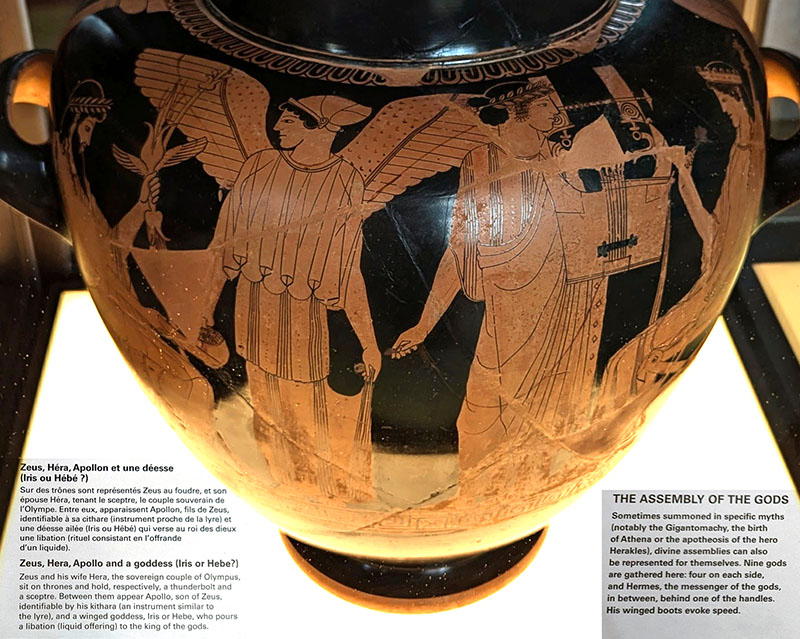
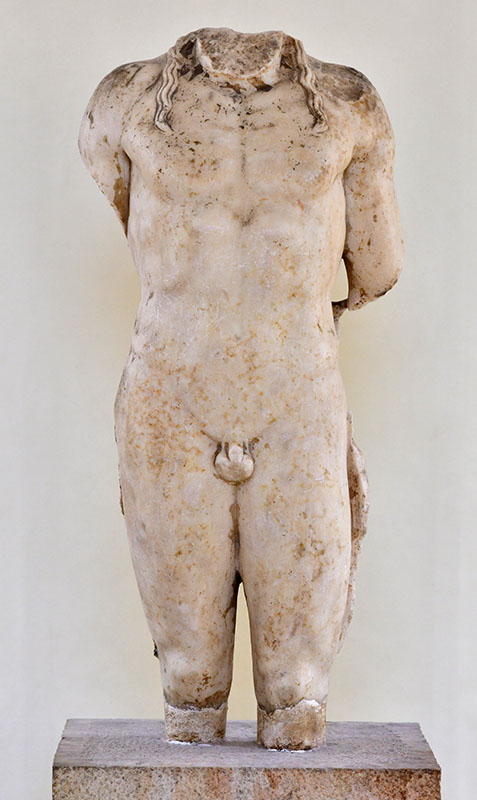
Nestled in the heart of Boston’s cultural scene, the Museum of Fine Arts (MFA) delivers an unforgettable journey through millennia of artistic mastery, as vividly captured in this captivating video tour. This is one of the best art museums in the US! Imagine stepping into a portal of the past, where exquisite, must-see ancient Greek vases whisper tales of mythology, lifelike sculptures capture the human form in eternal grace, and delicate jewelry pieces sparkle with the opulence of forgotten civilizations. This immersive art experience at MFA Boston feels like true time travel, blending educational depth with sheer aesthetic wonder—perfect for families, history buffs, or anyone hunting for the top things to see at Museum of Fine Arts Boston on a weekend getaway.
With its vast collections spanning global cultures, the MFA stands out as a must-visit destination for discovering hidden gems like these classical treasures, leaving you inspired and eager for more. If you’re planning a Boston museum itinerary, this video glimpse proves why the MFA’s ancient art wing deserves prime spot on your list.
I created this video to show you the highlights at Museum of Fine Arts Boston. This art museum has top Greek art, especially ancient Greek vases, Japanese and Egyptian cultures, and much more!
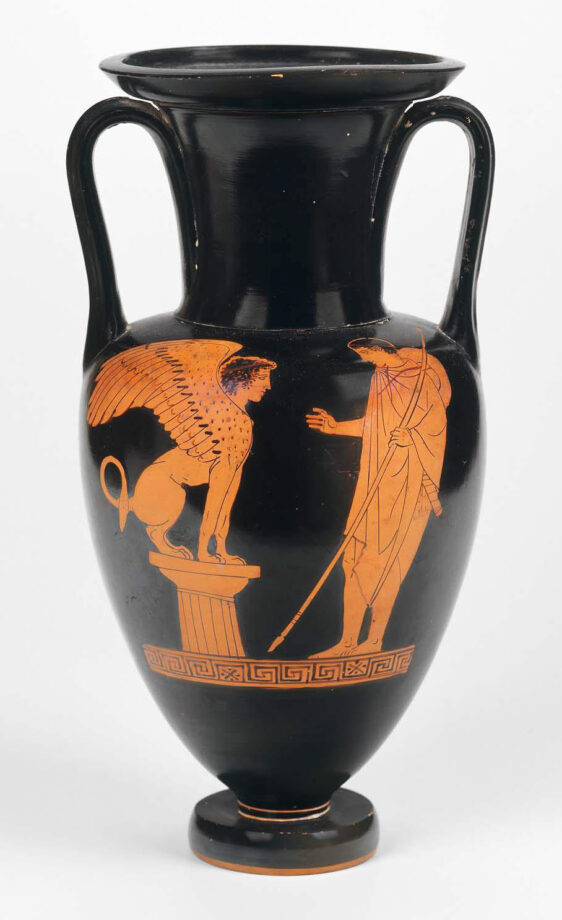
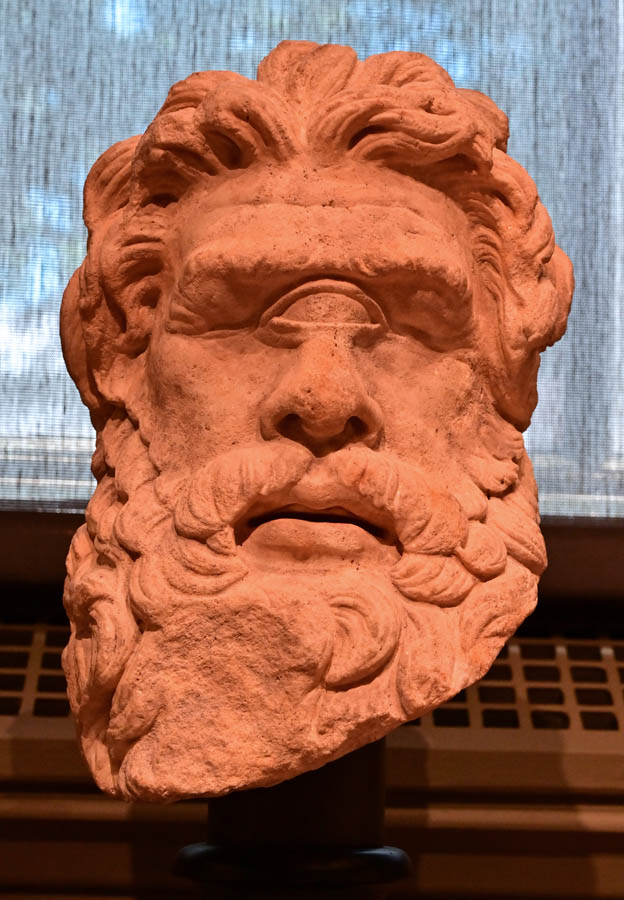
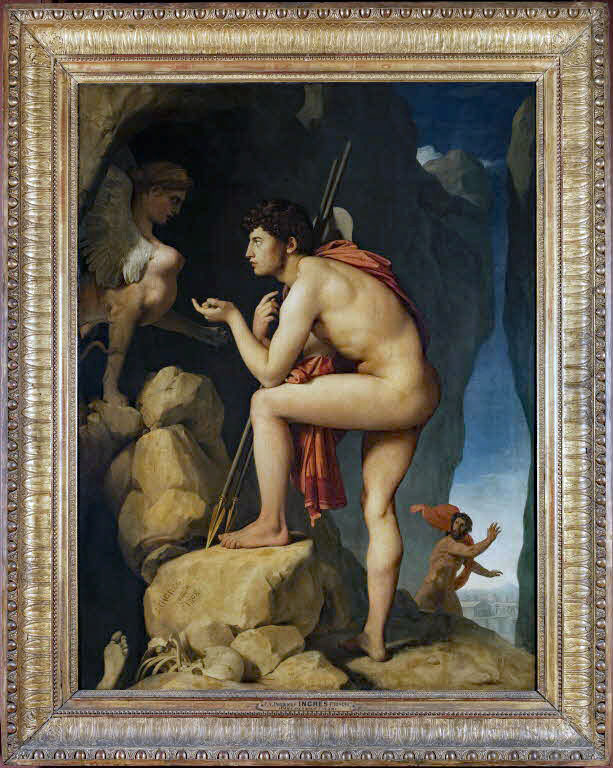
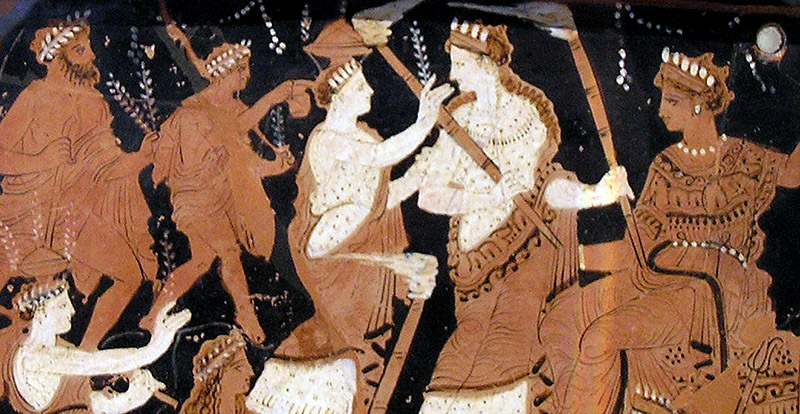
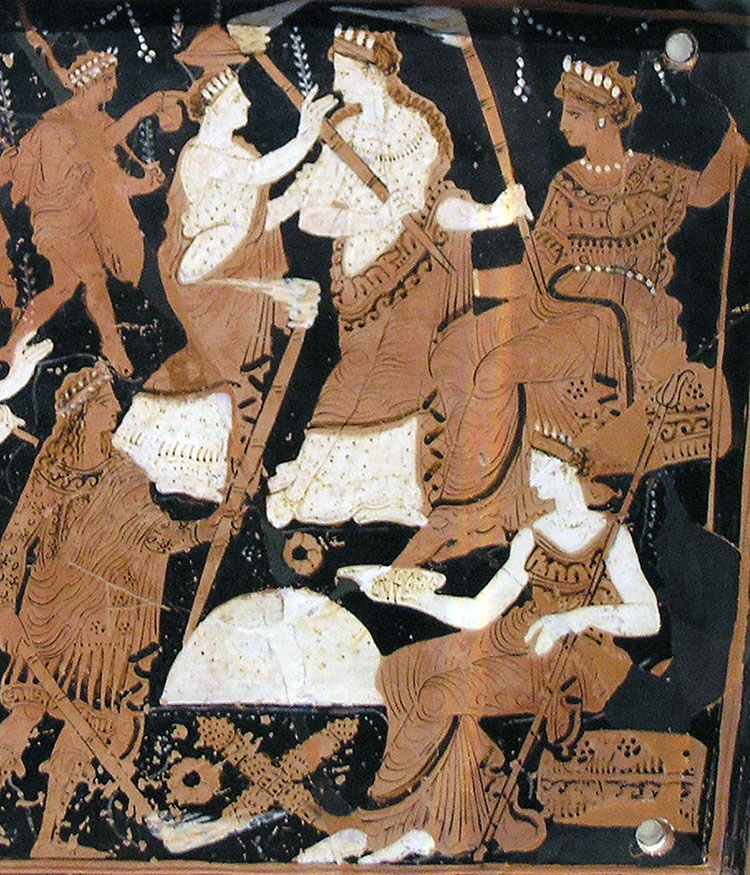
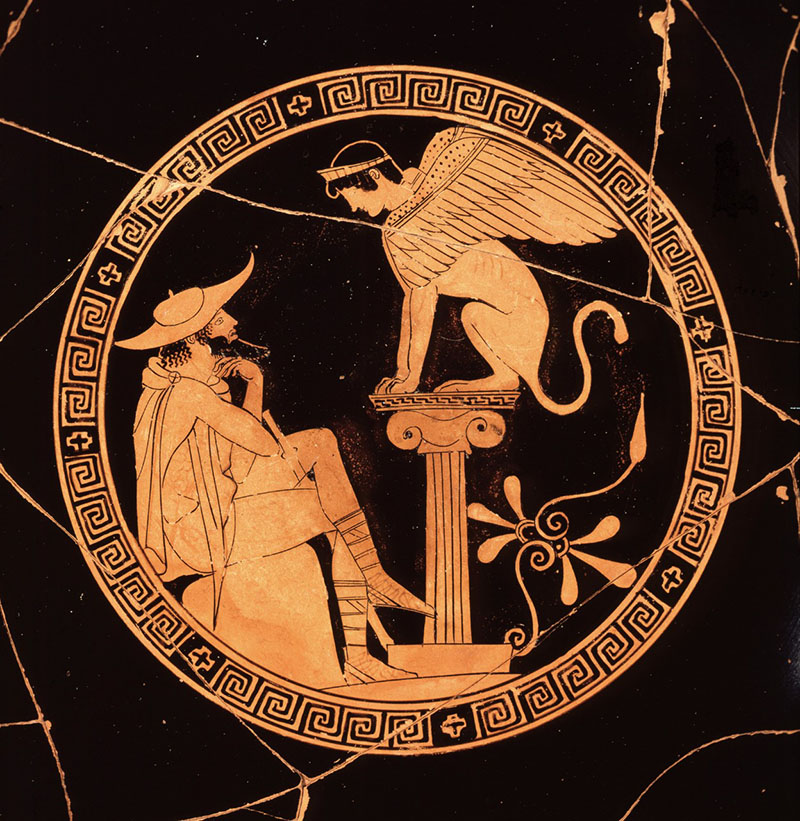
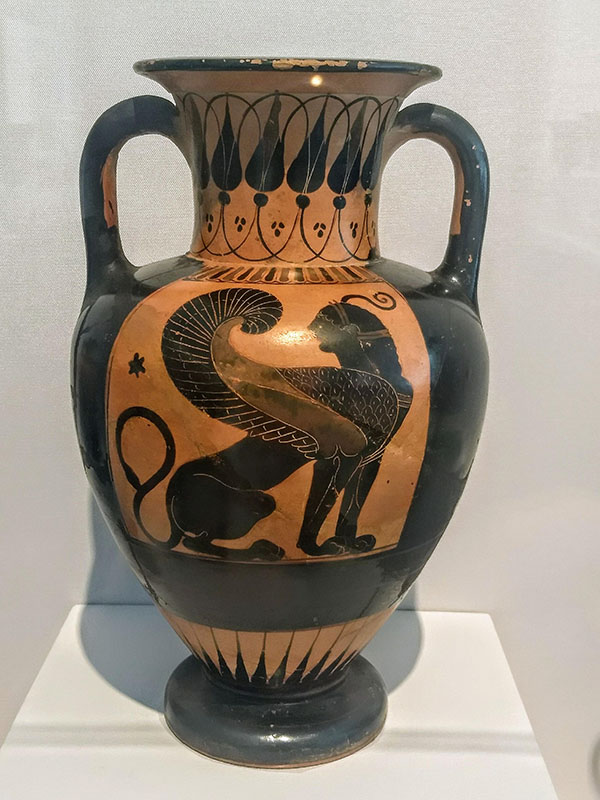
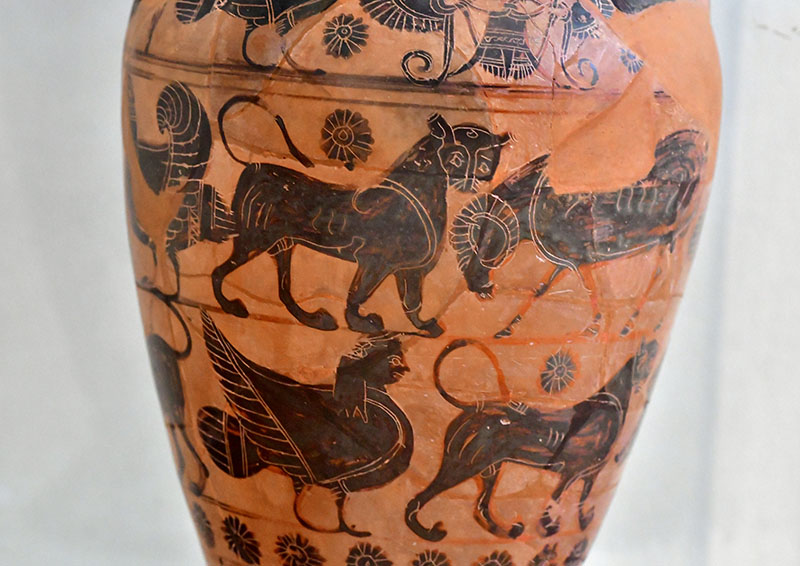
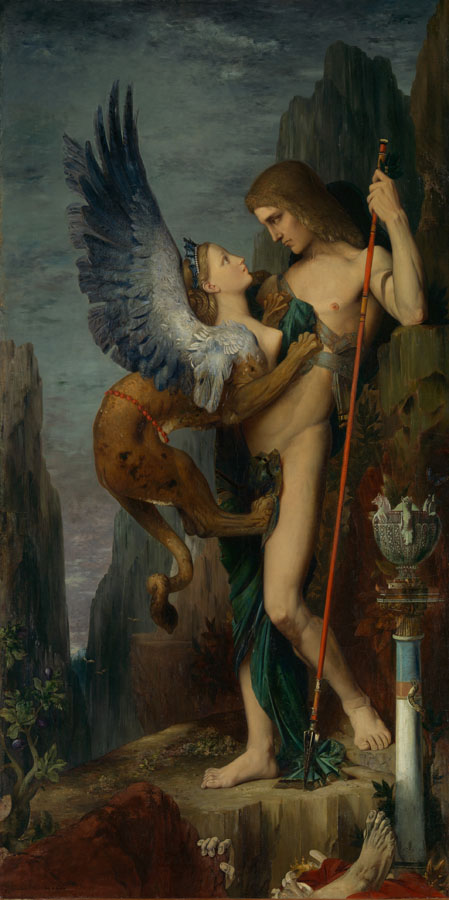
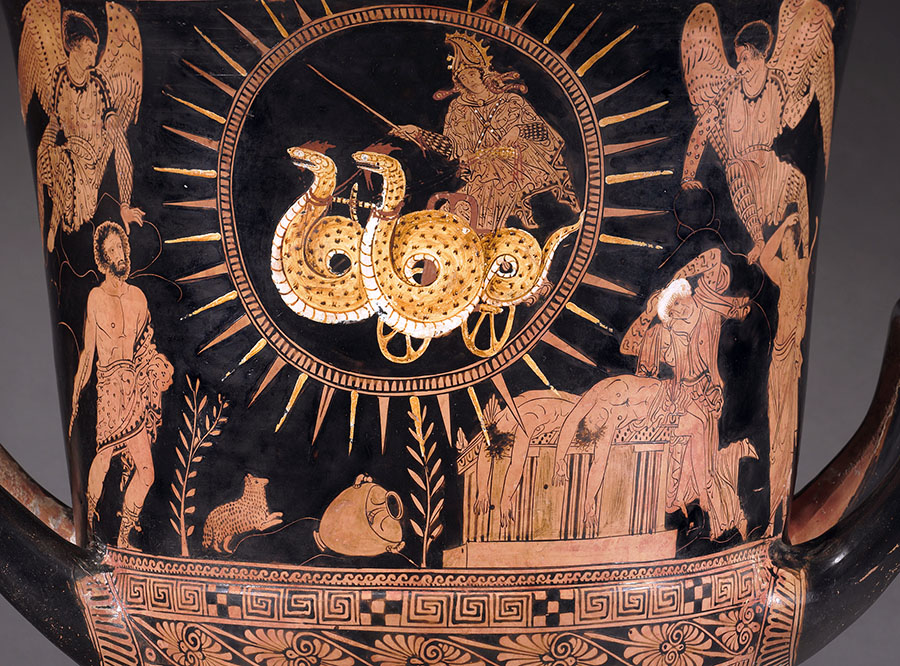
Amphora with Oedipus and the Sphinx of Thebes 450BCE -MFA BostonPolyphemos, Greek or Roman, Hellenistic or Imperial period, about 150 BC.
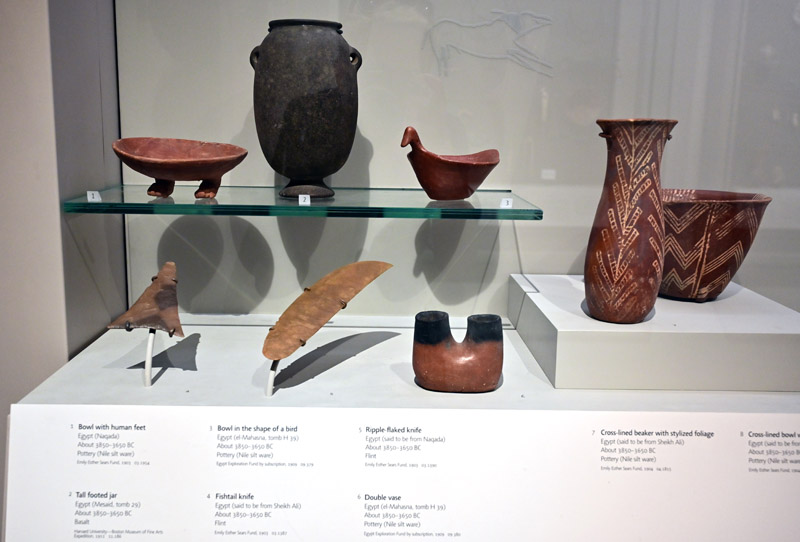
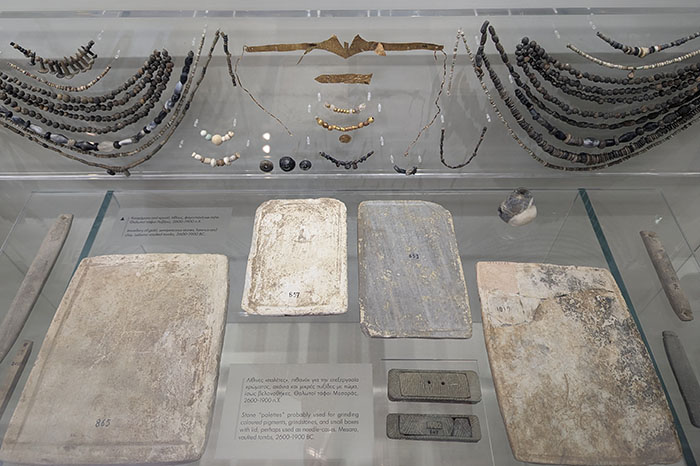
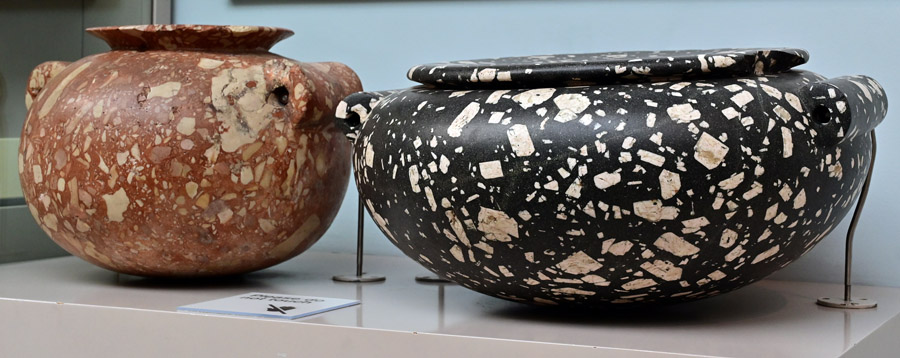
Marble from the Greek island of Thasos. Though Homer describes a monstrous, flesh-eating Polyphemos, this marble likeness portrays him as malformed rather than hideous. With voluminous, shaggy hair, parted lips, a deeply furrowed brow, and a single, almond-shaped eye between two clenched sockets, this may be the Cyclops shortly before his blinding, awaiting a cup of strong, unmixed wine from Odysseus. More likely, though, we are seeing Polyphemos gazing love-struck at the sea nymph Galatea-the subject of his unrequited love, according to Hellenistic poetry. This type of depiction originated in the 2nd century BC, yet the sculpture’s lively and direct style makes it difficult to judge whether it is a contemporary variant or a Roman copyThere is a very good presentation of the Naqada period at MFA Boston. This display shows various pottery, flint knife, stone vessel, etc
Practical Visitor Tips for Your MFA Boston Adventure in 2026
Unlock epic vibes at the Museum of Fine Arts Boston with these snappy, savvy hacks—tailored for seamless exploring of ancient Greek artifacts and beyond. Your practical tips for visiting MFA Boston, decoded!
Dodge Crowds Like a Ninja: Best time to visit Museum of Fine Arts Boston? Early (10 AM weekends) or late (Thu/Fri till 10 PM) for serene gallery glow-ups. Open Sun/Mon/Wed/Sat 10–5 PM; skip Tuesdays (closed). Last entry: 30 mins pre-shut; holidays? Nah.
Ticket Tango Made Easy: Adults $30, youths 7–17 $14 (under 7 free). Snag timed-entry online for gems like Winslow Homer’s watercolors—queue-skipper alert! Mobile or print; non-refundable but worth it.
Roll Up Effortlessly: Green Line E to MFA station—public transport win for hassle-free arrivals. Driving? Claim spots at Huntington or Fenway Lots on Museum Road; early bird gets the park.
Inclusive Magic for All: Wheelchair-ready with free loans and stools (first-come).
Kiddo Quest Perks: Under-7s gratis! Nursing bags? Tag ’em at entry. Bags under 11×15″ OK; front-wear backpacks for family-friendly flow—no drama, all discovery.
Pro Moves for Peak Vibes: Download MFA Mobile app for audio tour thrills. Comfy shoes + layers = win; café coffee fuels artifact hunts. Peek site for gallery alerts—stay sharp!
To continue reading:
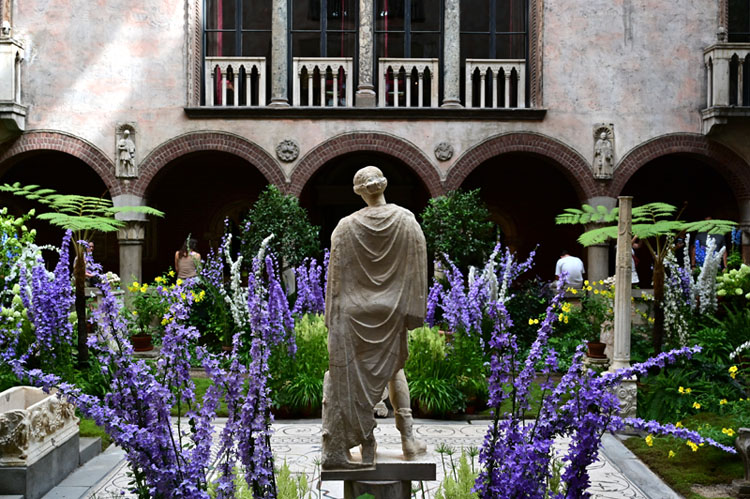
Courtyard with Roman Sculptures and changing floral displays at Isabella Stewart Gardner Museum
In religious iconography, coins carry a wide range of symbols, as they sit right at the crossroads of faith, morality, and material power. While it’s true that in some works of art they appear as mere ornamentation, in most cases they deliver moral lessons about greed, virtue, sacrifice, and divine justice.
What most specialists agree on is that when coins are depicted within religious art, their presence is never arbitrary. The artist uses their placement, material (color), and quantity to reinforce a central mystical or moral narrative.
If you follow how coins are presented in religious iconography, you’ll discover a fascinating world of messages and lessons left for us by some of the biggest artists. Today, we’ll take a journey through art history and analyze a few artworks that depict coins. We’ll discuss the meaning, the art, and whether or not the message still applies in modern times.
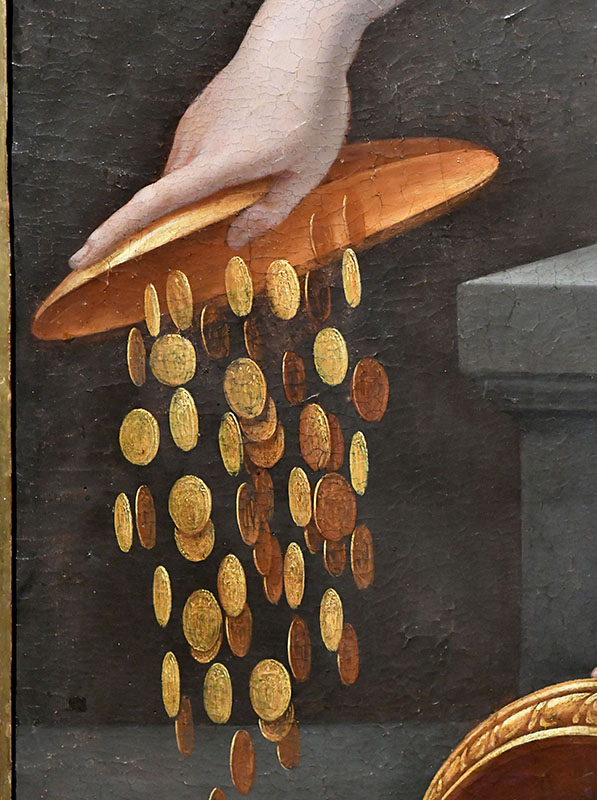
Painting detail depicting coins in the Ca’Doro palace in Venice
Placement, Material, and Quantity
Artists always try to convey their thoughts through their work, which is why even the tiniest details are important. In this case, the location of the coins in the scene, their color (meant to represent the material they’re made of), and their quantity matter.
Let’s see how and why:
Placement:
Symbolism of thirty pieces of silver in Christian betrayal art:
In scenes depicting the Betrayal of Christ, the bag of “Thirty Pieces of Silver” is often placed in Judas Iscariot’s hand or hung from his belt. This immediate, physical placement is a non-verbal indictment, signifying that greed and the acceptance of earthly payment for a spiritual act are his defining moral failure. In this case, the coin becomes a symbol of condemnation. However, if the coins are shown on the floor, scattered or trampled, such as in depictions of Christ Cleansing the Temple by El Greco, 1570, National Gallery of Art, Washington, D.C., it shows that material wealth is insignificant and corrupting.
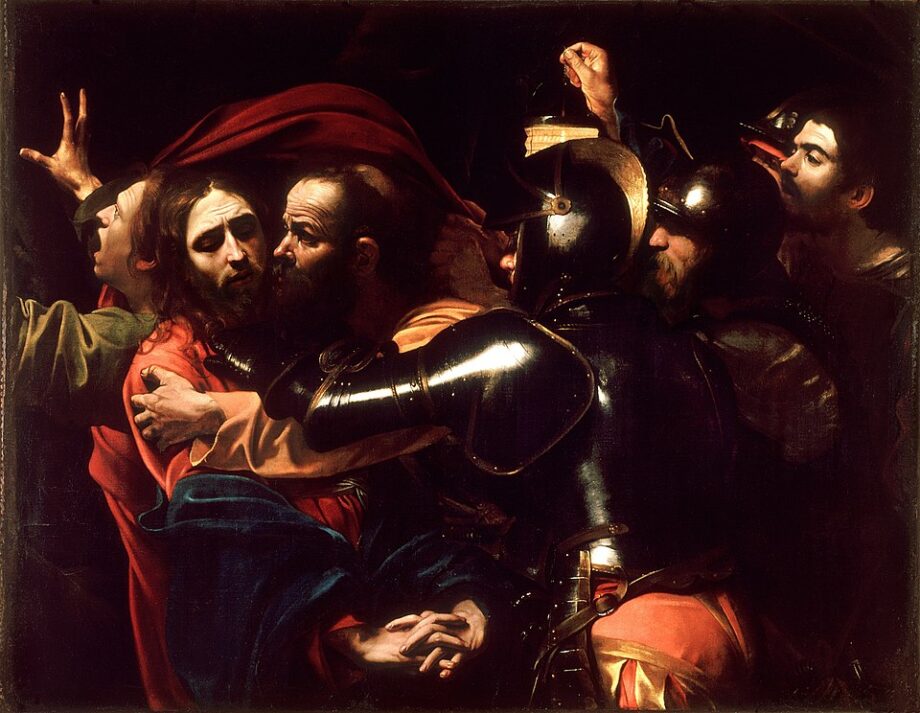
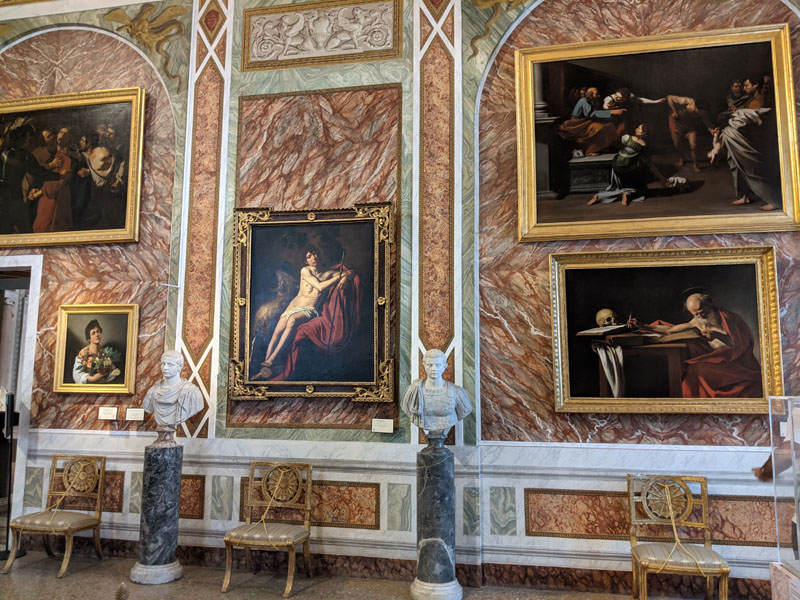
The Taking of Christ by Caravaggio, oil on canvas, 1602, National Gallery of Ireland, Dublin.
In Caravaggio’s “The Taking of Christ”, the artist captures the moment of betrayal and arrest with a focus on the dramatic interaction between Jesus and Judas, the fleeing St. John, and the soldiers without the depiction of actual coins.
In South Asian and East Asian Buddhist and Hindu traditions, coins are rarely depicted in paintings, but they are often a physical component of the finished artwork. For instance, coins made of precious metal or simply the currency of the time are placed in the central cavity, base, or relic chamber of a statue or stupa during its consecration (life-giving) ceremony.
This transforms the coin from a monetary object into a votive offering and sacred substance. The intention is to imbue the statue with merit, spiritual wealth, and blessings for the benefit of all beings.
The color used for the coins is a clear indicator of the metal used, and thus the theological and cultural meanings behind the piece.
If the coins are painted as silver or copper (darker or base Colors), they tend to symbolize the earthly, corruptible, and mortal life. On the other hand, a gold coin can symbolize great spiritual value (a heavenly reward).
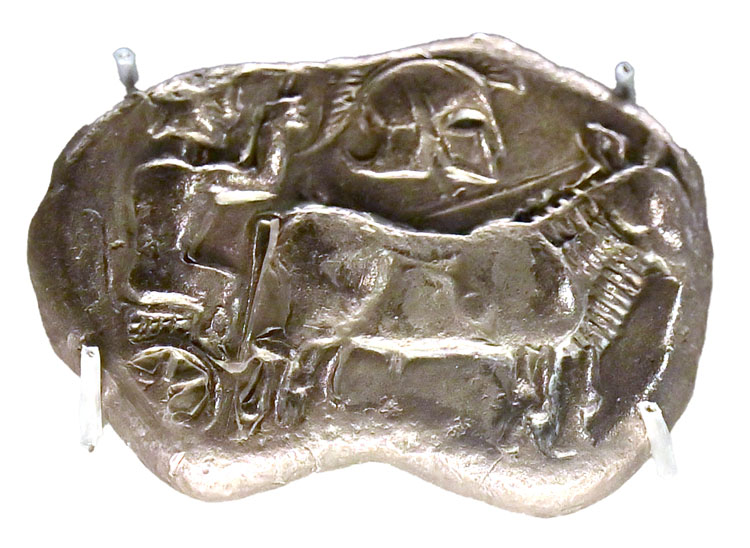
Dodekadrachm with man driving an ox-cart, Thrace (uncertain mint), about 480-465 BC, Tribe of the Derrones, Silver coin, on display at MFA Boston
Gold (as a color) is often used to depict divine beings, such as angels or protectors of people, and signifies the eternal and purity. In Ancient Egypt, gold was called the “flesh of the gods” (specifically the sun god Ra), signifying immortality and divine incorruptibility. The Incas referred to it as the “sweat of the Sun God Inti.” A gold coin is thus an artifact of the divine realm brought to the mortal world.
These beliefs have prevailed in the modern age, especially when it comes to coins. Many countries use gold coins today to showcase their power, innovation, and uniqueness, resulting in a rich offer of gold coins for collectors. Gold remains the store of value for many centuries.
Quantity
The number (or amount) of coins depicted in a work of art also has meaning. For instance, we have the famous thirty pieces in Christian iconography that evoke Judas’s betrayal. If the amount is excessive (like in piles or mountains), the coins signify greed, usury, and hoarding.
On the other hand, small, manageable quantities can symbolize charity, almsgiving, or offerings. For instance, the Widow’s Mite story and small coin symbolism in mystical art (two small coins) represents true spiritual generosity, where the value lies not in the amount, but in the completeness of the sacrifice.
The "widow's mite" story from the Bible describes a poor widow who gives her last two small copper coins to the temple treasury, a sacrifice Jesus praises because she gave all she had, unlike the wealthy who gave from their abundance. In mystical art, the small coin symbolizes profound sacrifice, faith, and the idea that true value comes from the heart, not monetary wealth. You can see the example of such painting in Brooklyn Museum-James Tissot, The Widow's Mite, 1886–1894, watercolor and pencil.
Enriching Insights: Gold and Silver Coins from the Met’s Collection
In ancient and medieval coins, gold often bridges the mortal and divine (as “flesh of the gods”), and silver highlights human frailty or reform. Here are standout examples:
Celtic Gold Coins of the Parisii (ca. 100–50 B.C.): These imitate Hellenistic prototypes, the Celtic coins appeared in the 200s BC passed from Hellenistic kings to Celtic warriors. The coins have a head on one side and a charioteer and horse on the reverse.
Byzantine Solidus of Emperor Phocas (602–610 A.D.): Struck in Constantinople from pure gold, this coin depicts the controversial ruler, embodying imperial propaganda as divine sanction. Byzantine emperor, Phocas hoarded wealth in wars, yet the coin‘s pristine aura invokes heavenly reward. The front shows the bearded emperor in a crown holding a cross and the reverse depicts an angel holding symbols associated with Christ.
Kushan Gold Coin of King Kanishka (ca. 127–150 A.D.): this coin features the king on the obverse and Shiva on the reverse, merging Near Eastern, South Asian, and Greco-Roman deities into a syncretic emblem of cosmic harmony. Such coins were offerings imbuing rulers with “spiritual wealth,” transforming currency into a bridge for merit and blessings across realms.
Umayyad Dirham (Silver Coin, ca. 711 A.D.): Post-reform, this epigraphic silver piece ditches figural imagery for Arabic script—Qur’anic verses and pious phrases—marking Islam’s shift from Byzantine/Sasanian “earthly” coins to purely devotional ones. small quantities here signify charitable purity, not Judas-like betrayal.
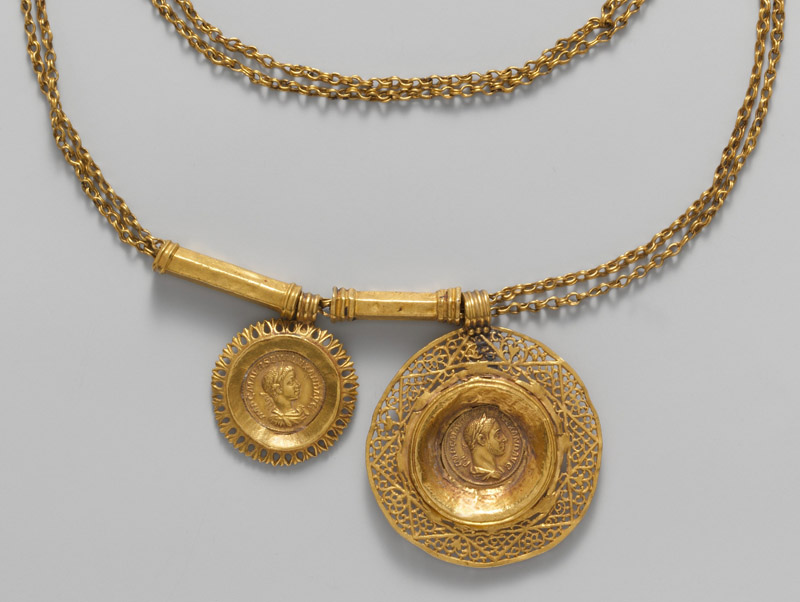
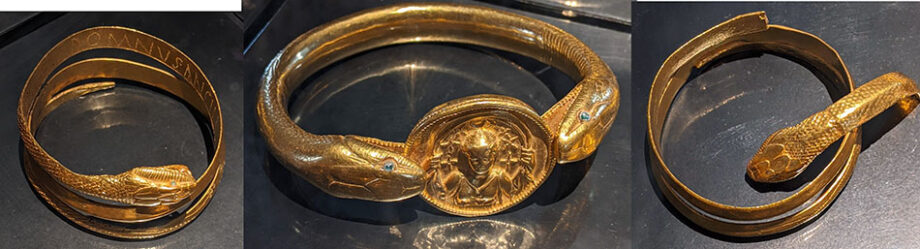
Roman Gold Coin Necklace (ca. 222–235 A.D.): Coins of Emperor Alexander Severus, set on a double chain, were worn as talismans blending fashion with faith. This practice, peaking in the 3rd–7th centuries, mirrors the paradox: coins as both corruptible adornment and sacred proxies for immortality, often buried as grave goods for the afterlife journey.
Roman gold necklace with coin pendants, the Met
Real Depictions vs. Symbolism
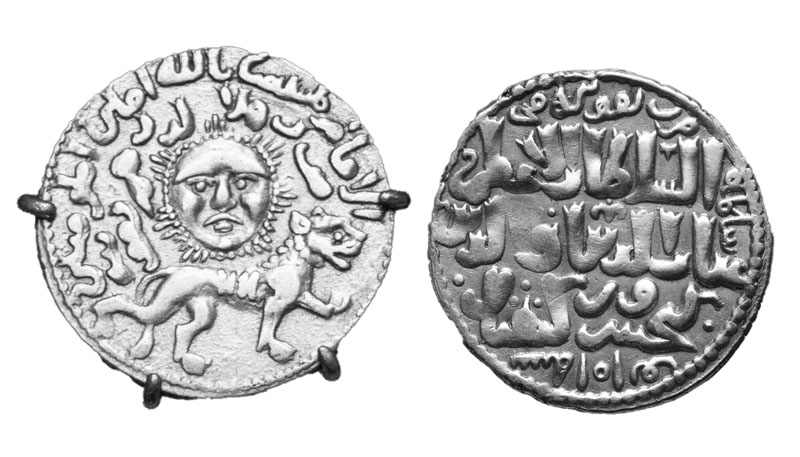
Dirham of Ghiyath al-Din Kai Khusrau II,1239-46, Astrological Device, Sun-Lion, silver coin, the Met.
Highly-priced, gold and silver coins were traded over long distances, according to the museum’s description. Used as currency, high-ranking officials paid land tax with them. These silver coins combine the Islamic writing with figurative art. The two main themes are the astrological sun-lion and the equestrian, embodiment of power and control and a symbol of an ideal ruler in the Great Age of the Seljuqs.
Sometimes, artists just want to introduce a literal historical coin (like a Roman denarius) into their work. This doesn’t necessarily mean there’s no symbolism, but it adds a layer of complexity to the overall analysis of the piece.
In most cases, if the coin is accurate, it usually has legible or semi-legible, identifiable text (like Tiberius Caesar Divi Aug F Augustus that appears on a denarius). It also features a recognizable, historically specific imperial or regal portrait.
Works of art that include real coins have greater intellectual and historical value, as they help art historians date the artwork or at least establish the period of classical research in which the artist or patron was engaged.
Modern gold coin collecting inspired by ancient mystical symbolism interests some collectors. Other collectors prefer these works because they are a unique blend of art history, theology, and numismatics.
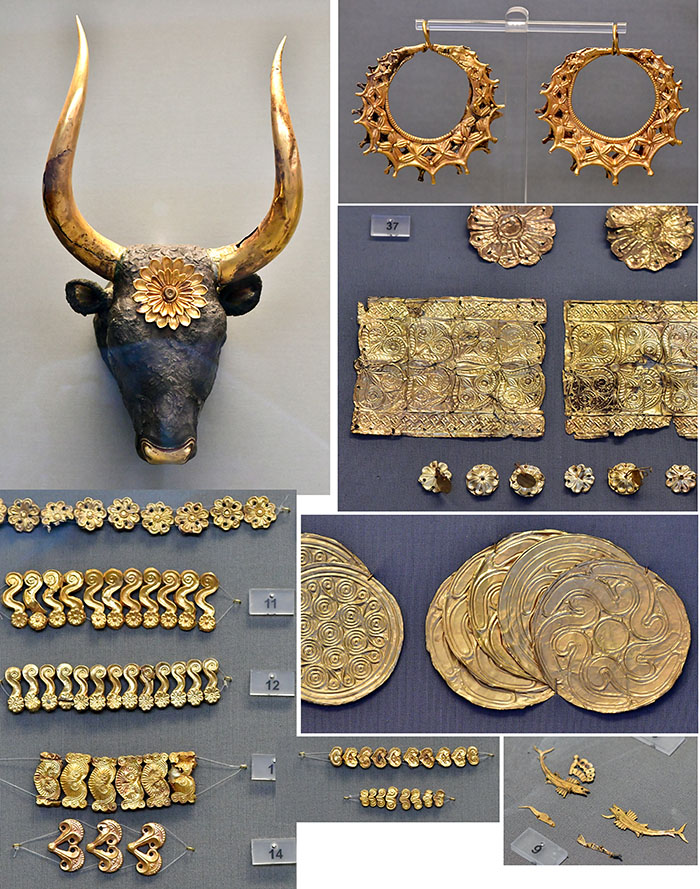
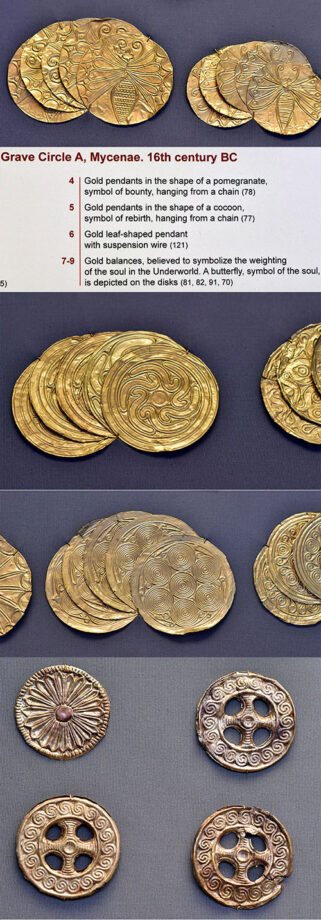
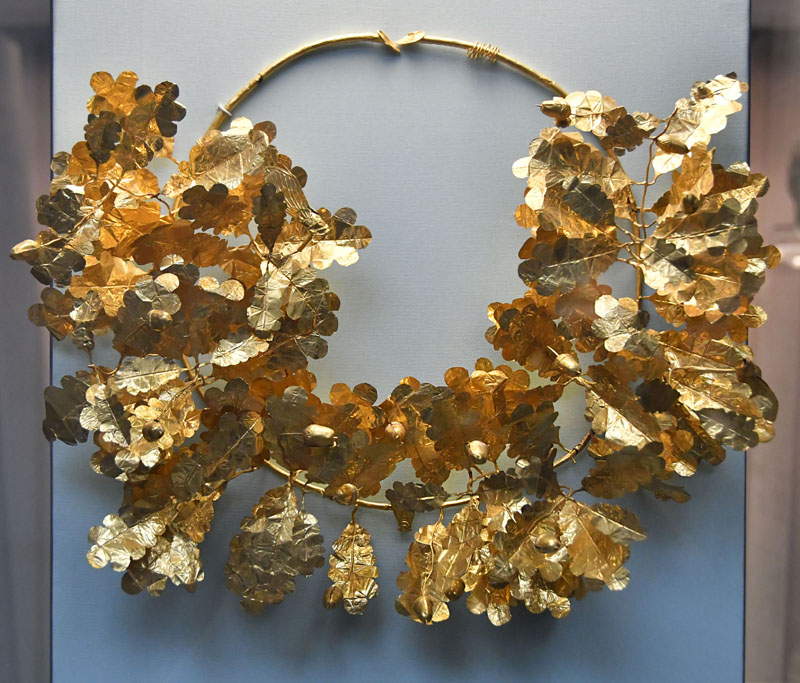
Butterflies printed on ancient Greek golden pendants
In Summary
The use of coins in mystical iconography is brilliantly paradoxical and effective. They serve as potent material proxies for immaterial concepts such as betrayal (Judas’s silver) or eternal passage (Charon’s obol). They can also represent both ultimate corruption (greed) and ultimate sacrifice (votive offerings). In an age of cryptocurrency and economic inequality, coins still symbolize “ultimate corruption” (hoarding) versus “ultimate sacrifice” (philanthropy).Yet, they serve the purpose of payment and exchange for goods.
Famous Ancient Greek Sculptors: An Artist’s Perspective on Realism
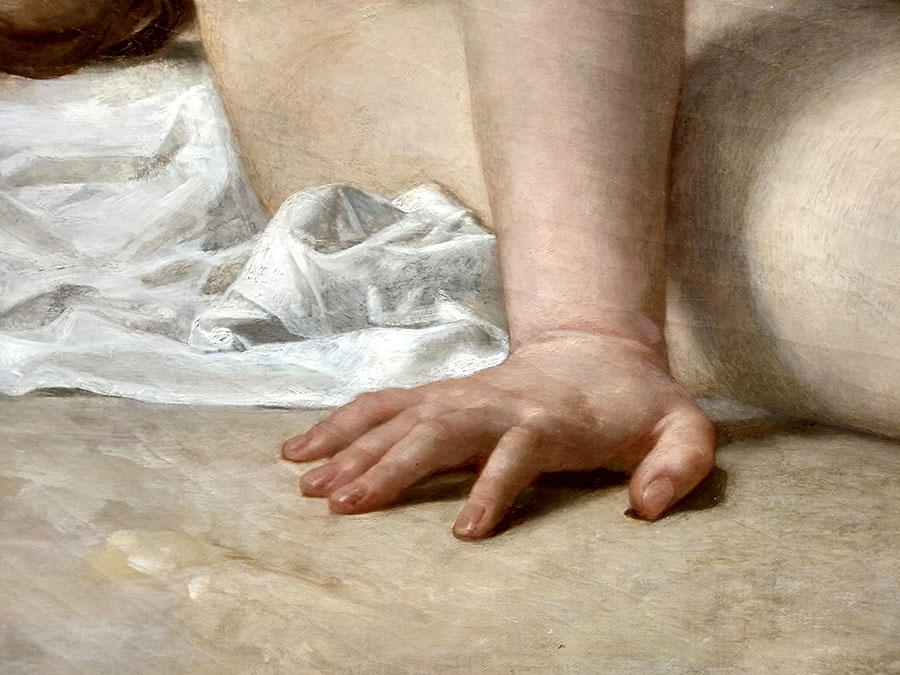
Townley Discobolus, Roman, 2nd century AD, after a Greek original by the sculptor Myron of 450-440 BC. A close-up of the hand. The British Museum.
Ancient Greece, a society that had enormous influence on Western thought and culture, held the human form in the highest esteem. The trajectory of ancient Greek sculpture shows an evolution from the stylized forms of the Archaic period to the elevated naturalism of the Classical and Hellenistic eras. Greek sculptors sought to capture the divine essence in art not only by perfecting anatomy but also by pioneering innovative methods for lifelike portrayal.
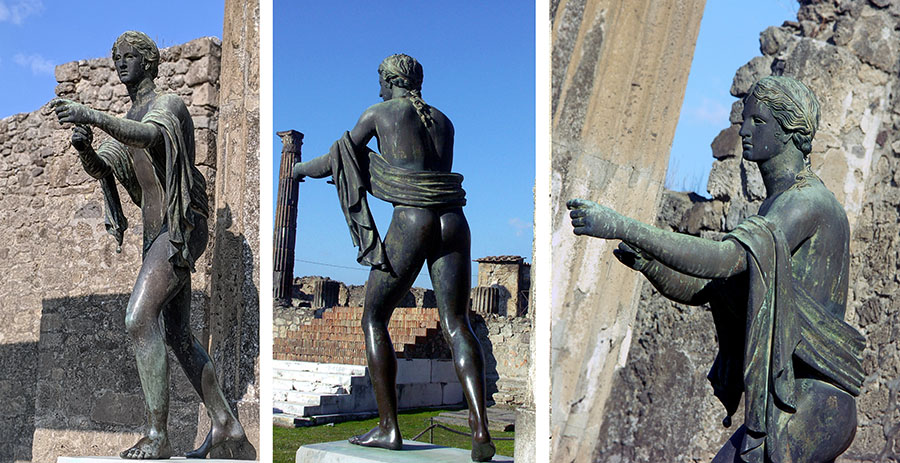
Unlike in previous cultures, Greek sculptors expressed emotion through striking body movement and unique facial features, especially in the Hellenistic period. Capturing movement in realistic figures in the round is much harder to achieve than in sculptures that have a specific location or point of view. (Most sculptures were made as decorations for temples and buildings with a wall or support behind the figures, thus limiting the viewership.) When the sculpture is a stand-alone piece, we can look at it from different angles, and each viewing point must give us an interesting pose.
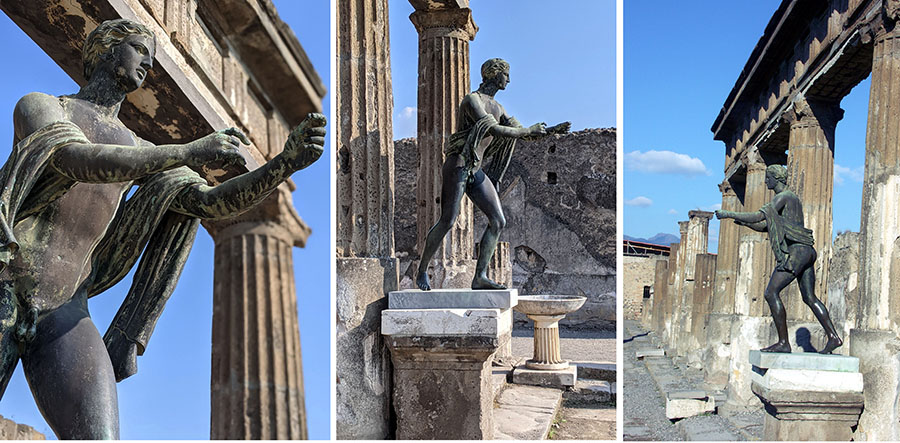
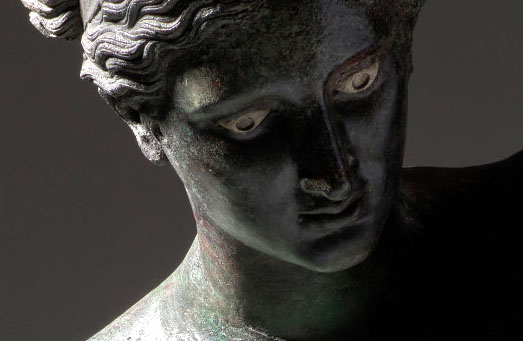
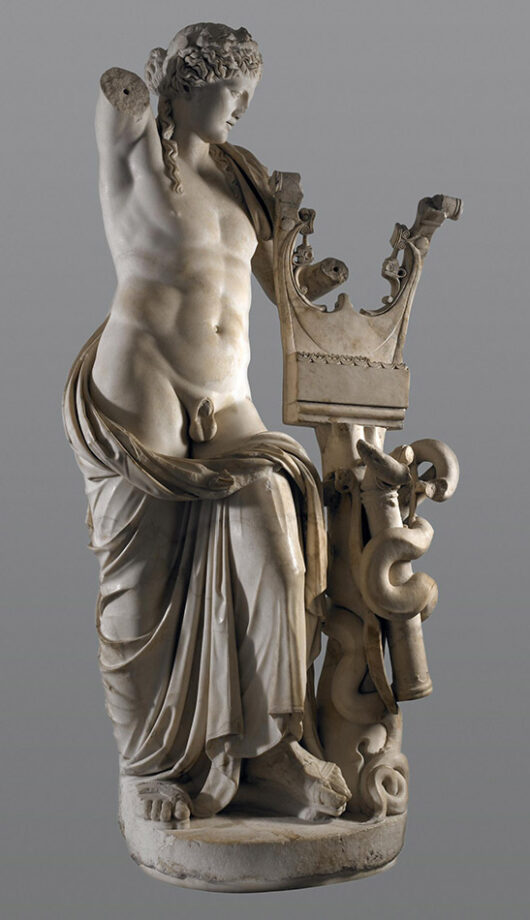
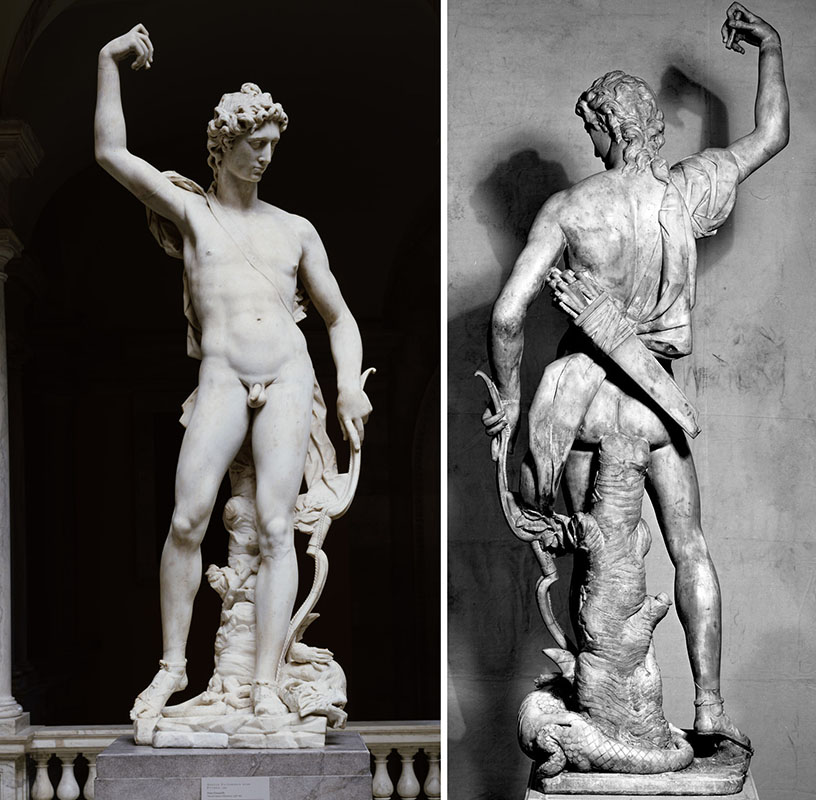
Apollo as an Archer (Apollo Saettante), Roman, 100 B.C.–before A.D. 79, Pompeii
I’ve traveled to Italy multiple times to marvel at the naturalistic beauty of Roman sculpture, a feat so exquisite it seems beyond the reach of modern hands, especially in an era where Beauty is often overlooked by contemporary curators, advisors, museums, and collectors chasing flashy, high-priced works. Since the late 19th century, classical ideals have been largely abandoned, and humanity has lost touch with the artistry and ideals of ancient Greece.
When Rome conquered Greece, many Greek artists relocated to Rome, passing their expertise to future generations. The Greco-Roman art we cherish today, primarily Roman copies of lost Greek originals, reflects Rome’s deep admiration for Greek ideals. Roman sculptors, who didn’t sign their works, meticulously replicated Greek sculptures, underscoring their reverence for the unparalleled cultural and artistic achievements of ancient Greece.
It’s mind-blowing to see how ancient Greeks achieved such an incredible level of realism, depicting life-like figures in bronze and marble, and it’s no less surprising to witness some Roman artists being able to copy the most beautiful sculptures in marble. Both cultures figured out the tools, techniques, and materials to do so with incredible skill. Most importantly, these artists applied their genius to create unsurpassed principles in lifelike representation of human form that spoke with emotion and ethereal beauty.
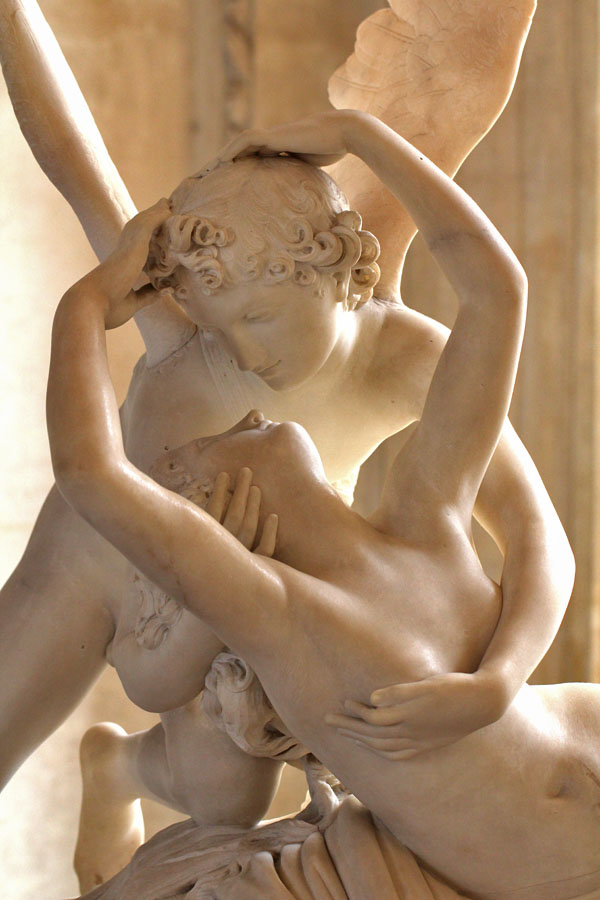
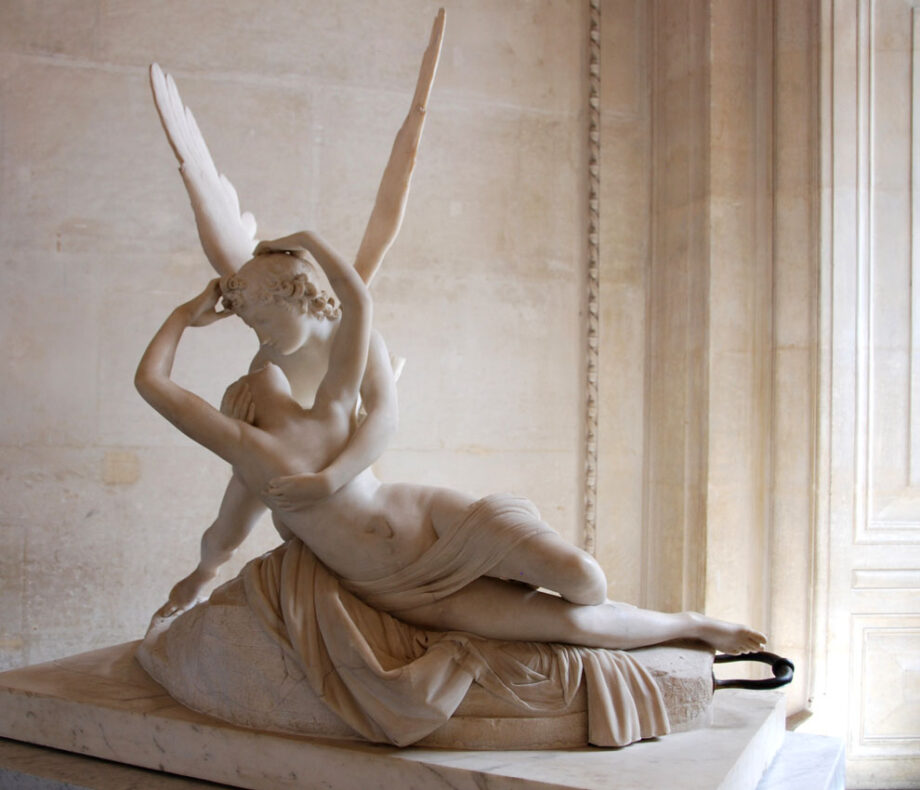
While some contemporary sculptors work in the realist tradition, few capture the divine essence of beauty found in ancient art. Modern works may achieve anatomical accuracy, but they often lack the elusive perfection, flow, and luminescence of their ancient counterparts. The 19th-century sculptor Antonio Canova came close, masterfully crafting human forms, particularly female figures, with airy grace and refined elegance. Yet, Canova’s marble sculptures, infused with perpetual sweetness and idealism, differ from Greek works due to his distinct aesthetic and love for naturalism.
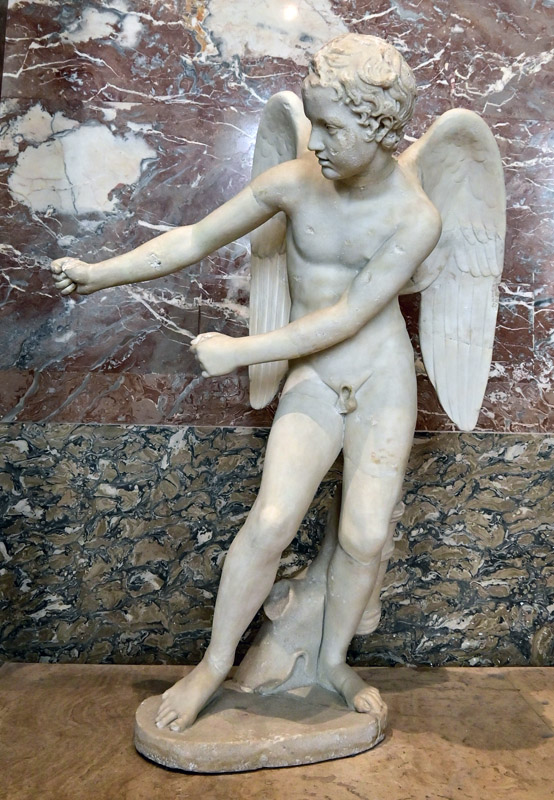
Antonio Canova, Psyche Revived by Cupid’s Kiss, 1794-1799, the Hermitage version
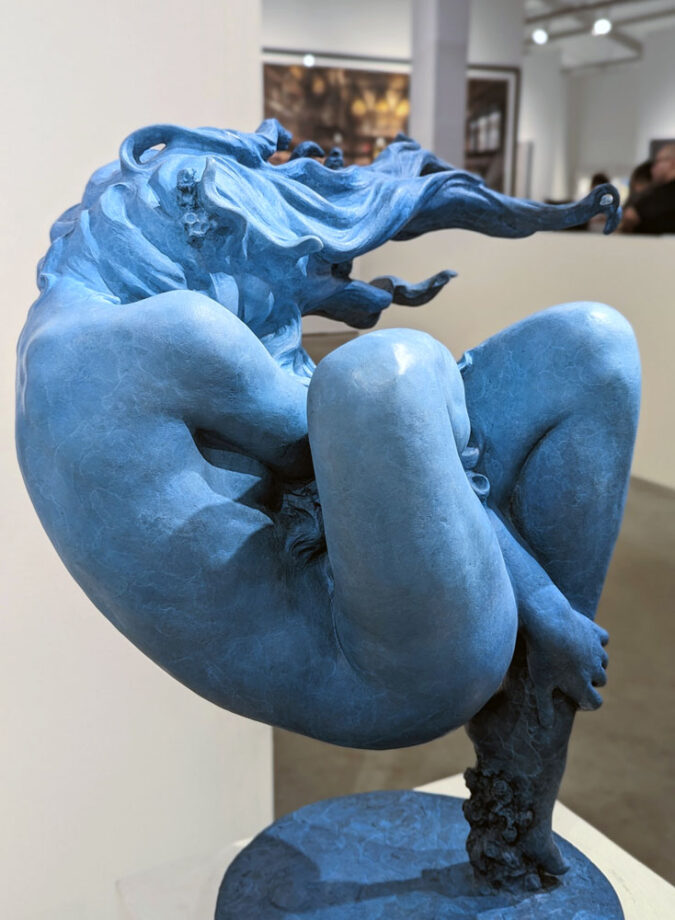
Two contemporary Spanish sculptors, Coderch and Malavia, stand out for their work in the classical tradition. Their hauntingly beautiful sculptures echo the elegance and ethereal quality of Greek art. Though their poses, patina finishes, and subjects feel modern, the emotional essence of their art resonates with the timeless spirit of ancient sculpture.
Coderch and Malavia, Kymo, bronze sculpture, Miami Art Context, 2023
Pliny the Elder, the earliest art historian, lived during the Roman Imperial Period and documented his observations in Natural History, much like Vitruvius and Vasari. He chronicled the works of renowned Greek artists such as Myron, Polykleitos, and Lysippos, describing their colossal statues decorating temples, including Pheidias’ Athena in the Parthenon and Olympian Zeus. Pliny admired Polykleitos’ athletic figures, noting his influential Canon of proportions and invention of contrapposto, which revolutionized figurative art. He compared Myron and Polykleitos, observing that both focused on physical form but conveyed little emotion. Myron prioritized symmetry and productivity, while Polykleitos emphasized idealized proportions. Pliny also praised Lysippos’ prolific output and distinctive style, characterized by slender figures, smaller heads, and unique hair treatments, noting that Emperor Tiberius cherished Lysippos’ bronze Apoxyomenos. Additionally, Pliny highlighted marble sculptors Praxiteles and Scopas. He celebrated Praxiteles’ fame and wealth, particularly for his famous nude Aphrodite of Knidos. Scopas, alongside contemporaries Bryaxis, Timotheos, and Leochares, worked in marble and collaborated on the grand Mausoleum at Halicarnassus (359 BC), a masterpiece now lost.
From the pages of the book at the British Museum: PLATES XXXV. XXXVI. & XXXVII. WHETHER the statues of Niobe and her children, which in the time of Pliny adorned the temple of Apollo Sosianus, at Rome, were the work of Scopas or Praxiteles;’ this head, which is probably a fragment of the original, from which the figure, formerly in the Villa Medici, and afterwards in the Florentine gallery, was copied, affords abundant proof of the genius, taste, and skill of the artist; and of the loss which the world has suffered in being deprived of such monuments: for justly as the antient copies have been admired, their inferiority to this exquisite specimen is such as to put them below comparison. It represents Niobe embracing and entreating her last remaining child. ….. quam toto corpore mater, Tota veste tegens, Unam, minimamque relinque De multis minimam posco, clamavit, et unam; And the mixture of maternal tenderness, regal pride, and earnest supplication is expressed with all the impassioned energy of strong feeling; but without any distortion or deviation…
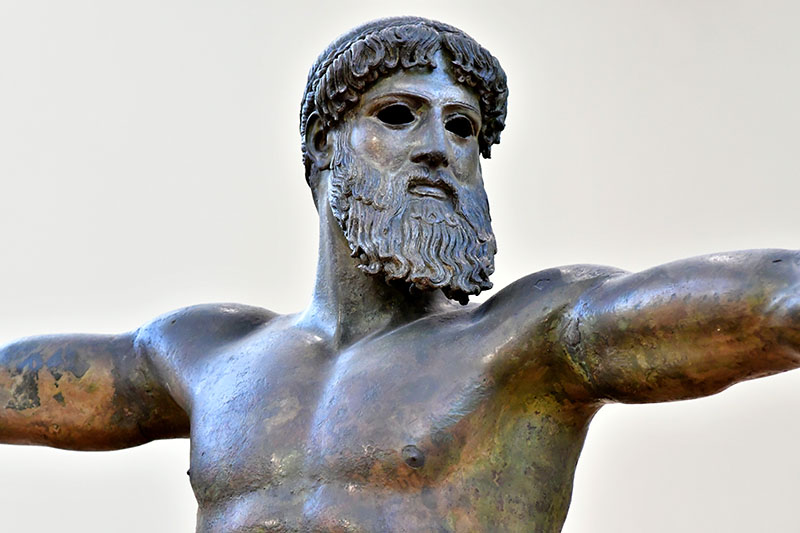
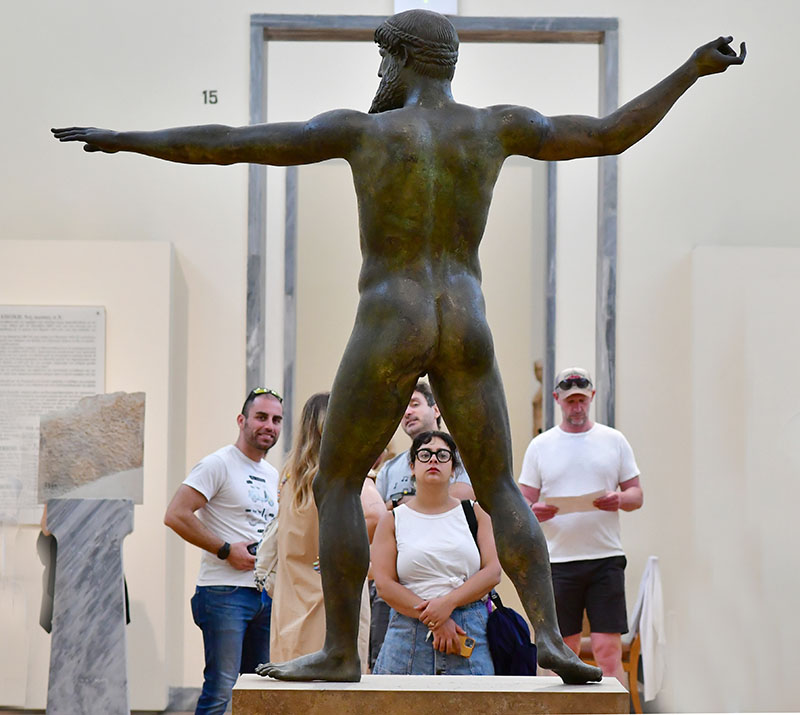
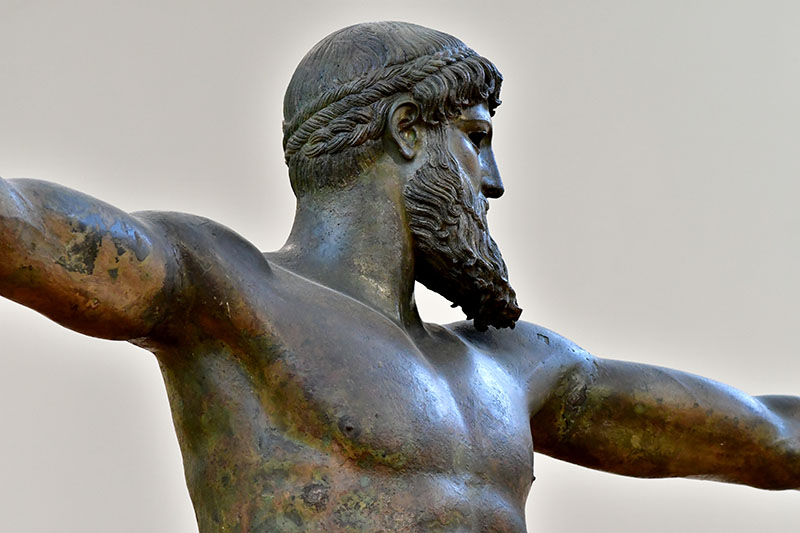
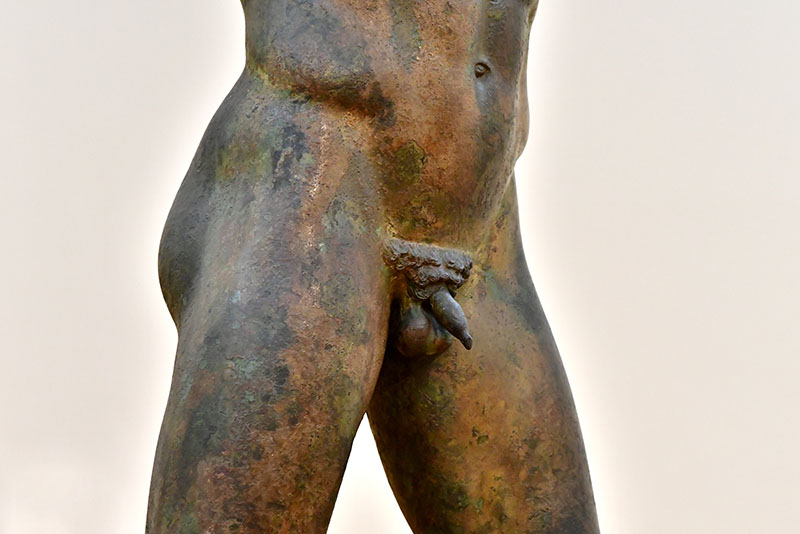
Bronze Statue of Zeus, 460 BC, Athens
Greek sculptors aimed to portray idealized forms rather than strict realism. Their figures embodied perfect proportions, balance, and beauty, representing a higher ideal rather than everyday human flaws. Thus, youthful figures of gods and athletes supported that idealism without expressive emotions or unique, individual features, portrayed later on in the Hellenistic and Roman sculptures.
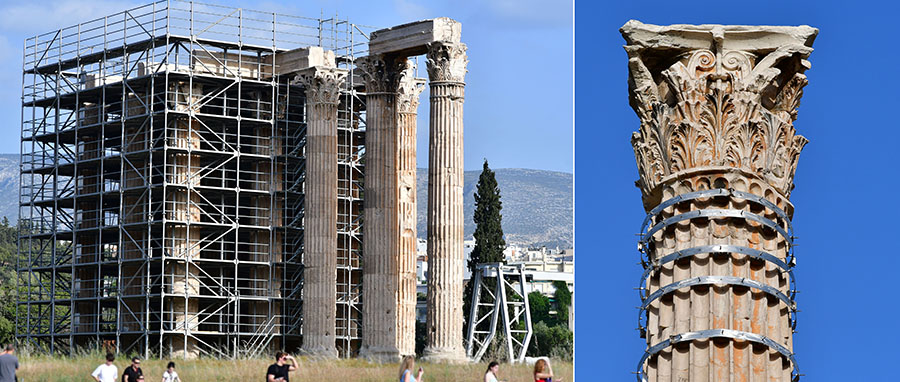
Ancient Greek sculptors predominantly cast their works in bronze, valuing its durability for artistic creations. They fashioned colossal bronze statues of deities for temples such as the Temple of the Olympian Zeus. The large, free-standing, and captured-in-motion statues became known as the severe style figures. (The bronze statue of Zeus, 460 BC). The severe style evolved into Classical and Hellenistic art later on (more on this below).
While some artists also utilized a soft, white marble, requiring another set of tools and techniques, the fate of many ancient Greek bronzes was unfortunate: they were often melted down and repurposed for weaponry or other endeavors. Consequently, the rare bronze sculptures surviving today owe their preservation to unusual circumstances, including accidental underwater discoveries that kept them in nearly perfect condition. Although no colossal bronze statues remain, historical records attest to their former fame. Smaller bronzes were found in Rome and throughout Europe, concurred by the Romans who revered the art and other cultures, and thus preserved them in private collections. This article will trace the progression of ancient Greek sculpture through famous sculptors and their art across various periods and styles.
Bronze statue of a young man, 1st century BC, from Ziphteh, near ancient Athribis (modern Tell Atrib) in the Nile Delta, northern Egypt. The British Museum.
Ancient Greek and Roman public spaces, cemeteries, and sacred sanctuaries brimmed with bronze and marble sculptures. Bronze was favored by some sculptors for its ability to capture dynamic poses. Over time, nearly all bronze statues were melted down for reuse, making surviving examples exceptionally rare. This Roman bronze (copper-alloy) statue, possibly inspired by a Greek prototype, has an unidentified subject. Its eyes, originally crafted with silver, glass, or precious stones, lent a lifelike quality. Copper inlays on the lips and nipples created a vivid red hue. Cast in multiple pieces and mechanically assembled, the statue’s surface was polished to a seamless finish, obscuring the joins.
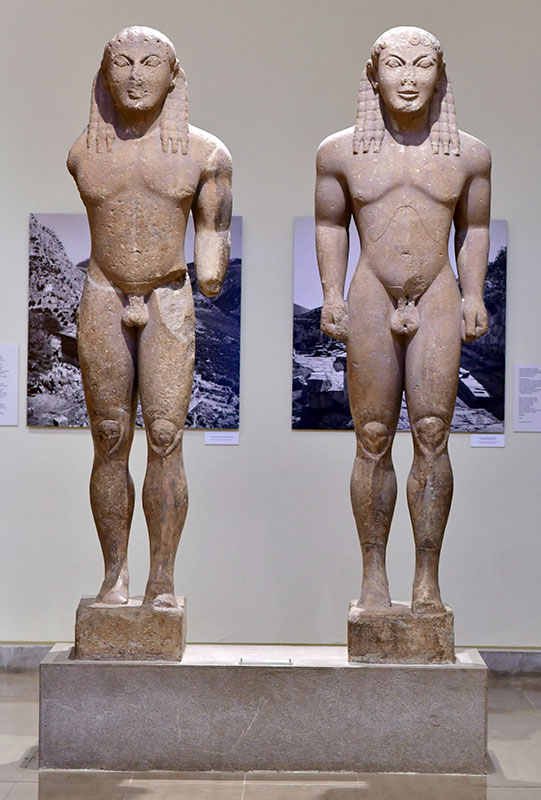
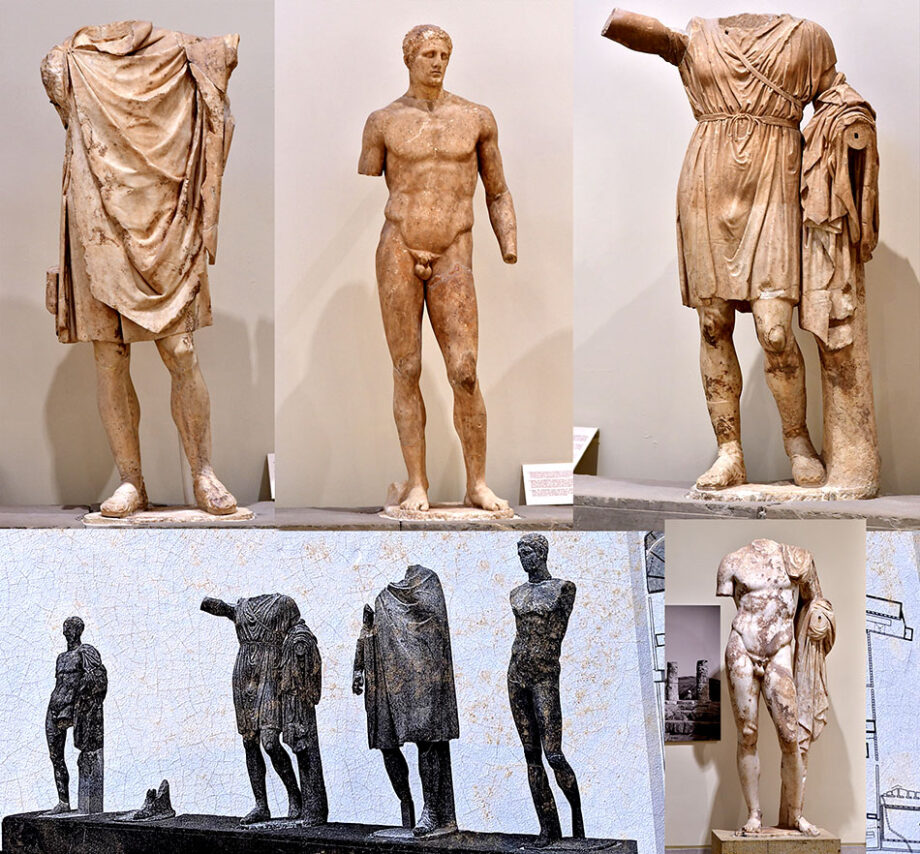
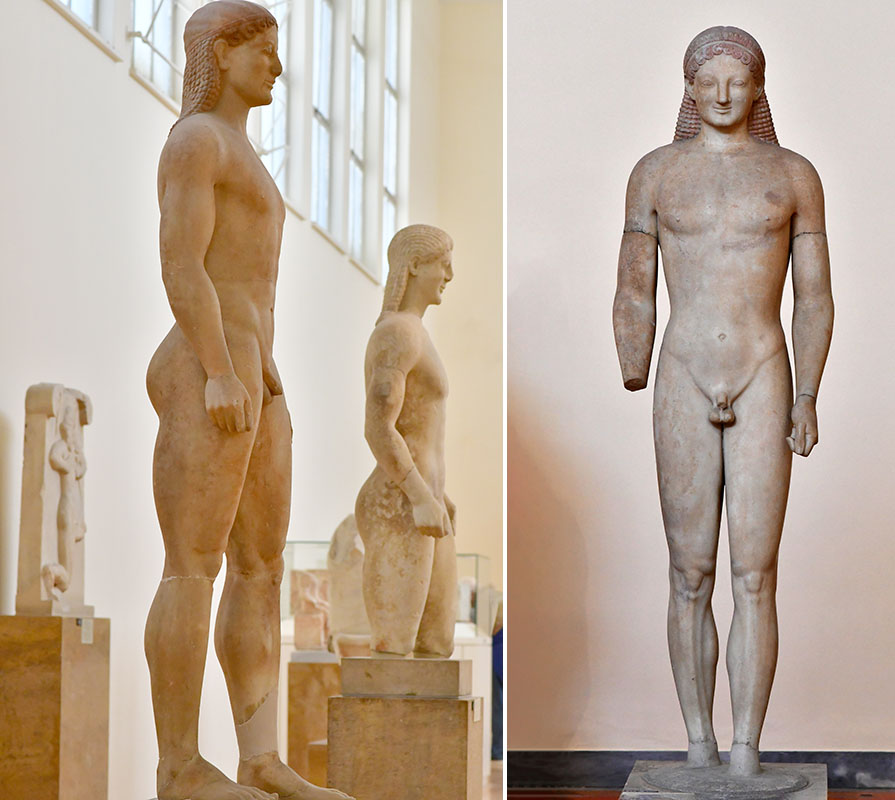
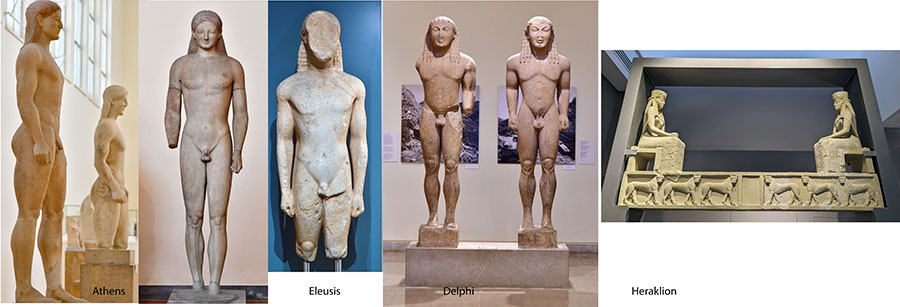
Kouros in Delphi, Kleobis and Biton. These early Greek sculptures look stiff, frozen in Egyptian-like poses. Early archaic period
Early archaic period (600-480 BCE): Stiff, stylized figures
Classical period (480-323 BCE): Anatomical accuracy & beauty. Balanced mathematical proportions with artistic interpretation. (The Kritios Boy, 480 BC, becomes one of the first sculptures to depart from the archaic period statues. The boy stands in a natural Contrapposto pose that resembles the Kouros but has a natural pose shifted to one leg.
Hellenistic period (323-31 BCE): Detailed, emotionally expressive, and anatomically correct representations
Myron of Eleutherae, an Athenian sculptor active during the mid-5th century BCE, stands as the first famous ancient Greek sculptor who transitioned towards realism in ancient Greece. The first famous Greek sculptor of classical antiquity and the pupil of the sculptor Ageladas of Argos, Myron, is known for his creation of the athletes in motion. Myron’s active period is generally placed around 480-440 BC, as he crafted statues to commemorate the victories of athletes in the Olympic Games during the mid-5th century BCE.
Discobolus (Discus Thrower), 450 BC
Among his most famous creations is the Discobolus (Discus Thrower) (450 BC), a work that captures the fleeting moment of an athlete poised to release the discus. The athlete’s pose, originally frozen in bronze, represents a perfect balance, harmony, and rhythm in a coiled figure. Ancient accounts emphasize the sculpture’s lifelike quality. While the original is lost to time, Romans made numerous marble copies, and one of them stands in the British Museum today. It’s named the “Townley Discobolus”, dates to the second century AD, and comes from the art collection of Charles Townley (1737-1805).
Townley Discobolus, Roman, 2nd century AD, after a Greek original by the sculptor Myron of 450-440 BC. This statue was discovered in 1791 in the Villa of the Roman Emperor Hadrian AD 117-138) at Tivoli outside Rome. The head, although ancient and found with the statue, is not the original. Formerly in the collection of Charles Townley in London. Displayed at the British Museum.
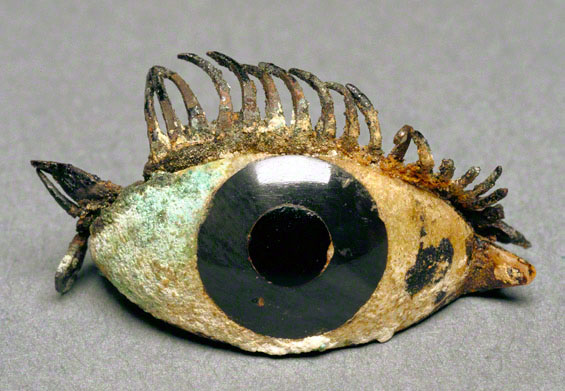
Technically, Myron did complex bronze casting of figures, exploring the dynamic poses and life-like movements of male figures. Myron’s artistic style marked a significant shift from stylized figures of the Archaic period by introducing life-like dynamism, rhythm, beauty, and natural balance in poses. The lost-wax method gave him the advantage of depicting human form in hollow statues that would have been considerably more difficult, if not impossible, to realize in stone during that era. The hollow-cast segments were put together and polished at the end of the artistic process. To further enhance the lifelike quality, contrasting metals might have been used for details such as nipples and lips, and the eyes were often inlaid with materials like ivory, glass, or semi-precious stones.
The colossal groups:
Athena and Marsyas by Myron, Roman, original copy of 450 B.C.E. Photo: modified from original image by Sailko – Own work, CC BY-SA 3.0, https://commons.wikimedia.org/w/index.php?curid=30525254
His gift was the ability to capture life and moral stories in bronze. Myron often created grouped sculptures to tell a moral story, illustrating a Greek myth. One of such pieces is the group of Athena and Marsyas, which depicts a moment of dramatic tension between the goddess and the satyr displayed on the Athenian Acropolis. In her youth, goddess Athena is credited with the invention of the musical instrument auloi or double-flute that required subtle breath control.
Marsyas, marble copy from the original bronze by Myron in the Vatican
According to the Roman writer Strabo, a group of three colossal figures, Herakles, Zeus, and Athena, created by Myron, once stood on the sacred way leading to the Temple of Hera on the island of Samos. The Roman General Mark Antony is said to have carried the sculptures off as a trophy, but the emperor Augustus restored two of them to their original location and took the Zeus sculpture to Rome.
Myron’s artistic repertoire included statues of gods, heroes, and animals, with his bronze cow gaining particular renown for its realism, as it was said to be mistaken for a real animal. Romans were fascinated by the art of Myron, and some sculptures were discovered in Rome.
Other Famous Sculptures of this period:
Severe style (480-450BC): figures capture emotion and character through body movement and facial features.
Zeus, Athens
The large, free-standing, and captured-in-motion statues became known as the severe style figures. One such example is the bronze statue of Zeus (460BC). It captures continuous movement and has a strange, smiling face with traces of copper on its lips. Bronze sculptures often had ivory and glass-paste eyes, bronze eyelashes, and copper lips. This sculpture stands tall in the museum in Athens.
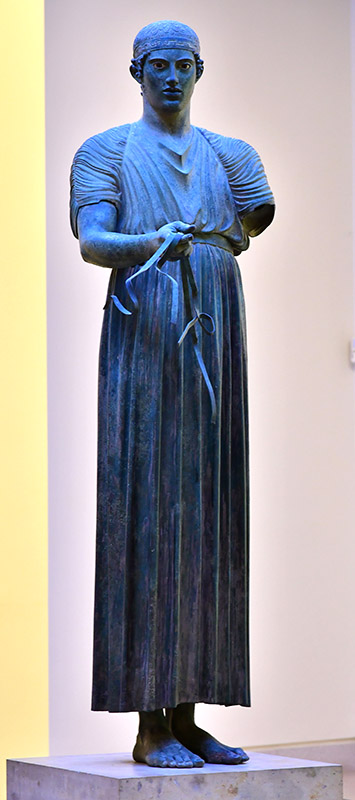
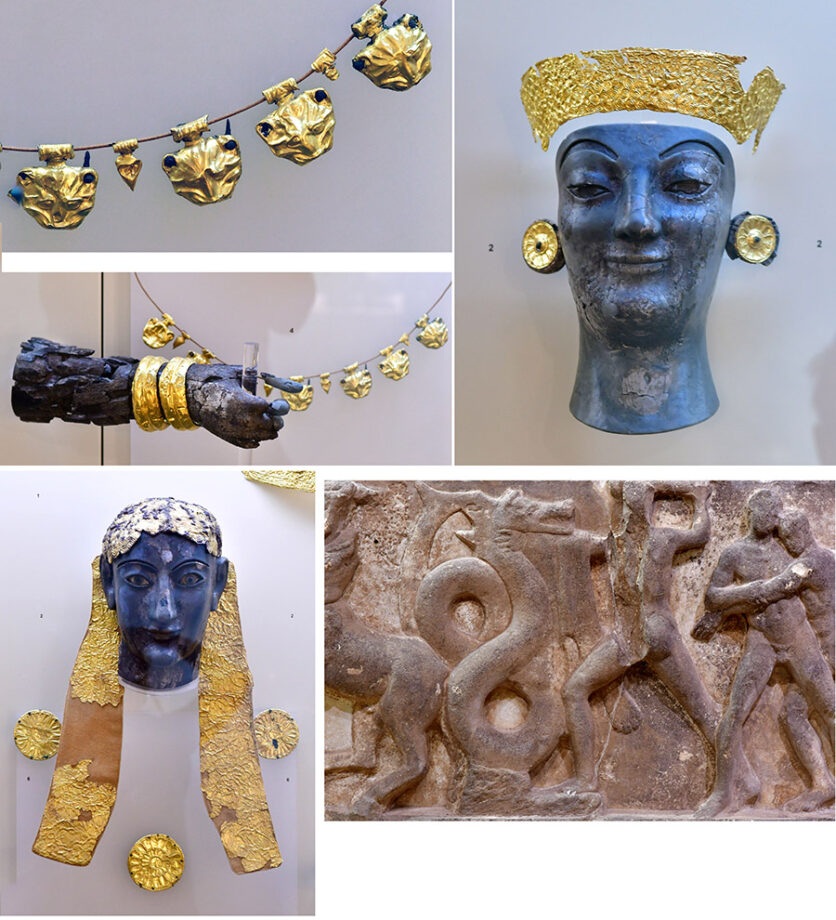
Bronze Charioteer, Delphi
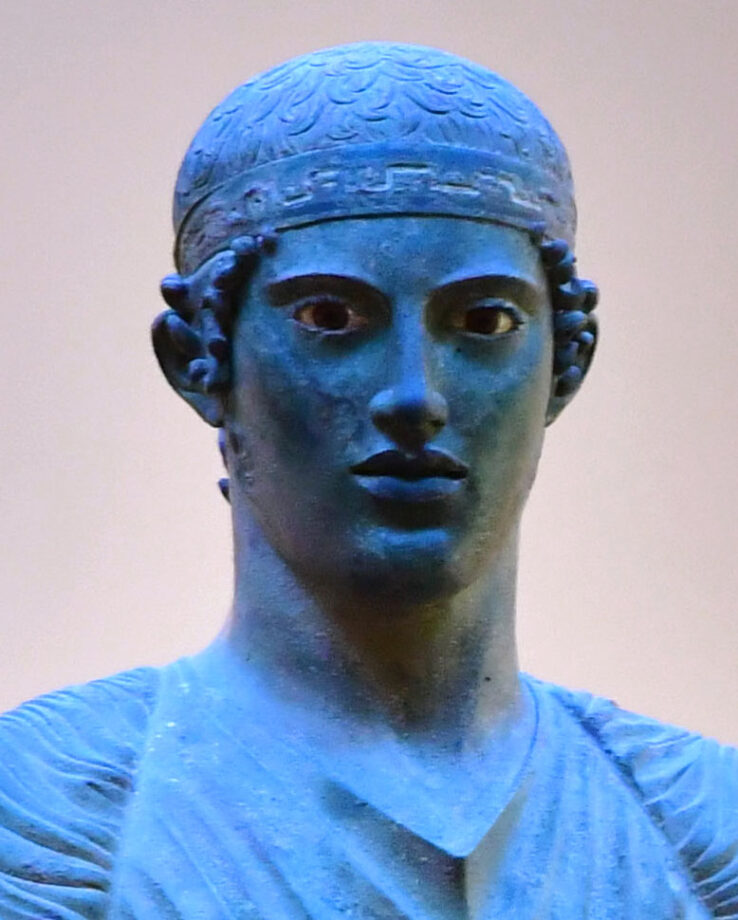
The Charioteer, close-up of a bronze sculpture, 478 BC, 1,82m in height.
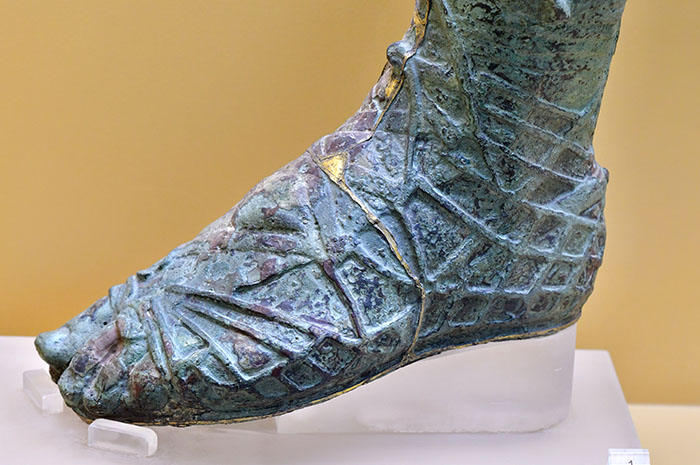
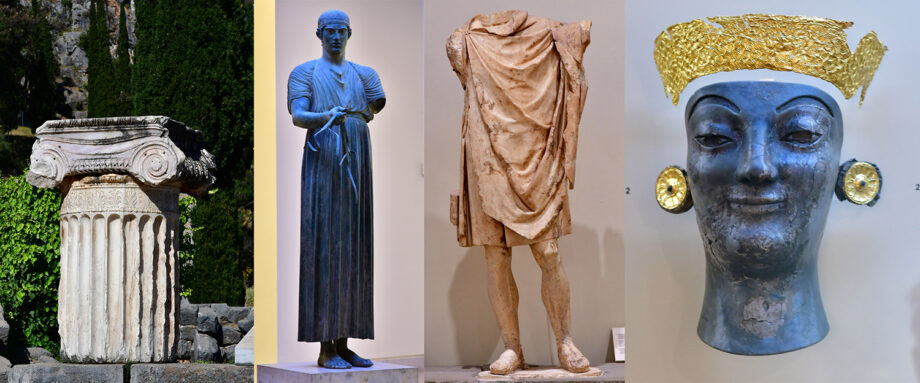
Bronze Charioteer, Delphi. Chariot races were competitions for divine favor in ancient Greece. I saw this sculpture in Delphi and thought of a female form, rather than a male depicted in bronze. The sculpture has beautiful feet, color-inlayed eyes, and a calm face. The pose looks restricted, reminiscent of a Doric-style column with its fabric folds streaming down the figure.
Bronze Chariotier, close-up showing inlaid eyes
The Niobid, 450BC
Classical style:Unification of motion and feeling in a sculpture. The Niobid, 450BC, is the earliest found example of a large female nude in Greek art. The woman shows the pinwheel stance of the ancient Gorgon relief from Corfu. From the History of Art
The most renowned sculptor of the Classical period
Chief sculptor of the Parthenon in Athens
Worked primarily with marble and chryselephantine (gold and ivory) techniques
Used precise measurement and mathematical proportions
Pioneered techniques for creating large-scale architectural sculptures
Famous art: Statue of Zeus at Olympia, Athena Parthenos
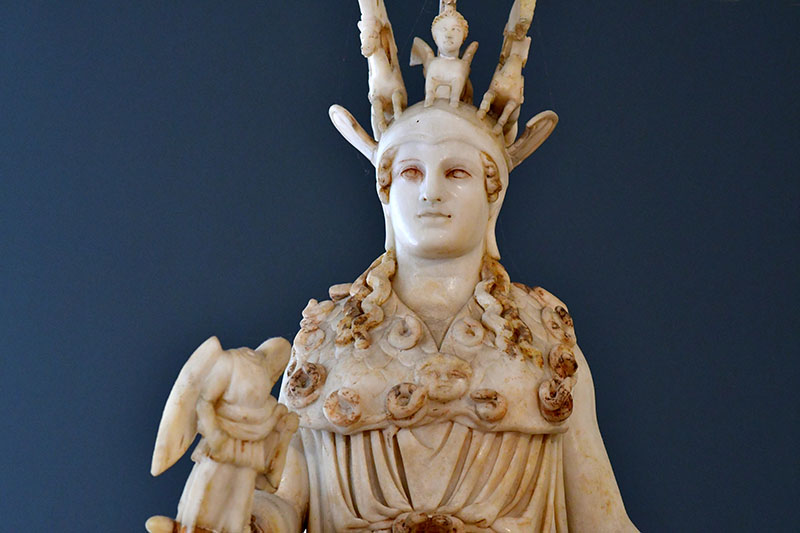
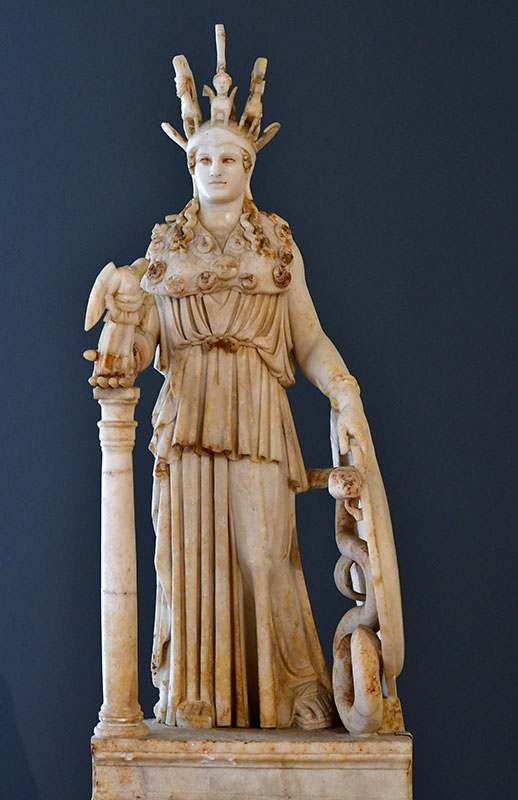
The ”Varvakeion” Athena Copy from AD 200-250 of the original from 438 BC, closeup, Athens
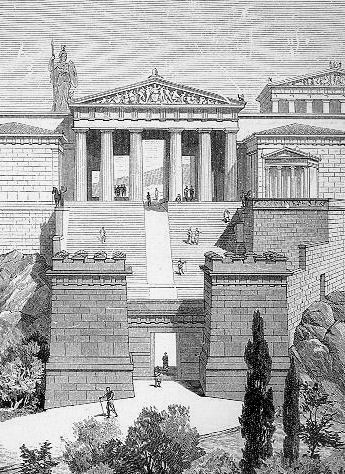
The artist’s most significant works were realized during the Athenian Golden Age under the patronage of Pericles. Chief sculptor Phidias oversaw the production of all sculptures in the Parthenon and is famous for the lost gold statue of Athena in the Parthenon, a colossal gold-ivory statue of Zeus in Olympia, and a huge bronze statue of Athena that stood on the Acropolis facing the Propylaea (Main Entry). The “Phidian style” dominated Greek sculpture until the end of the 5th century. Figures had a harmonious composition, “wet” garments, strong diagonals, and movement in often confined spaces. In my opinion, the colossal statues were not as realistic or anatomically accurate as those of other famous Greek sculptors, based on remaining copies seen today; however, the artist employed a unique combination of materials and techniques to create them. The artist possessed remarkable skill in sculpting across a diverse range of materials, including stone, bronze, silver, gold, wood, marble, ivory, and the complex combination of gold and ivory known as chryselephantine. Phidias also established the iconic visual representation of Greek gods and goddesses that we see represented in late marble sculptures. Phidias is widely recognized as the originator of the High Classical style, which emphasized idealized beauty, harmony, and balance. He’s associated with the early application of the “Golden Ratio” in his work.
Athena Parthenos
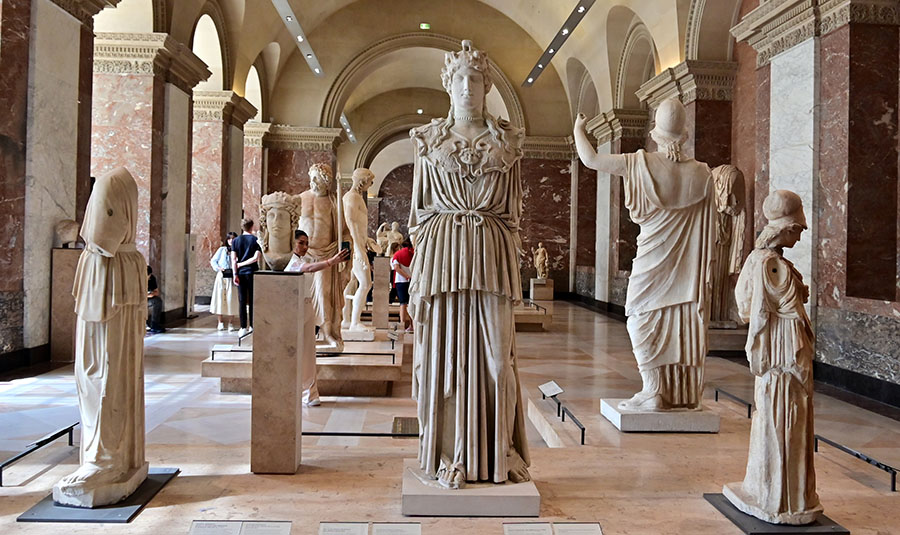
Athena Parthenos, marble copy, the Louvre
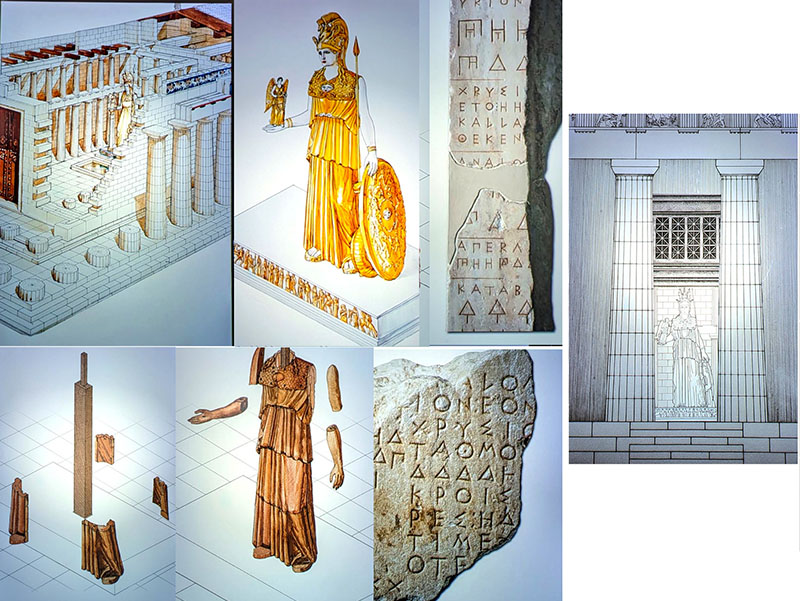
Among his most iconic creations is the Athena Parthenos, a colossal statue crafted using the chryselephantine technique (gold and ivory) and housed within the Parthenon (lost today). Constructed from wood and partially overlaid with plates of ivory for the flesh and solid gold for the drapery and ornaments, this colossal statue showcased unparalleled craftsmanship using precious materials. Its sheer scale and elaborate details served as a powerful reflection of Athens’ wealth, power, and profound devotion to its patron goddess.
The statue of Athena in the Parthenon, drawings illustrating how the statue was built and placed inside the Parthenon. These images were shown in the archaeological museum in Athens. A big bathtub was permanently placed in front of the figure in the temple to add humidity for the wooden sculpture.The ”Varvakeion” Athena Copy from AD 200-250 of the original from 438 BC, Athens, Veronica Winters’ art blog
The Parthenon frieze’ sculptures
Furthermore, Phidias is credited with the design and the supervision of the Parthenon Frieze, an extensive series of marble sculptures that decorated the temple in its original form. These sculptures, depicting the Panathenaic procession, are celebrated for their life-like quality of both human and animal anatomy. The frieze blends idealized forms with anatomical details, creating a sense of movement and life in a constrained space. The Parthenon’s sculptures are displayed in the British Museum today as they were removed from the original location in the 19th century. They show deities witnessing the birth of Athena from the head of Zeus. The Parthenon sculptures were meticulously carved from marble and originally covered in vibrant paint. Phidias had a thorough understanding of anatomy and chose to depict the divine through idealized forms.
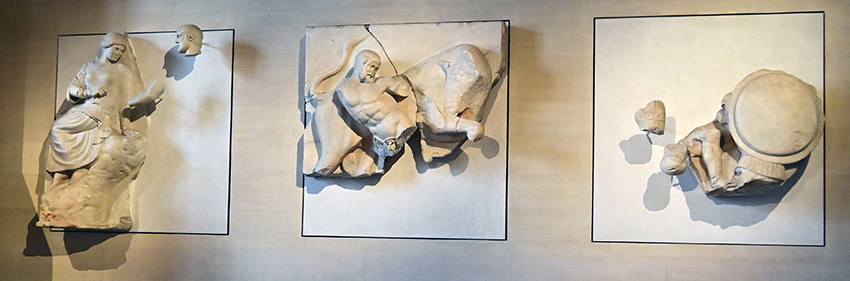
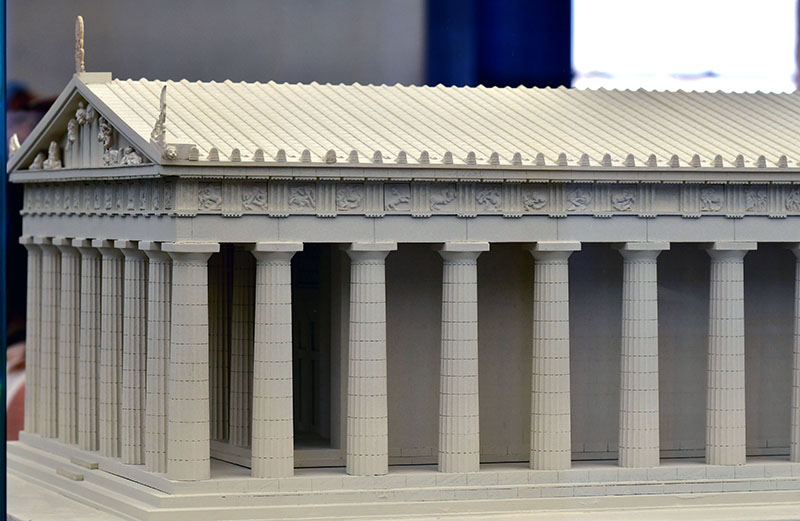
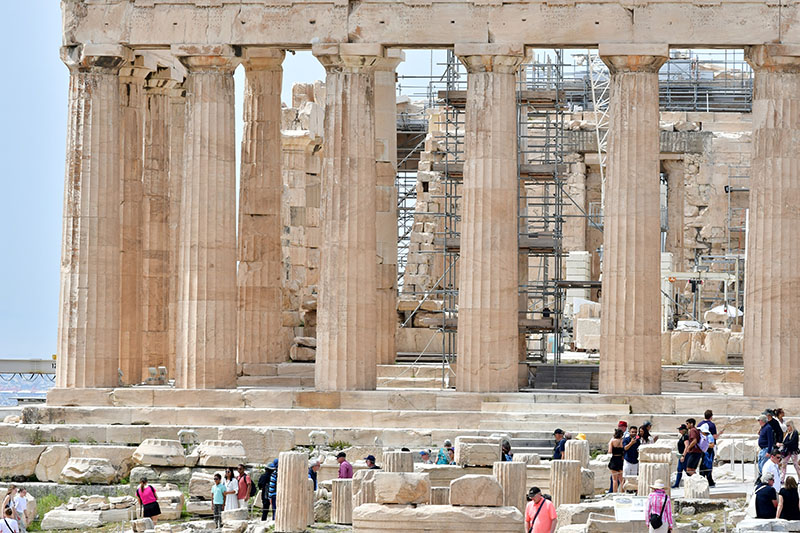
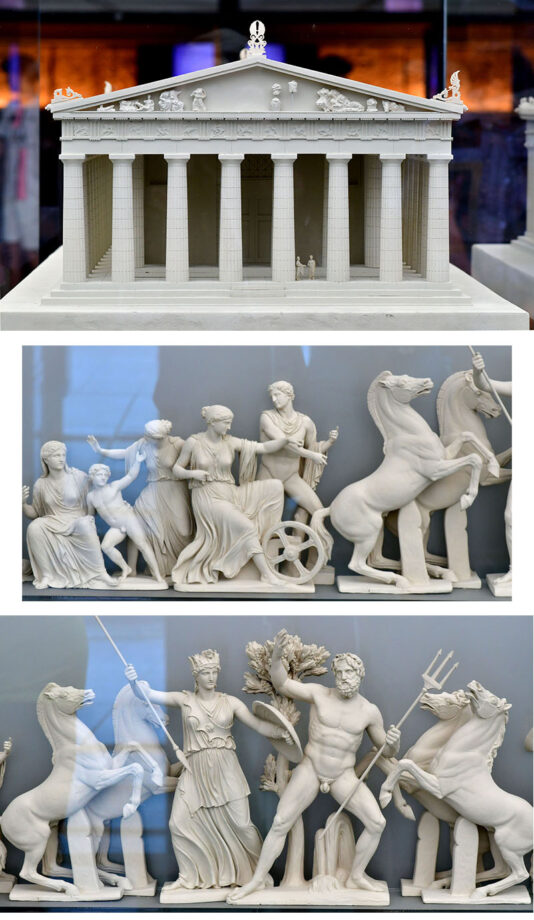
Three sculpture types decorated the Parthenon sculptures: Pediment sculptures were carved all the way around; square and high-relief Metopes, and a low-relief frieze. The image is from the British Museum. Sculpture example: Iris is a messenger goddess. She acted as herald for the chariot group of Poseidon. She had wings and descended to Earth from flight. The bronze wings were made separately. The drapery rushes against her body, flapping in the wind. Blue color has been found on her belt. WEST PEDIMENT NThe Parthenon sculptures, Horsemen of North Frieze, at the British Museum. The north frieze begins with a preparation scene reminiscent of those on the west. A boy helps a rider to adjust the length of his tunic, while another horseman waits in readiness. As this man restrains his horse, he anxiously looks back at his unprepared comrade. NORTH FRIEZE XLVII, 132-136
The horsemen of the north frieze: The composition of the north frieze is less varied than the south frieze. The 60 horsemen are arranged into ten ranks. The dress and armor vary from figure to figure. The north frieze occupied one of the long sides of the Parthenon, continuing the cavalcade that began on the west side. Chariots ran ahead of the horsemen, and ahead of them came various groups of pedestrians.The Horse of Selene, from the East Pediment in the Parthenon, at the British Museum. This horse’s head was one of those that drew the chariot of the moon-goddess Selene. She balanced the group of Helios in the other corner of the pediment. The horse is weary from its night-long labor. You can read about the Parthenon in great detail here.
The Parthenon’s Metopes:
The Parthenon’s metopes captivate due to their dynamic figure compositions within constrained spaces. Striking diagonals, precise anatomy, thoughtful compositions, and expressive faces elevate these sculptures, making them beautiful.
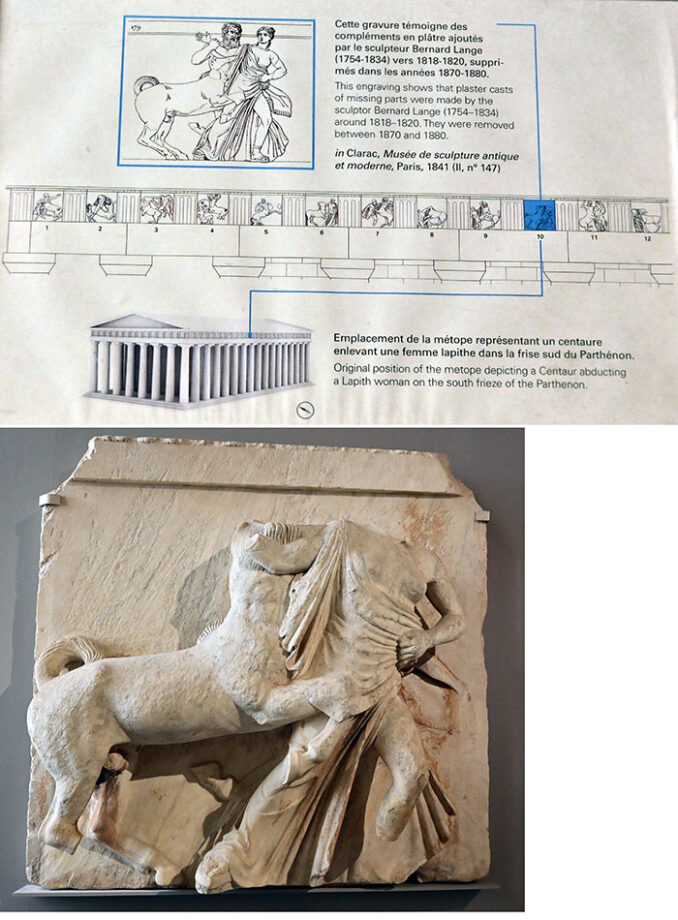
Parthenon’s metopes, the battle of Centaurs & Lapiths, the British Museum.One of the descriptions from these metopes: Centaur and Lapith tussle like wrestlers. The Centaur has his opponent by the throat while the Lapith attempts to fend him off with a fist and a knee. The Centaur opens his mouth in pain and bares his teeth. His face is evocative of an ancient Greek theatre mask, and his hair resembles a wig. South Metope YXYI
Zeus at Olympia
Zeus at Olympia, drawing by Quatremère de Quincy – Kansalliskirjasto, Public Domain, https://commons.wikimedia.org/w/index.php?curid=9836045
Phidias also created the gigantic Zeus at Olympia, another colossal chryselephantine sculpture considered one of the Seven Wonders of the Ancient World. Depicting the king of the gods seated majestically on a throne, its immense size at 12 meters high and the opulent use of ivory and gold evoked a profound sense of divine presence. Lost today, we can only imagine the statue’s power and might.
Polyclitus: The male ideal of body proportions (c. 450-415 BCE)
Developed the famous “Canon of Proportions”
Created detailed anatomical studies and used precise mathematical ratios for human (male) body proportions
Worked in bronze
Developed a systematic approach to symmetry in sculpture
Famous Art: Doryphoros (Spear Bearer)
Polykleitos or Polyclitus of Argos, a sculptor from the distinguished Argive school, flourished in the mid to late 5th century BCE and is celebrated for his masterful bronze sculptures, particularly his depictions of youthful, beautiful athletes. Beyond his sculptural achievements, Polyclitus was a highly influential aesthetician, best known for his theoretical treatise, the Canon, which outlined ideal mathematical proportions for the human body, which are still debated today. Polyclitus was a contemporary of Phidias, and together they created classical Greek style, although they were different in their artistic aesthetic. I think Phidias’ frontal statues in the round looked quite stiff and static in comparison to the beautiful, flowing figures made by Polykleitos that we could admire from different points of view. Only Roman copies of his bronzes (450 BC) exist today. But we can see that Polykleitos was a master of human proportion and aesthetic beauty, as he invented the visual ideal of a flowing figure, the contrapposto style (which is a relaxed pose of the figure as the body’s weight is placed on one leg). His figures were meticulously crafted, exhibiting balance, rhythm, and anatomical perfection not seen before in free-standing figures. The artist also promoted the cult of the athlete through his art. Athletic competition was highly valued in Greek culture, and you can read about the Olympic Games in my article about Delphi. The male nude became a way to glorify the perfect athletic form, representing strength, power, glory, and civic virtue. These qualities were highly desirable in male citizens of the state. Polyclitus’s innovations in the realistic depiction of the human figure, the creation of the Canon and contrapposto, became the principles of classical art that are revered by realist artists up to this day. The artist created the universal representation of a male figure for centuries to come.
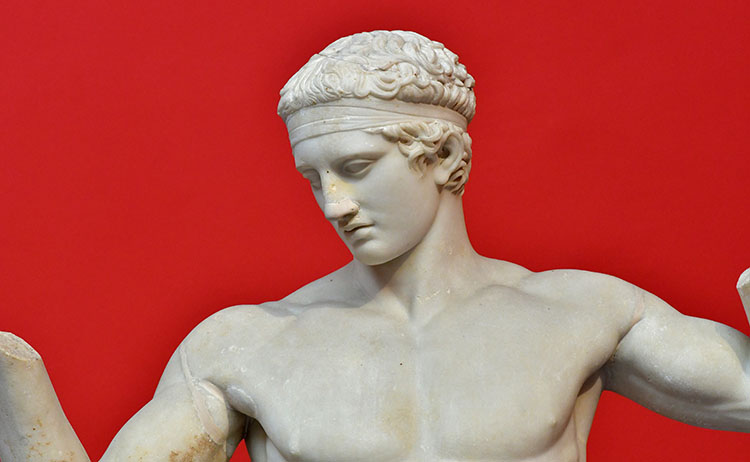
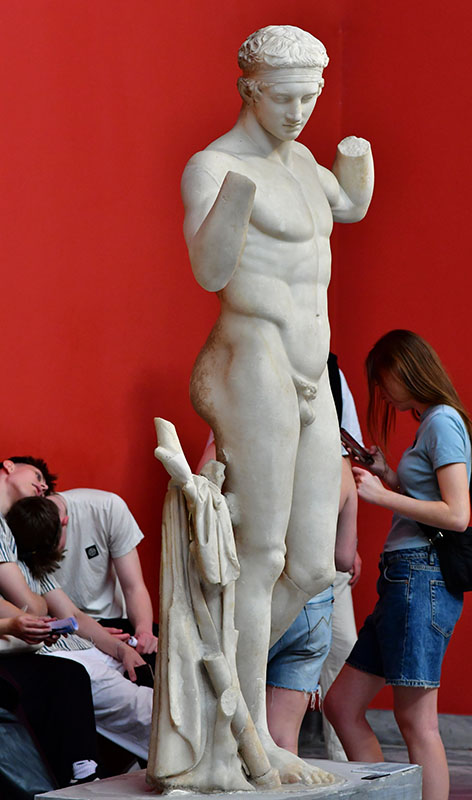
Marble copy of Polykleitos’ Torso of the Diadumenos type. Roman copy of the early 2nd century CE after a Greek original of ca. 440–430 BC. Previously restored as a Germanicus. the Louvre
Polyclitus considered ratios to have a spiritual dimension: contemplation of harmonious proportions equaled contemplation of the good. Human and divine beauty harmonize to become one. From the History of Art
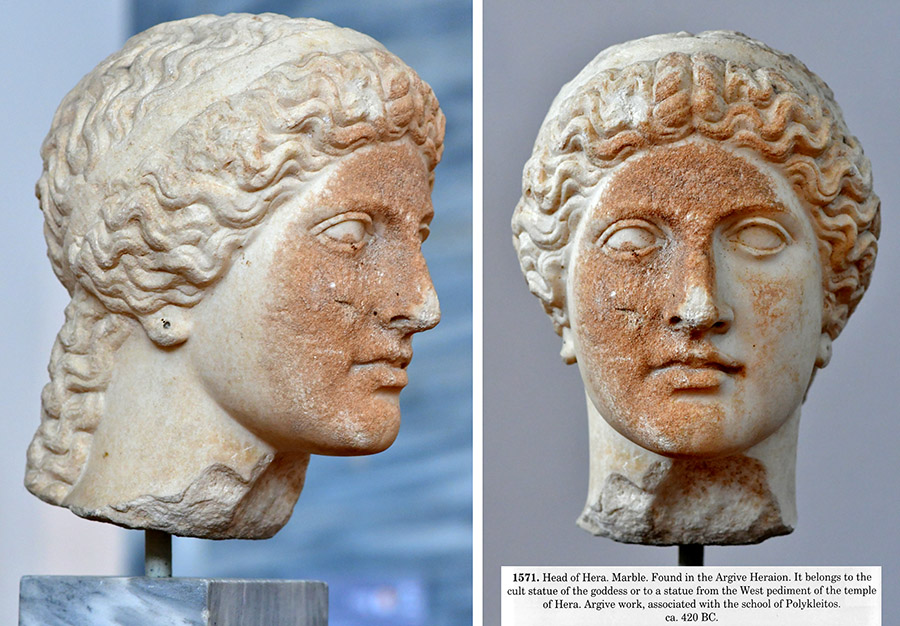
Technically, Polyclitus primarily worked in bronze, except for his Hera of Argos, which was created using the chryselephantine method. He utilized the lost-wax casting technique, a method that allowed for great precision and detail in his bronze art.
The Doryphoros (Spear-Bearer)
The Doryphoros (after Polykleitos), 27 BCE–68 CE,Copy of work attributed to Polykleitos, MIA, US
His renowned artwork, the Doryphoros (Spear-Bearer), is widely considered the quintessential embodiment of Polyclitus’ Canon, illustrating his principles of ideal mathematical proportions and the concept of ‘symmetria’. The Doryphoros is famous for its innovative use of contrapposto, a pose that depicts a figure in a balanced yet dynamic stance, with the weight of the body shifted onto one leg, creating a beautiful, natural ‘flow’ of the figure. A young man has a relaxed expression, yet he is about to walk off his pedestal. One of the marble copies is displayed in Naples, Italy. Depicting natural forms, the sculptor perfected proportions, composition, and movement, as ratios were fundamental for Greek philosophers, musicians, mathematicians, and sculptors.
The Diadumenos
Diadumenos, athlete, marble copy of the original bronze, Athens, photo: Veronica Winters
Another famous statue by Polyclitus is the Diadumenos (Man Tying on a Fillet). It portrays a young athlete tying a ribbon around his head after his victory in an athletic competition, showcasing a sense of youthful grace, lightness, and effortless poise in a realistic figure. There are several marble copies made from the original bronze sculpture in existence today. I saw one in Athens, the British Museum, and the Met. The marble copy standing at the British Museum was found in a Roman villa in France. It’s recorded that the original fetched the price of a hundred talents, an enormous sum in the ancient world.
Diadumenos athlete, Polykleitos, marble version from the bronze original, 430 BC, Athens, photo: Veronica Winters
The original bronze probably stood in a sanctuary such as that at Olympia or Delphi. “The figure’s thorax and pelvis tilt in opposite directions, setting up rhythmic contrasts in the torso that create an impression of organic vitality. The position of the feet—poised between standing and walking—gives a sense of potential movement. This rigorously calculated pose, which is found in almost all works attributed to Polykleitos, became a standard formula used in Graeco-Roman and later Western European art.” From the description at the Met.
Other works:
His other artistic contributions include a colossal gold and ivory statue of the goddess Heraof Argos, which was favorably compared to Phidias’s monumental Zeus at Olympia, as well as various statues of Amazons and other athletes, further demonstrating his mastery of the human form.
Bronze statue of an athlete from Ephesus cleaning his strigil; 1st century CE copy of a possible original by Polykleitos. edited. By Manfred Werner (Tsui); cropped and edited by Mary Harrsch – Own work, CC BY-SA 3.0, https://commons.wikimedia.org/w/index.php?curid=80929320
The artist’s sense of naturalism and dynamism in representing a strong, male figure in the nude became a standard for classical artists in achieving lifelike representation.
Praxiteles: Infusing Grace and Sensuality (active around 370-330 BCE)
The Late Classical Era and Evolving Realism
Master of marble sculpture
Known for sensual and naturalistic figures, including female nudes
Advanced marble carving techniques
Developed a softer, fluid sculpting style with accurate and elegant anatomical details
Famous art: Aphrodite of Knidos (the first realistic female nude sculpture), many sculptures are displayed in the Louvre
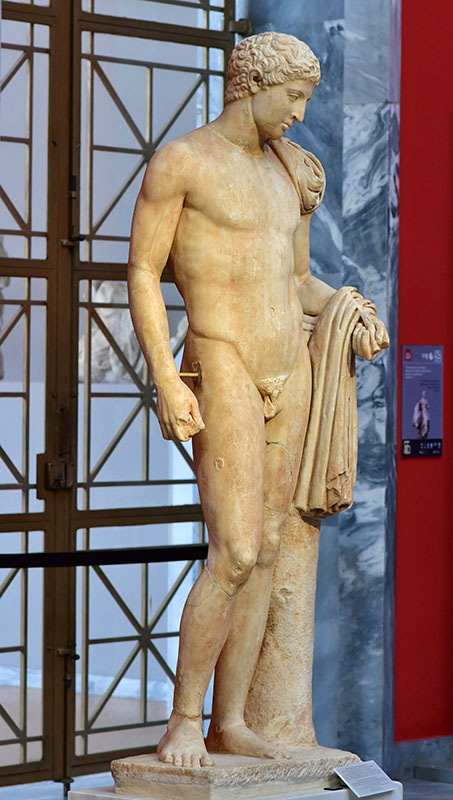
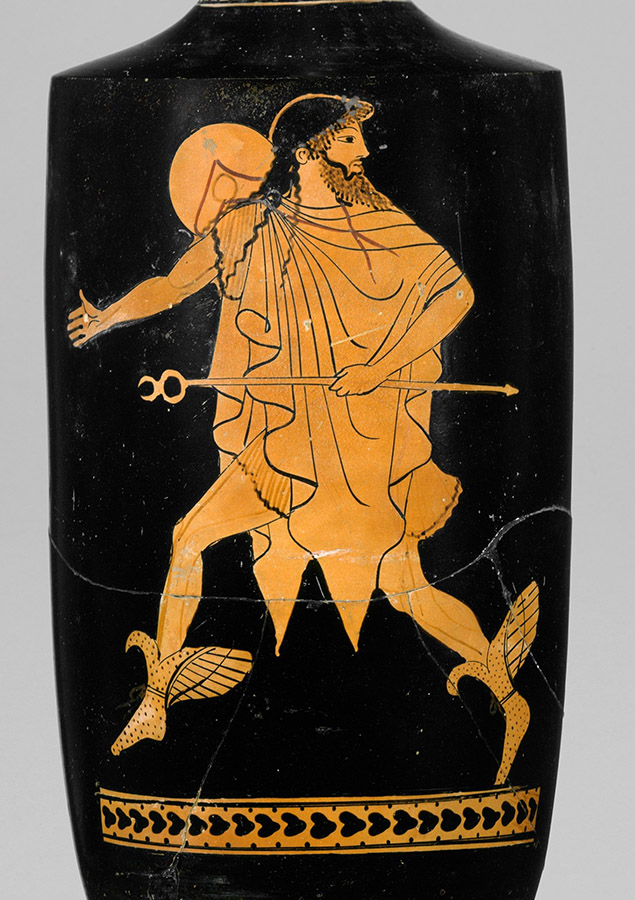
Hermes Farnese, close-up of feet with wings, Roman, 2nd century AD, after a Greek original of the 4th century BC from the school of Praxiteles. Statue of Hermes (Mercury) with winged sandals, holding his herald’s staff. Formerly in the Farnese Collection in Rome.
Being a younger contemporary of the sculptor Scopas, an exceptionally talented artist, Praxiteles became one of the most famous Greek sculptors, with his art still found in London, the Vatican, the Louvre, Olympia, and Rome today. Praxiteles of Athens, active in the 4th century BCE, rose to become the most celebrated of the Attic sculptors, renowned for the elegance, beauty, and sensuousness of his art. He is notably credited as the first sculptor to depict the nude female form in a life-sized statue, marking a serious departure from earlier conventional representations.
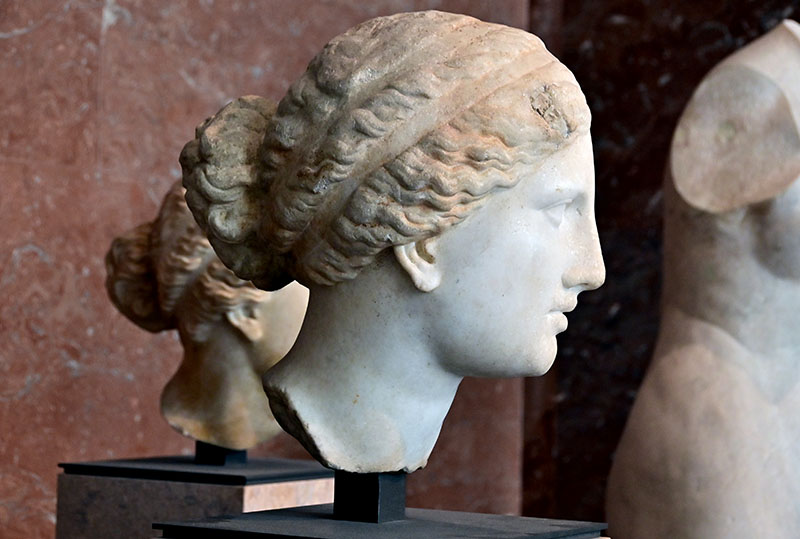
The Head of Aphrodite Kaufmann by Praxiteles, the Louvre
Aphrodite of Knidos:
Among his most famous works is the Aphrodite of Knidos, a groundbreaking sculpture that portrayed the goddess of love in complete nudity, establishing a new artistic standard for the depiction of the female nude in Western art. Its sensuous rendering and graceful pose contributed to its status as one of the most celebrated sculptures of antiquity. The first known completely nude goddess is ‘Cnidian Aphrodite,’ a marble Roman copy after the 340 BC original, located in the Vatican.
Praxiteles, Aphrodite of Knidos, photo: marble copy of Praxiteles; restorer: Ippolito Buzzi (Italian, 1562–1634), Marie-Lan Nguyen (September 2009), Public Domain, https://commons.wikimedia.org/w/index.php?curid=1343576
Male statues:
Praxiteles’s artistic style is characterized by a shift from the more rigid idealism of the High Classical period towards a greater emphasis on grace, sensuality, and a more humanized depiction of the gods. His male figures exhibit the ethereal beauty, elegance, and unbelievable knowledge of anatomy, proportion, and scale. He is one of my favorite artists as his statues show harmonious beauty and naturalism in sensual, relaxed, gracefully flowing poses, so hard to achieve in classical art. Praxiteles’ sculptures of male figures had a lot more anatomical detail and precision than the female form, which was characteristic of ancient Greek sculpture in general. In his work, the marble sculptures have sensual curves in the torso, perfectly proportioned legs, gentle arms, and faces, which exemplify his art style and aesthetic. He famously employed the “Praxitelean curve,” a sensual S-shaped contrapposto that lent a languid and elegant quality to his figures, distinguishing them from the more upright postures of his predecessors. His works are also famous for their smooth surfaces and the delicate modeling of forms, creating a sense of softness and naturalism.
HERMES FARNESE, Roman, 2nd century AD, after a Greek original of the 4th century BC from the school of Praxiteles. Statue of Hermes (Mercury) with winged sandals, holding his herald’s staff. Formerly in the Farnese Collection in Rome.
Such an example is “Hermes and Infant Bacchus“, a Roman copy of the 320 bc original, Olympia. It stood at the temple of Hera in Olympia. Hermes with the Infant Dionysus is a marble statue renowned for its delicate modeling and exquisite surface finish. This piece exemplifies the grace and life-like charm that Praxiteles brought to his portrayals of deities, moving away from the more austere representations of earlier periods. https://ancientolympiamuseum.com/index.php/2022/07/18/hermes-of-praxiteles
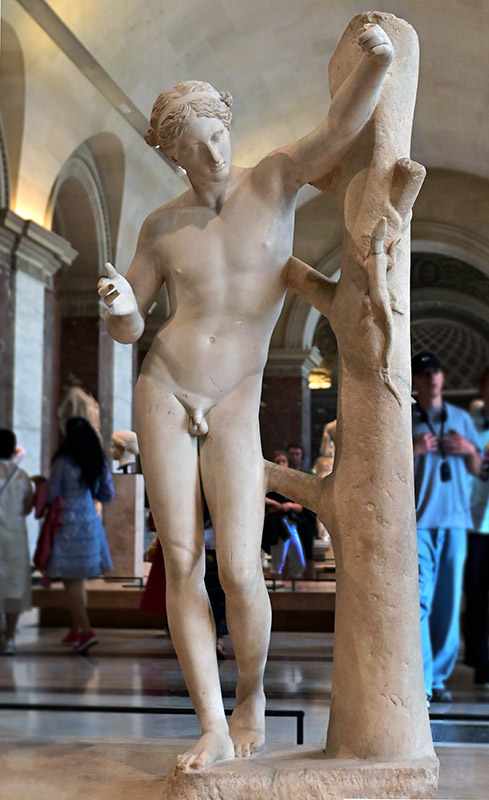
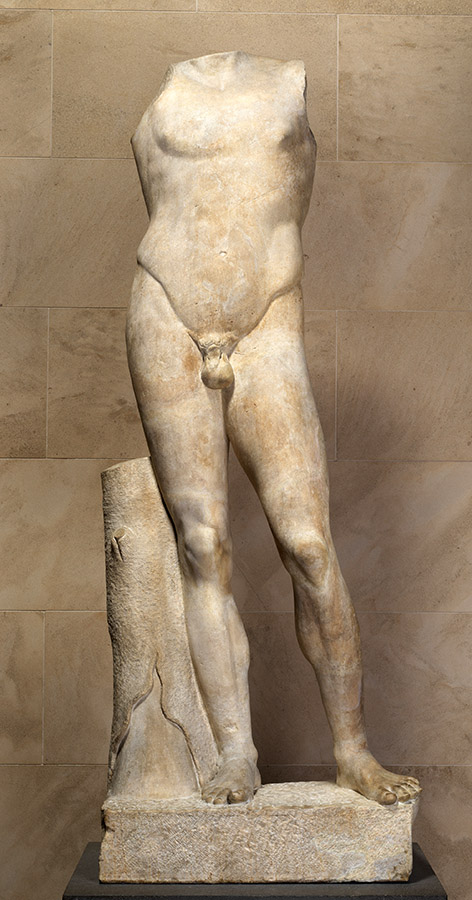
Apollo, the lizard slayer, by Praxiteles (400-325 bc), Parian Marble, the Louvre
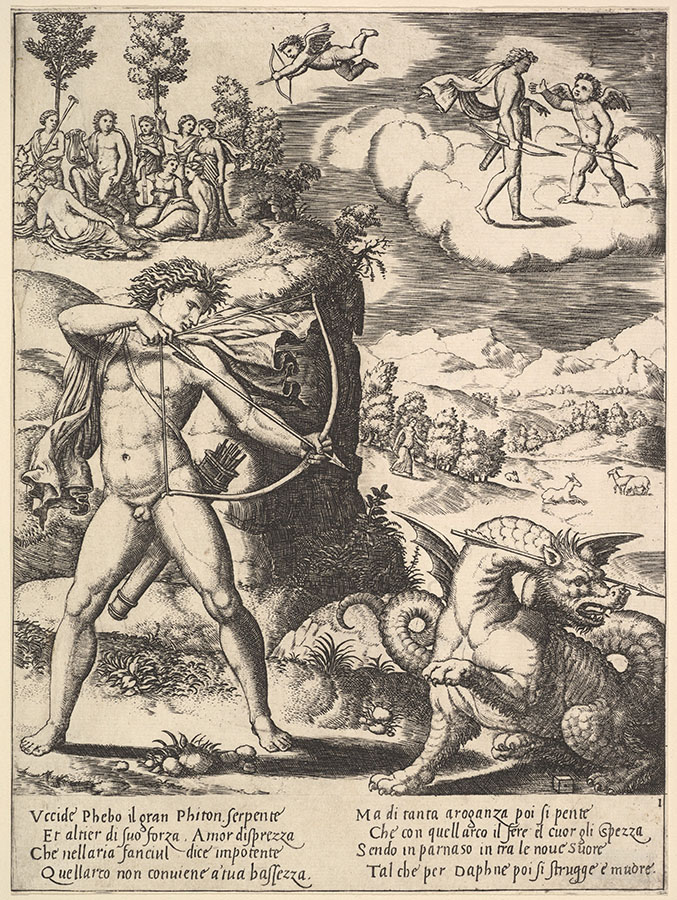
The god of the arts, shown as an adolescent, prepares to kill a lizard. The scene is a reference to the protective nature of the god or, in an indirect way, to his struggle against the serpent Python
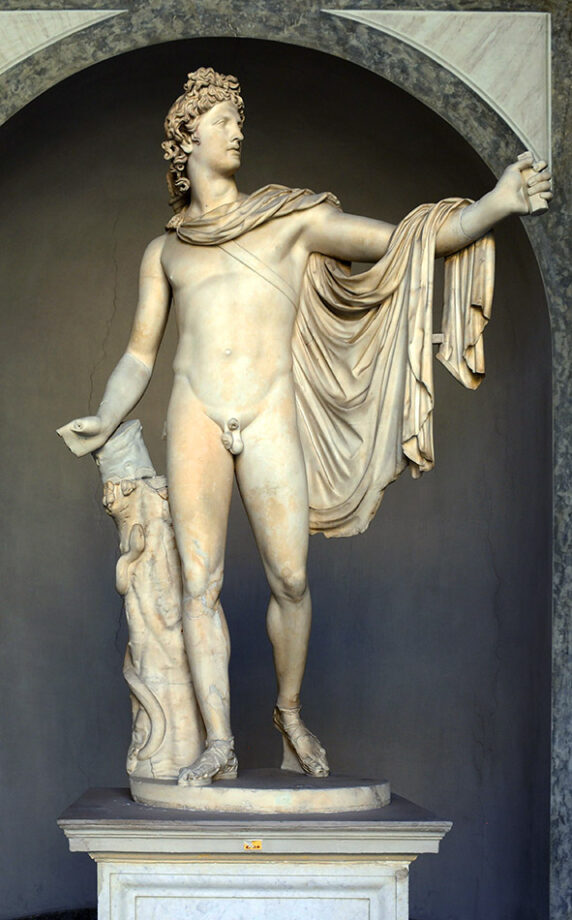
“Apollo Belvedere,” a Roman marble copy of a Greek original, 4th BCE, is another famous example of an artist’s talent that exemplifies harmonious beauty. His artistic output also included Apollo Sauroktonos (Apollo the Lizard-Slayer) and various other depictions of gods, satyrs, and nymphs.
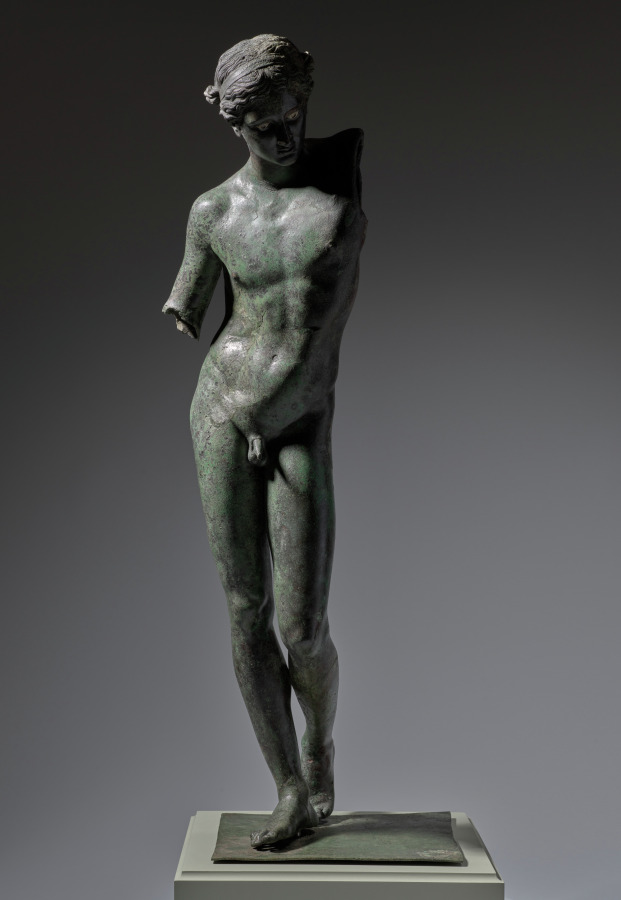
The Cleveland Apollo: Apollo Sauroktonos (Lizard-Slayer) or Apollo the Python-Slayer c. 350–200 BCE
The Cleveland Apollo Sauroktonos (Lizard-Slayer) or Apollo the Python-Slayer c. 350–200 BCE
Technically, Praxiteles primarily utilized marble as his medium, particularly the highly prized marble from the island of Paros, which allowed for a fine level of detail and a luminous finish. However, he also worked with bronze, demonstrating his proficiency in metal casting as well. He valued the surface finish of his marble sculptures and reportedly held in high regard those that were further enhanced by the application of paint by the renowned artist Nikias, indicating the importance of color in ancient sculpture.
Praxiteles, du Louvre, Département des Antiquités grecques, étrusques et romaines, Ma 529 – https://collections.louvre.fr/ark:/53355/cl010278726 – https://collections.louvre.fr/CGU
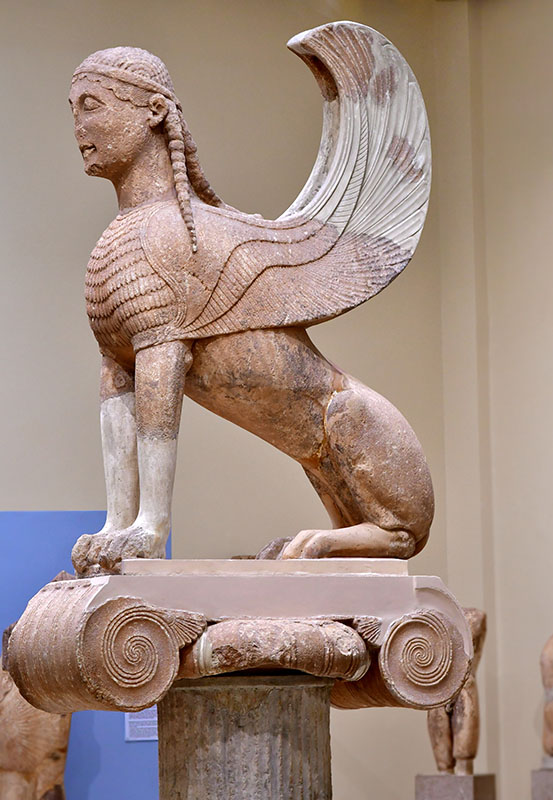
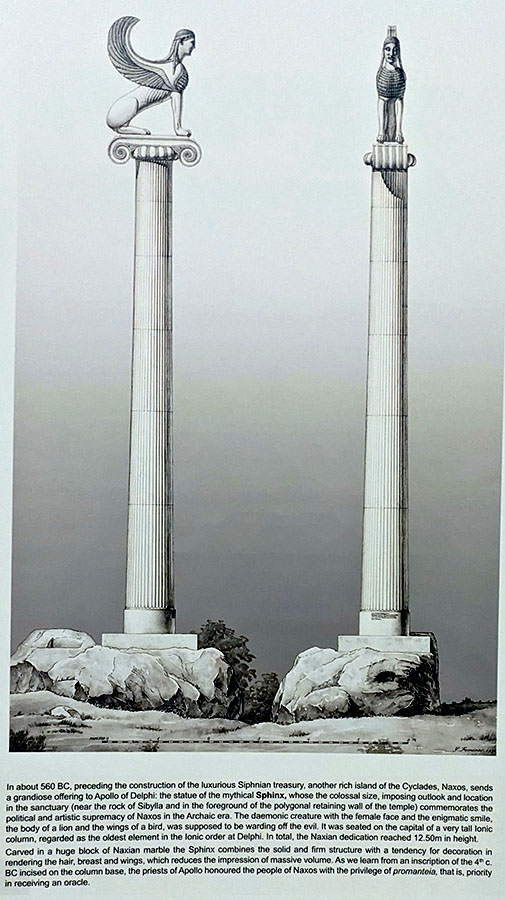
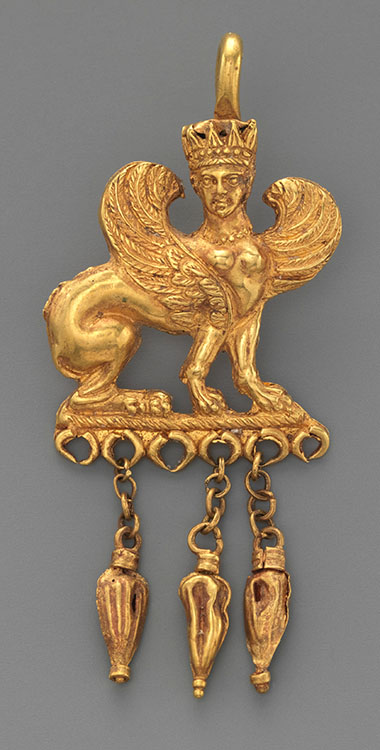
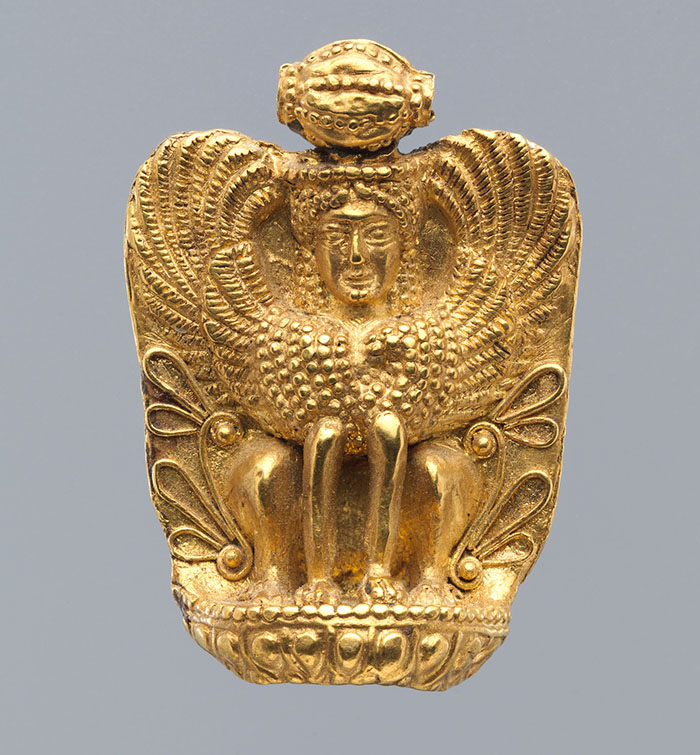
Praxiteles’s emphasis on the nude female form, particularly in his Aphrodite of Knidos, and his overall sensual style represent a significant evolution in artistic and cultural attitudes towards the human body and the depiction of divinity. The creation of a life-sized female nude for public display was a groundbreaking act, suggesting a changing societal perspective that allowed for a more direct and sensual representation of the female form, even within a religious context. Furthermore, the reported collaboration between Praxiteles and the painter Nikias underscores the significant role of polychromy in ancient Greek sculpture. (To read about polychromies in ancient Greek art, go to this article I wrote about ancient Greek Sphinxes.) This practice highlights that these sculptures were not intended to be viewed as pristine white marble but were likely enhanced with vibrant colors to further the illusion of life and contribute to their overall impact.
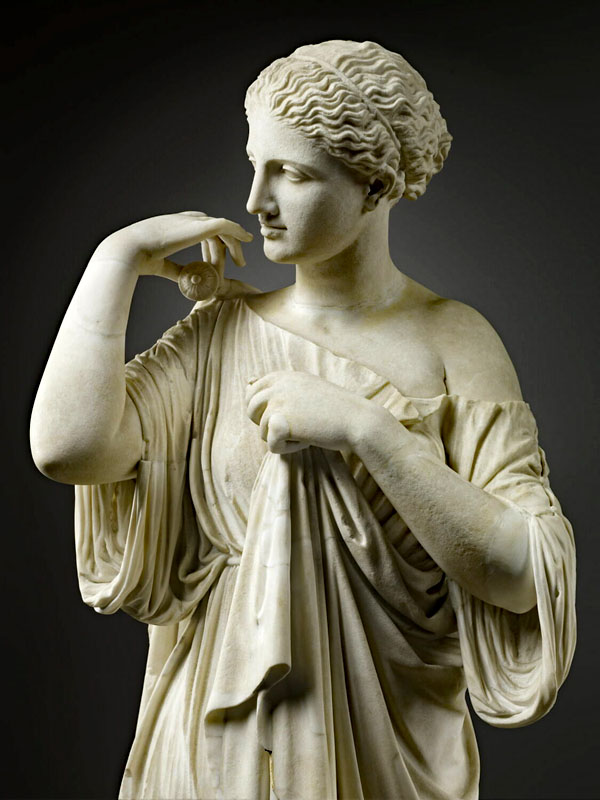
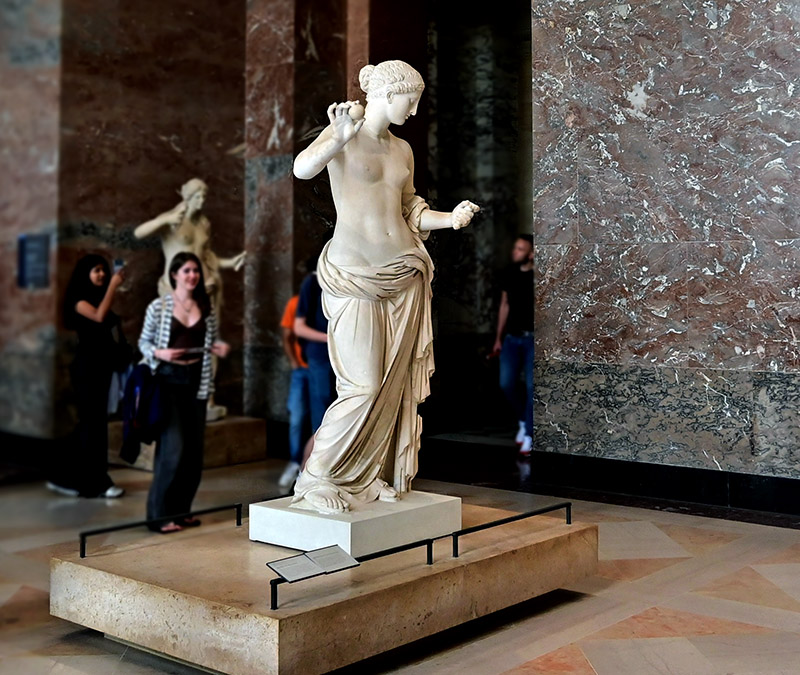
Praxiteles, Aphrodite as Venus of Arles in the Louvre, marble, Veronica Winters Art blog.
This Venus was presented to King Louis XIV of France as a gift in 1683. François Girardon, the king’s sculptor, added the goddess of love’s attributes: a mirror and an apple, references to her victory in the Judgement of Paris. This work may be a copy of the Aphrodite of Thespiae (Boeotia, Greece), commissioned around 360 BC from the sculptor Praxiteles by the courtesan Phryne.
Scopas of Paros, a prominent Greek sculptor and architect of the Late Classical period, is considered one of the foremost sculptors of the second half of the 4th century BCE. He played a crucial role in establishing the expression of powerful emotions as a central theme in artistic representation, marking a shift towards a more dramatic and psychologically engaging art style.
Scopas’s artistic style is distinguished by its emphasis on intense emotional expression, dynamic and often twisting compositions, and a departure from the more restrained and passionless features characteristic of earlier Classical sculpture. His figures frequently exhibit deep-set eyes, furrowed brows, and slightly opened mouths, all contributing to a palpable sense of pathos and inner turmoil. He also moved towards more fluid and naturalistic representations of movement within his sculptural compositions.
Scopas primarily worked in marble, utilizing the marble from his native island of Paros, known for its luminosity and fine quality. He also employed Pentelic marble for some of his sculptures.
In addition to his sculptures, Scopas was also a practicing architect, responsible for the design of the Temple of Athena Alea at Tegea, demonstrating a close integration of sculpture and architecture in his artistic practice. The sculptures from the Temple of Athena Alea at Tegea include the pediment statues depicting the Calydonian Boar Hunt and the Battle of the Amazons, renowned for their intense emotions and dynamic compositions.
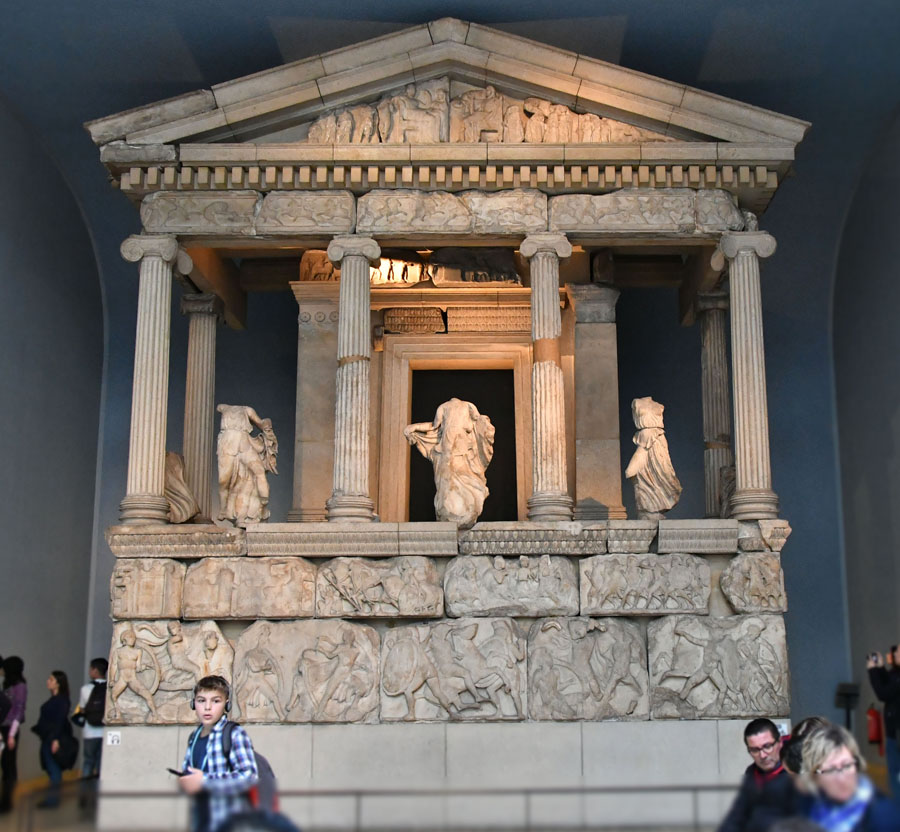
Drawing of the Mausoleum at Halicarnassus 359-351 BC. Much bigger, the Mausoleum took inspiration for its design from the Nereid Monument of Xanthos, which was a city in ancient Lycia, Turkey.The Nereid Monument of Xanthos, 390-380BC, the British Museum.The Nereids, statues on the podium, were sea nymphs in Greek mythology. They helped sailors survive brutal sea storms. The monument is influenced by the Ionic temples of the Acropolis of Athens.
Scopas also contributed his talent to the elaborate reliefs decorating the Mausoleum at Halicarnassus, one of the Seven Wonders of the Ancient World, working alongside other distinguished sculptors, Bryaxis, Timotheos, Leochares. Writer Pliny the Elder described the architecture of the project and the artists working on it as a team. Each sculptor carved his side of the building. Destroyed today, the Mausoleum at Halicarnassus, 359-351 BC, was a gigantic tomb built in present-day Turkey. Height 260 ft. Base 117×82 ft. 36 Ionic columns are 40 ft tall. Friezes’ lengths were similar to the Parthenon’s!
From the History of Art: “The monument combined Greek thought about life as a magnificent struggle depicted in battle scenes and the Egyptian pyramid as a roof to show the divine powers of the ruler. The word ‘mausoleum’ became a generic term derived from that funerary building. Scopas was one of the artists working on the friezes. His figures show lots of energy, action, and violence with the Amazons on the battlefield.” Scopas also worked on the temple of Artemis at Ephesus (present-day Turkey). You can see some restoration images here.
Other famous pieces attributed to him include the Dresden Maenad, a depiction of a woman in a Bacchic frenzy, the statue of Pothos, conveying a sense of longing and desire, and possibly the Ares Borghese, a dynamic portrayal of the god of war. Youthful hero or god is a well-preserved sculpture, probably a Roman copy after Scopas, displayed at the Fogg Art Museum (Harvard). It shows the flawless body of a young man in classical proportions and expressive rotation of the head.
Scopas, Marble female head, possibly of Hygieia, found at Tegea, Arkadia, 350-325 BC
There are several classical heads attributed to Scopas displayed at the National Archaeological Museum of Athens, such as the head of the goddess Hygieia from the temple of Athena Alea at Tegea. Because the heads show a lot of wear and tear, it’s difficult to judge their former beauty. The Hunter stele by Scopas at the same museum shows well-preserved classical figures in limited view.
The Hunter stele by Scopas, close-up, Archaeological museum in Athens
There is a marble torso of Youthful Hero or God,a Roman copy after Scopas, displayed at the Harvard Museum. I love the S-curve in the back of that sculpture.
After Scopas. A Roman 1st-century AD marble Meleager with chlamys, a free improvisation on Scopas’ model, from the Fusconi-Pighini collection (Museo Pio-Clementino, Rome), copy after Skopas (?), Jastrow (2006), Public Domain, https://commons.wikimedia.org/w/index.php?curid=1302961
Scopas’s focus on conveying intense feelings in his sculptures marks a significant transition towards the Hellenistic aesthetic, where the inner lives and passions of the figures depicted became a central concern of artistic representation. This emphasis on emotion, contrasting with the detached or idealized expressions of previous periods, reflects a growing artistic interest in portraying the full spectrum of human experience, including suffering and passion. Furthermore, similar to Phidias, Scopas’s significant involvement in major architectural projects highlights the integral relationship between sculpture and architecture in ancient Greece. Sculpture was not a simple decorative element; rather, Greek statues played a vital role in conveying narrative, meaning, and enhancing the overall grandeur and impact of the temples.
Lysippus: Naturalism and Individual Character (c. 370-300 BCE)
Transition to the Hellenistic Era
Official sculptor to Alexander the Great
Revolutionized bronze sculpting techniques & used advanced lost-wax casting methods
Created proportionally smaller heads and slender bodies to make figures appear taller
Famous Art: Apoxyomenos (Athlete Scraping Himself) & quadriga ( 4 horses) decorating the St. Marco Basilica in Venice.
Lysippus of Sicyon, a famous Greek sculptor of the late Classical period, is recognized for his pivotal role in the transition towards the highest realism of the Hellenistic era. He worked between 370-300 BC and held the distinguished position of official sculptor to Alexander the Great and was celebrated for the lifelike naturalism and slender proportions, a modification of Polykleitos’s system.
The Apoxyomenos
Among his most famous sculptures is the Apoxyomenos (The Scraper), a statue depicting a young, handsome athlete meticulously cleaning himself with a strigil after exercising. (Greek athletes applied oil before the exercise and then removed it after it.) This sculpture exemplifies the artist’s focus on capturing natural movement and his shift towards super-realistic body proportions compared to the idealized forms of earlier periods. A marble copy of the original bronze (330bc) is in the Vatican. It shows an unusually active pose, and a smaller head, but the same slender, elegant, and well-proportioned male body of an athlete.
The artist said that the difference between himself and them was that they represented men as they were, and he as they appeared to be.
From Pliny’s writings, we learned a lot about Lysippus’s artistic style. It’s distinguished by its commitment to lifelike naturalism, the use of slender and often elongated proportions in his figures, and a pronounced focus on portraying individual character rather than adhering to idealized types. His main characteristic was extreme attention to detail. He introduced a new canon of body proportions that differed from the earlier standards set by Polyclitus, featuring smaller heads and leaner bodies, which created the visual impression of greater height in his sculptures. Furthermore, Lysippus’s compositions were designed to be viewed from multiple angles, inviting viewers to move around the sculpture to fully appreciate its three-dimensional form, a departure from the single optimal viewpoint often favored by his predecessors.
Portraits of Alexander the Great
After Lysippos, Alexander the Great statuette at the Getty Villa, 2nd century B.C., Unknown artist/maker. Worshipped as a god, Alexander the Great had numerous statues complete by the artist. From the museum’s description: “This broken statuette, carved in the 100s B.C., is a small-scale variant of a statue made in the 320s B.C. by Lyssipos. The “Alexander with a Lance” portrayed the king armed and naked, similar to the great heroes of Greek mythology, such as Achilles, with whom Alexander identified. The ruler stands with his weight on one leg, his right arm extended and holding a spear, the left hanging down at his side.”
Lysippus also gained significant recognition for his numerous portraits of Alexander the Great. It was said that Alexander would only allow Lysippus to sculpt his likeness, leading to the creation of a recognizable image of the king featuring tousled hair and an upward-looking gaze, often associated with divine inspiration.
Other work:
Hercules, Roman copy after the original by Lysippos, about 325-300 BC. Said to be found near mount Vesuvius. Restored and set into a modern bust by the English sculptor Joseph Nollekens. The British MuseumPortrait Head of Euripides, 2nd century A.D., unknown artist, after an original by Lysippos, Getty Museum, public domainAristotle sculpture after Lysippos. Bust of Aristotle. Marble, Roman copy after a Greek bronze original by Lysippos from 330 BC; the alabaster mantle is a modern addition. – Jastrow (2006), Public Domain, wikimedia https://commons.wikimedia.org/w/index.php?curid=1359807
His artistic output also included statues of the hero Heracles, the king of the gods, Zeus, and various other athletic figures, demonstrating his talent in mastery of the human form.
Lysippus’s exclusive role as the official sculptor of Alexander the Great underscores the potent influence of art in shaping public perception and immortalizing historical figures. His close association with Alexander allowed him to define the visual representation of this pivotal leader, significantly impacting how Alexander was perceived by both his contemporaries and subsequent generations. Moreover, Lysippus’s innovative shift towards slenderer proportions in his figures and his emphasis on a 360-degree viewing experience indicate a growing artistic interest in creating sculptures that were not only anatomically accurate but also dynamic and engaging from a multitude of perspectives. This evolution in artistic thought moved beyond the concept of a single, ideal viewpoint towards a more immersive and spatially aware sculptural encounter.
Technically, Lysippus primarily worked in bronze, and ancient sources suggest that he was an incredibly prolific sculptor, creating over 1500 works throughout his career. He paid meticulous attention to even minor details, such as the rendering of eyelids and toenails, further enhancing the realism of his figures. His brother, Lysistratus, is credited with pioneering the technique of creating molds directly from living bodies, a method that may have significantly influenced Lysippus’s approach to portraiture and his ability to capture individual likeness with such accuracy. Contemporary artist, Carole Feuerman, does exactly that technique of making molds from living people, thus creating perfect figures she paints and decorates with the Swarovski crystals. I’ve seen her work worldwide, such as at the Venice Biennale 2017 and the King Woman art show in New York. I also see her beautiful sculptures at the Miami art fairs every year.
Carole Feuerman, Survival of Serena, hyper-realism sculpture, Miami
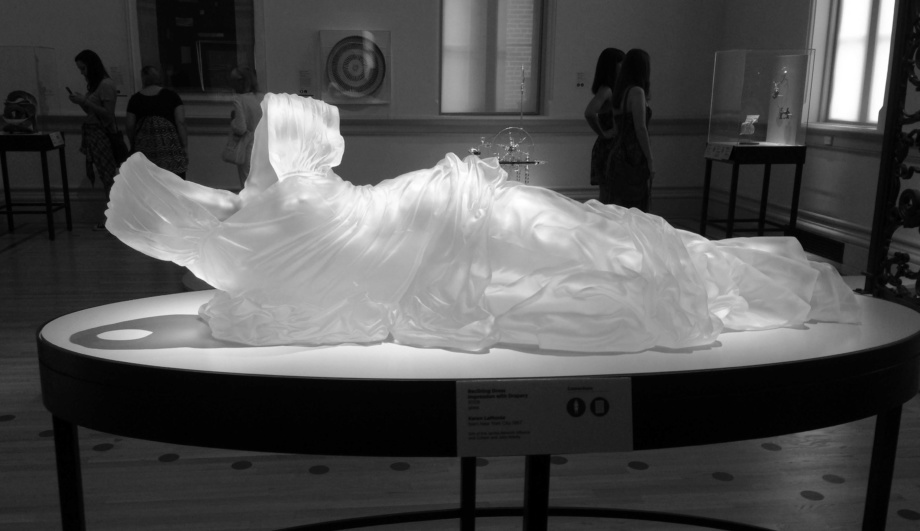
Another contemporary artist, Karen LaMonte, does sculptures of dresses and garments cast in glass and bronze. If you look at her method, you can imagine a similar technique being used in the past to get the perfect anatomical shape and precision.
This is one of the sculptures I saw at the Smithsonian Institution. This is a glass cast, Reclining mode, artist: Karen LaMonte.
We can see that this ancient Greek bronze “Draped male figure” is strikingly similar in technique to the two contemporary artists above.
Draped Male Figure, c. 150 BCE–200 CE. Roman or possibly Greek Hellenistic. Bronze, hollow cast in several pieces and joined; overall: 193 cm (76 in.), The Cleveland Museum of Art.
The final stage: works of the late Classical and Hellenistic period (4th-3rd century B.C.E.)
In classical Athens, during the 5th-4th century B.C.E., sculptors created the most beautiful and powerful art for the democratic Athenians. These pieces were commissioned to decorate temples and public buildings, projecting idealism and youthful, eternal beauty. Later, in the Hellenistic period (late 4th-1st century B.C.E.), artists shifted their focus to glorifying the power and wealth of the contemporary rulers and the elite.
Fourth-century sculpture (400-200 B.C.E.) marked the final stage in Greek art development. This period, labeled as Late Classical or pre-Hellenistic and Hellenistic, followed the conquests of Alexander the Great, who established Alexandria as a new, prominent citadel of power and culture. Consequently, Greek art expanded its influence to Asia Minor (modern-day Turkey), Egypt, Mesopotamia, and even India. New major cosmopolitan cities emerged, such as Pergamon, Antioch, and Alexandria.
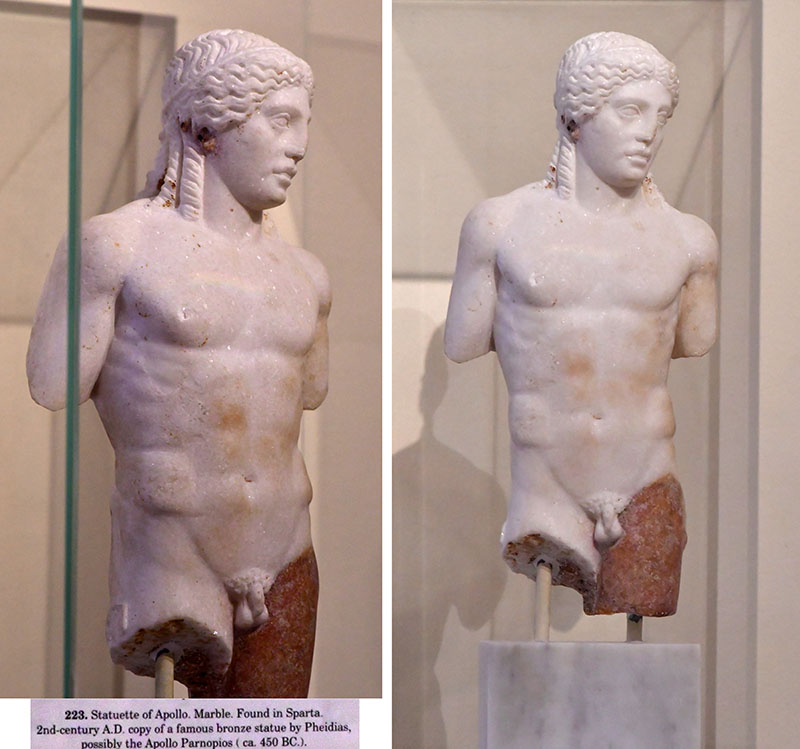
The ‘Chatsworth Head’ of Apollo, 450 BC: This beautiful bronze head of an athletic youth is all that’s left from a once life-size statue. First found in 1836 near Politiko in central Cyprus, the statue was complete but soon broken up for scrap! The only two parts that escaped melting down were the head and the right leg, now displayed in the Louvre. The statue is probably of the god Apollo, who received his modern name from the dukes of Devonshire, where the statue was displayed in Chatsworth House in Derbyshire. This ‘Chatsworth Head’ is one of the very few complete bronzes to survive, showing the result of a complex lost-wax method. This technique allowed the artist to create the super-fine details on his hair. His eyes would have been made of ivory or a semi-precious stone. This statue was probably made at the wealthy city-state of Tamassos probably by a talented Greek sculptor. The surrounding area was rich in copper, and also the timber needed as fuel to cast the statue. Expensive tin had to be imported to Cyprus to make the bronze alloy. Politiko, Sanctuary of Apollo. Displayed at the British Museum.
From the end of the 4th century B.C.E. onwards, Greek sculpture displayed two distinct trends. The first, classical and conservative, showed respect for past art and academicism, producing new sculptures that either transformed or copied classical prototypes. The second trend, however, rejected Classical idealism in favor of innovation, depicting unique human features, individualism, age, and ethnicity.
Hellenistic sculpture became extremely realistic, varied, and emotional. Unlike the timeless ideals of the Classical period, Hellenistic portraits emphasized individualism, complex character, emotion, and likeness (e.g., the portrait head from Delos, an 80 B.C.E. bronze now in Athens). Beyond sculpture, figures and later portraits of rulers were also depicted on silver and gold coins to assume even more authority and power.
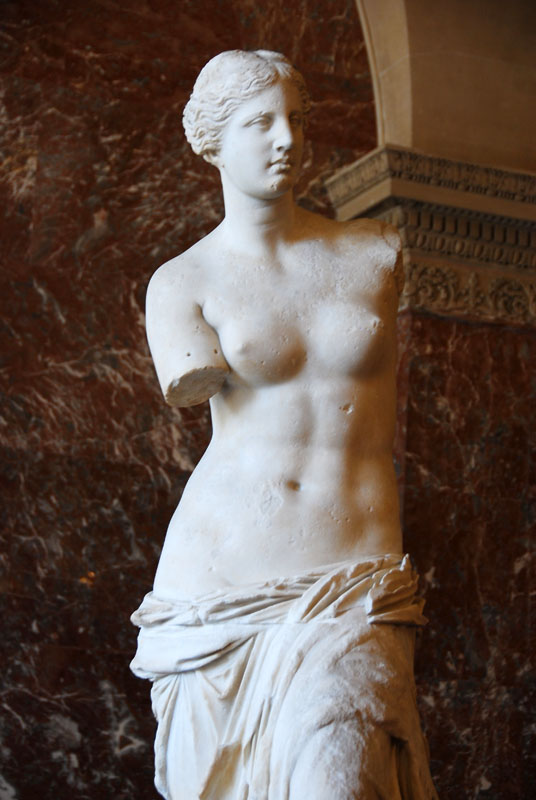
Venus de Milo, an ancient statue commonly thought to represent Aphrodite, the ancient Greek goddess of sexual love and beauty, and identified with Venus by the Romans. 150 BCE. “Alexandros, son of Menides, citizen of Antioch of Maeander, made the statue.” The figure’s origin on the island of Melos has led some to think she may be Amphitrite, the Greek goddess of the sea.
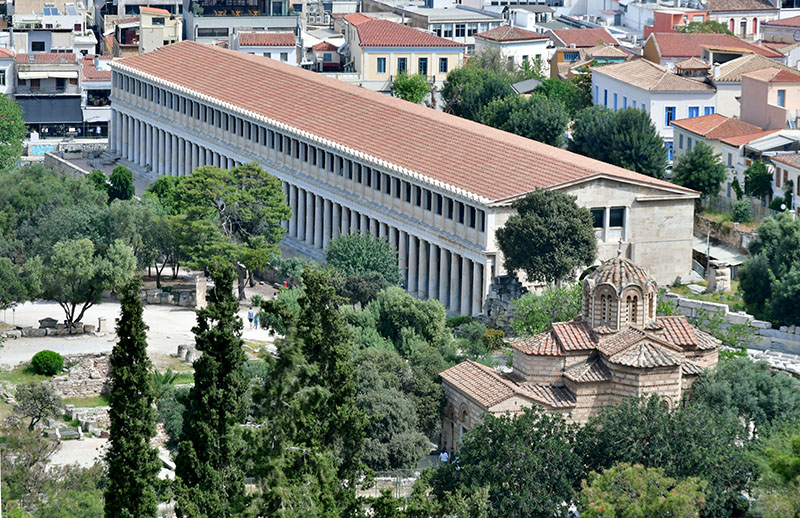
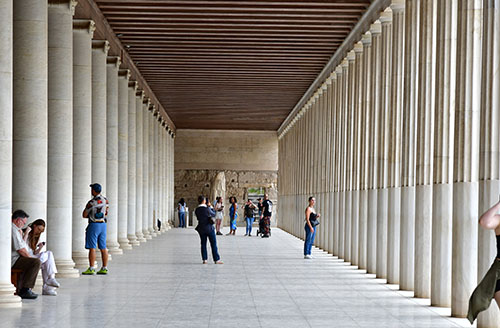
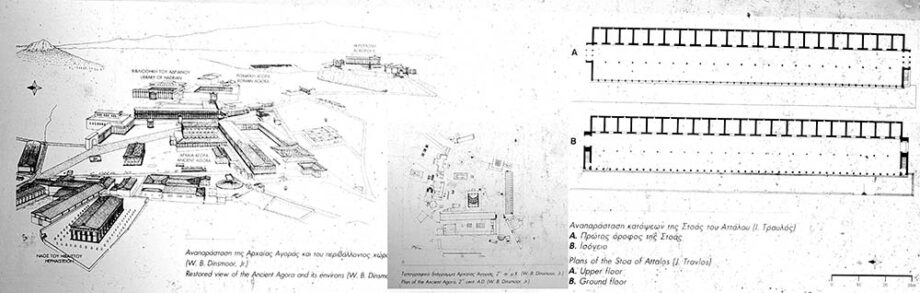
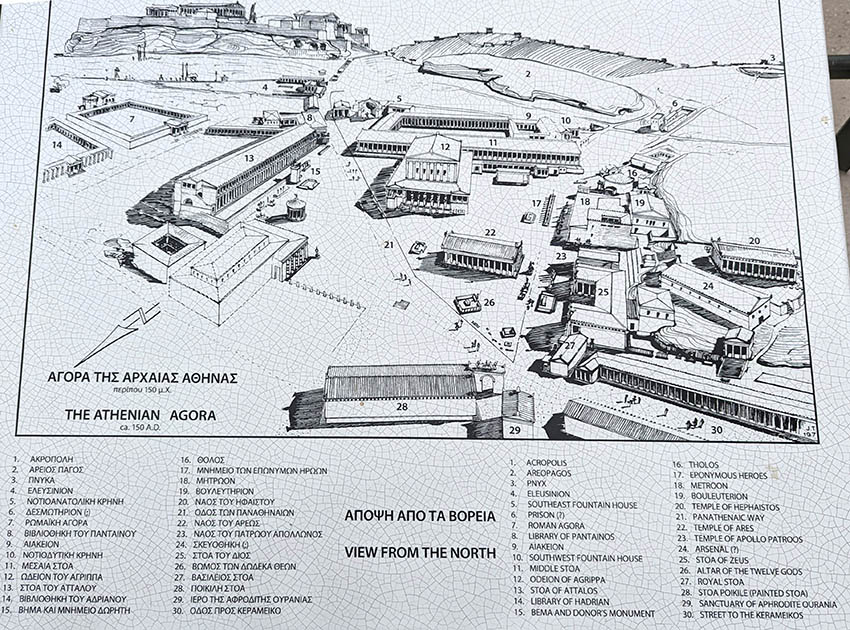
During the Hellenistic period, the Agora’s public spaces continued to house statues of gods and heroes. However, renewed interaction between ancient Greece and the East spurred interest in colossal sculpture, and naturalistic portrait sculpture reached new heights. The Agora featured portraits of politicians, orators, and philosophers depicted as individuals, moving away from classical ideals. Dynastic members of the Hellenistic kingdoms also received honorary statues to encourage their benefaction.
Even as late as the 2nd century A.D., at the time of the traveler Pausanias, statues representing queens of the Hellenistic period stood in the public spaces of the Agora for admiration. Upper-class women had dedicated marble sculptures placed in sanctuaries, while cemeteries remained the sole place for middle-class men and women to have idealistic marble images created as a memorial.
(This writing is based on the displayed info at the archaeological museums in Athens, Greece.)
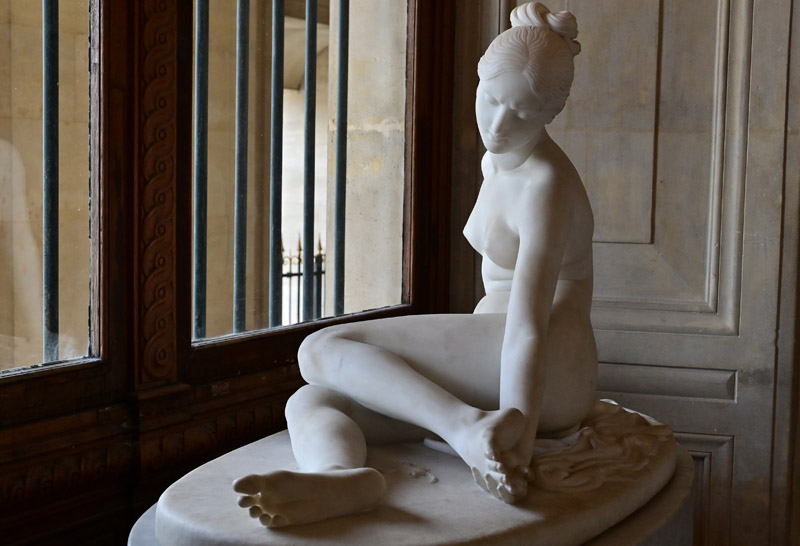
This is a Roman marble sculpture of the Crouching Venus, dating to approximately 1-200 AD. It’s a Roman copy of a Hellenistic Greek original, possibly from around 200-100 BC, displayed at the British Museum Venus (Aphrodite in Greek mythology), the goddess of love, is shown crouching, as if surprised while bathing. She attempts to cover herself with her arms, a gesture that ironically draws attention to her nudity. The sculpture’s design encourages the viewer to become a voyeur, observing the goddess in a vulnerable moment. This interplay between the art and the viewer was a style of many Hellenistic sculptures. The dynamic, twisting pose, meant to be appreciated from multiple angles, reflects the artistic trends of the Hellenistic period (323-31 BC). Crouching Venus has been part of the collections of Sir Peter Lely and King Charles I. This particular piece is also known as the “Lely Venus” due to its ownership by the artist Sir Peter Lely. It eventually returned to the Royal Collection and is now on loan to the British Museum. The “Crouching Aphrodite” was a popular subject for both Greek and Roman sculptors, with various copies and interpretations existing from antiquity and beyond. The Roman copies of this type were frequently used for decoration in private villas and public baths.Venus, Roman, 2nd century AD. Nude Venus of the Capitoline type. Found at Campo Iemini in 1794 in excavations conducted by Robert Fagan and sponsored by Prince Augustus Frederick, son of George III. restored. Subsequently, in the collection of George, Prince of Wales (later George IV). Given to the British Museum by William IV in 1834.
Alexander the Great ruled Greece as a kingdom, and his rule brought to an end the political independence of the individual Greek cities. His conquest of the old empires to the east and south
opened up vast new areas to the influence of Greek culture.
The Hellenistic period spanned from the death of Alexander the Great in 323 BCE to the rise of the Roman Empire, marked by the Battle of Actium in 31 BCE. After Alexander's death, his generals divided his empire into a series of independent kingdoms, like the Ptolemaic Kingdom in Egypt and the Seleucid Empire in the Middle East. These lands were 'Hellenised' (Hellas means Greece), and the term 'Hellenistic' is used to describe the period between Alexander's death and the fall of Egypt taken by the Roman Empire.
The defeat of Cleopatra and Antony at Actium in 31 BC is the political end of the Hellenistic age, but not the cultural one. Greek culture interacted with existing cultures, leading to new forms of art, literature, and thought.
The loss of autonomy at civic level prompted a new emphasis on individualism. Intellectual and artistic creativity received the highest regard, and the pursuit of cultivated taste encouraged modern activities such as art collecting. The rise of the wealthy generated a new interest in luxury goods, for both private consumption and public display.
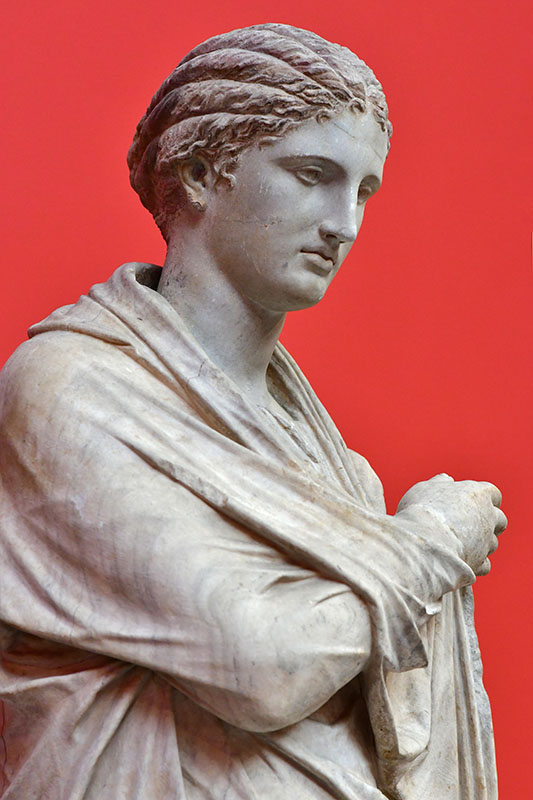
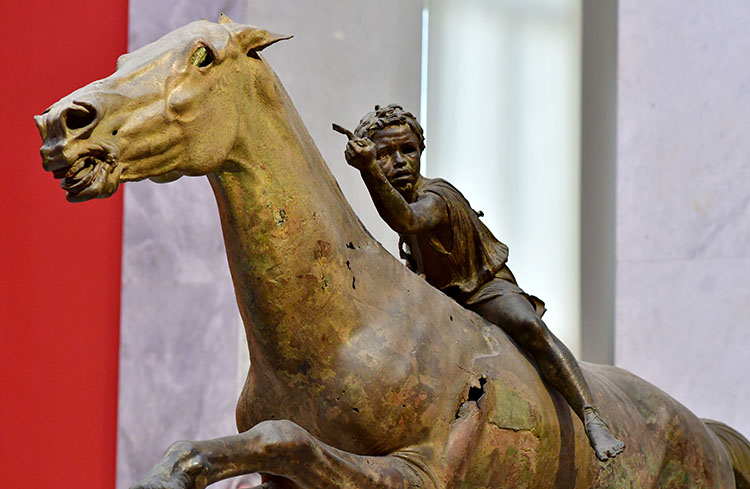
Marble female funerary statue, found on Delos, Cyclades. Copy made in the 2nd century. BC of an original dating from about 300 BC. Height 1,75 m. Displayed in the National Archaeological Museum in Athens. The female figure is rendered in the style of the Small Herculaneum Woman. She wears a full-length chiton and a himation that covers her entire body and arms. Traces of colour are preserved on the hair and the garments of the figure.Bronze statue of a horse and a young jockey, found in the sea off Cape Artemision, north Euboea, ca. 140 BC. Displayed in the National Archaeological Museum in Athens.Dying Trumpeter, a Roman marble copy of a bronze original of 230-220 BC in Pergamum, Rome It shows a dying Celt in a raw human pose. Image: By Jastrow – Own work, Public Domain, https://commons.wikimedia.org/w/index.php?curid=1226315
Pergamum altar with Ionic colonnade, 180 bc, is famous for its gigantic carving of dramatic and dynamic figures in the friezes (Pergamum was the city in now present Turkey). One frieze depicted the battle of gods and giants, symbolizing Eumenes’ victories as the victories of the gods. Another frieze showed the life of Telephos, founder of Pergamum and the son of Herakles. This signified the idea of divine kingship enjoyed by Alexander the Great and later Imperial Rome.
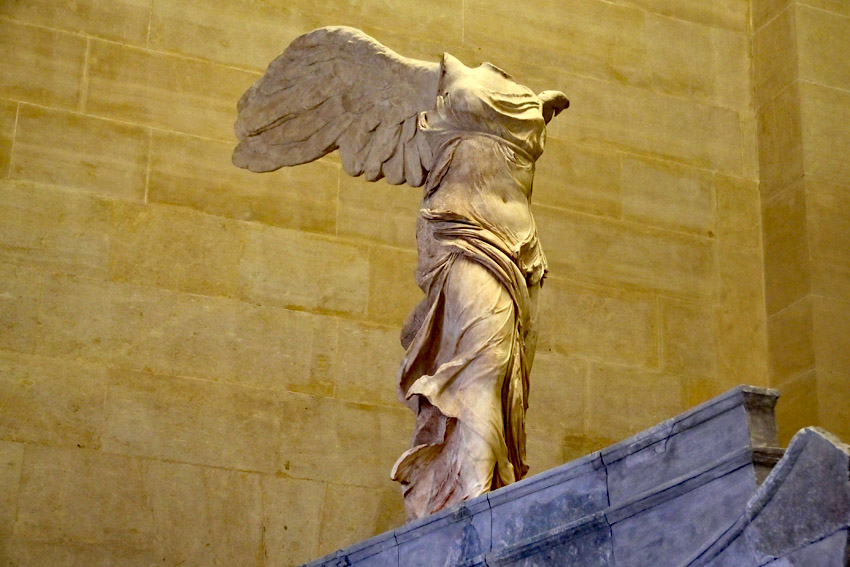
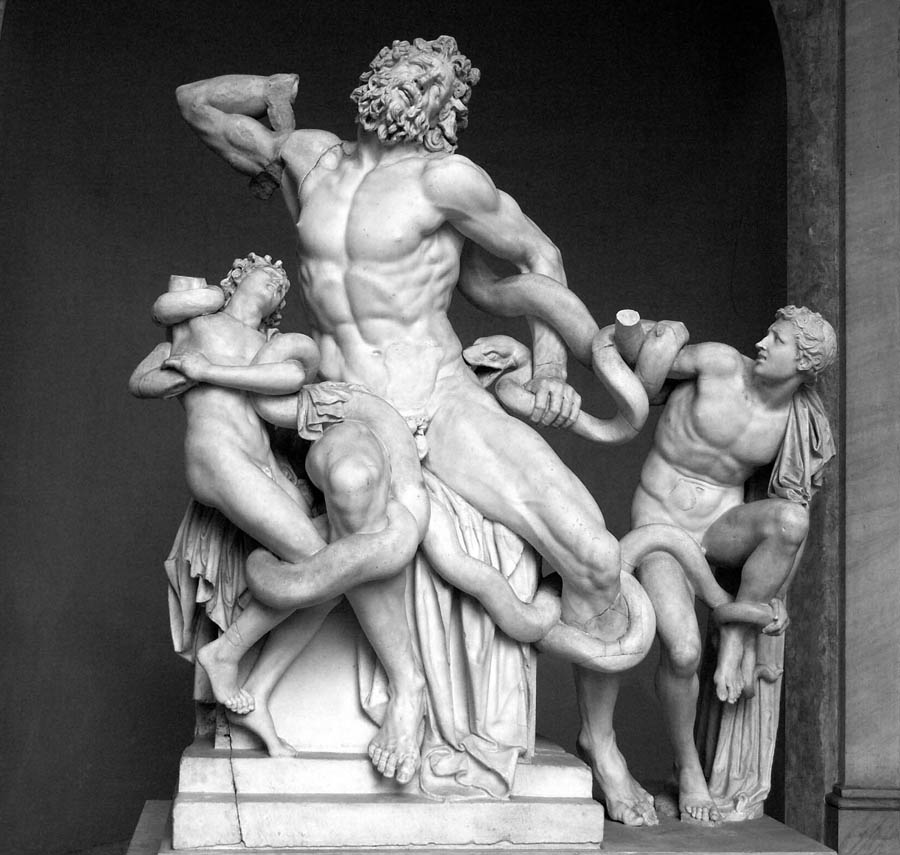
The Winged Victory of Samothrace by Pythokritos of Rhodes, 200-175 (1st quarter 2nd century BC), Place of creation: Rhodes (?), place of discovery: Samothrace Paleopolis, marble, the Louvre. It commemorated the naval victory of Eudamos of Rhodes over Antiochus the Great in 190 BC. The figure shows thrust and energy with wind-blown clothing, unlike earlier figures with wet drapery.Laocoön and his sons, The Laocoon group, by Hagesander, Athanodorus of Rhodes, and Polydorus of Rhodes, 1 BCE, marble, Vatican. Discovered in Rome in 1506, the sculpture shows the death of Laocoon, the priest, and his sons in tragic agony and twisting of three figures. The gods punished Laocoon for warning the Trojans not to take the wooden horse into the city. From the History of Art. Writer Pliny mentions this fantastic sculpture in his books. The Lacokoon stood in the Palace of the Emperor Titus. Pliny described it as “a work superior to all the pictures and bronzes of the world.” Because this sculpture involved teamwork, none of the artists could claim full fame for this project.Molossian Hound Hellenistic art’s realism vividly captured animals, too, with many bronze animal sculptures from this era surviving only as Roman marble copies. The Molossi, an ancient people of Epirus (modern northwest Greece and Albania), bred the Molossian hound, an ancestor of the modern mastiff known for its ferocity. These dogs served as guard dogs for herdsmen and urban households. Aristophanes, the 5th-century BC playwright, humorously described the challenge of passing a Molossian guarding a doorway, and Alcibiades, the notorious Athenian statesman, reportedly owned one with a docked tail. This sculpture, once wearing a collar, showcases the hound’s powerful jaws and teeth, yet its relaxed posture and upward gaze convey obedience. Five similar sculptures, found near Rome, are believed to be Roman copies of a lost 2nd-century BC Greek bronze original. This particular piece, dubbed the “Jennings Dog,” was acquired in Rome in the 1750s by Henry Constantine Jennings (1731–1819). (Based on a description at the British Museum)
Roman Period: Adoption & Adaptation
Roman sculpture: 1st century BC – 5th century AD
Colossal Foot, Roman, 1st-2nd century AD, marble. The right foot wearing a Greek sandal, originally part of the colossal statue of a senior god. From near Naples, presented to the British Museum by Sir William Hamilton in 1784.
I think it’s important to include art of the Roman period here because it shows a continuation and adoption of ancient Greek ideals and knowledge in sculpture and architecture to the next generation. The Romans conquered Greece in waves from the 2nd century BC to 31 BC, marking the end of the Ptolemaic Kingdom with Cleopatra’s rule. Rome’s building programs had a dual effect on Greek art. Despite losing their independence, Greek art experienced an unusual revival soon thereafter. Romans took a lot of Greek art with them to Rome, and Greek artists also relocated to the city to start anew. Greek artists’ workshops became popular among the wealthy Romans and the government to produce copies of Classical and Hellenistic artworks.
Bronze head from an over-life-sized statue of Augustus (The Meroe Head). Roman, probably made in Egypt, about 27-25 BC, found at Meroe, Sudan.
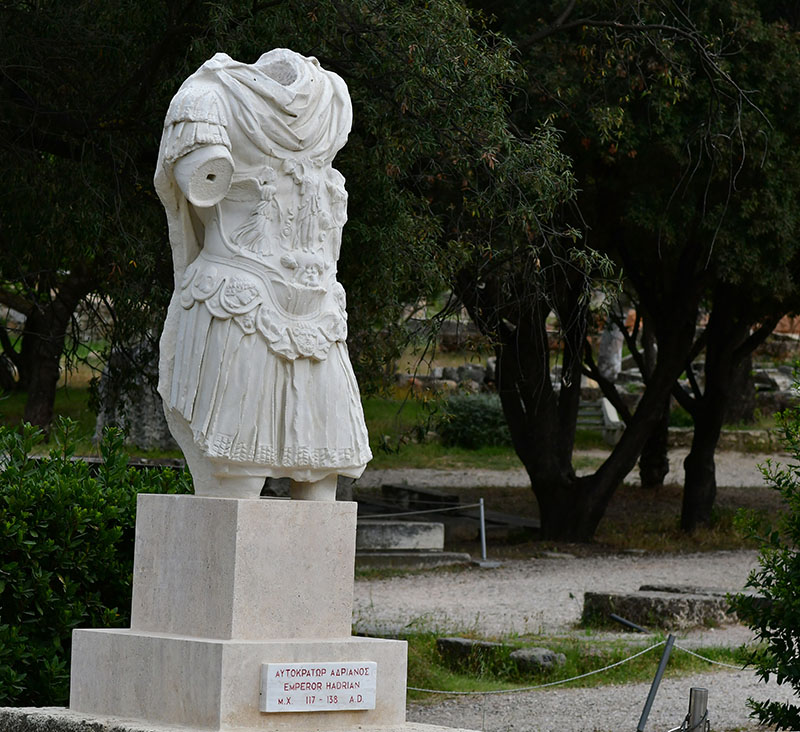
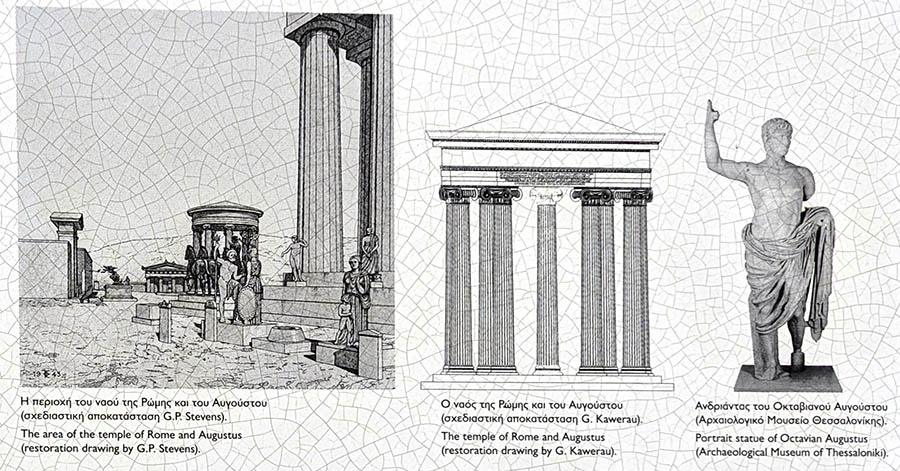
Statues of the emperor, together with images of him on coins and painted panels, were essential to imperial propaganda. They showed his far-flung subjects who he was and reminded them of his power. This head has glass and stone eyes to make it more life-like and imposing, and was taken from a statue showing the emperor in uniform. It was discovered in 1910 during excavations at Meroe, the ancient capital of Kush in modern Sudan. The Roman writer Strabo tells us that the Kushites invaded southern Egypt and carried off treasure, including statues of Augustus. A Roman force was sent to retrieve them, but this head escaped them, because it had been ritually buried in front of a temple. In this way, visitors to the temple would step on the emperor’s head, a sign of extreme disrespect. The Kushites intended the burial to be a sign of triumph over the Roman Empire and its emperor. But by a twist of fate, it ultimately preserved this fascinating symbol of power. (Description from the British Museum)Emperor Hadrian, Athens
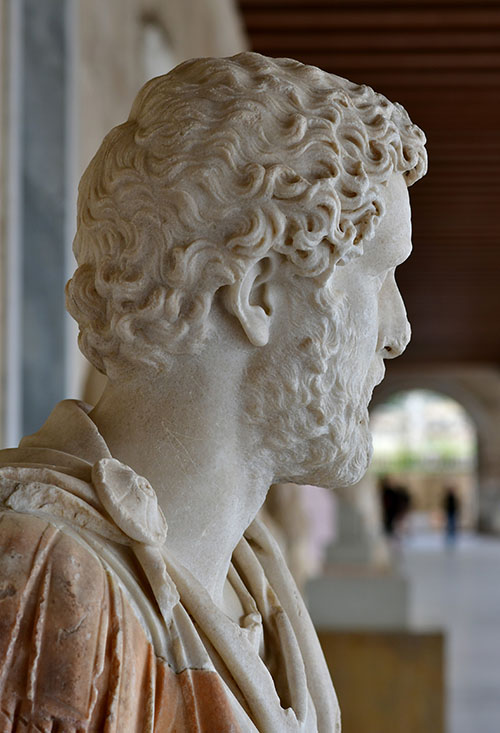
By the 2nd century AD, Athens experienced an artistic resurgence, largely due to the patronage of Roman Emperors Hadrian and Antoninus Pius. This period saw the emergence of Neo-Attic production, characterized by decorative reliefs (marble wall panels), marble sarcophagi, and trapezophora (marble table supports).
Marble bust of the emperor Antoninus Pius (AD 138-161) in military dress, about 140 AD. From the house of Jason Magnus at Cyrene, North Africa. This image of Antoninus Pius was created in the early years of his reign. This bust may be a replica made in the 160s. The British Museum
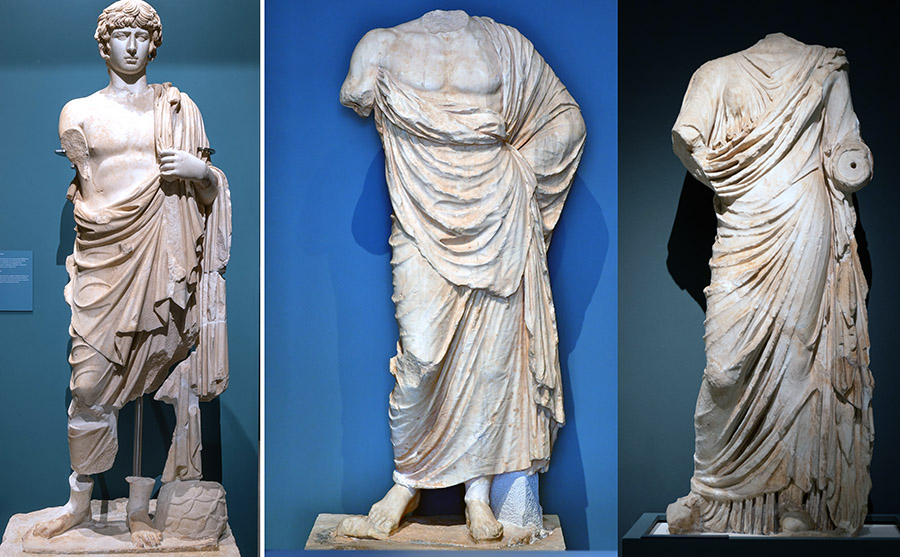
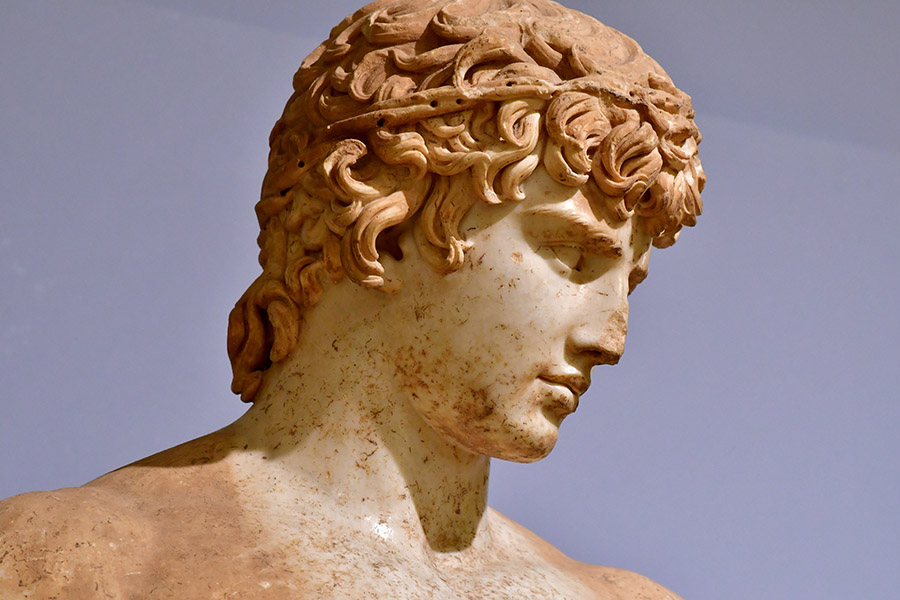
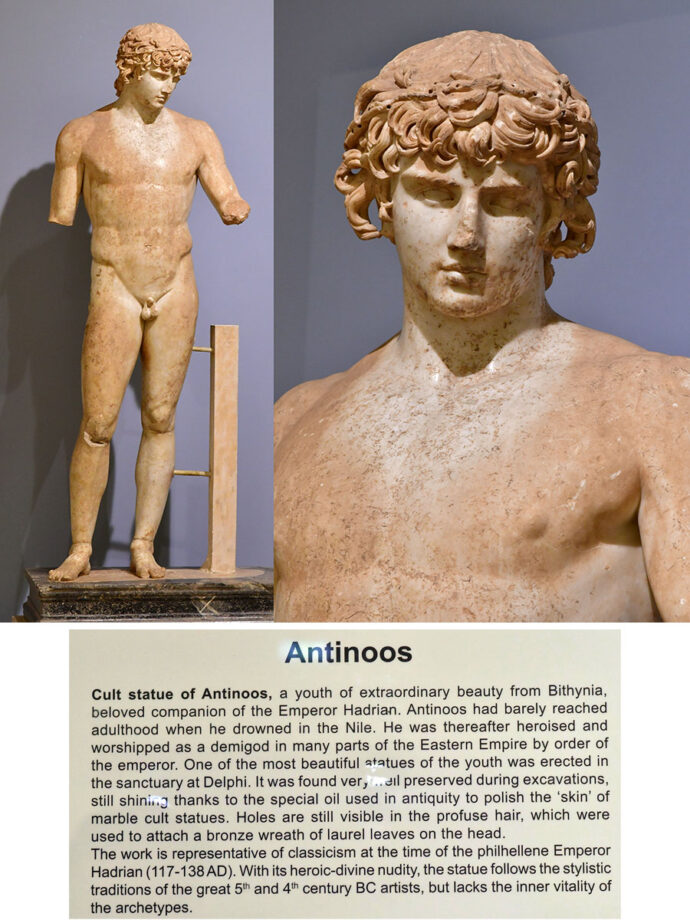
Because Romans liked to co-exist with other cultures, they’ve concurred, they absorbed and built upon other societies to advance theirs. Romans were deeply impressed by Greek sculptural techniques and actively copied and collected Greek art. The purpose of art changed, however. Instead of glorifying gods, beautiful sculpture played a vital role in promoting the Roman rule. This included portraits of emperors, their families, the wealthy, and scholars. Wealthy Romans collected Greek sculptures as a sign of status and education. Some examples include the bronze equestrian statue of Octavian Augustus, discovered between Euboea and Hagios Eustratios, and the portrait of Antinous, Hadrian’s companion, who drowned in the Nile.
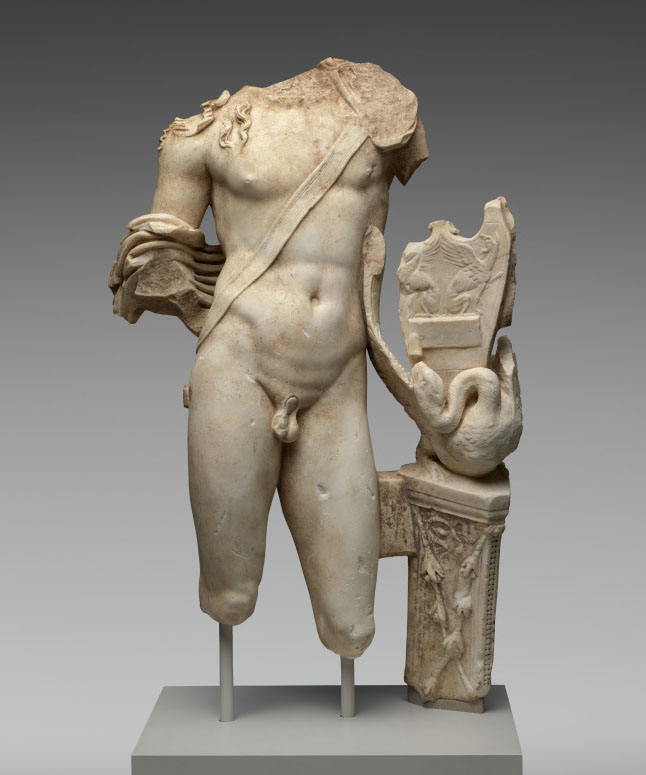
Marble statue of Apollo holding a kithara, Roman copy of the 2nd century AD of a Hellenistic original of about 200-150 BC. From the temple of Apollo, Cyrene. The British Museum, London.
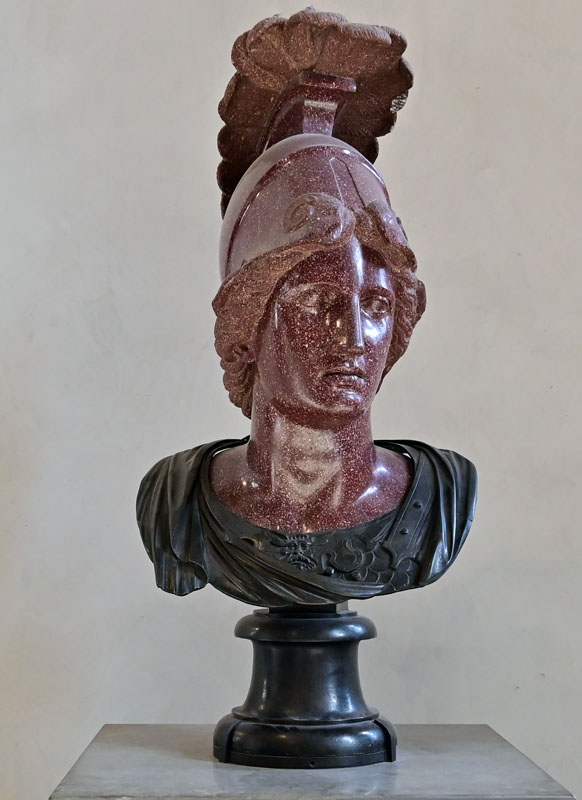
In this elaborately carved figure, the iconographical features of both Apollo and Dionysus, the wine-god, have been fused; the slipping himation and the sensual treatment of the flesh are typical of Dionysus, while the kithara and quiver characterize Apollo.Marble and bronze bust of helmeted Athena/ Minerva. Found in Villa Casali in ruins in 1783, Rome. Height: 68.58 cm. The British Museum, London. The eyes were originally inlaid with precious stones or vitrified pastes. This is the Roman version of the 4th-century BCE Greek sculpture. The bronze helmet and drapery were restored by the sculptor Albacini, copying a bust of Athena now in the Vatican Museum.
While maintaining Greek techniques, Romans introduced several innovations and modifications:
Increased use of marble quarried from newly conquered territories, with advanced transportation techniques for large marble blocks
Development of advanced bronze casting techniques with improved metal joining methods
Introduction of concrete, which allowed for larger and more complex sculptural bases
More widespread use of realistic portrait sculptures depicting specific individuals, not idealized gods and athletes
Integration of historical and political narratives into sculptures
Creation of more elaborate narrative relief sculptures
Development of equestrian statues to celebrate military achievements
Continued integration of sculpture into architectural designs
Complex surface finishing techniques
Bronze head of a statue of Dionysus, Roman, about 50BC-AD50. The god wears two fillets, which are decorated with vine leaves, which may indicate that this the the god of wine, Dionysus. The eye sockets were originally filled with another material, such as enamel, glass, or stone. The head is an example of the classicizing style current in the age of Augustus.
The Romans significantly contributed to our understanding of ancient Greek art by recreating sculptures from original bronze works and marble sculptures. Romans developed more efficient mass-production methods in established workshops that directly copied Greek style and techniques. Roman’s fascination with ancient Greek culture has allowed us to see otherwise lost art through their reproductions, preserving a crucial part of ancient Greek cultural heritage that would otherwise be severely limited.
The Roman Army is famous for its tactics and organization, which kept evolving depending on politics and battles. The unique feature of the Romans was to absorb, adapt, and improve the armor and tactics of their enemies. So the conquered cultures co-existed under Roman rule. The Romans did innovate in the organization of a professional army. Romans were also known for their advanced engineering skills.
So, who was the Roman soldier? The citizen was a young, fit man who worked the land in the 6th century BC. Although Romans introduced a small payment for the service in the 4th century, the soldiers had to pay for their own armor, receiving income from their business. Romans could start their service at the 17 years age of and retire late in life with another piece of land. In the 2nd century BC, Romans expanded their pay and hiring of new citizens, and generals began paying more money and land to their troops to maintain loyalty. (Based on writing at the British Museum).
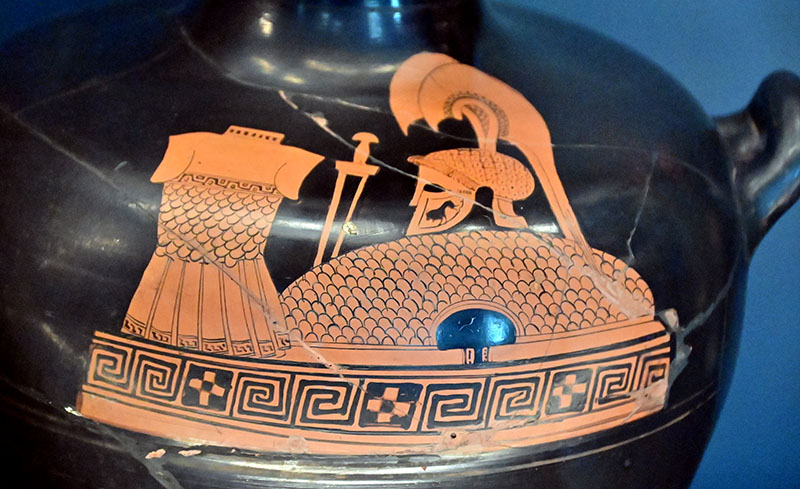
Greek bronze armor at the British Museum: Bronze greaves with the depiction of a goddess. Bronze helmet of the Corinthian type (center), made in Apulia about 600 BC. Bronze helmet of a Murmillo (right), Roman, 1st century AD, Probably from Italy. The helmet of the Murmillo was heavy (3.5kg = approx 81b) and heavily protected, with a broad brim, angular crest, and visored front with two eye gratings. Above the brim of the helmet is a small bust of Hercules, the embodiment of bravery. When new, the helmet had a golden sheen and was decorated with plumes.
The design of defensive armor (helmets, cuirasses and greaves) worn by the Greeks in southern Italy followed the types used on the Greek mainland and in turn influenced that worn by the Italic peoples.
From the middle of the seventh century the Greek infantry (hoplitai) fought in tightly massed ranks (phalanges). Each hoplite was equipped with a thrusting spear, sword, helmet, cuirass, greaves and round shield. Two of the early types of helmets were particularly popular in southern Italy, the Corinthian helmet, as the Greeks called it, and the Chalcidian, a modern name.
Bronze cuirasses with elaborately modelled muscles were greatly favored in southern Italy in the fourth century. They are also to be seen held by the deceased in representations of the sculptured funerary monuments (naiskoi) of Taranto. On exceptional examples the shoulder-pieces were elaborately decorated with relief figures. Greaves, which protected the shins, were also an essential part of hoplite armor. Similarly equipped heavy cavalry was equally very important in southern Italy, for there were
large plains in which it could be successfully deployed. (description from the British Museum)
Bronze statue of a satyr, Roman
Sculptures of this period are displayed at the museum in Athens:
Marble statue of Hermes, Height 1,71 m. found at Aigion, Peloponnese work of the Augustan period (27 BC-AD 14). In his right hand, he held a purse, and in his left the caduceus. The statue is a work of the Augustan period (27 BC-AD), inspired by Lysippean models of the 4th c. BC.
Marble statue of a sleeping Maenad, found at the Acropolis in Athens. The type is known as the reclining Hermaphrodite. The work expresses the Classicising trend of an Attic workshop. Length 1,36 m. Time of the emperor Hadrian (AD 117-138).
Marble portrait bust of Antinoos, from Patras, Peloponnese, AD 130-138, Thasian marble. Hadrian deified Antinoos after his death and erected numerous statues, busts, and portraits of him in various cities and sanctuaries throughout the Roman Empire.
Marble herm portrait of the kosmetes (magistrate) Sosistratos, from Athens AD 141/42, the stele, Height 1,94 m.
Part of the marble grave stele of Alexandra, found in the ancient cemetery of Kerameikos, Athens, Time of the emperor Hadrian (AD 117-138). Height 1,69 m. As a priestess of Isis, she is depicted in the dress and with the symbols of the goddess: the himation, on her breast with a characteristic knot, and the kados (ritual vase) in the left hand. The frequent representation of figures accompanied by Isis’s symbols on reliefs of Roman times attests to the wide dissemination of the cult of the Egyptian goddess in Greece at that time.
Marble statuette of Ephesian Artemis, 1st c. BC, Height 0,78 m.. Artemis was worshipped by the Greeks as the great goddess of nature and patron goddess of animals. Her dress is adorned by fertility symbols (28 breasts), figures of Nike, griffins, sphinxes, and bees. Lions sit on the goddess’s arms.
Bronze statue of the emperor Augustus (27 BC – AD 14), Height 1,23 m. The aging emperor is about to ride a horse. He’s dressed in a tunica with a vertical purple stripe and a fringed paludamentum decorated with a maeander pattern. The right hand shows an official greeting. On the bezel of his finger-ring a staff of divination (lituus) is engraved, symbolising the supreme religious office of Pontifex Maximus, assumed by Augustus in 12 BC.
Masters such as Myron primarily focused on capturing dynamic movement, often in the context of athletic subjects, effectively utilizing the fluidity and tensile strength of bronze to achieve poses that conveyed a sense of arrested motion.
Phidias, on the other hand, aimed for an idealized representation of both human and divine forms. His approach was grounded in a deep understanding of anatomical structure, which he executed with meticulous attention to detail using a diverse range of available materials, including the chryselephantine technique and finely worked marble.
Polyclitus developed a comprehensive theoretical framework for achieving ideal human proportions, utilizing mathematical principles as the foundation for his art. His primary medium was bronze, and his subjects were often athletic figures, perfectly embodying the balance, beauty, and harmony he sought to represent.
The Late Classical period witnessed a shift towards more humanized and sensual portrayals of the divine, exemplified by the work of Praxiteles. His focus was on achieving natural poses, grace, and delicate forms, primarily working in marble to capture the soft contours and smooth surfaces that characterized his elegant style.
Scopas introduced a new dimension to the pursuit of realism by emphasizing the intense emotions in his marble figures. His work conveyed a strong sense of drama and pathos, moving beyond the more detached, idealized expressions seen in earlier sculpture.
Lysippus marked the transition into the Hellenistic era with his distinct focus on lifelike naturalism. His figures had slenderer proportions, 3D view, and individual character, predominantly working in bronze to achieve a sense of immediacy and engagement with the viewer.
Bronze folds of a cloak, decorated with a Maeander pattern, inlaid with strips of copper, made in Taranto, 470-450 BC, the British Museum
The evolution of realistic sculpture in ancient Greece reveals a continuous artistic dialogue and the pursuit of excellence, where each generation of sculptors built upon the achievements and explorations of their predecessors. This progression demonstrates an artistic journey, moving from the initial attempts to capture the essence of motion by artists like Myron to the pursuit of idealized forms grounded in correct anatomical representation by Phidias and Polyclitus. The Late Classical period then saw a shift towards a more humanized and sensual representation of the divine with Praxiteles, followed by Scopas’s unusual exploration of intense feelings. Finally, Lysippus ushered in the Hellenistic era with his emphasis on lifelike naturalism and the portrayal of individual character. Most sculptors worked in specialized workshops, and apprentices would assist master sculptors. Techniques were closely guarded and passed down through generations of artists. Most sculptures were commissioned by wealthy patrons or for religious purposes. This continuous development highlights an artistic commitment to representing the divine nature through perfection in human form. The changing preferences in materials, from the prominence of bronze in the Early and High Classical periods to the greater utilization of marble in the Late Classical and Hellenistic eras, likely reflect a combination of factors. These could include advancements in sculpting techniques, such as improved methods for quarrying and carving marble, as well as shifting aesthetic ideals and a growing appreciation for the unique tactile and visual qualities offered by different materials.
Materials and Techniques in Detail: The Artist’s Craft of ancient Greek sculptors. How they assembled the pieces
Bronze statue of a young man at the British Museum
Marble
As a material, marble found its use before bronze, and it was often used alongside other materials. Marble was a highly favored material in ancient Greek sculpture, prized for its fine grain and its capacity to be polished to a high sheen. These qualities allowed sculptors to achieve delicate details and exceptionally smooth surfaces, contributing to the realistic depiction of skin and drapery. Different varieties of marble, such as the close-grained and sparkling marble from Naxos, the rougher-grained and more translucent Parian marble, and the more opaque Pentelic marble that developed a honey color with age, were favored for their unique features. For larger marble sculptures, it was common practice to sculpt the figures in separate sections, such as the head, limbs, and torso, which were then joined together using dowels made of metal or stone. It appears that ancient Greek sculptors used different techniques to create their art, and I include video illustrations of marble carvings below. One is carving from a plain marble stone, and another method is actually making a clay model and then casting it.
Ancient Greeks and then Romans painted the marble in bright colors, dressed the figures in clothes and jewelry, floral garlands, and perfume to create a multidimensional experience to revere the gods in rituals like the one in Delphi.
Perfumed marble sculptures:
Recent research in archaeology is revealing a surprising aspect of ancient marble sculptures: they were often perfumed. This discovery challenges the modern perception of these artworks as purely visual objects. Ancient Greek and Roman statues were designed to engage multiple senses, not just sight. Perfuming statues, particularly those of deities and royalty, was a significant practice with religious and symbolic meaning. This practice helped to make the sculptures appear more lifelike and to honor the gods and goddesses they represented. The evidence comes from various sources: Writers like Cicero and Callimachus describe rituals involving perfumed statues. Inscriptions found at sites like the Sanctuary of Delos detail the ingredients and costs of perfumes used for statues of deities. Traces of beeswax have been found on statues like the portrait of Queen Berenice II, suggesting they underwent perfuming treatments. The discovery of perfume workshops in ancient sites also supports this practice.
Application: Ancient texts describe methods like ganosis, which involved coating statues with waxes and fragrant oils (such as olive oil and beeswax) to enhance their aroma and preserve their surface. Applying perfumed oils and waxes with sponges or by rubbing them in was also a practice known as kosmesis.
Scent: Common scents included those made from roses, beeswax, and olive oil. Dioscorides, a Greek physician, provided a recipe for myron rhodinon, a rose-scented perfume.
In summary, the archaeology of perfumed marble sculptures today reveals a richer, multisensory understanding of ancient Greek and Roman art and the rituals surrounding it.
The creation of marble sculptures relied heavily on carving techniques. Sculptors utilized a variety of tools, including chisels of different sizes and shapes, hammers to drive the chisels, and drills for creating detailed work. The techniques differed depending on the time period and scale.
While many sculptures appear monolithic, large-scale works were often assembled from multiple pieces. There’s still some debate about the exact assembly techniques used. Scholars rely on archaeological evidence, tool marks, and remaining fragments to piece together the construction methods. Some of the techniques included:
Tenon and Mortise: This joinery technique involves creating a projecting peg (tenon) on one piece that fits into a corresponding carved recess (mortise) on another. They might have used dowels or pins for additional reinforcement.
Metal Braces: Bronze clamps or pins could have been used to secure different pieces together, especially for sections with complex angles or under heavy stress.
Wet-drapery Technique: For figures with flowing drapery, sculptors might have created the drapery folds in wet clay and then used these clay models to guide the sculpting of the marble pieces. After carving the individual sections, they would be assembled to form the final figure.
Marble carving tools and techniques displayed at the British Museum: 1. Two wedges, Greek, 6th-4th century BC, from the site of the Temple of Artemis at Ephesus, western Turkey. Wedges were used for splitting stone in a quarry or for reducing large blocks of stone on site. 2. Punch-chisel, Greek, about 350-340 BC, from the sanctuary of Athena Polias at Priene, western Turkey Used for rough dressing of stone. 3. Pick-hammer, Greek or Roman. Said to be from a quarry on the island of Thasos, northern Greece Fitted with a short handle, this is an effective tool for the rough shaping of blocks in the quarry. 4. Marble angle-molding with an Egyptian motif, Greek, about 535-500 BC From the second Temple of Apollo at Naucratis, Egypt. Sculpture and architecture were enhanced with added color. Here, traces of blue have been applied over a base of red. 6-8. Fragments of molding from the mausoleum at Halicarnassus, Greek, 350 BC Wooden Mallet, Egyptian, 1300BC
The Stone-Carver:
The stone-carver’s tools in ancient Greece were about the same as they are today. The work began at the quarry, where rough shapes emerged as trenches were cut around the stone blocks with wedges. Much lighter, the stone journeyed to the workshop next. Artists paid attention to the marble quality while selecting the stone, and typically quarried from places like Mount Pentelicus near Athens.
To develop the figure, artists created sketches and clay models. Then, they’d transfer the line drawing onto the marble. Once the drawing (probably with the grid) was on the stone, they used it as a guide to carve out the drawing.
Artists roughed out the stone with a metal point, struck by a wooden mallet, to chip away excess. A claw chisel refined the surface, and the flat chisel removed the marks. Tools: They used various chisels (pointed for rough shaping, flat for smoothing surfaces, and toothed for texture and detail) to rough out the basic shape. They also used hammers and abrasive stones. Smaller, more precise chisels were used for detailed work like facial features and muscle definition. There were compasses and measuring instruments like calipers used for precise measurement. Other instruments included punches for fine details and drills for making holes, and some details.
To create the flowing drapery or architectural curves, craftsmen used a rounded chisel. For deep-fold carving, they used a bow drill. The process was incredibly time-consuming, often taking months or even years for a single sculpture to make.
For marble’s final glow and smoothness, artists used a rasp or even emery to achieve a high polish of the sculpture.
In ancient hands, sculptures came alive with color. Many ancient Greek sculptures were not left as plain white marble but were often painted in vibrant colors called ‘polychromies’. Paint might highlight a detail, pattern or cloak the entire form in vibrant hues. Even the “white” of flesh was often covered in wax or resin. “Polychromy” means “many colors” in Greek. You can read about the sculptures’ color in Ancient Greece here.
How ancient Greeks carved heads in antiquity: According to the Met, the head of a statue in antiquity (4th century BCE) was often carved separately from the body of the statue. The head was made with a convex tenon that would be set into a specially prepared cavity in the statue. The juncture of the head and the body was concealed by a line of drapery.
Bronze
Bronze model of a chariot wheel (left). The British Museum. Greek, 6th century BC, said to have been found near Argos. This was dedicated to Zeus by Eudamos to celebrate the winning of the race, probably in the Nemean Games (left). Bronze model of a chariot wheel from the Temple of the Kabeiroi at Thebes, Greek, 5th-4th century BC (right). This was dedicated by Xenon Pyrrhippa to the Kabeiros and his son, presumably as a token of gratitude for a winning race. There is little known about the Kabeiros, as they were worshiped in cults as protectors of fertility and seafaring and had a connection to blacksmiths.
Bronze was another highly valued material in ancient Greek sculpture, prized for its strength and versatility. Its inherent durability and flexibility once molten made it particularly suitable for creating dynamic and delicate work, especially for capturing the illusion of movement. The lost-wax casting technique was the prevalent method for producing bronze statues. This process involved creating a model of the sculpture in wax, encasing it in clay to form a mold, melting out the wax, and then pouring molten bronze into the resulting cavity. For larger bronze figures, individual parts were cast separately and subsequently joined together, showcasing the incredible skill of ancient metalworkers. If you watch the videos of contemporary artists doing bronze casting, you’ll see how labor-intensive and difficult the process is.
https://clevelandart.org/art/2004.30
Additionally, ancient Greeks sometimes incorporated inlaid eyes made of bone, crystal, or glass to enhance the lifelike appearance, and added accessories made of metal, like you see in the picture above, the Cleveland Apollo.
Bronze statue of cupid dancing, Roman, the British Museum
Bronze Casting Techniques:
The Cleveland Apollo Sauroktonos (Lizard-Slayer) or Apollo the Python-Slayer c. 350–200 BCE
The Cleveland Apollo at the Cleveland Museum of Art is a rare example of a large-scale ancient bronze sculpture of such high quality. Lifelike hair, fingernails and inlaid copper lips and nipples show incredible artist’s skill and talent. Cast in hollow bronze sections using the indirect lost-wax technique, this Apollo is attributed to Praxiteles (Greek, c. 400–c. 330 BC). Bronze, copper, and stone inlay; 150 x 50.3 x 66.8 cm. According to the museum, the Cleveland Apollo is the only surviving large-scale bronze sculpture of its type, Apollo Sauroktonos (the Lizard-Slayer). You can read about the investigation of bronze casting methods here.
Greek bronze tools for carving and measurement: Bronze flat chisels originally fitted to wooden handles, Greek (left), Probably Roman, From Southern Italy, Greek Bronze Age, From the island of Saria, Greece; Probably Greek, Said to be from Ephesus.
Bronze tools of the kind used by masons and stone-carvers in setting out their block (right) Stylus for marking the surface, Greek Bronze Age, 1400-1200 BC, From Ialyssos, Rhodes, Greece. Dividers, probably Roman, 1st century AD; Cat Bronzes, Roman, 1st-3rd century AD, from Ephesus, western Turkey.Greco-Roman bronze casting techniques: gilt bronze arm, Roman, 2-3d century AD found in a well near Rheims, France. Gold leaf was glued and burnished to the surface to create a unique, golden patina for the statue.
Bronze casting method:
For bronze sculptures, the lost-wax casting process was fundamental. After casting, finishing techniques such as scraping, fine engraving, patina coloring, and polishing were employed to refine the surface and add further details.
A clay core was first sculpted in the desired shape and wax was carefully applied over it. Once the details were completed, the wax model was disassembled into pieces to facilitate casting in bronze.
Wax rods were attached to the exterior of each wax piece, and the interior was packed with clay.
The sculpture was covered in clay, creating a mold, and the wax was melted out.
Molten bronze was poured in through the channels- hollows left by the wax rods, melting the wax (hence “lost-wax”).
Once cooled, the clay mold was broken from the exterior to reveal the bronze sculpture.
Multiple bronze pieces were joined together by fusion welding or soldering techniques—heating the edges of the pieces and using more molten bronze to unite them. Polishing and patina application finished the work
Getty Museum has an excellent, simple, visual explanation of The Lost-Wax Casting Technique. A sculpture is molded in wax in multiple pieces, which is then melted away and replaced by molten metal.
Direct vs indirect bronze casting techniques for hollow-cast bronzes shown at the British Museum. The advantage of the Indirect lost-wax method Tis that the original model can be preserved, so that further castings can be attempted in the event of failure, or if more copies are required.
Apollo in Pompeii, A statue of Apollo, the archer, was one of the first large-scale bronzes to be excavated at Pompeii, Italy. It was found in fragments in 1818, centuries after the city was destroyed by the eruption of Mount Vesuvius in A.D. 79.
Other Materials:
While marble and bronze were the most prominent materials, other materials also played a role in ancient Greek sculpture. Wood was likely used, particularly in earlier periods, although few examples have survived due to its perishable nature. For the creation of highly revered cult statues, the combination of gold and ivory, known as chryselephantine, was employed. Greeks also used terracotta, a type of fired clay, for crafting smaller figurines and numerous decorative vases. Greeks used limestone as well.
The Goldsmith and Silversmith
Dardanelles Tomb Group, Gold oak wreath with a bee and two cicadas, 350-300 BC.
The oak wreath and belt were acquired in 1908 from a dealer who reported that they came from the same tomb, somewhere on the Dardanelles. Another gold oak wreath was discovered in a tomb in what was probably the same area, at Coban Tepe, near Pinarbasi on the north coast of Troy in March 1887. The tumulus contained a rectangular, stone-lined chamber in which were also found three embossed gold strips, myrtle sprigs. a bronze mirror, a bronze bowl, and an alabaster alabastron. Each branch, made of sheet gold tubes, has six sprays with eight leaves and seven or eight acorns, as well as a cicada. Perhaps the most famous oak wreath is that from a tomb at Vergina, identified as the tomb of Philip II. Another comes from the nearby Prince’s tomb. A particularly fine example was discovered in a tumulus at Pergamon. Such wreaths were regularly made to be worn in life, usually in religious processions, as those reported to have been made for Demosthenes by the goldsmith Pammenes, son of Pammenes of Erchia, who had a workshop near the Athenian Agora. Gold wreaths were also given to winners in musical contests at the Panathenaic Games in Athens, as well as money, at least by the end of the fifth century BC.
Highly refined gold jewelry was highly valued and in demand. A soft metal, gold was shaped by a variety of processes. Gold and silver were worked into jewelry in sheet form, as wire, or in cast sections. Artists often combined all three methods to create a single jewelry piece with soldering. They also embellished the surface with filigree or granulation designs.
The Herakles knot, Roman Jewelry. Ancient Greeks believed that this bracelet type could cure wounds and had the power to avert evil.Stoic, colored pencil drawing, Veronica Winters. I used the symbol of the Herakles knot on the jewelry decorating the cat.
Early work featured gold beaten into sheet metal with raised decoration (repoussé). The simplest repoussé consists of denting the surface with a blunt instrument. Other methods include stamping the gold with a punch or beating it into a mold. Another way of shaping sheet gold was to beat it over a core. A model was first made in wood or bronze, and the gold was then worked over it. Golden wire was common in ancient jewelry pieces. Craftsmen made it from thin blocks of metal twisted and stretched to the diameter required and then rolled between plates of stone or bronze. (Based on the description from the British Museum)
Greek & Roman Jewelry Pieces, the British Museum
The Seal-stone Engraver:
Engraver’s bow-drill and cutting wheel. The British Museum. A gemstone, carved with care, becomes a seal when pressed into soft clay or wax. Seal manufacture was the primary goal in ancient Greece, but they also shimmered as amulets, and others glowed as pure adornment. From Minoan culture through the Roman era, artisans shaped these stones. As Minoans used seals to label goods, seals helped with attribution in later years. Craftsmen chose vibrant, precious gems for their hues and stone strength. Most were etched in intaglio, designs sunk deep in the stone like a mold. Later, in Hellenistic and Roman times, cameos rose figures carved in relief. These stones, too hard to carve with simple tools, demanded a delicate balance of drills or tiny cutting wheels, spun by a bow. After dusting the surface with an abrasive powder, the drill’s grinding carved the art. Some gems, pierced, dangled as amulets or twirled in swivel rings. Some rings had gold settings.
Ancient Greek sculptors achieved their anatomical accuracy through several techniques:
Greek Philosophers and mathematicians developed theoretical frameworks for ideal human proportions that showed harmony and beauty in everything. You can find out about their ideals in my article about ancient Athens. The athletic body represented heroism and divinity, showing character represented in gods and the ideal human form.
Greeks made extensive studies of human anatomy via observation at athletic contests and gyms. Artists probably did a lot of life sketching and clay modeling of those athletes to gain a thorough understanding of human anatomy. Polykleitos created the “Canon of Proportions” for himself and others to create perfect, anatomically correct figures. Every classically trained artist goes through this rigorous period of anatomical study of the figure, drawing people from life in different poses and angles to gain knowledge and skill.
Ancient Greek artists used precise measurement techniques and instruments, such as compasses, calipers, plumb lines, grids, and standard units in measurement.
A combination of these methods allowed artists to create idealized versions of human beings.
Conclusion: The choice of material played a crucial role in shaping the artistic possibilities and the ultimate aesthetic qualities of the sculptures. Marble, with its fine texture, allowed for the creation of delicate details and smooth, polished surfaces, contributing to the realistic rendering of skin and soft contours. I think marble has a beautiful surface and luminosity, perfect for the depiction of people. In contrast, bronze, with its inherent strength, enabled sculptors to explore dynamic movement in poses that would be hard to achieve in marble (because of its softness). However, bronze doesn’t have the same visual appeal as marble does. The bronze surface looks heavy and doesn’t imitate the skin’s luminosity. Perhaps ancient Greek artists used specific patinas to compensate for that. No doubt, marble is a very soft material, and sculptures broke off quite easily (because of this limitation, marble sculptures usually have support near the leg or arm), while the art made of bronze was incredibly durable and stood the test of time. The distinct properties of each material thus guided the artists’ creative processes, placement of pieces, and influenced the visual language of their art. In any case, each material the Greeks used required incredible talent and skill to create sculptures. Some art museums and institutions do extensive research of past techniques. Some academic research continues to uncover ancient methods. Advanced imaging like X-ray and CT scans reveals internal sculpture structures, and digital reconstruction allows detailed analysis of creation processes that let us understand ancient techniques today.
A list of museums and institutions that offer detailed insights into ancient Greek sculpture creation:
For travelers drawn to art, few museums carry the quiet gravity of the Art Institute of Chicago. Inside its stately Beaux-Arts facade, the museum holds one of the most remarkable and diverse collections anywhere in the world. But with its numerous galleries, global holdings, and central location in downtown Chicago, first-time visitors often wonder how to make the most of their day. This guide offers a thoughtful approach to experiencing the museum’s many treasures—balancing highlights, pauses, and the natural rhythm of discovery. Whether you’re a devoted art historian or simply curious to stand before a few world masterpieces, the Art Institute invites you into a world where time slows and creativity expands.
Begin at the Modern Wing: Light, Space, and New Perspectives
If you are into modern art, then the best place to begin your visit is the museum’s Modern Wing, where Renzo Piano’s design allows sunlight to filter across white walls and polished stone floors. Entering here sets the tone: open, bright, and quietly dramatic. With its sleek lines and airy galleries, the space itself feels like a work of art. The Modern Wing houses a formidable collection of 20th and 21st-century works. Start with the European modernists: Picasso’s fragmented forms, Matisse’s bold colors, and Brâncuși’s smooth, sculptural lines. Then move into the American section, where Warhol’s portraits and Lichtenstein’s punchy comic panels capture both wit and cultural commentary. You can view many pictures from this art museum here.
One floor below, contemporary photography, design objects, and media installations push the boundaries of what defines art. The wing’s terrace offers views over Millennium Park and downtown Chicago. On clear days, this becomes a natural pause before stepping into the museum’s historical collections.
Personally, I’m not fond of modernism and thus go straight to classics!
Bouguereau’s hand & white clothes, painting closeup, the Art Institute of Chicago
Cross into the Main Building: The Classics Await
From the Modern Wing, a glass bridge carries visitors into the original 1893 structure. Here, the weight of art history presses gently. Begin with the museum’s celebrated Impressionist and Post-Impressionist galleries. Monet’s Water Lilies, Renoir’s soft portraits, and Seurat’s A Sunday on La Grande Jatte pull visitors into familiar yet endlessly rewarding works. Van Gogh’s The Bedroom glows with intimate warmth, while Cézanne’s precise still lifes showcase masterful balance.
Move further to encounter the American galleries, where Hopper’s Nighthawks offers one of the museum’s most recognized images—a quiet, timeless scene of late-night urban solitude. Nearby, Grant Wood’s American Gothic holds its iconic, ambiguous stare. Elsewhere, the Thorne Miniature Rooms surprise many first-time guests. These elaborate models of historical interiors provide a captivating shift in scale and storytelling.
The Banquet by Magritte, 1958
The Art Institute also houses extensive holdings from Africa, Asia, and the ancient Mediterranean. Rich textiles, intricate masks, and centuries-old Buddhist sculptures present entire worlds in single galleries. Many visitors find themselves unexpectedly drawn into these quieter spaces, lingering longer than planned.
Here are a few famous artists and artworks that stood out on my visit to this art museum:
Lefebvre, Odalisque, 1874, closeup of feet
Sargent, Study of an Egyptian Girl
Rosetti, Beatrix
Tintoretto, Tarquin and Lucretia
Lefebvre, Odalisque (One of David’s students)
Manfredi, Cupid Chastised
Cassatt, After the Bullfight
Simpson, the Captive Slave
Canova, Head of Medusa
Zurbaran, the Crucifixion
Titian
John Philip Simpson, English, 1782-1847, The Captive Slave, 1827, Oil on canvas
In 1827, when the English portrait painter John Simpson exhibited this heroic image of a manacled man, he was making a bold statement. The slave trade was still a controversial moral and political issue, and it would not be fully resolved in England until six years later, when Parliament passed the Slavery Abolition Act. As his model, the artist posed Ira Aldridge, the freeborn son of a lay preacher in New York who would go on to have an important career on the London stage. Here Aldridge’s expressive upward gaze conveys a yearning for freedom in an image that both speaks to and transcends its historical moment. +the museum’s descriptionWinged Figure, 1889, Abbott Handerson Thayer, American, 1849–1921Pieter Claesz, Still Life, 1625, the art institute of Chicago. I love this artist for amazing talent to arrange objects in such beautiful and harmonious still life. And, yes, the details are incredible.TobyEdward Rosenthal, Elaine, the art institute of Chicago. This is a very beautiful painting when you see it up-close. It’s big and the picture doesn’t show amazing subtle color and brushstrokes of the artist!A lady reading letters of Heloise and Abelard, 1780 by Auguste Bernard d’Agesci, oil painting, Art Institute of Chicago. This is a small close-up of a painting. I love capturing the details in works of art. I can admire balance between all objects presented in this painting.Tiffany LampIslamic art collection is amazing at this art museum too!
Plan with Purpose: Tips to Shape Your Visit
Even the most art-loving traveler benefits from thoughtful pacing. With over a million square feet of gallery space, the Art Institute rewards focus over speed.
Buy tickets in advance. Online reservations help avoid long entry lines, especially during peak hours. Start early. Arriving close to opening allows you to enjoy galleries before midday crowds grow. Dress for distance. The marble floors and expansive halls mean plenty of walking; comfortable shoes matter. Use the app. The museum’s free mobile guide offers helpful maps, suggested routes, and in- depth information. Keep bags small. Security screenings are smoothest when you travel light. Pause often. The on-site cafés provide comfortable places to rest while looking out at Millennium Park.
Families visiting with children should stop by the Ryan Learning Center, where interactive displays and creative workshops engage younger visitors at their own pace.
Since the museum sits in Chicago’s busy downtown core, visitors often arrange a Chicago limo service to simplify the day. Avoiding traffic, parking garages, and navigation allows you to begin and end your museum visit in a calm, unhurried way.
Beyond the Galleries: The City Completes the Experience
Part of what makes the Art Institute experience so rich is its place within Chicago itself. Just beyond the museum’s doors, Millennium Park offers an open-air extension to your art day. Cloud Gate, affectionately known as “The Bean,” reflects city and sky in endlessly photogenic curves.
A short stroll leads to the Chicago Cultural Center, where free exhibitions and the world’s largest Tiffany stained-glass dome offer an architectural treat. The nearby Riverwalk and Magnificent Mile extend the day into riverside paths, boutique shops, and skyline views.
Depending on the season, visitors may choose to pair the Art Institute with outdoor festivals, lakefront walks, or simply quiet time at one of the city’s rooftop cafés. In Chicago, the rhythm between seeing art and simply being present often becomes its own reward.
One Museum, Many Moments
The Art Institute of Chicago doesn’t ask you to see everything in one visit. Instead, it invites you to find your own pace, to pause before what draws you, and to let each work speak in its own time. For many, the memory that stays isn’t tied to a single painting or sculpture. It’s the experience of moving through spaces filled with history, beauty, and meaning—and the quiet moments between, when art lingers just a little longer than expected.
You won’t believe this place exists in Greece! Walk inside the monasteries of Holy Meteora and learn about its rich history, stunning Byzantine paintings and the Eastern Orthodox church. Explore this unique destination with me to feel inspired at heart to create art!
Floating in the air, Meteora is a group of 6 monasteries of various size that provide shelter to monks, religious art and spirit. Stunning views from and to the monasteries are everywhere along the road leading to the top. Located about 5-6 hours away from Athens, Greece, it’s a must-see attraction. I explain some facts about the history of Meteora and its rock formations, the origins of monkhood and how they climbed the rocks. I also give explanation about the origins of the Byzantine painting and the Eastern orthodox church. I explain the rules of icon painting. Finally, I share some travel tips in the end.
We spent two full days in the Louvre or about 15 hours, walking its lavish interior space filled with priceless art, jewelry, ancient sculpture, and furniture. The length of this famous art museum is remarkable. The Louvre covers about 60,600 square meters. Just imagine walking 652,000 square feet! The Louvre’s art collection is even more impressive as this top art museum houses over 35,000 works of art, spanning from ancient Egypt to 19th-century art. Yes, the Louvre is most famous for the Mona Lisa, Venus de Milo, Michelangelo’s Dying Slave, Canova’s sculptures, David’s paintings, and the Winged Victory of Samothrace. However, the palace displays so many other incredible pieces of art that I’d stay there for weeks to sketch and paint from this famous art if I could.
Video:
00:00 Introduction to the Louvre Museum & its collection history
05:50 The Napoleon III Apartments
08:02 The Apollo gallery & French Crown Jewels
11:31 Ancient Egypt art collection
14:15 The Palace of Sargon, Babylon & the Assyrian art
16:42 Ancient Greco-Roman Art Collection
19:36 The Michelangelo Gallery & classical art
21: 42 Famous Paintings of the Louvre
26:54 Islamic art collection
29:41 The Sennelier Art Supply Store
30:33 Views of Paris
History of the Louvre as a Royal Palace:
Let’s look at the history of the Louvre Palace before it became a museum. Construction began on a fortified castle on the right bank of the Seine River in Paris in the 12th century. In the 16th Century, King Francis I (1515-1547) transformed the castle into a luxurious royal residence, inspired by Italian Renaissance architecture. The king hired Leonardo to be his court artist in the last decade of the artist’s life and commissioned the Mona Lisa, among other pieces. (The famous Italian artist da Vinci passed away in France, and that’s why the Mona Lisa is in the Louvre, not Italy). When Louis XIV moved the royal court to Versailles in the 17th century, he left the Louvre as a royal palace for occasional visits and storage of art collections.
During the French Revolution in 1793, the Louvre transformed into an art museum as it was declared a “museum of the people.” In the 19th Century, Napoleon Bonaparte expanded the Louvre’s collection through conquests and purchases, making it one of the world’s largest and most prestigious art museums. Emperor of France from 1800 to 1814, made significant expansions of the art collections. A century later, the Louvre underwent extensive renovations and expansions under Georges-Henri Rivière, director of the Louvre from 1887 to 1908. The construction of the famous glass pyramid by architect I.M. Pei happened in 1989. https://www.louvre.fr/en/explore/the-palace
Athena/Minerva, the Louvre. Photo: Veronica Winters
The Louvre consists of several architectural styles present in the museum:
The earliest parts of the Louvre were constructed in the Gothic style (12th-16th centuries) with pointed arches, ribbed vaults, and stained glass windows. The oldest section of the museum, known as the “Old Louvre,” exhibits Gothic architectural elements.
King Francis I’s reign marked a significant shift toward the Renaissance style, inspired by Italian architecture in the 16th-17th centuries. The Renaissance portion of the Louvre features symmetrical facades, columns, and ornamentation. (Example: The Cour Napoléon, a central courtyard, showcases Renaissance architecture.) The 18th century saw a revival of classical architecture, characterized by symmetry, proportion, and the use of Greek and Roman motifs, which is called Neoclassical style. ( Example: The Denon Wing, one of the main wings of the museum, is a prominent example of neoclassical architecture).
Modern Architecture of the 20th century includes I.M. Pei’s Glass Pyramid. Designed by Chinese-American architect I.M. Pei, looks very different from the older sections of the museum.
Mansard Roofs: A French Architectural Innovation
The roofs of the Louvre are a combination of several architectural styles. In some of the older parts of the Louvre, you might find slate roofs, which were common in medieval and Renaissance architecture. These roofs often have a steep pitch and are covered in dark, natural slate tiles. The newer sections of the Louvre, especially those built in the neoclassical style, often feature mansard roofs. These French roofs have a double-sloped design, with a steeper lower slope and a flatter upper slope. Mansard roofs were popular in the 17th and 18th centuries and are known for their practicality, offering added height and visual interest to buildings.
Mansard roofs, named after the French architect François Mansart, originated in France during the 17th century. King Louis XIV was a patron of arts & architecture who must have favored and influenced the popularity of mansard roofs in France. These roofs offer several advantages. The sloped upper part of the roof allows for additional usable space within the attic or dormer. The steeper lower slope helps to shed rainwater more efficiently, reducing the risk of leaks and water damage. Also, the Mansard roofs can provide additional structural support to a building, especially in areas with heavy snowfall or strong winds. The symmetrical, balanced, and unique visual design of mansard roofs offers a distinctive silhouette that Paris is known for.
It’s not the first time I visit the museum, but I’m thrilled to share incredible genius of artists who created these pieces. I found the Louvre’s best art, some of it overly famous and other is not. Let’s explore the museum’s art collection together.
The Napoleon III Apartments
Napoleon III Apartments: the Grand Salon, Room 544, Richelieu Wing, Left 1. Photo: Veronica Winters
These luxurious red rooms are the most astonishing ones in the whole palace! You can’t skip them even if you’re short on time. You’d be stunned by the richness of its decorations. In 1861, these rooms became the apartments of Napoleon III, Minister of State, in the Richelieu wing. These opulent rooms in red, gold, and art, with crystal chandeliers, were used for various receptions, balls, dinners, and meetings between 1852 and 1870. It’s one of the most opulent rooms I’ve seen in many European palaces. Made around 1860, the largest chandelier sparkles with 180 lights and measures 4.7 by 3.27 meters.
One of the rooms displays the portrait of Emperor Napoleon III (1808-1873). The salon-theatre displays the portrait of Empress Eugénie and could house up to 250 guests. There was a special musicians’ platform above the stage hidden at first sight. The rooms have novel-designed red chairs and three-seater armchairs that zigzag to seat several people at once to have conversations. The Ministry of Finance occupied the rooms until the day the Louvre became a museum in 1993.
The Napoleon III Apartments in the Louvre, Photo: Veronica Winters
French Crown Jewels collection in the Apollo gallery
The Galerie d’Apollon, Room 705, Denon Wing, Level 1, the Louvre, Photo: Veronica Winters
Being just 23 years of age, King Louis XIV aligned himself with the ancient Greek god Apollo to become the sun king in France. He hired the best artists of the day, including the architect Louis Le Vau and Charles Le Brun, the first artist to the king, to work on one of the most beautiful rooms in a palace after it burned in fire. These famous artists later worked on the Hall of Mirrors at the Château de Versailles, the preferred residence of the Sun King.
Le Brun created a whole journey of the God Apollo in a series of ceiling paintings. The sun god rides his chariot across the sky from dawn to dusk. Apollo’s journey is set with many images, symbols, and representations of time, zodiac, and calendar to show the rule over the Universe. In 1850, famous French artist Eugène Delacroix received a commission to decorate the ceiling’s centerpiece – a 12-metre wide painting. Delacroix depicted the most famous scene from the ancient Greek mythology, Apollo Slaying the Serpent Python, in a style of French Romanticism. At the same time, beautiful portrait tapestries of 28 monarchs and artists were added as wall decorations.
The royal collection of vessels in the Apollo gallery, the Louvre, Photo: Veronica Winters
Today, you can view the royal collection of 800 hardstone vessels and the French Crown Jewels in the Galerie d’Apollon. These unique, artful vessels are made of precious stones, like agate, amethyst, lapis lazuli, jade, and crystal. Louis XIV had great taste!
THE FRENCH CROWN JEWELS (1530-1789)
On 15 June 1530, François I, king of France from 1515 to 1547, established the French Crown Jewels, selecting eight pieces of royal jewelry that were to remain the inalienable property of the monarchy. King Louis XIV (reigned 1643-1715) added more items to the collection during his reign. Under the subsequent sovereigns, for various occasions, the gemstones were used and remounted to create new items.
Today, you can admire natural beauty of precious stones and artistic achievement captured in a crown of Louis XV, a crown and diamond brooch of Empress Eugénie, Tiara of the Duchesse d’Angoulême, jewels of Queen Marie Amélie, necklace and earrings from the emerald parure of Empress Marie Louise, the Regent and pink diamonds, and many more fantastic pieces!
Badge of the Order of the Holy Spirit: 400 brilliant-cut diamonds and a ruby mounted on silver
The Order of the Holy Spirit, founded in 1578 by King Henri III, was a French order of chivalry. There are two hypotheses as to who received this badge from King Louis XV (reigned 1715-1774): his son-in-law, Philip, Infante of Spain and Duke of Parma, named Knight of the Order in 1736; or his grandson, Ferdinand, Infante of Spain and future Duke of Parma, named Knight of the Order in 1762. It was modelled on the badge from the white insignia of Louis XV, created by Pierre-André Jaqmin about 1750.
Eternal Egypt: Best Egyptian artifacts to see at the Louvre
Lionesses, Statues of the goddess Sekhmet (Le Temple) Room 324, Sully wing, Level 0, the Louvre
The Egyptian art collection at the Louvre primarily came about through three main avenues, Napoleon’s conquests, 19th century acquisitions, donations, and purchases.
Did you know that Jean-François Champollion was the French scholar who deciphered Egyptian hieroglyphs in 1822. He was just 32 years old. He founded the Egyptian museum in Turin, Italy and the Egyptian collection in the Louvre by convincing Charles X to purchase the Egyptian artifacts.
The role of Napoleon in shaping the Louvre’s art collection:
During his military campaigns in Egypt (1798-1801), Napoleon and his troops discovered and plundered numerous ancient Egyptian artefacts. These treasures were then brought back to France and eventually housed in the Louvre. The 19th century saw a surge of interest in Egyptology, leading to numerous archaeological expeditions and discoveries. Many of these artifacts were acquired by European museums, including the Louvre. Also, over the years, the Louvre has acquired Egyptian artefacts through donations from private collectors and purchases from antiquities dealers and art collectors. These additions have further enriched the museum’s Egyptian collection.
The Louvre today boasts one of the world’s most extensive and significant collections of Egyptian art of over 6,000 works spanning 5,000 years of Egyptian history, including iconic pieces such as the Sphinx of Tanis. Egyptian art collection is rich and occupies two floors of the palace. Let’s look at the best Egyptian artifacts at the Louvre.
To house the Egyptian collection, some rooms were redone into the Museum of King Charles X (Egyptian Antiquities, Room 637, Sully wing, Level 1). The architects linked nine rooms together with high openings and stucco decorations. These are very beautiful rooms with painted ceiling decorations that were done by several famous French artists of the period, Antoine-Jean Gros, Horace Vernet, and Jean-Auguste-Dominique Ingres. Painted scenes depict ancient Egypt in Greco-Roman style. One of the paintings by Jean-Auguste-Dominique Ingres, The Apotheosis of Homer, was replaced with a copy, and the original hangs in room 702 (Salle Daru), Denon Wing, Left 1.
Look at these beautiful, perfect cuts shaping the texture of the sphinx. I wonder what kind of tool they used to cut into the hard stone of granite so perfectly. It’s one of the Egyptian sphinxes exhibited at the Louvre.
Some of the most famous and best Egyptian artifacts to see at the Louvre include a Seated Scribe figure, jewelry, sarcophagi, tomb of Akhethotep, furniture, clothes, granite statues of kings and queens (Sesostris III, Ahmose Nefertari, Hatshepsut, Amenophis III, Nefertiti, Akhenaton and Ramesses II), standing statue of Horus, and numerous artifacts I list below.
Pectoral with the name of Ramesses II, Room 642, Sully wing, Level 1. 1279 / -1213 (Ramses II), cloisonné inlay, glass, electrum. It was found in a tomb of Ramses II.
Osorkon Triad, 865 /830 (Osorkon II), sculpture, gold, lapis lazuli, inlay. Found in Karnak, this golden pendant is in the form of a statue depicting a family of 3 gods, Osiris (center), Isis, and Horus, who stand in a protective pose with raised arms. It was purchased by the museum from a collector in 1872. https://collections.louvre.fr/ark:/53355/cl010006343
Osiris, Isis and Horus represent a founding myth of Egyptian religion. Osiris was killed by his brother Seth but he was revived by his wife Isis who also birthed their son Horus, the falcon god. Horus symbolizes victory over evil and the enduring power of the pharaohs.
The cat goddess Bastet, 664 / -610 (Wahibrê Psamtik I), copper alloy, gold. Museum’s purchase in 1852 from a collector.
Musée du Louvre, Département des Antiquités égyptiennes, E 27112 – https://collections.louvre.fr/ark:/53355/cl010003776 | Bust of Akhenaten, stoneware, 1352 / 1335 (Amenhotep IV Akhenaten). Place of discovery: Temple of Amenhotep IV Akhenaten. Display: Sully, Room 638, The New Empire, in the time of Akhenaten and Nefertiti. This is one of the most fascinating portrait sculptures of the Egyptian pharaohs I’ve seen. The face has an unusual, elongated shape with wide eyes, a long nose, and full lips. It’s not an idealized view of the Egyptian pharaoh but rather a portrait of a real person.The Statue of Horus Posno, the falcon-headed Egyptian god, is standing with outstretched arms in a purification pose. The statue is made of copper alloy and attributed to the Third Intermediate Period (attributed according to style) (-1069 – -664). Display: Sully Wing, Room 643Statue of Amun and Tutankhamun, 1330 /1321 (Tutankhamun), Place of origin: Temple of Amon-Re (?). Made of diorite, the seated statue holds a crown of Amun. Discovered at Karnak, the statue was sold and resold to the Louvre in 1920. https://collections.louvre.fr/ark:/53355/cl010009969
The ‘mastaba’ tomb of Akhethotep
“The mastaba of Akhethotep was purchased from the Egyptian government in 1903 and reconstructed in the Louvre. During the Old Kingdom (2700–2200 BC), members of the king’s circle were entitled to be buried in an elaborate mastaba – a massive structure built over a shaft leading down to an underground chamber, where the mummy of the deceased lay in a sarcophagus. The superstructure above the shaft contained a funerary chapel, where offerings were made to the deceased” -the Louvre
The Crypt of the Sphinx & Great Sphinx of Tanis
Room 338, Sully wing, Level -1
Great Sphinx of Tanis, 2620 / 1885, Height: 183 cm; Length: 480 cm; Width: 154 cm; probably IVth dynasty. Photo: Veronica Winters. Made of pink granite, the statue was discovered in Tanis and purchased by the museum in 1826. For some reason, this statue receives a lot of attention from visitors, although there are some other similar, if not better, statues displayed in other parts of the Louvre that don’t get much attention at all.
Naos, once housing the statue of Osiris
Naos, once housing the statue of Osiris in the Louvre, granite
The pharaoh Amasis (570-526 BC) had this pink granite naos bearing his name made for a temple in the Nile Delta dedicated to Osiris. A naos is a wooden or stone chapel, large or small, present in each temple and housing the cult statue of the god to whom the monument is dedicated. Every day, priests would open their doors, bringing offerings of purified food and drink to the god, who was dressed in special attire. Carved from a single block of granite, the naos bears depictions on its outer walls of the many deities constituting the personal guard of the god Osiris. Through augmented reality, the statue of the god Osiris regains its position in the temple sanctuary and receives offerings once again. By walking around the monument, you can explore the reliefs portraying the other gods. **From the museum’s description.
Crypt of Osiris: Room 323, Sully Wing, Left -1. Photo: Veronica Winters
Reign of Amasis (570-526 BC), 26th Dynasty
The Dendera Zodiac
Made of sandstone, it was created between 15 June-15 August 50 BC, and purchased in 1822. Place of discovery: Temple of Hathor.
Various astronomical phenomena are recorded here, on the ceiling of one of the rooftop chapels of the temple of the goddess Hathor in Dendera. Inside a circle showing the year divided into ten-day periods (decans), we can see the twelve constellations of the zodiac, the five planets known at the time, and two eclipses – one solar and one lunar.
Upon its discovery in 1798, archaeologists hoped to date the Egyptian civilization correctly, but it raised great concerns over the established biblical chronology. Jean-François Champollion (1790-1832) was off by a hundred years, proposing the 50 AD date to reassure the pope of the established date of the Flood. Today, the temple’s inscribed dedications suggest its establishment in 54 BC, under Cleopatra’s reign. Through augmented reality, you can explore the three-dimensional details of these decorations and travel through the different levels of this celestial vault.https://collections.louvre.fr/ark:/53355/cl010028871
The Palace of Sargon II: History of the Louvre’s collection of ancient Near Eastern art
This is one of the most fascinating galleries in the Louvre because it displays the 8th century BC excavations of the ancient city, decorations, and the palace of King Sargon II at Dur-Sharrukin, present-day Khorsabad (Room 229, Richelieu wing, Level 0).
These wall sculptures represent the Assyrian Empire of King Sargon II, who built a new capital at Khorsabad, the largest city in the ancient world, with a huge palace. Unfortunately, his city soon declined after his death on a battlefield in 705 BC. French archeologists rediscovered the place buried in sand in the 19th century and brought the artifacts into the Louvre. Paul Émile Botta, the French vice-consul in Mosul, excavated the site that began the Mesopotamian and Near Eastern archaeology. https://www.louvre.fr/en/explore/the-palace/the-palace-of-sargon-ii
Félix Thomas, The Pasha of Mosul visiting the excavations of Khorsabad. The 19th century Painting shows the discovery of this ancient city. https://collections.louvre.fr/ark:/53355/cl010067586
Large carved in low-relief alabaster stone slabs, many of which stood in a courtyard of the palace, were painted in bright blue and red. They showed life in a court, hunting and even construction scenes. Decorations and palace of King Sargon II
Carved into the entrance walls of the palace for protection, the protective genii (called aladlammû or lamassu) watched over the city and its palace. These colossal winged bulls weigh 28 tons each. Carved from a single alabaster block, the mythical, protective creatures look like bulls with eagle wings and human heads. These are fascinating creatures that resemble the art style of ancient Egypt with strangely moving legs, faces in profile, and flattened wings. This protective creature smiles gently and wears a hat with 3 sets of horns representing the divine power of the Mesopotamian region.
Mesopotamian wall: Gilgamesh overpowering a lion (left) and the Protective lamassu (right)
In these galleries, you can view “Gilgamesh overpowering a lion”, the high-relief sculpture that lacks original color but keeps its rough beauty. (Room 229, Richelieu Wing, Level 0). We look straight at the mad face of Gilgamesh squashing a lion. It’s not a side view, which is an unusual depiction of the hero. 721 /705 (Neo-Assyrian: Sargon II). It’s interesting to see how different people were in that region of the world. The man wears a bushy beard and curly hair. His long robe covers a loincloth. He wears sandals, earrings, and even a couple of different bracelets that were probably signs of his high status. This dark-toned sculpture was probably colored in white and other hues. Unlike the most refined granite sculptures of ancient Egypt, this figure lacks perfect proportions of the body but keeps stylization in place.
Passing lion, glazed terracotta, neo-Babylonian period, reign of Nebuchadrezzar II (605 BC–562 BC), Babylon, Iraq. Displayed at the Louvre. Photo: Veronica Winters
Cuneiform Script:
Sumerians developed cuneiform, a system of writing using wedge-shaped marks impressed into clay tablets, around 3500 BCE. The Louvre’s Near Eastern Antiquities collection, housed in the Galerie d’Angoulême (Room 301, Richelieu wing, Level 0), features Sumerian artifacts including cuneiform tablets, statues, stelae, and other objects.
The Louvre houses a Sumerian document with microscopic cuneiform, containing more than 30 lines of text and six to seven times as many signs as an ordinary cuneiform tablet. The Louvre also has a fragment of the Lament for Sumer and Ur, a Mesopotamian city lament.
Highlights of the Greek and Roman antiquities at the Louvre
This Ancient Greco-Roman Art Collection spreads across many rooms and levels. Obviously, it’s impossible to list everything that’s in this spectacular ancient Greek and Roman art collection but here are a few of my favorites.
Artemis/ Dianna (and the Caryatids behind her) stands in a beautiful ballroom gallery in the Renaissance style inside the Louvre, the Salle des Cariatides, Room 348, Sully wing, level 0. The gallery also displays ancient Roman marble copies of Greek bronze originals. Artemis with a Doe is a marble sculpture from the 2nd century BC and was based on a bronze original made in about 330 BC. It is also known as the Diana of Versailles, as it used to adorn the Hall of Mirrors at the Château de Versailles.Artemis, known as Diane de Gabies, Parian marble, found in Italy, displayed in room 348, Sully wing, Level 0, the Louvre. Original Greek sculpture, 4th quarter 4th century BC. The model was long identified with Praxiteles’ Artemis Brauronia, mentioned by writer Pausanias. The sculpture belonged to Camille Borghese before it was purchased by the State in 1807. Photo: the Louvrehttps://collections.louvre.fr/ark:/53355/cl010278726Apollo, the lizard slayer, the Louvre. Veronica Winters Art blog. Marble statue from the original by Praxiteles (400-325 bc). Achat, 1807, collection Borghèse. The god of the arts, shown as an adolescent, prepares to kill a lizard. The scene is a reference to the protective nature of the god or, in an indirect way, to his struggle against the serpent Python
The Louvre’s Greek art collection is a result of centuries of collecting, discoveries, and acquisitions. The first significant Greek artifacts were acquired by French collectors in the 16th century, primarily through diplomatic missions and personal travels. In the 17th Century, the Louvre began to acquire a small number of Greek antiquities, often as part of larger collections or gifts from wealthy individuals.
In the 18th Century, the Grand Tour, a cultural pilgrimage to Italy and Greece, became popular among European aristocrats. Many of these travellers returned with collections of Greek antiquities, which were often donated or sold to museums like the Louvre. Lord Elgin, a British ambassador to the Ottoman Empire, is perhaps the most famous collector of Greek antiquities from this period. His controversial removal of the Parthenon Marbles from Athens remains a subject of continuous debate. You can read about the Parthenon’s fate here.
The 19th century saw a surge in archaeological excavations in Greece, leading to the discovery of numerous ancient Greek sites. Many of the artifacts found during these expeditions were acquired by museums, including the Louvre. Heinrich Schliemann, a German archaeologist, is famous for his excavations at Troy and Mycenae, he also wanted to excavate Knossos. The Louvre continued to acquire Greek antiquities through donations and purchases from private collectors throughout the 20th century. The Getty Museum in Los Angeles and the Metropolitan Museum of Art in New York City are among the other major museums with significant ancient Greek art collections.
The galleries dedicated to Classical and Hellenistic Greece are found in Room 344, Sully Wing, Left 0. They were transformed into a large space from the royal apartments to display ancient Greco-Roman sculptures in the Louvre.
The galleries have several different sculptures of Athena, the Greek goddess of war, victory, and power. Mattei Athena stands tall with both hands in a resting pose gesture, and Athena, known as ‘Pallas of Velletri’ has one hand raised up and another down. Athena without arms is probably an ancient marble copy of a colossal sculpture that was standing on the Acropolis Hill in Athens.
Statue of Eros stringing his bow in the Louvre, photo: V. Winters
The galleries with ancient Greek vases are located in a different place, the Galerie Campana. This is a long space of rooms with thousands of high-quality ancient Greek vases, cups, and other vessels. These galleries have several famous vases, like Hercules stealing the tripod from Apollo or Athena helping the hero win his battles, etc. The Marquis Giampietro Campana (1807–1880) was a super wealthy art collector who also led some archeological finds. After his arrest for financial fraud, his art collection was confiscated and sold off to czars and Emperors of Europe including Napoleon III. It’s a truly remarkable collection of ancient Greek pottery that can’t be missed! https://www.louvre.fr/en/explore/the-palace/the-marquis-greek-vases
Ancient Greek vase Athena & Herakles, the Louvre, Veronica Winters Art Blog
What shocked me about the Louvre’s Greek art collection is its high quality and vast size. I’ve been to Greece before, and the archaeological museums in Athens and the islands have little high-quality ancient Greek art left in situ. It was disappointing but clear that Greece “gave away” numerous art pieces to private and public art collections around the world. Besides the Greco-Roman sculpture hall, the Louvre displays numerous, high-quality, ancient Greek vases in several rooms of the palace, the Galerie Campana.
Model of the temple of Zeus in Olympia
Model of the Temple of Zeus in Olympia, 500-30 BC, by Michel Goudin with the help of Patrick Lizon, 1997, wood, 1/50 scale, 1997Ancient Greek temple model showing construction inside. Model of the Temple of Zeus in Olympia, 500-30 BC, by Michel Goudin with the help of Patrick Lizon, 1997, wood, 1/50 scale, 1997, the Louvre
Built around 460 BC by the local architect Libon of Elis, the temple of Zeus in Olympia was the largest of its kind in the Peloponnese (27.68 m x 64.12 m). Surrounded by a colonnade, it was made of stuccoes and painted limestone, with its sculpted decoration made of marble. The pediments were dominated by the statues of Zeus on each facade, the patron god of the sanctuary. The east pediment depicted the preparations for the chariot race between the king of Pisa, Oinomaos, and the hero, Pelops. Pelops won, gaining dominion over the region. The west pediment depicted the victory of a mythical Greek tribe, the Lapiths over the Centaurs. It was an allegorical battle between civilization and the Barbary. Inside the temple colonnade, above the entry porch (pronaos) to the east and the rear porch (opisthodomos) to the west, twelve metopes (rectangular elements with sculpture in high relief) of the Doric frieze featured the labors of Herakles, a hero considered one of the founders of the Olympic Games. The temple chamber (naos or cella) housed a colossal statue of Zeus in gold and ivory with a wooden core (about 460-450 BC). A masterpiece of the sculptor Phidias, the statue is considered one of the seven wonders of the ancient world.
The Greco-Roman art collection includes many sculptures of goddesses in the Louvre collection, including the Winged Victory, Venus de Milo, and Venus of Arles.
The Winged Victory of Samothrace
Who was the Goddess of Victory? In antiquity, the winged goddess Nike expressed the will of the gods. She announced, rewarded and glorified the victors. We often encounter the figure of Nike in sculpture, pottery, and goldsmithing. The Nikes found at the sanctuary of Delphi come from public buildings, where they were used as symbols of victory in literal or metaphorical battlefields.
The Winged Victory of Samothrace is located in the Daru staircase inside the Louvre. Photo: Veronica Winters Art Blog
The Winged Victory of Samothrace is one of the rare Greek statues whose exact original location is known as the Greek island of Samothrace. This beautiful sculpture was made as an offering to the gods for a sanctuary there. The Parian marble statue dates to 190 BC and was commissioned to celebrate the sailor’s victory. The winners, probably from the island of Rhodes, erected it in Samothrace to thank the Gods of the island. Located in the Aegean Sea, the broken into 110 pieces sculpture was discovered by Charles Champoiseau in 1863. The Winged Victory of Samothrace was placed in the Louvre 20 years after its discovery. The goddess of Victory’s wings were partially retrieved and restored with plaster. The pieces of the ship that form the base of this beautiful sculpture were found later on. Also, other excavations found one of her hands with missing fingers. https://www.louvre.fr/en/explore/the-palace/a-stairway-to-victory
The Venus de Milo
The Venus de Milo from the galleries dedicated to Classical and Hellenistic Greece in the Louvre was made between 130 and 100 BCE, during the late Hellenistic period. Photo: Veronica Winters.
The Venus de Milo name comes from the Greek island of Melos, where she was found in 1820. The Marquis de Rivière, the French ambassador to Greece, bought the piece and presented the sculpture to King Louis XVIII. This is one of the best-preserved female nude sculptures existing today. The proportion, movement, and simplicity are divine. Venus was the only goddess depicted in the nude, and Greek sculptor, Alexandros of Antiocha, carved the woman in a beautiful, natural pose. https://www.louvre.fr/en/explore/the-palace/ideal-greek-beauty
Aphrodite as Venus of Arles in the Louvre, Veronica Winters Art blog. Aphrodite, known as the ‘Venus of Arles’, Marble. This Venus was presented to King Louis XIV of France as a gift in 1683. François Girardon, the king’s sculptor, added the attributes of the goddess of love: a mirror and an apple, references to her victory in the Judgement of Paris. This work may be a copy of the Aphrodite of Thespiae (Boeotia, Greece), commissioned around 360 BC from the sculptor Praxiteles by the courtesan Phryne.Aphrodite by Praxiteles, the Louvre. Female head of the ‘Aphrodite of Knidos’ type, known as the ‘Kaufmann Head’, Room 344, Sully wing, Level 0.
The Michelangelo Gallery inside the Louvre
Napoleon III ordered the redesign of this gallery during the Second Empire (1852–1870). The Michelangelo gallery houses the unfinished work by Michelangelo and Canova’s masterpieces, among other Italian sculptures from the 16th to the 19th century. Built between 1854 and 1857, the Michelangelo gallery led to the Salle des États (the rooms that served for the legislation of the country). This new gallery also became an open space for a prestigious annual art competition, the Salon, for sculpture.
Michelangelo, the dying slave at the Louvre | Photo: Veronica Winters | This sculpture is part of a series of sculptures known as the “Prisoners” or “Slaves.” It dates between 1513 and 1530, during Michelangelo’s time working on the tomb of Pope Julius II in Rome. I love how the artist curved the body creating movement in the figure. It looks so beautiful even without the polished luster of finished marble. Room 403, Denon wing, Level 0Antonio Canova, Psyche Revived by Cupid’s Kiss, marble sculpture, 1793, Room 403, Denon wing, Level 0, the Louvre, photo: Veronica Winters art blogCanova, Cupid and Psyche, marble sculpture, 19th century, Room 403, Denon wing, Level 0, the Louvre | Photo: Veronica Winters. I love Canova’s art although it’s a bit too sweet for my taste but the sculptor was an incredible talent who created such beautiful works of art.Lorenzo Bartolini, Nymph with a Scorpion,1835 / 1845, Room 403 (Michelangelo Gallery), Denon wing, Level 0. Probably commissioned in marble from the plaster model created around 1835 and remaining in Bartolini’s studio. Acquired by Prince Charles de Beauvau for his Château d’Haroué around 1843.Sleeping Hermaphrodite, Room 348, Sully wing, Level 0, the Louvre. Hermaphroditos was the son of Aphrodite and Hermes, the messenger god. When he was a young man, the nymph Salmakis fell in love with him, but he rejected her advances; disappointed, she asked Zeus to join their bodies into one. This is an ancient Roman marble sculpture, unknown artist, c. 100-500 AD, first in the Borghese Collection
13 Famous Artists inside the Louvre
These are some of the most famous artists in the world, listed in no particular order. There are many more inspiring artists in the Louvre that I simply don’t have space to do so.
1. Leonardo da Vinci
Who painted the Mona Lisa and when, you may ask?
Leonardo da Vinci’s “Mona Lisa”, closeup. 30×20 in, oil on polar wood. This small portrait of a woman is the most famous painting in the world and is considered a masterpiece of early Renaissance art. Painted between 1503-1519, it depicts Lisa Gherardini, the wife of Florentine silk merchant Francesco del Giocondo. That’s the official story of the model. However, there are rumors that the woman is a younger Leonardo himself (the artist is believed to be gay), and other theories include him painting a mistress of the Medici rather than a merchant’s wife… No one knows this for sure. Leonardo created this and other rare paintings of his using the sfumato technique, which gives this soft and hazy appearance. Although the original colors of this painting were not brown but rather vivid and colorful. Here you can read about the painting in greater detail. You can also read about another, even more controversial painting of the artist here.
2. Eugene Delacroix
The Delacroix Palette is displayed in his museum in Paris. I don’t suggest visiting this museum if you’re short on time. The museum is a fair walk from the Louvre, and it has very little art. But if you go, stop by the art supply store, the Sennelier.Liberty Leading the People. 1830. Oil on canvas, 260 x 325 cm.
Eugene Delacroix’s “Liberty Leading the People” – This painting depicts the allegorical figure of Liberty leading the people of France during the Revolution of 1830 and is considered a symbol of the fight for freedom and democracy.
3. Arcimboldo
Arcimboldo, Four Seasons at the Louvre, Paris, France
https://collections.louvre.fr/en/ark:/53355/cl010065017 | Commissioned by Emperor Maximilian II (1527 -1576) for Elector Augustus of Saxony (1526-1586), the paintings show some symbolism representing the royal court. The crossed swords of Meissen and the coat of arms of Saxony appear on the winter coat, and the date of 1573 is inscribed on the shoulder of L’ Summer, signed by the artist. The Four Seasons have multiple layers of meaning. The obvious one is the change of seasons, but the four paintings may also suggest the four ages of man: childhood, adolescence, maturity, and old age, as well as everlasting peace and abundance of the Hapsburg’s empire. You can read about this artist here.
4. Jean-Auguste-Dominique Ingres
Jean-Auguste-Dominique, the Valpinçon Bather, 1808, the Louvre. Room 940 Sully Wing, Level 2. https://collections.louvre.fr/ark:/53355/cl010066528 . This is one of my favorite paintings because it has a perfect balance between a sensual figure and beautiful folds of fabric.http://www.metmuseum.org/art/collection/search/436708. Ingres, An odalisque, called The Great Odalisque, 1814. The grey version is an underpainting/study of the finished painting displayed at the Louvre. It’s also reduced in size and much simplified. The 19th-century artists were fascinated with the Orient and painted their ideas with the props from the orient world. Here, Ingres shows his concept of ideal beauty captured in this woman, an imagined concubine in a Middle Eastern harem.Ingres, Jean-Auguste-Dominique, France, Musée du Louvre, Département des Peintures, RF 1158 – https://collections.louvre.fr/ark:/53355/cl010065566 | This photo shows the closeup of a beautiful contrast between the fabric and face. Ingres, Jean-Auguste-DominiqueFrance, Musée du Louvre, https://collections.louvre.fr/ark:/53355/cl010059986 Ingres painted several versions of the Oedipus and Sphinx in the neoclassical style. The Walters art museum, the National Gallery in London and the Louvre have these paintings. Oedipus explains the riddle of the Sphinx, 1808, oil on canvas, Height: 1.89 m x Width: 1.44 m. On view at Denon, Room 702 – Daru Room, the Louvre.
5. David
David was the leading artist of the neoclassical art style being admirer of Michelangelo and Caravaggio. David is famous for his large-scale historical painting. His paintings ,like The Oath of the Horatii and The Intervention of the Sabine Women are on display in the Louvre, Room 702 (Salle Daru), Denon wing, Level 1.
Jacques-Louis David, Death of Marat or Marat assassinated, 1800, oil on canvas. Height: 1.625 m; Height with accessory: 1.9 m; Width: 1.3 m. Room 702, Denon Wing, Level 1, The Louvre. Replica of the painting donated by David to the Convention on 14 November 1793 (displayed in the Royal Museum of Fine Arts, Brussels). Bequest of Baron Jeanin, descendant of the artist, 1945.
David painted his assassinated friend and French revolutionary leader, Jean-Paul Marat. David was the leading French Neoclassical painter and supporter of the French Revolution. Being a member of the revolutionary Committee of General Security, he voted for the death of French king Louis XVI. Marat had a skin condition, the pain of which was elevated by taking a long bath. He was assassinated by Charlotte Corday in it on 13 July 1793. He painted Marat in a pose resembling the Pieta.Jacques-Louis David’s “The Coronation of Napoleon”1805-1807. This incredibly large painting depicts Napoleon Bonaparte and his wife Josephine being crowned emperor and empress of France in Notre-Dame Cathedral in 1804. This gigantic painting (20ft x 32ft) has remarkable detail that you must see up close. It’s an incredible fit of artistic genius to design such a balanced composition in a gigantic oil painting, which measures 6.21 meters tall and 9.79 meters wide, making it one of the largest paintings in the Louvre Museum in Paris.Jacques-Louis David, Portrait of Madame Récamier, 1800, is one of my favorite neoclassical paintings by the master. It’s a commissioned portrait of the Parisian socialite Juliette Récamier shown reclining on a classical, Pompeian-style recliner. Because the painting is unfinished, it shows brushwork and simplified color choices that are great for a study if you’re a realist artist.
6. Georges de La Tour
Georges de La Tour, The Card Sharp with the Ace of Diamonds, oil painting, 1636–1638, photo: Veronica Winters. This French artist became famous for his art style depicting figures in a strong, directional candle light. Many ‘candlelight’ painters imitated his style.Georges de La Tour, The Card Sharp with the Ace of Diamonds, oil painting 1636–1638, closeup, the Louvre | Photo: Veronica Winters
7. Caravaggio
The Fortune Teller – Caravaggio 1595
Death of a virgin – Caravaggio 1606
Portrait of Alof de Wignacourt and his Page
8. Johannes Vermeer
Johannes Vermeer, The Astronomer, 1668. This small but exquisite painting depicts a scholar examining the stars and is considered one of Vermeer’s masterpieces. I love the quietness and natural light in his paintings, as well as the suggested detail and mysterious nature of the figures.
9. Théodore Géricault
Théodore Géricault, “The Raft of the Medusa”. It was a revolutionary painting because it depicted a controversial subject of the day. This monumental painting depicts the aftermath of the shipwreck of the French frigate Medusa in 1816 and is considered a masterpiece of the Romanticism movement that created much controversy during the painting’s reveal. The artist depicted figures with stunning realism and movement characteristic of the Romanticism style.
10. Anne-Louis Girodet de Roucy-Trioson
Anne-Louis Girodet de Roucy-Trioson, The Entombment of Atala, oil on canvas,207 cm × 267 cm (81 in × 105 in), 1808, Room 702 (Salle Daru), Denon wing, Level 1. A student of David, Girodet painted a picture of love. Being Christina, Atala chose death by poison to end her struggle between her faith and love for an Indian boy. It was a very influential painting among French artists for decades to come. It was painted in neoclassical style with some romantic notes that led to the development of the Romanticism style in 19th century France.
11. Elisabeth-Louise Vigée Le Brun
Elisabeth-Louise Vigée Le Brun, La Paix ramenant l’Abondance
12. Titian
Titian, The woman in the mirror, oil painting, 1525 / 1550
13. Paul Delaroche
Delaroche, Paul, The Young Martyr, oil on canvas, 1854 / 1855, 67.3×58.3 inches. Although the subject is one of sadness, I love how the artist painted the light on her face and the water. These subtle grey-green colors of water are so beautiful that I can’t stop looking at this painting!Scheffer, AryFrance, Musée du Louvre, Département des Peintures, RF 1217 – https://collections.louvre.fr/ark:/53355/cl010065982 Ary Scheffer, The Shades of Francesca da Rimini and Paolo Malatesta Appear to Dante and Virgil, Room 700 (Salle Mollien), Denon wing, Level 1. Repetition of the painting exhibited at the Salon of 1835 (booklet no. 1943, currently London, Wallace Collection, P. 316); remained in the artist’s family; bequeathed to the Louvre Museum by Madame Cornélia Marjolin Scheffer (1830-1899), the artist’s daughter, in 1900. I absolutely love this painting for its emotion and artistic use of diagonals and contrast to create movement in this oil painting.
The Islamic Art Collection
What kind of Islamic art is in the Louvre Museum?
The Islamic art collection has amazing artifacts displayed in spacious, dark galleries below the ground floor in Cour Visconti. Some of the pieces display remarkable artistic skills. The collection spans from the rise of Islam in the 7th century to the late 19th century. Geographically, the collection comes from four regions: Spain, India, North Africa, and Egypt. Room 185, Denon Wing, Left -1
There are several Islamic zodiac/astral/celestial tools displayed throughout the museum, but i don’t remember what room they belonged to.
Planisphere Astrolabe in the Louvre, made around 1800 in Morocco.
The inscriptions are engraved in a Maghrebi Kufic script, suggesting Morocco as its place of origin. The names of the stars on the “spider” (a cut-out copper plate rotating inside the case), except one, are in cursive style. Only twenty of the twenty-five star indexes bear names. It looks like the “spider” remained unfinished and was partially completed later. Inside the case (or mother), under the “spider”, is a metal disc engraved on both sides (or “tympanum”) to indicate the latitudes, which could be turned over as needed, depending on where the astrolabe was used (on one side, Meknes; on the other, Fez). The astrolabe also contains five other tympanums. The back of the astrolabe has the Julian zodiacal calendar (O° Aries = March 7), a chart of unequal hours, and a square of shadows. https://collections.louvre.fr/ark:/53355/cl010115734Iznik pottery, walls of Islamic decorations. Room 186, Denon wing, Level -2
I hope you enjoyed traveling across centuries of beautiful art with me. You can watch my video about the Louvre to see even more beautiful art, the interiors of the palace, the streets of Paris, and the beauty of France! Let me know what your favorite art is in the comments section of the video.
This article is based on my trip to Greece with some information coming from Greek sites and books (links are included). I spent two months collecting and presenting the information here I hope you’ll find it useful to satisfy your curiosity to the max! Here, I delve into the world of ancient Greece to uncover the secrets of the gods of ancient Greece. I look at ancient architecture, Aristotle’s philosophy, the Antykithera mechanism, mythical creatures, archeological discoveries, ancient Greek lifestyle, and much more!
The Gods of Olympus as the Divine in Marble: A Sculptural and Astrological Exploration
Athena flanking the column at the modern academy of Athens.
Did you know that ancient Greeks had no holy books? Religion was taught through the act of worship. Ancient Greeks believed in the power of fate that was predetermined by the gods. This notion let them create stunning temples, festivals, and rituals worshipping gods. Ancient Greeks went to battles following oracles, commemorated wins in memorials to gods, and discovered mathematical principles used in architecture that reflected the divine harmony of the cosmos. Their philosophical view of the world and the pursuit of ethereal beauty in art paved the way for the Italian Renaissance many centuries later. We can argue if the beauty and power of ancient Greek classical sculpture was surpassed by Michelangelo or Canova, but one thing is clear. Ancient Greece was an advanced civilization with philosophical views on democracy, art, astrology, and god’s power that may as well rival our society today.
Attributed to the Nikon Painter, Terracotta lekythos (oil flask), ca. 460?450 B.C., Terracotta, H. 15 in. (38.1 cm). The Metropolitan Museum of Art, New York. Gift of Mr. and Mrs. Leon Pomerance, 1953 (53.224)
I was always inspired and puzzled by the divine skill of ancient Greek artists able to depict human form with such perfection and naturalism. Their strive for visual harmony in sculptures depicting gods was expressed through the mathematical principles, novel poses, and perfect proportions they believed reflected the divine cosmic order. Every ancient civilization tried to explain the origins of our existence in the Universe. It’s not a surprise that ancient Greek myths took a central stage in the lives of regular people. A combination of pagan deities and the Olympian gods probably came from the Near East but the Greek gods and goddesses were often unfair and capricious although powerful and divine. Greek gods and goddesses are reminiscent of regular people with their flaws, wants, and beauty. Also, the names of the gods relate to some planets in astrology. For instance in myths, Zeus (Jupiter) is immovable. Apollo (the Sun god) ran in his chariot. Hermes (Mercury) was a messenger running on tasks. The god of war, Aries was a lover of Aphrodite (Mars-Venus relationship). Let’s explore a few of these gods depicted in ancient sculptures found in Athens and beyond.
Diadomumenos athlete, marble, 100 BC copy of the famous statue of the “Diadoumenos” made by Polykleitos, about 450-425 BC.
There were 5 famous ancient Greek sculptors: Phidias (c. 480-430 BCE), the designer of colossal Athena in marble, gold and ivory and chief sculptor of the Parthenon in Athens. Myron (c. 480-440 BCE) who developed advanced bronze casting methods. Polykleitos (c. 450-420 BCE) created precise, mathematical ratios and proportions to depict human figure. Praxiteles (c. 400-330 BCE) was the master of realistic marble sculpture, many of which are in the Louvre including Venus. Lysippos (c. 390-300 BCE) was the official sculptor to Alexander the Great who made naturalistic bronze sculptures.
Zeus
Zeus (Jupiter), the king of the gods in Greek mythology, was the ruler of Mount Olympus and the god of the sky, thunder, lightning, law, order, and justice. He was the son of the Titans Cronus and Rhea and overthrew his father to establish his powerful rule over everything. (Cronus knew about the prophecy that one of his children would kill him, but Zeus escaped his fate because his mother hid him from Cronus when he was born.) After the defeat of his father, Zeus divided the universe with his brothers Poseidon (Neptune), ruler of the sea, and Hades (Pluto), the god of the underworld. Zeus was a powerful god, often holding a thunderbolt in his hand. He was known for his numerous love affairs, both with goddesses and mortal women, which resulted in a large number of offspring, many of whom became important figures in mythology. While revered as a supreme god, Zeus was not without his flaws. He could be impulsive, capricious, and unfaithful to his wife, Hera, whose jealousy and vengeance were legendary. He fathered numerous children with other goddesses and mortals, including Ares (Mars, the god of war), Hephaestus (Vulcan, the god of armor and the forge), and Hebe (the goddess of youth) with his queen. Despite these shortcomings, Zeus had unlimited authority and was the ultimate arbiter of fate and a symbol of divine power. His influence permeated every aspect of Greek mythology and culture.
The bronze statue of Poseidon or Zeus, 2.09 meters tall, is displayed at the National Archeological Museum of Athens. Found in the sea area near Cape Artemision, Northern Euboea. About 460 BC, early Classical period. The King of the gods is depicted in a wide stride, possibly holding a trident or a thunderbolt. His face used to have inlaid ivory eyes, silver eyebrows, and a copper mouth. The original bronze statue is a rare survivor, depicting the god in the Severe Style (480-450 bc) by an unknown sculptor.
Zeus is often depicted symbolically as a big and muscular man with a lightning bolt, scepter, and an eagle. Often associated with the planet Jupiter, Zeus also represented the supreme cosmic order. In astrological interpretations, Jupiter was linked to expansion, wisdom, and divine authority. Sculptural representations typically showed Zeus with an eagle, a constellation symbol representing his power over the heavens. The Statue of Zeus at Olympia (one of the Seven Wonders of the Ancient World) depicted him seated on a throne, embodying celestial majesty.
TheTemple of Olympian Zeus
The Temple of Olympian Zeus in Athens (left), its Corinthian order column (right).
The Temple of Olympian Zeus is located not far from the Acropolis Hill in Athens. Today the temple consists of a few Corinthian columns in a restoration mode and a couple of free-standing ones on a vast and empty field. So while there’s not much to see there visually, we can appreciate a historical place of power and worship.
The Temple of Olympian Zeus, also known as the Olympieion, was a construction spanned centuries, beginning in the 6th century BC and completed in the 2nd century AD under the Roman Emperor Hadrian. He adorned it with statues and a massive gold and ivory statue of Zeus, making it a symbol of both Greek culture and Roman power. Construction first began under the rule of the Athenian tyrants, who envisioned a temple that would surpass any other in the ancient world. However, the project was abandoned several times due to political upheavals and wars.
Made of Pentelic marble, the finished temple consisted of 104 towering Corinthian columns, each 17 meters (56 feet) tall, making it one of the largest temples in the ancient world. Unfortunately, the temple’s splendor was short-lived. It was looted and damaged during a barbarian invasion in the 3rd century AD, and likely never fully repaired. Over time, it was further ravaged by earthquakes and the removal of building materials for other construction projects in the city.
The altar of Zeus near the Hephaestus temple in Athens
Hera
Hera (Juno), the queen of the gods in Greek mythology, was the wife of Zeus. She was the goddess of marriage, women, childbirth, and family. While a powerful and majestic figure, Hera is often portrayed as jealous and vengeful, particularly towards Zeus’s numerous lovers and illegitimate children. She relentlessly pursued them, often inflicting harsh punishments. Despite this shortcoming, Hera was also revered as the protector of married women and a symbol of marital fidelity. She was a key figure in many myths and played a significant role in the Trojan War, often siding with the Greeks. Hera’s complex character, embodying both regal power and fierce resentment, makes her one of the most compelling goddesses in the Greek pantheon.
This fragmentary sculpture of the head of Hera was found in Argive Heraion. Made of marble, it’s on view at the museum in Athens. This statue comes from the Temple of Hera made in the workshop of Polykleitos in 420 BCE.
Hera, Queen of the gods, was often depicted wearing a crown and holding a staff.
Video Part 1. If you’d like to skip to chapters: 00:00 Intro 01:07 #1 The Gods of Olympus as the Divine in marble and Bronze 01:13 Zeus, the god of all gods & the Temple of Olympian Zeus in Athens 01:47 Hera, wife of Zeus 01:58 Athena & the sculptures of Athena inside the Parthenon and on the Acropolis Hill 03:08 Aphrodite & her depictions by famous artists in ancient art world 03:58 Apollo, the god of prophecy & music 04:50 Artemis, celestial goddess of the Moon and the hunt 05:17 Dionysus, the god of wine & the theatre of Dionysus in the Acropolis Hill 05:55 Hermes, the messenger god 06:13 Demeter, the goddess of harvest 06:28 Hephaestus & the Temple of Hephaestus in Athens 07:16 Asclepios, the god of medicine, & the temple of Asclepios in the Acropolis 08:09 #2 Philosophy of Aristotle about cosmos, beauty, reality & art 08:13 the Lyceum of Aristotle in Athens 08:36 Aristotle’s view of reality 08:51 Aristotle’s cosmology 09:09 Aristotle on Beauty in Art 09:33 #3 Discovering the origins of our constellation system & zodiac 09:34 Ancient Greek discoveries & history 10:46 Ancient Greek Technology that still baffles scientists: the Antikythera mechanism
Video part 2: released on March 29 https://youtu.be/SuPsFSTzUFY Part 2: the Secrets of Acropolis Hill revealed: Timestamps: 00:00 About part 1: ancient Athens 00:24 #4 decoding the divine in the architecture of the Acropolis Hill 00:34 Conversion of the Acropolis into a sacred space in ancient history of Athens 01:48 Unveiling the history and beauty of the Parthenon 01:55 the Parthenon’s art sculptures & ancient Greek Temple structure 04:31 The optical illusion and secrets of the Parthenon’s geometry 05:04 Goddess Athena, her sculpture inside the Parthenon & history of the Parthenon to the present day 05:53 What’s inside the cella & naos of the Parthenon? 06:14 Three architectural orders \ art styles of ancient Greek columns 07:43 The geometry of the Parthenon’s building 08:33 The monumental gateway 09:08 the Erechtheion, statues & Caryatids 10:19 Statue of Athena on the Acropolis Hill 10:28 Temple of Athena Nike 11:25 Theatre of Dionysus 11:39 The amphitheater-the Odeon of Herodes Atticus 12:30 other structures & temples 12:39 the monument of Agrippa 13:03 Use of Colors in ancient Greece to paint temples, monuments, etc 13:19 Bronze foundries 13:35 #5 War & peace: Games, Gym & the Battle of Thermopylae 13:40 ancient gymnasium history 14:26 the origins of the games 14:53 the Spartan battle of Thermopylae 16:34 #6 The Roman Forum: the heartbeat of Athenian democracy 16:55 The Stoa of Attalos 17:38 the Roman Agora & the tower of the winds 19:15 The library of Hadrian 19:45 The Aeropagus Hill 20:06 Ancient Greek jury service 20:18 What Athens looks like today
Gaea
Gaea was the primordial goddess or personification of the Earth and everything living. Gaia was the mother and wife of Uranus (Sky or Heaven) and Pontus (sea god). She was also the mother of the Titans and Cyclopes who made the armor of the Olympians. One of the descendants of the Titans was Atlas who held up the earth. There was also Hecate (an underworld goddess), Selene (goddess of the moon), Helios (a god of the sun), and Prometheus (a demi-god, who gave humanity the gift of fire and was severely punished for his action). In one of the mythological stories, she advised Zeus to free the Cyclopes and the Hecatoncheires from Tartarus, which helped the Olympians win the war against the Titans. In Roman mythology, this goddess has the name of Terra.
Red-Figure Squat Lekythos (Oil Vessel): Birth of Erichthonios, c. 420–410 BCE, attributed to Meidias Painter (Greek, Attic, active c. 420–400 BCE). Athena receives the baby Erichthonios from the hands of the earth mother, Gaia
Athena
One of many children of Zeus, Athena (Minerva, Virgo) is the patron goddess of Athens, an honor she won in a contest with Poseidon. Athena, in Greek mythology, is the goddess of wisdom, war, peace, and protector of heroes, and a patron of arts and crafts. Born, grown in armor from the head of Zeus (Metis was her mother), Athena represents the balance of intellect and strength. Zeus knew about the prophecy and thus swallowed Metis alive not to give birth to Athena. Hephaestus split Zeus’s head open for Athena to emerge from it. Weird story, right?
Modern Academy of Athens with the sculpture of Athena and olive tree decoration
Athena gave a gift to Athens- the olive tree to grow on the Acropolis hill. Athena's domain is wisdom, warfare and crafts. Her Roman version is Minerva. You can recognize the goddess visually on pottery and sculpture by looking at her unique dress. She often stands tall and wears an Attic helmet ( with raised cheekpieces and three crests with a sphinx and winged horses), the Attic peplos and aegis (the protective leather mantle) with little snakes and the beheaded Medusa. She often holds a spear and a shield with a Erichthonios, coiled as sacred snake behind her shield. Another hand holds either an owl or a Nike (Victory). Created by Pheidias, the colossal statue of Athena holds a Nike in her right hand and the left arm rests on her shield.
This is one of numerous ancient Greek vases displayed at the Louvre. It shows the goddess Athena helping Hercules in his labors.
The statue of Athena Parthenos inside the Parthenon:
Lost today, a colossal, 11.5 meters tall (with the base), ivory-gold statue of Athena graced the interior of the Parthenon. Made by Pheidias in the 5th century BC, the sculpture’s existence and construction are proven by ancient literary sources and inscriptions inside the Parthenon made in antiquity. As a democratic action, all Athenian citizens could access and see the inscriptions of the accounting because the temple and statue construction was a public expense. The text was divided into two vertical columns, the left column had sums only, and the money paid was inscribed in capital letters into the stone. The inscriptions also recorded the names of the officials who oversaw the project’s construction. Accounting included both expenses and revenue.
The ”Varvakeion” Athena, a copy ( AD 200-250) from the original made in 438 BC. The Statue of the goddess Athena is made of Pentelic marble with traces of red and yellow paint left on it. Height: 1,05 m.
Found in 1880 in Athens, near the Varvakeion school, hence the name of the statue. This marble statuette is the most faithful and best-preserved copy of the cult statue of the Athena Parthenos created by Pheidias for the Parthenon in 438 B.C. The original statue was about twelve times larger than the Varvakeion copy. Her skin was made of ivory and the rest of the gold leaf. https://www.namuseum.gr/en/collection/klasiki-periodos-2/ Photo: veronica winters
Statue construction & appearance:
A shallow pool filled with water stood in front of the statue to provide the necessary humidity level needed for its preservation. Today, only the traces of the statue’s pedestal and water tank exist inside the temple. A square hole in the floor indicates the precise location of the colossal statue. Ancient Greeks constructed the pedestal around the hole and then inserted a cypress tree wooden beam into it. This wooden pole served as the statue’s central structural support. The statue’s wooden parts were pieced together and joined to the core. Next, the artists used about 44 talents (1,051 kg) of gold leaf to cover the goddess’s dress and armor. Athena’s skin was made of ivory to imitate the figure. The pedestal’s front was also covered in gold leaf. The pedestal’s decoration consisted of a myth of Pandora’s creation, the creation of the first woman.
These images illustrate a possible construction of the statue of Athena in the Parthenon. These images were shown in a video at the Archaeological Museum in Athens
Mythical creatures embellished Athena’s helmet as she held a gold-leafed spear. As part of her classical Greek clothing she wore a peplos and aegis over it. The aegis was made of leather, showing the Medusa’s ivory head as the golden snakes swirled around it. Athena’s right hand was stretched up to hold a smaller sculpture of Nike (Victory) made of ivory and gold. Nike was about to crown Athena with a golden wreath lying in her hands. Athena’s shield was decorated with a relief battle scene of the Athenians and Amazons. The back side of the shield had a color decoration of another battle – gods fighting giants. A giant, curling golden snake stood behind the figure and the shield. It was the sacred snake and Athena’s companion. Done in relief, Athena’s sandals showed a battle between the Greeks and Centaurs.
The statue of Athena Parthenos was a symbol of Athens’ power and Pericles’ imperial rule. During a bitter political squabble, both Pericles and Pheidias were accused of stealing some of the gold from the statue. Pheidias’ monumental sculpture stayed inside the Parthenon for about 1,000 years!
Perseus beheading Medusa, marble, Canova. on view at the Met http://www.metmuseum.org/art/collection/search/204758
The Gorgon Medusa was the mythological monster killed by Perseus with Athena’s help. Its severed head, named the Gorgoneion by the ancient Greeks, still retained the power to turn to stone anyone who looked into her eyes. Perseus gifted the head to Athena. According to Greek mythology, the goddess placed it either on her shield or her aegis, the protective leather mantle worn on her upper torso that you can see on all ancient Greek sculptures depicting Athena.http://www.metmuseum.org/art/collection/search/248902Ancient Greek vase showing Athena & Herakles, the Louvre, Veronica Winters Art Blog
The Statue of Athena Pronachos on the Acropolis Hill
The colossal, 9-meter-tall, bronze statue of Athena Pronachos (475-450BC) and other votive offerings stood between the Propylaea (entrance) and the Erechtheion on the Acropolis Hill. The statue’s name means “Athena who fights in the front lines.” Long ago destroyed this statue of Athena, only keeps the 5-meter tall pedestal to the present day. Created by the renowned sculptor Pheidias, the Athenians dedicated this statue to Athena after their victory in the Persian Wars and probably used the spoils from the war to fund the project.
There’s no exact copy or visual of the original statue existing today, but late copies and images on Roman coins suggest that Athena was a standing figure, wearing traditional dress. Another version suggests that she had one outstretched hand holding either a Nike (Victory) or an owl. Pausanias, the 2nd century AD traveler and writer, mentions that her shield was decorated with scenes from the Centauromachy, the battle between Centaurs and Lapiths. According to ancient tradition, the point of her spear and the crest of her helmet were visible to sailors off Cape Sounion.
The Statue of Athena was taken to Constantinople and placed at the Hippodrome around the 5th century AD. Unfortunately, people destroyed it completely during the siege of the city by the Franks in 1204 because Athena’s outstretched hand beckoned the enemy in their view.
Athena Parthenos, Louvre, ancient marble copy of the original statue
Aphrodite
Aphrodite head by Praxiteles, ancient marble copy of the original statue by the artist, Louvre
Zeus became the father of many goddesses, including Aphrodite, the goddess of love, beauty, and fertility. She became the wife of Hephaestus and a lover of Ares. Aphrodite had several children, Harmonia, Eros, and Anteros. Aphrodite was also the mother of Hermaphroditus (with Hermes), Priapus (with Dionysus), and Aencas (with the Trojan prince Anchises).
Aphrodite, 4th century BC, shown in the museum in the ancient Agora, AthensThe Venus de Milo, from the galleries dedicated to Classical and Hellenistic Greece, the Louvre, photo: Veronica Winters art blog
Aphrodite is Venus in Roman mythology. She also has a distinct appearance in Greek vases and sculpture, being a very beautiful, young and often nude woman with an apple or bird. Venus symbolizes love in astrology but the Moon symbolizes motherly love.
Canova, Venus, Pitti Palace, 1812Aphrodite as Venus of Arles in the Louvre, marble, Veronica Winters Art blog.
This Venus was presented to King Louis XIV of France as a gift in 1683. François Girardon, the king’s sculptor, added the goddess of love’s attributes: a mirror and an apple, references to her victory in the Judgment of Paris. This work may be a copy of the Aphrodite of Thespiae (Boeotia, Greece), commissioned around 360 BC from the sculptor Praxiteles by the courtesan Phryne.
Hermes
Marble statue of Hermes, found at Aigion, Peloponnese, Work of the Augustan period (27 BC-AD 14), Athens
Zeus became the father to Hermes as well. Hermes (Mercury), son of Maia, was the messenger of the gods, conductor of souls to Hades (the god of the underworld), and the god of travelers and commerce. So his domains were travel, magic, and trade. It’s believed Hermes invented the lyre and the shepherd’s flute.
In Greek mythology, Hermes is often depicted as a young and slender man wearing the winged boots, cap and herald's staff. Mercury in astrology is androgenous (no definite sex) with strong analytical skills and communication abilities. Mercury takes on the nature of the planets with which it has a connection.
Hermes, Terracotta lekythos (oil flask), Attributed to the Tithonos Painter, ca. 480–470 BCE http://www.metmuseum.org/art/collection/search/251800 The Metropolitan Museum of Art, New York. Fletcher Fund, 1925 (25.78.2)
Apollo
The Cleveland Apollo Apollo Sauroktonos (Lizard-Slayer) or Apollo the Python-Slayer c. 350–200 BCE
Ancient Greeks believed in Fate and personality to determine the result of events and their life. Apollo, the god of art, music, light, and prophecy, personified the Greek ideal of moderation in everything and channeled his prophecies through Pythia in Delphi. Apollo (Sun) is the god of light, music, poetry, philosophy, medicine, and prophecy, he was linked to solar symbolism by riding his chariot in the sky. In astrological interpretations, he represented the sun’s life-giving energy, artistic inspiration, and prophetic insight.
Many Apollo sculptures often feature the god holding a lyre, laurel, wreath and sometimes bows with arrows (as he killed the Python in Delphi). The god has perfect, slender, youthful body and a handsome, calm, idealized face with long, vawy hair. Apollo was the opposite in temperament to Dionysius.
God Apollo, a contemporary statue, the Academy of Athens, Greece
To see the most beautiful and famous sculptures of Apollo, go here.
Apollo Sauroctonus, lizard-slayer, Praxiteles (400-325 bc), Parian marble, the Louvre, 1807, Borghèse collection. The god of the arts, shown as an adolescent boy, prepares to kill a lizard. The scene is a reference to the protective nature of the god or, in an indirect way, to his battle with Python, the serpent.The assembly of the Gods: Apollo, Zeus, Hera, Isis, ancient Greek vase, the Louvre
Artemis
Artemis (Diana the Moon), with her twin brother Apollo, was born of Leto and Zeus. Artemis was the virgin goddess of the hunt, animals, childbirth, and the Moon. She was also considered a moon goddess with Selene and Hecate. As the moon goddess, Artemis embodied lunar cycles and feminine mystique. Astrologically, she represented intuition, wilderness, and cyclical transformation.
Artemis / Dianna, the Louvre
Sculptures and art of Artemis often incorporated lunar crescents, hunting motifs, and celestial symbolism that reflected her connection to natural rhythms. Dressed in short garments, half-nude, she's often depicted running or almost floating above ground with a bow, arrows, and animals.
Dionysus
Apollo or Dionysus, on view in the Archeological Museum of Athens
Dionysus (Bacchus) was the son of Zeus and of either Persephone (Proserpina), queen of the underworld, or the moon goddess Semele. Dionysus was the god of fertility, vegetation, peace, hospitality, and theatre. Raised on Mount Nysa, Dionysus invented wine-making and was often depicted as a wine god. His followers were the half-man, half-goat satyrs (Silenus, the tutor of Dionysus) and the nymphs and maenads (bacchantes). He was the opposite of the god Apollo but both gods were revered in festivals and rites almost interchangeably in ancient Greece. You can read bout the ancient rites in Eleusis here.
Visual appearance of Dionysis in art is often similar to Apollo's. He has a youthful appearance with beautiful, well-proportioned features. He's depicted with wine, ivy, satyrs, maenads, and lyre.
Demeter
Demeter and Persephone marble relief from the Met http://www.metmuseum.org/art/collection/search/248899
Daughter of Cronus and Rhea, Demeter was the Greek goddess of agriculture, harvest, and Earth. You can read an extensive summary of the Greek myth of Demeter here.
She was depicted as a woman in full clothing wearing a crown. She often held grain or torch.
Hephaestus, the son of Hera and possibly Zeus, was born as a sick child. Hera felt embarrassed and threw him out of Mount Olympus. He survived the drop to the sea to be rescued by two goddesses, who raised him in an underwater cave. He began forging jewelry there, soon to be noticed by Hera who returned him to Olympus, married him to the most beautiful goddess, Aphrodite, and let him work on his craft on the mountain. The life of Hephaestus has many ups and downs, and quarrels with Zeus and other gods because of Aphrodite’s many love affairs, to name a few.
Hephaestus, the god of fire and metalsmithing, had the Roman version, named Vulcan. He was often depicted with a hammer, tongs, donkey, and lame foot.
The temple of Hephaestus in Athens
The Temple of Hephaestus with the view of Athens
The Temple of Hephaestus, also known as the Theseion, is one of the best-preserved ancient Greek temples in existence. It was situated in the Ancient Agora of Athens, a bustling marketplace and center of civic life. A classic example of Doric architecture, featuring 34 columns of Pentelic marble, the temple was built in the mid-5th century BC (around 449 BC), during the Golden Age of Pericles’ rule, alongside other Athenian structures like the Parthenon. It was dedicated to Hephaestus, the Greek god of fire, metalworking, and crafts, and Athena Ergane, the goddess of crafts and skilled labor. The temple’s decorations include depictions of the Labors of Hercules, the battles of Theseus, and the fall of Troy. The temple was converted into a Christian church dedicated to Saint George in the 7th century AD and served as a museum in the 19th century.
The temple of Hephaestus, the Doric order columns and decorations The temple of Hephaestus, view from Stoa, Athens
Asclepios & The Temple of Asclepios
Asclepius was the ancient Greek god of medicine who was often depicted with a snake. His daughter Hygieia was the personification of “Health”. The Asclepielon, the sanctuary of these two gods, was founded in 420/19 BCE by an Athenian citizen from the deme of Acharnai, named Telemachos. ( To read about the symbolism of snakes in ancient Greece, go here.)
The temple of Asclepios, Acropolis, Athens
Today, the sanctuary is a partial reconstruction made after 2002. Among scattered stones and marble pieces, you can see the west part of the Doric Stoa’s ground floor, the Sacred Bothros (water spring), and the temple of Asklepios that stands behind the Acropolis’ walls. The temple’s location is a short walk around the Acropolis Hill on your way to the Theatre of Dionysos.
The founding of the Asclepieion is recorded in the Telemachos Monument. It was a votive stele consisting of a narrow shaft, crowned by two slabs with relief panels, which commemorated the arrival of the god in Athens from the Sanctuary of Epidaurus and presented him in his new residence at the sanctuary on the South Slope of the Acropolis. A copy of the Monument of Telemachos is exhibited in the Doric stoa of the sanctuary today.
The monumental entrance led to two courts of the sanctuary. The eastern court housed the temple, the altar of the god, and two stoas. Both the Doric Stoa on the north side and the Roman Stoa on the south side (added during the Roman period) accommodated many sick pilgrims traveling to the sanctuary. The Doric Stoa served as a hostel for the visitors to the Asclepieion, who stayed there overnight to be miraculously cured by the god, who appeared in their dreams. The Ionic stoa, the most important building of the Western court, served as a guest house and refectory for the priests and visitors to the shrine.
Pillar with the offering to god Asclepios, the Athens archaeological museum. This is one of the weirdest things I’ve ever seen in Athens. This is a partial marble face placed inside a stone monument to receive offerings. Praxias dedicated this monument to the god Asclepios after his wife’s eyes were cured.These are sard sealstones showing Asclepios and other figures, Roman, 1-2 century AD.
In the 1st century BC, the Temple of Asclepios was a building with a two-column façade and a small cella (inner temple), which housed the statues of Asklepios and his children, according to notes by Pausanias, who visited Athens in the 2nd century AD. In the 3rd century AD, the temple expanded its entrance to have a four-column façade.
The Doric Stoa consisted of two stories and the 17 Doric column facade was built in 300/299 B.C. The stoa’s design integrated with the Sacred Spring, a small cave with a natural spring flowing from the Acropolis rock. Water was an important attribute to the worship of the god and was combined with the Sacred Bothros, the sacrificial pit dated to the 5th century BCE. Ancient Greeks made sacrifices to the chthonian deities and Heroes. The Ionic Stoa also dates to the late 5th century BC. It was a one-story building with four rooms and a colonnade with ten Ionic columns.
When Christianity replaced paganism in the 6th century AD, all buildings of the Asklepieion sanctuary were integrated into the Early Christian Basilica, which was added to and rebuilt for centuries to come.
Philosophy of the ancient Greeks
Raphael, School of Athens, fresco painted between 1509 and 1511, the Vatican. This painting is famous for its correct use of perspective and overall balanced design of figures and architecture. It features famous ancient philosophers, mathematicians, and scientists. Plato and Aristotle walk at the center. Also, there are depictions of Socrates, Pythagoras, Archimedes, Heraclitus, Averroes, Zarathustra, Plato and Heraclitus ( painted by artists Leonardo da Vinci and Michelangelo). Raphael looks at us standing next to Ptolemy. Dressed in white, Hypatia stands between Parmenides and Pythagoras looking straight at the viewer as well. To see it in the virtual room, go to the Vatican Museum.
The Lyceum of Aristotle:
The archeological site of the Lyceum of Aristotle is a considerable walk from the Acropolis in Athens. Today it represents a small field with a few rows of foundation grey stones surrounded by modern apartment buildings and a music school. The site is disappointing visually and if you’re short on time, it’s not worth your visit. However, if you think about the historical value of the place, it’s pretty amazing to find its existence here because Aristotle’s philosophy influenced humanity for centuries to come long after his death.
The Lyceum of Aristotle in Athens today
Aristotle was born in 384 BC at Stagirus in Thrace. His father Nickomachus was a physician at the court of King Amyntas II. In childhood, he was taught music, athletics, and Homeric poetry. When he was seventeen, he entered the School of Plato, the Academy in Athens, where he remained until Plato died in 347 BC. Aristotle diverged in his philosophy from his famous teacher, which prevented him from taking a leading position at the Academy. When Aristotle went to Mytilene, he met Theophrastus, a companion who later became his successor at the School in Athens.
Aristotle didn’t share Plato’s skepticism when he wrote his first draft of the Metaphysics. In 343/342 BC, the king of Macedonia Philip II invited him to Pella, as a tutor to his son Alexander. Aristotle introduced the young royal to the masterpieces of Greek literature and wrote the Iliad there. After the victory of the Macedonians in Chaeronia (338 BC), Aristotle returned to Athens to set up his School of Philosophy at Lyceum in 335 BC.
The Roman writer, Aulus Gellius,wrote that Aristotle strolled with his students every morning. Thus the School was named “Peripatos” which translates to the ‘morning stroll.’ Aristotle held intense discussions with his advanced students during the evening strolls. The philosopher and his circle collected numerous manuscripts and maps, establishing the first comprehensive library in Lyceum. During his 12 years there, Aristotle wrote his opera titled Politics, a large part of Metaphysics and Nicomachean Ethics. The Athens government was overthrown after the death of Alexander the Great in 323 bc, and to escape prosecution, Aristotle fled the city. He left Athens for Chalkis, the birthplace of his mother, where he died a year later. His body was taken to Stageira (Stagirus), where he was buried with honors, and people established a festival in his honor.
Looking at the remains of the school of Aristotle in Athens, it isn’t easy to appreciate the significance of this place. But Aristotle systematized the organization of “Cosmos” and beauty here. He launched systematized Logic (reasoning), Ethos (Morality), Psychology, Metaphysics, and Physics. His works on Logic were compiled under the title Organon in Byzantine times. His studies of Physics include works on practically all modern sciences, such as cosmology, mechanics, biology, anatomy, botany, and astronomy. Moreover, Aristotle engaged in philosophical, historical, and aesthetic studies, the latter comprised Rhetoric and Poetry.
The monumental intellectual work of Aristotle and his circle systemized all philosophical and scientific inquiries of the classical world. Aristotelian thought had an enormous impact on the formation of Christian theology. For Christian Scholasticism and Medieval Arab philosophy, Aristotle was the epitome of human wisdom and the undisputed authority in every discipline for eighteen centuries.
Aristotle with a Bust of Homer, a cropped view of one of the most beautiful and lush paintings created by Rembrandt, 1653, oil on canvas, 56 1/2 x 53 3/4 in., on view at the Met: http://www.metmuseum.org/art/collection/search/437394
According to the museum, this painting conveys Rembrandt’s meditation on the meaning of fame. Rembrandt depicts the Greek philosopher Aristotle (384–322 BCE) dressed in rich clothes and looking at a bust of Homer, famous for his Iliad and Odyssey. Aristotle wears a gold medallion with a portrait of his most famous student, Alexander the Great.
Aristotle’s Philosophy about the Cosmos, Beauty, and Reality
Philosophy was connected to astrology in ancient Greece. Like Plato, Aristotle wanted to define time but he viewed the workings of the Universe as mechanical, not divine. Although he believed that celestial bodies were made of ether.
Aristotle’s cosmology, outlined in his work “On the Heavens,” envisioned a geocentric universe with Earth at its center. Earth was considered the immovable center of the cosmos, surrounded by concentric spheres carrying the celestial bodies. The divine realm of the stars occupies the highest position. This mirrored the hierarchical order of society. He envisioned the cosmos as two realms:
Sublunary Realm: The region below the Moon, characterized by change, imperfection, and the four elements (earth, water, air, fire).
And Supralunar Realm: The region above the Moon, consisting of a fifth element (aether), is considered divine, unchanging, and perfectly spherical, exemplifying the highest form of beauty. Celestial bodies in the supralunar realm were believed to move in perfect circles, reflecting their divine nature or celestial motion. This inherent order was seen as a reflection of divine intelligence. Aristotle believed in a natural motion for all objects, with each element seeking its natural place.
Aristotle's cosmology was deeply rooted in teleology, the belief that everything in nature has a purpose or final cause. The universe was seen as a grand, divinely ordered system with a specific function or purpose "telos". This sense of purpose contributed to the overall sense of beauty.
For Aristotle, the cosmos itself was the epitome of beauty because it offered perfection, order, and harmony. Aristotle saw beauty in individual objects and the grand cosmic order itself. The universe, with its workings and inherent purpose, was considered the most magnificent creation. Aristotle’s views on beauty extended beyond the cosmos. He believed that beauty in art and other human creations also resided in order, proportion, and harmony.
Marble female funerary statue, found on Delos, Cyclades, Copy made in the 2nd c. BC of an original dating from about 300 BC, Athens
Aristotle’s Philosophy of Beauty in Art
Aristotle believed that beauty in art, much like beauty in nature, arises from:
Order and Symmetry: A well-structured artwork, with its parts arranged in a harmonious and balanced way, is inherently beautiful. Think of the symmetry and balance in a classical Greek sculpture or a sonnet.
Proportion and Magnitude: Beauty lies in appropriate size and scale. An object that is too large or too small can be considered disproportionate and therefore less beautiful.
Definition & Clarity: Artwork should be clear in its form and meaning.
Aristotle believed that art is not a copy of reality but an imitation of it. Artist selects and arranges elements of reality to present a universal truth or a heightened sense of reality. In his famous work "Poetics," Aristotle argued that tragedy, through the depiction of powerful emotions like pity and fear, can have a purifying effect on the audience, purging them of these emotions. Aristotle saw beauty in art as an objective quality, rooted in principles of order, proportion, and clarity. He believed that art while imitating reality, should also offer insights into human nature and the human condition.
Aristotle’s cosmology dominated Western thought for centuries, influencing both scientific and religious thinking. While ultimately superseded by heliocentric models, his ideas about natural motion, the elements, and the importance of observation and reason laid the foundation for much of subsequent scientific inquiry. Aristotle’s view of beauty was re-established during the Renaissance in Italy.
Aristotle’s view of reality
Aristotle believed that reality is found in the physical world around us, not in some abstract realm of ideas. Unlike his teacher Plato, who believed in a separate realm of perfect, unchanging forms, Aristotle argued that reality resides in the concrete, individual objects we experience through our senses. For Aristotle, the fundamental building blocks of reality are “substances.” These are concrete things like a particular tree or a specific person. Every substance is composed of two essential elements; form and matter. Aristotle believed that everything in nature has a purpose or “telos” – a final cause or goal towards which it strives. This teleological view influenced his understanding of how things change and develop. In other words, Aristotle’s view of reality was grounded in observation and experience. He emphasized the importance of studying the natural world to understand its underlying principles and how things function. While Plato sought truth in a realm beyond our senses, Aristotle believed that true knowledge could be found by carefully examining the world around us.
Poseidon depicted on the ancient Greek vase
Discovering the origins of our constellation system & zodiac
Astronomy is the scientific study of space, while astrology is a belief system that uses the stars to predict human events.
Astronomy tools, the Louvre
Hellenistic astrology:
Geocentric theory, which involves the Earth being the center of the Universe, originated either in ancient Greece or Egypt before 300 BC. Ptolemy wrote down this theory of the geocentric view for astrological use, although another Greek philosopher proposed the heliocentric rotation of the Earth and other planets around the Sun. This man, Aristarchus of Samos (310-230 BC), also guessed the Earths rotation on its axis daily. Centuries later, It was Copernicus (1500) who revived the correct theory of heliocentric model of the Universe for which he was burnt by the Church.
In Classical Greece, philosophy schools emerged to produce many theories in science, astronomy, ethics, etc. The founder of Greek astronomy was the founder of the Ionian School, Thales. Next, Anaximander believed that the fire rim held the Universe in place. Pythagoras wrote down the systematic views on religion and science, philosophy of astrology, that influenced humanity until the 17th century. Ancient Greeks incorporated Babylonian divination into their model of the Universe. Current names of the planets and their myths come from ancient Greeks of Hellenistic period.
The origins of our constellation system came from the ancient Greeks who had continued cultural exchange with ancient Egypt and beyond. The Greek poet Aratus wrote a poem about constellations titled ” Phaenomena” around 270 BC. The Greek knowledge of constellations descended from the Sumerians and Babylonians. Babylonia is home to astrology as they observed weather conditions and celestial bodies’ movement around 2000 bc. In a few centuries, they incorporated the sun and the moon, planets, and zodiac into their system around 1700 bc. Astrology became a subject of individual fate, future, and time predictions. So this interest evolved into a personal horoscope creation around 600 bc.
The word ‘planet‘ is derived from the Greek language and means ‘wanderer.’ The word ‘zodiac‘ means ‘little animals/creatures‘ from Greek. The zodiac is a band in the sky with the majority of planets’ motions inside it.
Interest in Astronomy declined after the fall of Babylon in 538 bc. Around this time, Egyptian astronomy became a system of magic with dreams’ interpretation to predict the future. Astrological writings and books appeared between 1-2 centuries bc in Egypt stored in the library of Alexandria. An Egyptian astronomer, mathematician and geographer, Ptolemy was born in Egypt and became head librarian at the Library of Alexandria. He built upon that knowledge as he probably derived his ideas from ancient Egyptian texts on astrology found at the Library. In AD 150 Ptolemy published The Almagest, a summary of Greek astronomy, including a catalog of 1,022 stars and their brightness, arranged into 48 constellations, the basis for our modern constellation system. Ptolemy’s work influenced his contemporaries in Egypt. Later, astronomers have added other constellations to the 88 constellations in total. The Aztecs and Mayans also developed a precise calendar for timekeeping, 365 days short of the solar year, although most of their knowledge got wiped out by the Spanish conquests in the 16th century. Their astrological system consisted of multiple circles that formed different calendars.
You can read more about the origins and history of astrology in a book titled “Astrology“, edited by Kim Farnell. This book has many beautiful illustrations in art depicting the zodiac, astronomy, and human view of the celestial world.
Decoding the Antikythera mechanism
Antikythera mechanism clock with plates, Veronica Winters art blog
Made of bronze, the Antikythera mechanism is an ancient Greek analog computer used for astronomical calculations, especially the Solar and Moon cicles. It's also an orrery, a mechanical model of the solar system, representing an extraordinary technological achievement from approximately 100-150 BCE. Composed of at least 30 bronze gears and plates, the mechanism was housed in a wooden box approximately the size of a mantel clock. It also calculated the four-year cycle of athletic competitions like the Olympic Games, and modeled the complex motions of (known) celestial bodies. Discovered in 1901 in a shipwreck off the coast of the Greek island Antikythera, this mechanical bronze device is often considered the world's first known complex scientific instrument as the mechanism used differential gears - a technology not seen again until the development of mechanical clocks in the 14th century.
While in one of the archeological museums in Athens, I saw an exhibition about the Antikythera mechanism. The information below comes from that show that I re-wrote for a better reading experience.
If you plan to visit any of the Greek museums, pay attention to working hours as they vary and often close in the afternoon! The National Archeological Museum of Greece – https://www.namuseum.gr/en/collections/
Ancient Astronomical Cycles of the Moon
The Metonic Cycle
Metonic (lunar) cycle has its origins in Babylon, but the astronomer Meton discovered the Moon’s 19-year period in 432 bc. The end of each period marked the new Moon on the same day of the year. A calendar year doesn’t fit a whole number of lunar months. Named after the Athenian astronomer, the Metonic Cycle addresses this problem by using the close identity of 235 lunar months with 19 years and 6.940 days. Meton proposed a calendar based on this cycle, starting at the summer solstice in 432 BC. Today, the date of Easter changes depending on the Moon’s phase and is calculated using the Metonic Cycle.
The Callippic Cycle
A century later, another astronomer Callippos improved the accuracy of the cycle by equating four Metonic periods (4 times 19, equal to 76) with 27.759 days (4 times 6.940 minus one day).
Saros and Exeligmos Cycles
The Babylonians came up with a different Lunar cycle. They observed repetitions of the lunar eclipses every 223 lunar months (6.585 and 1/3 of a day, i.e. approximately 18 years) – the Saros Cycle. The Saros period doesn’t have a whole number of days. Therefore, the repeat eclipse shifts by about 8 hours.
The ancient astronomers identified a triple Saros cycle of 669 lunar months, which consists of a whole number of days. They called this cycle the “Exeligmos Cycle“. Ptolemy named the “Saros Cycle” as “Periodic Cycle” but it was renamed back to the original by the English astronomer Edmund Halley in 1691, based on a misinterpretation of a Hellenized Babylonian word.
The Moon’s Motion & Pin-and-Slot Device in the Antikythera mechanism
Recent research has led to the discovery of how the Antikythera Mechanism calculates and displays the complicated motion of the Moon.
The gear train that drives the Moon’s pointer on the front dial passes through four gears e5, k1, k2, and e6. Instead of being fixed to the same axle as k2, gear k1 uses a pin to turn gear k2 by pushing on the edge of a radial slot in k2. The two gears are mounted slightly off-axis from each other, so that as they turn the pin is sometimes nearer, sometimes further away from the axis of k2, causing a slightly varying rate of rotation to the lunar drive. This “variable speed device” introduces a variation in the Moon’s motion that’s observed in the sky. The moon moves across the sky at a slightly different rate every night because of its elliptical (and not circular) orbit around the Earth.
Today’s “first anomaly of the lunar motion” was known to the ancient Greeks designing the Mechanism. Although its cause was not fully understood, Hipparchos had worked on a theory to explain it. In a sophisticated, refined design, the variable speed device gears are mounted on the big turntable gear e3, which makes the variation occur at the correct observed period, which is slightly different from the period of the Moon’s orbit around the Earth. The mounting of gears on other gears, known as “epicyclic gearing”, was a technological breakthrough of ancient Greeks.
The epicyclic gearing or planetary gearing, is a gear system consisting of one or more outer, or planet, gears revolving about a central sun gear.  The Sun gear is the central gear. Multiple gears orbit the sun gear. An outer gear (ring gear) that meshes with the planet's gears. There is a Carrier, a component that holds and rotates the planet gears around the sun gear. The sun gear, planet gears, and ring gear mesh together but begin moving when one component (sun, carrier, or ring) is held stationary, the rotation of another component causes the third component to rotate at a different speed and/or direction.
What's fascinating that this system of gear rotation is widely used today in mechanical systems, like automatic transmissions, wind turbines, construction equipment and robotic joints because Epicyclic gear systems can achieve significant gear ratios in a relatively small space and can transmit high torque, and provide controlled, precise motion!
The Antikythera mechanism Function:
The turning of a handle through the side of the casing moved all the pointers simultaneously using gears and axles connecting them. By selecting a specific day on the front dial’s calendar and the desired year and month on the upper back dial, the rest of the pointers calculated corresponding astronomical information. Conversely, by setting the pointer on an astronomical event, its past or future date was estimated.
For instance, the user could check the position and phase of the Moon, and the eclipses that might occur for a given day of the selected month. However, the most remarkable ability of the Antikythera Mechanism is to show the variable motion of the Moon, realized through an extraordinary epicyclic gear train.
Gears & Astronomical Periods:
How can gears transmit ratios that are connected to astronomical periods?
For example: if a 100-teeth gear meshes with a 50-teeth gear, the second will rotate with half the period, twice as fast: when the larger gear has revolved once, the smaller has revolved twice in the opposite direction. With the appropriate combination of gears, rotations can be multiplied and divided to correspond to astronomical periods. The particular number of teeth on the gears of the Mechanism has been chosen by the original designer to reproduce the Metonic and Saros periods, as well as to simulate the apparent variable motion of the Moon.
Two particular gears from the Mechanism are named b2 (with 64 teeth) and cl (with 38 teeth). So their ratio is -64/38 (the minus sign means that the rotation of the first one, the “input”, is opposite to the rotation of the second one, the “output”). The number 38 contains the prime number 19, i.e. the number of years in the Metonic Cycle.
Music of the Spheres:

Can the solar system movement relate to musical harmony? It was ancient Greek philosopher & mathematician,  Pythagoras, who figured out that the pitch of a musical note depends on the length of the string that produces it. He also correlated the intervals of the musical scale with simple numerical ratios. He and his followers believed in earthly music that echoed the 'harmony of the spheres' that ascended from Earth to Heaven. Each sphere was a specific note of a musical scale. The tones emitted by the planets depended upon the ratios of their orbits. Medieval cathedrals' architecture was based on the proportions of musical and geometric harmony thanks to Pythagoras.
Two Devices with Gearwheels
Aristotle, who is probably the author of Mechanika, offers a remarkable description regarding motion transmission using several small bronze or iron discs tangent to each other (848a). When one disc is set in motion, several other discs, being in touch with each other, are set in opposing motion. The author is referring to a small device containing many little wheels, destined for temples.
Heron’s Hodometer consisted of a set of toothed wheels, which, meshed with worm gears, transmit the movement of a chariot wheel and convert it into units of length. The three discs on top of the hodometer record the distance covered in units of length. In the recent reconstruction, the chariot is a scale model, while the hodometer is the full size since it can be fitted to a larger vehicle.
Two Astronomical Instruments
The planisphere astrolabe is a disk-shaped instrument used in the measurement of time, the celestial body’s location, and the measurement of angles. Ptolemy’s astrolabe is an observational instrument whose rings represent the celestial globe or how the ancient Greeks saw Cosmos. It’s a spherical astrolabe named “armillary sphere” in the West. The Latin word armilla means bracelet. Circular laminas represent the circles of spherical celestial geometry.
Decoding the Divine in thearchitecture of the Acropolis in Athens
The Acropolis of Athens is a sacred landscape that embodies the pinnacle of Greek architectural, philosophical, and religious thinking. The layout is a masterpiece of intentional design, reflecting complex astronomical, mathematical, religious, and cultural principles. Here, I’ll explore these concepts based on my visit to the Acropolis in Athens in 2024.
The Acropolis: conversion into a sacred space
The ancient Greeks have inhabited the Acropolis Hill in Athens since the Neolithic era. It became the seat of a local, Mycenean ruler who fortified the Hill in the 13th century. BC. As the Mycenaean civilization collapsed around 1100 BC, three centuries of economic and cultural decline followed. (To read about the Mycenean civilization, discover the Palace of Knossos). People lived through the “dark ages” until the 8th century BC when the Hellenic world entered a new era. The organization of the political city-state, colonization, and boasting trade led to economic and cultural rebirth. The establishment of the Olympic Games (776 BC) contributed to the creation of major sanctuaries of panhellenic religious and political significance.
Example of an early geometric period vase in the Athens museum
In Athens, the institution of hereditary kingship weakened gradually. Political and religious authority passed to a few wealthy, aristocratic families with large ownership of land. The citizens, mostly poor farmers, lived throughout the Attica countryside and around the Acropolis. They were organized by lineage into clans (“phratries”), each with a common founding ancestor or patriarch, and each with its own religious rituals. These citizens depended on their landowner-patrons.
The new rulers transferred the administrative functions of the city-state from the Acropolis to the city below, where the first Agora began to develop as the citizens’ main gathering place. Gradually, public offices and functions moved to the Agora. This place became the focal point for all social and economic life including athletic and theatre contests.
The summit of the hill became the central religious sanctuary of the city to worship the protectress of the city, Athena,and other gods. In the 7th -8th centuries BC, a small wooden temple appeared dedicated to Athena Polias, and the mythical King of Athens, Erechtheus. Homer named this temple “the house of Erechtheus and Athena”. Only two stone column bases from the original temple remain from this original temple in the Acropolis today. The second remainder of the temple is a bronze sheet with a Gorgon, which probably adorned the temple’s pediment.
In the 6th century BC, the Acropolis became the most important sanctuary in the city dedicated to the goddess Athena. Worshippers dedicated numerous votive offerings to the monumental temples, such as marble statues of Korai, horsemen, clay and metal vases, and figurines. Wealthy Athenian aristocrats would bring and place expensive bronze tripods and offerings to the temple of Athena. This temple and the Erechtheion comprised Athens’ most sacred place of worship at the Acropolis. Carved from the olive wood, the cult statue (xoanon) of the goddess Athena stood here. The Athenians believed that Zeus sent it to them from heaven.
The construction of temples, votive offerings, and monuments continued until the Roman Period. The temples that we see today in Acropolis, like the Sacred Rock, Propylaia, Parthenon, Erechtheion, and the Temple of Athena Nike, were erected in the 5th century BC on the initiative of politician Pericles who made Athens a hegemonic power among the ancient Greeks. The monuments erected under his rule symbolize the political, economic, and artistic peak of Athenian democracy. The history of the Athenian Acropolis is not limited to antiquity. Its monuments underwent many transformations under Christianity and during the Frankish and Ottoman rule.
(Writing is based on descriptions seen at the site in the Acropolis).
Three sculpture types decorated the Parthenon sculptures: Pediment sculptures were carved all the way around; square and high-relief Metopes, and a low-relief frieze . The image is from the British Museum. Sculpture example: Iris is a messenger goddess. She acted as herald for the chariot group of Poseidon. She had winged and descends to Earth from flight. The bronze wings were made separately. The drapery rushes against her body, flapping in the wind. Blue color has been found on her belt. WEST PEDIMENT NSome Figures from the pediment at the Parthenon, displayed at the British Museum. A goddess reclines in the lap of her companion. Caved from one block, possibly goddess Aphrodite in the lap of her mother Dione. Two figures are balanced by the third figure of a nude youthful god.
The original Parthenon’s sculptures from the pediment are displayed in the British Museum, in London, but you can still see the model & composition of figures in the Archaeological Museum in Athens. They show deities witnessing the birth of Athena from the head of Zeus. All figures flow in a continuous, soft movement of relaxed and reclining figures. The artist masterfully puts the figures in a boxed-in environment of the pediment, considering the steep angle of our viewership, so you see fragments of the figures on the sides of the pediment. Chief sculptor, Phidias oversaw the production of all sculptures in the Parthenon.
The Horse of Selene, from the East Pediment in the Parthenon, at the British Museum. This horse’s head was one of those that drew the chariot of the moon-goddess Selene. She balanced the group of Helios in the other corner of the pediment. The horse is weary from its night-long labor.
The continuous frieze of the Parthenon is about 525 feet long. The main scene illustrates King Erechtheus’s sacrifice of his three daughters as the oracle at Delphi commanded to save Athens from enemies this way.
The Parthenon sculptures, Horsemen of North Frieze, at the British museum. The north frieze begins with a preparation scene reminiscent of those on the west. A boy helps a rider to adjust the length of his tunic, while another horseman waits in readiness. As this man restrains his horse, he anxiously looks back at his unprepared comrade. NORTH FRIEZE XLVII, 132-136
The horsemen of the north frieze: The composition of the north frieze is less varied than the south. The 60 horsemen are arranged into ten ranks. The dress and armor varies from figure to figure. The north frieze occupied one of the long sides of the Parthenon, continuing the cavalcade that began on the west side. Chariots ran ahead of the horsemen, and ahead of them came various groups of pedestrians.
Unlike all other sculptures in the Parthenon’s decoration, the metopes ( 440 bc), show violence. (more images down below).
1. The combat between the gods and giants
2. The battle of Lapiths and Centaurs
3. The Sack of Troy by the Greeks
4. Greeks fighting Amazons, who, according to legend, had desecrated the Acropolis. It’s a disguised myth of Athenians’ victory over the Persians who destroyed the Acropolis.
Parthenon metopes fragments, the Louvre, Veronica Winters Art Blog
Unveiling the history & visual beauty of the Parthenon:
Brief History:
The Parthenon, a temple of the Doric order, was dedicated to Athena Parthenos (Virgin). The Parthenon was built in 447-438 В.С. and its sculptures were completed in 432 B.C. It was the central and most important building of the Pericles’ order to re-establish Acropolis as a sanctuary after the sack by the Persians in 480 B.C.
The entrance to the Greek temple faces east, towards the rising sun. Unlike ancient Egyptians, Greeks designed their temples to experience them from the outside the most with outdoor altars and festivals. The Greeks learned stonecutting and masonry skills, geometric architectural design and ornamentation from artists of the ancient Egypt. The Greeks designed their temples around the idea of "Perfection" unlike the Egyptians whos idea was 'Foreve.r' Greek architecture of Doric and Ionic order designs expressed a perfect balance of forces and harmony of sizes and shapes. (based on "The History of Art," Janson H.W.)
The Parthenon was built from the Pentelic marble in the place of the original, incomplete temple started under Aristeides. The Greeks left no notes of how they built the temple. They worked stones to perfection as each one was dedicated to the individual function. Therefore, the broken stones we see scattered on the Acropolis today can be identified and allocated to specific buildings they originally belonged to. Most of the foundation consisted of marble blocks that joined the temple to the rocky soil (the rock on the eastern side was hewn into shape). The geometric plan for the Parthenon’s facades consisted of circles and semicircles. The stylobate was the base of the temple that rose 3 steps over the foundation level. The cella’s base consisted of a smaller platform raised over the stylobate.
Artists created intentional optical illusions with the temple’s design. Was it done to heighten our perception of beauty? While ancient Greeks made other temples with perfect geometry, in the Parthenon, the stepped platform and entablature curve gently from the angle to the center (being higher in the center than the ends). So the columns lean inwards and the columns’ heights vary in their place and function. None of the columns is the same, including different spaces between the corner column and the others. Moreover, every capital of the colonnade is slightly adjusted to fit the architrave’s curvature, being cut individually as unique sculptures would be cut.
Front view of the Parthenon with the Doric order columns
The team of architects of the temple consisted of Iktinos and Kallikrates (Iktinos, Callicrates, and Karpion). Famous sculptor Pheidias collaborated with them too to design and build the main decoration of the temple – the statue of Athena made of chryselephantine (gold and ivory). Athena stood in the cellar inside the Parthenon. In the following centuries, several votive offerings were added to the Parthenon. Such gifts included the bronze shields by Alexander the Great dedicated to his victory at the Granikos River (334 B.C.). The shields hung along the east architrave. The bronze letters of a decree by the Athenians in honor of the Roman emperor Nero (61 A.D.) were fastened on the east architrave.
In the 3rd-4th century A.D., the interior of the temple vanished in a fire set either by the Germanic tribe of the Heruli (267 A.D.) or by Alaric’s Visigoths (396 A.D.). During the early Christian period in the 6th century A.D., the Parthenon was converted into a church dedicated to the “Holy Wisdom”, and later to the Virgin Mary. During the construction of the Christian apse at the east porch, the central scene depicting the birth of Athena on a pediment was lost. In 1204, the Frankish crusaders, the Dukes De la Roche, besieged Athens and converted the monument into a Catholic church of Notre Dame. When Athens was surrendered to the Ottoman Turks in 1458, the temple became a mosque with a minaret. The Parthenon is the only sanctuary that served 4 different religions in succession -the Athena temple, the Byzantine church, Catholic cathedral, and a Turkish mosque.
Finally, the temple exploded with Turkish gunpowder in 1687 causing the most damage to its interior. It happened during the siege of the Acropolis by the troops of Venetian general Francesco Morosini. A cannonball made a direct hit into the interior of the temple, which the Turks used as a storage place for gunpowder. The horrific explosion blew up the roof and destroyed the long sides of the temple as well as its sculptures.
The most severe manmade damage to the monument happened between 1801-1802. The Scottish ambassador of England to Constantinople, Thomas Bruce, 7th Earl of Elgin, removed the majority of structural sculptures from the temple. By bribing the Turkish garrison of the Acropolis and employing teams of the Italian artist G.B. Lusieri, Elgin removed 19 pedimental sculptures, 15 metopes, and the reliefs from the frieze of 56 sawn blocks to ship to England. Today, these sculptures are on view at the British Museum in London.
The Anthemion flower shapes from different time periods of ancient Greece
Unlocking the Divine Beauty Through the Architectural Design of the Parthenon:
The following information is a summary taken from the book titled “Rhythmic form in art” by Irma Richter, p.64-88, Dover Publications, 2005. Please use the link to view and purchase this book that explains the principles of design in art and architecture, including the Parthenon.
So let’s look at the Parthenon’s features in greater detail to understand and appreciate the genius of ancient Greek artists who created this and other temples as dwellings for the deity.
The Cella & Naos:
The Parthenon was the dwelling of Athena. The vestibule consisted of a portico with columns that were repeated in the back. The cella, an enclosed shrine or structure in the center of the temple, was the most important part of the building. If we think of the Matreshka doll design with figures being placed one into another, the cellar was a small temple placed inside a big one. Raised on a stylobate, the cella was surrounded by the colonnades of parallel walls supporting the roof that harmonized well with the rest of the building.
The cella was unconventionally wide with an extra row of slender columns at both entrances. Created in a classical Doric style, it gave an impression of lightness. Artists didn’t follow strict geometric rules intentionally to create aesthetically pleasing cella.
Greek temple model showing its construction with a colossal figure inside, the Louvre. Model of the Temple of Zeus in Olympia, 500-30 BC, by Michel Goudin with the help of Patrick Lizon, 1997, wood, 1/50 scale, 1997
Naos was the eastern chamber or shrine of the cella where the statue of Athena stood in the center of all geometric circles forming the divine proportion. The Pentelic marble floor had varied paving depending on the placement of the columns and sculptures above it. The architects made 23 columns to surround the Goddess, with 10 columns on each long side. Two corner columns stood on squares, while the rest of them stood on the joints between two stones.
By standing at the very center of the temple next to the statue of Athena we could see the conceived divine architectural beauty expressed in rhythmic placements of triglyphs, metopes, and fluted columns to create symmetry and order to alternate with glimming landscape beyond the temple’s walls.
What are the three styles of Ancient Greek Architecture? Architectural Orders of Columns
Ancient Greeks created three classical architectural orders: Doric, Ionic, and Corinthian. (The Corinthian is the variant of Ionic).
#1 The Doric order is the oldest one, developed on the mainland. There were 3 sources of inspiration for the early creators, pre-archaic Greek, Mycenaean, and Egyptian architecture. The main source of inspiration for the Doric order design was Egypt around the 8th century BC. (The Hatshepsut’s Temple has a proto-doric colonnade built around 1480 BC.) However, it’s not clear if the Greeks took the alternating triglyphs and metope designs from general Egyptian construction or came up with their unique design.
The ionic capital and column from the stoa of Attalos, marble, Athens, Veronica Winters art blog
# 2 The Ionic order: The Ionic order developed on the Aegean Islands and the coast of Asia Minor. The Ionic-order temples exist in the Acropolis only. The continuous frieze of the Ionic order features continuous sculpture in high relief and doesn’t have alternating triglyphs and metopes of the Doric order.
The Ionic column has a different design too that’s more elaborate, light, and beautiful. It has an ornate base, a slender shaft, and a smaller tapering. The capital presents a large double scroll, called volute, that is reminiscent of a curving leaf, petal, or papyrus, the shape of which originates from Egypt stylistically. (Example is the North palace, funerary district of King Djoser, Saqqara)
# 3 The Corinthian order: The Corinthian capital shape of a sprouting and curling acanthus leaves got created around the late 5th century to substitute the Ionic style columns. These elaborate columns were used for interiors only for about 100 years. Then, the Corinthian order became commonplace in the exterior use as well.
Beauty Memory Unity: A Theory of Proportion in Architecture, 2019, written by Steve Bass. If you’d like to get a thorough understanding of classical architecture, design, and the meaning behind geometric constructions, you’ll enjoy reading this book.
Decoding the secret behind Greek columns’ design:
The team of architects worked on every part of the building to create visual harmony through the proportion and balance of each element to form the overall harmony of the temple. Greeks had made many temples before completing this one with deliberate columns adjustments.
Model of the Temple of Zeus in Olympia, 500-30 BC, by Michel Goudin with the help of Patrick Lizon, 1997, wood, 1/50 scale, 1997, displayed in the Louvre, France. This model shows classic ancient Greek temple style with the Doric columns and triglyphs.
"What then is the foundation of this wonderful harmony? When we examine the various measurements more closely we are puzzled to find variations, which to craftsmen would seem inexact and careless. The stylobate is wider on one side than on the other, the steps vary in height. There is not a single intercolumnation of the peristyle which tallies exactly with another. The heights of the columns and their diameters vary and their axes are not perpendicular. The lines of the stylobate and of the entablature are not level. Under the circumstances in which the temple was built we cannot admit that these deviations from mathematical accuracy were due to carelessness." Irma Richter
Delphi, Greece | Greek Doric order architectural styleParthenon’s alternating triglyphs and metopes
How did the architects determine the correct spacing between the columns?
The triglyphs look uniform around the entablature. Each end of the temple has a triglyph at the angle but the columns’ spacing isn’t regular to fit them at the angles. To determine the spacing for the triglyphs, artists used mathematical divisions to form a geometric progression in which the third term equaled exactly the triglyph’s width. The builders probably calculated the location of the triglyphs to reduce the spacing of the columns. (p.74)
To determine the position of the corner-stones: The cornerstones of the Parthenon are incorporated into the steps leading up to the platform of the peristyle. The length of this step in front measures 110’64 ft. and is exactly equal to forty times 2.766 ft., the width of the triglyph. Thus, the frontage of the building was obtained by multiplying the width of the triglyph by forty. (p.75)
The Peristyle: The peristyle is a row of columns surrounding a space within a building. Greeks built 46 columns over the uneven floor that curved gently upwards from the angles towards the center. Its convex surface has been compared to a gigantic lens cut in a rectangular shape. The entablature ( a horizontal, continuous lintel on a classical building consisting of the architrave, frieze, and cornice) has a similar, slight curve so that the columns at the angles are higher than in the middle. The axes of the columns are not perpendicular but lean inward gently towards the Temple’s center. Except for the columns at the angles, the columns’ axes on each front or flank are parallel to each other. The angle columns, participating in the inclinations of the two contiguous colonnades, have a greater inclination than the ordinary columns. This elaborate optical illusion design required setting huge drums on a slightly convex floor and adapting them to the inward inclination of the columns’ axes. Moreover, it required the adaption of the capitals to the entablature’s curve and a slight swelling to the outline of tapering shafts. The architects also rethinked overall proportions viewed from the distance to pursue the divine beauty of the temple as a whole. As a result, the entire temple is mathematically imperfect intentionally to be perfect in our eyes.
Sculpture compositions:
A centaur & Lapith woman abduction, metope fragment from the Parthenon, the Louvre, Veronica Winters Art blog
High-relief sculptures in the metopes depicted the battles between Centaurs & Lapiths. The arrangement of figures follows placement within the tree circles in divine proportion.
Parthenon’s metopes, the battle of Centaurs & Lapiths, the British Museum. One of the descriptions from these metopes: Centaur and Lapith tussle like wrestlers. The Centaur has his opponent by the throat while the Lapith attempts to fend him off with a fist and a knee. The Centaur opens his mouth with the pain and bares his teeth. His face is evocative of an ancient Greek theatre mask and his hair resembles a wig. South Metope YXYI
"Suggestive of the circular motion of heavenly bodies, Helios, the Sun-god, was seen on one side of the East pediment rising out of the sea, guiding with outstretched arms his fiery team, while on the other side the moon goddess was dipping her horses below the horizon." (p.78)
The proportions of the peristyle columns capitals are repeated on a gigantic scale in the plan of the building.

"Vitruvius sets forth a rule which is often referred to in descriptions of ancient architecture. He said that a columned building was designed with reference to the lower diameter of the column. By means of this measure the proportions of the other parts of the composition were regulated and brought into harmony. The so-called module was usually the half-diameter of the bottom of the shaft, its radius. In the column of the Parthenon this measure corresponds to the diameter X of the major scale. It may therefore very well have served as module; but the module was the tenth term of a geometric progression of which the total length of the building was the first." Irma Richter
The Façade:
“The distance between two column axes corresponds to one-half the radius of circle IV of the major scale, a procession of three columns corresponds to the radius, of five columns to the diameter of the same circle.
The columns divide the space vertically. The column centers were marked beforehand for the builders to set the lowest column drums on the stylobate. They put the angle columns on squares and the rest over a joint in the pavement. The alternating triglyphs and metopes in the frieze followed the mathematical division of space. The width of the metopes corresponds to the radius VIII of the major scale. And the width of each glyph to half the radius of the circle X of the minor scale.
The horizontal lines of the temple harmonize with the vertical division of the space. “The most important line is the division between the columns and entablature. The total height from the apex to the bottom of the euthynteria is divided into the divine proportion by this line. Within this main division, the subordinate elements are ranged with measures set in the major and minor scales. The height of the building from the upper step to the apex of the pediment corresponds to half the radius I of the major scale. The height of the flanks from the upper step to the cymatium equals the radius III of the major scale. The height of the pediment equals half the radius IV of the major scale. The height of the cornice equals the diameter XI of the same scale, while its projection equals the diameter X of the minor scale. The height of the frieze is equal to one-third of the diameter VII of the major scale. The average rise of each of the three steps of the stylobate is equal to the radius of circle IX of the minor scale. The open spaces between the columns partake of the rhythm; their outlines may be likened to the contours of a row of gigantic Greek vases.”(p.80) Irma Richter
The original size of the anthemion flower topping the Parthenon, the Acropolis museum, Veronica Winters art blog
In conclusion, the Parthenon’s beauty lies in its harmonious proportions that are not only mathematical but also visual. While the Parthenon is renowned for its symmetrical design, the architects had an excellent understanding of optical illusions and human perception, “correcting” the structure visually to be more beautiful to the human eye. They incorporated subtle curves and adjustments to the floor and column’s design to create an illusion of perfect symmetry being imperfect on purpose. It’s a big question of how the Parthenon would look in its former glory and if we would be able to see the original thought and difference in the building’s design in comparison to contemporary buildings created in this style. For instance, there’s an exact copy of the Parthenon built in Nashville you can go and see in the US. Many American buildings were inspired by the classical architecture of Rome. In my opinion, contemporary buildings designed in the Greco-Roman style lack the profound beauty, often looking heavy and cold, although perfectly symmetrical and complete. I think the genius of ancient Greek artists was in the creation of light and airy buildings despite the use of heavy stone, numerous columns, and huge scale.
Propylaea (The Monumental Gateway)
The Athenian politician and general, Pericles commissioned the Propylaea, the monumental entry gate, in 437-432 BC. This entrance served as a dramatic gateway to sacred space from a secular one. If you go there, it requires a considerable effort walking up the steep stairs. The architect, Mnesicles, transformed this steep & difficult terrain into a beautiful marble entrance in Doric style. The rest of the project remained unfinished due to the Peloponnesian War.
Of the two porches (facades) at either end, only the eastern one exists today. It looks like a Doric temple with a wide opening (intentionally missing a column) in the middle of it. The western porch had two wings. The large one included a picture gallery (pinakotheke), the first known room specially designed for the display of paintings. The central roadway that passes through the Propylaea has Ionic columns. Below is a reconstruction drawing that shows the beauty of the former Propylaea in its full glory.
Propylaea and Temple of Athena Nike at the Acropolis. Drawing of a reconstruction: image is in public domain, https://commons.wikimedia.org/w/index.php?curid=156815Partial view of the other side of the main entrance to the Acropolis
The Erechtheum (Erechtheion)
According to myths, this exact place under the temple was the sacred place for the Athenians because their goddess, Athena was born here. Erechtheum looks like a much larger and more complex temple than the Athena Nike Temple built by Mnesicles between 421 and 405 BC. It graces over the irregular terrain of a sloping hill. The Erechtheum consisted of four rooms plus the basement. It’s known that the statue of Erechtheus, a king of Athens, once stood in one of the rooms. The eastern room belonged to Athena Polias (Athena the city goddess) with an old statue. The statue of Poseidon occupied another room. There are no statues left there today. The unusual part about this temple is that the Erechtheum has two porches instead of the facades. The small one is famous for its six figures of Maidens or Caryatids replacing the columns. (Read about the origins of Caryatids here). This temple features beautiful carvings on the columns, windows and door frames that were more expensive to make than the carved figures themselves! It’s located north of the Parthenon in the Acropolis complex.
Erechtheum windowsErechtheum’s ionic columns and decorations, Veronica Winters art blogOriginal Caryatids are displayed at the Acropolis museum.This is a partial view of the Erechtheum showing one of the attached porches to the main temple. The Caryatids are copies of the real ones shown at the archaeological museum in Athens. Photo: Veronica Winters To read about the history of Caryatids, go here
The Temple of Athena Nike
Dedicated to the goddess and protector of the city, the little temple of Athena Nike was built in Ionic style between 427 and 424 BC from a design created 20 years earlier by Callicrates. Ionic structures existed in small, simple temples at that time and this little temple dedicated to Nike (Victory) is one of such structures in ancient Greece. It guarded the southwest end of the Acropolis since the Mycenaean period (late 13th century BC). The Classical temple was built over the original temple made of porous stone dated after 468 BC. The first temple housed the xoanon, the wooden cult statue of the goddess. A considerable part of this temple and remains of the early shrine (6th cent. B.C.) are preserved in a specially arranged basement space in the Classical bastion.
Built around 410-407 bc, the temple of Athena Nike marble balustrade shows a procession with winged Nikes (Victories), not the Athenian citizens. Seated Athena was added around 415-405 B.C.
The temple’s rich sculptural decoration praises the victorious battles of the Athenians. From the preserved architectural sculptures, it is assumed that the Gigantomachy – the battle between gods and giants – was presented on the east pediment, and the Amazonomachy- battle between Athenians and Amazons on the west. The Ionic frieze, which runs along the upper part of the temple, depicts battles between Greeks and Persians (south side), battles of Greek warriors (hoplites) against other warriors (north and west side), while on the east side the assembly (agora) of the Olympian gods. The corners of the pediments were decorated with gold-plated bronze Nikai (acroteria).
Nike adjusting her sandal, photo by Niko Kitsakis – Own work, CC BY 4.0, https://commons.wikimedia.org/w/index.php?curid=154902483
The Nike Fixing her Sandal is a marble relief sculpture of the Greek goddess Nike. It was part of the parapet that decorated the Temple of Athena Nike on the Athenian Acropolis. The sculpture is now in the Acropolis Museum in Athens. In this relief sculpture, a single Nike figure is taking off her sandals to step onto the holy ground of the temple. This artwork speaks of the religious views of ancient Greeks and the artist’s ability to create moving figures in a constrained space.
The Temple of Athena Nike drawing
Sadly, this beautiful monument was torn down during the Ottoman occupation in 1686. The Venetian troops were under the command of General Francesco Morosini storming Athens. So, the temple’s stones were incorporated into the bastion constructed in front of the Propylaia. After the bastion’s demolition in 1835, the temple’s pieces were recovered.
The Theatre of Dionysus Eleuthereus
Theatre of Dionysus Eleuthereus, Acropolis
Greek theater combined music, poems, and dance derived from pagan festival dedicated to Dionysus. Greeks sang songs until 534 bc when the actor, Thespis, introduced spoken texts into the theater. As a result, Greeks began to write plays. And the idea of tragedy as the highest form of drama in theater comes from the philosophy of Aristotle.
This is the place where ancient Greek theatre was born. It originated from the ancient temple of the god Dionysus. Ancient Greeks had a dedicated festival to this god. A festive procession consisted of dancers dressed in animal and satir masks, who sang songs in the god’s honor. The theatrical competition also had additions of comedy and satyr plays later on. Thespis became the founder of the earliest documented tragic play in 534 BC.
The first wooden theatre with seats for the spectators extended over the southern slope of the Athenian Acropolis. Ancient sources mention a wooden framework with huge wooden posts supporting the theatre’s seats. This wooden structure went through renovation and extension to a stage building after the 5th century BC.
Work on Athens’ first monumental stone theatre was interrupted by the devastating Peloponnesian War (431- 404 BC), but continued later with an introduction of a new architectural design, revolving around a circular orchestra. This theatre design became the established design to the present day. The ancient theatre’s capacity was about 17.000-19.000 people!
Marble seats of the theatre, the Acropolis
During the Roman period, the theatre design evolved to become monumental. During the emperor Hadrian’s reign (AD 117-138), the theatre assumed a new role in hosting celebrations of the emperor as a New Dionysus. The stage became decorated with monumental statues personifying three genres of Dedmatic Poetry (Tragedy, Comedy, and Satyrical Play). In addition, thirteen bases for the statues of the emperor were installed among the seats, and honorary thrones led to the emperor’s throne.
In 267 AD, the theatre went through a reconstruction cycle but the national ban of pagan religion brought the theatre to its end just like most other ancient Greek temples.
Dionysus’s theatre drawing and bronze sculpture of the god, the Acropolis
The Odeon of Herodes Atticus was the third amphitheater erected in ancient Athens, after the Odeon of Pericles, also on the South Slope (5th century BC), and the Odeon of Agrippa in the Ancient Agora (15 BC). The Odeon of Herodes Atticus was built in the 2nd century AD with the help of donations made by a wealthy Athenian, Tiberius Claudius Atticus Herodes, in memory of his wife.
The Odeon of Herodes Atticus, the Acropolis, Veronica Winters art blog
A very expensive project, the conservatory consisted of a porous stone, marble rows of seats, and a cedar wood roof with a 5,000-person capacity. The orchestra had a semicircular shape made of marble 19m in diameter, that repeated the overall semicircular design of the monument. The elevated stage had a 28m wall with 3 floors still standing today. The lower arches used to have Roman statues inside them for decoration purposes. Other decorations included mosaic floors with geometric patterns at all entrances. The eastern side was connected to the Stoa of Eumenes, erected by the king of Pergamon Eumenes (197-159 BC).
The temple of Rome and Augustus (restoration drawing by G. Kawerau).
The temple of Rome and Augustus is the sole Roman temple at the Acropolis Hill, and it’s the only Athenian temple dedicated to the cult of the Emperor. The foundations of a small building lay east of the Parthenon attributed to the Temple of Rome and the Roman Emperor Octavian Augustus. There are many scattered marble fragments and the architrave with the incised inscription indicating the existence of this temple dated after 27 B.C. ( Octavian was proclaimed Augustus between 19 and 17 B.C.) The Athenian deme (people) constructed it to appease Octavian Augustus and reverse the negativity surrounding the two parties. (During the Roman civil wars, the city of Athens had supported his opponent, Marcus Antonius).
The architectural fragments suggest that the Temple of Rome and Augustus was of the lonic order, circular and monopteral. It featured a single circular colonnade made of nine columns without a cella. Its diameter measured 8.60 m., and 7.30 m in height. The construction of the temple is associated with the architect who repaired the Erechtheion in the Roman Period, because the architectural details replicate those found at the Erechtheion. The temple probably housed statues of Rome and Augustus, although no fragments of sculptures have been identified to date.
(Writing is based on descriptions seen at the site in the Acropolis).
Τhe Monument of Agrippa
The Monument of Agrippa, Acropolis, drawing
The tall pedestal located west of the Propylaea originally supported a bronze life-size quadriga. This monument was dedicated to Marcus Vipsanius Agrippa by the Athenians. Agrippa was the son-in-law and general of the Roman Emperor Octavian Augustus, as well as the benefactor of the city, as indicated by the incised honorary inscription on the western face of the pedestal: The deme ( people dedicated the monument) to Marcus Agrippa, son of Lucius, thrice a consul, its benefactor. The dedication was made between 27 B.C., when Agrippa became consul for the third time, and 12 B.C., the year of his death.
Standing 8.9 m tall, the pedestal was made of gray Hymmetian and white Pentelic marble. Unfortunately, the quadriga with Agrippa is not there anymore. It’s interesting to note that the original monument was not intended for the Roman general.
The architectural features of the pedestal, the technical details on its upper surface, and traces of previous defaced inscription suggest that the monument appeared in the early 2nd century B.C. It had the chariot of one of the Pergamene kings, probably Eumenes II or Attalus II. The monument commemorated the victory of the Pergamene Kings in a chariot race in the Panathenaic Games. The Pergamene Kings funded the erection of two important public buildings, the Stoa of Eumenes to the south of the Acropolis and the Stoa of Attalus in the Athenian Agora.
(Writing is based on descriptions seen at the site in the Acropolis).
The choragic monument of Nikias
A magnificent choragic monument is situated west of the road between the Sanctuary of Dionysus and the Acropolis. The institution of the Choregy opened in the 6th century B.C. Wealthy Athenians sponsored the rehearsals and performances in the drama-theatrical contests. These events took place in the theatre during the festival of Dionysus in March-April. The winner’s prize for men was a bronze tripod handed over in a ceremony near Dionysus’s sanctuary theatre.
In ancient Greece, a choragus was a wealthy Athenian citizen who paid for festival theatrical productions.
The monument of Nikias looked like a small Greek temple with six Doric columns in front and pediments on its sides. At the end of antiquity (around the 3rd century A.D.), the monument was dismantled to aid in the construction of another monument- the Beulé gate of the Acropolis, named after its excavator. Visitors can still find the original inscription engraved in the center of the architrave of the façade.
It says, “to Nikias, son of Nikodemos, who won teaching the chorus of the boys in the archonship of Neaichmos (320/319 В.С.)”.
The Stoa of Eumenes built 160 years later, respects the position of the choregic monument of Nikias. Scattered architectural parts have been pieced together to view the original position of this building.
The Areopagus Hill & the Church of St. Dionysios the Areopagite and the Archbishop’s Palace (16th century)
The Areopagus hill, the church of Dionisius, drawing
The Areopagus is a rocky hill (115 meters high) next to the Acropolis. In the Mycenaean and Geometric periods (1550-700 B.C.), the northern slope of the Hill was a cemetery with chamber tombs and simple box-shaped graves. Its name probably comes from Ares, the god of war, and the Arai-Erinyes or Semnai (also called the Eumenides), goddesses of punishment and revenge related to the underworld or Arae- female spirits of curses from the underworld.
A judicial body, the Areopagus Council, met on this hill to preside over cases of murder, sacrilege, and arson. The Areopagus was also a place of religious worship with several sanctuaries built on this hill including the Semnai or Eumenides.
The Ancient Greek jury service machine is displayed at the archeological museum in Athens. The citizens who were eligible for jury service carried the bronze identification tickets. A “kleroteria” was essentially an ancient Greek random selection machine, used to choose citizens for jury duty by inserting their bronze identification tokens (pinakia) into slots on a stone or wooden slab, with a crank mechanism to randomly release bronze black or white colored balls one by one to determine who was accepted or rejected based on which row the ball came from, effectively acting as a lottery system for jury selection at the entrance of every court. Black and white bronze balls were randomly placed into a metal tube on the side of the kleroteria. Depending on whether a white or a black ball emerged, all the citizens represented by one horizontal row of pinakia were accepted or rejected for jury service that day. If a white ball came out, all citizens in the corresponding horizontal row were selected for jury duty. If a black ball came out, the citizens in that row were rejected. Kleroteria stood at the entrance to every court.
From the 6th century B.C., the Areopagus Hill became a residential quarter, hosting a prestigious district of Melite. Cuttings in the bedrock suggest that the place inhabited many roads, wells, drains, reservoirs, floors, and irregular buildings. Access to this neighborhood was provided by cut-into-the-rock stairways. By the Late Roman period (4th-6th centuries A.D.), four luxury houses, the schools of philosophy, were built over the buildings’ remains.
Ancient Greek vessels, geometric period, Athens
The Areopagus is also associated with the spread of Christianity in Greece. In 51 A.D. Apostle Paul is said to have taught the Athenians the new religion from the hill’s summit. Among the converts was Dionysios the Areopagite, the patron saint of the city of Athens, who was the city’s first bishop. The remains of a church named in his honor are preserved on the hill’s northern slope.
The church of St. Dionysios the Areopagite was a three-aisled basilica built in the 16th century and destroyed in the earthquake in 1601. The monumental Archbishop’s Palace surrounded the church. This two-story Palace was built between the 16th and 17th centuries and consisted of many rooms, which included warehouses, a kitchen, a dining hall, and two wine presses.
(Writing is based on descriptions seen at the site in the Acropolis).
Ancient gymnasium
Public and private gyms existed in ancient Athens till the late Roman period. The palaestra is the main building of a gymnasium in ancient Greece. It was a large training area for athletes to exercise, box, wrestle, etc. The pankration, a combination of wrestling and boxing, was more dangerous than these sports because athletes were permitted to do anything to their opponent but biting or gouging out the eyes.
The palaestra of the Lykeion covered an area of 0.25 hectares (50 x 48 m). The foundations for a large building were laid in the 4th century BC, although this space was probably used as early as the 6th century BC. The gymnasium complex existed for 700 years until the early 4th century AD.
The palaestra had an inner court (23 x 26 m.) surrounded by three sides of porticoes (3.5 to 4 m. wide). Spacious, rectangular rooms existed behind them built with remarkable symmetry. The Roman architect Vitruvius (1st century BC) describes the Greek palaestra and the space used in detail in his work “On Architecture”. According to his writing, the largest hall in the center of the north side was a lecture hall with seating. To the east and west of this hall, were the rooms where athletes smeared their naked bodies with oil before exercising. The “konisterion or “conistta” was a space filled with sand in which the wrestlers rolled in exercise and tournament. The “korykeion” was another room with leather punch bags filled with flour or sand for young men to punch and exercise.
The northeast part of the court occupied a 4th-century BC well. There was a 1st century AD cistern with apsidal narrow sides, in which athletes took cold baths. The symmetrical bath complexes were a part of the gym’s architectural design. Most of the walls of the building stood on a bedrock and the rooms’ floors were made of beaten earth.
Diadoumenos, a Statue of a youth binding his hair, Island marble. Height 1,95 m. 100 BC, Cyclades. Found in the House of the Diadoumenos building, on Delos, a handsome young man is nude. He’s binding a ribbon in his hair suggests that he’s an athlete. This marble statue dates from about 100 BC and is a copy of the famous statue of the “Diadoumenos” made by Polykleitos, about 450-425 BC. The support in the form of a tree trunk, with his himation laying on it, is an addition created by the copyist to make stable support for the sculpture. Recent research proved that the surface of the sculpture was gilded.
Bronze Foundries in the Acropolis
A foundry site existed not far from the Sanctuary of Asklepios in the 5th-4th century B.C. The 1877 excavations revealed four pits cut into the rock of the Acropolis Hill. These pits were the place of bronze casting in ancient Athens. The two largest, A&B pits are 2.30 meters long. Both pits have stairways and facilities inside.
Foundry A was excavated in 1877 and 1963. Its lower level consists of two facilities that include a rectangular stone base plastered over with clay. A clay channel runs around this structure, ending at each of the four corners with spouts to dispose of the metal waste and the melted wax used in casting. The second facility retains an oval base and a clay channel enclosed by a brick wall. There is an ancillary chamber with a small pit and a clay channel. Foundry D was excavated in 2006. This foundry has a square base of clay-plastered porous plinths at its center. One of its sections preserves a trace of a statue mold, depicting the termination of long garment folds. A brick, 1.30 m long, wall goes along the sides of the foundry.
The archeologists discovered thousands of mold fragments during the excavations here. This was an extensive manufacturing facility that probably made bronze statues for the monuments of the Asklepieion or the Acropolis. Perhaps, this was the place where artists cast the statue of Athena Promachos by Pheidias.
Bronze statue of a horse and a young jockey (the Artemision Jockey). Found in the sea off Cape Artemision, North Euboea. About 140 BC, the Hellenistic period. Retrieved in 1928 and 1937 in pieces from the seafloor off Cape Artemision, north Euboea. The young jockey, probably of African descent, held the reins of the galloping horse and a whip. The contractions and furrows in his face, make the boy look much older and in agony.
Colors of the ancient Greek Temples in the Acropolis and beyond:
Ever wonder how the Greek temples looked in color? You will probably be quite surprised to see the myriad of bright colors used by the Ancient Greeks in painting their temples. What we see as white and yellowish-white in broken ceilings, facades, and sculptures used to be vivid decorations in blue, red, yellow, and black.
Colors of ancient Greek Temples. I took this picture of a restored ceiling of the Academy of Athens. Ancient Greeks used reds, blues, greens, and yellows to decorate their sculptures and buildings. So you can imagine how ornate their temples were! I took some pictures of the pigments artists used to decorate ornaments, etc. You can read about ancient Greek Colors or Polychromies here. “Kunsthistorische Bilderbogen”, Verlag E. A. Seemann, Leipzig. Image: Public Domain
What’s interesting about this building is that it looks like a complete restoration of the original Greek temple. While I wasn’t inside this building, I could actually see beautiful ornamentations and decorations of the building with Apollo and Athena flanking tall columns next to it.
The Academy of Athens is an organization that promotes the arts, humanities, and sciences through research and collaboration. It was founded by Plato in 387 BC but destroyed by Lucius Cornelius Sulla in 86 BC when he conquered the city.
Ancient Greek Language
The Phaistos disc, Crete, Greece. Photo: V.Winters.
You can read about the origins of ancient Greek writing, the Linear A & Linear B texts, here
The Stoa of Attalos
The stoa of Attalos
Built between 159 and 136 bc, the Stoa of Attalos is a very long, rectangular building with two floors, 20 by 20m long. One of the few restored buildings, it’s located on the east side of the ancient Agora. The stoa was a gift of Attalos II, King of Pergamon, as a fragmentary inscription on the epistyle of its lower colonnade says, “King Attalos, son of Attalos and of Queen Apollonia.” The Stoa of Attalos was a place for the Athenians to meet and socialize.
The stoa of Atallos, Athens. You’ll find a good museum inside this building.
The ground floor has the exterior colonnade in the Doric order and the interior colonnade built in the Ionic style without fluting. The upper floor exterior has the Ionic colonnade, while the interior has the Pergamene type capitals. The Heruli destroyed it and its ruins were incorporated into the Late Roman Fortification Wall in 267 AD. The restoration, based on the architect John Travlos’ notes, was carried out in 1953-1956 by the American School of Classical Studies, with the financial support of John D. Rockefeller, Jr.
The Library of Pantainos
The Library of Pantainos is located next to the Stoa of Attalos. It consists of a large square room and a paved courtyard, surrounded by three stoas with shops behind their colonnades. In Roman times, it connected to the Roman Agora. According to the inscribed marble lintel block, the library was dedicated to Athena Archegetis, the emperor Trajan, and the Athenian people in the years around 100 A.D. The dedication came from Titus Flavius Pantainos, “a priest of the philosophical muses as well as the son of the head of a philosophical school.”
The library’s rules were inscribed into the building: “No book is to be taken out since we have sworn an oath. The library is to be open from the first hour until the sixth.”
It’s believed that Trajan may have been worshipped inside the library because the archaeologists found broken parts of the sculpture in the ruins. Also, the Library of Pantainos served as one of the philosophical schools of Athens that later became a residence.
Roman Forum of Athens: Heart of Athenian Democracy
Roman Forum is a fairly small place in the heart of Athens that stands on the slope of the Acropolis Hill. You can see some remains of the agora, mainly broken columns and an octagonal tower built by the Romans.
Tower of the Winds is on the left. The drawing above is a reconstruction drawing of the facade of the “Agoranomeion,” a public building located in the Roman Agora of Athens, Greece, as depicted by archaeologist J. Travlos in 1968. The Agoranomeion was built during the middle of the 1st century AD. While considered a public building, the exact purpose of the Agoranomeion remains unclear. The structure had a wide staircase leading to a facade with three prominent archways, with preserved parts of the north and south walls. An inscription on the building’s epistyle indicates it was dedicated to Athena Archegetis and the “divi Augusti” (divine Augustus), suggesting a connection to the Roman Imperial cult. Address: Polignotou3, AthensClassical Agora drawing
Greek Democracy
The Battle of Marathon was a pivotal event in Athenian history, as it not only defeated the seemingly invincible Persian army but also significantly boosted the development of Athenian democracy and freedom by demonstrating the power of the “demos” (common people) and solidifying their role in governance, leading to a more democratic political system where institutions like ostracism were further utilized to protect democracy. ( Ostracism was a process where citizens could vote to exile a potentially dangerous individual from Athens.) Athens became a powerful force rivaling Sparta. The city-state built the warship fleet under Themistocles to control power over the Aegean Sea. Finally, the victory over the Persians offered the necessary conditions for the supreme development of the intellect and the arts in the classical era.
The Tower of the Winds
Made of Pentelic marble, the octagonal tower, the Horologion of Andronikos, also known as the “Tower of the Winds” or “Aerides” (the blowing winds), is one of few remaining buildings standing near the Roman Agora in Athens built around the 2nd century BC. The edifice has 8 sides with corresponding incised lines of sundials. The frieze above the edifice has the personifications of eight winds or gods with their symbols sculpted in relief, hence the name of the tower.
Created by the architect and astronomer Andronikos of Kyrrhos in Macedonia, the Tower of the Winds has an unusual, octagonal shape. Rising at 13.85 meters high, the octagonal tower has a porous stone foundation and a 3-stepped base. The preserved roof of the building consists of twenty-four slabs and a circular “keystone”. The Corinthian capital above it was probably the base for a Triton, a bronze wind vane. Blue paint covered the inner surface of the roof, one of the few preserved ancient Greek roofs.
When you walk in inside, it’s dark and not welcoming. The walls are oxidized and appear dirty so it’s hard to see some faint 13-14th-century frescoes and decorative colonettes. They were made later on when the tower was converted into a Christian church. These fresco fragments on the tower’s edifice depict an angel (Epitaphios lamentation) and a saint riding a horse. Also, there are traces of ancient wall paintings, such as palmettes, lotuses, and meanders. Finally, there’s the incised Roman ship dating to the 4th century AD and some graphite drawings of sailboats from later years. The original building, however, had an operating hydraulic mechanism that powered (with water pressure) a water clock or a ‘planetarium’ device similar to the Antikythera mechanism. Inside the monument, you can see the holes used to mount the hydraulic mechanism. Some cuttings on the floor were intended for water supply conduits and mechanism isolation.
This is a fragment of the tower of the winds with a relief sculpture.
During the Ottoman occupation, the building was used as a tekke of the Mevlevi order. In 1838-1839, the Archaeological Society at Athens unearthed the entire monument, which was partly buried by then. You can’t pass by this tower if you’re in the area but check the working hours of all archeological sites on Google as Greeks like to close after 2 pm, although this place was open late in the day when we visited it.
Did ancient Greeks go to the public bathroom? You bet! By walking around the Acropolis, I found a picture with a description of a rectangular building with a lobby and hall. The roofed hall had a bench with round holes in it that stretched along all four sides of the building. The great hall’s center of the latrines didn’t have any roofing for light and ventilation purposes. There was a system of running water that flushed the waste away through a deep peripheral canal to the main drain of the city built around the 1st century AD. It was a real public bathroom made for people visiting the Roman Agora.
Water Supply
Water was often in short supply during the long hot summers of the Mediterranean climate. In towns, people collected rain water in private and public cisterns, or water was redirected by aqueducts from mountain streams. Small fountain-houses fed by piped water from streams were a feature of Greek cities. In the 6th century BC the tyrant Peisistratos renewed the fountains of Athens, and these are shown on Greek vases of the period.
In Roman times such fountain-houses (nymphaea) were huge architectural complexes, supplied by aqueducts. The remains of aqueducts are found throughout the Roman Empire; these were sophisticated feats of engineering, bringing water many miles through or around hills and over built-up bridges. Many cities relied on stored water collected during wet weather in underground cisterns. Some Roman town-houses had inward-sloping roofs to direct water into a pool, which overflowed into a cistern below. In town and country many households without access to a spring or fountain relied on wells. Excess water from cisterns drained away into street gutters, through terracotta pipes socketed into one another. Decorative fountains were often a feature of gardens. They were supplied through lead pipes from high water-towers that also fed public water points in the street. (from the description at the British Museum)
The Library of Hadrian
Library of Hadrian, side view with the Corinthian-style columns
You can’t pass the Library of Hadrian archaeological site that’s located next door to the old city center. It’s situated on the north side of the Acropolis, near the Roman Agora. Unfortunately, there’s not much left from the rectangular enclosure but the wall with the Corinthian columns. A blend of Greco-Roman styles, it was the library, archive, lecture hall, and cultural center built under the Roman emperor, Hadrian, who loved Greek culture and gifted this library to Athens in 132 AD. The library also had reading rooms, a garden, and a pool.
There used to be a tetraconch church right in the center of the courtyard, built around 410s AD. There’s nothing left but the remnants of the mosaic floor with floral patterns lying in grass and poppy flowers. Two other churches were built over this one after its demolition in the 6th century.
Emperor Hadrian
The Spartan battle of Thermopylae
Ancient Greek Vase depicting the Warrior’s outfit, the Louvre
If you’re in Athens and travel to other places around it, you can visit the legendary Thermopylae. Today it’s a field with mountains, grass, and trees. It has a small museum (closes in the afternoon) and a contemporary art sculpture with the warrior dedicated to the battle of Spartans against the Persians.
Three hundred Spartans and seven hundred Thespians under the orders of Leonidas, king of Sparta, decided to fight against the Persians and win or die defending the freedom of their country. According to the historian Herodotus, the Persian army consisted of about one million seven hundred thousand soldiers who were under the command of king Xerxes. The Persians asked the defenders to give their arms up, but Leonidas replied to them with the heroic phrase; "COME AND GET THEM."
The Spartan Warrior is a contemporary monument to mark the place of the battle of Thermopylae. Although it lacks the perfection and grace of ancient Greek sculpture, it’s created in the tradition of ancient Greek art.
The Battle of Thermopylae, fought in 480 BCE, was a pivotal clash between the invading Persian Empire under Xerxes I and a defending force of allied Greek city-states led by King Leonidas of Sparta.
The Persian Empire, under Xerxes, sought to conquer Greece. A Greek alliance was formed to resist the invasion. However, many Greek city-states remained neutral or even sided with the Persians. The Greeks chose Thermopylae, a narrow mountain pass, as a strategic location to defend. The pass offered a choke point where the vast Persian army wouldn’t be able to fully utilize its numerical advantage. King Leonidas of Sparta led a contingent of 300 Spartan warriors, along with approximately 7,000 other Greek soldiers from various city-states. The Spartans fiercely defended the narrow pass for three days, inflicting heavy casualties on the Persians. A Greek traitor named Ephialtes revealed a secret mountain path that allowed the Persians to outflank the Greek position. Knowing they were surrounded, Leonidas dismissed most of the allied Greek forces and led his 300 Spartans, along with some remaining allies, in a suicidal last stand against the Persians. Although the Persians eventually overwhelmed the Greeks, their victory came at a great cost. The Greeks inflicted heavy losses on the Persian army, demonstrating their courage and resistance. This boosted Greek morale for the remaining battles of the Greco-Persian Wars.
Red-Figure Lekythos (Oil Vessel): Warrior Cutting Hair, c. 480–470 BCE. Attributed to Oionokles Painter (Greek, Attic, active c. 480–460 BCE). Ceramic; overall: 43.5 x 16.5 cm (17 1/8 x 6 1/2 in.). The Cleveland Museum of Art, The Charles W. Harkness Endowment Fund 1928.660 https://clevelandart.org/art/1928.660The Corinthian Helmet, 500–475 BCE. Greece. Bronze with silver inlay; overall: 21.5 cm (8 7/16 in.). The Cleveland Museum of Art, Gift of J. H. Wade 1926.54 https://clevelandart.org/art/1926.54
The Battle of Thermopylae became a legendary symbol of Greek courage and resistance against overwhelming odds. The Spartans’ sacrifice inspired other Greek city-states to continue fighting the Persians. Although a tactical defeat, Thermopylae bought valuable time for other Greek forces to prepare and ultimately defeat the Persians at the Battle of Salamis.
Travel tips for Athens & Greece:
I must say that it’s almost shocking to see how poor this country is considering the value of Greece’s history and archeological sites. The very center of Athens, like the Monastiraki area, has many dilapidated buildings. The entire city is covered in street ‘art’ writings and many public places close at 2-3pm! Restaurants work, of course, but the country exhibits a perpetual decline. Having said this, the upside surprise is that Greeks speak English very well even at grocery stores. They are helpful and in general, I felt safe walking around Athens.
To visit the Parthenon you must buy your tickets in advance, especially if you go during the season. Buy them before your departure. Every other site is easy to get into. We rented a car and drove around Athens and to Delphi & Holy Meteora. The roads are exceptional but are not free. You’d be stopped to pay a toll every half an hour… Also, people don’t seem to drive cars as the roads are empty. Tourists travel by bus and other transportation. If you want to visit the islands, both the small airplanes and ships work well, although the ships can be canceled because of the weather more often than you think.
Finally, if you’ve traveled a lot around Europe, it’s a fact that there’s not much left from the temples and other archeological sites in Athens and Greece, which could be very disappointing if you are a visual person. While Rome was a ‘copy’ of ancient Greek architecture, built much later, a lot remains in Rome to see, unlike in Greece. Most of Ancient Greece is thoroughly destroyed. To top it off, the Louvre has several rooms filled with exceptional ancient Greek vases and classical sculpture as well. The Met has a large collection of Greco-Roman art, but the archeological museums I visited in Greece were relatively poor in terms of their collection in comparison to these museums. I know many people visit Greece for its sea, sun, and beaches and probably won’t share my opinion about this beautiful country. It’s still worth the visit, of course, but I wish the nation took care of its heritage more.
The beautiful interior of the Greek church in Athens
To read more about ancient Greece’s History:
If you enjoyed this historical exploration, be sure to check out my other videos and articles about ancient Greece!
Delve into the enigmatic world of the Eleusinian Mysteries! This video explores the ancient Greek rituals, their connection to the cult of Demeter and Persephone, and the potential role of psychedelic substances like the “kykeon” in inducing altered states of consciousness. We’ll examine the archaeological evidence, historical accounts, and philosophical interpretations of these sacred rites, uncovering the mysteries surrounding death, rebirth, and the pursuit of esoteric knowledge in ancient Greece.
The Eleusinian Mysteries: A Journey into Altered States of Consciousness in Classical Greece
If you come to Eleusis you’ll never die.
What secrets did the ancient cult of Demeter hold that still captivates us today? Join me as I dive deep into the secrets of Demeter’s ancient cult and try to uncover the Eleusinian Mysteries!
The sanctuary of Eleusis is a town about 14 miles northwest of Athens today. This place was of vast importance to the spiritual life of ancient Greeks. Pagan culture was the origin of the pre-Christian faith in ancient Greece, as thousands of people attended the Eleusian Mysteries on the fall equinox. In their secret rituals, ancient people worshiped Demeter, the goddess of nature and agriculture, with her daughter, Persephone, from 1500 BC until 392 AD. During the peak of the ceremonies, thousands of initiates would consume the kykeon drink, believed to be a mixture of wine, barley, and possibly hallucinogenic substances such as ergot ( LSD), leading to a sense of collective experience and unity among the followers of goddess Demeter. The communion with spirits was a secretive ceremony and transformative experience in relationship to death and rebirth. Aristotle said that people came to Eleusis not to learn something but to experience something. Today, the sanctuary is a small place of broken stones and columns with an adjacent museum showing some pottery, computer installations, and antiquities found during the excavations.
The temple of Eleusis & cult of Demeter, broken parts of the outer colonnade portico depicting the cult symbols of Demeter – rosette, corn, ritual vessel “kern”, and a dedicated inscription. Photo: Veronica Winters
The Eleusinian Mysteries: Historical Mysteries and the Search for Lost Knowledge
The pagan ritual of the sanctuary appeared in the Mycenaean Era (16th-13th BC) to end around the 4th century AD.
Triptolemos and Persephone, tondo of a red-figure Attic cup, ca. 470 BC–460 BC. Notice, that Triptolemos is riding a chariot with winged snakes. More on that below.
The Eleusinian Mysteries and the Cult of Demeter: A Study of Death, Rebirth, and the Afterlife in the Greek Myth of Demeter & Persephone
Lower part of a marble relief with two goddesses Demeter and Persephone, Roman, 1st–2nd century CE, Adaptation of the Great Eleusinian Relief of ca. 450–425 B.C. Pentelic marble relief found in Eleusis. The altarlike incense burner between them must be an addition of the Roman copyist. http://www.metmuseum.org/art/collection/search/251527
Dressed in rich, tyrian purple clothes, Demeter, the goddess of the harvest, had a beautiful daughter named Persephone. One day, while picking flowers that made her unconscious, Persephone was abducted by Hades, the god of the underworld. Demeter, heartbroken and distraught, searched for her daughter in vain. As a punishment to Zeus who gave her daughter away to his brother, she neglected the earth, causing crops to wither and die. Zeus, the king of the gods, intervened and negotiated a compromise with Hades. Persephone ate the seeds of pomegranate and would spend six months of the year in the underworld with Hades and the other six months on Earth with her mother. This myth explains the cycle of seasons: when Persephone is with Demeter, the earth flourishes, representing spring and summer. When she is in the underworld, the earth becomes barren, symbolizing autumn and winter.
Marble relief of Triptolemos, Demeter and Persephone. Archaeological Museum of Eleusis, Greece. | Photo: Veronica Winters
The winged serpent or snake
The term “Ophis Pterotos” (Ὄφις Πτερωτός) literally translates to “Winged Serpent” in ancient Greek. In ancient Greek myths we can see some chariots run by the snakes (Medea in a chariot, Cleveland Museum of Art) or Triptolemos riding a winged snake chariot here.
Some scholars suggest that the Winged Serpent was more of a philosophical and mystical concept rather than a specific mythological beast. It embodied ideas of wisdom, transformation, and the ability to transcend physical limitations – much like the snake’s ability to shed its skin and seemingly be reborn. The winged snake represented divine wisdom, transformation, immortality and transcendence. It signified the connection between earthly and divine realms, which makes a lot of sense in terms of the Eleusian Mysteries.
The snake also associated with mystical and philosophical concepts, being depicted in the caduceus of Hermes (the herald’s wand with two intertwined snakes) and connected to concepts of healing and regeneration as Asclepius (the god of medicine) was often depicted with a snake. Influenced by ancient Greek culture, the Romans copied and adopted art, symbols and myths. In Roman times the snake symbol represented Immortality. We can view many golden bracelets in the shape of a snake in archeological museums.http://www.metmuseum.org/art/collection/search/254270 : Attributed to the Niobid Painter, Terracotta hydria: kalpis (water jar), ca. 460-450 B.C., Terracotta, H. 10 15/16 in. (27.7 cm); diameter 8 7/8 in. (22.6 cm); width with handles 10 15/16 in. (27.8 cm). The Metropolitan Museum of Art, New York. Rogers Fund, 1941 (41.162.98) The Niobid Painter is famous for depictions of mythological scenes on large pots. In this smaller pot, the artist depicts Triptolemos dispatched by the goddess Demeter, the patroness of fertility and agriculture, and her daughter, Persephone, to teach the cultivation of grain to humanity. Winged chariot is run by snakes.
The Eleusinian Mysteries: Historical Mysteries and the Search for Lost Knowledge:
While there are no direct sources about the secrets behind the Eleusian Mysteries, several writers mention the secrecy of rites, like the Homeric Hymn to Demeter. It’s a recording of Persephone’s abduction by Pluto and how Demeter searched for her daughter. A poem of about 500 verses, titled the Homeric Hymn to Demeter, was recorded around 600 BC. Sophocles, Herodotus, Aristophanes, and Plutarch, mention the Eleusinian Mysteries, often alluding to their transformative power and the sacred knowledge imparted to initiates. Philosophers like Plato and Aristotle also reference the Mysteries.
“Ancient Greeks had no holy books. Religion was taught through the act of worship. The essence of the Mysteries was individual initiation once in a lifetime. Those who chose to participate in the process were guaranteed happiness after death. The secretive nature of the mystery has resonated with metaphysical trends from Antiquity to the Renaissance and from Romanticism to the New Age movements.” – The Archaeological Museum of Elefsina
Ten marble fragments of the Great Eleusinian Relief, Roman copy of Greek original, 27 BCE–14 CE . The ten fragments have been set into a cast of the original relief. The original marble relief was unearthed at the site of the Eleusinian mysteries. There are several existing Roman copies of this relief. One of the copies is displayed in a dark interior space of the archeological museum in Eleusis.
Here the goddess of agriculture, Demeter, holds a scepter and stands on the left. She’s dressed in classical Greek clothing – peplos and himation (cloak). Her daughter, Persephone, is on the right of the relief. According to Greek myth, she is the wife of Hades, the god of the underworld. She wears a chiton and himation. Both goddesses reach out to a nude boy, Triptolemos, who was a student of Demeter and the first man to learn the mystic rites, rituals, and grain production. https://www.metmuseum.org/art/collection/search/248899Triptolemos | http://www.metmuseum.org/art/collection/search/254912 : Attributed to the Troilos Painter, Terracotta hydria (water jar), ca. 490 B.C., Terracotta, H. 14 1/16 in. (35.7 cm); diameter mouth 6 in. (15.3 cm); diameter foot 5 1/4 in. (13.3 cm). The Metropolitan Museum of Art, New York. Fletcher Fund, 1956 (56.171.53)
Demeter was worshiped for roughly 2000 years celebrating life as over 60% of Greeks died from disease, violence, slavery, and hardship. Nearly half of the children died before the age of 5. Greeks asked Gods for good harvests to survive. Therefore, Triptolemos was the messenger of the goddess helping people grow grain. He was often shown as an adult riding a winged chariot on Athenian vases as you can see here.
The image of a Greek Sphinx is depicted on a funerary vase found in Eleusis. Sphinxes were the symbolic guardians of the underworld and vases contained bones of children who probably died because of famine in Eleusis. Eleusis Museum, Photo: Veronica Winters
The Archeology of the Eleusinian Mysteries: A Study of Sacred Space and Ritual
In Mycenaean Eleusis (16th-13th BC), grave offerings were made of precious metals that indicated the deceased’s status. These were bronze weapons and tools, or silver and gold jewelry. In contrast, in the Mycenaean world, schematic figurines with arms folded or raised (Ф – type or Ψ – type) are found in abundance. They are considered symbols of a protective female deity or as children’s toys.
Examples of the Mycenaean era excavations
The Antiquarian Society of Dilettanti made the first scientific investigations of the Eleusinian Sanctuary during Ottoman rule. Sir William Gell and the architects John Peter Grandy and Francis Redford led an expedition to Eleusis in 1812 and found the remains of the Telestirion.
Leadership & support of the Sanctuary of Eleusis in ancient Greece: Athens’ leaders supported its relationship with the Eleusinian Sanctuary for economic and political reasons and used the prestige of the Eleusinian Mysteries in their diplomacy. During the Roman period, the Sanctuary emerged as a religious and political center of universal importance. The Roman emperors, who were initiated into the Eleusinian Mysteries, favored the Sanctuary greatly. For instance, during the reign of Hadrian, Antoninus the Pious, and Marcus Aurelius, the sanctuary experienced a wave of new construction with monumental architecture, including the Great Propylaia, triumphal arches, Temple of Propylaia Artemis, and paved entrance courtyard with the fountain.
The end: With the arrival of Christianity and the decree issuance of Emperor Theodosius I, in 392 AD, the worship of Goddess Demeter ceased to exist with a permanent closing of the sanctuary of Eleusis. The hordes of Alaric, in 395 AD, leveled it to the ground and killed the last Hierophant (priest) there.
The Eleusinian Mysteries: Did the Ancient Greeks Use Psychedelics to Achieve Transcendence in sacred ceremonies of the cult of goddess Demeter?
You died before you died and so didn’t die.
According to the museum, the beginning of the cult or worship emerged in the late geometric period. The oracle of Delphi ordered the Athenians to offer sacrifices to the goddess Demeter after a great famine spread throughout Greece in the 8th century BC. The sacrifice would appease the goddess to make the land fertile again. This oracle was given during the 5th Olympiad (760 BC).
Sacred ceremonies or the Eleusinian Mysteries were a multi-day, series of initiations into the cult of Demeter and Persephone that took place in absolute secrecy. It was the culminating experience of a lifetime. The first initiation began in Athens and then the procession continued in Eleusis through the Sacred Way as a journey. People of all classes participated in it including Emperors, free men, prostitutes, and slave men. ThisEleusinianRoad is an ancient road that began at the Sacred Gate of the Athenian wall and ended at the sanctuary in Eleusis. The religious procession to Eleusis used this road decorated with gardens, fruit trees, country shrines, altars, cemeteries, and funerary monuments set along the ancient path. They passed through a purposefully narrow bridge as a symbolic space between worlds of life and death.
Painted terracotta votive plaque, Attic work by a painter named Ninion, mid-4th century CE, discovered at the sanctuary of Eleusis. Image:wikimedia commons
The figures sit in two rows. At the top, Demeter is seated on the “secret cist”. Persephone stands holding a torch and the torchbearer Iakchos is located below, welcoming the procession of initiates, men and women, who arrive at the sanctuary. In the middle of the lower row, the omphalos adorned with a crown and two crossed bakchoi, symbols of the ritual mysteries. The third deity, at the bottom right, is not identified with certainty. The pediment depicts the participants of the pannychis, the night feast, where a flute player, on the left, accompanies them. All the participants are crowned and hold flowering branches and sticks, while the women have the kernos, the sacred vessel, fixed on their heads. National Archaeological Museum, Athens.
The Role of Sacred Plants in the Eleusinian Mysteries: A Psychedelic Perspective
The Eleusian Mysteries consisted of a pagan ritual with the body’s purification, procession to the Telesterion, consumption of kykeon, and profound revelations following afterward.
Painted terracotta votive plaque, Ninion, mid-4th century CE, discovered at the sanctuary of Eleusis. The women (priestesses?) have the kernos, the sacred vessel, fixed on their heads.
The use of psychoactive substances is a debatable subject because there is no direct archeological evidence of the use. However, the magic potion seems to be the hidden truth behind the secret rites. It’s based on the extensive research of several scholars including Carl Ruck, an American professor who researched entheogens’ role in mythology and religion and first shared his research in a book “The Road to Eleusis” in 1978. Some psychoactive plants are known for inducing altered states of consciousness, letting people experience a fundamental change in psychic to communicate with God.
“The Road to Eleusis” book discusses psychoactive entheogens and the original meaning of some ancient Greek myths and gods, especially Dionysus, the God of Wine. The authors narrate the hypothesis of a magic drink potion recipe that could have contained ash mixed with other ingredients. The drink had a secret formula but was fairly easy to make every year regardless of the harvest. There is a chapter in this book dedicated to a narration of a beautiful Hymn to Demeter, an anonymous poem from the 7th century BC. In this poem, we learn about Persephone picking flowers in the fields of Nisa before the abduction. The companion of the maiden was named Pharmacia, with the name’s translation as ‘the use of drugs’. In the book, the authors think that Persephone had a drug-induced seizure during the abduction by Hades.
In his book, “The Immortality Key”, Brian Muraresku shares his research about sacred beverages consumed during the Eulesian mysteries. He studied ancient pots that revealed traces of hallucinogenic substances like ergot (LSD) in beer potions. Fragments of ergot were discovered in a temple and within the dental calculus of an individual, suggesting its consumption.
Kernos or kernoi (in plural) are ritual vessels, images are from the archeological site in Eleusis. The kernos is a terracotta vessel with many little bowls surrounding it. A concoction of herbs, wheat, olive oil, and other ingredients was inside it to taste. A lamp probably topped the vessel. The priestesses carried these ritual vessels atop their heads during the procession at the Eleusinian Mysteries as we can see in a plaque above.
Some scholars believe that a drink called kykeon, which was consumed by the initiates, contained psychoactive ingredients, which may have been made from barley or rye that was infected with ergot, a fungus that produces lysergic acid diethylamide (LSD). It was a carefully balanced brew of alcohol, herbs, spices, and ergot. Other possible ingredients include wild mushrooms or opium poppies. Only women prepared the drink, which gave the users transcendent experiences.
Kykeon: A drink consumed by initiates, thought to contain psychoactive ingredients. Ergot: A fungus that grows on grains, containing LSD-like alkaloids. Fragments of ergot have been found in a temple dedicated to the Eleusinian goddesses, providing evidence for its potential use. Psilocybin Mushrooms: Some scholars speculate that these mushrooms were used due to their hallucinogenic properties.
The descriptions of the Mysteries by ancient authors suggest that the initiates experienced visions and altered states of consciousness during the Eleusinian Mysteries. However, plant medicine was not limited to the Eleusinian Mysteries. Ancient Greeks used a variety of substances for medicinal, religious, and recreational purposes. While some drank a holy beer, others consumed the holy wine of Dionysus to become one with the god in ancient Greece. These substances included opium poppy, cannabis, and wine.
In the book The Road to Eleusis, the authors describe the original meaning of wine and the god Dyonasis and how different formulas for the dilution of wine with water had varied effects on people. The word “drunkenness” in Greek meant a state of complete Madness, and the authors think that the drinks contained psychotropic compounds mixed with water, herbs, and spices.
What is ergot?
Ergot is a fungal growth that primarily affects rye and other cereal grasses. Ergot appears as a dark, elongated, hard structure called a sclerotium that replaces the grain (kernel) of rye, wheat, barley, and other grasses. These sclerotia are:
Dark purple to black in color
Hard and dense
Elongated and curved, often described as “horn-like”
Typically about 1-2 centimeters long
Somewhat similar in shape to a narrow, blackened grain of the host plant
In the field, an infected grain head will look abnormal, with these dark, hardened ergot bodies replacing some or many of the normal grains. During harvest, these ergot bodies can be mixed in with the grain, making them a potential health hazard if not carefully removed.
The fungus (Claviceps purpurea) is particularly notorious because the ergot sclerotia contains powerful alkaloids that can be extremely toxic to humans and animals if consumed. Historically, ergot poisoning (called ergotism) caused serious health problems and even contributed to social upheavals in medieval Europe when contaminated rye bread caused widespread illness. Farmers and agricultural experts carefully monitor crops for signs of ergot, as its presence can render an entire grain harvest unusable and potentially dangerous.
A Window into the History of Mystery Religion, Mysticism and Ancient Spirituality in Ancient Greece: The Greek Magical Papyri
The Greek Magical Papyri is a collection of ancient spells and rituals that were probably combined with natural plants written down in the papyri to create ‘magic’ and let people enter the hidden world of altered reality. This was a literal “magician book”. Some herbs like wormwood (contained in the 19th-century French absinthe) and nightshade were probably mixed into incense or ink to inhale and make a potent spell using the book. It makes me think of fairy tales with Baba Yaga and powerful magicians stirring green liquids in their pots and cauldrons.
Discovered in Egypt, the Greek Magical Papyri are a collection of ancient texts, primarily written in Greek, that contain a variety of magical spells, incantations, and rituals. These papyri, dating from the 100s BCE to the 400s CE, offer a glimpse into the mystical and religious beliefs of the Greco-Roman world. The papyri include spells for love, wealth, health, protection, and harm. They also contain hymns for various deities, incantations for summoning spirits, and astral magic and theurgy rituals. The texts reflect a syncretistic blend of Greek, Egyptian, and other religious traditions. They incorporate elements from Greek mythology, Egyptian deities, and other magical systems. Many spells and rituals are intended for practical purposes, such as healing the sick, driving away evil spirits, or gaining wealth. Some texts describe theurgical practices, involving direct communication with divine beings through mystical experiences and rituals. Astrology plays a significant role in many magical practices, with the alignment of celestial bodies considered crucial for successful spells and rituals.
The Greek Magical Papyri list a wide variety of plants used in their spells and rituals. Here are some of the plants that are commonly mentioned:
Peony: Often used in love spells and potions. Lily: Associated with beauty, love, and fertility. Laurel: Symbolizing victory, purification, and prophetic power. Olive: Connected to peace, wisdom, and healing. Poppy: Associated with sleep, death, and dreams. Rue: Used for protection, purification, and healing. Thyme: Associated with courage, strength, and purification. Mint: Used for purification, healing, and love magic. Garlic: A powerful protective herb, often used to ward off evil spirits. Onion: Associated with fertility, protection, and healing. Fig: Symbolizing abundance, prosperity, and fertility. Pomegranate: Connected to fertility, rebirth, and the underworld.
Toxic and sometimes fatal, Mandrake was used as an anesthetic, and pain reliever that treated insomnia and other ailments. Due to its human-like root shape, the mandrake was often associated with fertility, love, and protection. It was used in love potions, fertility charms, and protective amulets.
Wormwood, or Artemisia absinthium, was used to enhance the spells. Due to its bitter taste and strong aroma, wormwood was often associated with protection and purification. It was used in spells and rituals to ward off evil spirits, induce visions, and enhance psychic abilities. It was burned as incense to purify spaces and connect with the divine.
Toxic Henbane was used to relieve pain, induce sleep, and calm anxiety. It was also employed in the treatment of mental disorders. Henbane was considered a powerful hallucinogenic and was used in divination and spiritual practices. It was also used in potions and spells for love, protection, and harm.
Nightshade plants, particularly Atropa belladonna (deadly nightshade) were deadly if misused. Yet, the plant’s alkaloids were applied to alleviate pain, particularly during childbirth and surgery. It could also induce sleep and calm anxiety. The plant’s psychoactive properties were exploited in various rituals and spiritual practices. The plant’s potent alkaloids can cause a range of symptoms, including hallucinations, delirium, and even death.
Ancient Greeks used opium to alleviate suffering from various ailments, like a lack of sleep, to calm anxiety, and to treat diarrhea. Opium was likely used in religious ceremonies, particularly those associated with the Eleusinian Mysteries, where it may have been ingested to induce altered states of consciousness, to facilitate prophetic dreams and visions.
The Greek Magical Papyri & its spells
It’s filled with a variety of spells, each designed for a specific purpose. Some examples include:
Love Spells:
Love Charm for Immediate Effect: This spell involves writing holy names with the blood of a black donkey on a seashell and reciting a formula to attract a specific person.
Eternal Love Spell: This spell, invoking the god Iabo, uses magical words and symbols to secure the eternal love of a woman.
Protection Spells:
Protection Against Enemies: This spell involves writing a specific formula on a piece of papyrus and wearing it as an amulet.
Protection from Evil Spirits: This spell involves burning incense and reciting specific incantations to ward off evil spirits.
Divination Spells:
Dream Incubation: This spell involves specific rituals and prayers to induce prophetic dreams.
Scrying: This spell involves gazing into a reflective surface, such as water or a mirror, to receive visions and messages from the divine.
Healing Spells:
Healing Wounds: This spell involves applying a specific ointment to the wound and reciting a healing incantation.
Curing Illness: This spell involves specific rituals and the use of herbs and amulets to cure various illnesses.
The benefits of psychedelics
Today, psychedelics have a negative connotation because they fall under the general umbrella of ‘drug use’ and are considered to be hallucinogens. However, different ancient cultures have used various plant medicines for centuries to heal the soul, elevate fears of death, and provide a transformative experience that lasts a lifetime. While plant medicine is not for schizophrenic minds, it’s far from being a mere hallucination. Rather, it’s a powerful, non-addictive substance that can cure your soul by traveling deep inside yourself into a parallel reality where you learn who you truly are.
The Architecture of the Eleusinian Mysteries: A Study of Sacred Space and Ritual
Most of the following descriptions come from the grounds & museum at the archeological site of Eleusis. I fixed the text for better English.
The Telesterion of Eleusis: Exploring the Architectural Features of a Sacred Initiation Site
The most significant structure within the Sanctuary was the Telesterion, a large, underground hall where the initiates would gather for the final and most sacred part of the ritual. The Telesterion or the “Hall of Initiation” was designed to accommodate thousands of people, with its Doric columns, mosaic floors, and a central aisle leading to the Anaktoron, the holy chamber for sacred objects’ safekeeping. This large, underground hall gathered people to perform the most sacred rites.
The oldest excavated remains date to the Mycenaean period (1600-1100 BC) and belong to a rectangular megaroid building known as the “Megaron B.” It had two columns along the central axis and a portico with stairs on its façade. What we see today are the leftovers from the construction in the 5th century BC.
Plan of Eleusis with the Telesterion in the center. By Zde – Own work, CC BY-SA 4.0, https://commons.wikimedia.org/w/index.php?curid=55707754
In the early 6th century BC, the Solonian Telesterion with a rectangular main temple appeared in the same location. Because of the continuous growth of the reputation and worshippers at the Sanctuary in the late 6th century BC, a new building emerged at the same location. The location was always sacred to worshippers because it had been indicated by the goddess Demeter in the ancient myth. This large and richly decorated building had the name of the Telesterion of Peisistratus. It retained its features in later Greco-Roman construction periods. The architectural remains visible today relate to the Telesterion of the classical period (5th century BC), the Portico of Philo (4th century BC), and the Roman modifications (2nd century AD).
Designed by the Eleusinian architect Philo, the Portico of Philo was attached to the east façade. Built on a strong foundation, its floor was paved with Eleusinian limestone. Created in the doric order style, the building consisted of twelve columns on the façade and two on the narrow sides, of which only parts of the lower drums are preserved. In 170 AD, the Costoboci invaders burnt down the Telesterion. During the years of emperor Marcus Aurelius (161-180 AD), classical-style Telesterion was reconstructed with some extension. During the Roman period, two stairs were cut in the rock that led to an elongated square of the Upper Court, 70m long and 11,45m wide.
Visible architectural remains mainly relate to the Telesterion of the classical period (5th century BC), which the architect of the Parthenon, Ictinus planned. Due to construction difficulties and Pericles’ death, his plan was not executed to a great extent and the construction study was assigned to three architects, Coroibos, Metagenes, and Xenocles.
The classical Telesterion looked like a square hall with Doric columns. Its sides measured about 51,50m. A colonnaded porch on the East side had 12 doric columns and 8 rows of rock steps. Artificially constructed stone blocks were arranged along four sides of the hall to seat the initiates who attended the sacred enactments. 42 columns supported the building’s roof. Lighter columns were superimposed over them to reach the ceiling. The center of the roof had a raised lightwell to illuminate the interior space of the building.
View of the Sanctuary of Demeter with the Telesterion’s shape from Google EarthView of the Telesterion from the museum’s site
The Anactoron (The House of God), a small, rectangular space dedicated to the safekeeping of sacred cult objects was located in the hall’s center. Only the highest priest, the so-called Hierophant could enter this space to reveal the holy objects to the initiates during the night of the Eleusian Mysteries. The Hierophant’s throne was situated outside the entrance to the Anactoron. The worshippers also gathered in the Sacred Court that extended along the Telesterion’s three sides. It had altars and numerous dedications to participate in the sacred rites.
The initiates observed the law of silence throughout antiquity, which forbade them from revealing what happened in the Telesterion. Testimonies of the secretive performances are vague but reveal reenactments, drama, and mystical indoctrination. The main initiation occurred in the Telesterion on the 6th & 7th days of the mysterious nights. Only those initiated the previous year could become supervisors (epoptes). The 8th day was dedicated to libations with liquid offerings in ritual vessels for the underworld gods and the dead. The return was on the 9th day. The initiates would return home, scattered into smaller groups.
Funerary Proto-Attic Amphora with a depiction of the blinding of the cyclops Polyphemus by Odysseus and his companions, 670-660 BCE, Eleusis, Veronica Winters art blog
The Roman Court of Eleusis
The spacious, square court stood in front of the main entrance of the Eleusian sanctuary. Paved with large marble rectangular slabs, it was 65m long by 40m wide. The Sacred Way ended at the court area. The preserved foundations of a semicircular building formed the Exedra from where the dignitaries of the Sanctuary attended the arrival of the worshippers. The Roman court was bordered by a portico, a fountain, and a triumphal arch on its East side. The second triumphal arch stood on the West side. An L-shaped portico bordered the rest of the west side of the court. High-quality materials and construction of the Roman court indicate general oversight of the Roman Emperor Hadrian (117-138 AD). The construction program continued under Antoninus Pius (138-161 AD) and was completed under Marcus Aurelius (161-180 AD).
The wall of Lycurgus is a wall associated with the Athenian logographer Lycurgus, who is said to have worked to improve the security and splendor of Athens. However, the construction of the Eleusis enclosurewall predates Lycurgus’s time and was built in the 4th century BC. Located farther away from the temple of Demeter, this new, 2.55-meter thick, defense wall was built with the so-called isodomic building masonry system imitating the earlier Periclean wall. It consisted of two-colored stones, greyish-blue Eleusinian limestone, and yellow-red blocks. It had two towers, a round one and a square tower, protecting the main entrance to the sanctuary from the sea.
The Little Propylaea of Eleusis
Propylaea is the name given to monumental gates or entranceways to a temple or religious complex. It acts as a symbolic partition between the secular and spiritual parts of a city.
19th-century drawing of propylaea in Athens. Image in public domain, https://commons.wikimedia.org/w/index.php?curid=156815
The main entrance to the Sanctuary of Eleusis consisted of a monumental gateway that was rebuilt over the earlier version of the North Gate. When the Greater Propylaea was constructed as the main entrance, the Gateway became the Lesser Propylaea or the inner entrance to the Sanctuary. According to a Latin inscription on its architrave, a Roman consul Appius Claudius Pulcher dedicated it to the goddesses Demeter and Persephone in 54 BC.
The edifice consisted of two colonnades of porticoes. They were separated by a transverse wall with a double door that opened into the inner portico. Two other preserved, parallel furrows probably enabled rainwater drainage. The outer portico had an interesting layout. The pediment, door pilasters, and two columns formed the gate. The Corinthian columns and pilasters had elaborate decorations of winged animals, lions, and bulls. The cult symbols of Demeter, like wheat rosettes and flowers decorated spaces between the columns and the pediment.
The inner portico had a flat coffered ceiling, supported by two monumental, pentelic Caryatids. One is on display in the Archaeological Museum of Eleusis. At the same time, the other one was stolen by the English traveler Edward Clark and transported to Cambridge in 1812, where it still stands today. Both statues depict Maidens who carry the mystic cist on their heads. It’s the cylindrical container with the sacred, cult objects they had in a ritual. They were also decorated with carved reliefs -symbols of the cult of Demeter. More on it below.
The Architecture of the Eleusinian Mysteries: the Caryatid
Caryatid’s face, Eleusis
Who is Caryatid?
Caryatid is a sculpted female figure used as an architectural support, taking the place of a column or pillar to hold up an entablature. The term “caryatid” comes from the Greek word “Karyatis,” which refers to the women of the ancient town of Caryae. The most famous example of caryatids can be found on the south porch of the Erechtheion on the Acropolis in Athens, created during the Classical Greek period around 421-417 BCE.
Caryatids found on the south porch of the Erechtheion on the Acropolis in Athens
The Mythology of Caryatid
The mythology behind these figures is somewhat disputed. One interpretation is that they represent the women of Caryae, a town that sided with the Persians during the Persian Wars. As punishment, the women were forced into slavery and forced to carry heavy burdens. The caryatids, then, would symbolize this punishment, bearing the weight of the building’s entablature.
However, another interpretation suggests that the caryatids represent priestesses of Artemis Caryatis, the goddess associated with the walnut tree. This interpretation is supported by the presence of a sanctuary of Artemis Caryatis in the town of Caryae.
In Roman times, the two colossal Caryatids adorned the Little Propylaia decoration. The Caryatid was about three times the size of a man. She carried a cylindrical box on her head, a “cyst,” decorated with ears of corn, rosettes, and ritual vessels named “kerns.” For the villagers of Elefsina, she was the “saint Demeter who protected their land and gave them a good harvest.”
Views of one Caryatid left in Eleusis
The theft of the Caryatid of Eleusis
Eleusis continued its existence after a formal, forced closure of its grounds by the Byzantine emperors. A Frankish tower that existed until 1953 illustrates the passage of Franks through Eleusis. The Venetians also went through Eleusis as they wanted to take a large statue of Koris but left it in place there. This statue appears in the plans of the British George Wheler, who visited the Sanctuary of Demeter in 1676 to describe the desolated space. In 1801, another British traveler, ED Clarke comes to Eleusis and decides to take the statue of the Maiden with him. ED Clarke loaded one of them on his ship that sank off the coast of England. The statue was recovered and placed in the Public Library in the Fitzwilliam Museum of Cambridge in 1803.
Sphinxes Decorations on Tombs in Eleusis | Veronica Winters Art Blog
How Colorful Clothes Exhibited Fashion, Status, & Symbolism in Ancient Greece
Because of the secrecy of the ceremony, it’s difficult to say what the ancient Greeks wore exactly during the rites. However, it’s reasonable to think that clothing also had some spiritual significance in the Eleusinian Mysteries, as the initiates probably wore ceremonial, colored robes with patterns, jewelry, and wreaths, as we see in this terracotta plaque found in Eleusis. The garments look a lot more decorative and refined than usual Greek outerwear. Leaf tiaras and crowns top the heads of both men and women.
Other statues exhibited in the museum:
The Eleusinian sculptures in the Archeological Museum show classical Greek costumes -himation (off-one shoulder and draped around cloak) and chiton (toga-like dress).
Statue of Antinoos, (on the left) 2nd C. AD. Antinoos was a beautiful youth and probably a lover of the emperor Hadrian (117-138 AD). He drowned in the Nile barely reaching adulthood, and Hadrian deified him, flooding the empire with statues, portraits, and even temples dedicated to the handsome youth.
Statue of Asclepius, (center) 320 BC. The Healer God or the god of health and medicine. It was found north of the Sanctuary of Demeter and Kore, where there was presumably a shrine of the god.
Clothing as a symbol of status in ancient Greece:
Attributed to the Nikon Painter, Terracotta lekythos (oil flask), ca. 460? -450 B.C., Terracotta, H. 15 in. (38.1 cm). The Metropolitan Museum of Art, New York. Gift of Mr. and Mrs. Leon Pomerance, 1953 (53.224)
In general, though, ancient Greeks wore four layers or types of clothing depending on their sex and event. The Peplos, Chiton, Himation, and the Chlamys. They didn’t wear trousers or underwear. You can see a well-written summary with illustrations and vases here, at the Art Institute of Chicago, and here, at the Met.
The Charioteer, closeup of a bronze sculpture of a young man, Classical period, 478 BC, 1,82m in height, Delphi.
I think ancient Greek clothing was beautiful, elegant, and functional, considering they probably exercised in short chitons at the gymnasium. Sculptures of men dressed in the chitons remind me of the Doric columns from the temples of ancient Greece. Dress code and fabric colors reflected social and economic status, and this book reconstructs the social meanings attached to the dressed body in ancient Greece: Body, Dress, and Identity in Ancient Greece, by Mireille M. Lee.
Here are some of the most common garments in ancient Greece:
Statue of a goddess, probably Aphrodite, 4th century BCE, Athens. She is dressed in peplos and himation. THE CULT OF APHRODITE AT DAΡΗΝΙ
Aphrodite was the daughter of Zeus and Dione, the most beautiful goddess who dwelt on Mount Olympus. She was not only the goddess of Love and Beauty, but also the patron deity of the Demos (Aphrodite Pandemos), and her chthonic character was connected to the death and rebirth of nature and human beings. Her children were the winged god Eros (who often accompanies her), Himeros and Pothos, Phobos and Deimos, Harmonos and Rhodos.
The most important sanctuary of Aphrodite in Attica was at Daphni, located to the right of the Sacred Way leading to Eleusis. In this and similar sanctuaries in Athens (on the north side of the Acropolis), Aphrodite was worshipped as the goddess of fertility and rebirth of nature -capacities that were strengthened by the presence of her young son, Eros. The sanctuary at Daphni existed from the second half of the 5th century BC to the Roman period.
The most important find from the excavation of the goddess’s sanctuary at Daphni is the torso of Aphrodite, which showed her leaning with her elbow on a tree trunk. Statuettes of Aphrodite alone or as a group with Eros were placed in the niches in the rock of the sanctuary. In addition, other votive relief figurines of doves were made for the sanctuary.
For Women:
Peplos: A rectangular piece of cloth, one-size-fits-all, draped over the body, fastened with brooches at the shoulders. It was often worn by married women and was associated with modesty and respectability. The fabric was wool. It was replaced by the chiton later on.
Chiton: A garment similar to a tunic, often worn underneath the peplos. It could be sleeveless or have short sleeves, belted. The fabric was fine linen, but it was often made of silk for women. At first, only men wore it long but eventually, this style became popular among women, while men shortened their chitons. By the 4th century BC, the ‘luxury’ chitons became elaborate with patterns and decorations.
Himation: A large rectangular cloak that could be draped around the body and off one shoulder worn over the chiton. Made of wool, it was often used for warmth or as a symbol of status.
Daochos monument with Agias, Delphi illustrates ancient Greek styles of clothing
For Men:
Chiton: Similar to the women’s chiton, but often shorter and more fitted. It could be worn alone or under a himation.
Himation: A large rectangular cloak, made of wool, similar to the one worn by women. It could be draped diagonally off a shoulder and wrapped around the body. Men wore it over the chiton or nude body.
Chlamys: A shorter, more rectangular cloak reserved for men only. It was often worn by young men, especially soldiers because it helped them in battles. It was typically fastened with a brooch at the shoulder. In late antiquity, the chlamys changed its length, material, and status. Made of silk and precious stones decorations, the chlamys belonged to the dress code of emperors and high-ranking officials.
Attic cup: Oedipus and the Sphinx
Oedipus and the Sphinx, interior of an Attic red-figured kylix (cup or drinking vessel), c. 470 BCE; in the Gregorian Etruscan Museum, the Vatican Museums, Rome.
Fabric dyes & symbolism of color:
As you can see ancient Greeks used several types of fabric, mainly linen, wool, and silk. When we look at the images on the vases and sculptures, we think of white fabric that can represent purity. However, ancient Greeks often dyed their fabric in vibrant hues like purple, red, blue, and yellow that were costly and represented status.
Common dyes were:
Madder Root: This plant produces a vibrant red dye, often associated with passion, vitality, and courage.
Woad: This plant yielded a blue dye, symbolizing wisdom, spirituality, and the divine.
Saffron: A luxurious and expensive yellow dye, often associated with royalty, wealth, and happiness.
Kermes: This insect produced a deep red dye, similar to madder, and was also linked to passion and vitality.
Tyrian Purple: A rare and costly purple-red dye extracted from a type of sea snail, this color was reserved for the elite and symbolized wealth, power, and imperial authority.
Symbolism of Color in Ancient Greece:
White: Often associated with purity, innocence, and mourning.
Black: Symbolized death, mourning, and the underworld.
Red: Connected to passion, vitality, and courage.
Blue: Associated with wisdom, spirituality, and the divine.
Purple: Symbolized royalty, wealth, and power.
Yellow: Linked to happiness, joy, and the sun.
In conclusion:
The Eleusian Mysteries was the most significant pagan ritual of Ancient Greece. Every year, thousands of individuals participated in these secret ceremonies, in honor of Demeter and Persephone, the Greek goddesses of fertility and agriculture. We may never know the exact rituals that involved initiation, processions, and purification ceremonies to honor the cycles of life and death and to experience unity with God. We may never learn the exact formula for a magic drink of ancient Greeks. One thing is clear, what looks like a bunch of broken stones today was an important center of shamanic worship for ancient Greeks to learn about themselves by connecting to a higher power in a once-in-a-lifetime event. By feeling unity with the divine through a shared psychedelic drink, ancient Greeks had a pathway to see beyond reality, be the one with the community, and live a meaningful life.
Please share your thoughts on the mysteries of Demeter and check out my other videos on ancient Greece. nika@veronicasart.com
Before the birth of Jesus, the Ancient Greeks found salvation in their own sacraments. Sacred beverages were routinely consumed as part of the so-called Ancient Mysteries – elaborate rites that led initiates to the brink of death. The best and brightest from Athens and Rome flocked to the spiritual capital of Eleusis, where a holy beer unleashed heavenly visions for two thousand years. Others drank the holy wine of Dionysus to become one with the god. In the 1970s, renegade scholars claimed this beer and wine – the original sacraments of Western civilization – were spiked with mind-altering drugs. In recent years, vindication for the disgraced theory has been quietly mounting in the laboratory. The constantly advancing fields of archaeobotany and archaeochemistry have hinted at the enduring use of hallucinogenic drinks in antiquity. And with a single dose of psilocybin, the psychopharmacologists at Johns Hopkins and NYU are now turning self-proclaimed atheists into instant believers. But the smoking gun remains elusive. If these sacraments survived for thousands of years in our remote prehistory, from the Stone Age to the Ancient Greeks, did they also survive into the age of Jesus? Was the Eucharist of the earliest Christians, in fact, a psychedelic Eucharist? The Immortality Key reconstructs the suppressed history of women consecrating a forbidden, drugged Eucharist that was later banned by the Church Fathers. Women were then targeted as witches during the Inquisition when Europe’s sacred pharmacology largely disappeared.
the road to Eleusis unveiling the secret of the mysteries:
the Eleusinian Mysteries were a series of secret rituals and initiations in honor of the goddesses Demeter and Persephone for almost 2000 years. The book’s first release in 1978 showed the work of three researchers—a mycologist, chemist, and historian—who revealed the sacred potion use during the rites. Infused with a psychoactive entheogen, the drink reframed modern understanding of the rites and religion in general. The authors share insights on experiential religious practices, perspectives on the healing potential of psychedelics, and how—and why—the secrets of the Mysteries were deliberately concealed. This 30th-anniversary edition has a renewed exploration of the chemical findings by Peter Webster turning our knowledge of the past and religious history upside down.
Delve into the enigmatic world of the Eleusinian Mysteries! This video explores the ancient Greek rituals, their connection to the cult of Demeter and Persephone, and the potential role of psychedelic substances like the “kykeon” in inducing altered states of consciousness. We’ll examine the archaeological evidence, historical accounts, and philosophical interpretations of these sacred rites, uncovering the mysteries surrounding death, rebirth, and the pursuit of esoteric knowledge in ancient Greece Although the use of psychedelics is a forbidden topic in our society, ancient cultures have used them for centuries. Join me as I dive deep into the secrets of Demeter’s ancient cult, sacred space and architecture in Eleusis!
Should I visit Knossos? That’s the question I asked myself planning my trip to Greece. The Palace of Minos in Knossos is located on the outskirts of town Heraklion on the island of Crete. Here, you’ll find some historic information about the palace of Minos and its culture. While Knossos is the center of the Minoan culture that gives us valuable insight into the habits of ancient civilization, I must say that this place might not be very interesting to see for a seasoned traveler. Parts of the palace have been reconstructed to give you a better idea what it looked like, and the museum has many artifacts that were found by the archeologist Sir Evans at the ancient site.
I think the most amazing thing about Knossos is its unusual architectural design and application. Unlike other palaces in the history of humanity where royalty separated itself to live and govern in modern luxury, the Palace of Minos held many administrative, religious, entertaining and ceremonial functions inside it. The Palace appeared to have been the center of political, economic and religious authority. It also housed various people and trades in it, including artisans and merchants. The labyrinth-like structure of the palace birthed one of Greek myths about Theseus, prince of Athens who slayed the Minotaur. The Minotaur was a half-bull, half-man who lived imprisoned in a labyrinth build by King Minos, father of Ariadne. Ariadne fell in love with Theseus. It's believed that Daedalus was the architect of the labyrinth and the palace. He advised Ariadne to give a tread to Theseus to find his way back from the labyrinth. King Aegeus was Theseus’s father (hence, the Aegean sea name) who threw himself off of the cliff by a mistake. He thought that Theseus was dead because of a black sail that wasn't replaced to the white one and thus killed the king.
To get to the Palace of Minos, we used a public bus and bought a ticket in a local market shop. Greeks speak English well and can help you navigate the purchase of tickets and other things. People working at the hotels also speak English well and could be a resource for you to navigate around the island. The majority of the following information comes from the wall descriptions in the museum and archeological center of the palace of Knossos.
Video on YouTube:
Brief history of the Minoan culture on Crete, Heraklion
The archeologist, Sir Arthur Evans, did the majority of excavations in Knossos in the early 20th century. He named this ancient culture “Minoan” in accordance with ancient Greek myths that referenced King Minos ruling in the area.
Prehistoric Crete (7000 – 1100 BC): the Minoan World
Crete has always been both a bridge and a melting pot of cultural expression, innovation and knowledge. Situated at the crossroads of the sea routes linking three continents, Asia, Africa and Europe, the Minoan world was preceded by a lengthy development, starting from the birth of Neolithic communities around 7000 BC, to the establishment of complex social structures during the course of the 3rd millennium BC.
During the Bronze Age, Cretan culture had experienced constant enrichment and renewal through interactive communication with other Aegean civilizations, Egypt and the East. This interaction created favorable conditions for the emergence of the first great urban-palatial civilization in Europe. The Minoan civilization got its name after Minos, the semi-divine king of Knossos. The ruling elites and classes rose to wealth and power through control of production and trade.
By 2000 BCE, complex urban centers like Knossos and Phaistos emerged, boasting multi-story palaces. These were large cities with a palace center. The palace became the center of authority and residence of the Court officials, and it functioned as the seat of a complex administrative bureaucracy, including gathering and processing of goods. Social structures and relationships got consolidated through secular and religious palace rituals. Minoans thrived on maritime trade throughout the Aegean and beyond, establishing themselves as a powerful trading force. Their vibrant art, depicting nature, rituals, and bull-leaping ceremonies, adorns palace walls in vivid frescoes.
Art of the Minoan Civilization:
The Knossos Bull, 1600-1450 BC. This is the bull’s head made of stone. A masterpiece of the Minoan art, it features an inlay of white seashell, rock crystal and red jasper. Carved with great precision, the bull is a vessel used for libations at the palace.
All forms of art developed and reached its peak on the island: large wall paintings, miniatures, seal-carving, jewelry-making, goldsmithing, metalwork, stone-carving and vase-painting. Increased demand for luxury and status items, which were also exported off Crete, led to the development of massive import of raw materials, such as gold, ivory, silver, copper and semiprecious stones. Minoan seafarers dominated the Aegean Sea and the East Mediterranean trading raw materials and precious art. Colonies, ports and stations of Minoan character throughout the Aegean became bases for trade overseas, while Minoan painters decorated palaces in Egypt and the East. Echoes of Cretan sea power were preserved in ancient myths of the Minoan thalassocracy.
The Minoan Ring of Minos, Knossos, 1450-1400 BC. The Ring of Minos is a masterpiece of Minoan jewelry-making that gives a good overview of the religious iconography of the Minoans. The image summarizes 3 levels of epiphany. The goddess is depicted in a miniature form floating in the air. She is also seated on a platform topped with horns of consecration. She also rows in a boat decorated with a prow depicting a seahorse. Both male and a female tree cult surround the goddess.
The goddess passes through 3 natural elements, air, land and sea, which becomes a symbolic unification of the mortal world. The ring’s story depicts Minoan rule and power over land and sea.
Decline of the Minoan civilizationaround 1450 BC:
Natural disasters that shocked the Minoan World, such as the earthquake and the cataclysmic eruption of the Thera volcano, did not cause its decline. The Minoan civilization collapsed circa 1450 BC, probably due to some internal causes. Main Minoan centers and palaces got destroyed with the exception of Knossos. As the Minoan influence waned, the mainland Mycenaean Greeks gained prominence. Mycenaean culture absorbed some Minoan elements, forming a hybrid civilization that lasted until around 1100 BCE. New dynasties got established first at Knossos (1450-1300 BC) and then in Kydonia at Chania (1300-1250 BC). They controlled a complex bureaucracy using Mycenaean script, the first form of Greek writing. The gradual arrival of tribes from central Greece, especially from the 13th century BC onwards, led to the permanent incorporation of Crete in the cultural and political structures of the Greek world at the turn of the 2nd to the 1 millennium BC. Much about Minoan society remains a mystery, including their language (Linear A remains undeciphered). Their social structure, religious beliefs, and the reasons for their decline continue to spark debate and research.
Minoan Achievements:
Innovative engineering with advanced water management systems and multi-story buildings.
Developed writing systems, including Linear A and Linear B, used for administrative purposes.
Skilled artisans crafted exquisite pottery, jewelry, and other objects. Rise of large, decorative sculpture for palaces and buildings.
Discovered and produced expensive purple dye to color the clothes and fabric for the wealthy.
Minoan Bee pendant, 1800-1700 BC, Malia, Crete. This is a work of art because it combines repousse, granulated filigree design and incised decoration.
The emergence of palatial societies & palaces on Crete
Elaborate building complexes, known as the “First” or “Old” Palaces, were established at the center of large towns, which emerged in the beginning of the 2nd millennium BC. Parts of these early complexes, buried under new palaces built atop, have been identified and partially excavated at Knossos, Phaistos, Malia and Petras. They include dining areas, large assembly and ceremonial halls, storerooms and a central court.
Gold-sheathed luxury weapons, scepters of authority, and precious jewelry also functioned symbolically, stressing the social status power and prestige of the palatial elite.
Writing was adopted to record goods, and complex sealing methods were developed, to ensure conformity of commercial transactions with the guarantee of the palatial administration.
Society was structured hierarchically with different skills and activities. Figures weaving on looms, potters and hunters are depicted on seals, while images of sailing ships reveal the presence of mariners. Some ancient figurines, ornate offering vessels and the remains of animal sacrifices show that the cult culture existed in palatial and domestic contexts. The “Old” Palaces were destroyed by fire circa 1700 BC.
Vases and decorations of the palace & houses of Knossos
The vessels of the Knossian workshop, 1500 BC, Crete
In the times of greatest prosperity, Minoan ceramic art reached its peak. The found objects of exceptional quality were produced in specialized workshops for the use of the ruling and prosperous urban class in the palace and town of Knossos. Stone lamps and vessels with elaborate relief decoration, bronze vessels, and vases with raised pictorial compositions or inlaid and covered in fine gold leaf, served practical and ceremonial purpose. The dark-on-light decoration dominated local pottery.
This is the pottery of the so-called “Special Palatial Tradition“, produced by palatial Workshops, mainly at Knossos. These elegant vases are decorated with geometrical and stylized motifs, and with nature and sea-inspired subjects named the “Floral Style” and the “Marine Style”. Exquisite vases were created by gifted artists such as “Reed Painter”, “Olive Spray Painter”, “Marine Style Master” and “Octopus inter”, whose works have also been found beyond Knossos on Crete.
Wine & Symposia at the Palace of Phaistos
Polychrome Kamares Ware vessels were used in palace banquets that attest to the opulent lifestyle of the palatial ruling class through their quality, quantity and astounding decorative variety.
Beautiful vessels found in the Phaistos palace are excellent examples of the so-called Kamares ware, a colorful decorative style that’s common for the palatial ceramic production during the First Palaces period. Decorations on these vases show similarities in painted motifs, like the chequerboard, spirals, and rocks. The vases were probably the products of one workshop that could have been made as a custom ‘dinner set’ for banquets and ceremonies of the ruling class at the Phaistos palace.
The wine vessels of the Phaistos palace, Minoan, Crete, 1800-1700 BC.
Among the vessels we can see a large crater standing on a high foot that could have been the vessel for mixing and drinking wine in large quantities. The offering of wine to a deity and group consumption of wine at banquets seems to be central to secular and religious rituals in the communities of prehistoric Crete. We can imagine the euphoria that prevailed at such banquets. This feeling could have been exacerbated by the visual stimulus of the decorations on these vessels. Painted spirals had a vivid, swirling movement with color intensity of polychromies used on vessels of the Kamares ware.
In this particular case, the luxurious ‘dinner set’ of the Phaistos palace rivals the vessels used in Knossos for similar symposium ceremonies at that time period. We might discern a demonstration of power of the palace’s ruling class through these luxurious vessels. It could have been an attempt at cohesion of local communities through these opulent banquets. This was an era of competition between palaces that would lead to the emergence of Knossos as the first power on the island during the next period of New Palaces.
The Minoans of Crete were pioneers in the production of the famous purple dye known today as Tyrian purple.
The Minoans obtained the dye from murex sea snails, similar to the Phoenicians who later became famous for it. Archaeological evidence suggests Minoan production dates back to the Middle Minoan period (2000-1600 BCE), predating the Phoenicians by centuries. Discoveries of large quantities of crushed murex shells at sites like Chryssi Island in eastern Crete point to dedicated dye production facilities. The Minoan purple dye likely possessed the same rich, deep color and remarkable lightfastness (resistance to fading) that made Tyrian purple so valuable. The extraction process was laborious, involving the collection and processing of vast numbers of sea snails. The resulting dye was incredibly expensive due to the difficulty of production. Minoan purple likely colored textiles and other luxury items, signifying wealth and status. It’s interesting to note that while the Phoenicians later became synonymous with this purple dye, the Minoans may have been the true innovators behind this remarkable ancient technology.
The Palace of Minos in Knossos
The following information comes from the descriptions found inside the museum. I reworked it for better reading experience.
The Palace of Knossos is the largest palace on the island of Crete. The palace is surrounded by an extensive city. The Palace was built on the low Kephala hill at the confluence of two streams. This location determined the subsequent growth of the settlement because of its proximity to the sea and rich soil of the region. The extensive settlement appeared during the Neolithic period (6700-3200 В.С.).
The First Palace was built around 1900 B.C. (Old Palace Period). It appears that the basic floor plan appeared at that time based on few, preserved parts today. This first palace got destroyed around 1700 B.C. and the New Palace was built in its place (New Palace Period). With the exception of some later additions, Arthur Evans uncovered and restored its ruins.
The New Palace consisted of different buildings surrounding the Central Court. There were multiple entrances, including the formal southwest and north ones. The West Wing includes shrines, official halls and extensive storage areas, and the East Wing, the “Royal Apartments” and workshops. There were storage rooms and other areas to the north and south.
Architecture:
The Palace displays a great variety of architectural features. Multi-storied buildings had flat roofs on different levels. They had the indented or protruding facades. The embellishments included stone horns and multi-colored surfaces. The Minoans used a variety of materials, like green schist’ slabs on the floor, wooden columns, and gypsum slabs on walls and construction elsewhere. Polychrome plaster and wall paintings contributed to room decorations.
Minoan architects broke new ground in both planning and construction techniques of their buildings. They developed the palaces and buildings with palatial features and the Palace in Knossos became the epitome of Minoan architecture.
An emblematic Minoan innovation is the “polythyron hall” with pier-and-door partitions and light wells offering various combinations of circulation, lighting and ventilation. Another pioneering invention is the addition of wooden columns to the façades, forming colonnades and balconies looking onto the great courts. The crowning achievement of the design is the ‘Grand Staircase of Knossos,’ with its 2 flights of stairs supported by columns on each floor. A dense grid of timber frames ensured the construction stability.
The Minoans used raised stone and painted plaster elements of doorways and floors, in particular gypsum (alabaster) on the floors and ashlar masonry on the façades. Its architectural complexity, maze-like interior, shifts of light and shade, gave rise to the myth of the Minoan Labyrinth. Besides the palace itself, elements of palatial and urban architecture are depicted in wall paintings, clay models and the plaques of the “Town Mosaic.”
The Palace appears to have been the center of political, economic and religious authority. Main archeologist, Sir Arthur Evans, attempted to interpret the function of the spaces in the Palace and gave them names that reflected their use according to his opinion. This was based on the finds, mythology, and analogies with ancient civilizations during his time. These names are still the same, like the “Queen’s Megaron” [hall], “Piano Nobile” [upper floor], “Throne Room”, etc. Although a continued research has put forward different views on the function of some areas.
The Palace of Knossos continued its use after the 1450 B.C. even when the rest of the Cretan palaces were already destroyed. Most experts believe that new inhabitants came from the Mycenaean Greek mainland and settled in the Palace, thanks to the discovery of the Mycenean archive of Linear B script. It remains unclear when the Palace ceased to function. The significance of its former glory got lost after the 1380 B.C.
The North Lustral Basin
This room resembles a cistern. Reached by steps, its floor is lower than the surrounding area. Many columns surrounded the “Lustral Basin” and were lined with slabs of gypsum, giving it luxurious appearance. The area in its present form has been reconstructed by Evans.
Other parts of the Palace of Knossos have similar rooms. Moreover, other palaces and Minoan buildings of this period (1700-1450 B.C.) have the same structure. The use of such cistern-like areas is unknown. However, based on their construction, the rooms were not filled with water and had no drainage system. Evans thought that they were used in purification ceremonies and thus called the “Lustral Basins”. Evans also believed that the Palace was a sacred place. In his opinion, the “Lustral Basin” in question was used to purify visitors going into the Palace via the neighboring North Entrance.
West Magazines
By looking down, you can see the beginning of the corridor that joins 18 long and narrow storerooms, covering an area of 1300 sq. m. (Fig.1). There were found 93 rectangular cists, “Kassellas” on the floor of storerooms and corridor. They seemed to be used for safe-keeping of precious equipment and vases.
The excavations also found large cists in the corridor that probably held the liquids. Εικ. Fig. 1. The pithoi (large storage jars) (Fig.2) of the “West Magazines” bear witness to the wealth of the Palace. The remains of about 150 pithoi were found, although there is room for about 400. The contents stored inside are unknown, although they could have been oil, wine, etc.
The archeologists also found clay tablets in this area. These clay tablets have writing in the Linear B script with records of local economy. They also discovered a large number of older clay seal impressions and clay tablets written in the Cretan Hieroglyphic script located at the north end of the corridor.
The West Porch
The West porch or the Corridor of the Procession was an open area with a roof facing the court. It was supported by one column, from which part of a gypsum base exists today. The east wall was decorated with a fresco depicting a leaping bull. A small guard room was adjacent to the porch in the back. The porch was closed off by a double door from where the long Corridor of the Procession began. It got its name from a wall fresco there depicting a procession of musicians and other people with gifts. A well-made floor continued to the central Court.
The West Court
Built of some massive gypsum blocks, the West Facade of the Palace rises up on one side that may have been used in ceremonies. The found settlements below this area belong to the Neolithic (6700-3200BC) and Pre-Palatial periods (3000 BC).
The Great Staircase
The great staircase and the upper floor to which it leads is largely Evans’ creation. Evans thought that it had a function similar to the first floor of the Italian Renaissance Palazzo, which was called the “Piano Nobile”. In this instance, he thought that the reception rooms of the Palace would be on the upper floor.
Evans also thought that there was the “Tri-Columnar Shrine” with a Treasury inside the Palace. The basis for his view lies in findings of collapsed ritual stone vases on the ground floor and the column and pillar bases. The rectangular building standing next to the stairs was built much later after the destruction of the Palace. Evans interpreted it as a “Greek Temple.”
The Figure-of-Eight Shields fresco
The figure of 8 shields frescoes, palace in Knossos.
The fresco with “Figure-of-Eight Shields” repeated in a stylized row, decorated the walls of the loggia of the “Grand Staircase,” leading to the official quarters of the palace. The fresco depicts the actual shields suspended on walls. They were made of either a wooden or metallic framework covered with ox-hide, represented by the dappled surface. The shields may have represented the military power of the Knossos palace’ ruler. Knossos, Palace, Final Palatial period (1450-1350/1300 BC).
The Ladies in Blue fresco
The “Ladies in Blue” is a partial composition depicting wealthy women in dresses and lavish jewelry set against blue background. Their coiffure adornment was restored based on a similar fresco fragment. Despite its fragmentary condition, the wall painting gives a sense of opulence and prosperity of the royal court with ladies and their hand gestures, displaying the richness of their jewelry. Knossos, Palace, Neo palatial period (1600-1450 BC).
The Griffins fresco
The Griffins fresco, Knossos, Heraklion, Crete, photo: Veronica Winters.
The Griffins fresco done in high-relief and tethered to columns decorated the “Great East Hall” of the palace of Knossos. The decoration of the hall also included religious emblems and representations in relief of boxing and bull-leaping games. According to Arthur Evans, this hall, located next to the “Grand Staircase”, was used for official ceremonies by the palace rulers. Knossos, Palace, Neo palatial period (1600-1450 BC).
Prince of the Lilies fresco
The prince of the lilies fresco inside the museum, Knossos.
The “Prince of the Lilies” is a high-relief fresco of a large mural. It’s emblematic image of Minoan Crete. The life-size figure is composed of three non-joining parts. He wears a richly colored kilt with a codpiece and belt. He wears a crown made of papyrus-lilies and peacock feathers. According to the excavator of Knossos, Arthur Evans, this figure was the “Ruler of Knossos”, the “Priest-King” and a personification of religious and secular authority. However, other scholars suggest different reconstructions and interpretations, according to which the “Prince” may be an athlete, a boxer, or a commanding ruler, while the crown is attributed to a priestess or a sphinx. Knossos, Palace, Neo palatial period (1600-1450 BC).
South Entrance, Corridor with the “Prince of the Lilies” fresco
The south part of the Palace has significant erosion. We can only see the foundations of the tiered levels. A tower-like projection is the only remaining part of the south entrance to the Palace. An ascending corridor led to the Central Court. The reconstructed corridor is the closest to the Central Court in the Palace. Evans put a copy of a relief wall painting here, of which only a few fragments were found (Fig. 1). The fragments showed a male figure wearing lily-shaped jewelry. The reconstruction you see here is unresolved. In Evans’s opinion, the picture represented the ‘Priest-King’. Other scholars think that it is either a prince or a female figure.
Mural/fresco with the lilies, Knossos. It’s part of a large mural composition that decorated the first floor of the Amnisos mansion in Knossos. This fresco is typical of the Minoan culture where the artists scraped a concave shape for stems and flowers to fill it with white paint.
Wall paintings of the Throne Room
There are 2 parts of the fragmentary wall painting that decorated the “Throne Room” at Knossos. The first one depicts a couchant griffin and the second one a palm tree, the forelimbs of another griffin, and the altars. These paintings were placed next to the throne on the wall opposite the entrance of the room. These fragments enable the reconstruction of the entire scene, full of symbolic connotations related to the religious and ceremonial use of the room. The real alabaster throne is integrated in a riverside landscape. Stylized reeds are painted on the walls. Palm trees, symbolizing the regenerative powers of nature, spring from the base of the throne. The griffins flanking the throne have no wings, thus interpreted as the permanent guardians of the authority symbolized by the throne itself. Knossos, Palace, Final Palatial period (1450-1350/1300 BC).
The Knossos palace likely wasn’t intentionally built as a maze in the sense of a trap with a single, hidden exit.
It does have complex design. The palace at Knossos had multiple stories, winding corridors, and numerous rooms. This strange layout could be easily mistaken for a maze, especially after centuries of partial collapse and reconstruction. Archaeologists have uncovered over 1300 rooms! The legend of the Minotaur’s labyrinth likely originated after the palace’s fall. The myth provided an explanation for the palace’s confusing layout. King Minos, according to the myth, had the brilliant craftsman Daedalus build a labyrinth to house the Minotaur. The excavated structures show a purposeful design for a grand palace complex, not a purposely confusing maze. The palace housed royalty, administrative functions, various people, artisans, merchants, priesthood, and workshops. While complex, it likely needed to be navigable for daily life as a complex administrative center.
Administration & Economy: Linear B texts
Linear B script
The 3,400 clay tablets inscribed in Linear B script from the palace of Knossos form part of the archives maintained by the new dynasty, which established itself at the palace following the destruction of most Minoan political centers in 1450 BC. In contrast to the preceding Linear A texts, which recorded the unknown language of the Minoans, the tablets written in syllabic Linear B script, date back to 1425-1300 BC. They are the earliest known texts written in Greek. They are temporary lists of accounts and recordings of goods, military equipment palace officials, dependents, and ritual offerings. They were incised into wet clay by 100 different scribes. Linear B texts got preserved by accident as they got baked in the fire that destroyed the palace.
The signs of Linear B script are derived from the Linear A script. Linear B has 89 syllabograms corresponding phonetically to syllables. They also include logograms, which were used as abbreviations of the commodities recorded, together with numerical symbols indicating quantities and units of weight and capacity. Long and thin “palm-leaf” tablets were used for individual registrations, while the rectangular “page” tablets were used for details and summary entries. Brief inscriptions are also found on sealings, i.e. lumps of clay stamped with seal imprints and used to label goods. Minoans labeled clay stirrup jars for transportation and storage of liquids, like olive oil and wine.
The Phaistos Disc found on the island of CreteSeals found in the area of Knossos palace, Crete, 1650-1350 BC.Stone palettes to grind colors, the palace at Knossos
The Minoan Religion & the World of the Dead
The snake goddess, Palace of Knossos, 1650-1550 BC. These are the most important cult objects from the Knossos Temple Repositories. The name comes from the snakes hand-held by the figures. These snakes symbolize the chthonic character of the goddess cult and the feline creature on her head suggests her dominion over the wildlife. Both goddesses wear expensive dresses. Large, nude chest symbolizes the female fertility or the goddess of nature.
The Hagia Triada Sarcophagus
Hagia Triada Sarcophagus closeups showing depicted art on the long sides of it.
The Limestone sarcophagus depicts ritual ceremonies in honor of the dead and transcendental scenes associated with the afterlife beliefs. The scenes are frescoes painted on plaster. You can see a depiction of a dead man on one long side of the sarcophagus. He wears a long tunic, standing in front of a building that could be a tomb. He is receiving offerings of a boat and animals. On the left, priestesses hold a lyre are pour libations into a bucket set between the columns with double axes. Birds sit on the axes, symbolizing the deity’ presence. Another long side depicts a bull’s sacrifice. The animal, trussed to a table, is being sacrificed to the accompaniment of a double flute and offerings made by a priestess at an altar. The altar is situated in front of a sanctuary crowned with horns of consecration. There is a pole with a double axe set between the sanctuary and the tree. The bird tops a double axe, indicating the epiphany of the deity. The two narrow sides have depictions of goddesses riding in chariots with griffins and horses or wild goats, and a procession of men. The sarcophagus was found in a rectangular built tomb and belonged to a ruler who, as the images narrate, was splendidly honored after his death by the palatial priesthood and the gods, on earth and in heavens. Hagia Triada, 1370-1300 BC.
The Larnakes
Clay larnakes imitate the wooden coffins. There are two types of the coffins. The first one is in the shape of a wooden chest with a gabled lid. The second one resembles a bathtub. The deceased were placed in a fetal position, perhaps signifying the symbolic return to the beginning of life in the womb.
Their iconography is, in a way, a continuation of the great fresco art that adorned the walls of the palaces. For example, the sarcophagus of Agia Triada was decorated in the same art style and technique as the frescoes. A complete narrative sequence, covering the ritual of the cult of the dead and Minoan perceptions and beliefs regarding the afterlife is depicted on its sides. Iconographic themes are mostly inspired by the plant, animal and marine worlds. They were rendered schematically without a narrative’ cohesion.
The obvious decorative aim of the motifs conceals a clear symbolic significance. These themes, isolated or in compositions, depict an abstracted version of the Minoan paradise. Marine creatures symbolize the sea across which lie the isles of the blessed dead and the Elysian Fields, according to the Homeric tradition. This otherworld of peace and eternal spring is indicated by trees, plants, birds and animals painted in dense juxtaposition on the larnax sides. The chariot and ship depicted on two larnakes show available transportation for a long journey over land and sea. Occasionally divine figures appear, the guardians of paradise, in attitudes of prayer or about to be enthroned, an image conveying the idea of the last judgement. These loose compositions, rich in meaning, are the final contribution of the folk painters of the Post palatial period to the pictorial art of prehistoric Crete.
The Warrior Graves and Graves with Bronzes, (1450-1300 BC)
Certain tombs, mainly in Knossos area, the sites of Zafer Papoura, Isopata Sellopoulo and the Venizeleio, contained a multitude of bronze weapons including swords, spearheads, daggers and halberds, as well as helmets. The most striking weapons include the swords with gold-covered hilts, gold nails and ivory pommels, intended as luxury and display objects.
They are insignia of the rank and status of an aristocratic warrior class which invested ideologically in the acquisition and use of weapons. The “Tomb of the Tripod Hearth” at Knossos, the Tholos Tomb A and the adjacent grave enclosure at Phourni, Archanes, andat Kalyvia Phaistos produced large assemblages of bronze banqueting vessels, such as cauldrons, jugs, bowls, washbowls, ladles and lamps. These items also functioned as markers of prosperity and social superiority. So did other grave offerings of gold jewelry, semiprecious stones, seals, bronze mirrors and implements, ivory objects and fine vessels.
Karphi goddesses with raised arms, 1200-1100 BC.
Five figurines with upraised arms, the goddesses, were found in the Post palatial settlement at Karphi. They have attached bird symbols and horns of consecration on their heads. The excavated artifacts also included a stylized, clay three-wheeled chariot rhyton with a charioteer and attached bulls’ heads, a clay tablet topped with a human head, and other cult objects and vessels of the period. They are clay tube, kalathoi, an openwork pot stand and a human-shaped rhyton. They were excavated from different parts of the settlement, indicating that the cult activities took place throughout the site.
Sacred symbols of a local cult
Small shrines in houses and peripheral administrative complexes served the needs of both a family and community. Open-air cult existed at some sanctuaries and in caves. Worshippers presented the deity with praying human figurines. Expertly crafted offerings for worship made of precious materials, such as bronze figurines, gold, silver and bronze artefacts, seals, jewelry, tables and stone vases- all became the ostentatious display of a person’s wealth. Such offerings are found in cult assemblages placed alongside numerous human and animal clay figurines. The realistic modelling of the bodies and the elaborate hairstyles of some male and female figurines highlight timeless social standards of men’s athletic bodies and women’s neat and elegant appearance. Three-dimensional clay models represent figures and images of official religious ideology, centered on the Epiphany of the Goddess, which arose in the palatial environment.
The Minoans used the religious symbols in depictions of religious significance or to mark the sanctity of spaces and buildings, in which they performed the cult acts. The emblematic symbol of the Minoan religion, the double axe, is probably derived from the real axe used to slay the sacrificial bull. Horns of consecration were also a sacred symbol, perhaps a schematic representation of the horns of the bull, the sacred cult animal. The sacral knot was made of cloth and served as a symbol of protection. The biconcave altar, a symbol of sanctity, was based on a real altar. The figure-of-eight shield may be an apotropaic symbol to ward off the evil.
Double Axes: Double-sided schist molds used for casting cult figures and symbols. These include the female figures with upraised arms holding double axes and flowers, double axes with indented edges, horns of consecration and a disc with astral symbols. The toothed wheel with a cross encircled by dots has been suggested to have been a device for predicting eclipses. Palaikastro, 1370-1200 BC.
There are two different examples of unusual cult sites and sanctuaries presented at the Sanctuary at Anemospilia, Archanes, and the Arkalochori Cave.
The Arkalochori Cave
A large assemblage of metal objects, used for religious rites and as votive offerings, was found in a small cave at Arkalochori in central Crete. The assemblage includes copper “bun” ingots, numerous bronze model swords and daggers, large bronze votive double axes, and a wealth of miniature double axes in gold, silver and bronze, and pieces of gold foil. However, there were no cult objects found at this cave like the figurines and offering tables commonly found at contemporary shrines.
It’s hard to explain the reason for placing these objects in such a small cave. They may had been a hoard of valuable metal objects hidden from the imminent danger. A large number of model weapons, long swords and daggers, may have been votive offerings made by a prominent group of warriors. They could have invested in the ideological value of the weapon as a symbol of status or authority (1700-1450 BC).
Sculpture
Lintel of Prinias temple, closeup of a goddess with panthers, 7th century BC, Daedalic art. The lintel decorated the main entrance to the Temple Aat Prinias. The goddess is the earliest surviving example of the seated figure style.
Greek art of the archaic period (7th-6th century BC) is marked by the development of monumental sculpture, namely the creation of life-size and over life-size statues in stone. Crete occupies a prominent position in the history of Daedalic sculpture of the 7th century BC named after Daedalus, the legendary craftsman and sculptor. The early date and the quality of the Cretan statues is the evidence of birth of Greek monumental sculpture on the island.
Following geometric period’s conventions for rendering the human features of the face and body, the archaic sculpture imprints human figures frontally. Such statues, especially the female ones, come from Astritsi, Eleftherna, Gortyna and other areas. Most Cretan statues were life-size made of local Cretan limestone. The island of Crete pioneers the development of architectural sculpture mostly used in the embellishment of temples and public buildings with statues and carved in relief representations. This decoration type can be seen in the temples of Prinias (possibly ancient Rizenia) and Gortyna.
At the end of the 6th cent. BC, the gravestones done in relief appear on the island of Crete. These gravestones marked the tombs of the dead, which were modeled after the Attic prototypes. Later on, the production in Crete decreases for political and social reasons.
Classical sculpture of the 5th and 4th cent. BC is represented by relatively few works of art (relief plaques and gravestones) showing Attic and Cycladic artistic influences. Rich artistic tradition of the island, however, has significant impact on ancient Greek art. Famous statues and architecture of the Hellenic world are attributed to two Cretan sculptors – Dipoinos and Skyllis, who were pupils of Daedalus.
The Statue of the Egyptian deity, Knossos. A standing male figure is decorated in a beautiful dress with stars with a snake whirling around him. He holds two scepters with a lotus and pallet. The deity figure combines the attributes of the Egyptian gods, Osiris, Sarapis and Imchotep. Roman period, 1-2 century AD.Statues with gods Pluto and Persephone, Knossos.
Group of statues with gods Pluto and Persephone, depicted as the Egyptian deities Sarapis and Isis, were worshiped in the Hellenistic period onwards in Greece. Pluto-Sarapis has the modius on his head, a utensil used for the measurement of grain. Persephone-Isis bears her symbols in the forehead, mainly the crescent moon, the solar disk and the snake (uraeus). She is depicted holding the sistrum in her right hand, an Egyptian musical instrument also known to Crete from pre-history. Her left hand holds the straps of the dog, Cerberus. The inclusion of Cerberus, the guardian of the underworld, into this group defines the two deities as gods of the underworld. The composition is a typical example of syncretism, the integration of beliefs from different religions during Hellenistic and Roman times. Gortyna, Temple of Egyptian Deities, Roman period, mid. 2nd cent. AD.Apollo with kitharafrom a marble table support, 125-150 AD, Knossos
Athletes & Acrobats: Bull-Leaping
An important aspect of Minoan public life were organized spectacles at which trained athletes engaged in contests of strength, endurance, and skill. There were several very popular but dangerous contests: bull-leaping, bull-hunting, and boar-hunting. Minoans also had wrestling, boxing, foot racing, chariot racing, somersaulting and other sport games.
The most spectacular Minoan acrobatic sport was bull-leaping. Young but trained athletes made a dangerous leap over the horns and back of a charging bull. Athletes of both sexes participated in this sport as recorded in the color of their skin, dark for men and white for women. The bull-leaping extravaganza is depicted in a series of wall paintings, gold rings and seals characteristic of the Minoan culture on Crete. The contests would have been held in large, outdoor spaces or even in the courts of the palaces. The Minoans cultivated the spirit of competition and excellence in sports that was later adopted by the ancient Greeks in the Olympic Games. Large crowds of excited spectators watched the games in Minoan Crete.
The Bull-Leaping Fresco
A bull-leaping fresco’s scene gives a vivid depiction of the sport. There are three participants, two white-skinned women and a brown-skinned man. One of the female athletes is restraining the bull by the horns to reduce its speed and prevent the leaper from a backward somersault. The second female athlete, standing behind the bull, is waiting with stretched arms to catch the leaper as he lands. The fresco was found on the east side of the palace of Knossos, with fragments of others depicting different stages of the same sport. Knossos-palace, 1600-1400 BC.
Beautiful places to see in Heraklion
The Morosini Fountain at Lions Square was built in 1628. The 16th-century Bembo Fountain in Kornaros Square, central city of Crete
The location of the Venetian Fortress is beautiful to look at turquoise water and city’s harbor.
The city’s center has a few significant buildings and a church. In addition, the Agios Minas Cathedral is a must-see.
The Agios Minas Cathedral
The Agios Minas Cathedral, Crete.
Built in late 19th century, this beautiful church is dedicated to Saint Menas, the martyr who lived around 285-309 A.D. The patron saint of Heraklion, he is depicted on a silver icon inside the church. The interior space is inspirational for anyone to see! It features colorful, byzantine-style murals and incredible chandeliers decorated with saints, double eagle and peacock designs. The stained-glass windows cast beautiful light on the walls and floor.
In conclusion, I hope I got you interested in visiting Heraklion, Greece to discover Knossos, the place and palace of the Minoan civilization on your own terms. As a reminder, the majority of this information comes from the museums on Crete. Visit the Heraklion Archaeological Museum for more information & tickets.
Greek art styles
Greek art is generally divided into four major periods:
Geometric Period (900 – 700 BCE):
Emerging from the Greek Dark Ages, Geometric art is characterized by its focus on geometric patterns and stylized figures.
Pottery decoration is prominent, featuring abstract motifs like meanders, triangles, and swastikas.
Human and animal figures are depicted in a simplified, geometric manner.
Archaic Period (700 – 480 BCE):
This period witnessed a shift towards more naturalistic depictions.
Sculptors began carving figures in the nude, adhering to a rigid and idealized form known as the Archaic smile.
Pottery decoration continued to evolve, with the introduction of the black-figure technique where figures are painted in black silhouette against a red background.
Classical Period (480 – 323 BCE):
Considered the pinnacle of Greek art, the Classical period emphasized balance, proportion, and realism.
Human figures were depicted in more natural poses with a focus on ideal beauty and perfect anatomy.
The red-figure technique dominated pottery decoration, with Greek mythological and narrative scenes.
Famous Classical sculptors like Phidias and Polyclitus developed dominant styles portraying gods and heroes in idealized way.
Hellenistic Period (323 – 31 BCE):
Following the conquests of Alexander the Great, Hellenistic art embraced a wider range of emotions and expressions.
Sculptures became more dynamic and dramatic, capturing movement and individual personalities, rather than idealized faces.
Art from this period often reflected a more theatrical and emotional style.
Genre scenes depicting everyday life gained popularity alongside mythological themes.
Mycenae is the ancient archeological site near Mykines in Argolis, Greece. It’s a fascinating place to visit when you learn about its connection to the ancient Greek history. 16th century BC to be exact. It’s a place of one of the oldest known cultures in the world- the Mycenaeans. They wrote in Linear B text, the cyclopes built walls and people worshiped the Earth goddess. Perseus founded Mycenae and Agamemnon, king of Mycenae, set out against Troy in the Trojan War. Go on a journey to discover myths and art of ancient Greece.
Mycenae, view from the top of the mountain where excavations unearthed the ancient site.
Mycenae is the ancient archeological site near Mykines in Argolis, Greece. It’s a fascinating place to visit when you learn about its connection to the ancient Greek history. What seems to be a myth today was a reality in some 16th century BC. This is a place of one of the oldest known cultures in the world- the Mycenaeans. They wrote in Linear B text, the cyclopes built walls and people worshiped the Earth goddess. Perseus founded Mycenae and Agamemnon, king of Mycenae, set out against Troy in the Trojan War. Thanks to independent excavations of an adventurer and explorer, Heinrich Schliemann in 1876, Mycenae got unearthed to us today. Mycenae is located about 120 km (75 miles) south-west of Athens, near Argos. Corinth is about 48 km (30 miles) away from it. The site stands on a beautiful mountain rising 900 feet (274 meters) above the sea level. The collapse of the Mycenaean civilization happened around 1100 BC.
Mycenae excavations
While you can view some artifacts from these excavations in a nearby archeological museum, other items are on display at the museum in Athens. I’m placing pictures about the Mycenean culture from both museums here. I also put some pictures of the local landscape and excavations in the area for you to see how it looks like today. Some pictures look orange and it’s not because of a fancy filter. When we visited Mycenae, the sky turned orange and a rain of sand drops covered the entire landscape as far as we could see. It turned out, it was due to the Sahara dust storm that moved with the wind turning everything orange. The sand covered trees, cats and us. 🙂 The historic descriptions of the place you’ll see below come from the area and museums I visited there.
Mycenean figures revealed during the excavations of the site in Mycenae, Greece
Fact or Myth #1: Perseus found Mycenae
According to Greek legends, Mycenae was founded by Perseus, son of the god Zeus, and the human princess Danae. King of Argos, Perseus beheaded the gorgon, Medusa who turned men to stone. The legend tells a story that Perseus after fulfilling the prophecy that he would kill his grandfather Acrisios, exchanged the kingdom of Argos for that of Tiryns and then founded Mycenae, a new city for himself.
"It's known to the Greeks, that Perseus founded Mycenae……." Pausanias, II, 15,4
Perseus with the Head of Medusa, Antonio Canova, Italian, commissioned by Count Jan and Countess Valeria Tarnowski, 1804–6, the Met, http://www.metmuseum.org/art/collection/search/204758
Where does the name ‘Mycenae’ come from? There are at least 3 explanations given for this name.
1. It comes from Perseus’ sword pommel that he dropped in this place. The sword had a mushroom shape (mykes).
2. It comes from an actual mushroom that Perseus picked up to drink from when he was thirsty. It caused a spring to well up (Perseia spring).
3. Homer derives the name from Mycenae, a nymph of great beauty but of uncertain origins. The Perseid dynasty ruled over Mycenae and its territories for at least three generations. Eurystheus, the last of the line, was the king for whom Hercules performed his famous twelve labors. When Eurystheus was killed in a battle against the Athenians and the sons of Hercules, the people of Mycenae chose Atreus, the son of Pelops, to become their king.
Perseus beheading Medusa, terracotta lekythos (oil flask), attributed to the Diosphos Painter, ca. 500 BCE the Met. While Perseus flies over the Medusa, Pegasus jumps out from the gorgon’s dead body. http://www.metmuseum.org/art/collection/search/247488
Fact or Myth #2: Perseus employed Cyclopes to build the walls
To fortify his city, Perseus employed the mythical “Cyclopes” to build the walls and it is from that event the style of gigantic masonry is named “Cyclopean”. So the cyclopean masonry can be seen in the Lion Gate and the North Gate. It’s believed that the cyclopes built the walls around the gate because the weight of these stones is between 20-100 tons!
Funerary Proto-Attic Amphora with a depiction of the blinding of the cyclopes- Polyphemus by Odysseus and his companions, 670-660 BCE, Eleusis. The Cyclops is depicted on the right of the vase | photo: Veronica Winters
Who are the cyclopes in ancient Greek mythology? Cyclopes are a race of giants with one eye in the middle of their foreheads. Their name comes from the Greek words Kýklōpes, which means “circle-eyes” or “round-eyes”. The Cyclopes are often depicted as unintelligent and work as shepherds. They are known for their extraordinary strength, height, and power. Two of the main myths appear in the works of Homer and Hesiod, 7th-century BCE poets and storytellers. In Theogony, Hesiod describes the Cyclopes as three brothers named Arges, Steropes, and Brontes who were blacksmiths and made Zeus’s thunderbolt. In the Odyssey, the Cyclopes are an uncivilized group of shepherds that Odysseus encounters, including Polyphemus, one of their brothers. In the story, Odysseus and his men get trapped in Polyphemus’s cave after eating and drinking his food. Odysseus eventually blinds Polyphemus by plunging a burning stake into his eye while he’s sleeping, and escapes with six of his friends by clinging to the bellies of Polyphemus’s sheep. The Cyclopes are also known for building the Cyclopean walls of Mycenae and Tiryns, and for helping the Olympian gods defeat the Titans in the Titanomachy. In gratitude, the gods released the Cyclopes from Tartarus after Uranus imprisoned them for unruly behavior, and the Cyclopes went on to make Hades’s helmet, Poseidon’s trident, and Artemis’s silver bow.
Fact or Myth #3: The Lion Gate mystery reveal
The Lion Gate, Mycenae
THE LION GATE
The main gate of the Acropolis was constructed in the middle of the 13th century BC. One of its main features is a limestone slab, which fills the area of the “relieving triangle” and bears two lions facing each other in relief. Their front paws lean on two small altars supporting a column. The missing heads were probably made of a different material- steatite. These lions look different and out of place like they were carried from someplace and set in here to make this unusual entrance. This is the earliest example of a monumental sculpture set between the gigantic stones that symbolize the royal house of Mycenae.
THE NORTH (POSTERN) GATE
It was constructed during the second building phase of the walls around 1250 BC. Four monolithic blocks of conglomerate (‘almond stone’) form the two jambs, the lintel and the threshold. The gate was closed with a double wooden door, bolted by a sliding bar. Instead of a relieving triangle, it has two, plain, vertical slabs set on edge above the lintel, thus transferring the weight to the two doorposts. Inside the gate is a small internal court, from which a road led up to the megaron. The special care with which the two large gates of the citadel were built attests to the Mycenaean masons’ expertise.
The Gate shows the Cyclopean masonry with multi-ton stones.
Fact or Myth #4: Discovery of the Agamemnon Shrine of the Mycenean king who fought in the Trojan War
THE AGAΜΕΜΝΟΝΕΙΟΝ
In Greek mythology, Agamemnon was a legendary king of Mycenae who led the Greek army during the Trojan War. Famous for his bravery and military skills, Agamemnon was the son of King Atreus and Queen Aerope, and the brother of Menelaus. He married Clytemnestra, and they had several children, including Iphigenia, Electra, Orestes, and Chrysothemis.
The Agamemnoneion is one of the most important shrines of historical times in the vicinity of Mycenae. It is located approximately 1 km southwest of the Acropolis. Excavations in the area brought to light the architectural remains of a rectangular building that was used from the late Geometric ( 700 BC) to the Hellenistic period ( 2nd century BC). The early form of the shrine remains unclear. However, in the Hellenistic period, the shrine was repaired and transformed into a temenos.
Most of the finds come from an archaic deposit that contained among other finds geometric and archaic Argive pottery and archaic figurines, all of which appear to be offerings to male gods or heroes. Inscribed sherds referring to Agamemnon, have led to the identification of this small sanctuary as a shrine of the hero and protagonist in Homer’s Iliad.
The Trojan War
The Trojan War is the most famous event in Greek mythology that involves a decade-long siege of the city of Troy by the Greeks. Three goddesses, Hera, Athena, and Aphrodite quarreled who was the fairest of them all. Their judge, Paris, the handsome son of the Trojan king Priam, decided in favor of Aphrodite and as a reward, was promised the most beautiful woman in the world, Helen, wife of king Menelaus of Sparta.
The abduction of Helen, Queen of Sparta, by Paris, the Prince of Troy triggered the Trojan War. Helen’s husband, King Menelaus of Sparta, convinced his brother, King Agamemnon of Mycenae, to lead an expedition to Troy to retrieve her. Agamemnon was joined by many Greek heroes, including Achilles, Odysseus, Nestor, and Ajax, and a fleet of 1186 ships and more than 100.000 men from 22 different states set out against Troy under the command of Agamemnon, king of Mycenae.
The ten-year war included many events, such as raids on other cities, single combat challenges, mutinies, and love affairs. The Greeks won many battles and killed the Trojan hero Hector, but they were unable to break through the walls of Troy. Odysseus then devised a plan to trick the Trojans into opening the gates by leaving behind a large wooden horse containing a raiding party. When the Trojans brought the horse into the city, the Greeks opened the gates and sacked Troy, killing the men and taking the women. The war is told in many works of Greek literature, most notably Homer’s Iliad and Odyssey, which were likely composed in the 8th century BC. The Trojan hero, Hector, was slain by Achilles. Homer’s poem ends there and does not mention Achilles’ death, the stratagem of the wooden “Trojan Horse” and the sack of Troy.
The legends of Mycenae: the house of Pelops
Atreus, son of Pelops, ruled Mycenae. His enmity, towards his brother Thyestes led him to give the unfortunate man the flesh of his own children to eat (the so-called “Thyestean feast”). The deed brought upon Atreus and all his descendants the wrath of the gods and Thyestes’ curse. His son and heir, Agamemnon, was murdered on his return from the Trojan war by his own wife Clytemnestra, assisted by her lover, Aegisthos. Orestes, Agamemnon’s son, and his sister Elektra killed both their mother and Aegisthos. After that, Orestes was forced to flee, pursued by the Fates, until he was finally acquitted by the Areopagus court in Athens. The last king of Mycenae, according to tradition was Tisamenos, Orestes’ son. He got killed while defending his state from an incursion by the descendants of Heracles.
Mycenean gold, in the Athens museum
Fact or Myth #5: The Agamemnon’s Gold Mask Mystery
The Mask of Agamemnon is displayed at the National Archeological Museum in Athens.
The Mask of Agamemnon is a gold funeral mask that was discovered in 1876 by archaeologist Heinrich Schliemann in the shaft graves of a royal cemetery at Mycenae, Greece (Grave Circle A). This mask was one of several gold funeral masks found laid over the faces of the dead buried in the shaft graves of a royal cemetery. The golden mask is 12 inches tall. Made from a single sheet of pure gold, it was hammered thin over a wooden mold. It’s considered one of the most famous discoveries from the Late Bronze Age as it shows the wealth and craftsmanship of the Mycenaeans at that time. The mask is displayed in the National Archaeological Museum in Athens.
Schliemann named the mask after the famous king of ancient Mycenae, Agamemnon, who is featured in Homer’s Odyssey and Euripides’ plays. The archeologist believed the mask was Agamemnon’s because of its preservation and nobility, and thought it could prove the king’s existence. However, the mask’s origin is up to debate since its discovery. Some art historians and archaeologists believe the mask is not Agamemnon’s because modern research has dated the mask to 1550-1500 BCE, which is 300 years before Agamemnon would have lived.
Grave Circle A
Grave Circle A is an extensive cemetery of the Middle Helladic and the early Late Helladic period, which spread west of the citadel. It was used for royal burials exclusively during the 16th century BC. It contained six shaft graves (I-VI), five of which were excavated by H. Schliemann in 1876 and one by P. Stamatakis in the following year. Marked with stone stelai, the graves contained inhumations of family members, luxury grave goods, etc that are on view at the National Archaeological Museum in Athens. Initially, Grave Circle A lays extra muros. Around 1250 BC, however, and with the extension of the cyclopean wall westwards, the royal burial ground appeared within the area of the citadel. The construction of a circular enclosure enhanced the structure.
What is the Helladic Period in Ancient Greece? The Helladic period is an archaeological term used to describe the culture of mainland Greece during the Copper and Bronze Ages, from around 3200–1050 BC. It's divided into three phases: Early, Middle, and Late Helladic. The Late Helladic period is also known as the Mycenaean period.
Gold iron ritual weapons found in grave IV, circle A, Mycenae 16th BCE
Some Excavated Buildings in the area:
1. The Pylos tholos tombs, 16th-14th centuries BC
The characteristic Mycenaean tholos tombs, with their strange beehive-shaped funerary chamber and long entrance passage, first appeared in Messenia. Two large tholos tombs (Tombs III and IV) were constructed near the palace at Pylos in the 16th century BC. Although looted, they contained many precious grave gifts, which spoke of the rulers’ wealth in this region. (There are the tholos tombs at Myrsinochori (Routsi) found in the area of Pylos, one of the early Mycenean centers in Messenia).
Submycenaean Geometric Period
Although the area of Mycenae was gradually abandoned at the end of the 13th century BC, it was inhabited in the centuries that followed. The submycenaean and protogeometric periods are represented exclusively by burials in the south slope of the Acropolis, in the area of the Tholos tomb of Clytemnestra and Grave Circle B. Evidence of the geometric period comes from a number of houses built over the ruins of the palace as well as pottery both inside and outside of the fortification wall. This fragmentary pottery is probably connected with some kind of hero cult.
Early Geometric period vases, the figure of eight shield, an ivory sphinx, some golden decorations, etc shown at the Mycenae archeological museumEarly geometric period vases displayed in the Athens museum
2. House of Columns
The most important building on the east slope of the citadel. At its northwest corner, where the main entrance was situated, are preserved the doorjambs and the threshold of the conglomerate. The house owes its name to the existence of a colonnade in its central courtyard. Destroyed in fire, the building is dated to the second half of the 13th century BC. In the basement and storerooms of this building, archeologists found commercial stirrup jars with a Linear B tablet.
3. Artisan’s Quarter
Together with the House of Columns, the Artisans’ Quarter belongs to the east wing of the palace. This building complex was almost a square in its ground plan. It had two floors with a staircase in its northwest corner. Only the foundations exist here today. The Artisans’ Quarter has two rows of rooms on both sides of a narrow courtyard with an entrance. The building is known as an artists’ workshop on the basis of excavated objects found here – unfinished ivory objects, raw materials, gold leaf, remnants of semi-precious stones, etc. It dates to the second half of the 13th century BC. It was also destroyed in the conflagration at the end of the century.
4. Great Ramp & Hellenistic Chambers
Acquiring the form of a wide monumental ramp, the sloping ascent to the top of the citadel appeared in the late 13th century BC. Paved with thin slabs of schist, it was supported by a cyclopean retaining wall. The ramp begins from the inner courtyard of the Lion Gate, follows the incline of the rock, and stops at its south end. At the end of the ramp lies a suite of four Hellenistic chambers. Their function was possibly related to the processing and dyeing of textiles, a common activity of that period.
Acropolis of Mycenae, oil jars, 14-13 BCE
5. Ramp House & House of the Warrior Vase
These two houses are situated to the south of the Grave Circle A. The Ramp House had at least two floors, but only the foundations of the ground floor have survived to today. The House of the Warrior Vase is named after a famous krater decorated with the Mycenaean warriors. The building consists of basements and storerooms as storage jars with carbonized olives and bronze vases were found inside it. Both houses have the burials of the Helladic period, indicating that this entire area was previously a part of the Prehistoric Cemetery, which occupied the west slope of the hill before the fortification walls were constructed.
6. Other houses outside the Grave Circle B.
There is another group of excavated houses that lie outside the city walls. These are the House of Shields, the House of the Oil Merchant, the House of the Sphinxes, and the West House.
Butterflies printed on ancient Greek golden disks found in Mycenae, Grave Circle A. They date to 16 BCE. A butterfly was a symbol of the soul in the ancient Greek world.The cocoon was a symbol of rebirth. The pomegranate was a symbol of bounty. Gold balances represented the weighting of the soul in the Underworld. | Photo: Veronica Winters
Fact or Myth #6: Linear A and Linear B tablets discovery
According to Wikipedia, during the second millennium BC, there were four major branches: Linear A, Linear B, Cypro-Minoan, and Cretan hieroglyphic languages.
Linear A is a writing system of the Minoans practiced between 1800 BC and -1450 BC on the island of Crete. ( the Minoan civilization preceded the Mycenean one). The Linear A script evolved into the Linear B script, which was used by the Mycenaeans as the earliest form of ancient Greek language. It’s fascinating to learn that modern archeologists and historians still can’t read the Linear A script but they can read the Linear B texts. https://en.wikipedia.org/wiki/Linear_A
The Phaistos disc is found in Crete with linear A script displayed at the museum on the island of Crete. The Phaistos disk is a round, clay tablet. It has 45 pictorial signs being arranged in different combinations forming 61 groups. These groups are separated by incised lines that might represent words. These signs were stamped into soft clay with seals arranged in a spiral on both sides of the disc. Experts don’t understand the language or this writing in relation to Cretan scripts. The repetition of some combinations of signs suggests that the inscription is either a hymn or a magical text created in the early 17th century BC!Examples of the Linear B script. The images are examples of the texts I saw in the archeological museums of Greece.
Linear B script has been proven to be the first form of Greek writing. In 1900, Arthur Evans discovered the script in the palace of Knossos in Crete, where the Myceneans lived after 1450 BC. The Linear B text wasn’t read as a language until the discovery of a large archive of clay tablets stored in the Mycenean palace at Pylos in 1939. British architect, Michael Ventris and his assistant philologist John Chadwick deciphered Linear B texts in 1952. They proved that the tablets were written in an early form of the Greek language preceding the Homeric poems.
Linear B is a syllabic script. Each symbol corresponds to a certain syllable. It consists of about 90 syllabic signs, numerals, and ideograms (every picture denotes a concept). The Palace kept its records in the form of these clay tablets, which were administrative documents, such as lists, inventory recordings, and tax forms. These ancient recordings give invaluable insight into the palace’s hierarchy, social status, professions, trade, and manufacture of goods.
Fact or Myth #7: The birthplace of Hera’s worship & a peacock
Marble Head of Hera found in the Argive Heraion. Hera was the queen of the gods, wife to Zeus, and the patroness of women, marriage, and childbirth.
THE ARGIVE HERAION, The sanctuary of Hera near Mycenae
Hera herself claims to be the protector of Argos in Iliad IV, 50–52: "The three towns I love best are Argos, Sparta and Mycenae of the broad streets".
The sanctuary of Herawas the famous, ancient cult center that lay on a low hill between Argus and Mycenae. It was probably the birthplace of the worship of Hera in ancient Greece. The first temple of Hera was built in the 7th century BC that burned to the ground in the fire. It’s said that it’s due to neglect of the priestess Chryseie in 423 BC.
The second, the Doric temple was built to honor the goddess by the architect Eupolemos of Argus about 420-410 BC. right on a terrace below the old temple. Some parts of the 5th-century temple were preserved, including lavish sculptural decorations. The depiction of the birth of Zeus decorated the pediment of the east side of the temple. The Gigantomachy decorated the metopes of the same side. The Trojan War cycle themes dominated the west side of the temple. The west pediment had a representation of the Sack of Troy. The metopes of this side depicted the Trojan Amazonomachy. There were also some lion-shaped water spouts, relief palmettes, tendrils, and cuckoos, the bird answered to the goddess.
The colossal gold and ivory cult statue of Hera that had stood inside the temple was the work of the Argive sculptor Polydoitas. Its form is known from the depictions on coins of Argos issued in the 2nd century AD and from the descriptions of the travel writer Pausanias. * From the description in the museum in Athens.
The Peacock in Greek Mythology
The peacock was a sacred bird to Hera, Hera became jealous when Zeus would spend time with one of his many mistresses, and recruited Argus to watch her with his hundred eyes. (According to Ovid, Argus had a hundred eyes). When Argus got killed, Hera set his eyes on the peacock's tail to immortalize him. In another version of this myth, Hera turned Argus into a peacock. This bird pulled her chariot in honor of his faith to her. Juno, Roman goddess has similar to Hera status and myth.
Other fun facts about the Mycenean world:
1. The use of Seals
Seals appeared in the Aegean area in the Early Bronze Age (3rd millennium BC). They had a long history of use in the advanced administrative systems of the Near Eastern cultures. Their widespread, administrative use reaches its apex in the Minoan palaces.
The microscopic engraved stones and the seal rings were true works of art that were used as jewelry, votive offerings, and amulets. The seals were used alone and in combination with the clay sealings for many years, confirming the existence of goods quality control. People who owned and used them were representatives of the upper class or other authority. Although the Mycenaeans were influenced by Minoan iconography, they used the seals primarily as objects of authority, while their contribution to the central administrative system was supplementary to the clay tablets. Their rich iconographic repertoire provides valuable information concerning religious convictions, the administrative framework and the social structure. * From the museum in Heraklion, Crete
2. The status of Women in the Mycenaean World
Women’s role in the Mycenaean world is suggested through iconography, precious and household objects, and the Linear B tablets. Many skills in the domestic economy that included special skills like textile-making and corn grinding belonged to slave women or female-tied workers.
There are many Linear B symbols talking about the textiles dying. The fabric was wool of different weights, to purple-red color. People worked in different stages making fabric, having separate professions for each step of the process.
The upper-class women were involved in royal activities that included the creation of personal, refined adornment pieces. The goddesses wore ornate Minoan dresses. The female priestesses played an important role in religious activities that gave them special social status.
The vast majority of this information comes from the local museum & notes placed along the route in the archeological site of Mycenae, Greece that I visited in 2024. I also used some Google to write the summary of the Trojan war and alike. If you’d like to explore other fascinating archeological sites of Greece, visit the links below as I explore the archeology and art of Delphi, Holy Meteora and more.
Greek art styles
Greek art is generally divided into four major periods, each with distinct styles and characteristics:
Geometric Period (900 – 700 BCE):
Emerging from the Greek Dark Ages, Geometric art is characterized by its focus on geometric patterns and stylized figures.
Pottery decoration is prominent, featuring abstract motifs like meanders, triangles, and swastikas.
Human and animal figures are depicted in a simplified, geometric manner.
Archaic Period (700 – 480 BCE):
This period witnessed a shift towards more naturalistic depictions.
Sculptors began carving figures in the nude, adhering to a rigid and idealized form known as the Archaic smile.
Pottery decoration continued to evolve, with the introduction of the black-figure technique where figures are painted in black silhouette against a red background.
Classical Period (480 – 323 BCE):
Considered the pinnacle of Greek art, the Classical period emphasized balance, proportion, and realism.
Human figures were depicted in more natural poses with a focus on ideal beauty and perfect anatomy.
The red-figure technique dominated pottery decoration, with intricate details and narrative scenes.
Famous Classical sculptors like Phidias and Polyclitus developed influential styles portraying gods and heroes in a majestic and harmonious way.
Hellenistic Period (323 – 31 BCE):
Following the conquests of Alexander the Great, Hellenistic art embraced a wider range of emotions and expressions.
Sculptures became more dynamic and dramatic, capturing movement and individual personalities.
Art from this period often reflected a more theatrical and emotional style.
Genre scenes depicting everyday life gained popularity alongside mythological themes.
You can take a deep dive into ancient Greek history by virtually visiting Delphi, the cult center with its gods, oracles, art, architecture, and myths.
The cult center of Delphi: its history, architecture, oracles, Greek myths & art
Ancient Delphi: buildings reconstruction shown at the site
When I looked at the images of Delphi before going to Greece, I wasn’t impressed with the site. Not much was left there but a few columns and stones. However, when I reached that place, I was stunned by Delphi’s ethereal beauty and historical significance. The ruins of ancient Delphi lie less than a mile east of the modern town of Delphi (which is small and insignificant).
Situated at the top of Mount Parnassos, the breathtaking view of ancient Delphi channels mysticism, history and unique culture. This is the place where Zeus marked the center of the world, God Apollo slayed the serpent, the oracle uttered her prophecies that influenced ancient Greek history, the Pythian Games came about and the Greeks worshiped their gods with incredible offerings. Delphi couldn’t be a more beautiful place for a temple to Apollo.
According to ancient legends, the first settlement of Delphi was a shrine of the Earth Mother, Gaia. Ice-age people worshiped her divine powers. When the Mycenaeans lived in the village, Delphi was already known for its sacred oracle and prophecies around the second millennium B.C. (according to the International Dictionary of Historic Places, book).
Red-Figure Squat Lekythos (Oil Vessel): Birth of Erichthonios, c. 420–410 BCE, attributed to Meidias Painter, Greek, Attic, active c. 420–400 BCE. A closeup of a vase, The Cleveland Museum of Art.
The seated earth goddess Gaia or Ge handed her baby, Erichthonios, to Athena. Conceived from the seed of Hephaistos, Erichthonios would go on to become a king of Athens, and the story of his birth became popular in Athenian art of the 5th century BC.
In antiquity, reaching an important cultural cult center and sanctuary of Delphi would be a long and tough journey traveling from Attica or other places. It would be a place of cleansing, worship, and rich offerings to receive guidance from the oracle. The messengers sent to enquire of the oracle entered the sanctuary only after being purified in the Castilian Spring. The ancient Greeks consulted the Delphic Oracle as she spoke the truth channeling prophecies from God Apollo himself.
When you reach Delphi, you’ll see the ruins and foundations of both temples and votive offerings in the Sacred Way with some reconstruction and artifacts in the archeological museum. The sanctuary was destroyed after the last Roman Emperor, Theodosius I, in the name of Christianity, wiped out the temple of Apollo and art in the sanctuary around 390 AD. Only in the 17th century, considerable interest emerged with major excavations taking shape in the 19th century. Greece became independent from the Turks in 1829, and archaeologists began researching the site. They removed a small village built atop Delphi and unearthed the ancient ruins in the late 19th century. In 1935, archeologists found a pit below the paving of the Sacred Way filled with precious materials that got destroyed in the earthquake of 548 B.C. They included parts of the chryselephantine statues (female heads made in bronze and gold), miniatures, silver bull fragments, and other artifacts now displayed at the Museum of Delphi. You can also see some pretty amazing archeological finds like the Naxian Sphinx and the bronze charioteer.
On your way to Delphi, stop by a small and beautiful town, Arachova. Have some coffee there and climb up the stairs to see a local church. You’ll find a perfect spot for selfies with a stunning landscape below.
The Charioteer, a closeup of a bronze sculpture done in the Classical period, 478 BC, 1,82m in height.The Oracle, Camillo Miola (Biacca), Italian, (1840 – 1919); 1880; Oil on canvas; 108 x 142.9 cm (42 1/2 x 56 1/4 in.); The J. Paul Getty Museum in Los Angeles has a painting called The Oracle by Camillo Miola (Biacca), 42x56in, 1880. This painting depicts the Oracle of Delphi (Pythia) chosen by Apollo.
The Tholos of Delphi
The Tholos of Delphi reconstruction shown in Delphi, Greece
One of the most interesting ancient Greek buildings is the Tholos of Delphi. It’s a masterpiece of ancient Greek architecture because of its elaborate decoration, polychromies, and exceptional craftsmanship. In antiquity, the Tholos stood out among the monuments of the Sanctuary of Athena Pronaia, the first sanctuary encountered by the pilgrims arriving from Attica or Boeotia.
In the early 4th century BC, the circular edifice consisted of a core structure built from the Pentelic marble originating from Mount Penteli in Attica. Theodoros from Phocaea was the architect of this building because the Roman architect- Vitruvius mentioned his name in the book titled “De Architectura.” The floor was made of white marble in the center and dark limestone from Eleusis towards the circumference.
The marble roof had layered square panels and bows. The outside space had decorations of dancing women, clay tiles, or marble slabs.
Made of twenty Doric columns, the outer colonnade supported a frieze with triglyphs and metopes. What we see today at the site is just three columns that were restored in the 1930s to give us a better visual reference of the building. You can see the smaller interior metopes of the tholos in the nearby museum. These are broken pieces of figures from Greek mythology and history.
Delphi. Greek Doric order architectural style features the triglyphs, metopes, and the Anthemion flower decorating the frieze of the outer colonnade. Triglyph is a vertically channeled angular tablet that defines the Doric style. Metopes are either painted or sculptured decorations set between these triglyphs. (The Parthenon of Athens has 92 metopes). The Anthemion flower is one of the main decorations in Greek architecture and pottery. If we take off the triglyphs and metopes of the Greek building, it would become made in the Tuscan order, not the Doric one).The Anthemion shape found on a pottery, Delphi MuseumThe Tholos of Delphi with three reconstructed columns and the ruins of Cella with a staircase. The building was destroyed in a fire in the 1st century B.C. It was partly restored in 1938.
The cella or ‘temple’ is the inner, windowless chamber with a door in ancient Greek buildings. It usually contained a cult statue or a table with precious offerings. In the Tholos of Delphi, the inner colonnade of ten Corinthian-style half-columns decorated the circular wall inside the cella. The relief metopes of the outer frieze had the scenes of Centauromachy and Amazonomachy, now on display in the Archaeological Museum of Delphi. The conical roof also had sculptural decorations. The original function of the building is unknown. It was possibly associated with the cult of Mother Earth, the first divinity worshipped in the sanctuary.
The open area of circular Halos, which means the “threshing floor” used to have religious significance with a ritual held every eight years in that place. The ritual showed a reenactment of the god Apollo slaying the serpent. The boy who impersonated Apollo walked the Doloneia staircase situated at the rear of the Halos. There were 4 semi-circular exedras built surrounding the Halos in antiquity with just two of them preserved today. Exedra means a portico or arcade with a bench or seats for people to converse.
The Tholos observed from the Temple of Apollo “Polychromy” means “many colors” in Greek. There are traces of colors left on some ancient Greek sculptures showing cinnabar red, yellow ochre, carbon-based black, and blue pigments. “Kunsthistorische Bilderbogen”, Verlag E. A. Seemann, Leipzig. Picture is in the public domain.
This is a reconstruction of the Polychrome decoration characteristic of the ancient Greek architectural style.
The Omphalos of Delphi
The Oracle; Camillo Miola (Biacca) (Italian (Neapolitan), 1840 – 1919); 1880; Oil on canvas; 108 x 142.9 cm (42 1/2 x 56 1/4 in.);
The Rock of Sibyl: The oldest cult center in Delphi was made of rocks fallen from the Phaedriades, dark limestone cliffs on Mount Parnassos. According to a local tradition, the first prophetess of Delphi, the Sibyl Hierophile, stood here to utter her oracles. It’s believed she had foreseen the fall of Troy. The ancient sanctuary of Earth (Ge) appeared around the sacred spring in this area, meaning that Delphi was the center of the world.
A copy of The Omphalos of Delphi is displayed in the archeological museum of Delphi. The original stood in the adyton, where Pythia gave the prophecies or oracles. Hellenistic period. Marble. Delphi. Height: 1,23 m, Diameter: 0,92 m.
The sacred omphalos of Delphi (or navel-stone), are believed to have fallen from the heavens. Devoid of artistic shape, it was a conical stone thrown down by Zeus to find the center of the world, the Earth’s navel. According to the Greek myth, Zeus released two golden eagles to fly in opposite directions from Mount Olympus. These two birds met over Delphi and Zeus threw down a stone there, which became the Earth’s navel thereafter.
This marble representation of the omphalos is a Hellenistic or Roman copy of the Archaic omphalos, which was kept in the adyton inside the temple of Apollo. The adyton was a restricted area within the cella of a Greek or Roman temple. It was the most sacred part of the temple, often located at the end of the cella, and translates to “innermost sanctuary, shrine” or “not to be entered”. The ancient writings suggest that the sacred tripod, prophetic laurel, and omphalos were all kept in the adyton of the Temple of Apollo, where Pythia pronounced her oracles.
The relief decoration of the stone imitates the weave of the agrenon, the thick woolen net with attached bands of wool that covered the original sacred omphalos stored inside the adyton. There were many copies of the sacred omphalos that existed at the sanctuary. The exhibited stone may have been the one witnessed by the travel writer Pausanias in the 2nd century AD. According to him, the tied bands had points with gorgon-shaped precious stones. The two golden eagles were affixed to its top.
It's quite fascinating to learn that the omphalos played an important role in the oracle's predictions, suggesting that Pythia talked to Gods and channeled her oracles through this stone. Moreover, it's speculated that Apollo buried the Python (that was the Earth's spirit) under the Omphalos and that allowed for this communication.
The Delphic Tripod: Apollo, Hercules & Pythia
The Oracle; Camillo Miola (Biacca) (Italian (Neapolitan), 1840 – 1919); 1880; Oil on canvas; 108 x 142.9 cm (42 1/2 x 56 1/4 in.); Painting detail showing the Oracle of Delphi sitting on the Delphic Tripod uttering the prophesies. This Delphic tripod was a chair on which the oracle sat.
Apollo as the oracular god, Dionysus as his brother
The Greek god Apollo arrived at Delphi around 1000 B.C. In legends and myths, the oracle of the earth goddess, Gaia was guarded by a great serpent, the python. Apollo killed the serpent with an arrow and became known as the Pythian Apollo. Apollo is the most important oracular god in ancient Greece. He helped ancient Greeks navigate decision-making by knowing the future and communicating the thoughts of his father, Zeus. Therefore, the oracle was so important to the nation, giving people the divine guidance they needed to live their lives.
So consultations with the oracle took place in the temple of Apollo every month. The rituals happened inside the temple’s adyton. A priestess sat upon a tripod to cry out her oracles. Following a purification ritual at the Castalian spring, she was believed to be in a trance answering questions from the visitors. Some important outcries were engraved on stone. Those cries received interpretation from priests and were written down into verses. People asked different questions in regards to their personal lives, and military and religious conquests. The city-states also asked questions that were written down on a sealed tablet to travel back to them. According to the museum’s description, 615 prophecies were saved in literary sources and inscriptions. The interpretation of such prophecies or oracles was ambiguous because the person who asked the question could interpret them as well. Therefore, God Apollo was also known as Loxias or ambiguous. He represented the best virtues, mainly art, music, poetry, beauty, health, and reasonable behavior.
Attributed to the Nikon Painter, Terracotta lekythos (oil flask), ca. 460?-450 B.C., Terracotta, H. 15 in. (38.1 cm). The Metropolitan Museum of Art, New York. Gift of Mr. and Mrs. Leon Pomerance, 1953 (53.224)
Apollo’s younger brother Dionysus, was also worshiped at Delphi. In ancient Greco-Roman sculpture, Dionysus has a beautiful slender body and long, wavy hair, and sometimes is thought to be Apollo and vice versa. Dionysus was the god of wine and irrational behavior. The two gods were worshiped at different times of the year.
John Collier, Priestess of Delphi, 1891, oil on canvas, 160 cm (62.9 in); width: 80 cm (31.4 in), Art Gallery of South Australia. The artist imagines Pythia sitting on a tripod with vapor rising from a crack in the earth beneath her.
Several known inscriptions came from the Delphic oracle. In 680 B.C., an oracle ordered the citizens of Megara to find the city of Byzantium (Constantinople/ İstanbul). In 547 B.C., Croesus, the king of Lydia, was told that he would destroy a great kingdom if he crossed the Halys River. He did so, was defeated by the Persians, and it was his own kingdom that was destroyed. In 480 B.C., Athens was threatened by Persian military forces. The oracle told the Athenians that they would be unconquerable behind a wooden rampart. This prophecy proved to be true: an Athenian fleet composed of wooden boats defeated the Persians at the decisive battle of Salamis. Many other of the oracle’s pronouncements influenced political and economic decisions of importance in the Mediterranean world. In return for the oracle’s advice, the temple received numerous valuable gifts. The remains of some of these treasures can be seen in the Delphi Museum. (International Dictionary of Historic Places).
The Father of Psyche Consulting the Oracle of Apollo by Baron François Gérard, 1796, pen and brown and gray ink, brown and gray wash, and gouache, over black chalk,18.9 × 14.6 cm (7 7/16 × 5 3/4 in.), The J. Paul Getty Museum, Los Angeles.
In the picture, Psyche and her mother enter the temple of Apollo at the moment when the oracle delivers a message from the god. With his pointed finger, Apollo prophesies that beautiful Psyche will marry a monster. While the girl falls into despair in her mom’s arms, her father and Cupid stay calm, suggesting reason over emotion.Unknown illuminator, Simonides Consulting the Oracle of Apollo, 1475, tempera colors, gold leaf, and gold paint, Leaf: 43.8 × 30.5 cm (17 1/4 × 12 in.), JP Getty museum, Los Angeles.
This is one of the pages from the illuminated manuscript depicting the Oracle of Apollo.
Apollo slaying the serpent Python in Greek mythology
Apollo standing at left shooting a python with an arrow, above to the left are the muses and at right on a cloud, Cupid approaching Apollo, from “Story of Apollo and Daphne”, engraving, Master of the Die, Italian, After Baldassare Tommaso Peruzzi, Italian, 1530–60. The Met. http://www.metmuseum.org/art/collection/search/364035
In Greek mythology, Apollo was the son of the king of all gods, Zeus (Jupiter) and a Titan mother, Leto, goddess of darkness. Apollo was one of the twelve gods of Olympus. Python was a gigantic serpent, the son of Gaea (the Earth goddess and the first goddess of the sanctuary), that lived inside the Earth in Delphi in accordance with the ancient Greeks belief. Hera, the wife of Zeus, got upset and decreed to kill Leto before giving birth to her child. Eventually, Leto gave birth to twins in a cave, Apollo and Artemis (Diana), the god of light and the sun and the goddess of the moon and the hunt. Hera sent the python to kill them but baby Apollo protected his family and slayed the serpent shooting arrows with his bow. Apollo's punishment for that act was his servitude to King Admetus as a cowherd for 9 years.
A closeup of “Latona and Her Children, Apollo and Diana,” William Henry Rinehart, American, 1870, carved 1874, (Leto in Greek).
In classical, Greco-Roman sculpture Apollo is the ideal of male physical beauty. He was shown nude with arrows and a bow, young, tall, fit, beardless, with long wavy hair collected in a bow-like not and beautiful, well-proportioned face. There are many depictions of Apollo in art history. I think the most beautiful ones are the "Belvedere Apollo" in the Vatican and Bernini's "Apollo and Daphne" in Rome. Below you'll find the most beautiful sculptures of god Apollo.
Belvedere Apollo, Marble. H. 2.24 m, 7 ft. 4 in, the Vatican. This marble statue is thought to be a copy of a bronze original by the Greek sculptor Leochares from the 2nd century. Usually, it’s on view in the Vatican but it’s under restoration in 2024. Image author: Livioandronico2013 via wikimedia commons, CC BY-SA 4.0. This file is licensed under the Creative CommonsAttribution-Share Alike 4.0 International license. You can also see a life-size plaster cast of the Belvedere Apollo in the Wilcox Classical Museum Collection at the University of Kansas https://wilcox.ku.edu/s/wilcox/item/11600 https://www.museivaticani.va/content/museivaticani/en/collezioni/musei/museo-pio-clementino/Cortile-Ottagono/apollo-del-belvedere.htmlApollo as an Archer (Apollo Saettante), was found in Pompeii, Italy in 1817. Roman, 100 B.C.–before A.D. 79; Bronze, 57 7/8 x 21 5/8 x 44 7/8 in. (147 x 55 x 114 cm). This bronze sculpture of Apollo was buried by the eruption of Mount Vesuvius in 79 AD and was discovered in the early 19th century after the discovery of another bronze sculpture of Apollo’s twin sister Artemis. This statue was conserved at the J. Paul Getty Museum in 2009 and 2010.The bronze statue of Apollo was made using the lost wax technique. Greeks made the model in clay, then in wax, and then cast it in bronze pieces that they assembled with a fusion welding technique with a finish. They often put eyes made of stones and glass as you can see here. The lost wax process is explained here: https://www.getty.edu/art/exhibitions/apollo_pompeii/lostwax.htmlApollo’s eye from the sculpture in Pompeii, photo: JP Getty Museum. 500-100 BC, marble, obsidian, glass and copper. Cleveland Apollo, the eyes, 350–200 BCE, The Cleveland Museum of ArtBernini, Apollo and Daphne, marble, 1625, the Borghese gallery, Rome.
From the museum’s description: Both the kithara, decorated with griffins, and the swan upon which it rests, signify Apollo’s roles as the god of music and leader of the Muses. Apollo received his lyre from Hermes, who invented it.Swans were considered sacred to Apollo because he gave them the gift of prophecy. Swans sing a glorious song before they die, knowing they will soon return to Apollo to be reborn.Marble statue of the so-called Apollo Lykeios, Roman, 130–161 CE, the Met, This is a Roman copy of a Greek bronze of the mid-4th century B.C. often attributed to Praxiteles. This famous statue of Apollo stood in the outdoor gymnasium near Athens. The legs were restored from many shuttered pieces. http://www.metmuseum.org/art/collection/search/247002The Cleveland Apollo or Apollo Sauroktonos (Lizard-Slayer) or Apollo the Python-Slayer c. 350–200 BCE, The Cleveland Museum of Art, attributed to Praxiteles, (Greek, Athenian, c. 400–330 BCE) or Follower, Greece, Athens, Bronze, copper, and stone inlay, Overall: 150 x 50.3 x 66.8 cm (59 1/16 x 19 13/16 x 26 5/16 in.), Weight: 52.2 kgSculpture by Pietro Francavilla of Apollo‘s first triumph, when he slew with his bow and arrows the serpent Python, which lies dead at his feet. The Walters Art Museum. In my opinion, this is not the best sculpture of Apollo but it’s a famous example within the US.
Apollo of Sparta, Museum in Athens. Marble. 2nd century AD, a marble copy of a famous bronze statue of Apollo Parnopios (450 BC) was created by Pheidias.Apollo or Dionysus in the Athens museum, marble.Contemporary statue of God Apollo in Athens
Apollo & Heracles fight over the Delphic Tripod
Apollo and Heracles struggle for the Delphic tripod. Side A from an Attic red-figure stamnos, c. 480 BC. Louvre, wikimediacommons image.
In Greek mythology, Hercules and Apollo, half-brothers by Zeus, fight over the Delphic tripod in a story that appears in numerous vase paintings. Hercules travels to Apollo's sanctuary at Delphi to consult the oracle, but when she doesn't give him the answer he wants, he becomes enraged and tries to steal the tripod to establish his own oracle. Apollo, who holds the tripod sacred, intervenes and the two half-brothers wrestle over it. Hercules is supported by his patron Athena, while Apollo is supported by his sister Artemis. Zeus eventually tries to break up the fight by throwing a thunderbolt between the brothers. After they are separated, Hercules receives an oracle that condemns him to atone for his crime by serving as a slave to Eurytus for three years. Hercules eventually returns the tripod to Apollo and reconciles with him.
Apollo and Heracles fight for the Delphic tripod displayed at the Met. Terracotta amphora (jar) Signed by Andokides, Attributed to the Andokides Painter, Attributed to the Lysippides Painter, ca. 530 BCE
The Temple of Apollo at Delphi was first built of stone in the 8th century B.C. The ruins of Delphi are the third temple that survived until the Romans. This first temple was destroyed in fire in 548 B.C. and the second one was destroyed by an earthquake in 373 B.C. The third and last temple of Apollo was purposefully destroyed with the rise of Christianity around 390 AD. Roman emperors wiped out pagan culture in Greece, including the Sanctuary of Apollo. Both interest and excavations to this site emerged in the 17th century. (International Dictionary of Historic Places, page 183-186.)
The Temple of Apollo, a close-up showing the ruins and the altar of the third temple of Apollo ( the altar made and dedicated by the people of Chios) The Apollo Sanctuary map, copyright International Dictionary of Historic Places book
The first Temple of Apollo was the centerpiece of the sanctuary as the abode of the god and the seat of the oracle. By the 6th century BC, its fame had spread throughout the entire world. The first Temple of Apollo was founded by the god himself, according to the Homeric Hymn to Apollo. However, the fire of 548 B.C. destroyed it.
The second temple of Apollo
After the fire, the Temple of Apollo was rebuilt on a much larger scale. The Greeks extended the length of the terrace of the temple. They built a long retaining wall with polygonal blocks and curved joints to keep the ground in place. This construction of the temple lasted for many years and required enormous financing raised in generous contributions of Greek cities, colonies, and foreign rulers. The administration of this new temple was associated with the Alcmaeonids, an aristocratic Athenian family that was living in exile during the tyranny of Peisistratus. The Amphictyony entrusted the completion of the building to the Alcmaeonid family in 510 BC. To receive the god’s patronage as well as the alliance of Greek cities in their struggle against political adversaries, Herodotus wrote that the Alcmaeonids used marble for the temple’s facade. They also hired a famous Athenian sculptor (possibly Antenor) to create sculptures and decorations for the temple. These impressive statues of poros and marble were found in fragmentary condition during the excavations. Placed in compositions, these statues adorn huge gables measuring 2.35 m in height by 19.40 m in width. The result is a visual harmony between restrained sculptural decorations and the austere Doric order of the temple.
The west pediment was decorated with moving figures, depicting the Gigantomachy (the battle between the Olympian gods and giants). The east pediment has static figures in «hieratic stillness» being in awe of Apollo’s arrival at Delphi. Great classical poets and pilgrims praised the Alcmaeonids and the Athenians for the creation of the Panhellenic sanctuary for over a century.
The 373 BC earthquake destroyed the temple of the Alcmaeonids. The rockfall buried much of the construction including the statue of the Charioteer we can see in the museum today. The Amphictyony was busy fundraising for the temple’s construction throughout Greece, but most of the funds came from the fine imposed on the Phocians for looting the sanctuary during the ten-year Third Sacred War. A recorded testimony of plans, financial management, and technical methods of the site’s construction is left in the inscriptions on the stone stelae found during the excavations.
The third temple of Apollo
The third, peripheral Doric temple opened in 330 BC. It had beautiful sculptural decorations set on the pediments that depicted the god Apollo and the Muses on the east side and Dionysus and the Thyiads (or Maenads) on the west side. Persian shields, taken by the Athenians at the Battle of Marathon, were nailed to the metopes.
Archeological excavations didn’t reveal much about the temple’s interior space as it was destroyed to the ground. It’s assumed that the gilded statue of Apollo stood in the cella. There were wall engravings, and the oracular tripod and the navel-stone would be found under the cella’s floor.
The Apollo Sanctuary model presented at the Delphi museum
In recent years, the systematic re-examination of several sculptures that had been neglected in the museum storeroom led to their identification. They were the statues of the two pediments which were previously believed to have been carried off by the Roman emperors. This discovery confirmed the description of the pediments given by Pausanias, who had seen the sculptures in situ in the 2nd century AD and provided us with the picture of two compositions shown in fragments in this display.
Art of the Athenian artists lacks the majesty and strength of the Archaic pediments of the earlier temple, but features many innovations in iconography. The depiction of the two gods on the same monument and the unique representation of Dionysus as a kithara player. Apollo, the principal deity of the sanctuary concedes the west pediment of his temple and lends his favorite musical instrument, the kithara, to his brother, Dionysus. It appears that this relates to the official recognition of Dionysian worship at the Delphic sanctuary with the support of the temple priests at the time of the pediments’ construction in 340-330 BC. (*taken from the description inside the museum).
The temple of Apollo with the Serpentine column, Delphi, GreeceThe temple of Apollo and stoa of the Athenians, reconstruction, DelphiThis is a white-ground kylix found in a tomb in Delphi and displayed in the archeological museum. Kylix is a cup with a shallow bowl and a tall stem crafted in ancient Greece.
Created by the unknown vase-painter, the artist crowned Apollo with a wreath of myrtle leaves. The god sits on a fancy stool with legs in the shape of lion paws. Apollo wears a white peplos and red himation draped over his left shoulder. He plays the lyre with his left hand and offers libation with his right one, pouring wine. A black bird (a crow) accompanies Apollo, who recalls his mythical love for the beautiful Aigle-Koroni, the daughter of King Phlegyas. 480-470 BC.I took this picture in the late afternoon in April, showing the Serpentine column and ruins of the Temple of Apollo. You can see the breathtaking view of the ruins and mountains.
Agora
Agora is a paved rectangular square with 3 stoas reserved for social interaction and commercial meetings that occurred in late antiquity around the 4th century AD. There is only one out of three stoas preserved today. It had shops where visitors purchased their souvenirs and votives. Five small entrances led to the sanctuary of Apollo. The main entrance of the Sacred Way with the Pythian Games’ processions was the place for the Roman Agora in later times.
The Stoa of the Athenians
Stoa with the rear wall. A stoa is a portico consisting of a back wall, a colonnade in front, and a roof (not existing today). The Stoa of the Athenians at Delphi incorporated the pre-existing Polygonal Wall dating back to 560 B.C. It had seven marble columns with just 4 existing today.
Built between 510- 470 B.C., the stoa of the Athenians was a building in the Ionic style that waslocated at the center of the Apollo sanctuary. Measuring 30 meters long, Stoa housed the trophies from the Athenians’ naval victories. The facade had seven monolithic marble columns (four of which survive) supporting a wooden roof. The Stoa was supported by the polygonal retaining wall of the Temple of Apollo in its back.
The carved inscription, "ΑΘΗΝΑΙΟΙ ΑΝΕΘΕΣΑΝ ΤΕΝ ΣΤΟΑΝ ΚΑΙ ΤΑ ΗΟΠΛΑ ΚΑΙ ΤΑΚΡΟΤΕΡΙΑ ΕΛΟΝΤΕΣ ΤΟΝ ΠΟΛΕΜΙΟΝ", notes that the Athenians dedicated the stoa, the ropes from the boats and the prow figureheads to the god after defeating the Persians. The building appears to have been constructed with public funds to promote Athens' leading role in the victory against the Persians at the Pan-Hellenic sanctuary of Delphi.
I think it’s really interesting to see how the ancient Greeks constructed their buildings. In some cases, it looks like they repurposed much older structures, construction materials, and methods of holding the stones together in their architecture.
The polygonal wall: The well-preserved polygonal retaining wall of the Temple of Apollo was built in the 6th century B.C. It provided support to the terrace with a temple for centuries. The construction blocks and their perfectly fitted curved joins are a construction that features precision and artistic perfection. Many carvings with about 800 inscriptions stretch across the entire length of the wall.
The Sanctuary of Athena
In the Sanctuary of Athena, the goddess was worshipped as the patroness of wisdom, fertility, and health. The eastern part of the precinct retains two porous stone foundations of the Archaic temples dedicated to Athena. These Doric-style temples date to the mid-7th century B.C. and to 500 B.C. respectively. The second temple had a surrounding colonnade consisting of six columns on its narrow sides and twelve columns on its long sides. Its interior consisted of two chambers, the pronaos (porch) and the cella. The cella would have had the cult statue of Athena inside it at that time. The earthquake destroyed this temple in 480 B.C.
The third temple of Athena was made of a local grey limestone in the mid-4th century B.C. in the western part of the precinct. The façade displayed six Doric columns. The opening between the pronaos and cella had two ionic columns. This temple didn’t have a surrounding colonnade.
The winged goddess, Nike was the symbol of victory who expressed the will of the gods in Greek myths. She named and rewarded the winners. Many Nikes were found at the sanctuary in Delphi coming from public buildings.
We can also find some meager remains of the two other buildings built around 500 B.C., located east of the temple. They are attributed to the precinct of the local hero Phylakos (Phylacus). According to Herodotus, the two heroes, Phylakos and Autonoos, defeated the Persians in 480 BC by hurling stones down on them.
The Treasuries
Beyond the Sacred Way monuments you can find the ruins of over 20 treasuries in which gifts to the shrine were displayed. They had various architecture, offerings and dedication. Unfortunately, not much is left but the stones of some foundations. However, the Doric temple Treasury of the Athenians is reconstructed to view.
The Siphnian Treasury drawing is shown inside the Museum of Delphi.
Created in the Ionic order, the treasury was the first one built out of marble completely around 530 BC. It consisted of 3 types of marble – Siphnian, Naxian, and Parian. This treasury had rich sculptural decorations, some depicting scenes from the Trojan War. It was painted in bright colors of blue, red, gold, and green.
The pediment over the façade of the treasury depicted Zeus attempting to prevent Hercules from stealing the Delphi tripod. The marble roof had sculptures and gutters depicting the lion’s heads. The pediment also had sculptures of Nikes and a sphinx.Siphnian treasury north and south friezes exhibited at the Delphi museum.
There are two, small treasuries present among the non-religious structures in the precinct of Athena Pronaia. These treasuries were dedicated sanctuaries. One Doric-style treasury dates back to the 5th century B.C. The second one is called the Treasury of the Massaliots. (Greek colonists of Massalia, modern Marseilles, who came from Phocaea in Ionia). Built around 530 B.C., it looked like a small temple. The ionic order treasury consisted of gleaming Parian marble with two columns in its façade. The columns had the Aeolic capitals.
Delphes. Voie sacrée et Trésor des Athéniens; Frédéric Boissonnas (Swiss, 1858 – 1946); 1910; Heliogravure / Photolithograph; 14.4 × 22 cm (5 11/16 × 8 11/16 in.);JP Getty Art Collection.
View of a sacred pathway in Delphi. The path faces the Treasury of the Athenians.Reconstructed Treasury of the Athenians. The sacred pathway faces the Treasury of the Athenians – a stone building with two fluted Doric columns. Made of Parian marble, the Athenian Treasury looks like a mini-temple that was built to keep the Athenian offerings to the Delphic oracle. The Doric frieze shows 30 metopes. The roof was made of marble painted in red. The Athenians built the Treasury after 490 B.C. to thank the god Apollo for their victory at the battle of Marathon. The sides have depictions of scenes from the life of Hercules and Theseus. There are many inscriptions inside this treasury related to the rituals dated from the 3rd century BC. The most important inscription is a hymn to Apollo displayed in the Museum of Delphi: “The Athenians to Apollo from the Medes at the battle of Marathon”.The metopes of the Athenian treasury, Delphi museum
We can find the stelae foundations left in front of the two treasuries. Their inscriptions recorded confiscations and debts to the sanctuary. In addition, Greeks placed a single pedestal with the Delphic trophy that marked the expulsion of the Persians in 480 B.C.
To the North of the Treasury of the Siphnians stand the remains of the Treasury of the Megarians, dated to the end of the 6th century B.C. The building had several reconstructions and some have over 40 inscriptions, referring to the Megarians, dating to the 5th century B.C. The foundations and the wall with the inscriptions were restored in 1976.
The Sicyonian Treasury got built in the 6th century B.C in 3 phases, replacing two older monuments. It was dedicated to the victorious presence the tyrant of Sicyon Cleisthenes in the First Sacred War. It’s believed that one of the buildings contained the chariot with which Cleisthenes won the chariot race in the first Pythian Games of 582 BC.
The Theban Treasury was created of limestone in the Doric style. Situated on the Sacred Way in the Sanctuary of Apollo, it was dedicated to the Thebans’ victory at Leuktra in 371 B.C. This was a rectangular building (12.29 x 7.21 meters). The local limestone of St. Elias was dark grey with some bluish shades that made it look plain, especially in comparison to the Treasury of the Siphnians. The architect made a lot of effort to design a very stable structure, decorated with a frieze, metopes, and triglyphs in white marble. It probably had no columns but doors and a window illuminating the cella.
The Cyrenaean Treasury or the Treasury of the Cyreneans was probably the last treasury built in the sanctuary of Apollo. Dating back to 334-322 B.C., the Doric-style building was made of Pentelic and Parian marble. The roof was made of marble as well with gargoyles in tubular and leonine forms. The engraved inscription suggests that it was an offering as a reward for the wheat they had offered during a famine. The eastern edge of the precinct contains the remains of various altars, dating back to the 6th century B.C. Their inscriptions hold the names of the Gods to whom they were dedicated, including Zeus, Athena Ergane, Athena Zosteria, Eileithyia, and Hygiea.
The Theatre & The Pythian Stadium
The theatre is considered the best-preserved monument in Delphi and in Greece. The Delphic theatre hosted musical and religious festivals, oracular rituals, and the Pythian Games dedicated to the victory of Apollo over the Python. The stadium was built around 450 BC where the Pythian Games began as musical contests. The ruins of the theatre and stadium have been excavated together.
The stadium that hosted the games is partially built into the side of Mount Parnassus. The original architectural finish of the theatre is unknown. It’s speculated that the spectators sat on wooden seats or the ground. The first theatre was made of stone in the 4th century BC.
The restoration took place around 160 B.C. with the funds of Eumenes II, king of Pergamon. The theatre’s present shape dates back to the early Roman period (1st century AD). The stones used for its construction came from the Mount Parnassos. The deep amphitheatrical shape had a seating capacity of 5,000 people. It was divided into two sections by a transverse corridor comprising 35 rows of seats.
The backstage flanked by two wings faced the seats and orchestra. There is only a foundation of this setup left today. Its facade, proscenium, or the part of a theatre stage in front of the curtain, was embellished with a relief frieze. The frieze depicted the labors of Herakles, now exhibited in the Archaeological Museum of Delphi. The frieze was probably added during the restoration period of 67 AD, at the time of the Roman emperor Nero’s visit to Delphi. Parts of the theatre walls have embedded inscriptions regarding the emancipation of slaves.
The Pythian Games were a series of athletic and musical competitions held every 4 years in ancient Greece to honor the god Apollo’s victory. The name ‘Pythian Games’ comes from the myth of Apollo slaying the Python in Delphi.
The games were one of the four Panhellenic Games, along with the Olympic, Nemean, and Isthmian Games. The Pythian games originated in the 6th century B.C. and continued until the 4th century AD. The Pythian games featured competitions in a variety of events, including athletics, music, poetry, chariot races, declamation, reading aloud, rhetoric, singing, and drama. This event was more than just a game. It was a big social and musical event with international crowds, diplomats, and politicians showing their power. The winners of the athletic games brought fame to themselves and their cities. They also received trophies in the shape of tripods and laurel leaves.
Built around the 4th century BC, the stadium of Delphi was about 178 meters long, situated at the highest spot in the sanctuary above the theatre. According to some inscriptions, it was called the “pythikon stadium” or the Pythian stadium. The total capacity of the stadium was about 6500 people. The stadium was abandoned in 394 A.D. Covered with earth, it became a place for pasture.
The Stadium of Delphi is the best-preserved stadium in Greece. It had 4 different constructions with tracks for athletes to compete. In the Roman period, they raised the track but reduced its length. The northern side of the stadium preserved 12 rows of seats divided by staircases in 12 tiers. The eastern side has a well-preserved start line, with two rows of slabs bearing incisions for the feet.
The gymnasium
The word ‘gymnasium’ came from the Greek word gymnós, meaning “nude”.
Dated to the 4th century BC, the Gymnasium of Delphi is nestled between the Castalia fountain and the sanctuary of Athena Pronaia. It consisted of several buildings including baths and restaurants. The running track (paradromis) was 6 meters wide and 172 meters long. The upper terrace had a long portico of 83 Doric columns used for athletics (xystos), which measured 9,05 x 185,95 m, the length of a Pythic stadium. Sand covered the floor for athletes to exercise. The lower terrace had the Palaestra ( ancient Greek wrestling school) and a pool with a sanctuary.
Monuments of the Sacred Way
The Sacred Way in Delphi was a short road that led up to the temple of Apollo. The stone paving slabs covering the Sacred Way belong to late antiquity. Lined up with incredible monuments, sculptures, and treasuries on both sides, this road represented the wins in ancient Greek history as the Greeks and the wealthy made these offerings to the gods. As such, Delphi was an important art center because skillful art and sculpture were created by famous Greek artists and offered as votives to the gods. Unfortunately, only the bases of these incredible monuments exist today. However, they have so many inscriptions there that the Delphic sanctuary is probably the largest open-air library of real ancient texts in existence now.
The serpentine column was the closest to the altar standing next to a bronze sculpture of Apollo (now missing).
One of the famous votives originally placed near the Temple of Apollo was a bronze bull (now missing) with a stone base existing today. Presented by the Corcyrans, this sculpture was made by Theopropos in the 5th century BC.
The votive of the Arcadians consisted of 9 bronze statues including Apollo. The Arcadians dedicated it to Apollo after they plundered Laconia in 370 BC. Only the base exists today.
There were two different votives of the city of Argos, one glorified their victory over the Spartans in 457 BC.
1. The stoa of King Attalus I. Dated to late 3rd century BC, this is probably a 2-storey stoa of Attalus with 10 Doric columns decorating the facades of each floor. The stoa was converted into a cistern for baths’ water supply in the 4th century AD. The Altar of the Chiots. The people of Chiots paid for this monument in the 5th century BC. There is an inscription on the base of the altar stating that the Chios had the right to consult the oracle before other Greeks. 2. Aemillus Paulus statue on a pedestal. This is the equestrian statue of the Roman consul who defeated the king of Macedon Perseus at Pydna in 168 BC. The statue stood on a 12-meter base and the pedestal’s frieze depicted the battle scenes from the battle of Pydna. This is considered the first historical relief, in which the Romans defeated the last Greek Macedonian king. The frieze is on view at the Museum of Delphi. 3. The Sun God statue on a pedestal. Located behind the Serpentine column as a foundation only today, the pedestal supported a gilded chariot of the Sun God, Ilios, patron of the island of Rhodes. This monument became the votive of the Rhodians in the late 4th century AD.
4. The Tripod of the Plataeans or the Serpentine Column. All 31 states of Greece contributed to the creation and installment of this votive monument in Delphi. The Delphi tripod was an offering to the god Apollo from the Greeks who won over the Persian Empire at the Battle of Plataea in 479 BC. The Greeks collected the spoils of their victory and dedicated 1/10 of it to cover the cost of making the golden tripod with caldron. The golden tripod was set on a 7.5m tall, bronze column with a 3-headed serpent. The Phocians melted down the gold from the tripod during the Third Sacred War (354-343 BC), while Constantine the Great transferred the serpentine column to Constantinople, founded in 330 AD. It still stands in the Hippodrome area in Istanbul, Turkey.
* These museum descriptions are adapted to English for a better reading experience.
The Serpentine Column
The Serpent Column or Plataean Tripod standing in Delphi today is a copy of the original taken from the sanctuary by Constantine the Great and placed in the Hippodrome of Constantinople in 324 BC (Istanbul) where you’ll find it today. The serpentine column consisted of an inscribed base with 13 coils (inscribed 31 Greek states who fought with the Persians), three bronze intertwined snakes, and a golden tripod with a cauldron (long missing). Based on some Ottoman illustrations, the serpent heads existed at the top of the column until the 17th century.At Meydani square, Hippodrome of Constantinople, Serpent Column, Obelisk of Theodosius-Aubry de la Mottraye, Constantinople, 1727. Image from wikimediacommonsGriffin heads that often decorated the caldrons, Delphi archeological museum
The offering consisted of nine statues placed on a long, narrow base. This sculptural group is one of the most important offerings made by a private person to the Delphic sanctuary of Apollo. According to the inscription on its base, the offering was commissioned by Daochos II of Pharsala, tetrarch of Thessaly and hieromnemon (Sacred Recorder) of the Delphic Amphictyony, 339-334 BC. At the right end stood a statue of Apollo. Next to the god stood six statues of Daochos’s ancestors starting with the genarch Aknonios, who presents his family to the god as follows: Agias, Telemachos, Agelaos, Daochos I, Sisyphos I, Daochos II himself, and his son, Sisyphos II.
The inscription mentions the names and most important accomplishments of the family members. The statue of Agias (top center), great-grandfather of Daochos II a renowned athlete of the pankration in the 5th century BC. He was a repeat winner in all of the Panhellenic games. This group is attributed to the famed sculptor Lysippos or his school. * Taken from writing inside the Museum of Delphi.
The giant Naxian Sphinx
The Naxian Sphinx figure, DelphiThe Giant Naxian Sphinx in Delphi: The Naxian Sphinx was created around 560 BC, preceding the construction of the Siphnian treasury – a building at the Ancient Greek cult center of Delphi, in which the priests hosted the offerings from the city of Siphnos. The building stood on the “Sacred Way” road going through the Sanctuary of Apollo.
Naxos, a wealthy island of the Cyclades, sent a gigantic offering to the Sanctuary of Apollo of Delphi – the statue of the mythical Sphinx. Its colossal size, imposing appearance, and location in the sanctuary (near the rock of Sibyl commemorated the political and artistic supremacy of Naxos in the Archaic era.
This demonic creature with a female face and enigmatic smile was supposed to be warding off the evil. Placed on the capital of a 12.50m tall ionic column, the sphinx became the oldest element in the ionic order in Delphi.
Greek Kouros
Kleobis and Biton, sons of Hera’s priestess, Greek Kouros in Delphi, Archaic period, 610 BC, height: 1,97 m, Parian marble. Discovered at the Apollo sanctuary, they were made by the sculptor Polymedes of Argos and dedicated to Apollo by the people of Argos. According to the museum’s description, Herodotus tells us a myth about two brothers, Kleobis and Biton. They helped their mother, Hera, to pull her chariot to the sanctuary and as a reward, the goddess granted them a peaceful death in their sleep.
The Charioteer
The Charioteer, bronze sculpture, Classical period, 478 BC, 1,82m in height.
This well-preserved monument was part of the votive offering received after the Pythian Games. Wearing a chiton, the figure stood on his chariot with horses. He has the eyes inlaid with glass and stones. The figure is reminiscent of a Doric column repeating long and simple lines in his clothing. His beautiful feet and slender figure make me think of a female form although his hair is short and a simple band around his head speaks of his victorious status.
Horseshoe-shaped monument
This monument had over 18 marble sculptures dating to the 3rd century BC. One of the statues shows “the Delphi Philosopher.”
The Lesche of the Knidians
Lesches were places for public gatherings in antiquity. Located not far from the Theatre, the lesche looked like a rectangular hypostyle chamber built around 5 century BC. (Hypostyle is a building with a roof supported by pillars in many rows).
It became famous because of the paintings depicting the Fall of Troy and the Odysseus Descent to Hades done by a famous artist- Polygnotus.
The column with the dancers
Column with 3 dancers and the omphalos stone (right) in Delphi. Classical period, 330 BC, Pentelic marble.
Decorated with the acanthus leaves, this base supported an 11m column with 3 dancers at its top. It’s speculated that the omphalos stone crowned the column with dancers. Their height exceeds 2m, while originally the column was around 11m high.
The Statue of Antinoos
Antinoos, closeup, Parian marble, Roman period, 130 AD, Delphi.Antinoos, Parian marble, Roman period, 130 AD, Delphi.
Antinoos was a very young and beautiful man who was a companion of Emperor Hadrian (117-138 AD). Antinoos had barely reached adulthood when he drowned in the Nile. The Emperor was devastated and ordered to make a lot of statues and monuments dedicated to the man for god-like worship, rituals, and admiration in his honor. One such sculpture was found in Delphi during the excavations. The statue was still shining because of oil used in antiquity to polish the skin. The holes in his hair served as attachments for a bronze laurel leaf wreath to crown the boy’s head. Both the presidents of the Pythian games and the priest placed this statue in the sanctuary. http://odysseus.culture.gr/h/4/eh430.jsp?obj_id=4672
I took this picture at the Archeological Museum in Delphi. It looks like a demonic sphinx figure, although it could be a gorgon.The golden griffin is on display in the Delphi museum.The Helmet Crest with a copper inlay, bronze, 5th century BCE, the Delphi MuseumThese are some of the votive offerings found in the Sacred Way area pit near the Athenian Treasury. These bronze heads are parts of three life-sized chryselephantine statues dating to the 6th century BC!Bronze incense burner: A young woman, wearing a long peplos and reticulated head-dress, holds up a hemispherical cauldron in which the incense was placed. A pierced lid covers the top of the vessel. 460-450 BC.
There are four monuments dated from classical antiquity: Lysander, Marathon, Argos and Tarantinians. Those were the monuments that pilgrims faced entering the temple of Apollo from the main entrance. A school and a small village occupied the site of the sanctuary after the 15th century AD.
The votive of Lysander or the Spartan Admirals’ votive
The Spartans created this votive in 404 B.C., dedicating it to their victory over the Athenians in the battle at Aegos Potamoi (405 B.C.). The recording of this monument exists thanks to Pausanias and Plutarch. According to the architect Didier Laroche’s study, the votive had the form of a rectangular pedestal with 39 bronze statues. The erection of the monument is connected with the rise of the hegemony of Sparta and the decadence of Athenian democracy. Facing the Sacred Way, the front side of this monument depicted Greek military figures and gods- Dioskouri, Zeus, Apollo, Artemis, Lysander (the winner of the battleship), Ermonas (the commander of the flagship), Agias, etc. The statues located on three other sides depicted the admirals of the allied fleet, who defeated the Athenians with Lysander.
The votive of Marathon
This monument was placed on the south side of the Lysander’s monument after the Marathon battle. The votive is dated around 490 B.C. According to Pausanias, one-tenth of the spoils of the battle were used for its construction. The 15m-long, rectangular pedestal held 13 bronze statues that included the sculptures of Athena, Apollo, the general Miltiades, and ten eponymous heroes, who according to the oracle of Delphi, gave their names to the Athenian tribes. The statues are attributed to the renowned sculptor of classical antiquity, Phidias. Three more statues of the Great Alexander’s successors were added during the Hellenistic period.
The Trojan horse
After their victory against the Spartans in 414 B.C., Argos dedicated a bronze simulacrum of the Trojan Horse to commemorate their prominent victory. According to Pausanias’s description, it was a work of Antiphanes from Argos. Today, only the stone plinths of the horse’s tiered pedestal and its fastening hole on the surface of one stone are preserved.
The votive of Tarantinias
The votive depicted bronze horses and women in captivity. Dedicated to Apollo, this votive comes from the residents of Tarans. They commemorated their victory over the Messapii at the beginning of the 5th century B.C. According to Pausanias, Ageladas, who descended from Argos, created this piece. In the partially preserved pedestal, the inscription states “Taραντίνοι Ἀπόλλωνι από Μεσσαπίων [ελόντε)ς δεκάταν” “The Tarantians dedicated this to Apollo from the tenth of the spoils they seized from the Messaplans”.
Explore the must-see places on Santorini, from ancient Thera to Oia! Immerse yourself in the history, stunning views, and vibrant blue and white colors of this cinematic island.
When we planed our trip, it was really hard to decide how much time we needed to spend on each island in Greece. Many people talked about spending a week on each one but I found that I needed 2,5 days to see everything I wanted to on Santorini without being rushed. These were long days but because I wasn’t into the beaches, boats and night life, I explored the island’s natural beauty, archeology and villages instead. Plan to spend more time here if you’re into the boat tours, wineries and beaches! Also, this island can be a challenge to visit for older folks since there is a lot of up and down action that can be hard on legs and feet.
Brief history of Santorini: an archaeological journey
Some theorize that the end of the Minoan civilization and Ancient Thera (Santorini) volcanic formation is the lost Atlantis. The first written source for the myth of Atlantis comes from the Athenian philosopher Plato (427- 437 BC) but there is little evidence that Santorini is the lost Atlantis.
The first settlers arrived to the island around 3000 BC (Neolithic Period). They named the island “Strogili,” meaning “the round one” due to its original circular shape. Santorini flourished during the Minoan era, known for their advanced civilization centered on Crete (early Bronze Age – 2000 BC). The Akrotiri settlement, preserved by volcanic ash, is a prime example of the Minoan civilization. Here, archaeologists unearthed multi-story buildings with color frescoes, advanced drainage systems, and pottery, all mirroring Minoan culture that led to speculation about the lost city of Atlantis. Personally, I find it unlikely because the Minoan art on Crete looked immature in comparison to ancient Egypt, for example. And Atlantis is said to be an advanced civilization. The Minoan culture got destroyed after a catastrophic volcanic eruption that devastated the Aegean island of Thera- also called Santorini (Late Bronze Age – 1600 BC). Thera, perched on Mesa Vouno Mountain, became the island’s central settlement (Doric Era – 9th century BC onwards). The ruins include the Sanctuary of Artemis, the Agora (marketplace), the Royal Portico, and the Gymnasium.
Ancient Thera view
6 must-see places in Santorini:
Santorini island, hike to Oia
#1. Scenic trail
We walked from Fira to Oia through a scenic trail stretching across the mountains for 6.5 miles. The views were stunning! It was the most amazing place I saw on Santorini. The hike connects the two most popular destinations on the island – Fira and Oia. These are the largest traditional villages with whitewashed houses and blue domes. Many house caves overlooked deep turquoise-blue waters of the caldera. Wear good shoes and bring water and snacks to have a comfortable, 3-hour hike. The elevation is 1,069 ft, so you may feel a bit dizzy or tired walking there.
A distant view of Oia on a hike from Fira.
#2 Ancient Thera
Situated on top of the mountain between Perissa and Kamari, Ancient Thera became the island’s central settlement. The volcanic eruption around 1600 BC reshaped the island, creating the iconic caldera and contributing to the decline of the Minoan civilization due to tsunamis. Following the eruption, Dorians from Sparta arrived around the 9th century BC, renaming the island “Thera” after their king. Today the Doric settlement is basically ruins that combines different architectural styles and epochs. All buildings were constructed of the local limestone of the mountain. By walking through the ruins located 396 m. above the sea level, you can enjoy amazing panoramic views of the island.
To get there, you can have an easy drive up to the Ancient Thera from Kamari. We had a steep climb to the top of the mountain walking from Perissa. It was quite long, difficult and unexpected but the views were fantastic!
Sanctuary of Egyptian gods:
"During the Hellenistic times, a period of great receptivity to new gods and cults, the worship of eastern and Egyptian deities is spread across the Greek territory. In Thera, the Egyptian gods Serapis, Isis and Anubis become accepted in the early 3rd century B.C. and their cult is quickly integrated into the public and private religious life of the inhabitants of the island. The cult of the Egyptian triad of gods in Thera, which, in this period, belongs to the possessions of the Ptolemies, monarchs of the Hellenistic kingdom of Egypt, is closely associated with the presence and activity on the island of a large Ptolemaic garrison. A sanctuary in honor of the Egyptian gods is founded in the first half of the 3rd century B.C. The sanctuary consisted of an unusual outdoor construction, that is a terrace, constructed mainly with artificial earth fill, the two sides of which were defined by the rocky land.
We can see the rock-cut part of the sanctuary today, with niches for votive offerings on one side and a bench for the placement of cult statues on the other. Two cisterns placed next to the sanctuary provided "sacred water" the necessary for worship."
Maya Efstathiou, archaeologist.
Kouros or kouroi sculptures displayed in Athens archeological museum. Some of them came from ancient Thera. Kouros were over life-size statues of nude youths dated about to 7th century BC. All statues were found in the burials below the city.
Sanctuary of Apollo Karneios:
The Sanctuary of Apollo was a cult center erected around the 7th c. B.C. The Karneia was his annual festival. The cult of Apollo Karneios, God of the Dorians, existed in Ancient Thera in antiquity. There’s not much to see but the rocks on the ground that used to be the sanctuary with the temple, gates and other buildings. The Apollo of Thera is the best found statue dating from the 6 BCE. There was a basilica built on the ruins of the temple, around the 6th century A.D, which destroyed the the upper structure of the temple.
Other buildings:
There were other buildings and constructions in this place including the structure to worship the Egyptian gods, the theatre (the 2nd c. B.C.), the Stoa at the agora (the 3d c BC) , Gymnasium of the Ephebes, the open-air sanctuary Temenos of Artemidoros (3d c BC), and the church of Agios Stefanos- early Christian Basilica from 8th or 9th c. A.D. http://odysseus.culture.gr/h/3/eh352.jsp?obj_id=2454
There was also the public building built during the Hellenistic times but re-structured during the Roman period. There was a low stone bench with special openings along the sides of its walls. A drain, carrying water into the sewer, ensured its cleaning. The public baths were probably constructed in the mid 2nd century A.D. The baths’ floor rested on stone supports forming a hollow underground space with a burning fire. The hot air was circulating under the floor and within the pipes built into the vertical walls of the room. During the Roman times, public baths were a popular meeting place. The “exedrae”, three buildings in the form of a temple, date to the Roman times (1st-2nd c. A.D.). Built in a line, they housed statues of citizens that belonged to prominent families of Thera and were honored by the city. There are several inscribed bases of the statues with different names in existence today.
You can buy a single ticket to visit or a combined one that includes some local archeological museums.
#3 Oia
This is the largest and most beautiful village on the island that you must visit! It’s also very commercial with many shops, restaurants and activities in the area. The village is situated above a cliff at about 150 m (500 ft) elevation, overlooking the volcano and deep blue water. The views and sunsets are spectacular! The bus station is available with regular service to other parts of Santorini. Also, depending on your interest you can take an excursion boat for a trip around the island or a ferry to Therasia.
#4 Fira
Centrally located, Fira offers stunning views of the caldera with some upscale shopping, beautiful Byzantine church, and walkable alleys. We stayed in Fira, which was a short taxi drive from the airport. Later we found out that the local bus was also available to get to the village.
Fira, Santorini island
Santorini’s color scheme of white buildings and blue domes
Color scheme:
The iconic white and blue color scheme on Santorini’s buildings isn’t rooted in ancient times. It became widespread after the fall of the Greek military junta in 1974. The white reflects the Aegean sunlight, while the blue symbolizes the sea. This color combination was believed to inspire patriotism as the Greek flag is also blue and white.
Also, the white color reflects a lot of the sunlight, keeping the interiors cooler during hot summers. This was crucial before modern air conditioning. Historically, a whitewash made with lime was used to paint the buildings. Limewash has natural disinfectant properties, which may have helped combat the spread of diseases like cholera during outbreaks in the early 20th century.
The design and construction:
Many traditional Santorini dwellings are cave houses, built directly into the volcanic cliffs. This provided natural insulation and protection from the elements. The cave walls themselves are often light-colored volcanic rock, further contributing to the overall white aesthetic. Santorini’s architecture falls under the Cycladic architectural style, common throughout the Aegean islands. These buildings have cubic shapes, minimal windows, flat roofs as terraces and balconies, maximizing usable space. Building materials traditionally included volcanic rock and ash, timber and clay. While modern construction methods and materials are used today, the traditional whitewashed Cycladic style remains a defining characteristic of Santorini’s architecture.
Karterados, near Fira.
#5 Village of Megalochori
The Bell Tower of Megalochori
When you drive through the island from one major town to the next, it looks like a half-abandoned land with some distant white buildings scattered throughout fields of rock and tiny flowers. So, if you’d like to discover untouched settlements on the island, visit small villages like Akrotiri – the site of a Cycladic Bronze Age settlement or Pyrgos and Megalochori. These are not commercial, tiny villages with blue-domed Byzantine churches and whitewashed houses. Mesa Gonia or “the ghost village” is now abandoned village that used to be famous for wineries. We walked to some villages and took a bus to others. All churches were closed there for some odd reason.
Megalochori reminded me of the Tatooine from Star Wars because it was so untouched by our civilization. This village itself is a fairly short walk in a labyrinth of alleys, whitewashed houses and blue-domed churches with bell towers. The village had very few wondering tourists and some beautiful views of the caldera. There were two churches (Agios Nikolaos and Our Lady of Plaka) built into the rock there. Although there were some prehistoric settlements, the village took shape in the 17th century when wealthy merchants and land owners built the village with high walls and reinforced doors to protect themselves from pirates. It’s a place for vineries. There are two beaches- Plaka and Thermi that have no car access. It’s about 9 km away from Fira.
#6 Village of Pyrgos
Pyrgos was a monastery until the arrival of the Venetians in the 13th century. Venetians arriving on Santorini transformed the monastery into a fortified hamlet, one of five on the island, for defense against pirates. A central tower surrounded by thick and tall walls formed the heart of the settlement, with houses built tall within these walls for extra protection. A former capital of the island, Pyrgos retains a strong character of a medieval village with narrow, labyrinthine streets, remnants of fortified walls, and hidden passageways. Despite its central location on Santorini that’s about 7.5 km from Fira, Pyrgos has been relatively untouched by the extensive development and commercialization seen in other parts of the island. Although it was severely damaged like other villages in 1956 earthquake, some buildings were restored.
You can also visit Akrotiri for its museum, excavations, red beach and a small Venetian Castle of Akrotiri nearby.
The Beaches:
View to the Kamari beach from Ancient Thera
While the island has many beaches, some of them are hard to get down to. Perissa and Kamari have an easy, walk-in beaches that were quite dirty and unattractive when we visited those in late April. Many people take tours to get access to the nicest beaches. Have flip flops or shoes because the sand on the beach can be really hot during summer months since the sand is a volcanic ash, rocks and pebbles. Red Beach looks secluded between the red rocks but those rocks can be very slippery in water. Secluded and wild, the Baxedes beach is dark sand and pebbles beach. I’d suggest to open the google map and see the locations of the beaches with posted pictures for you to decide which one you want to visit. Some offer snorkeling and boat tours, others umbrellas.
Some people also like fishing and winery tours. The tours around the caldera are popular but were canceled due to crazy weather conditions on our visit to Santorini.
Perissa beach
Transportation:
While it’s a very short flight from Athens to Santorini, the time you spend going through the airport’s regular process is still considerable. Also, it’s often windy on the island, so if you have motion sickness, you’ll get it flying on such a small plane. Get your medication ready to offset the problem.
Take a bus all around Santorini! Its cost is just 2-2,5 euros one-way. Taxies are pricey and not worth it. The bus system is designed for tourists in mind as they have regular schedule to all main sites on the island. You buy the ticket from a driver when you enter the bus. ATV’s are inexpensive to rent for a day or more. While they can be fun for young people to drive around the island, I think they’re too much hassle for older folks. You can also rent a car to drive around the island. There were parking lots available next to sites everywhere we went to.
Seajets offer service at many price points. We went to Crete from Santorini using the fast boat. I must say that if you feel motion sickness, even this big boat isn’t for you or you have to take medication to eliminate motion sickness. We also traveled during crazy weather period that the boat was canceled one day to travel the next, but it still was quite bumpy.
Explore the world of Greek sphinxes in this fascinating video, delving into history, mythology, and art. From ancient pottery to colorful myths, uncover the mysteries of these enigmatic creatures!
In this episode I share my research about ancient Greek Sphinxes. I explore cultural influences, places and meaning of the Sphinx that’s based on my trip to Greece. A lot of information also comes from the Met’ website. It’s best to either watch a video or see the pictures of ancient Greek art on my blog.
Greek Sphinx figure is riveting. Whenever I see its beautiful wings and lion’s paws, it puzzles and inspires me to create. The sphinxes look mystical, enigmatic and surreal. When I went to Greece I revived my interest in this art symbol. I’ve found that the Greek sphinxes are different from the Egyptian ones. Moreover, the Greek art has some near east influences as a similar bird-the griffin- shows up in the archeology of Greece. Let’s discover their history together to understand how ancient cultures developed, mixed and created art with various meaning and symbolism.
Sphinx from Spata, a stele crown, 570-550 BCE, this is a copy of the original displayed in the Athens National Museum. This copy is on view at the airport in Athens.
The enigmatic world of Greek sphinx: its history & artistic influences
Both griffins and sphinxes are mythical creatures that show up in the archeological museums in Greece. The Greek sphinx figure shape seems to be a combination of the Near East griffin and the Egyptian sphynx visually.
1. The Griffins of Greece
The griffin originated in the Near East and got adopted by the Greeks in art. Griffins are frequently shown as protectors or guardians. They might be flanking entrances or royal figures.
Golden figure of a griffin, Delphi archeological museum, Greece, photo: Veronica Winters.
SHAPE:The griffin has the body of a lion (sometimes winged) and the head and wings of an eagle. The griffins have a powerful stance and curled tongues.
Panel with a griffin, Byzantine art of 1250, marble, at the Met | Made for Christian use, the panel shows the mythical griffins as guardian figures of the dead, and symbols of power and authority. The panel probably comes from a tomb. According to the Met, griffins may have meant both to protect the people buried within the tomb and to symbolize their royalty status. The fleurs-de-lis on the griffin’s shoulder and haunch typify the era’s complex cultural interplay, as similar motifs are found in contemporary Islamic and Crusader depictions of animals. https://www.metmuseum.org/art/collection/search/472849Griffin figures in KnossosPalace, Crete, Greece, photo: Veronica Winters. | The fresco of high-relief Griffins tethered to columns decorated the “Great East Hall” of the palace of Knossos. The decoration of the hall also included religious emblems and representations in relief of boxing and bull-leaping games. According to Arthur Evans, this hall, located next to the “Grand Staircase”, was used for official ceremonies by the palace rulers. Knossos Palace, Neopalatial period (1600-1450 BC). Griffins in Knossos don’t look menacing, rather they appear decorative and kind.Examples of the bronze heads of griffins, Delphi archeological museum, Greece, photo: Veronica Winters.Bronze head of a griffin, Olympia, Greece, third quarter of the 7th century BCE, the Met. http://www.metmuseum.org/art/collection/search/255367 . According to the museum’s description, bronze cauldrons were set on tripods or conical stands. Cast in bronze, griffins’ heads decorated the cauldron rims that stood in Greek sanctuaries between 8-6th centuries B.C. Some of the cauldrons were colossal as Herodotus mentions the giant cauldron made for King Kroisos of Lydia that could hold 2,700 gallons. Over six hundred similar griffins exist nowadays, with most of them found at the sanctuary of Zeus at Olympia and at one of Hera on Samos.I took this picture at the archeological museum in Delphi. It looks like a demonic sphinx figure, although it could also be a griffin or a fleeing gorgon. The facial expression and multiple hands remind me of the Indian gods as well. There were several golden plaques like this one in the museum, showing these demonic creatures. Mythological creatures like gorgons and sphinxes often functioned as apotropaic images (had the power to avert evil or bad luck) that protected the grave.
2. The Egyptian Sphinxes
The Sphinx of Tanis, Louvre, photo: Veronica WintersThis is the Egyptian statue of a lion I saw displayed in the Vatican museums. photo: Veronica Winters
SHAPE: The Egyptian sphinx is a creature with a lion’s body and a human (male) head. The Egyptian sphinx typically possesses a pharaoh’s face, blurring the lines between the human and the divine to symbolize the enduring power of the ruler. Egyptian sphinxes had no bird features and were associated with protection and power.
The Sphinx of Tanis, 2620-1866 , the Louvre, Département des Antiquités égyptiennes, A 23 – https://collections.louvre.fr/ark:/53355/cl010010062 – https://collections.louvre.fr/CGUThe Sphinx of Tanis, 2620-1866, Height: 183 cm; Length: 480cm; Width: 154 cm, pink granite, place of discovery: Tanis, currently displayed in the Louvre. Sphinx de Tanis, du Louvre, Département des Antiquités égyptiennes, A 23 – https://collections.louvre.fr/ark:/53355/cl010010062 – https://collections.louvre.fr/CGU
These figures served as guardians of the dead, often flanking tombs or standing watch at temples. Over time, the sphinx evolved as a concept, with variations featuring the head of a ram or a falcon depending on the specific deity being honored. Egyptian sphinxes were primarily crafted from limestone but granite was also used to carve detailed figures.
Sphinx of Hatshepsut, New Kingdom, 1479–1458 B.C. the Met, NY. It was one of at least six granite sphinxes that stood in Hatshepsut’s mortuary temple at Deir el-Bahri. http://www.metmuseum.org/art/collection/search/544442Seals found in Knossos palace, Crete, photo: Veronica Winters. SEALS: Egyptian scarabs and seals with scenes rendered in the typical naturalistic style of the Neo palatial and Final Palatial periods (1650-1350 BC). Many scenes with animals like wild goats, bulls, lions and caprids were popular depictions of the natural world. A distinctive example is the rare gold seal depicting a barking guard dog sitting on a garden enclosure. The seals’ craftsmanship reaches technical and aesthetic perfection. Artists used semiprecious stones- sard, cornelian, agate, amethyst, jasper, rock crystal, hematite, sardonyx, chalcedony, lapis and bronze tools – small chisels, burins, drills and polishing materials. The hole was made before the final engraving. Many tools, raw materials, unfinished, broken seals and processing debris of the seal-carvers’ workshops have been found at Poros, the harbor-town of Knossos.These are various Greek figures created in the Egyptian style I saw in Greece. Look at the awkward anatomy of these figures. It seems to me that the Greeks were inspired by the Egyptian art but learning the human anatomy and proportion took time to master. From left to right: Egyptian-style figures (Athens); Archaic period figures, 7th century BC (Heraklion, Crete), Egyptian-style figure (Eleusis), and the 6th-century BC statues displayed in Delphi from the temple of Apollo. By looking at these sculptures as an example we can say that the ancient Greek art was strongly influenced by the Egyptian art.
3. The Assyrian Sphinxes
These are the examples of the Assyrian sphinxes I found on the website of the Metropolitan Museum of Art. Although they have the sphinx shape, their heads can vary.
Openwork furniture plaque with a striding ram-headed sphinx, Assyrian, 9 BCE, the Met. NY. http://www.metmuseum.org/art/collection/search/325666Plaque with a striding sphinx, Assyrian, 8 BCE, the Met, NYThe British Museum, London. Photo: V.WintersGolden Bracelet with the image of winged griffin, The British Museum, London. Photo: V.Winters
These art instruction books are on sale on Amazon!
The Greek Sphinx emerges: history & symbolism
SHAPE: The sphinx was a mythical being with the body of a lion, the wings of an eagle, and the head of a woman. Some could have a long tail. Sphinxes are depicted in a seated position, often with a strange smile and facial features resembling ancient near eastern art.
The Greeks adapted the sphinx concept (guardians of the dead) from Egypt through trade and cultural contacts. Greek sphinxes appeared before the 12th century BCE. After a hiatus of about 400 years, the sphinx reappeared in Greek art around the 8th century BCE. It appeared on coins, pottery, and funerary monuments as grave stelai.
Grave Stele
GRAVE STELE or STELAI, 600-500 BC. Greece. Photo: Veronica Winters. Below you’ll find a museum’s description that I’ve adapted for better reading experience in English.
Funerary monuments appeared on the graves of important people starting from the Mycenaean period. Such example is the discovery of the stelai in the Grave Circle A at Mycenae, Greece. There is little information available on the early Geometric period in Greece based on today’s research. There’s more archeological information available dating from the late Geometric period. The excavations in Attica region (Athens) revealed the findings of large vases, amphoras and crates that depicted the mourning scenes and other epiphora of the dead that functioned as the funerary monuments. Grave marks were small, plain stones during that time period.
From the end of the 7th century B.C. the tombs got marked with a monumental stele, which was either incised, painted or done in relief. The early grave markers were tall and narrow. One side of it represented the deceased. They were crowned by a finial in the shape of a concave molding, influenced by the Egyptian art. In the first quarter of the 6th century BC, the finial was low. Later, it became taller and more elaborate with incised or relief decorations with leaves, rosettes, guilloche, lotuses and rare human figures. The finial toped the demonic figure of a sphinx, the guardian of a tomb. Around 550 BC, the form of the finial becomes even more elaborate with double volutes that assume the shape of an inverted lyre. The Sphinx remains the principal element of the crowning. This stele type dominates Greece until about 525BC.
Around 530 B.C, the overall form of the stele changes again. It becomes lower and narrower, and the Sphinx usually placed on the finial gets replaced by two single or double volutes with the Anthemion (design consisting of a number of radiating petals), influenced by the Ionian and Egyptian art. Many of these grave markers had a painted decoration representing the deceased and various animals like horses, roosters, dogs, etc. The name of the dead appeared written in the possessive case at the bottom of the stele or on its base.
The largest and most important group of the Archaic funerary steles comes from Attica with representations of athletes and warriors. It’s rare to find other figures depicted on steles. Besides Attica, other places manufactured the grave markers in Greece. The grave steles were smaller found in the Aegean islands and Ionia. In the 6th century, they were also crowned with the anthemion and showed various figures, such as the youth, young women, children or elderly men. The islands, lonia and other areas of Greece produced grave steles without interruption. In Attica, however, the production of funerary stones ceases around 6th century BC. Possibly after a prohibition by Kleisthenes aiming at curtailing the use of luxurious memorials. The reintroduction of the funerary monuments in Athens takes place during the Peloponnesian War around 430-420 BC.Marble grave stele of Antigenes with a painted figure (not incised or done in relief), 6th century BC, the MetMarble stele, grave marker of a hoplite foot soldier, 525 BCE, the Met
The Anthemion shape
These are the examples of the Anthemion shape flower I found in several archeological museums of Greece. These vases and other fragments vary in dates.Marble stele (grave marker) with a youth and little girl, and a capital and finial in the form of a sphinx, Greek, Attic, ca. 530 BCE, the MET. 13 feet high. “The youth on the shaft is shown as an athlete, with an aryballos (oil flask) suspended from his wrist. Athletics were an important part of every boy’s education, and oil was used as a cleanser after exercise. He holds a pomegranate—a fruit associated with both fecundity and death in Greek myths—perhaps indicating that he had reached puberty before his death. The little girl, presumably a younger sister, holds a flower. The sphinx crowned a funerary stele as a symbolic protector for the deceased Megakles from the powerful clan of the Alkmeonidai.” The monument stood in Attica (the region around Athens) where people could see it from a great distance. http://www.metmuseum.org/art/collection/search/248500Marble stele (grave marker) with finial in the form of a sphinx, Greek, Attic, ca. 530 BCE, the Met, NY.ATTIC FUNERARY MONUMENTS
The reappearance of private funerary monuments in Attica in the first decade of the Peloponnesian War (431-404 BC), after a long hiatus that began with the prohibitive law of Kleisthenes, is associated with the destructive effect of the plague that broke out in Athens in the beginning of the great war with Sparta. Full of fear and sorrow, the Athenians cremated their dead in masses, in an attempt to limit the fast spreading of the plague that lasted until 425 BC. Perikles himself was among the victims of the deadly illness. The political and economic upheaval brought about by the war and the concomitant changes in the population’s moral and religious beliefs as a result of the plague strengthened the conservative powers, which succeeded in restoring the ancient custom of erecting private memorials. This practice lasted until 317 or 307 BC, when the erection of luxurious funerary monuments ceased again, after a law issued by Demetrius of Phaleron. In contrast to the Archaic period, in the Classical period statues are uncommon as funerary monuments. Their place is taken by grave stelai and marble funerary vases. The form and decoration of funerary monuments varies according to the sex, age, social class and origin of the dead. Towards the end of the fifth century BC, grave reliefs adorn primarily the graves of women, youths and children. On the contrary, memorials for male citizens are mostly plain; they give emphasis on the personal name of the dead, the name of their father as well as that of their deme of origin, which indicates their civil rights. Memorials for foreigners record their personal and ethnic names, whereas those for slaves provide only their personal name. In the numerous cemeteries of the city and the coastal and inland demes of Attica, the large grave plots of prominent families point to the importance acquired in this period by the family a fact also indicated by contemporary drama. The center of the plot is occupied by a tall stele crowned by an anthemion and decorated only with rosettes. The stele lists the names of the family dead in succession and is framed by other monuments -stelai, gravestones in the shape of naiskoi, and marble funerary vases decorated in relief or in paint. The commonest theme is the so-called dexiosis, where the dead is shown in handshake with his or her kin. Another typical theme is the representation of the dead man with his young attendant, or the dead woman with her maid. Children are depicted with their pets and toys. The Athenians selected a marble funerary loutrophoros for youthful, unmarried dead, symbolically offering them a nuptial bath. Characteristic of Classical funerary imagery are the idealistic rendering of the dead with controlled emotions, and the avoidance of immediate references to death. An exception is formed by the dead in war, women who died in childbirth, as well as foreigners. Differences are observed in the imagery of marble vases, which are influenced by the sepulchral themes of white-ground lekythoi.
TheNaxian Sphinx
The base of the giant Naxian Sphinx, marble, Halos, Delphi. Photo: Veronica Winters.
The colossal Naxian Sphinx stood on a 12-meter high ionic column in ancient Greece. Today the giant sphinx is on display at the Museum of Delphi. Mentioned in the myth of Oedipus, the Sphinxes were linked to the primitive cults. They were considered to be the guardians of tombs and sanctuaries placed as funerary monuments and votive offerings. A highly popular image in ancient Greece, the demonic Sphinx was a loan from the East to ancient Greek art. This colossal statue of the Sphinx of Delphi was offered by the Naxians in the 6th century BC.The giant Naxian Sphinx in the Halos, Delphi: The Naxian Sphinx got created around 560 BC, preceding the construction of the Siphnian treasury – a building at the Ancient Greek cult center of Delphi, in which the priests hosted the offerings from the city of Siphnos. The building stood on the “Sacred Way” road going through the Sanctuary of Apollo.
Naxos, a wealthy island of the Cyclades, sent a gigantic offering to the Sanctuary of Apollo of Delphi – the statue of the mythical Sphinx. Its colossal size, imposing appearance and location in the sanctuary (near the rock of Sibylla -the Sibyl rock-and in the foreground of the polygonal retaining wall of the temple) commemorated political and artistic supremacy of Naxos in the Archaic era. This demonic creature with the female face and enigmatic smile was supposed to be warding off the evil. Placed on the capital of a 12.50m tall ionic column, the sphinx became the oldest element in the ionic order in Delphi.
Carved from a huge Naxian marble block, the Sphinx shows solid structure with beautiful rendering of the hair, chest and wings, giving the impression of lightness. Dated to the 4th century BC, the incised inscription on the column’s base states that the priests of Apollo honored the people of Naxos with the privilege of promanteia, that is, priority in receiving an oracle.Close up views of the giant Naxian Sphinx figure in Delphi, photo: V.WintersLimestone funerary stele shaft surmounted by 2 sphinxes, Cypriot, 5th century BCE, the Met, NY. http://www.metmuseum.org/art/collection/search/242050Beautiful views of a limestone statue of a Greek sphinx, 550 BCE, the Met, NY. http://www.metmuseum.org/art/collection/search/254504
What does the Greek Sphinx mean? A lot of ancient Greek sphinxes are found as grave offerings in tombs, funerary monuments and sacred vessels in palaces. While the meaning of a Greek sphinx appearing on an ancient vase can probably vary some, most of the monuments seem to be connected to the world of the dead. The demonic creature was supposed to be warding off the evil, being the guardian of tombs and sanctuaries placed as funerary monuments.
For example, the Spata Sphinx is one of the most beautiful, well-preserved Greek sphinxes seen in Athens today.
Originally found in the Athens airport area, the Statue of a Sphinx was erected as finial of a grave stele in Attica. One of the earliest known Archaic Sphinxes, it was made of a Pentelic marble around 570 B.С.
“A series of vases of the early and late Geometric period (9th-8th Century B.C.) came from a cemetery at the northern area of the airport. These were the first artefacts to inform us about the inhabitants of the land of that period. A network of dirt roads ran next to a cemetery, which crisscrossed fields, olive groves, vineyards, and linked the rural communities of the Attica. The family tombs of local aristocracy, who owned the best land in the area, dotted the landscape in the 6th century B.C. Powerful “Spata Sphinx,” now in the National Archaeological Museum in Athens, belonged to one of such luxury funerary monuments. A replica of this sphinx is exhibited at the airport’s museum.”Limestone funerary stele with antithetical sphinxes, Cypriot, 450 century BCE, the Met, NY. http://www.metmuseum.org/art/collection/search/242406
The Greeks placed the statues of a Sphinx as finial of a grave stele or as luxury grave monuments to be the guardians of the dead, similar to how sphinxes were viewed in Egypt. The Greek sphinx was also associated with riddles and challenges, as seen in the myth of Oedipus. The demonic statues were also decorative elements in small vases and perfume boxes.
Here are some Sphinxes and Griffins incised on tombs’ decorations I saw in Eleusis, Greece. Eleusis was an important ancient Greek cult center that got destroyed with the rise of Christianity.
Ancient Greek Vessels showing the statue of a Sphinx:
Black-figure Amphora showing the sphinx figure (Storage Vessel): Attributed to the Phineus Painter South Italian or Greek, “Chalcidian” (probably made in Rhegium [modern Reggio Calabria], South Italy), ca. 520-510 BC, Ceramic. Tampa Museum of Art, US. Photo: V. Winters This elegant, large sphinx is painted in the shape and “Chalcidian” painting style of black-figure vases. The name of this style comes from the Greek town of Chalcis but thought by many scholars to have been produced in South Italy.A Greek vase showing two sphinxes, photo: V. WintersLarge Sphinx figure is painted on a vase exhibited in Eleusis, the cult center. In the 7th century, the population of Eleusis declined, probably due to drought and famine. With high child mortality, the majority of the burials consisted of infants and toddlers buried in jars. This amphora depicting a winged sphinx was used for a toddler burial. Archaic artisans were experimenting with new decorative patterns and techniques coming from the East. Note the optical illusion on the neck of the vessel! The opposing heads of the panther and the lion create a face that stares right at us.Terracotta stand, Greek, Attic, ca. 520 BCE, On view at The Met Fifth Avenue in Gallery 157.
A lot of Attic pottery was manufactured and exported to Etruria. “Indigenous Etruscan shapes were reinterpreted in Athenian workshops; the Hellenized variants then sold to Etruscan patrons in the west and often buried in their tombs. The Etruscan prototypes generally exist in the sturdy black ware called bucchero. This pair of stands represents the phenomenon of adaptation with a shape unique in Attic vase-painting. They probably held floral or vegetal offerings.” https://www.metmuseum.org/art/collection/search/255195Ancient Greek vase with two sphinxes, photo: V. WintersAncient Greek vase with some sphinxes and animals, photo: V. Winters.
Similar designs on a pottery can be seen at the Metropolitan Museum of Art.
Terracotta dinos, 630 BCE, the Met, NY. http://www.metmuseum.org/art/collection/search/256846Terracotta pyxis, cosmetic box, Greek, 550 BCE, the Met, NY http://www.metmuseum.org/art/collection/search/239949
Color
A fragment of a colored wing I saw in the Athens archeological museum.
Color: “Polychromy” means “many colors” in Greek. Artists painted the statues of the sphinx figures and other sculptures using very bright colors including blue (azurite) and red. Traces of hues are left on the archaic limestone sphinxes dating from the early 6th century BCE. The sphinx displayed at the Met shows traces of cinnabar red, yellow ochre, carbon-based black, and blue pigments. According to the researchers at the Met, they identified 2 blue pigments – Egyptian blue (synthetic color developed in Egypt in the Late Bronze Age) and Azurite blue. Expensive Cinnabar Red was imported from Iberia (Spain). Red ochre was made of hematite.
These are the colors used in ancient Greece to color their monuments as as seen in the archeological museum in Athens. The display shows the original pigments coming from various regions beyond Greece itself. Fragments of a white stone show colored wings dated at 570 BC! Lapis (blue color) consists of many minerals, mainly lazurite from Afghanistan. Conichalcite (green), Malachite & Azurite pigments come from the Laurion mines. White comes from Western Melos Island and consist of kaolinite, alunite, titanium dioxide. Ochre (yellow) comes from the copper mine in Cyprus and consists of jarosite. Red hematite mixed with iron hydroxides comes from the islands in Greece. There is a display of synthetic pigments- white and blue. Lead white is cerussite+ hydrocerussite. The Egyptian blue is marble powder+ quartz+ copper + alkali cooked at 860 degrees Celsius.
Other popular materials:
Ivory
Elephant ivory: this raw material and the Hippopotamus ivory (also in use during the Mycenean era) came from Near East & Egypt. Elephant ivory was reserved for large and expensive art pieces. In the palatial period (14th-13th centuries BC), artisans worked ivory in specialized workshops to make luxury objects, like the elaborate male or female figurines made for religious purposes, jewelry boxes, ivory handles for bronze mirrors, combs and musical instruments. They also produced massive amounts of ivory plaques-inlays in luxury furniture (beds, chairs, footstools) and even the chariot parts. Groups of plaques were in the shape of bull heads, figure-of-eight shields, columns, lilies or ivy leaves. According to the Linear B texts, ivory had inlays with gold, silver or kyanos (blue glass). Ivory objects or plaques depicted the human figures, griffins, sphinxes or animals in relief. Rosettes, half-rosettes or spirals had the decorative intent.
The figure of a small sphinx, Mykines, photo: Veronica Winters
Miniature art in bronze and gold:
Minoan miniature metal sphinxes (525-500 BC & 475-450BC) and pomegranate (6th BCE), Heraklion, Crete.
During the Neo palatial period, Minoan artists specialized in miniature art, producing works in gold and ivory plaques and mold-cast inlays in vitreous materials such as faience and glass paste. Their artistic motifs included images of nature and sacred symbols (like the double axe and the seated ivory child from Palaikastro). The arms of a figurines have traces of the veins showing artistic precision captured in miniature art.Bronze statuette of a sphinx, Greek, 5th century BCE, the Met http://www.metmuseum.org/art/collection/search/256231This is one of the bronze vessels I saw in the museum in Athens. The vase shows strong Egyptian influences in art depicting the sphinxes, figures and animals.Bronze vase handle in a shape of a sphinx figure.Bronze mirror with a sphinx figure, photo: Veronica WintersBronze mirror with a winged figure, photo: Veronica WintersBronze mirror supported by a female figure with two sphinxes, 520 BC. photo: Veronica WintersGold earring with a sphinx, Greek, 4th century BCE, the Met Gold pendant in the form of a sphinx, Greek, 5th century BCE, the Met, NY.
Oedipus and the SphinxMythology:
Two-handled jar (amphora) depicting Oedipus and the Sphinx of Thebes, the Achilles Painter, Greek, Classical Period, 450–440 B.C, Place of Manufacture: Greece, Attica, Athens, on view at Museum of Fine Arts Boston.
Embodying danger, destruction, and riddles, the most famous Greek sphinx is the one guarding Thebes in the story of Oedipus. This sphinx presented a deadly riddle to travelers, devouring those who couldn't answer it. No one could until the day Oedipus showed up. The riddle: "What is that which has one voice and yet becomes four-footed, two-footed, and three-footed?" Oedipus gives the answer that it's a man. He's four-footed as a baby. He walks on two feet as an adult and gets the third foot- a cane when he gets old.
Oedipus, king of Thebes, is a classic Greek tragedy of fate and free will.
A Doomed Prophecy: King Laius and Queen Jocasta of Thebes learn from an oracle that their son will kill Laius and marry Jocasta. Horrified, they try to prevent this by piercing the infant’s ankles (hence the name “Oedipus,” meaning “swollen foot”) and abandoning him on a mountain.
Twist of Fate: A shepherd finds the baby and takes him to the king and queen of Corinth, who raise him as their own.
Fleeing Fate: Years later, Oedipus consults an oracle and receives the same chilling prophecy – he will kill his father and marry his mother. Believing his Corinthian parents to be his true ones, he flees Corinth to escape this fate.
Unknowingly Fulfilling the Prophecy: On his journey, Oedipus gets into an argument with an older man (Laius) at a crossroads and unknowingly kills him. He then arrives at Thebes, where the city is plagued by the Sphinx, a creature who devours travelers who cannot answer her riddle. Oedipus solves the riddle, defeating the Sphinx.
Reward and Unwitting Marriage: As a reward, Oedipus is declared the new king and marries the widowed queen – Jocasta, his biological mother, thus unknowingly committing the sin of incest. They have children together.
Unraveling the Truth: A plague falls upon Thebes. Seeking the cause, Oedipus uncovers the truth of his past through a series of revelations, including a blind prophet and a shepherd.
Tragic Consequences: Realizing the horror of his actions, Jocasta takes her own life and Oedipus, in despair, blinds himself. He is ultimately exiled from Thebes, condemned to wander with his daughters as his guides.
Attic cup: Oedipus and the Sphinx, interior of an Attic red-figured kylix (cup or drinking vessel), c. 470 BCE; in the Gregorian Etruscan Museum, the Vatican Museums, Rome.
The tragic end of Oedipus, when the truth was revealed, served as the ultimate lesson in Delphic theology. It means that all humans should live a life of virtue, knowing that their fate has been predetermined by the gods. This is something that even Socrates, the wisest of men according to Pythian Apollo, admitted in Plato’s Apology, just before meeting his own end.
The Oracle; Camillo Miola (Biacca) (Italian (Neapolitan), 1840 – 1919); 1880; Oil on canvas; 108 x 142.9 cm (42 1/2 x 56 1/4 in.); The J. Paul Getty Museum in Los Angeles has a painting called The Oracle by Camillo Miola (Biacca), 42x56in, 1880 that depicts the Oracle of Delphi chosen by Apollo-the Pythia. The painting includes the omphalos, a sacred object at Delphi that was considered the center of the world. The ancient Greeks consulted the Delphic Oracle as she spoke the truth channeling prophecies coming from God Apollo.
The story explores themes of fate versus free will, the power of knowledge and self-discovery, and the devastating consequences of defying the gods’ will. The sphinx mythology remained a popular motif in Greek art and literature for centuries and was revived in the 19th-century European art. The examples of which I’m including below.
Oedipus and the Sphinx, Gustave Moreau, French,1864, The Met. The legendary Greek prince Oedipus confronts the malevolent Sphinx, who torments travelers with a riddle, remains of which who answered incorrectly litter the foreground: “What creature walks on four legs in the morning, two legs at noon, and three legs in the evening?” (The solution is the human, who crawls as a baby, strides upright in maturity, and uses a cane in old age.)
Moreau exhibited this painting at the Paris Salon of 1864. Despite the emergence of new painting ideas and style in art at that time, the artist focused on painting surreal, mythological, and imaginary stories. His mystical art inspired many artists, including Odilon Redon and Oscar Wilde.Oedipus and the Sphinx, Gustave Moreau, French,1864, The Met. Closeup. The Silent Councillor from the Portfolio, engraving done after painting by Tadema http://www.metmuseum.org/art/collection/search/668073Ingres, Oedipus and the Sphinx, 1864, the Walters Museum of Art. and Ingres in The National Gallery, 1826, London. Ingres painted the story of Oedipus several times refining composition and even reversing the figures in a mirror-like image. One of the paintings is in The National Gallery, London and a reversed one is in The Walters Art Museum. Can you see the difference? 🙂 The London one looks like a developed sketch but not a finished painting. There’s also another (finished) painting on view in the Louvre dated to 1808.Claude Ferdinand Gaillard, engraving done after Ingres, the Met, NY.
This black-and-white image is an engraving – a form of printmaking that allowed to make hand-pulled copies of art for mass distribution. Printmakers usually made engravings of famous paintings thus giving them a much wider reach.Scottish National Gallery, a closeup of a painting depicting a golden chair with a sphinx figure.
Conclusion
When I decide to write an article about any subject, it quickly spirals into a rabbit hole of endless information. While I start with my basic knowledge on the subject, it becomes an extensive research based on my travel photography, books and descriptions at the art museums. I hope you enjoyed reading about the origins and artistic development of this enigmatic sphinx figure that will inspire you to both create and share this article with your friends!
References: While most of my writing is based on my trip to Greece where I took pictures of descriptions and art in the archeological museums and sites in Athens, Heraklion, Mycenae, Delphi, etc, I also found beautiful images and descriptions on the Met website that I included throughout the article. Main links are below:
While I’m not religious, I find that holy Meteora in Greece is a truly fantastic place on Earth. When you step inside a monastery and walk up to its iconostasis you get a feeling that can’t be described or shown in pictures. Rebuilt walls of ancient churches hold enigmatic power and spirituality I haven’t seen or felt anywhere else. Floating in the air, Meteora is a group of 6 monasteries of various size that provide shelter to monks, religious art and spirit. Stunning views from and to the monasteries are everywhere along the road leading to the top. Located about 5-6 hours away from Athens, Greece, it’s a must-see attraction.
Modern historians use the term Byzantine Empire to distinguish the state from the western portion of the Roman Empire. The empire was centered on Constantinople, the capital city of the Byzantine Empire and the rebuilt version of Byzantium that was oriented towards Greek culture with Orthodox Christianity.
Meteoro means “suspended in the air” since all these monasteries got built on top of steep rock cliffs.
What is the history of Meteora and its monasteries in Greece?
Early Hermit Life (10th-14th Centuries):
The dramatic rock formations of Meteora first attracted monks seeking solitude around the 10th century.
These early ascetics lived in caves scattered throughout the cliffs.
Monastery Establishment (14th-16th Centuries):
The 14th century marked a shift. Saint Athanasios founded the Great Meteoron Monastery, the first of the large, perched monasteries, around 1340.
Other monasteries followed throughout the 14th-16th centuries, fueled by a growing monastic movement and the desire for security against Ottoman invasions.
Building these monasteries on such heights posed a challenge. Monks used elaborate techniques involving scaffolding, nets, and winches to hoist materials and themselves up the cliffs.
Golden Age and Decline (16th-17th Centuries):
The 16th and early 17th centuries were a golden age for Meteora. Post-Byzantine Monasteries, including Varlaam, Rousanou, and Prodromos, appeared.
The monasteries flourished, becoming centers of learning, religious art, and cultural preservation.
Many of the monasteries’ beautiful frescoes and architectural features date from this period.
However, by the 17th century it declined. Attacks by bandits and changing political landscapes took a toll on Meteora.
Modern Day:
Today, only six of the original 24 monasteries remain active.
These monasteries are UNESCO World Heritage Sites and major tourist attraction in Greece.
Visitors can marvel at the breathtaking clifftop setting, explore the monasteries’ history and religious art, and experience a glimpse of monastic life.
THE MONASTIC CENTER OF THE HOLY METEORA
Holy Meteoro, the stone city of Stagoi, is the largest and most important monastic center in Greece after mount Athos. This otherworldly city of rocks sits at about 4000 meters high. The first monks built the monasteries of the Holy Meteora with hard labor and passion, which exists at the crossroads of faith, civilization and history. The exceptional combination of natural beauty and monastic architecture attracts tourists and believers alike. This unique monastic center became the World Heritage Site in 1988. Holy Meteora has also been declared as the archeological site and receives protection of the antiquities from the European legislation. It also has a wild bird protection status. Meteora’s religious status and its center is protected by the Greek law that declares it as a sacred place.
The founder of the first monastery of Transfiguration – St. Athanasios named the place ‘Meteoron’ to describe the ‘Broad Rock’, the pinnacle of which he was the first to climb in 1343/4 AD. This term literally means ‘suspended in the air.’ Earthly monks created and lived beyond worldly standards in space “between the sky and earth.”
Geological Formation of the Rocks:
The most probable theory of the rocks formation is the result of a cone-shaped delta. Giant rocks, sand and sediment were carried by a river and deposited in the ancient lake of Thessaly. The river entered the sea near now present Kalambaka over 25 million years ago. When the water flowed into the Aegean Sea, following the separation of the Mount Olympus from the Mount Ossa, this cone-shaped delta eroded further because of the earthquakes, wind and heavy rainfall. It split to form cave-like rocks and hills of various shapes to create the spectacular landscape of the ‘rocky forest.’
Holy Meteora Monasticism over the centuries:
The first monks of the holy Meteora appeared as cave-dwelling ascetics in the 11th century. Steep peaks of god-created rocks became heavenly invitation to the monks to practice their faith and spirituality. At first, they created small places for prayer in caves where they lived as hermits. Eventually, they established ascetic lifestyle and a holy place. In the 12th century, they formed a monastic community with regular prayer on Sundays. The following years, the monks ascended the higher rocks using stakes and ropes. Over the centuries they established 41 monasteries and hermitages in Meteora.
Today, there are 6 monasteries with organized monastic communities, which are:
Megalo Meteoro Monastery – Monastery of Transfiguration
Varlaam or All Saints Monastery
Agios Nikolas Anapafsas Monastery or St. Nicholas Anapafsas
Rousanau Monastery or St Barbara’s Monastery
Agia Triada Monastery or the Holy Trinity Monastery
Agios Stefanos Monastery or St Stephan Monastery
Because of time, wars, bandits, most of the monasteries were either abandoned or destroyed. Over the last fifty years, the restoration program re-established these monasteries. It’s been a lot of architectural reconstruction, preservation of frescoes, and other work to preserve this monastic center today.
Monks
A monk changes his name during his tonsure and wears a robe. He leads an ascetic life either in solitude or in a coenobium (a monastery). He constantly exercises his faith and prays, fighting for the absolution and salvation of his soul and his union with God.
Vows – are virtues. Every monk makes three vows to God: Vow of obedience: Obedience is imperative since the monk is struggling to dispose of the deep passion of ambition and to reach humility through this effort. Vow of chastity: There is a distinction between physical and mental chastity and it heals sensuality. The monastic chastity-virginity does not signify the renouncement of marriage, which is blessed by God and the Church, but unconditional love towards God. Vow of poverty: The monk must fight against the “passion of ownership” or greed, the “love of money” or avarice and material possessions.
The value of monasticism at the Holy Meteora over the centuries:
The monks’ love of God and their zeal for the monasticism and asceticism formed the impetus for this miraculous lifestyle. Monasticism is the highest calling and path that leads to holiness. It’s the complete devotion to the triune God. It is the imitation of the angels in the divine love. The entire monk’s life consists of a full opening of the heart to God and his total obedience to His Holy Will, keeping his commandments. It’s about constant strive for sanctification and prayer for the salvation of the entire world. Whether working, studying or praying, the monk cries out in a prayer, “Lord Jesus Christ, Son of God, have mercy upon us.”
The monastic community welcomes visitors as they preserve their spiritual site. However, their primary purpose is to offer a living witness of Christ when people loose their sense of national and religious identity and experience economic and spiritual crisis. The monks strive to preserve this precious legacy of faith and tradition.
Below you’ll find some texts and explanations of the Orthodox religion, symbolism and history that I took from the grounds of 6 monasteries across Meteora and modified those texts for better reading experience.
THE ORTHODOX CHURCH AND ITS SYMBOLISM
The Orthodox Church is a visual symbol of Him whom human eyes cannot see; it is a miniature of the world, it is a "microcosm" which symbolizes the visible and invisible world. It is a sacramental locus par excellence, which symbolizes and realizes the relationship with heaven. It is an image of the world and in particular of the Triune God, since God is everywhere and above all.
Since it depicts the Triune God, it is divided into three parts:
The most sacred Sanctuary is the model of heavens. The throne of the immaterial God is symbolized by theHoly Altar. The heavenly powers are found at the Holy Altar and in heaven, symbolized by the priests and the Bishop -the image of Christ.
The nave represents the invisible, heavenly world (Angels, Prophets, Apostles, heavenly Divine Liturgy) in its upper level and the visible world in its lower level.
The narthex is the first level of the church’s structure intended for the preparation for the Holy Baptism and the penitents. Today, some of our Church services are held in the narthex. Whenever there are catechumens, it is used for their instruction in faith.
The cupola is at the exact center of the church and it symbolizes heaven. Christ, the The Lord of the Universe, is depicted on it. Just as He did on the Cross, the Lord has stretched out His arms embracing the whole world. He united “what was once fractured”, so that in every Orthodox Church we find ourselves not before Christ, but actually with Him. We are His limbs, His body; we are in His embrace.
According to the Orthodox iconography, as we are looking downwards from the cupola, we see the celestial angels and the heavenly Divine Liturgy, and then the Prophets, who foresaw the Incarnation of our Lord. Next, we see the Apostles, who bore witness to His First Coming to the world, the events of our Christ’s life on earth, His parables and His miracles. We see glorified saints at the lowest level. They became our powerful protectors and intercessors to our Heavenly King Jesus Christ as well as our safe guides to the path of salvation.
In the Orthodox Church, the believer transcends the place and time of this temporal world. While being on earth he partakes heaven. He communes with the celestial, while living in this material world. He foretastes the eternity while working within earthly time limits.
The most joyful event of all human history, that is the victory of life over death after the glorious Resurrection of Christ, is experienced inside the church. The Orthodox Church is the Church of the Resurrection, because it lives and experiences the actual fact of the Resurrection continuously. Orthodox life is a constant Easter!
In the Icon painting we see the life of incorruption and an expression of the transcendental reality of the Church either through the depictions of the Resurrection or the images of Saints. The believers feel this spiritual elevation and experience graceful joy of the victory over death and corruption. This way, they leave this earthly life to be in the eternal Kingdom of God.
The Talanton
Fulfilling God’s commandment, Noah made a signal with a plank of wood for animals to get into the Ark to be saved from the cataclysm. “the Talan-ton” signals the time for the Holy Services to gather the faithful to get into the “New Holy Ark, Christ’s Church, and be saved from the cataclysm of sin.
The Katholikon
“Katholikon” refers to the principal church building within a monastery. This church serves as the central place of worship for the monastic community. It’s equivalent to a conventual church in Western Christianity. In some cases, “katholikon” refers to the main church of a diocese, similar to a cathedral in the Western Christian tradition. This church would be the seat of the bishop who oversees the diocese.
The narthex of the katholikon
The narthex of the katholikon, within the Eastern Orthodox Church, refers to the entrance vestibule or hallway of the main church building in a monastery (the katholikon). The narthex is typically situated at the western end (entrance side) of the katholikon and serves as a transitional space between the outside world and the sacred space of the church interior. The narthex concept originated in early Christian basilicas and was adopted by Byzantine churches. Today, the narthex in a monastery katholikon functions as an entrance space for visitors.
Historically, it was:
Welcoming Area: The narthex provided a space for newcomers or those not yet full members of the church community to gather and participate in some aspects of the service.
Instructional Space: In some cases, the narthex might have been used for religious instruction or announcements.
Penitential Space: Those undergoing penance or temporary exclusion from the main church service might wait in the narthex.
Decoration: While the main church interior (nave) is usually more richly decorated with religious imagery, the narthex might have some frescoes or icons as well. These could depict scenes from the Bible or stories of saints.
THE ORHTODOX ΒΥΖΑΝΤΙΝΕ PAINTING
The Eastern Orthodox Church and Byzantine art:
The Eastern Orthodox Church and Byzantine art emerged around the same period, with roots in the Roman Empire and early Christianity. Both the Eastern Orthodox Church and Byzantine art did not have a single origin point. They developed within the Eastern Roman Empire, which encompassed parts of the Near East, North Africa, and southeastern Europe. Major cities like Constantinople, Thessaloniki, and Athens were important centers for the Eastern Orthodox Church and Byzantine artistic production. Artistic styles and theological ideas flowed throughout the Eastern Roman Empire, with regional variations emerging over time. The Eastern Orthodox Church and Byzantine art continued to evolve after the 11th century, even after the fall of Constantinople.
Ancient book of manuscripts displayed at the museum in Holy Meteora
Eastern Orthodox Church: The Great Schism of 1054 AD formally separated the Eastern and Western Churches. However, the Eastern Orthodox Church had been developing differences for centuries before that. Roughly, the Eastern Orthodox Church can be considered established by the 5th or 6th century AD.
The Great Schism, also known as the East-West Schism, refers to the formal separation of the Christian Church into two branches: the Eastern Orthodox Church and the Catholic Church. This split occurred in 1054 AD, but tensions and disagreements had been simmering for centuries before that. There were theological, political and cultural differences that led to the divide.
Theological Differences: A major point of contention was the Filioque clause, which Catholics added to the Nicene Creed. This clause states that the Holy Spirit proceeds from both the Father and the Son, while the Eastern Orthodox Church believed the Holy Spirit proceeds from the Father alone. Papal Supremacy: The Eastern Church grew increasingly wary of the growing authority of the Pope in Rome. The Eastern Church leaders favored a more decentralized structure with power shared among patriarchs of different regions. Clerical Practices: Disagreements existed over practices like the use of unleavened bread for communion (preferred by the West) and the mandatory celibacy of clergy (enforced by the West but not the East). Political and Cultural Tensions: Underlying theological differences were also fueled by broader political and cultural tensions between the Eastern Roman Empire (centered in Constantinople) and the Western Roman Empire (centered in Rome). These empires had long been divided, and cultural differences added to the growing rift. Centuries of political maneuvering and mistrust between Eastern and Western leaders further strained the relationship between the two churches. The Final Break (1054 AD): A specific event in 1054 acted as the formal catalyst for the schism. Pope Leo IX sent legates to Constantinople to address concerns about the Eastern Church’s practices. However, the mission turned sour, with both sides excommunicating each other. This mutual excommunication marked a turning point, solidifying the separation between the two churches.
Panel with a griffin, Byzantine art of 1250, at the Met
Byzantine Art: Byzantine art is generally dated from the 4th century AD, following the establishment of Constantinople (present-day Istanbul) as the new capital of the Eastern Roman Empire, to the fall of Constantinople in 1453 AD. Byzantine art begins to develop, drawing on Roman, Greek, and early Christian artistic traditions. Byzantine art flourishes, particularly under the reign of Emperor Justinian I (527-565 AD).
The Orthodox Byzantine painting style:
Christ Pantocrator, mosaics from Hagia Sophia in Contantinople/Istanbul
Mosaics, Frescoes & icons:
Two primary techniques dominated: mosaics composed of small colored tiles and frescoes painted directly onto wet plaster. Mosaics were often used for grand, public spaces, while frescoes adorned the walls and ceilings of churches and monasteries. Icons were painted on wood with gold leaf, precious stone and some added casings in gold or silver.
Religious Focus:
Almost all Byzantine paintings served a religious purpose. They adorned churches and monasteries, depicting scenes and figures from the Bible, lives of saints, and theological concepts. Although the writings in Meteora deny this notion in favor of the following statement.
The Orthodox Church is decorated with frescoes and icons. The Orthodox Byzantine painting is not merely a form of art, it is not even a religious painting. Its purpose is not to decorate the walls of our churches or other buildings for the decoration purposes. It is a liturgical art, which depicts or rather narrates the lives of holy persons and sacred historical events of the Orthodox Faith, so as to lead us to a more profound knowledge of the Triune God and the Saints of our Church. It functions as the painted form of the sacred Word of the Gospel.
Contemporary painting in Holy Meteora
Spiritual Significance:
Unlike classical art that emphasized naturalism, Byzantine painting aimed to convey a spiritual message. We see elongated and stylized saints and other figures. They have exaggerated gestures and facial features to evoke emotion. Byzantine painting does not depict present reality, because it is not interested in a fickle world of decay and corruption. It presents the world renewed by the Holy Spirit. Through its techniques, shapes and colors, the byzantine painting attempts to represent our spiritual bodies and the divine glory we shall assume on the day of the Resurrection. Its nature is pious and devotional; its formal beauty is of the spirit, not the body. The sacred figures are depicted in unchanging, uncorrupted form, with spiritual vigor, courage of mind and spirit, frank honesty, sincerity and integrity.
Cupola, Eastern Orthodox Church style, Colorado Springs, USA
The Orthodox painting has its own rules, determined by the Orthodox theological foundations on which it rests:
1. It abolishes the light of the secular world: In accordance with the laws of nature, secular painting renders the shadows cast by persons and objects. We describe it as turning the form through light and shade. But the Byzantine painting creates form through light alone. All is bright and distinct, because all is illuminated by the never-setting sun of Justice, Christ- the only source of light in all His Kingdom. Shadow symbolizes the sin.
2. It abolishes earthly time and space: The image retains the historical features and context of its subject, but is not bound by them. This is why Orthodox art liberates itself from its constraints. Sometimes, it presents chronologically-different events in a connected depiction. God is timeless and beyond space. Space and time are human concepts, employed for the practical regulations of our lives, while in the Church everything turns into eternity.
3. It abolishes perspective: In secular art painting, every work respects the natural law of perspective. This flattened Perspective, with buildings and landscapes depicted in a simplified way gives focus on the central figures and their symbolic meaning.
Gold leaf & Blue:
Eastern Orthodox Church style, Colorado Springs, USA
In the Orthodox painting, “depth” or “background” gives way to the “Kampos”- a flat surface, which in the icon painting is covered in gold (symbolizing the Kingdom of God) and in murals is covered in blue (symbolizing the sky). Other vibrant colors like blues, reds, and greens were prominent, creating a sense of awe and majesty. The generous use of the gold leaf added to the opulence and sacred atmosphere of the paintings and icons inside the church.
Why icons look stylized and two-dimensional in the Byzantine painting:
This approach gives prominence to the central theme and assists the function of a “reverse” perspective. This shows the “mystic depth” of the image, which is the work of redemption of our Lord Jesus Christ, who descended to earth from heaven to save the world. His Kingdom has already arrived and His love embraces and raises us to this Kingdom. This embrace is what the reverse perspective is meant to show the icon embraces the worshipper who is standing before it.
The face is always depicted in the Orthodox painting. It’s based on the etymology of the Greek word “face”, that means looking towards the eyes, because all the saints view God “face to face”, according to their soul’s purity. The way in which the features of the face are represented in Orthodox iconography is educational, symbolic and uplifting.
Large and wide-open eyes have a peaceful expression, because they see God, they view His uncreated Glory. The nose is rendered as thin, long and spiritual. The mouth is small and closed, often covered, to show that the depicted person has no need to speak. He has been united with the Word of God, with Christ Himself. He uses speech only when necessary and always to the glory of God. He does not speak, he acts. This also reminds us that “silence is the mystery of the time to come”.
The Saints are depicted with large ears, as a sign that they are ready to listen to the word, the commandments of our Triune God. The saints “listen to” and obey God, which is the reason why all their senses have been blessed and made holy.
In the Orthodox Church we don’t use three-dimensional statues, which represent our material and perishable world. On the contrary, the Byzantine iconography uses only two dimensions (height and width) in its depictions. The third dimension (depth) is intended to be supplied by the faithful as they pray. The believer becomes a part of the icon. The Byzantine iconography (frescoes and portable icons) is a teaching. It’s prayer and theology. It’s transcendence, encounter with the divine, consolation and repose of the faithful in the bosom of our Triune God and His Saints. It’s liturgy means for our salvation and glorification.
Hieratic Scale: The use of hieratic scale meant important figures, like Jesus or the Virgin Mary, were depicted larger than others, emphasizing their significance.
The Holy Monastery of Great Meteoron
This is the oldest and largest monastery in Meteora. Also known as the monastery of Transfiguration, the Megalo Meteoro got founded by the Greek-Serbian Saint Athanasios the Meteorite in the 14th century. The saint was born around 1302 and lived in Athos- the main religious site in Greece before founding the monastic order in Meteora.
He built the church with the words, “I place you under the roof of the Virgin Mary.” The second founder- St. Ioasaph was the son of the Greek-Serbian king of Epirus and Thessaly. The 1387 inscriptions state that he re-built and expended the original church as a sanctuary in the form of a katholikon as it’s present today. Palaiologan wall paintings dated from 1483. St. Ioasaph died around 1422. Both Saint Athanasios and St. Ioasaph are saints in this church who are honored in April. Their skulls have become the venerated relics at the church that are displayed in the narthex of the katholikon.
Great Meteoron monastery, side view
Main church with the narthex got built in 1544 using the Athonite pattern. The mural work in post-byzantine style got completed in 1552 and is attributed to Tziortzis of Constantinople and his workshop.
Ancient Eastern Orthodox church in Athens, Greece
The Athonite church pattern, also known as the Athonite type, is a specific architectural style used in Byzantine churches, particularly prominent on Mount Athos, a monastic peninsula in Greece. Developed around the 10th century, the Athonite pattern is based on the pre-existing cross-in-square plan, a common Byzantine church design. It incorporates modifications:
Addition of Side Chapels: Two lateral apses or chapels are added to the eastern side of the main square, flanking the central apse that typically houses the altar. These side chapels are called "choroi" (singular: choros). Double Narthex: Another key distinction is the presence of two narthexes, an inner narthex (esonarthex) and an outer narthex (exonarthex), attached to the western end of the church. The Athonite pattern was well-suited for the needs of monastic communities on Mount Athos by giving additional space for the liturgies and regulating the flow of visitors.

Distinctive Features of the Athonite Church:
Compact Design: Despite the additions, Athonite churches tend to be more compact compared to some other Byzantine church styles. This practicality suited the mountainous terrain of Mount Athos.
Focus on Interior: The exterior of Athonite churches is often relatively plain, while the focus lies on the interior decoration. Frescoes, mosaics, and iconography often adorn the walls and ceilings, creating a rich visual experience.
Examples of Athonite Churches: Great Lavra Monastery, Vatopedi Monastery and Iveron Monastery at Mt. Athos.
According to the inscription, the abbot Simeon guided building of the old refectory of the monastery. This old refectory houses Georgios Tsioulakis gallery of religious art with paintings of another young artist- Kostas Adamos from Kalabaka. the subjects depict monastic life and liturgy. Originally built in 1575, the two-story infirmary and a ward for the elderly monks is a beautiful monastic infirmary to survive to the present day (the second one is in Varlaam). Thoroughly renovated, the museum now houses monastic manuscripts, old books, printed books, portable icons, woodcarvings, gold-embroidered garments. There is a museum of history beneath the old refectory that shows some Greek history in costumes, documents, folk art, etc.
There’s a well-preserved old kitchen and a cellar with utensils, tools etc. The old carpenter’s shop gives a glimpse at the past. It’s really interesting to see the lifting tower and the net, in which monks were hauled up to the monastery before they built the stairs. Finally, the view from the steps of the monastery is just spectacular.
The very center of the church with old walls, iconostasis, frescoes, wood carvings and chandeliers is incredible. I’ve never seen such distinct combination of religious decorations in a church. There is a round, beautiful center piece with icons and a chandelier suspended above to gaze at the painted image of Christ in the cupola. Beautiful carved chairs and candles surround the space. It is amazing to see a living Orthodox monasticism in Meteora that keeps existing for 600 years being inline with the Greek people and their faith.
The Monastery of the Holy Trinity
Holy Trinity Monastery in Holy Meteora
The Holy Trinity Monastery-Agia Triada in Greek- takes a bit of a climb to reach. Established around1362, this is a fairly small monastery with the main chapel or Catholicon dedicated to the Holy Trinity. According to the official site of Meteora (link below), it was abandoned by the 20th century like all Meteora but in 1909, some Greek archaeologists surveying the monastery accidentally discovered a crypt containing 47 rare parchments and ancient codes. In 1925, the local bishop with the help of the locals finished the construction of a safe staircase. During the second WW, the Monastery of Holy Trinity suffered heavy damage with one of its main buildings burning to the ground. Τhe monastery got renovated in the ’70s to welcome visitors today. The Holy Trinity became a movie set in 1981 in the James Bond 007 film “For your eyes only”. The monks didn’t allow to shoot the movie inside and so a separate interior was constructed to shoot the movie scenes.
At the base of the cliff, you can see the old trail of the monks that takes you to Kalabaka.
The Varlaam Monastery
The Holy Monastery of Varlaam is the second largest monastery of Meteora. First founded in the 14th century by Varlaam, the monk climbed the rock cliff to establish the church. It got abandoned and ruined after his death until the early 16th century when two brothers re-established the monastery. These monks-Theophanes and Nectarios spent years building a new chapel dedicated to “All Saints” in 1541. This is the best monastery to see if you’re short on time. It includes a well-lit museum that has a nice presentation of icons, religious art, books, manuscripts, clothing, etc.
Inside the monastery you can also see an old tower with the original lift system the monks used to move stuff and each other. There is a huge 16th-century oak barrel shown in one of the rooms that was used for water storage.
There is a beautiful, one-of-a-kind wood window in the church that faces the courtyard with flowers and stunning views of Meteora.
Hospital-Nursing home at the Varlaam Monastery in Meteora
The nursing home of the Varlaam monastery in maintained as an independent ground floor building at the south-eastern edge of the rock at the south of the temple. The choice of the building’s location was not accidental. It was located outside the building complex, which was developed at the top of the rock, but on a lower plateau, in good orientation, free from other buildings around it, in peace and quiet, isolated, but also close to the monastery temple. During the Byzantine and post-Byzantine era, it was an important component of the building program of the monasteries for the exclusive care of the sick monks. The ground plan is square. In the middle there are four cylindrical columns (known as the tetrachion), where the aroula was placed. Aroula is a low square stone base, which served as a fireplace, where special food, hot beverages and even some remedies for the sick monks were prepared. There was a fire place to keep the room warm. On the north side of the building there are two ground-floor auxiliary rooms, structurally independent of each other. The first one is a small open antechamber which is adjacent to the western side of the chapel of Agioi Anargyroi (Saints Anargyroi). The second room is a small chapel east of the portico, dedicated to Agioi Anargyroi.
St. Stephan’s Monastery
The origins of the monastery date back to the 12th c. The founders of the monastery were St Antonios Kantakouzenos (early 15th c.) from the prominent Byzantine family of Kantakouzenos, and St Philotheos (middle of the 16th c.) from the village of Slatauna, the today’s Rizoma in Trikala. The Old Katholikon (main church) is dedicated to St Stephan and it is one of the first buildings of the Monastery. It was erected in the middle of the 14th c. and rebuilt in the middle of the 16th c. by St Philotheos.
In the 15th c., Dragomir, Grand Vornic of Wallachia, presented the graceful skull of St Charalambos as a gift to the monastery. Thereafter St Charalambos became the second patron-Saint and a strong guardian not only of the monastery but of the whole Greece. He worked several miracles; many believers found comfort and miraculous cure of their illnesses in body and soul.
In 1798, a magnificent new church was erected dedicated to St Charalambos, under the abbacy of Ambrosios. This became the new Katholikon, the monastery’s main church. It is built in the architectural style of Mount Athos. St Charalambos church has a crucifix design with four columns, two lateral niches and the choirs. An inner narthex precedes it with four columns in the center to support its roof. On the north side of the church’s outer wall, there is the addition of an arched porch-outer narthex.
The church features a remarkable iconostasis (altar screen) of exquisite art of wood carvings with elaborate vignettes that depict birds, animals, and scenes from the Old and New Testament. The artist -Kostas and Demitris from Metsovo carved them in 1814. He also made the wood-carved icon-stands in the inner narthex in 1836. The iconography of the Katholikon of St Charalambos started in 1992. This task was entrusted to the well-known and talented iconographer and mosaic maker Vlasios Tsotsonis. He worked in tradition and standard models of the Cretan School of Art.
The Monastery made a very important contribution to the education of the nation. The church school operating in the Monastery has the Bishop and great national benefactor Dorotheos Scholarios (1812-1889) among its students. The Abbot Konstandios built the Konstandios School in Kalambaka in the 19th c.. The Monastery ran a primary school for orphans in the 1970s. During the period of the Turkish occupation, the monastery of St Stephan, like all monasteries of Meteora, was sensitive to the suffering of people and provided assistance to the population. The monastery participated in the resistance during the Greek-Turkish war in 1897 and the Macedonian Struggle (1904-1908). The Monastery’s Abbot was imprisoned during the German occupation for his involvement in the resistance. During the Second World War the entire monastery was severely damaged.
In 1961, the monastery became a convent. By God’s grace, the first nuns who settled here organized monastic community and restored the buildings, despite many difficulties they faced. The historical buildings of the monastery have been renovated with participation of a talented, famous architect and conservator of monuments – Soterios Tzimas.
The primary concern of our sisterhood is to practice the pure Orthodox monastic life. At the same time, we do not eschew social activity. We don’t neglect to offer spiritual support to our visitors, who come to draw on the miraculous grace of our Saints. Our Monastery still pursues its conscientious efforts to prove worthy of its history by continuing its ministry to the Nation, Education and Culture.
In recent years, the monastery built a beautiful cemetery church dedicated to the Archangels and the holy Martyr Claudia with the chapels of Agia Skepi (Holy Protection of the Mother of God) and St Marina.
Museum space: The sacristy of the monastery, housed in the old refectory (a 14th c. church), is of a particular interest to the visitors. Illuminated manuscripts, early printed books, silver and gold crosses used in blessings and processions, sacred vessels and icons are exhibited in this space.
The Holy Monastery of Roussanou
First established in the 14th century, the monastery got almost destroyed during the WWII. Established as a small nunnery today, it has lower elevation, but the ladder that takes you to it is a bit scary to step on if you’re afraid of the heights. Main levels of the church got built in the 16th century that have beautiful frescoes created by a monk-artist. The nuns sell beeswax candles, wine and religious objects in a small gift shop.
Monasteries have small gift shops selling handmade icons, posters, wine, jewelry, etc
The Holy Monastery of Saint Nicholas of Anapafsas
Founded in the 14th century, the Agios Nikolaos Monastery currently experiences a renovation of its interior frescoes. You can see small spaces with 14th-century murals and new ones. The church space is interesting because when you walk it up it feels like catacombs one level built over the next vertically. You have to use the staircase for the access. There is no courtyard like in Varlaam and the church dome itself has no windows. Overall, this monastery feels like a dwelling with carved out spaces for cells, church and the heirlooms.
Resting means anapafsis in Greek, so Agios Nikolaos of Anapafsas translates as Saint Nicholas the one who gives you rest.
PS. We didn’t see the hidden monastery of Ypapanti in Meteora. The old abandoned monastery is located in the northern part of Meteora. Built in the 14th century, Ypapanti monastery is renovated today and accessible. I also suggest to check out the official site of Meteora for some hidden gems in and around town that include caves and museums!
THE GREEK LANGUAGE
The greatest offer of Hellenism to Christianity is the Greek language. The depth, infinity and power coming out of its vivid and clear terminology offered the background and became the most suitable vehicle for the formulation and expansion of Christian Theology. This is the language of the Gospels, the Divine Liturgy, the Hymnography and the Doctrines of the Church. It is the same language that was taught by from Aristotle to Alexander the Great. Finally, it is the language of multiple archeological findings that demonstrate glorious Greek origin of our Macedonia and our enslaved homelands. With this language spoken throughout centuries, Orthodoxy enriched and innovated the Greek terminology of its theology, cosmology, anthropology and gave it its own Christian content.
Over a thousand year-old Byzantine Greek Empire regenerated and reformulated the Ancient Greek Civilization. It gave birth and made known the New Greek-Christian Civilization. It embraced and preserved an entire Ancient Greek spiritual heritage as the Christian teachings about the relation between God, man and the world. Greek Byzantium was the cradle of the great Orthodox Christian Emperors, the Ecumenical Fathers and Teachers of the church, the philosophers.
THE GREEK PHILOSOPHERS
Sivylla, the Greek philosopher: “He will be sent from heaven the king of centuries, who is going to judge every single man and the whole world”.
Solon, the Greek savant and legislator, 16 century: “He will be the son of God the Father, without any physical father, the most blessed and the light of the triune divinity. Although He is God, He will come not as God but as human, He who is the light with human flesh The God-man will suffer among the mortals the death on the cross, abuse and burial”.
Pythagoras, the Greek philosopher and mathematician, 5 century bc: “God is spirit, and the Wont who will take flesh from the father”.
Socrates, the Greek philosopher, 3 century bc: “And His name will be known and honored all over the world”.
Apollonius, the Greek philosopher, 1st century ad: “I am talking about an almighty God in three persons, who created heaven and earth. God always existed, exists and will exist without any beginning or end”.
Homer, the Greek poet, 8 century bc: “After some time, a humble King of the earth will come to you and will be revealed as an infallible man”.
Thucydides, the Greek Historian, 5″-4″ bc: “Not another God, or an angel, or a demon, or a wisdom nor any other substance. but the only dominant creator of everything is the most perfect Word of all, without exception.”
Aristotle, the Greek philosopher, “Sometime in the future, somebody will arrive in this multi-divided earth. An omnipotent and infallible man will be born, God’s birth in a natural way. So, the Divine Word will take flesh”.
Platon, the Greek philosopher , “From the womb of a pure and virgin bride, the unique offspring of God will be born…. (The father twill exist inside his offspring and the offspring inside the father. The one is divided into three and the terve are divided into one)…. (This bride) will bring into the world, both without flesh and with flesh and with the possibility to be born, the creator of heaven and earth”.
Plutarch, the Greek Father of History, 1″ century A.D.: “I foretell only one God, the most high king, in three persons, whose Word is imperishable, and will be gestated inside a virgin. He, like a burning bow, will arise all of a sudden and will catch in in his nete the whole world and will offer it as a present to his Father.”
PROPHETS
The Prophet Habakkuk, 6 century bc: “But the time is coming quickly and what I show you will come true. It may seem slow in coming but wait for it it will certainly take place and it will not be delayed” (Hah. b, 3).
The King and Prophet David, 10 century b.c.: “The Lord said to my lord, the King “Sit here at my right until I put your enemies under you feet”.
The Prophet Elijah, 9 century bc: “Omnipotent God be blessed. I swear to Him and my life that I will never abandon you” (Kings B. 2,1).
The Prophet Jonah: “In my distress, O Lord, I called to you and you answered me. From deep in the world of the dead. I cried for help and you heard me” (Jonah b. 3).
The Prophet Zechariah, 6 century bc: “The Lord said -Sing for joy, people of Jerusalem! I am coming to serve among you! At that time many nations will come to the Lord and become his people. He will live among you and you will know that he has sent me to you” (Zech, b, 15).
The Prophet Jacob, 18 century: “Judah will hold the royal scepter and his descendants will always rule. Nations will bring him tribute and how in obedience before him” (Gen. 49,an).
The Prophet Solomon, 10 century: “You, our God, are full of benevolence and real and govern everything with compassion. Because, even if we make a sin, we don’t stop being yours, by re enguizing your majesty and dominance” (Sul. Wisdom ie, 1-2)
The Prophet Isaiah: “Well then, the Lord himself will give you a sign a young woman who is pregnant will have a son and will name him Immanuel, meaning God with us” (Is. 714). “The royal line of David is like a tree that has been cut down. But just as new branches sprout from a stump, so a new king will arise from among David’s descendants (ls. a, 11. “A Child is born to as. A son is given to us! And he will be our ruler. He will be called Wonderful Counsellor-Mighty God Eternal Father «Prince of Peace” (Is. 9,6-7). The Judge Gideon (12th century bC.): Today I will put clips in the threshing floor. I called you clip Pure Virgin. Your Son showed me the miracle” (Judges 6, 37, 40).
The Prophet Jeremiah, 6 century bc: “He is our God. Nobody can be compared to Him. He invented and showed all streets of science. After that, He was presented to earth and mingled with people” (Jeremiah c. 15, Varuch 36,38).
The Prophet Moses,14-13″ century bc: “The Lord and God will give birth to kingship that will never be destroyed” (Daniel b. 44)
The Prophet Ezekiel, 6 century bc: “Green pastures of the land of Israel, I myself will be the shepherd of my sheep, and I will find them a place to rest. I, the Sovereign Lord, have spoken” (Ezek. 34, 45).
Some practical information to plan your visit:
It’s surprising to see public restrooms available on the grounds of the monasteries but they’re quite weird. Both men and women share the sinks like anywhere in Greece.
Meteora is easily accessible by a well-made road. You won’t have to climb the mountains for hours to get to the monasteries. Although some of them do require considerable walk up the stairs or a heel… Big basses, cars and motorcycles somehow fit on parking lots and winding roads. As we rented a car and drove across Greece, we experienced great, new highways that cost quite a lot to make a trip from Athens to Meteora. Every section of the road had a toll to pay that I think was close to 30 euros in total one way…You also must consider the cost of gas on top of a car rental as well.
Monasteries have different work hours! They are normally open till 3 pm, but it varies. Some close for a day like Tuesday. Check with Google map not to miss their work hours when you visit.
Monasteries are of different size but none of them is huge. Some are very small and will take you 20 minutes to visit.
Dress appropriately. Cover your shoulders. Men must wear pants and women must wear skirts. Most visitors don’t, so I find that the clergy is very accommodating to tourists there by giving skirts to wear while on their grounds.
Video and photography are prohibited inside the very center of the church. However, everything else is open for photography. I found monks to be very tolerant to buses of foreign tourists photographing everything around them…
The cost of visiting one monastery is just 3 euros per person.
Surprisingly, they have public restrooms on their grounds.
Every monastery has a gift shop with jewelry, icons and other religious attributes you could buy.
Kalabaka is a very small town at the bottom of Meteora where you can stay overnight in a hotel or eat at the restaurant.
We spent two days in Meteora visiting all churches at leisure enjoying the views and culture of Greece.
Even if you’re afraid of heights, you can still visit Meteora by avoiding groups of people climbing the mountains and just focusing on the monasteries themselves that are fairly safe to get to.
THE KING OF GLORY
After the disobedience of the Divine Order it created the human beings. The communication between a man and God was interrupted. People began to communicate with their Creator again with the help of the Prophets, Saints, Messengers and Interpreters of the God’s Orders, who predicted “what would happen in the future” and performed miracles in order to confirm their vocation and mission from God.
Faithful Prophets accepted the Divine Revelation of the incarnation of the world’s Savior and transmitted to the people the hope of His coming. For that reason, they are considered to be our spiritual forefathers and first guides towards divine knowledge and our salvation through Jesus Christ.
However, God, together with the Revelation of His Truth to the Righteous and the Prophets, did not let Himself be hidden from the other nations of the world. He enlightened people to talk about the essence of the soul, ideas, the nature of beings, the meaning of the World.
Greek philosophy, poetry and science engraved the future events deeply into history according to the Divine Plan of the world’s salvation. St Justin, the philosopher and martyr declares “whoever lived with prudence and logos (before Christ’s birth) is a Christian, even if he was considered to be an atheist, for instance, among Greeks, Socrates, Heraklitos and others like them”.
All those Greek wise men with their education and spiritual wealth, with their deep longing and love for values, ideals and the purpose of life and death, became loyal and persistent seekers of the truth. They reached very near the True God and, with their teachings, they formed the conditions for His acceptance by the people. For that reason, when St. Apostle Paul, in the Athens Supreme Court of Appeal, was talking to the Athenians about the unknown God (Jesus Christ), who was honored in a special altar, he underlined that “and some of your poets have talked about this” (Acts IZ, 23). Therefore, the meeting of the ancient Greek thinking with Orthodoxy and their union constitutes a milestone with ecumenical dimensions and enormous beneficial effects upon all humankind.
Symbols of transformation in art can represent various concepts, such as growth, change, rebirth, and metamorphosis. They represent the process of personal growth, which is often painful and difficult, but because we’re able to overcome our challenges, the process of transformation happens to renew our souls. As a result, symbols of transformation in art, music, and literature often represent the journey of the soul or the process of self-discovery. Here you’ll find some of the most common symbols of transformation, most of them having multiple meanings depending on context, art history, and culture.
Create, a colored pencil drawing, 19×25 inches
What are the symbols and meanings of transformation in art?
Tree
Magic Tree Portal, colored pencil drawing on matboard, 20x30in by Veronica Winters
The tree is a common symbol of growth and transformation because it grows from a seed into a large, complex organism. It can also represent strength, stability, and resilience. The concept of a “Tree of Life” is present in every ancient culture on our planet. It has the everlasting quality and wisdom, connecting the Earth to both Heaven and the Underworld.
Tree of Life, mural design of the indigenous peoples, Mexico City, photo-Veronica Winters
The Aztecs believed that gods traveled up and down the Ceiba tree, a cotton tree with a large, broad trunk. Some scholars believe it served as a model for the Mesoamerican world tree, connecting the underworld, earthly realm, and heavens.
This is a representation of the tree of life in ancient Assyrian culture, one of panels in the British Museum, Veronica Winters art blog
Water
Water is a powerful symbol of transformation in art, representing the ability to cleanse, purify, and renew oneself. It’s constantly changing form and shape, from liquid to vapor to ice. In myths and art we often see gold or silver chalices filled with water to use in mythical ceremonies. In Christian religious ceremonies water represents purification, renewal, and regeneration.
Descend, oil painting on canvas, 36×48 inches, Veronica Winters
Butterflies
Butterflies are often used as symbols of transformation in art, representing the process of metamorphosis from a caterpillar to a beautiful winged creature. It’s seen as a symbol of rebirth, renewal, and resurrection. It can also represent the journey of self-discovery, as the caterpillar must shed its skin and emerge from its cocoon to become a butterfly. The butterfly is a symbol of transformation because it begins its life as a caterpillar and then undergoes a metamorphosis into a beautiful butterfly. This process can be seen as a metaphor for the journey of the soul, as we all undergo changes and transformations throughout our lives.
Butterflies printed on ancient Greek golden disks (top image) were excavated in ancient site of Mycenae, Greece. They date to 16 BCE. A butterfly was a symbol of the soul in the ancient Greek world.Cocoon was a symbol of rebirth. Pomegranate was a symbol of bounty. Gold balances represented the weighting of the soul in the Underworld. | Photo: Veronica Wintersblooming heart colored pencil drawing by veronica winters
Moth – Similar to the butterfly, the moth is also a symbol of transformation due to its metamorphosis from a cocoon. However, it is often associated with darker, more mysterious transformation.
Canova, Cupid and Psyche, marble sculpture at the Louvre, photo: Veronica Winters
The lotus
The lotus is a symbol of purity and enlightenment in Asian cultures, as it grows from the mud at the bottom of a pond and emerges into the sunlight. It can represent the journey of spiritual growth, as we strive to rise above our limitations and achieve a higher level of understanding. We often see the representation of Buddha and Bodhisattvas sitting on an open lotus.
Ancient Egyptian blue lotus art is found in Florence’s archeological museum. Photo: Veronica Winters
We can find depictions of the blue lotus in Egyptian culture that is said to have psychedelic powers. The lotus grows in muddy water and yet produces beautiful flowers that can be seen as a metaphor for the process of overcoming adversity and finding beauty amid darkness.
Where Joy Blooms, 12×16 inches, oil and aluminum leaf on panel, unframed, available Blue lily dream, 20×30 inches, colored pencil on art board by Veronica Winters
The yin and yang
The yin and yang symbol is a symbol of balance and harmony. It can represent the duality of nature, as everything has its opposite. It can also represent the journey of self-integration, as we strive to find balance within ourselves. We must have both light and dark to live in balance and understand and experience all feelings. Nature also finds harmony in this constantly shifting duality.
Are there any artistic symbols in the article that stand out to you? Custom Keychains can help you remember these time-honored and meaningful patterns.
The Triquetra
The triquetra is a symbol that has been used by many cultures and religions throughout history, but it is perhaps best known as a Celtic Trinity Knot symbol that represents the concept of unity and interconnectedness. The word “triquetra” comes from Latin, and it means “three-cornered.” The symbol itself consists of three interlocking loops or arcs, forming a shape that resembles three interconnected circles or a trefoil knot.
In Celtic culture, the triquetra was often used to represent the three aspects of the goddess, or the three realms of earth, sea, and sky. It was also used as a symbol of the Holy Trinity in Christianity, with the three loops representing the Father, Son, and Holy Spirit. In other cultures, the triquetra has been used to represent other concepts such as past, present, and future, or birth, life, and death. It has also been associated with various mystical and spiritual beliefs, such as the power of threes and the interconnectedness of all things.
Snake
In Latin America:
“Feathered Serpent” at the National Museum of Anthropology in Mexico City
The snake is a symbol of transformation in many cultures because it sheds its skin and emerges with a new, fresh appearance. It can also represent healing and wisdom. In some ancient Latin American cultures snakes represented the energy of everything living. The Mexica’s conceptually related serpents to water, earth, sky, and rebirth, depicting them traveling across the sky. In the Mayan “Stone of the Sun”, fire serpents carried the sun across Heaven.
feathered serpent, 20x30in, colored pencil on art board, Veronica Winters
The Typhon is a massive serpentine monster with wings, which represents chaos and destructive power. This is somewhat different from the more positive symbolism of the caduceus.
http://www.metmuseum.org/art/collection/search/364035Serpent Column or Delphi Tripod in Delphi, Greece, photo: V Winters
In the context of the Eleusian Mysteries, Triptolemus rides a winged snake chariot to teach people agriculture.
Triptolemos and Persephone, tondo of a red-figure Attic cup, ca. 470 BC–460 BC. Notice, that Triptolemos is riding a chariot with winged snakes.The image on the left is Zeus Meilichios – depicted as a Snake, votive relief, marble, found in Athens; 350-300 BC. Early ancient Greek depictions of a snake, the archeological museum of Athens, Photo: Veronica Winters Art blogMarble relief of Triptolemos, Demeter and Persephone. Archaeological Museum of Eleusis, Greece. | Photo: Veronica Winters
The winged snake The term “Ophis Pterotos” (Ὄφις Πτερωτός) literally translates to “Winged Serpent” in ancient Greek. In ancient Greek myths, we can see some chariots run by snakes (Medea in a chariot, Cleveland Museum of Art) or Triptolemos riding a winged snake chariot here.
Some scholars suggest that the Winged Serpent was more of a philosophical and mystical concept rather than a specific mythological beast. It embodied ideas of wisdom, transformation, and the ability to transcend physical limitations – much like the snake’s ability to shed its skin and seemingly be reborn. The winged snake represented divine wisdom, transformation, and transcendence. It signified the connection between earthly and divine realms, which makes a lot of sense in terms of the Eleusian Mysteries. The snake is also associated with mystical and philosophical concepts, being closely related to the caduceus of Hermes and connected to concepts of healing and regeneration as Asclepius (the god of medicine) was often depicted with a snake. Influenced by ancient Greek culture, the Romans copied and adopted art, symbols, and myths. In Roman times the snake symbol represented Immortality. We can view many golden bracelets in the shape of a snake in archeological museums.Red-Figure Calyx-Krater (Mixing Vessel): Medea in Chariot (A); Telephos with Baby Orestes (B), c. 400 BCE.
Near the Policoro Painter (South Italian, Lucanian, active c. 400 BCE). Ceramic; diameter of mouth: 49.9 cm (19 5/8 in.); overall: 50.5 cm (19 7/8 in.); diameter of foot: 22 cm (8 11/16 in.). The Cleveland Museum of Art, Leonard C. Hanna, Jr. Fund 1991.1 https://clevelandart.org/art/1991.1
As an example, in this ancient Greek vase, we can also see two snakes and Medea riding in a chariot.
In ancient Greek mythology, winged snakes (or serpents) were not extremely common, but they did appear with significant symbolic meaning. The most clear example is associated with the caduceus, the staff of Hermes (Mercury in Roman mythology). This staff typically features two snakes intertwined around a winged rod, symbolizing commerce, negotiation, and divine messenger roles.
The symbolism of winged snakes in Greek mythology often represented:
Divine messenger qualities
Transformation
Wisdom and secret knowledge
Mediation between earthly and divine realms
In Roman mythology, the symbolism remained largely similar. The caduceus was adopted from Greek mythology, maintaining its associations with Hermes/Mercury as a god of travelers, merchants, and boundaries. The winged aspect suggested swift movement and transcendence, while the snakes symbolized wisdom, healing, and regeneration.
Terracotta lekythos (oil flask), Attributed to the Tithonos Painter, ca. 480–470 BCE http://www.metmuseum.org/art/collection/search/251800 The Metropolitan Museum of Art, New York. Fletcher Fund, 1925 (25.78.2) Hermes, the messenger god, wears winged sandals and carries a herald’s staff, a kerykeion, which terminates in entwined snakes.
In Roman interpretations, winged snakes could also appear in religious and mystical contexts, often representing divine communication or supernatural transitions between different states of being. It’s worth noting that while the core symbolism remained relatively consistent, Romans were more likely to adapt and pragmatize mythological symbols compared to the more mystically-oriented Greeks. The winged snake maintained its core symbolic essence of wisdom, transformation, and divine communication, but with slightly different cultural nuances.
The snake was a powerful symbol of immortality in both ancient Greek and Roman cultures. Asclepius (the god of medicine) was often depicted with a snake, symbolizing healing and regenerative powers. Snakes also relate to the god of all gods, Zeus as well as Athena, the dominant divinity on the Athenian Acropolis.
The ”Varvakeion” Athena, a marble copy from AD 200-250 of the original created by Pheidias. The Statue of the goddess Athena is made of Pentelic marble with traces of red and yellow paint over it. Height: 1,05 m. Found in 1880 in Athens, near the Varvakeion school, hence the name of the statue. This marble statuette is the best-preserved copy of the cult statue of the Athena Parthenos created by Pheidias for the Parthenon in 438 B.C. The original statue was about twelve times larger than the Varvakeion copy. Her skin was made of ivory and the rest of the gold leaf over wood. She guards a sacred snake behind her shield.
In Roman culture, the snake symbolism became even more prominent in jewelry and decorative arts:
Ouroboros-golden snake bracelet and other golden snake bracelets displayed in Pompeii | photos: Veronica Winters
Serpent motifs in jewelry often represent eternal love, protection, and immortality
Funerary art frequently used snake imagery to suggest the continuation of life after death
Wealthy Romans would wear snake-themed bracelets and rings as both decorative items and symbolic talismans
The Ouroboros – a snake eating its tail – was an especially powerful symbol in both cultures. This image originated in ancient Egyptian mythology but was widely adopted by Greek and Roman philosophers and mystics. It represented:
Eternity
The cyclical nature of life and death
Infinite renewal
The eternal return of all things
Interestingly, the snake’s association with immortality wasn’t just metaphorical. In medical and philosophical traditions, snakes were seen as creatures that seemed to transcend normal biological limitations through their skin-shedding process. This gave them an almost magical quality of perpetual renewal.
In both Greek and Roman mythology, snakes were often associated with chthonic (underworld) deities, further emphasizing their connection to the mysteries of life, death, and rebirth. The snake wasn’t just a symbol of physical immortality, but also of spiritual continuity and transformation. So when you see ancient Greek or Roman jewelry with snake motifs, it’s likely representing much more than just an aesthetic choice – it’s a deeply symbolic representation of life’s eternal cycle, renewal, and the hope of transcending mortal limitations.
The octagon and the star octagram
The octagon and the star octagram is a polygon with 8 sides and angles. We find it as the shape of buildings and rooms. It is also one of the most beautiful geometric shapes in Islamic art and architecture, where it is used in the design of mosques, carpets, and other decorative objects.
This is a closeup of a ceiling I saw in Seville with the octagram pattern throughout the ceiling.
The star octagram, also known as the octagram, is a shape that consists of two overlapping squares, forming an eight-pointed star. The octagram said to represent balance, harmony, and the connection between heaven and earth. In some contexts, it is also associated with magic and mystical beliefs. In Christianity, the octagram has been used as a symbol of resurrection and new life, as it is formed by combining the square (representing the earthly world) with the circle (representing the divine or heavenly realm). In Jewish tradition, the star octagram is known as the Star of David and is a symbol of the Jewish people and their faith.
These art instruction books are on sale on Amazon!
Birds – Birds are often used as symbols of transformation in art, particularly in Native American and ancient Egyptian cultures. They represent the ability to soar to new heights and transform oneself. The phoenix is a mythical bird, a symbol of rebirth, as it is said to rise from the ashes of its destruction. It’s often depicted in red-yellow colors mimicking the fire. It can represent the hope that even after a difficult time, there is always the possibility of renewal, as we all can overcome challenges and come out stronger on the other side. The phoenix is a powerful symbol of transformation, resurrection, and immortality.
The Hummingbird
A spiritual symbol, the hummingbird is a tiny, colorful bird that is known for its rapid wing beats and ability to hover in the air. In many cultures, it is considered a symbol of joy, love, beauty, and positive energy. Its presence is believed to bring joy and happiness, and it is often seen as a messenger of hope and renewal. Hummingbirds symbolize a connection to the spiritual realm, often representing messages from the afterlife or the gods. Its symbolic association with the spiritual realm, the connection between the past and present, and the ability to navigate different dimensions.
In Native American traditions, the hummingbird is often seen as a messenger of joy and happiness. Its rapid wing beats are believed to create a vibration that can bring positive energy and lightness of being to those around it. The bird is also associated with love and harmony, and its presence is said to be a sign of good luck in matters of the heart. In other cultures, such as in Central and South America, the hummingbird is associated with energy, vitality, and transformation. Its ability to hover in the air is seen as a symbol of agility and adaptability, and its brightly colored feathers are believed to represent the sun and its life-giving energy.
Shop art gifts now!
Masks
Masks are often used as symbols of transformation in art, particularly in African cultures. They represent the ability to transform oneself into a different being or persona. The Venetian masks counseled the real person in carnivals. Artists often use the mask as a symbol of revealing your true self “once all masks get removed” metaphorically speaking.
Promises: Lovers of Venice, 18×24″ oil on gilded panel, available
Skull
Although the skull is associated with death and the impermanence of life, it can also be seen as a symbol of transformation because it represents the cycle of life and death, or the idea of rebirth or transformation after death.
apotheosis of war 12×16-veronica winters
The Wheel & Circles
The flower of life, colored pencil drawing on paper, 18×25″
The wheel is a symbol of transformation because it represents the cycle of life and death. This can be seen as a metaphor for the journey of the soul, as we all go through cycles of growth and change throughout our lives.
Circles are often used as symbols of transformation in art, as they represent the cycle of life and the process of change and growth. Circles are often the depictions of the divine in life. Circles become a part of many geometric shapes in sacred geometry, including a geometric pattern flower of life.
Dove of Love, 24×36 in, mixed media on canvas | The painting features the flower of life geometric symbol.
The Sun
The sun has various interpretations depending on culture and time. In Egypt, the god of the sun was Horus often shown in a human form with a falcon head that was also represented as a beetle crossing the sky. Horus held the supreme power over the universe as creator and sustainer in Egyptian mythology.
“The god of the rising sun grants life and dominion over all that the sun encircles for one million one hundred thousand years…”
Ancient Egyptian sign. the Met
Faience Wedjat-eye amulet, Egyptian, ca. 1090–900 BCE, on view at The Met Fifth Avenue in Gallery 171
The Egyptian god Horus had a human body and the head of a falcon. His eye represents the sun, whose setting and rising symbolize loss and recovery in Egypt. | http://www.metmuseum.org/art/collection/search/243794Relief panel showing two baboons offering the wedjat eye to the sun god Khepri, who holds the Underworld sign, Late Period–Ptolemaic Period, 400–200 BC. Two baboons offer wedjat eyes to Khepri, the newborn sun in a beetle form. Khepri (the beetle) holds a disk with a star above it that represents the Underworld. The sun with the rays is below the beetle. According to the Met, the baboons seem to represent Thoth because they hold the wedjat eye signs and wear the shen-rings on their heads that look like the moon disk and horns of the Thoth baboon. http://www.metmuseum.org/art/collection/search/549700Pectoral and Necklace of Sithathoryunet with the Name of Senwosret II, Middle Kingdom, Dynasty 12 Reign: reign of Senwosret II, Date: ca. 1887–1878 B.C. Gold, carnelian, lapis lazuli, turquoise, garnet (pectoral), Gold, carnelian, lapis lazuli, turquoise, green feldspar (necklace). http://www.metmuseum.org/art/collection/search/544232
Discovered in Egypt and dating from the 100s BCE to the 400s CE, the Greek Magical Papyri list a wide variety of plants used in their spells and rituals in ancient Greece! Here are some of the plants and their symbolism that are mentioned:
Peony: Often used in love spells and potions. Lily: Associated with beauty, love, and fertility. Laurel: Symbolizing victory, purification, and prophetic power. Olive: Connected to peace, wisdom, and healing. Poppy: Associated with sleep, death, and dreams. Rue: Used for protection, purification, and healing. Thyme: Associated with courage, strength, and purification. Mint: Used for purification, healing, and love magic. Garlic: A powerful protective herb, often used to ward off evil spirits. Onion: Associated with fertility, protection, and healing. Fig: Symbolizing abundance, prosperity, and fertility.
The Pomegranate
A pomegranate is a fruit associated with fecundity and death in Greek myths. In ancient Greek history, it’s also written as a symbol of bounty, fertility, rebirth, and the underworld.
Golden Pomegranate Heart, oil painting, 5x7in, Veronica Winters
The pomegranate has been associated with funerary beliefs and rituals throughout ancient Greek art. The mythological expression comes from the Greek myth of Persephone, daughter of the goddess Demeter. She spends half of each year in the Underworld after eating the seeds of the pomegranate given by the god of the Underworld and her husband, Hades.
The Herakles Knot
Stoic, Colored Pencil on Paper, 19×25 in, Veronica Winters. “Stoic” is about the inner strength of a person who chooses to move forward regardless of pain and adversity.
There’s a depiction of the Herakles Knot in the cat’s necklace.Ancient Greeks believed that this bracelet type could cure wounds and had the power to avert evil.
I often update my articles. Sign up for my monthly email to receive art inspiration right into your inbox!
The best art museums in the world for art lovers offer a unique experience to learn about art history and humanity as we can study art masterpieces in the context of socio-economic and political changes rather than from a technical point of view. Top art museums for art lovers offer visitors a chance to appreciate the beauty, cultural significance, creativity, and history of different people from across the world regardless of current views on culture appropriation or colonialism issues. While we can argue which must-see museums are the best ones because art is always subjective, I list the 15 best art museums in the world based on the art collection variety, size, and overall museum experience. Every art collector and art enthusiast is going to be inspired by these top art museums in Europe and the US.
#1 The Vatican Museums, Vatican City, Italy
The Vatican Museums house an extraordinary art collection of the most famous ancient Greco-Roman art, Egyptian art, Italian Renaissance art, and Baroque art. The Vatican City has a maze of rooms, hallways, museums, chapels, pavilions, and apartments, including the Ethnological Museum and the Pio Clementino Museum as well as beautiful gardens and St. Peter’s Basilica. The Vatican Library houses an incredible collection of books, manuscripts, and other documents. Plan to spend a day on the grounds of the Vatican City. You must see:
The Sistine Chapel Ceiling by Michelangelo: This masterpiece is one of the most famous artworks in the world, depicting scenes from the book of Genesis. The ceiling, completed in the early 16th century, is renowned for its monumental beauty and complexity of figures placed in space. Figures twist, turn and stare, carrying Michelangelo’s sculptural quality in painted form. No photography or talking is allowed in the chapel.
The School of Athens by Raphael: This fresco is one of the most famous paintings of High Renaissance art significant as a reflection of Renaissance humanism, depicting a group of ancient Greek philosophers and thinkers. Located in the Vatican Palace, The Raphael Rooms are a series of 4 rooms that include The Transfiguration mural. Just like Leonardo and Michelangelo, Raphael showed thorough planning designing the figures in space with correct perspective and balanced composition.
Raphael, the School of Athens’ fresco closeup. Photo by Veronica Winters, 2021 | These pictures get distorted because of the camera’s angle and lens. In this part of the mural you can see the Michelangelo figure (right). One of Raphael’s frescoes in the Vatican rooms. Photo by Veronica Winters, 2021
The Laocoön Group: Found in 1506, a Hellenistic sculpture from ancient Greece dating from around 40-30 B.C., depicts a priest of Apollo in the city of Troy, Laocoön, and his sons being strangled by sea serpents.
Laocoön and his sons in Vatican courtyard, Photo by Veronica Winters, 2008 | According to the museum’s notes “Laocoön warned the Trojans against taking in the wooden horse left by the Greeks outside the city gates. Athena and Poseidon, who favored the Greeks, sent two great sea serpents to kill them. From the Roman point of view, the death of these innocents was crucial to the decision of Aeneas, who heeded Laocoön’s warning, to flee Troy, and this led to the eventual founding of Rome.” Pope Julius II (1503-1513) bought the marble sculpture to display it in the Cortile delle Statue. I don’t know if the information is still correct but I remember from my art history class that Michelangelo ran to see the newly found sculpture to figure out if it was made from a single marble block (and it wasn’t).
The Apollo Belvedere: This ancient Roman sculpture depicts the god Apollo, and is considered one of the greatest works of antiquity because it captures the perfection or the highest ideal of art in the human figure. ‘Belvedere’ roughly translates as a ‘beautiful view’ in Italian. A youthful, nude man has just released an arrow from his bow allowing viewers to admire his lifelike beauty made of marble. According to the museum, the sculpture has been dated to the 2nd century A.D. and is considered to be a copy of an original bronze statue of 330-320 B.C.
The Gallery of Maps – a long corridor lined with colorful maps of Italy, commissioned by Pope Gregory XIII in the late 16th century. But to be honest, any hallway or corridor in the Vatican is an amazing work of art that beats the gallery of maps.
The Vatican’s soldier dressed in a form originally designed by Raphael. Photo by Veronica Winters, 2021
The Belvedere Torso is the marble torso with the identity of the figure being open to interpretation for centuries! It’s a beautiful fragment of a Hellenistic statue from ancient Greece. This fragmented statue was found in Rome at the end of the 15th century. “Current hypothesis identifies the male marble sculpture as the Greek hero Ajax, contemplating his suicide. According to the museum’s notes, Ajax becomes enraged when Achilles’ armor is awarded to Odysseus and not him during the Trojan Wars and so he kills himself. “The head was leaning sadly towards the right hand which was gripping the sword with which the hero would take his own life. The sculpture dates from the 1st century B.C. and is signed by the Athenian sculptor Apollonios, an artist of the neo-Attic school, who was most probably inspired by a bronze from the first half of the 2nd century B.C.”
The Pietà and St. Peter’s Basilica
The Pietà, a closeup of the marble sculpture by Michelangelo, 1499. Photo by Veronica Winters, 2021
Located in the St. Peter’s Basilica in Vatican City, the Pietà is an emotional sculpture by the Italian Renaissance artist Michelangelo. It depicts the Virgin Mary holding the dead body of Jesus after his crucifixion. The Renaissance sculpture is one of the most famous artworks in the world. The Pietà was commissioned by Cardinal Jean de Bilhères, who was a French ambassador in Rome. Michelangelo was just 23 years old when he carved the ethereal statue from pure white, Carrara marble in 1499. It is the only piece of sculpture that Michelangelo ever signed.
The Pietà is a powerful and moving work of art. The Virgin Mary is shown grieving the death of her son holding him on her knees, but she is also shown with a sense of peace, hope, and faith. Michelangelo was a religious man and he created an emotional depiction of the Christian faith. From the technical point, Mary appears to be disproportionally tall in comparison to the body of Christ but who cares when this beautiful sculpture speaks volumes of human emotion.
St. Peter’s Basilica is an architectural marvel on its own right that can’t be missed! It was designed and constructed by several famous architects and artists including Bramante, Michelangelo, Bernini and Maderno. The Baroque art, sculptures, tabernacle and dome inside the basilica impress with their overflowing rich decorum, monumentality, life-like appearance and scale. And while it’s not a museum in a traditional sense, it is one of the top must-see attractions for art lovers in the world.
#2 The Hermitage Museum, Saint Petersburg, Russia
The Hermitage with a Carriage, Photo by Veronica Winters, 1997
The Hermitage Museum is one of the largest, top art museums for art lovers in the world, housing over 3 million works of art and artifacts in a Winter Palace where Catherine the Great ruled Russia for 34 years, from 1762 to 1796. Catherine came to power after overthrowing her weak-minded husband, Peter III. The Empress was a highly intelligent woman, shrewd politician, and powerful ruler who oversaw a period of great change and expansion for Russia. She promoted education and the arts, and she expanded the Russian Empire into new territories.
Located in the beautiful northern capital of Russia -Saint Petersburg, one of the best art museums in Europe was founded in 1764 when Empress Catherine the Great acquired 225 paintings by Western artists. She displayed her art collection in the private apartments of the palace first, which she called the Hermitage, which means “my solitude” in French. (Russian nobility spoke French until the revolution in 1917). As an avid art collector, Catherine the Great kept expanding her art collection which included antiques, sculpture, porcelain, furniture, giant semi-precious stone vases, jewelry, and paintings. So she expanded the building for it as well which was called the Great Hermitage and then the New Hermitage Palace after that. Consisting of 6 connected buildings, the “Hermitage complex” is also called the Winter Palace (one of the buildings) because the Empress spent most of her time in it. Her Summer Palace is located in Tsarskoye Selo. Catherine the Great loved to entertain Russian and European royalty with balls, theatre, and masquerades at the palace. The Winter Palace also held grand receptions and ceremonies for state and government officials. The Hermitage buildings served as a home and workplace for nearly a thousand people, including the Imperial family.
Main rooms in the Hermitage:
The Pavilion Hall
The Pavilion room in the Hermitage, photo: Veronica Winters
The pavilion hall is the most stunning room in the Small Hermitage, designed in the mid-19th century in white and gold hues with oriental and classical decorum by Russian architect Andrei Stakenschneider. It’s so ethereally beautiful it reminds me of a magical, white wedding cake. Big, crystal chandeliers are reminiscent of the Versailles grandeur. In that room, you can find a big, mechanical clock with a peacock and moving figures, presented to Catherine by her lover Potemkin.
The Pavilion Room in hermitage, veronica winters art blog
St. George’s or the Great Throne Hall. Designed in neoclassical style in white and gold, the hall features the royal throne for the reception.
The Armorial Hall. Used for special events, this great hall was created for celebrations. The Alexander Hall is named after Alexander I. In the Concert Hall you’ll find a silver shrine of Alexander Nevsky, the patron saint of St. Petersburg, entirely made of silver.
This short video gives a great overview of the Hermitage showing main rooms in the palace as well as major art collection.
The Malachite room at the Hermitage
Created in 1838, the Malachite room is one of the most valuable drawing rooms in the palace because of its precious stone columns, tables, vases, and fireplace decorum. Malachite is a dark green, semi-precious stone coming from the mountain region of Russia – Ural. The room also features golden doors, dark red curtains, gilded element,s and incredibly rich, ornate ceilings and wooden floors.
The Diamond Storeroom
The treasury is located away from the excursion routes around the museum, and not everyone knows about it. The secret room displays the jewels of the Romanov dynasty and St. Petersburg collectors, as well as diplomatic gifts, church utensils dating back to the Byzantine era, as well as masterpieces by Faberge, Pozier and other court jewelers. It requires a separate ticket that’s sold in addition to the general admission ticket to the Hermitage.
Art Collection at the Hermitage
If you look at every displayed art object and painting in the palace, it will take you about 8 years to go through everything. At least that’s what they say! In all seriousness, this top art museum is so massive, you can easily spend two days in it. Featuring an extensive collection of European art, the most popular art museum in Russia includes works from the old masters and other famous artists such as Rembrandt, Leonardo da Vinci, Rubens, Van Dyck, Hals, and Vincent van Gogh. The art museum’s collection includes works of art from ancient Egypt, Greece, and Rome; paintings from the Renaissance, Baroque, and Rococo periods; and sculptures, tapestries, and other decorative arts from around the world. The Hermitage also has a large collection of Russian art, including paintings by Ilya Repin, Vasily Kandinsky, and Kazimir Malevich. You must reserve the entire day to walk through the best art museum in the world!!!
The Soviets sold over 250 works to the West in early 1930s and so Russian people said goodbye to Jan van Eyck, Titian, Rembrandt, Rubens, Raphael, and many more famous artists! One of super wealthy art collectors was Andrew Mellon who purchased the art and ended up donating his art collection to the government. So these famous paintings are now displayed at the National Gallery of Art in Washington, D.C.
Leonardo daVinci, Benois Madonna, 1478
Today you can view the following works in the Hermitage’s art collection:
The Kolyvan vase is a giant stone vase made of jasper by Avraam Melnikov, in 1843. It weighs almost 19 tons with 8.55 ft in height.
Leonardo da Vinci’s “Benois Madonna” got its name from a family who owned this painting before it entered the Hermitage’s art collection. it is considered one of the most important works in the museum’s collection.
A copy of an ancient Roman mosaic floor is located in the Pavilion Hall. The artist is unknown.
Canova’s “Cupid and Psyche” marble sculpture, 1808, and “Three Graces”, 1816 are so beautiful, they can make you cry. The Hermitage has a collection of 9 sculptures by Canova from the Yusupov collection. Canova’s Psyche Revived by Cupid’s Kiss, exists in two iterations only. In the Hermitage one, the artist draped the legs of Psyche completely unlike in the second one housed in the Louvre. Yusupov’s sculpture was damaged during the fire in his residence and it was transported and restored in the Hermitage later on.
Tenerani, “Psyche in a Faint”, a marble statue of the 19th century
Bartolini, “Nymph with a scorpion,” marble statue of the 19th century commissioned by tsar Nicolas I. Bartolini was one of David’s students and a friend of Ingres, he created utterly beautiful, neoclassical sculptures that were often copied.
James Cox,The Peacock clock,1770s is displayed in the Pavilion Hall.
Giorgione, Judith.
Diego Velazquez’s “Lancheon”, 1617.
Rembrandt’s “The Return of the Prodigal Son”, 1665 – This monumental painting is considered one of the greatest works of art ever created and is a masterpiece of Dutch Baroque painting because it shows the triumph of love and forgiveness over bitterness and loss. There is also Rembrandt’s “Flora”, 1634 that he painted after marrying his wife.
Michelangelo’s “Crouching Boy” – This sculpture is one of only a few surviving works by Michelangelo that are not in Italy, and it is considered a rare example of his early, unfinished work.
Raphael’s “Conestabile Madonna” – This painting is considered one of the most beautiful and important works in the Hermitage’s collection of Italian Renaissance art.
#3 The Louvre, Paris, France
The Louvre Art Museum is located in Paris, France. The Louvre is the most famous and visited art museum in the world. It houses an extensive collection of Western art from the Middle Ages to the 19th century, including Rembrandt, Michelangelo, and Leonardo da Vinci’s iconic masterpiece behind glass, the Mona Lisa.
The Card Sharp with the Ace of Diamonds, closeup detail, oil painting 1636–1638 by the French artist Georges de La Tour, the Louvre | Veronica Winters
The Louvre, the best art museum in Europe, is home to numerous masterpieces including:
”Grande Odalisque”, also known as ”Une Odalisque or La Grande Odalisque”, completed in 1814, is a Jean Auguste Dominique Ingres oil painting depicting an odalisque or concubine. It is currently housed in the Louvre, Paris.
“The pastoral concert” by Titian, 1509
The Virgin, Saint Anne, and the Child Playing with a Lamb, da Vinci, 1503-19
Saint John the Baptist, da Vinci
Canova, Psyche Revived by Cupid’s Kiss, marble sculpture, 1793, the Louvre | Photo: Veronica Winters | Cupid and Psyche exists in two variants made by Canova. In the Hermitage one, the artist draped the legs of Psyche completely unlike in the second one housed in the Louvre. I absolutely love the movement of arms and the diagonals of legs and bodies in these perfectly made, marble figures.Michelangelo, the dying slave at the Louvre | Photo: Veronica Winters | This sculpture is part of a series of sculptures known as the “Prisoners” or “Slaves.” It dates between 1513 and 1530, during Michelangelo’s time working on the tomb of Pope Julius II in Rome. I love how the artist curved the body creating movement in the figure. It looks so beautiful even without the polished luster of finished marbles.Canova, Cupid and Psyche, marble sculpture, 19th century, Louvre | Photo: Veronica Winters. I love Canova’s art although it borders sweetness. An incredible talent and perseverance he possessed to create such beautiful works of art.The Venus de Milo from the galleries dedicated to Classical and Hellenistic Greece in the Louvre, made between 130 and 100 BCE, during the late Hellenistic period. Photo: Veronica winters. This is one of the best Greco-Roman sculptures existing today. The proportion, movement, and simplicity are divine.
Leonardo da Vinci’s “Mona Lisa” – This small portrait of a woman is the most famous painting in the world and is considered a masterpiece of early Renaissance art.
“The Winged Victory of Samothrace” – This ancient Greek sculpture depicts the goddess Nike (Victory) standing on the prow of a ship and is considered one of the greatest masterpieces of Hellenistic art. I love this sculpture’s force and movement that communicates confidence and vigor.
Eugene Delacroix’s “Liberty Leading the People” – This painting depicts the allegorical figure of Liberty leading the people of France during the Revolution of 1830 and is considered a symbol of the fight for freedom and democracy.
Jacques-Louis David’s “The Coronation of Napoleon”1805-1807. This incredibly large painting depicts Napoleon Bonaparte and his wife Josephine being crowned emperor and empress of France in Notre Dame Cathedral in 1804. This gigantic painting (20ft x 32ft) has remarkable detail that you must see up close. It’s an incredible fit of the artistic genius to design such a balanced composition in a gigantic oil painting, which measures 6.21 meters tall and 9.79 meters wide, making it one of the largest paintings in the Louvre Museum in Paris.Johannes Vermeer’s “The Astronomer” 1668 This small but exquisite painting depicts a scholar examining the stars and is considered one of Vermeer’s masterpieces. I love the quietness and natural light in his paintings, as well as the suggested detail and mysterious nature of the figures.
Théodore Géricault’s “The Raft of the Medusa” – This monumental painting depicts the aftermath of the shipwreck of the French frigate Medusa in 1816 and is considered a masterpiece of Romanticism that created much controversy during the painting’s reveal.
Elisabeth-Louise Vigée Le Brun, La Paix ramenant l’Abondance
The Woman in the Mirror, oil painting, 1525 / 1550 by Titian
Egyptian colossal statue of Sphinx de Tanis
Jacques-Louis David, Portrait of Madame Récamier, 1800 is one of my favorite neoclassical paintings by the master. It’s a commissioned portrait of the Parisian socialite Juliette Récamier shown reclining on a classical, Pompeian-style recliner. Because the painting is unfinished, it shows brushwork and simplified color choices that are great for a study if you’re a realist artist.
The Card Sharp with the Ace of Diamonds, oil painting, 42x57in, 1636–1638 by the French artist Georges de La Tour, the Louvre | Veronica winters. The second version of this painting is located in the Kimbell Art Museum, TXAphrodite as Venus of Arles in the Louvre, Veronica Winters Art blog. Aphrodite, known as the ‘Venus of Arles’. Made of marble. This Venus was presented to King Louis XIV of France as a gift in 1683. François Girardon, the king’s sculptor, added the goddess of love’s attributes: a mirror and an apple, references to her victory in the Judgement of Paris. This work may be a copy of the Aphrodite commissioned around 360 BC from the Greek sculptor Praxiteles by the courtesan Phryne.
#4 The National Gallery of Art, Washington D.C, USA
Élisabeth-Louise Vigée Le Brun, Madame d’Aguesseau de Fresnes, 1789, closeup detail, oil painting on wood, 42x32in, 1789 | Photo: veronica winters | A court painter to Marie Antoinette since 1779, rare female artist fled France during the revolution. In her portraits she didn’t reveal the turmoil painting classical ideals mixed with the Orient costumes popular in art during those times.
The National Gallery of Art – Washington D.C, USA is one of the best art museums in the United States and the world located in the National Mall among other Smithsonian museums and institutions. Free to visit, it offers an extensive art collection with incredible paintings, sculptures and objects. Build in 1937, The National Gallery of Art is a must-visit art museum for art lovers in the United States, featuring a vast collection of European and American art, including works by Vermeer, Monet, David, Manet, Bosch, Whistler, Sargent, Fragonard, and Van Gogh. Some famous artists include:
Titian, Doge Andrea Gritti, c. 1546/1550, oil on canvas
Rembrandt van Rijn, Lucretia, 1664, oil on canvas
Hiram Powers (sculptor), The Greek Slave, model 1841-1843, carved 1846, marble
Titian, Woman Holding an Apple, c. 1550, oil on canvas
Georges de La Tour, The Repentant Magdalen, 1635/1640, oil painting
Leonardo da Vinci, Ginevra de’ Benci, 1474/1478
Jean Siméon Chardin, The House of Cards, 1737, oil painting
William Michael Harnett, The Old Violin, 1886, oil painting
John Singer Sargent, Nonchaloir (Repose), 1911, oil painting
Sir Anthony van Dyck, Marchesa Elena Grimaldi Cattaneo, 1623
Raphael, The Alba Madonna, 1510, tondo painting
Joseph Mallord William Turner, Keelmen Heaving in Coals by Moonlight, 1835
Hieronymus Bosch, Death and the Miser, 1485/1490, Painting
Titian, Venus with a Mirror, 1555, oil painting
Auguste Rodin, The Thinker (Le Penseur) model 1880, cast 1901, sculpture
Edgar Degas, Little Dancer Aged Fourteen, 1878-1881, sculpture
Gian Lorenzo Bernini, Monsignor Francesco Barberini, 1623, sculpture
Jacques-Louis David, The Emperor Napoleon in His Study at the Tuileries 1812
Caspar David Friedrich, Northern Landscape, spring, 1825. I love how this German artist depicted nature – powerful and somber. His mastery of subtle color shifts can be admired in the museum. The pictures just don’t do it justice.A young woman and her little boy by Florentine artist Agnolo Bronzino, 1540, the National Gallery of art, Washington DC. | Bronzino was the principal portraitist in the court of Cosimo I de Medici, Duke of Florence in the mid-sixteenth century. A master of rich textures and detail, this artist is so intriguing to me because all his paintings show painted figures of royalty with very restrained emotion. The x-ray study of this painting revealed significant changes made to it where the boy and gloves were added later on, while her gown got enlarged and embellished.Titian, Woman Holding an Apple, closeup of hands, 1550 oil on canvasjewels closeup of Lavinia Fontana’s painting at the National Gallery in Washington DCLavinia Fontana, Portrait of Costanza Alidosi, closeup of jewelry,1595, oil on canvas, National Museum of Women in the Arts, Washington | Fontana was one of few successful Italian Renaissance and baroque women artists who made it in the history of art.Giuseppe Arcimboldo, Four Seasons in One Head, 1590, the National Gallery in Washington DC. This is one of the most fascinating artists of the late Renaissance who was a court painter in Vienna and Prague. He painted the heads combining plants, animals, and other objects that were optical illusions.
“The flowers and fruit (apples, plums, grapes, and cherries) in the Four Seasons compare with the same or similar nature motifs in Arcimboldo’s other works. In particular, the gnarled and rather menacing tree trunk and branches find exact parallels in the versions of Winter in the Louvre and in the Kunsthistorisches Museum, Vienna. The Four Seasons has the additional interest of the more engaging three-quarter view, unlike the strict profile Arcimboldo adopted for the Seasons and the Elements. The Four Seasons stands out in other respects as well. In contrast to the whimsical character of much of Arcimboldo’s work, the mood is darker and more somber. The Four Seasons is also the most closely related of all Arcimboldo’s composite heads to the physiognomic studies of Leonardo da Vinci, Arcimboldo’s predecessor in Milan. Painted around 1590, after Arcimboldo had returned to his native city, the Four Seasons is one of his last works. If not a self-portrait of the artist in the “winter” of his life, the painting is a summa of his career.” from: https://www.nga.gov/collection/art-object-page.142008.html
The Annunciation, closeup, Van Eyck, 1436. I think this is one of the paintings that was sold to Mellon from the Hermitage collection. This is a closeup of a larger painting to show the incredible mastery of the Flemish artist. Van Eyck was one of the first artists to master the technique of oil painting. Glazing was one of the oil painting techniques he used to describe the light passing through objects. You can explore the symbolism of this painting here: https://www.nga.gov/collection/highlights/van-eyck-the-annunciation.html
As you can see the National Gallery of Art in Washington DC is one of the best art museums in the United States to visit for art lovers.
#5 The Metropolitan Museum of Art, New York, USA
The Met is the largest art museum in the United States with one of the most comprehensive art collections in the world. It contains more than 2 million works of art, including ancient artifacts, European paintings, glassware and tableware, furniture, and some contemporary art. I love how well-lit and structured the art displays are at this top art museum.
Ingres, Princesse de Broglie, 1853, detail closeup of jewelry and fabric at the Met
The art collections at the Met are divided into the following groups: African Art, American Art, Ancient American Art, Ancient Near Eastern Art, Arms and Armor, Asian Art, The Costume Institute, Drawings and Prints, Egyptian Art, European Paintings, European Sculpture and decorative Arts, Greek and Roman Art, Islamic Art, The Robert Lehman Collection, The Libraries, Medieval Art and The Cloisters, Modern and Contemporary Art, Musical Instruments, Oceanic Art, Photography.
Still Life with Oysters a Silver Tazza and Glassware by W. Heda, oil on wood, 1635, closeup of the painting displayed at the Met. I absolutely love Golden Age Dutch painters for their use of contrast, detail and composition. Heda was one of the best still life painters in the seventeenth century.
Art Collection Highlights
There are several Post-Impressionism paintings on view created by Vincent van Gogh. Irises, Self-portrait with a straw hat, sunflowers, roses, and some more!
http://www.metmuseum.org/art/collection/search/436533 | Vincent van Gogh, shoes, 18×21 in, 1888 at the MET
Emanuel Leutze’s “Washington Crossing the Delaware” 12′ 5″ x 21′ 3″, 1851- This large-scale painting depicts George Washington leading his troops across the Delaware River during the Revolutionary War and is considered a symbol of American patriotism.
Ancient Egyptian Temple of Dendur – This ancient temple was built over 2,000 years ago and was gifted to the United States by the Egyptian government in 1965. Roman Period, completed by 10 B.C.
There are several, exquisite paintings by Jan Vermeer.
Marble Statue Group of the Three Graces, marble sculpture at the MET | Roman copy of a Greek work of the 2nd century B.C. These dancing girls represent The Three Graces: Aglaia (Beauty), Euphrosyne (Mirth), and Thalia (Abundance).
There are several portraits displayed at the Met painted by Spanish artist Diego Velazquez.
http://www.metmuseum.org/art/collection/search/437870 | Diego Velazquez, María Teresa (1638–1683), Infanta of Spain, 13 1/2 x 15 3/4 in, oil on canvas, 1651, at the Met. The daughter of King Philip IV of Spain, María Teresa became the heir to the throne in 1646. In 1660 the infanta married Louis XIV, her first cousin, becoming queen of France. This portrait of a royal girl attracted my attention because of its unusual headpiece. She probably wore a wig with these beautiful ribbons that remind me of the lemon slices. I love how the artist painted the sparkle so freely. Still Life with Oysters, a Silver Tazza, and Glassware, Willem Claesz Heda, Dutch, 1635 | I’ve seen several very similar still life paintings in Europe painted by Heda using the same wineglass, cut lemon and a silver goblet as his props. So don’t be confused!“Man in a Turban,” Rembrandt van Rijn, Dutch, 1632. I love this painting for dramatic light and heavy brushwork that defines textures so well. He always illuminated the faces in his art leaving the rest of the composition in a shadow. Rembrandt collected a lot of props for his art, so when he got broke he had to auction off most of his collection. Orientalism was a popular theme in art due to the trade between the republics.“Man in a Turban,” closeup of a painting showing incredible textures and details, Rembrandt van Rijn, Dutch, 1632AugusteRodin, bronze sculpture, “The Thinker” is one of the best-known works by the artist. Thinker was made to sit over the doorway of the Gates of Hell, contemplating the fate of the damned. The sculpture got popular among the art patrons and the artist produced several castings of this pose.Auguste Rodin, St. John the Baptist at the Met. I remember seeing the same cast at the Princeton Art Museum in California. I thought the facial expression was very life-like seeing it in person that gets lost in photography.Joséphine-Éléonore-Marie-Pauline de Galard de Brassac de Béarn (1825–1860), Princesse de Broglie Jean Auguste Dominique Ingres, French, 1851–53. The Virgin Adoring the Host, Jean Auguste Dominique Ingres French, 1852. The museum also has many preparatory drawings produced by the artist.Amazing details of the realistic earring and soft skin. Ingres, Princesse de Broglie,1853, closeup, The MET. Oedipus and the Sphinx, Gustave Moreau, French, 1864, at the MET. Moreau exhibited his painting at the Paris Salon of 1864. He found inspiration in painting mythological scenes and stories from the Bible using his wild imagination that inspired other artists like Odilon Redon and Oscar Wilde.Oedipus and the Sphinx, Gustave Moreau French, 1864, closeup detail. “The Greek prince Oedipus confronts the malevolent Sphinx, who torments travelers with a riddle: What creature walks on four legs in the morning, two legs at noon, and three legs in the evening? Remains of victims who answered incorrectly litter the foreground. The solution is the human, who crawls as a baby, strides upright in maturity, and uses a cane in old age.” -taken from the description at the Met.
#6 The Prado Museum, Madrid, Spain
The Prado Museum is Spain’s national art museum that houses the incredible art collection of over 35,000 artworks including collections of European art from the 12th to the 19th century. It includes works from famous artists such as Francisco Goya, Diego Velázquez, and El Greco. I greatly enjoyed visiting one of the top art museums in the world to see some amazing Spanish artists who painted large-scale art that’s off the art books for some reason. Here is an example of one unbelievably talented Spanish artist- Jose Moreno Carbonero (Malaga, 1860 – Madrid, 1942).
El príncipe don Carlos de Viana, oil on canvas, 1881, Height : 311.5 cm ; Width : 243cm, Jose Moreno Carbonero at Prado art museum. You can read the details about the subject for this painting here https://www.museodelprado.es/coleccion/obra-de-arte/el-principe-don-carlos-de-viana/0803bb04-cec0-4544-9890-94c329fef4af the artist painted it at the age of 21! The painting shows the prince who had to live the life of an outcast until his death at 40 years of age. Despised by his father for the succession to the Crown, the prince lived a life of seclusion and constant intrigue. I love how the artist painted his emotional state visually referencing a sad dog, old books, dust, and clutter. The prince looks disappointed and resigned. Technically, this oil painting is incredible being painted in lush, broad strokes looking so real.
The second painting created by Carbonero is even more striking. I wish you could see the sheer scale and all the details in the painting!
Conversión del duque de Gandía, Jose Moreno Carbonero,oil on canvas, 315 x 500 cm at Prado. | Conversión del duque de Gandía, Jose Moreno Carbonero, painting closeup at Prado, Madrid.Las Meninas, oil on canvas, 320.5 x 281.5 cm by Diego Velazquez, closeup: This 17th-century painting is perhaps the most famous artwork in the Prado. It depicts a group of people, including the Spanish royal family, in a large room, with Velazquez himself appearing behind the infanta.The Garden of Earthly Delights by Hieronymus Bosch, 1490 – 1500. Oil on oak wood panel. Closeup | The Garden of Earthly Delights by Hieronymus Bosch: This triptych painting is one of Bosch’s most famous works, depicting scenes of paradise, earthly pleasure, and damnation. It’s speculated that Bosch (1450 –1516) died of cholera.
The Third of May 1808, 1814 by Francisco de Goya: This painting depicts the execution of Spanish citizens by French troops during the Peninsular War. It is considered one of the most important works of Spanish Romanticism.
The Descent from the Cross, created c. 1435 by Rogier van der Weyden: This Flemish masterpiece depicts the moment when Jesus’s body is taken down from the cross after his crucifixion using unusual composition in which the Mary’s figure mimics the Christ’s.
“The Triumph of Death” 1562 by Pieter Bruegel the Elder: This haunting painting depicts a landscape filled with death and destruction, with skeletons and corpses littering the scene. It is a powerful commentary on the transience of human life.
#7 The Art Institute of Chicago
The Art Institute of Chicago is one of the best art museums in the world for art lovers. This top art museum in the United States has an extensive collection of over 300,000 works of art, spanning over 5,000 years of human creativity, including works by renowned artists such as Monet, Picasso, Dali, O’Keeffe, Magritte, and many more. The art museum’s collection includes a wide range of artistic styles and mediums, from classical antiquities to contemporary art installations. The Art Institute of Chicago is also known for its exceptional architecture, with its iconic lion statues guarding the entrance and its notable Modern Wing designed by Renzo Piano. In addition to its permanent collection, the top art museum hosts a variety of temporary exhibitions throughout the year, making it a dynamic destination for art lovers. artic.edu
American Gothic by Grant Wood: This iconic painting is a quintessential representation of American folk art. It depicts a stern-looking farmer and his daughter standing in front of their farmhouse.
Nighthawks,1942 by Edward Hopper, American, 1882–1967: This painting is one of the most recognizable works of American art of the 20th century. It depicts a late-night diner scene, with a group of customers sitting at the counter.
Virgin and Child with an Angel, 1485 by Sandro Botticelli, Italian, 1445-1510: is a beautiful gentle painting of the mother and son. While it’s not the best painting by the artist, it offers a good representation of the early Italian Renaissance art.
A Sunday Afternoon on the Island of La Grande Jatte by Georges Seurat: This pointillist masterpiece is known for its intricate technique of using tiny dots of paint to create an image. It depicts a scene of people relaxing on a grassy bank by the river.
The Bedroom, 1889 by Vincent van Gogh, Dutch, 1853-1890: This iconic painting depicts the interior of Van Gogh’s bedroom in Arles, France. It is known for its vibrant colors and bold brushstrokes. The gallery also displays one of his self-portraits, from 1887.
Water Lilies,1906 by Claude Monet: This series of paintings depicts the tranquil water lily pond in Monet’s garden at Giverny. The paintings are known for their luminous colors and impressionistic style.
The Child’s bath, 1893 by Mary Cassatt is one of the famous paintings by the female artist who liked to depict women and children at daily activities.
At the Moulin Rouge, 1892-95 by Henri de Toulouse-Lautrec. The artist spent a lot of time drawing singers and other characters at the Moulin Rouge. This painting features unusually colored singer May Milton sticking out from the right edge of the painting, which gives the sense of immediacy to the scene. Her face was cut off from the painting at some point but then reinstated.
Doge Andrea Gritti, 1530/1540 by Workshop of Titian, Italian, 1477-1576
John Singer Sargent, Life study of an Egyptian girl, oil on canvas, 1891 – it’s a beautiful painting of a young nude girl fixing her hair in a complicated pose. Created in classical style, this artwork has little visible brushstroke. This painting is a full-length figure study painted in Cairo.
Magritte, time transfixed, 1938. This is one of the most famous surrealist paintings by Magritte who combined and juxtaposed unrelated objects together playing with scale.
Abbott A. Thayer, Winged Figure, oil on canvas, 1889. This is an allegorical painting of a female figure with wings that looks very contemporary due to its freedom of brushstrokes yet it’s rooted in classical painting.
Rembrandt, a young woman at an opened half-door, oil on canvas, 1645
Tintoretto, Tarquin and Lucretia, 1580, oil on canvas, Italian, 1518-1594, The Art Institute of Chicago | The rape of Lucretia by Tarquin, son of the king of Rome, incited the people to overthrow the monarchy and establish a republic around 510 BCE. Lucretia committed suicide after the rape not to dishonor her family. Tintoretto depicted violence with distortions of the anatomy and perspective, placing figures at a diagonal and letting colorful fabric and pillows fly to create movement. The pearl necklace breaks off her neck, dropping down to the floor next to a dagger.Eustache Le Sueur, Meekness, Oil on panel, 39 7/8 × 26 3/8 in., 1650, French, 1616-1655 | French artist painted 8 Beatitudes, the ideal qualities Jesus identified in his Sermon on the Mount in the Bible. Guillaume Birssonnet commissioned the pieces for his chapel in Paris home. Only the Annunciation altarpiece and two of the Beatitudes survive to the present day.Bartolomeo Manfredi, Italian, 1582-1622, Cupid Chastised, oil on canvas, 1613, The Art Institute of Chicago | Manfredi launched his artistic career by making copies of the famous Caravaggio. So he assimilated many elements from Caravaggio’s art style, such as visual balance, light and shadow drama, and the use of common people in mythological scenes. Manfredi painted this beautiful piece after now lost Caravaggio. In this artwork, the god of war, Mars punishes Cupid for his involvement in the embarrassing love affair between Mars and Venus (the boy’s mother). This visual story may also comment on the conflict between love and war. I’m amazed by the breadth and delicacy of Cupid’s skin tone. Also, the rotation of figures and the movement of bright fabric creates a beautiful, dynamic composition.The Banquet, 1958, René Magritte, oil painting, Belgian, 1898–1967. This is one of 4 oil paintings existing with this title. There are also 5 versions in gouache. Magritte loved to superimpose objects placing them in non-existing relationships. He played with the visible and the invisible motifs to create this painting.Toby Edward Rosenthal, Elaine, 1874, 38 9/16 × 62 1/2 in., American, 1848–1917 | The Art Institute of Chicago | Toby Edward Rosenthal found inspiration for this composition in Idylls of the King, a 19th-century version of the Arthurian legends written by Alfred, Lord Tennyson. In the poem, Elaine dies of a broken heart after being spurned by Sir Lancelot; Rosenthal’s painting depicts Elaine’s postmortem voyage from Astolat to Camelot: “In her right hand the lily, in her left / The letter—all her bright hair streaming down.” Rosenthal’s artistic choices reflect the influence of the Pre-Raphaelites, a group of English artists who favored highly naturalistic details, richly colored surfaces, and subjects drawn from medieval literary sources. After it was purchased by an American patron, Rosenthal’s work sparked Elaine’s hysteria: clubs were formed in her honor, dirges and waltzes were composed, and copies of Idylls of the King sold out in bookstores. Source: museum’s plaguePieter Claesz, Still Life,18 7/8 × 30 1/4 in, oil on panel, 1625, Dutch, 1596/97–1660 | The art Institute of Chicago | Another famous Dutch still life artist who painted realistic and detailed images of food, glass and tableware.Pieter Claesz, Still Life, 1625, closeupLearn about famous ancient Greek sculptors and more! https://veronicasart.com/untold-story-of-famous-ancient-greek-sculptors-an-artist-perspective-on-realist-techniques-in-search-of-the-divine/
#8 The National Gallery – London, UK
The National Gallery is one of the best art museums in Europe for art lovers to see. Located in Trafalgar Square, London, and it boasts one of the most extensive collections of Western European paintings in the world. It includes works from famous artists such as Leonardo da Vinci, Van Gogh, Bellini, Ingres, Rubens, Holbein, and Rembrandt.
Hans Holbein the Younger, The Ambassadors, oil on oak, 207x20cm, 1533 at The National Gallery in London. | The man on the left -Jean de Dinteville was a French ambassador to the court of Henry VIII in 1533. If you zoom in on the golden dagger, you’ll see the number suggesting that he was 29 years old. The second man is George de Selver, Bishop of Lavaur who is 25 years old. The book under his arm reveals his age. The painting was commissioned by de Dinteville for his home in Champagne. This painting is highly symbolic because every element has a special meaning in it. The broken string of the lute may represent the political and religious discord. There is an array of beautifully painted objects behind the men that seem to suggest their interest in the sciences of measuring time and space.
This is one of the most fascinating paintings displayed at the art gallery not only because of all the intricate, realistically painted details but also because of this bazaar skull-the symbol of mortality- that looks extremely elongated when you face the painting. When you move to the right of the painting, the same skull looks almost right. It seems that the artist used a special instrument to create such distortion similar to the one you see in the painting below. In the second painting below the distortion is incredible but when you look through the monocle-like instrument it looks just right. Holbein painted the royalty of the Tudor court for the most part but I think this painting represents the height of his mastery. The artist is most known for his portrayal of Henry VIII who stands in an overly confident pose looking directly at the viewer. The original was lost during fire but we know about it thanks to multiple copies made from that painting. Holbein died of the plague around 45 years of age!
Highlights from the art collection
Rembrandt, Self Portrait at the Age of 34 plus 25 more artworks by the artist!
Hans Holbein the Younger, the Ambassadors,
Jean-Auguste-Dominique Ingres, Madame Moitessier
Giovanni Bellini, Doge Leonardo Loredan
Jan van Eyck, The Arnolfini Portrait
Joseph Mallord William Turner, The Fighting Temeraire
John Constable, The Hay Wain
Michelangelo Merisi da Caravaggio, The Supper at Emmaus
Diego Velázquez, The Toilet of Venus (‘The Rokeby Venus’)
Leonardo da Vinci, The Virgin of the Rocks
Paul Delaroche, The Execution of Lady Jane Grey
Giovanni Battista Moroni, Portrait of a Lady (‘La Dama in Rosso’). There are several portraits displayed in the art collection. All of them are remarkable.
Paul Delaroche, 1797 – 1856, The Execution of Lady Jane Grey, oil on canvas, 246 × 297 cm, 1833 at the National Gallery LondonPaul Delaroche, 1797 – 1856, The Execution of Lady Jane Grey, oil on canvas, 246 × 297 cm, 1833, closeup details of painted jewelry, fabric, and hands. Lady Jane Grey reigned for 9 days as Queen of England in 1553. The 17-year-old Lady Jane was deposed by the faction supporting King Edward VI’s half-sister and heir, Mary Tudor. Tried for treason, she was beheaded at Tower Hill in 1554. Delaroche shows the moment right before the execution with two ladies-in-waiting unable to watch the horror scene. This painting feels very real with high-contrast lighting and life-size figures. It’s also unbelievably well painted where you can spend hours examining all the details in Delaroche’s art.Giovanni Battista Moroni, (1520/4 – 1579), The Tailor, 1565-70, oil on canvas, 99.5 × 77 cm | Walking through the gallery, this oil painting stopped me in my tracks because the tailor’s face looked so real and thoughtful, which was probably the effect of painting this person from life. Painting from life always looks more real and natural even if there are no details or the anatomy isn’t quite correct. I love how the artist shows this person caught up in a simple task. His outfit and a sword belt suggest his high status in a guild.Giovanni Battista Moroni, (1520/4 – 1579), The Tailor, closeup, 1565-70, oil on canvas, 99.5 × 77 cm Giovanni Battista Moroni, (1520/4 – 1579), The Portrait of a Lady, closeup, 1556, oil on canvas. In the gallery, you can find another painting by Moroni – The Lady in red, which is also very beautiful and skillful depicting the jewelry and fabric of the sitter.
I wanted to include this picture to show you how small most of the Vermeers are. Yet, all of them have amazing detail, composition, and light.Diego Velázquez, The Toilet of Venus, The Rokeby Venus, National Gallery London | The Rokeby Venus, also known as “The Toilet of Venus,” is a painting by the Spanish artist Diego Velázquez. It was acquired by the National Gallery in London in 1906 and has been a part of the gallery’s collection ever since. However, in 1914, the painting was attacked by a suffragette named Mary Richardson, who slashed the canvas seven times with a meat cleaver. She was protesting the arrest of fellow suffragette Emmeline Pankhurst and chose the painting because she believed it represented the objectification of women. Fortunately, the damage was not severe, and the painting was restored by the gallery’s chief restorer, Helmut Ruhemann. Today, the cuts are still visible, but they have been carefully repaired, and the painting remains on display at the National Gallery. The Rokeby Venus was painted by Diego Velázquez between 1647 and 1651. Velázquez was the court painter to King Philip IV of Spain, and the painting is believed to have been commissioned by the king’s minister, Gaspar de Guzmán, Count-Duke of Olivares. The painting depicts the Roman goddess Venus, who is shown reclining on a bed, looking into a mirror held up by Cupid, while her attendants help her with her toilette. It is considered one of Velázquez’s greatest masterpieces and one of the most famous depictions of the female nude in Western art.Rembrandt, Self-portrait at the age of 34, closeup, The National Gallery, LondonJan van Eyck, portrait of a man, 1433Leonardo da Vinci, The Virgin of the Rocks, painted between 1495 and 1508, National Gallery London | This is the second version of the painting. The first version is in the Louvre. It’s always fun to see famous paintings in situ because the scale and presentation of art vary so much, affecting our perception of paintings. A lot of Italian Renaissance paintings have custom-built frames of incredibly high quality and elaborate detail since most of them decorated the churches.Ingres, Madame Moitessier, closeup of jewelry and hand, National Gallery, LondonFrancesco Hayez (1791 – 1881) Suzanna at her Bath, closeup. I think it’s a beautifully painted nude with subtle shifts in skin tone we all can study. Just like in the Valpinçon Bather,1808 painted by the French Neoclassical artist Jean-Auguste-Dominique Ingres, we can observe a beautiful play between smooth, white skin and the gentle folds of the fabric.
#9 The Rijksmuseum, Amsterdam, Netherlands
The Rijksmuseum is the most extensive art museum in the Netherlands, housing over 1 million works of art from the country’s cultural heritage, ranging from paintings and sculptures to decorative arts, prints, and photographs. One of the best art museums in Europe, it includes art from famous Dutch painters such as Rembrandt, Vermeer, and Frans Hals. Located in Amsterdam, it’s famous for its collection of Dutch art and history. Some of the most famous works in the collection include:
“The Milkmaid” by Johannes Vermeer: This painting, completed in 1658, depicts a young female servant pouring milk. There are a few more paintings by the artist – “Woman reading a letter” 1663, “View of the Houses in Delft” 1658 and the “”Love letter” 1670.
Woman Reading a Letter, Johannes Vermeer, c. 1663 oil on canvas, h 46.5cm × w 39cm × d 6.5cm, The Rijksmuseum
“The Night Watch” by Rembrandt: This large-scale painting, completed in 1642, depicts a group of Dutch militiamen and is considered one of the greatest masterpieces of the Dutch Golden Age.
“The Jewish Bride” by Rembrandt: This intimate portrait, completed in 1667, depicts a young Jewish couple in a tender embrace and is considered one of Rembrandt’s most romantic works. Actually, there are many artworks displayed in the museum including etchings and lesser known paintings next to the famous paintings, such as Self-portrait as the Apostle Paul, Rembrandt van Rijn, 1661; Portrait of a Woman, Possibly Maria Trip, Rembrandt van Rijn, 1639 and so on.
Portrait of a Woman, Possibly Maria Trip, Rembrandt van Rijn, 1639, The Rijksmuseum, Amsterdam
“The Battle of Waterloo” by Jan Willem Pieneman: This large-scale painting, completed in 1824, depicts the final battle of the Napoleonic Wars and is considered one of the most significant historical paintings in Dutch art.
“The Doll’s House” by Petronella Oortman: This miniature dollhouse, completed in the late 17th century, is one of the most elaborate and well-preserved examples of a Dutch dollhouse and provides a fascinating glimpse into the daily life of a wealthy Dutch family. There is an array of the dollhouses at the museum.
“Still life with gilded beer jug,” by Willem Claesz. Heda, 1634 – a very similar still life painting I mentioned earlier. Heda created dramatic, hyperrealist paintings with the items of luxurious living at that time.
“Rest on the Flight into Egypt,” by Jan Brueghel (I) (manner of), 1600 – 1699, oil on copper.
#10 The Pitti Palace, Florence, Italy
The Pitti Palace, located in Florence, Italy, has a remarkable art collection that often gets overlooked by tourist guides. And while everyone visits the Uffizi Gallery, the palace offers an equally beautiful experience and inspiration. This is one of the best art museums in Europe. The palace was designed in the 15th century by Filippo Brunelleschi, the architect of the famous dome of the Florence Cathedral. The building features a grand façade and spacious interior courtyards. The Pitti Palace has been home to several prominent Italian families, including the powerful Medici family, who lived in the palace during the Renaissance. The palace was also used as a residence by the King of Italy after the unification of Italy in the 19th century. The palace is surrounded by expansive gardens that are not well-maintained and were a disappointment for me on my visit back in 2021. The Boboli Gardens, located behind the palace seem to be overrated and in desperate need of funding to bring them back to their former glory.
Raphael, woman with a veil, 1515, the Pitti Palace in Florence | The Pitti Palace holds a number of beautiful Raffaels!
With a collection of over 200,000 works of art, The Pitti Palace is so incredibly rich in art, it’s a must-see art museum for art lovers! It houses a vast collection of Renaissance and Baroque paintings, as well as works by Italian artists from the 18th to the 20th centuries. The palace also contains the Royal Apartments, which are decorated with ornate furnishings and artworks. Some rooms have so many famous artists on their walls including Raphael, Botticelli, Perugino, Van Dyck, and Rembrandt it’s truly stunning! Famous paintings occupy every inch of the wall space.
Portrait of a Lady, La Bella, Titian, 1536, Pitti palace
Some of the most famous paintings in the Pitti Palace include:
Madonna of the Chair by Raphael: Madonna della Seggiola, completed in the early 16th century, is one of Raphael’s most famous depictions of the Madonna and Child. The circular painting is noted for its tender depiction of the mother and child. Uniquely presented in space, famous art has beautiful color harmony and a graceful flow of lines. There are many paintings by Raffael in the Pitti palace. I think their presentation is also very interesting with unique, elaborate golden frames, some of them suspended on the wall like the opened shutters.
Raphael (Urbino 1483 – Rome 1520), Woman with a Veil, 82 x 60.5 cm, 1515
Bust of Antoninus Pius, Roman Art, Mid 2nd century A.D., Greek Marble, 67.5 cm
Bust with the Head of Aristotle, Roman Art, reek marble and onyx, 2nd century AD
Titian (Pieve di Cadore 1488/90 – Venice 1576), Portrait of a Lady (“La Bella”), oil on canvas, 1536-1538, 89 x 75.5 cm
Canova, Venus, marble sculpture, Height 171.5 cm, 1812. There are some really beautiful neoclassical sculptures including Venus and the bust of Napoleon besides painting at the palace.
Judith with the Head of Holofernes, Cristofano Allori (Firenze 1577-1621)
Martyrdom of St. Cecilia, Orazio Riminaldi (Pisa 1593- 1630), oil on canvas, 334 x 216.6 cm, 1625
Bust of Cosimo I de’ Medici, Baccio Bandinelli (Florence 1493 – Florence 1560)
Charity, Lorenzo Bartolini (Savignano, Prato 1777 – Firenze 1850)
The Seven Wonders of the World, Bernard Rantwyck (Flanders, active c. 1573 – 1596), 36×47 cm,1611
Monumental vase, Sèvres Factory, 1784, 200 cm, Porcelain painted in “blue Nouveau” and gilded; gilded bronze
Still life with fruit and a crystal vase, Willem van Aelst (Delft 1626-27 – Amsterdam post 1683)
St. Francis of Assisi, Jusepe de Ribera (1591-1652)
Psyche Abandoned by Pietro Tenerani, 1819, gallery of modern art at the Pitti palaceCanova, Venus, marble sculpture, Height 171.5 cm, 1812Statue in Amour, Roman art, Carrara marble, mid 2nd century A.D.Andrea del Sarto, St. John the Baptist, c. 1523RaphaelSelf-portrait, Raphael, oil on panel, 1506
Have I convinced you to visit the Pitti palace in Florence???
#11 The Palace of Versailles
Located just outside Paris, the Palace of Versailles is a stunning French royal palace located in the town of Versailles built in the early 17th century as a hunting lodge for King Louis XIII, but it was greatly expanded and renovated by his son, King Louis XIV, who transformed it into one of the most opulent and extravagant palaces in the world. During the reign of Louis XIV, the Palace of Versailles became the center of political power in France. Consider spending most of the day in this must-see art museum walking through its opulent rooms, gardens, and furnishings containing over 60,000 works.
The art collection at Versailles includes decorative objects, tapestries, furniture from the 17th-18th centuries, and art by famous artists of the period, such as Jacques-Louis David, Jean-Marc Nattier, François Boucher, Elisabeth Vigée Le Brun, Ingres, Adélaïde Labille-Guiard, Jean-Marc Nattier, and Hyacinthe Rigaud. These works are primarily portraits of the royal family, as well as mythological scenes and landscapes. The palace is famous for its stunning architecture and lavish interior design, including the Hall of Mirrors, the Royal Chapel, and the Grand Apartments. It also features extensive gardens and fountains, which were designed by the famous landscape architect André Le Nôtre. The Hall of Mirrors and the garden designs were copied by other European royalty to match the grandeur of their courts. Several famous paintings of Napoleon Bonaparte can be found in the Palace of Versailles that document the life and legacy of Napoleon Bonaparte, who was one of the most significant figures in French history.
Marie Antoinette with a rose, 1783, Elizabeth le Brun. The artist showed the queen in a classic, blue-gray silk gown. There were several copies of this painting made, including the one kept at the Palace of Versailles. It was rare to be a woman artist in the 18th century as only artist-fathers could train their daughters to become artists. Elisabeth Vigée Le Brun was so talented she became a court painter to Marie-Antoinette, Queen of France (1755-1793) whom she painted many times. Marie-Antoinette spent nineteen years at Versailles living a very lavish lifestyle for which she lost her head during the revolution.Versailles gate with the emblem of Louis XIV the Sun King, Photo by Veronica Winters, 2014. Louis XIV was the French king who was known as the “Sun King” (1638-1715). He ruled France for 72 years, making him the longest-reigning monarch in French history. Louis XIV was known for his extravagant lifestyle and his lavish court at Versailles. He was also a powerful and successful military leader. He led France to victory in several wars, including the Franco-Dutch War and the War of the Spanish Succession. Louis XIV was a controversial figure. Some historians see him as a brilliant leader who brought France to the height of its power. Others see him as a tyrannical ruler who squandered France’s resources and led to the French Revolution. But isn’t the controversy necessary for any great leader to be one?
The Hall of Mirrors – This is perhaps the most famous feature of the Palace of Versailles, with its 17 mirrored arches that reflect the sunlight streaming in through the windows. The hall is also adorned with beautiful ceiling paintings by Charles Le Brun.
The Royal Chapel – This stunning chapel features marble floors and walls, a vaulted ceiling, and elaborate stained glass windows. It is also home to a famous sculpture of the Assumption of the Virgin Mary by Antoine Coysevox.
The Grand Apartments – These apartments were once used by the king and queen and are adorned with beautiful frescoes and gilded furnishings. One of the most famous rooms is the Queen’s Bedchamber, which features a magnificent bed decorated with carvings, gold leaf, and richly colored textiles.
The Gallery of Battles – This gallery features paintings depicting the most significant battles in French history, from the Battle of Tolbiac in 496 to the Battle of Wagram in 1809.
The Gardens – The gardens of Versailles are a work of art in themselves, with fountains, sculptures, and geometrically designed paths. They are also home to many statues and other works of art, including the famous sculpture of Apollo by Jean-Baptiste Tuby.
Versailles, the Hall of Mirrors, Veronica Winters, 2014 | The Hall of Mirrors is a grand Baroque style gallery was intended to illustrate the power of the absolutist monarch Louis XIV that was originally designed by the architect Jules Hardouin-Mansart in the late 17th century. The Hall of Mirrors is a long, rectangular that runs the length of the palace’s central building, with 17 large arched windows on one side and 17 mirrored arches on the other side, facing the gardens. The windows are framed by gilded mirrors, which reflect the light from the gardens outside. The walls are decorated with marble and gold leaf, and the ceiling is painted with a fresco depicting the history of France by Charles Le Brun. The paintings depict important events from the reign of Louis XIV, such as his military victories and the founding of the French Academy of Sciences. It is 73 m (240 ft) long and 10.50 m (34.4 ft) deep. With its height of 12.30 m (40.4 ft). The mirrors in the Hall of Mirrors are an important feature of its design, as they reflect the light from the windows and crystal chandeliers to create a dazzling effect. The mirrors were made using a complex process that involved coating glass with a mixture of tin and mercury to create a reflective surface. This was a highly skilled and expensive process at the time, and it is estimated that over 350 mirrors were used in the construction of the gallery.
The Catherine Palace has a ‘copy” of the Versailles Hall of Mirrors in St. Petersburg, Russia. The Hall of Mirrors in the Catherine Palace was designed in the late 18th century by the architect Francesco Bartolomeo Rastrelli, who also designed many other rooms in the palace. The Hall of Mirrors in the Summer Palace is a large ballroom with a series of large mirrors along one wall, similar to the Hall of Mirrors in Versailles. However, unlike the French version, the mirrors in the Summer’s Hall of Mirrors are not arched, but rectangular in shape. The mirrors are surrounded by gilded woodwork and decorative paintings on the ceiling and walls. The Hall of Mirrors in St. Petersburg was used for grand receptions, balls and treaty signings during the reign of the Russian tsars.
#12 The National Museum of China, Beijing
While I’ve never been to China, I’d like to list the National Museum of China because it’s also one of the largest art museums in the world, showcasing the country’s rich history and culture through art, artifacts, and exhibitions. It includes works from ancient Chinese dynasties, modern art, and calligraphy. National Museum of China, Beijing: The National Museum of China is the largest in the country, featuring an extensive collection of Chinese art and artifacts dating back over 5,000 years. It is located in Beijing, on the eastern side of Tiananmen Square. The NMC has a permanent collection of over 1.4 million objects, covering various aspects of Chinese history and culture.
#13 National Museum of Anthropology, Mexico City
Museo Nacional de Antropología is located in Mexico City. While it’s not an art museum per se, you can’t skip it if you’re in town! I spent almost all day there walking from one gallery to the next. This is one of the best art museums for archeology lovers that consists of 23 permanent archeology exhibit halls with each culture presented in a separate gallery organized in chronological order. The further you go, the more interesting it gets. After visiting this archeological museum I got a much better overview of the tribes, gods, ancient culture, and art of the Mexico region. The Oaxaca, Maya, and Aztec rooms impress with rich archeological collections, including the pyramid’s design and decorum, and the most famous Aztec Calendar, commonly known as the “Sun Stone,” which turns out to be the sacrifice stone to rip the hearts out from people’s chests!!
Ancient statues of snakes (the feathered serpent god) at the National Museum of Anthropology in Mexico city. Photos by Veronica Winters, 2023
In recent excavations, archeologists have found mass-burials of sacrificed people dressed as warriors buried inside the pyramid in the Teotihuacan -the most important political and religious center erected in 150-200 AD (now about 30 km away from Mexico City). The number of victims and the symmetrical arrangement of sacrificed bodies indicate that the building and the rituals were in direct relationship to the culture’s astronomy, agriculture, and calendar.
“Mayan calendar” was named as such when it was first discovered, however the true meaning of this stone is different. It was the place for human sacrifice, which the indigenous people loved to do to appease the god of rain. The stone knives were made to cut people’s chests and take their hearts out!! In the museum in Mexico City you can find other “tools” that Mayans made to make people bleed in other parts of their bodies. | Images: Veronica Winters, 2023
#14 Moscow Kremlin Museums, Moscow, Russia
I was torn on this one. Although the Uffizi Gallery in Florence does have a great collection of Italian art so does the State Russian Museum in St. Petersburg, which has a wonderful collection of Russian art. Also, the Great Peterhof Palace with its golden fountains is a must-see art museum. And the Catherine’s Summer Palace in St. Petersburg is another art marvel. So I decided to list a historic site here that’s not an art gallery per se. However, it offers a unique cultural experience that’s very different from the rest of Western Europe.
Every nation has its historic center. The Kremlin is a historic fortress located in the heart of Moscow and is a UNESCO World Heritage site and a symbol of Russian statehood. It is a complex of buildings that includes the Armoury Chamber and the architectural ensemble of the Cathedral Square, consisting of the Assumption, Archangel, and Annunciation cathedrals, the Church of Laying Our Lady’s Holy Robe, the Patriarch’s Palace with the Twelve Apostles Church and the ‘Ivan the Great’ Bell Tower complex, as well as the exhibition halls in the Assumption Belfry and in the One-Pillar Chamber of the Patriarch’s Palace. Reserve several hours to visit everything and be aware that the must-see diamond fund may have a separate entry ticket. Some of the top attractions to see within the Kremlin complex are:
St.Basil Cathedral during the Christmas season
The Armoury Chamber: This museum houses an impressive collection of royal treasures, including Fabergé eggs, carriages, and ceremonial weapons.
The State Kremlin Palace: This grand concert hall is one of the largest in Russia and is used for major events and performances.
The Ivan the Great Bell Tower (left): This iconic tower is one of the tallest structures in Moscow and offers stunning views of the city. The Archangel Cathedral (right), constructed in 1505-1508 by the Italian architect Aloisio Novyi, is the most unique monument in the whole ensemble of the Cathedral Squire of the Moscow Kremlin. It was the residence of grand princes, which was planned and realized by Ivan III – the Grand Prince and the sovereign of All Russia (1462-1505). During his reign Russia became free from the Mongol-Tatar Yoke in 1480). It was also the burial place of grand princes of Moscow. The cathedral is dedicated to the Archangel Michael, the patron saint of princes.
The Cathedral of the Assumption: This cathedral was the main church of the Russian Orthodox Church and was used for the coronation of Russian tsars.
Annunciation Cathedral in Kremlin. The current appearance of the church with enclosed galleries and 9 golden domes was formed in 1560s. Having a square footprint under the central part of the building, the Cathedral lost its symmetrical silhouette and balanced interior of a small Moscow church of the 15th century. The design is close to the times of Ivan the Terrible.
The Grand Kremlin Palace: This palace was built in the 19th century and was used as the residence of Russian tsars and later Soviet leaders.
The Tsar Bell also known as the Tsarsky Kolokol, Tsar Kolokol III, or Royal Bell, is a 6.14-metre-tall (20.1 ft), 6.6-metre-diameter (22 ft) bell.
The State Historical Museum: This museum contains a vast collection of artifacts and exhibits that tell the story of Russia’s rich history.
The Diamond Fund:
Cap of Kazan. 1553-1558; frame of the top – 17th century. Photo of the museum. Gold, yellow sapphire, rubies, tourmalines, turquoise, pearls, fur, Embossing, casting, engraving, niello, filigree, enamel, Height: 24,8 cm; circumference: 65,0 cm
The Diamond Fund: is a museum located within the Kremlin complex in Moscow, Russia. It contains an impressive collection of jewels, precious stones, and artifacts related to the Russian royal family and nobility in Russian history. Some of the items on display at the Diamond Fund include:
Throne of Tsar Mikhail Fyodorovich, The Orient; Russia, The Moscow Kremlin Workshops, before 1642. Gold, precious stones, pearls, wood, velvet, brocade; embossing, flat chasing
The Imperial Crown of Russia: This crown was made in 1762 for the coronation of Catherine the Great and contains more than 4,000 diamonds, including the famous Orlov diamond.
The Orlov Diamond: This diamond is one of the largest and most famous in the world, weighing 189.62 carats. It is said to have belonged to the Mughal Emperor Shah Jahan before being acquired by Catherine the Great.
The Shah Diamond: This diamond weighs 88.7 carats and is said to have been owned by the Persian ruler Nadir Shah.
The Imperial Sceptre: This scepter was made in 1741 for the coronation of Empress Elizabeth and is adorned with a large diamond known as the Great Imperial Crown Diamond.
The Imperial Sword: This sword was made in 1801 for the coronation of Tsar Alexander I and is adorned with more than 1,000 diamonds.
Russian Cap of Monomach, Russian State Regalia, photo of the museum. The Monomakh’s Cap: This crown was made in the first half of the 14th century and is the oldest surviving Russian crown. It is made of gold, silver, and is adorned with pearls and precious stones, pearls, velvet, satin, fur; casting, forging, embossing, engraving, granulation, carving, filigree, enamel.
Crown, scepter and orb of the grand attire, photo of the museum. Cap of Tsar Mikhail Fyodorovich – Moscow Kremlin Workshops, 1627. Gold, silver, precious stones, pearls, fur; casting, embossing, engraving, enamel. Scepter and orb – Western Europe, late 16th century. Gold, precious stones, pearls; casting, chasing, engraving, enamel, flat chasing.
GoldChain of Tsar Mikhail Fyodorovich, The Moscow Kremlin Workshops, 1613-1626, gold, chasing, carving, flat chasing, riveting.
The Crown of the Tsarina Alexandra: This crown was made in 1900 for the coronation of Tsar Nicholas II and is adorned with diamonds, sapphires, and other precious stones.
Cap of Tsar Mikhail Fyodorovich, photo of the museum, The Moscow Kremlin Workshops, 1627. Gold, silver, precious stones, pearls, fur; casting, embossing, engraving, enamel.Crown of Empress Anna Ioannovna, 1730. Silver, diamonds, rubies, tourmalines Casting, chasing, engraving, gilding, Height: 31,3 cm; circumference: 68,0 cm. Photo of the museum.
#15 The British Museum in London, UK
The British Museum is one of the best art museums in the world that has over 8 million works in its collection, covering the history of human civilization from the beginning of time. It is also home to some of the most impressive pieces of art from ancient Egypt and Greece, including the Rosetta Stone, the Parthenon sculptures, and the Elgin Marbles. I think your desire to visit this museum will depend on your interests because if you don’t care about history and archeology, this museum might not be great for you. Some of the most popular and significant areas of the museum’s collection include:
Greek and Roman antiquities: The must-see art museum has an extensive collection of ancient Greek and Roman artifacts, including the Parthenon sculptures (also known as the Elgin Marbles) and the Rosetta Stone.
I must say that if you go to the British museum for ancient Egyptian art, travel to Florence and visit their archeological museum that has an amazing art collection of well-preserved Egyptian art and artifacts.
Ancient Egypt: The British Museum’s collection of ancient Egyptian artifacts is one of the largest in the world, with over 100,000 objects ranging from mummies and sarcophagi to sculptures and hieroglyphic inscriptions. You’ll see coffins from 240 BC, the wall paintings from Nebamun’s tomb chapel from 1350BC, Book of the Dead of Hunefer papyrus from 1450BC and many more other exciting artifacts that are fun for the kids to learn about.
Ancient Egyptians mummified not only people but also animals, birds, and even crocodiles because animals were sacred to the gods in Egypt. The afterlife was incredibly important to the Egyptians. They consulted the Book of the Dead for proper spells to go through challenges on the way to ‘heaven’ or immortality. Ancient Egyptians mummified the dead by removing most internal organs and placing them in designated jars. The brain wasn’t preserved and the body was wrapped up in bandages after treatments with salt and oils.You can see the Gayer-Anderson cat in the Egyptian sculpture gallery in Room 4. The Gayer-Anderson cat is a small bronze statue of a seated cat that is currently housed in the British Museum’s Department of Ancient Egypt and Sudan. The statue is named after Major Robert Grenville Gayer-Anderson, a British army officer and collector who donated it to the museum in 1939. The statue is believed to date back to the Late Period of ancient Egypt, which lasted from around 664-332 BCE. It is thought to have been made as a votive offering to the goddess Bastet, who was the protector of the home and the goddess of cats.
The Gayer-Anderson cat is a beautifully crafted piece, with intricate detailing on the fur and a regal expression on its face. It is also notable for its inscriptions, which include the name of a high-ranking priest named Udjahorresnet, who served during the reign of the pharaoh Psamtik I. The statue has become famous for its association with Gayer-Anderson, who was an eccentric collector and scholar of Middle Eastern art and architecture. He acquired the statue during his time in Egypt in the 1920s and 1930s, and it became one of his most prized possessions. You can find it here: https://www.britishmuseum.org/collection/animals/gayer-anderson-cat
The Rosetta Stone is a large slab of black basalt inscribed with a decree issued at Memphis, Egypt in 196 BC. The decree is written in three scripts: ancient Greek, demotic (a form of Egyptian script used by ordinary people), and hieroglyphics (a script used by priests and nobles). The stone was discovered by a French soldier during Napoleon’s campaign in Egypt in 1799 and eventually ended up in the possession of the British after the defeat of Napoleon’s forces. The Rosetta Stone was a breakthrough in the decipherment of Egyptian hieroglyphs. The Greek text was relatively easy to translate, and by comparing it to Egyptian texts, scholars were able to begin to understand the meaning of the hieroglyphs. The decipherment of the hieroglyphics on the Rosetta Stone was a breakthrough in the understanding of ancient Egyptian culture and language. It allowed scholars to translate many other Egyptian texts and provided important insights into the culture, religion, and history of ancient Egypt. It’s on permanent display in the Egyptian Sculpture Gallery. Despite its historical significance, the stone looks quite boring in comparison to other Egyptian statues. It’s 1 meter in length and 70 centimeters in height and weights around 760 kg. However, its role in unlocking the secrets of ancient Egypt has made it one of the most important artifacts in the world.
andesite porphyry stone jar (dark), breccia (red, left)
The museum has an impressive collection of artifacts from the Middle East, including the Cyrus Cylinder, which is considered the world’s first declaration of human rights.
Gold griffin-headed armlet, from the Oxus treasure, Achaemenid Persian, found in Takht-i Kuwad, modern Tajikistan and dated 5th – 4th century BC. Ancient Iran room 52
The Standard of Ur: This is a Sumerian artifact from ancient Mesopotamia, dating back to around 2500 BCE. It is a wooden box that is decorated with inlaid panels of shell, lapis lazuli, and red limestone and is thought to have been used as a military standard.
Asia: The museum’s collection of Asian art and artifacts is also significant, with highlights including the Admonitions Scroll, a Chinese painting from the 6th century, and the Amaravati sculptures, which date back to the 2nd century BC.
Contemporary art: In addition to its historical collections, the British Museum also has a collection of contemporary art, including works by famous artists such as Damien Hirst and Ai Weiwei.
The Middle East
While Thailand has unbelievably rich and beautiful palaces and Japan offers peaceful temples, big art museums are not there. I’ve never been to India, the Middle East, or China, so it’s difficult for me to make a comparison although I wish to see the Indian temples in situ one day. Several excellent art museums in the Middle East showcase the region’s rich artistic and cultural heritage.
The Museum of Islamic Art, Doha, Qatar: This museum, located in the heart of Doha, is dedicated to Islamic art and culture from across the Islamic world, including North Africa, the Middle East, and Central Asia. The museum’s collection includes ceramics, textiles, jewelry, calligraphy, and other works of art, dating from the 7th to the 19th centuries.
Louvre Abu Dhabi, United Arab Emirates: Opened in 2017, the Louvre Abu Dhabi is the first outpost of the famous Parisian museum outside of France. The museum features a collection of art and artifacts from around the world, with a particular focus on bridging the gap between Eastern and Western art. The collection includes ancient artifacts, contemporary art, and everything in between.
The Sharjah Art Museum, Sharjah, UAE: This museum, located in the emirate of Sharjah, is one of the largest art museums in the Middle East, featuring a collection of contemporary art from across the region and beyond. The museum regularly hosts exhibitions and events that showcase the work of emerging and established artists.
Extra awesome art & history museums in Rome:
I also want to make a special note about Rome because it’s the center of so much ancient Greco-Roman art! More ancient architecture is being discovered underground or meshed between the modern apartments in central Rome even today. Here are some of the top art museums in Rome (in addition to the Vatican museums):
Galleria Borghese
Borghese Gallery, Damien Hirst, the Minotaur sculpture, Archaeology Now, exhibition, 2021Apollo and Daphne, Bernini, 1625, Borghese gallery. Photo by Veronica Winters, 2021
The Galleria Borghese is a stunning 17th-century palace-turned-museum that houses a collection of masterpieces by renowned Italian artists commissioned by Cardinal Borghese. Its collection includes sculptures, paintings, and decorative arts, all displayed in opulent rooms that evoke the grandeur of Baroque Rome. While some rooms are going overboard decorated with art, they house very famous Baroque sculptures by Bernini like Apollo and Daphne, David, and the rape of Proserpina. There’s an entire wall dedicated to the Caravaggio’s art. And you can find Raphael and Titian there too. You can see pictures here: https://veronicasart.com/damien-hirst-genius-or-imposter-solo-show-at-villa-borghese-in-rome/
You can see the entire wall filled with Caravaggio’s paintings at the Borghese Gallery in Rome. Photo by Veronica Winters, 2021
Capitoline Museums
Capitoline Museums are a group of art and archaeological museums located on Capitoline Hill in Rome. They feature an impressive collection of ancient Roman sculptures, as well as Renaissance and Baroque paintings, including works by Caravaggio and Titian. And National Roman Museum is a network of four museums in Rome that focus on the ancient Roman world. Its collections include ancient Roman sculptures, mosaics, and frescoes, as well as other artifacts from ancient Greece and the Near East.
Galleria Nazionale d’Arte Antica at Palazzo Barberini, Rome is a fairly modest gallery that displays some of the most famous paintings like Caravaggio’s Judith Beheading Holofernes, 1602.
Caravaggio, Judith Beheading Holofernes, 1602, The Barberini Palace, Rome. Photo by Veronica Winters, 2021
I hope you enjoyed traveling across the world and visiting the best art museums in the world virtually. If you have a chance, visit each one in the near future. Subscribe to my monthly VIP email list. 🙂 And share this article with your friends!!!