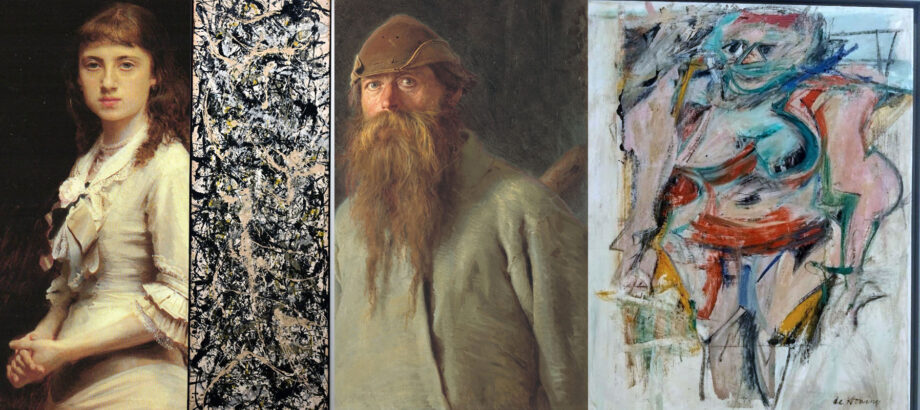
Ever looked at a multi-million-dollar modern painting and thought, ‘My kid could do that’? Well, top CIA agents thought the exact same thing—and then they bought it anyway. During the peak of the Cold War, the U.S. government secretly funneled covert funds through fake foundations into elite museums like MoMA. But why would American spies care about abstract art?
The Cultural Cold War: How the CIA Secretly Built the Modern Art Empire
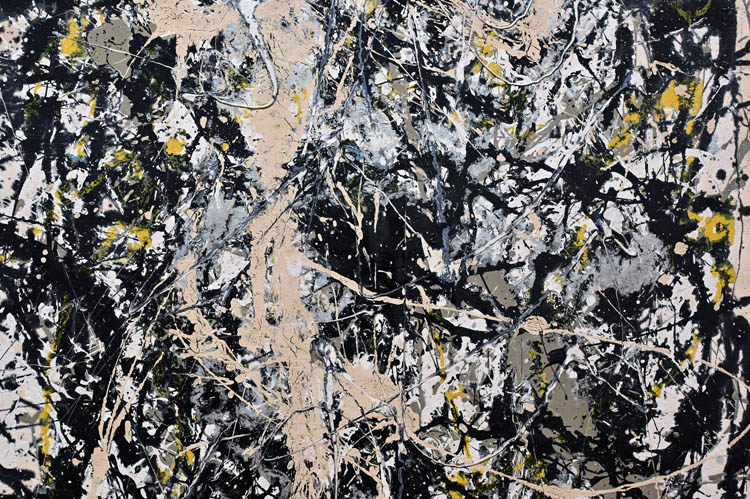
Why Intelligence Agencies Bought Jackson Pollock & other abstract expressionist art
What if I told you that famous abstract paintings were a CIA’s secret weapon? In the 1950s, while the U.S. government was publicly calling modern art ‘subversive nonsense,’ the CIA was privately spending millions to make guys like Jackson Pollock global superstars. Here’s how intelligence officers pulled off the ultimate cultural heist…
Abstract Expressionism—chaotic, non-representational, and radically individualistic—became America’s premier cultural export during the Cold War. Far from being a purely spontaneous artistic movement, the international elevation and commercial success of Abstract Expressionism were heavily engineered by the U.S. government—specifically the Central Intelligence Agency (CIA)—as a weapon of ideological warfare. Can art created in the name of total individual freedom remain untainted when covertly funded as state propaganda?
During the Cold War (specifically from the late 1940s through the 1960s), the U.S. government—primarily through the Central Intelligence Agency (CIA)—actively promoted American Modern Art, specifically Abstract Expressionism.
Soviet Realism vs. Western Freedom:
The primary objective was cultural diplomacy and ideological warfare. The Soviet Union poured resources into depicting the United States as a consumerist, culturally barren wasteland with warheads and dollars. While Soviet Socialist Realism mandated literal, heroic depictions of workers to serve state goals, Soviet Realism Art created a high moral standard every person aspired to. Soviet art often depicted common people as heroes who were building the future of the greatest country in the world.
The Problem in Washington:
U.S. politicians preferred conservative, traditional art. In 1946, the State Department’s Advancing American Art touring exhibition was canceled after President Harry Truman and conservative congressmen mocked the modern paintings as “subversive” and a waste of taxpayer money.
The Intelligence Solution:
To counter this, the CIA weaponized avant-garde art to prove that American democracy fostered unmatched creative freedom, individualism, and intellectual openness—the direct opposite of rigid Soviet Socialist Realism. Realizing Congress would never explicitly fund avant-garde art (especially by artists with past leftist sympathies), the CIA stepped in to conduct cultural diplomacy covertly.
“Why did the CIA support them? Because in the propaganda war with the Soviet Union, this new artistic movement could be held up as proof of the creativity, the intellectual freedom, and the cultural power of the US. Russian art, strapped into the communist ideological straitjacket, could not compete.” From: Modern Art was CIA Weapon
The Soviet Art Ideal:
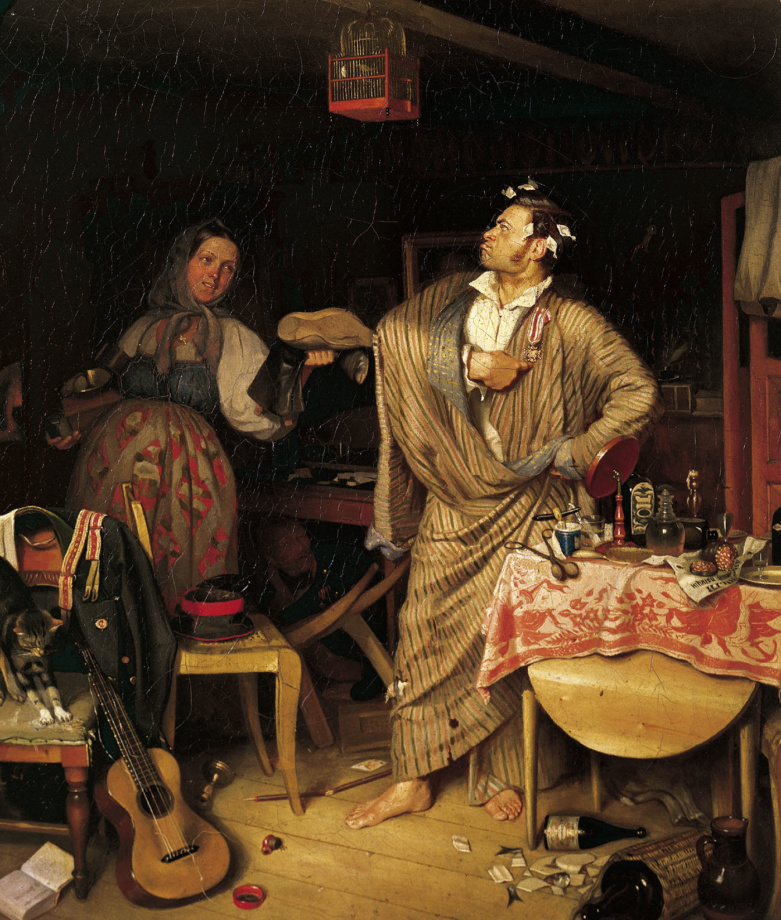

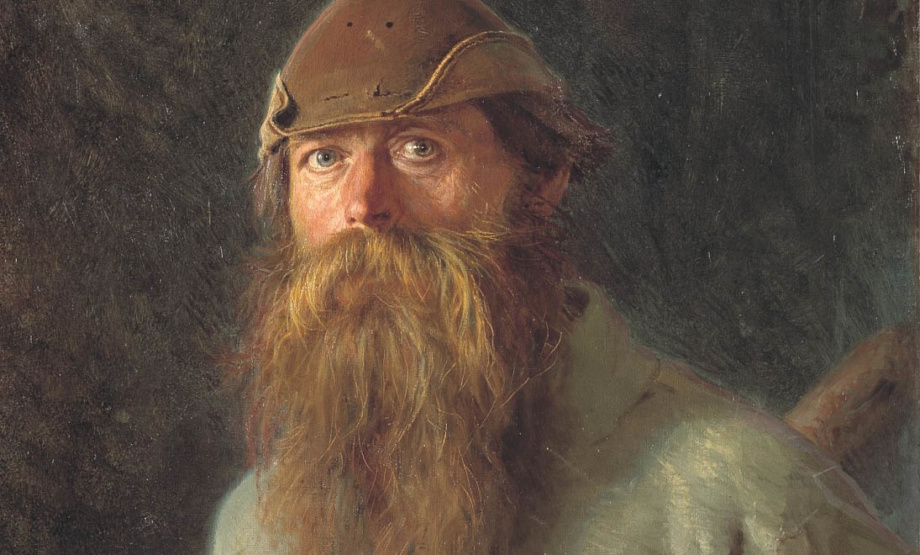
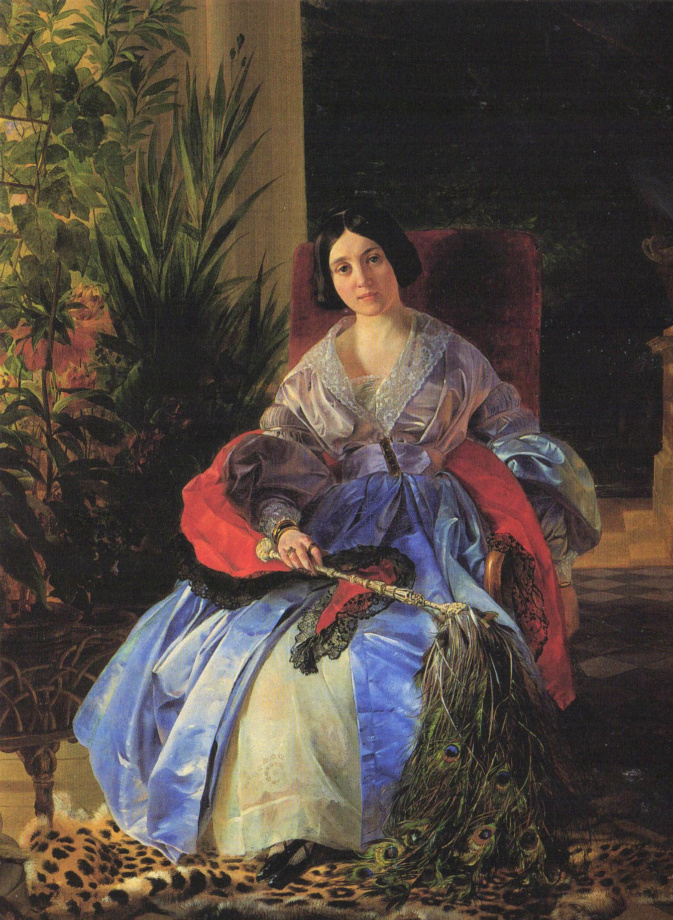
The Russian school of painting was grounded in the ideals of classical art. In the nineteenth century, Russian painters developed a distinctive body of work that depicted vast Russian landscapes, the hardships of ordinary people, the low status of women, corruption in the Church, and other social problems of the era. You can read about the itinerants movement here. Through realist painting they brought art to the masses rather than confining it to elite circles.
Remarkably, none of these works appeared in Janson’s History of Art, the textbook long used in American universities when I studied art over 20 years ago. Did anything change?
Architectural Utopia in the Soviet Union:
Sponsored by the government, modern Soviet painting took hold after 1925 and during the Stalin’s rule.
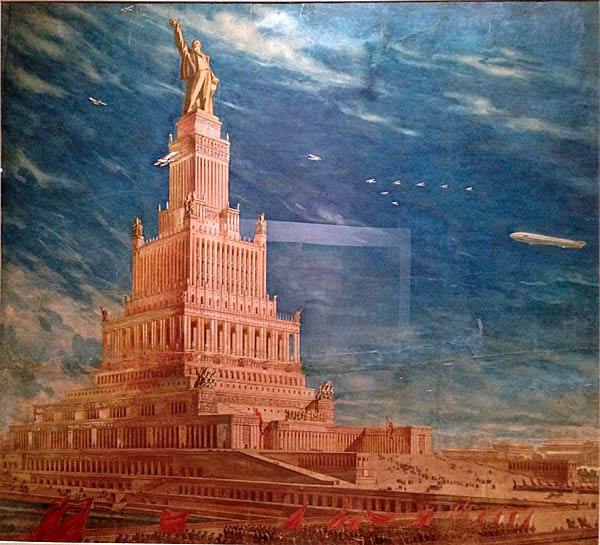
Having completely renounced private property and private space, the healthy, muscular citizens fortunate enough to live under Communism were expected to inhabit vast palaces containing libraries, assembly halls, ceremonial spaces, observatories, swimming pools, stadiums, and even airfields. The same principle underpinned the triumphant design of the early Moscow Metro stations: these underground halls demonstrated that the nation’s finest and most advanced achievements belonged to everyone collectively and to no one individually.
Meticulously detailed sketches—intended only for the Artistic Council—were drawn as if the Supreme Architect himself might demand to inspect them at any moment (and he occasionally did take a personal interest in architectural projects). Together with existing plans and blueprints for future buildings, these drawings served as proof that the Soviet dream was on the verge of becoming reality.
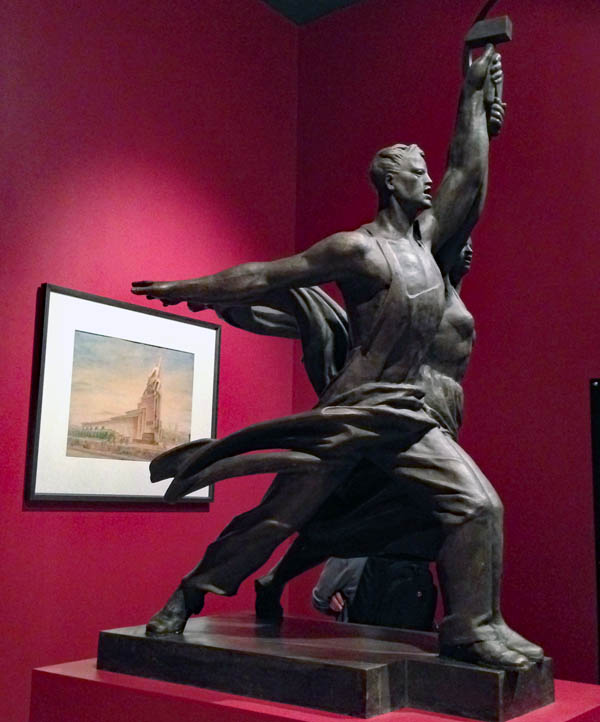
Romantic Realism in the Soviet Union between 1925-1945:
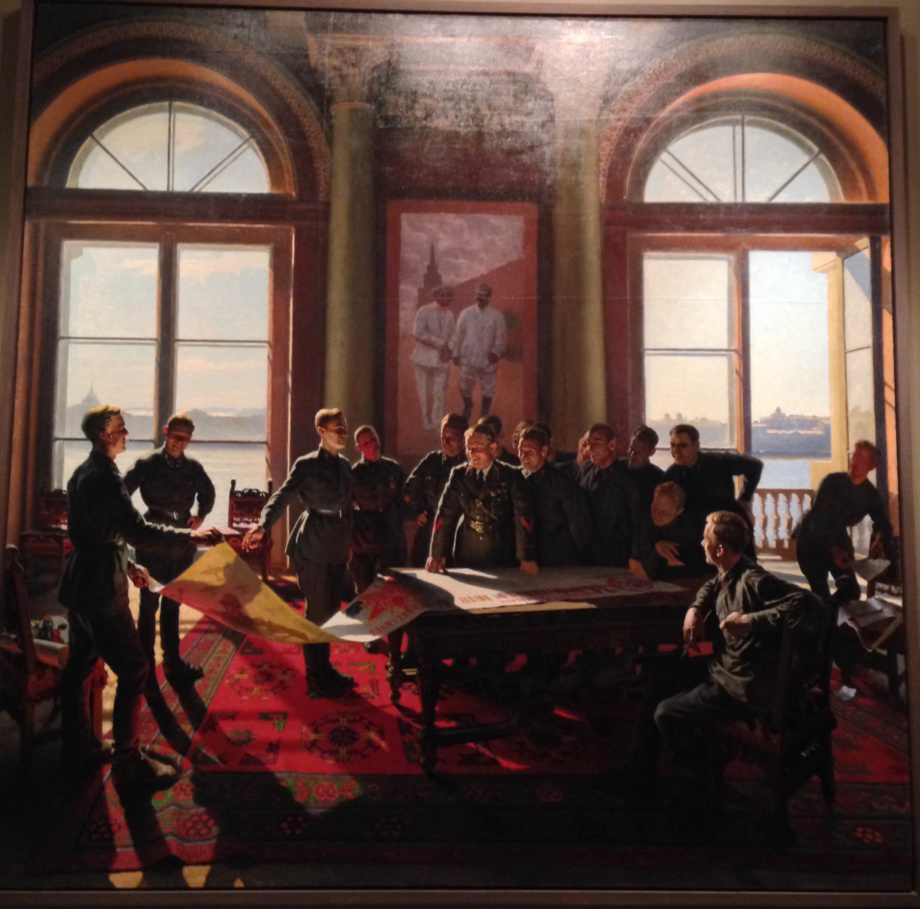
The idea of subordinating art to propaganda arose thousands of years before the birth of the Soviet Union, but nowhere before had it been realized on such a grand scale. In April 1918, just six months after the storming of the Winter Palace, despite famine, devastation, and civil war, V.I. Lenin proposed a plan for monumental propaganda: the new art was to agitate for the new government and convey to the citizens of the world’s first state of universal equality the ideas of communism and “the feelings of revolutionary working Russia.” The Soviet myth was literally built on the ruins of the old world: inscriptions were chipped from some monuments to be replaced with the names of modern heroes, while others were dismantled and reassembled into new objects, revolutionary in form and content.
Avant-garde art, which before the October Revolution had been on the periphery of public interest, a passion for eccentrics and zaumniks that contrasted abstract forms and condensations of chthonic energy with the comprehensible depiction of reality, poured out onto the streets in the fonts of revolutionary slogans, the stage designs of mass celebrations, the word forms of revolutionary poetry, and previously unseen painting. But this new creative force, gripped by the euphoria of permissiveness, understanding freedom as a pure idea, could not satisfy the demands of a state that divided the world into Reds and Whites. The country desperately needed a clear definition of who was ours, and at the same time, images of a beautiful future, an idyll, a Soviet paradise.
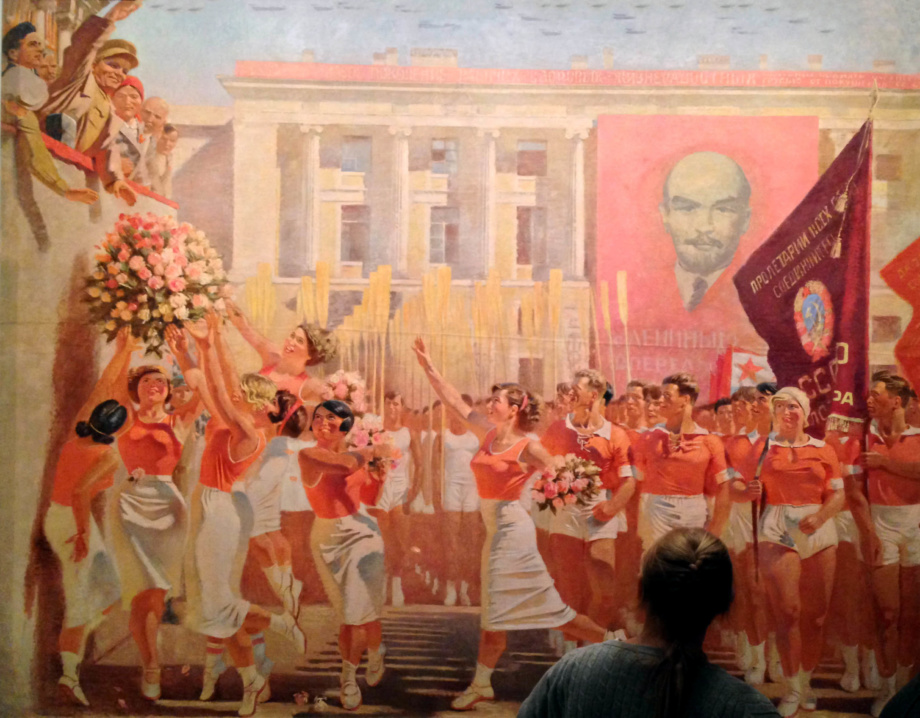
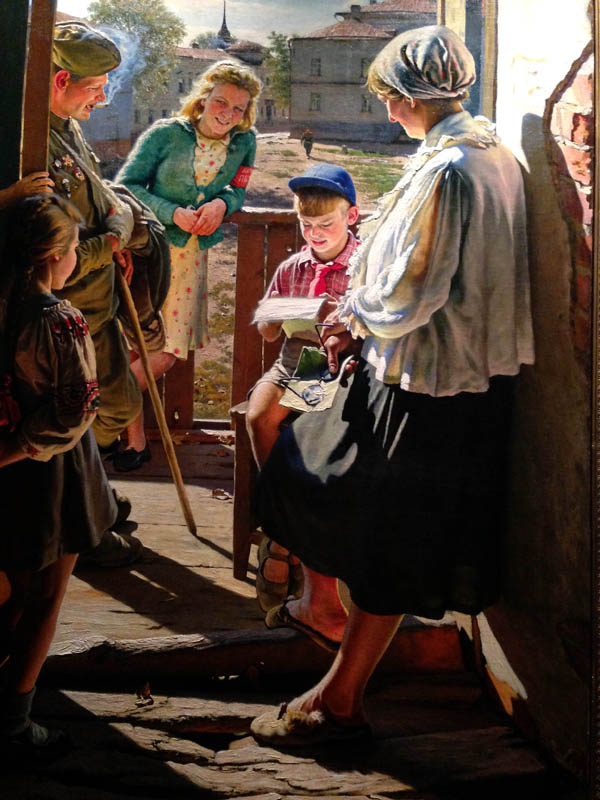
Some of this text and art comes from The Exhibition titled “Romantic Realism: Soviet Art between 1925-1945” held in the central gallery “Manezh” (next to Kremlin) in Moscow, 2015.
Personal Reflections:
I grew up in the Soviet Union and witnessed many facets of the communist system. When socialism is discussed on American television and podcasts, it is usually reduced to a simple binary—good or bad (mostly bad). Yet, like most things in life, the Soviet government, society, education, and art possessed multiple, often contradictory, dimensions.
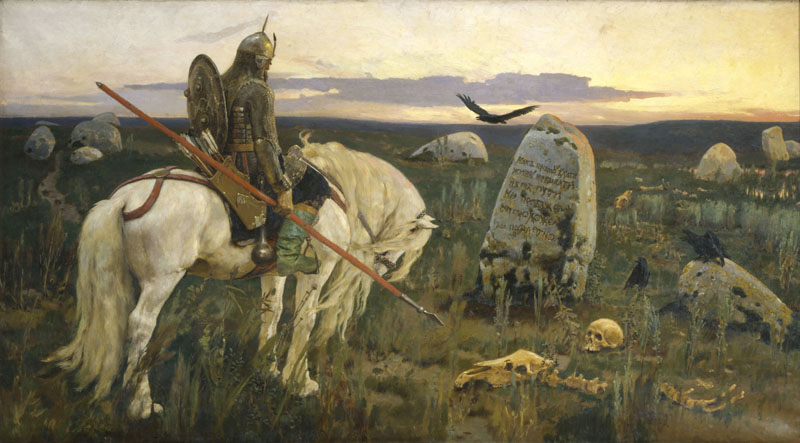
Soviet art conveyed a powerful aspirational ideal: a vision of national unity, pride, security, and future abundance achieved by living and working in the best country in the world. One of its central ideological aims was the rejection of materialism in favor of a pure, idealistic existence. State-sponsored art, literature, dance, and film consistently advanced this message through aspirational heroes.
School textbooks in many subjects contained numerous reproductions of nineteenth-century Russian painting and Soviet art. As a child I regularly looked at skillfully rendered images of abundant harvest fields, forests, strong young people constructing cities, and athletic women engaged in sports. Although I had unusually direct access to Soviet art through visits to Moscow’s museums and through the architecture of the Moscow Metro stations, gardens, and central government buildings, most of my exposure still came from books. In addition to school texts, my family owned a collection of illustrated volumes, including a rare set of the Soviet Encyclopedia and works on the natural world. My mother, an amateur artist, collected art books.
Even as a child I did not hold an idealized view of socialism. I recognized the aspirational goals the government promoted across every sphere of work and culture, while simultaneously experiencing the everyday reality of an ordinary Muscovite—an existence that differed markedly from life in the rest of the country. Artists, for example, received generous state support, yet they could advance their careers only by painting government-approved themes.
"Beauty will save this world," Dostoyevsky.
How the CIA Secretly Built the Abstract Art Empire: Tactics & Strategy
To maintain plausible deniability, the government used elite American cultural institutions whose boards were packed with figures tied to the wartime Office of Strategic Services (OSS) or the newly formed CIA.
The CIA relied on a policy known internally as the “Long Leash” strategy. The artists themselves were rarely told their work was being backed by intelligence agencies.
- Front Organizations: The CIA created and secretly funded the Congress for Cultural Freedom (CCF) in 1950, headquartered in Paris. The CCF sponsored magazines, art exhibitions, concerts, and literary conferences across Europe and Latin America.
- Private Philanthropic Shells: Millions of dollars were funneled through CIA-controlled conduits, such as the Farfield Foundation, the Beacon Fund, and the Price Fund.
- Bypassing Congressional Oversight: When the U.S. State Department tried to openly champion modern art in 1946 (via the Advancing American Art tour), conservative politicians and President Harry Truman publicly mocked the paintings as “subversive” or worthless. Realizing Congress would never explicitly fund avant-garde art (especially by artists with former leftist sympathies), the CIA stepped in to fund projects covertly.
- Buying and Touring Exhibitions: The CIA bought canvases, underwrote major international tours, subsidized art catalogs, and persuaded wealthy collectors and corporate boards to buy Abstract Expressionist works to inflate market demand and prestige.
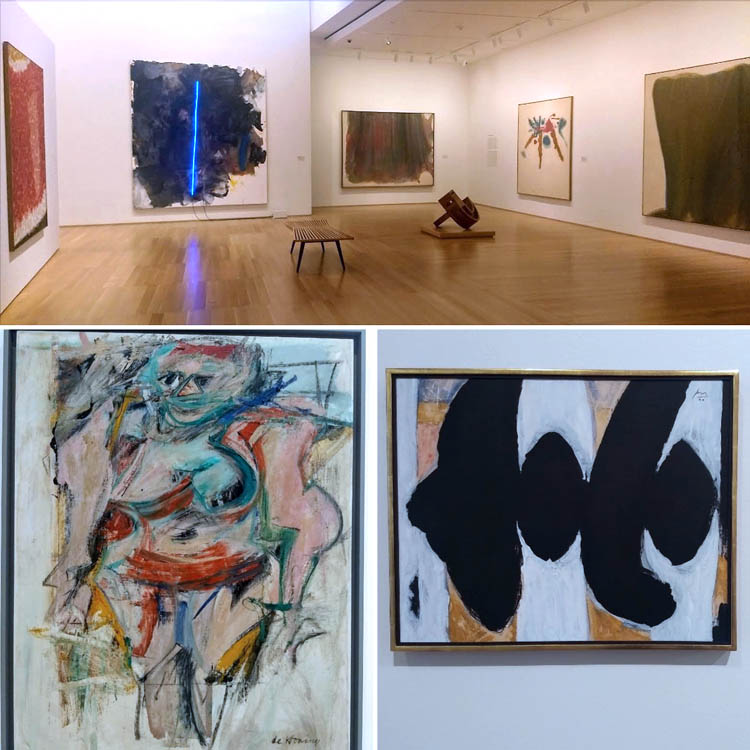
- See more de Kooning here: https://americanart.si.edu/artist/willem-de-kooning-1180
- See Robert Motherwell here: https://americanart.si.edu/artist/robert-motherwell-3437
- Lee Krasner (wife of J. Pollock) https://americanart.si.edu/artist/lee-krasner-2712
1. Money Spent: Funding Estimates & Impact
While precise line items are impossible to isolate because CIA funds were buried inside shell foundations and broader propaganda budgets, historians estimate that tens of millions of dollars (in mid-20th-century value) were spent on the broader “Cultural Cold War” operations that weaponized modern art.
Financial records can be viewed through two main buckets: direct arts expenditures and the broader CIA covert cultural budget.
- The Broader Budget (Millions per Year):The primary front organization, the Congress for Cultural Freedom (CCF), operated at its peak during the 1950s with an annual budget of roughly $2 million to $5 million per year (equivalent to roughly $25 million to $60 million per year today). These funds supported art exhibits, literary journals, international tours, and musical performances worldwide. Subsidizing international transport, venue rentals, insurance, and high-end catalogs for large-scale abstract works across Europe. The Socialist Correspondent
- The State Department’s Early Attempt: In 1946, before the CIA took over, the State Department spent $49,000 (about $850,000 today) buying 79 modern American paintings for the Advancing American Art tour. When Congress killed the program, the paintings were sold off as government surplus for a meager $5,544—after which covert CIA funding stepped in. (The Saint)
- Touring Costs & Subsidies:Transporting massive abstract canvases across Europe, insuring them, renting prestigious venues (like Paris’s Musée d’Art Moderne or London’s Tate Gallery), and printing high-end catalogs was immensely expensive. A single major traveling show, such as The New American Painting (1958–1959), cost hundreds of thousands of dollars to organize and transport—all covertly underwritten by CIA conduits like the Farfield Foundation.
As a result, they shifted the economic and cultural center of the global art market from Paris to New York. Also, they elevated Abstract Expressionists from struggling avant-garde painters to multi-million-dollar blue-chip commodities.
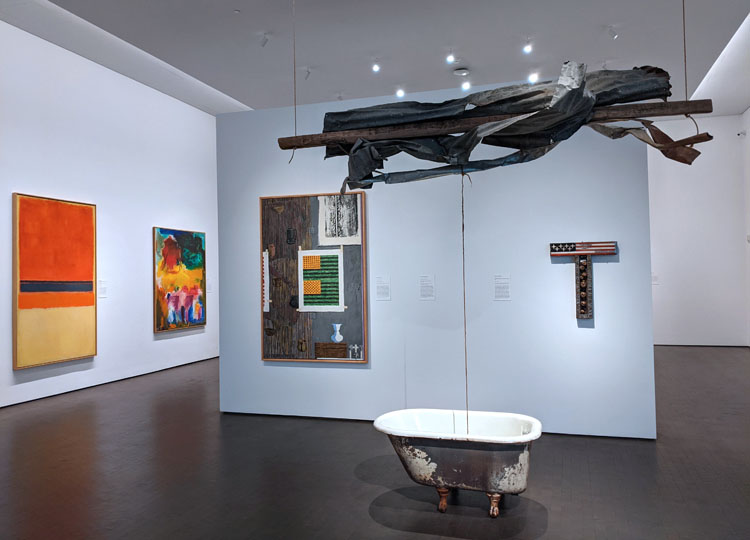
2. The Network: Artists & Institutions
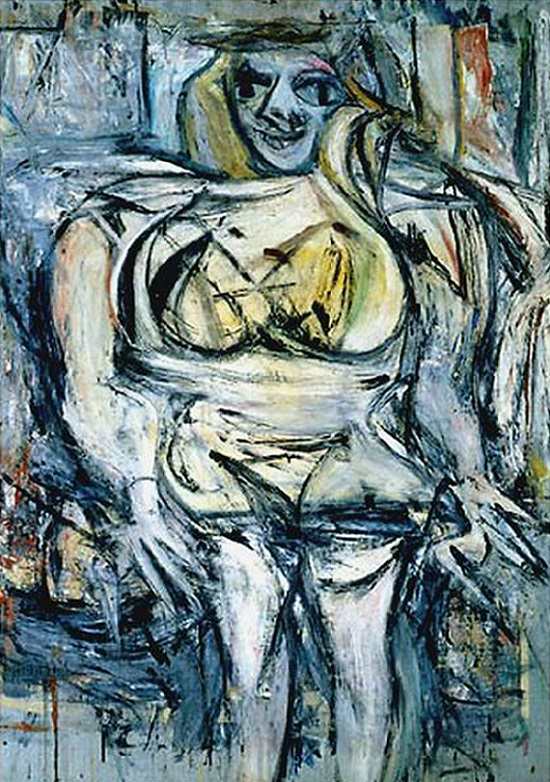
Because the artists themselves were kept on a “long leash” and generally were not aware the CIA was funding their international visibility, the primary benefit was market institutionalization, global prestige, and massive financial valuation.
The “Big Four” Abstract Expressionists:
- Jackson Pollock: Prior to government-backed international tours, Pollock was often dismissed domestically as a gimmick (“Jack the Dripper”). CIA-backed foreign exhibitions framed him as the titan of American creative liberation. The international exposure turned his work into multi-million-dollar trophies for elite collectors and museums.
- Mark Rothko: His massive, contemplative Color Field paintings were heavily promoted across Western European exhibitions. CIA backing established him as the spiritual counterweight to totalitarian propaganda art.
- Willem de Kooning: As a Dutch immigrant working in New York, his international elevation by MoMA and foreign touring programs validated the narrative that American democracy welcomed and elevated foreign-born avant-garde talent.
- Robert Motherwell: An articulate painter and intellectual whose philosophical essays on abstract art were translated and distributed abroad by CIA-backed journals.
- In addition: Barnett Newman, Clyfford Still, and Franz Kline: Prominently featured in international traveling exhibitions to demonstrate the scale and ambition of American artistic production.
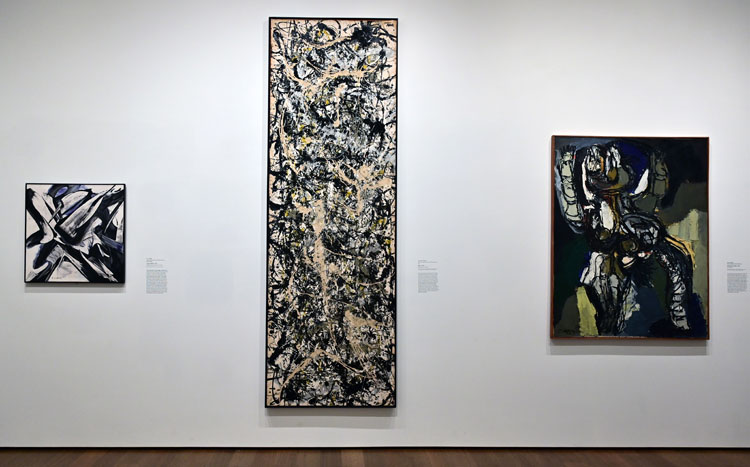
The term “degenerate art” (Entartete Kunst) originates from Austro-Hungarian author, physician, and cultural critic living in Paris, Max Nordau, who popularized the concept in his 1892 book Degeneration. Nordau used the idea to argue that modern creative art were symptoms of societal and moral decay. The Nazi Party later adopted and politicized the phrase in the 1920s and 1930s as official propaganda to ban modern, abstract, and avant-garde works. Banned artists were Paul Klee, Otto Dix, Marc Chagall, Max Ernst, Picasso, Matisse, Mondrian, Max Beckmann, and many more. Nordau argued that rapid urbanization and industrialization had fatigued the human nervous system. He claimed this fatigue caused mental and physical decay (“degeneration”) in modern artists. He diagnosed world-famous writers and artists—such as Friedrich Nietzsche, Oscar Wilde, Leo Tolstoy, Henrik Ibsen, and the French Impressionists—as mentally unstable, pathologically deviant, or hysterical.
The Institutional Winners
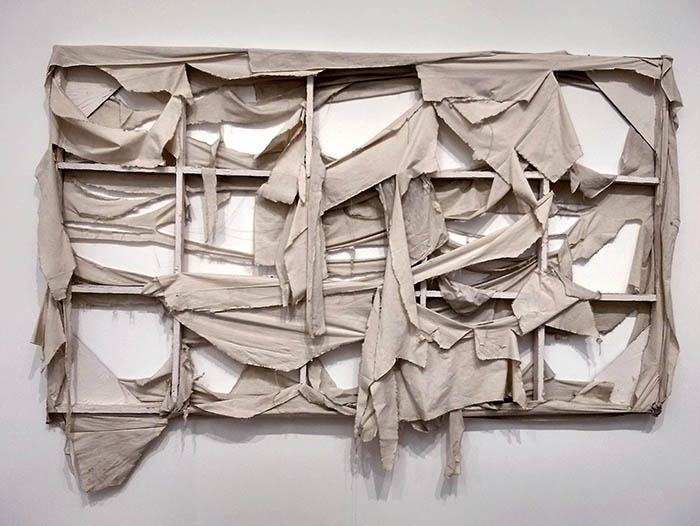
The real power beneficiaries were not individual painters, but American art dealers, elite private collectors, and MoMA itself. Before World War II, Paris was the undisputed capital of the global art world. By manufacturing worldwide demand and institutional legitimacy for Abstract Expressionism, the Cold War operations successfully shifted the center of the global art market from Paris to New York City.
While MoMA and the CCF were the principal vehicles for covert international propaganda, official U.S. government entities were also deeply intertwined with soft-power art initiatives. The Smithsonian’s Traveling Exhibition Service (SITES), established in 1952, worked alongside the U.S. Information Agency (USIA) to send American art collections abroad. The CIA built its own internal collection of modern art over time. Former CIA official Vincent Melzac donated a vast collection of Washington Color School paintings (artists like Thomas Downing, Gene Davis, and Howard Mehring) which hung on the walls of CIA headquarters in Langley to reinforce the agency’s commitment to American modernism. The National Museum of American Art (now the Smithsonian American Art Museum) maintained close relationships with the same private collectors and curators who facilitated these acquisitions and loans. The State Department initially led open cultural diplomacy with programs like Advancing American Art. After domestic backlash from anti-communist politicians, official agencies like the USIA often coordinated behind the scenes with private foundations, allowing the CIA to fill financial gaps secretly.
- The Museum of Modern Art (MoMA), New York:
- Served as the primary institutional hub for international touring exhibitions.
- Key figures with intelligence ties:
- Nelson Rockefeller: MoMA President; called modern art “free enterprise painting” and maintained close ties to government intelligence networks.
- Thomas Braden: Former MoMA Executive Secretary who became the chief of the CIA’s International Organizations Division (IOD).
- John Hay Whitney: MoMA Board Chairman and former officer in the Office of Strategic Services (OSS).
- Major International Exhibitions:
- Shows like The New American Painting (1958–1959) toured major European cities (London, Paris, Berlin, Milan) with secret CIA financial backing routed through MoMA’s International Program.
- The Smithsonian Institution & Government Bodies:
- The Smithsonian Institution Traveling Exhibition Service (SITES) collaborated with the United States Information Agency (USIA) for official overseas programs.
- Former CIA official Vincent Melzac built a massive collection of Washington Color School art that hung in CIA headquarters at Langley to reinforce the agency’s commitment to modernism.
- The Whitney Museum of American Art & The Guggenheim: Collaborated on export exhibitions and acquisitions that framed American abstraction as the pinnacle of modern culture.
- Tate Gallery (London), Stedelijk Museum (Amsterdam), and Musée d’Art Moderne (Paris): Hosted CIA-funded touring shows organized via the CCF or MoMA. https://daily.jstor.org/was-modern-art-really-a-cia-psy-op/
Conclusion: Freedom or Propaganda?
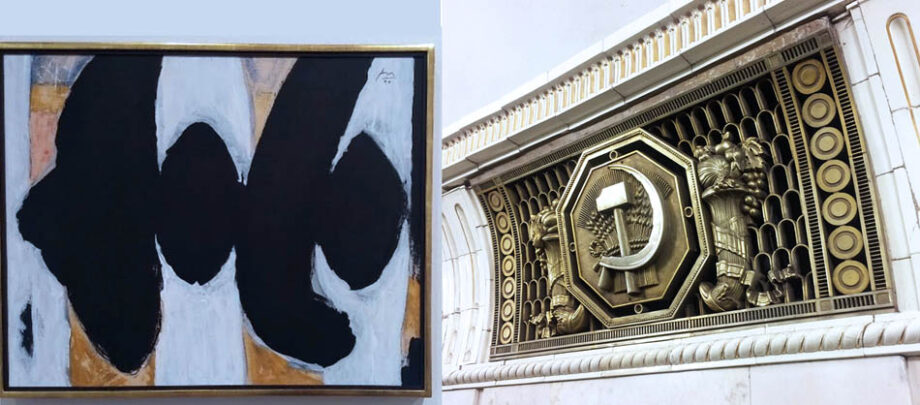
In the ultimate contest between two forms of state propaganda—one labeled “freedom,” the other “communism”—America’s secret weapon was not always a missile. It was also paint. To persuade the world that democracy meant absolute creative liberty, the CIA mounted a top-secret cultural campaign that elevated New York over Paris as the capital of the global art world. Agency operatives constructed the modern-art establishment by dismantling the shared sense of beauty that had once guided aesthetic judgment. In its place they installed, shaped, and institutionalized a body of work that subverted traditional art and classical art education in colleges, replacing them with what many regard as fake and ugly “art.”
Unlike Soviet art, modern art did not openly preach government ideology through recognizable imagery. Yet it stripped away beauty and aspiration, severing Americans—and much of the world—from any meaningful connection to the divine. In doing so, the CIA set itself against the ideal of the human being and the high moral standards so prominently advanced in Soviet art. The consequence was that the Agency ended up fighting its own people: by deliberately lowering ideals and moral expectations in service of its agenda, it committed what I think was an immoral and evil act.
I’m not here to say that Russian-Soviet art is the best in this world. I think some paintings are masterpieces and others are not, just like other artworks from different countries. However, if I put on a scale abstract expressionism vs. Russian painting, abstract art is a statement of soulless art. They created a form of deception curating people’s taste, dropping beauty and morality from art.
By championing deliberately horrible art, the American government chose to combat not only communism but also the Soviet vision of man—his high standards, aspirations, and morals. For decades the CIA appeared to succeed in establishing abstract art as the dominant standard worldwide, a dominance that still saturates contemporary art galleries and art museums. That replacement of ideals and aesthetics, however, exacted a heavy price.
Americans ultimately fought themselves rather than the Soviets. They dumbed down their own population, depriving people of high morals, beauty, and educational standards. Compelling citizens to appreciate and interpret a fabricated ideology presented as art constituted, in my personal view, an overwhelming act of immorality and a display of evil.
Not every modern or abstract painting is without merit, yet the work of de Kooning, Rothko, Motherwell, and their followers is horrible. Period. Should museum spaces once devoted to earlier traditions continue to be filled with such ugly art?
Many of these institutions now seem to exist largely for themselves. By inflating prices for this abstract art, the contemporary art market has become a playground for the wealthy seeking sophisticated taste, elite status, and often money laundering. Institutional subversion and corruption persist, transmitting false ideals to millions of Americans through a deficient art-education system in public schools, colleges, and museums. Having poured millions into its original cultural operation, the CIA succeeded in corrupting the very idea of democracy that this country claims as its pride.
We need to create beautiful, transcendental, and honest art again.
Modern Art Popularity & Sales in 2026:
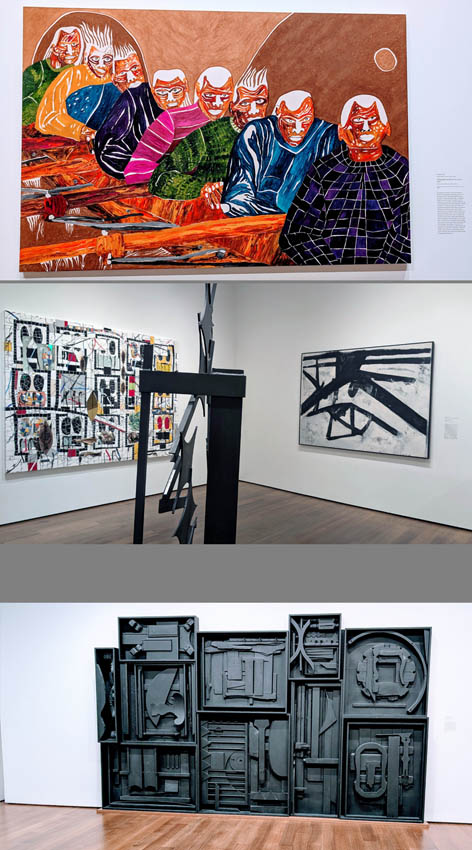
So is there demand for modern art today? Unfortunately, demand for modern art among the elites is far from being dead, but it has shifted. The art market experienced a brief cooling period in 2023–2025 due to interest rate spikes, global political shifts, and a lack of mega-estate consignments. However, art market data from Sotheby’s, Christie’s, and ArtTactic highlights a major recovery in 2026.
Demand has bifurcated into a polarizing “flight to quality”: trophy-grade famous art and lower-priced art are booming, while mid-tier speculative art have seen demand cool. https://www.artbasel.com/news/the-art-basel-and-ubs-global-art-market-report-2025
1. Current Demand Trends at Auction
Major Recovery Driven by Estate Sales
Auction data indicates high-end art is bouncing back sharply, heavily fueled by prominent single-owner estate collections. (https://www.theartnewspaper.com/2026/07/10/auction-houses-made-significant-recoveries-in-2026-arttactic-report-finds )
- Christie’s posted global sales of $4.5 billion in the first half of 2026 (a 71% year-over-year increase).
- Sotheby’s posted a matching $4.4 billion turnover in H1 2026.
- Sell-through rates (the percentage of items that actually sell rather than fail to reach their reserve price) hovered around a very healthy 90% to 91% across major houses.
Shift Away from Speculative Contemporary
During the 2020–2022 art boom, ultra-contemporary, unproven “hot young artists” saw hyper-inflated prices. That speculative bubble burst just like the stock market. Collectors are now risk-averse, directing capital back to blue-chip Modernists, Impressionists, and Post-War famous artists whose historical value is already cemented.
The Rise of “Private Art Sales”
Because high-profile public auctions carry public embarrassment if a work fails to sell, major collectors are increasingly using private treaty sales managed by Christie’s and Sotheby’s, according to the Art News Paper. Private sales reached an all-time record of over $1 billion at Christie’s and $826 million at Sotheby’s in early 2026. ( https://www.theartnewspaper.com/2026/07/15/trophy-lots-and-luxury-goods-fuel-rebound-for-christies-and-sothebys-2026-half-year-results )

2. Recent Price Ranges for Modern Art
The price range for “Modern Art” (typically classified as late 19th-century up to the mid-20th century) varies wildly depending on tier and accessibility:
| Market Tier | Typical Price Range | What Sells Here / Recent Examples |
| Mega-Trophy / Historical Apex | $100M – $230M+ | Unique, museum-grade masterpieces from historic collections (e.g., Leonard Lauder, S.I. Newhouse). |
| Marquee Evening Sales | $10M – $90M | Major canvases by blue-chip modern names like Mark Rothko, Pablo Picasso, or Willem de Kooning. |
| Mid-Market / Day Sales | $100,000 – $5M | Secondary works by famous artists (drawings, smaller studies, later-career paintings) and established mid-tier artists. |
| Entry Level / Works on Paper | $5,000 – $50,000 | Limited edition prints, signed lithographs, ceramic works (e.g., Picasso ceramics), or lesser-known contemporaries. |
Highest Tier Sales at Auctions:
- Gustav Klimt, “Portrait of Elisabeth Lederer” (1914–16), sold for $236.4 Million (Sotheby’s, Record) (note: Klimt is not an abstract expressionist painter)
- Jackson Pollock, “Number 7A” (1948), sold for $181.2 Million (Christie’s)
- Constantin Brâncuși, “Danaïde” sold for $107.6 Million (Christie’s)
- Mark Rothko, “No. 15 (Two Greens and Red Stripe)”, sold for $98.4 Million (Christie’s)
As you can see, demand for modern art is not deteriorating, but buyers have become far more selective. The market has shed its post-pandemic speculative excess along with NFTs and shit coins, and returned to “flight to quality” behavior, where provenance, rarity, and historical importance command record prices, while lesser-quality mid-tier works struggle to find buyers.
Why do collectors still buy ugly modern art?
If you’ve ever stared at a multi-million-dollar abstract painting that looks like splattered house paint or a blank canvas and thought, “My kid could do that,” your skepticism is valid!
For centuries, art was judged strictly on craftsmanship, technical mastery, talent, and classical visual beauty. Modern and contemporary art threw those standards out the window. Collectors aren’t paying millions because they think a work is classically beautiful—they are buying values that traditional aesthetics don’t measure.
Duchamp’s Fountain (1917) redefined art as a concept rather than a craft.
1. Concept Over Craft
Modern art shifted the core question from “Is this technically skilled or pleasing to look at?” to “What idea does this communicate or provoke?”
In 1917, artist Marcel Duchamp bought a standard porcelain urinal, signed it with a pseudonym (“R. Mutt”), placed it on a pedestal, and submitted it to an art exhibition. It permanently altered the trajectory of the art world.
“Ugly,” chaotic, or unsettling art forces a reaction from viewers. While a pleasant landscape painting blends into wall decor, giant, abstract canvases demand attention and create emotional discomfort, tension, or curiosity. In other words, modern art often has a shock value, rather than a concept of divine beauty. Collectors are buying the intellectual statement, the historical narrative, and the artist’s cultural impact and fame rather than visual decor.
I often write about ugly contemporary art: Why People Hate Contemporary Art.
2. Cultural Capital & Social Proof
Super-wealthy individuals can easily buy sports cars, luxury watches, or mega-yachts. Collecting modern art projects an entirely different level of elite status: Displaying abstract, or controversial art sends a message that the owner possesses some sort of “advanced” taste that transcends simple visual decoration. Collecting blue-chip modern art acts as an entry ticket into high-level global networks—VIP access at Art Basel, positions on prestigious museum boards, and private galas where major business and political connections are made.
To continue reading about Art market Fraud in Contemporary art go here.
3. Financial Asset & Wealth Storage
At the top tier, the art market functions as a sophisticated alternative asset class.
- Store of Value: High-grade modern art acts as portable, tangible wealth that can hedge against inflation and financial market volatility.
- Market Consensus: Art values are heavily driven by institutional endorsement—museum retrospectives, top gallery representation, and prominent curator backing. If the art establishment agrees an artist is historically significant, their market value holds regardless of popular aesthetic opinions.
- Tax & Estate Planning: Art offers unique financial flexibility for estate planning, foundation donations, and generational wealth transfer.
- And here you can learn How Fake Artifacts Could Be Used To Shield The Wealthy Via Non-Profits.
4. The Bet on Art History
Many artists, art, and art movements now considered famous or masterpieces—such as Impressionism or Cubism—were originally mocked by critics as grotesque, unskilled, or “ugly.” Collectors of unconventional modern art are often betting on being seen as forward-thinking visionaries who recognized historical significance before the rest of the world caught on.
For an entertaining breakdown on the social dynamics and hidden economic incentives behind buying controversial artwork, take a look at Why Rich People Buy “Dumb” Art. This video explains how prestige, exclusive networking, and financial structuring turn non-traditional art into high-value assets. Or you can watch my video about Art World Corruption.
Finally, some call it beautiful.

Appendix: Official References:
Primary Documents & Government Archives
- Thomas W. Braden’s Confession (1967):
- Braden, Thomas W. “I’m Glad the CIA Is ‘Immoral’.” Saturday Evening Post, May 20, 1967.
- Declassified PDF available via the CIA Freedom of Information Act (FOIA) Reading Room. Former head of the CIA’s International Organizations Division details funding cultural programs and front foundations.
- The Church Committee Reports (1975–1976):
- U.S. Senate Select Committee to Study Governmental Operations with Respect to Intelligence Activities. Final Report: Foreign and Military Intelligence (Book I). Washington, D.C.: U.S. Government Printing Office, 1976.
- Details the CIA’s covert use of private foundations, publishing houses, and front organizations (including Project KMFLINT / CCF).
- National Archives and Records Administration (NARA):
- State Department Records on the 1946 Advancing American Art exhibition and its cancellation under political pressure.
Key Academic & Historical Books
- Saunders, Frances Stonor.The Cultural Cold War: The CIA and the World of Arts and Letters. New York: The New Press, 1999.
- The definitive archival account detailing foundation money trails, interviews with CIA handlers, and MoMA’s operational involvement.
- Cockcroft, Eva.“Abstract Expressionism, Weapon of the Cold War.”Artforum, vol. 12, no. 10, June 1974, pp. 39–41.
- Landmark study outlining the structural links between MoMA trustees, private capital, and CIA cultural operations.
- Wilford, Hugh.The Mighty Wurlitzer: How the CIA Played America. Cambridge: Harvard University Press, 2008.
- Detailed breakdown of how the CIA mobilized American artists, intellectuals, and private institutions during the Cold War.
Web Articles:
- [The Independent] Modern art was CIA ‘weapon’ – The famous 1995 article by Frances Stonor Saunders that broke the history wide open to the general public.
- [CIA Reading Room Document] Thomas Braden’s Saturday Evening Post Article (PDF) – Official scan of Braden’s 1967 article hosted on the official CIA website.
- [BBC Culture] Was modern art a secret CIA weapon? – A clear overview examining the evidence and perspective of both artists and CIA handlers.