Tag: short form video strategy

Impact of AI on my art studio business

In November 2025, Elon Musk appeared on The Joe Rogan Experience and predicted that AI would soon generate most of the world’s content. While many of us remain captivated by AI’s impressive capabilities, its real-world effects are already landing hard—especially on creators and artists like me.


The most damaging impact is the large-scale appropriation of artists’ work. AI systems have been trained on vast amounts of copyrighted material, often without permission or compensation, in a country that prides itself on strong copyright protections and the rule of law.


These costs are no longer abstract. My own website hosting fees roughly doubled overnight, rising to more than $800 for a three-year term in 2025. The annual cost of my second site, hosted on the Teachable platform, tripled from around $500 to $1,668. I cannot justify passing that increase on to my students, so I am shutting the site down and walking away from years of work invested in the platform. I expect electricity bills to be next; AI’s enormous energy demands will almost certainly push those costs higher for everyone.

Many artists, myself included, have long relied on part-time freelance work—designing book covers, album art, and illustrations—to support ourselves while developing our craft. Those opportunities are disappearing rapidly. Why hire a human artist when a $30-per-month subscription can produce similar results in seconds?

It’s reminiscent of how photography once displaced traditional portrait painters. Did you know Rembrandt was a portrait-painting machine in Amsterdam, earning a fortune for his genius? Today, hardly any portrait artists command that scale of work or pay.

Should I keep ranting?

Despite these frustrations, I still find genuine pleasure in generating a couple of AI images each day. It serves as a form of creative therapy. As an artist, I am fascinated by how these systems interpret the world and apply artistic principles. Of course, every output remains a reflection of human ingenuity and the data we have collectively created.


I do not accept the idea that AI is on the verge of true consciousness, even though that prospect alarms many people. At its core, AI is a highly sophisticated system trained by countless humans on enormous datasets. Human consciousness—interwoven with free will, ethics, aesthetics, emotion, and love—is far too complex for any algorithm to replicate. No one has solved that problem yet.


The notion that our world might be a simulated game has a certain modern appeal: it does appear to operate according to clear cause-and-effect rules. But that is only part of the picture. What makes us truly unique—and ultimately non-programmable—is the spark of individuality that resists any fully scripted simulation.


A far more immediate concern is AI falling into the wrong hands. We already live in an expanding surveillance state, and this technology is only accelerating that trend. AI is a tool. Its impact depends entirely on the intentions of those who control it. The character of human hearts, for better or worse, will determine the future we create with it.


I still do not know how to resolve the issue of stolen artistic copyright. The fair approach would be to compensate artists with a percentage of revenue, similar to the way musicians are paid for streams and playback. I doubt that system will emerge anytime soon. In the meantime, artists need to learn how to integrate AI into their professional workflows so they do not fall behind and lose their livelihoods. This is no different from earlier generations learning to use computers for formatting, design, or writing.

It’s unclear how to resolve the data center dilemma that suck all the resources out. Should the artist be responsible for it while business owners and directors of these data centers make money at our expense?


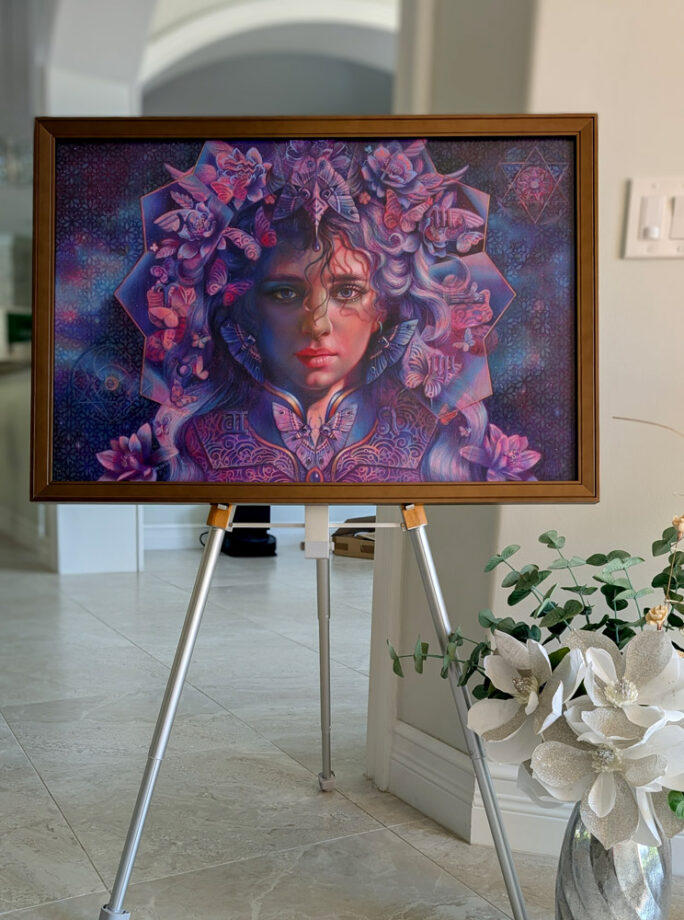
Celestial Room, spiritual art by Veronica Winters | Visit Visionary Art Gallery here. While this drawing was created without the use of AI, I did use Photoshop to create a collage of my pictures as a concept for my artwork.

How AI Video Generators Revolutionize Marketing Production

Maintaining a consistent, high-quality video presence across all marketing channels remains a significant challenge for most teams. While content calendars and strategies often look strong on paper, execution frequently falters under the sheer volume of video assets required to deliver an effective, always-on marketing program.

Brands of all sizes encounter the same constraints. A typical social media strategy demands 3–5 video placements per week across platforms. Paid media campaigns require fresh creative every two weeks to prevent audience fatigue. Email nurture sequences need tailored video assets at multiple stages of the customer journey. When seasonal campaigns, product launches, and reactive content are added to the mix, production demands quickly become unsustainable.

Rather than expanding headcount or increasing production budgets, forward-thinking marketing teams, agencies, and growth-focused companies are transforming their workflows with professional-grade AI video generators designed for high-volume output.

The AI Video Generator category has evolved rapidly — moving from experimental novelty to essential production infrastructure for sophisticated marketing operations. Today’s always-on marketing model requires scalable volume, consistent quality, and cultural relevance. Leading platforms like Higgsfield stand out by delivering powerful raw generation capabilities, precise creative control, brand consistency, and exceptional speed.

This combination of scale, quality, and value in cinematic video production makes Higgsfield a strategic advantage for professional marketing teams.

Why Omnipresent, Multichannel Marketing Demands New Production Philosophy

The traditional campaign model — characterized by large budgets, elaborate productions, and periodic launches — was built for a media environment that favored infrequent, high-impact moments. Television schedules, print cycles, and fixed advertising slots reinforced a strategy centered on scarcity and peak events.

Today’s media landscape operates on nearly the opposite principle: consistent presence, continuous optimization, and rapid responsiveness. Algorithms prioritize accounts that publish regularly, while audiences have come to expect reliable content cadence. In this environment, competitive share of attention is won through steady accumulation rather than occasional bursts.

Teams that were running always-on strategies consistently outperformed traditional campaign models. Beyond generating higher impression volumes, always-on accounts built deeper audience relationships that compounded over time. Trust, familiarity, and conversion signals strengthened through repetition, not isolated campaign moments.

The core challenge lies in the demanding content production requirements of true always-on marketing. Brands need a reliable pipeline capable of delivering high-quality video assets at pace — week after week, across multiple channels — without compromising quality or falling into creative fatigue. Under the traditional model, this level of output is typically either prohibitively expensive or humanly unsustainable, often both.

AI video generation fundamentally breaks this constraint. By compressing production timelines from days to hours and dramatically reducing cost per asset, it makes the volume required for always-on marketing both achievable and sustainable — while maintaining a creative quality ceiling that meets professional standards.

How AI Video Generation Supports Each Layer of Always-On Marketing

Sustained Social Media Presence

Social video represents the highest-volume content demand in always-on marketing. Platforms like Instagram, TikTok, LinkedIn, and YouTube reward consistent publishing with algorithmic amplification, while gaps in cadence quickly reduce reach and require significant effort to rebuild momentum.

Teams that maintain reliable publishing schedules are those that have eliminated production bottlenecks. When new video assets can be generated in hours rather than days, the schedule is driven by strategy, not production limits.

Higgsfield excels in this area with its strong output quality and creative control. It enables visual consistency across large volumes of content — including character treatment, brand aesthetics, and motion language — which is critical for building recognizable brand presence. Maintaining consistency across 20+ assets per month becomes significantly more manageable with Higgsfield than with traditional methods or other tools.

Always-Fresh Paid Media Creative

Audience fatigue remains one of the biggest cost drivers in paid video advertising. High-performing creative often experiences measurable decline within weeks as audiences see the same assets repeatedly.

AI video generation transforms this dynamic by dramatically lowering the cost and time required for new variations. Refreshing creative every two weeks — and testing multiple versions with different hooks, visuals, and calls to action — becomes standard practice.

In one paid social program, the team used Higgsfield to maintain a four-week creative refresh cycle across three audience segments. Creative fatigue was virtually eliminated, resulting in significantly more consistent performance compared to prior campaigns reliant on traditional production.

How AI Video Generation Supports Each Layer: Maximizing Short-Form Vertical Video ROI

The dominant battleground for modern attention is vertical short-form video (TikTok, Instagram Reels, and YouTube Shorts). Because these formats demand immediate pattern-interrupts and a relentless posting cadence, creative burnout happens faster here than anywhere else. AI video tools allow marketing teams to rapidly convert single long-form assets or simple prompts into dozens of vertical-native variations. By producing high-quality, 30-to-60-second clips optimized for silent viewing (with automated, styled captions), brands can continuously feed the algorithm without draining human resources.

In marketing, short-form vertical video is the top format for ROI, with over 70% of marketers reporting that videos under 2 minutes perform best.

Reactive and Moment-Driven Content

One of the most valuable — yet historically difficult — capabilities in always-on marketing is the ability to respond to cultural moments, trending topics, and market developments in real time. Brands that join the conversation as it unfolds capture disproportionate attention and engagement, while those publishing days or weeks later miss the opportunity entirely.

The primary barrier to reactive content has always been production constraints. While the creative instinct to respond is typically present, traditional workflows make rapid, high-quality execution nearly impossible.

Higgsfield changes this equation by compressing production timelines from weeks to hours. Teams can go from brief to polished, on-brand video in under four hours — a speed that was previously unattainable with conventional production approaches.

Comparison: Traditional Campaign Model vs. Always-On AI Video Model

Marketing DimensionTraditional Campaign ModelAlways-On AI Video Model
Publishing cadencePeriodic  campaign burstsContinuous  weekly or more frequent
Content volume capacity4–8 major assets per quarter20–50+ assets per month
Creative refresh cycle6–10 weeks2–4 weeks
Reactive content speedDays to weeksHours
Cost per asset$2,000–$30,000+Platform subscription (fixed)
Audience relationship buildingEpisodicCompounding
Algorithm favorabilityModerateHigh  consistent presence rewarded
Creative testing depth1–2 variants per campaignContinuous multivariate testing

The publishing cadence and cost-per-asset rows are where the always-on model’s advantages are most stark. The traditional campaign model was never designed to sustain the publishing volumes that modern marketing channels reward. The AI video model removes the constraints that made high-volume, high-quality publishing impossible.

The Brand Consistency Challenge at Scale

A common concern among marketing teams evaluating AI video for always-on programs is maintaining brand consistency at high volume. Rapid production increases the risk of creative drift — gradual deviations in tone, visual language, or messaging. In traditional workflows, consistency was partly enforced by the slow, multi-layered review process itself.

However, dramatically faster production can turn review cycles into a new bottleneck, undermining the speed advantage. The real solution is to embed consistency directly into the generation process rather than relying solely on post-production checks.

Higgsfield addresses this effectively through advanced creative controls. Features like locked style parameters, persistent character consistency, and visual guardrails ensure brand standards are maintained at the point of generation. This upstream approach is what makes high-volume AI video production truly scalable — not just fast.

Research from Lucidpress shows that consistent brand presentation across platforms can increase revenue by up to 23%. For always-on marketing programs, strong consistency management determines whether increased content volume delivers meaningful business results.

Which Teams Are Running the Best Always-On AI Video Programs Right Now

Independent Creators, Visual Artists, and Animation Studios who need to scale their social media reach without spending dozens of hours away from their primary medium. For example, painters and digital artists use AI video tools to transform static artwork into dynamic, cinematic “art reveal” reels, behind-the-scenes visual narratives, or conceptual trailers for upcoming collections. Because platforms like Higgsfield allow for precise character and style consistency, artists can generate high-end promotional video loops that align perfectly with their unique visual identity—effectively automated marketing for creative intellectual property.

DTC and e-commerce brands with continuous product stories to tell and high dependence on paid social performance are leading adopters. The creative refresh requirement in paid social alone justifies the investment, and the reactive content capability adds meaningful competitive flexibility.

SaaS and B2B marketing teams running demand generation programs where educational video content needs to feed multiple funnel stages continuously. Always-on video nurture sequences perform significantly better than static email, and AI video generation makes maintaining them at scale operationally realistic.

Media and publisher brands that need to produce video commentary, explainer content, and audience engagement assets at a pace that matches their editorial calendar. Higgsfield gives editorial teams the ability to turn written content into video assets quickly enough to keep pace with publishing schedules that used to require dedicated video production staff.

Franchise and multi-location brands that need to maintain brand-consistent video content across multiple markets while allowing for local relevance and customization. AI video generation with strong style-lock capabilities makes this combination achievable without separate production pipelines for each market.

Conclusion

The always-on marketing model is a structural response to how media consumption and algorithmic distribution work now. Brands that show up consistently, with fresh and relevant content, build compounding audience relationships that episodic campaign models cannot replicate. Teams that have integrated AI video generation into their always-on programs don’t just produce more content,  they produce better content, because the iteration cycles are fast to optimize on data rather than opinion. The feedback loop between what audiences respond to and what gets published next happens in real time as production timelines compress from weeks to hours.

While I’m neither a user nor marketer of brands, I encounter more and more business people using AI workflows to generate videos for their businesses that include cooking and healthy living, outdoor activities, art gallery presentations and so on.

Higgsfield is a top notch recommendation for teams building AI video programs based on high quality, creative control, and consistency management in high-volume publishing environment.