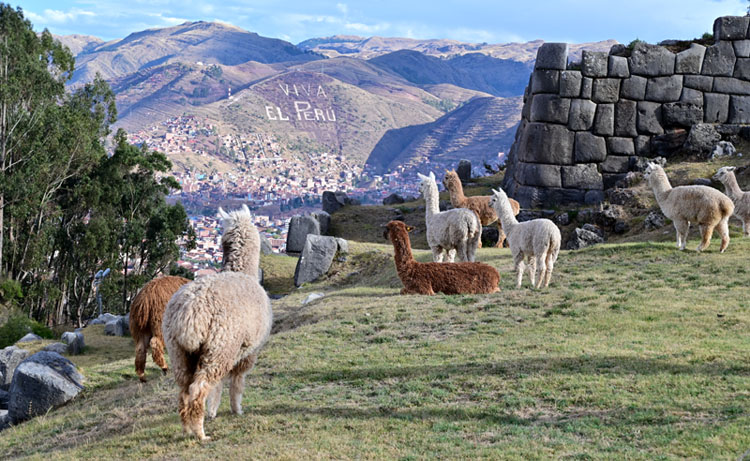
Peru offers a unique destination for travelers interested in its megalithic monuments, Inca culture, the architectural achievement of Machu Picchu, its distinctive fauna, regional cuisine, and favorable climate. This article provides practical visitor information alongside historical insights and cultural perspectives on megalithic stonework, the concept of Pachamama, and the assessments of contemporary archaeologists conducting research at Sacsayhuamán.
Jump into these separate sections or read all of it below.
- Information for tourists
- Who is Pachamama in Peruvian Culture
- Stepped patterns and the stepped cross (chakana)
- The Incan Duality, Culture & Beliefs
- What are Inca pacchas?
- Inca Head Binding
- Inca Mummies
- The invisible connection between Pachamama and Sacsayhuaman, Puma shape
- The invisible connection between Qorikancha and Sacsayhuaman
- Chinkanas, the underground tunnels between Saqsaywaman & Qorikancha
- Inca masonry, earthquakes, and engineering techniques behind the dry-stone construction
- Ollantaytambo
- Qhapaq Ñan road network construction
- Qenqo
- Machu Picchu
Who is Pachamama in Peruvian Culture?
In Andean cosmology, Pachamama is frequently translated as “Mother Earth,” though a precise Quechua translation reveals a far broader concept: Pacha encompasses time, space, world, and nature simultaneously. Rather than a distant or purely symbolic goddess, Pachamama is seen as a living, conscious spatial entity that sustains life through cyclical reciprocity (Ayni). Human relationship with Pachamama is reverent. To harvest her gifts (crops, water, metals), humans must continuously offer payments or gifts back (pagos a la tierra or haywarikuy). As Pacha, she dictates seasonal, agricultural, and cosmic cycles rather than just physical dirt or terrain. She represents the fundamental balance between the human realm (Kay Pacha) and the generative power of the natural landscape surrounding us. In the Incan state religion, Pachamama was paired with Tata Inti (Father Sun) and Pachacamac (the male creator/earthquake deity of the coast), forming a balance between terrestrial fertility and celestial energy.
Because pre-Columbian cultures generally did not depict Pachamama as a single humanlike idol, her material culture is understood through ceremonial vessels, offerings, and sacred landscapes. (The Pachacamac Idol & Offerings, Conchopata & Wari Kero Vessels, Inca Pacchas & Metal Figurines). Note: Museums in Cusco are small, and general admission is a combined ticket to several museums visited in one day.
Stepped patterns and the stepped cross (chakana)
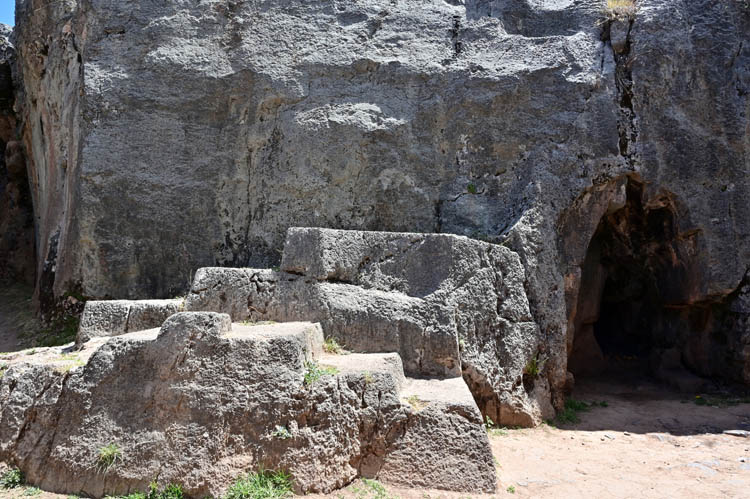
The stepped cross / chakana is one of the most persistent geometric motifs in Andean visual culture. Its three-step structure is consistently read as a diagram of the three cosmic levels, with the lowest level corresponding to the realm of Pachamama and the ancestral underworld.
Both the architectural chinkanas and the portable stepped motifs in textiles and jewelry therefore participate in the same broader cosmological language: they materialize the idea of vertical connection between the surface world, the earth’s interior, and the celestial realm.
These interpretations rest on a combination of colonial ethnohistoric sources (Garcilaso de la Vega, Bernabé Cobo, and others), modern archaeological investigation, and the living cosmological frameworks still articulated by Andean communities and presented in regional museums. (You’ll find more information and pictures about the chinkanas in the Saqsaywaman section)
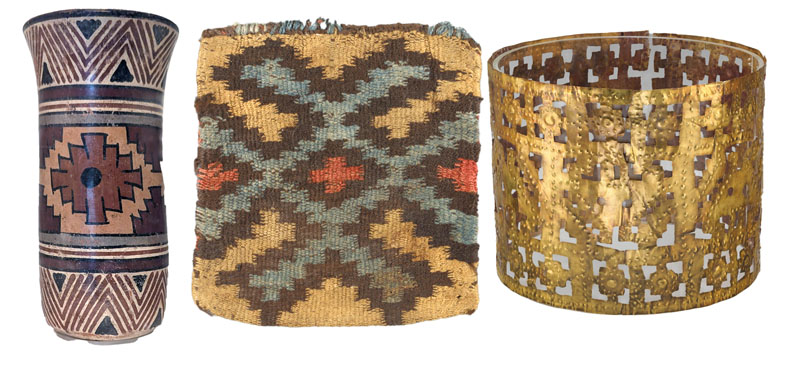
The geometric motif of steps or a stepped cross appears extensively in Andean art, architecture, textiles, ceramics, and metalwork from pre-Inca periods through the Inca empire and into the present. The most emblematic form is the chakana (also called the Andean cross or stepped cross). (image of ceramics, textile, and gold crown)
Form: An equal-armed cross whose arms are composed of three steps each, often with a central circular or square opening. This motif is ancient. Complete examples have been identified at sites dating back roughly 4,000 years (for instance, temple complexes in the Huaral area north of Lima). It appears prominently in Chavín, Tiwanaku, Wari, and later Inca material culture. Carved in stone, woven into textiles, painted on ceramics, and fashioned in jewelry across the central Andes.
Cosmological meaning:
In Andean thought the three steps on each arm of the chakana are widely understood to represent the three pachas (realms or worlds), Chakana Realms:
- Hanan Pacha – the upper world (sky, celestial bodies, higher deities), Condor.
- Kay Pacha – this world (the realm of human life and activity), Puma
- Ukhu Pacha – the inner or underworld (ancestors, subterranean forces, the interior of the earth), Snake.
The stepped form itself functions as a “bridge” or ladder (chakana can be translated as “bridge” or “crossing”). It visualizes the possibility of movement and communication among these levels. The four arms correspond to the cardinal directions, while the center often symbolizes the point of connection or the cosmic axis.
Connection to Pachamama
Pachamama is intimately associated with Ukhu Pacha and with the fertility and generative power of the earth. The lower steps of the chakana and the subterranean character of the chinkanas both point toward this domain. In contemporary Andean ritual practice the chakana frequently appears in offerings (despachos) made to Pachamama, especially during agricultural ceremonies. Museum interpretations (for example those presented by the Museo Chileno de Arte Precolombino) emphasize that the stepped motif encodes principles of balance, complementarity, and the cyclical relationship between human communities and the earth.
Incan Duality, Culture, Myths & Beliefs
(The following information is based on a combination of texts I collected in local museums. Please visit Qorikancha, Inca, and other museums in Cusco).
Major periods & Sense of Time:
Pachacuti Yamqui divides the pre-Hispanic era into three major periods:
- The age of purun pacha (purun: harsh, barbaric)—a time of barbarism and savagery.
- The age of Tunupa, referring to the initial evangelization of Abya Yala by a legendary apostle (Saint Thomas); this is a time of moral and spiritual dawn.
- The age of the Incas, representing a revelation of monotheism and morality. (Clearly, Pachacuti Yamqui does not take post-Inca eras into account.)
Each of these epochs concludes with a pachakuti (500 years)—a cosmic cataclysm or cosmic revolution in which the world turns over. The verb kutiy means to turn back or return; the universe (Pacha) reverts to disorder to initiate a new order, a new cycle. These cycles are not mere repetitions of the same; rather, they represent a new way for Pacha to organize and harmonize itself.
Unlike our own times—in which we conceive of time as linear and non-repeating, and religious space as consisting of three clearly differentiated levels accessible based on our actions and social norms—the advanced pre-Hispanic societies existing up to the 16th century conceived of time as cyclical and repetitive. According to chroniclers, each pachacuti brought about a sudden shift in time every 500 years—and a space that was fundamentally dual. We can access distinct levels depending on our actions and rules of coexistence.
Andean duality is understood as the image of someone reflected in a mirror—an opposition, or a counterpart that is at once the opposite and the complement of the individual (who is, in principle, male or masculine). From this concept arise the tripartite and quadripartite divisions found in political, religious, and geographical spheres, among others.
Politically, duality is perceived in the concept of a diarchy. This is evident, for instance, in the foundational myth of the Ayar siblings (half male and half female). Geographically, it manifests in the division of Cusco into Hanan and Hurin. Religiously, duality presents male gods alongside counterparts possessing distinctively female characteristics. Given this, it is not unusual to state that the Inca, curacas (local lords), military leaders, and other authorities each had a counterpart—an opposite yet complementary figure (yanantin, masintin). (Comes from a local museum’s description)
- Example: image of Duality at the Main Altar of the Qorikancha
- Example: The Andean duality in Cusco: Hanan Qosqo, Upper Cusco, Hurin Qosqo, Lower Cusco
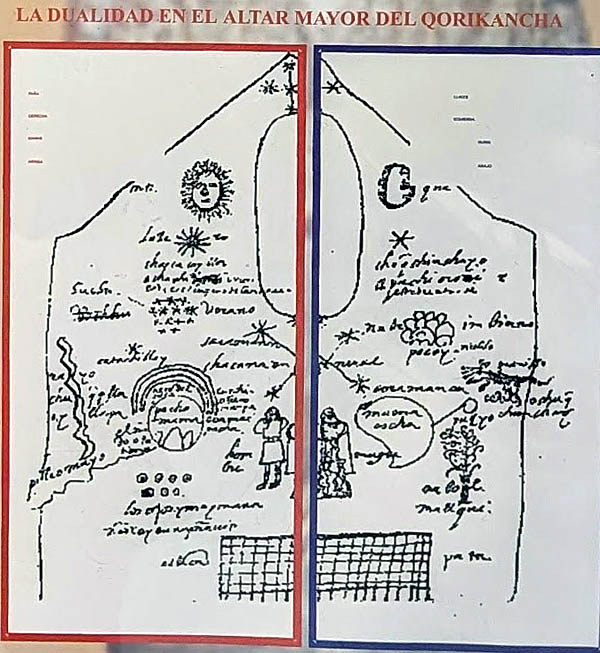
In the Andean cosmological view, the natural community is organized into pairs distributed across three planes that communicate, transform, and engage in reciprocity with one another. The image of the Qorikancha Altar organizes the universe into three planes integrated within the oval representing Wiraqocha. At the top lies the ordering principle, expressed by the square cross. At the center is the dynamic principle, symbolized by the Southern Cross, and the spatial principle, represented by the grid of the Qolqapata.
Order of Reality:
Harmonious Order of Reality is divided into Male and Female realms. Both realms share Corner of diagonals
(Proportioner).
The Masculine realm: Sun, Venus as morning star, summer, ray, Pacha Mama, origin of diversity, order, abundance
The Feminine realm: the Moon, Venus as evening star, winter, feline hail, Mama Cocha, container of origins
The Wari culture:
The Wari culture (Warpa) was a mixture of several ethnic groups united by ideology, social structure, and politics in the Peruvian region and Tiwanaku. The Wari occupied the Cusco region between 600-900AD. The Wari of Ayacucho: Located to the south of Cusco, it is a city of one square kilometer, with more than 1,000 dwellings. Archeologists found ceremonial and domestic enclosures, storage facilities, Plazas, hydraulic systems, streets, walls, etc. The entire town is encircled by a wall with a single entrance and exit. They also found small turquoise micro-sculptures, painted ceramics, and sculptures of their main Inca deity.
Wiraqocha: Principal Inca Deity
Wiraqocha is a pan-Andean god, venerated under various names and depicted in diverse forms since the Formative period. He appears on the Chavín culture’s Raimondi Stela, in the Paracas culture’s Karwa textiles, on the Gate of the Sun at Tiahuanaco, on Wari ceremonial urns, and at the Inca temple of Qorikancha.
In myths and legends, he appears as the creator or organizer of the world. One myth recounts that, in the beginning, Wiraqocha created the heavens and the earth, populating the latter with plants, animals, and primitive humans who lived in darkness and disorder.
Wiraqocha Worship: In the Tahuantinsuyo, the worship of Viracocha was very restricted; aside from the Kiswar Kancha temple, there were few sanctuaries dedicated to him, and all were located in the Cusco area. His image was also found in the Qorikancha, and according to chroniclers, there was a certain rivalry between the worship of
Wiraqocha and the worship of Inti, the sun god. (Temple of Wiraqocha in Raqchi, south of Cusco)
Inca Gold & Metallurgy:
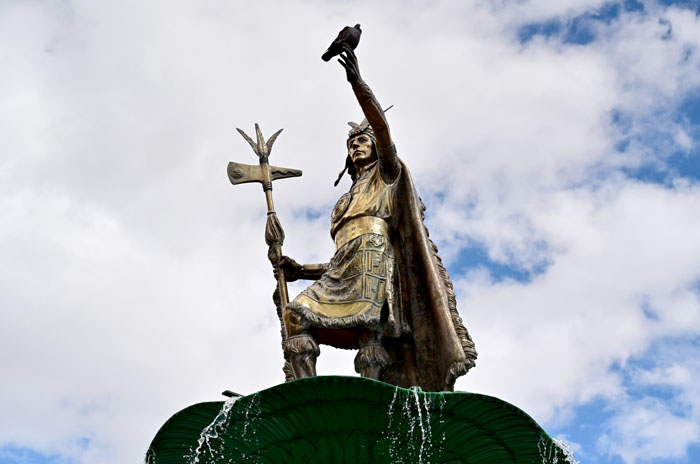
Within the political, military, and religious contexts of the empire, metals served as symbols of authority, influence, prestige, and nobility, as well as highly significant religious offerings. The beauty and glitter of gold, silver, and alloys were reserved for the elite.
Precious metals were used in religious ceremonies and to dress the elite, dignitaries, and priests. Those people wore splendid attire, covered in symbolic jewelry and accessories, like hairpins, nose rings, chest covers, crowns, necklaces, bracelets, and masks, which later would be used as funerary objects.
Ordinary people could only be dazzled by the shine of these metals, which resembled the brilliance of the Sun and Moon. Silver had a great symbolic value linked to the feminine elements of nature, and that complemented the value of gold, linked to the masculine realm.
The Incas didn’t invent metallurgy, as it actually came from the Chavín and Tiwanaku cultures. Incas did learn and build upon their skills, adding Inca style to their gold pieces. Their techniques included gold embossing, lamination, smoldering, chiseling, gilding, and inlaying.
Silver mining started over 3,500 years ago, the date of the Waywaka site, in Apurímac, where supporting archeological evidence has been found for this craft. The relative abundance of silver allowed the development of highly sophisticated techniques, such as rolling, embossing, hammering, and chiseling, as well as making various alloys.
The Andean worldview associates bowls and plates with the notion of a source from which water springs from the inner world and makes life possible. In the museum, you can see this silver plate with multiple nobs resembling water droplets.
What are Inca pacchas?
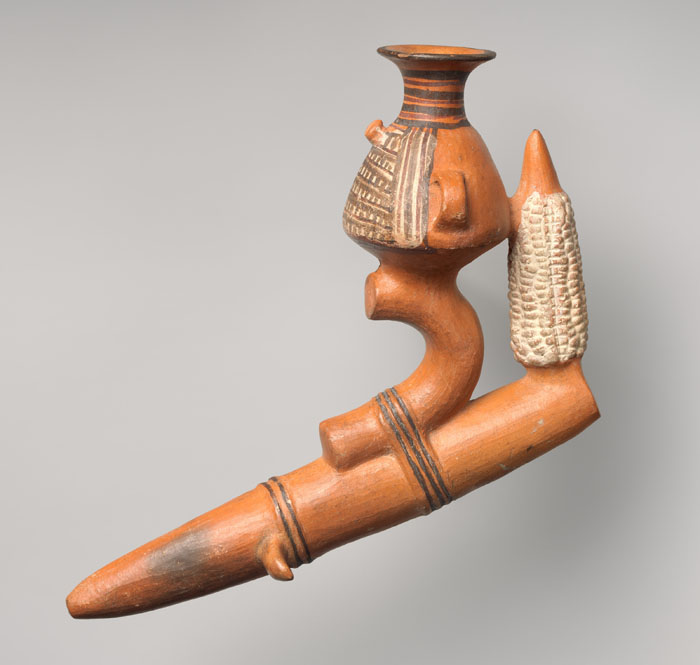
The top of the plough was rendered as an ear of corn, devoid of its husk, and symbolizing the harvest. Compared with the stylized depictions of this plant in other Andean ceramics (e.g., 1989.62.1), this ear, with its winding rows of plump and desiccated kernels, appears to have been modeled after a real ear, transforming an organic and perishable body into a mineral, durable material. The size of this ear of corn seems small compared to today’s standards, but it was a standard size at the height of the Inca Empire.
The ear of corn is connected to a jar with a flaring rim, a type known as an urpu, used by the Inca as a container to store corn beer. Large urpus, such as those in the collection of Museo de Arte de Lima (IV-2.0-0031 or IV-2.0-0032) or in the collection of the Museo Inca in Cusco, were used to serve beer at public gatherings, whereas smaller versions, such as MMA 1979.206.1094, were used in propitiatory offerings to Mother Earth, known as Pachamama. Because each of these activities—sowing, harvesting, and preparing beer—was carried out in different seasons, this sculpture also reflects different moments of the agricultural calendar.
By the early sixteenth century, much of western South America was part of the Inca Empire, called Tahuantinsuyo, “the realm of the four parts,” in Quechua. Artists in Cuzco, the imperial capital, developed an imperial style, and works such as the present example were part of campaigns to extend and impose Inca ritual practice throughout the Andes. This sculpture, and the symbolism of corn beer, can be understood as part of a complex narrative about water. According to Inca cosmology, the world is surrounded by water. The Milky Way, which is clearly visible in the clear skies of the Andean mountains, is thought of as a river that crosses the sky. With every rain, water flows into the earth, forming rivers that reach the sea, the Mamaqucha. From there, water rises again, feeding the sky, and continuing a never-ending cycle. During its transit through the world, water impregnates the land and sustains life. The Incas made explicit the importance of water flow in their landscapes, through the construction of ritual canals, but also in rituals in which vessels such as the present example would be deployed. When aqha is poured in through the opening at the top of the urpu, it flows through the plough and ultimately out of the vessel onto the ground, impregnating the liquid with vital force, and symbolically completing both the cycle of corn and water in a single act.
Hugo C. Ikehara-Tsukayama, Andrew W. Mellon Curatorial/Collection Specialist Fellow, Arts of the Ancient Americas, 2022
An Inca paccha (derived from the Quechua word for “waterfall” or “fountain”) is a specialized ritual conduit designed to channel liquid libations directly into the earth during sacred agricultural and state ceremonies. Unlike standard serving vessels such as the aryballos (storage jar) or kero (drinking goblet), a paccha is engineered specifically to transfer fluids from the human hand to Pachamama (Mother Earth) or sacred ancestral rocks (usnu). image; Inca paccha featuring a corn cob design. Source: The Metropolitan Museum of Art https://www.metmuseum.org/art/collection/search?q=Inca+paccha+
Architecturally, a paccha combines a liquid reservoir with a narrow, continuous interior channel that discharges the liquid out of a designated spout. Crafted from polished ceramic, carved wood (chachacomo), carved stone, or occasionally hammered precious metals (gold and silver for imperial Inca rites). The vessel body usually incorporates relief carvings of key agricultural or cosmological symbols—most commonly an ear of maize (sarapampa), a foot-plow (tacklla), or feline/serpentine predators (puma and amaru). Liquid is poured into a top receptacle (often shaped like a miniature aryballos or animal head), travels through a hollow tube, passes through the sculpted agricultural motif, and exits at the pointed base into the ground.
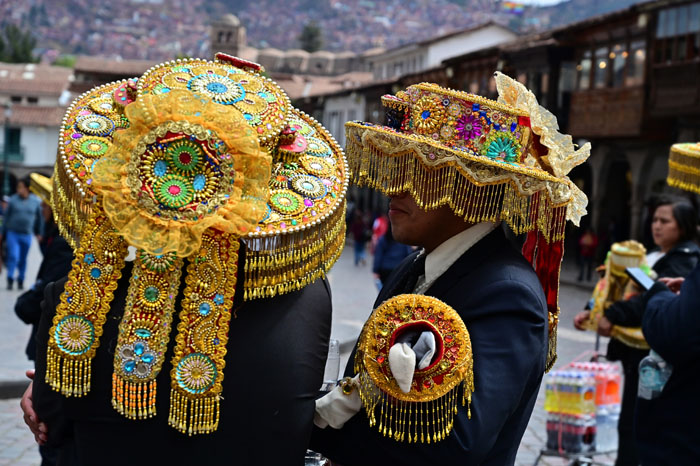
Inca Ritual Practice, Vessels & Liquid Offerings:
Inca ritual practice hinged on the principle of Ayni (reciprocal exchange). Liquid offerings through a paccha functioned as an essential physical mechanism within the ritual:
Nourishment of Pachamama: During planting seasons (especially ahead of the maize sowing in August), ritual specialists used pacchas to pour chicha (fermented maize beer) or water directly into cultivated soil. Passing the chicha through a carved maize cob on the paccha symbolically “charged” the liquid, feeding the earth the essence of the crop it was expected to yield.
Agricultural Architecture and Sacred Landscapes (Usnus): Archaeologists excavating Inca administrative centers (such as Huanuco Pampa and Vilcashuamán) have located central platform structures called usnus. These platforms feature stone drain holes and carved channels explicitly designed to receive liquid poured from pacchas, directing the libation deep into the structural foundation of the site.
Rites of Reciprocity: In state rituals hosted by the Inca elite, offerings were performed in pairs. The officiant would drink chicha from one vessel while pouring an equal portion through a paccha into the ground, establishing a simultaneous feast between living humans, ancestors, and the earth deity. Practice Today: August marks the Mes de la Pachamama (Month of Earth), when the earth is believed to “wake up” hungry after winter. Communities gather to perform ritual offerings containing coca leaves, seeds, llama fat, and chicha, burning or burying them directly into the ground to ensure harmony and abundance for the coming year. I’ve heard that the younger generation doesn’t really believe in Pachamama anymore; however, middle-aged people still do. Coca leaves and coca tea are sold everywhere in Peru. You should try their hot tea!
Syncretism in the Colonial Period: Research on 16th to 18th-century Andean art (such as the Cusco School of Painting) illustrates how indigenous artists syncretized Pachamama with the Virgin Mary. Paintings like The Virgin of the Mountain of Potosí depict Mary’s body literally composed of the earth/mountain (Apu), illustrating how Pachamama worship merged with Catholic iconography. You can’t take pictures in local churches in Cusco, but local art iconography, architecture, and religion are clearly Spanish.
Inca Pottery
Ritual Offerings (Pagos): Archaeological excavations at high-altitude Inca shrines and coastal pilgrimage sites like Pachacamac frequently recover buried offerings—fine textiles, Spondylus shell, and miniature metal figurines. Studies highlight that Spondylus (thorny oyster) was offered specifically to invoke rain and fertility, serving as a material bridge between the ocean and Pachamama’s agricultural capacity.
Inca pottery has polished surfaces, fine geometric-style painted decorations, and the use of yellow, black, white, red, and orange colors. They commonly painted stylized or geometric diamonds, lines, circles, animals, fruit, plants, and flowers.
You can see many amazing Ancient Peruvian Pots here, like a bottle in the shape of a feline by a Wari artist, 600–900 CE. (The Wari bottle merges the body of an anthropomorphized feline with that of a flask-like vessel. Combining in-the-round, low-relief, and painted elements, this high-quality ceramic is beautiful. Colored in earthy tones, it shows unique stylization, function, and symbolism in one pottery vessel.
Inca pottery comes in a wide variety of forms, ranging from fine ceramics to domestic ware decoration. There were different types of pitchers with conical bases, pots with side handles, others with a pedestal and a side handle, tripod pots, plates with handles and interior painting, roasters with a side opening and tripod base, etc. The prestige achieved by Inka pottery led to its copies in conquered regions.
Urpu jar: Large urpus were used for the production, storage, and transportation of chicha, a fermented corn beer, as well as other foods. The pointed base of urpus allowed large ones to be set into the earth for stability. On the shoulder of the chamber is usually a central lug, often in the shape of a stylized animal head, as seen here. Ropes were pulled through the handles and secured around the lug for carrying on the backs of porters. Most Cuzco bottles are embellished with polychrome geometric slip designs in black and red on a cream-colored background;
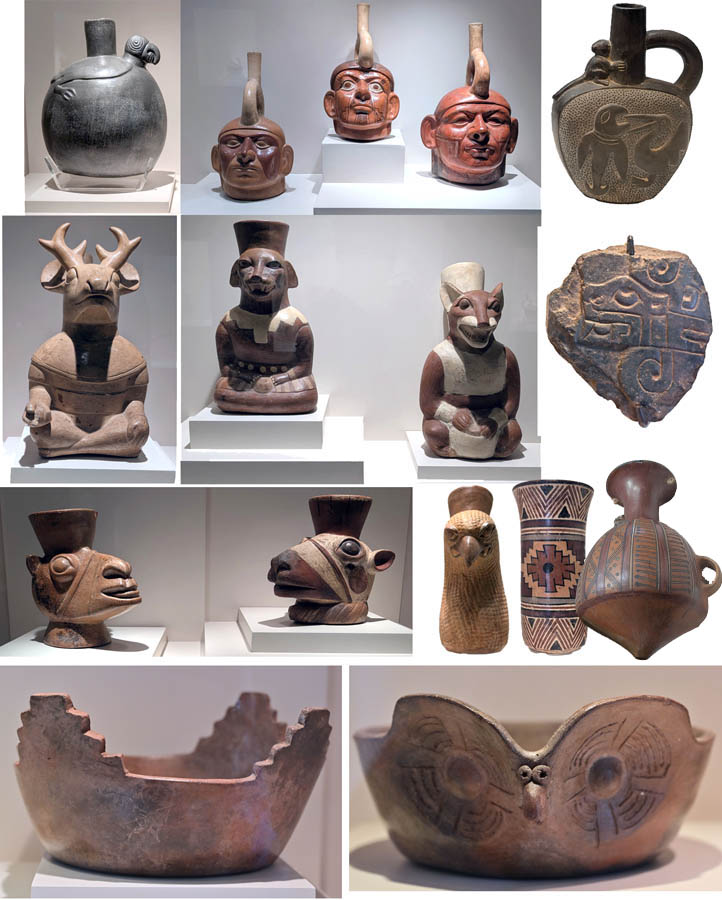
The following adapted descriptions come from several local museums I visited in Cusco. Inca manufactured various vessels, and I organize them in groups here, like birds, animals, deities, etc., as opposed to listings of their original museum locations.
evolution toward the Classic Inka aryballos. The name for this vessel type is inspired by Greece. Incas cooked stew in such pots.
Aryballos, black ceremonial vessel by Chimú-Inka, 900-1,460 AD. & Inka ceremonial plates, 1438AD, Inka Qero cups, madera, 1538-1800 AD.
NASCA ceramic vessels, South coast. Peru | 1 A.D. – 800 A.D. These tall vessels showing geometric designs – laden with symbols, such as steps, circles, trophy heads, stars, chevrons, undulating lines, chakana crosses, and other geometric lines alluding to mountains or water – were used in ritual toasts with chicha or other beverages. Such ceremonies helped to create social relations and commitments, propitiate the encounter among worlds, and secure agricultural production.
Powerful heads, MOCHICA ceramic sculptural heads, North coast. Peru | 1 A.D. – 800 A.D. Andean ceramists modeled artifacts portraying human heads and faces, where they reproduced the individuals’ facial features with exceptional realism. These head-shaped ceramics are known as “portrait huacos“. These powerful heads (seed or vital heads) are probably portraits of members of the political and religious elites of that period. They were buried in tombs as offerings.
Condor and macaw, CHIMU ceramic pitchers, Central coast. Peru | 1 300 A.D. – 1 532 A.D. Birds are travelers between the worlds. Condors connect the worlds above and the earth as they guard both the mountains and ancestors. The macaw connects the world above with the jungle below. These black jars have fine heads of birds sculpted in fine detail, while their bodies were captured in relief on top of each vessel.
Foxes, MOCHE ceramic sculptural pitchers, Peru’s northern coast | 1 AD – 800 AD. Two large clay pitchers represent hybrid figures with a human body and a fox’s head. In Andean mythology, the fox is seen as an animal jumping between two worlds-the sky and the earth. The fox is also associated with the Moon. Here, in Moche art, it is depicted as an important being of wisdom. In these pitchers, the dress shows status, and the seated position indicates a connection to priesthood.
The snake, CHAVIN stone slab, North Andes. Peru | 1 250 B.C. – 1 A.D. In Andean mythology, animals are powerful beings who represent different worlds. This is a fragment of a carved stone slab that depicts a fanged snake as a predator. The snake is associated with the underworld and has the ability to communicate with the terrestrial world. Such snakes decorated various ceramic designs and carved stone slabs used in ceremonial areas in temples.
Anthropomorphic deer, MOCHE ceramic bottle, Peru’s northern coast | 1 AD – 800 AD. In the Andes, the deer is prey for large predators. However, this clay bottle depicts the animal as a high-ranking mythological figure. A hybrid with a human body and antlered deer head, it is wearing a shirt, breastplate, belt, and
wristbands. It’s extending its right hand, as priests would have done during the rituals.
Llama heads, HUARI ceramic vases, Central coast. Peru | 800 A.D. – 1 300 A.D. Cute llamas were fundamental in Huari civilization. Huaris fostered llama herding everywhere they lived.
Mythical Fruits, MOCHICA ceramic jugs, North coast of Peru | 1 A.D. – 800 A.D. Hybrid representations of fruits and animals that blurred the boundaries between them were not uncommon in the Andean worldview. Fruits and animals are made in a single body, rendered alive by the water they may hold, as in these ceramic pitchers. These containers represent a maize crowned by an eagle’s head and a loche squash fruit with an owl’s head. The latter features reliefs on its body in the form of humans, birds, and sea lions.
Owls and Steps, CUPISNIQUE ceramic bowls, North coast. Peru | 1 250 B.C. – 1 A.D. Andean societies imagined and shared a worldview that identified three planes or worlds in constant interaction: the world above, the inner or subterranean world, and the terrestrial world. These birds express such interaction through the stepped symbols, while owls represent the connection between the world above, as birds, and the inner world because they hunt by night and are regarded as capable of connecting both worlds and flowing between them. Owls also seem to be related to the funerary domain. According to the Met’s description, anthropomorphized owls prepare bodies and offerings for burials and also carry deceased warriors to the world of the dead.
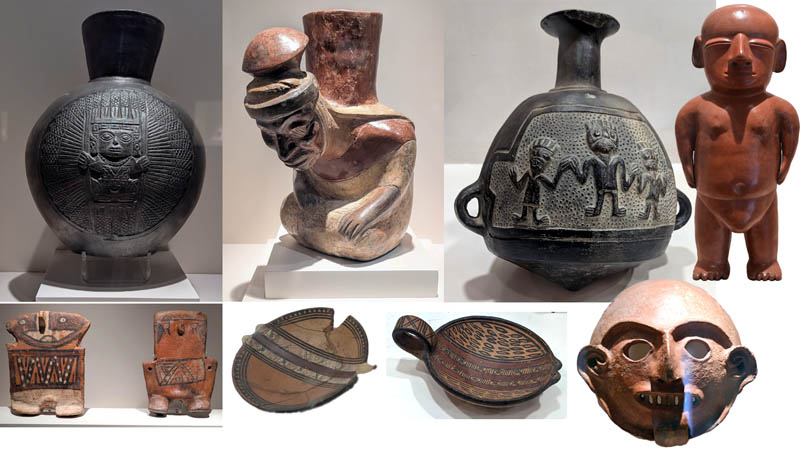
The Blind Man, MOCHE ceramic pitcher, Peru’s northern coast | 1 AD – 800 AD. Some scenes in Moche art depict figures who are mutilated or have some kind of physical disability. These figures either guard entrances to tombs or serve as protectors of sacred spaces. Often, blind figures are shown wearing headdresses or adornments to indicate their high status. It’s suggested that the man’s visual impairment gives him the ability to see the invisible world. He can’t see in this world as a blind person but can manifest himself in another world wearing this mushroom-shaped headdress. Some hallucinogenic mushrooms were consumed by priests or shamans in the region, and this figure probably reflects the tradition.
HUMAYA ceramic figurines, Central coast. Peru | 800 A.D. – 1 300 A.D. These funny-looking, abstract, and tablet-shaped figurines represent human beings. Shoulders, arms, and legs are quick sketches, although geometric designs decorate their bodies. These cute figurines were used as votive offerings in temples, burials, or rituals.
Boy, VIRU ceramic sculpture jug, North Coast. Peru | 1 250 B.C. – 1 A.D. The plasticity of clay allowed to make extremely realistic objects and containers in the most diverse forms. In this Virú sculptural pitcher-a semi-naked
boy-face and body have realistic detail.
Stirrup-spout bottle with decapitation scene, Moche, 200–500 CE
From Met’s description: This bottle represents a major Moche deity known as Wrinkle Face in recent literature. He is recognizable by his deep wrinkles, fanged mouth, feline headdress, and snake-headed belt. In this particular image, he also wears a necklace made of circular owl-head beads. Wrinkle Face is often represented in sacrifice scenes, burial ceremonies, and combats with diverse supernatural creatures. Here, he stands on a platform in front of a human figure with a severed head lying on its back. The deity holds a tumi ceremonial knife in his left hand, as if he had just performed the sacrifice. In the right hand, he holds an open-mouthed animal head. A series of snake heads is painted around the platform.
VICUS CERAMIC MASKS, North coast. Peru | 1 250 B.C. – 1 A.D. Masks were used in rituals and ceremonies in ancient Peruvian societies to represent the possibility of inhabiting liminal states by those who wore them. Wearing a mask with an ancestral face, the user could transit and flow between the worlds. The mask also announced the possibility of a transformation: rulers or priests who became mythological or ancestral beings. Masks were also
customary as funeral offerings that covered the face of the deceased and gave them a new identity in the world beyond.
Inca textiles
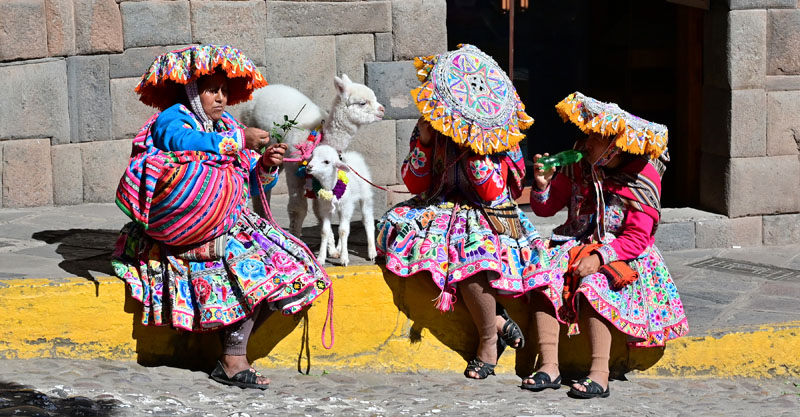
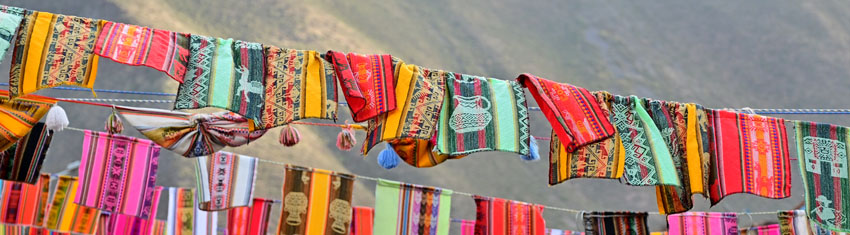
Probably inspired by psychedelic experiences and local landscape, Inca textile art features bright, geometric designs—or tocapus. The Incas excelled in the creation of tapestries and magnificent feather mantles with beautiful geometric patterns. The stylized fabric patterns have wonderful color, symmetry, order, and repetition of figures that you can still see today.
For the Inca, textiles held religious, social, and political significance. They expressed the Inca worldview and their conception of space and its divisions. Textiles served as symbols of social status.
Awasqa and Cumbi:
Textiles were produced both by individual artisans within a family setting and under state control. Textiles were categorized by quality: ordinary ones, known as awasqa, and fine ones, known as cumbi (kumpi). The latter served a ritual function, as they were intended for the Inca, priests, generals, and the nobility. Both backstrap and horizontal looms were used in textile production. Yarns varied in thickness, with vicuña and alpaca fibers being the most highly prized. While European tapestries rarely exceeded 85 weft threads per inch, Peruvian ones often featured 200.
Famous checkerboard-patterned ponchos—featuring black and white squares with red centers—were exclusive to the elite (orejones) or generals close to the Inca ruler. Geometric designs found on certain fabrics also served to identify the Inca and their families (panakas). From a political perspective, textiles represented valuable assets for exchange as well as goods for tribute that helped hold the empire together.
Cusco School of Painting
You can see these paintings in local churches and a few museums (the Archbishop’s Palace Museum, etc.) in central Cusco. The so-called Cusco school of painting—or Cusco colonial painting—is basically the convergence of Spanish Baroque-style painting with the Indigenous and mestizo artists’ worldview.
Periods:
Mannerist: 1580 to 1660 (Bernardo Bitti, Pedro de Vargas)
Baroque: 1660 to 1700 (Diego Quispe Tito Inka, Juan Zapata Inka); the Last Supper by Marcos Zapata is a visual combination of the Christian Bible with indigenous culture
Syncretic: 1700 to 1790 (Marcos Zapata, Antonio Willka) & Popular/Naivete painting (Tadeo Escalante, Pascual Olivares)
Inca Head binding
I’ve seen many videos on YouTube talking about alien skulls found in Peru, including the Paracas skulls. And so I went to a local museum that preserved some weird skulls and mummies. I’m sorry to disappoint, but they don’t look alien. They are small skulls of people whose heads went through a head-binding deformation.
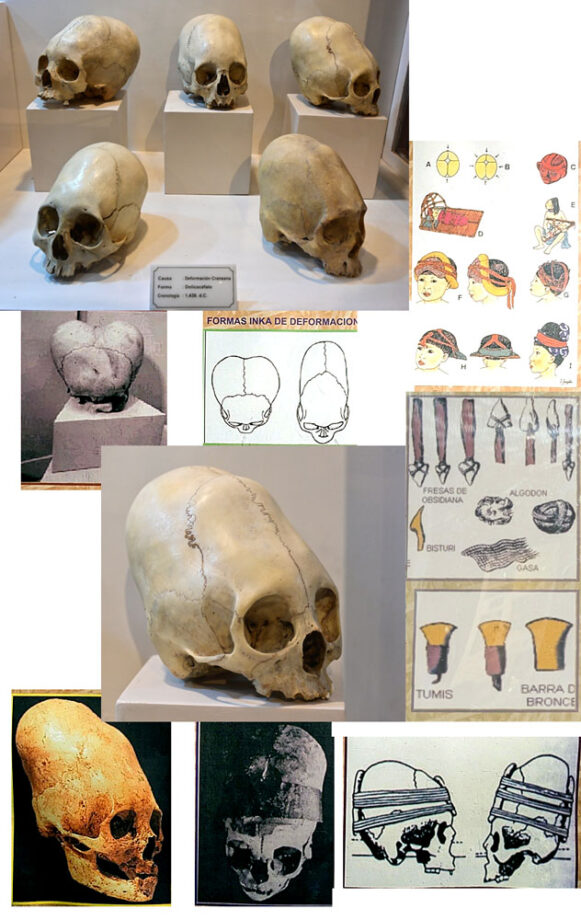
CRANIAL DEFORMATION:
Cranial deformation was practiced for various reasons, including purely aesthetic purposes, as a marker of social status, or as a religious symbol. The possibility that these practices were intended to facilitate mass control cannot be ruled out either. This latter hypothesis is supported by early writings—such as those of Juan de Santa Cruz in the early 17th century in his Relación de Antigüedades del Reino del Perú—which state that the Inca Manco Cápac ordered heads to be bound to make them large and round, fostering a spirit that was highly enterprising and, above all, obedient. Similarly, Manco Cápac’s grandson, the Inca Lloque Yupanqui, issued an order much like his grandfather’s, decreeing that all subject nations bind their infants’ heads to make them elongated and flattened at the forehead, thereby ensuring greater obedience.
THE DEFORMATION PROCESS: Various techniques and instruments were available for carrying out cranial deformations, yet they all shared a fundamental approach: the application of small boards, caps, molds, and bands to the heads of children under three years of age to take advantage of the bone plasticity characteristic of that stage of life. These tasks were typically performed by midwives and the children’s own mothers, who would periodically adjust and secure the binding straps holding the boards in place, adapting them to the child’s growth and the desired shape.
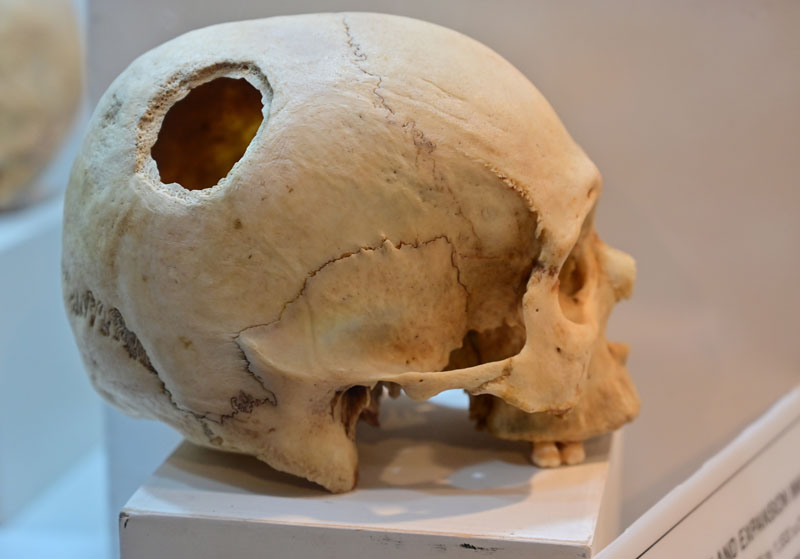
Cranial Trepanation:
This technique involves the removal of a bone fragment from the skull—often one affected by a traumatic injury. While the earliest evidence of this practice dates back to the Paracas society (400–200 BC), it was also employed by later cultures, such as the Inca. Performing the procedure required advanced anatomical knowledge and appropriate surgical instruments—including saws, scalpels, retractors, needles, and tumis (knives)—as well as the use of dressings (gauze). The techniques employed included scraping, straight-line incisions, and the creation of cylindrical-conical openings. Yak!
They used anesthesia to perform cranial surgeries. It’s thought that coca and other sedatives could have been used on patients. They used gold and silver knives to make the scalp cuts to reach the bone. Usually, they enveloped the area with a sheet of gold and bandages after the surgery was done. 65% of patients survived this surgery!
Cranial Trepanation Techniques:
1. SCRAPING TECHNIQUE – This involves wearing down the bone plate through scraping; the practice was widespread. Triangular obsidian points were used.
2. SPINDLE-SHAPED STRAIGHT-CUT TECHNIQUE – Characterized by the presence of regular, rigid, and deep cuts in the central area of the trepanation site, alongside superficial, tapering incisions at the edges that necessarily extend beyond the actual bone openings. The shape of the cut defines the procedure and determines the resulting wound shape—which may be quadrangular or polygonal, though in some cases it takes on a circular form.
3. CYLINDRO-CONICAL HOLE TECHNIQUE – Involves a series of round holes aligned sequentially to outline a circular or oval area, which is subsequently pried out.
Separate from the main entrance, underground museum has five rooms, which display a collection of archaeological objects found in Qorikancha esplanade, including ceramics, lithic and metallurgical artifacts. This tiny museum has a display of human skulls with cranial trepanations and two royal mummies. Visitors can also see models of what Qorikancha may have looked like in its heyday. (Bring cash to buy the ticket). https://cosituc.gob.pe/museo-de-sitio-qorikancha/
Royal Inca Mummies in Qorikancha
THE CULT OF THE ANCESTORS: In ancient Peru, the dead were mummified, and some members of their entourage were sacrificed and then buried to travel with them on their journey to the world beyond. The tomb was filled with food, beverages, and objects that the dead person had enjoyed in life. Although individual ancient Peruvian civilizations evolved their own funeral rituals, they all attached great importance to preparing the body, especially if the deceased was a political-religious leader or a ruler.
The ritual offerings strengthened the leadership of the deceased and ensured the continuity of the human group. The leader was transformed into a non-earthly ancestor, and even into a divine being. The offerings could be artful pottery vessels, fine fabrics, gold and silver ornaments, wooden carvings, and stone carvings with symbolic messages.
The chronicler Pedro Pizarro wrote the following in the 16th century, at the time of the Western invasion: “It was the law and custom among these lords that when one of them died, he was embalmed and wrapped in many layers of fine cloth; furthermore, the entire retinue that had served them in life was retained to serve these effigies in death, just as if they were still alive.
When water was needed for the crops, the body—specifically that of Inca Roca—would be brought out in procession, richly dressed and with its face covered, and carried across the fields and highlands; it was believed that this played a major role in bringing rain (Cobo).
They were brought out with great ceremony for all solemn festivals; for lesser occasions, their guáuques (spirit doubles) were brought out instead. In the plaza, they were all seated in a row according to seniority, and the attendants guarding them would eat and drink there. Fires were lit before the dead using specially prepared, evenly cut firewood; upon these fires, they burned the food—identical to what the living ate—that had been set out for the deceased. Large vessels resembling troughs, known as Vilques and made of gold and silver, were also placed before the dead; into these, they poured the chicha used to toast the deceased, showing the drink to them first. Toasts were exchanged between the dead, between the dead and the living, and vice versa—acts performed on their behalf by their attendants.
Once these Vilques were full, the contents were poured onto a round stone—revered as an idol—situated in the center of the Cusco plaza; a small basin surrounded the stone, allowing the chicha to drain away through hidden channels and conduits. If they wished to visit the homes of other deceased lords, they would claim the dead desired the same, as this was their established custom. “…and they would go to visit the dead—visiting one another—and hold great dances and drinking bouts; and sometimes they would also go to the homes of the living, and the living to theirs.” (Pedro Pizarro: 1571).
Inca Mummies and Royal Panacas:
The devotion of the royal ayllus—or panacas—to their ancestors created serious administrative problems, as the cult of royal mummies made political factions an inherent feature of Inca government. In fact, Tawantinsuyo could well be described as a collection of kingdoms within a kingdom. Within the empire’s borders existed a series of smaller kingdoms, each consisting of a deceased king, his estates, the members of his panaca, and their respective possessions. In reality, each of these kingdoms constituted a sovereign state in the most literal sense. It possessed its own territories and revenue sources; its ruler was regarded as a living being capable of issuing orders when consulted. Moreover, he was considered an equal to the emperor currently occupying the throne. The primary duty of the royal ayllu (panaca) was to perpetuate the mummies of past kings and the cult surrounding them. Consequently, whenever the interests of an emperor clashed with those of his predecessors, each panaca would align itself with its own royal ancestor.
The invisible connection between Pachamama and Sacsayhuaman
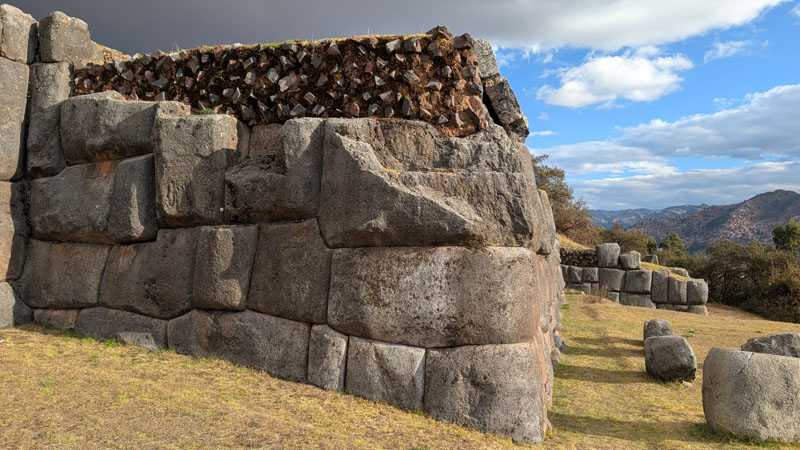
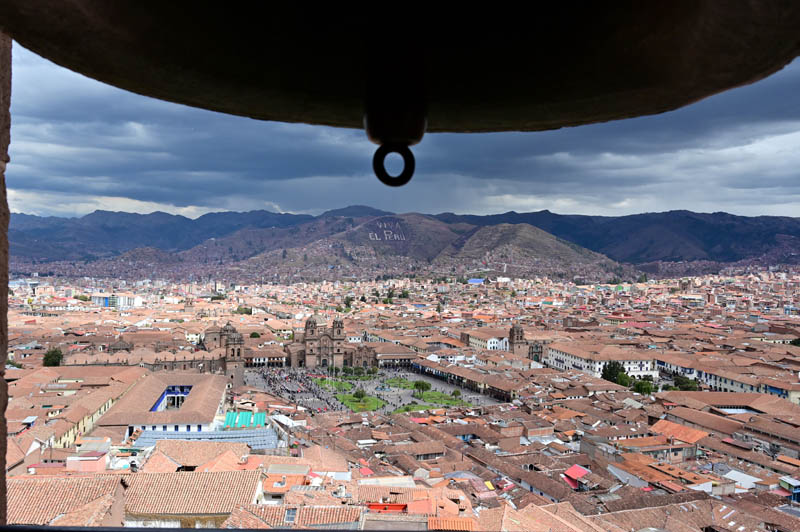
The megalithic stone site of Saqsaywaman (Sacsayhuamán) sitting above Cusco is a central geographical, spiritual, and ceremonial intersection between Inca imperial architecture and the veneration of Pachamama. While often mischaracterized as purely a military fortress due to its megalithic stone walls organized in a zigzag pattern, current archaeological evidence establishes Sacsayhuamán as a sacred ceremonial sanctuary as well.
Rock Carvings and Libations: Sacsayhuamán is built around living bedrock outcroppings (huacas) integrated into its limestone terraces. Archaeologists have documented numerous carved rock tunnels or chinkanas, step features, and basin drains cut directly into the natural stone. Some channels were engineered to receive liquid libations—such as chicha (maize beer) or blood offerings—allowing the liquids to flow directly from ceremonial platforms into the subterranean veins of Pachamama.
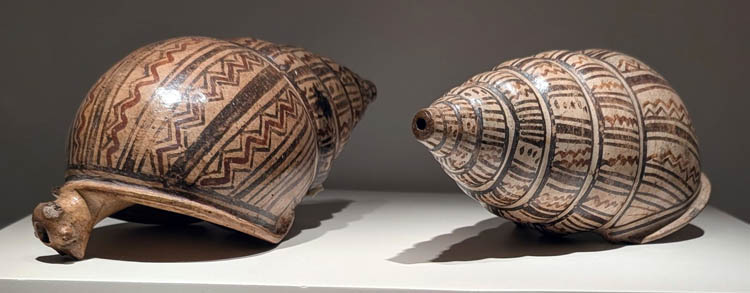
Saqsaywaman: The Citadel of the Sun
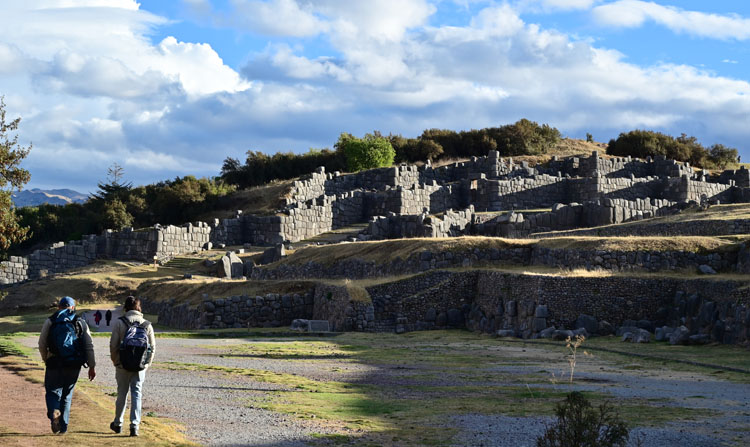
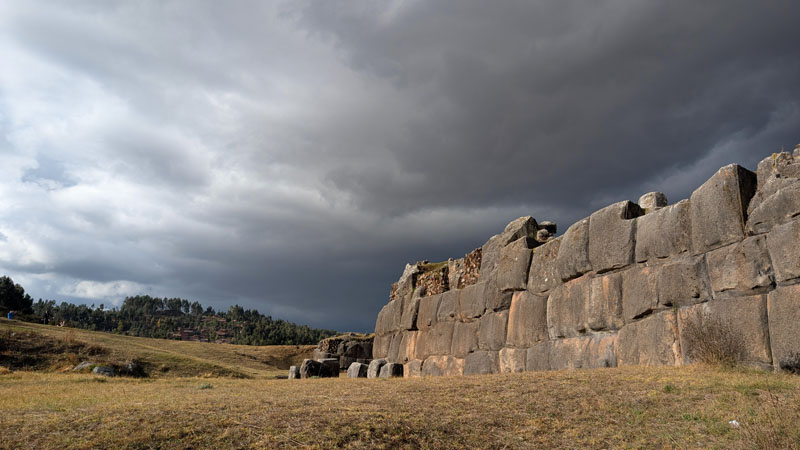
Located at 3,500 meters above sea level near Cusco, Saqsayhuaman etymologically means “satiated falcon” or “speckled head.” Built primarily during the 15th century under Sapa Inca Pachacuti and expanded by his successors, Topa Inca Yupanqui and Huayna Cápac. The Inca transformed the site into a massive ceremonial complex and fortress using fitted megalithic limestone blocks. The complex consists of zigzagging megalithic walls, tower bases, aqueducts, tunnels (chincanas), ceremonial temples, and artificial grounds. During the Spanish Conquest (1536), the Spanish captured the Incan fortress after heavy combat. Following the siege, the conquistadors dismantled the top towers and fine stonework to build colonial churches and residences, leaving only the megalithic foundation stones too large to move. Today, people celebrate the festival of the Sun in this complex.
The Ritual Center for Inti Raymi and Earth Offerings: Sacsayhuamán’s vast central plaza (Haukaypata extension) was built to accommodate thousands of pilgrims for state Rites of Reciprocity. During the annual winter solstice (Inti Raymi), offerings were made not only to Tata Inti (Father Sun) above, but simultaneously buried or poured into the plaza ground to thank Pachamama for the preceding agricultural cycle and request abundance for the upcoming planting season.
1. A Defensive Fortress: Early Spanish chroniclers viewed it as a fortification due to its massive, cyclopean stone walls.
2. A Temple to Illapa: Because of the lightning-bolt-shaped morphology of its bastions (that some archeologists view as a puma’s teeth or whiskers), some researchers have identified it as a temple dedicated to the god of thunder and lightning.
3. The House of the Sun: The majority of historical accounts and chronicles, including those of Inka Garcilaso de la Vega, suggest it served as a sacred temple dedicated to the Sun (Inti), the supreme deity of the Incas.
The Muyuq Marka: The site originally featured three circular towers on its upper level, with the central tower known as Muyuq Marka. These towers were believed to be massive buildings reaching between 15 and 20 meters in height.
4. Extensive archaeological excavations have uncovered funerary, ceremonial, and ritual use because of the discovery of quartz crystals, water canals, and marine shells, indicating the site was a center for sacred rituals, including those related to water worship.
5. The construction, which began under Pachacutec and continued through the reigns of his successors, remains a unique architectural feat in the Tahuantinsuyo. Some individual stones at the site weigh up to 120 tons, reflecting the immense effort intended to demonstrate imperial power and greatness.
The urban layout of Inca Cusco in the shape of a puma and its cosmological symbolism
According to Spanish chroniclers such as Pedro Cieza de León and Garcilaso de la Vega, the Ninth Inca, Pachacuti, redesigned imperial Cusco in the 15th century to form the zoomorphic silhouette of a crouching puma. In Andean cosmology, it’s believed this layout was a deliberate architectural embodiment of order, status, and power. If you look at the aerial view of Sacsayhuamán in such pictures, it forms the head of the puma visually.
The Feline represents the Woa. The cosmic feline relates to the Andean puma and Chuquichinchay. It commands lightning, thunder, and hail in Inca culture. Feared and respected, its presence is associated with the destruction of crops. The Feline (15th c sculpture) presents the duality of nature – divine power and destructive force. (This description comes from the museum I visited in Cusco)
The Puma Layout:
The city’s plan integrated natural topography, canalized rivers, and monumental architecture to outline the body of the sacred feline:
The Head (Saqsaywaman: The massive megalithic complex set on the hill above Cusco formed the head and crown of the puma. The multi-tiered, zig-zagging stone terrace walls represented the animal’s sharp teeth or whiskers.
The Heart & Belly (Plaza Haukaypata / Plaza de Armas: The main central plaza served as the belly and vital core of the city. This expansive open area still hosts major civic ceremonies, festivals, and state banquets. In two weeks’ time, we saw at least two large gatherings and festivals of locals.
The Genitals / Loins (Qorikancha: The Golden Temple of the Sun, the most sacred religious precinct in the Inca Empire, was positioned at the puma’s reproductive center, symbolizing power.
The Tail (Pumachupan): Located at the confluence of the Saphy (Huatanay) and Tullumayo rivers, this pointed spit of land translates directly from Quechua as “the puma’s tail” (Puma Chupan).
The assertion that Inca Cusco was deliberately laid out in the shape of a puma is one of the most famous hypotheses in Andean urbanism, popularized by Peruvian historian Manuel Chávez Ballón and scholar John Howland Rowe in the mid-20th century. However, within field archaeology and architectural history, the “puma plan” is a subject of intense debate. While there is strong ethnohistoric and linguistic evidence, direct archaeological and spatial proof remains nuanced and contested.
Proponents of the puma model, such as architect Gasparini and archaeologist Rowe, mapped the original 15th-century Inca street walls and river canalizations to demonstrate spatial alignment.
Pachacuti engineered major earthworks to straighten and canalize the Saphy and Tullumayo rivers. Proponents argue this massive hydraulic effort was executed specifically to delineate the outer outline and limbs of the animal shape. The three tiers of massive megalithic zigzag walls at Saqsaywaman do not follow standard straight defensive lines. Architectural surveys show these serrated patterns visually evoke the sharp teeth or whiskers of a feline head when viewed from the valley floor or opposing hillsides.
Many modern archaeologists and architectural historians (such as Jean-Pierre Protzen and R. Tom Zuidema) challenge the idea that Cusco was literally planned as a realistic puma drawing on the ground. Excavations show that urban alignment in Cusco strictly followed natural drainage basins, ridge lines, and agricultural terrace contours. The layout between the two rivers naturally tapers down to a point (Pumachupan) purely due to hydrology and terrain, rather than stylistic animal sketching. Some archaeologists conclude that calling Cusco a “puma” was a conceptual or ritual metaphor rather than an absolute blueprint. Just as medieval European texts described Rome or Jerusalem as “the body of Christ” without building actual human figures out of brick, the Inca likely viewed Cusco as possessing the essence, strength, and sovereignty of the puma without strictly adhering to an exact animal outline.
Pre-Columbian Andean cultures did not use aerial maps or bird’s-eye architectural blueprints. Inca spatial orientation was based on network lines (ceques) and relational sacred sites (huacas) rather than two-dimensional graphic representations meant to be seen from the sky. I quite agree with this view. While I’m not an archeologist, I think that the visual comparison to a puma layout is a bit overdone, mainly because the Incas didn’t have drones for aerial views of the landscape, and so this visual layout seems to be a display of pareidolia by us today rather than a special design back then. Local archeologists have a strong view going for the puma design based on their current research! So, as with anything else in science, it’s debated until proven one way or another, with new evidence coming in.
The invisible connection between Qorikancha and Sacsayhuaman
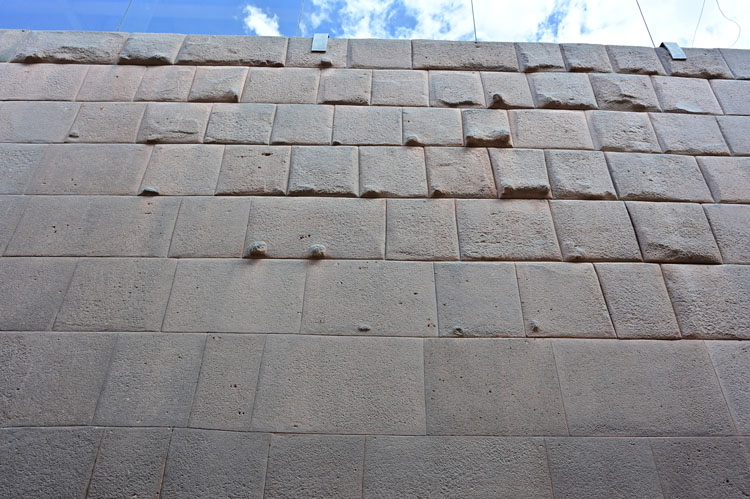
Inca History of Qorikancha: The Golden Enclosure
According to the sixteenth-century chronicler Pedro Sarmiento de Gamboa, the founders of the Inca ruling dynasty, Manco Cápac and his family, conquered the valley of Cusco and established the first four quarters, or neighborhoods, of the settlement: Quinti Cancha, Chumbi Cancha, Sairi Cancha, and Yarambuy Cancha. These lay between the rivers Saphi and Tullumayu. Within this early settlement, on the site now occupied by Qorikancha, the principal temple known as the “House of the Sun,” or Inticancha, was constructed. In Quechua, Inti means the “sun” and cancha means “enclosure.”
The great reformer of the Inca Empire, Inca Pachakuti (Pachacuti), rebuilt the city of Cusco and ordered extensive new construction at the House of the Sun. Pachacuti rebuilt and renamed it Qorikancha (“Golden Enclosure”) around 1438. He endowed the sanctuary with extraordinary treasures, which led to its renaming as Qorikancha, meaning “golden enclosure” in Quechua. (In Spanish orthography the name is commonly written “Coricancha”; according to the conventions of modern standardized Quechua it is spelled “Qorikancha.”)
It stood as the most sacred temple in the Inca realm, dedicated to Inti, Mama Killa (the Moon), and other celestial deities. The outer walls were sheeted in solid gold plates. Inside sat life-sized gold and silver sculptures of corn, llamas, and deities, along with the sacred punchao (a golden statue containing the ashes of past Inca rulers).
The sixteenth-century Spanish author Pedro Cieza de León described the principal Inca temple as follows:
“This temple had more than four hundred steps in circumference, all surrounded by a big wall, the whole building composed of excellent masonry, of fine stonework very well adjusted, with some of the stones very big and of superb quality; [between them] there was no mortar nor lime, but a kind of bitumen which they commonly use in their constructions, and the stones are so well worked that no mortar or joint can be seen … There were many doorways, and the doors finely worked; along the wall ran a gold band two spans wide and four fingers high. The doors and the doorways were plated with this metal …”
In 1533, Spanish conquistadors stripped the gold sheets from the temple walls to help fulfill Atahualpa’s ransom. The site was granted to Juan Pizarro, and the Order of Preachers built the Convent of Santo Domingo directly over the polished ashlar foundations. Today, this site still belongs to the convent. While major earthquakes in 1650 and 1950 collapsed large portions of the colonial Santo Domingo church, the incredible, mortarless Inca stonework beneath remained intact, demonstrating superior anti-seismic engineering that draws numerous tourists to Cusco today.
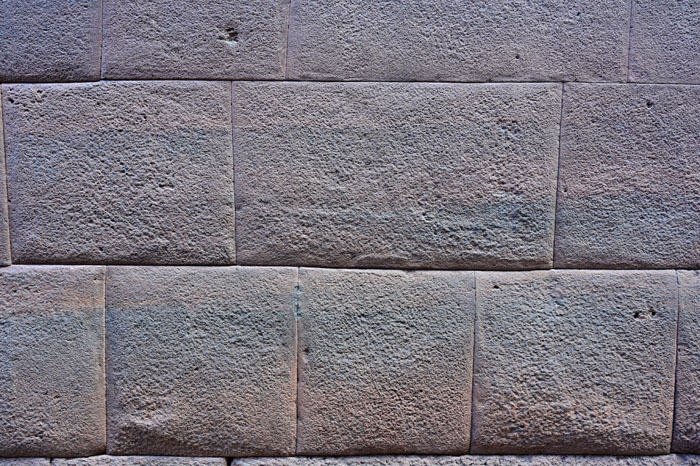
Qorikancha was the absolute origin point (datum) of the Ceque System—a network of 41 invisible ritual lines radiating across the empire connecting over 300 sacred shrines (huacas). Several of these major ceque lines extended directly from Qorikancha up into the carved rock outcrops, springs, and ceremonial platforms of Saqsaywaman, physically and ritually linking the Sun Temple to the northern mountain heights.
The Seqe System of Cusco:
The Inca capital and its immediate surroundings contained numerous shrines, temples, and other sacred places—rocks, caves, springs, and similar features—venerated by the population of Cusco. These sacred sites were known as wakas. The wakas were linked by imaginary lines that radiated outward from Qorikancha and were called seqes. In Quechua, seqe means “line.”
Qorikancha served as the central point from which the seqes extended. Approximately sixteen important wakas were located within its walls or in its immediate vicinity. These included buildings, plazas, sacred stones, and fountains.
The most detailed and complete description of the seqe system appears in the History of the New World (1653) by the Jesuit Bernabé Cobo. Cobo, in turn, drew upon a now-lost manuscript by Juan Polo de Ondegardo. Cobo lists and describes 328 wakas connected by 41 or 42 seqes. Each seqe linked between three and fifteen wakas.
The seqes were distributed among the four provinces (suyus) of the Inca Empire. Chinchaysuyu, Antisuyu, and Qollasuyu each contained nine seqes, while Kuntisuyu concentrated fourteen or fifteen.
A painting by the Cusco artist Miguel Araoz Cartagena illustrates the seqe system of Cusco. Qorikancha stands at the center of the radiating lines. The four background colors represent the four provinces of Tawantinsuyu: orange for Chinchaysuyu, yellow for Antisuyu, green for Qollasuyu, and red for Kuntisuyu. The lines depict the 41 seqes, while the points along them symbolize the 328 wakas.
In the 1970s the anthropologist Tom Zuidema advanced the hypothesis that the seqe system was closely related to the Inca calendar. According to this interpretation, each day of the year corresponded to a particular waka, on which cult was rendered and offerings were made. Zuidema further suggested that certain wakas also served as locations for astronomical observation.
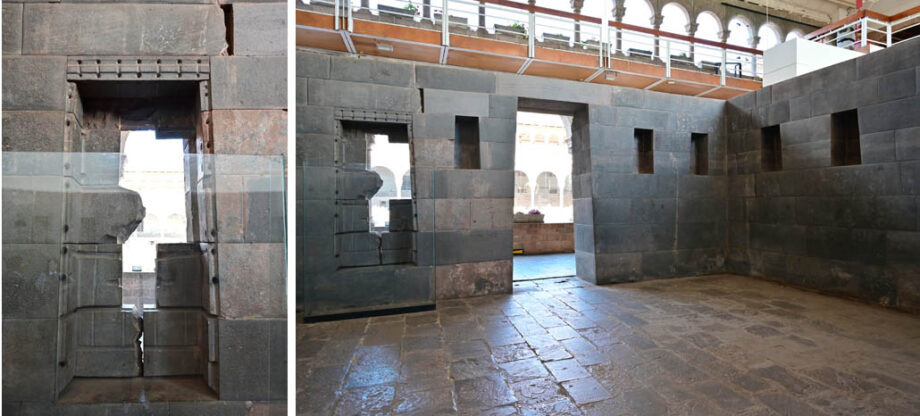
This Inca-period ceremonial niche was most likely used for the preservation and veneration of important religious objects within the temple. The holes visible along its edges may have supported a fine textile curtain or door that covered the niche, or they may have held decorative elements.
Carved stones closely matching those of this niche were recovered during archaeological excavations at Qorikancha. These stones appear to have formed an identical niche in the wall of a partially destroyed building on the right-hand side. The architectural and dimensional similarities strongly suggest that the two structures were originally identical.
The colonial chronicler Pedro Cieza de León, who visited Qorikancha around 1550, described the feature in the following terms:
“There were two seats in that wall, on which the sun rays fell when the sun was rising, and their stones were subtly perforated, and in the holes many precious stones and emeralds were installed. On these seats the kings sat, and if someone else did he was sentenced to death.”
Cieza interpreted the niche as an “Inca throne.” However, the reliability of his account remains uncertain. He saw the site more than fifteen years after the Spanish conquest of Cusco, by which time the Inca temple had already been converted into the Dominican Priory and its treasures removed. His description may therefore reflect legends and rumors circulating among the Spanish residents of Cusco rather than direct observation of the original installation.
During the colonial period, the entire left-hand side of the niche was dismantled to create space for an arch that framed a new entrance into the building, then serving as the Chapter House of the Priory.
Following the major earthquake of 1950, archaeological excavations directed by architect Oscar Ladrón de Guevara recovered the stones belonging to the dismantled section of the niche. The colonial arch was subsequently removed, and the missing portion of the original niche together with the adjacent wall was carefully reintegrated. Certain elements of the reconstruction were newly carved to complete the restored form.
Displayed Stars were crowns of Inca scepters in the 16th century. They were also used for combat and fighting.
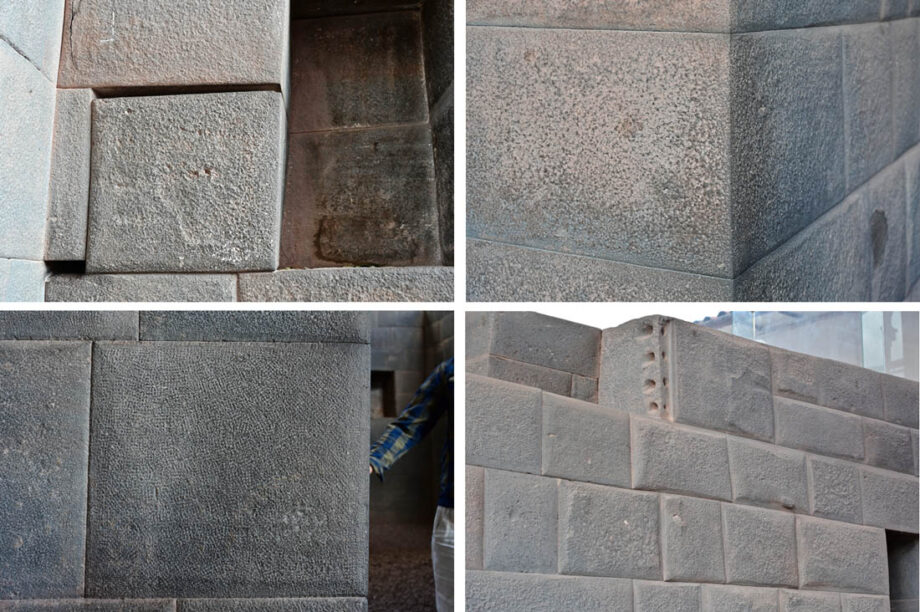
Qorikancha of the Incas: Deities and Their Cults
Colonial chroniclers disagree both on the number and the precise descriptions of the Inca deities venerated at Qorikancha, as well as on the locations of their respective precincts. The celebrated author of Indigenous and Spanish origin, Garcilaso de la Vega, writes in his Royal Commentaries that the most important structure within Qorikancha was the temple dedicated to the Sun god (Inti). It stood in the western part of the courtyard, in place of the Church of Santo Domingo. The temple of the Moon (Killa), the Sun’s wife, the temple of the planet Venus (Ch’aska) and the stars (Qoyllur), the temple of thunder and lightning (Illapa); the temple of the rainbow (K’uychi); and the chamber of the high priest (Willaq Umu) were arranged around the courtyard.
Father Bernabé Cobo, in his History of the New World, identifies the principal image of Qorikancha as P’unchau:
“It was a sculpture called Punchau, which means ‘day,’ all made of the finest gold, with exquisite richness of jewelry, his figure with a human face, surrounded with rays, like we use to paint [the sun]; its placement faced the east, so when the sun came out, its light fell on the statue. Made of a very fine metal plate, the sun rays reverberated and reflected the sunshine that the statue looked like the sun itself. Indians said that together with its light, the sun communicated its virtue to the statue.”
The Indigenous author Juan de Santa Cruz Pachacuti, by contrast, affirms that the principal deity venerated at Qorikancha was the creator god Viraqocha (Viracocha), represented by an oval plate of gold.
In addition to these deities, the mummies of the Inca emperors and their principal wives were also venerated at Qorikancha. They were regarded as ancestral protectors of the royal dynasty and of the empire as a whole.
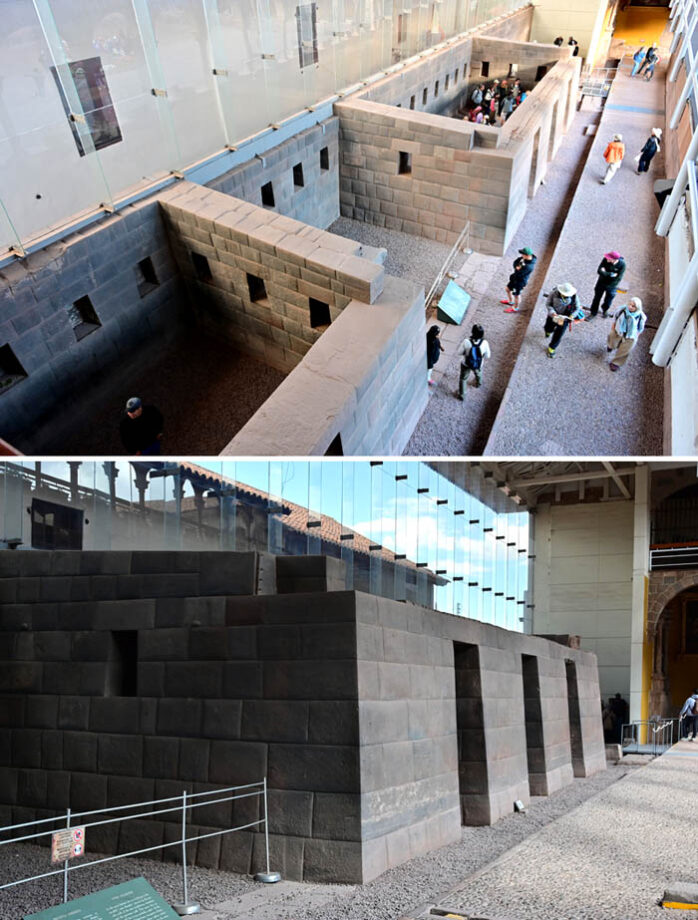
Large Inca Chamber:
This chamber is the largest of the surviving structures of the original Inca temple. In popular tradition it is known as the “Temple of the Stars,” although according to one of the priory’s legends it was the “Temple of the Moon.”
During both the colonial and republican periods the space served as the chapter house—the meeting place of the religious community.
Until the mid-twentieth century a second floor existed above the chamber, supported by brick vaults constructed in the colonial era. Remains of these vaults are still visible in the adobe wall that rises above the Inca masonry.
On one of the interior walls a fragment of the mural paintings that once decorated the chapter house during the colonial period has been preserved.
Open Chamber:
In the space between the two buildings lies the so-called “open chamber,” formed by the side walls of the two adjacent structures and the perimeter wall. This space lacks a front wall, yet it was almost certainly roofed. At the rear, in the wall that faces Awaqpinta Street and at floor level, three orifices can be seen; these would have served as drains for the main patio of the complex.
The large stone block now standing in the center does not form part of the original Inca temple. It was placed here in the twentieth century and is probably an unfinished water fountain of either colonial or republican date.
Second Smaller Chamber
This structure was originally identical in form and dimensions to the first smaller chamber. Unlike its counterpart, however, it survives in a good state of preservation, and its three tall trapezoidal doorways remain intact.
The original roofs of the buildings have not survived. According to the descriptions of the chroniclers Juan de Betanzos and Garcilaso de la Vega, they were of hip-roof (four-sided) design, constructed of wood, reinforced with clay, and covered with thatch. This chamber is called the “Temple of Lightning.”
Curved Wall or “Solar Drum”
The area enclosed by the curved section of the Qorikancha perimeter wall is known as the “Solar Drum.” In its most prominent portion the remains of an exceptionally large niche can still be seen, oriented eastward toward the rising sun.
Immediately adjacent to this curved Inca structure stands the rear wall of the Church of Santo Domingo, which houses the main altar. It is well established that the Catholic church was erected on the site formerly occupied by the principal building of Qorikancha—the chamber dedicated to the Sun—of which no clear architectural traces survive. It is possible that the “Solar Drum” formed part of that original solar chamber and that the large niche once housed the P’unchau image of the solar deity.
A small barred opening in the church wall provides access to the burial crypts located beneath the main altar.
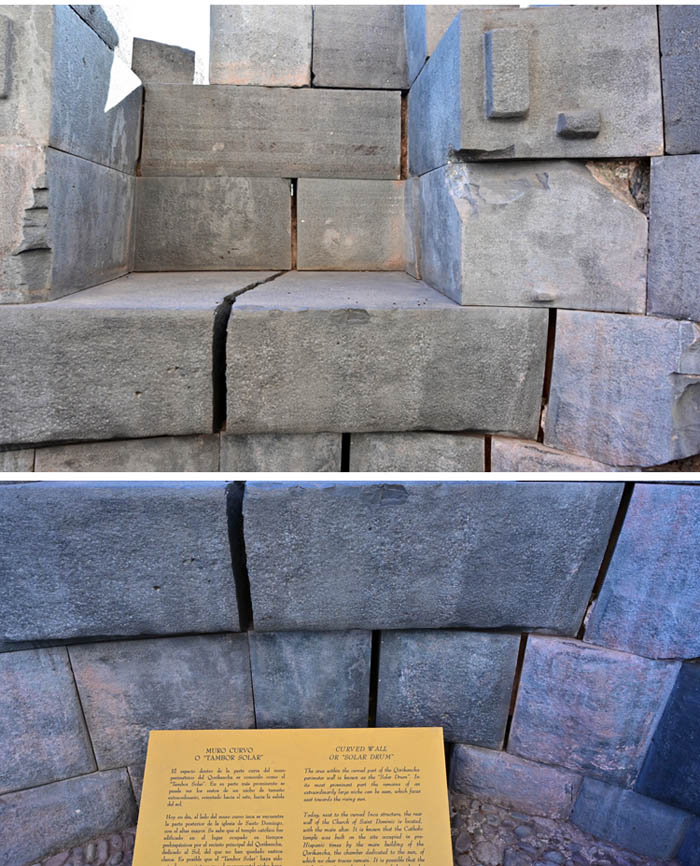
Legend about the Garden of Gold
Garcilaso de la Vega, the writer of many Cusco legends, described the Garden of Gold in his notes. The garden existed in the Qorikancha of the Incas and had life-size, golden and silver sculptures of humans, plants, and animals on display. The origin of this legend goes back to an agricultural ritual performed in the temple. The chronicler, Pedro Pizarro mentioned the Sun-worshiped ritual in the field with sowed maize. Incas celebrated the festival 3 times a year by filling the garden with golden cornstalks.
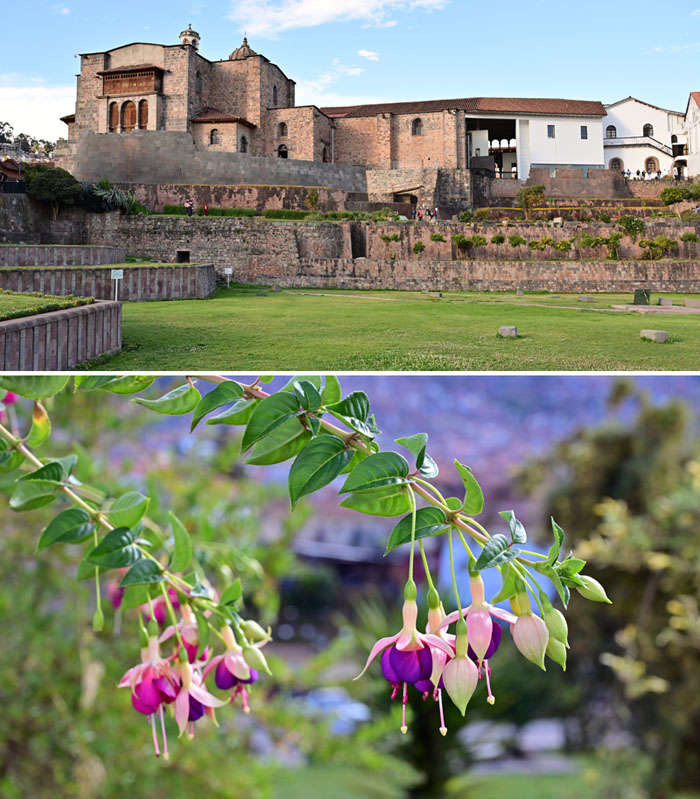
Qorikancha and Saqsaywaman functioned together as a system. Saqsaywaman represented Hanan Qosqo (Upper Cusco), while Qorikancha sat at the heart of Urin Qosqo (Lower Cusco). Architecturally, the sites demonstrate two contrasting styles of Inca stonework executed under the same imperial administration. (More on this in the following sections below).
Both sites- Qorikancha and Saqsaywaman-hosted religious rites. During major imperial ceremonies such as Inti Raymi (the Winter Solstice festival in June), the two sites had ritual purpose. Rites were initiated inside Qorikancha, where the Sapa Inca and high priests invoked Inti within the gold-lined chambers. A grand procession ascended through the city streets, carrying sacred items, royal mummies, and ceremonial vessels from Qorikancha up to the vast plaza at Saqsaywaman. At Saqsaywaman, large-scale public sacrifices, chicha libations through pacchas, and state feasts took place before the broader populace and foreign delegates.
| Feature | Qorikancha | Saqsaywaman |
| Primary Veneration | Inti (Sun Deity) & Imperial Ancestor Mummies | Earth, Lightning (Illapa), Mountains (Apus), & Cosmological Power |
| Architectural Style | Fine, polished, rectangular ashlar masonry (smooth, dark basalt/andesite) designed for enclosed, sacred interior spaces. | Saqsaywaman utilizes organic megalithic fitting, where colossal limestone blocks weighing up to 128 tons were contoured directly into the natural hill, visually bridging architecture with Pachamama’s landscape. |
| Ceremonial Role | Private, highly restricted sanctuary for priests, the Sapa Inca, and royal ayllus | Public, large-scale assembly ground for empire-wide festivals and state gatherings |
Chinkanas, the underground tunnels between Saqsaywaman & Qorikancha
Chinkana (or Chincana)
In Quechua, chinkana (also spelled chincana) means “labyrinth” or “place where one gets lost.” Archaeologically, the term refers to underground passages, tunnels, or rock-cut galleries associated with major Inca sites, especially around Sacsayhuamán in Cusco and, in some cases, other locations such as Isla del Sol on Lake Titicaca.
Recent geophysical surveys and excavations (including work led by archaeologists such as Jorge Calero Flores) have confirmed the existence of engineered underground corridors in the Sacsayhuamán sector. Some of these passages appear to form part of a larger network that may have linked Sacsayhuamán with Qorikancha (the Temple of the Sun). Colonial chroniclers already mentioned such subterranean routes, though their exact extent and function remained debated until modern investigations.
Symbolic and ritual meaning:
In Andean cosmology these underground spaces are frequently interpreted as representations of Ukhu Pacha (the inner or underworld) and, more specifically, as the “womb” of Pachamama (Mother Earth). One interpretive framework, advanced by researchers studying the Cusco passages, holds that the chinkanas functioned as ritual corridors in which the sacred solar image (Punchao or P’unchau) could symbolically travel through the earth, fertilizing it. The association with Pachamama therefore links the chinkanas to fertility, regeneration, and the regenerative powers of the earth itself. They were not merely practical tunnels but spaces of restricted access tied to ceremonial movement between the surface world and the interior of the earth. Also, the dimensions are consistent with passages wide enough to transport the elite, Sapa Inca or high priests on litters between the fortress and the sun temple during emergencies or sacred rites.
Chinkana Grande:
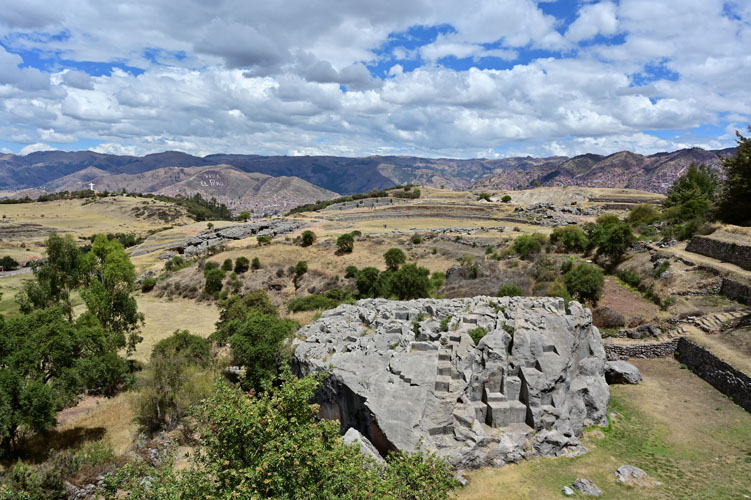
The underground passages connecting Saqsaywaman to Qorikancha ( Sacsayhuamán with Coricancha) are known locally as chinkanas (a Quechua term meaning “labyrinth” or “place where one gets lost”). They look like big, natural rock formations-carved grey rocks sitting on the ground, marking the hidden underground entries.
For centuries, these tunnels existed as a blend of local tales and Spanish chronicle accounts until the most recent archeological discovery made by Dr. Calero Flores and Dr. Fernández Palomino. We met the archeologists who discovered and researched these chinkanas! For a long time, historians treated the long-distance tunnel hypothesis with skepticism, assuming the chinkanas were simply localized limestone caves and myths until recently.
Radar & Sound Prospecting (The Chinkana Project): Archaeologists Dr. Jorge Calero and Dr. Mildred Fernández led non-destructive excavations utilizing Ground-Penetrating Radar (GPR) and acoustic prospecting. The data identified a continuous underground void—measuring between 1.0 and 2.6 meters wide and 1.6 meters high—running roughly 1,750 meters (1.1 miles) between Saqsaywaman and Qorikancha. Rather than simple mined caves, these features appear to be cut stone-lined trenches topped with carved stone beams or natural limestone vaults that were subsequently backfilled to form surface roads above.
The earliest written accounts of the chinkana network come from 16th and 17th-century Spanish and mestizo chroniclers. Garcilaso de la Vega wrote in his Comentarios Reales that a complex subterranean network of “streets and identical doorways” ran beneath Cusco, connecting the hilltop sanctuary of Saqsaywaman to the Sun Temple -Qorikancha. The Jesuit Chronicles, an anonymous 17th-century manuscript (along with accounts by Anello Oliva) described an underground thoroughfare originating near Saqsaywaman, descending past the parish of San Cristóbal (open today), running near the present-day Archbishop’s Palace (one of the museums to visit in Cusco), and terminating beneath what became the Convent of Santo Domingo / Qorikancha (the most interesting site to visit in the town’s center).
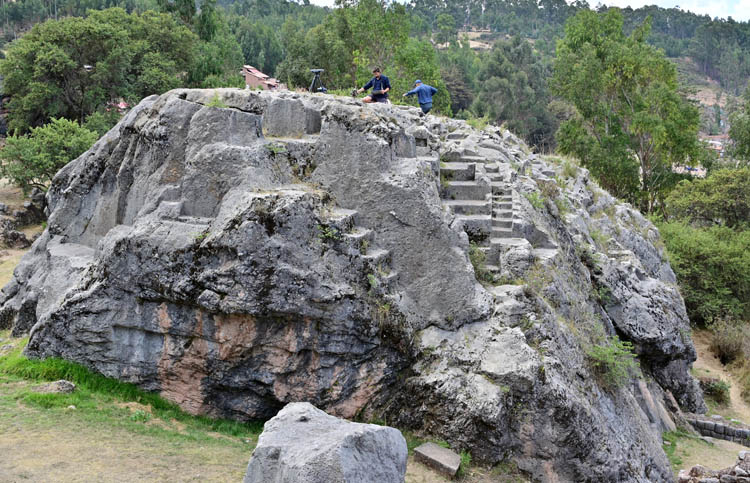
The local culture of Cusco is filled with tales regarding the Chinkana Grande (the large subterranean entrance at Saqsaywaman).
The Legend of the Golden Cob: Local legend tells of explorers entering the labyrinth with ropes and candles only to vanish; months later, one survivor allegedly emerged into the crypts of Santo Domingo (Qorikancha holding a solid gold ear of maize before collapsing.
Unfortunately, the Chinkana Grande is closed to the public due to real hazards—including disorientation, sudden drop-offs, structural instability, and toxic mold spores. You can still see the site and walk around it- a giant grey rock with carved steps and platforms. The Peruvian Ministry of Culture permanently sealed the entry points to the Chinkana Grande. Visitors to Saqsaywaman today can only enter the small, shallow rock passage known as Chinkana Chica. This small chinkana looks similar to the big one, but it’s located in a different part of Saqsaywaman.
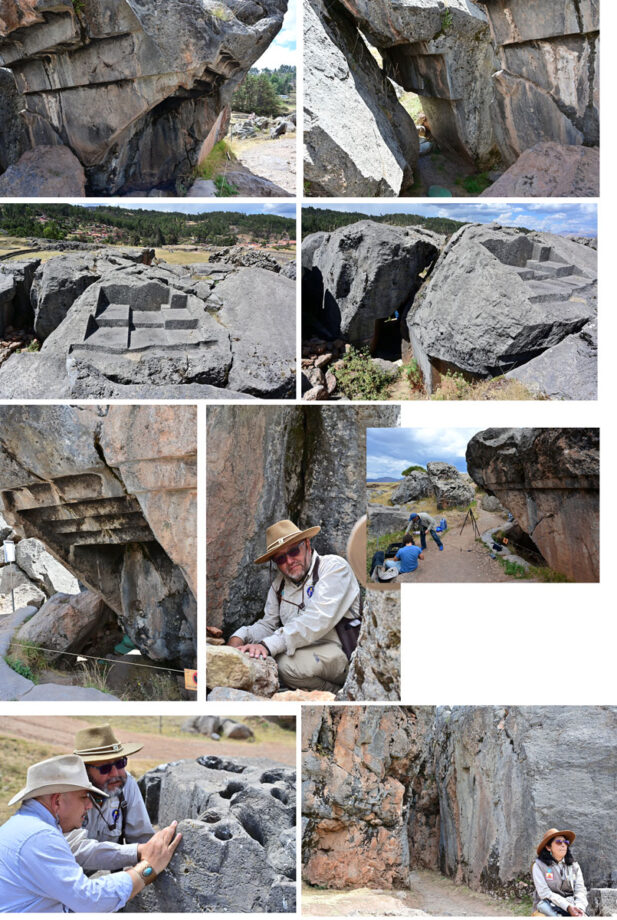
Centuries later, archaeologists believe they have identified the location referenced in that description. In the section of Sacsayhuamán that the team calls the “H-shaped temple,” Calero Flores and his colleagues state they have recognized the form of that supposed “serpent’s head.” The area shows alignments linked to astronomical phenomena. According to their interpretation, the mouth of the figure is oriented toward the sunrise on August 1, the date of the traditional offering to Pachamama and the moment when the Pleiades constellation (known as Colca in Andean tradition) appears in the sky.
This project is ongoing. Archeologists study the found passageways, with many to be discovered as they lie 13 to 30 feet underground!
The Diari de Tarragona has published the results of the research carried out in Cusco by SETOPANT. These results stem from work that began in 2009 and not only studies the archaeology of the city, but also proposes, for the first time in Andean studies, the reconstruction of the ancient Inca capital.
Inca masonry, earthquakes, and engineering techniques behind the dry-stone construction
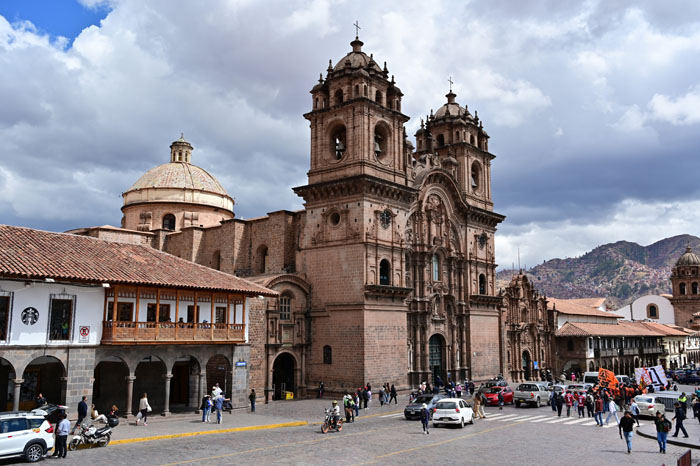
When you walk around the historic center of Cusco, you can clearly see Spanish colonial architecture superimposed upon finely worked Inca masonry. Inca dry-stone architecture withstood centuries of major seismic events in the Andean mountains because it was deliberately engineered to absorb and dissipate energy rather than resist it rigidly. In contrast, mortar-bound European buildings fractured and collapsed during significant earthquakes, including those of 1650 and 1950. Inca walls, however, flexed under stress, distributed the shock waves, and resettled with minimal structural loss.
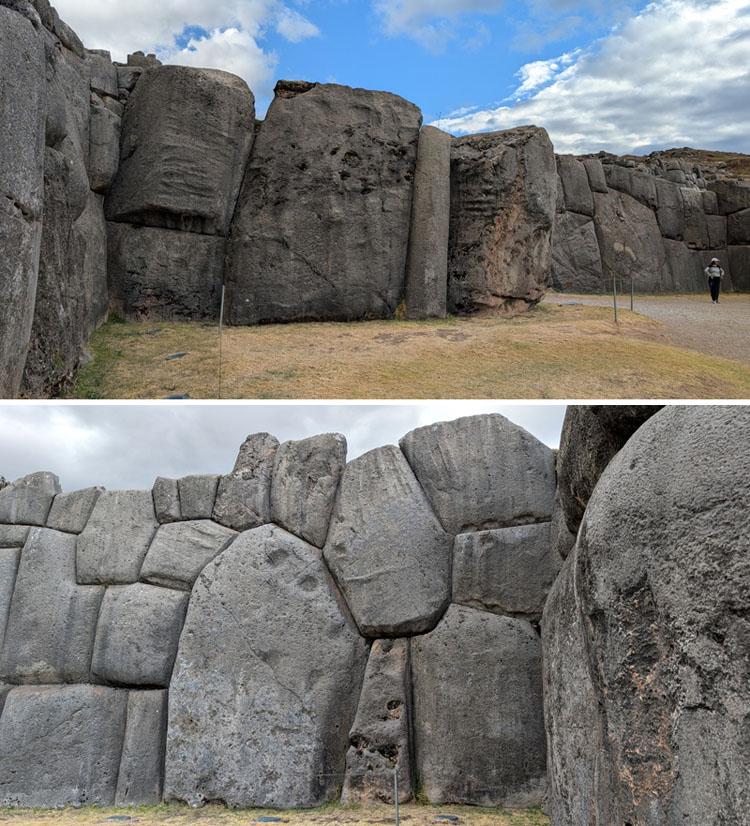
Pseudoscientific Myths vs. Archaeological Fact
Alternative theories often claim the stones were melted into shape using plant acids, a stone-softening tool, or acoustic levitation because such megalith construction doesn’t make sense to almost any person looking at such work. However, geological and geochemical analyses currently state the stones are standard regional limestone and andesite. According to local archeologists, the “anomaly” of how multi-ton stones fit together so seamlessly without mortar is explained by Inca scribing and stone-pounding techniques, where hammerstones were used to incrementally shape joints until the surfaces matched perfectly. Archeologists also found ramps and copper tools supporting their views.
My personal view is that archeologists are trained to dig graves and classify objects and other stuff they find there. Therefore, other people with different expertise should be involved or work together with the archeologists, figuring out mysteries of our past. It’s not ok to slam the community of archeologists just because they don’t see more than they find in graves and surroundings. For example, they need qualified geologists to do the stonework. They need the funds to hire other experts to do specific tasks. Profession itself doesn’t have many opportunities or funding necessary to do regular work they have already been doing.
Major reason why archeologists stand against popular belief stating that aliens built megalithic stones is the absence of clear evidence surrounding such event. What they find supports human ingenuity, not alien inventions. However, it doesn’t mean we shouldn’t search for answers or look at other ways of proving the concept or myth. People need to dream, not conflate or fabricate evidence for or against something. Perhaps, we will find new information about these fascinating sites in the future due to cutting-edge tech and human creativity!
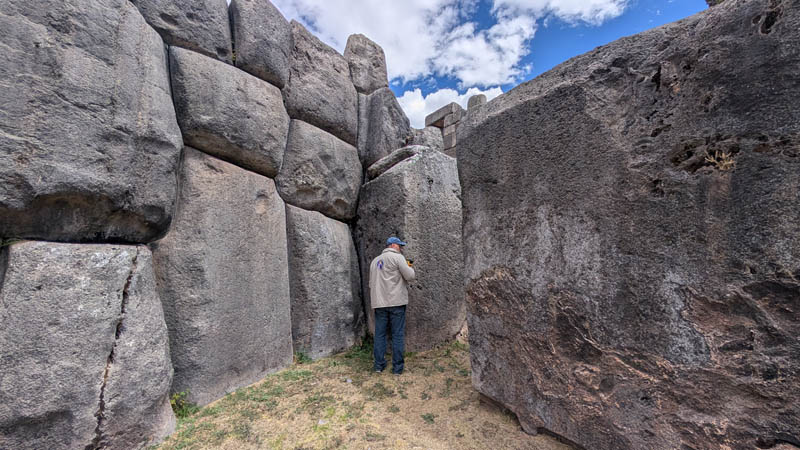
This incredible stone masonry continues to attract vast scholarly and public interest, drawing visitors to sites such as Cusco, Ollantaytambo, and Machu Picchu. The ScanCivilization project was established to address unresolved questions concerning the human past. While certain narratives attribute monumental constructions to extraterrestrial intervention and thereby diminish evidence of human ingenuity, conventional archaeological interpretations frequently leave gaps between public curiosity and rigorous scientific and visual explanation. ScanCivilization maintains no predetermined conclusions on the subjects it investigates. Instead, it seeks to determine factual accuracy by integrating advanced research methodologies with a reasoned, evidence-based approach to topics of significant public interest. Together with archaeologists Dr. Jorge Calero and Dr. Mildred Fernández, ScanCivilization takes part in the Chincana project in the Cusco area.
Unique Anti-Seismic Engineering Techniques
So here’s what’s known about stonework in Peru thanks to archeological research.
Mortarless Dry-Stone Joinery: Without rigid mortar to crack, individual stones in an Inca wall are free to shift independently during a quake. When a tremor hits, the stones literally “dance” on their beds, using kinetic friction to dissipate seismic energy. Once the ground stops shaking, gravity pulls the precisely carved stones back into their original locked positions.
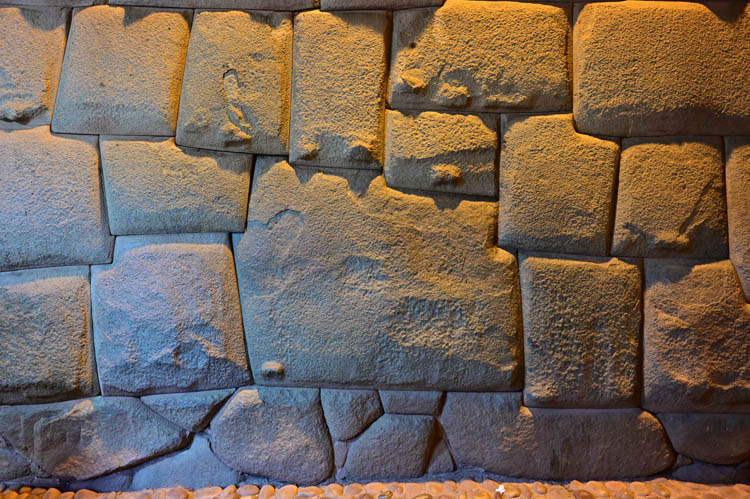
Polygonal Interlocking & “Scribing”: Master masons carved stones into complex multi-angled polygons (such as the famous 12-Angled Stone in Cusco or the multi-faceted blocks at Saqsaywaman. Through a process of trial-and-error pounding with river cobbles and suspended scribing, adjacent faces were fitted so flush that not even a sheet of paper could slide between them. These irregular joints act like a jigsaw puzzle, preventing individual stones from sliding out of the wall face during lateral forces.
Inward Wall Slope (Inclinación): Inca walls were built with an inward slope of roughly 3° to 5° toward the center of the structure. This trapezoidal incline lowers the center of gravity and shifts the vector of structural weight inward, keeping the wall from tipping outward under heavy lateral shaking.
Trapezoidal Doors and Windows: Openings in Inca walls were purposefully built much narrower at the top than at the base. A trapezoidal shape distributes shear stress far better than a traditional rectangular frame, preventing the corners of doorways and niches from cracking under structural pressure.
Rounded Corners and L-Shaped Blocks: At building corners, masonic artisans often used single L-shaped stones carved around the 90-degree bend rather than placing a simple butt joint. This eliminated weak vertical seam lines right where seismic shear forces concentrate most heavily.
Deep Foundations & Terrace Benches: Inca builders anchored monumental walls directly into solid bedrock or backfilled deeply layered foundations composed of gravel, clay, and small rocks. I saw a lot of backfilling in Saqsaywaman. This sub-surface layering acted as a natural shock absorber and prevented liquefaction and soil erosion during heavy rains and quakes.
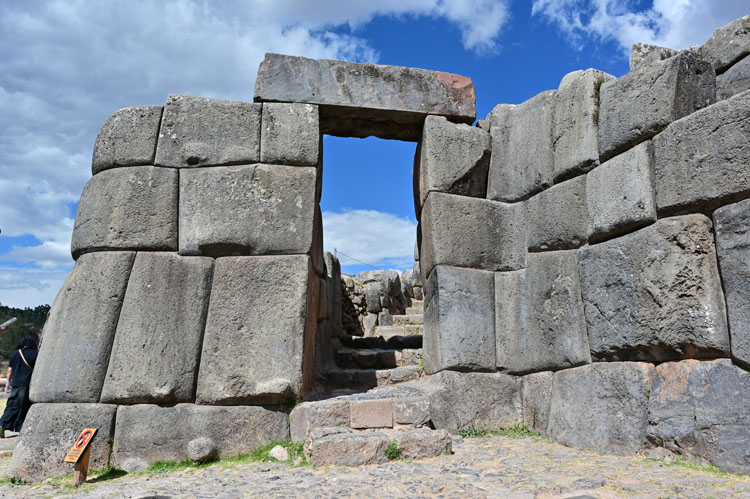
Structural Comparison: Inca vs. Colonial Architecture
| Architectural Feature | Inca Imperial Masonry | Colonial Spanish Masonry |
| Joint Binding | Mortarless, stone-on-stone contact | Lime mortar and rubble fill |
| Seismic Response | Dynamic energy absorption (controlled movement) | Rigid resistance (leads to brittle fracture) |
| Wall Geometry | Inward-sloping trapezoids | Vertical rectangular walls |
| Structural Integrity | Self-correcting gravity alignment | Dependent on adhesive strength of mortar |
How did the Inca quarry, transport, and shape multi-ton stones at Sacsayhuaman and Ollantaytambo without animals?
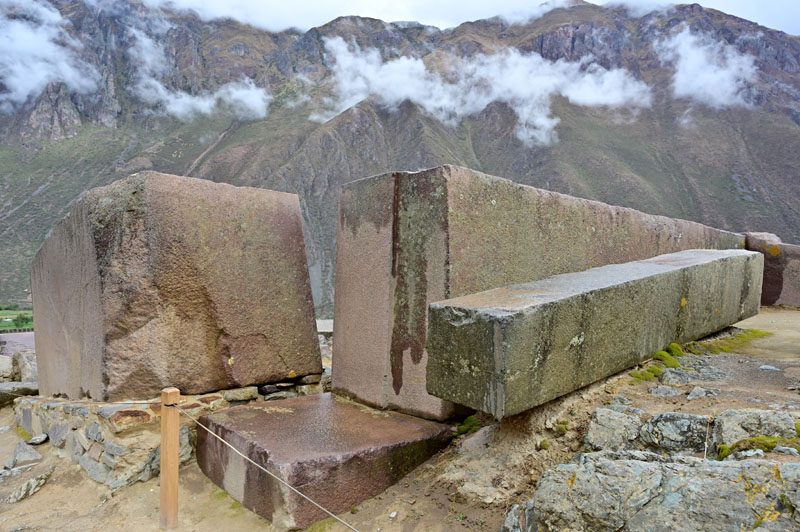
According to current archeological research, the Inca accomplished monumental stone engineering—moving blocks weighing up to 128 tons at Saqsaywaman and 50 tons at Ollantaytambo—without draft animals, the wheel, or hard iron tools. They relied on specialized quarrying methods, gravity-assisted transport, organized labor pools (mita), and percussion shaping techniques. So here is what’s known today.
1. Quarrying: Selection and Extraction
Rather than blasting or cutting stone, Inca stonemasons harvested rock using natural fracture lines and basic tools:
Site Selection: Quarries were chosen high above target sites—such as Kachiqhata (across the river from Ollantaytambo) or Rumiqolqa—allowing gravity to assist in downhill transport.
Exploiting Natural Joints: Workers identified naturally occurring geological fissures in granodiorite, limestone, and andesite outcrops.
Wedging & Percussion: Masons drove wooden wedges into existing fractures and soaked them with water, causing the wood to expand and crack the stone along clean planes. Heavy hammerstones made of dense river cobbles (hiwayaya) were used to break off large masses.
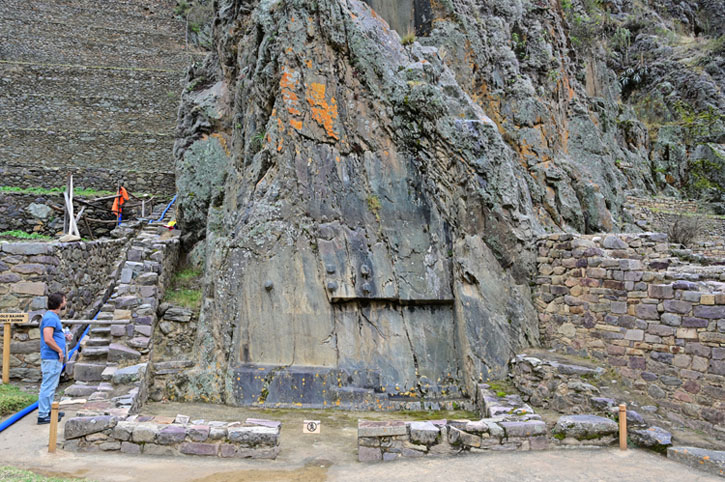
2. Transport: Physics and Organized Human Power
Without draft animals (llamas could only carry up to 100 lbs), human muscle combined with clever physics moved massive monoliths across rugged mountain terrain. According to current archeological research, Incas used quarries high up on the mountain to select the stones and move them down in guided slides, using nature’s force of gravity. They applied a ramp system, log rollers, earth ramps, and levers to position the stones in a wall.
Ramp Construction: Extensive earth and stone ramps were built leading directly from quarries to wall sites. Some ramps at Ollantaytambo measured hundreds of meters long.
Rollers and Drag Sleds: Heavy blocks were placed on wooden sleds (travois) or rolled over smooth hardwood logs (quishuar or alder). Wet clay, mud, or bronze-coated runners were applied beneath the sleds to reduce friction.
River Crossings: At Ollantaytambo, workers diverted the Urubamba River into artificial channels, dragged a monolith across the dry riverbed, and then released the water back into its natural course.
Leverage: Thick wooden beams acted as levers (clavelinas) to pivot, lift, and nudge blocks into position inch by inch.
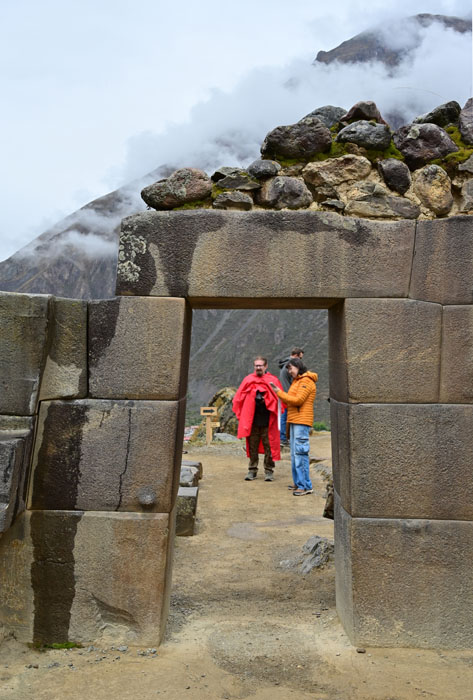
3. Shaping and Fitting: The Percussion & Scribing Process
The flawless fit of Inca masonry was achieved through patient stone-on-stone percussion rather than metal carving:
Hammerstones (Hiwayaya): Masons used dense, heavy cobbles of river-washed quartzite and basalt ranging from 20-pound stone hammers for initial roughing down to palm-sized stones for fine finishing. Pounding fractures the rock at a crystalline level, turning stone to dust.
Drafting and Scribing: To fit two multi-angled stones together, masons placed the lower stone, then suspended the upper stone above it using wooden scaffolding. A dragging scribe tool mapped the exact contour of the bottom stone onto the lower face of the top stone.
Trial and Error Fitting: The top stone was repeatedly lowered, pounded at high spots, and test-fitted until the joint sealed completely across its entire contact area—creating a deep 3D keyway rather than just a flat edge.
Handling Bosses: Protruding stone nubs (bosses) were left on the faces of blocks to attach ropes and leverage beams during transport and placement. Once the block was set, these nubs were often pounded flat, though many remain visible on unfinished walls at Ollantaytambo and Machu Picchu.
4. The Mita Labor System
The ultimate driving force behind Inca engineering was social organization. The mita was a mandatory rotational labor tax where subjects contributed time toward public works projects, state agriculture, and monument construction in exchange for state-provided food, chicha, and protection. Thousands of skilled masons and laborers were mobilized in disciplined shifts, providing the continuous, organized effort needed to move and shape mountain landscapes.
Architectural and stonework techniques used by the Inca at Saqsaywaman and Qorikancha
Inca stonework relies on precision masonry (ashlar) executed without mortar, relying on physics, geometry, and stone-on-stone friction described above.
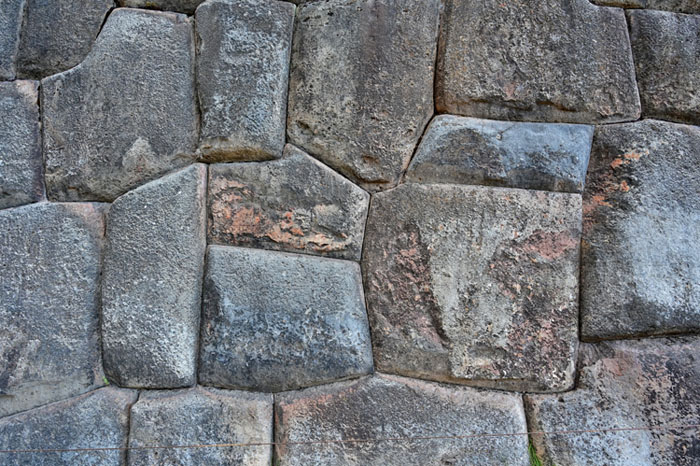
Core Construction Techniques
Quarrying & Shaping: Builders used stone hammerstones (jiwayna) made of hard river quartzite to pound away at native limestone, igneous basalt, and granite. Rather than cutting, stones were gradually shaped through repetitive impact.
Pillow-Faced Edges: Blocks featured chamfered, slightly rounded edges that accentuated the joinery while preventing the edges from chipping during minor settling or ground motion.
Trial Fitting: Masons continuously placed, checked, and ground down contacting surfaces using abrasive sand and water until no light—and not even a sheet of paper—could pass between adjacent stones.
Anti-Seismic Engineering
Cusco sits in an active seismic zone. The Inca engineered flexible structures designed to move with seismic tremors rather than resist them rigidly:
| Technique | Architectural Mechanism | Purpose |
| Dry-stone Joinery | Absence of mortar between fitted blocks | Allows stones to “dance” during an earthquake and resettle into position without cracking wall sections. |
| Inward Wall Batter | Walls slope inward by 3° to 5° toward the center | Lowers the center of gravity and prevents outward tipping during lateral ground forces. |
| Trapezoidal Openings | Doors, windows, and niches narrow at the top | Distributes structural weight more evenly across the lintel and increases lateral stability. |
| Interlocking Joints | Convex and concave joints fitted like puzzle pieces | Prevents individual stones from sliding out of alignment horizontally during heavy shaking. |
Site-Specific Architectural Styles:
Saqsaywaman (Megalithic Cyclopean)
- Uses massive, irregular limestone boulders (some exceeding 128 metric tons).
- Employs polygonal joinery where multi-angled stones interlock along complex zig-zag terrace lines.
- The irregular shapes dissipate kinetic energy unevenly across the wall face, preventing shockwaves from running in straight fault lines during seismic events.
Qorikancha (Imperial Ashlar)
- Uses highly polished, rectangular basalt and igneous blocks arranged in uniform horizontal courses.
- Features slightly curved walls that absorb torsional forces.
- Internal stonework included carved grooves, channels, and L-shaped stone clamps designed to secure gold cladding plates and anchor adjoining interior chambers.
Here is what Inca used in their stone construction. Masons selected limestone and Andean diorite outcrops that already had natural fractures. Workers pounded wooden wedges into rock fissures and soaked them with water, causing the wood to expand and crack the stone along fracture lines. They also used controlled heating with fires followed by cold water shock to fracture stubborn stone seams. Blocks were dressed roughly at the quarry—such as nearby Muyna or Rumicolca—to eliminate excess weight before transport. Ramps made of packed earth and stone were constructed alongside the rising walls. Workers used large wooden levers to tilt, pivot, and walk blocks up steep slopes. Stones were hauled over prepared earthen roads laid with round cobbles or hardwood rollers (chakitaklla timbers). Many stones feature raised, carved stone knobs along their bases. Ropes were anchored around these protrusions for leverage during lifting; once the stone was set, masons chiseled most of them smooth. Many stones feature raised, carved stone knobs along their bases. Ropes were anchored around these protrusions for leverage during lifting; once the stone was set, masons chiseled most of them smooth. To fit adjacent irregular blocks without gaps, masons pressed wet clay against the carved face of an already-placed stone to create a reverse mold. They then shaped the incoming stone to match that profile precisely before lowering it into place.
I know this is hard to believe but according to archeologists, the Inca moved and fitted stones weighing up to 120 metric tons at Saqsaywaman using human labor, practical physics, and raw materials found nearby. I think some techniques do work on smaller stones. They were proven by experimental archeologist Protzen, I believe. After my visit to Peru, I think that stonework in Qorikancha and Qenqo was Inca-made. However, I couldn’t find any clear visuals and data to show how those people moved megalithic stones. Local museums I visited have no evidence of such construction. (If you know, send me a link to this information!)
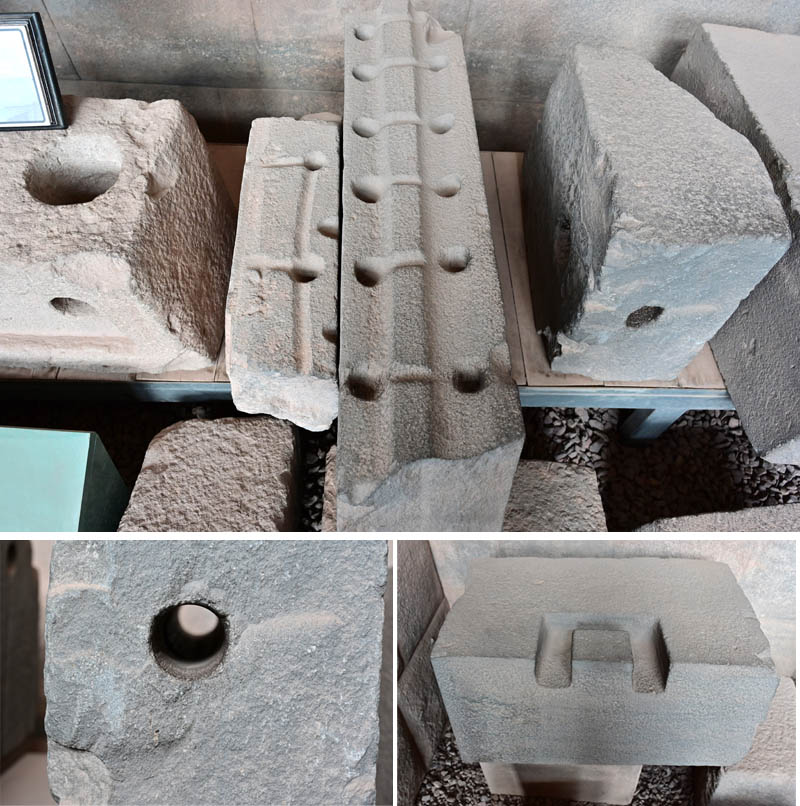
materials come from quarries near Cusco (from museum’s description).
Ollantaytambo
Ollantaytambo, located in Peru’s Sacred Valley approximately 70-90 kilometers northwest of Cusco, can be reached by local train or taxi (we did both). It stands as one of the best-preserved Inca settlements still inhabited today and is definitely worth your visit!
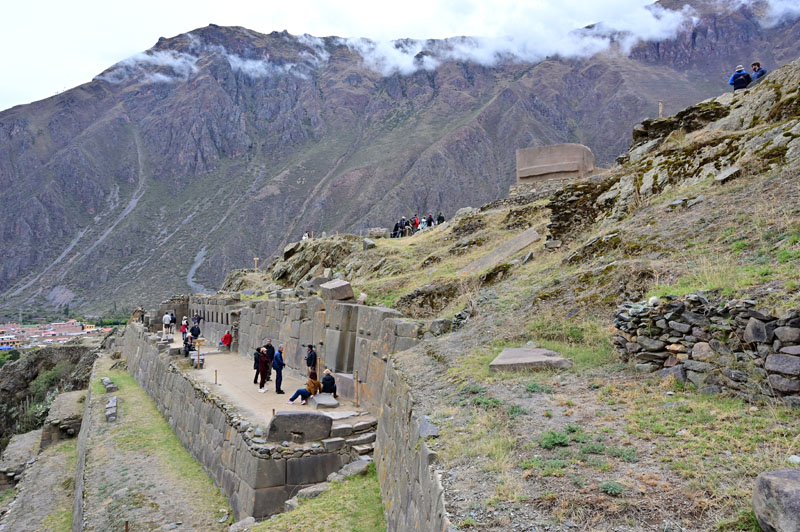
Originally developed in the mid-15th century under the emperor Pachacuti (Pachacútec), the site functioned as a royal estate, administrative center, agricultural complex, and ceremonial hub. Its carefully planned orthogonal street grid, organized around rectangular residential compounds (canchas), remains largely intact and continues to shape daily life in the modern town. It’s fairly easy to climb up and down without special arrangements like taking a bus in Machu Pichu.
The site gained further historical significance during the Spanish conquest. In 1536–1537, Manco Inca Yupanqui established Ollantaytambo as a temporary capital and military stronghold. In January 1537, his forces achieved a rare victory against a Spanish expedition led by Hernando Pizarro in the Battle of Ollantaytambo, using the steep terraces and controlled flooding of the valley floor to neutralize Spanish cavalry. Although the Incas ultimately withdrew to Vilcabamba, the engagement remains one of the few recorded successes of organized Inca resistance.
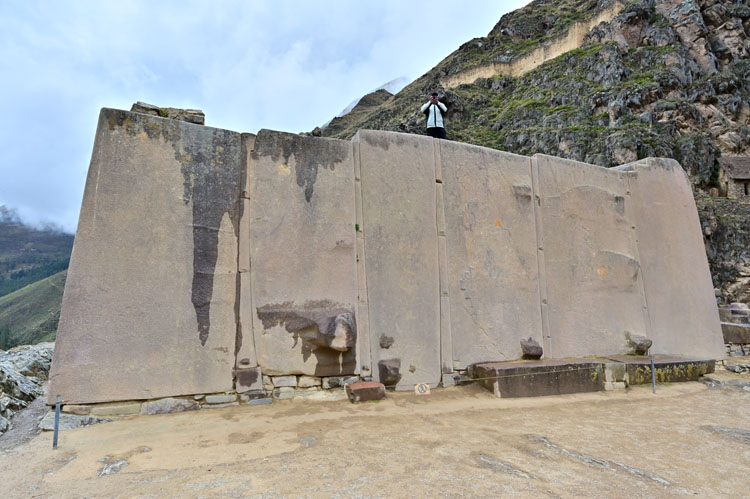
The stonework at Ollantaytambo ranks among the finest examples of Inca masonry. Steep agricultural and defensive terraces rise in successive tiers toward Temple Hill. At the summit lies the unfinished Temple of the Sun, distinguished by the Wall of the Six Monoliths—six massive blocks of rose-colored porphyry, each weighing approximately 50 tons or more. These stones were quarried at Cachicata (Kachiqhata) across the Urubamba River, several kilometers distant, and transported using ramps, wooden sledges, fiber ropes, and large organized labor crews under the mit’a system. Abandoned blocks, sometimes called “tired stones,” still lie along the ancient transport routes, offering direct evidence of the construction process. One such tired stone stays at the market right across from the entrance. Don’t miss it.
There are several types of stonework present at the site. The masonry is characteristically dry-stone: precisely cut and fitted blocks assembled without mortar. Joints are tight and often interlocking, a design that allowed walls to flex and dissipate seismic energy—an essential adaptation in the earthquake-prone Andes. Prestige structures employ finely dressed ashlar or polygonal stonework, while secondary buildings use more rustic fieldstone.
The incomplete state of the Temple of the Sun and associated platforms provides particularly valuable insight into Inca quarrying, dressing, and assembly techniques, which have been the subject of detailed archaeological study and online debate.
Together, Ollantaytambo’s urban plan, monumental terraces, and unfinished megalithic architecture illustrate both the technical sophistication and the unfinished ambitions of the late Inca state.
How was the Qhapaq Ñan road network constructed and maintained to handle heavy transport across the Andes?
The Qhapaq Ñan (the Main Inca Road) spanned over 30,000 kilometers across six modern South American nations. Rather than building a uniform paved highway, Inca engineers constructed an adaptive system designed specifically to negotiate extreme vertical topography, mudslides, and high-altitude weather while bearing heavy pedestrian traffic, llama caravans, and hauled materials.
Architectural & Engineering Techniques
- Retaining Walls & Terracing: On steep mountain faces, engineers built massive dry-stone retaining walls (pircas) to hold back soil and create flat roadbeds ranging from 1 to 20 meters wide.
- Drainage Systems: To protect roads from seasonal Andean downpours, channels, culverts, and stone gutters were cut alongside and beneath the paving. Preventing water accumulation was the primary defense against erosion.
- Surface Paving & Steps: Flat, local stone slabs were laid over deep gravel foundations in wet or marshy areas. On steep inclines (often exceeding 30 degrees), engineers cut long flights of stone stairs—ideal for foot traffic, llama herds, and controlled sled transport, though completely unsuited for wheeled vehicles.
- Bridge Engineering: Q’eswachaka-style suspension bridges made of woven ichu grass spanned wide river gorges. Heavy stone pier bridges with wooden log decking crossed narrower rivers. Floating pontoon bridges mounted on reed bundles (totora) were deployed in low-gradient coastal waterways.
Handling Heavy Transport (Sleds, Monoliths, & Caravans)
Because the Inca did not use the wheel or draft animals for heavy loads, “heavy transport” on the Qhapaq Ñan operated under specific engineering constraints:
| Transport Type | Mechanism / Method | Engineering Adaptation on the Road |
| Llama Caravans | Packs weighing up to 40 kg per animal; herds of thousands. | Wide paved thoroughfares with stone-walled corrals (tampus) every 15–20 km. |
| Heavy Monoliths | Multi-ton building stones pulled on wooden sleds (travois). | Wide, low-gradient ramp sections; wooden rollers; mud/wet clay lubricants applied directly to stone paving. |
| Messenger Relays (Chaskis) | Human runners passing quipus and goods in relay legs. | Raised stone walkways with roadside shelter stations (chaskiwasi) spaced 2–5 km apart. |
Maintenance Infrastructure: The State Labor Engine
The physical road network survived because of a disciplined, state-enforced administrative framework:
- The Mita Labor Tax: Maintenance was decentralized through the mita system. Each local community (ayllu) was assigned a specific segment of the road within their territory. They were legally obligated to repair retaining walls, repave sections damaged by landslides, and rebuild bridges annually.
- Bridge-Weaving Guilds: Suspension bridges were completely dismantled and re-woven from fresh plant fibers once a year by specialized local engineers—a tradition that survives today at the Q’eswachaka bridge over the Apurímac River.
- The Tampu (Tambos) Network: State storehouses and inns (tampus) were constructed a day’s walk apart along the entire network. These supplied road repair crews and transport teams with food, tools, spare sandals, and shelter without requiring them to carry their own supplies.
“Variation in Inca Building Stone Quarry Operations in Peru and Ecuador” (2004)
I’d like to highlight significant scientific results I found in one of the articles here.
Author: Dennis Ogburn (University of North Carolina at Charlotte), Publication: Society for American Archaeology (SAA) Annual Meeting Papers / Journal of Archaeological Science, DOI: 10.1016/j.jas.2004.05.008 .
Archaeologist Dennis Ogburn proved this remarkable feat in his 2004 study published in the Journal of Archaeological Science (“Testing the Levelling Effect: Heavy Transport of Building Stone in the Inka Empire”). Rather than relying solely on Spanish chronicles, Ogburn utilized quantitative geochemical fingerprinting combined with spatial analysis to trace the physical origin of the masonry blocks. Ogburn utilized geochemical X-ray fluorescence (XRF) to trace raw stone blocks back to their exact quarry origins. Ogburn’s research demonstrates that the Inca transported fine-cut andesite blocks up to 460 kilometers (from Cusco to Saraguro, Ecuador) to construct state facilities, proving imperial capability in long-distance heavy transport.
Geochemical Fingerprinting (X-Ray Fluorescence / XRF):
Ogburn used Energy Dispersive X-Ray Fluorescence (ED-XRF) spectrometry to non-destructively analyze the chemical composition of the stone blocks used in Inca monumental architecture. He sampled fine-grained andesite ashlar blocks at the Inca imperial site of Tomebamba (modern-day Cuenca, Ecuador) and nearby Saraguro. He took baseline geochemical samples from known Inca quarries across Peru and Ecuador, including the famous Rumiqolqa quarry near Cusco. XRF analysis measures diagnostic trace elements (such as Rubidium, Strontium, Yttrium, Zirconium, and Niobium) that act as a unique geological “fingerprint.” The chemical profile of the Ecuador blocks matched the Rumiqolqa quarry outside Cusco perfectly, separating them from local Ecuadorian stone sources.
Transport Route Analysis:
The direct overland route along the Qhapaq Ñan (Inca Royal Road) from the Rumiqolqa quarry in Peru to Tomebamba in southern Ecuador spans approximately 460 kilometers (285 miles) across extreme Andean terrain. The transported stones were fine, dark-grey imperial andesite blocks used for royal buildings and sacred temples. Individual stones weighed between 200 kg and over 1,500 kg (1.5 metric tons). The journey required moving these multi-ton blocks across steep mountain passes exceeding 3,500 meters in elevation, through deep river canyons, and over fragile suspension bridges or river crossings.
Why haul tons of stone nearly 500 kilometers when local stone was available in Ecuador? Ogburn linked the archaeological data to historical context from chroniclers like Martín de Murúa and Cabello de Balboa:
In Andean worldview, stone from Cusco carried the sacred essence (camaquen) of the imperial capital and the Sun God (Inti). Transporting Cusco’s ground to Ecuador was a supreme demonstration of royal power by Emperor Huayna Cápac, who sought to establish Tomebamba as a “Second Cusco” in the newly conquered northern territory. Executing a logistics project of this magnitude demonstrated the absolute administrative control of the Inca state, mobilizing thousands of conscripted laborers in relay teams to haul the blocks along the royal highway.
The Q’eswachaka Bridge
The Q’eswachaka Bridge (also spelled Q’eswachaka or Keshwa Chaca) spans 33 meters (118 feet) over the Apurímac River canyon near Canas, Peru. Elevated 15 meters above the water, it is the last remaining hand-woven Inca suspension bridge in continuous existence, surviving over 500 years through an annual renewal ritual recognized by UNESCO as Intangible Cultural Heritage. The 4-Day Annual Renewal Process:
Every June, the old, weather-worn bridge is cut down to drop into the river gorge below, and a brand-new bridge is built entirely from scratch using local ichu grass (Stipa ichu).
Despite being made purely of plant fibers with no nails, timber beams, or metal wire, the structure holds immense tensile strength. The four main floor cables can support the weight of dozens of people crossing simultaneously. The annual replacement guarantees that rot or dry decay never compromises structural integrity, replacing natural materials before wear leads to failure.
- Inca State Highway Network: During the Inca Empire, hundreds of fiber suspension bridges (keshwa chaca) spanned deep Andean river gorges along the Qhapaq Ñan. They enabled chaskis (messenger runners), armies, and llama caravans to cross terrain impossible to bridge with stone arches.
- Defense Mechanism: These bridges held strategic military value. In times of war or rebellion, Inca commanders could burn or cut the ropes on one side of a canyon, instantly severing access for invading forces.
- Survival Through Community Tradition: While steel and concrete replaced virtually all other fiber bridges following the Spanish conquest, four Quechua-speaking communities—Huinchiri, Chaupibanda, Chuyo, and Qehue—maintained the annual reconstruction duty (mita) as a living link to their ancestors and Pachamama.
The Paqo (an Andean ritual specialist or priest) serves as the indispensable spiritual mediator during the four-day renewal ritual. Without his continuous ceremonial work, the community believes the mountain spirits would withhold their permission, leading to accidents during construction or the structural failure of the bridge. Throughout the three days of physical labor, the Paqo prepares intricate ritual bundles known as despachos or pagos a la tierra.
The Paqo selects three undamaged coca leaves (kintu) arranged in a fan, blowing softly over them (phukuy) to send prayers to the spirits before placing them in the bundle. The offering includes llama fat (suntu), native seeds, candy, unspun wool, chicha (maize beer), wine, and mineral incense. The bundle is burned in a dedicated sacred fire near the bridge abutments. The smoke acts as a direct conduit carrying the essence of the gifts to the Apus and Pachamama.
Qenqo (Q’enqo): An Inca Ceremonial Complex Near Cusco
Qenqo (also spelled Q’enqo, Kenko, or Qenko) is a small Inca archaeological site located approximately 3 to 6 kilometers northeast of Cusco’s historic center, across from the Sacsayhuamán, at an elevation of about 3,580 meters. You can visit it the same day you see Sacsayhuamán.
Its name derives from the Quechua word q’inqu, meaning “labyrinth” or “zigzag,” a reference to the carved channels and underground passages that characterize the site. These carvings are very similar to Chinkanas in Saqsaywaman.
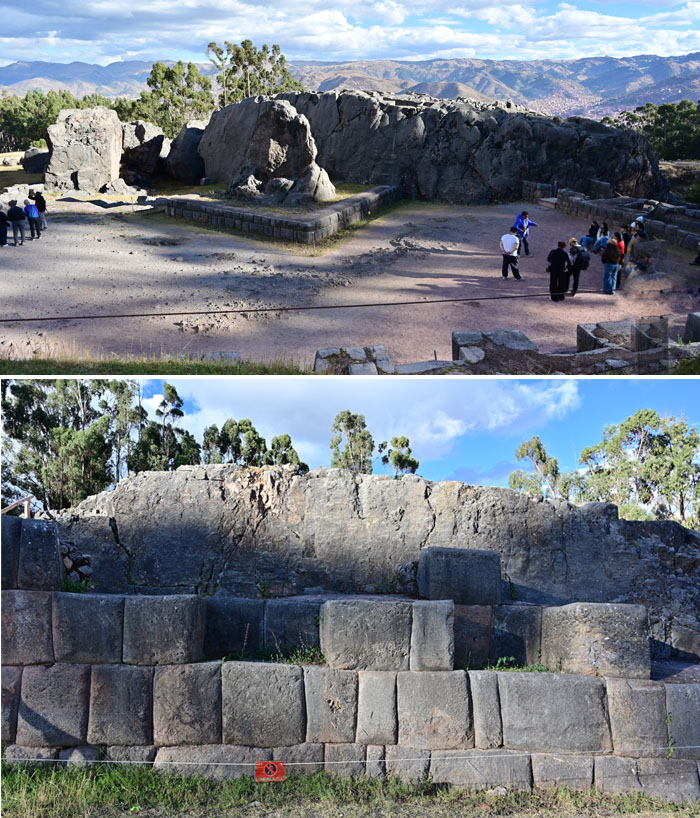
Unlike many Inca complexes built primarily from assembled stone blocks, Qenqo was created by extensively carving a large natural limestone outcrop. The principal construction phase dates to the 15th century, during the height of the Inca Empire, most likely under the reign of Pachacuti or his immediate successors.
The site functioned as a major huaca—a sacred place—dedicated to religious and ceremonial activities connected with the worship of Inti (the Sun), Pachamama, the Moon, and other elements of Andean cosmology.
The most prominent features of Qenqo Grande, the main sector, include a semicircular amphitheater roughly 55 meters in length, lined with 19 niches that may once have held idols or offerings. In front of this open space stands a large central monolith approximately 6 meters high, resting on a rectangular pedestal; its original form appears to have been deliberately damaged during the colonial period as part of the Spanish campaign against indigenous religious imagery. Zigzag channels carved into the upper surface of the rock descend from a small aperture and bifurcate, one branch leading toward an underground chamber. These channels are widely interpreted as conduits for ritual liquids—such as chicha (fermented maize beverage), water, or sacrificial blood—during ceremonies.
Beneath the main rock mass lies a system of underground galleries and chambers, including a carved stone table or altar. Scholars generally associate these spaces with funerary or initiatory rites, possibly including the preparation or temporary housing of mummies, given the cool, stable conditions of the subterranean rooms. Some carvings and alignments also suggest astronomical observation related to solstices or seasonal cycles.
A smaller nearby sector, known as Qenqo Chico, contains additional carved rocks and may have served ritual or preparatory functions. Much of the above-ground architecture was damaged or dismantled after the Spanish conquest, yet the rock-cut elements survived sufficiently to preserve the site’s distinctive character.
Qenqo stands as a clear example of Inca sacred architecture fit in natural landscape. By transforming a living rock formation into a complex of channels, chambers, and ceremonial spaces, the builders created a place where geology, ritual, and cosmology were tightly integrated—an approach that remains one of the most distinctive aspects of Inca religious architecture in the Cusco region.
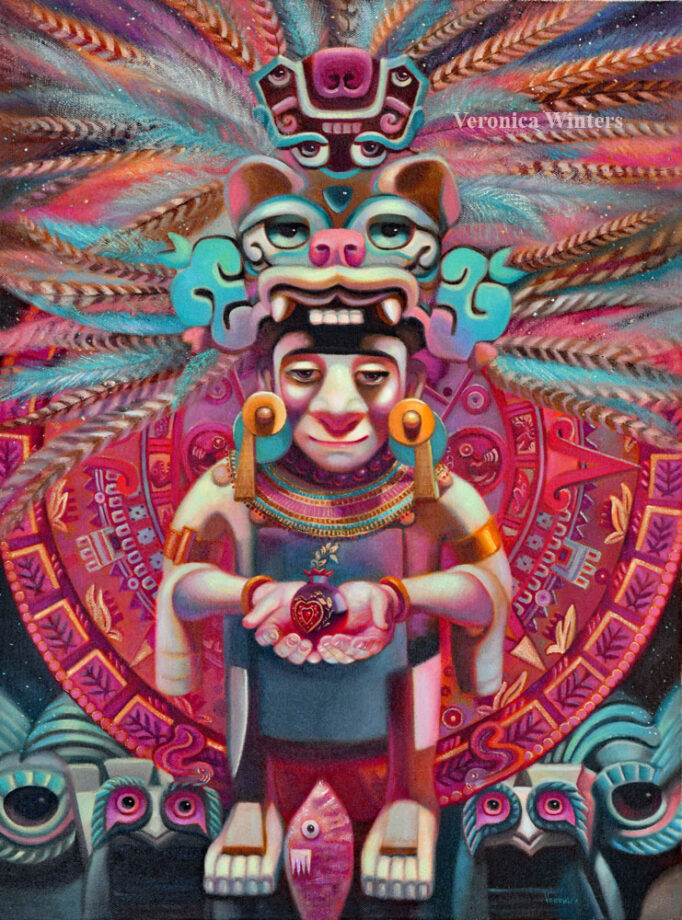
All images are copyrighted by Veronica Winters. If you use these pictures for official publications, please contact the artist. If you use them for your social media and YouTube videos, please acknowledge the author and place a link to this article/website. Thank you! If you see a mistake in my articles, email me to fix it 🙂
Information for tourists: if you travel to Peru for the first time
No matter how much I travel, each country presents its own unique challenge that requires mental and physical adjustment. What makes travel around Peru difficult is logistics. A 15-minute drive would be 40 minutes because of traffic, terrible roads, and the language barrier. I strongly suggest downloading a taxi app that will save you money and cut down on commotion. It’s different from Uber, as you offer your price and the driver either accepts or offers you his price. It’s very affordable in general unless you order a cab from the hotel. The convenience of using this app is in credit card payments and location/destination clarity. You must speak decent Spanish to call a cab on the street if you don’t have this app. Taxis are budget cars that are not even sold in the US, which is similar to the cars driving in Mexico. So be prepared to experience that. At first, we used the hotel’s service to call us a cab, which cost us several times more than the app’s price. Besides taxis, locals ride buses, which we didn’t do because of a language barrier.
We rode several trains. One of them broke down, and we couldn’t get to our destination on time. In fact, there were no announcements for over 2.5 hours, and the entire train crowd ate, slept, and clicked on their phones until they suddenly fixed the train and opened the entry line at the station very late in the evening. We considered ourselves lucky to get home at 2 am. It could have been worse. We rode different carts on the train to and from Machu Picchu. For some odd reason, the regular one was incredibly bumpy, and if you have motion sickness or if you are pregnant, don’t do it. Upgrade your ticket.
Logistics challenges don’t stop at transportation. It’s everywhere in Peru. So, reserve twice as much time as you might think you need to get around the Cusco area. Learn to speak some Spanish to overcome the frustration. If you go to restaurants, be prepared to sit there for 1,5 hours as they cook and serve you slowly.
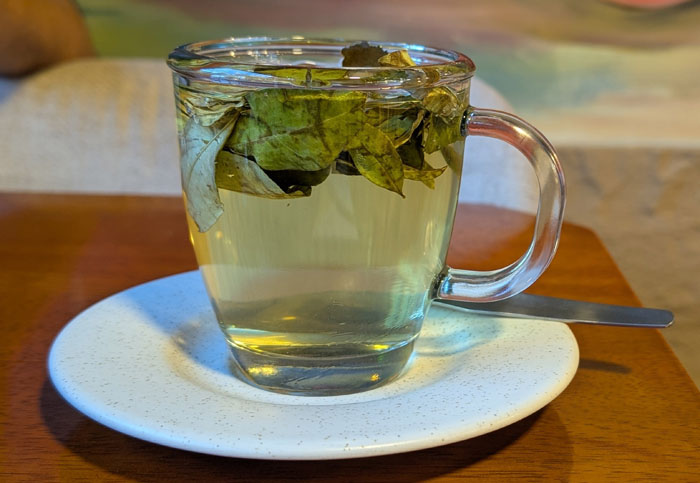
- Electric plugs are the same as in the US. Most travelers rely heavily on USB charging. Bring a good multi-port USB wall charger (that is dual-voltage) and you’ll minimize issues.
- Visa requirement: None for tourism. U.S. citizens can enter visa-free.
- Try local hot teas, such as lemongrass, coca tea, or muna tea. They all have unique tastes.
- Credit cards are accepted in many places but not all. Have some cash on hand. They charge you 3.5-5% for credit card use. Many tickets sold in museums are cash only.
- They like to sell combined tickets to places/attractions, which is pricey if you visit just one site. So plan your day to visit everything that’s listed on your ticket. Cusco’s museums are small and boring, unless you want to see something specific in each museum. Qorikancha (located in a church building) is really interesting as it has Inka buildings inside it. There is a separate entrance fee to see the underground museum with some pottery, items, and elongated skulls.
- Machu Picchu is a big adventure that becomes a 2-day challenge. First of all, you need to arrive there a day in advance to buy your ticket with a passport. (They will check your passport’s name against the ticket several times as you stay in line, enter the bus, and MP itself). Be at the ticket office by 9 am off-season to get the right ticket (they sell circles of various difficulty levels: 1A and 1-2B). You must buy a bus ticket separately and in a different location! It’s super touristy. (The bus ride up the steep mountain has no road guardrails, just the view way…down. Next time, I’ll tell you how I really feel about it). After your ticket purchase, you end up with one day to kill before going to Machu Picchu. There is not much to do in that tiny town besides shopping, eating, and walking along the train rails. We walked to Mador, where the waterfall wasn’t free, and we had no cash to pay for the entrance. There was a tiny butterfly garden on our way (pay a fee), which is very small in comparison to the American ones. Buy yourself a nice hotel to relax before going up to MP, if you can.
- Prepared food is very tasty in restaurants.
- Lammas and alpacas are adorable!
I know that most of what I list here sounds critical, but that’s how it is. When you’re prepared for these problems, it won’t be that difficult. People are friendly. There are many tourists, and you will enjoy your trip for sure.
Academic Publications & Research Papers
The book Inca Urbanism in Cusco: New Contributions is available in the Publications section for free, Spanish ed . Edited by Dr. Ramiro Matos (NMAI-Smithsonian Institution ) and Dr. Ricardo Mar (URV ), compiles the scientific results of research conducted in Cusco since 2009. It analyzes how the territory was occupied during the Inca period, the architectural models used, and the continuity of ancient Andean ways of understanding the natural environment as a facilitator of human activity.
“Inca Quarrying and Stonecutting” (1985)
Jean-Pierre Protzen (University of California, Berkeley), Journal of the Society of Architectural Historians, Vol. 44, No. 2, pp. 161–182. 10.2307/990027 . Key Findings: Protzen conducted experimental stonemasonry at the Kachiqhata quarry (near Ollantaytambo) and Rumiqolqa (near Cusco). Using dense river cobbles (hiwayaya), he demonstrated that hammering and pounding can pit, shape, and smooth hard granite and basalt in hours rather than months. He proved that the tight joint fitting was achieved by suspended trial-and-error pounding along scribed contact points.
Inca Architecture and Construction at Ollantaytambo (1993)
Jean-Pierre Protzen, Oxford University Press, Oxford University Press / Book Overview Key Findings: The definitive architectural reference on Inca stone engineering. Protzen documents the entire life-cycle of megalithic blocks: extraction at the Kachiqhata quarry across the river, the physics of sliding multi-ton stones down mountain slopes, crossing the Urubamba River via diverted channels, and dragging blocks up monumental earth ramps.
“The Building of Sacsahuaman” (1986 / 1996)
Vincent R. Lee (Architect & Explorer), Ñawpa Pacha: Journal of Andean Archaeology / Sixpac Manco Research
Lee analyzes the mechanics of moving and fitting the 100+ ton limestone blocks at Saqsaywaman. He details the suspended scribing method (using a template/plumb line to match joint profiles before setting a stone) and proposes how wooden levers (clavelinas), ropes, and earthen ramp structures were positioned around the multi-tiered zigzag terraces.
Inca Architecture (1980):
Graziano Gasparini and Luise Margolies, Indiana University Press, Key Findings: A seminal comparative architectural study mapping Inca masonry styles across Peru. Chapter 4 provides detailed structural breakdowns of polygonal vs. imperial ashlar masonry and examines how quarry organization operated within the Inca state labor tax (mita) system.
Inca Architecture and Construction at Ollantaytambo, by Jean-Pierre Protzen (Author), out of print book: https://link.amazon/B02JI6q6F
Fortifications of the Incas: 1200–1531 by H. W. Kaufmann (Author), J.E. Kaufmann (Author), https://link.amazon/B0bDAjRQt
The Oxford Handbook of the Incas, Edited by Sonia Alconini and R. Alan Covey. https://global.oup.com/academic/product/the-oxford-handbook-of-the-incas-9780197603260?q=Jean-Pierre%20Protzen&lang=en&cc=us
“Variation in Inca Building Stone Quarry Operations in Peru and Ecuador” (2004)
Dennis Ogburn (University of North Carolina at Charlotte). Publication: Society for American Archaeology (SAA) Annual Meeting Papers / Journal of Archaeological Science DOI: 10.1016/j.jas.2004.05.008 Key Findings: Utilizes geochemical X-ray fluorescence (XRF) to trace raw stone blocks back to their exact quarry origins. Ogburn’s research demonstrates that the Inca transported fine-cut andesite blocks up to 460 kilometers (from Cusco to Saraguro, Ecuador) to construct state facilities, proving imperial capability in long-distance heavy transport.