Tag: rembrandt stolen from gardner museum

From Venice to Boston: The TRUE Story of America’s Craziest Art Collection & the Thieves Who Stole It

Dedicated to the enjoyment of the public from the very beginning, this palace was never Isabella’s house. Rather, it is a Venetian-style palace filled with art, history, and beauty that reflects her rt collecting aesthetic and taste. The house-museum is the world of Isabella Stewart Gardner, the fiery socialite and adventurous spirit who turned her passion for beauty into one of America’s most audacious art collections. This museum experienced the largest art theft in history, 13 artworks were stolen. A crime so brazen it left empty frames mocking visitors to this day. Welcome inside the powerful, enigmatic realm of Isabella Gardner—a tale of creative vision, tragedy, and treasures still missing.

To read about the Isabella Stewart Gardner’s Palace in Boston, Massachusetts and to see pictures: https://veronicasart.com/the-queens-hidden-palace-isabella-stewart-gardners-boston-legacy-of-art-intrigue-and-the-greatest-heist-ever/

video: https://youtu.be/69qpQMk5eVw

If you’d like to support my work, subscribe & rate this podcast on Spotify and Apple | Show your support for the podcast: here | Host: Veronica Winters, MFA | veronicasart.com

The Queen’s Hidden Palace: Isabella Stewart Gardner’s Boston Legacy of Art, Intrigue, and the Greatest Heist Ever

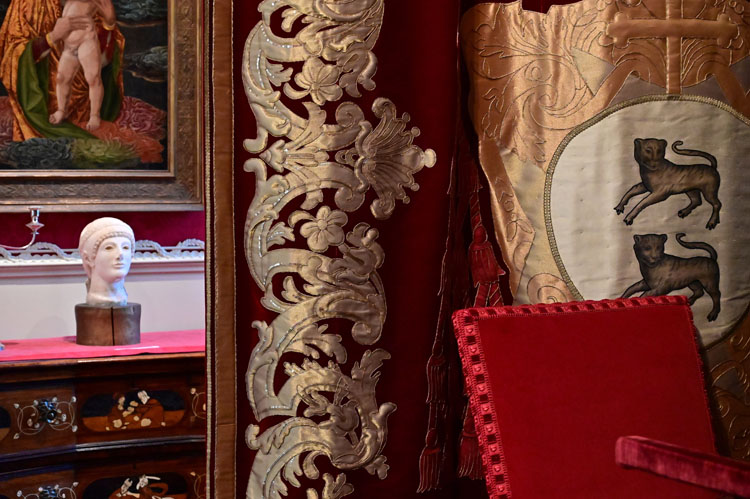
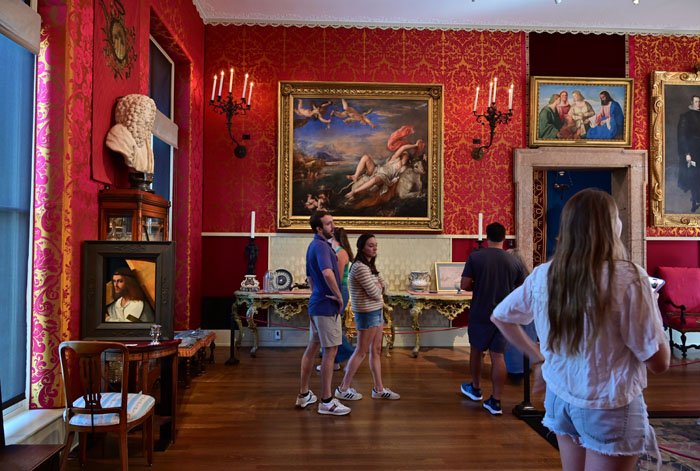
The Titian Room’s details

From Venice to Boston: The TRUE Story of America’s Craziest Art Collection & the Thieves Who Stole It


Imagine stepping into a stunning Venetian palace hidden in the heart of Boston—not a stuffy museum with white walls and random contemporary art, but a living, breathing dreamscape filled with Renaissance masterpieces, exotic sculptures, famous art, and the whispers of scandalous parties attended by the era’s greatest minds. This is the world of Isabella Stewart Gardner, the fiery socialite and adventurous spirit who turned her passion for beauty into one of America’s most audacious art collections. The house is her magical creation. But beneath the glamour lies a shadow: the largest art theft in history, a crime so brazen it left empty frames mocking visitors to this day. Welcome inside the powerful, enigmatic realm of Isabella Gardner—a tale of creative vision, tragedy, and treasures still missing.

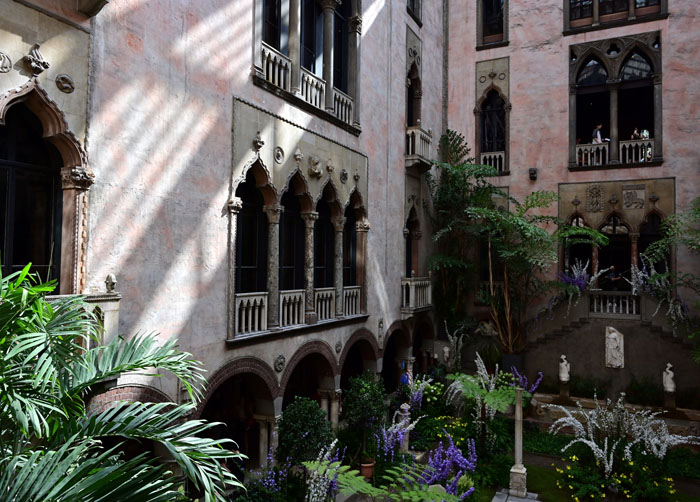
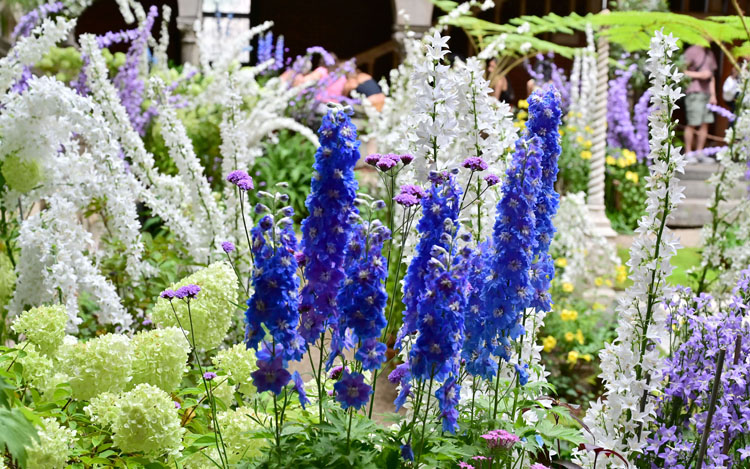
Dedicated to the enjoyment of the public from the very beginning, this palace was never Isabella’s house. Rather, it is a Venetian-style palace filled with art, history, and beauty that reflects her aesthetic and taste. The courtyard alone is a stunning floral masterpiece!

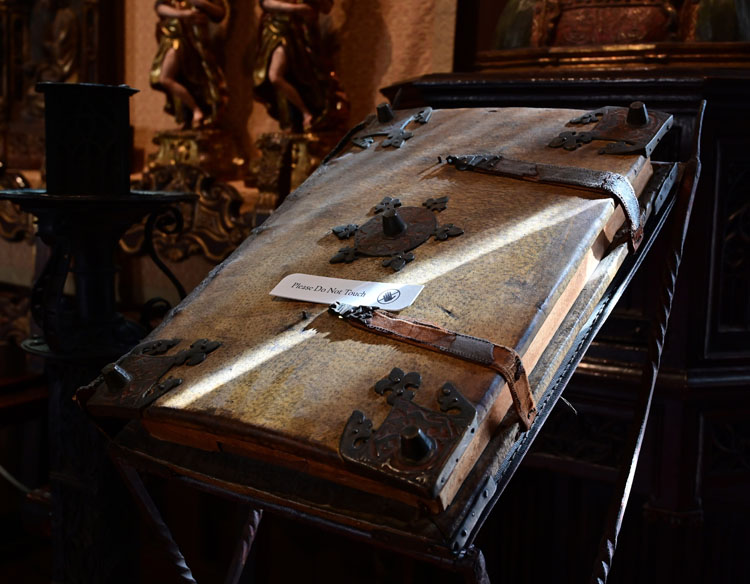
Gothic Room

Isabella Stewart Gardner Museum History and Life: stunning art collection inside

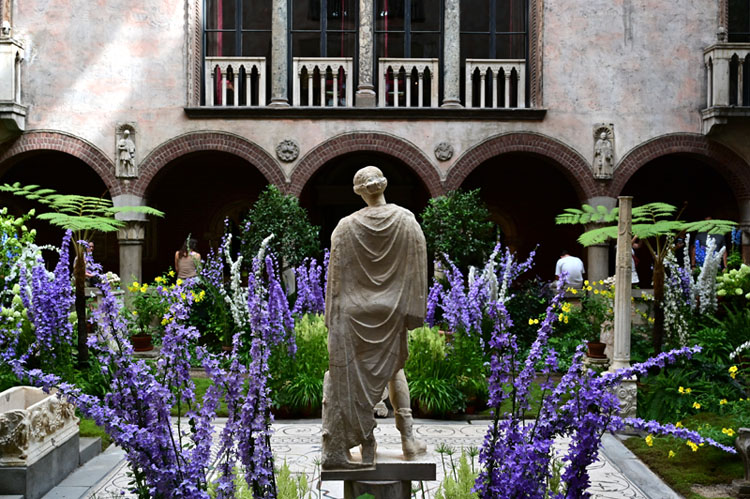
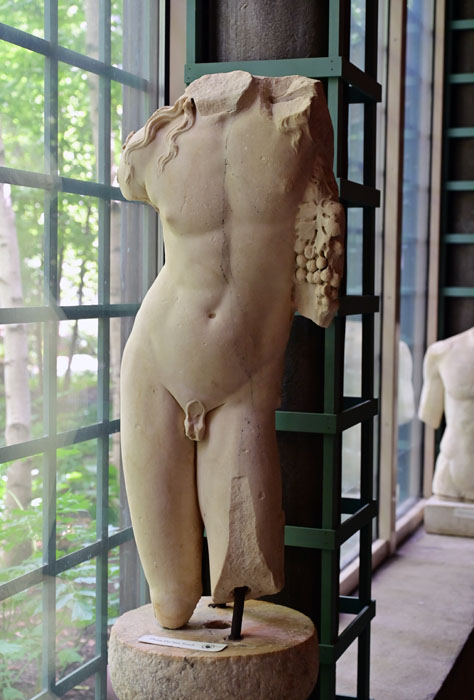
Courtyard with Roman Sculptures and changing floral displays


Born in 1840 to a wealthy New York family of linen merchants, Isabella Stewart was no shrinking violet. Nicknamed “Belle,” she was sharp-witted, fiercely independent, and destined to shake up Boston’s buttoned-up elite. She grew up in Manhattan and lived in Paris and Italy in her teenage years, studying art, languages, religion, and music. At 20, she married John “Jack” Gardner, heir to a shipping fortune, in a union that blended New York flair with Boston restraint. They settled into a grand townhouse on Beacon Street, but joy turned to heartbreak when their only child, little Jackie, died at 18 months from pneumonia in 1867. Isabella had multiple miscarriages and a stillbirth. After such brutal beginnings, Isabella experienced severe depression. Devastated, the Gardners escaped into the world, embarking on grand tours of Europe (Scandinavia, Russia, Paris, etc) and the Middle East ( Northern India, Syria, and Egypt). Venice became their obsession—the city’s labyrinthine canals and opulent palazzos igniting Isabella’s passion for the arts.

“Venice is like eating an entire box of chocolate liqueurs at one go,” she once quipped.

These artful journeys of an entire decade were awakenings to her true passion. Art. Isabella devoured art history, studied Italian literature at Harvard—unheard of for a woman then—and began amassing rare books, her first foray into art collecting. In 1875, her husband’s brother died, and Jack and Isabella adopted three boys.

Where did Isabella’s wealth come from?

Isabella’s wealth came from her father, who imported textiles from Europe to the US at first, and then he made investments in railroads and mines, accumulating a fortune that he gave to his daughter at 51 after his passing. According to Diana Greenwald, Curator of the Collection at the Gardner, Isabella inherits the equivalent of about seventy-eight million dollars in today’s money. She and her husband, Jack, jointly decide that they are going to live off of Jack’s money, which also comes from family inheritance and investments. And they will spend her money on art.

Sargent’s scandalous painting of Isabella Stewart Gardner, inside the museum.

When you walk into the Gothic Room, you’ll see a vertical painting in the corner, depicting Isabella Stewart Gardner in a simple black dress set against red-orange Italian textile. Painted by a famous artist in her day, John Singer Sargent, the woman is 47 in this oil painting. Sargent was known for painting large portraits of high-society men and women in loose, fresh, and fluid brushstrokes. In this one, he designs the painting in circles: the halo above her head, the circle of pearls on her waistline, and a circle of her interlocking hands. She stands tall, facing us with confidence. It was a scandalous portrait among Bostonian high society at her time.

Isabella Gardner art collection & Bernard Berenson

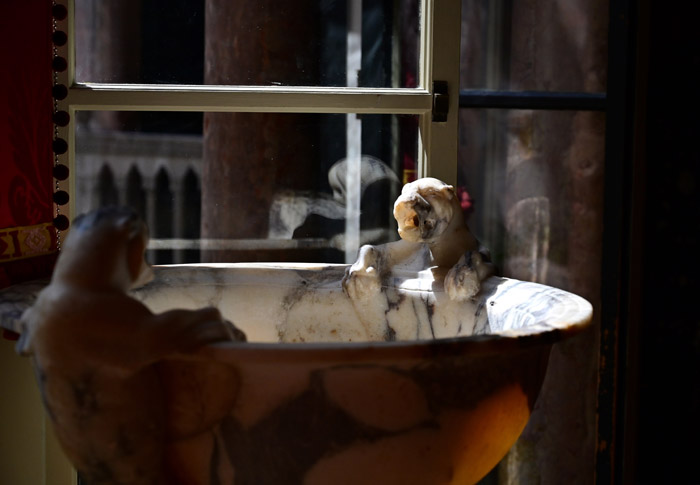
The Raphael room with a Roman stone bowl


By the 1880s, Isabella’s tastes evolved from manuscripts to canvases. She met Bernard Berenson, the charismatic Harvard art connoisseur of Italian Renaissance art who became her lifelong advisor and confidant. Together, from the 1890s onward, they scoured Europe for gems, outbidding rivals in smoky auction houses. As she inherited almost 2 million from her father, Isabella began her art collecting journey of European fine art. Isabella’s eye was eclectic and bold: Italian Renaissance masterpieces like Titian’s The Rape of Europa, a stormy seascape by Rembrandt, and delicate Chinese bronzes from ancient dynasties, the Concert by Vermeer (bought at a Paris auction), and delicate Botticelli’s Madonna and Child. She snapped up Impressionist stunners—Manet’s cheeky Chez Tortoni—and even contemporary works by Matisse. No dusty timelines here; her collection spanned 3,000 years across five continents, blending European art with vibrant Persian textiles, silver, manuscripts, ceramics, and architectural pieces. By her death, it numbered over 2,500 objects, a fortune that would rival kings.

Art is in one of the rooms on the first floor

Isabella Stewart Gardner Art Collection Highlights (listed in the museum’s brochure):

“A young country is in need of the arts,” Isabella once said.

First Floor: When you walk into the Palace, you have to adjust your eyesight as it seems dark at first, especially in the first floor’ cloisters. Isabella not only designed the rooms and art displays, but also varied the lighting in each room of the house. It’s crowded on the first floor, and some rooms have a line with a 5-10 minute wait time to enter.

Zorn’s painting of Isabella
  • Courtyard: Incredibly beautiful courtyard features the Roman mosaic in its center, depicting Medusa. It also hosts all female Roman statues. A novel glass roof was Isabella’s design. As it doesn’t emit the UV light to protect the art, the flowers must change weekly, and the entire floral arrangements must change every 6 weeks, according to Christina Nielsen, Curator of the Collection. The Venetian-style windows are reminiscent of Venice if they were transported from Italy to the US.
  • Spanish Cloister: This is a very dark space that mimics the directional light in the painting El Jaleo by John S. Sargent.
  • Chinese Loggia: Chinese Votive Stele
  • Yellow Room: Henri Matisse, the Terrace St-Tropez & James Whistler, Harmony in Blue and Silver. Lady in Yellow by Thomas Wilmer Dewing
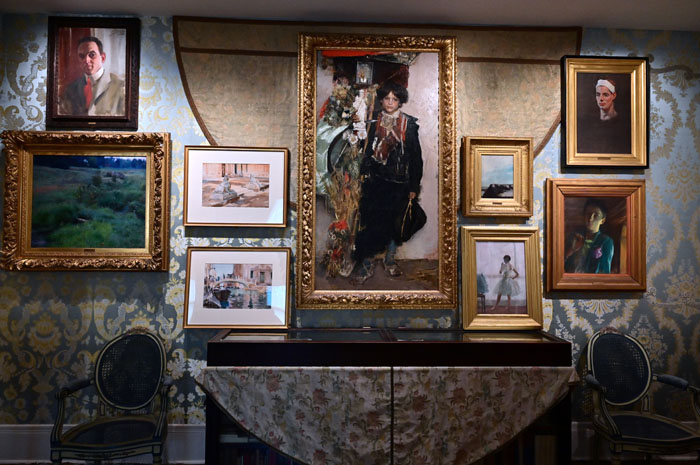
  • Blue Room: this room features Isabella’s personal friendships, including art, bookcases, and cases with objects and letters. Artists such as John S. Sargent, Madame Gautreau, drinking a toast; Anders Zorn, the Omnibus, Eduard Manet, Madame Auguste Manet; John Singer Sargent, A Tent in the Rockies, watercolor; Return from the Lido by Ralph Wormeley Curtis; Incensing the Veil, watercolor by John Singer Sargent;
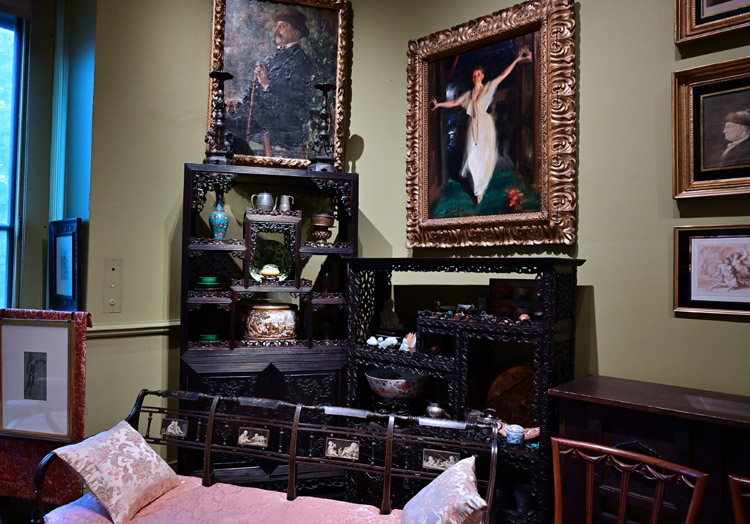
  • Macknight Room: the only room in the Museum to be named after a contemporary artist, this space is dedicated to the watercolor art of Dodge Macknight. This room with small paintings served as an apartment for Isabella Stewart Gardner’s guests in the beginning. John S. Sargent, Mrs. Gardner in White; Diana, bronze sculpture by Paul Manship.
  • The Vatichino—the little Vatican is a narrow space located in the adjacent Macknight Room. According to the museum, it originally contained 1,850 objects, including art, pictures, books, Mexican portraits, and souvenirs like a Sudanese dagger purchased in Egypt. The room houses a small portrait of Gardner in fancy dress by Dennis Miller Bunker.
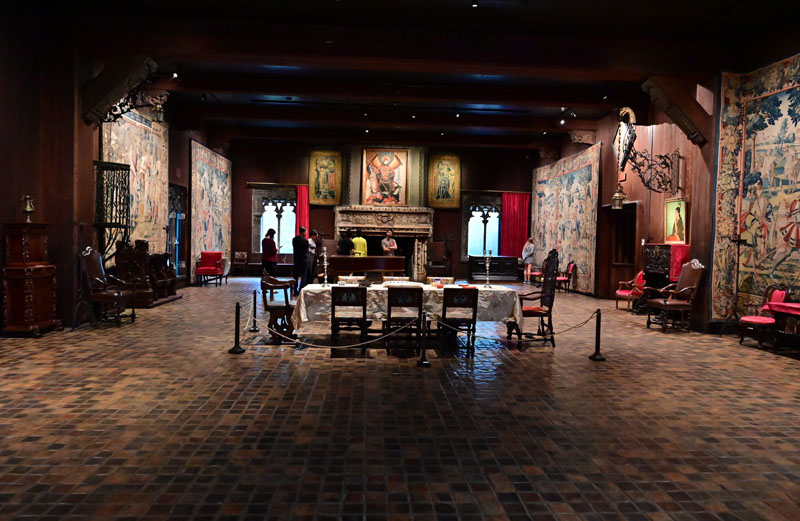
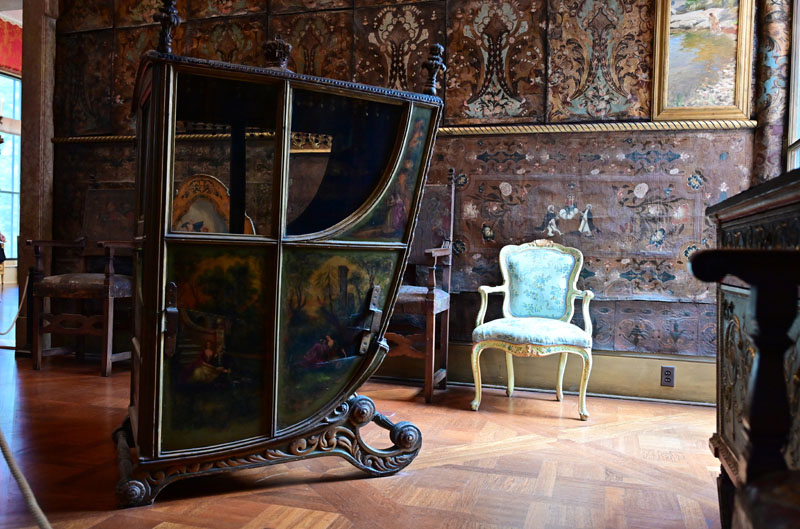
Isabella Stewart Gardner Museum: Tapestry room
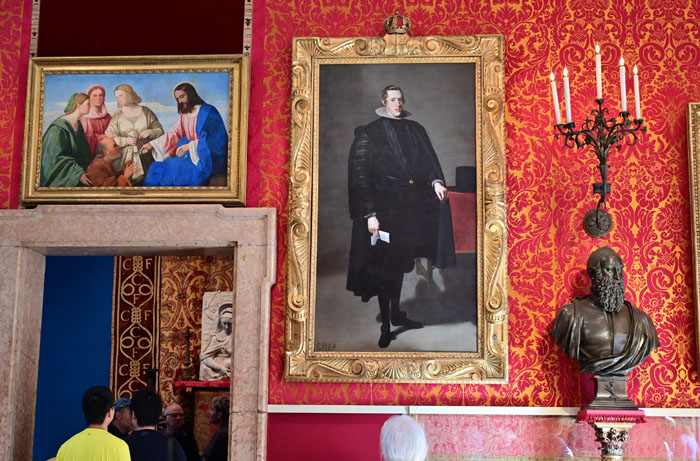
Titian Room paintings

Second Floor: I think the 2nd and 3rd floor has the most beautiful rooms and art reminiscent of beautiful Venice. I felt like I was transported into the past of a prosperous Venetian city-state.

  • Early Italian Room: This room has the collection of Italian Gothic and Renaissance paintings by P. della Francesca, Hercules; Fra Angelico, the Dormition and Assumption of the Virgin, etc.
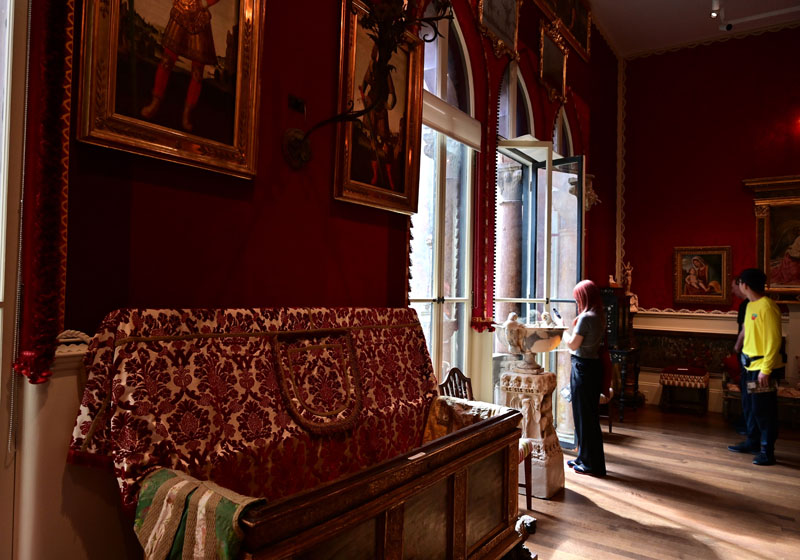
  • Raphael Room: One of the most beautiful rooms in the palace is dedicated to Raphael. Decorated in vivid, luxurious red, this opulent room displays paintings by the 15th and 16th-century Italian painters, ancient Roman wall paintings, sculptures, and vases. Two heavy velvet curtains flank the Venetian-style fireplace. Art includes the portrait of Tomasso Inglirami by Raphael; the Annunciation, 1487 by Piermatteo d’Amelia; The Story of Lucretia, 1500 by Sandro Botticelli; Saint George Slaying the Dragon, 1470 by Carlo Crivelli; Virgin and Child,1457 by Francesco Pesellino. The window light bathes an ancient Roman stone bowl with two animals, adding history and glamour to this room.
  • Short Gallery: the Short Gallery displays Isabella Stewart Gardner’s collection of prints and old master drawings, old books, textiles, and family portraits. You need to open the panels to see drawings by Michelangelo and Bronzino, Henri Matisse, etc as they’re sensitive to the light. You can see Isabella in white and pearls painted freely by Anders Zorn and titled “Isabella Stewart Gardner in Venice.”
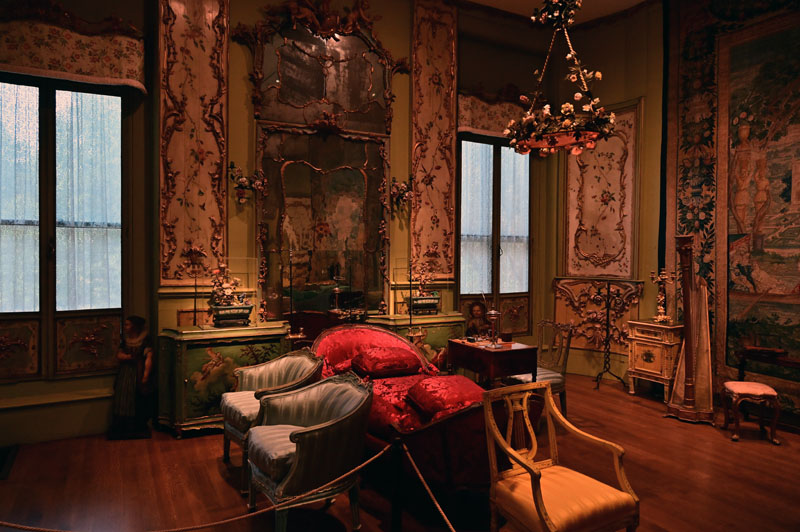
  • Little Salon: Little Salon is done in the Rococo art style with wines and flowers, housing French paintings, Italian furnishings, and German sculpture. Huge, lavish tapestries decorate the wall space, along with the 1780 mirror, purchased from the Palazzo Morosini in Venice. At the top of the mirror is an oval shield with the arms of Doge Francesco Morosini (1619-1694). Delicate blue armchairs, covered in blue moiré satin striped fabric, are painted furniture that was purchased by Isabella Stewart Gardner in Venice in 1906. Here you’ll find an oil painting created by the court artist to King Louis XV- The Chariot of Venus, 1750 by François Boucher.
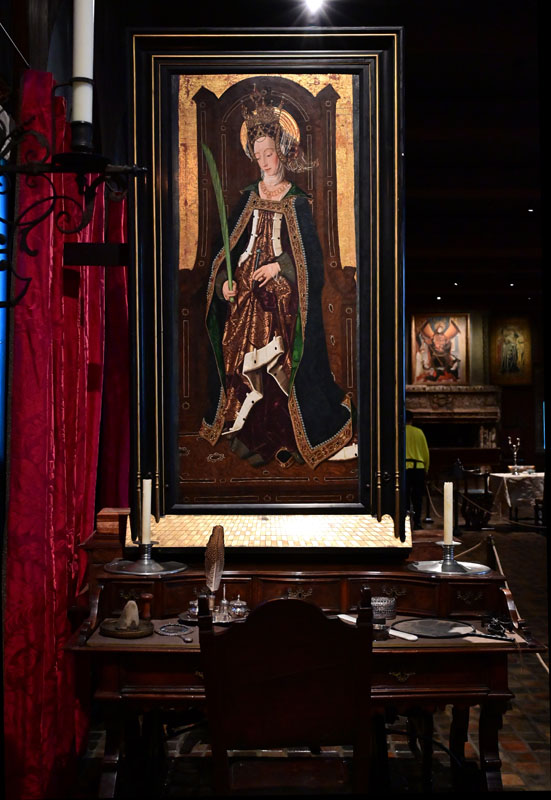
  • Tapestry Room: The Tapestry Room is one of the largest and darkest spaces in the palace that evokes a great medieval ballroom in a northern European castle. This room has beautiful art: Saint Engracia, 1474 by Bartolomé Bermejo, cases with Islamic manuscripts, Pedro Benabarre, St. Michael Archangel above the fireplace, etc. Ten large, rich Flemish tapestries decorate the walls, depicting stories of the ancient Persian king Cyrus the Great and Abraham.
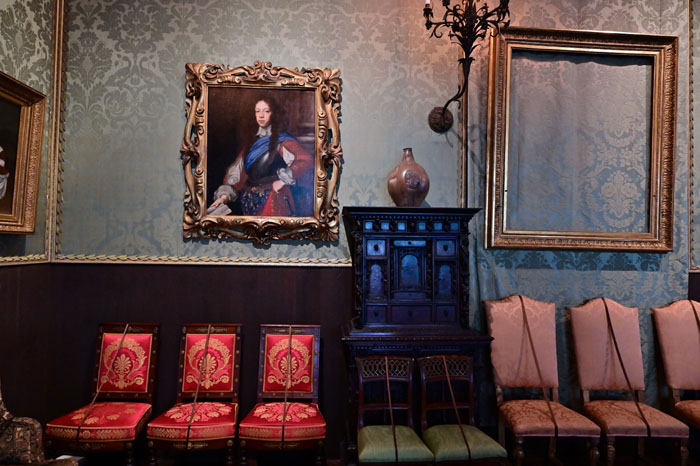
  • Dutch Room: The Dutch room features light green Venetian-style fabric walls with art by Anthony van Dyck, Woman with a rose, Rembrandt, self-portrait, age 23; Peter Paul Rubens, Thomas Howard. Rembrandts were stolen from this room, and empty frames still hang on the walls. The Dutch Room is also large, and Gardner enjoyed entertaining guests in it. She hosted dinners there, including one for the Harvard football team following their victory over Yale in 1909, according to the museum’s description.
Saint Engracia painting in the Tapestry Room in the Gardner Museum

Stairway:

  • Giorgio Vasari – Musicians, about 1545, fresco
  • Even the staircases look enigmatic, filled with sculptures, fragments, and decorations. Isabella Stewart Gardner asked to paint the main stairwell from the Courtyard to the second and third floors in Bardini Blue, a shade of royal blue favored by the Florentine gallery owner Stefano Bardini. Here you’ll find the Portrait of a Lady in Black by Domenico Tintoretto.
Titian room with Rape of Europa painting inside the Isabella Stewart Gardner Museum

Third Floor:

  • Veronese Room: This reflects Isabella Stewart Gardner’s love for Venice, like some other rooms in the palace. The painting on the ceiling, the Coronation of Hebe, was attributed to Veronese, an Italian Renaissance master. Isabella collected an eclectic mixture of objects here, such as leather panels from Spain, Italy, and the Netherlands, gilded china saucers, cups, and a pitcher, and the Venetian chair-seat from a Gig. There are several small pastels by James McNeill Whistler as well.
  • Titian Room: The Titian Room is another opulent space in stunning red. Bathed in bright, afternoon light, this space is a spectacle of Baroque textiles and Rococo furniture, showcasing art by Titian, Rape of Europa; B.Cellini, Bindo A.; Velázquez, Philip IV of Spain, Landucci’s armchairs, Circle of Bellini, Christ carrying the cross.
  • Long Gallery and chapel: the Long Gallery is also a very interesting space in blue and gold because it accommodates an archive, a library, a gallery, and a chapel all at once. You’ll pass by a variety of ancient objects, sculptures, church furniture, modern letters, photographs, rare books, Renaissance paintings, and the 12 cases of historical manuscripts, personal correspondence, etc. Here you’ll find Botticelli, Virgin and Chil,d and the stained-glass window from Soissons Cathedral.
  • Spanish Chapel: Tomb Figure of a Knight, about 1498-1500, Salamanca, alabaster; The Self-Mortification of Saint Benedict, about 1496 by Albrecht Dürer, (Nuremberg, 1471 – 1528), white glass with silver stain, vitreous paint, and back-painting
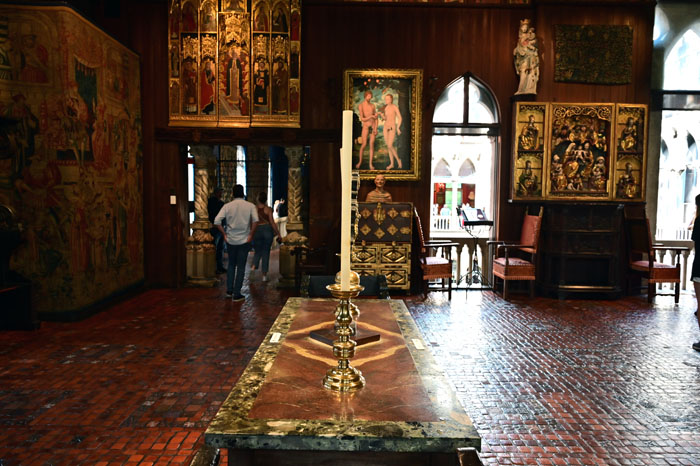
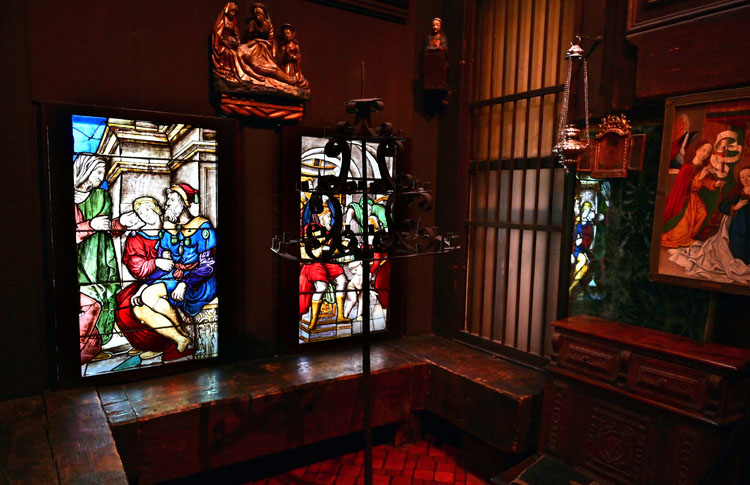
  • Gothic Room: Simone Martini, Virgin and Child; Giotto, Christ Child in the temple; John S. Sargent, Isabella Stewart Gardner, Adam and Eve,16th century by Lucas Cranach the Elder. Dark and mysterious, this Gothic room was designed as a chapel with Gothic art, beautiful old books, chests, and a stained-glass window from a French Cathedral! In a wooden bookcase, you’ll find a collection of books by the medieval Italian writer, Dante.
Rembrandt’s self-portrait in the Dutch Room of the Palace

Venetian palazzo in Boston

Raphael’s room: the Roman stone bowl


During the couple’s visits to Venice, they stayed in the Palazzo Barbaro on the Grand Canal, which was an inspirational hub for her soul. Back home in Boston, Isabella didn’t want her treasures locked in a vault for herself only. In 1898, tragedy struck again—Jack died suddenly of a stroke at 65. Undeterred, the 58-year-old widow poured her grief into creation. She bought a swampy Fenway plot and envisioned Fenway Court: a 15th-century Venetian palazzo transplanted to Boston’s marshes. Construction began in 1899 under architect Willard T. Sears, blending Byzantine mosaics, Gothic loggias, and a soaring glass-roofed courtyard garden bursting with exotic blooms year-round—palm fronds swaying beside marble statues, a living heartbeat at the museum’s core. Completed in 1901, Isabella spent two years installing her collection exactly as she dreamed: no chronological order or labels, just poetic juxtapositions, no changes afterwards. A Raphael self-portrait gazes over 18th-century French furniture; Greek artifacts mingle with Japanese screens. She opened the doors to the public in 1903, but with a twist—this was her home on the 4th floor, too. Upstairs, her private apartment brimmed with lion-skin rugs and velvet drapes, the rest of the house was destined to become an art museum. She was 62 years old when Isabella opened it. When she died in 1924 (at 84), her will about the art museum came into effect.

Isabella Gardner famous parties

Little Salon


Fenway Court wasn’t a mere art gallery for private parties; it was Boston’s cultural supernova that she designed herself. Isabella, the “Queen of the Back Bay,” hosted legendary soirées: Bach concerts under the courtyard stars, literary salons where ideas crackled like fireworks. Her circle? A who ‘s-who of genius. John Singer Sargent, who immortalized her in a scandalous portrait, dined at her table. Henry James, the novelist, called her his “splendid and terrible Isabella,” penning tales inspired by her Venice haunts. Whistler sketched her; Anders Zorn painted her; even Asian scholar Okakura Kakuzō shaped her taste for Eastern art. She championed women like Julia Ward Howe and backed composers like Walter Damrosch. Eccentric to the core, Isabella once crashed a symphony in a Red Sox headband, scandalizing prudes. Her parties blurred the lines between high society and bohemia, making Fenway Court the epicenter of America’s Gilded Age arts scene.

I must mention the Gardner Museum courtyard garden, which is incredibly beautiful and draws you in with serene flowers and the exotic architectural vibe of the Venetian-style house. The Courtyard showcases Isabella Stewart Gardner’s exquisite taste as she arranged a beautiful display of objects from all over the world: Africa, Italy, Spain, Greece, etc . You can see all rooms here: https://www.gardnermuseum.org/experience/rooms

Isabella Stewart Gardner Museum Heist

The Dutch room: stolen art in the Gardner museum


Yet for all its splendor, Fenway Court harbors an unsolved Isabella Stewart Gardner museum heist story. On March 18, 1990, two thieves in Boston police uniforms duped night guards Rick Abath and Randy Herguard into buzzed entry. “We got a report of a disturbance,” they lied. What followed was cinema-villain audacity: 81 minutes of mayhem. They covered the security guards’ eyes and mouths with duct tape, handcuffed them to pipes, and put them in basement spaces, away from each other. The thieves also disabled security cameras and pillaged the Dutch Room.

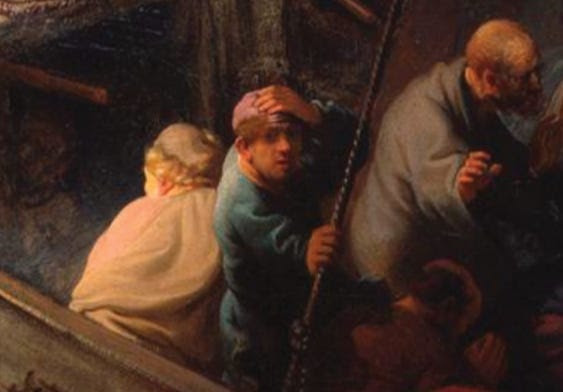
Saws whirred as they slashed Rembrandt’s Christ in the Storm on the Sea of Galilee—his only seascape he ever painted—from its frame (Rembrandt’s face is one of the men painted in a seascape). They also took another large Rembrandt with a double portrait of a Dutch couple, ripping off the canvases from their frames with a sharp blade! The thieves also ripped off a painting they thought was the third Rembrandt but it was his student’s art ( Govert Flinck was one of numerous students). According to Anthony Amore, the thieves also planned on stealing Rembrandt’s self-portrait, painted at 23 years of age, as they took it down, turned it to lean against the chest, and then forgot to take this painting with them!

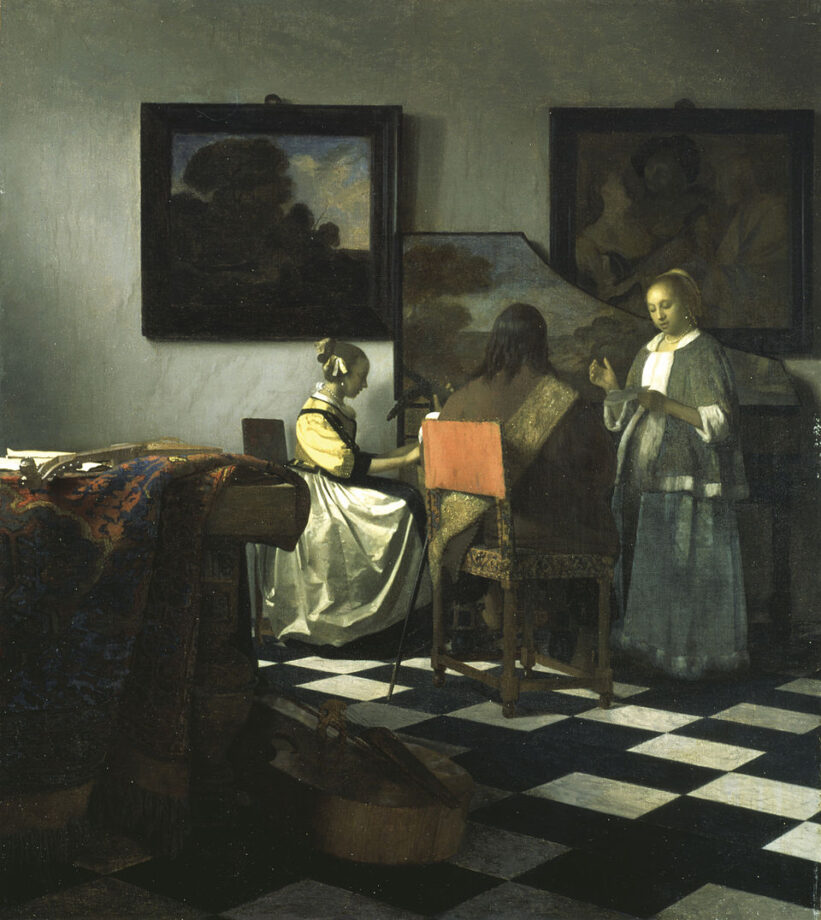
They pocketed Vermeer’s The Concert, one of just 36 artworks ever painted by the artist, worth $250 million alone, five Degas sketches ( three of them are images of jockeys and horses), a tiny, postage-stamp-sized Rembrandt etching, and an eagle finial from the Imperial Guard of Emperor Napoleon; the flag vanished too. Total haul: 13 pieces, half a billion dollars. They had stolen six pieces from the Dutch Room and six from the Short Gallery: the drawings and the eagle. That makes 12. There’s one more small painting by Manet they took from the Blue Room downstairs.

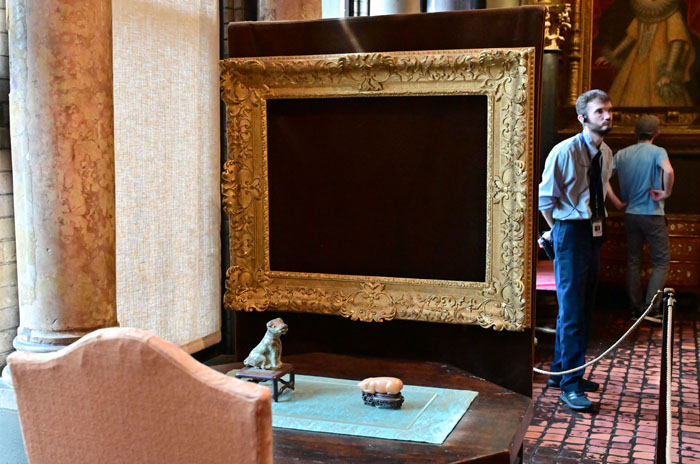
The thieves spray-painted a camera lens for good measure and fled into the dawn, leaving the guards bound till morning. The thieves spent an hour and 21 minutes inside the museum, more than any other thieves! To this day, those gaping frames hang exactly as the thieves left them—a defiant monument to loss. The FBI’s probe rages on, with a $10 million reward dangling like forbidden fruit. Was it mafia muscle? Art-world insiders? Theories swirl, but the masterpieces remain ghosts.

It looks like the thieves were ordered to steal Rembrandts as every other museum in Massachusetts with Rembrandt paintings had been robbed before the Gardner’s, according to the audio talk by Anthony Amore, the Museum’s Chief of Security, and Chief Investigator. Could one of the thieves be French, as other French artworks disappeared from the museum too?

The Dutch room: stolen art in the Gardner museum

The Isabella Stewart Gardner Museum stolen art: true crime art heist

On March 18, 1990, 13 artworks were stolen from the Isabella Stewart Gardner Museum in Boston, Massachusetts. The Gardner Museum theft remains unsolved, and as of October 2025, none of the items have been recovered. The total estimated value exceeds $500 million, with a $10 million reward offered for information leading to their return in good condition. Below is a complete list of the 13 artworks stolen from the Gardner Museum.

An empty frame showing the unsolved Gardner Museum theft.
Vermeer the concert heist: this is one of the stolen paintings from the art museum.
#ArtistTitleDateMediumEstimated Value
1Rembrandt van RijnThe Storm on the Sea of Galilee1633Oil on canvas$140 million
2Rembrandt van RijnA Lady and Gentleman in Blackc. 1633Oil on oak panelNot specified
3Johannes VermeerThe Concertc. 1664Oil on canvas$250 million
4Édouard ManetChez Tortoni1878Oil on canvasNot specified
5Govert FlinckLandscape with an Obeliskc. 1638Oil on canvasNot specified
6Edgar DegasProgram for an Artistic Soiréec. 1879Charcoal and chalk on paper< $100,000 (combined for Degas sketches)
7Edgar DegasLa Sortie du Conservatoire (study)c. 1879Pencil on paper< $100,000 (combined for Degas sketches)
8Edgar DegasThree Mounted Jockeysc. 1885Pencil on paper< $100,000 (combined for Degas sketches)
9Edgar DegasCount Lepic and His Daughtersc. 1882Pencil on paper< $100,000 (combined for Degas sketches)
10Edgar DegasLittle Dancer Aged Fourteen (study)c. 1880–85Pencil on paper< $100,000 (combined for Degas sketches)
11Rembrandt van RijnSelf-Portrait (etching)1631EtchingNot specified
12Unknown (ancient Chinese)Bronze gu (beaker/vessel)c. 1200–1100 BCBronzeSeveral thousand dollars
13Unknown (French Imperial)Eagle finial (Napoleonic standard top)1813–14Gilt bronzeNot specified ($100,000 reward for this item alone)
Rembrandt, Storm on the Sea of Galilee, is the only known seascape painted by the artist. Rembrandt was stolen from the Gardner Museum.
Rembrandt, Storm on the Sea of Galilee: this detail shows Rembrandt himself as one of the men

Isabella Stewart Gardner Legacy in Boston

Gardner Museum: one of the chapels with stained glass windows


Isabella died in 1924 at 84, her will a masterpiece of prescience: $1 million endowment, ironclad rule—no rearranging her galleries, ever.

“Surrounded by the treasures which I have gathered for the benefit of the public,” her inscription reads on a courtyard tombstone.

Fenway Court evolved into the Isabella Stewart Gardner Museum, a beacon drawing 1.5 million visitors yearly. Her legacy? Democratizing art—free admission in her day, eclectic displays that spark visual joy over monotonous lectures. She shattered glass ceilings for women patrons, mentored Berenson into legend, and infused Boston with Venice’s mysterious soul. Even the museum heist makes her art collection even more famous.

Today, as a new wing by Renzo Piano expands the space without touching her core, Isabella’s spirit endures—bold, unapologetic, eternally collecting hearts. In a world of algorithms and online auctions, Isabella reminds us: Art is experienced. What secrets might those empty frames still whisper? The queen’s palace awaits.

Tickets & audio guide:

Tickets: adult-$22 and free for children. The house is very crowded with visitors, and I suggest visiting it earlier in the morning. You can listen to the Isabella Stewart Gardner Museum history at https://www.gardnermuseum.org/audioguides . Address: 25 Evans Way, Boston, MA 02115

Celestial Room, spiritual art by Veronica Winters. Check out visionary art!

To continue Reading: