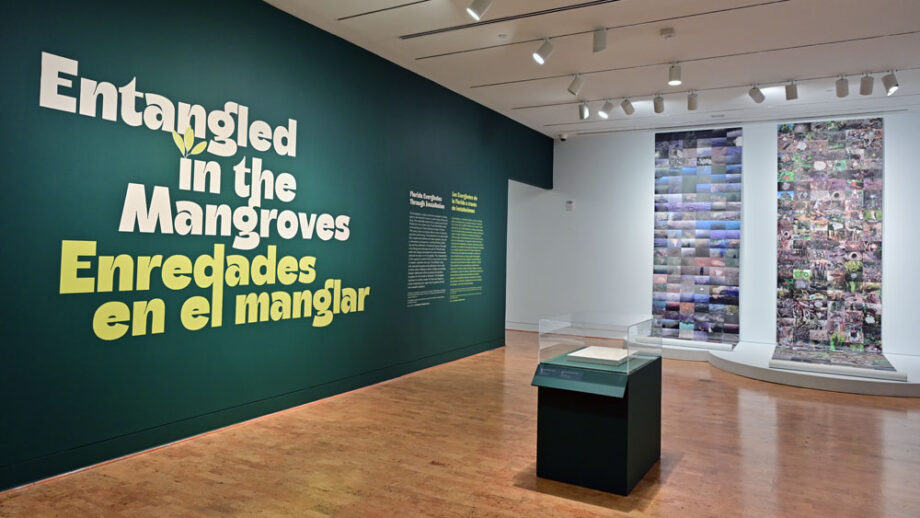
Entangled in the Mangroves: A Reflection on the Florida Everglades Exhibition in Naples Art Museum
Stepping onto the second floor of the Baker Museum in Naples, Florida, visitors encounter a new exhibition titled Entangled in the Mangroves: Florida Everglades through Installation. The display adheres to contemporary museum trends: a curated selection of works, generous space, and minimal foot traffic. The sparse attendance on a free Sunday afternoon during the sweltering Florida summer might suggest a seasonal lull, but the exhibition’s impact—or lack thereof—hints at deeper issues.
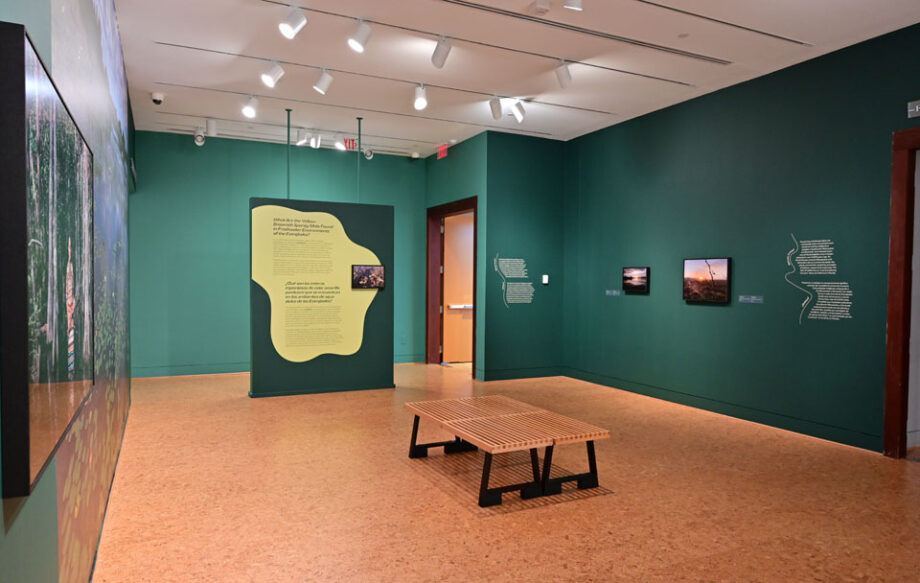
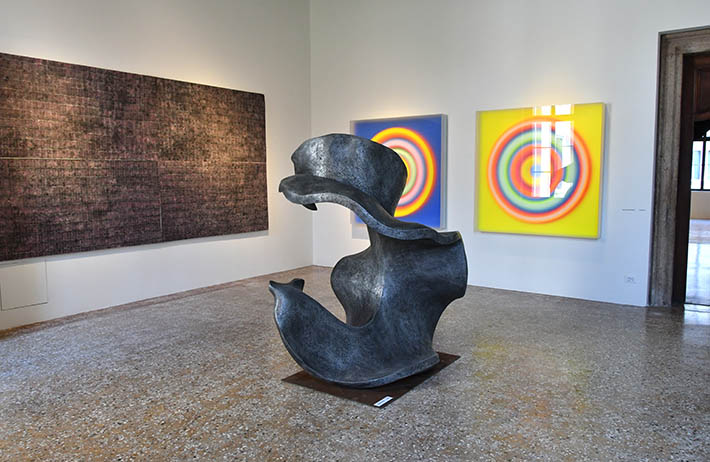
The art installation show emphasizes open space, with vivid, deep green walls and rooms that feel half-empty, bordering on visual stagnation. Strategic lighting and deliberate spacing attempt to compensate, with large-scale pieces, such as an expansive print of an Everglades pond, serving as a focal point. While the rich green walls evoke the natural world, many installations elicit feelings of dismay, bewilderment, or boredom rather than awe.

Despite this, the exhibition carries an educational mission, emphasizing the importance of preserving the Everglades. Extensive wall texts highlight the fragility of this ecosystem, accompanied by small photographs from Lisette Morales, such as Deep in the Everglades (2021). These images capture the serene beauty of still waters and delicate cobwebs at sunset, though their modest size limits their impact. Larger prints might have invited viewers to immerse themselves fully in the scene. The texts also introduce the concept of periphyton—biological mats of algae, cyanobacteria, fungi, and detritus—that form the foundation of the Everglades ecosystem by creating soil and sustenance.
The exhibition also addresses environmental challenges, such as catastrophic wildfires during dry seasons in Florida, driven by human disruption of the Everglades’ delicate water systems. It describes the region’s two cypress species—bald and pond cypress—that form circular domes in limestone depressions. These domes, shaped by acidic needles dissolving limestone, create microclimates for plants like bromeliads and orchids. Over time, older trees may collapse, forming water-filled “gator holes” that sustain fish and reptiles year-round, with alligators maintaining these vital habitats during dry seasons.
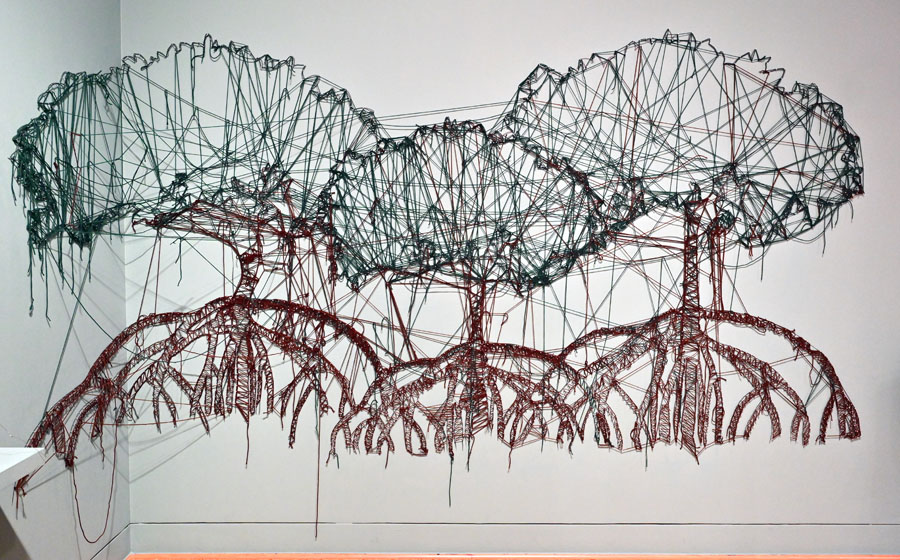
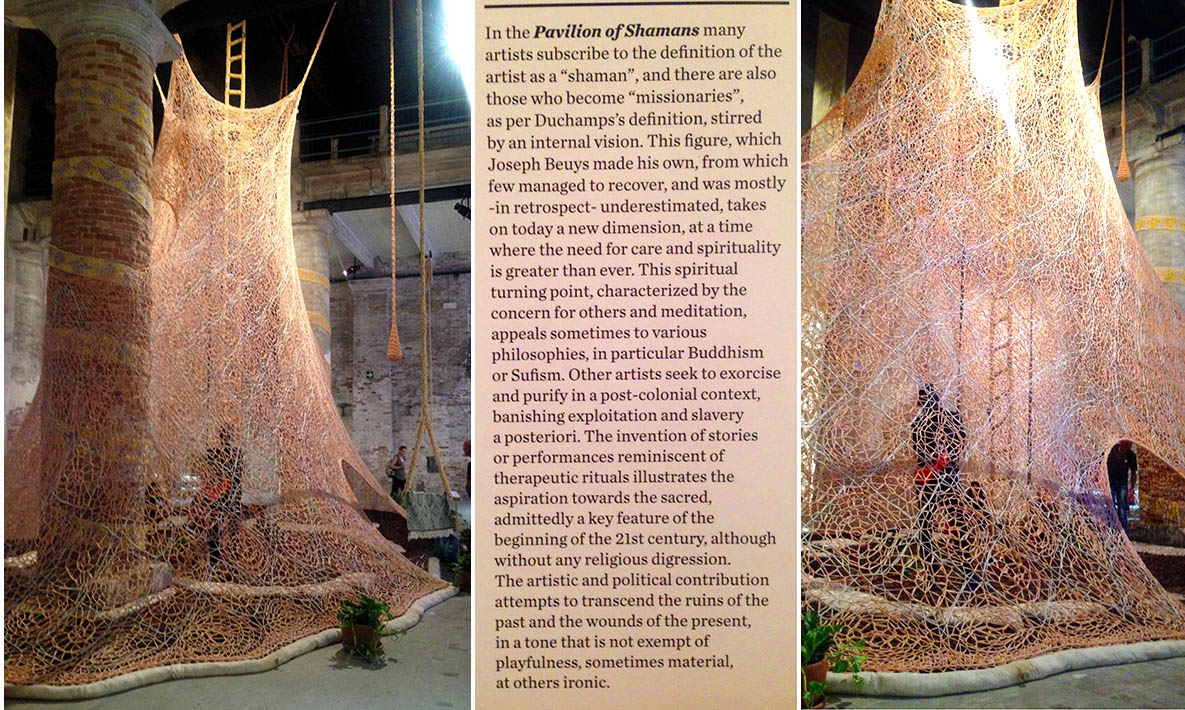
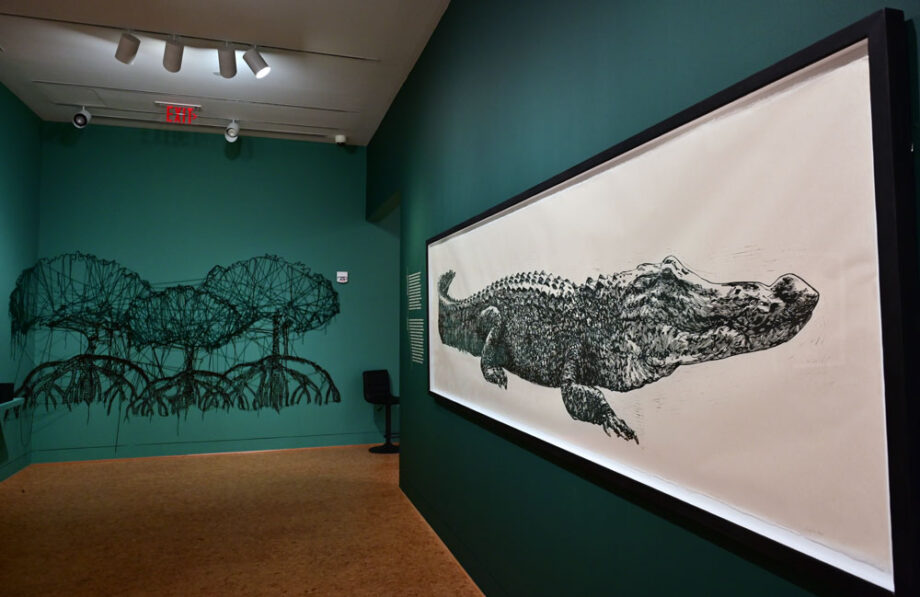
Another installation, crafted from green and red threads and nails, represents the mangroves—trees that thrive in saltwater and act as natural barriers, shielding coastal ecosystems from hurricane devastation. Reflecting Florida’s diverse cultural fabric, the exhibition presents information in English and Spanish and highlights artists from Venezuela, Brazil, England, and the United States.
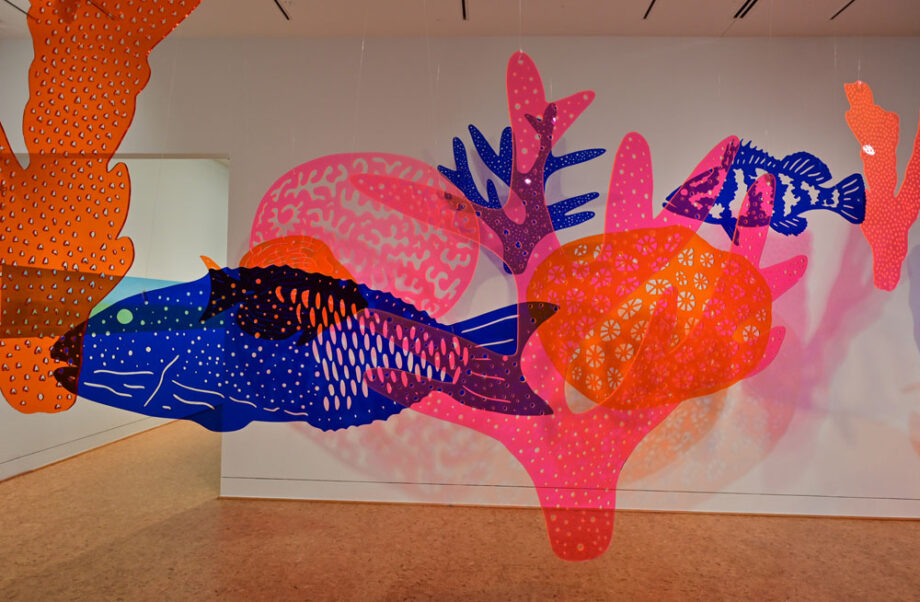
In one room, Beatriz Chachamovits’ Fishes, Branching Corals, Bouldering Corals captivates with its playful, vibrant installation. Orange, blue, and pink coral plexiglass cutout sculptures and semi-transparent fish create a dynamic interplay of reflected colors, inviting both children and adults to engage with the space. Chachamovits, a Brazilian artist based in Miami, also presents four cabinets addressing coral bleaching, a growing issue caused by rising ocean temperatures. When waters exceed 87°F, corals expel their symbiotic microalgae, leading to whitening and, if prolonged, death. Her To Have and to Hold cabinets, in lilac, blue, orange, and mint, display glazed white stoneware resembling corals and seashells, though the lilac and blue cabinets lack the visual appeal of their brighter counterparts. Chachamovits’ playful wall collage, reminiscent of a child’s journal, features hand-drawn animals, birds, and fish with handwritten descriptions, evoking the Everglades’ natural habitat.
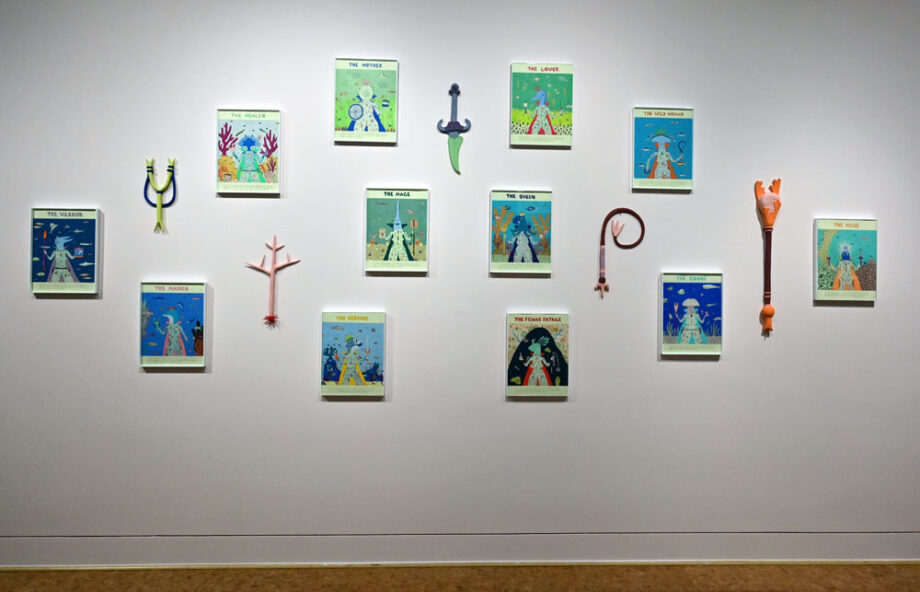
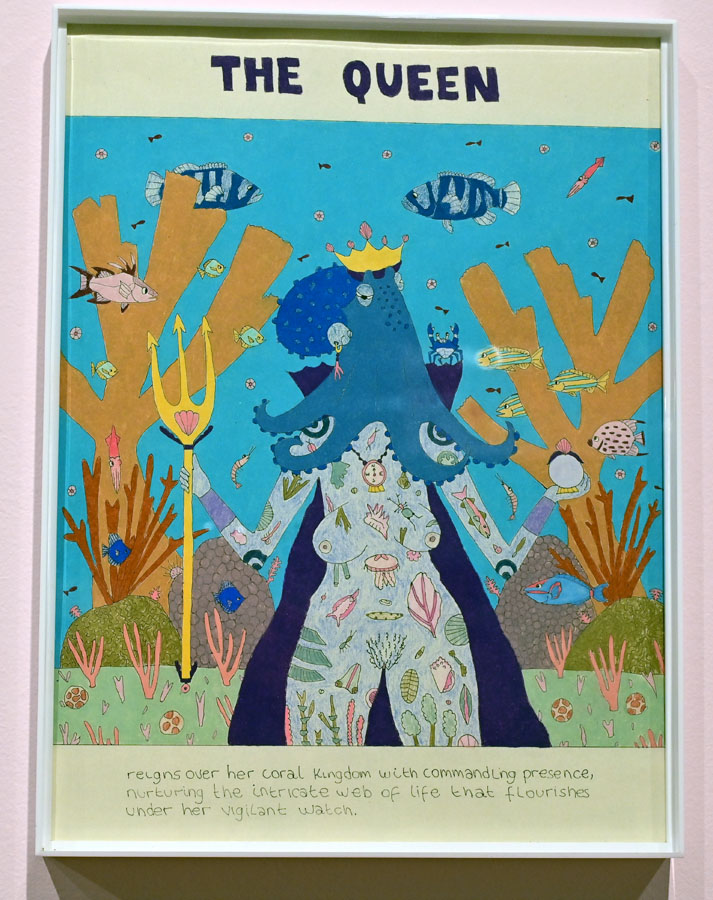
Another installation combines small colored pencil drawings with coral-shaped stoneware, each piece titled with fun names like The Warrior or The Queen. For instance, The Queen depicts a regal female figure, her light blue body composed of primitive sea creatures and a blue octopus instead of her head, holding a trident and a pearl, blending whimsy with mythological ideas. This artwork would be a hit among young children, embarrassed parents, and confused teachers.
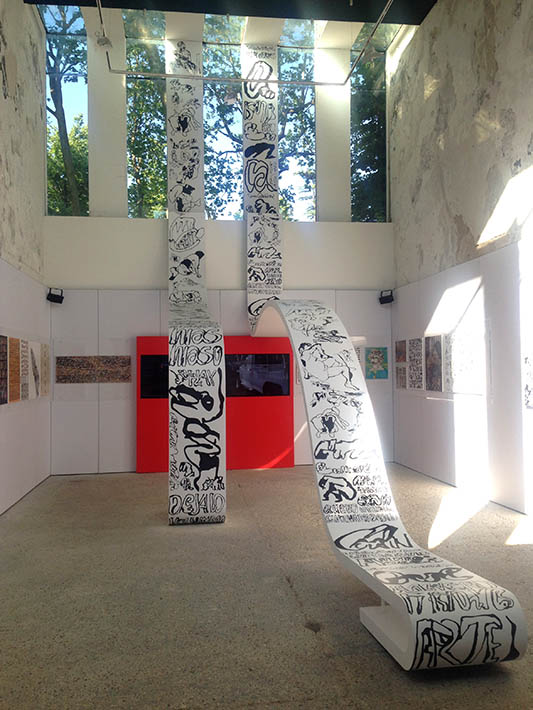
Another highlight is the work of Jennifer Basile, a Miami-based printmaker and professor at Miami-Dade College. Her black-and-white print Ernie, Everglades Alligator captures the animal’s textured presence on rice paper, while other pieces depict Florida’s diverse wildlife. Venezuelan artist Amalia Caputo contributes large photographic scrolls, such as Every Being is an Island, which cascades from wall to floor, presenting grids of digital images that reflect her contemplation of local ecosystems.
Environmental concerns recur throughout, with texts warning of the loss of over 90% of fur-bearing animals since 1990 due to unnatural flooding of tree islands, which also erodes soil and kills trees. Approximately 70% of tree islands in the central Everglades have vanished, though efforts by the Miccosukee Environmental Protection Agency aim to restore balance. Deryn Cowdy, an English artist working in Miami, offers a striking tribute to the Everglades with her gold leaf prints of cypress trees on shiny surfaces, their shimmering reflections awaking magic in water’s meditative fluidity. Her triptych Wood Storks, painted in oil on silver leaf paper, blends Japanese scroll painting influences with soft, hazy backgrounds and flat bird silhouettes, creating a serene atmosphere. White birds and roseate spoonbills create their distinctive microcosm in Florida’s landscape.

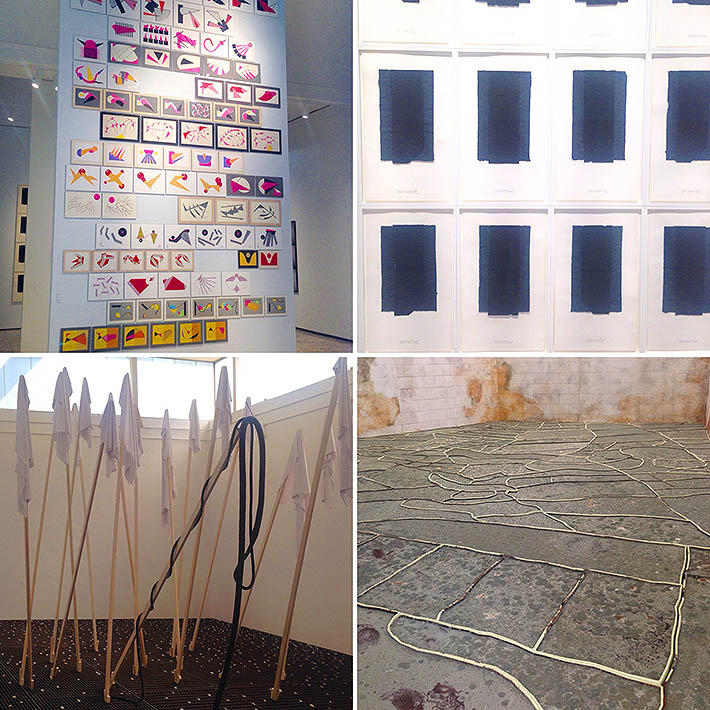
American artist Gretchen Scharnagl’s Lichen Poetry features 100 mixed-media drawings on vintage graph paper, created with unconventional materials like squid ink, dirt watercolors, coffee, rust ink, copper ink, turmeric, saffron, walnut ink, and white gouache, to depict microscopic lichens. Her two Spring Migration painting collages feature bird-shaped cutouts on deep blue mulberry paper, express a whirlwind of avian freedom, though one composition outshines the other in visual coherence.
Visual perception in art exhibitions can’t be a passive act. It’s a unique, emotional, and intellectual interaction between the viewer and the art. The arrangement, color palette, technical ability, artist creativity, and scale of installations in Entangled in the Mangroves play critical roles in how visitors experience the Everglades’ narrative. When pictures are too small, they fail to command physical or emotional space, and they risk diminishing the viewer’s connection to the subject. In the same regard, large, poorly painted artworks don’t captivate audiences either. To foster a deeper appreciation for the environmental themes, art should have a greater visual impact than in the presented pieces. Art should let us see and feel something new through vivid shapes of the natural world we can all connect to.

The power of visual perception lies in its ability to transcend cultural and linguistic barriers, a crucial aspect in a diverse region like Florida. By presenting works in both English and Spanish, the exhibition acknowledges the state’s multicultural audience, yet it often falls short in leveraging visual impact to unify viewers around its message. Although nicely spaced out and professionally presented, installations don’t prioritize aesthetic harmony. When contemporary art exhibitions neglect this, they risk alienating audiences, leaving them informed but uninspired. In a world oversaturated with information, art’s role is to ignite the senses, ensuring its message resonates long after the visit.
Art, at its core, seeks to illuminate beauty, drawing humanity closer to the divine through harmony, color, voice, creativity, and skill. By seeing and experiencing beauty in this world, we become one step closer to the light and then to God. Therefore, artists have a clear purpose in any show, society, or country. They create art to generate more light in this treacherous, often deceptive, world. In art, beauty is the ultimate harmony of shapes, color, and skill. Beauty in art creates emotions that resonate inside us. This sense of beauty or aesthetics is personal and can be acquired with education and practice. Historically, from the balanced symmetry of ancient Greek art to the humanism of the Renaissance, beauty became a conduit for emotional and spiritual resonance. Yet, modern and contemporary art often prioritizes provocation, social commentary, or anti-art over aesthetic unity, as seen in this exhibition’s focus on environmental messaging. While its educational intent is worthwhile, the visual experience lacks the transcendent beauty that inspires and uplifts or brings us closer to Unity with the Divine. Inspired by Nature, artists create art as a need, partially projecting their inner world onto canvas. The curators, however, have a theme, agenda, and reasoning for organizing exhibitions to attract attention and viewership, or do they? Perhaps, such art shows are not intended to inspire our visual perception at all, but rather to continue rejecting traditional notions of beauty to provoke, challenge, or convey newsworthy ideas. Very few people walked through the exhibition on a free day… Sponsored by the Collier Community Foundation and Waterside Shops (a local upscale mall center), this installation raises questions about whether the funds could have been put to better use in the community instead of sponsoring this show. Does anyone care about the result?
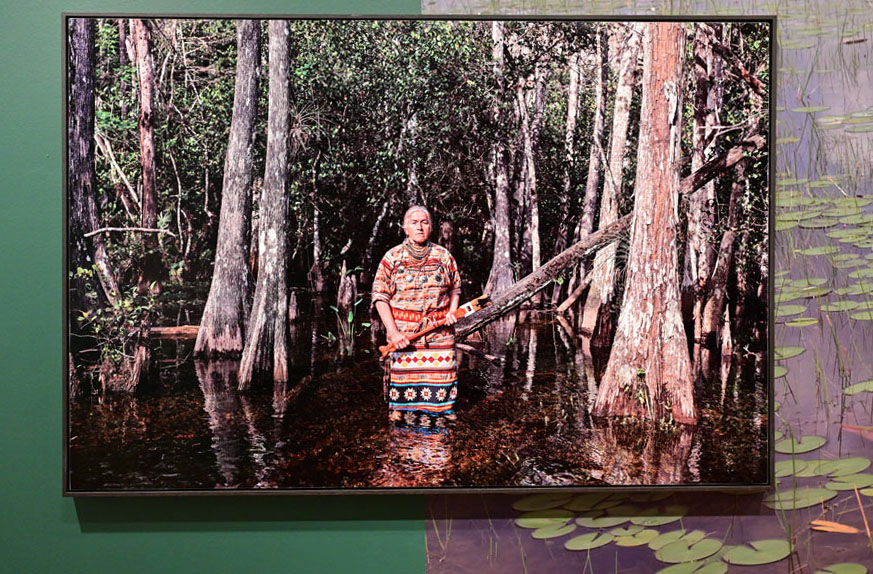
The Miccosukee Tribe’s words, displayed in the museum, resonate deeply: “If there is one thing we Miccosukee know, it is that art saves, and so we must use art that represents and reflects the beauty of the Everglades to help save it, just as it has saved us.” While Entangled in the Mangroves conveys a vital environmental message, its installations often fall short of capturing the ethereal beauty and light that could truly inspire action and hope.

You’ll find the “Entangled in the Mangroves: Florida Everglades through Installation” on the 2nd floor of the Baker Museum in Naples, Florida. It opens its doors for free to the community to enjoy Art After Hours, a monthly celebration of the arts, on the last Wednesday of each month from 6 pm to 9 pm, and on Sundays during summer months.
Continue Exploring: