Tag: best scottish art in national gallery edinburgh

Why Edinburgh Feels Like a Fantasy Novel 

Tap to watch a comprehensive, cinematic travel guide of Edinburgh

Why Edinburgh Feels Like a Fantasy Novel

I didn’t come to Edinburgh to make a travel video… I came because this city feels like someone painted my dreams and forgot to wake me up. I spent 3 days in Edinburgh, and it felt like stepping into a painting. Hi, I’m Veronica Winters, an artist who chases light in visionary art.
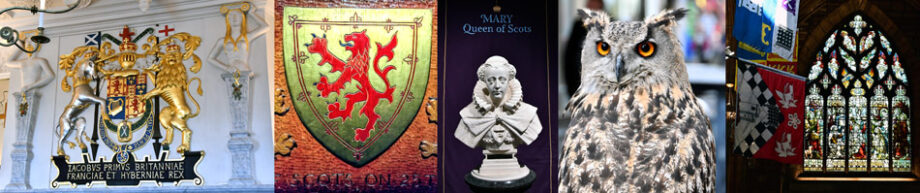
And Edinburgh? It’s a pure fantasy novel for painters. Every corner begs to be sketched. Cobbled streets are older than some countries. Giant stone buildings rising to the sky like they’re telling history about the 16th century. I thought I saw beauty… until Edinburgh burst me open.

Edinburgh’s history unfolds like a painting in layers of volcanic rock, smoke, and northern light. The city began on an extinct volcano that became Castle Rock around 8500BC. By the 7th century, a hillfort- Din Eidyn crowned it. That dramatic silhouette—steep, dark, monumental, unyielding—has obsessed artists ever since.

Pro tip from a creative visitor: Bring a tiny watercolor kit to sketch the colossal castle-like city, palace, and parks in May or June, the best time of the year. Visit the Scottish National Galleries for more inspiration. They are free. The 19th and 20th centuries brought the Scottish Colourists together to paint the northern beauty. (I have a separate video about the best art inside the Scottish National Gallery. Watch it next!)

In the Middle Ages, the immortal town clung to the ridge between castle and Holyrood like a dark brushstroke. Houses rose to 6 storeys in vertical stacking, leaning over narrow closes so tightly that daylight barely reached the cobblestones. Craftsmen and tradesmen alike lived in limited spaces of vertical chaos, monumental houses built upward to accommodate the growing city. By the 1500s, Edinburgh was Scotland’s capital, a crowded, stinking, brilliant place.
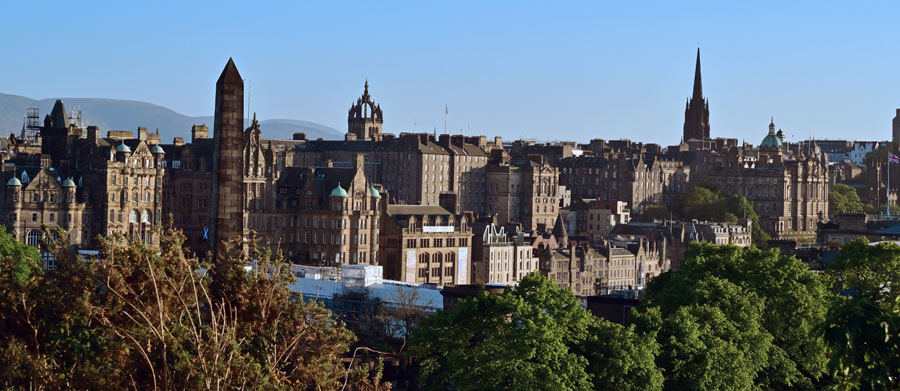
Edinburgh is even more beautiful than in the movies. Forget the guidebook highlights for a second. Walk down the Royal Mile– enormous stone houses, lovely people, pure magic. This place feels like The Lord of the Rings, but five minutes from Starbucks.

Mary King’s Close or The Vaults tour doesn’t allow photography or video inside, but offers a glimpse into hardship, sickness, work, and hope of Scottish people centuries ago.

Visit one of the most beautiful, medieval churches in Europe -St Giles on the High Street, unique stained glass windows and Scottish spirit. Founded in 1124 by King David I, the rising church over the Royal Mile has been open for over 900 years.

St Giles’ Cathedral History
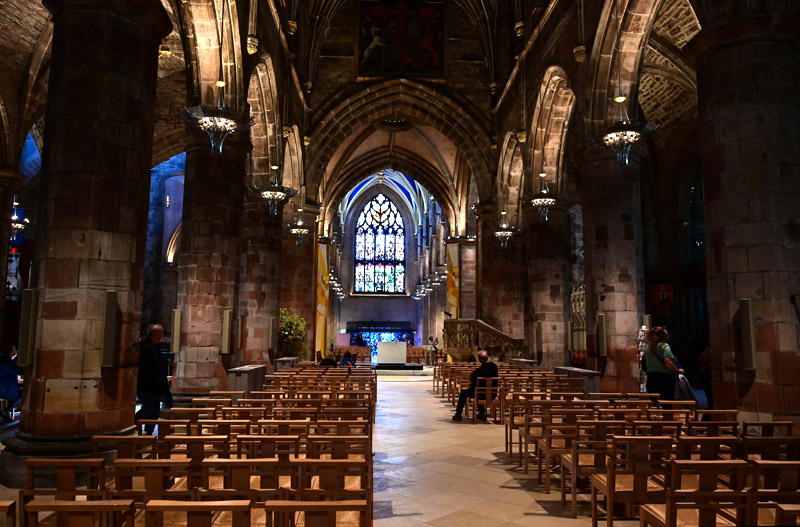
  • Early Origins: Began as a small Romanesque church, possibly founded around 1124, with its site used for worship for centuries before the current structure.
  • Fire & Rebuilding: Severely damaged by fire in 1385, most of the building was rebuilt in the 14th/15th centuries, featuring its iconic crown-shaped tower added in the 1490s.
  • Scottish Reformation: Became the center of Scottish Protestantism, with John Knox preaching there after 1559; it was subdivided into multiple churches under one roof.
  • Covenanters & Royal History: Site of significant Covenanter events, it hosted state funerals, including that of the Marquis of Montrose, and witnessed royal drama, including riots over a new prayer book.
  • Current Status: Now known as the High Kirk, it’s a working church of the Church of Scotland, not technically a cathedral as it lacks a bishop, but remains central to Scottish life. 

The Thistle Chapel (Added 1909-1911) 

  • Purpose: Scotland’s only private chapel for the Order of the Thistle, the nation’s highest chivalric order, founded by James III.
  • Design: Created by architect Robert Lorimer, it’s a masterpiece of Scottish Gothic, filled with heraldry, stalls for knights, and unique features like angels playing bagpipes. 

Walk through Greyfriars Kirkyard at twilight. Visit a Harry Potter store and cafe to experience magic.

Hike Arthur’s Seat in Holyrood Park. This ancient extinct volcano offers breathtaking views of the palace and busy Scottish city life. See changing exhibitions from the Royal Collection in the Palace of Holyroodhouse, featuring old master paintings, rare furniture, decorative arts and images from the vast photograph collection.

Another high point of the city is Calton Hill, the headquarters of the Scottish Government. Quiet moments on Calton Hill can’t be skipped. An entire fortress city spreads below in the picture-perfect, warm, welcoming sunset.

Visit the castle standing on Castle Rock since the Iron Age. The immortal castle shares historical conflicts, wars, and the Crown Jewels of Scottish monarchs with numerous visitors today. At the top, the city spreads beneath you like someone spilled diamonds across black velvet. Powerful. Emotional. Real. Depending on the hour, you can enjoy a colorful play of brown-stone streets, green trees, and deep blue sea and sky. I came up here to make a discovery and snap pictures for my future art, but realized the city had already been painting me.
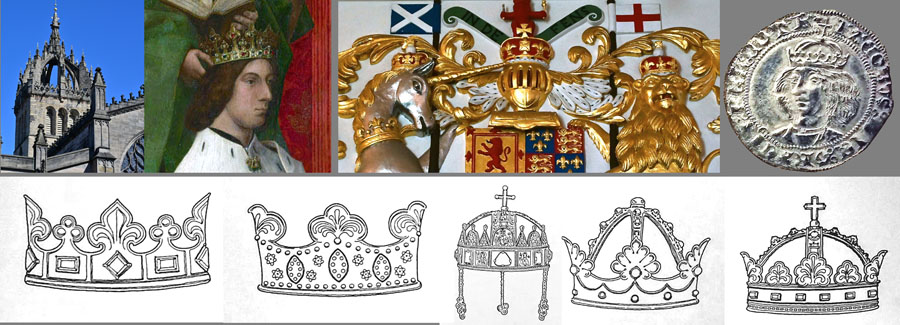
History of the Scottish crown’s shape

Edinburgh faced political decline after 1603 when the court moved to London. And in 1767, a young architect, James Craig, won a competition to build a New Town across the valley. Broad streets, elegant squares, pale sandstone terraces—Edinburgh suddenly had perfect neoclassical bones beneath its Gothic skin. It became the center of culture and finance.

If you have three hours, visit the National Museum of Scotland, a fascinating blend of Scottish medieval history, culture, archeology, geology, science, technology, art, and curiosity.

Long Nights that made me smile. Eat: Cullen skink (Cullen skink is a thick, creamy traditional Scottish soup made primarily of smoked haddock, potatoes, and onions), haggis (made with sheep’s heart, liver, and lungs), Scotch pies, millionaire shortbread, anything with whisky in it. Drink: Hot chocolate with Baileys when you feel cold. Listen: There’s live traditional music every single night. Let it mesmerize you.

In the late eighteenth century, Scotland experienced cultural revival. Scientists like the chemist Joseph Black and engineers like James Watt became leaders in science and industrialization. Scientific and industrial changes somewhat eroded the religious beliefs that had previously guided society for centuries.
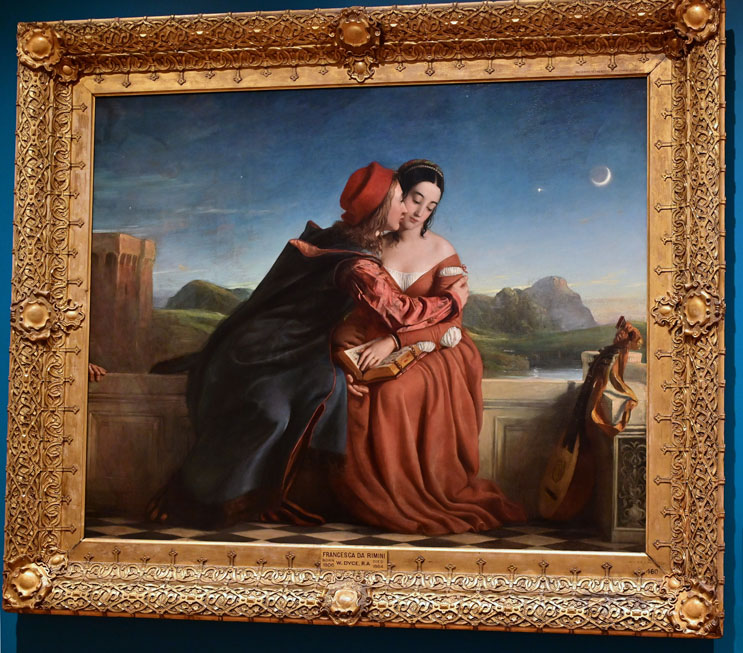
francesca da rimini

Intoxicating Romanticism arrived with Sir Walter Scott and Robert Burns in literature. He mythologized Scotland’s past and turned Edinburgh into a stage set of tartan and legend. The Scott Monument (1844), a soaring Gothic spire on Princes Street, still looks like something drawn in pen and ink by a fevered Victorian hand. The ancient city rises over the sunlit trees like in a medieval manuscript.

In the late 19th century, people expressed a lot of interest in artists and their craft. Local and national artists were raised to a celebrity status, sharing their behind-the-scenes painting process in their studios that generated and convinced art collectors to make a sound investment in art. After all, these marketing principles stay the same across decades and even centuries.
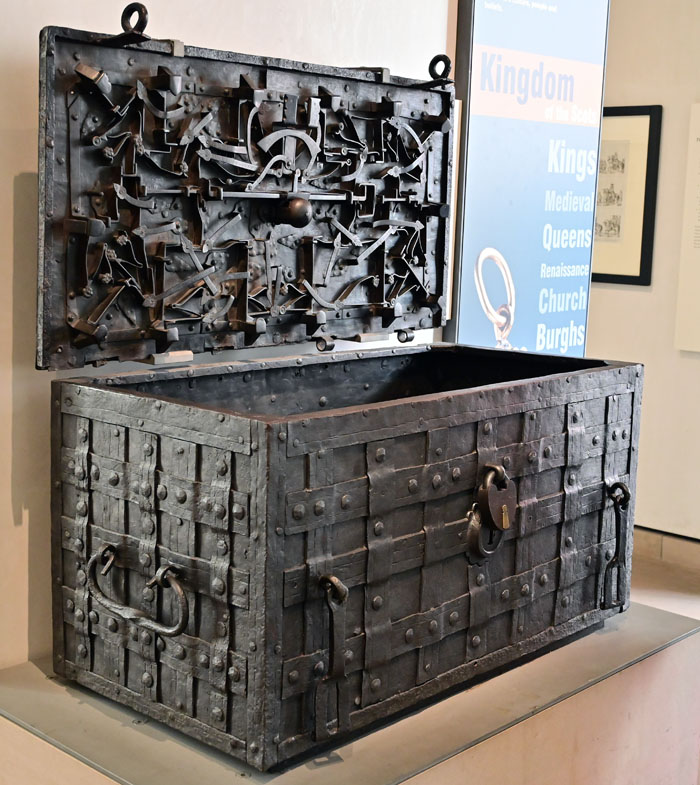
Scottish company treasure chest in the museum of Scotland

Edinburgh felt Like stepping into a Painting. The whole city is a living canvas—performers, painters, tourists spilling into the streets. For centuries, artists have tried to capture it and never quite succeeded. The city always keeps one shadow, one slant of light, one impossible angle still waiting to be drawn.

You can’t call Edinburgh a regular European town. It’s haunted, proud, ancient, mysterious, beautiful, alive. It makes you want to create. It makes you fall stupidly in love with a city you just met.

I did take a ton of pretty pictures. But Edinburgh gave me more than awesome views. It reminded me why I started painting in the first place. If you’re tired, lost, or just need to feel something again… come here. This city still believes in light, Love, and magic. And for 3 days, it made me believe again, too.

So if you’ve ever wanted to feel like the main character in a novel…Come here. Bring a sketchbook and an open heart. Edinburgh will do the rest. The most fascinating city in Europe is yours. i can promise you that Edinburgh is Even More Beautiful Than the Movies.

Drop a heart if this city lives in your soul now, too.
Reformation to Revolution in Scotland

*The following information comes from the museum’s description in Scotland.

At the beginning of the sixteenth century Scotland was a Catholic state governed by the Stewart dynasty (who later spelled their name Stuart). By the close of the seventeenth century the monarchy, church and parliament had all changed drastically. After 1603 the Stuarts, now based in London, were absentee rulers, and the nature of kingship was itself increasingly contested. The huge upheavals of the Reformation saw Protestantism become the nation’s official religion. The collapse of the old church and the dispersal of its lands and wealth brought about a major shift of power and income: new landed classes vied with established noble families for status and influence.

These complex changes had important cultural consequences. With religious painting no longer acceptable there was an increase in demand for secular art forms, portraiture in particular. This coincided with a growing merchant and professional class beginning to commission works of art to display their increased ambition and economic strength. Painted portraits were expensive, and those who acquired them came from the wealthiest levels of society, both old and new. These men and women used portraits to assert ideas of social status as well as to record an individual likeness. Their images played a significant role in the struggles for power, identity and nationhood during this period.
.
Between 1760 and 1860, Scotland’s place in the world was dramatically transformed. With the collapse of the Jacobite cause after the Battle of Culloden in 1746, Scots became less politically divided and began to focus instead on cultural, economic and personal advancement.

Edinburgh and Glasgow became centers of philosophical and scientific thought. Scotland’s trade with Britain’s vast overseas Empire expanded dramatically. ‘Improving’ landowners and adventurous entrepreneurs developed new products and processes. With growing confidence and ambition, Scots now took their place across the wider world as soldiers, sailors, and traders; as poets, novelists, and artists; and as politicians and administrators. And while they did so they took increasing pride in their own identity, a development that bore fruit in the poetry and novels of Scotland’s great romantic writers. But this transformation came at great cost. The new imperial economy was built on slavery and warfare, while industrialization destroyed established trades and the mining and burning of coal ravaged the natural environment. The result was a period that has left a complex, and sometimes troubling, legacy – a legacy that we, in our own era of economic and environmental crises, are still struggling to manage and understand.

Cultural Revival in Scotland
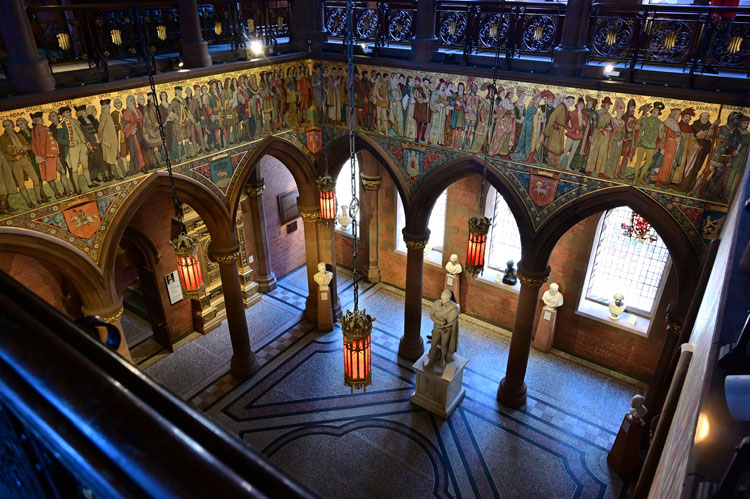
Scottish National Portrait Gallery hall

In the later eighteenth century, Scotland’s cultural revival gave it a central role in European life. Scientists like the chemist Joseph Black and engineers like James Watt laid the foundations for modern science and industry. These achievements were paralleled in literature by the intoxicating romanticism of Robert Burns and Sir Walter Scott. These changes, however, also gave rise to new challenges. Science and technology eroded the religious beliefs that had previously given society its shared values. Mechanical power marked the beginning of our destructive dependence on fossil fuels. The spell woven by Scott’s poetry and novels could all too easily hide Scotland’s rapidly changing social reality behind a veil of romantic escapism.

Nowhere are these paradoxes sharper than in Scotland’s extensive involvement in Britain’s growing empire. Able colonial administrators, such as the lawyer Sir Thomas Strange, sought to apply enlightened principles to their work. At the same time. however, the Atlantic ‘triangular trade’ was taking thousands of slaves from Africa to the plantations of North America and the Caribbean, and shipping slave-produced sugar, rum and tobacco to the British Isies. The plantation trade enriched Glasgow’s merchant elite and provided secure incomes for the thousands of middle and upper class Scots with plantation investments. Others, however, were moved by the sufferings of slaves such as George Dale, whose biography is reproduced on this panel. Often drawing strength from deeply held religious and moral principles, they opposed the appalling human cost of the slave trade, in the face of fierce resistance, abolitionists, including the prominent Scottish liberal lawyer and politician, Lord Brougham, finally brought slavery to an end in 1838.
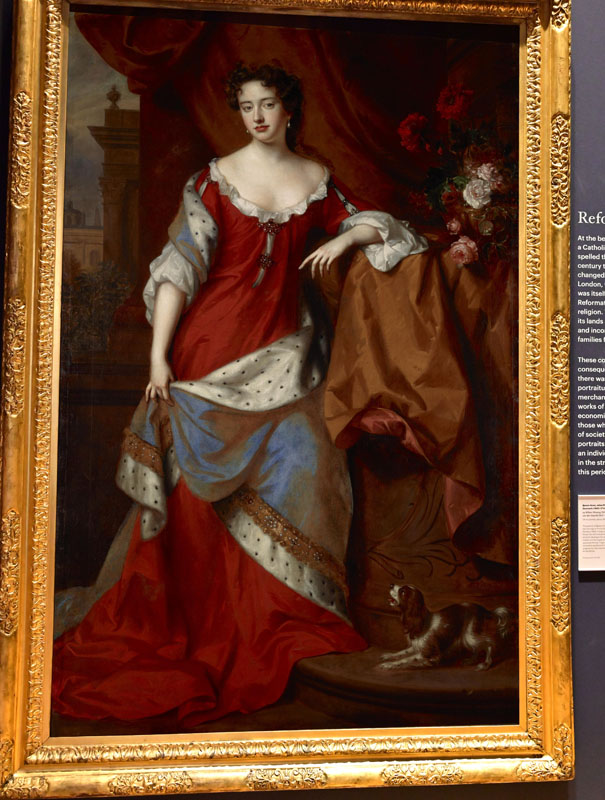
Jan van der Vaardt, Queen Anne

The Most Underrated Art Gallery in Europe? Edinburgh Stole My Heart in 4K

Art books from the artist:
https://amzn.to/4bbYT81
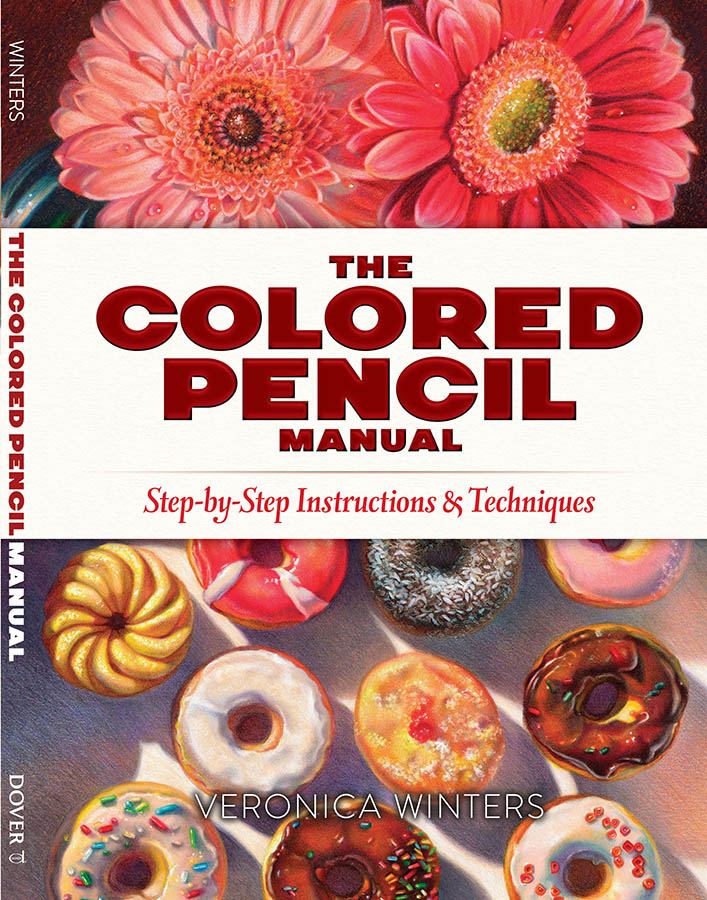
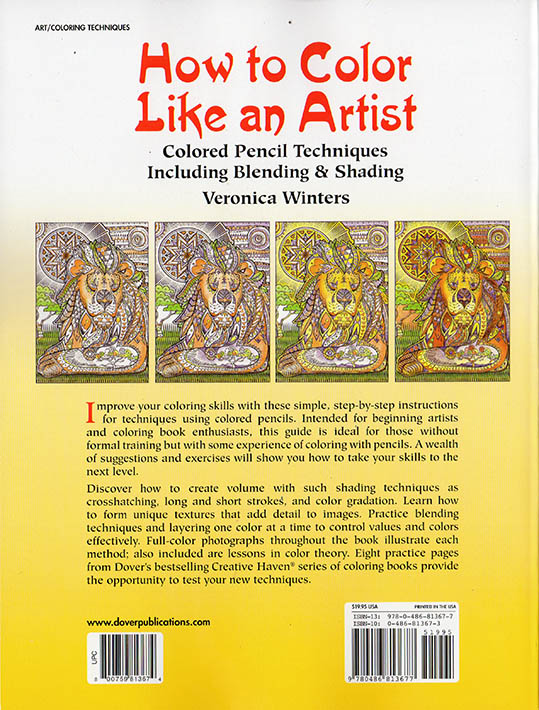
colored pencil manual veronica winters
https://amzn.to/3xoJjbi
thailand-book-cover-front
The Enigma of Thailand, 2013 https://amzn.to/4qOouLS
https://amzn.to/46mDs4z

An Artist’s Love letter to the Scottish National Gallery

Are you traveling to Edinburgh in Scotland? Here you’ll discover hidden treasures of the Scottish National Gallery, home to the best Scottish art in national gallery Edinburgh. I’m on a mission to uncover as many stories in famous paintings in Scottish National Gallery as I can before my time runs out. From brutal dramas to national controversies, these are the details most visitors walk right past. The clock is ticking… let’s go! To read and see pictures of the gallery, go here: https://veronicasart.com/5-undeniable-reasons-to-love-scottish-national-gallery/

If you’d like to support my work, subscribe & rate this podcast on Spotify and Apple | Show your support for the podcast: here | Host: Veronica Winters, MFA | veronicasart.com

5 Undeniable reasons to love Scottish National Gallery by veronica winters art blog

5 Undeniable reasons to love Scottish National Gallery

(First published in December 12, 2019. Updated in November, 25, 2025.)

In this article, I’d like share why this free art museum feels more luxurious than any paid one. The Scottish National Gallery is a much less known art museum, but it offers beautiful gems by famous artists and amazing Scottish artists alike. There are about 120,000 objects in Scotland’s collection of art! This art museum’s central location makes it an easy and pleasant stroll from the Edinburgh Old Town.

Please know that this gallery consists of three separate buildings. The National Gallery is on the Mound, the Modern Gallery is 73&75 Belford Road, and the Portrait Gallery is 1 Queen Street.

Eric Harald Macbeth Robertson, Miss Maidie and Miss Elsie Scott, detail, 1915, oil on canvas, closeup of a painting, Scottish National Portrait Gallery.
Eric Robertson was a significant figure in the artistic milieu of Edinburgh in the years immediately preceding and following the First World War. Born in Dumfries and trained at the Royal Institution, Robertson was hailed as ‘one of the most brilliant students of his period’. He was strongly influenced by the symbolist work of John Duncan, and it was through Duncan that he met his future wife, the artist Cecile Walton. They exhibited in the ‘Edinburgh Group’ exhibitions of 1912 and 1913. Robertson was a Quaker and so would not take up arms, but he served with the Friends’ Ambulance Unit in France during the war. The Scott sisters belonged to the group of artists and intellectuals in Edinburgh that included Robertson and Walton. Maidie Scott, who was married to the musician, Leonard Gray, became a companion of the poet Wilfred Owen during his time in Edinburgh as a patient receiving treatment for shell-shock at Craiglockhart. Through her account of their friendship, much is known about the poet’s last months before his return to the Front and death in November 1918.
The painting embodies a strong sense of the mood of the time. In particular, it expresses the role of the majority of women during the war – mothers, sisters, daughters, wives, sweethearts and friends – whose fate was to remain at home stoically and anxiously waiting for news. The women in this somber painting could be tragic muses in modern dress. (from museum’s description).

The gallery has expanded since my last visit in 2019, and I could enjoy looking at many 19th and 20th-century paintings by Scottish artists in 2025. This wing is fascinating because the displayed art is top notch, diverse, and sincere. Yet none of the presented artists and paintings are in major art history books. So, it’s a lot of discovery for me personally. There are many colorists, landscape art, portraiture with a contemporary feel, stylized paintings, and inspirational paintings of children, spiritual & religious art. William Brassey Hole, The Landing of St Margaret at Queensferry A.D. 1068 is a welcoming mural, painted on the first floor of the Great Hall in the Scottish National Portrait Gallery. It depicts the arrival of the Anglo-Saxon princess Margaret (about 1045-1093) in Scotland.

Scottish national gallery
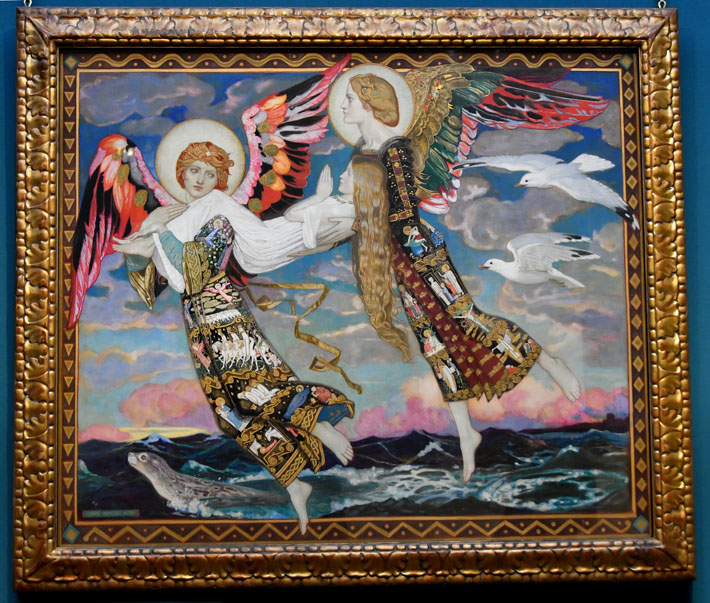
John Duncan (1866-1945) St.bride, 1913, detail | Scottish National Gallery

# 1 A mix of big names and beautiful paintings

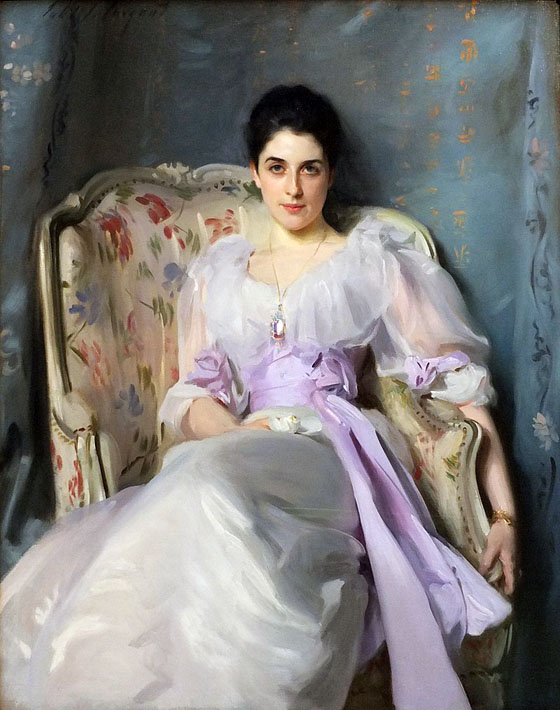
I found my new favorite painting, and it’s in Scotland! I was stunned to see Sargent’s Lady Agnew in this building!

John Singer Sargent

John Singer_Sargent_Lady_Agnew Scottish National Gallery
John Singer Sargent, Gertrude Vernon, Lady Agnew of Lochnaw (1864-1932). When the painting was exhibited at the Royal Academy in London in 1893, it was an instant success for both the artist and the sitter, launching their celebrity status in Britain. Look at this soft lilac and white next to her skin…Her confidence. I felt it in my chest. I had to stop taking pictures and just admire the beauty.

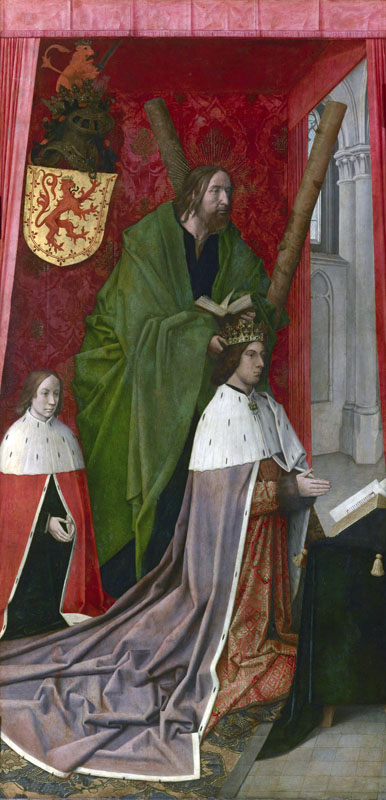
Although some famous artists like Sargent, Raphael, Hals, Gainsborough & Botticelli occupy the walls, it’s nice to see lesser-known painters presented in the art museum as well. In a way, they run the show with art pieces of greater impact. The gallery opens with Sargent’s Lady Agnew of Lochnaw, and Hugo van der Goes’ Margaret of Denmark, Queen of Scotland, altarpiece, 1478. The art museum pleasantly surprises with some 19th-century epic paintings of colossal size, produced in prints for the popular market during that time period.

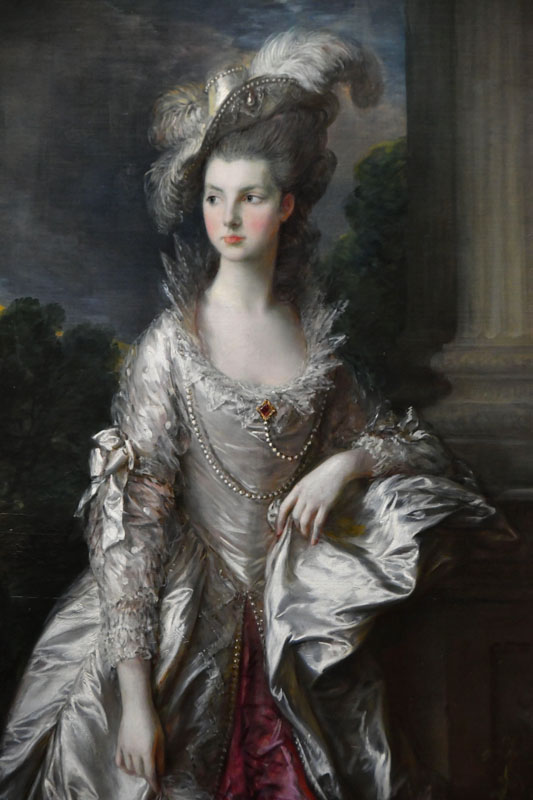
Thomas Gainsborough

Thomas Gainsborough The Honourable Mrs Graham
Thomas Gainsborough The Honourable Mrs Graham (1757 – 1792) 1775 – 1777, painting close-up, Scottish National Gallery. According to the museum’s description, after Mary’s death, Graham could not bear to contemplate her picture.

English portrait and landscape painter, Gainsborough had a successful career. Like Van Dyck, he painted royalty but also included imaginative English landscapes behind the figures. A rival of Reynolds, the artist was a founder member of the Royal Academy in 1768.

The Honourable Mrs Graham is an amazing full-length portrait that features painterly brushwork and sophisticated shades of grey. Dressed in a beautiful gown, the young woman exhibits elegance and confidence. Daughter of Baron Cathcart, she married the Perthshire landowner Thomas Graham, and after her death, Graham passed the painting to her sister. Rediscovered in storage by his heir, It was bequeathed to the National Gallery by one of their descendants on condition that it never leaves Scotland.

Let’s dive deeper into the best Scottish art in national gallery Edinburgh. We’ll look at even more famous paintings in Scottish national gallery!

Art about Mary, Queen of Scots (reigned 1542 – 1567) in the National Gallery of Scotland:

Next, let’s dive into the heart of the Scottish collection, where art and national identity are locked together.

  • Sir William Allan (1782 – 1850), Scottish, The Murder of David Rizzio, 1833, oil on panel. This painting is not huge but presents a real historic scene captured in beautiful, energetic brushstrokes by the artist. Sir William Allan depicts the dramatic assassination of David Rizzio, the queen’s Italian secretary, in March 1566. According to the museum, the artist paid close attention to detail, being historically accurate. He established the identity and role of all people involved in the scene, and painted the exact interior of Mary’s rooms at the Palace of Holyrood (Unfortunately, the palace was closed both times I visited Edinburgh, but it’s definitely worth your visit! It’s located at the end of the Royal Mile, and buying tickets beforehand seems like a great idea. The artist depicted the Earl of Morton in a black hat to the far right, and Mary was restrained by her husband, Lord Darnley, who was part of the conspiracy but later denied any involvement.
  • Another classically-painted artwork of Mary is by Robert Herdman, Mary, Queen of Scots: The Farewell to France, 1867. In 1867 the Glasgow Art Union commissioned Herdman to complete 4 paintings depicting the life of Mary, Queen of Scots. This is the second picture in the set that depicts the young Queen’s return to Scotland in 1561 after the death of her first husband François II of France.
  • James Drummond (1816 – 1877), Scottish, Edinburgh, 16th June 1567 (formerly known as The Return of Mary, Queen of Scots to Edinburgh), 1870. Mary is shown encountering the banner with its hostile slogan, accusing her of Darnley’s murder. 
  • Unknown, Mary, Queen of Scots, 1542 – 1587, 19th century small painting on panel.
  • There are numerous engravings of the queen, such as by George Vertue (1684 – 1756), English, Mary, Queen of Scots, 1542 – 1587, line engraving on paper.


Sir Edwin Landseer

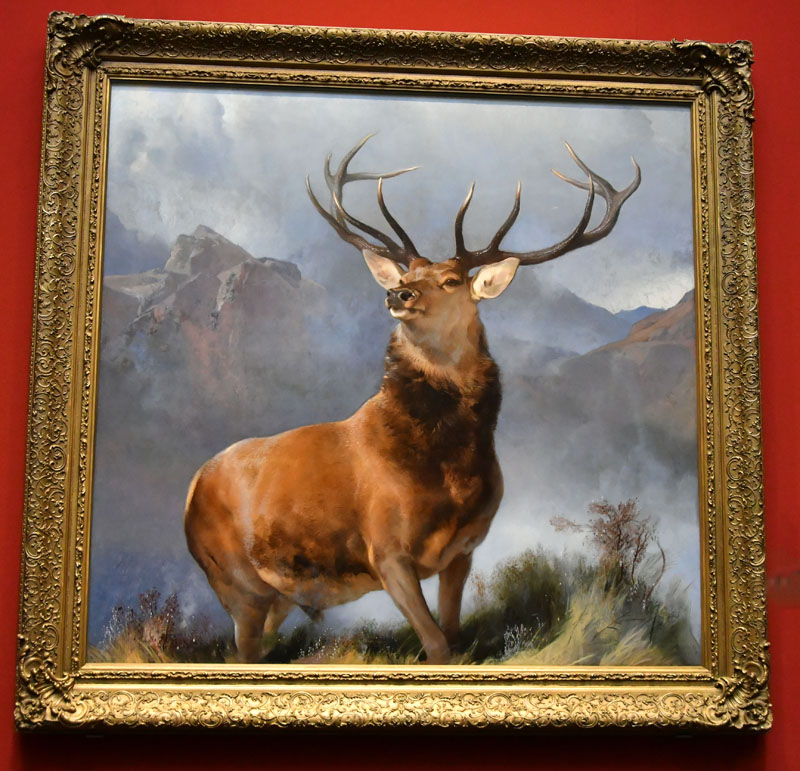
The Monarch of the Glen by Sir Edwin Landseer 1851_Scottish national gallery
The Monarch of the Glen, Sir Edwin Landseer (1802-1873), oil on canvas, 1851, Scottish National Gallery

The Monarch of the Glen is one of the most famous British pictures of the nineteenth century. Painted in the 19th-century Romanticism era, this oil painting almost overwhelms viewers with its powerful representation of a majestic animal. Depicting a single deer as a symbol of the vastness and majesty of Scotland, this beautiful, realistic painting of a deer is huge, colorful, and breathtaking when viewed in person. The oil painting was reproduced in prints and achieved even greater success in the twentieth century when used in marketing campaigns. Famous artist, Landseer, was known for his technical skill and sensitivity in painting animals. He first visited Scotland in 1824 and made friends with Sir Walter Scott. The painting was planned as part of a series for the House of Lords in London, but was sold to a private collector.

#2 A great place for a family visit.

You won’t be overwhelmed by endless corridors, galleries, and installations. The art museum is quite intimate, which makes it easy to devote some quality time to art, education, and learning with children.

Sir Joshua Reynolds

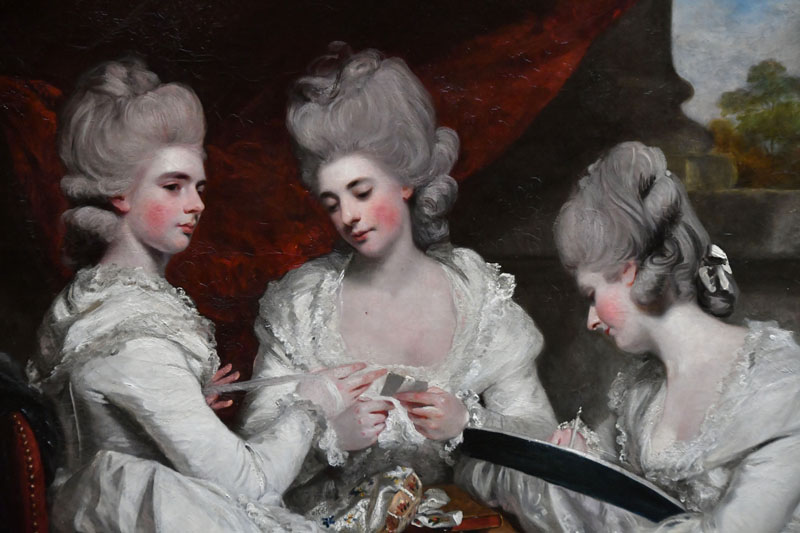
Sir Joshua Reynolds The Ladies Waldegrave 1780_detail_scottish national gallery
Sir Joshua Reynolds, The Ladies Waldegrave, 1780, painting close up, Scottish National Gallery

English artist Sir Joshua Reynolds was a founding member of the Royal Academy of Arts and its first president. He painted portraits of royalty and nobility in classical tradition, relying on strong compositions and referencing historical painting. Yet, his loose brushwork looks fresh and contemporary similar to Sargent.

In a large-scale painting, we see three sisters, the daughters of the 2nd Earl Waldegrave, busy working on some needlework. Expertly painted, the composition draws us in with figures carefully arranged in a semicircle, reminiscent of the Three Graces found in antiquity. Commissioned by their great-uncle, the art collector Horace Walpole, this painting depicts Lady Anna Horatia on the right, who is making silk lace on a net-covered tambour frame, helped by her sisters.

Jan van der Vaardt & Willem Wissing

Jan van der Vaardt (1647 – 1721), Dutch and Willem Wissing (1656 – 1687) , Queen Anne, when Princess of Denmark, 1665 – 1714, 1685, oil on canvas.

This is a very beautiful painting that depicts 18-year-old Queen Anne in a luxurious red dress and opulent interior. Queen Anne was painted after her marriage to Prince George of Denmark-Norway in 1683. Her tall figure forms a classical diagonal compositionally, with fabric’ folds complimenting her stance. White patches of color also create eye movement around the painting. The roses symbolize fertility. The tragedy of her life was 12 children dead either in infancy or miscarriages. She was the last of the Stuart dynasty on the British throne and her reign involved the war with the French. Under her rule, there was the union, which created Great Britain by uniting the kingdoms of England and Scotland in 1707.

Canova

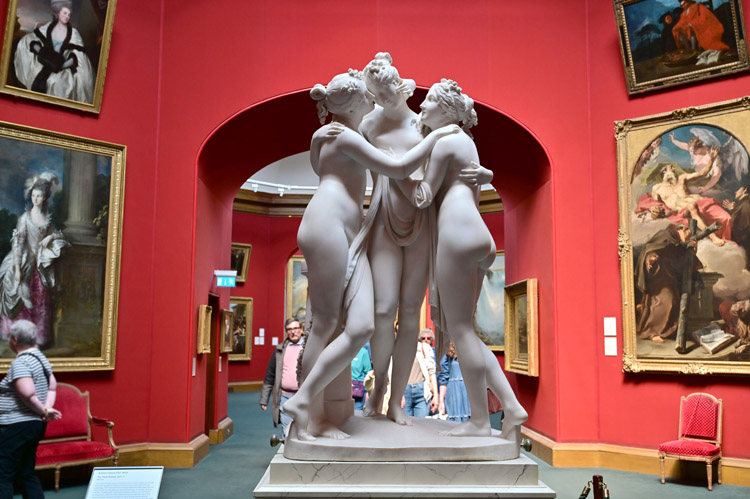
Antonio Canova (1757-1822), The Three Graces, 1815-17, Marble sculpture.

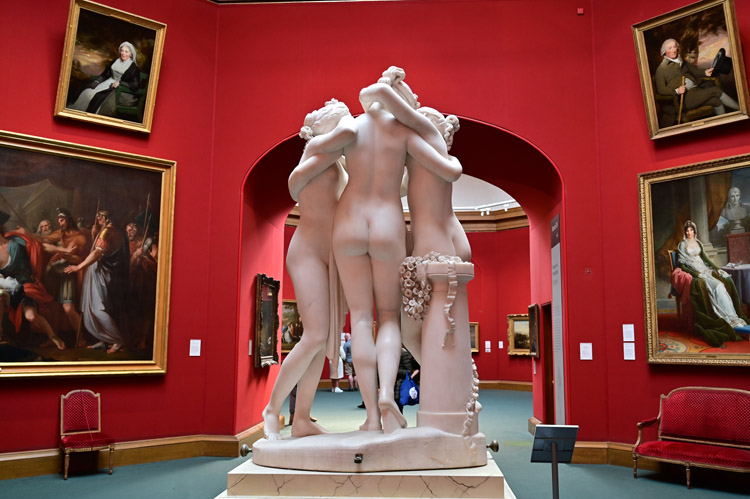
This beautiful Canova sculpture represents the three daughters of Zeus and Euryoneme- Euphrosyne, Aglaia, and Thalia. Since ancient Greek mythology, the Three Graces have been a popular motif in art depictions. The women symbolize chastity, beauty, and love. In Canova’s art, realistic graces have the interlocked movement and gentle beauty shared among the figures. According to the museum, the Duke and Duchess of Bedford commissioned the group from Canova in Rome in 1815. In two years, it was installed in the specially constructed Temple of the Graces at Woburn Abbey, the Bedfords’ country residence outside London. The first version of this realistic sculpture is in the Hermitage Museum, St. Petersburg.
Antonio Canova (1757-1822), The Three Graces, 1815-17, Marble sculpture, back view.

Besides Canova’s art, you’ll find several beautiful neoclassical sculptures on display decorating the main galleries of the art museum, like David Hill bust by Amelia Robertson Hill.


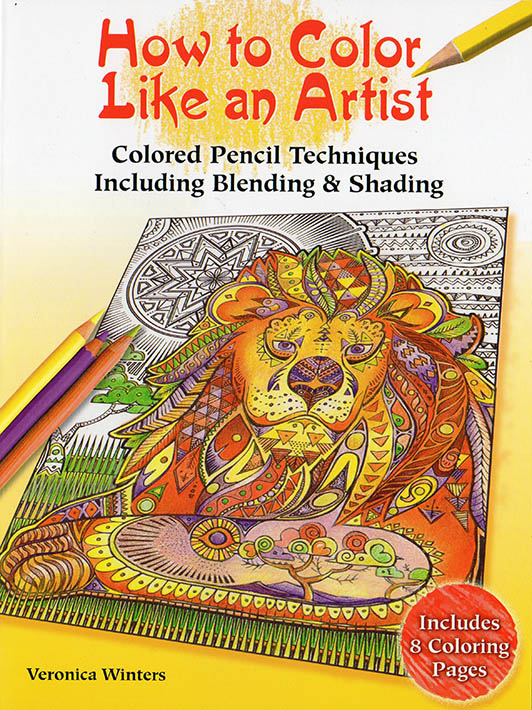
colored pencil manual veronica wintershow to color like an artist_coloring book_veronica winters
These art instruction books are on sale on Amazon!

#3 Scottish artists: famous paintings in Scottish national gallery

I spent a long time in the new art gallery, and it was perfect. When I revisited the Scottish National Gallery in 2025, I enjoyed viewing expanded gallery spaces presenting many famous Scottish artists who are largely unknown to the general public outside the country. There were many colorists and the 19th-20th-century landscape and portrait artists.

John Duncan

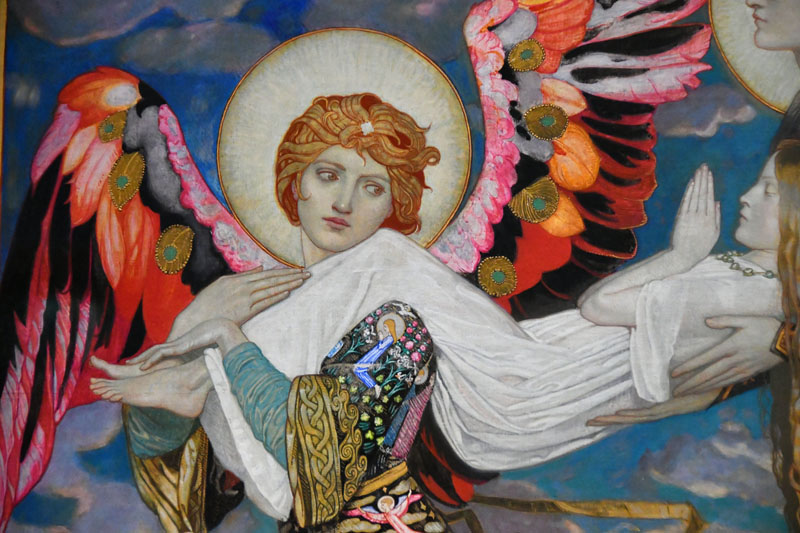
John Duncan (1866-1945), Scottish, St. Bride, 1913, tempera on canvas
This is one of the outstanding creations of the Celtic revival movement, which had begun during the last decade of the nineteenth century in Scotland. Known as ‘the foster mother of Christ’, the Irish saint Bride is shown being carried by angels over the Hebridean seas to Bethlehem to witness the nativity of Christ.
In the background on the right is the silhouette of lona Abbey. Duncan drew on his knowledge of Celtic design and the techniques and aesthetics of early Italian fresco paintings to create a dreamlike and
otherworldly image, subtly combining naturalism and formal pattern.

Duncan studied art in Scotland, England, and Belgium to settled in Edinburgh in 1892. The artist represents the Celtic Revival movement in Scottish art, and his illustrative style looks innovative even today. This colorful painting looks like it’s made of collaged pieces of religious symbols, and even the ornate frame mimics the artist’s unique style.

“According to the legend of the Irish Saint Bride she was transported miraculously to Bethlehem to attend the nativity of Christ. Here two angels carry the white robed saint across the sea. The seascape reflects Duncan’s fascination with the Outer Hebrides and the Isle of Iona. The birds and seal provide an effective naturalistic foil for the supernatural angels overlapping the patterned border. Scenes from the life of Christ decorate the angel’s robes, and may include the artist’s self-portrait as the tiny clown (a holy fool) accompanying the procession of the magi on the leading angel’s gown. “

from the website of Scottish National Gallery

William Bell Scott 

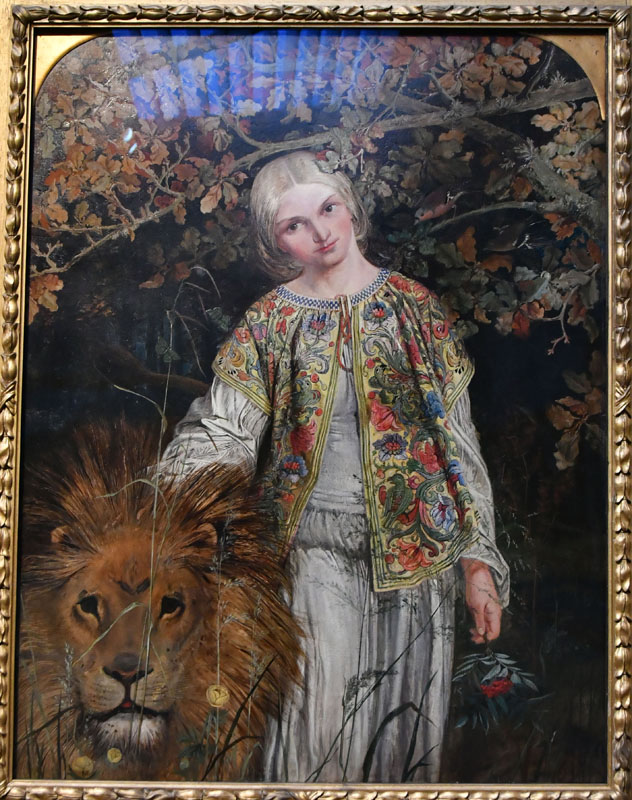
William Bell Scott Una and the Lion_national scottish gallery
William Bell Scott (1811 – 1890), Una and the Lion, 1860, oil on canvas, the Scottish National Gallery.
Scott’s inspiration was Edmund Spenser’s late Elizabethan epic poem The Faerie Queene, an allegory of true chivalry. From the gallery’s description: The heroine Una, is surprised by a lion. Captivated and tamed by her innocence and beauty, it becomes her protector. The model for Una was Alice Boyd, whom the artist had recently met in Newcastle, when Master of the School of Design. Later, an intimate friend, Miss Boyd commissioned murals from Scott on the theme of The Kingis Quair for her Ayrshire seat at Penkill Castle.

Influenced by the Pre-Raphaelites, William and his brother were trained as artists at the Trustees’ Academy in Edinburgh and worked for their father, who was an engraver, before becoming full-time artists.

“Scott’s painting was inspired by Edmund Spenser’s sixteenth-century poem ‘The Faerie Queen’. In the poem, Una is the beautiful young daughter of a king and queen who have been imprisoned by a ferocious dragon. Una undertakes a quest to free her parents, but on her journey she encounters a fierce lion. The lion is so captivated by Una’s innocence and beauty that he abandons his plan to eat her, and vows instead to become her protector and companion. Scott shows Una gently resting her fingers in the lion’s terrific mane, as they make their way through the autumnal wood together.”

from the website of Scottish National Gallery

#4 Central location

The art museum’s central location makes it easy to get in and out. There is no standing in long lines (like going to the Castle).

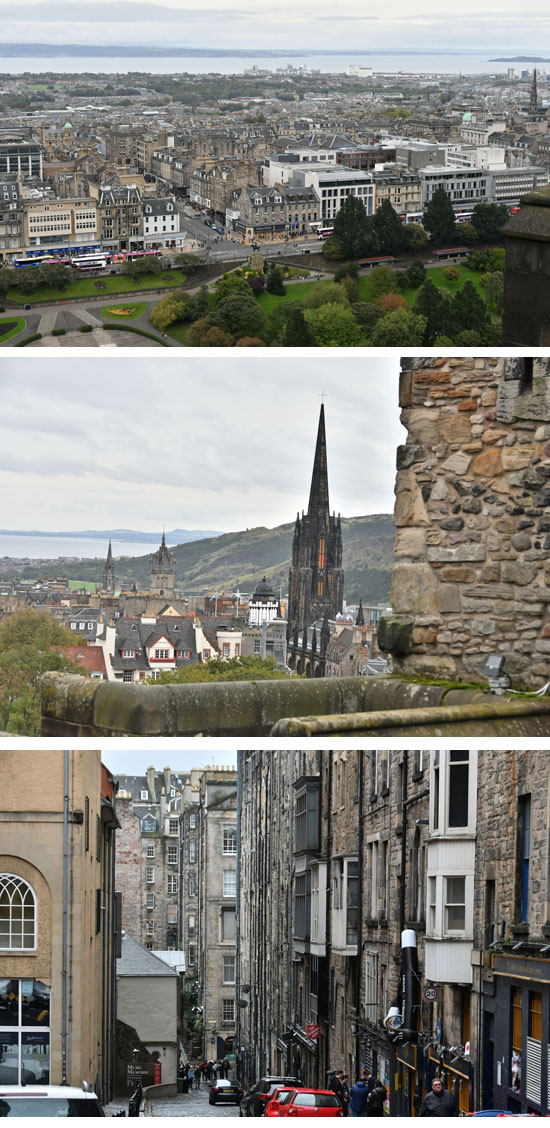
views of Edinburgh
Views of Edinburgh from the Castle and central streets

Francois-Xavier Fabre

Francois-Xavier Fabre Portrait of a Man 1809_scottish national gallery
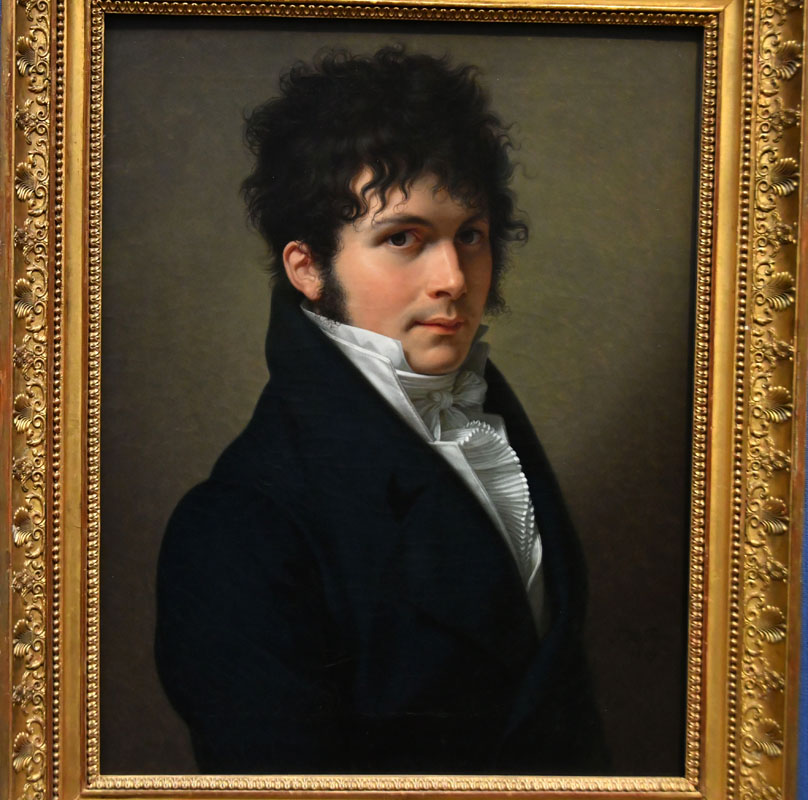
François-Xavier Fabre, Portrait of a Man, 1809, Scottish National Gallery

By looking at this painting of Fabre, the influence of the neoclassical painter Jacques-Louis David is clear. This portrait is exceptionally painted with a masterful sense of color, light, and unseen brushwork (characteristic of the neoclassical painters). The unknown young man’s intense gaze is captivating, and his fashionable clothes and hair are beautifully arranged into a simple yet elegant composition. A pupil of David, the artist won the French Academy’s Rome Prize in 1787 and spent most of his life in Italy. Fabre was a very popular portrait and historical painter who was also an art collector! His art collection consists of 16-17th century Italian paintings housed in the Musée Fabre, Montpellier.

# 5 Free of charge

Free. You can’t beat that. Open daily, 10 am-5 pm. Thursdays until 7 pm. Location: The Mound, Edinburgh, Scotland. Check current hrs. and more here: https://www.nationalgalleries.org/visit/scottish-national-gallery

Paul Delaroche

Paul Delaroche_Study for the Head of Christ for La Madeleine_scottish national gallery
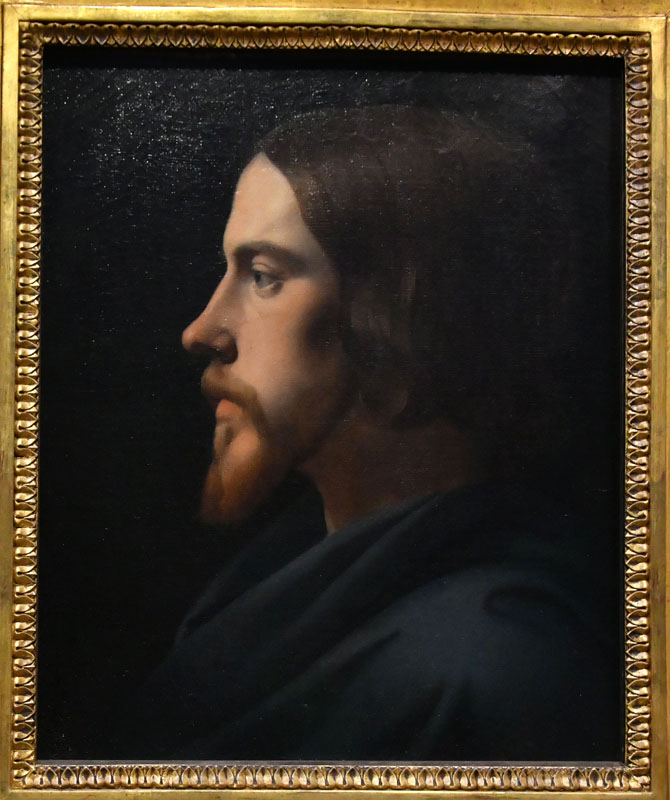
Paul Delaroche, Study for the Head of Christ for La Madeleine, (Portrait of Eugène Buttura) 1834, Scottish National Gallery

Classically trained French artist Paul Delaroche painted scenes from French and English history. Delaroche served as a professor at the École des Beaux-Arts in Paris, where he trained many students, including Couture and Gérôme. His two major, large-scale works include The Execution of Lady Jane Grey in the National Gallery in London and the 27-meter-long The Hemi-Cycle. This painting reminds of Raphael’s School of Athens, only here he depicts over seventy artists from various epochs caught in conversation.

This small portrait of his friend Eugène Buttura proves the artist’s great knowledge of anatomy and oil painting technique. Wrapped up in his thoughts, the man appears lifelike.

Frans Hals_detail_scottish national gallery
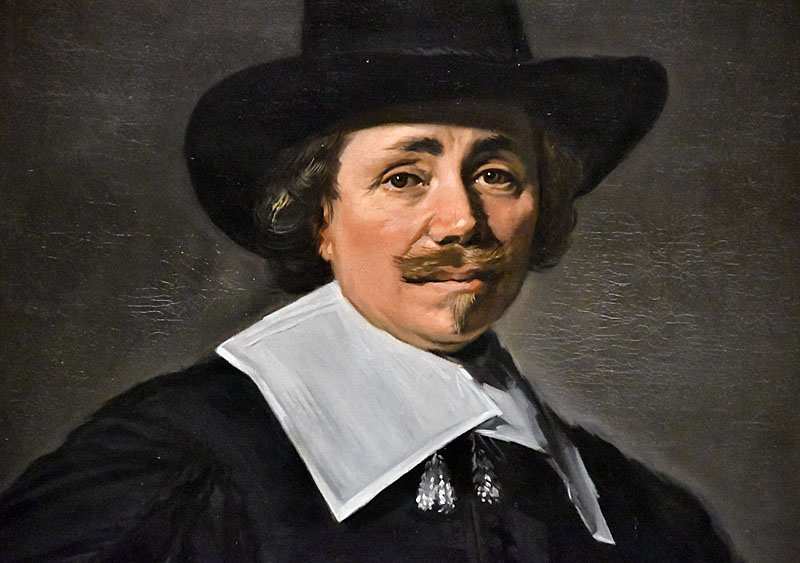
Frans Hals (1582/3 – 1666), Dutch, Portrait of Francois Wouter (1600-1661), 1645, oil on canvas, painting closeup, Scottish National Gallery.
The sitter has recently been identified as Franpois Wouters, a councilor, alderman, and mayor in Haarlem. Hals depicted him twice in group portraits: in 1639 as lieutenant of the S George Civic Guard and in 1641 one of the regents of the St Elisabeth Hospital (both paintings are in the Frans Hals-Museum
Haarlem).


Other famous artists in the Scottish National Gallery:

William Dyce (1806-1864), Francesca da Rimini, 1837, oil on canvas.

Dyce’s colorful and realistic painting is an example of artistic fascination with famous Italian poet, Dante Alighieri (1265-1321) in 19th-century England. The artist depicted a doomed affair between Francesca and her husband’s younger brother, Paolo. Francesca was in an arranged, political marriage to an old, ugly enemy husband, Gianciotto (the master of Rimini), who originally appeared on canvas to the left aiming to kill the lovers. The story comes from Dante’s divine comedy, Hell. In Dante’s writing, the murdered lovers were condemned to wander eternity in the second circle of hell. So the painting depicts the start of the illicit affair and the end of it. The presence of Gianciotto’s disembodied hand in the painting is the only part left from the original depiction of an old husband. The canvas was severely damaged and trimmed in 1882.

Sir James Guthrie, Sir Winston Churchill, 1874 – 1965. Statesman. Painted after the first world war, Churchill has been celebrated for his leadership as Prime Minister of Britain during the Second World War from 1940–45.

  • Paul Gauguin Vision of the Sermon (Jacob Wrestling with the Angel), 1888 (French). The scene is imaginary, intended to evoke the simple piety of the Breton peasant women of Pont-Aven. The biblical story of Jacob wrestling with the Angel – symbolising the struggle between spirit and flesh – is being recounted by a priest (bottom right) who has Gauguin’s facial features. The bold outlines, flattened perspective, and vermillion landscape were inspired by stained glass and Japanese woodcuts.
  • Paul Gauguin (1848 – 1903), French, Three Tahitians, 1899, Oil on canvas. The fusion of ‘primitive’ and Western mythologies is a frequent theme in Gauguin’s later Tahitian paintings. The young man with his back to the viewer appears to be offered a choice between vice and virtue, like Hercules at the crossroads. The woman with a mango promises a life of pleasure and indulgence, while the woman on the right displays a wedding ring, representing a more conventional route.
  • Gavin Hamilton (1723 – 1798), Achilles Lamenting the Death of Patroclus, 1760 – 1763, oil on canvas. In this classical oil painting, Patroclus’ body is painted beautifully.
  • Sandro Botticelli, The Virgin adoring a sleeping Christ child, 1485, Tempera on canvas. The image depicts a garden described in the Old Testament. This is contrasted with the geometric blocks of the rocky outcrop behind.
  • Van Gogh, Les Olievers, oil on canvas

Jan Steen (1626-1679), Dutch, A School for Boys and Girls, oil on canvas, 1670. This painting – Steen’s largest school scene of a classroom- shows the drawbacks of a place having no discipline via moral symbols. We can see a discarded print of the great scholar Erasmus on the floor, and a child who offers a pair of spectacles to the owl near the lantern. The boy’s action paints the Dutch proverb, ‘What use are
glasses or light if the owl does not want to see?’

Edgar Degas (1834-1917), Portrait of Diego Martelli (1839-96), 1879, oil on canvas. Martelli was a Florentine writer and art critic, closely associated with the progressive group of Italian artists. While visiting Paris, the artist painted two portraits of Martelli. The unusual point of view, color, and subject make this painting a standout. The writer is captured, lost in his thoughts among scattered papers inside a modest room.


Angelica Kauffmann, Alexander Gordon, 4th Duke of Gordon (1743-1827), oil on canvas, 1774. Angelica Kauffmann was a rare female artist at that time, but the duke noticed her talent and commissioned a series of copies of Italian masters for her. They met in Rome in 1762, and a young Swiss woman painted her patron in a dashing red dress similar to van Dyck’s costumes to give him an air of opulence.

Titian (Tiziano Vecellio), (about 1485/90 – 1576), Italian, The Three Ages of Man, about 1512-14, oil on canvas. The painting captures the transient nature of human life and love through the allegorical theme of the Three Ages of Man. Titian paints an idyllic landscape with babies, Cupid and lovers. The old man stands in the background looking at the symbol of the skull. The church symbolizes salvation. Also, the Venetian master Titian gives us Diana and Actaeon. it’s a painting about the exact moment a man’s life is over before he knows it. Hunter Actaeon has stumbled upon bathing goddess Diana, and Titian has loaded the scene with clues to his fate. The stag skull mounted on the pillar is chilling foreshadowing for Actaeon, who will be turned into a stag and torn apart by his own dogs.

Poussin‘s gallery has a series of his large, religious paintings titled Seven Sacraments, 1644-1648. Painted in Rome by the 17th-century French artist Nicolas Poussin, the Seven Sacraments represent the seven holy rites of the Roman Catholic Church. Poussin aimed to convey the solemnity and religious importance of each rite, and he situated the scenes in early Christian times.

Diego Velázquez, An Old Woman Cooking Eggs, 1618, Oil on canvas. Velázquez painted a group of the poor in scenes of everyday life with unapologetic realism and conviction. Using a limited palette of browns and black, the artist re-created a scene from the past.

Sir James Guthrie, In the Orchard, (1859 – 1930) Scottish. There are several beautiful paintings of children hanging in the gallery.

Frans Hals, Verdonck,1627

Sir Anthony van Dyck. In the galleries you’ll find many paintings done by this famous and prolific Flemish artist, such as An Italian Noble, 1625 – 1627, oil on canvas and Marchese Ambrogio Spinola (1569 – 1630).

Attributed to Bernardino Lanino, (1509/13 – after 1581), Italian, St John the Baptist in the Wilderness
about 1550, Oil and gold on panel.
This small painting is very reminiscent of Leonardo da Vinci’s art in terms of subject, color, and composition. St John points towards the banderole wound round his cross, on which are inscribed the words ‘Ecce Agnus Dei’ (Behold the Lamb of God), in reference to Christ as God’s sacrificial lamb. The lamb itself appears in a
blaze of glory to the right. The pose of St John is based closely on a design by Leonardo da
Vinci (1452-1519).

Sir William Fettes Douglas (1822 – 1891), Scottish, The Spell, 1864, oil on canvas. This is a highly unusual painting depicting a priest or a magician, or an alchemist. An avid art collector, the artist channels his interests in mysticism and occult. In this painting, an old man is trying to raise the spirit of a dead one. The books in disarray, the stone walls with strange pentagram drawings create a strange surreal feeling.

Sir Francis Grant, Anne Emily Sophia Grant (known as ‘Daisy’ Grant), Mrs William Markham (1836 – 1880), 1857. This is a depiction of the artist’s daughter.

Arthur Melville (1855-1904), King Cophetua and the Beggar Maid, 1898, watercolor on paper. Melville travelled extensively in the Middle East, Spain and north Africa in the 1880s and 1890s. He used his travel experiences to imagine the settings for dramatic incidents and stories. According to legend, the African King Cophetua swore to shun the company of women, until one day he saw a woman begging, all dressed in grey. He fell in love at first sight, vowing to marry her or take his own life. Melville depicts the
King, dressed in orange and leading a leopard, approaching his future queen.

Louis Gauffier (1761 – 1801), French, Cleopatra and Octavian, 1787 – 1788. The painting is the depiction of Octavian’s meeting with the Egyptian queen Cleopatra after his victory over Mark Anthony at the battle of Actium in 31 BC. Octavian displays his distrust to Cleopatra. The painting was commissioned by the Comte d’Angiviller, the superintendent of the king’s art collection. It meant to be a pendant for a painting by another classical French artist, Jacques-Louis David.

Sir Peter Paul Rubens (1577 – 1640), Flemish, The Feast of Herod, 1635 – 1638, oil on canvas, Measurements: 208.30 x 271.50 x 5.00 cm. Commissioned by a Flemish merchant, this large, bold, energetic, and colorful painting depicts Herodias’ daughter, Salome. Herod had promised to grant her any wish for her beautiful dance, and so Salome asked for the head of John the Baptist. This was Herodias’ revenge for the Baptist’s outspoken criticism of her marriage to Herod. In this dramatic painting, the popular Biblical scene is Salome ‘s presentation of Saint John the Baptist’s head to King Herod. Herod shrinks back in horror. Herodias prods the Baptist’s tongue with a fork.


Guercino (Giovanni Francesco Barbieri), Erminia Finding the Wounded Tancred, 1650. Erminia has rushed to the spot where her lover Tancred lies severely wounded.

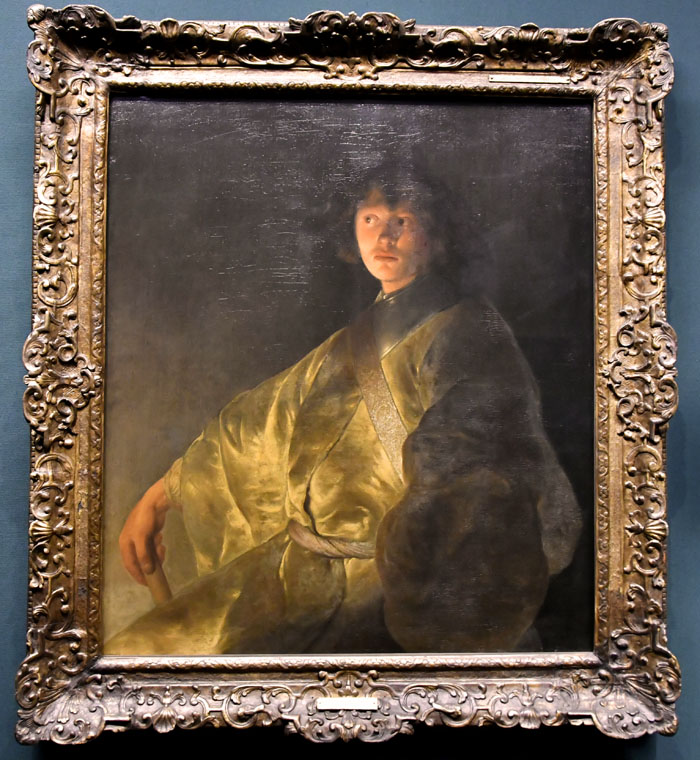
Jan Lievens (1607 – 1674), Dutch, Portrait of a Young Man, oil on canvas, about 1631.

A contemporary and friend of young Rembrandt, Lievens trained with Pieter Lastman together with Rembrandt in Amsterdam in the 1620s. Both young artists returned to their native Leiden for a while, where they collaborated and competed with one another. Rembrandt soon moved back to Amsterdam to have a thriving art career. You can read about Rembrandt’s Amsterdam house here. This painting was created at the end of this period, before Lievens left Leiden, and shows his talent and technical abilities. So similar to Rembrandt’s art style, this painting was probably a self-portrait.

This is one of the panels painted by Hugo van der Goes,https://www.rct.uk/collection/403260/the-trinity-altarpiece-panels, Public Domain, https://commons.wikimedia.org/w/index.php?curid=81550161. It’s displayed under glass in the first, red gallery of the art museum.

Hugo van der Goes (died 1482), Netherlandish, The Trinity Altarpiece, about 1475 – 1480, oil on panel, Each panel: 202.00 x 100.50 cm.
Four panels formed the most important altarpiece painted for a Scottish chapel. This Northern Renaissance artwork was commissioned by Edward Bonkil, Provost of the Collegiate Chapel of the Holy Trinity in Edinburgh. Here, King James III wears the open crown.
The missing central panel probably depicted the Virgin and Child Enthroned. According to the museum, when the altarpiece is open, the wings show a devout King James III with his elder son and his queen Margaret of Denmark, accompanied by Saint Andrew and Saint George. The lion rampant on the king’s coat of arms is reversed in deference to the holy figures on the missing central panel. The closed wings feature a vision of the Holy Trinity appearing to the kneeling Edward Bonkil.

Open vs. Closed (Imperial) Crown:

History of the Scottish Crown’s shape: The shape of the Scottish Crown changed at the end of the 15th century. A silver coin (right) from 1485 has a portrait of King James III (1460-1488) wearing an arched or imperial crown. It’s the only surviving image of King James III wearing the Imperial Crown. It must have been used at the coronation of his son, King James IV (1488-1513). Originally, only the Holy Roman
The emperor could wear an arched crown – symbolizing his worldwide dominance. Once imperial crowns became widely used, many styles emerged in Europe.

Before 1485, the crown had no arches, being open with fleurs de lis or lily circlets in it. The King of Scots was among several European monarchs to adopt the “closed” or arched or Imperial crown. The circlet or diadem of the new Scottish Crown consisted of eight fleurs de lis, and the four arches were surmounted by an orb and cross.

THE HONOURS of Scotland: the Scottish Crown Jewels- the crown, scepter, and sword of state used in the coronation of Mary, Queen of Scots in 1543 are displayed in the ancient Crown Room of the Castle. There’s a line to get there, and no pictures are allowed inside. 🙁 The scepter has a very beautiful, giant sparkling diamond.
* I don’t remember where I took pictures of this information, probably in one of the museums or the Castle.

Sir Daniel Macnee (1806-1882), Scottish, A Lady in Grey, 1859, Oil on canvas
From the museum’s description: Macnee was the leading portraitist in the west of Scotland from the 1840s to the 1860s and was eventually elected President of the Royal Scottish Academy. First shown in London in 1859, this is an unusually ambitious likeness of the artist’s daughter, Isabella Wiseman. Two
years earlier, Reynolds’s enchanting portrait of the actress Nelly O’Brien (The Wallace
Collection, London, had been one of the greatest attractions of the Manchester Art Treasures Exhibition – an event which drew artists from all over Britain. This Reynolds was almost certainly the source for Isabella’s pose and the very striking lighting effects.

Joseph Farquharson (1846-1935), Scottish, Winter Day, Finzean, about 1901, oil on canvas. A famous painter of the snow textures, Farquharson combined a successful career as a professional painter with his inherited role as Laird of Finzean in Aberdeenshire. His beautiful wooded estate, far up the Dee Valley, inspired many of the snowy landscapes for which he is renowned – mostly painted from the shelter of a moveable hut on wheels. Large editions of prints earned him wide popularity and the nickname of ‘frozen mutton Farquharson’ by allusion to the sheep which populate many of his pictures. With its exquisite treatment of the textures of snow and iridescent shadows, this is the only known Farquharson with a garden motif.
Jan van Huysum (1682 – 1749), Dutch, Flower Still Life in a Sculpted Stone Vase with bird’s nest, 1718, Oil on copper, Measurements: 80.10 x 61.40 cm.
According to the taste and fashion of the Dutch at that time, this extravagant bouquet consists of a variety of flowers from different seasons, insects, and butterflies. Jan van Huysum was the leading Dutch painter of flowers in the eighteenth century, and he received prestigious commissions from royal households and aristocrats around Europe. This is his largest painting done on copper, a support he only occasionally used. It once formed part of the famous Czernin collection in Vienna.
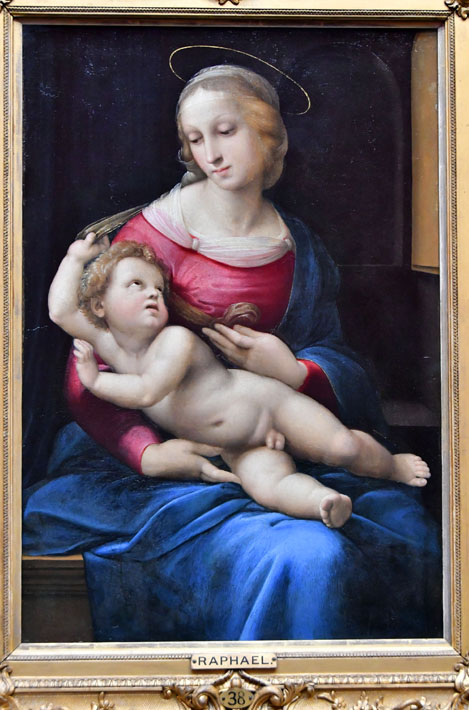
raphael
Raphael, Mary, and Child, around 1507

Scottish landscapes

There are a number of beautiful, colorful landscapes painted by Scottish artists. One of such examples is James Paterson (1854-1932), Autumn in Glencairn, Moniaive, 1887, Oil on canvas. He painted rural Dumfriosshire, south-west Scotland. Paterson explored the surroundings painting different seasons. Another one is by Sir William Fettes Douglas (1822-1891), Stonehaven Harbor, 1874. Waller Hugh Paton (1828-1895), Entrance to the Cuiraing, Skye, 1873 paints a unique landscape with a rock formation called the Needle from his pencil sketch only. Peter Groham (1836-1921), D’er Moor and Moss is a colorful local landscape of sunset hues and trees.


Robert Burns, The Hunt, 1926, Scottish National Gallery.

Burns painted in the Art Nouveau style in Scotland and was a fantastic colorist. His beautiful combination of textures and materials, colors, and lines makes this painting a standout. His most famous interior designs were for Crawford’s Tea Rooms on Princes Street. He combined commercial projects with teaching and became Head of Painting at Edinburgh College of Art.
painting of angel
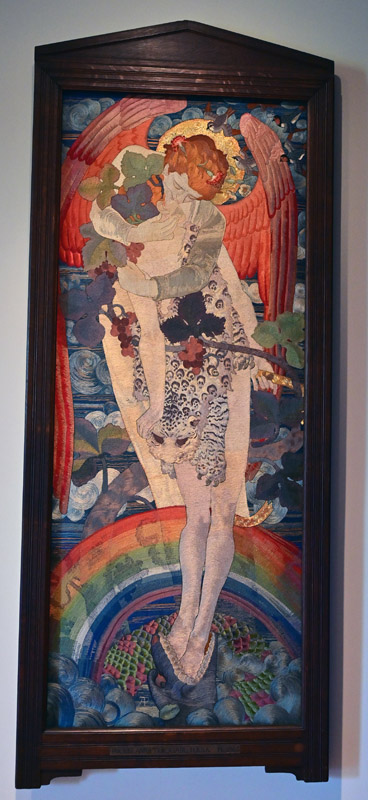
Phoebe Anna Traquair Progress of a Soul: Victory, embroidery. The National Gallery of Scotland.

This colorful embroidery is the final artwork in a series of four called The Progress of a Soul and was made between 1899 and 1902. The human soul is represented by an ideal young man dressed in an animal skin, who was based on the character of Denys L’Auxerrois from Imaginary Portraits by the English critic and writer Walter Pater. In this panel, The Victory, Denys is seen after death, reborn into eternal life. He has been awoken with a kiss from a red-haired, red-winged seraph, suggesting he has entered the realm of heaven. (museum’s description).
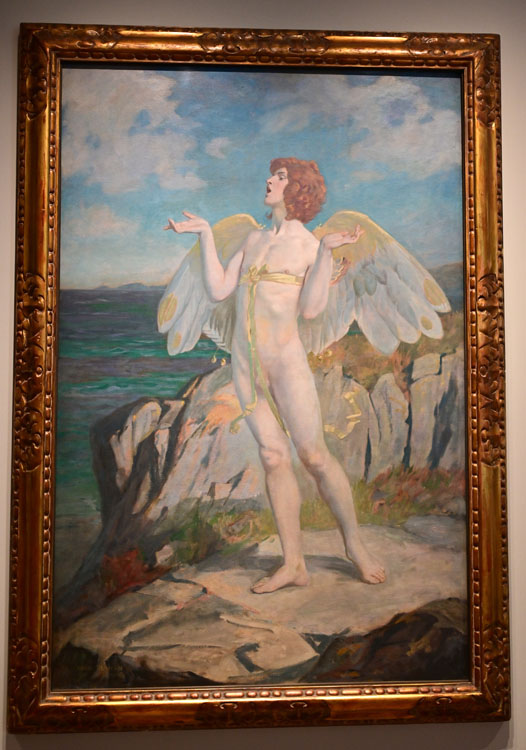
Painting of a singling angel in the Scottish National Gallery

Scottish National Portrait Gallery

There is also a smaller portrait gallery located 15 minutes away from the main building of the National Gallery of Scotland. It has a very beautiful entrance with paintings on the walls, elegant lights, and some classical and contemporary art inside. Very few people get there as it’s off of Edinburgh’s Royal Mile, but it’s totally worth a visit if you are an artist. It would take an hour or so to walk through it. One of the interesting large, contemporary art paintings is “Alan Cumming” by Christian Hook (b.1972), 2014. Alan Cumming is a very talented Scottish actor who has appeared in numerous films, TV, and plays in Scotland, London and New York. The painting is the winner’s commission for the Sky Arts Portrait Artist of the Year 2014 competition. Christian Hook is from Gibraltar.

From museum’s descriptions that I captured while looking at art that caught my attention:

David Roberts (1796-1864) by Robert Scott Lauder, oil on canvas, painted in 1840. The artist David Roberts was born in Edinburgh. After serving an apprenticeship with a house-painter, he became a theatrical scene-painter, working in Glasgow, Edinburgh and at Drury Lane, London. From 1830, he devoted himself to topography. His exhibited pictures, which were inspired by his travels, included Departure of the Israelites from Egypt (1829), Jerusalem (1845), Rome (1855) and Canal at Venice (1856). Roberts undertook his expedition to the Near East in 1838-9. He visited Sinai, Syria, Palestine and Lebanon. In Lauder’s portrait, Roberts wears his traveler’s disguise, adopted when it was necessary to be inconspicuous. There is something of the actor evident in Roberts’s adoption of eastern dress for his portrait. (from museum’s description).

David Octavius Hill (1802-1870) by Amelia Robertson Hill, marble, made in 1868. This sculpture of the painter and pioneer photographer David Octavius Hill is by his second wife, Amelia Robertson Hill. She has depicted him in the form of a ‘heroic’ portrait bust, in which the sitter wears classical drapery rather than contemporary dress. Amelia encouraged her husband to complete his most ambitious painting, The Signing of the Deed of Demission. The painting, which commemorated the establishment of the Free Church of Scotland, contained portraits of over 400 ministers. It was begun in 1843, and when it was finally exhibited in 1867, a reviewer wrote that Hill had completed his picture ‘with a heroism unsurpassed in the history of art’.

Sir Winston Churchill (1874-1965) by Sir James Guthrie, oil on canvas, painted 1919-21. Churchill was MP for Dundee from 1908-22. He later served as Prime Minister from 1940-45 and 1951-55. Although usually discussed as a hero in the context of the Allied victory of the Second World War, this portrait was completed shortly after the First World War. It was painted in preparation for Guthrie’s large-scale painting Statesman of the Great War. Churchill’s legacy in the earlier conflict was mixed, a major contribution to the outcome of the war was his part in the introduction of the tank. He was demoted from First Lord of the Admiralty after the failure of the 1915-16 Gallipoli Campaign, resulting in over one hundred thousand casualties on both sides. He later returned to government founding the Imperial (now Commonwealth) War Graves Commission, establishing the principle that in death, all military ranks would be honored equally. As Secretary of State for the Colonies after the war, he oversaw British withdrawal from Ireland, a catalyst for the 1922-23 Civil War. Churchill endorsed the division of the former Ottoman Empire in the Middle East into British and French spheres of interest, with long lasting consequences for the region. Later, as Chancellor of the Exchequer, Churchill played a controversial role in suppressing the General Strike of 1926.

Margaret Liddell Linck (1873-1943) by David Cowan Dobson, oil on canvas, painted in 1914. The actress Margaret (Maggie) Liddell Linck was a suffragette. She joined the militant Women’s Social and Political Union (the WSPU) in February 1907 and was arrested during a demonstration at the House of Commons. Linck refused to pay the fine imposed for which she was given a two-week prison sentence. She subsequently joined the non-violent Women’s Freedom League (WFL) and served as the treasurer of its Scottish council. Maggie Linck married the photographer, actor and playwright Graham Moffat, in 1897. Moffat was also an advocate of the equal rights of women. He formed the Glasgow Men’s League for Women’s Suffrage for ‘the husbands and brothers of active suffragettes and their male sympathizers. The green and purple colors associated with the suffrage movement are present in the portrait.

Alexander Murray of Elibank (1712-1778) by Allan Ramsay oil on canvas, painted in 1742. After Prince Charles’s secret visit to London in 1750, a group of Jacobites began to plan a coup d’état. Alexander Murray was deeply involved, so the project is known as the ‘Elibank plot’. The idea was to kidnap the ‘Elector’ (George II) and his family, and then take them to France or hold them hostage in the Tower of London. Murray also suggested poisoning George, but Charles vetoed any assassination attempt. The plot was betrayed by a co-conspirator, Alasdair MacDonnell of Glengarry, who operated as ‘Pickle the Spy’. The prime casualty was Archibald Cameron of Lochiel, who was captured in the Highlands where a diversionary uprising was to have taken place. He was hung, drawn and quartered in June 1753-the last Jacobite execution. Murray eventually returned to Britain with a pardon.

James Hamilton, 1st Duke of Hamilton (1606-1649) by Daniel Mytens (about 1590-about 1647), oil on canvas, 1629. James Hamilton, 1st Duke of Hamilton, was one of King Charles I’s most trusted councilors, especially in Scottish affairs. This portrait was painted at a turning point in Hamilton’s career, the year following his arrival at court in London. The Dutch artist Daniel Mytens was the King’s painter before he was eclipsed by the arrival of Anthony van Dyck in 1632. Mytens has depicted Hamilton wearing a magnificent, shimmering silver suit, standing before a stormy sky.

James Graham, 1st Marquess of Montrose (1612-1650), studio of Sir Anthony Van Dyck, oil on canvas, painted about 1636. Montrose was a poet and a royalist hero during the period of the Bishops’ Wars and the Civil Wars. He is shown here wearing a suit of armour to highlight his military career. He was chief of Clan Graham and originally supported the Covenanters. Later, after siding with Charles I, he was appointed The King’s Lieutenant of Scotland. In 1644 Montrose raised the Highland clans for the king and won a series of six victories but he was defeated at Philiphaugh, near Selkirk, in 1645. He was exiled to the continent but returned after the execution of Charles I. He was captured after the battle of Carbisdale and hung, drawn and quartered in the High Street of Edinburgh.

Henrietta Anne, Duchess of Orléans (1644-1670) by Jean Nocret, oil on canvas, painted about 1661. Henrietta Anne was the youngest daughter of King Charles I and Queen Henrietta Maria. At the height of the English Civil War she was smuggled out of England by her governess and reunited with her mother at the French court. Throughout her life she shared a close bond with her brother Charles II and they wrote to each other frequently, with Charles referring to his sister affectionately as Minette. Famed for her charming nature, impeccable manners and keen interest in the arts the princess became a favourite of the French royal family. She sat for this magnificent full-length state portrait shortly after her marriage in 1661, to Philippe, Duke of Orléans, brother to Louis XIV.

Sir James Balfour (1600-1657) by an unknown artist, oil on canvas, painted after 1630. James Balfour was an historian and herald whose writings included Annals of the History of Scotland. He was created Lyon King of Arms (a court office that regulated royal ceremony and heraldry) and knighted in 1630. He played a key role in the arrangements for Charles I’s Scottish coronation in 1633. This unusual portrait shows Balfour in his study. His informal appearance was fashionable for images of young men at this time and contemporary audiences would have understood the pose, with Balfour resting his head on his hand, as a representation of melancholy. He points to his family coat of arms with his other hand and wears his Lyon badge suspended from a sash over his shoulder, showing the status he gained through research into Scottish history.

Sir William Bruce (about 1625-1710) by John Michael Wright, oil on canvas, painted about 1664. Bruce was the great Scottish classical architect of the second half of the seventeenth century. He designed key buildings such as Kinross House and Hopetoun House and he remodeled the Palace of Holyrood house. He was one of a network of Scots who secretly worked for the exiled king during the Commonwealth. After the Restoration, Charles II appointed him Surveyor General of the King’s Works in Scotland. John Michael Wright had trained as a painter in Edinburgh under George Jamesone. He shows Bruce as a gentleman artist, wearing a fashionable Japanese rock, an informal, kimono-like gown that denotes the sitter’s status, and holding a crayon and a drawing.

Check out visionary art for sale

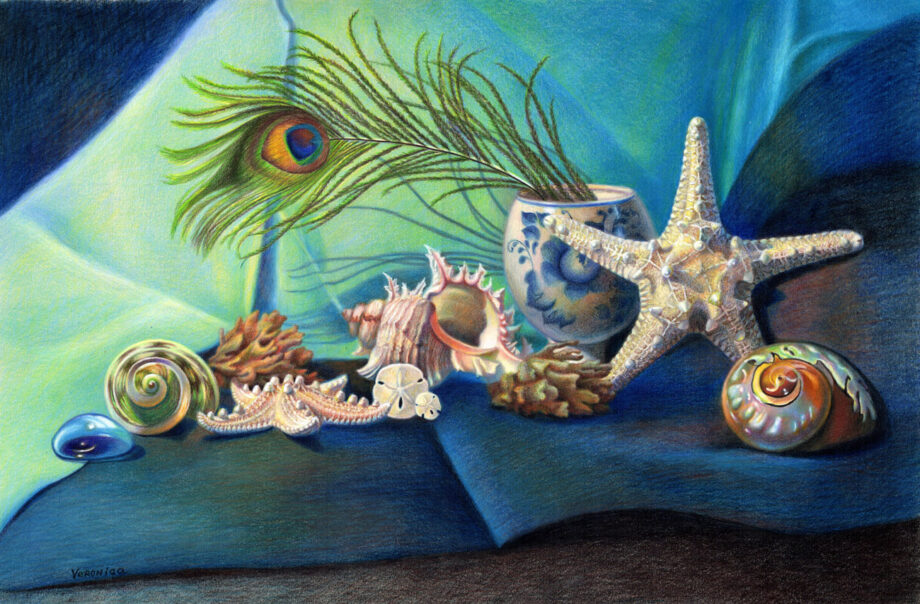
still life with shells and peacock feather, Veronica Winters, colored pencil, 14.5×22 in