Barbara Aston’s Egyptian Stone Vessels: Materials, Forms, and Granite Findings
Review of Ancient Egyptian Stone Vessels: Materials and Forms by Barbara G. Aston
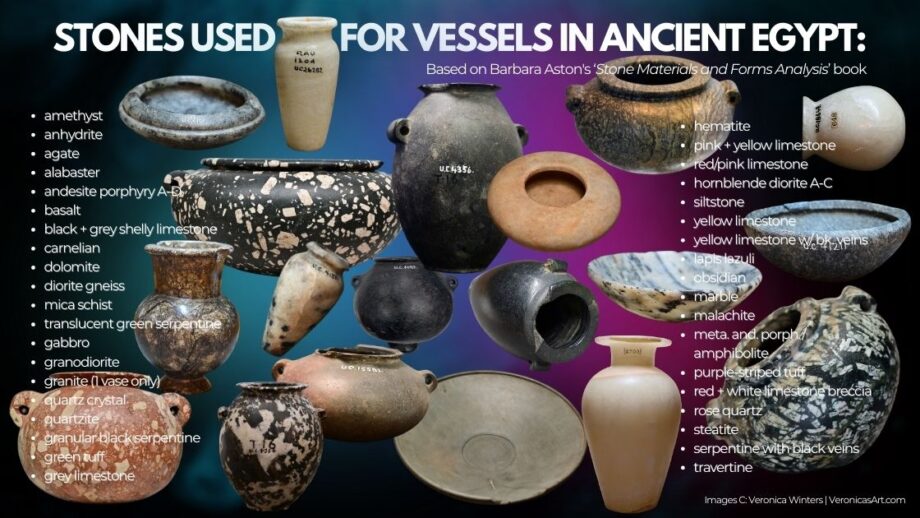
Ancient Egyptian Stone Vessels: Materials and Forms, published by Heidelberg Orientverlag as part of the series Studien zur Archäologie und Geschichte Altägyptens, is a comprehensive and meticulously researched volume originating from Barbara G. Aston’s 1989 PhD dissertation at the University of California, Berkeley. Aston, an archaeologist with a strong geological background, bridges the disciplines of Egyptology and geology to provide an authoritative analysis of the materials used in ancient Egyptian stone vessels and their evolving forms across millennia. The author mentions ancient Egyptian words used labeling specific stones, although not all words or terminology is known to us today. The book spans 221 pages, including detailed appendices, a bibliography, and plates featuring color photographs of vessels and rock samples. One minor criticism is the occasional, necessary density of technical detail, which might overwhelm casual readers, but this is mitigated by the glossary. It stands as a seminal reference for scholars interested in ancient Egyptian material culture, quarrying practices, and chronological typologies.
How did she study the stones?
First, Aston collected 197 stones from quarry sites around Egypt (she includes the maps of quarry sites) and then compared them to the stone used for ancient Egyptian vessels. To determine the exact name and composition of each stone, which is often impossible to identify with a naked eye, the author cut 42 samples from her collected rocks to study them in thin sections under the petrographic microscope.
She studied 42 fragments of Egyptian stone vessels from the Lowie Museum, Berkeley, the Boston Museum of Fine Arts, the British Museum, and the Fitzwilliam Museum, Cambridge as well as prepared earlier 14 thin sections of stone vessel fragments from the British Museum. Each 1 x 2 inch rock sample was ground down to a thickness of .03 mm on a glass slide.
In addition, Aston identified the rock types with other techniques -using scanning electron microscopy, x-ray diffraction, x-ray fluorescence, and neutron activation analysis. The most common chemical test used to identify the stone type of unbroken vases was the hardness test of a mineral called the Mohs’ hardness scale. In the introduction, you can see a ‘Classification of Plutonic rocks’ with quartz being the hardest rock at the top of the chart.
Barbara mentions ancient Egyptian labels for most stones, which she derived from writings and quarry sites’ inscriptions.
Chapter 1: Introduction
In the introduction, the author talks about common mislabeling of the rocks in literature and museums across the world. For example, the ‘andesite porphyry’ received many names like “porphyry” 2, “porphyritic diorite” 3, and “black and white breccia.” The name ‘porphyry’ was applied to a variety of rocks including a hornblende diorite. The name ‘alabaster’ often got mixed up in museums’ descriptions too, and today it refers to gypsum alabaster and travertine.
Chapter 2: Materials
Chapter 2, the core of the book, categorizes stones into igneous (molten rock material from magma cooling), sedimentary (joined rocks via chemical precipitation or cementation), metamorphic rocks (preexisting rocks that recrystallize under high temperature, pressure, or chemical reactions), and minerals, providing detailed descriptions, thin-section analyses, and discussions of ancient Egyptian terminology. This chapter is particularly valuable for its correction of errors in Egyptological literature in the misuse of terms for different stone types.
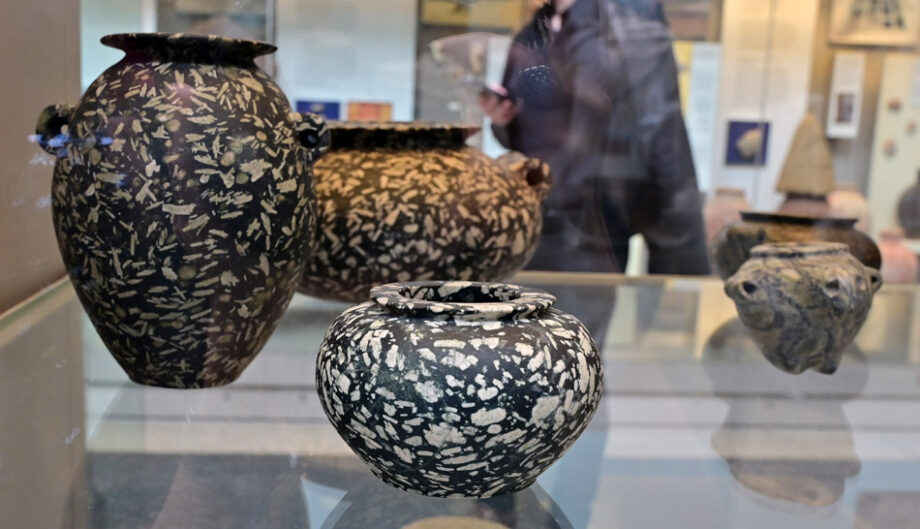
All rocks consist of one or many minerals. Igneous rocks are subdivided into two categories: plutonic ( formed underground with course crystals like granites ) and volcanic (fine-grained crystals forming above the ground). Besides the andesite and basalt, felsic volcanic rocks were not used for stone vessel production in predynastic Egypt. Finally, the rare stones- tuff, green serpentine, mica schist, amethyst, and malachite were all used in stone vessels through Dynasty 2.
Diorites have black and white speckles with 40 percent less dark minerals than the gabbro rocks, which are black because of high black mineral content. Gabbro stones were used in stone vessel production in the 4th Dynasty only.
Hornblende granodiorite looks grey consisting of small, fine black and white grains. This rock isn’t just diorite because of high amount of quartz, thus it’s close to the granites in hardness. Ancient Egyptians made stone vases from this rock from the predynastic to Dynasty 3 times, according to the author.
Type A Hornblende diorite was the most common rock used in predynastic & early dynastic Egypt for vessels. Hornblende diorites exist in 3 types (A-C)! Type B & C were used until Dynasty 4 for the most part.
Almost black porphyritic quartz monzo-diorite consists of biotite and hornblende minerals that give this rock black appearance. Used heavily in New Kingdom, examples include Sakhmet statues of Amenhotep Ill.
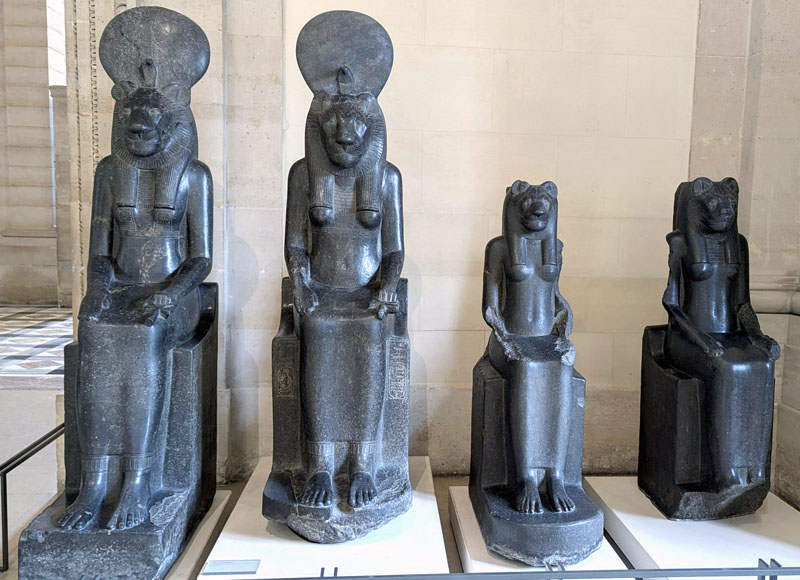
Basalt is a black, volcanic rock that was often called ‘dolerite’ or ‘diabase’ by the British. Predynastic Egyptians used basalt for stone vessels’ production heavily, although its use declined rapidly by Dynasty 4. Manufacturing of small vessels continued in Dynasties 5-6 and almost disappeared after the Old Kingdom. p.21
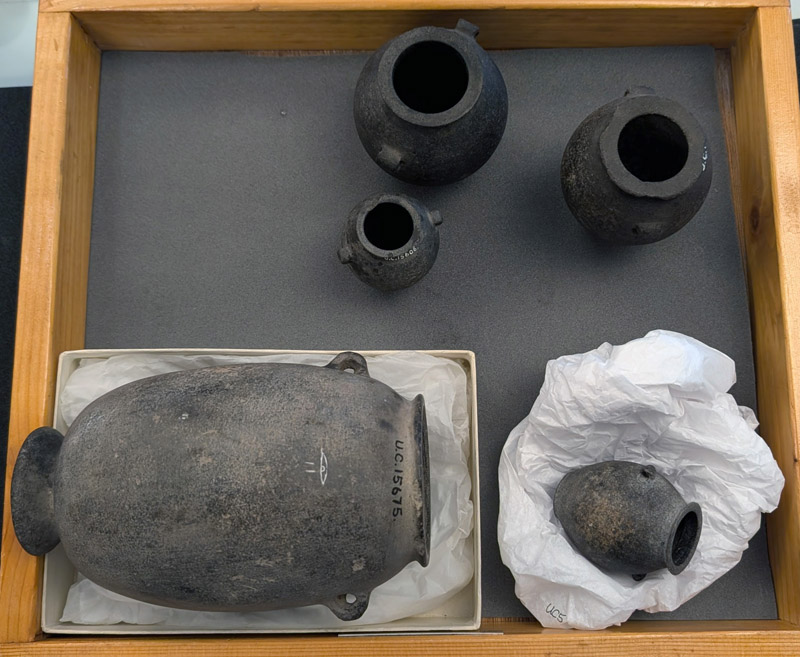
Andesite Porphyry: This is a fine-grained, volcanic stone that looks very similar to diorite. The author identified 4 different types of this stone! Andesite consists of large, white crystals in black stone but andesite porphyry comes in several colors. Type A of hexagonal white crystals in black rock is the most common in Egyptian stone vases. Type D is purple ‘imperial porphyry’ of the Romans, which was first mentioned by Pliny. The stone was quarried in Egypt and moved to Rome. On p. 23, Barbara sites the exact time frames for each stone type used in ancient Egypt.
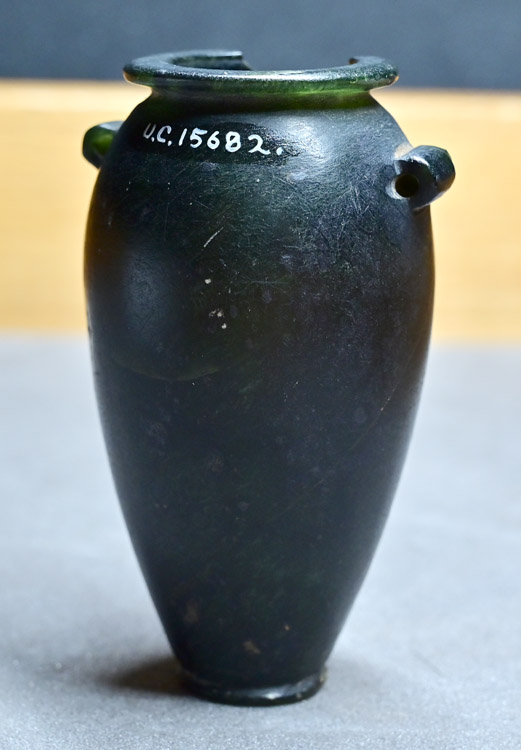
Obsidian: semitransparent obsidian is a black or reddish volcanic glass that differs in translucency. Imported to the country, obsidian was used in knives, amulets, and vases (Obsidian vases appeared in the 1st dynasty, not earlier). “Almost all of the obsidian objects found in Egypt, including all of the stone vessels, are of a jet black variety, which is opaque in the mass and translucent at the edges.” p.25
Tuff: Made of ash, tuff is a tough rock to determine as such based on visual perception only and requires a review under the microscope. It was a rare stone in Egypt for vase production, and the author determined its use between predynastic Egypt and Dynasty 2 only. Some tuff is greenish. Some Tuff stone vessels have yellowish appearance because of exposure to water or moisture, “due to the weathering of the calcite”. p.26. Others, used in stone vase manufacturing, are yellow-brown with purple, wide hematite stripes.
Tuff is one of several mislabeled stones called “red-veined marble”, “brown-veined quartzite”, and “purple-striped limestone” in the past. And Petrie’s labeling of this stone could cause confusion too.
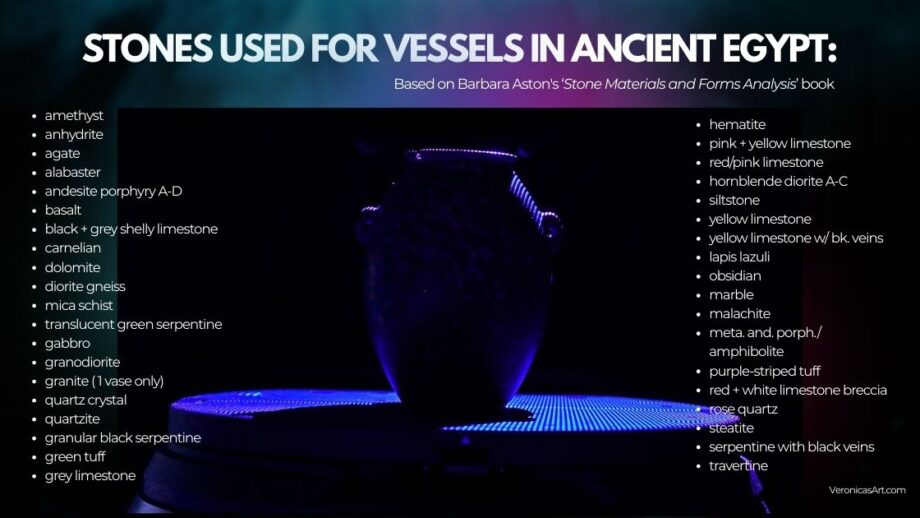
Sedimentary rocks:
Greywacke is a sandstone with some clay in it.
metagraywacke stone: The General Tjahapimu, dyn30: https://www.metmuseum.org/art/collection/search/551806
Siltstone: This a very fine, grey-green rock made of sand and green minerals. It was often mislabeled as ‘slate’ or ‘schist’. The Wadi Hammamat was the major quarry source of the siltstone with over 250 inscriptions left there dating from the Early Dynastic Period to Dynasty 30. Ancient Egyptians began using this stone for stone vessels in Naqada II and stopped its use in early dynastic period.
Apparently, siltstone vases were very popular in this time period. Archeologists found 20% of the stone vessels in the royal tombs at Abydos, and over 30% of the vessels from the tomb of Hemaka (temp. Den) at Saqqara. 40% of siltstone vessels in the graves of Dynasty 1 were found in the cemetery of Naga ed-Der. Both the 1st Dynasty Giza mastaba and the Dynasty 1 “M Cemetery” at Abydos had 20% siltstone vessels.
Siltstone became a unique rock to create artistic sculptures in the early dynastic period like flowers, leaves, basketry trays, and hieroglyphs, and imitations of metal vessels. Siltstone was a popular material in statues production throughout Egyptian history. p.32
An example of siltstone monument: Shaft of a black siltstone obelisk dedicated by Nakhthorheb to Thoth and placed before the entrance (with 523) to a shrine in a temple of the god, 350BC (Nectanebo II) https://www.britishmuseum.org/collection/object/Y_EA524
Green Conglomerate: this is a fun, volcanic rock that consists of multi-colored (white, brown, yellow, green, etc) chips (chert, quartz, and quartzite) mixed in green mass. Romans called it ‘Breccia verde antica’ and exported it from Egypt. There are no stone vases of this kind as ancient Egyptians made sarcophagi from it.
Sedimentary quartzite was one of the hardest stones used in ancient Egypt. The author identified quartzite of white, pale yellow, dark yellow, brown, red, pink and purple color in Egypt for study. Egyptians made many sarcophagi and statues from it but very few vessels on record.
Limestone: Limestones consist of fossils and calcite with minor editions of other elements giving it a specific color like yellow, red, or grey. Egyptians made numerous stone vessels from this soft rock in predynastic periods that was available in 17 quarries around the country. Limestone, travertine, alabaster and chert are sedimentary rocks formed by chemical and biochemical precipitation. The author made 6 separate categories for this stone used in vessel production that differ in color and texture. They were used in different time periods with the most popular, type A in white and yellow, used through several periods in Egypt.
The Egyptians consistently quarried limestone from carefully selected fine-grained layers; layers particularly resistant to weathering. p.38
Recrystallized Limestone is a semi-translucent rock of yellow or white color with wide grey, parallel streaks, according to Aston that was used in stone vases in early dynasties.
Dolomite has opaque white color with thin dark dolomite veins in fine-grained mineral. In stone vessel production, it was very popular and used in the Dynasties1-3 only! only travertine and siltstone were more popular than dolomite.
Calcite is a soft rock that’s either colorless or white with unique rhombohedral cleavage. Because of its easy breakage it was used in beads production, not the vessel manufacturing.
Travertine is also a soft but compact rock of varied colors- white, yellow, brown, yellow-white. It was widely used in the predynastic Egypt and remained the most popular rock used for stone vases in the entire Egyptian history! In Egyptian sources, travertine was named alabaster and these words are interchangeable. Alabaster was the cheapest stone used for vessels in Egypt. Greek traveler, Pliny recorded ‘alabaster’ or ‘Alabastron’ as the town’s name where the stone was sourced. Used in the Old Kingdom, Travertine is different from alabaster in chemical composition and origin.
Real Alabaster is basically gypsum and refers to a rock composed of calcium sulphate. It’s a very soft stone that’s water-soluble and highly scratchable. Therefore, it was used in tombs of the poor and had funerary use only from the Predynastic to the early Old Kingdom use, according to the author.
Inscriptions from the walls of the quarry, either incised or simply painted in ink, of which 17 can be dated to the Old Kingdom. p.45
According to statistics compiled by Lucas, travertine was the third most commonly used stone for vessels in the Predynastic Period, surpassed in quantity only by limestone and basalt. In all subsequent periods of Egyptian history, travertine was by far the most common material for stone vessels.p.47
Anhydrite is gypsum of white, grey, or bluish color thus named ‘blue marble’ in early literature. It’s white variety was called ‘crystalline limestone or even ‘alabaster’. It’s a soft but beautiful stone (hardness 3) that was used for vessel production in ancient Egypt between the Dynasty 12 to the Second Intermediate Period only, according to the author.
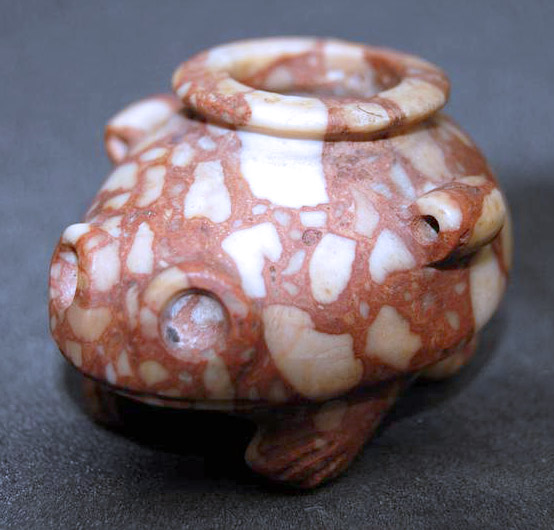
Red and white limestone breccia vessels are often on display in the museums as Egyptians used this stone heavily from Naqada I to the 4th Dynasty. This stone has a unique pattern of white limestone pieces set in a red rock of hematite and carbonate cement. White pieces vary in size and color.
Metamorphic rocks:
These metamorphic rocks, like slate, phlyllite, schist and gneiss, very in composition and form in the mountains from already existing stones under high pressure or heat.
Marble is a metamorphic rock that completely recrystallized from fossils. It was rarely used for vessels in ancient Egypt because it’s quite soft.
Brucite is very soft, white, blue, or yellow mineral, magnesium hydroxide of the composition Mg( OH)2. I have never seen stone vessels in the museums with this name. The author found only a fragment of this stone in EEF excavations. So it’s unclear during what time period it was used in ancient Egypt.
Serpentine is a group of green, metamorphic minerals and rocks (including chrysotile and antigorite) formed deep in the earth. Serpentine comes in a wide variety of colors and shapes but often has snake-like, mottled appearance with a Mohs hardness of 2.5–4, which makes them easy to carve. According to the author, ancient Egyptians used 3 types of serpentine for stone vessel manufacturing in different time periods.
- A-opaque green/grey serpentine with black veins
- B-translucent green serpentine with black patches (used in predynastic to dyn.1), and
- C-iron-rich, granular black serpentine with intermixed grey or brown granules. p.57
Serpentine in vessels was found at the very end of the Naqada I period but did not become common until Naqada II.
Steatite is a super soft, mineral talc of greenish grey, brown or grey colors rarely used in stone vessels. It is extremely soft and was labeled as soapstone. Steatite used to be mixed up with limestones, serpentine and siltstone in museums’ labeling of stones.
Meta-andesite Porphyry and Amphibolite: these rocks look similar, moreover, they look like andesite porphyry of Type B. They were mislabeled as ‘black and white breccia’ and ‘porphyritic diorite.’ Meta-andesite Porphyry is a metamorphic igneous rock with a porphyritic texture of large crystals set in a fine-grained, altered, purple-gray or dark matrix.
Mica schist is made of mica in layers that has glossy grey hue. It was rarely used in stone vessel manufacturing due to its easy breakage into layers. Mica schist is often mixedup with the green siltstone from the Wadi Hammamat.
Diorite gneiss consists of of translucent white plagioclase and dark hornblende with a little biotite. it has a mixed appearance of black and white in a variety. It was used in early dynastic period.
Minerals:
Quartz is the hardest stone ancient Egyptian craftsmen used for stone vessel production. Quarz is colorless, semi-transparent mineral seen as large crystals in veins and cavities, like in granite. It’s present in chert and chalcedony. Quartz may appear colored due to some other mineral inclusions, and thus can be mislabeled too.
Rose quartz has a pink coloration. Amethyst is translucent quartz crystal with purple hue (iron inclusions give the color). It was used in the Middle Kingdom for beads, amulets, and scarabs as well as Roman times. I haven’t seen a stone vessel made of amethyst in museums. There are a few documented amethyst vessels manufactured during Naqada III through Dynasty 2.
Quartz crystal is transparent to translucent, white (or colorless) quartz. Found in royal tombs, quartz vessels were made in the late Naqada III-the early Dynastic periods.
Chalcedony and chert are made of microcrystalline quartz. Chert is opaque with granular texture. Red, yellow, and green varieties of chert are called jasper, which were special, semi-precious stones for Egyptians. Chert vessels were mostly made in the early dynastic period.
Chalcedony is translucent with concentric bands. Named Carnelian, red chalcedony has inclusions of iron oxide in quartz . Agate is a color-banded chalcedony. the author thinks that all vessels made of chalcedony were imported into Egypt.
Malachite is a soft stone that has a bright green color. Ancient Egyptians used malachite for eye paint, beads, amulets and even stone vessels, although the author identified only 2 malachite vessels dating from late Predynastic to Early Dynastic periods, and I haven’t seen the malachite vase from Naqada culture in museums.
Lapis Lazuli was a rare and expensive stone imported from Afghanistan. It was carved for inlays and miniature vessels in Naqada II-early dynastic period.
Hematite is an iron oxide of either dark red or black hue with a luster sheen. Egyptians made kohl sticks from it. It comes in many shapes but Egyptians used metallic black rock for vessel production.
Chapter 3: Forms
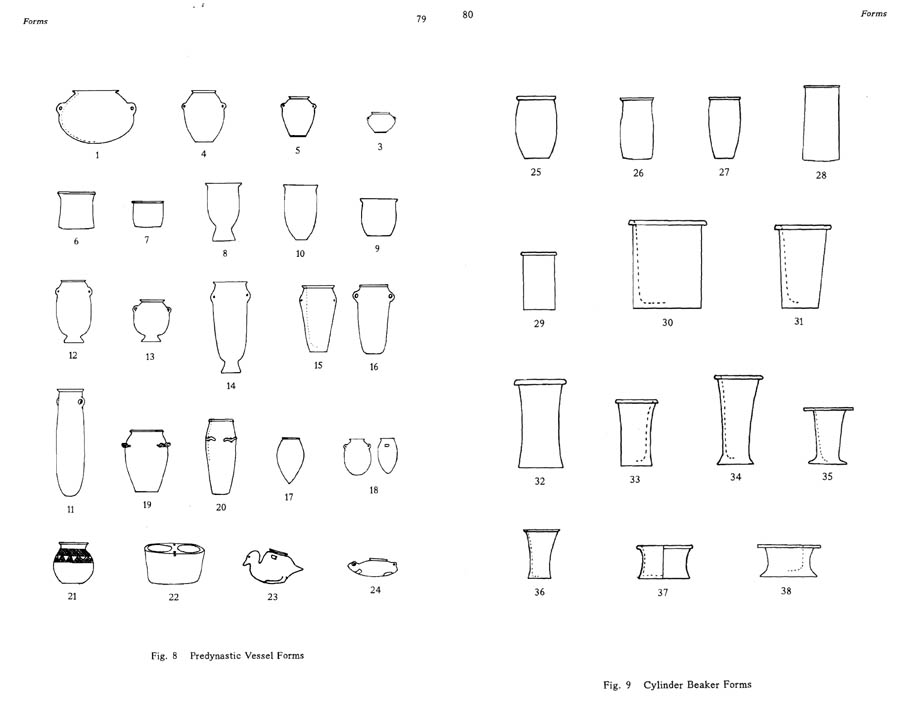
Chapter 3 (Forms) shifts focus to typology, documenting vessel shapes from the Predynastic Period through the Roman era. Aston does a remarkable job of compiling known vessels with provenance into a catalog of forms. She defines date ranges for common forms based on provenanced and well-recorded examples, extending and refining earlier typologies by scholars like W.M.F. Petrie and G.A. Reisner.
For each form, the earliest and latest examples known to me are recorded, along with a selection of intermediate examples to illustrate the date range covered. The examples listed are not exhaustive, and include, for the most part, only well provenanced and/or well dated examples.p.78
Drawings of forms give straightforward overview of stone production in ancient Egypt, helping establish the dates of the common vessels. This is an excellent reference material to have a detailed look at the ancient Egyptian stone vases to compare them to modern and/or machine-made vases ( if you haven’t seen many examples of Egyptian stone vases in the museums).
Also, she lists provenance of each stone vessel under each form!
Chapter 4
Chapter 4 (Conclusions) synthesizes the findings, discussing identifications, quarry sources in ancient Egypt, and chronological patterns of stones. The author summarizes her findings showing mislabeling of the stones in early literature including Petrie’s. For example, she makes the distinction between true alabaster and travertine, and differentiates red granite, basalt, purple andesite porphyry, tuff, red breccia, diorite gneiss, and steatite.
Under the microscope she identified Egyptian basalt as porphyritic olivine basalt with an intergranular texture. Roman purplish “imperial porphyry” is a hematite-rich andesite porphyry. The bibliography is extensive, covering Egyptological and geological sources up to the late 1980s. On a page 170, you’ll find a table with a list of all stones used and in what Periods in Ancient Egypt.
Geology & Altered States Key Findings: the ‘altered’ state of plutonic rocks
Aston’s work excels in its precision and corrective lens on previous scholarship. Many plutonic rocks used for vessels are in an “altered” state—a process where rocks undergo mineralogical changes due to interaction with hot water solutions (hydrothermal alteration). This alteration often results in saucerization (clouding of feldspars) or replacement of minerals like hornblende with actinolite or chlorite. Aston thinks that the ancient Egyptians may have preferentially selected altered rocks because the secondary crystal intergrowth makes them tougher, more cohesive, and less prone to fracturing under stress during carving or use.
“Rocks may be “altered”, i.e. undergo a change in mineralogy, commonly by interaction with hot water solutions. A high proportion of the plutonic rocks which the Egyptians used for stone vessels, when examined in thin section, tum out to be altered rather than fresh rock. It is possible that the Egyptians selectively chose the more altered rocks, as the secondary intergrowth of crystals during alteration makes them tougher, more cohesive, and less likely to split and fracture under stress than unaltered rocks.” p.12
Hornblende granodiorite: “The heavily saussuritized feldspars indicate that the rock has been altered.” p.15
As revealed in thin section, this rock is an altered andesite porphyry. The original rock was very iron-rich; samples of unaltered andesite porphyry collected from near the quarry at Gebel Dukhan have a high magnetite content -both the hornblende phenocrysts and the groundmass veing peppered with magnetite. As a result of alteration, the black magnetite has been oxidized to red hematite and the plagioclase altered to epidote and granular quartz. A small amount of the epidote consists of the pink manganese epidote, piedmontite, which gives the phenocrysts a pink cast and contributes to the overall purple color of the rock.
It is possible that the andesite porphyries of Types A-C are also altered or metamorphosed. Two stone vessel samples 83, also black with white phenocrysts, proved on examination in thin section, to be of metamorphic rock (see under meta-andesite porphyry and amphibolite below). p.22
What about the use of granite for the predynastic Egyptian stone vases?
According to the book, the granites are usually light-colored stones or speckled with dark minerals consisting of 20 percent quartz and of potassium feldspar giving them pink coloration. If the rock is dark, it’s not granite, it’s diorite or gabbro instead.
The ancient Egyptian name for granite was m3t. Originally the term encompassed dark-colored diorites and gabbros as well, but in the New Kingdom the word m3t became specialized to refer only to the red granite of Aswan.p.16
Aston identified the red granite of Aswan as a porphyritic hornblende biotite granite that has more than 20% of quartz. Aswan’s red granite consists of a unique blend of half pink potassium feldspar and other elements – 15% opaque white plagioclase, 25% translucent grey quartz, 6% black biotite and 3% black hornblende, 1% yellow granular sphene (yellow), and magnetite, apatite, zircon, and epidote. As a result, the Aswan’s granite has a distinctive appearance of 2 main colors and quartz.
In earlier literature, other names for red granite used in Roman times was the red granite of the Wadi el-Fawakhir, which is really a porphyritic biotite granite. The other black and white “granite” from Mons Claudianus is really a hornblende biotite quartz diorite. Both of these rocks were not used in stone vessel production. p.18
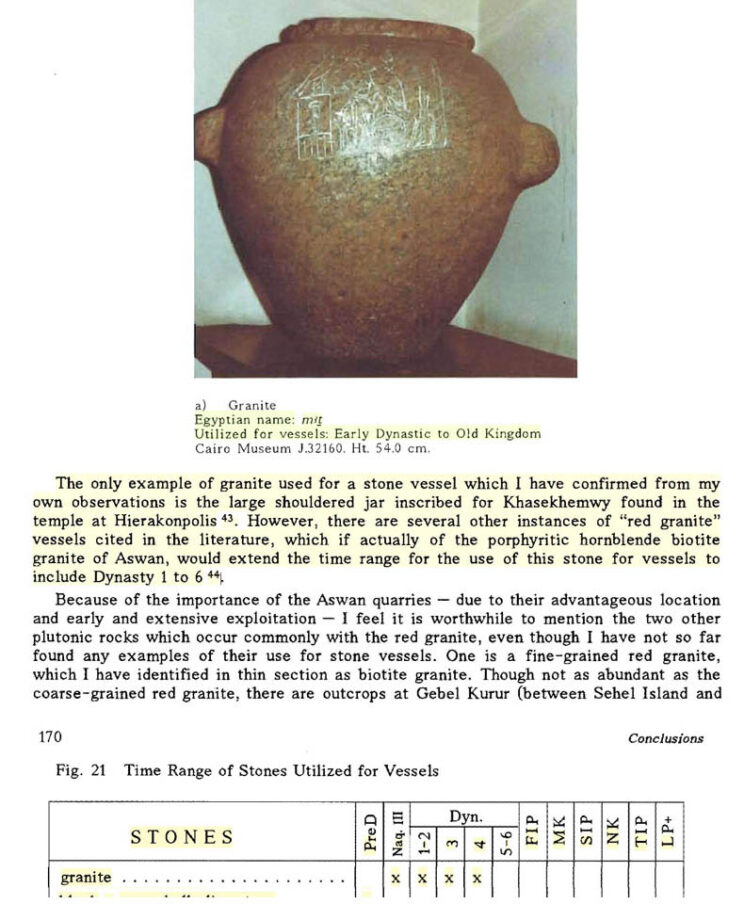
Barbara G. Aston’s book does not document granite vases specifically from the Predynastic Period. Aston’s analysis (based on over 1,000 vessels examined up to 1989) indicates granite (primarily the red porphyritic hornblende biotite variety from Aswan) was first used for vessels in the Early Dynastic Period (Dynasties 1–3, ca. 3100–2686 BC), continuing through the Old Kingdom. Her time range chart (Fig. 21) and material discussions show no predynastic entries for granite, maybe due to her focus on confirmed provenances or distinctions between granite and similar rocks like granodiorite. Recent scholarship may have expanded the record, attributing some granite pieces to predynastic contexts, but I’m unaware of such official, documented archeological research for now.
I have visited many museums in the US and Europe, documented numerous vessels, and I HAVE NOT SEEN A SINGLE, EGYPTIAN GRANITE VASE on display! However, I do update my article about granite vases here as I’ve collected very few pictures of granite vases that do look like Aswan granite. Only the scan and/or confirmed provenance paperwork can determine if they’re predynastic Egyptian or not.
“The ancient Egyptian term lnr km, referring to dark-colored, coarsely crystalline rocks as opposed to red granite, is not attested before the New Kingdom.” p. 13
Granite for vessels was exploited from the Early Dynastic Period (Dynasties 1-3) through the Old Kingdom (Dynasties 4). Granite’s use declined after Dynasty 6, likely due to shifting preferences toward softer stones like travertine. She debunks terms like “syenite” (low-quartz plutonic rock) for Aswan granite, confirming it as true granite (>20% quartz), and rejects “grey granite” or “black granite” for darker diorites or gabbros.
Overall, hard igneous rocks dominate early periods (Predynastic to Old Kingdom), while softer sedimentary stones prevail later, reflecting technological and economic shifts.
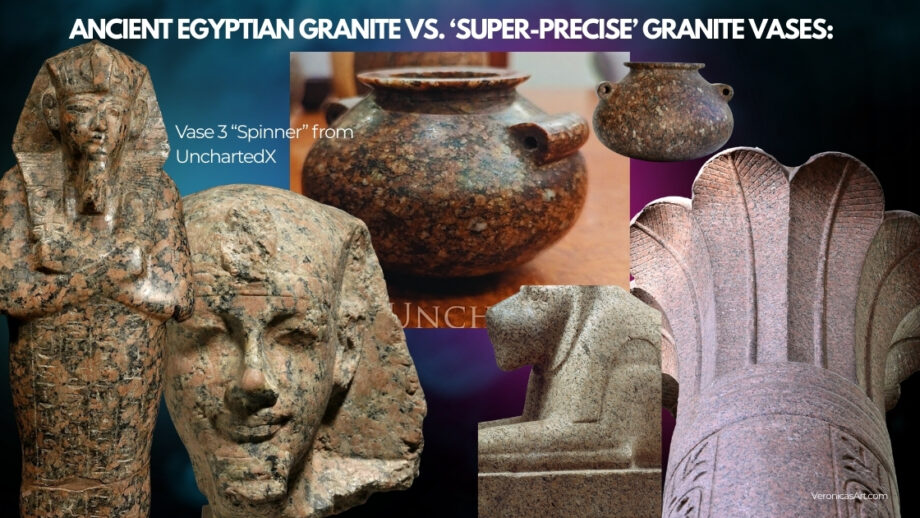
This means that the “super-precise” stone vases made of granite are modern machine-made examples with high probability. They don’t come from the predynastic Egypt, and perhaps these vases were created as artful objects in other time periods (the late 19th-early 20th century?) The pattern of real Egyptian Aswan red granite is visually different from all precise granite vases shown in a file titled “2023 Danville Metal Stamping Vase Metrology Report” (under Vase Scan Resources Tab) on Uncharted X website.
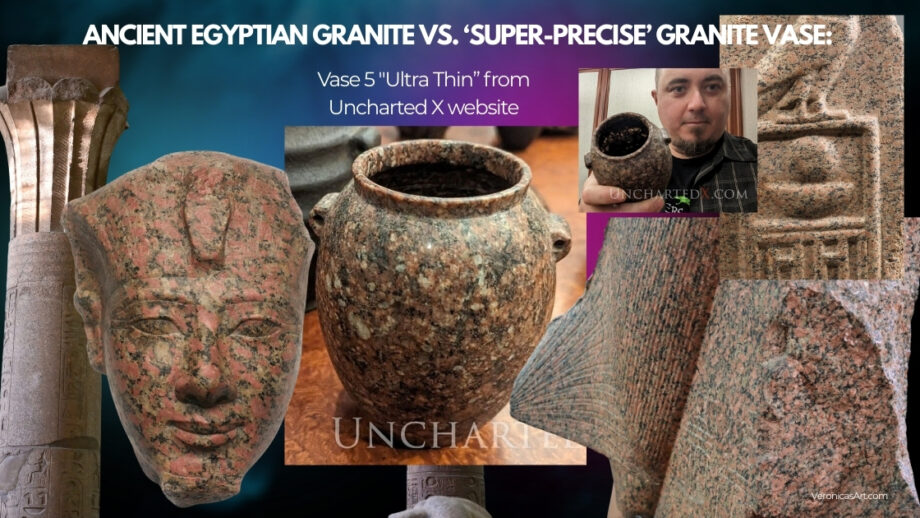
Examples of the Granite stone and its use in Ancient Egypt:
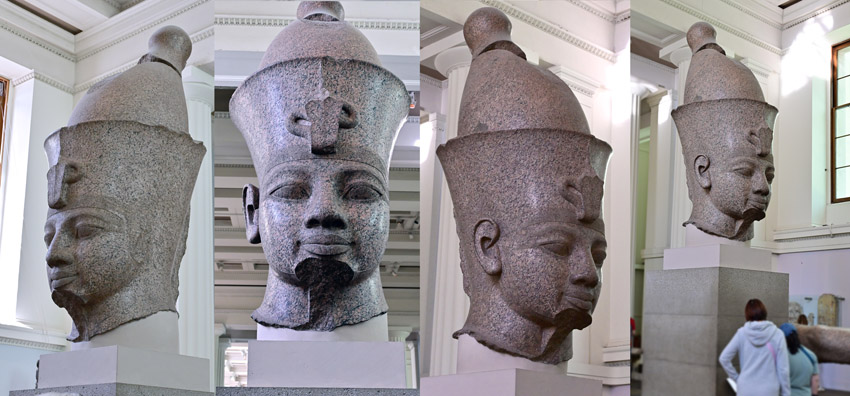
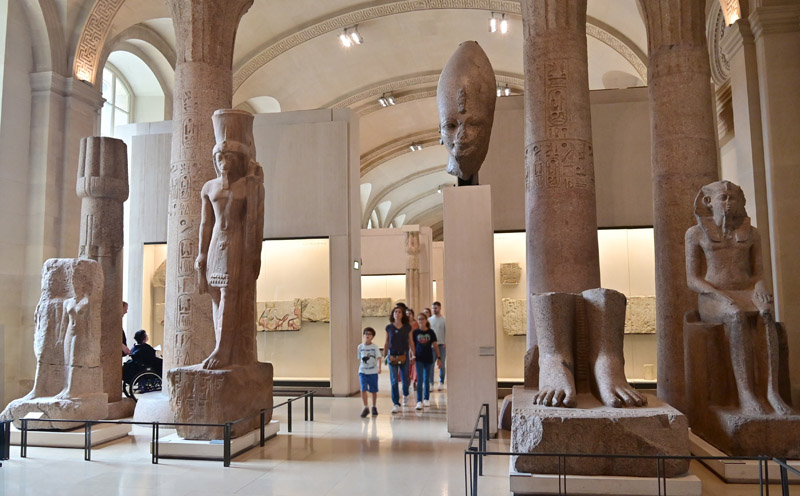
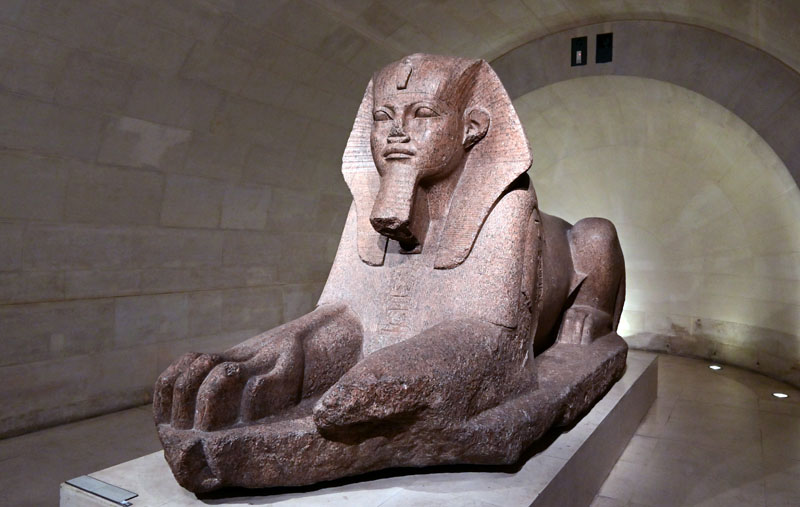
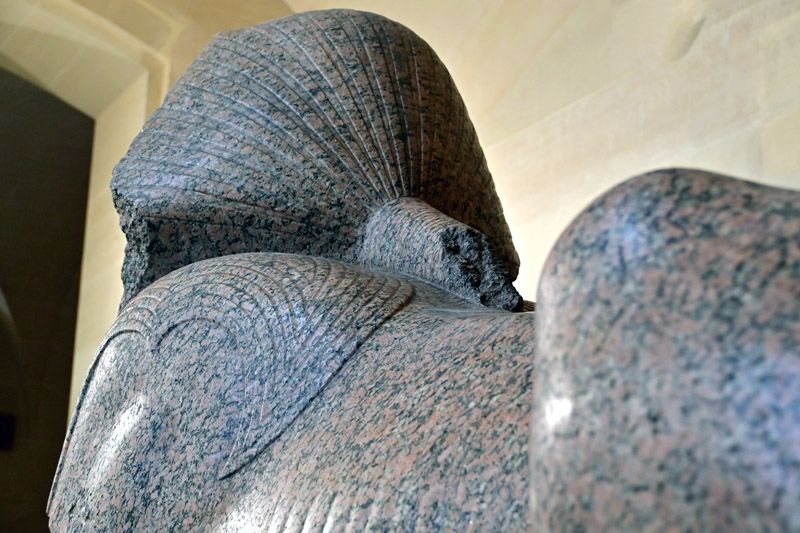
As you can see the Egyptian red granite has a specific, mottled pattern that consists of black, red-rose hue and a touch of off-white quartz. Another Egyptian granite (light rock) is of sand/beige color. All these statues exhibit the same pattern style of black hue, although overall coloration may differ some. Ancient Egyptians used granite for statues and sarcophagi with VERY limited stone vessel production.
https://www.metmuseum.org/art/collection/search/543936 Granite Palm Column of Sahure
Old Kingdom, ca. 2458–2446 B.C. 5th dynasty. The stone was quarried at Aswan and ferried downstream five hundred miles to the pyramid site at Abusir.
Red granite column with palm-leaf capital in British museum, EA1385, Excavated/Findspot: Pyramid of Unas, funerary temple https://www.britishmuseum.org/collection/object/Y_EA1385?selectedImageId=426159001
Granite Sphinx of Hatshepsut, New Kingdom, ca. 1479–1458 B.C., Granite, paint: https://www.metmuseum.org/art/collection/search/544442
Granite Stela of King Raneb, dynasty2, Probably originally from Memphite Region, Saqqara, Tomb of Raneb: https://www.metmuseum.org/art/collection/search/545799
Kneeling statue of Amenhotep II offering two vases, ca. 1425-1401 BC. Granite, dimensions: 152 x 57 x 79 cm. From Luxor / Thebes, Karnak, Temple of Amun. Drovetti collection (1824). Now in the Egyptian Museum of Turin. Cat. 1375 https://collezioni.museoegizio.it/en-GB/material/Cat_1375
Recumbent Lion, Old Kingdom, ca. 2575–2450 B.C., granite, Met, Fayum Entrance Area, Herakleopolis (Ihnasya el-Medina), EEF excavations 1890-1891, 2575–2450 B.C https://www.metmuseum.org/art/collection/search/549541
The Prudhoe Lions, red granite, Excavated/Findspot: Jebel Barkal (Nubia) (originally from Soleb), British M: https://www.britishmuseum.org/collection/object/Y_EA2
Red granite in the Louvre: E 11104, mummiform funerary servant, 1390-1352 (Amenhotep III)
Discovery site: KV 22, tomb of Amenhotep III , Brought back by Édouard de Villiers du Terrage following the Egyptian Expedition; given by his son to the Louvre in 1906. https://collections.louvre.fr/en/ark:/53355/cl010033470
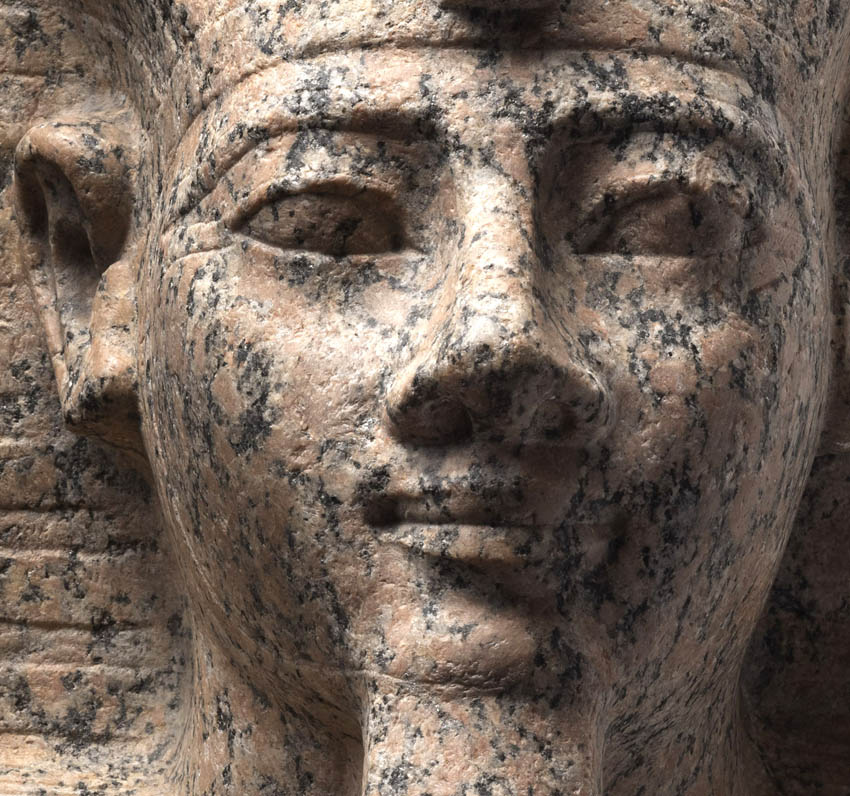
mummiform funerary servant, 1390-1352 (Amenhotep III), Discovery site: KV 22, tomb of Amenhotep III
E 11103, KV 22 Tomb of Amenhotep III (West Valley -> Valley of the Kings -> Western Thebes, now in the Louvre, https://collections.louvre.fr/en/ark:/53355/cl010033471 & Red granite statue, time of Amenhotep III, E 17187 https://collections.louvre.fr/en/ark:/53355/cl010004463
Red granite brooklyn m https://www.brooklynmuseum.org/objects/3621
Red aswan granite modern: https://elamaarstones.com/product/redaswan-egyptian-granite/
https://marmostoneegy.com/product/red-aswan
Petrie’s Misidentifications of Stones in Ancient Egyptian Vessels
Based on Barbara G. Aston’s Ancient Egyptian Stone Vessels: Materials and Forms, W.M.F. Petrie, a pioneering Egyptologist, frequently misidentified stone materials in his publications due to a lack of rigorous geological analysis and/or knowledge. Aston, drawing on petrographic thin sections and fieldwork, systematically corrects these errors throughout her book, particularly in Chapter 2 (Materials) and the Conclusions (Chapter 4). Petrie’s misidentifications often stemmed from reliance on visual appearance (e.g., color, texture, or veining) rather than mineral composition, leading to arbitrary or inconsistent terminology that caused confusion in later scholarship. Below, I outline the major examples highlighted by Aston with references to Petrie’s errors and Aston’s corrections.
While syenite and porphyry are two types of diorite, Petrie puts “syenite” in his “granite” category, and “porphyry” into “porphyritic rocks”. Petrie and others used the terms “porphyritic rock” and “porphyry” to describe other rocks, like a granite or a basalt.
Type A hornblende diorite was called “porphyry” or “porphyritic rock” by Petrie and this name was adopted by GARSTANG, QUIBELL, and REISNER in the publication of their Early Dynastic and Old Kingdom excavations. p.13 As Petrie applied these terms arbitrarily, and with no relation to their true geologic meaning, much confusion has resulted. p.14
- Petrie mislabeled siltstone calling it “slate”. p.29 He also came up with a term ‘durite’ to describe a range of green rocks, used in scarabs and amulets. He labeled diorite gneiss as “diorite”. “Chephren diorite” used to describe a diorite gneiss.
- Petrie called highly-colored limestones “marble”.p.36
- Petrie called the recrystallized limestone “grey marble” and ‘saccharine marble with grey bands’, or a “grey and white saccharine marble”.p.40
- Petrie called dolomite “geobertide’ and ‘dolomite marble’.
- He called anhydrite “blue marble.” Red and white limestone breccia was named “breccia” or “red and white breccia” by Petrie. Other archeologists called it “red breccia.”
- Petrie places a category of “metamorphic” rocks within his “volcanic” vessels, confusing two fundamentally different classes of rocks.p.54
- Petrie used the term “steaschist” to describe “steatite” for talc rocks.p.60
Therefore, literary descriptions of stone vessels from early literature are pointless without a picture confirming the description. These findings challenge and refine earlier works by Petrie, Lucas, and Reisner, emphasizing scientific rigor over visual assessment of archeologists without the geological insight.
Broader Implications from Aston’s Analysis
Aston attributes Petrie’s errors to the era’s limited tools—no thin sections or chemical tests—and his focus on archaeology over geology. This led to overreliance on macroscopic traits, inconsistent catalogs (e.g., contradictions in Stone and Metal Vases), and invented terms like “durite” or “steaschist.” These misidentifications propagated in works by Lucas and Reisner, skewing understandings of quarry sources, chronology, and ancient terms. Aston’s major finding: Many “hard” stones Petrie identified were softer or altered versions, preferred for durability in carving.
While exemplary, the book has limitations inherent to its dissertation origins. The focus on pre-1989 data means some later discoveries (e.g., advanced geochemical analyses) are absent, though Aston’s methods remain foundational. The forms chapter, while useful, could integrate more statistical analysis of shape evolution.
In Conclusion
This is an indispensable resource for Egyptologists, geologists, and archaeologists studying ancient Egyptian stone vessels production. Aston’s integration of fieldwork, lab analysis, and typological study provides a model for interdisciplinary research. The book’s emphasis on accurate identification of stones fosters great understanding of trade, technology, vase dating, and cultural preferences in ancient Egypt. it The correctly identified stone in a vessel can reveal the dating of the vessel regardless its shape. It’s also possible to track the vessel to its original source. Aston does a remarkable job compiling known vessels with provenance into a catalog of forms. So by identifying the correct stone type used in ancient Egypt and ancient quarry sources, the author gives us a spectrum of dates when the specific stone vessels were created. Some rocks appeared similar to the eye but differ significantly in thin section under the microscope. She lists provenance of each stone vessel under each form!
Her research also closes the argument about the granite use in stone vase production in ancient Egypt. Ancient Egyptians didn’t really use granite to manufacture stone vessels but used it a lot to manufacture statues, sarcophagi, columns, etc. Only one, unfinished granite vase was listed in the book with a few other ones mentioned in earlier literature (that was probably a mislabeled stone). I’ve listed 3 found Aswan granite vases here. Therefore, all ‘super-precise’ granite vases are not coming from the Predynastic Egypt.
Where to buy this book:
Here is a list of online sites where Ancient Egyptian Stone Vessels: Materials and Forms by Barbara G. Aston (published in 1994 by Heidelberger Orientverlag) is available for purchase. This is a specialized academic book, so it’s often sold as used or rare copies through booksellers rather than new from the publisher. Availability and prices can vary, so check the sites for current stock.
- Amazon: Available in various editions and regions (e.g., US, Belgium, Spain). Search for the ISBN 3927552127.
- AbeBooks: Multiple used copies from independent sellers, with international shipping options.
- eBay: Listings for used copies, including from sellers specializing in Egyptology books.
- Meretseger Books: A specialist in Egyptology and ancient history books; offers first editions and rare copies.
- Biblio: Aggregates from booksellers; includes detailed listings for used copies.
- BooksRun: Focuses on textbooks and academic books; available for purchase or rental in some cases.
If you see a mistake, contact: nika@veronicasart.com
Art books from the artist: