What is provenance?
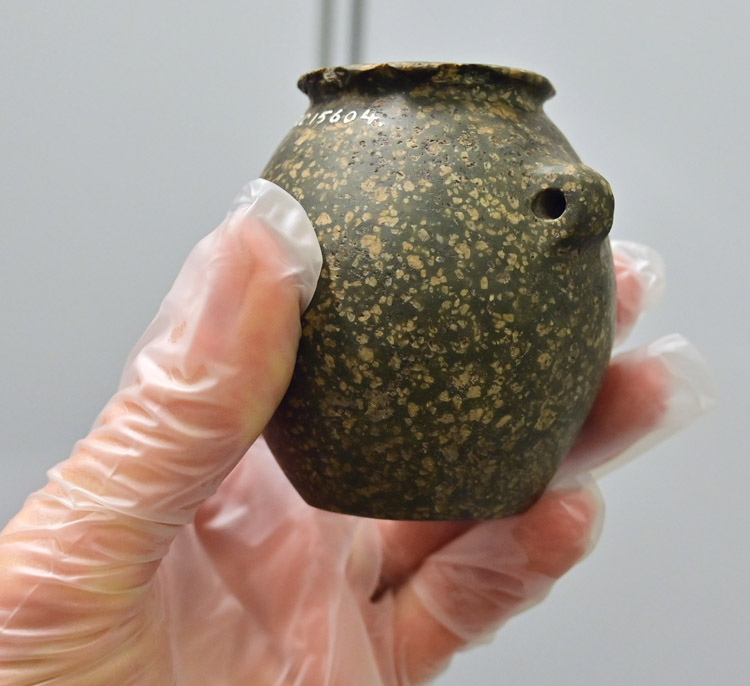
In archaeology, provenance refers to the documented history of an object’s ownership, custody, location, and chain of transfer from the time of its creation (or ancient deposition) through to the present day. This includes records of how the artifact moved from its place of origin or discovery, through excavations, collections, sales, donations, or other hands, often traced via archival documents, museum and organisation records, dealer invoices, notes at excavation sites, or other evidence. A complete provenance provides critical context for understanding an object’s authenticity, cultural significance, legal status, and ethical acquisition—helping to verify it is not looted, forged, or illegally exported.
Archaeologists frequently distinguish provenance from the closely related term provenience. Provenience specifically denotes the precise archaeological findspot or location where an object was excavated or discovered in situ, recorded in three-dimensional coordinates relative to the site’s grid, stratigraphy, and associated features. This pinpoint location is essential for interpreting the object’s original context, function, date, and relationship to other artifacts. While provenience is the “birthplace” of an artifact within the archaeological record, provenance is its full “resume” or post-discovery biography.
The provenience problem: why Egypt’s artifacts are under scrutiny

The importance of provenience in collecting antiquities cannot be overstated. The antiquities market is flooded with forgeries, fakes, and outright scams, driven by individuals eager to profit. As an art collector or antiquities enthusiast, you protect your investments—and the integrity of your collection—by securing artifacts with impeccable provenance: a clear, documented chain of ownership and history tracing back to their origin (excavation site and/fund or a person who led or sponsored the team).
For ancient Egyptian artifacts, ideal provenance should extend to the original excavations in Egypt during the late 19th and early 20th centuries. Alice Stevenson’s book, Scattered Finds: Archaeology, Egyptology and Museums, provides an excellent overview of the key individuals, institutions, and organisations involved in those early digs and the subsequent distribution of finds to newly forming museums and collections worldwide. (Scroll down to see a detailed review of each chapter of this book to understand how provenance got created).
Distribution destinations: According to https://egyptartefacts.griffith.ox.ac.uk/destinations Artefacts from British-led excavations in Egypt were distributed to more than 325 institutions across 24 different countries, in 5 continents.
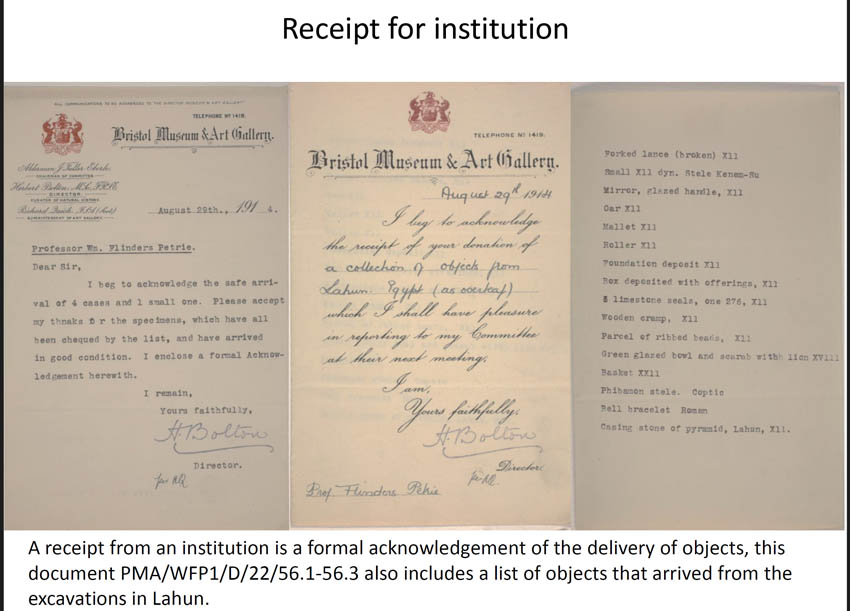
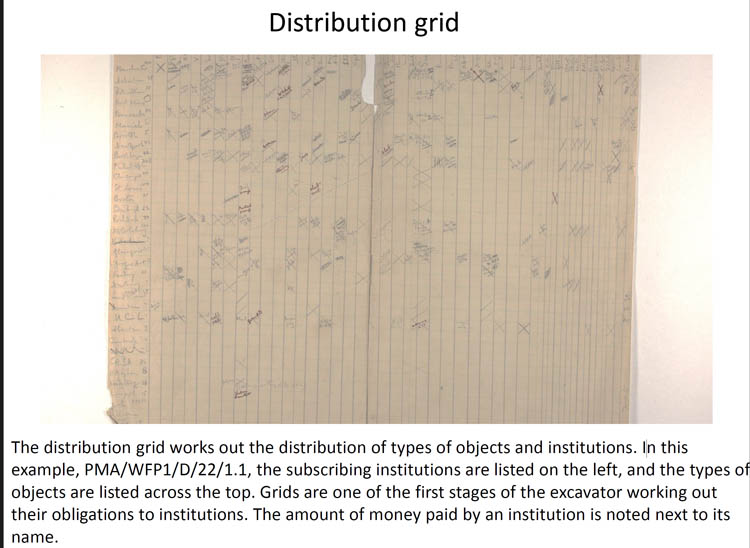
The “Artefacts of Excavation” project (1880–1980) is an online resource from the Ashmolean Museum and Griffith Institute that traces the distribution of tens of thousands of British-excavated Egyptian objects to over 300 global institutions. It decodes historical, hand-written, distribution lists and documents to re-contextualize dispersed collections, enabling researchers to track objects from field sites to museum collections. You can see various examples is this pdf file: https://share.google/jEuoVwK3Kv9LZP8H0
Many fakes or forgeries of ancient Egyptian artifacts flooded the market in the 1920s and 1930s, particularly in Egypt itself. Softer stones like alabaster are easy to carve into convincing replicas, such as vases. Harder stones—used in some of the most popular ancient Egyptian vessels—are more challenging to work convincingly by hand, but high-quality reproductions are still very possible. Today, countries like China and India are known for producing excellent modern stonework, including custom-ordered urns and vases in specific shapes and materials.
In the realm of modern painting, numerous forgeries were created in the United States between the 1950s and 1990s. Abstract and modern styles were relatively easy to replicate by forger artists, and at the time, few reliable scientific tests existed for paints, canvases, or other materials. Today, advanced forensic techniques make it far easier to detect art forgeries.
Until recently, authenticating ancient Egyptian hard-stone vases was difficult without strong provenance or neutron activation analysis, microscope, and some analytical techniques, like scanning electron microscopy, x-ray diffraction, x-ray fluorescence, which yield high magnification, and record the accessory minerals or trace elements present in a rock (consult Barbara Aston‘s book “Ancient Egyptian Stone Vessels: Materials and Forms” for extensive information on this topic). Dr. Max Fomitchev-Zamilov has developed a metrological method—published in a peer-reviewed paper in Heritage Science—that uses 3D scans to assess manufacturing quality through metrics like concentricity and circularity. This algorithm helps distinguish genuine ancient handmade vessels from modern machine-made replicas by classifying objects based on observed precision patterns.
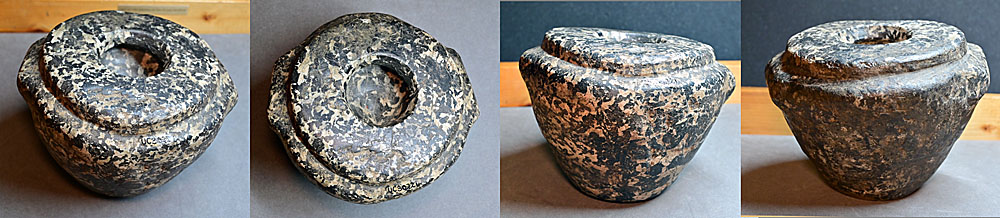
With training, one can often spot potential authenticity issues visually by recognising characteristic ancient Egyptian vase forms, preferred stone types, lug handle shapes, and surface qualities (both interior and exterior). However, when visual inspection leaves doubts, this quantitative approach provides valuable additional evidence.
Object Marks: many excavated objects were marked by team members with letters or numbers recording which tomb, deposit or other context an object was found in. Such marks are seen on artefacts located in the Petrie Museum, London.
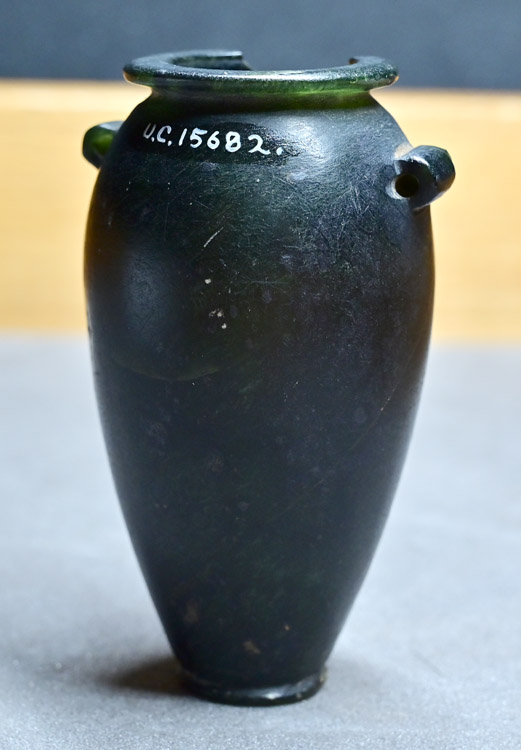
Online discussions often promote exaggerated claims of “super-precision” in ancient Egyptian stone vases, suggesting impossible handmade accuracy. This doesn’t add up to me because the most extraordinarily precise examples (with tolerances rivalling modern machining) are highly likely modern machine-made pieces, while genuine ancient Egyptian vessels were handmade from specific stones and exhibit the expected variations of hand craftsmanship. Read more about the Vase Mystification
Artifact tracking & Egyptian Protection laws:
Stevenson devotes Appendix A of the book, titled Scattered Finds, to all Egyptian laws protecting its antiquities. Egypt passed several laws, first limiting the excavations and shipments of Egyptian artefacts overseas. In 1835, the Egyptian government established an Egyptian Antiquities Service that prohibited the export of antiquities from Egypt without a permit. In 1874, all antiquities yet to be excavated belonged to the government. In 1897, people were punished for excavations without an official permit. In 1951, the law protected antiquities as ‘no antiquity could leave Egypt unless Egypt owned one or more objects similar to that being exported’. And in amendment to Law 113, the government forbid to export of anything from the country. In 2010, it cancelled the 10 per cent of ownership granted to foreign excavation missions that discovered them. (You can look up the entire list of laws in Appendix A.)
Due to the success of partage, the most intense excavations and distribution happened between 1884 and 1914. The ‘partage’ arrangements permitted Flinders Petrie to export from Egypt vast amounts of artifacts during that period.
This means that antiquities that circulate in an open art market of auctions today come from early excavations, deaccessioning, post-war turmoil, and private collections. The museums can’t get new material under these laws, and can only loan and purchase the artefacts from other museums or collectors at auctions today.
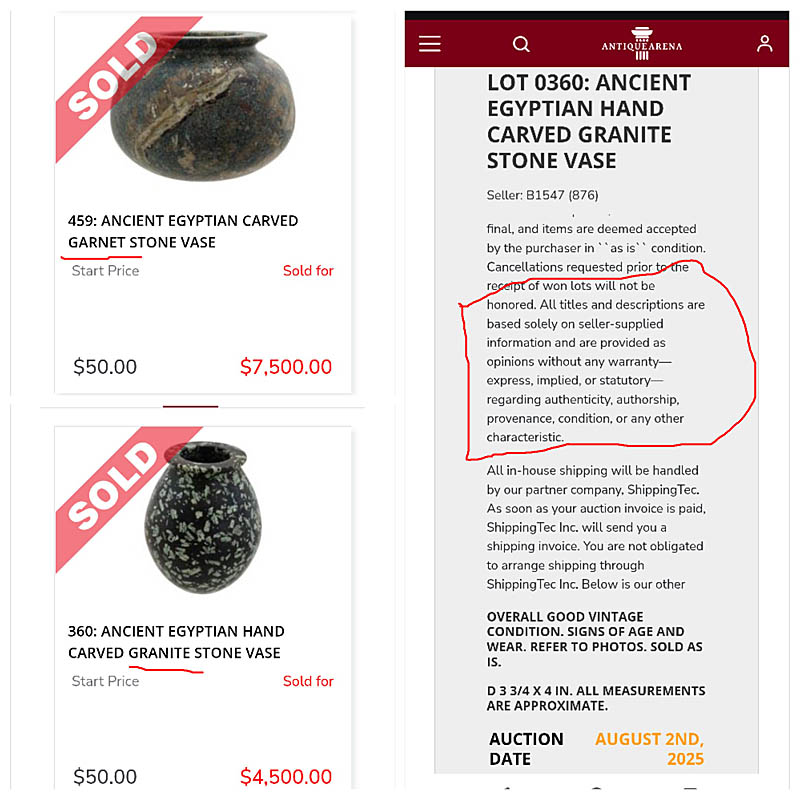
Many auction sites are distributing ancient Egyptian material. In this example at Christie’s, you can see some effort listing the provenance: https://www.christies.com/lot/lot-5882111 . It’s up to a new owner to decide to investigate or ignore the chain of ownership that should be traced to the original excavation site, fund, or donor’s name. However, I’ve seen auctions (like in the image below) where provenance is not only unlisted but also muted by misleading descriptions of the stone material.
Book Review: Scattered Finds: Archaeology, Egyptology and Museums by Alice Stevenson (UCL Press, 2019)
Scattered Finds is a fascinating historical study of how ancient Egyptian artefacts excavated by British-led teams and single figures between roughly 1880 and the mid-20th century were distributed worldwide, primarily through “finds distribution” practices. Professor Alice Stevenson, curator of UCL’s Petrie Museum of Egyptian Archaeology, draws on extensive archival research, including the “Artefacts of Excavation” project she led, to trace the dispersal of objects from sites in Egypt to museums, universities, private collections, and institutions across the globe. This 320-page book is concise, well-written, and includes up to 180 references for each chapter written! Available for free download here: https://uclpress.co.uk/book/scattered-finds/
Scattered Finds examines the origins of organisations that led the excavations, historical records, politics, personalities, ethics, social histories, archeologists, and imperial/colonial dynamics that shaped the distribution of ancient Egyptian artifacts. These organised excavations led to emergance of museums worldwide: top US and UK museums and other institutions in 26 countries were the beneficiaries of finds from the EEF’s excavations.
Chapter 1: Trinkets, Trifles and Oddments: The Material Facts of History (1880–1914)
The first chapter explains the first phase of British excavations, museum organisation, and the systematic distribution of antiquities to the organisation’s subscribers worldwide. Stevenson details how hundreds of thousands of Egyptian objects were sorted, divided, recorded, and dispatched to brand new museums across the globe.
Who did the excavations?
3 crucial figures were leading the first excavations and dispatch of ancient Egyptian artifacts from Egypt- famous archeologist Flinders Petrie (ERA fund+), Victorian writer Amelia Edwards (who presided over the Egypt Exploration Fund (EEF), founded in 1882), and Oxford University mathematics graduate John Garstang (1876–1956).
#1. Flinders Petrie & the Funds
Flinders Petrie relied on the private patronage of wealthy industrialists, like Jesse Haworth and Henry Martyn Kennard, leading to a three-way split of all objects permitted to leave Egypt in the late 1880s and 1890s. Petrie established the organisation – Egypt Research Account (ERA) to train archaeologists, which, like the EEF financed its archaeological digs. (p.11) Petrie’s wife, Hilda, did extensive recordings of all objects at the excavation sites.
While the digs were done with the help of locals – Egyptian Quftis, Petrie adopted an effective method of retaining finds in his possession rather than taken to a dealer, by paying tips to his workmen. Rodolfo Vittorio Lanzone worked in the Turin museum when he met Petrie in 1883, and Petrie received guidance on workers’ management. “Lanzone advised Petrie on differential pay for Egyptian workmen on site according to ability, and in such a way as to encourage finders to bring material directly to him, rather than to a local dealer. It was a strategy that Petrie adopted, systematized and advocated for the rest of his career.” (p.112)
“The digs Petrie directed were fundamentally concerned with the retrieval of objects.” (p.32) “It was ‘the fine art of collecting’ that he placed first and foremost, which entailed securing all the requisite information, of realising the importance of everything found… of securing everything of interest not only to myself but to others.“
It’s the religious connection to the Old Testament that promoted interest in the initial excavations. “Biblical Egyptology directly supported a revival of traditional Old Testament Christianity in the late nineteenth century..This was a rationale that initially drove both Naville and Petrie’s explorations of ‘sacred geography’, and which brought numerous men of the cloth to not only contribute financially to the EEF, but also to make pilgrimages to the sites it excavated.” (p.52)
Petrie’s excavations were promoted by the British women who generated national interest in ancient Egypt. Hilda, Petrie’s wife, was a diligent recorder of information from the excavation sites and general booking of records even after Flinders death. Other women, such as Beatrice Orme, Henrietta Lawes, Lina Eckenstein, Margaret Murray, and the artist Winifred Freda Hansard, were at the excavations in Egyp,t taking meticulous records of the finds.
#2 The EEF fund & Amelia Edwards
The EEF fund (Amelia Edwards) consisted of wealthy British families, industrialists, businessmen, collectors, poets, and writers who, each being a subscriber, sponsored the excavations in exchange for artifacts they later donated to emerging museums and public institutions. The fund organised excavations in Egypt, published explorations, and meticulously recorded the finds. A vast majority of unearthed artifacts were recorded in letters, files, drawings, and paper scraps, and given to single figures and newly established museums. However, some wealthy individuals and royalty were given gifts in exchange for sponsorship. For instance, while individuals were not originally thought to become collectors, EEF raised its popularity by giving away numerous blue-glazed shabtis to every new subscriber.
Amelia Edwards did an incredible job reaching out to the nation, promoting archeology in Egypt via her publications in magazines such as the New York Times, Harper’s Bazaar, and the London Times. She also published over 100 articles for the Academy alone. She created real interest and even fashion for archeological discoveries in Egypt. In fact, Egyptian artifacts became so popular that many developed a belief in communication with the dead via spiritualists who visited the British Museum’s artifacts, waiting for revelations. With Amelia’s tireless effort and work, this woman popularised ancient Egypt and raised the amount of subscriptions and donations in exchange for a gift of unearthed ‘trinkets’ that normally didn’t have value or place in museums’ collections.
#3 John Garstang
John Garstang was an Oxford University mathematics graduate who first joined Petrie’s team at Abydos in 1899. Soon, he became the Honorary Reader in Egyptian Archaeology at the University of Liverpool. Trained by Petrie, Garstang differed from the other two organizations being more ‘commercial’ in the distribution of artifacts. By 1907, he became a Professor of the Methods and Practice of Archaeology. John Garstang worked for his donors and patrons during the excavations, selling thought after mummies and other material directly to museums (ex: Albany Museum), curators, and patrons. He differed in ethics from the other two organisations.
“The BSAE regulations, first written in 1905, explicitly stated that antiquities not claimed by the Egyptian Government should be divided entirely among public museums. Hilda Petrie was still obliged to stress this point to the Australian Institute of Archaeology in 1949; the objects that she was sending from the BSAE were the result of ‘a grant + not a sale or purchase’. If the material was to be passed on, then ‘it should be to a public museum + not a private or personal collection’. These sentiments were unfortunately neither absolute nor equally applied. John Garstang’s approach to dispersal was unabashedly business-oriented, and he courted wealthy patrons with the promise of substantial recompense. For Flinders Petrie, ‘duplicate’ objects were considered feasible tokens for private gifts or incentives to garner further financial support. Excavation participants, from Reverend Garrow Duncan in the early 1890s to Margaret Drower in the 1960s, were permitted to take souvenirs home with them, and subscribers to the EEF occasionally received small finds, such as the shabtis sent out in 1901. Buckinghamshire Museum holds evidence that small antiquities were for sale at Petrie’s annual exhibition with a formal BSAE printed card” (p. 223)
Provenance:
In general, when it comes down to provenance of Egyptian artifacts, the notes or letters of these three organizations lead to a specific tomb or names of wealthy individuals who sponsored the excavations in Egypt. (For example, many peripheral figures were helping in excavations or doing the art collecting that you’ll find on the pages of this book, like Lt-General A. H. Lane Fox Pitt-Rivers and Sir John
Evans, or James and Kate Quibell, Bernard P. Grenfell, Garrow Duncan, Hugh Price, Édouard Naville, a Swiss Egyptologist, who led the EEF’ excavation to Tell el-Maskhuta in 1883, and many more).
Amelia Edwards was a prolific writer and administrator of EEF. “Reams of her handwritten lists survive in the University of Oxford’s Somerville College archives, giving one small insight into the enormous amounts of labour that archaeological finds demanded long after they had left the field, but before they made it to the museum. These lists also offer a glimpse of the volume of material flowing into England from the EEF’s first excavations. One set of manuscripts neatly details every one of the 613 objects sent to the British Museum from Petrie’s 1884 Tanis excavations, with a note of their features and dimensions. The other catalogues 312 artefacts sent to Bristol Museum and Art Gallery that same year. Edwards’s surviving inventories particularise what is otherwise nonchalantly recorded in the EEF’s own distribution records as ‘a selection of minor antiquities’. Between 1884 and 1901, the EES distribution lists mention 49 other British institutions that received finds, including ones in Sheffield, Dundee, Macclesfield, York, Liverpool and Bolton, highlighting the coincidence of the influx of material from Egypt into Britain and the steady growth in the number of local museums across the country.” (p.38)
Notes, letters, lists, papers, and photos also listed the names of the subscribers receiving the artifacts, even when they were gifts. There were also distribution grids with catalog classification system like the one from 1901, organising the dispatch of artefacts from royal Second Dynasty tombs at Abydos to museums around the UK. (p.47).
“Dignitaries who visited active digs, such as Princess Henry of Battenberg, who witnessed some of the excavations at Deir el-Bahri in 1904, might be presented with personal gifts. The EEF later sent
a small crate to Buckingham Palace, containing beads, scarabs, a bronze cat’s head, amulets and a stone statue of a couple.” (p.14)
Several women working at the excavation sites in Egypt held several responsibilities alongside male participants, such as marking objects with context numbers, drawing and photographing finds, packing
crates of artefacts, surveying sites, and occasionally directing fieldwork itself. Excavations in Egypt produced masses of finds, and it was often the women who were responsible for the heavy burden of ensuring ‘the general orderliness of the ever-growing collections’. This is clear from Petrie’s introductions to his archaeological memoirs, like that for Abydos, published in 1901” (p.60).
In the post-war period, archeology evolved in its evaluation of material. “In archaeology, earlier descriptive studies of objects, like those of Petrie and his colleagues, began to be replaced by a new emphasis upon site features and depositional sequences. This change is typified by the practice of the widely influential Mortimer Wheeler (1890–1976), whose work in several countries from the 1920s employed box grids, encouraging far greater attention to site formation histories.” (p.201)
Formation of the British Museums:

In the beginning, the EEF had become an association of donors that ‘unearthed treasures to give them away’(p.38). The wealthiest collectors, industrialists, private foundations (and then the largest national museums to which the wealthiest donated their collections) were interested in receiving grand artifacts from Egypt, like giant columns, Roman-era mummy portrait panels, and mummies. In the early 19th-century, the British Museum didn’t even accept minor finds that were not Greek or Roman art, according to the author, which were given to smaller donors and institutions.
Therefore, numerous small objects, called ‘trinkets’ found their home in the new municipal museums around Britain-Bristol, Liverpool, Manchester, Cambridge, Oxford, Edinburgh, Brighton, Warrington, etc. Close to 100 provincial museums formed in the United Kingdom between 1870 and 1910 alone, and by the First World War, 115 more museums appeared in the country. Some “of these new museums developed out of earlier nineteenth-century local societies, absorbing their collections.” (p.39). In British state schools, object lessons became compulsory, with students having their own private museums furnished with genuine ancient finds procured through the EEF. (p.54).
The administration of distributions became more logistically complex, with the result that mistakes in the allocation of material were frequently made and insufficient care was taken to ensure the safe transport of delicate antiquities. Edwards’s distribution lists were neatly scripted ledgers, deliberate and conscious records written with a sense of archival purpose. Petrie and his colleagues’ later, hastily scribbled inventories on the backs of invitations, scrapped correspondence and lecture programmes betray the impatient and now taken-for-granted task of dispersing things. (p.38)
Who were the wealthy donors?
They were industrialists, businessmen and royalty, like Canon Hardwicke Rawnsley, founder of the National Trust; Henry Willet, manager of West Street Brewery in Brighton. He became the founding member of Brighton Museum and the VP of the Fund. Lieutenant-General Pitt-Rivers had a big collection of numerous finds, first displayed at the South Kensington Museum in 1874. Another example is Marianne Brocklehurst, who worked with Amelia and supported the EEF. Her private collection is in the McManus Museum. The Egyptological collection in Manchester came from the local cotton merchant, Jesse Haworth, who supported EEF. (The science professors didn’t want to accept his donation at first, but when this man built a special building for his collection in 1912, they couldn’t refuse it anymore). Another businessman, Charles Heape from Rochdale, helped with the museum’s construction to place his pottery collection, coming directly from Petrie’s excavations at Dendereh. Annie Barlow, the EEF secretary for Bolton, donated her collection to Bolton Museum. Amelia Edwards left her collection to University College London in 1892. Liverpool Museum received about 470 Egyptian objects from Hilda’s sister Amy Urlin. Janet May Buchanan established the Glasgow Museum’s collection with 1000 Egyptian artefacts.
There were also famous artists among EEF’s donors who incorporated the antiquities into their paintings, like Alma-Tadema, Edward Poynter and Henry Wallis.
Chapter 2: Collecting in America’s Progressive and Gilded Eras (1880–1919)
“An estimated 60 institutions across 23 US states received Egyptian antiquities through British organisations” during the Gilded Age in America (p.69).
This chapter examines how American institutions, mainly Penn Museum, Boston MFA, the Met, and the Oriental Institute in Chicago, participated in distribution schemes during eras of museum-building and world fairs. Stevenson analyses displays at expositions and the role of patronage, showing how Egyptian objects fueled narratives of progress, civilisation, and American cultural ambition. It effectively contrasts U.S. private philanthropy and collecting with British imperial patterns (the UK’s museums were established with some government involvement and wealthy patrons).
By the early 20th century, the USA became the leader in massive excavations in Egypt, quickly bypassing the British. The British EEF had the American branch, with 57 % of all subscribers coming from the US. Wealthy, private collectors wanted to own the best artefacts in their collections, and American art museums also competed among themselves, forming top-tier collections of Egyptian art during the Gilded Age. It was the American elite, not the government, that formed the art collecting tastes of art museums in Boston, New York, Philadelphia, and Chicago.
“The Art Institute (est. 1879) and the Haskell Oriental Museum (est. 1896) in Chicago, the University
of Pennsylvania Museum (est. 1887), the Detroit Museum of Art (est.1885), New York City’s Metropolitan Museum of Art (‘the Met’, est.1870), and Pittsburgh’s Carnegie Museum (est. 1895) all competed for
the EEF’s best finds.”(p.76)
Due to liberal partage agreements in Egypt, the EEF transported huge, multi-ton monuments to the US, while the municipal British museums received beads and amulets. (p.77). Various pieces of architecture, like granite columns, statues and temple reliefs, were transported to Boston. The University of Pennsylvania Museum of Archaeology and Anthropology paid for the transportation of a 12-tonne sphinx
of Ramesses II located 6000 miles away in Memphis( the 1913 BSAE excavations). (p.78)
The oldest collection of Egyptian artefacts appeared in the Peabody Essex Museum in Salem, Massachusetts, around the 1800s. Henry Abbott shipped his private collection to the US in the 1850s after the British Museum refused to buy it. (p.72) The Museum of Fine Art, Boston received a thousand artefacts directly from a Scottish artist, Robert Hay. Large displays of Egyptian art in American museums came from the EEF (p.72).
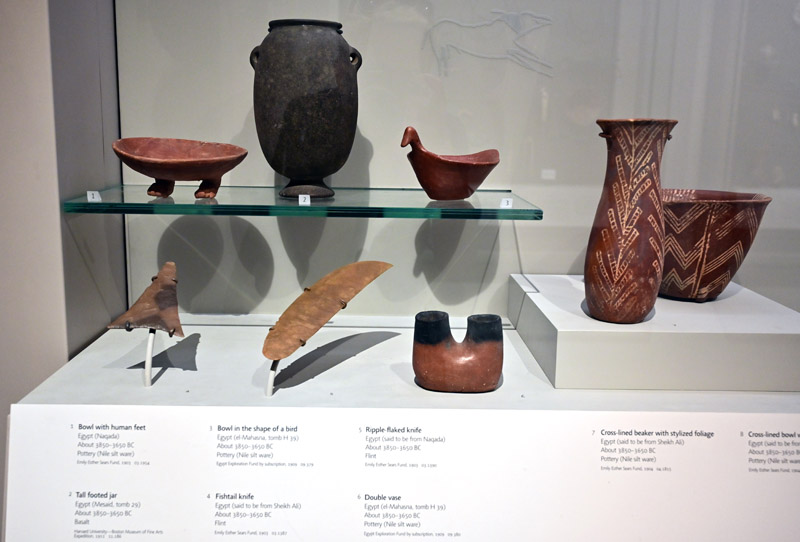
American institutions and world fairs experimented with presentations of Egyptian artefacts, resulting in various displays. While the University of Pennsylvania made a ‘boring’ display of 160 objects from the Flinders Petrie Excavations and the Egypt Exploration Fund, Chicago’s Columbian World Exposition featured gigantic replicas of temples and obelisks.
As an example of provenance records we can look at the Edward’s letters to the EEF’s American brunch and few other organizations – Boston’s Museum of Fine Arts (that received about 3000 finds from the Fund), Rochester Theological Seminary, and New York’s Chautauqua Assembly (received about 456 items in 1887 consisting of lamps, bronze figurines of gods and goddesses, coins, scarabs, statuettes, mosaics and bronze latticework).
Once again, Amelia Edwards, Biblical underpinnings and the American elite made the story of Egyptian archeology popular in the US. Stevenson points out that Edwards spoke to 100,000 people in 120 lectures, proselytizing British fieldwork in Egypt on her American tour. (p.79) She spoke in women’s colleges and raised the subscription rates to 171, half of which were women. Colleges also contributed to the EFF in exchange for distributions from Egypt.
On the pages of this chapter, the author mentions many names of women contributing to the research and funding of excavations. For instance, when Caroline L. Ransom became the assistant curator in the Department of Egyptian Art at the Metropolitan Museum of Art, she managed the annual arrival of artefacts and catalogued the collection. Another example is Sara Yorke Stevenson, Petrie’s close friend. She was among Philadelphia’s elite of scholars, writers, scientists who shaped the collections. Several museums in Philadelphia received Egyptian finds through the EEF. “Smaller sets of material from the EEF and BSAE from 1905 onwards continued to trickle into institutions in Boston, Chicago and Philadelphia” (p.93)
Super-rich philanthropists gave the capital for independent American expeditions to Egypt when the relationship with the EEF fell apart. These wealthy donors worked with top American colleges and museums, bringing artefacts to the US. Such personalities were Phoebe Hearst, George Reisner, J. P. Morgan, Theodore Davis, Lord Carnarvon, Eckley B. Coxe, Jr., Theodore Davis, and many more.
Chapter 3: International, Colonial and Transnational Connections (1880–1950)
A wide-ranging exploration of distributions beyond Britain and the U.S., including over 19 countries like France, Germany, Italy, Denmark, Canada, Australia, India, Ghana and even Japan. Stevenson uncovers surprising global flows, linguistic barriers in archives, and how colonial/imperial structures enabled (or constrained) acquisitions. For example, the status and value of Egyptian artefacts corresponded to the local interests and culture of each particular country.
Just like in previous chapters, the author lists many individuals who participated in the organisation of museums with Egyptian collections in Europe and beyond. Big Italian collections formed like the Museo Civico Archeologico di Bologna, Museo Egizio in Turin, Museo Gregoriano Egiziano in the Vatican, and Museo Archeologico Nazionale di Napoli. Besides working with the EEF, Italians also did excavations of Egyptian artefacts on their own territory left underground by the Romans.
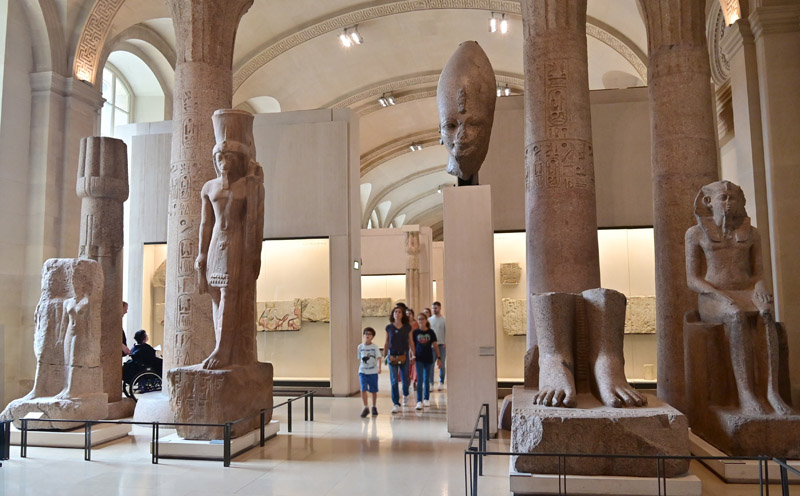
France was the only country with a physical institutional presence in Egypt in the late nineteenth century. The Louvre received temple columns and reliefs through the EEF.
“Spiegelberg contributed directly to Petrie’s scholarship by providing philological expertise during the 1894–5 season in Thebes. Petrie subsequently arranged for seven crates of finds from the Naqada excavations – mostly pottery vessels, flints and greywacke palettes of the ‘New Race’ – to be shipped to the University of Strasbourg. In return, Petrie was awarded an honorary doctorate in July 1897.” p.107
Germany established its presence in 1908 (p.107) with leading figures, like Richard Lepsius and Heinrich Brugsh, and German universities received substantial finds from Egypt, supporting their national interests in anthropology. The royal museums in Berlin received Egyptian artefacts directly from the EEF’s work in Naukratis and Nebesheh in 1885.
The author also highlights how Egyptian finds travelled to Norway, Denmark, and Sweden. For example, Petrie gave pottery vessels, beads and flint tools and knives to the National Museum in Copenhagen in the 1890s. Prominent, super wealthy figures also collected multi-ton statues and mummies, and then gave away their Egyptian collections to the national museums, like Carl Jacobsen (Denmark’s celebrity).
The Fund made annual reports with the distribution lists of archaeological materials to many other colonial museums around the world, including Africa. Canada received material via both organisations, the EES and BSAE. Australian and New Zealand collectionswere formed mostly thanks to the wealthy patrons. India also received finds from BSAE. The most famous curator, John Lockwood Kipling brought an Egyptian collection to Lahore Museum. In another museum, the Indian curator, Babu Ganga Dhar Ganguli worked with John Garstang’ team to receive some Egyptian pottery. The Japanese also received the finds placed in their archeological departments in universities. For example, Kyoto Imperial University subscribed to the EEF to receive the artefacts from the excavation sites in Egypt. Petrie shipped many crates of material to Japan. And “by 1880, numerous publicly accessible collections had been set up in other centres like Kyoto, Osaka and Nagoya.“(p.137). Museums in Austria, Barbados, Belgium, Greece, Ireland, Jamaica, the
Netherlands, Sweden and Switzerland also appear listed in the EES, Garstang Museum and Petrie Museum archives. (p.137).
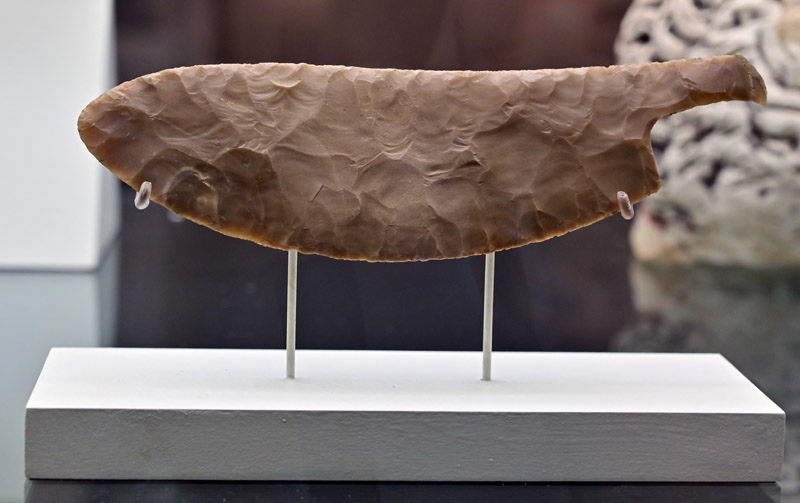
Chapter 4: A Golden Age? (1922–1939): Collecting in the Shadow of Tutankhamun
Stevenson interrogates the interwar period, often romanticised due to Tutankhamun’s tomb discovery. She argues that while the discovery boosted public interest and the EES funding (100+ new, individual subscribers joined it), distribution practices changed greatly amid growing Egyptian restrictions. Commercial influences and shifting politics under the 1920s–1930s antiquities laws in Egypt drastically changed the distribution patterns.
Egypt declared its independence and retained title to all of the tomb’s contents, and nothing left Egypt, at least not legally.(p.146). Petrie didn’t want to fight these new laws in Egypt and moved to Palestine after 1925 to continue his excavations there.
In terms of provenance, the EES (renamed Egypt Exploration Society) kept administrative paperwork and archives from expeditions, including – expense receipts, packing labels, telegrams and customs documents. (p. 146). Codes were applied to indicate any known museum destinations, and cross-referenced with other archival records (p.163). In the 1930s, Chubb registered the objects discovered and wrote reports.
How did plaster casts and restorations emerge?
The author also explores the restoration interests, methods, and plaster casts emerging during that time. Petrie and some wealthy donors were interested in curating small objects and shards for historical context and future study. During this time, plaster reproductions emerged and became popular among the British museums. These painted reproductions were copies of some special, unearthed artefacts like the bust of Nefertiti and Akhenaten’s daughter.
Collecting and excavations continued during the Gilded Age, although the quality of shipped material wasn’t exciting to the wealthy and museums anymore, as the Egyptian Department of Antiquities held the best finds in Egypt. In the 1920s, modern art sculptor Henry Moore was fascinated by Egypt, studying statues in the British Museum. American philanthropist Ellen Browning Scripps was one of the big donors to the EEF in the 1910s in exchange for 450 artefacts to San Diego’s Museum, among other donations. Another wealthy donor, John Jacob Astor, owner of The Times newspaper, became a prominent collector of artefacts through the EES.
The EEF undertook fifteen seasons of excavations at Amarna from 1921 until 1937, distributing at least 7500 artefacts to around 74 institutions. (p.148).
Because of restrictions in funds distribution, Australia stopped its subscription service, after receiving low-quality finds. Top American museums like the Met stopped taking ‘small trinkets’. Moreover, the new academic journal of the Fund destroyed popular interest in Egyptian artefacts, severely reducing subscriptions. Although British regional museums continued accepting the finds, the popular interest in Egyptology almost disappeared by the 1930s.
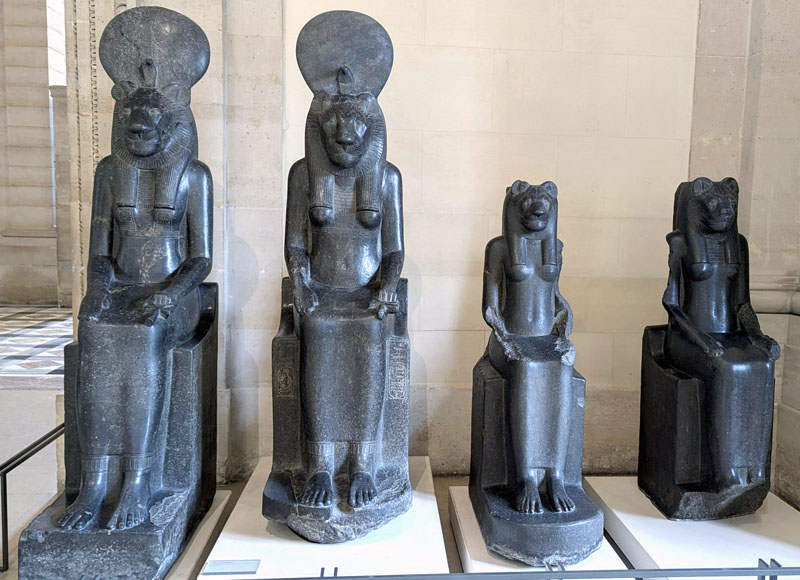
Chapter 5: Ghosts, Orphans and the Dispossessed: Post-war Object Habits (1945–1969)
Post-WWII, distributions declined amid decolonisation, new Egyptian laws, and changing museum priorities. Stevenson uses evocative terms like “ghosts” (forgotten provenances), “orphans” (uncontextualized objects), and “dispossessed” (lost cultural connections) to analyse how Cold War-era collections became static or deaccessioned. This chapter addresses the long-term consequences of earlier scattering, including provenance gaps and ethical questions, as this was the time when many collections were dispersed without a trace, abandoned, or sold off. Some regional British museums’ collections were engulfed in fire, while others were dumped into the trash. German museums experienced a similar fate, with objects lost to the war or removed during the conflict.
After Petrie’s death, Hilda (his wife) continued fundraising for the BSAE (British School of Archaeology in Egypt). However, the British public interest with reginal curators alike faded. Many peripheral British museums and institutions didn’t reopen after the war, and some collections disappeared with them without a trace.
Existing museums were interested in the aesthetics and educational purpose of their displays, rather than being mere depositories of Egyptian artefacts and trinkets. Regional British museums reshuffled their Egyptian collections among themselves, too. For example, Liverpool Museum received collections from Norwich Castle Museum in 1956. Bankfield Museum shipped its collection to Manchester, and Shropshire Museum Services transferred most of its material to Birmingham Museum between 1958 and the 1970s. In Edinburgh, Egyptian material was decluttered as well. Between 1957 and 1971 Bristol Museum destroyed 56 excavated objects donated by the EEF and BSAE, because they were either in too poor condition or ‘of no interest’. (p.186). Other British museums, like Reading Museum and the Ashmolea,n sold their ‘duplicates’ to other foreign institutions.
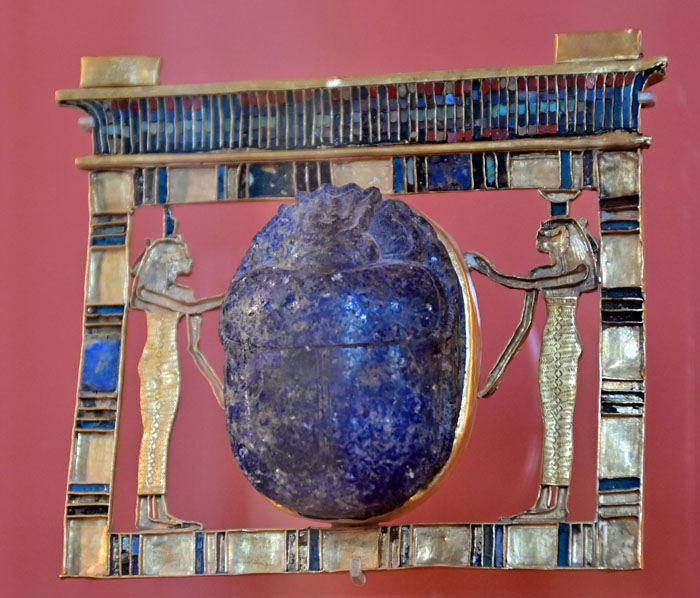
Deaccessioning
The Great Depression basically killed most subscriptions to EEF & BSAE in the US. In the 1950s-1970s, American museums also wanted to get rid of duplicate material in their possession. Deaccessioning became a common practice for the top US museums to declutter and sell off their ‘not-important’ Egyptian material legally in national and international auctions to make room for thoughtful, educational and aesthetically-pleasing displays of art objects.
“The Met considered to be a poor batch of material from the Fund’s most recent excavations. There was ‘no object of any artistic significance, no inscription, no ornamentation, most of the objects were rude pottery bowls, repetitions of each other’.(p.188).
While some large architectural objects were sold to other institutions and museums, small finds- scarabs, shawabtis and beads were selling at standard prices at auctions and museums’ gift shops, and final owners were often unknown. Art museums in Minnesota, Denver, and Pasadena sold their Egyptian and Roman art collections this way. By 1970, Egyptian materials fell out of fashion completely, and modern art replaced the antiquities, like in the case of Minneapolis Institute of Fine Arts that dismissed antiquities from its collections. (p.196)
“The New York Times reported that around 2500 sales slips had been taken, testifying to a ‘thriving trade in paleolithic and neolithic flints, scarabs, jars found in tombs, fragments of stone and pottery with paintings or inscriptions, bronzes and wood sculptures’.”(p.189)
“In 1952, it was reported that the number of objects in the possession of the museum but not on display
before 1939 was around 5 per cent. Just over a decade later, that estimate was 50 per cent.” (p.205)
While museums did keep provenance records of sold material in auctions, other collections were not so lucky. For example, New York’s Chautauqua Assembly owned an Egyptian collection excavated and shipped from the EEF in the 1880s; however, when this organisation’s building was demolished, the collection of 456 objects disappeared with it. “Brown University’s Jenks Museum hauled 92 truckloads of specimens to the University’s landfill site on Seekonk River in 1945.”(p.191). Colorado College disposed of thousands of objects from its collections.
Stevenson calls ‘orphaned’ collections with no provenance or formal record. For instance, the Garstang Museum’s archives are confessions with no record of Egyptian artefacts. The original documentation often doesn’t exist from John Garstang’s excavations.
At the end of this chapter, you’ll also find information about the original Egyptian collections, archeological department, and other events happening in Ghana during that period.
Chapter 6: Legacies and Futures (1970–)
The final chapter reflects on contemporary issues: provenance research, digital reunification, repatriation debates, and museum decolonisation efforts. Stevenson advocates for critical awareness of historical distributions while exploring potential futures, such as collaborative projects and ethical stewardship.
Conclusion
Overall, Alice Stevenson’s Scattered Finds is a meticulously researched book that will answer many questions you might have about records, collections, archeology, and the history of Egyptian material from original excavation sites. From the book, we can see that the best excavated artefacts went to the top art museums’ collections and wealthy donors in the UK, the USA and a few European countries. Despite a loss of collections or finds during the war, the best Egyptian material should have some provenance notes.
I’ll be updating this page with new information about provenance as I read other documents, papers, and books about ancient Egyptian artifacts.
Other notes:
British Excavation Organisations: https://egyptartefacts.griffith.ox.ac.uk/excavations