
Why Coins Matter in Religious Iconography
In religious iconography, coins carry a wide range of symbols, as they sit right at the crossroads of faith, morality, and material power. While it’s true that in some works of art they appear as mere ornamentation, in most cases they deliver moral lessons about greed, virtue, sacrifice, and divine justice.
What most specialists agree on is that when coins are depicted within religious art, their presence is never arbitrary. The artist uses their placement, material (color), and quantity to reinforce a central mystical or moral narrative.
If you follow how coins are presented in religious iconography, you’ll discover a fascinating world of messages and lessons left for us by some of the biggest artists. Today, we’ll take a journey through art history and analyze a few artworks that depict coins. We’ll discuss the meaning, the art, and whether or not the message still applies in modern times.
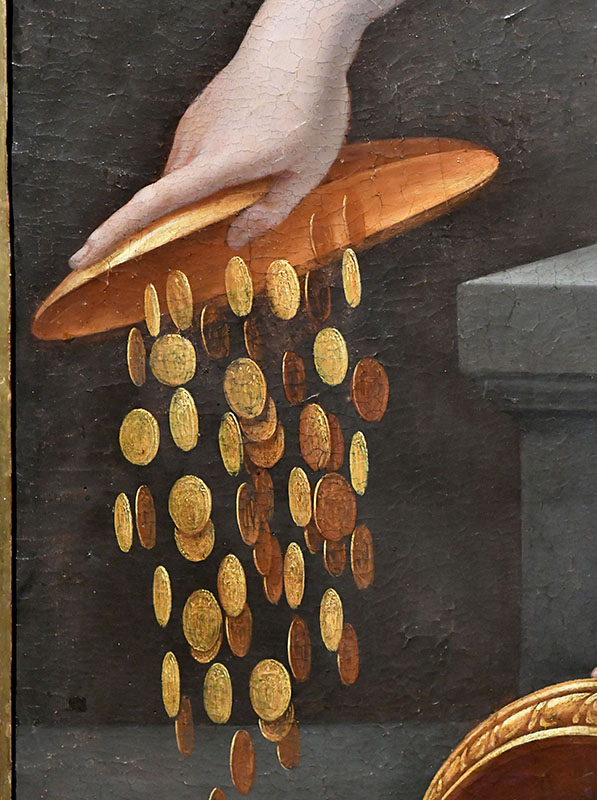
Placement, Material, and Quantity
Artists always try to convey their thoughts through their work, which is why even the tiniest details are important. In this case, the location of the coins in the scene, their color (meant to represent the material they’re made of), and their quantity matter.
Let’s see how and why:
Placement:
Symbolism of thirty pieces of silver in Christian betrayal art:
In scenes depicting the Betrayal of Christ, the bag of “Thirty Pieces of Silver” is often placed in Judas Iscariot’s hand or hung from his belt. This immediate, physical placement is a non-verbal indictment, signifying that greed and the acceptance of earthly payment for a spiritual act are his defining moral failure. In this case, the coin becomes a symbol of condemnation. However, if the coins are shown on the floor, scattered or trampled, such as in depictions of Christ Cleansing the Temple by El Greco, 1570, National Gallery of Art, Washington, D.C., it shows that material wealth is insignificant and corrupting.
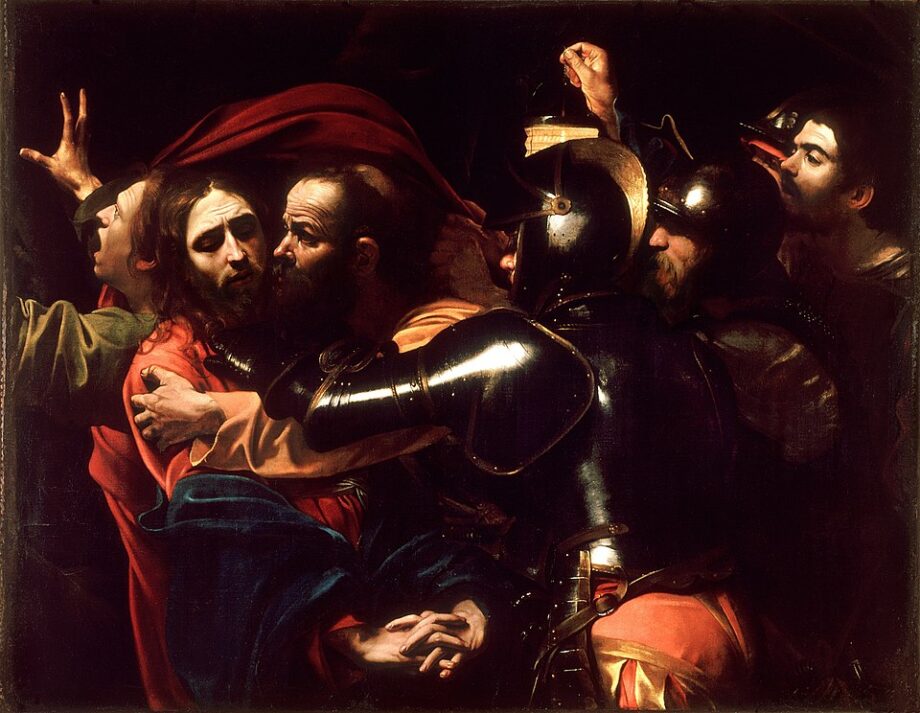
In Caravaggio’s “The Taking of Christ”, the artist captures the moment of betrayal and arrest with a focus on the dramatic interaction between Jesus and Judas, the fleeing St. John, and the soldiers without the depiction of actual coins.
In South Asian and East Asian Buddhist and Hindu traditions, coins are rarely depicted in paintings, but they are often a physical component of the finished artwork. For instance, coins made of precious metal or simply the currency of the time are placed in the central cavity, base, or relic chamber of a statue or stupa during its consecration (life-giving) ceremony.
This transforms the coin from a monetary object into a votive offering and sacred substance. The intention is to imbue the statue with merit, spiritual wealth, and blessings for the benefit of all beings.
Material
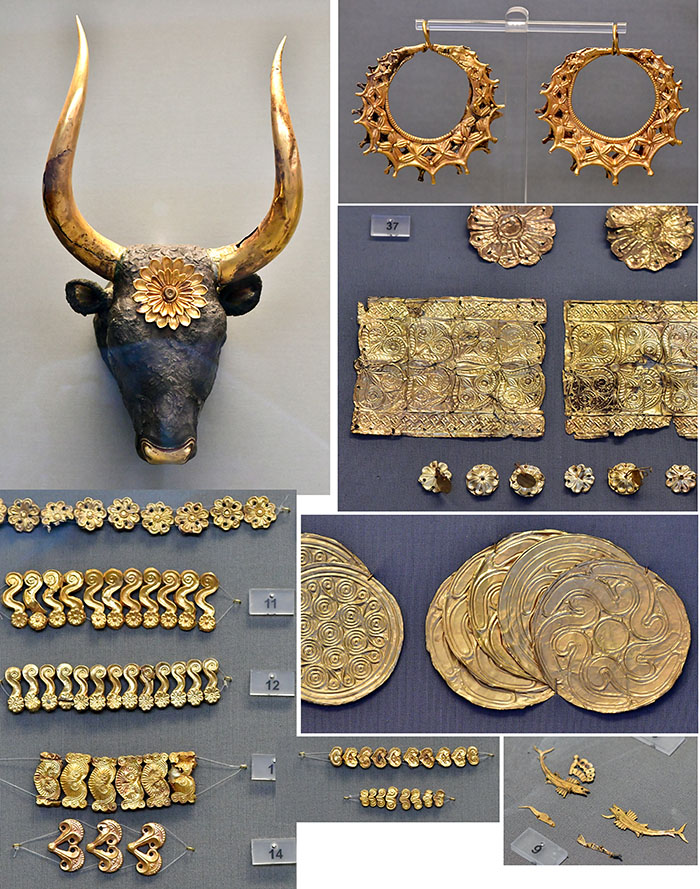
The color used for the coins is a clear indicator of the metal used, and thus the theological and cultural meanings behind the piece.
If the coins are painted as silver or copper (darker or base Colors), they tend to symbolize the earthly, corruptible, and mortal life. On the other hand, a gold coin can symbolize great spiritual value (a heavenly reward).
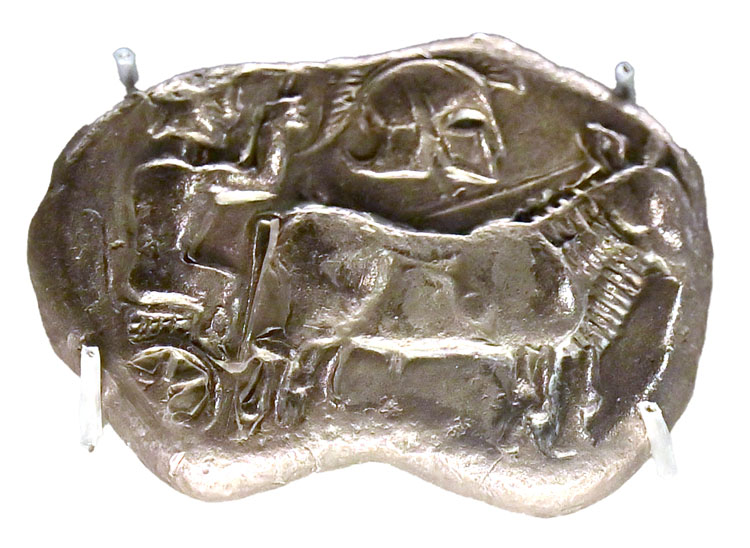
Gold (as a color) is often used to depict divine beings, such as angels or protectors of people, and signifies the eternal and purity. In Ancient Egypt, gold was called the “flesh of the gods” (specifically the sun god Ra), signifying immortality and divine incorruptibility. The Incas referred to it as the “sweat of the Sun God Inti.” A gold coin is thus an artifact of the divine realm brought to the mortal world.
These beliefs have prevailed in the modern age, especially when it comes to coins. Many countries use gold coins today to showcase their power, innovation, and uniqueness, resulting in a rich offer of gold coins for collectors. Gold remains the store of value for many centuries.
Quantity
The number (or amount) of coins depicted in a work of art also has meaning. For instance, we have the famous thirty pieces in Christian iconography that evoke Judas’s betrayal. If the amount is excessive (like in piles or mountains), the coins signify greed, usury, and hoarding.
On the other hand, small, manageable quantities can symbolize charity, almsgiving, or offerings. For instance, the Widow’s Mite story and small coin symbolism in mystical art (two small coins) represents true spiritual generosity, where the value lies not in the amount, but in the completeness of the sacrifice.
The "widow's mite" story from the Bible describes a poor widow who gives her last two small copper coins to the temple treasury, a sacrifice Jesus praises because she gave all she had, unlike the wealthy who gave from their abundance. In mystical art, the small coin symbolizes profound sacrifice, faith, and the idea that true value comes from the heart, not monetary wealth. You can see the example of such painting in Brooklyn Museum-James Tissot, The Widow's Mite, 1886–1894, watercolor and pencil.
Enriching Insights: Gold and Silver Coins from the Met’s Collection
In ancient and medieval coins, gold often bridges the mortal and divine (as “flesh of the gods”), and silver highlights human frailty or reform. Here are standout examples:
- Celtic Gold Coins of the Parisii (ca. 100–50 B.C.): These imitate Hellenistic prototypes, the Celtic coins appeared in the 200s BC passed from Hellenistic kings to Celtic warriors. The coins have a head on one side and a charioteer and horse on the reverse.
- Byzantine Solidus of Emperor Phocas (602–610 A.D.): Struck in Constantinople from pure gold, this coin depicts the controversial ruler, embodying imperial propaganda as divine sanction. Byzantine emperor, Phocas hoarded wealth in wars, yet the coin‘s pristine aura invokes heavenly reward. The front shows the bearded emperor in a crown holding a cross and the reverse depicts an angel holding symbols associated with Christ.
- Kushan Gold Coin of King Kanishka (ca. 127–150 A.D.): this coin features the king on the obverse and Shiva on the reverse, merging Near Eastern, South Asian, and Greco-Roman deities into a syncretic emblem of cosmic harmony. Such coins were offerings imbuing rulers with “spiritual wealth,” transforming currency into a bridge for merit and blessings across realms.
- Umayyad Dirham (Silver Coin, ca. 711 A.D.): Post-reform, this epigraphic silver piece ditches figural imagery for Arabic script—Qur’anic verses and pious phrases—marking Islam’s shift from Byzantine/Sasanian “earthly” coins to purely devotional ones. small quantities here signify charitable purity, not Judas-like betrayal.
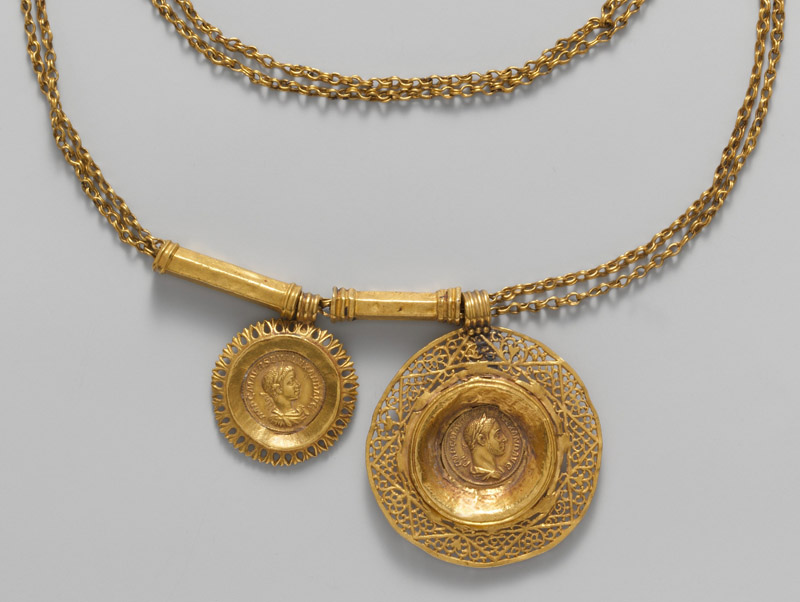
- Roman Gold Coin Necklace (ca. 222–235 A.D.): Coins of Emperor Alexander Severus, set on a double chain, were worn as talismans blending fashion with faith. This practice, peaking in the 3rd–7th centuries, mirrors the paradox: coins as both corruptible adornment and sacred proxies for immortality, often buried as grave goods for the afterlife journey.
Real Depictions vs. Symbolism
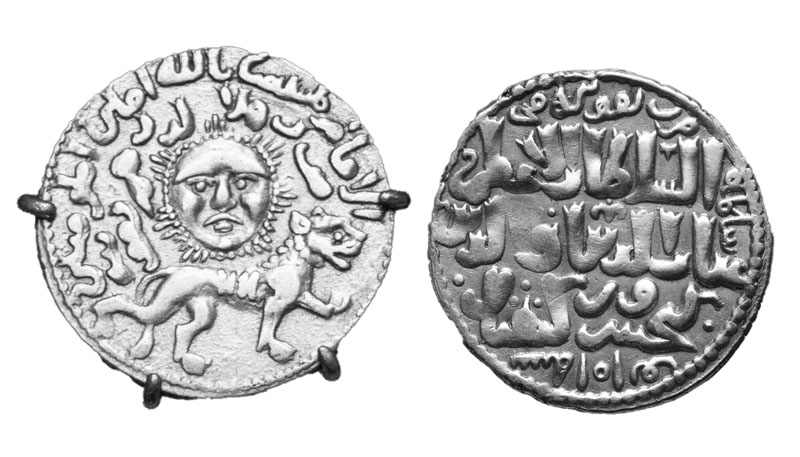
Highly-priced, gold and silver coins were traded over long distances, according to the museum’s description. Used as currency, high-ranking officials paid land tax with them. These silver coins combine the Islamic writing with figurative art. The two main themes are the astrological sun-lion and the equestrian, embodiment of power and control and a symbol of an ideal ruler in the Great Age of the Seljuqs.
Sometimes, artists just want to introduce a literal historical coin (like a Roman denarius) into their work. This doesn’t necessarily mean there’s no symbolism, but it adds a layer of complexity to the overall analysis of the piece.
In most cases, if the coin is accurate, it usually has legible or semi-legible, identifiable text (like Tiberius Caesar Divi Aug F Augustus that appears on a denarius). It also features a recognizable, historically specific imperial or regal portrait.
Works of art that include real coins have greater intellectual and historical value, as they help art historians date the artwork or at least establish the period of classical research in which the artist or patron was engaged.
Modern gold coin collecting inspired by ancient mystical symbolism interests some collectors. Other collectors prefer these works because they are a unique blend of art history, theology, and numismatics.
In Summary
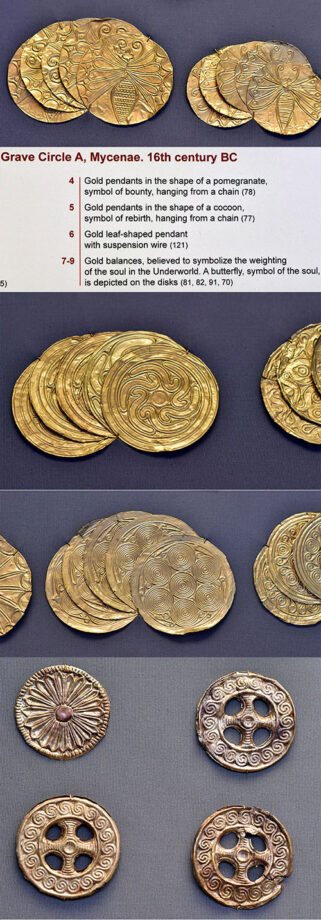
The use of coins in mystical iconography is brilliantly paradoxical and effective. They serve as potent material proxies for immaterial concepts such as betrayal (Judas’s silver) or eternal passage (Charon’s obol). They can also represent both ultimate corruption (greed) and ultimate sacrifice (votive offerings). In an age of cryptocurrency and economic inequality, coins still symbolize “ultimate corruption” (hoarding) versus “ultimate sacrifice” (philanthropy).Yet, they serve the purpose of payment and exchange for goods.